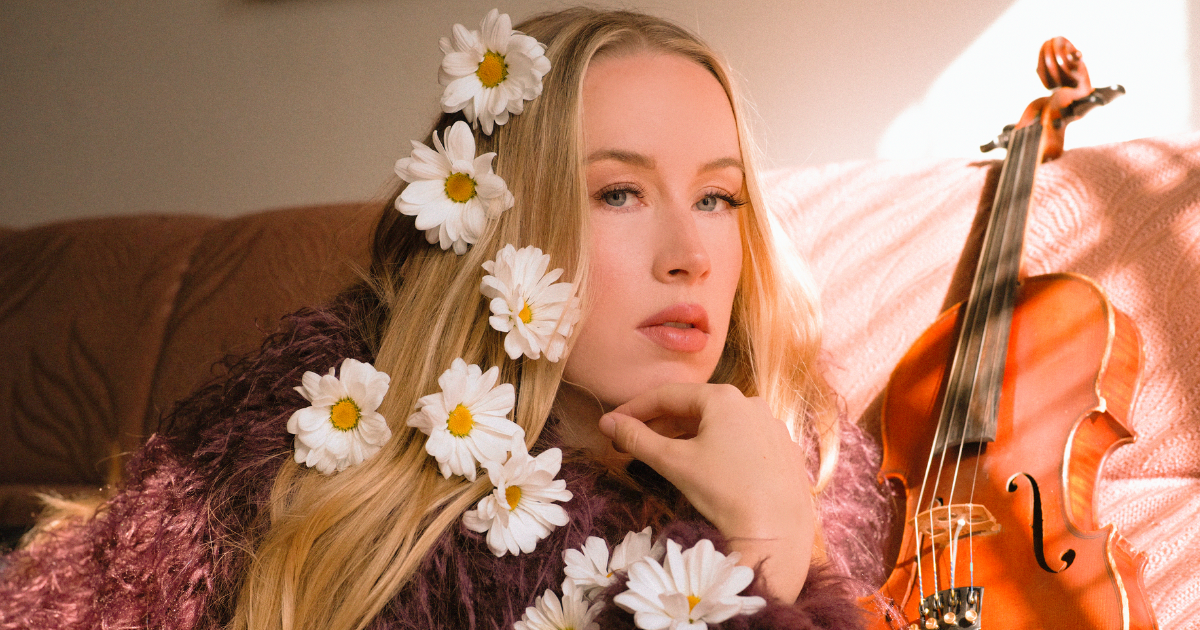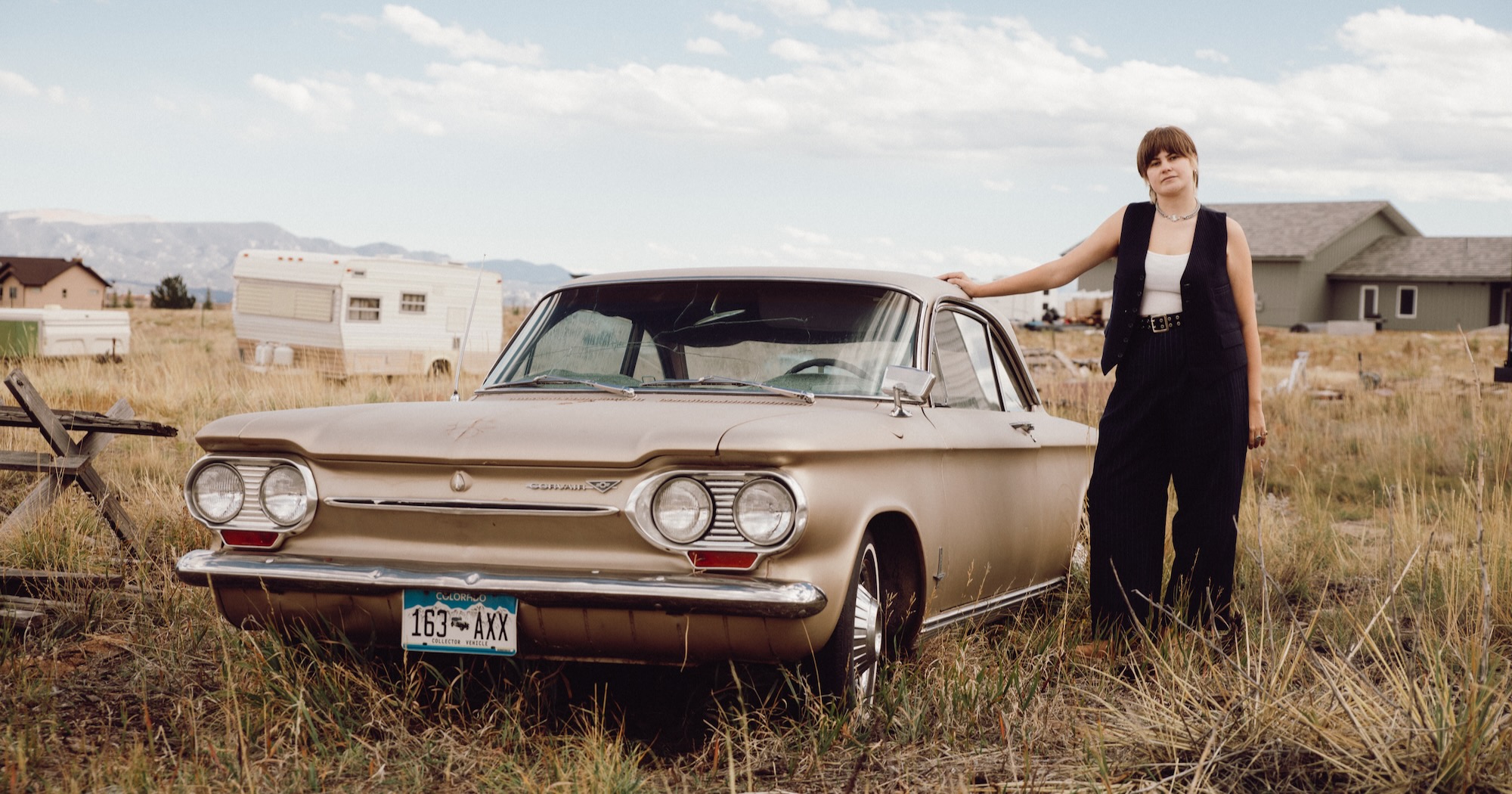

When it’s time to recharge her creativity or reconnect with herself, Jobi Riccio goes back to nature. The mountains and hiking trails of her native Colorado were integral to her childhood and adolescence. Today, the trees, plant life, and paths of Nashville help bring her back to center.
Perhaps it’s no surprise, then, that all things natural life and climate factor into her songwriting. Personally and professionally, Riccio has become a spokesperson for our global environment and its future. “Wildfire Season,” from her latest release, Face The Feeling, addresses these issues. Written in the aftermath of the 2020 Colorado wildfires, the song stands out in its unfiltered message, while at the same time slotting in as a perfect fit within the album’s context.
Face The Feeling was produced and engineered by Riccio’s longtime friends and colleagues Jesse Timm and Isaiah Beard. The album leans on her folk and bluegrass roots while injecting them with her passion for indie and punk rock. Riccio takes on mental health, grief, self-doubt, past and present hurt, and the long road to recovery and autonomy. It’s a lot of what is now commonly known as “big feelings,” and entirely the only walk that she knows and wants to take. All of this is served up with a healthy dose of fierce guitars.
Riccio last spoke with BGS in 2023, following the release of Whiplash. Phoning in this time to talk about Face The Feeling, she was days away from a June 9 performance at Wolf Trap as part of Songwriters Celebrate John Prine joining Emmylou Harris, Margo Price, Patty Griffin, I’m With Her, Lucius, Allison Russell, Hayes Carll, Fancy Hagood, and Tommy Prine.
Riccio’s connection to Prine dates back to her early musical influences, reaching a high point in 2023 when she was awarded the Newport Festivals Foundation’s John Prine Fellowship. The Wolf Trap concert was in some ways bringing her full circle, sharing a stage with colleagues, each playing one original and one song of Prine’s.
“I’ve done some stuff in the past with the Prine family,” she remarks. “They have welcomed me into their circle and they’ve been really sweet. It’s been a real blessing of life in Nashville, that whole experience. I’m honored and excited to get to do that show.”
Let’s start a little differently. Tell us about your day so far.
Jobi Riccio: Okay. I woke up and had breakfast on my front porch. I just moved neighborhoods in Nashville – I moved to Madison, Tennessee, and I have a nice front porch now, so I’ve been enjoying coming out and having coffee in the morning. And then I went to therapy, I came back and had a meeting with my manager, we did some co-working stuff together over Zoom, I had lunch, and now I’m doing this.
This album was written between Colorado and Nashville. How did both environments and both communities help shape the new music?
In terms of the lyrics, I feel like I have a lot of references to nature in Colorado and western nature, mostly because I’ve been speaking that language and speaking those names longer. I’m just learning the names of the trees, bushes, daylilies, and all the stuff out here now. I’ve lived in Tennessee… it’ll be five years in September, so I’m just learning everything that’s here.
Any time I’m feeling reflective, I call upon my past, thinking about my family or where I’m from. It’s a big part of my identity. But I definitely identify as an artist both from Nashville and Colorado. Nashville played a really big role in the writing of this record. I started playing a lot more electric guitar when I moved here. I started spending more and more time in my room playing. I was listening to a lot of country electric guitar, but for some reason it became this more indie-rock singer-songwriter kind of thing.
I think I wrote about Nashville and the community more. You hear that on “Love of the Song,” just kind of struggling to find my footing here, because it does take a while to figure that out. I was really lucky to know a lot of people before I moved here. I say this in the song – I was set up in all the right places, with all the right people, and I still felt a sense of “Damn, do I belong here?” The impostor syndrome of doing music for a job is really hard and I think women and femme people in general really struggle with impostor syndrome and living in our heads and second-guessing ourselves a lot more than men do. I address that in the song “Doesn’t Matter,” which closes the album.
So I think it’s a record where I come into living in Nashville and am also like, “I am worthy of doing this job and this job is such a big part of what makes this town this town.” Despite all the new development and changes that everyone’s always talking about, Nashville is and will always be Music City, and the community is what makes it great.
Where were you, mentally and emotionally, when this creative process began, and where are you now?
I was in a hard place when I started – and in the middle of it. I think it’s a brave thing that you really have to do in life, whether or not you want to, which is to own up to your shit. It’s a very crass way of saying it, but basically I was trying to outrun some shadows, trying to outrun some trauma, trying to outrun things that needed to be dealt with that were coming out in my life.
I was still pretty young when I started writing this record and [when I moved] to Nashville. I moved here almost five years ago and I started writing this record about three years ago. It’s been such an up-and-down experience. I feel like it’s mirrored the experience I’ve had with getting my sea legs as a touring musician, too. They’ve been very much in tandem.
Despite what you see online, it’s not this constant upward, “Everything’s great and it’s always getting better all the time, the gigs are always getting better.” Some nights you’re playing for 3,000 people, opening for Lucinda Williams – which I got to do – and the next night you’re in Utah playing for 50 people headlining. It’s a total rollercoaster. It’s about learning how to find the tools to ground yourself. I really needed to learn how to do that intrapersonally first, for myself, and I’m glad that I did at the beginning of writing this record. But it definitely chronicles a long journey of growth. I feel like it’s a weird time to do this job. And also growth is… you’re never done. It’s not linear. So I’m always doing my best every day, and that’s all I can ever expect of myself. And every day is different.
Were the songs finished when you began recording?
Most of them were, but not all of them, which is a new experience for me. I’m used to having all of them done and buttoned up and being like, “Okay, here we are. Let’s go record them.” But when we first started talking about what this album could be, I had the song “Doesn’t Matter,” just the idea of it, the guitar part, and the beginning of it, and I was like, “I don’t really know if this is any good.”
I played it for my co-producers, Jesse [Timm] and Isaiah [Beard], and they were like, “This is really cool. You should finish the song.” They basically watched as I finished it. I was writing stuff down actively in the studio, which I’ve never had that experience. I wrote more songs, too, that didn’t make the record. Whether or not those will go on another project or ever see the light of day, I don’t know. But I was open to seeing what would come.
Tell us about your working relationship with Jesse and Isaiah. How did it begin and how has it grown over the course of your albums?
I met Jesse at Berklee. We met on the first day of college. We were in the same dorm. They’re from Northern California, I’m from Colorado, they’re from a weird hippie town, I’m from a weird hippie town – we immediately understood each other. I feel so incredibly lucky to have met them, because not many people get to have someone who is so encouraging of their music alongside them at any stage.
Not everything I wrote in college was very good, but they were always very invested in it and also [in] finding their voice as an arranger and composer and writing string parts. I would come up with a song and they’d be like, “Oh, I came up with a string part for it. Do you like it?” That’s such a spoiled experience to have, because it would be a gorgeous thing. We’ve played together and been collaborators and friends for ten years now.
I met Isaiah through Jesse. Isaiah also went to school with us, but I didn’t know him. He was a few years older and worked the same student job with Isaiah in project bands. It’s where kids have their stuff recorded for different school projects. They both did admin work for these project band things, so they became friends. I had a friend from the songwriting program at school who had a record produced by Isaiah in Nashville. He moved here a couple of years before me, and he said it was an amazing experience. I listened to it and I thought it was just the coolest thing ever. I heard so much creativity in the production and the mix. Also, Isaiah has his own solo project and he’s one of the most creative people I’ve ever met. I reached out to him and that’s how we ended up working on Whiplash. It felt like a very organic trio and through that we became really good friends.
I moved to Nashville, he lives close by, and I feel like I’m very spoiled for having people who love and understand both me and my music. I feel truly blessed. I don’t know how else to say it. I hear how all three of us have grown as musicians on this project versus the last project. I’ve grown a lot as a writer, the mixing and production work Isaiah did is outstanding, and Jesse wrote all the string parts. I can hear all of our growth and development as individual creative people. My name is on the record, but it does really feel like a collaboration.
You play acoustic, electric, and baritone electric on this album. Tell us about your guitars – which ones you play on the album, which ones are going on the road, any backstories you’d like to share.
I only have three guitars in my personal possession, but Isaiah had a lot of guitars lent to him by our friend Jake Byrne, who works at Carter Vintage Guitars. So nice of Jake! We had a vintage Mustang that Isaiah played on “Buzzkill.” He played some very Green Day-esque type things on that song. It was just the most fun little guitar.
Isaiah owns the baritone guitar that I played. He won it in a guitar raffle at a benefit concert that I played when the Asheville, [NC] flood happened. We had a big fundraiser here in Nashville. We collaborated with some folks in Asheville to raise money and a guy out of Asheville who ran a guitar store put together this raffle. I was one of the artists on the bill, Isaiah and his partner came and entered the raffle, and he won this baritone electric with a metal neck. It’s the craziest guitar ever.
I have a Martin D-35 from 1993 that’s my baby acoustic guitar that you’ll see me playing all the time. I bought it at the Pickin’ Parlor, an acoustic guitar store in Arvada, Colorado. I was with my friend Al out around Denver looking for a guitar. I wanted a dreadnought because I was really interested in playing bluegrass. I was in college, 21 at the time, and interested in digging into flatpicking. I was like, “I need a dreadnought. There’s no other way.”
I played a lot of different guitars, and other Martins, and I fell in love with this one. It reminded me a lot of a friend’s guitar that I had played throughout the years at this bluegrass festival, RockyGrass, I grew up going to. I was like, “Oh, this feels like the twin guitar to my friend’s guitar.” That’s why I ended up buying that guitar. I’ve written so many songs on it, and it’s interesting, now that I don’t play bluegrass consistently, it’s got this whole other life and character to it as a guitar for songs. Sometimes I start writing on electric, but oftentimes I still write on that guitar, too, and transition over to electric.
I have a Fender Telecaster that Jake at Carter Vintage helped me [rig] so that it takes the flatwound strings that I like. It’s a certain sound I really enjoy that I heard Margaret Glaspy champion back in the day, and I wanted to figure out how to do that. We’ve done a lot of little mods to it over the years. I love that guitar, too. I bought it in 2021 off of a guy on Facebook in Denver. It’s not worth a ton of money, but it has a lot of sentimental value to me.
I have a Gibson Songwriter that I got through winning the John Prine Fellowship. Gibson Guitars gave me a 2024 Songwriter. It’s a beautiful guitar that lives at home on my couch. My amp that I have at home is a Fender Blues Junior. I bought it from another Berklee student for $400 on Facebook Marketplace during my senior year of college because I needed an amp.
You’ve talked, in this interview and others, about how being outdoors is important to you. Do you write when you’re out in nature? Do ideas come to you then?
Absolutely. A lot of times, if I’m stuck on something, getting out is good. I think there’s some science behind this, too – the dual motion of walking is really helpful to our brains. So I definitely find myself coming up with ideas while hiking or walking. I’ve always been that way. I’m always writing things down on my phone. Or while I’m in transit on airplanes, trains, in an Uber, or someone else is taking me somewhere, some other vehicle, in the back of a van on tour. Looking out the window, watching scenery go by, can be a regenerative, reflective place for me as well.
I probably write the most when I have a guitar in my hands, but I edit a lot and I have a lot of lyrical ideas while I’m out in nature, walking.
Phone, voice memos, pen and paper?
All three. If I’m out and about, I use my phone. I grew up writing in my journals and then I went to my phone. Everything was in my Notes app for a few years and then I was like, “I want to go back to having a journal and having handwritten lyrics. I miss going back into my journals and looking at my embarrassing little couplets of lyrics from eighth grade.” I want to be able to do that when I’m older, and look back and have more tangible objects in my life. I don’t want everything to be owned by my phone and put into my phone.
So I got several different notebooks of different sizes. I have a little notebook for journaling and writing more personal things, I have a big notebook, I have a legal pad for writing lyrics, and I have a little gratitude journal that I keep on my bedside. I have journals of all sizes now.
Are you particular about your pens?
Yes. I really like this one pen, the brand is Lamy. It’s the best pen I’ve ever owned. You can easily and accessibly buy them online, but I found it at a pen shop in Stockholm, Sweden. I think the romance of that experience also made me fall in love with this pen. They sell a lot of fancy ones that you use for calligraphy, but the one I am obsessed with is their ballpoint model. Occasionally I meet other people who love this pen. I see them with the pen and we’re like, “Oh, you like this pen too?” There’s a little cult following.
I’ve been getting into pencil recently, too. I got these free pencils at an Americanafest event, I think, and I have to figure out what brand they are, because I really like them. I’ve been enjoying having the ability to erase versus just crossing things out. It feels good. Tactile.
You write and speak openly about climate, ICE, politics, the state of the world, and of course about being an openly queer artist. You have received media attention for “Wildfire Season,” which has been called a protest song. Some people think musicians should make their music, share their art, and keep their opinions out of the spotlight. Other people, including quite recently Joan Baez, believe in using that platform to take a stand on issues. Discuss.
In the hardest times in my life, and I think this is true for most people, I’ve turned to music to process things. That was always the hope for this new record – that it could be a processing tool for anyone who needs it.
There’s so much hurt being done to people systematically right now, and I don’t think I could not talk about it. I think it feels very cathartic to attend shows where it is addressed within the lyrics, or in the banter when the artist is talking between sets. My friend Nathan Evans Fox has a great new record and he had a release show here in Nashville. He has a lot of great political country music and I felt such a sense of exhale being in that room. There was so much energy. To be in a room where it felt like church, the catharsis of release, there was such healing. It gave me a feeling of strength.
It’s a really hard time. Harm is being done to so many of us. I know that no matter what side of the political spectrum people are on, I’ve heard it said around here that everything is too expensive for most people and it’s too hot every year for most people. People are feeling the change in the air. There’s a lot of climate denial that still goes on, and yet people know that something isn’t right. Even extremely wealthy people who think they’ll be able to escape the effects of climate change, trying to shield themselves away from it, are being touched by it.
Tennessee is such a gerrymandered state. If you’re familiar at all with the political climate here, it’s really bleak, with the redistricting of Memphis and the current events that have gone down here recently. But going to protests in Nashville, showing up, is empowering. Why shouldn’t music be a space for people to feel through what’s going on, or to at least feel a little bit less alone, to feel stronger, to feel braver, to feel angry, to let that shit out? Because if you don’t let it out, then you continue to let it happen.
I feel that music is one of the most powerful tools of healing and understanding ourselves. People deserve to not feel alone, and they deserve to feel connected. If it’s upsetting to some people that I speak out about politics, I would rather call in people who are really hurting during this time and give them comfort and strength. That matters more to me than alienating people who think I should just sing songs about whatever. I really believe in the power of political songwriting, songs that do work.
When we started this interview with “Tell us about your day so far,” your list included breakfast, went to therapy, came home, met with your manager on Zoom, had lunch. You said, “I went to therapy” as casually as someone might say, “I went to the gym.” Was it a process for you to be able to say it so openly? There’s still so much stigma around mental health.
I think it’s two things. I have been described as sensitive for as long as I can remember by everyone in my family, and that used to be something that made me feel so shameful and embarrassed. I went to therapy for the first time when I was very young. I was in middle school and I was embarrassed about it at the time because this was the narrative I had around it when I was a little kid and things were very different. It’s crazy how much has changed. I think the pandemic changed a lot of things around mental health for the better. Back then I felt like, “I can’t get my emotions under control, so I have to go sit in this office and cry for two hours and it’s so weird, because I’m the most sensitive person in the world. I don’t know what it is.”
I came to songwriting as a teenager, and I found this channel of, “I can put everything in this place, and sometimes I create something that is so bad, and sometimes I create something that’s kind of good, and sometimes I create something that is totally neutral.” I used to go home after school every day and write. It was my confidante. It was what I turned to in hard times and in good times. It was how I processed my life. Once again, music as a way of processing life. Songwriting and creativity was that for me as a young, really sensitive person.
Once I wrote what I felt was actually a good song, I felt brave enough to show it to someone, and I played my first gigs, I was like, “Oh, people connect with this.” I got older, I went to music school, and I was like, “Man, maybe I really have something to say and people want to hear it.” And I met Jesse – going back to talking about them – and they’re a very sensitive person as well.
I’ve always had this thing about sensitivity is a superpower. You’re in tune to certain things that other people miss. I think most people who write songs are keen observers of the world. Sometimes you’re observing more negative things and that’s really hard, it’s painful, it requires tending to, and that’s what therapy is. I think everybody is deserving of taking care of their mental health. Now I’m in a city of songwriters, and every single person I know is a songwriter who does therapy, so I’m very much not in a stigmatized place with it because it’s been normalized to me.
I’m so much older, but it took some time for me to get there. I remember being embarrassed as a child doing it. But it’s been so many years off and on that I have done therapy, and I have seen the gifts and the fruits of my labor. So many of my songs have come out of the work I’ve done in there and the growth I’ve had. I don’t know if my therapist listens, but there’s a lot of inspiration taken from things we’ve talked about, and realizations and connections. I’m proud of myself for being able to get to that place, and I’m proud of others in my life who have had to overcome stigma about it. I’ve seen it open them up, and that’s beautiful to see.
Photo Credit: Rett Rogers