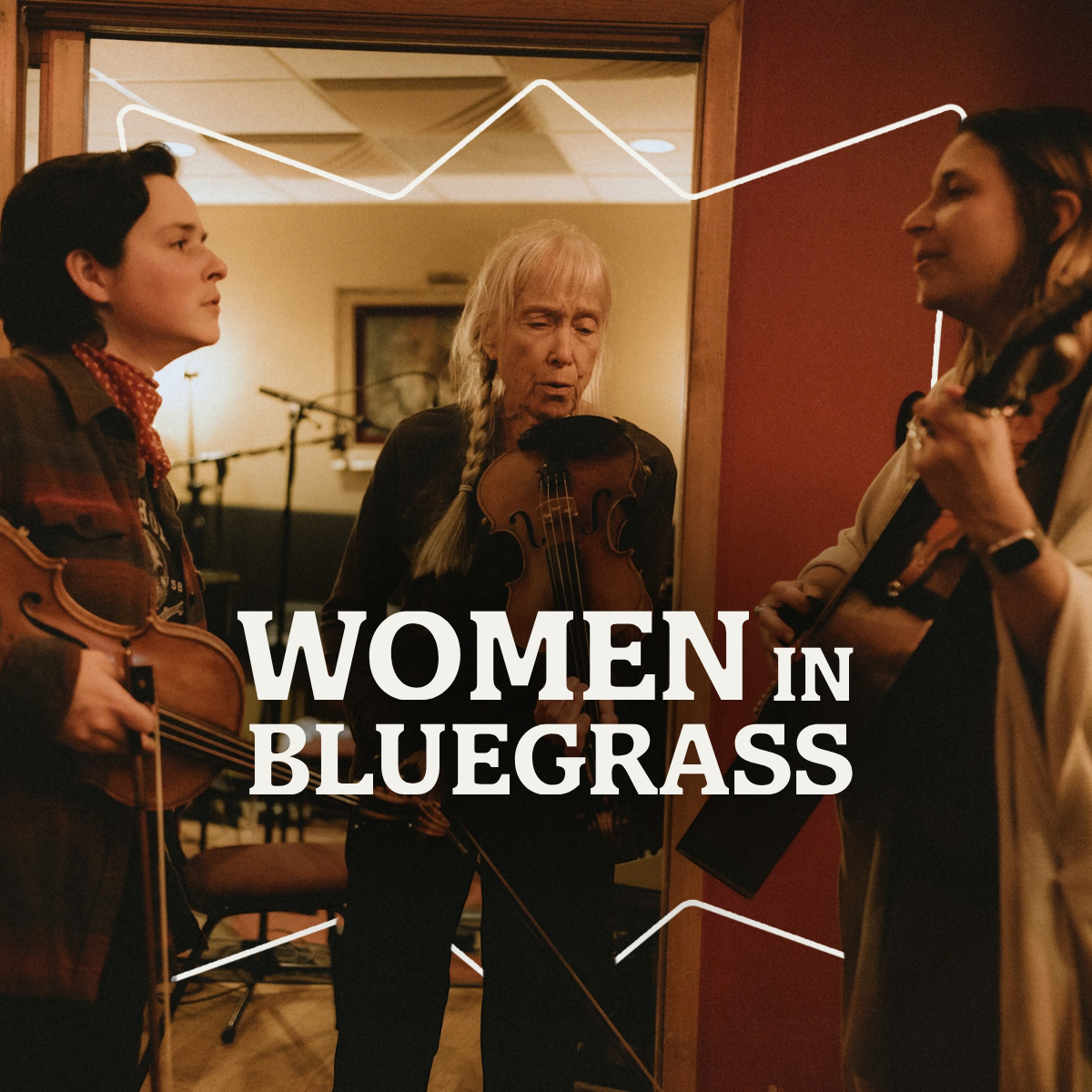

When Lindsay Lou moved to Nashville in 2015, the singer-songwriter and instrumentalist unknowingly planted seeds that would bear fruit over a decade later. Upon learning that women wrote two of her favorite bluegrass songs—“I Only Exist,” made popular by Ralph Stanley and the Clinch Mountain Boys, and “All I Ever Loved Was You” performed by Ricky Skaggs—she began compiling a list of other songs in the genre written by women.
Eventually, that list of songs began to look like an album. Energized by the prospect of impending motherhood, Lou sketched out what would become Bluegrass Women, a 10-song collection and accompanying documentary that came out in August. The LP faithfully but creatively celebrates these women-penned tunes, and is undoubtedly one of the year’s best releases in the genre.
Lou tapped a best of the best roster of women artists for the project, with contributions from Alison Brown, Molly Tuttle, Sierra Hull, Brittany Haas, Sarah Jarosz, Aoife O’Donovan, Gena Britt and many others. To produce Bluegrass Women, she called upon celebrated producer/engineer/mixer Shani Gandhi, whose knack for stepping back and letting the magic happen made her essential to capturing the intimate camaraderie you hear on the recorded songs.
“All of us have had our own experience of being the only woman in the room, whether it be on a session or in a jam, or at a show,” Lou tells BGS. “So, when you get together and all of us have some shared experiences that are unique and special, but shared, it just creates this vibe that’s really, really cool.”
Below, BGS chats with Lou, Gandhi and Hull about Bluegrass Women.
BGS: This is such an ambitious project, both in its concept and just the sheer fact that you were able to pull together so many musicians to make it happen. How did the idea for the album initially come to you?
Lindsay Lou: Not long after I moved to Nashville in 2015, so a little over 10 years ago, my partner at the time and I were renting a room in our friend’s house. I was in the living room area with my computer set up, trying to get some work done, and I remember writing on a piece of paper, “‘I Only Exist,’ Jimmie Stanley” and “‘All I Ever Loved Was You,’ Dorothy Skaggs.” I remember writing those two things on a piece of paper.
I don’t know if it was in a jam or something but I had found out those two songs were written by them, and it just surprised me. It felt like a delight. It felt like a little unexpected bit of encouragement to hear that women’s voices had made it into these songs in ways that you didn’t even realize it. I thought there had to be so many more like this and I created the intention of keeping my ear to the ground.
Over the last 10 years the list got bigger. Then I got to the point last year where it had been brewing and brewing and brewing. Then all of the sudden with government websites being scrubbed of the word “women” and I’m six months pregnant doing this very womanly thing of creating new life, all of the elements came together where it felt like now is the time.
So, I started more seriously making the list. It felt like the perfect thing to do while I was preparing myself to have my world turned upside down, just to have this be the last thing I do before everything changes. So, I just sent a text message out to everybody, like, “Here’s what I’m doing. Do you want to be a part of it? When are you available?” Then I created this big, crazy Excel sheet with everybody’s availability, and was able to put together four bands. Pretty much everybody I reached out to was down.
Listening to the record, I could feel that sense of camaraderie that I would assume you felt working together. Shani and Sierra, I’d love to hear from each of you about what drew you to working on the album.
Shani Gandhi: I had so many thoughts, because my initial reaction was like, “Oh my God, Lindsay Lou,” and, “Oh, what a cool project!” She immediately listed off all the people she’d already asked, and I’m like, “I’m so in.” Then part of me—and I’m sure these girls can relate—we can also get a little prickly at things like, “Oh, let’s do this thing for the sake of being women.” Then I was like, “No, this doesn’t feel like that.” I’ve been a part of and said no to a couple of things that felt that way, and this just didn’t feel like that. It wasn’t scraping the bottom of the barrel for some women who do these things. It was literally the best of the best of the best, with these amazing songs that I only knew half of…
I was just immediately in, and I didn’t even ask her, “How are you doing this, and what are your plans for this?” I was like, “Oh yeah, I’m all around in.” I couldn’t believe she was able to not only get these incredible people, like pretty much everyone on her wish list minus maybe two people. Not only that, you were able to actually get them into the studio. So often with these records, you have to be like, “Okay, so-and-so’s in Maine, so-and-so’s here, so-and-so’s there. We’re gonna have to have to send it out.” You lose that magic of everyone being there, which is so essential to bluegrass, particularly. And it wasn’t like that. Everyone showed up. It was really amazing.
Sierra Hull: Lindsay and I just being friends, it really could have been any project and I would have said yes. I love Lindsay and I’m a fan. She came and sang on my record. So, that’s part of what’s fun about having talented friends. You can call upon each other. You can pull from people that you not only love their talent, but you love them as people, and you want to bring them in to spread their good vibes on your record. I was just honored to be thought of and included as part of it.
And a lot of these songs are songs I grew up with, like “I Only Exist” and “I’ve Endured” and “All I Ever Loved Was You.” I did grow up sitting in the jam circle, and nine times out of 10, I was the only female sitting in the jam circle with these guys singing and playing these songs. And I fell in love with those songs. But then to be able to celebrate the fact that they are written by women and get to be in a room with so many ladies that I love and have been friends with for a long time—we don’t always get the opportunity to work together like that, like Shani said, having everybody in the same space.
There are a lot of projects you get to be a part of, and you are kind of farming stuff out here and there because we’re all moving at 100 miles an hour, trying to meet somewhere in the middle and trying to make music and collaborate. The fact that we were able to come together and actually record this music as a group was super fun. And I’m just on a little bit of it, but the fact that you guys were able to do that with the whole thing, I imagine that was really special.
Lindsay, a moment ago you mentioned creating a spreadsheet to figure out how to get everyone in the room together. Once you cleared those logistical hurdles, what was your time in the studio together actually like?
LL: I decided to do it in four days, so I picked four days where I could create four bands with all of the people, and decided on two or sometimes three songs a day because that felt like a good pace. The reason that we love bluegrass, and I’m pretty sure everybody I know feels the same way, is that experience of playing it together in a room, hearing the harmonies form and change the air in the middle of a jam, and just breathing together.
It’s acoustic music, so it’s such a special thing that shines the brightest when it’s informal and in almost like a living room jam setting. I wanted it to feel like that, so I told everybody, “We’re gonna circle up. We’re gonna play these songs just like we’ve played them hundreds of times, and the arrangement, I’m sure, will present itself.” All of us are listening and just wanting to serve the song, and on the same page.
So many of us are leaders in our own world, and it just felt like a really nice fluid [process]. I’m kind of there holding the space and curating the thing, but then there’s space for people to be like, “Oh, I think this sounds like that goes there. This sounds like the thing that we do here.” So, everybody gets to lead in their own way or in the space that makes sense.
Shani, how does that compare to your experience being on the other side of the room?
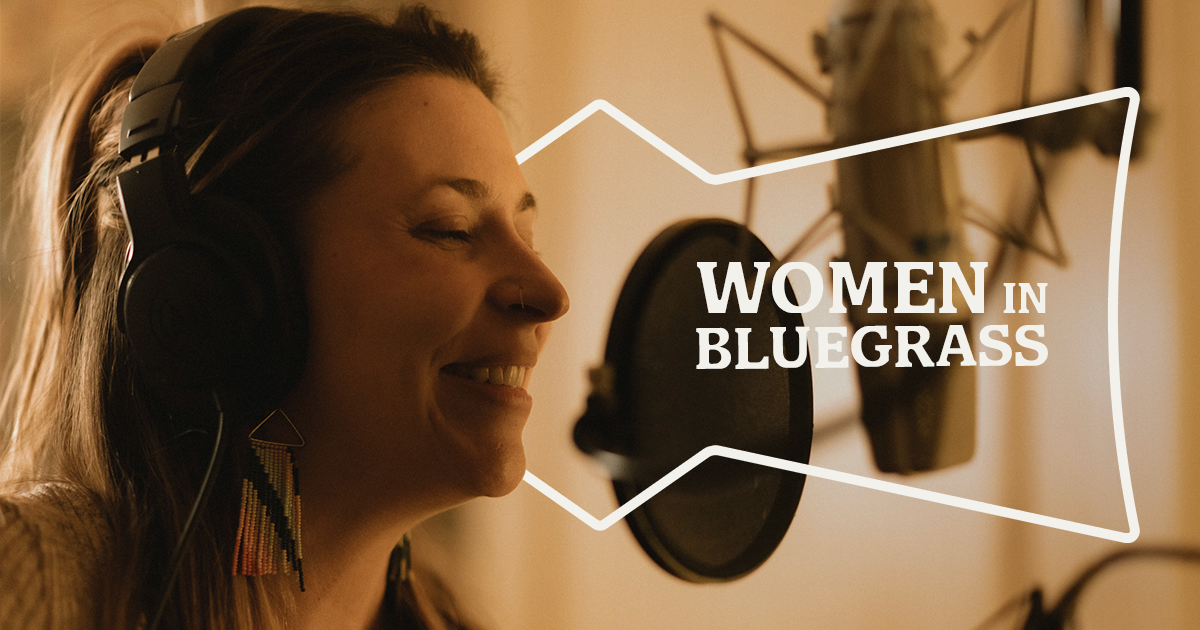
SG: It was everything Lindsay said, then just to add on to it, we started every song with everyone on the floor—no microphones, just huddled around in a circle. Every single song started like that. What she was saying about everyone being their own artist, literally everyone you hire is also a solo artist in their own respect, so it really felt like a true collaboration. It wasn’t like Lindsay saying, “Now you do this. Now you do this.” It was people pitching in as if it was a band. It felt so organic like that.
Then we’d send people off to their little stations to do their thing. But we harnessed that magic and created what we needed to on the floor. Then it was just about, like, let’s make sure we don’t lose that magic when we get to the mics, which is where the true professional came in. That was really fun for me to watch.
Then, singing harmonies together, like in all my years, I’ve literally never recorded two harmonies at once. I’m like, “Let’s just do them one at a time.” And Lindsay was like, “No, we’re doing them at the same time.” And it was so fun. It was great. We ran out of rooms, so we had to put two twin fiddles in the same room. I was like, “This is gonna be horrible.” And it was great. It was amazing. Every part of it felt so organic and so raw and exactly what it needed to be right there in the moment.
Same question to you, Sierra. How did your time in the studio on this album compare to other experiences you’ve had?
SH: I was just a little sliver of the big project. It’s fun to hear them talk about it. When she was talking about people having their own bands or leading their own bands and then coming into this situation to become a band—I think there’s something about that when you’ve been the leader in a session before. Everybody has a little bit of experience that they’re bringing to the table.
Sometimes it’s the opposite of what you would think. There’s a tendency to almost step back and not have that [attitude of], “Well, I’ve got to take the reins.” Nobody’s trying to be the big dog in the room. Everybody’s just kind of going, “Cool, let’s hear each other. Let’s communicate well about what this needs to be.” Egos get checked at the door in a different kind of way when you’ve got people that have a lot of experience, if that makes sense.
And maybe being female does play into that a little bit, I don’t know. But there’s something really fun about that because it feels like you’re just there to make good music. Nobody’s trying to prove anything in some kind of crazy way. If I need to play three notes to make this song sound good, that’s what I’m going to do. If I need to contribute more here, I can. If I need to step back a little here, then I can do that. Everybody just has really good ears and can listen and respond in that way.
It was really fun just to be in the studio with that group of ladies. Having known Lindsay for so long and then also having worked with Shani so much on some of my own projects, when you have people like that, who you know are going to deliver something special, I think there is an ease about the room when people have trust with one another. I think you guys did a good job of kind of curating that.
SG: That was all Lindsay. To have that enormous list of players, and then to be like, “This person is going to go with this person, and they’re going to do these songs”—I just felt like you absolutely nailed that. That blew my mind, because everyone just worked together so well.
SH: That is bluegrass. When you’re pulling from your world, it’s like you’re just bringing in your friends, bringing in your community. So that inevitable, spider-web kind of thing that we were talking about earlier just naturally does its thing.
LL: Bluegrass, it’s like infinite possibilities within a box… There’s a thing that makes sense that we’re all listening for, and we can all hear it, you know? Sometimes you’ve got to try a couple things, but it’s like the music knows what it wants, and we’re just there.
SH: Especially these kinds of songs, too. It’s different if you come into a record and Lindsay’s like, “Hey, here’s 10 songs I wrote that are mine,” and the possibilities are endless. Not that you couldn’t make these songs with endless possibilities, either, but I never got the impression that that’s the point of this. It’s to honor these songs, to do them justice with this group of people, but not to, like, rewrite the script, because the songs are so strong on their own. Really, you just need to show up and play the part the song needs and what the particular group together is asking for. Like Lindsay just said, it’s like you almost immediately recognize what that needs to be, because these are songs we’ve all been listening to for our entire lives.
SG: And everyone knew when it was the take. Everyone knew when we needed to do three more takes, and everyone knew when we had done the take. It makes my job really easy because, especially with players like this, I pretty much put a microphone in front of them and back away slowly and they know exactly [what to do]. It’s a really fun experience.
It sounds like an experience where intuition—both shared and individual—was really allowed to be a guiding force, both for the players and for you, Shani, behind the board.
SH: Just to brag on Shani real quick, since she’s being so modest, but there’s something to be said about when you know you’ve got somebody on the other side of the microphone that’s making what you’re hearing sound really good, too. It takes the pressure away from worrying about that part. When you hear good and you feel good, you can play good. You can just relax and be at ease. Shani is so good at making these instruments sound the way we want them to sound.
LL: Yeah, Shani would show up with these epic lists of exactly what she needed—and everything that needs to get done… It’s really easy to take for granted how big of a thing that is that all of us can just walk into the room, play in a circle, and then sit down and record the song. She could get sounds really quick and fluidly and communicate with us really seamlessly. All of the things that she had to do in order to lay that groundwork, so that we could show up and just easily do what we do—so much thought and detail and preparation and time went into that.
SG: We’re all just bragging on each other but this is what we do. But not only did you curate the best of the best of the best, who just happened to be females, you also chose really good people. Everyone is just good humans all around. There were no bad vibes, and that’s probably my favorite part about this. … So much of playing music, especially in the studio, is the hang and the collaboration, especially when you’re on microphone and talkback. There’s a lot of patience that has to be there for everyone and for yourself, and for the technology, and it was a really dreamy situation because the vibes were just really good.
You’ve each repeatedly alluded to this egolessness that allowed the project to blossom in the way it did, and I’d assume that has at least some connection, conscious or otherwise, to the meaning of the project itself: celebrating women in the genre, celebrating pioneering artists who came before you, trying to continue to blaze the trail for those who come after you.
To close our conversation, I imagine each of you has experiences—perhaps some are good, likely some are not—with feeling like an outlier in a male-dominated genre, and I’m wondering how those perspectives showed up, or didn’t show up, in the room with you.
LL: I’ve been on my own journey of diving into the concept of femininity and being a woman in this world, on a sort of philosophical level outside of bluegrass and music and the work that I do. I’ve read a couple books that had a big impact on me and one was called The Confidence Code. It talked about how women, for example, won’t apply for a promotion unless they think that they’re 100 percent qualified. But a man will apply if he thinks that he’s at least 60 percent qualified. Women don’t score as high on an exam if they have to check something about their gender, that they are a female, before they take the test.
It’s like there’s this blanket thing on a societal level that we’ve internalized, I think, about feeling like we need to prove how great we are, that we’re perfect because we’re women. I think it’s a really internalized thing that I’ve experienced, and that it seems like a shared experience… Whenever I’ve been in a jam, I don’t feel like, “Oh, I can’t step in to sing a harmony because I’m a girl,” or, “I can’t do this.” I just want to be in there, and I want to feel the music, and I want to feel those harmonies ringing to each other.
So, I just step in there and I do it. Nobody has ever given me a look like, “Hey, you’re not supposed to be here,” because what I sang was in tune. Nobody’s gonna see Sierra come into a jam and play the way she plays, and be like, “Get out of here, little girl.” You know what I mean? It’s just good. You can tell that she not only loves the music but has spent so much time honing in on it and putting love into it as her craft.
SH: I don’t think any of us are trying to do anything just to be like, “Oh, let me be the woman that’s celebrated.” Everyone that’s on this record just loves the music, as Lindsay said, and wants to feel like we have a seat at the table. We’ve all worked really hard to put the time into the art and craft. And like Lindsay said, she steps into a jam, she’s going to sing in tune. She’s going to sound great. So people are going to want that. Like, why not?…
But when you can actually take a step and look at where we’re at right now, I mean, so much of the music that I personally have been inspired by over the last five or 10 years, a lot of it has been made by women. That’s exciting, because when I was growing up all of my mandolin heroes, especially, were men. They just were. Darn near every one of them I could point to. But I had people like Sam Bush, when I’m nine years old, taking time to jam with me. Chris Thile, when I’m like 10 years old, taking time. My heroes, despite the fact that I was a female, they knew I loved this music.
SG: I had the gift of being completely naive to all of this. I didn’t pick my career knowing that it was so male-dominated. I literally had no idea until the first day of college when I showed up and looked around the room and met my fellow classmates, and I was the only woman. I was the first woman to graduate from my degree. I didn’t know this going in, so I can’t even say I was like, “Oh, I’m gonna kick some doors down.” It kept being like that. I was like, “Oh, maybe Nashville will be different,” and it wasn’t.
What has been so special to me has been when I do work with the younger generation—I teach a little bit for NYU and I do as many panels as I can—these young women come up to me and say it’s important to see myself represented by you. I didn’t realize how important that was, having not had it myself but being too naive to have missed it, if that makes sense. Now it’s become really important and it’s something that I think about a lot. How can I do this better for the next generation? Because that’s usually all anyone needs.
Photo Credit: Sawyer Gieseke