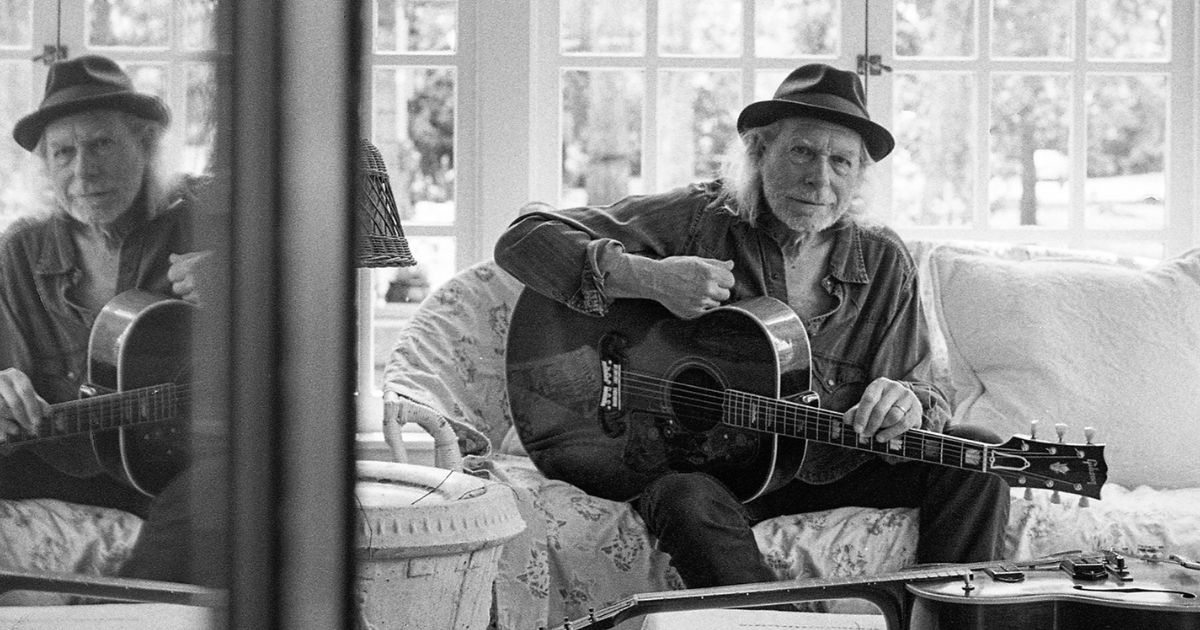

On a new, self-titled album, Buddy Miller reaches an emotional connection to music that first touched him in his teenage years, then revisited him after heart surgery as an adult.
The record combines soul music with country sounds and touching ballads, featuring collaborations with Shawn Colvin, Emmylou Harris, Jim Lauderdale, Regina McCrary, Dan Penn, the War and Treaty, Lee Ann Womack, and others. It’s his first solo effort in 15 years, roughly the same time span since undergoing emergency triple-bypass surgery while on tour.
“Something happened to me during that time, where I would look at the big picture a little bit more, and things that last,” Miller tells BGS. “You want the stuff to last that you do. You want there to be meaning to it. You want it to be more than just the moment, which is cool, too.”
A good storyteller, Miller didn’t solely talk about his album’s focus on permanence, but also discussed the Americana sound for which he is an icon, his immersion in the music of the ‘60s, his links to former Led Zeppelin frontman Robert Plant, and his long association with bluegrass music.
On Buddy Miller, the musician displays the production and sideman skills he has employed with a long list of acts including Plant, Harris, Richard Thompson, the McCrary Sisters, Steve Earle, Willie Nelson and Elvis Costello. Miller’s trademark, reverb-sparked guitars and taut grooves are up front along with a range of vocal harmonies. The material’s deep thoughts are interspersed with lighter moments such as the wry humor of “Loser’s Celebration” and the Cajun lilt of “Till the Wheels Come Off” with its rich harmonies by co-writers Ashley Monroe and Elizabeth Cook.
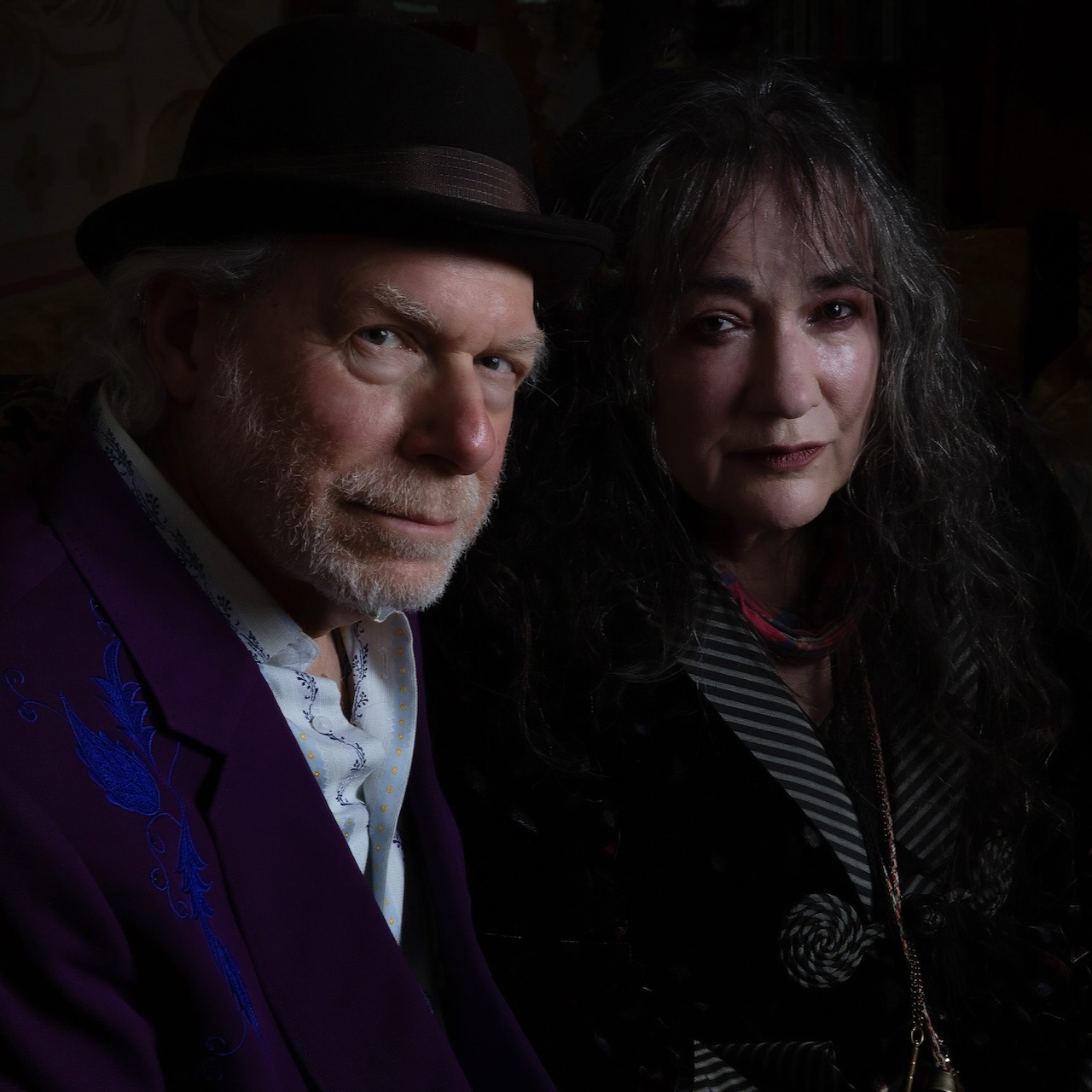
Spiritual sentiments come frequently in songs including “You Never Really Get Over It,” one of several co-writes by Miller and wife/duet partner Julie Miller: “God won’t always hold back the rain/He just makes your heart bigger to hold all the pain,” Miller sings.
“Ruby Hang On,” written by Julie Miller, also encourages a spiritual direction: “He will untangle the past/And shine down His light /When you look at His face,” the lyrics say.
Links to religion are most prominent in Julie Miller’s “The Inner Sanctum of God,” with a slow, three-quarter-time feel, highlighting messages of encouragement: “Darkness is light and worry flees/When you go down in prayer on your knees,” Miller sings. “Jesus says come and the Spirit agrees/In the inner sanctum of God.”
Another of the collaborations between Buddy and Julie Miller, “Masterpiece in the Sand,” reflects on the temporal nature of all of life’s strivings: “You can work your whole life long/To get the world to hear your song/But the greatest works of man/Are just a masterpiece in the sand.”
In conversation, Miller detailed the attitude changes he experienced in 2009 after his traumatic heart attack and treatment. The medical literature cites many examples of such changes after the rigors of heart surgery.
“I was out with Emmylou, Patty Griffin, and Shawn Colvin, and we had this thing they called Three Girls and Their Buddy. It was the four of us on a bus going around singing. What a dream gig! But on one of the last legs we did of the tour, I had a heart attack on stage,” he says. “Fortunately, we were sitting down, and it was during my last song, and they took me for an emergency triple-bypass on the road in Baltimore. So I obviously missed the next gig and a few more. It was a long surgery, and they gave me anesthesia. People have different reactions, and I had an extreme emotional response after that for weeks, and actually probably more than that. I was glad I had my laptop in my [hospital] room with me, and I could listen to music.
“It didn’t take much. It would just take two notes on a piano or guitars, the right two notes or three notes, and I’d weep and just have this emotional connection that I probably hadn’t had since I was a teenager. It was back, and I wanted to hold on to that, and wanted to keep it real. Even though that extreme drifted away, I remember that whenever I’m making a record, whenever I sit down with a guitar, when I’m listening to music. So that’s what I go for. I’m not wowed by a million notes going by really fast. You know, that’s a great place to be. It’s an incredible skill I can marvel at. But I gotta be hitting the heart.”
During his teenage years in Princeton, New Jersey, midway between Philadelphia and New York City, Miller absorbed the broad range of music that came to be called Americana.
“I was into everything in the ’60s. I feel so lucky, and you do too, I’m sure,” he says. “We grew up with this stuff that’s now still the best. I hate to say that, but you know, such important music was happening in real time, one record after another, and we’d see things. I would go to Woodstock one year, and then Warrenton [Virginia] the next year, and the bluegrass festivals, and go hear everything.
“I spent a lot of time at the Fillmore East, and enough times that I saw Led Zeppelin’s first appearance there, from like the third row. But anyway [I heard] all that stuff, all those bands I saw there, all the other music I saw. I fell in love with country and bluegrass, and then country music probably took over.”
After time spent in other music capitals, Buddy and Julie Miller moved to Nashville in the early ‘90s. All the elements that go into Americana were present, but were yet to be called by that label.
“There was nothing Americana to reference,” he says. “There were singer-songwriters that I loved. There was deep country music that I loved. There was the soul music that I loved. Everything was around that I loved, and nothing has changed. Now it’s getting attention; a lot of people want to be in that tent, which is great.”
Miller joined the touring band of another Americana mainstay, Emmylou Harris, shortly after she released her 1995 masterpiece, Wrecking Ball. In another of many contacts with topline musicians, Miller first met Robert Plant in Dublin in the late 1990s as the guitarist in Harris’s Spyboy band.
“I must have had a better night than I thought, and we hung out,” Miller says. “I met him in the pub, and we all went out with Emmy for a pint afterwards. And I guess he kept my number. We put together the Band of Joy after Robert and Alison’s [Krauss] first tour ended. He said, ‘Let’s do a band,’ and he called me, and it didn’t take much convincing.
“I knew where a lot of his references came from. A lot of this is about references. What is going through his head? What old, old influence? Whether it be Sonny Boy Williamson or Arthur Lee from Love, or Moby Grape, because he just recorded a great version of a song of theirs [‘It’s a Beautiful Day Today’].”
Miller also reminisced about his many ties to bluegrass music, starting out during his younger years in Princeton.
“I was the mascot for the local bluegrass band. When I was a teenager, I was horrible at anything, but sometimes I would play upright bass. I was bold enough to think that maybe I could, when they couldn’t get their bass player to show up. Sometimes I’d play a little bit of guitar, but I was worse than anybody in that band. Not by a little bit, by a lot,” he says.
“Sometimes I would play a little drum set in the back because, you know, the Osborne Brothers had drums. Several people with the music we liked did. So I thought I could do anything. I couldn’t do anything, but I learned so much from being around these cats. The mandolin player in this little band was Richard Smith, who went on later to write a biography on Bill Monroe. So I learned from him. I remember going over to his apartment, and he’d play me Monroe records,” he continues.
“But really, it’s always been about the singing and the songs. And to me, when I heard Ralph Stanley after the Stanley Brothers – it was Ralph’s Rebel records – and when I heard that, I liked ‘Shot-Gun Slade’ and his version of ‘Brand New Tennessee Waltz.’ Those were later Rebel records, but that went ‘boom’ as a zinger to my heart, and that just got me — everything about it.”
In a full-circle moment, Ralph Stanley’s final album, 2015’s Man of Constant Sorrow, was recorded at Miller’s house.
“I got asked to produce it and I asked Jim Lauderdale to come and produce it with me,” Miller remembers. “We had a lot of guests. It was made for Cracker Barrel Records, but we had everybody from Robert Plant, believe it or not, who was in awe of Ralph, to Dierks Bentley and Lee Ann Womack and a lot more. Ricky Skaggs came over, and there were all these moments where just the visiting was probably more special than the music.”
Photo Credit: Michael Wilson