
Over the past year, I have been surprised and delighted to find myself working closely with the Hartford family to continue the legacy of one of my favorite musicians, John Hartford. John is famous for his songwriting, but he also loved the fiddle and was a true scholar of the instrument. After his death, thousands of previously unheard and unrecorded fiddle tunes were discovered, written out in his personal notebooks. John’s daughter, Katie Hogue, has spearheaded the effort to get these tunes recorded.
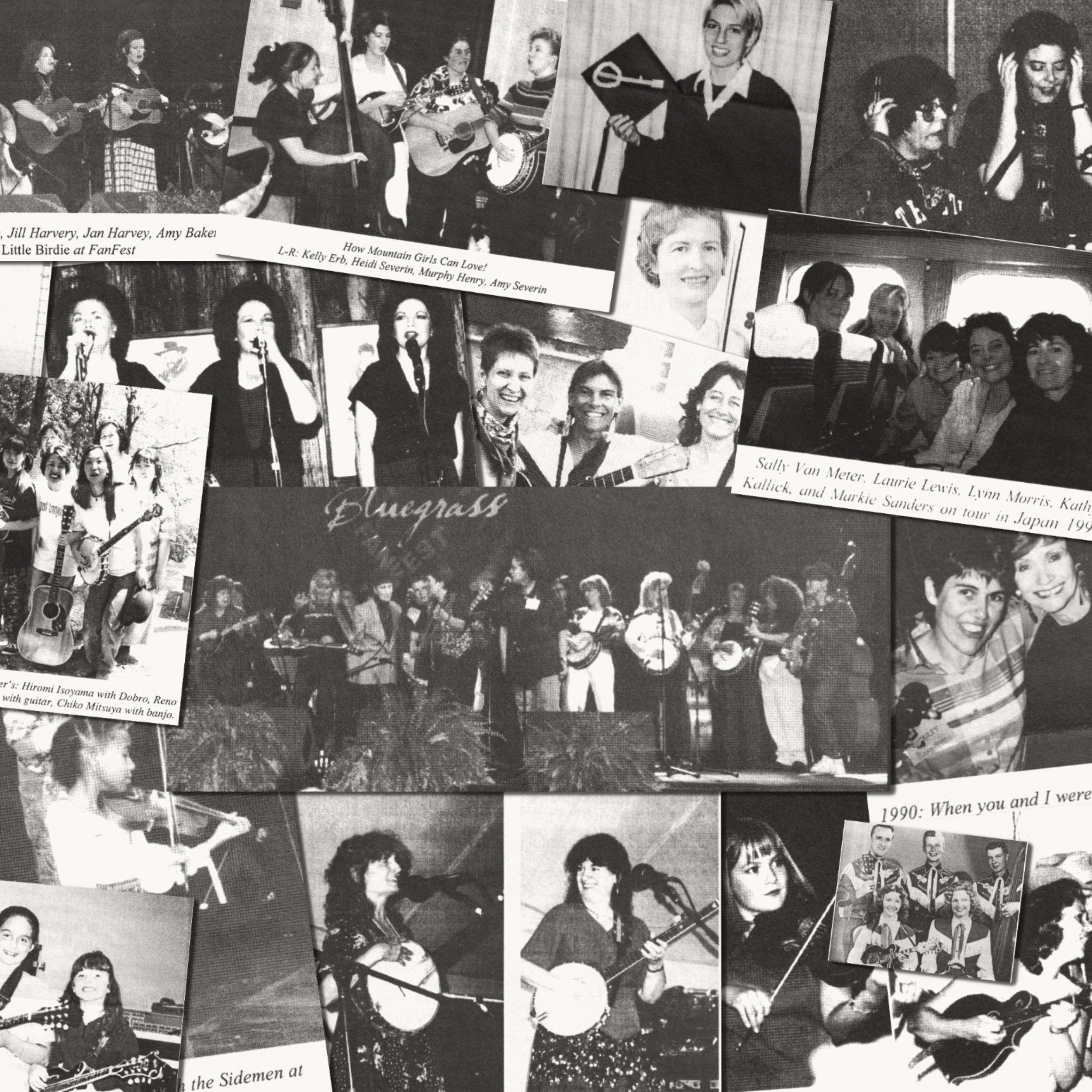
With the album Julia Belle, she brought together an all-women cast of musicians, engineers, and producers to record a second volume of his original tunes. (The first was released in 2020 as The John Hartford Fiddle Tune Project and was nominated for a GRAMMY.) I was honored to be included, and impressed that Katie had decided to frame the second volume of John’s fiddle tunes around women. But this focus on women musicians also got me wondering about the women in John’s life. As a woman honoring the work of a very successful male artist, I had to wonder, “Who were the women who made all of this creative time possible for John?”
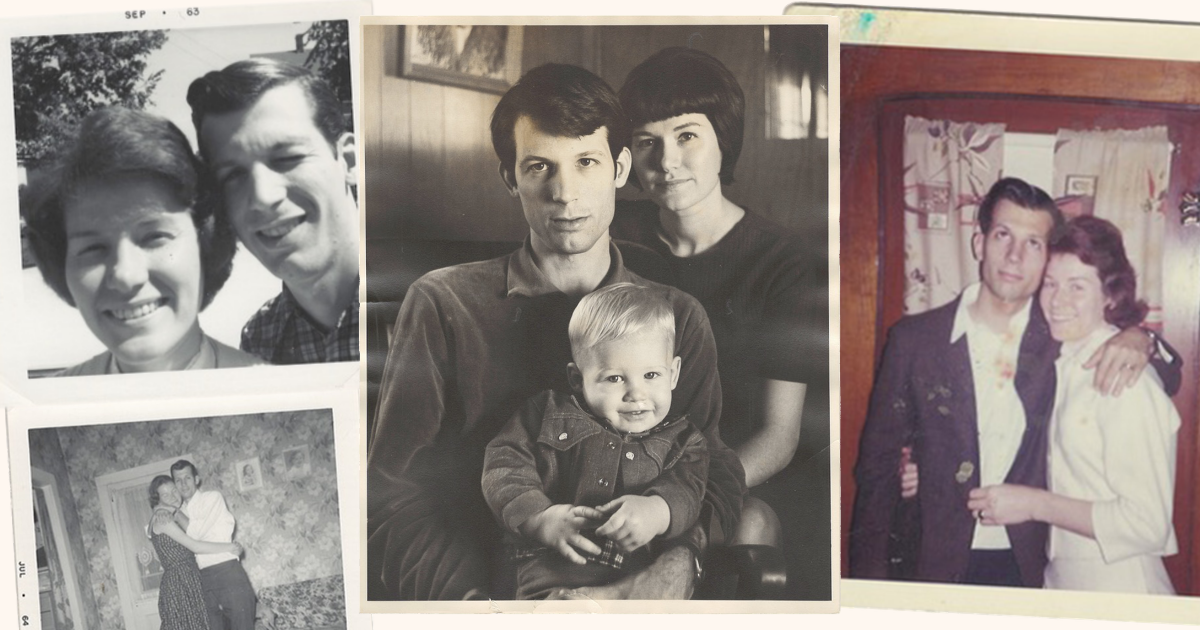
I had briefly met John’s first wife, Betty Harford-Gilbert, at a dinner party. (John later added the “t” to “Hartford” as an artist name.) We got to talking about the past and her experiences meeting and marrying John, as well as raising their two children, Jamie and Katie. I was relieved to find that Betty wasn’t especially bitter towards John. In fact, she had a lot of nice things to say about him. But I wanted to know more about her role behind the scenes, and I asked if she would be up for doing an interview with me. As so often happens in these situations, I had an idea of the story I wanted to tell: Two musicians meet and fall in love. Both want to pursue a professional music career, but as soon as they have children, the woman is relegated to motherhood and steps out of the spotlight to support her husband’s stardom.
However, when I started talking to Betty, it became clear how much I was projecting my own insecurities and generational desires onto the situation. Betty is an extraordinary woman who seems to have lived a million different lives. The story she told me was much more interesting than the one I had made up in my head. In fact, I feel confident that this article is just the beginning of a much bigger project surrounding Betty, her music, and her life.
Betty Beck was born in a small town in southeast Missouri in 1939. Her parents separated when she was three and she was raised by her mother and her grandparents, along with her mother’s siblings, on a cotton farm. As a child, Betty began playing music with her uncle, Jimmy Payne. Jimmy was her mother’s baby brother and he was only 4 years older than Betty, so they grew up like siblings.
“We both hated being in the cotton fields,” Betty explains. “All my life I was working in the cotton fields. We would chop cotton. We would pick cotton. I couldn’t remember a time when I wasn’t doing that. But Jimmy and I were dreamers. I was always looking up at the clouds, saying, ‘I wonder what’s out there? There’s something beyond this cotton patch.’”
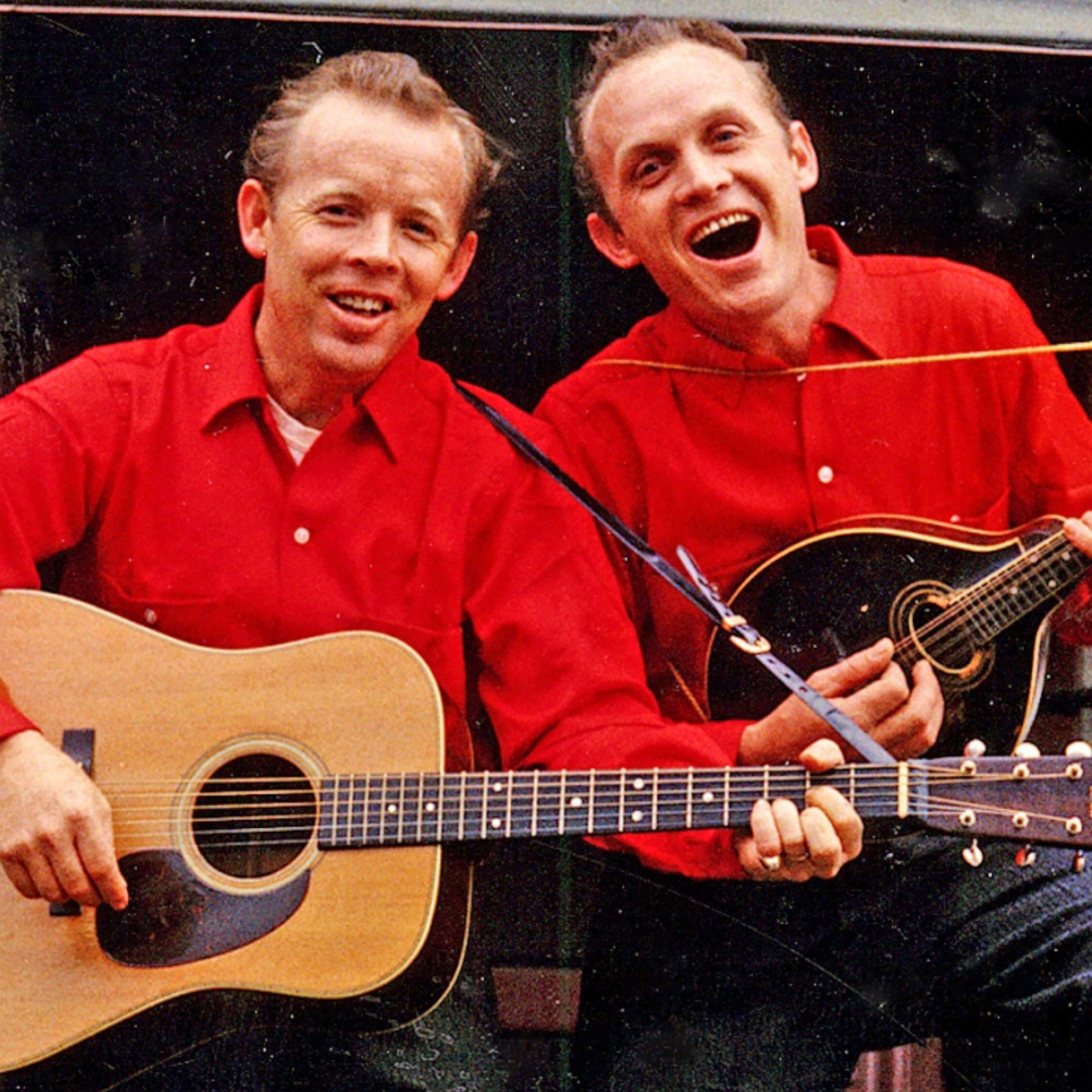
The family had a radio at home and they would listen to the Grand Ole Opry on Friday nights. Betty remembers writing down the lyrics to songs in her little black book as she heard them. She and her Uncle Jimmy began learning to sing songs from the broadcast and trying to harmonize like their idols, the Louvin Brothers. Eventually, Jimmy managed to save up enough cotton money to order a $25 guitar from an Aldens catalog. Once a week, he went into town to learn guitar chords from the local church musician.
James and Betty, as they were known in the region, began playing together regularly. When Betty was 14, the pair began hosting a radio show at KTCB in Malden, Missouri, and their duet became officially known as the Allstar Gospel Singers. (When I texted her to ask about this detail, Betty sent me an eyeroll emoji and said, “Hey, I was 14!”) The duo went live every Saturday and sang requests on the spot.
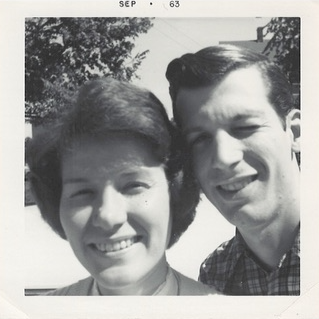
After graduating from high school, Betty packed her bags and took the bus to St. Louis looking for work. She had been working part-time as a secretary during high school and had become an expert typist. She soon landed herself a job and apartment. Her mother showed up with her younger brother three weeks later, placing the responsibility of breadwinning squarely on Betty’s shoulders. Betty describes those three weeks before her mother arrived as some of the happiest of her life: “I was free!”
Her uncle Jimmy Payne arrived in St. Louis not long after and the two continued playing music together occasionally, although she felt that he was more interested in pursuing a solo career at that point. It was through Jimmy that Betty met John, when the two of them went to perform at a radio station for which John was DJing. Notably, in my research about John’s early life as well as Jimmy’s, nobody mentions playing or writing music with Betty, even though she is the common denominator between these two hit songwriters.
Betty and John hit it off immediately, although Betty says she was “not impressed” with John.
“He was a good musician,” she explains, “but there were a lot of musicians better than him… and he dressed terribly. He had holes in his sleeves and wore ridiculous hats. I was sometimes embarrassed to be seen in the diner with him.”
Despite all of this, she fell for him, and the two began dating, eventually marrying in secret to avoid grief from Betty’s loving but controlling mother.
This is where our conversation started to surprise me. Betty told me about the two of them singing together, the music they would listen to and learn, and the hymns and country songs that she taught John, but she also mentioned going along to his band practices with Don Brown and Norman Ford, falling asleep on the couch as they played late into the night, then having to get up early for work the next day.
“You went to his rehearsals?” I asked.
“Well, yes,” she explained, “that was the way to be with him.”
Later, John told her that he was “testing her” to see if she could handle the musician lifestyle. It occurred to me at this point in our conversation that Betty wasn’t thinking about her career versus John’s career, it was just their lives together and a life around music that they both loved. They listened to records together, they wrote songs together, they sang together, and they went to rehearsals and gigs together. Betty played me an old recording that she and John had made of three songs; two they had written together and one she had written. Their voices in harmony over solo banjo gave me chills.
“How has nobody heard these?” I asked. She just shrugged.
It was on the drive home from one of John’s gigs (John was playing in the Ozark Mountain Trio) that Betty first suggested to John that he could consider playing his own songs rather than being a sideman for a band he was bankrolling. He soon began gigging solo and gaining a following. Betty was also the first to hear “Gentle on My Mind,” the song that launched John’s career into Hollywood via Glen Campbell. They had just been to see the movie Doctor Zhivago and Betty put Jamie to bed while John wrote.
“He came downstairs and said, ‘Honey what do you think about this?’ He was so proud of it. And I said, ‘Yes, I really do like it, but what about these two women you’re talking about? Which one am I?’” she laughs.
Some of our conversation revealed disappointing, though typical, attitudes of the time. Although John wanted children, when Jamie and Katie came along, he didn’t cope well with factoring them into his bigger picture. “John wasn’t a hands-on dad, never was,” Betty explained. By this time, Betty and John were both working musicians living in Nashville. They decided that John would pursue his music and Betty would focus on the kids.
When I asked Betty if this bothered her she said, “I agreed to it. I could just feel that he had a real fire to make it happen, more than I did.”
But it wasn’t that John wanted Betty to stay home while he went off on tour. He wanted her right by his side. “He called me one day so excited. We had always talked about going to Europe and he said, ‘Betty, we’re going on tour, 21 days in Europe.’ Well, Katie was six months old at that time and when he called I was holding the phone with one hand and trying to feed her with the other. I said, ‘Okay, well…’ and he said, ‘I thought you’d be more excited!’”
After some argument – John thought they could leave the kids with a babysitter and Betty was not in agreement – they decided that the kids would stay with John’s parents back in St. Louis. But the tour was the beginning of the end of the marriage.
More troubling than John’s absence as a father was the environment of Los Angeles stardom. John had found a new social scene, with actors, groupies, and plenty of weed. It was the early ’70s and John was on TV.
Betty told me about a performance John did at the Playboy Club, after which the two of them got into an elevator only to be squeezed in by several well-endowed “bunnies.” “He came home one day with Carl Gottlieb, a writer for The Smothers Brothers Show, and the two of them were just so happy. Later, he said, ‘Betty, we should smoke some grass together’ and I said, ‘John, I don’t need that stuff.’”
Betty felt John was becoming something she didn’t recognize, something she didn’t want the kids around, and something that they hadn’t planned on for their life together. Betty stayed in Los Angeles for six months after she and John separated, but he hadn’t made much effort to be a part of the kids’ lives, so she took them back to Nashville, a place that she missed terribly.
Betty is religious and refused to stray from her principles for John’s sake, something she feels that John always respected her for. As the years went by, he made more effort to get to know his children, but they were largely raised by Betty. However, this was in no way the end of Betty’s story.
After her kids had grown up, she moved to Alaska where she “worked part time for Statewide Blasting … rigging explosives and blowing stuff up, and flew all over Alaska in a [Piper] Super Cub.” Betty met the true love of her life in Alaska, a man who she married just weeks before he died.
John returned to Nashville and, in some ways, returned to himself. He married Marie Fielder and they lived on the Cumberland River in Madison, Tennessee, until he passed away in 2001.
During the last weeks of his life, Katie and Betty went to visit John. He asked Betty to sing to him and she began singing the old gospel songs that they had learned together. After she went through all that she could remember, he motioned for her to come close to him. He could barely speak but whispered to her, “Life of a Flower.” And she sang to him:
As the life of a flow’r,
As a breath or a sigh,
So the years that we live
As a dream hasten by
True, today we are here
But tomorrow may see
Just a grave in the vale
And a mem’ry of me.
It occurs to me now that John Hartford’s legacy and catalog is in the hands of his daughter, Katie Hogue, who runs his estate. Katie has worked tirelessly to put out records and books of her dad’s fiddle music, partially with the intention of getting to know him posthumously, but also because she believes that his music is a gift to the world.
Though John was unable to factor his family into his creative success, or perhaps they were unwilling to follow that success on his terms, it is the women in his life who continue to support and uplift his career long after his death, just as they did while he was living.
Photos courtesy of Betty Harford-Gilbert via Rachel Baiman.