
Ken & Brad Kolodner — the father-and-son acoustic duo from Baltimore — began playing together more than 15 years ago now in living room jam sessions. At the time, neither of them knew they would wind up doing this professionally — but here they are, with their fifth studio album, Hand’s Cove.
The collection contains a baker’s dozen songs that range from originals (penned by Brad) to traditionals to a rendering of John Hartford’s “Steam Powered Aereo Plane.” Listeners get a nice mix of old and new — as well as a variety of instrumentals and vocal selections. The album is bookended by refreshed versions of two songs from their 2010 debut, with “Otter Creek” kicking things off and “Bradley’s Tune” bringing them to a close.
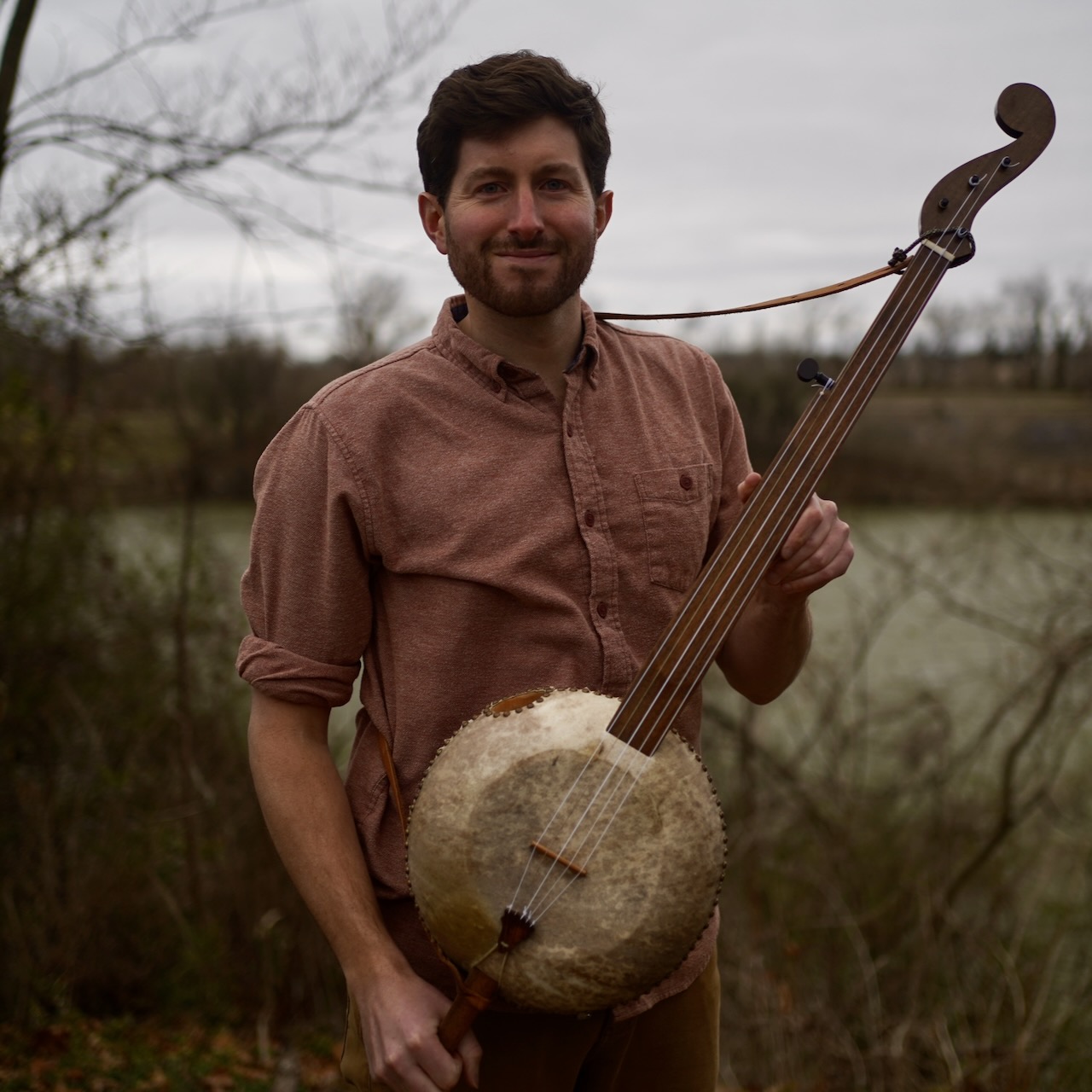
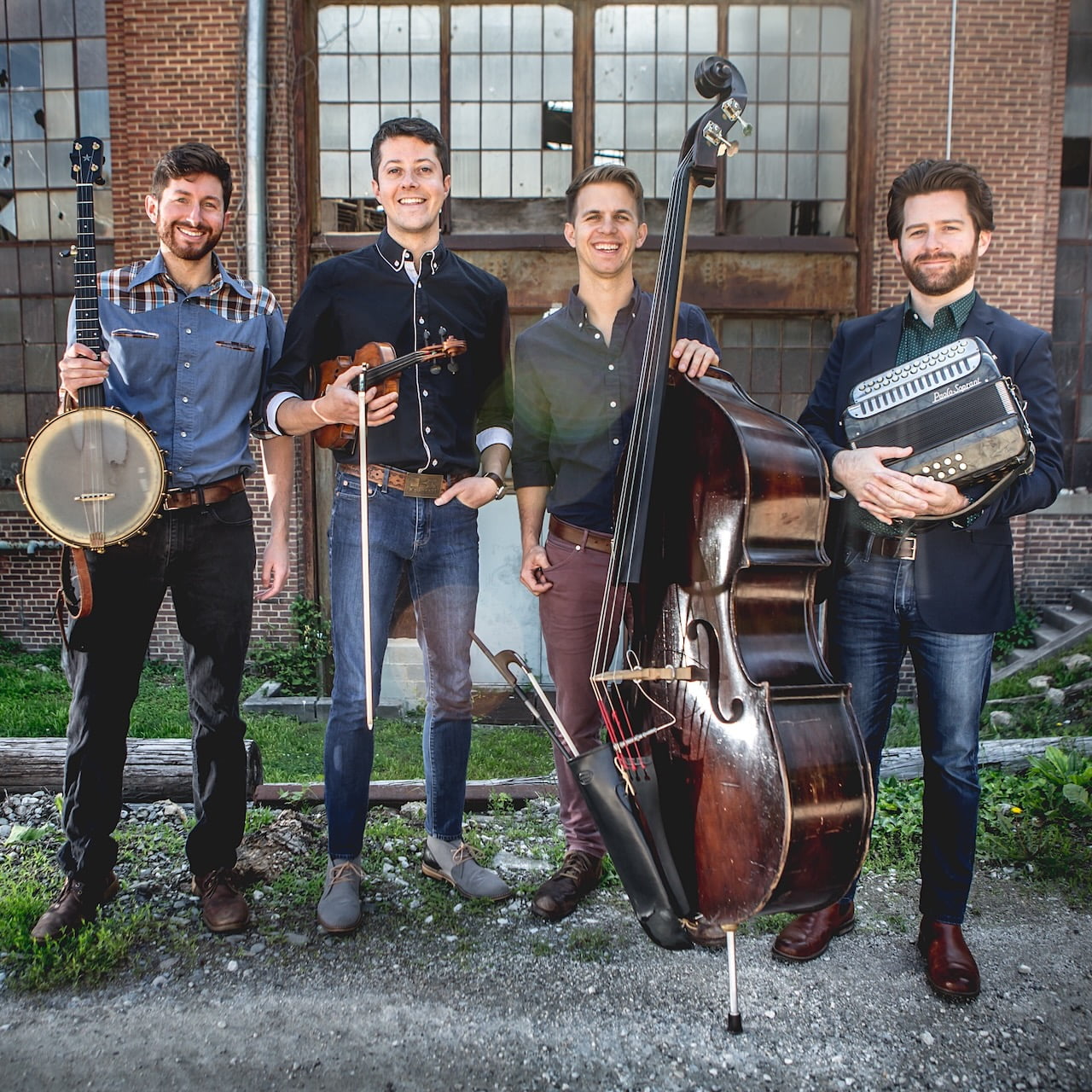
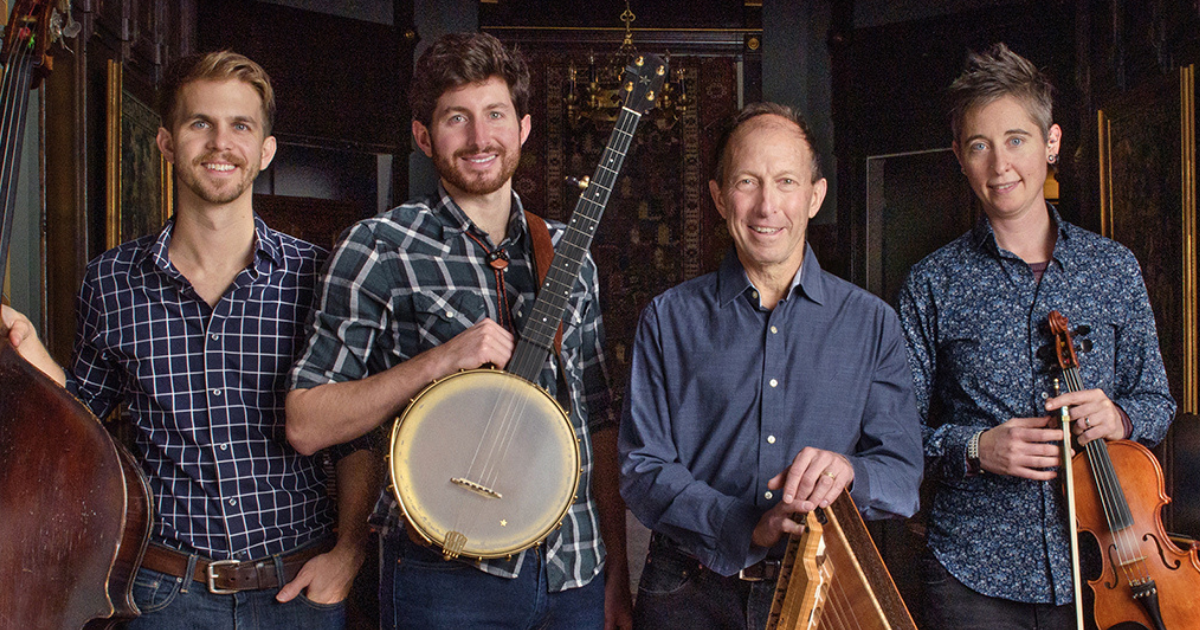
Although billed as Ken & Brad Kolodner, the ensemble is technically a four-piece. Singer-guitarist Rachel Eddy and upright bass player Alex Lacquement have been with the duo for many years. The group’s sound is distinctly bluegrass-inspired, yet there is also something hard to define. Much of that comes down to the combination of Ken and Brad’s instruments — the hammered dulcimer and clawhammer banjo, respectively. That rare blend provides more of a rhythmic vibe than some of their peers while remaining true to the bluegrass spirit.
BGS caught up with Ken and Brad Kolodner just after they had gotten back from what sounded like a fun trip to Scotland, and they shared stories about how they discovered their instruments, where they go to find creative inspiration, and why they think about the concept of cover songs in a whole different way.
BGS: For starters, tell me when and where you guys recorded the album and how long it took.
Brad: We recorded the album in a handful of sessions over last fall and into early winter in Baltimore. A studio just north of town called Stages — a lovely recording studio with an engineer named Dave Nachodsky. We recorded much like we do on many of our albums where we’re all in separate rooms. While we’d love to all play in the same space, the nature of our instruments, including the hammered dulcimer, [means] we’re all separated. But we had a nice experience, tracking everything live.
Ken: We did record one piece together in one room — the twin fiddles on “Shuckin’ the Brush.”
Brad: That’s right. One tune we went knee to knee, as they say.
Tell me a little bit about the title track. I was surprised to learn that Hand’s Cove is up in Vermont. I assumed it was somewhere down South. So I’m curious to hear more about the setting that inspired it.
Brad: Well, much of our music is Southern Appalachian-inspired — old-time and roots music. Being that we’re from Baltimore, you know, what is the connection to Vermont? We have a deep family connection there. My mom, Alison, is from Vermont and has lots of family up there. So we often spend time there in the summer — and back when my grandparents were still living, we’d visit them in the winter. They have a family house called The Camp that’s been passed down for generations, about a hundred years now. We would go there in the summer, spend time in The Camp and write music inspired by the setting.
It’s very reminiscent of a setting you’d find in the hills of Appalachia. The beautiful Adirondacks out in the distance and the Green Mountains behind you. Very mountainous and rural area. And then Hand’s Cove is a marshy area right next to The Camp in Vermont, where you can take a canoe or a kayak. The tune of course is an instrumental, but it’s meant to evoke the feeling of being in the cove and paddling around. And it connects to this important moment in the Revolutionary War where Ethan Allen and the Green Mountain Boys hid out in the cove, planning their attack on Fort Ticonderoga, which is right across the lake.
Ken: And the tune itself, which Brad wrote, is highly syncopated with the dampened hammered dulcimer and the percussiveness of the clawhammer banjo. We embrace the two instruments and accentuate the syncopation.
I wanted to ask about your musical influences. Where do they differ and where do they coexist?
Ken: Well, I guess my history goes back quite a bit longer. The music that I listened to the most was in the folk-rock sphere. But I went from there to bluegrass. And from bluegrass into old-time, and then into traditional Irish and Celtic music in general. But I also spent a lot of time listening to hammered dulcimer recordings from all over the place. I toured with a band called Helicon for a bunch of years. Our mission was to play music from wherever we could find it. That included traditional music from South America, Eastern Europe, certainly Celtic music. But I started my fiddling career listening primarily to old-time. That was the style of music that I was most drawn to. So, my influences are all over the place! I can’t point to a particular band or artist.
Brad: Growing up in the ‘90s, I was into some popular music. But in terms of what influences my approach to banjo, I was certainly introduced to old-time from being around my father. Although while I was listening to it, I don’t think I was really delineating what was old-time or bluegrass or Irish or traditional music. It was all just acoustic music played on string instruments. When I heard clawhammer banjo for the first time, I didn’t really think of it as old-time music or bluegrass; it was just the instrument itself and the tone. That’s really what drew me in. Specifically, Richie Stearns who is a fabulous player out of Ithaca, New York. His approach to the banjo caught my ear. There are certainly other players like Adam Hurt, Chris Coole… These are household names in a clawhammer banjo player’s repertoire. Deeply influential.
Was the hammered dulcimer your first instrument, Ken?
Ken: No, I actually started out with fiddle. I hadn’t played an instrument as a kid except for a very brief stint on the piano. But I really had no interest in playing anything. So I picked up the fiddle in my early 20s. I didn’t even understand the differences between old-time, bluegrass, Celtic styles, whatever; I thought it was just fiddle. But I had attended some conventions like the Deer Creek Fiddler’s Convention, which was just a local one. And I went down to Galax before I played the fiddle. Spent a couple of days there and thought it all looked so fun. So I started to teach myself fiddle. And probably two years after picking up the fiddle is when I got my first hammered dulcimer. You know, in those days there was no internet or anything to listen to. I didn’t really know people that played. So I bought recordings and just taught myself.
You do a mix of originals and covers. When you’re doing a cover — whether it’s a standard or, say, a song by John Hartford — what is it that you look for in a song?
Brad: Well, I actually never use the word “cover.” I mean this as more of an abstract concept… You know, I mostly play traditional, old-time music. But I think of these tunes as having a lifespan that just carries on. Like once the song is born, it is then carried on and transmitted through generations. You know, traditional tunes are in a sense covered and covered and covered — to the point that they may be unrecognizable from the original. And I really embrace that: allowing your own creative influences to impact that tune as you process it. I say all that to point out that when you choose to record or perform a song, it’s probably because it connects with us in some way. It brings back some memory or emotion.
For us, “Steam Powered Aereo Plane” is interesting. Because Rachel Eddy, our longtime bandmate, has been performing the song for many years. In one way, the song doesn’t really make any sense; it’s a silly, kind of classic John Hartford collection of non sequiturs. It’s a very peculiar, whimsical song. I can’t really speak for Rachel, but I think there is a playfulness to that song specifically that they connected with. And in turn, Ken and I appreciated that Rachel chose this song. It sort of speaks to that more whimsical side of our musicality.
That’s a good segue because I know there are two other members of your group. What do Rachel and Alex bring to the group specifically?
Brad: Well, Rachel is a West Virginia native. Fiddle player, guitar player — also a really nice banjo player and singer. Rachel is this kind of Swiss army knife in our band that can play any of those instruments at an extremely high level. An excellent, driving style that matches what we’re trying to do. With Alex, similarly, it’s a very driving push that matches the banjo-dulcimer groove. Alex can take these great solos. He really understands the bluegrass vocabulary and has a deep music theory background.
Ken: And both have such a positive energy that they bring to the band. They definitely do not sit in the background. They contribute in many ways to the musical sense of the ensemble and how to put it all together.
Photo Credit: Joanna Tillman