Country music has a long-standing reputation as being a genre focused primarily on breaking songs at radio and, consequently, one that releases albums routinely dismissed as “hits plus filler.” Conventional wisdom is not entirely wrong on this point, but it is wildly overstated. The truth is that every year is a good year for country albums—and that was once again the case fifty years ago.
I wouldn’t crown 1976 as the greatest country-album year ever—as I once suggested at No Fences Review, that title may belong to 1973—but the U.S. Bicentennial was yet another year filled with fantastic, even essential, country albums. Of course, any Best-Of music list is subjective, but I’d argue the best ones both validate reader experiences (“Oh hell, yes! That’s a great one!”) and challenge their taste (“What the hell?”).
So, listed alphabetically only, and with the understanding that I could have easily doubled the length of the list below, here are my 15 Best Country Albums of 1976.
Jessi Colter – Jessi
Colter will forever be best known for the pissed-off vulnerability of her “I’m Not Lisa,” the quiet crossover hit off I’m Jessi Colter. But Jessi, her follow-up in ’76, is the better album. Colter’s quaver doesn’t always hold, or even hit, the notes she’s after, but somehow that limitation consistently deepens the domestic turmoil she sounds in her songwriting. And the wild, bluesy, and country-rock arrangements on “The Hand that Rocks the Cradle” and on No. 11 hit “It’s Morning (And I Still Love You)” only reinforce Colter’s conflicting emotions. “Without You” opens at a crawl, just voice and piano like it’s going to be the unhappy sequel to “I’m Not Lisa,” then suddenly it’s a party. “Without you I can’t go on,” she keeps insisting, but you can tell she’s already starting to dance.
Stoney Edwards – Blackbird
Stoney Edwards’ final Capitol album included several tracks that, then as now, sound like they should’ve been good-sized hits, but both the sweet country pop of “Love Still Makes the World Go ‘Round” and the prayerful version of Merle Haggard’s “Don’t Give Up on Me” barely charted at all. In the uplifting but controversial social commentary “Blackbird (Hold Your Head Up High),” which just missed the country Top 40, Edwards used the N-word to describe himself and his father—pointedly so, to shine a light on the white world’s bigotry and oh-so shrewdly, as well, to claim country music for his own. The unexpected closer, a crawling six-minute version of Leonard Cohen’s “Bird on a Wire,” is a perfect vehicle for Edwards’ worn-sandpaper baritone: “I have tried in my own way to be free…”
Emmylou Harris – Elite Hotel
Elite Hotel was technically out in 1975, but since it wasn’t released until Dec. 29th, I’m more than pleased to include it among the best of ‘76. On her second album, and as of that April, her first No. 1, Harris dedicated her luminous voice to bridging country scenes new and old. She memorably covered her late friend Gram Parsons twice even as she also scored a pair of chart-toppers with versions of classic hits by Buck Owens and Patsy Cline—and added a No. 2 hit with George Jones deep cut, “One of These Days.” I know the competition has been stiff, but is this Emmylou Harris’ best album?
Waylon Jennings – Waylon Live
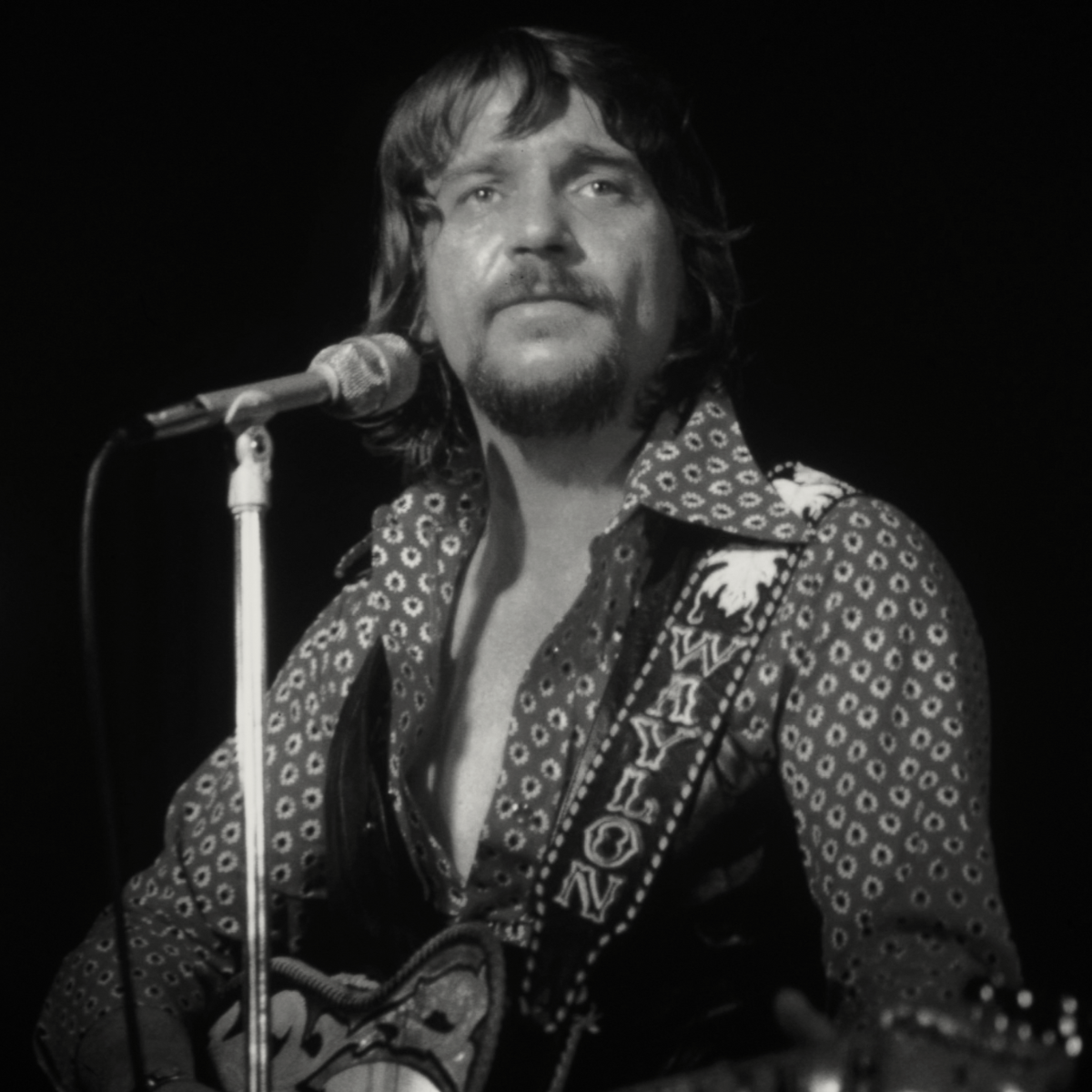
Recorded at shows in Dallas and Austin in 1974, Waylon Live is my pick for Greatest Country Live Album Ever. Jennings is at his tender, burly best and Ralph Mooney adds lightning-strike pedal steel throughout, atop the Waylors’ thumping, bumping country rock. From “T for Texas” (“Wanna hear me yodel?”) to “Bob Wills Is Still the King” to “This Time,” this is Outlaw country at its artistic peak. Pro tip: The 11-song original LP was bumped to 20 tracks when reissued on CD in 1999, then expanded to 42 tracks in 2003, and will still leave you wanting more.
Loretta Lynn – When the Tingle Becomes a Chill
Lynn was never much of an album artist but this one goes on her short list. The title track, written by Lola Jean Dillon, is a women’s movement anthem that lays out the cold, hard material conditions of domestic life. You wish Lynn had gender-flipped her cover of the Glen Campbell hit to “Rhinestone Cowgirl” or that her only song credit here, “Red, White and Blue,” didn’t claim Cherokee roots for herself quite so stereotypically. But those are quibbles next to how persuasively she transforms each cut here as a statement of her absolute Loretta-ness.
The Osborne Brothers – Number 1
This Osborne Brothers album included zero No. 1 hits, zero songs that include the phrase “number 1” and, what’s more, was approximately their 18th studio album, not their first, so my guess is that this album was called Number 1 because it was their first for bluegrass label CMH. Regardless, Number 1 pops like only the Osbornes can. It’s filled with Bobby’s great high leads and jaggedy mandolin solos, with Sonny’s ringing banjo and, for even extra pop, David Brakefield on high-lonesome drums. A-Team pianist “Pig” Robbins even drops by on “Memories Never Die” and “Each Season Changes You.” Bluegrasspolitan!
Johnny Paycheck – 11 Months and 29 Days
This album didn’t include any radio hits to speak of, the way earlier Paycheck sessions with producer Billy Sherrill had, and certainly nothing as monumental as the pair’s “Take This and Job and Shove It” would the following year. But would you settle for some of Paycheck’s greatest performances? The title track (a Paycheck/Sherrill co-write) is a rough-and-rowdy, in-the-jailhouse classic, while “The Feminine Touch” is a tragicomic testament to the way every domestic nicety abandoned Johnny when his wife moved out, and “Gone at Last” (a Paul Simon song and duet with soul singer Charnissa) is delivered with fingers-crossed, Pentecostal mania. Best of all is “I’ve Seen Better Days,” a miserable country-soul masterclass that begins with Johnny coming to on the lawn.
Elvis Presley – The Sun Sessions
Either a jolting reminder or thrilling revelation, depending upon when you came in, The Sun Sessions brought together for the first time Presley’s first commercial recordings, the game-changing sides that both challenged and help to expand what people thought of when they thought of country music. It kicks off, of course, with the genre-scrambling debut single “That’s All Right” b/w “Blue Moon of Kentucky,” and gathers as well his game-changing run of initial rockabilly hits—all on country radio, mind you—including his career-first chart-topper: “I Forgot to Remember to Forget.” In June 1976, the reissue of the year peaked at No. 2 on the country album charts.
Charlie Rich – Silver Lining
Country soul singer Charlie Rich teamed here with producer Billy Sherrill for a gospel album that remains too little known. Silver Lining features the dynamic rhythm beds and harmony group arrangements, and the deeply felt and swung vocals, that were already beloved from Rich’s many seventies country hits. Indeed, the versions of “Sometimes I Feel Like a Motherless Child,” “The Milky White Way,” “Down by the Riverside,” “Why Me” and the rest would fit thrillingly on any of Rich’s albums in the decade. I especially appreciate the Silver Fox’s joyous, rousing intervention on the normally staid “Amazing Grace.”
Linda Ronstadt – Hasten Down the Wind
Mention Linda Ronstadt in a county music context and people will jump first to her Trio collaborations with Dolly Parton and Emmylou Harris, then maybe recall her contributions to the country rock scene of the late 1960s and early 1970s. But her most important and lasting contributions to country music were her several big radio hits in the middle of the decade. Hasten Down the Wind further cemented old-time rock and roll sounds as up-to-date country with her version of Buddy Holly’s “That’ll Be the Day” (a No. 27 hit) and reestablished Patsy Cline’s reputation for new country and rock fans with “Crazy” (a No. 6 hit). The album also paved the way for the acceptance of a certain type of arena rock balladry for countless country stars to come—especially with the pedal steel-powered “Try Me Again,” a song Ronstadt co-wrote with Andrew Gold.
The Seldom Scene – The New Seldom Scene Album
This is the Seldom Scene late in its classic lineup’s run (John Duffy, John Starling, Mike Auldridge, Tom Gray, and Ben Eldridge) as they put their newgrass stamp on old gems from the Stanley Brothers and a couple of new ones from Rodney Crowell (including harmony vocals from one Linda Ronstadt on his “California Earthquake”). This album has often been judged as lesser than earlier efforts by the Scene, but I love the way it leans so hard into eclecticism, which is this ensemble’s always-seen calling card. From the album’s opening, rolling-on-home version on Jimmy Buffett catalog cut “Big Rig” to their closing Dobro-and-harmony-forward cover of Hank Williams’ “Pictures from Life’s Other Side,” this set feels like one more tent pole for big-tent bluegrass.
Various Artists – Wanted: The Outlaws
Sitting atop the country album chart for two months early in the year, this compilation served as the national coming out party for a long-simmering scene that remains a genre touchstone to this day. Technically speaking, several of the album’s cuts weren’t Outlaw at all: Waylon Jennings and Jessi Colter’s duet “Suspicious Minds” had been released as a single before Jennings’ famously renegotiated his RCA contract, and two of Willie Nelson’s contributions, “Yesterday’s Wine” and “Me and Paul,” had already been released as a failed two-sided single before Nelson left Nashville for Texas. Time changes everything, though, and when rereleased in 1976, these cuts were understood to crystallize progressive-country sounds and the genre’s newly rebellious attitude. The first country album ever to be certified platinum, Wanted: The Outlaws nudged country music in the direction of becoming more explicitly an album-oriented format, just like rock, even as Outlaw country also became, ironically, country music’s next big pop crossover sound. Don’t sleep on Tompall Glaser’s fantastic version of “T for Texas”!
(Read more about Wanted: The Outlaws.)
Leona Williams – San Quentin’s First Lady
When Merle Haggard played a New Year’s Day show at San Quentin in 1976, his opener was Leona Williams, who was a member of his touring troupe as well as his future wife and songwriting partner. He wrote most of the songs she performed, and his band, the Strangers, backed her up. But make no mistake: This is the Leona Williams Show. She sings the husky hell out of “I Wonder Where I’ll Find You at Tonight,” “San Quentin” and “Workin’ Girl Blues,” and she and guitarist Roy Nichols both like to tear the placed down on “If Anyone Ought to Know.” San Quentin’s First Lady is long out of print, but do yourself a favor and track down it down on YouTube.
Hank Williams Jr. – Hank Williams Jr. and Friends
Hank Williams Jr. and Friends was recorded before the singer nearly died falling off a mountainside in April of 1975. But, like Elite Hotel above, it wasn’t released until December and didn’t chart until ‘76. Timelines aside, this is the album where Hank Jr. finally began to find a rocking, modern sound of his own in the swelling southern rock anthems “Losing You” and “Can’t You See” (by his friend Toy Caldwell of The Marshall Tucker Band) and tender ballads like “On Susan’s Floor” (by Shel Silverstein). But it’s the pair of minor hit singles that close the album, both Williams originals, that steal the show and predict his superstar future. The haunting “Stoned at the Jukebox” is a boozy honky-tonker about the loneliness that closes in after all your rowdy friends head home, while “Living Proof” wrestles with having to live up to family traditions. Among the very best country albums of the entire Outlaw moment.
Bobby Womack – BW Goes C&W
R&B legend Bobby Womack’s country album was summarily panned in its day, but working a bigger-tent understanding from here in the 21st century, it sounds awfully good to me. Womack leans hard into the soul of the already soulful Charlie Rich hit “Behind Closed Doors,” brings a playful modern bounce to the mid-century Eddy Arnold smash “Bouquet of Roses,” and makes over another Rich hit, “I Take It on Home,” into delightfully ragged countrypolitan. Most telling of all, as far as cracking open genre walls goes, is when Womack turns away from the Nashville songbook to underscore the country in his brother Curtis Womack’s “Don’t Make This the Last Dance” and the song Sam Cooke wrote for Womack’s old family group The Valentinos, “I’m Tired of Living in the Country.”
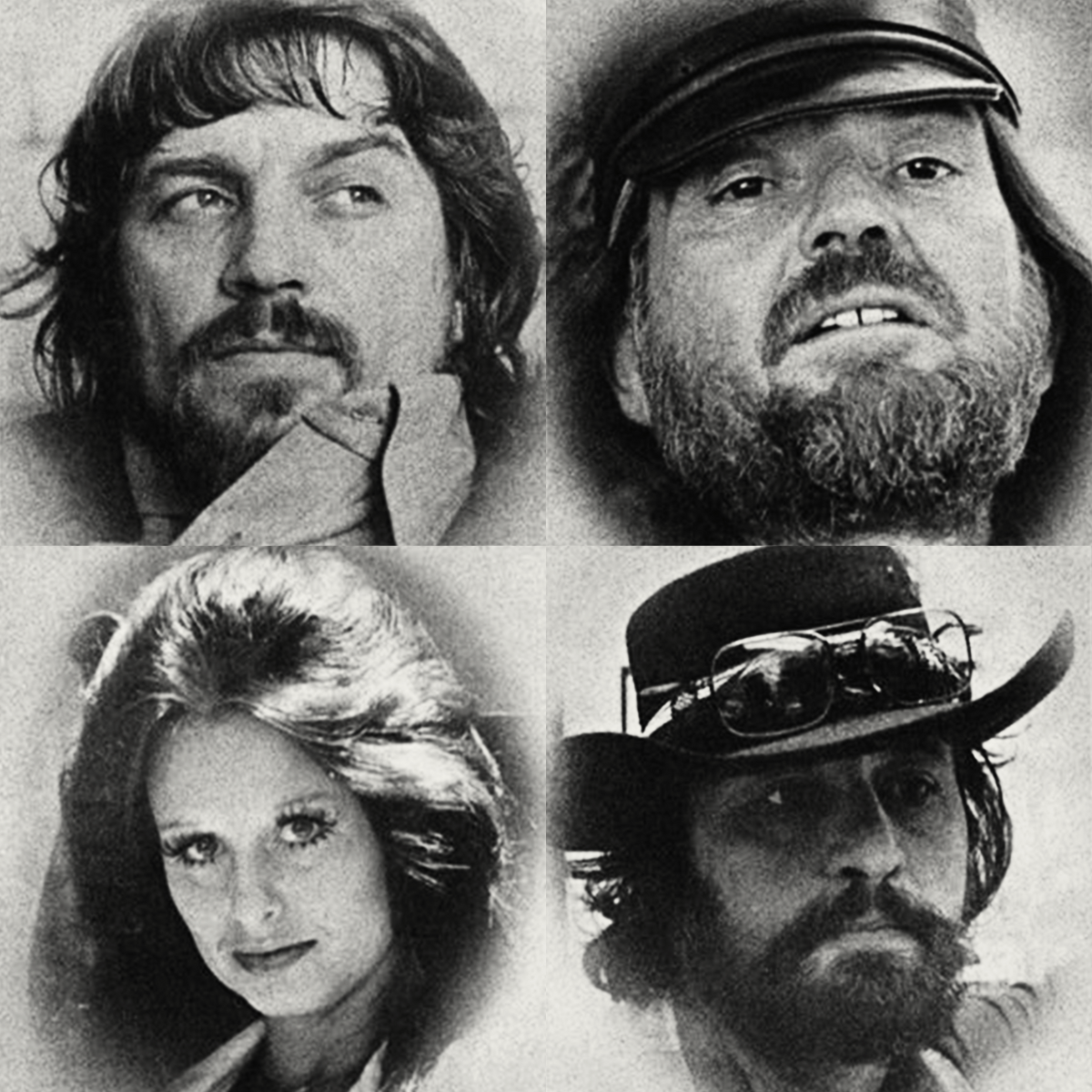
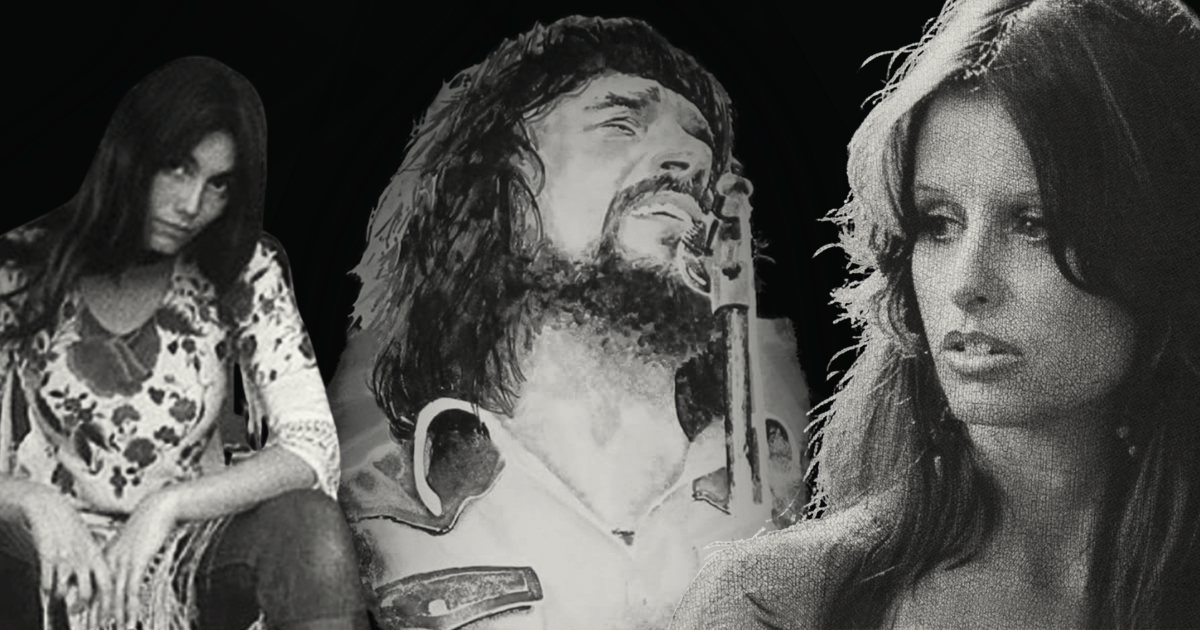
Lead image: Emmylou Harris, Elite Hotel; Waylon Jennings, Waylon Live; Jessi Colter, Jessi.