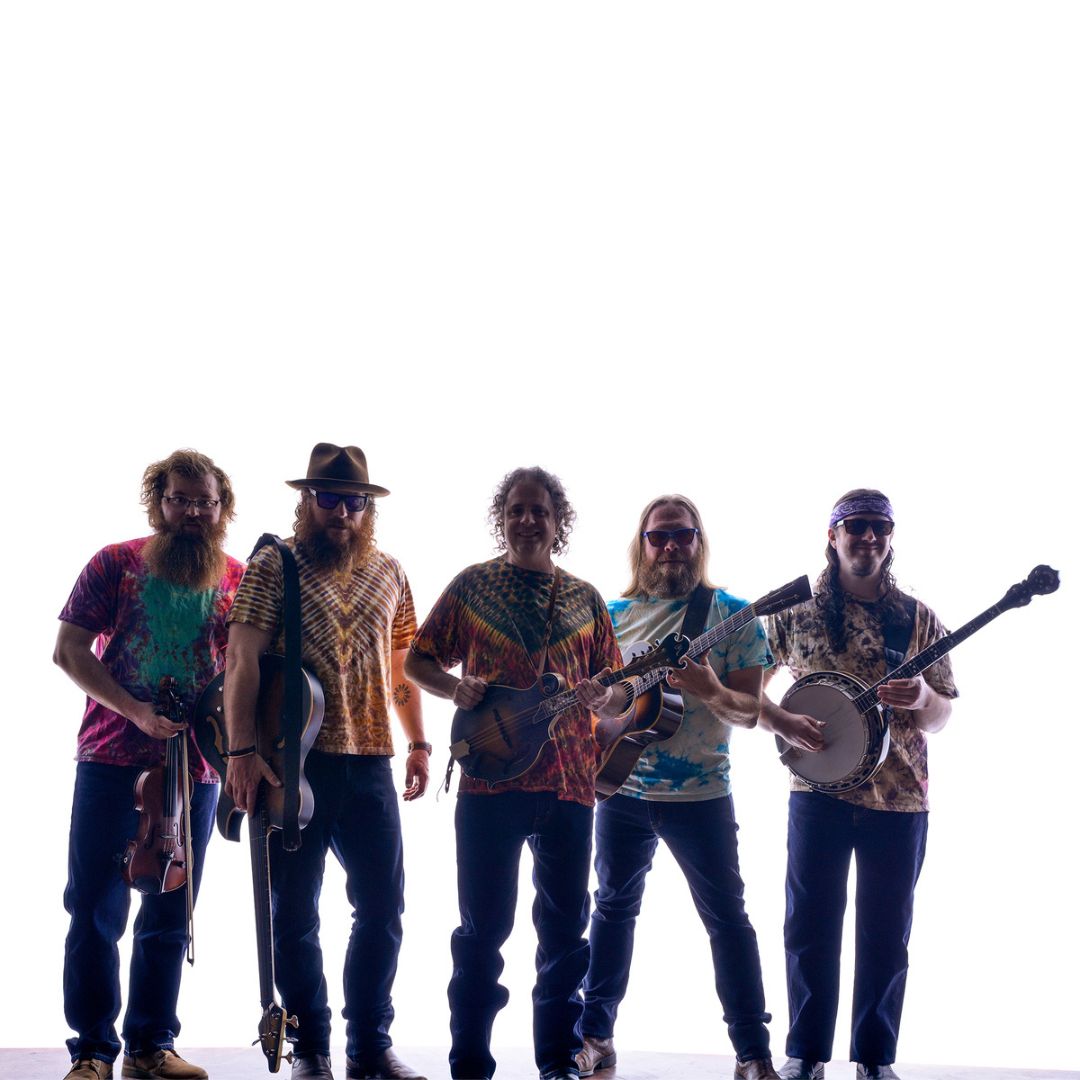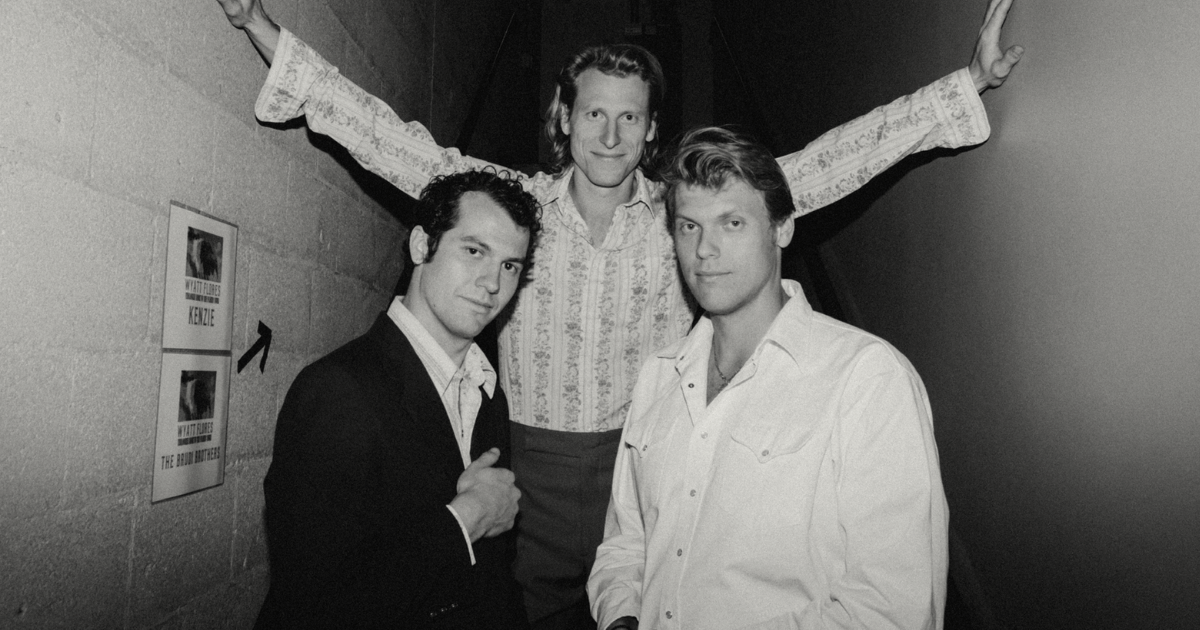
With three-part sibling harmonies and acoustic arrangements that harken back to the music of the 1940s, the Brudi Brothers are still somehow right in step with the modern era.
Seattle-based brothers Johannes, Conrad, and George Brudi charmed millions on social media with “Me More Cowboy Than You,” a catchy and clever number written after a winter trip to San Francisco. In the midst of tech workers in puffy L.L. Bean jackets, the brothers couldn’t help but notice the occasional random guy in 1960s cowboy attire. The anachronism naturally lent itself to some gentle ribbing. Who among us hasn’t seen someone, camera in hand, doing a country fit check?
When “Me More Cowboy Than You” took off on TikTok in January 2025, the Brudi Brothers already knew how to sing loud and hold a crowd, giving them a runway to a touring career. They’ve signed business deals with Mom and Pop Records and CAA, but they’re still leaning toward the DIY aesthetic. (For example, their best friend from school is their tour manager; he even built out a trailer for them.)
@brudibrothers Wrote a mean song because we’re bad boys. Let us know if you want to hear more of it #folk #country #americana #blues #fyp #fypシ #guitar #seattle #LA #local #localmusic #harmony #bass #nationalguitar @Welles ♬ original sound – The Brudi Brothers
In the summer of 2025, the brothers broadened their audience on bills with fellow former busker, Sierra Ferrell. They’ll join her on dozens of dates this summer, too. Last November, the band made their Nashville debut at the Ryman Auditorium on a bill with 49 Winchester and Noeline Hofmann. While the brothers weren’t familiar with the history of the venue, being from the Pacific Northwest, they are well-versed in the golden era of country music.
“Being in the back of the Ryman, we saw all these photos of these legends of the national country scene from the ‘50s and ‘60s and ‘70s,” Conrad Brudi says. “In the photos, you can see that you’re standing in the same doorway as the photo was taken. That was pretty exciting.”
Already this year they’ve opened select concerts for The Head and The Heart, headlined a club tour, and confirmed a pair of hometown dates in Seattle warming up the crowd for Kacey Musgraves. They’ve also brought in one of their favorite folk musicians, Eleni Govetas (violin and percussion) to tour with them, adding not only musical dexterity, but also a hint of instrumental mystique.
Good Country tracked down the Brudi Brothers by phone somewhere in Ohio, as they spent a day off driving to their next gig to promote their new Dark and Stormy EP.
When you hear the phrase “dark and stormy,” you might think of that literary line, “It was a dark and stormy night.” Or you might think of a rum cocktail. Now it’s the title of your EP released in April. What was it about that phrase that kind of sparked your interest?
Conrad Brudi: Actually a dream that Eleni was having. She was talking in her sleep while we were camping, and she said, “Who’s your Mr. Handsome Darkened Prairie?” – a weird character in her dream that was like a sexy version of Mr. Clean. I woke her up, like, “What’s going on?” And she said, “It was like this sexy, bald guy on a burnt prairie.”
[The title] “Mr. Handsome Darkened Prairie” would be a little bit too avant-garde. So I just changed it and wrote a song about a guy we used to busk with who died, from the perspective of his dogs. This guy was a real piece of work. Basically, there were some girls that liked him, but mostly just his dogs liked him. And I figured his dogs must miss him. So I wrote that song sort of about these two dogs who stuck with him despite the fact that he was kind of a bad guy.
You’ve been performing since you were young, right? How old were you when you started?
CB: We have been doing this since we were teenagers. I was 16 or 17 when I started. George was 14. So we have over a decade of busking and learning traditionals and standards and all these folk songs of jazz and ragtime, and bluegrass standards. We busked a lot in Europe. We were, at times, one of very few American acts in a city at that time. For much of our busking career, we’ve been sort of a novelty in town. And so coming back to America, it was daunting, not knowing how we would be accepted in the actual American music community.
How did you get linked up with Sierra Ferrell?
CB: It was just being part of the same busker circuit. All of her friends are buskers or in that community, so we know so many people who busked with her in various groups that she was part of or leading. We’ve sort of missed [crossing paths with] her for years now, but we’d always known about her and saw her online stuff and heard stories about her. So we met her on the first of May last year, officially, and we played a show with her in Albuquerque on May Day.
George Brudi: But how we got linked up is a lot less romantic than just happenstance. It was our agent who linked us up.
CB: We had been told by bookers before that we should sign with their booking agency because we could play with people like, say, Sierra Ferrell.
That’s a good pitch, right?
CB: We said, “Nah, we’ll pass on this one.” They’d say, “I guess you’ll never play with Sierra Ferrell.” So we ended up playing with her anyway.
At the Exit/In show in Nashville, you played “Moon Over Montana,” and it’s not that often you hear a Jimmy Wakely shout-out. What made you want to record that song for this EP?
CB: It’s one of those songs that does well busking, and we enjoy singing it. And it’s a fun, three-part harmony tune. Then you have that cool violin part for it. So, it was sort of thrown in last minute, actually. We were trying other songs because we wanted to put one cover on the EP. We were trying all these other things. We tried recording “Goin’ Up the Country” and we didn’t really like that. Then we tried “Moon Over Montana.” It came out naturally and sounded much better than anything else that we had tried, cover-wise, that session.
Listening to that song on the EP, you’re an impressive whistler. How did you learn to whistle?
CB: From cowboy movies, like The Good, The Bad and the Ugly. Ennio Morricone, “The Ecstasy of Gold.” I loved whistling that when I was a kid. That was my favorite movie, and we had really good acoustics in the bathroom where we went to school. That’s where I learned to whistle.
At that show in Nashville, you were playing originals, but you pulled out a Lonnie Johnson song and a Lead Belly song and a Sons of the Pioneers song. How did you discover this wealth of music? Where did you hear about these older artists?
CB: Our grandparents. We lived with our grandparents, and our grandpa was a Dixieland banjo player and harmonica player. Also our dad had a lot of CDs, and played fiddle and guitar. We just grew up with it. Some of it was the atmosphere we were in that led us to discover the kind of music we actually related to, as opposed to just listening to whatever our friends in school were listening to, the Top 40 or something. I think all of us have an aversion to music that doesn’t feel good to us. I don’t know how else to say it.. We all don’t listen to a whole lot of music, but when we do listen, we’ll obsess over one artist or one song or one album. And so it’s not necessarily a wide breadth, but it’s a deep trench. [Laughs]
George, when did you gravitate towards playing the upright bass?
GB: It was a little more than a year ago, right before we played “Me More Cowboy.” I was telling Johannes that I should get an upright bass and we should sing into one microphone. The bassist standing in the middle, then two guitars on the side, and we sing three-part harmony. And then I got the bass without really realizing you actually have to learn how to play upright. So, this last year, I’ve been trying as fast as I can to figure out how to play the instrument.
How did that go for you? Did you pick it up pretty quick?
GB: I think I picked up the basic technique of it quickly, then I plateaued really heavily. I’m slowly digging myself out of it, because it’s hard to make notes, but to have them be in tune is the harder part.
How did “Me More Cowboy Than You” change the game for you?
GB: It’s the reason why we’re able to tour now and why we have a record deal and all that stuff. It’s like, that’s to thank for it. But I hope that it’s seen as a jumping off point, and isn’t just like the thing that people recognize, and then they’re like, ”All right, moving on.”
Are you getting that vibe? It seems like it fits in pretty well with a general show.
CB: It’s more of our concern that the suits will see it that way. “Well, write another hit,” you know? … There was even a write-up in a big magazine that put an article out saying that “Me More Cowboy Than You” was clearly about our experience in Nashville. I looked into it. The writer was from London. It was just sort of him guessing.
I noticed as soon as you played that song in Nashville, all the phones came out. “The flickering screens,” right on cue. It’s got to feel good to have a song that everybody’s excited to hear. What is it like to travel the country with a song that people love?
GB There’s nothing really to compare it to. We played the Ryman last November and when we played that song, looking at the stained glass windows and the crowd of people in the beautiful theater, that was a pretty cool moment to realize, like, “Wow, this is the reason why we’re here.”
Photo Credit: Kat Vandergriff