
In bluegrass and string band music in 2026, one thing is clear: jamgrass is the center of gravity.
Once a decade or so, give or take – this is bluegrass, not arithmetic – our cozy little niche genre and its neighbors enjoy a renaissance. Many experienced the O Brother, Where Art Thou? bump that bluegrass enjoyed after the hit film (and its beloved soundtrack) was released in 2000. Before that, the best-selling bluegrass album of all time was Old & In the Way, a self-titled debut album released in 1975 by Peter Rowan, Jerry Garcia, Vassar Clements, David Grisman, and John Kahn. That was another prominent spike on the bluegrass-popularity-line-graph.
Alison Krauss & Union Station brought hundreds of thousands of new listeners into these genres in the ’90s and ’00s – as they continue to do, to this day. Many count AKUS as another such inflection point for bluegrass. As well as the (capital F, capital R) Folk Revival, Flatt & Scruggs appearing on The Beverly Hillbillies, and even the earliest days of the genre when Bill Monroe and His Blue Grass Boys were superstars, electrifying audiences on the Grand Ole Opry, over the airwaves, and across the country. Since the genre’s earliest days, bluegrass enjoys these periodic notoriety tidal waves in mainstream, popular culture driven by its charm, virtuosity, and “wholesome” perception.
In the 2010s and 2020s, the most striking inflection point for bluegrass is certainly jamgrass. While the genre’s popularity in the new millennium has been demonstrably multivalent – in the social media age, the music’s fanbase has grown by leaps and bounds no matter the genre or subgenre – jamgrass still stands out as the primary popularity driver in the space. And even more so as an economic driver. As vertical video advances across the internet as the most commonly ingested content format, jamgrass is proliferating right along with it, young folks and acolytes connecting, combusting, and fueling the jamgrass charge.
Billy Strings is surely the zenith of the form at this point in time, as we all know, but – as he himself readily will admit – he stands on mighty shoulders, the roots of jamgrass reaching far, far back. By some measures, its seeds were planted in the Big Mon’s time, too, but it really only began to coalesce as a slang term, subgenre, and an informal set of style points and signifiers from the mid-’70s to the mid-’90s. In the early days of bluegrass, decades prior, many acts we see as legends and forebears – and many inducted into the Bluegrass Hall of Fame – were just as likely to call their music “country” or “hillbilly” or other terms as they were to use “bluegrass.” Similarly, in jamgrass, the earliest acts to pioneer these sounds often didn’t use the term at all, or still to this day aren’t routinely categorized as jamgrass. But wherever bluegrass jams were brewing – especially at bluegrass and music festivals, where lineups were often eclectic and creative cross pollination was common – jamgrass was being grown.
Who was the first jamgrass band? Was it the Earl Scruggs Revue, when Earl and his sons grew out their hair, played anti-war songs, and toured colleges? Was it the Country Gentlemen or the Seldom Scene? Was it New Grass Revival – a choice candidate, yes, but their music could indicate they are a generation (or two or three) further evolved than jamgrass’s missing link would be. We have many fine specimens in this historical record, but who is the common ancestor of the form? John Hartford? Mmm… not quite. Or perhaps it wasn’t the Revue, but Flatt & Scruggs themselves, when their material began to shift towards the end, and Lester started eyeing the door…? Or was it the Grateful Dead? Well, it certainly wouldn’t exist as a genre or subgenre without them, but were they the first to do the thing? No.
David Grisman, Tony Rice, Clarence White, Peter Rowan, Vassar Clements, Tony Trischka, and so many other pickers who learned at the feet of the first generation – literally and figuratively; or on stage beside them – would go on to become gems in the crown of jamgrass and foundational figures. But none perfectly fit underneath the moniker’s umbrella. (That’s certainly a beauty of the format, it almost always requires one foot in bluegrass, old-time, and string band and the other foot as far afield as hips will allow.) Very few of these examples would use the term, ever, across their careers.
As the generations further unrolled, into the future, Tim O’Brien, Leftover Salmon, the String Cheese Incident, Railroad Earth, Bela Fleck & the Flecktones, Sam Bush Band, and more gave rise to Greensky Bluegrass, Yonder Mountain String Band, the Infamous Stringdusters, Trampled by Turtles, Hot Buttered Rum, Fruition – and suddenly there wasn’t just a critical mass of acts making Bonnaroo-ready bluegrass, it was becoming a tradition unto itself. As these things happen, jamgrass has snowballed, its exponential growth bringing us to 2026 and a veritable golden age of the form. But it’s still just getting started.
Billy Strings may be the one filling arenas, but wherever you take a sample of bluegrass across the States, around the world, at festivals or venues, or on TikTok or reels, jamgrass is going to be there. Mountain Grass Unit are quickly on the rise, and Bronwyn’s live shows are excellent, charming, infinitely ingestible jamgrass. Molly Tuttle brings psychedelia and the Grateful Dead with her into her new pop-inflected era, Sierra Hull jams out with Cory Wong on tour, and Tatiana Hargreaves guests with the Dave Matthews Band – who, it turns out, were themselves a jamgrass band the entire time. AJ Lee & Blue Summit aren’t quite a jamgrass band, except they totally are – especially in the way they infuse California and the Bay Area into everything they do, drawing a direct line from Garcia, Grisman, Rowan, et. al. to their own songs and sounds today. Like Sam Grisman Project, too, who interconnect jamgrass generations and all the many circles of its Venn diagram.
Magoo, Clay Street Unit, Fireside Collective, Kitchen Dwellers, Shadowgrass, and countless others have never known pre-jamgrass identities as bands. They’ve always been jamgrass bands. It’s fascinating. We may forget this fact in the face of its obviousness, but we’re watching the conception of a new genre of music happen in real time.
It’s truly a golden age of jamgrass and there’s oh-so-much-more to explore. We’ve barely begun to scratch the surface.
All month long, we’re celebrating Jamgrass in July on BGS! Check out our Essential Jamgrass Playlist below – and please let us know who we forgot and what songs we missed! – dive into our collection of 30 Jamgrass Sitch Sessions, read about the origins and evolution of jamgrass, check out our chronology of jamgrass, and stay tuned for everything else jamgrass all month long, right here on BGS and across social media.
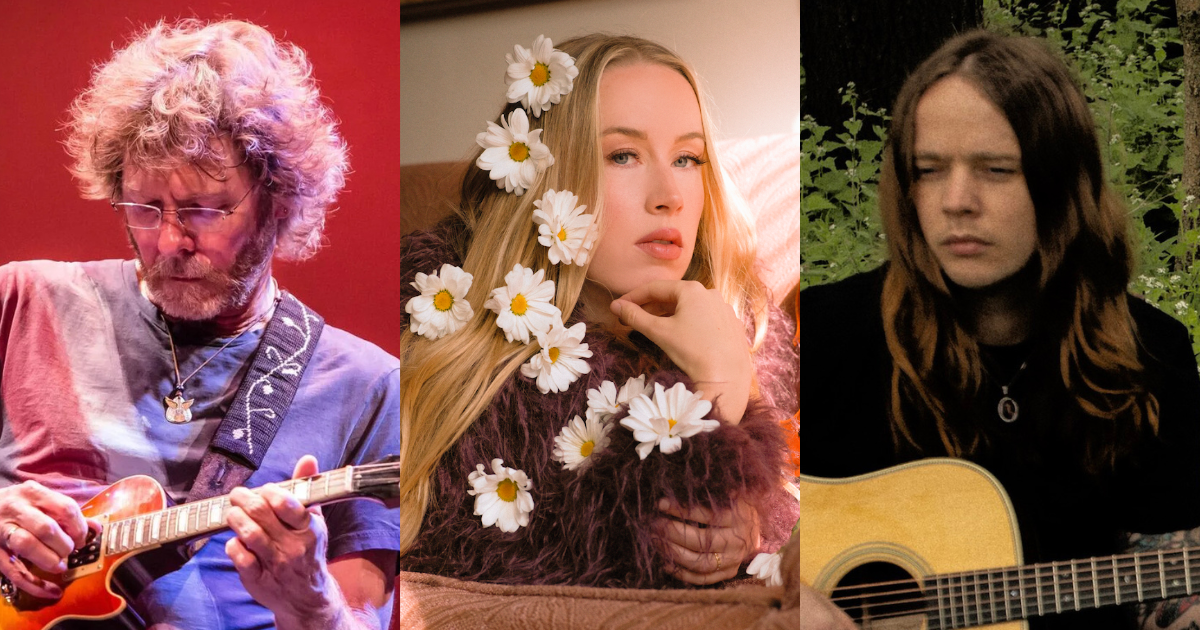
Photo Credit: Sam Bush by Shelly Swanger Photography; Bronwyn by Alexa Stone; Billy Strings by Dana Trippe.