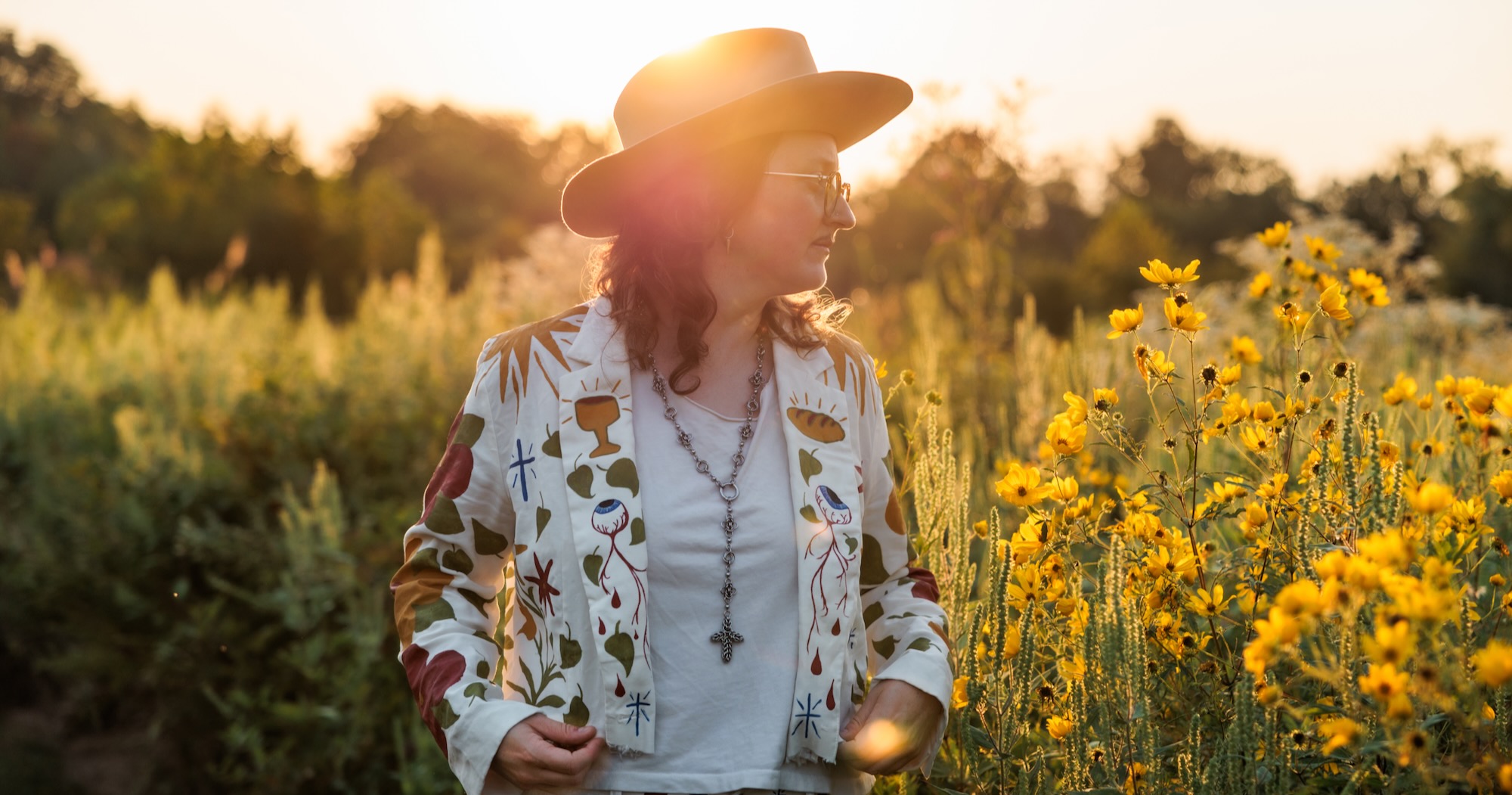

Artist: Creekbed Carter Hogan
Hometown: I live in Saint Paul, Minnesota, but before that I spent most of my life living in Austin, Texas. I wasn’t born and raised in either, but they are the places that have shaped me the most and I think that counts for something.
Latest Album: PEASANTS REVOLT! (out July 24 2026)
Personal Nicknames (or rejected band names): Creekbed, Creeky, Peepaw Creekbed
Which artist has influenced you the most – and how?
Like a Catholic cliché, my life has been changed forever by two women named Mary.
The first artist is Mary Chapin Carpenter. Watching your mom sing along to “He Thinks He’ll Keep Her” with her eyes closed while she presses folded laundry to her chest, both wistful and hopeless… that does something to a person. In a family so Catholic, so conservative, so isolated – not just because of rurality, but also because of my difficult, isolationist father – Mary Chapin Carpenter was one of the few non-Christian rock-related musicians that scored my childhood, and her ferocious form of empathic songwriting has never left me.
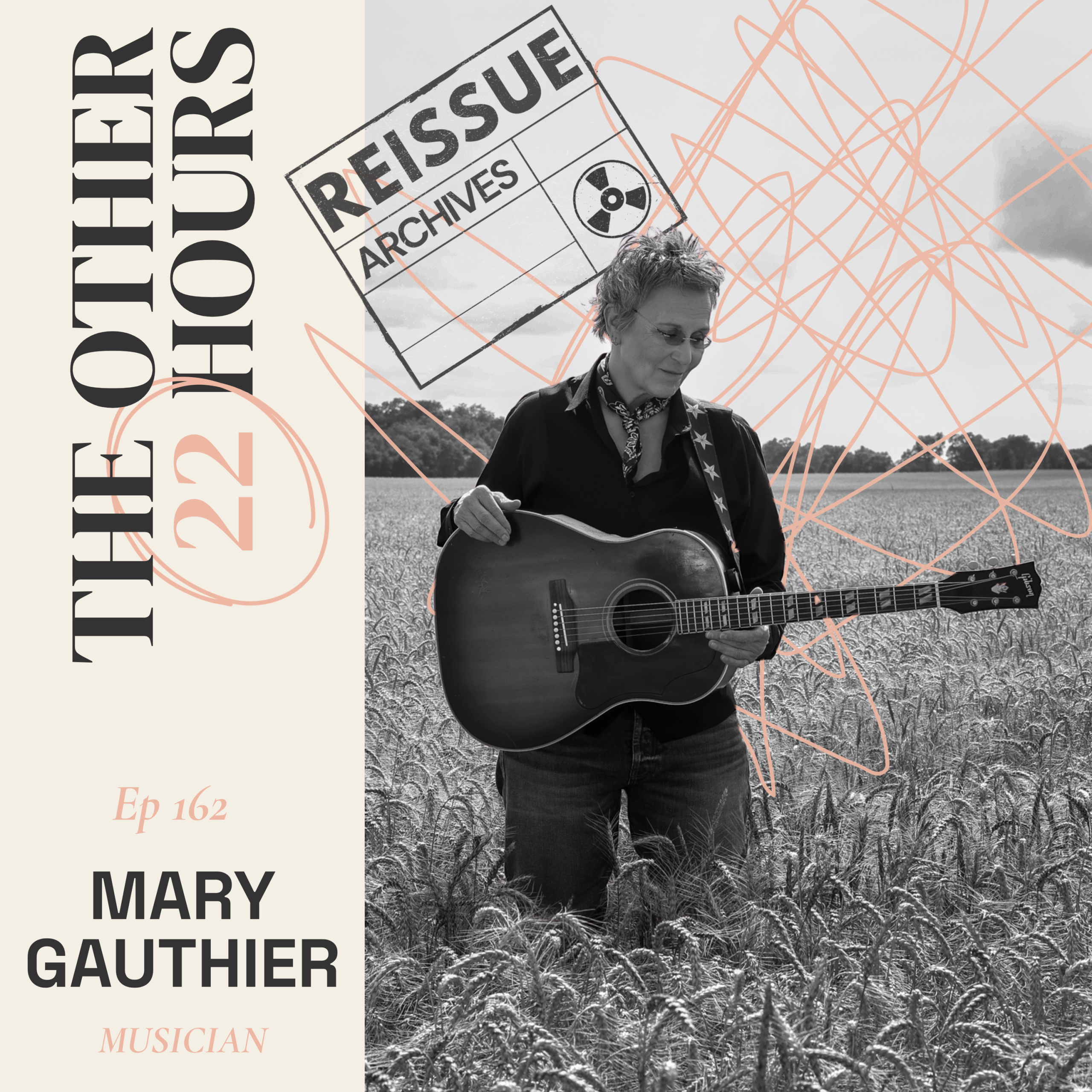
The second Mary is Mary Gauthier. I remember the intersection I was stopped at in Austin, late at night, my now-girlfriend putting her on the aux. The first lines of “Slip of the Tongue” hit me like a gut punch: “Honey sit down, I got something to say/ Last night I drowned. I got carried away.” I remember gripping my girlfriend’s hand, crying and laughing and brimming with new, terrifying love as I listened for the first time to one of the few publicly queer Americana artists to really break through. Mary Gauthier made my life as a trans country artist possible. Nobody can see through to the soul of something like she can. It was an honor to release my cover of “Slip of the Tongue” this year, and it’ll be an honor for the rest of my life to know that my songs are in a lineage that includes her.
What other art forms – literature, film, dance, painting, etc. – inform your music?
Man, I just really love art a lot. I’ll watch anything, read anything, listen to anything. I don’t think you need any special schooling or whatever to look at something bold and wrestle with how it makes you feel – you just need a lot of curiosity.
I’m putting out a new record in July called PEASANTS REVOLT! and in my liner notes I credit two books as inspirations: Fernando A. Flores’s Texan magical realist novel Brother Brontë and Julius S. Scott’s The Common Wind, a beautifully rendered examination of how word-of-mouth led to the Haitian Revolution, the most successful slave revolt in all of human history. Those two books gave as much to my new album as Hazel Dickens, Bobbie Gentry, Tracy Chapman, and ANOHNI did.
So did a whole library! The East Side Freedom Library in Saint Paul, which makes formerly private collections of union organizers, activists, thinkers, and artists available to the public. The Twin Cities United Performers, a musicians’ power org I’m a member of, helps me explore the art of organizing with fellow musicians for better conditions. Picket lines are an art form, and I remain inspired every day by the people who hold them. And my songs would probably sound completely different if I weren’t spending so much of my time watching movies like John Sayles’s Matewan and Cheryl Dunye’s Watermelon Woman and Abbas Kiarostami’s Close-Up.
Before I could leave my small rural community, art was a way of exploring the world. Now that I can live on my own terms, art is a way of understanding the world. As an artist, why wouldn’t I try as many forms of understanding as possible?
What’s your favorite memory from being on stage?
This is a long answer, but it’s a story worth telling:
This past winter, as ICE invaded the Twin Cities and abducted and killed our neighbors in our streets, I received a grant from the Cedar Cultural Center in Minneapolis to write new labor and union songs. It was a jarring juxtaposition: how could I justify research and writing songs in my room when I needed to be out on the streets with a whistle in my hand, standing my ground with my neighbors against the federal government? But the truth is, I’d already cashed half the money and it had been a lean winter, so I had to make something to show for it. I went to the East Side Freedom Library, did a boatload of research, and then I wrote songs about regular Minnesotans who’d fought the government for dignity for all. From the 1910s miners of the Mesabi Iron Range to the Indigenous founders of the American Indian Movement in the ’70s to the Willmar 8 who held a two-year picket line every single day in every single kind of weather to an Appalachian-styled ballad that tied in the history of labor resistance to what we were all doing now to protect one another, as our own mayor and governor left us in the ice and the snow to fend for ourselves.
On February 20, I took the stage at the Cedar Cultural Center in Minneapolis with a four-piece bluegrass band and presented my grant work to 250 Minnesotans. I was terrified that what I’d written hadn’t done enough justice to this incredible place that had taken me in, given me lifesaving healthcare, and taught me new things about what it means to show up for your community – and even more worried that my performance wouldn’t be good enough to raise rent money for my neighbors who were trapped in their apartments, hiding from ICE. But when I started playing these songs, the reception filled me with awe. All 250 of these people sang with me, clapped with me, cried with me, felt pain and joy and despair and hope together, out loud, with me. After the set, we got a standing ovation – and then at the merch table, the line went out the door as neighbor after neighbor came up to me to tell me about the picket lines they were holding or had held, the Minnesotans they’d recognized in my lyrics, the pain they felt and the hope that sat right beside that pain that they could now feel because of what we’d just sung together.
I’ve played a lot of incredible shows to incredible audiences, many of them much bigger and “much bigger deals.” But that show on February 20 this year was the single most important performance of my life. It meant everything to me. And it taught me, again, why I’m still here, writing songs, doing something every single day to take my place in a lineage of resistance and make a new, better world for all of us.
If you didn’t work in music, what would you do instead?
Way before I wanted to be a musician, I wanted to be a nun. The nuns I’ve known work really hard for the liberation of all people, even from within the confines of a restrictive, colonialist, organized religion. The Sisters of the Holy Names were the ones who first taught me about protesting at the School of the Americas, for example, and the Catholic Workers movement introduced liberation theology to me,and taught me about fighting for a dignified life for every living thing. I’m not a Catholic anymore – Catholicism remains closed to me as a trans person – but then again, secular convents existed in medieval Europe for people who didn’t want to convert to Catholicism, but still wanted to live in community. So maybe being a secular, liberationalist nun is still an option?
What would a perfect day as an artist and a creator look like to you?
I would wake up and every single person in the United States would have universal basic income, healthcare that serves all of our needs, and the knowledge that our taxes are funding public services instead of wars and genocides and detention centers. I’d get up to eat vegetables from our garden and groceries I could afford, in a house I share with my friends that isn’t owned by a landlord or a bank, in a neighborhood where everyone has the housing they need. I’d pick up my guitar and head out the door to a park or a third space where other people would be playing music, sharing skills, and enjoying rest for free without fear of the cops or some arbitrary law that regulates who gets to rest where. And we’d all get to that space on free public transportation that runs well and doesn’t contribute to climate change.
We’d sing and play in the heart of a food forest and then we’d take a break to swim in water that’s clean in a park we all care for. I’d go to the library and read a book about moss or something, just because it sounds interesting, while people around me use public resources to sew quilts or study or listen to CDs, our phones nowhere in sight. In the evening, I’d go to a show with my girlfriend at a venue that receives funding from the government so they don’t have to rely on alcohol sales to make their business work, and I’d happily pay money that I know goes entirely to the bands playing that night. I’d dance and dance and dance, surrounded by all kinds of people who all have the basic things they need to thrive in the bodies they have, whose bodies are no longer regulated or targeted for state violence or kept out because of a disregard for accessibility. The bands would be shit hot, because they’d know they were making a living wage and that no one was gonna come into the venue to gun us all down.
And when I’d leave the venue with my girlfriend to get on our bikes and go home to sleep, the night air would feel clean. There’d be no wildfire smoke in the air. The stars would be out, and I’d be able to see them all. I’d pass neighbor after neighbor, grinning, happy to go home to a safe place, knowing that Palestine was free and Cuba was free and Puerto Rico was free and that “Land Back” had supplanted capitalism as our guiding principle and that every worker was treated fairly. And while nothing would be perfect, because there’s always work to be done, things would feel possible. Hope would feel tenable. Every living creature would feel valued. That would be one hell of a day, I think.
Photo Credit: Emily April Allen