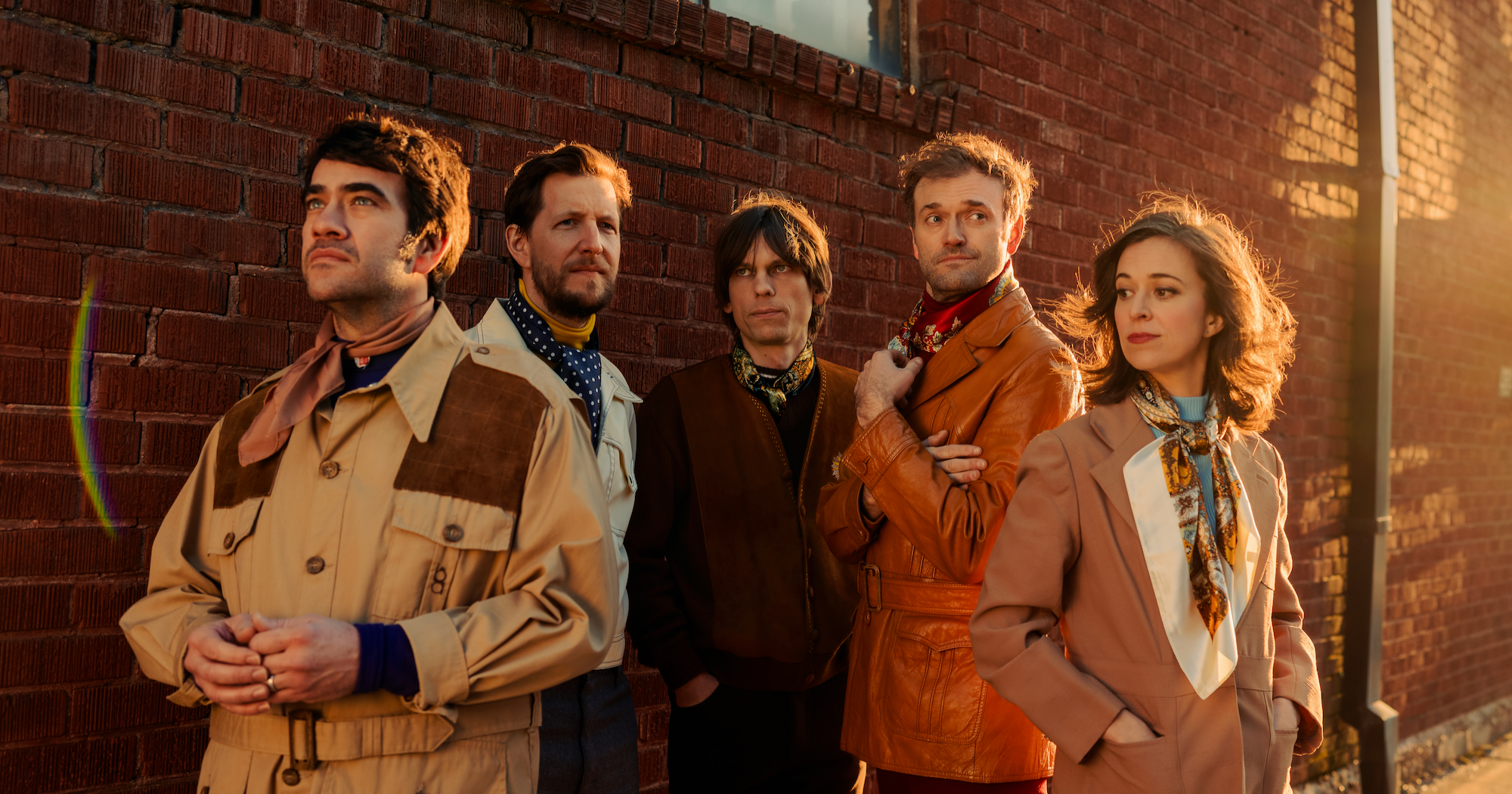

The traversings of Punch Brothers have soared and surged to even higher heights this week with the release of their seventh studio album. The Unsung Adventures of Punch Brothers emerges as the first in their catalog to feature exclusively instrumental tracks – as well as the first album to feature fiddler Brittany Haas (who joined the group back in 2023).
While The Unsung Adventures is their first entire collection bereft of vocals, Punch Brothers are no stranger to an instrumental. Their nearly two-decades-long discography reveals far more than just a smattering of tunes. From groundbreaking originals to transformed traditionals to Radiohead renderings, Punch Brothers have proven time and time again that even the most illustrious music does not always require lyrics. (Though they can sing pretty well, too…)
Renowned as one of the most virtuosic groups of the century, every musician who has ever played a role in Punch Brothers’ cast contains their own universe of talent. Together, the band’s progressive, genre-fluid nature pairs acuity and improvisation with nearly unfathomable execution. Without the constraints of lyrics, a certain levity ignites their instrumentals – fingers flutter across strings, notes braid together, and impressions invite the listener to emote freely, transcending the limitations of language.
Read along to adventure with us through some of our favorite “unsung” offerings among Punch Brothers’ best instrumentals of all time.
“The Eleventh Reel,” How To Grow A Woman From the Ground (2006)
Predating their official conception as a band, How To Grow A Woman From the Ground (2006) was the first time the initial Punch Brothers configuration recorded together. The then-twentysomething Chris Thile had been scheming a musical project with his prodigious childhood friend Gabe Witcher (fiddle), but the two were unsure of the form it should take.
The decision to toy with a traditional bluegrass setup was consecrated after a fateful all-night jam session at Telluride Bluegrass Festival with banjoist Noam Pikelny. Alongside Greg Garrison (bass) and Chris Eldridge (guitar), the newly minted quintet set out to record an album. Though released under Thile’s name, How To Grow A Woman From the Ground built the framework for Punch Brothers’ legacy to come – an eclectic compilation of both covers and originals that veer beyond the scope of bluegrass, while maintaining fidelity to its instrumental makeup. “The Eleventh Reel,” a Thile original, is a formative example of the group’s brilliant musical synastry.
“Sometimes,” Punch (2008)
In March 2007 at Carnegie Hall, the same quintet performed “The Blind Leaving the Blind” – a four-part, 40-minute opus by Thile chronicling the tumult of his divorce. The ambitious piece became the focal point of the group’s debut album as Punch Brothers. Punch was released in February 2008 by Nonesuch Records, featuring Thile’s four-part suite alongside four additional tracks written with the rest of the band. “Sometimes” is the only instrumental piece on the record and perhaps serves as one of the more accessible compositions among the collection. Punch features lengthy vocal-less interludes throughout the entire album, achieving a cerebral fusion of jazz, bluegrass, classical, and folk.
“Two Hearted,” Antifogmatic (2010)
2010 saw the release of Punch Brothers’ third studio album – the first to feature the illustrious Paul Kowert on bass – two years following Greg Garrison’s departure from the band. Antifogmatic arrived as a ten-track album written collaboratively among the quintet. The special deluxe edition of the release included two bonus discs (and a guide to Punch Brothers’ favorite cocktail recipes for those among the first 250 orders). A second disc was a 4-track instrumental EP and a third was entitled Live from the Lower East Side: It’s p-Bingo Night!, a DVD containing footage of seven songs performed during the band’s residency at The Living Room in NYC. “Two Hearted” could be found on the instrumental EP.
“Kid A,” Who’s Feeling Young Now? (2012)
Though not the first Radiohead cover to appear on one of their albums, Punch Brothers’ rendition of “Kid A” from Who’s Feeling Young Now? is an entirely unique experience. With the original Radiohead rendering couched in electronic weavings, Punch Brothers employ their traditional bluegrass orchestration to alchemize the song into an acoustic instrumental. The result is a translation of the track that holds intimate loyalties and groundbreaking innovations at once – a combination that Punch Brothers have only continued to expound upon throughout their career.
“Squirrel of Possibility,” Ahoy! (2012)
In 2012, Punch Brothers released Ahoy!, a five-track EP of previously unreleased selections from the Who’s Feeling Young Now? recording sessions. A crowd favorite, “Squirrel of Possibility” sets sail on a gorgeous melody, even hinting towards an old-time feel with the conversation between fiddle and banjo. While there are a handful of choice twists and turns, “Squirrel of Possibility” is one of the more straightforward of Punch Brothers original instrumentals.
“Passepied,” The Phosphorescent Blues (2015)
Perhaps their most popular demonstration of their long-nurtured affair with classical music, “Passepied” is a spritely re-rendering of the fourth movement of Claude Debussy’s Suite bergamasque. Released in its original form in 1905 as a piano suite, Punch Brothers ingeniously breathe new life into the piece via bluegrass ensemble on their 2015 album, The Phosphorescent Blues. Clever, playful, and fiercely technical, Punch Brothers’ greatest attributes are on full display.
“The Hops of Guldenberg,” The Wireless (2015)
Punch Brothers cemented a pattern with the release of The Wireless (2015), a five-track EP derived from the sessions responsible for the LP they released earlier that year. Comprised of four original compositions and an Elliot Smith cover, The Wireless packs a punch (no pun intended) with its iconicity. One of many tunes that fall under the Punch Brothers’ motif of titles that harken to alcoholic beverages, “The Hops of Guldenberg” is definitively a highlight of this collection.
“Three Dots and a Dash,” All Ashore (2018)
Following a scheduled hiatus, Punch Brothers reemerged in 2018 with All Ashore, the record that earned them the GRAMMY for Best Folk Album. Much had changed professionally and interpersonally for the group in the interim. Released as a single, “Three Dots and a Dash” was named for a libation – notedly Chris Thile’s cocktail of choice – that becomes something of an onomatopoeia during moments of punctuation in the song’s melody.
“Cattle in the Cane,” Hell on Church Street (2022)
For their sixth studio album, Punch Brothers set out to record their own reimagining of Tony Rice’s beloved 1983 solo album Church Street Blues. Titling it Hell on Church Street, the band had hoped to surprise Rice with the recording, but he passed before its completion.
Speaking about Rice and the album, Punch Brothers relayed, “No record (or musician) has had a greater impact on us, and we felt compelled to cover it in its entirety, with the objective of interacting with it in the same spirit of respect-fueled adventure that Tony brought to each of its pre-existing songs.” Several of those songs are canonical bluegrass instrumentals, including the traditional “Cattle in the Cane” and Bill Monroe’s “Gold Rush” and “Jerusalem Ridge.” Decidedly, the band chose to suspend their listening to Rice’s original album until their version was complete so as to bolster their own creative impulses. The result is a creative and distinctive tribute to one of the greatest legends in bluegrass history.
“New Bike,” The Unsung Adventures of Punch Brothers (2026)
Number ten lands us in the present with the release of The Unsung Adventures of Punch Brothers. The first single and inaugural tune from the album, “New Bike,” is an explosion of excitement and energy, named for the childlike whimsy and glee Thile experienced when “allowed to ride my new Diamondback Topanga mountain bike to the library for the first time when I was 10 years old.” As Brittany Haas’ first recorded feature as a Punch Brother proper, her fiddle glides across the melody and perfectly captures the essence of the band – thoughtful, spirited, and articulate.
“June Apple (poisoned),” The Unsung Adventures of Punch Brothers (2026)
Another tune from The Unsung Adventures, “June Apple (poisoned)” offers up a deconstructed version of a prominent old-time tune. Piecing together disparate tempos and textures, this version invites a dark and cerebral alternative reality to this age-old vernacular fiddle tune. Unafraid of the uncharted, the breadth of their innovations reaches further than ever on this album. With solely instruments as their vehicle, The Unsung Adventures follows the Punch Brothers’ curiosities and impulses through stirring explorations.
Photo Credit: Josh Goleman