
Praised by everyone from Billy Strings to Del McCoury as one of the next great jamgrass bands, Mountain Grass Unit stormed onto the scene with sold-out shows and high-profile festival gigs across the country — all before the band members graduated college.
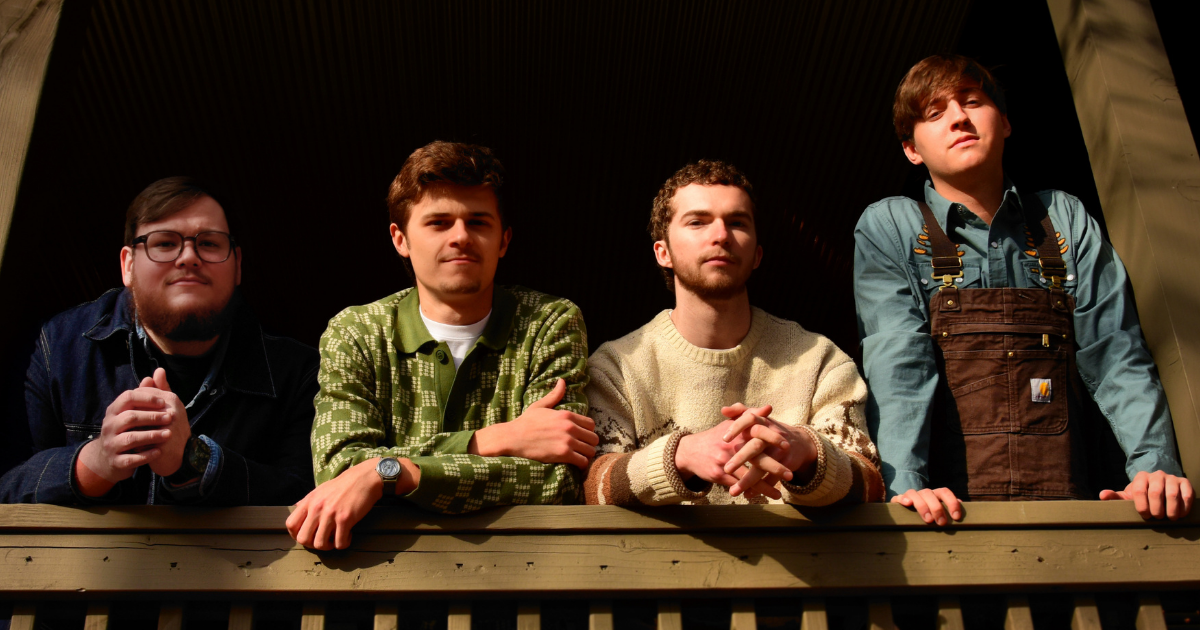
With degrees now secured, the four-piece band — Drury Anderson (mandolin), Luke Black (acoustic guitar, banjo), Sam Wilson (upright bass) and Josiah Nelson (fiddle) — is fully focused on music, with a brand new album, Appalachian Smoke, poised to begin Mountain Grass Unit’s grooviest chapter yet.
Produced by Vance Powell, the album leans mostly into the band’s improvisational tendencies while touching on everything from time on the road (“Homebound Troubadour”) to being at a crossroads in life (“Wait For Me”) and losing your faith (“Darkness Rollin’ In”). However, Mountain Grass Unit also gives a nod to bluegrass’ traditional era with the Michael Cleveland-featured “Another Sunday Again” and the Aubory Bugg co-write “Suspicion,” the latter of which revolves around second-guessing the relationships you’re in.
Despite the record’s themes of uncertainty, Appalachian Smoke sees Mountain Grass Unit more confident and at peace than ever before. With a wave of momentum already behind the band (and the jamgrass movement as a whole), its members are excited to see where this new music takes them.
“With the development of AI and not knowing what’s real in music, I think a lot of people are beginning to appreciate the more tangible forms of it, and I don’t think anything is more real than bluegrass,” Wilson tells BGS. “Billy [Strings] isn’t the first to do it, but he’s really brought bluegrass and jam band fans together in a way that few others have. His success has opened a lot of doors for kids like us that began playing in bluegrass in middle school before it was cool. I hope that trend continues and people keep enjoying not just the new music coming out, but appreciating all the great stuff that laid the foundation before them as well.”
Ahead of Appalachian Smoke’s release, Sam Wilson and Josiah Nelson joined BGS to discuss their introductions to bluegrass, making music post-graduation, and filling in for Billy Strings himself at Renewal in 2024.
BGS: What was your relationship with bluegrass like prior to forming and/or joining Mountain Grass Unit?
Sam: To be honest with you, I didn’t really know much about the genre and came into all of this pretty blind, but the guys gave me a good introduction to it all. They started me on the classics like the Bluegrass Album Band, Newgrass Revival and Sam Bush. Then years later I discovered Mr. Billy Strings, which was another level of that. Being as young as I was going into it, I didn’t have any knowledge of bluegrass besides stereotypically thinking it was hillbilly music. But then as I started to play, go to jams and interact with the community, it opened my mind to the beauty behind the music and just how special it really is.
Josiah: My grandparents played country music, so I grew up around family jams but never played. Then one day a fiddle player moved in down the street and brought her kids into the dentist office my mom worked at to get some work done. Growing up on a farm, my parents decided to trade her some livestock and sheep compost for my first fiddle lessons. She was in the Texas scene doing competitive fiddling, so naturally that’s what I wound up gravitating toward as well. All the while my grandparents were taking me to bluegrass festivals. Even though I didn’t play bluegrass yet, I was always listening attentively.
A few years later when I turned 16, my parents got my first car and I remember sitting in it all day listening to Bluegrass Junction on SiriusXM radio. After graduating high school I worked at the Lazy B Chuckwagon dinner theatre in Estes Park, Colorado, before moving away, going on to study bluegrass at East Tennessee State University and helping start the Trey Wellington Band. Eventually Luke came and toured the school and realized we liked the same music. At the same time I was ready to move on and try something new, leading to the situation I’m in now with the Mountain Grass Unit.
Josiah, you joined the band in 2024. Does that mean this record is your first studio material being featured with them?
Josiah: No, actually. Before joining the band, I remember talking with Luke and telling him if they ever needed a fiddle for anything to let me know. After initially saying they didn’t need anything, he called me about a week later to say they were about to go into the studio and wanted me to join them on what wound up being the Runnin’ From Trouble EP. That led to them to asking me to join them for 10 dates on their summer tour, but only two shows in they sat me down and asked me to join them full time. Looking back on that project, it’s amazing to see how much tighter I’ve grown in the band in such a short amount of time, but that’s what a couple hundred shows together will do for you.
Sam: Even prior to Josiah joining the band, we’d invite him to come sit in whenever we’d cross paths. One time in particular, he showed up expecting to play only one or two songs, but we wanted him for the whole set. We threw him into the fire without him knowing any of the material, but he ended up doing great. Because of that, we already knew he was the right fit before we ever invited him to record or join the band for good.
Throwing Josiah into the thick of things like that reminds me of a collective experience y’all had a couple years ago when you were tasked with filling in for Billy Strings at his Renewal Festival after he departed to attend the birth of his child. What was that experience like for you?
Sam: It was such a big moment for us being invited to that in the first place because we’re all massive Billy Strings fans. Everyone understood the situation and did a great job coming together to organize new material and sets to keep the show going on. I think one of the days, we played eight sets or something — it was crazy!
Josiah: A couple months before this happened, we played High Sierra Fest and they asked us to do a Billy Strings cover set, so we already had a bunch of material ready from that. So when Billy’s manager came up and asked if we wanted to go up and play some of his songs, we were more than ready to go. It was hectic but nobody panicked. We all knew when this was scheduled that [Billy leaving early] was a possibility when they found out the baby’s due date. But we made it work and it wound up being a really cool moment in the community and for us as a band.
Earlier y’all mentioned Josiah’s introduction to the band being in the studio. With that in mind, how was the process of recording with him different this time around?
Sam: There are a couple levels to this since we’ve got so many shows under our belt together now. But most importantly, we weren’t in school this time when we went into the studio. Everything we’d done previously was completed while we were in high school and college, whenever we could get together on the weekends. We were all coming from different places but this time we all moved to Nashville and were together every day for nearly three months writing, rehearsing and beating these songs with a hammer until they were the best they could possibly be. That combined with all the shows we’ve played gave this album a much more natural and confident feel.
Y’all have alluded a couple times now to hitting the road really hard since putting school in the rearview mirror. Are those travels and the resulting time away from home what inspired the song “Homebound Troubadour”?
Sam: Road dogging is definitely a big part of it. Luke brought us that song a while ago, but it had a different chorus and just wasn’t quite right, so we spent a lot of time figuring it out. Eventually the chorus got changed to “Homebound Troubadour” because Luke had done a project on troubadours in college and began making the correlation between it and what we were doing traveling together to play these shows.
Were there any other songs like that on this record where the chorus or song structure changed once you brought it into the studio?
Josiah: Another one Luke had for a long time was “Eagle’s Nest.” A couple years ago we had a tour stop at Santa Cruz Guitars and he played an instrumental version. Ever since then he’d been wanting to write words for it and record it, so when we got back in the studio last year it was at the top of our priority list to finish fleshing out.
Sam: We wrote it in one afternoon as the first part of another song that didn’t wind up making it on the album. We wanted [“Eagle’s Nest”] to be this progressive intro into that song, like Pink Floyd’s “Another Brick in the Wall” Parts 1 and 2, but something about it just didn’t feel right. But on “Eagle’s Nest,” with the help of Josiah’s pedal board wizardry and Vance Powell’s studio magic, we were able to add the elements from both into one. There’s all kinds of weird stuff on it, from an electric sitar to an octave mandolin. We spent a couple days experimenting on it and are really happy with the result.
Tell me about the song “Appalachian Smoke.” On one hand, it feels like a song about addiction, but it also feels like a tune proclaiming your love for where you come from. Care to elaborate?
Sam: There are a couple different ideas that make up the meat of that song, and addiction is a big part of it. The idea of the term ‘Appalachian smoke’ could be anything, from a battle with drugs and other substances to struggling to not stare at the smartphone in your pocket. It’s like, what is the smoke that you’re falling for?
What was the band’s motivation for making that song the album’s title track?
Sam: There was a lot of discussion about that, but it came down to two things: it’s a fun song for us to play and it has a cool name. We also think it’s a good bridge between the progressive and traditional worlds of bluegrass that encapsulates the vibe we’re going for with this album as a whole.
The closing track “Another Sunday Again” has a distinctly old-time vibe with lots of fiddle and harmonies. Is that always how you envisioned the song turning out?
Josiah: It was always pretty stripped back. I remember working on it at my parents’ house a couple years ago. We’d always wanted to do a power waltz, Jimmy Martin-ish kind of thing, and that’s just how it came together when we started playing it. When we went into the studio, twin fiddles seemed like a good fit, so we reached out to Michael Cleveland, who’s been my hero since I was a little kid. I remember hearing him at one of the first bluegrass festivals I ever attended back when I was still playing Texas-style and my mind being blown by the intensity and raw nature of his playing. Since then I’ve tried to emulate him whenever I’m playing bluegrass, so when it came to the fast-paced nature of that song and wanting to have twin fiddles on it, he was the first person that came to mind.
The album flows really well, almost like a live show. How intentional were you with track sequencing and trying to replicate how you sound in concert in the studio?
Josiah: It was definitely something we sat down and had discussions about. I remember talking about having “Wait For Me” come during the first down moment of the album and how “Another Sunday Again” would be a great way to close things out. It’s like our live setlist, but different because we’re not trying to maximize energy. Instead, it’s more about laying down the vibe and getting the flow right so that the listener takes the album in from start to finish, especially since we have some fresh vinyl to go with it. We just got our personal copies in the mail and have some different color variants (along with a splatter) we hope our fans will enjoy.
Sam: We had a buddy of ours, Carlo Welsh, do the album art. It’s a forest scene with all these different creatures and little hints that reference each song. For example, on a tree there’s a window that represents “Window for a Friend.” There’s also a tombstone for “Where Steamboats Go to Die,” an eagle in a nest and much more. It turned out great and he didn’t use any typography at all. He wanted the artwork and characters to stand on their own, and he did just that.
What has the process of bringing Appalachian Smoke to life taught you about yourselves?
Josiah: It’s taught us the value of persistence and hard work. We were talking to Drury yesterday and he had what he called a “come to Jesus moment” when we got our vinyl in because it’s the culmination of over a year’s work writing, arranging and laying everything down in the studio, so to finally have this tangible thing in your hands is a big accomplishment and something we’re really proud of.
Sam: It’s also taught us that with our collaborative effort we can come up with something together that’s better than anything we could ever do on our own.
Photo Credit: Shervin Lainez