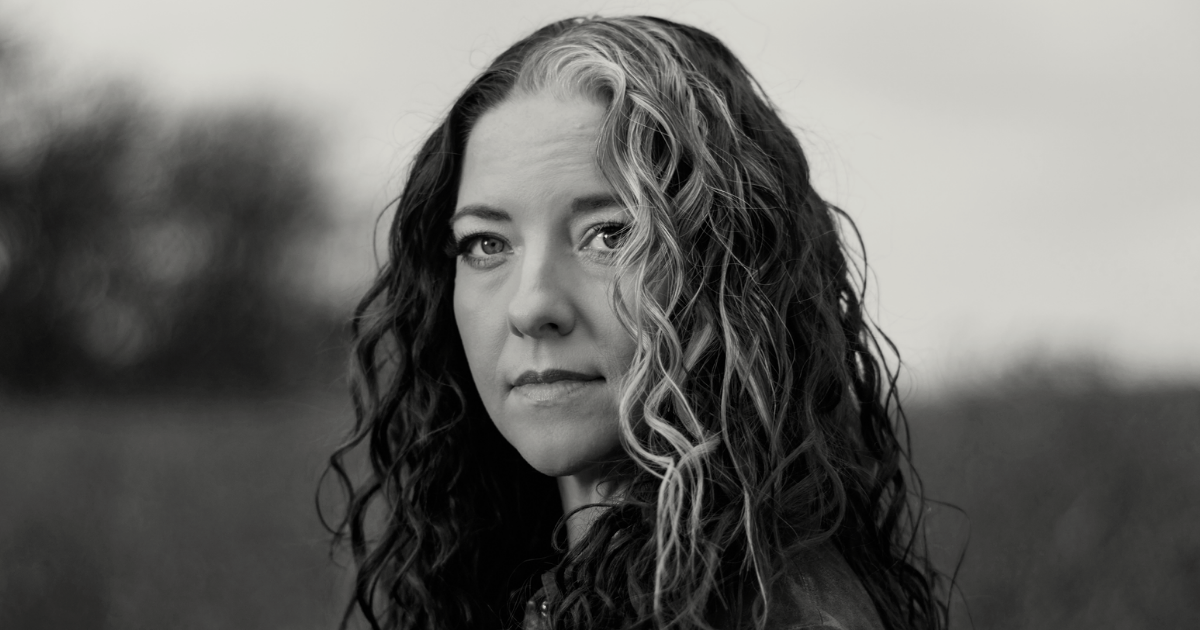
“What If We Don’t,” from Ashley McBryde’s latest and fifth full-length album, Wild, is her fastest-rising single to country radio and was the number one most-added single of the week upon impact. This is significant for a number of reasons, perhaps primarily because it was only a few years ago that McBryde briefly straightened her hair, “flattened” her Southern accent, and was told by industry executives to shed thirty pounds. Clearly, they had no idea with whom they were reckoning.
Times may have changed — to some degree — on Music Row, but Ashley McBryde has not. She’s the same outspoken woman who grew up on an Arkansas farm, learned early on to fend for herself, and vowed to stay true to her values at all costs, external pressures be damned.
Along the way, more and more listeners caught on and connected with her music. Today, McBryde is on country music’s A-list, winning Grammy, CMA, and ACM awards, earning an induction into the Grand Ole Opry, and headlining her own tours.
Wild retraces the steps of her at-times tumultuous journey, beginning with her upbringing in a strict religious home, through the trajectory of chasing and ultimately catching her dream of being a successful singer-songwriter, defeating personal demons, and emerging ever stronger and more confident.
BGS: In 2018, you told the Nashville Scene, “Radio is another thing I’m learning in real-time how to adjust to. I didn’t realize it had so little to do with music. It broke my heart when I found out how things work, but that’s how things work. This is the machine I want to run alongside. I’ll do whatever I got to do, whether I’m on the chart or not.” Eight years later, “What If We Don’t” is your fastest-rising single to country radio. Have things changed?
McBryde: I still recognize radio as the machine I have to walk alongside. It still breaks my heart how radio works. It still sucks that it has so little to do with music, but I’ve managed to make my music and have it played on the radio.
It’s a hard balance to strike sometimes because I’ve thought about it, but I can’t make peace with myself by just recording any old crap that will do well on radio. For some folks, I’m sure that works fine. For me, it has to be songs that I love and believe in. Sometimes that works with radio and sometimes not, and I’m not mad at it. I’m not mad at radio for being the animal it is. I mean, if you take a possum home thinking it’s a cat, and you try to pet it and it bites you, you can’t be mad at the possum for being a possum.
I realize … it’s based on advertising dollars and potential advertising dollars. It has nothing to do with whether a song is good or not. And being where it is on the chart certainly has nothing to do with whether a song is good or not. I remember that even from when I was growing up, going, “They don’t put the best song on the radio.” They put the one that’ll do the best on the radio. It’s nuts to me. I’m glad nobody broke my heart in my early years of figuring out how radio works. You just have to know what it is.
And yet, with that, here you are on the radio, clearly doing the right thing without trying to create the right thing. You bring your authenticity and it’s being embraced.
It is being embraced, and it reminds me that lovers of music are lovers of music and it’s going to find the ears that it needs. “What If We Don’t” is a song that I wrote over a decade ago. It’s on the rock and roll side of things, but that’s the emotion it needs to bring. For it to do so well at country radio means that songs that we care about still do well. Not always, but they can.
Quite a bit of Wild is “on the rock and roll side of things,” but in all your work there’s a throughline to your bluegrass roots. Where do you hear those roots on Wild?
I think where my roots show is I play guitar on every single record and on every single song, whether that’s a rock song or not. My bread and butter is fingerpicking, and I learned that from being at bluegrass festivals since I was seven days old. I learned not to be intimidated by people that were much better at their instruments than me by being at bluegrass festivals when I was growing up.
“Hand Me Downs” and “Bottle Tells Me So” — everything’s built from an acoustic guitar up. There is a great mix of musical styles in my band, and when you mix all that up, you get what this record sounds like. It is a little on the rock and roll side, and it does have some elements that would confuse the rock and roll people. Just yesterday somebody said, “Leading up to it in ‘Arkansas Mud,’ I thought that was going to be a guitar solo, and it was mandolin.” I said, “Yeah, that’s just how my band sounds.”
What does “bluegrass” mean in 2026?
I don’t really know how to define it. It’s things that are harmony-driven, story-driven, and the instrumentation behind it — it’s important to be good. You don’t have to be the best, but it’s important to play your instrument well.
You can take a bluegrass band and put them on your porch, and they’re going to sound the same way if you take them into a theater and plug them in. There’s no pyrotechnics, there’s no confetti cannon. It is music-based music, but we don’t have to dance around in circles or anything to get you to listen to it.
I am so thankful that I grew up listening to bluegrass. I grew up listening to Doyle Lawson, the Rarely Herd, Lonesome River Band, and the Cox Family. I just played for a friend the other day some of the Doyle Lawson & Quicksilver gospel stuff, and I said, “This is why I know how to sing harmony, this and growing up in the church.” I grew up harmonizing with Doyle Lawson, with the Cluster Pluckers, with the Cox Family. To this day, Suzanne Cox’s voice puts me on my knees.
I couldn’t be more thankful that I grew up learning to pick and knowing that picking clean was more important than picking fast. I can’t give enough credit to bluegrass music. I’ll never be able to say thank you enough.
On the Tracks Of My Years podcast, you said that you overcame your shyness at bluegrass sessions. How so?
I was really, really shy. Mom used to put a little pin on my shirt, a teddy bear that had my name on it, because if you asked me my name, I would cry. I was scared to talk to people, but I didn’t mind singing. I could walk into a jam session where people were playing music and become part of the music, and that felt okay to me. But to be like, “Hello, my name is Ashley” terrified me.
Being able to take my little guitar and milk crate, and go sit in a jam session with guys in their 20s, 30s, all the way into their 80s, and feel like I was part of the music helped me not be afraid of any of that.
How did bluegrass shape you as a songwriter and guitar player in ways that you otherwise might not have experienced without it?
Being story-driven as a writer, a thousand percent. The joke, I’m sure it’s industry-wide, is that bluegrass is the happiest little murder ballads you’ve ever heard. Bluegrass showed me the juxtaposition that a sad song doesn’t have to sound sad, and that something can be purely story-driven. It can be just you telling a story.
Whereas if I’d grown up only listening to pop records or something, as a writer I would have been more focused on a super-juicy melodic hook and a super-juicy thing I can repeat a thousand times in the chorus and make you sing along.
I’m so thankful that I learned how to strum through my bluegrass upbringing, and how to hit the string that I mean to hit when I mean to hit it, instead of just banging on all of them all of the time.
There were no drums in the music that I was growing up with, so the importance of being really accurate in your body, with your body metronome — that’s got some heft to it. If you’re playing with somebody whose body metronome isn’t the same as yours, being able to adjust in real time and improvise into their body’s metronome —you can’t take that course in college. It’s something you learn by jamming with other musicians. I owe it all to being raised in bluegrass.
Photo Credit: Nathan Chapman