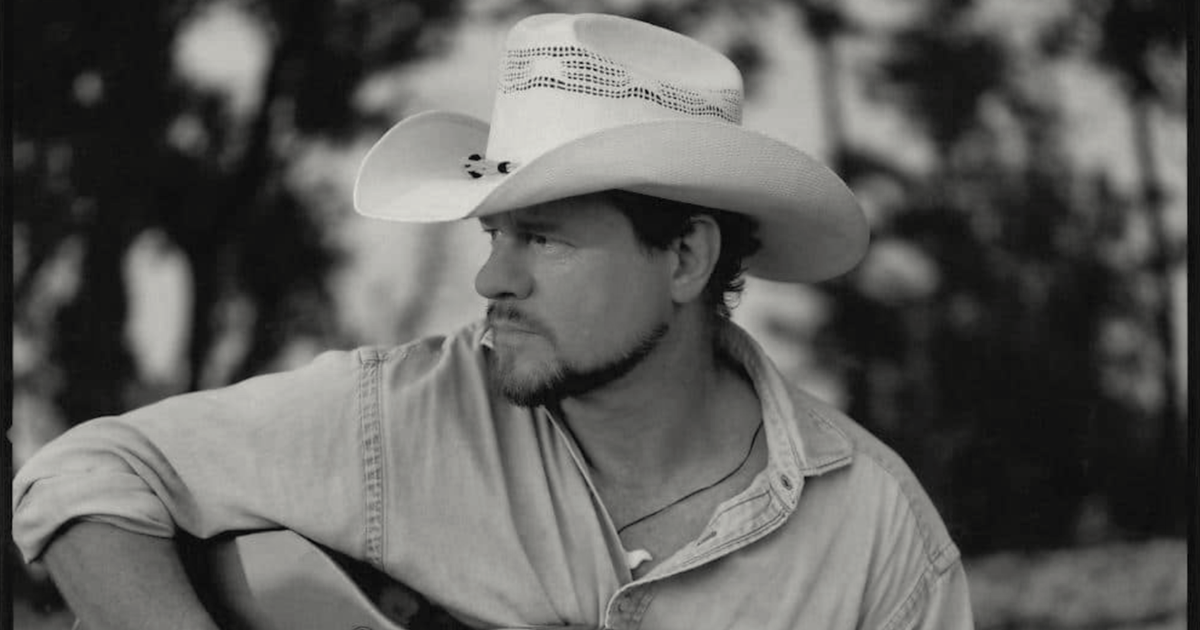
As a nine-year-old kid in Mississippi, Paul Overstreet was fascinated by Your Cheatin’ Heart, a 1964 film about Hank Williams’ life and career. The Hollywood treatment of Hank’s life sparked such a strong interest in writing and performing country music that Overstreet started entering school talent contests, played honky-tonks in Biloxi while still in junior high, and moved to Nashville after graduating from high school in 1973.
This fall, in a full circle moment, Overstreet will join his hero, Hank Williams, as a member of the Country Music Hall of Fame. In that hallowed rotunda in Nashville, Overstreet’s bronze plaque will hang alongside a significant number of artists who found radio success with his songs, including Kenny Chesney, George Jones, the Judds, Ronnie Milsap, Randy Travis, Tanya Tucker, and Keith Whitley. Overstreet wrote many of his biggest “career songs” with Don Schlitz, thus creating one of the most prolific and poetic songwriting partnerships in country music history.
Overstreet enjoyed a good run as a recording artist, too. He achieved a No. 1 country hit with “Baby’s Got a New Baby” (recorded with songwriters Thom Schuyler and Fred Knobloch under the band name S-K-O) in 1987, and with “I Won’t Take Less Than Your Love” (with Tanya Tucker and Paul Davis) in 1988. By 1991, he’d also notched eight consecutive Top 10 solo hits while signed to RCA. Many of them offer a relatable look at family life, with “Seeing My Father in Me” perhaps his most poignant release.
When Overstreet moved to Music City as a teenager, he didn’t even own a suitcase. (He just threw everything in a laundry basket, grabbed his guitar and some football jerseys, and headed north.) Now, at 71, he’s almost always on the go – he got the call about his Hall of Fame induction while on a sightseeing cruise in Southeast Asia. Good Country caught up with Overstreet via Zoom during a Caribbean beach vacation.
You’ve seen a number of people closely associated with your career go into the Hall of Fame, and now it’s your turn. What was your reaction when you learned that you were chosen?
Paul Overstreet: I have to tell you, it was a shock, actually, to me. I’ve been to a lot of the ceremonies because I always like to go. I watch people and I learn things, and I see people talking about their career. It’s always fun and interesting, but I never really thought I would be one of the people going in, just because I don’t have a manager or any of that stuff. I’m kind of solo as far as what I’m doing now, but through the years I had great publishers and people that I worked with and great co-writers. I was in the mix pretty good there for a long time.
Don Schlitz [a 2017 inductee] sent me a text message, telling me, “Man, you’re going to go through several phases here.” He said he and his wife were screaming and jumping up and down when they started doing the announcement, and heard them say that it’s a writer from Mississippi. He was so sweet about it, and just told me that you’ll go through some phases, and you can’t believe it’s happening, and all this stuff. That’s really kind of the way it was for me. I was just in amazement.
That must have been a great feeling to share that moment with Don.
It was, and it shocked me and my wife both when we got the news that he was gone.
Had you stayed close throughout the years and kept in touch with each other?
Well, we talked a lot. But after we’d written so many songs together, it just kind of started to… he got into another type of writing, and he was doing a lot of things like that, and of course I was, too. I was writing with a lot of different writers. You always wonder why writers that wrote so well together stop writing, and I really don’t know the answer to that, totally, with everybody.
I think there’s a period of time that you have, that an energy is there between the two. At some point it just wanes a little bit. I mean, you could probably still write, but we had such a magic. We kind of both knew when it wasn’t there. It’s no use trying to do stuff that just wasn’t happening. We never really said, “Let’s don’t write anymore.” We just kind of stopped writing. But I think a lot of writing teams might go through that phase.
You also had nothing left to prove. You had written so many incredible songs together, and you could part as friends. There’s something to be said for that, too.
Yeah. And you know, Don was very organized. He kept a little notebook, the kind with the little rings where you can’t move the pages around. They’re locked into place. He said to me one day, “Come here, I want to show you something.” We wouldn’t have known at the time we were writing, but he started flipping pages, and it was one No. 1 song after another. I don’t know if it’s five or six, but it was very consistent. We just kind of laughed and went, “Man, that’s great!” Looking back, it’s a great feeling to know we were hitting it.
After you moved to Nashville, it took nine years before George Jones had a hit with “Same Ole Me.” Did you have people encouraging you at that time, or did you have close calls?
Yeah, and it can be your friends or just people that go, “Man, that’s good. You need to do something with that.” Dolly Parton’s uncle, Bill Owens, was wanting to co-write with me and I wrote some songs with him. I had some songs [before that] and he kind of helped me put them together. We hung out a lot and he wanted to manage me up front, but you wind up finding your own path eventually. Having those people along the way is so valuable. They encourage you and tell you about the industry. I had to learn what publishing was, what a record company was. You go to Nashville, you don’t know all this stuff.
Did you get to interact with George Jones much at that time?
No, not too much. I was around him some, but mostly the Oak Ridge Boys. I was writing for their publishing company at the time. They had a relationship with [famed producer] Billy Sherrill and Billy had told them, “If you ever have a song for George Jones, bring it to us.” They thought that song [“Same Ole Me”] would be a good one for him, so they took it. Tony Brown had heard the song first, and Tony was like, “Man, we need to demo this.” And I was like, “We do?” [Laughs]
So we demoed it, and then the Oak Ridge Boys took it to George, and they said, “If y’all cut it, we’ll sing the backgrounds on that.” That was the first big national recording. I had some other recordings by Stella Parton. She had her own label and I had some songs on a couple of her albums, but they never were released as singles. The George Jones one was the first one I realized how much music meant to people.
This year is the 40th anniversary of Storms of Life by Randy Travis. When that album took off, did you notice a change in the kinds of songs that people were looking for, or wanted to record?
Yeah, because a lot of people were doing crossover country stuff during that time. You had Kenny Rogers, who crossed over into the pop world, and then Crystal Gayle started sounding a little more pop, and then it seemed like everybody was trying to cut those kinds of songs.
I just kept writing country. And along comes an artist that all he wanted to do was country. We had some songs that were right down that road. I had cut “On the Other Hand” at a session to get a record deal with. I didn’t have my record deal in place at the time, though, so Don [Schlitz] and his company pitched it to Kyle Lehning for Dan Seals to record. Kyle said, “I don’t hear it for Dan Seals, I hear it for this new artist I’m doing.” And I was resistant because I’m a new artist and I’ve got a cut on it.
Basically it was a God thing, I think. I heard a little Bible verse in my head one day: “It is more blessed to give than receive.” So, Kyle told me they were thinking that maybe if they sold 35,000 units that they’d get to cut another record, but that album they cut, they had no idea it was going to sell 5 million albums. [Storms of Life] just turned things around in the industry, because it was country. And I think our industry needs that now. It needs those country songs that are new, but they are of that chemistry. Our industry is all separated. It needs something to bring it back together.
How did you get the word “exhuming” to fit so well in Randy Travis’ “Digging Up Bones”?
That word… it’s hard to know how to even say that word. [Laughs] Just putting stuff in a song that’s really off the beaten path… It’s almost like you can talk to people in a language that everybody understands, and a dialect, but sometimes you can add things in there that are different from what you normally use, and it kind of educates as well as entertains. And it’s fun because you get to learn a new word. Don Schlitz learned a new word every day, just to increase his vocabulary.
Sometimes in Nashville, songwriters will write for a specific artist. Did you do that too?
You know, I never really had much success with that, because every time I’d sit down and try to write for an artist, it just seemed like it didn’t work for me. I always feel like the song is the star, and the song should be the most important part that you look for. But some people could write for certain artists and make it work. It wasn’t my thing, but I think as long as the song is great, it’ll lift the artist up as well. But if you’re just counting on the artist to make it a hit, I don’t think the song’s going to be that good. But who knows? It can be done a lot of different ways, I guess. Sometimes you’re just in the right place at the right time, and I think there’s a reason.
Luck plays a role, but the hustle and the showing up – that plays a role too,
I remember “Forever and Ever, Amen” was written after I’d been playing golf in the Music City tournament and I was tired. I’d played 36 holes and I got a call from Don saying, “I got a great idea for us to write.” I said, “You want to do it tomorrow?” He goes, “No, we need to do it now.” [Laughs] I knew better than to put it off. Songs are hot. Whenever the idea is there, it needs to be written.
Since this is for the Bluegrass Situation/Good Country, I did want to ask about bluegrass influences. Keith Whitley and Alison Krauss each recorded “When You Say Nothing at All,” and you had several cuts with Ricky Skaggs when he was on Epic. Was bluegrass an influence on your music?
Yeah, I love bluegrass. I would do a show with an acoustic flat-top picker and a fiddle player, sometimes I’d take steel, and we had an upright bass player who would go with us. I was doing these shows for this all-day event and we would go play right after lunch, when nobody else wanted to play. I’d go out there with just those musicians and it was great! It was more like a broken-down, front porch kind of thing, but we could kick it up.
I used to do some bluegrass things in my show, because I’d learn them from some of the bluegrass groups. Our band learned to play them and just have fun with them, because they always pumped up the night. And if I carried a banjo player with me, it blew people’s minds! I’m telling you, banjo players are great because when they go out there, people love it. It’s just an amazing energy that comes off that instrument.
When I first got to Nashville, the morning I drove there I had 650 AM on, or some radio station, and all they were playing was bluegrass. I was like, “Wow! This is really interesting.” And I used to do “Forever and Ever, Amen” as a bluegrass song. I’d go through it, and when we’re finishing it, I’d just kick it off, almost like “Rocky Top,” and just do it bluegrass, and people would freaking love it.
What do you like the most about this time in your life and career?
I think the beauty of it is I don’t feel pressure to do anything. Like you said, I have proven to myself that I know how to work, and I know how to work hard, because I did that for years. I sustained raising our kids and everything, and still kept doing what I love to do, so that was really nice. And I think now it’s a little bit of me time. I get to relax and do the things I like to do, being on the beach, just playing golf, or being around horses and being around rodeos. I love that stuff. So, I don’t feel pressure when I’m doing it now. I used to think, “Well, I better get back to town and back to work.” [Laughs] Now I can just work anywhere I am. I can write songs sitting on the beach, and I like that.
Photo courtesy of the artist.