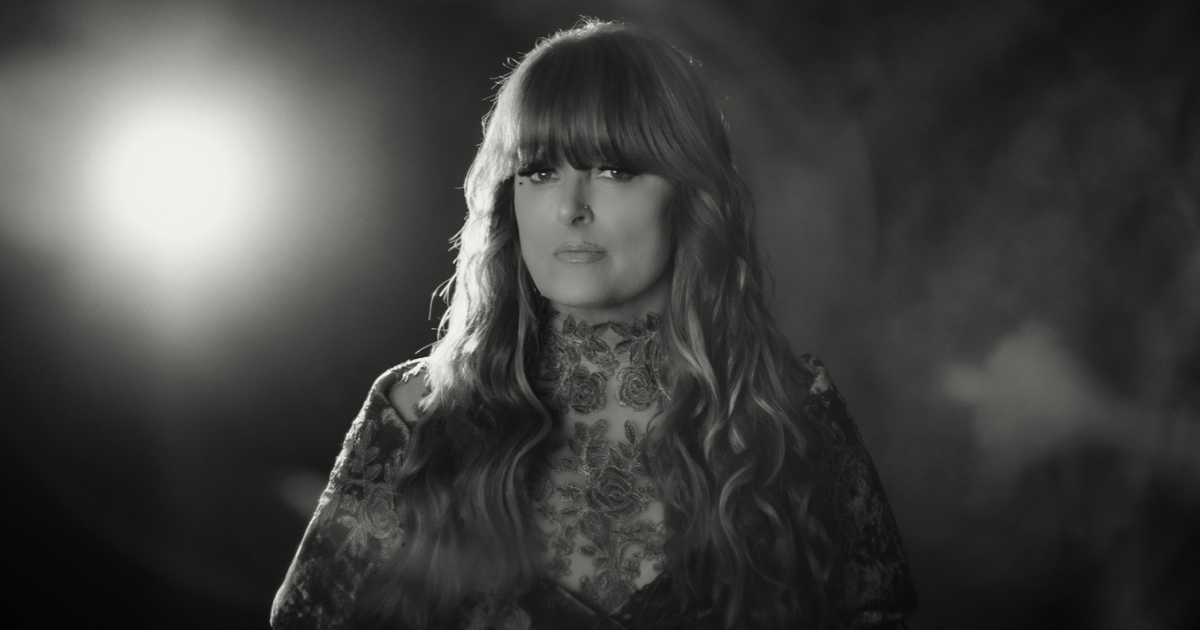
“This is my soul album,” says Wynonna of her ninth solo album, The Hard Truth. “It comes from the deepest part of my being, and it is the truth as deeply as I can feel it.” It is also a memoir set to music, as the celebrated country singer considers the past and the present: her upbringing in remote Kentucky, her sudden celebrity with the Judds in the late 1980s, and her battle for stability in her life. It’d be a profound understatement to call it her most personal album.
“This was a season in my life that represented both winter and spring,” she explains. Good times follow bad, recovery follows trauma, rebirth follows death. She sings about the long hard drive she makes to the prison where her daughter is incarcerated. She sings about her mother Naomi Judd’s suicide in 2022. She sings about going back to Kentucky. She sings about the secret of her biological father, a man she didn’t even know existed until shortly before his death. She never got to meet him, and on “Girl Who Could Sing”—an absolute tearjerker—she can only wonder if he was proud. “It’s all so mysterious,” she says of him. “That’s what makes it so tough. I’ll never get to know him.”
The sessions for The Hard Truth were low-key and intimate, usually just Wynonna and her husband/producer, Cactus Moser. The couple met in the 1990s when his band Highway 101 toured with the Judds, and they’ve been inseparable ever since. “I trust him with my life,” she says. “We do everything together. This album started in the very intimate setting of us sitting and talking about life, like what it was like to walk in and find my mother’s body, what it was like to realize she was gone.”
But they did invite others to join them, including Patterson Hood from the Drive-By Truckers, Sam Beam from Iron & Wine, and Michael Trotter Jr. and Tanya Trotter from the War & Treaty. “It wasn’t a business thing. It was all totally personal. We wanted folks we could truly connect with.”
Hood remembers meeting Wynonna at the couple’s house in Laurel Canyon and being inspired just listening to her talk on the phone. “I just wrote down stuff while she was talking, because every now and then she’d say something that sounded like a lyric or a theme,” he says. “I remember writing down the line, ‘Don’t forget to smile.’ That’s what people would always tell her. She was 18 years old, not sure what to do, nobody giving her much guidance, but she said they always told her to go out there and sing and don’t forget to smile.”
Even if you don’t know the details of Wynonna’s life, The Hard Truth is still one of the most powerful records of the year. That’s partly due to the frankness of her songwriting and partly due to the nuance in her performances. She’s been known as a belter who can howl Zeppelin, but she holds back on these new songs and lets her emotions direct her phrasing and cadence, especially on “Girl Who Could Sing” and “Hear Me Now.”
“I had pictures of my mom and me and my dad and my daughter all around the studio,” Wynonna says. “I looked at them a lot and just let myself feel all the feelings. It was incredibly painful at times, but it was also very healing. It’s the weirdest thing.”
BGS: The Hard Truth has a different sound than some of your recent albums. It’s a little more acoustic, a little rootsier. Was that something you planned, or was that how the songs presented themselves?
We made such an effort to make this record so different. It started out with Cactus and his brilliant vision. Everything was just about the two of us and asking ourselves, “What do we want?” We wanted this record to be as untechnical as possible. Live vocals, live sessions, no bells and whistles, no splicing and dicing, no technical fly-ins. We literally sat and said, “What can we do with these rocks and these sticks?” Literally. We made sounds on boxes. The instruments were brilliant because they were so wanting to do more with less. We went in here at the studio on the farm. I drove my side-by-side down to the sessions with my sandwich bag. No Starbucks. It was so un-Nashville, the way that we did things in the studio.
Were there any songs that took a while to work out?
“Girl Who Could Sing” took a really long time because I did thirty-something vocals. It was really painful. I had a picture of my father that I would look at before I’d go down to the studio, so there are tears on that track. In fact, the only disagreement Cactus and I had was over my vocals, because I would say, “I can do it again. I can do it better.” And he would say, “We’re not doing American Idol vocals. We’re doing real, raw singing.” We called it “talk-singing,” like I’m talking to you right now. We wanted people to literally hear me breathing and smiling, and we wanted it to be direct into your soul.
I feel like you’re somebody who chooses good songs to sing, even something like “Angel from Montgomery” on the Recollections EP. What makes a song good? What makes it worth you going through all that pain?
It’s when the hair on my neck and my arms stands up. I get a real sense of a song pretty quickly. I think we all do. It’s like food: We can tell if we like something after the first couple of bites. It doesn’t take long for our spirits to go, I recognize that. I feel that. “Girl That Could Sing” was like that. When it starts out saying, “I didn’t know my daddy, I think he was proud,” that’s a gut punch. It’s the way I feel. So it was simple. And if a song got me to a point where I couldn’t stand it, I’d get up and walk around outside. I’d breathe and look up at the sky and say, “God, please help me.”
Is that different from previous sessions?
Oh, God, yes. I was always trying really hard, and I’m very co-dependent. I want everybody to be proud of me. I want my producer and the players to think I’m the greatest vocalist of all time. But I was trying too hard. I’ve been fired by producers for the day. I did so many takes and kept after it, until he told me, “Go home.” I’ve had a real struggle with professionalism, so I’m one of those women who just can’t get it good enough. I was raised by very strict parents about that, and unfortunately it creeps into my professional life at times. But with this record, I would literally sing it a couple of times and we would stop.
I’ll give you an example from “Girl Who Could Sing.” In the very first line, I go, “I didn’t know my daddy. I think he was proud.” I go up, and then at the very end, I was so emotional [that I held back on the last word]. I was starting to cry. I wanted to do it again and get it right, but Cactus said, “We’re leaving it the way it is.” He was right, but therein lies the struggle to let go, to let go, to let go.
Is that something that becomes part of the way you perform these songs live?
It does become part of the song. I want it to be like the record, because I want to remember that experience. I don’t take much liberty. I don’t really go for the notes that last two minutes. I’m known in rock and roll circles for being able to do Led Zeppelin and sing with Ann Wilson and just take it to the rafters. But this record is so different that I find myself thinking, “Holy moly, what did I do? How did this happen?” I’m still in awe of it.
Is that something you’ll take forward on your next album?
I don’t know if I can do it again. I think my next record should be all party-naked songs. It’s like dating an old friend that you’ve dated before. No, I’ve changed. I’m different. I’m getting ready to be 63 in May. When that birthday happens, I’ll probably go, “Let’s do a rock and roll record.” But I really don’t know what I’m going to do. I want to make a blues record and a gospel record and a bluegrass record. I really want to make different music after working so hard in the studio for the last 43 years.
There are several songs about Kentucky on here, including “Kentucky Queen” and “All Downhill from Ashland.” What does that state mean to you now? What is your relationship like with the place?
It means everything. Here’s the deal. I grew up in the dirt. I don’t remember seeing any photos of me where I’m very clean, unless it was a school picture or Christmas. Ashley and I were always dirty and playing outside because we didn’t have a TV or a telephone. So now let’s fast-forward to the Kentucky Derby, where I’m standing in all my glory and singing the freakin’ national anthem.
I felt like such a queen, compared to where I was raised on welfare and living in a holler, where we didn’t have any neighbors. But we had animals and trees and some blueberry bushes, and we had to walk to the closest little store to pick up mail. I remember the smell of that place to this day.
“Kentucky Queen” is the story of my childhood, of being so poor that we went without meals. We had a success that was undeniable. We went from welfare to millionaire. That’s a song right there, “Welfare to Millionaire.” I’ve been told that I talk in lyrics, so I have to be very careful who I talk to.
Do you get to play in Kentucky much these days?
I’m getting ready to do two shows in my hometown, which is crazy. I still can’t wrap my mind around it. It’s going to be bittersweet, because nobody’s left in my family except for cousins. I’m singing at the Paramount, which I used to walk by with my grandmother when I was four years old going to buy school clothes. I can’t believe it’s happening. I’m going to be a mess, because when we left Ashland, that’s when the movie started.
Well, that’s not true. It started before that. When we left Ashland, that’s when the fabric started to tear. My mom became such a wandering, traveling woman and took us to all these different places. She was very distracted, always working and gone, so I didn’t have a lot of time with her. She should have been a soap opera actress. She was perfect for that—the way she dressed, the way she was always done up to the nines. She wore seamed stockings, for God’s sake. She put shoulder pads in her pajamas.
She was such a colorful character, and she had mental health issues. I was aware early on, but I just kept it a secret while I mothered Ashley. I was cooking dinner when I was eight years old. I look back on these things and think, God, it was hard, but we made it.
I’m a survivor of a lot of things, but I’m not a victim. I’m a victor. I was taught well by my grandmother to be a champion. That’s what saved my life. If I hadn’t had my grandparents, I wouldn’t have made it. I attempted suicide at 17 and then got a record deal at 18. Now, if I can help one person not commit suicide, then I’ve done my part. I’ve had people come up to me who’ve heard the songs and said, “My story is very similar to yours.” It’s healing.
And a record deal can bring a whole new wave of problems.
When you don’t know how to balance your checkbook and you don’t know how to do your taxes, it’s kinda hard to have a million dollars. I didn’t even know what to wear. I remember showing up for Donahue in my bowling shirt, and my mother got so mad at me. I had to borrow her assistant’s shirt to go on TV. That was really important to her, and I showed up in a bowling shirt! But there was always an argument with us over wardrobe. I didn’t care, and she cared too much.
I loved her so much, but I was co-dependent. I lived to make her happy, because if she was happy, I was happy. And that played out forever. I still struggle with perfectionism because of it, but I’ve learned to give myself a freakin’ break.
Kentucky seems to be overflowing with amazing songwriters at the moment. Do you keep up with folks like Tyler Childers and S.G. Goodman?
I just did a show with Tyler last year. It was at the biggest stadium you can find in Kentucky. Kroger Field. Tyler and I are very close. We love each other, but he won’t text me back. He’s such a little hillbilly. I can’t get him to text because he’s busy plowing the field. I’m serious, by the way. I’m not even kidding. I sent him the record and he never responded. He was finally like, “I was busy mucking the stalls.” That’s what I love about him, though.
Photo Credit: Thomas Crabtree