
Two Runner’s new album, Porchlight, opens with a question: “How many times have you left the life you’ve always known?”
There are several ways Paige Anderson, who fronts Two Runner, could answer that question. Growing up in Northern California, she started out playing guitar in her family’s bluegrass band when she was 9 years old; she’s now 32 and still out there putting in the miles. Yet it would be incorrect to think that nothing in her life has been left behind. The title track of Porchlight is about the dissolution of a 10-year relationship. In addition, her musical partner Emilie Rose departed Two Runner in January to settle down and start a family.
Deciding to carry on as Two Runner, Anderson sought to capture the energy of a live show for the band’s first full-length album. With guidance from co-producer and engineer Oz Fritz (Tom Waits, The Ramones), Porchlight was recorded inside a converted garage in the old gold-mining town of Nevada City, California, in the same foothills of the Sierra Mountains where she was raised.
Not surprisingly, the sonic textures of Porchlight are as diverse as the band’s audience. “That’s the interesting thing with Two Runner,” she says. “We have metal fans, we have punk rock fans, we have bluegrass fans, folk fans. It’s nice not to be put into this box and told what to sound like.”
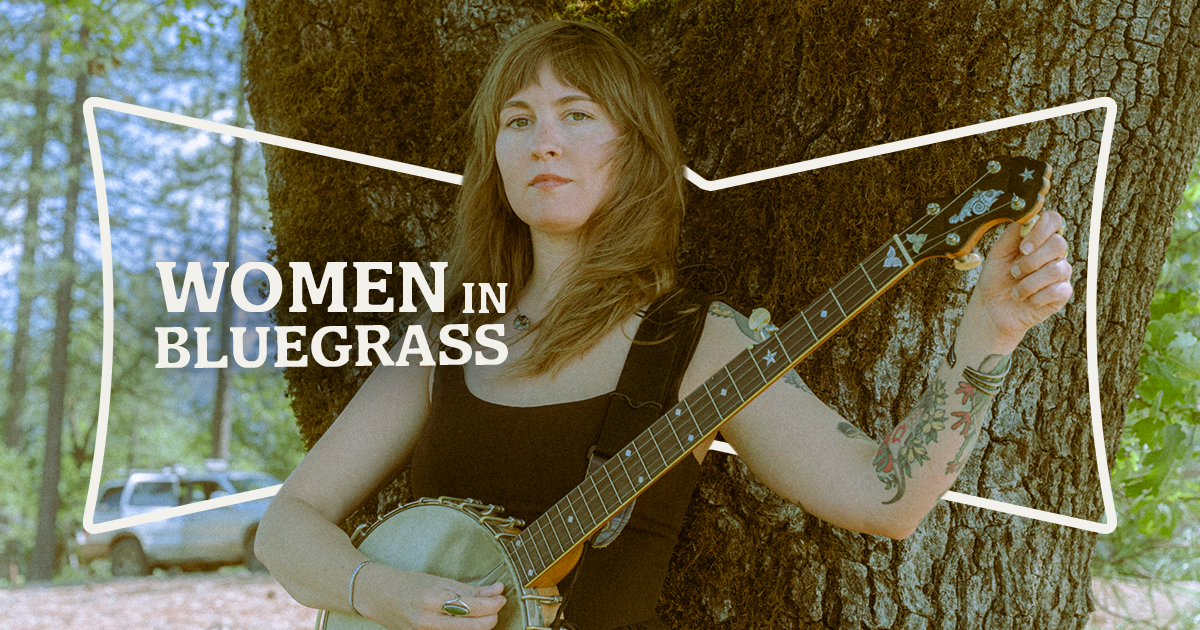
Indeed, at her Americanafest showcase in September, she packed out the 5 Spot, an essential rock club in East Nashville, accompanied by her 1902 A.C. Fairbanks banjo, her bandmates Lucas Lawson on bass and Libby Dale on fiddle, and set staples like “Late Dinner,” “Strawberry Rhinestone,” and “Roadrunner.” The next morning, she met up with BGS at a coffee shop to talk about Porchlight, guitar shopping, family bands, and more.
BGS: I think of “Late Dinner” as the song that’s been a gateway to reach your audience, and I noticed it’s on this record too. What was going on in your life when you wrote that song?
Paige Anderson: I was ghosted by somebody. I was making dinner one night, and I was like, “Where’s my person?… This is ridiculous.” That song came to me in that moment, and a lot of people related to it in so many different ways. They’ve been like, “Oh, this feels like a love song for my person,” or other people relate to it in the sense of a breakup song, or yearning for something.
It feels like a festival song to me, a song that everybody can sing along to, no matter how they interpret it.
It’s been really cool. We tour about 10 months out of the year, and it’s been really neat to play bigger rooms opening for people, and then the rooms that we’re playing now. People come out and they sing “Late Dinner” with me, and I’m like, that’s so sick.
We’re in a moment now where you can play acoustic music in a rock club, and it works. That’s very fortunate because the fans in your generation who love that style of music probably don’t want to go to a seated show. You know, they want to stand up and have some drinks.
Yeah, and that’s what I’m into. That’s what I want people who come to a Two Runner show to experience.
I like the line in “Strawberry Rhinestone” that says, “Don’t let the bad ones get you down because the good ones are hanging somewhere around.” It’s great advice for anyone. Do you find that you are encouraged or uplifted when you write songs? Does it bring you up a little bit too?
Yeah, it does. I feel like writing is such a therapeutic thing for me in my life. And when I wrote that line – that was a funny story, how that song came about. I was on tour with AJ Lee & Blue Summit, and we played in Salt Lake City, and we went to a dive bar afterwards. I think the dive bar is called Duffy’s, I might be wrong. But we were just sitting there, red leather seats, pool tables, TV on the wall, and this gal walked in with bright green hair and red cowboy boots, and she was all by herself.
She walked over to the TV and she turned on the movie The Electric Horseman. I was like, “What is this movie?” So I went home and I watched that movie and I cried. It was so beautiful. And then I wrote “Strawberry Rhinestone” because I was like, “Don’t let the bad ones get you down!” And, yeah, that just stuck. I love singing that song. I’ve had a lot of women come up to me and they’re just like, “Yeah, don’t let the bad ones get you down!!” I love that so much.
So, the woman who walked in the bar – is she the strawberry rhinestone?
In my mind, yeah. She had her bright red cowboy boots. She had a bright red skirt and a varsity jacket that was red and white. And she had the green hair. I was like, “Wow! Huh!” I hope I get to find her someday in my life.
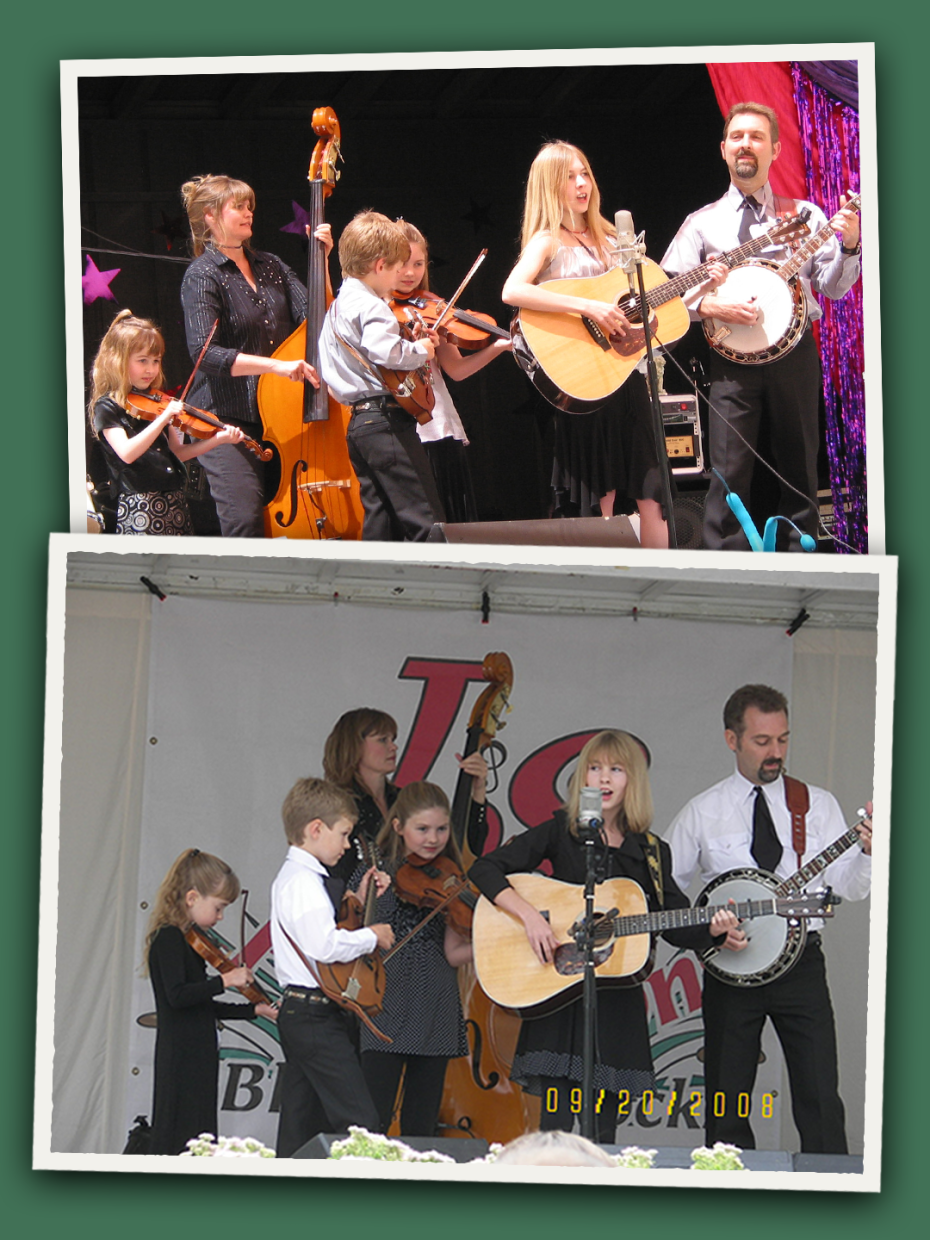
Tell me about your early festivals in your days with the family band.
I grew up in our family bluegrass band, Anderson Family Bluegrass. We played at a farmer’s market when I was nine years old, and everything just kind of snowballed after that. I’m the oldest of four, and then it was Mom and Dad on bass and banjo, and I played guitar. My sister played fiddle, my brother mandolin, and my youngest sister Dobro.
How young was she when she was playing Dobro?
She was five, I think. Maybe six. She started on the little fiddle, but then she was like, “I want my own instrument! I don’t want to be like my sister.” Then we started picking up festivals. We started going to Father’s Day Bluegrass Festival, and that was a big part of my life. But then we just started touring, and we had a 26-foot travel trailer, and we would tour and play all these bluegrass festivals. It was a crazy way to grow up. We were homeschooled and the whole thing.
When I was 15 or 16, I started writing songs, and I kind of veered off from the family band, and then it evolved throughout the years. And now there’s Two Runner and we’ve been playing festivals that are outside of the traditional bluegrass realm, and that’s been really fun. It’s been exciting to kind of grow into that.
Do you feel like there were any advantages as a working musician by being immersed in bluegrass at a young age?
Yeah, I feel like I know the ropes pretty good, which is super helpful. It helps sustain me. I think I had a really solid upbringing in that sense, where my parents taught me how to operate in this life.
I would imagine you’ve got good instincts, too, with the business side of it now, like knowing who’s a little sketchy or knowing who’s gonna go the extra mile to help you.
Yeah, I’ve been in all the situations. I’ve dealt with really sketchy people, lost a record, dealt with really great people, and I have a lot of different experiences. It just comes with time. Everybody goes through that if they’re a professional in music, and you just learn.
When you were younger, going to music stores, did you ever encounter a situation where someone was obviously thinking, “She doesn’t know what she’s doing”?
Oh yeah! I was already flatpicking a lot because of my family bluegrass band. Being 12 years old, I’d walk into stores with my dad and ask, “Can I go in the Martin room and check stuff out?” And they’d be like, “Oh, well… I guess…” And then I would start ripping something, and then they’d be like, “Oh, OK, never mind.” (laughs)
I remember one time when I was 17 or 18, I went into a music store and I asked, “Can I go into the Martin room?” And they were like, “You know, Taylor Swift plays a Taylor guitar. Wouldn’t you like one of those?” Like, literally said that to my face! I went into the Martin room anyways and played the guitars.
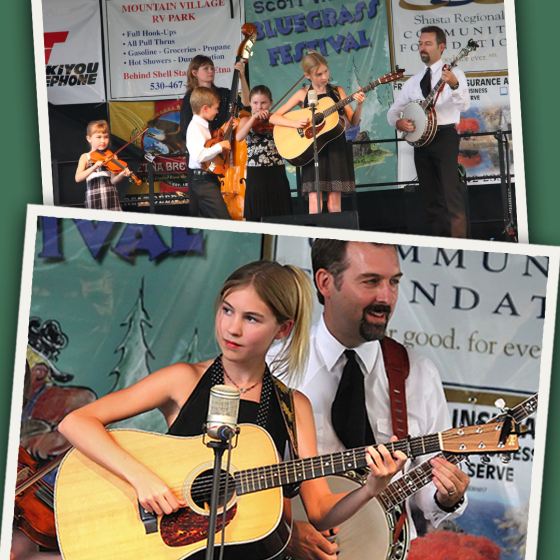
Now that Emily has parted ways with the band, does Two Runner include whoever is on the stage with you, or is it specifically you?
My whole idea with Two Runner is that it’s a band, but I’m the permanent member of the band forever. Right now I have Lucas Lawson on bass, and he really loves the project. He really wants to be involved with it, so I’m really grateful for that. And then I have a rotation of fiddle players right now, which has been fun. Everybody’s got their fingers in something, but I’m really grateful for the people that I’ve been able to bring in.
Listening to this record, a lot of songs have a driving feel, almost like a pulse. Does that happen naturally, or are you trying to capture that undercurrent when you’re recording?
I like to have that driving feel a lot. I think with this record, our live experience, I like to be very rock and roll about it, in a sense, and have that fun time. I want everybody involved to be having fun. And I think on this album, since we were trying to capture that live feeling so much, we were like, “OK, let’s make it like a fun experience for the listener.” But it does have its sweet and soft moments, too. I really love giving people an experience throughout the show, where there’s highs and then everybody kind of mellows out a little bit, and goes back up again.
When you hear this album now, start to finish, what goes through your mind?
It’s a release to me. I left a 10-year-long relationship, and that was like the beginning of writing this record. It wasn’t a terrible relationship; just our paths didn’t align. And this album, to me, is a release from that. And yeah, it’s good vibes. … Especially “Porchlight,” starting the album out with that song, that’s just kind of like, “All right, I’m leaving, and life goes on.”
Photo Credit: Ian Fuenzalida; Festival photos courtesy of Anderson Family Bluegrass