
Dichotomy. The essence of jamgrass is the intersection of traditional and progressive ideals, techniques, and tones when it comes to the musical hot potato that is bluegrass – past, present, and future.
Throughout the generations, and within the structured lines of bluegrass, there’s a constant segment of the genre that remains eternally curious about what lies just beyond the horizon. It’s this sonic landscape of unlimited possibilities and creative fulfillment, one where the whirlwind attitudes of psychedelic rock, freeform jazz, classical music, and country gold were injected into the “high, lonesome sound,” ultimately conjuring this new melodic avenue to duck down.
The First Generation
When looking at the origins of jamgrass, the “Big Bang of Progressive Bluegrass” arguably occurred with the formation of New Grass Revival in 1971 in Louisville, Kentucky. Led by fiddler/mandolinist Sam Bush and banjoist Courtney Johnson, the outfit emerged from the ashes of another group, Bluegrass Alliance. This revolutionary quartet combined traditional bluegrass with contemporary influences from the popular rock, country and jazz of the period, the result being their self-titled debut album in 1972. In later years, bassist John Cowan and banjoist Béla Fleck would be added to the lineup.
By the early 1970s, the Earl Scruggs Revue was already well-established on the national touring circuit. With the Western North Carolina banjo great himself at the helm, Scruggs and his two sons, guitarist Randy and bassist Gary, embraced the counterculture movement of the late 1960s and early 1970s. Scruggs not only was outspoken in his support of the anti-Vietnam movement, he also happily and genuinely welcomed those from other musical circles, including playing gigs alongside rock acts The Byrds and Steppenwolf.
Although not necessarily considered jamgrass, the Revue – with Scruggs being a vital pillar of the first generation of bluegrass as a member of Bill Monroe’s Blue Grass Boys – opened doors into an often-heavily guarded realm of traditional bluegrass. One where the fear of outsiders taking over the scene without “proper knowledge or respect” to the unspoken rules and traditions of the genre could be seen as misguided intent versus building a bigger space for more folks to tap into the history of the music and evolve their own craft, the end result being the survival and perpetuation of bluegrass.
In April 1972, the Revue’s album I Saw the Light with Some Help from My Friends featured guest appearances by the Nitty Gritty Dirt Band, Arlo Guthrie, and Linda Ronstadt. The sessions would inspire Nitty Gritty to eventually pursue its own collaborative project, which became the seminal album Will the Circle be Unbroken – the record now regarded as a pillar of the bluegrass and country music scenes in the decades since its release in November 1972.
That winter of 1972/1973 conjured the happenstance formation of acoustic supergroup Old & In The Way. Guitarist Peter Rowan and mandolinist David Grisman, longtime friends and collaborators, found themselves at the home of Grateful Dead guitarist Jerry Garcia in Stinson Beach, California. As expected, impromptu pickin’-n-grinnin’ sessions ensued.
“We started picking every night after supper [at Jerry’s],” Rowan told BGS in a 2022 interview. “We went through old song books and learned a bunch of material.”
By the early 1970s, the Dead had become one of the premier rock bands in America. Even though he was now a bonafide rock star with a massive legion of diehard fans, Garcia yearned for a simpler time in his life, which was his existence before the band itself, when he was a young, hungry bluegrass musician in the San Francisco folk scene of the late 1950s and early 1960s.
Soon after, the trio tapped bassist John Kahn and a revolving cast of fiddlers (Richard Greene, John Hartford, Vassar Clements) and booked a handful of gigs around the Bay Area in 1973. There were no expectations set or boundaries drawn. The gatherings were more about honoring musicianship and friendship, where all present could play joyously in the sandbox together.
Old & In The Way only lasted a little more than a year, disappearing in the spring of 1974 without any fanfare or real notice of its demise. The group was kind of like a comet flying by in the night sky — bright and stunning, and yet all too fleeting, but you counted your lucky stars you were able to see and appreciate it in real time, onstage and in the audience.
And that special time and place that was Old & In The Way would be forever captured in recordings of the live shows. In 1975, the self-titled debut album was released and became the biggest selling bluegrass album of all-time until it was overtaken by the O Brother, Where Art Thou? soundtrack in 2000.
“In bluegrass, you just do the beautiful grace of presenting the music, being good neighbors and all that stuff,” Rowan says. “But you could hear us in the band going, ‘go, man, go.’ Go for it, that’s where we came from. That’s what Old and In the Way was – the ‘go for it’ signal to everybody.”
The final piece to the puzzle that is the first generation of jamgrass was filled when Hot Rize emerged in the late 1970s in Boulder, Colorado. Coming together while all being employed at the Denver Folklore Center, fiddler/mandolinist Tim O’Brien, banjoist Pete Wernick, guitarist Charles Sawtelle and bassist Nick Forster would become the pioneers of the Colorado jamgrass scene – ultimately launching countless bands in The Centennial State with their unique blend of traditional tones and innovative styles.
The Second Generation
Just like O’Brien, Leftover Salmon guitarist Vince Herman was also a West Virginia native who headed west to the Rocky Mountains in search of his musical destiny. In 1985, Herman dropped out of West Virginia University and decided to “go to Colorado and find like-minded players.” This single decision by Herman ushered in the second generation of jamgrass.
“And I knew there was a progressive bluegrass scene based around the Telluride Bluegrass Festival. Hot Rize was in Boulder, which was a major influence on me,” Herman told BGS in a 2025 interview. “So, I figured Boulder would have a good progressive bluegrass scene. And it sure did, proven by pulling up and seeing a ‘Live Bluegrass Music Tonight’ sign [at a bar].”
That night in Boulder in 1985, Herman wandered in and crossed paths with multi-instrumentalist Drew Emmitt. The two were kindred spirits and immediately hit it off, with Herman eventually joining Emmitt’s Left Hand String Band. A year later, Herman launched his own band, The Salmon Heads. But, it would be New Year’s Eve 1989 when Leftover Salmon came to fruition, the ensemble being a combination of the duo’s respective band members.
“We stuck with Leftover Salmon for the first night, never knowing it would be any more than one night of a gig [in Crested Butte],” Herman says of the NYE show. “The older the tune, the more the bluegrass stomp kind of thing would go on, people would slam dance. We were like, ‘Something’s good about this.’”
By 1993, another Colorado band came rolling down the ski slopes of Crested Butte and Telluride. Formed as a casual gathering of acoustic musicians and a percussionist looking to get together during après-ski and play some tunes for free lift tickets and cold beer, the String Cheese Incident took bluegrass and pushed it more into the jamband world than any other group who came before them. Nowadays, the sextet is a glorious kitchen sink of sound and scope – bluegrass to blues, rock to reggae, jazz to jam-tronica – especially through their highly popular annual festivals, Electric Forest and Hulaween.
Heading towards the end of the century, Yonder Mountain String Band appeared on the scene in Nederland, Colorado, in 1998. The quartet originally featured a mesmerizing frontman in the late Jeff Austin, an ambitious and endlessly curious mandolin player. The core of the band was based more in traditional bluegrass, but with a heavy focus on improvisation and just seeing where the night took them. The culmination of which led to Yonder finding itself in this unique position, one that allowed the group to be booked at both lawnchair bluegrass festivals and wild-n-out jamband gatherings across America.
The Third Generation
The new millennium signaled the third generation of jamgrass. On Oct. 31, 2000, in Kalamazoo, Michigan, a casual Halloween gig consisting of college buddies (who played the local bluegrass open mic night at the Blue Dolphin) would parlay itself into the creation of Greensky Bluegrass – an ensemble equally obsessed with Tony Rice and David Grisman as they were the Grateful Dead and Phish.
A few years ago, when I was interviewing frontman Paul Hoffman about the initial intent of Greensky, he replied, “To play heavy metal music on acoustic instruments.” And in the quarter-century since its inception, Greensky has become a marquee act. They blurred the lines between bluegrass and jambands, ultimately setting the stage for every band who came thereafter with ambitions to rock big venues, all in the name of jamgrass exploration.
“I think that we just have a spirit to not be limited,” Hoffman told BGS in a 2025 interview. “So, if we want to emulate all the things we love – and we’d love a diverse amount of things, musical things – we honor the acoustic nature of our heritage as a band, but we want so much more. We want [things] to keep us interested and engaged. We’ve allowed ourselves that creative freedom to try anything.”
On the other side of the Great Lakes, in Duluth, Minnesota, Trampled by Turtles formed by happenstance in 2003 on a tiny stage at Sir Benedict’s Tavern on the Lake. A hearty blend of bluegrass, indie-folk and alt-country influences, Trampled’s sound has been described as “Midwestern Gothic” – a musical signature ultimately straddling the barriers between genres of distinct sounds and approaches.
The third generation is rounded out by the Infamous Stringdusters, coming together in 2006 in Nashville. Consisting of longtime road musicians and recent graduates of the Berklee College of Music in Boston, the group is a meticulous balance of tradgrass and jamgrass. With their core soaked in the principles of traditional bluegrass, the Dusters have never wavered from chasing their artistic muse towards the unknown horizon of Americana and rock influences that run deep in their sound.
“That’s what’s so beautiful about bluegrass music, in particular,” fiddler Jeremy Garrett told BGS in a 2026 interview. “You pass it on to the next generation and they take it and they do their thing with it. Luckily for us, we were around at a time that [that] was very important, and a transitional time in the industry.”
The Fourth & Fifth Generations
That transitional time in jamgrass of the early 2000s and 2010s sparked what is currently being considered the highwater mark of the genre – and also regarded as the fourth generation of jamgrass – as seen by guitar phenom Billy Strings bursting into the arena level, with Molly Tuttle and Sierra Hull right in the mix when it comes to bluegrass spilling into the mainstream.
Also emerging from the same Michigan scene as Greensky Bluegrass, Strings’ rocketship ride from hardscrabble beginnings to selling out any size of venue from coast to coast is the stuff of legend. Only in the summer years of his career, Strings’ playful flexibility around “bluegrass rules” is mirrored by his genuine respect for those who came before him. His knowledge of the genre is as profound as the unknown depths of his skillset and ambition, something witnessed each night he performs for an endless sea of faces.
For Hull and Tuttle, they became the first female musicians to be given the IBMA award for Mandolin Player of the Year (Hull) and Guitar Player of the Year (Tuttle). To note, Hull has now been given the honor seven times in the last 10 years. Both artists are becoming well-known for genre-bending collaborations with a fearlessness in entering new artistic realms – Hull jamming alongside Slash and Cory Wong, with Tuttle shifting into the indie-folk and alt-country scenes as of late.
Where we stand at this exact juncture is considered the fifth generation of jamgrass – a level represented by young, hungry and immensely-talented bands eager to learn, eager to rise to the occasion on the live stage – with the likes of Mountain Grass Unit, Clay Street Unit, Shadowgrass, and Magoo putting down quickly-growing roots in the scene due to impressive appearances in front of massive crowds on the festival circuit in recent years.
“We’re a live band. It’s where we really shine through, and you can just feel the energy up there. We always try to say, ‘There are only so many Thursday, Friday, Saturday nights,’ and we want to elevate that and bring the energy and the emotion and let [the audience] loose,” Clay Street Unit guitarist Sam Walker told BGS in a 2026 interview. “We want to make sure at every show we’re bringing that to the table, our full attention to the energy and making sure that everyone’s having as good a time as they can.”
In the last 55 years or so of the jamgrass movement, the sheer beauty of the genre is the mere fact that many of the architects and torchbearers are still walking this earth, still touring and proudly collaborating with the younger generations, and always offering a real sense of encouragement to happily take risks and not be afraid of what could be, onstage and in the studio – for true gratitude resides in the ancient desire to find one’s truth and purpose.

Continue exploring our Jamgrass in July coverage here. This content brought to you in partnership with Preston Thompson Guitars.
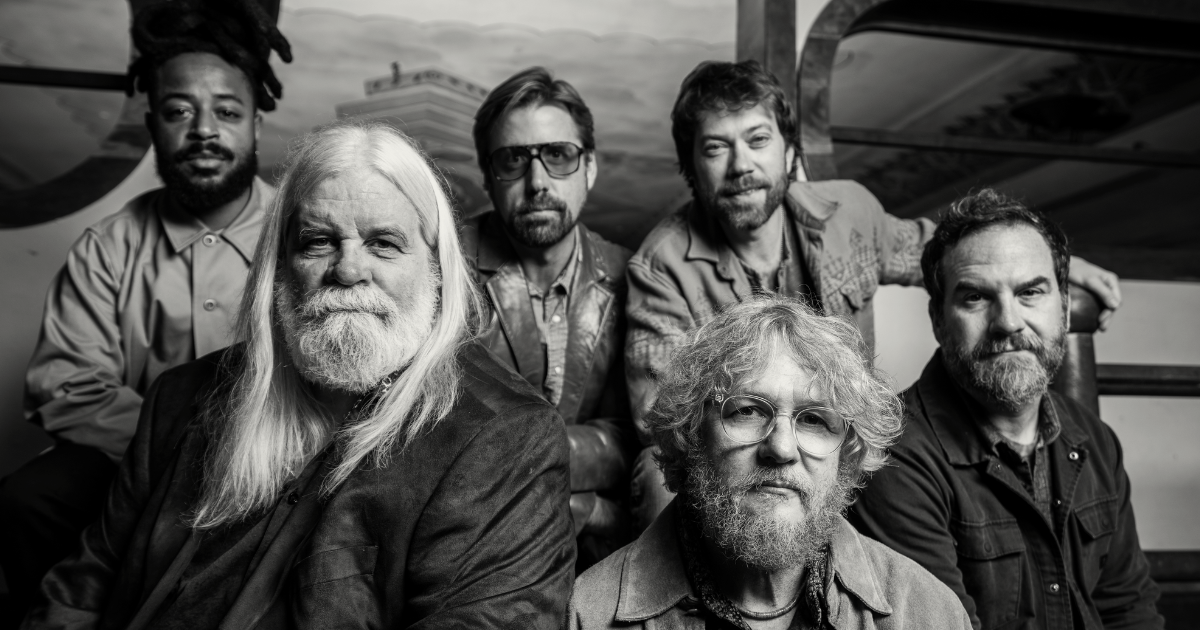
Photo Credit: Leftover Salmon by Tobin Voggesser.