
California dreaming has become a sonic reality once more. An affinity for 1960s and ‘70s Laurel Canyon sounds is alive and well, including acolytes from onetime Brooklyn punk-rockers across to Los Angeles-based former pop and R&B singers turned country-rockers. A new cohort of such artists based in Tovaangar (the traditional lands of the Tongva, the region including Laurel Canyon and all of what is now called LA) follows Jonathan Wilson’s coronation as “the New King of the Canyon,” and the historical book round-up Canyon of Dreams published at the end of the 2000s.
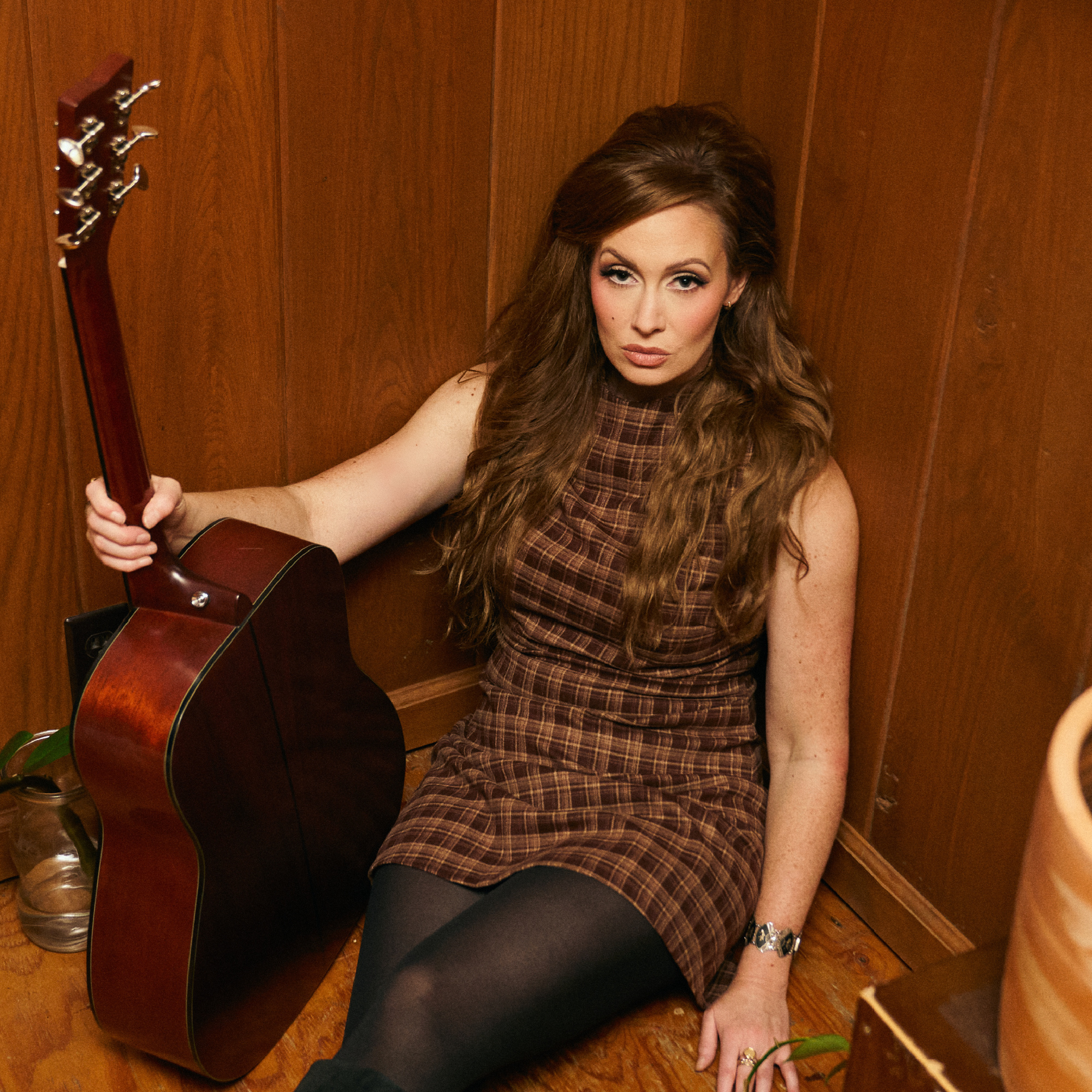
Influenced by Gram Parsons and other period icons, Northern California-born-and-raised singer-songwriter Haylie Davis is a shining star of this current Laurel Canyon wave. Her debut album Wandering Star – released June 5 on Fire Records – situates her well in the cosmic American music pantheon.
Davis has circled the Los Angeles music scene for a spell with previous musical incarnations being as one-half of country duo Will & Haylie (with Will Worden); the folksy Lady Apple Tree; and under her given name, Haylie Hostetter, contributing vocals to projects of her Canyon-rock peers. Davis descends from the sonic lineage of Jackie DeShannon, whose trailblazing 1968 Laurel Canyon presaged Ladies of the Canyon. Her other key foremothers are Mary McCaslin (Mary Noel Singing Bear, Kiowa Apache) – who got her start at the Troubadour Monday Hoot Night in the late ’60s, often plying imagery of old-timey California and the Wild West – as well as Wendy Waldman, who wrote incisive songs about the tangled love affairs of hip LA.
Davis’s pellucid soprano ascends to the stratosphere, displaying that she has the voice, sounds, and image of a singer-songwriter transported to an LA canyon of yore (she did live in Topanga) – and of a singer-songwriter that could be a big star in 2026. Indeed, Wandering Star, showing a young woman artist with mythopoeic songs with quiet thunder and heartfelt illumination, could be enshrined as Carole King’s Tapestry for a younger generation.
What was your musical upbringing like in Northern California?
Haylie Davis: I was fortunate. My high school had a really good music program, so I was able to take vocal ensemble. But guitar, I would say to this day, I’m not the best at guitar. I mostly just write with guitar. I picked guitar up when I was 16 and have since just been kind of figuring it out.
Do you figure out your songs by ear or do you read music from that teaching?
I don’t know how to read music. I don’t know, honestly, much about music theory. I’d say it’s mostly just by ear. I’ve tried to learn more in-depth about theory, but I feel like my brain has a hard time understanding it. It’s still kind of mysterious. I feel like I learned singing best from just mimicking and singing along to songs consistently.
So, how did the songs from Wandering Star flow to you?
I think it’s just kind of a sequel or it’s just a continuation of my first project, which was Lady Apple Tree. I have one album out under that name, and that album was very much a naive, youthful take on music, just kind of starting out. And I think that Wandering Star is kind of a progression of that into something a little bit more mature, a reflection of more time spent in Los Angeles, the people I’ve associated with, and just a little bit more of a growth, you know? I didn’t sit down and just write the whole album as is; I think songs just kind of trickle in as time goes on. And so those were just my favorites from that passage of time.
What was your approach to producing as you did on the new album? How did you find the studio that you used for it?
So, most of the songs were recorded at my friend’s studio named Ian Doerr. He’s not at the same place anymore, but at the time he was in Highland Park in Los Angeles and he has an all-analog studio called Love Magnet.
And I partnered up with Sam Burton, who was my partner at the time as well, and I would say he was probably one of the biggest influences on the sound. He was kind of like my confidant, someone I’d always be asking for his input and advice and his guidance. He’d been in the music industry longer than I had at that point so he had a lot more insight. I just thought that he has a very, very good ear for production, and I think he’s really good at nailing what a song needs. I call it a partnership just because I feel like he took the lead on most of it, but I also have a very specific way that I want things to sound, certain instruments I want on certain things, and certain drum beats, so I participated in that as well.
How do you command your stage?
I feel like that’s definitely been developed over the years, and it depends on if I’m by myself or with band. I was opening for this band called Nude Party, and they were, at the time, a six-piece or seven-piece band of all dudes. And they were kind of rowdy, you know? I showed up by myself. At first, it was kind of hard wrangling a crowd of people who were there to see a full band just playing by myself. I feel like I was almost catering toward them, trying to win their attention over, and it was hard. I was struggling. And then by maybe the third or fourth show, I remember just being like I don’t care. I’m over this. I’m just gonna go up there and play the songs for me and feel them as deeply as I can. And that show literally just switched the energy; people were receptive.
I learned a lot through that experience. I think I learned that it was about communicating the songs as best as you can. You have to go up there and be strong and be unapologetic.
What is the story behind my favorite of the album’s songs which is “Country Boy?”
I actually wrote that song a long time ago, when I was playing with the first band I toured with which was Sylvie and we were all playing together. And I just came up with this melody, chord progression, and words, and I didn’t do anything with it for maybe two, three years, at all. Then, all of a sudden, the rest of the song kind of came together when I was living in Altadena. I feel like most of the people and men I’ve interacted with in the music scene and just in Los Angeles have been transplants from the Midwest or the South and trying to make it in California.
On the topic of California, how do you feel about previous reviews linking you to the Laurel Canyon scene lineage? Do you identify with any of the artists from that history?
Identify is a strong word. I definitely listen, and I feel like they’re all very much close to my heart, you know, I listen to them quite a bit, and I feel like they’re very formative in my music and also how my life progressed. Linda Ronstadt, and Neil Young, and Joni Mitchell, those figures I feel like musically were very inspiring to me. So, I don’t mind comparisons; I get it. Obviously, my goal is to not replicate but make something of my own.
I saw that you’re a fan of Gram Parsons. Do you have any specific influence from him?
Oh yeah, most definitely! I love him. He’s probably one of my top artists as well. I just think that song “Hickory Wind” is maybe my favorite song. Every time I hear that song, I’m just blown away. He’s huge for me; I’m very inspired by him. I was lucky enough to stay at the hotel room that he passed away in, in Joshua Tree, for a couple nights on New Year’s 2026 – which was really special.
I really think Wandering Star could be an equivalent of Tapestry for your generation. I don’t know if you relate to that statement or not?
Thank you! Oh, wow!
Love. Well, it’s hard. I feel like it’s hard to be completely self-aware of […] it’s hard to see yourself how others see you, you know? I’m just like me, and I’m just out here trying to make it, trying to survive. But I appreciate that; it means a lot. Because it takes a lot of work. I like Carole King as well. But I will say, it’s interesting because I do think that there’s been a kind of exodus out of LA at the moment. I’ve moved to Brooklyn.
Since you’ve moved across Turtle Island do you think the “California Dream” is dead for artists?
I think that there are energy hubs, like New York, LA, certain places that I don’t think it’ll ever fully go away. But I do think that there are seasons for places in cities. And I think that, at least for this specific niche that I’m a part of, I think that it’s a little bit in a low season over in LA. I think that it’s swinging over to New York right now.
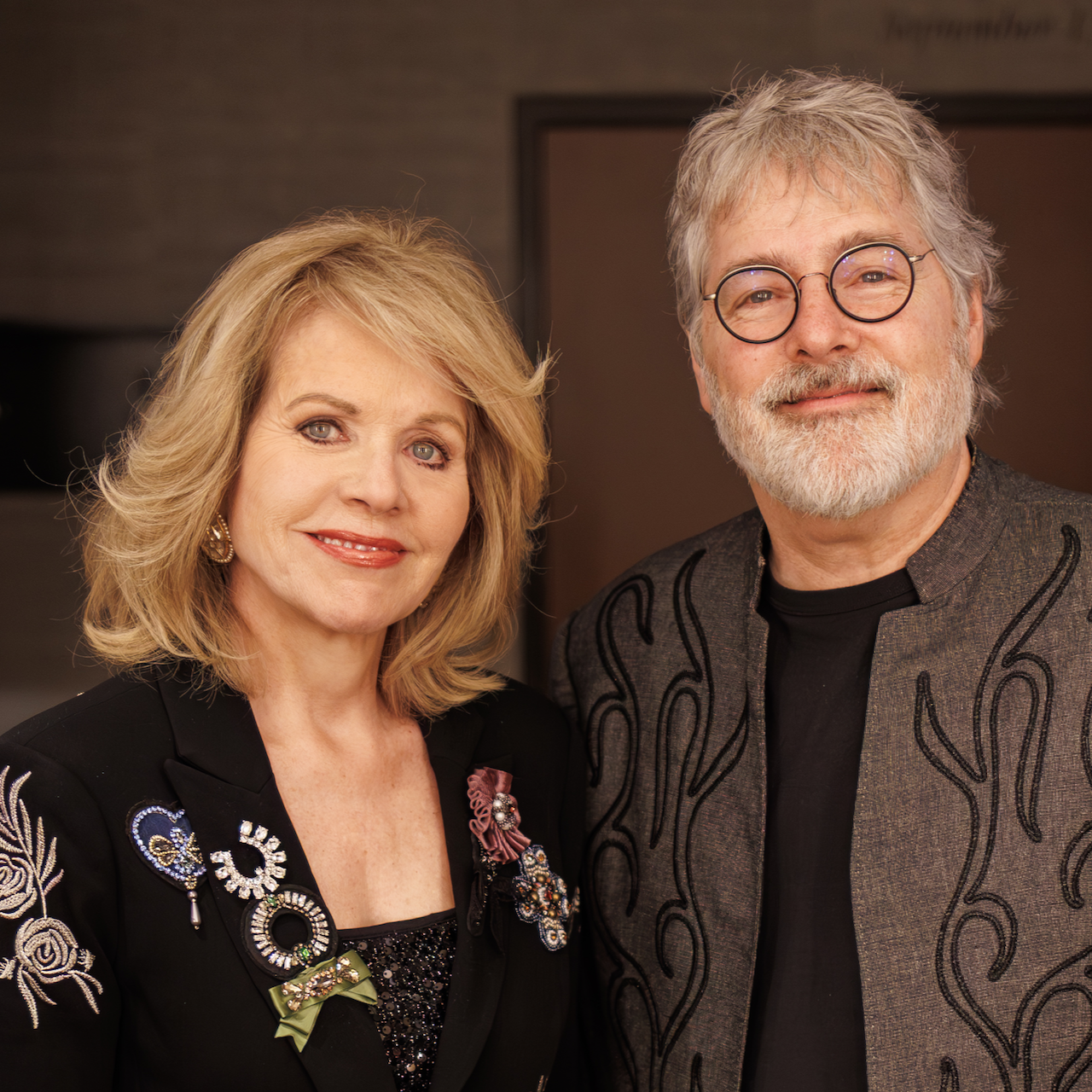
Speaking of California dreamin’, I heard that you made pictures previously with my friend the photographer Henry Diltz. Do you think what he shot is like the ones that he did for various legends?
I actually took those a few years back. I was dating this guy named Will Worden who plays music. He lives in LA and I don’t know how he got Henry Diltz’s info, but he did. [Henry] came by and just shot us and it was really, really cool. Like, obviously, he’s a legend. I haven’t really posted any of those photos, so maybe I’ll look back and check them out.
Are there some albums that you find you listen to in emotional times that help you through?
There’s some things I always go back to, but right now, I haven’t really been listening to Joni Mitchell that much. I feel like she’s someone that I can listen to at any time. Right now, I am going through a breakup, and it’s crazy, but I’m surprised by the music that I’ve been listening to… I’ve been really into the first Gipsy Kings album – the second song on that record, it just really hits. I’ve been really feeling it. I love Elliott Smith; I’ve been listening to him.
Oh, I’ve been listening to Anita Ward lately, too. She does “Ring My Bell.” You know that song? And she also has a song called “Spoiled By Your Love” that has been on repeat.
What else about Wandering Star do you want known?
One of the reasons why it feels special to me is because of the people who were working on it, just like how much dedication they shared and it means so much. Just a lot of care from people who didn’t have to do that, but they did. It’s like a nice pin in all of our timelines. It’s coming to a point where we’re all kind of moving in different directions in a lot of ways. And I’m happy to have this shared moment.
I’m just grateful for everybody who participated because honestly it couldn’t have happened especially as I was broke. I didn’t have any money to really do it, and everyone just kind of showed up and was there for it. That doesn’t always happen. You don’t always have people around like that, so I really, really appreciate them for that.
Photo Credit: Sarah Ward