
Whether it’s Bill Monroe, Sam Bush, Sister Sadie, or Billy Strings, bluegrass has always pushed boundaries. At the forefront of that movement sits jamgrass, which brings together a barrage of influences performed with grassy, stringed arrangements and an improvisational sensibility that makes each song and show feel like a living organism – and results in each performance having its own qualities and quirks.
However, despite many tying the origins of jamgrass to ’90s upstarts like Leftover Salmon and Yonder Mountain String Band, its roots actually go back at least a half-century – and in some cases to the very origins of bluegrass music itself.
“When Bill Monroe started the Blue Grass Boys and they came on the Grand Ole Opry with that band, they were so far removed and different from other string bands of that same era even though they had the same instrumentation,” says Bush. “They were light years ahead of all the rest of the music on the Grand Ole Opry in terms of progressiveness and innovation, so in his own way Bill Monroe was a rebel. The Opry audience was just astounded with the way they played, and then when Bill introduced a great fiddler like Chubby Wise and the banjo playing of Earl Scruggs, that’s what kicked what we call bluegrass into gear.”
That same trailblazing spirit of Monroe could also be found in Bush himself several decades later, with the formation of the Bluegrass Alliance and, shortly after, New Grass Revival. The latter went against the grain of traditional bluegrass in nearly every way imaginable, from covers of Jerry Lee Lewis, Bob Marley, and The Beatles to their long hair and the tie-dye they dressed themselves in. All more akin to Deadheads and the hippie movement than bluegrass at the time. Per Bush, the group was inspired by bands that had already deviated from the old-time ways of bluegrass like the Osborne Brothers, Jim & Jesse, the Country Gentlemen, the Dillards, the Greenbriar Boys, Area Code 615, and even John Hartford – who he’d later pay tribute to with his 2022 album Radio John.
That being said, New Grass Revival and the movement they helped spark also held the tradition of bluegrass in as high regard as anyone, even as the band pushed the music in a direction it had never been before. “We always said that if you want to play newgrass, you first have to know how to play bluegrass,” recalls Bush.
The band’s rise gave way to the progressive leaning newgrass movement that saw an influx of outside influences and experimentation flood into the music that Monroe and the Blue Grass Boys made famous, with one of the most notable being Leftover Salmon. Formed in 1989 – the same year New Grass Revival first broke up – in Boulder, Colorado, Salmon brought together acoustic and electric arrangements with percussion to create an offshoot of newgrass they coined “Cajun slamgrass.” The outfit’s hybrid sound was an instant hit, and by the early ’90s the band found itself on the H.O.R.D.E tour with rock and jam bands like Phish, Widespread Panic, Spin Doctors, and Blues Traveler. This further connected the worlds of bluegrass and jam, resulting in what many refer to as the official launch of the jamgrass movement later in the decade when Yonder Mountain String Band burst onto the scene.
In fact, Yonder’s bassist, Ben Kaufmann, recalls attending that H.O.R.D.E tour and credits it for sending him down the rabbit hole of bluegrass. But being from Boston and growing up a Deadhead, he knew that any music he’d go on to create would be radically different from what had come before it.
“We didn’t grow up in the rural South,” explains Kaufmann. “We were suburban kids, which was critical to whatever Yonder ended up achieving. If we weren’t, the band likely would’ve leaned much more traditional. We thought the music of Flatt & Scruggs, Bill Monroe, and the Stanley Brothers were the coolest things ever, even though it was born out of an environment that’s not ours.
“That, combined with the influences of our formative years, helped to mold our own little version of what a bluegrass band could be, even though not everyone thought it was the ‘right’ way to play it. For a while the bluegrass community didn’t want any part of us, which made me realize that if people weren’t going to invite us to their party that we’d create our own, which is exactly what we did.”
From there, Yonder integrated their high-strung and energetic live show even more than the jam band circuit, piecing together the foundations of what would soon become the jamgrass scene in the process. That momentum reached a fever pitch for the band in the late 2000s when the band was headlining bigger rooms than it ever had before and landing opening slots on arena tours with the Dave Matthews Band and Widespread Panic, similar to the gigs New Grass Revival had opening similar venues for Leon Russell in 1979.
Thinking back on that era of the band, Kaufmann says it made him understand the full potential of what jamgrass and bluegrass could achieve if given the opportunity, which he says is now being realized with artists like Billy Strings, Mountain Grass Unit, and others.
“Even in the late aughts when Yonder was at max room capacity and opening these arena shows, we wondered if bluegrass would ever work in rooms this big. And, to our amusement, it did – you just needed to fill the venue with the right people. We didn’t know if that would be us headlining those places one day, but playing those gigs showed us it was something that could happen.
“With that in mind, it’s no surprise to see a young gun like Billy Strings come along and set the world on fire. In the little amount of time we’ve spent together it was obvious that he is a special talent, so observing his rise and all he’s done for this kind of music has been mind-blowing.”
Yonder’s success lit a spark for the jamgrass movement that’s been burning ever since, with countless performers crediting the band for the influence they’ve bestowed upon them. One of those people is Kyle Tuttle, who grew up following the band around on tour in the early 2000s before eventually landing a spot playing in founding member Jeff Austin’s band after Austin departed Yonder in 2014.
“I was just starting to see real bluegrass and already loved the Grateful Dead, so when Yonder Mountain String Band came along and overlapped with those two worlds, it was like a dream come true,” Tuttle explains. “I’d been seeing all these suit-and-tie bands playing straight bluegrass and loved it, but at the same time I was also wondering where I fit into it. Then Yonder pops up and it feels like what I’d been waiting my whole life to discover.”
Tuttle played his first gig with the Jeff Austin Band in 2016 and remained in the group up until the singer’s untimely death in 2019. He went on to perform with the GRAMMY Award-winning Molly Tuttle & Golden Highway from 2021 to early 2025. Now he leads his own collective, the Kyle Tuttle Band, where he intertwines original compositions with traditional bluegrass covers and other off-the-wall influences as he puts his own spin on what jamgrass is.
“It’s a common perspective for people to not want you to mess with their bluegrass and tradition, whereas the jamgrass world tends to be more wide open,” admits Tuttle. “Fans nowadays are ready to hear whatever interesting mashup you create, which makes for a really nice union.”
With how wide open the jamgrass has become, even bands outside its periphery have found their way into the community from time to time. Take Fruition for example, a band that began busking on the streets of Portland over 15 years ago with a mix of string instruments and a poppy folk sound that sits on the far outer reaches of the jamgrass spectrum. Similar to how Yonder struggled to be embraced by the bluegrass community in its early days, Fruition’s Kellen Asebroek said it was the jamgrass community that first embraced and welcomed the band when nobody else would. “There’s no telling where we’d be if they hadn’t welcomed us into their family.”
“I was introduced to [jamgrass] in 2002 before I even knew what it was,” recollects Asebroek. “My uncle was a big Leftover Salmon fan and gave me an audience recording from the ’90s to listen to that left me in awe wondering what the hell it was they were doing. I grew up in more of a punk, reggae and classic rock world, so that was the first time I heard something remotely grassy. It wasn’t until we started Fruition and were busking on the street that people began referring to us as a jamgrass band. That being said, Fruition tends to be on the more structured side, so much so that I wouldn’t even call ourselves a jam band. We’ve always been in a unique place in that world in the sense that the jamgrass community is who took us in as babies and showed us around even though we were on the fringes of it.”
Also on the fringes of jamgrass is Daniel Donato, who began picking country and bluegrass tunes on Nashville’s Broadway strip as a teenager before launching his own project, Cosmic Country, in 2015 after seeing shapeshifting country singer Sturgill Simpson at the Ryman. The sound that grew out of that moment is equal parts Simpson and the Dead, but Donato says that bluegrass legends like Bill Monroe are also critical to what he creates as well, even though he utilizes mostly electric instrumentation.
“Jerry Garcia also had a really sophisticated understanding and appreciation for bluegrass music,” compares Donato. “The arrangements of the Dead were not succinctly bluegrass, but there was a ton of bluegrass influence that went into the way he played, especially with Old & In The Way and the Jerry Garcia Band. My goal has been to tap into a similar feeling, but with a slightly more prominent country twang.”
Someone else who’s spent plenty of time in the jamgrass scene despite not always producing music that would be categorized as such is Sierra Hull. The mandolin prodigy grew up on a heavy dose of traditional bluegrass in East Tennessee, with acts like Blue Highway, the Seldom Scene, and Lonesome River Band being the soundtrack of her youth. While she’s tended to lean more towards “chambergrass” and singer-songwriter styles in her adult life, she also takes plenty of time to let loose and jam, whether it’s stretching out her own material or joining artists like Cory Wong, the String Cheese Incident, Greensky Bluegrass, Béla Fleck, and Sam Bush on stage. The latter of whom she credits – along with luminaries like Peter Rowan and David Grisman – for planting the seeds that later grew to become jamgrass.
“For people like me, [Sam] was such a huge gateway to a lot of these other musicians who were really open-minded about what they played and who they collaborated with,” confides Hull. “Coming from a more traditional background, what I’ve enjoyed most about getting out to these bluegrass and jam festivals [is] mixing it up with folks. I’ve become a fan of jamgrass from seeing it all happen up close, rather than having grown up on albums – which I feel is the case for a lot of fans of jam music. The recorded music is still awesome, but the live shows are where the spirit and energy of jamgrass truly live.”
Hull continued, stressing how despite the current momentum behind jamgrass it’s still a very niche genre that nobody gets into expecting to become famous from it, which makes the heights Billy Strings and others are taking it to that much more mesmerizing.
“There’s something really cool about seeing folks who maybe don’t know who Bill Monroe or Doc Watson is, but they can go to a Billy show and immediately connect to the authenticity of what the music is,” exclaims Hull. “We live in a day and age where people are ripping on their pedals and doing more progressive stuff than they ever have before with string music, but at the same time most all of these bands have their moments where they throw that all away and just play a straight-up bluegrass tune. Seeing people resonate with that is central to what this music is and does.”
Another woman staking out a career in and around jamgrass is Lindsay Lou, who first discovered the subgenre witnessing the early days of Greensky Bluegrass performing in Michigan. Although she’d already been vaguely familiar with Yonder and Leftover Salmon, Lou credits Greensky’s sound and proximity to her as the driving factors for introducing her not just their music, but jamgrass as a whole.
“Greensky was my gateway to the jam world, because we were both part of the same scene,” says Lou. “I started hanging with them and soon found myself at festivals with other like-minded bands that sent me diving into the music of the Grateful Dead and others.”
One of those artists she wound up connecting with was a young Billy Strings, who she’d grow close with and later live across the street from in Nashville. The two would even go on to co-write a number of songs together including “Freedom” and “Nothing’s Working,” which both appeared on Strings’ albums Home and Renewal, as well as the latter appearing on Lou’s Queen Of Time. “It’s been really cool having written songs with Billy and hearing him perform them to arenas packed with 30,000 all singing along.”
“It’s no surprise to me that Billy has brought so many people to jam and bluegrass music in the same way that Yonder and Greensky did for so many before him, including Billy himself,” she stresses. “It’s been so much fun watching a young hippie kid like him take a traditional song to places you never thought it could go due to him embracing the musical conversation that jam music is centered around.”
Someone at the heart of the Billy Strings phenomenon is Jarrod Walker, who’s played mandolin in the Michigander’s band since 2018. Similar to Sam Bush, Walker believes the roots of jamgrass can be traced all the way back to Bill Monroe, due to how he took popular songs of the day and breathed new life into them with stringed arrangements – similar to how modern day jam bands pull from influences far and wide to create something entirely new. And although he credits Sam Bush as being a central figure for the movement, he also holds the Seldom Scene – who recorded an extended version of the Grateful Dead’s “I Know You Rider” (simply called “Rider”) on its 1973 album Act III – in a similarly high regard.
“There have been a smorgasbord of different influences in jamgrass from the very beginning with Irish and English music and gospel and blues – all of it was an integral part of what Bill Monroe originally did,” says Walker. “Then someone like Jerry Garcia comes along and follows Monroe like people would soon be following the Dead, which led to Old & In The Way, continuing the prophecy that’s still playing out to this day.”
But even as that prophecy continues to play out, Walker is amazed by where it’s taken not just the Billy Strings band, but string music as a whole. Having been accustomed to gigging at performance art centers and other smaller, seated venues for most of his pre-Billy picking days, he says that the experience of performing at rock clubs and now arenas with fans going crazy for bluegrass music has been mind-boggling and a phenomenon he’ll never stop being captivated by.
“[Playing arenas] is something none of us saw coming and is a combination of being at the right place at the right time and the contributions of everyone who came before us that paved this path for us to do it,” states Walker. “Billy is also a fantastic musician and student of bluegrass whose love for the music combined with his other influences is emblematic of the cohesion that is core to jamgrass and everything it stands for.”
Like all forms of music, jamgrass is a living, breathing organism that is constantly evolving and bringing new ideas and influences to the table. Whether it’s traditional and progressive bluegrass or rock, blues, punk, soul, country and everything in between, it all has a place in the jamgrass setting and is without a doubt the biggest driving factor of the genre’s success. It truly is a “rising tide lifts all boats” scenario that may have been a long time coming to arrive, but now that it’s here and thriving shows no signs of departing anytime soon.
“It took a long time for listening tastes to catch up with this kind of music and these instruments, but it’s no surprise to me that someone as talented as Billy is having the success he’s having,” declares Bush. “It’s only natural that the music is going to grow, and it’s in a really healthy place right now. But even with the rise of jamgrass you still have good ole Del McCoury leading the pack with his Bill Monroe style of bluegrass, and the same audience that loves jamgrass loves him too.”

Continue exploring our Jamgrass in July coverage here. This content brought to you in partnership with Preston Thompson Guitars.
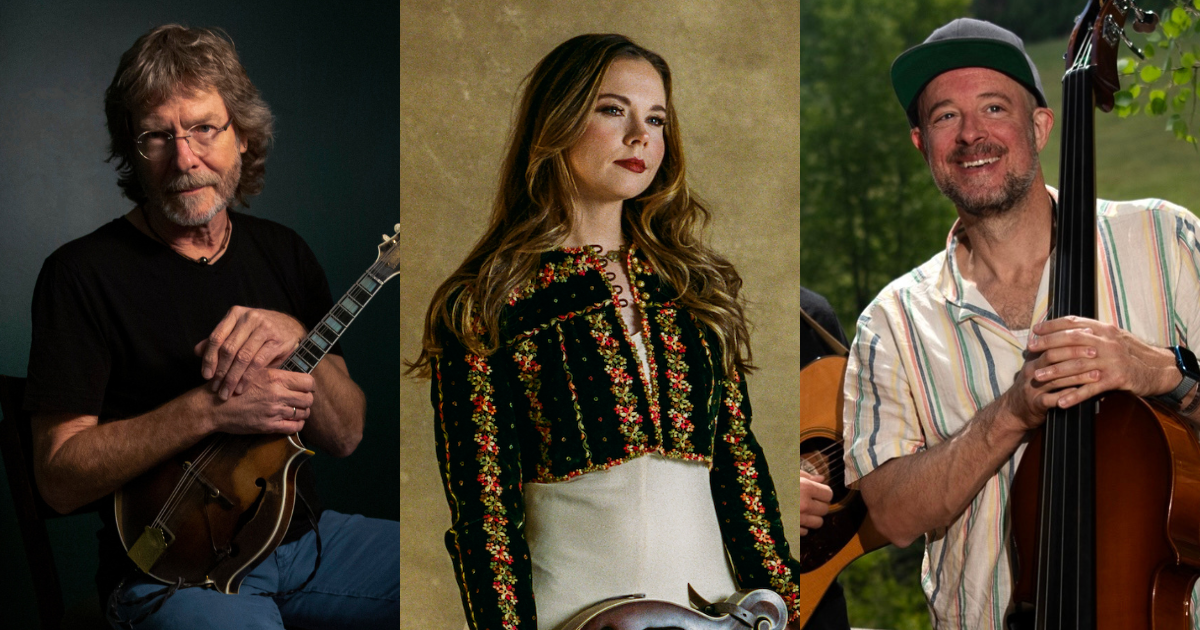
Photo Credit: Sam Bush courtesy of Crossover Touring; Sierra Hull courtesy of the artist; Ben Kauffman courtesy of Crossover Touring.