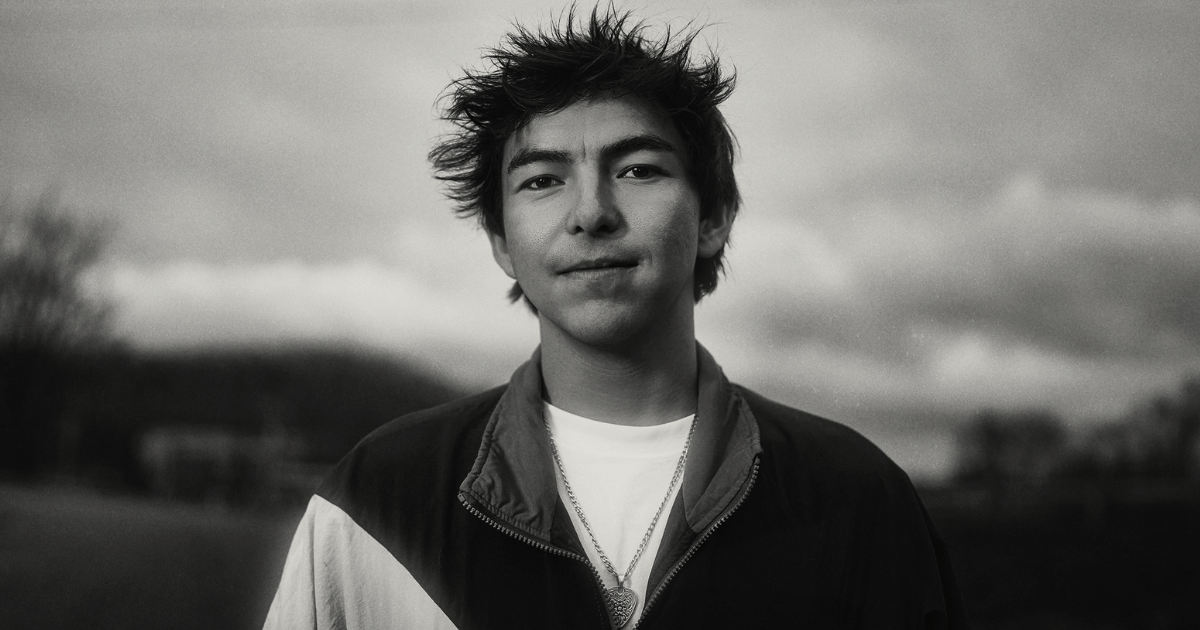
Wyatt Flores grew up in Stillwater, Oklahoma, in a family where music and working the land were both part of life. His mother loved George Strait, his father listened to classic rock and blues, and his uncle played guitar. As a teenager Flores showed goats and cattle through 4-H and FFA, worked on farms, and played music whenever he could. After one semester of college, he decided to pursue music full time, sometimes leaving a farm job to play a bar and returning to work the next morning.
At 25 years old, Flores has spent the past several years moving from Oklahoma barrooms to some of the biggest stages of his young career. His new album, Scared of Heights, reaches beyond the country and Red Dirt sounds that first brought him attention while continuing to explore the subjects he knows firsthand. Drawing on early-2000s pop and rock, the record finds Flores working through new sounds without settling into a specific sonic path.
Since his 2024 debut, Welcome to the Plains, his career achievements include more than 1.4 billion streams, a Grand Ole Opry performance at Carnegie Hall, and appearances on NPR’s Tiny Desk and The Late Show with Stephen Colbert. But the road hasn’t replaced the life he had before touring became a full-time occupation, as he still raises cattle and show goats with friends through their operation, Top Shelf Genetics.
In this conversation, Flores discusses the music he grew up hearing, the appeal of ranch work, the lessons he learned from early gigs, and the satisfaction of watching younger songwriters find their footing.
BGS: Your parents seem to have played an important part in your life. Did you pick up your love of music from them?
Wyatt Flores: Oh, yeah. I have an older sister, so she was trying to teach me all about rap, the new generation of Red Dirt, pop, and things like that. My mom was huge on ’90s country. I think she owns every single George Strait CD there ever was. My dad was really into classic rock and blues.
For me, I was always more into the Red Dirt scene. Then I started discovering folk music. By 2021 or 2022, I went to a music festival called Laurel Cove out in eastern Kentucky and saw a whole bunch of artists whose music I’d never heard before. That’s when things started changing, and I got more into the folk scene. I really dug the lyricism, and that was what I wanted to chase.
There’s so much phenomenal music out there, whether it’s folk, storytellers, talking songs, or singer-songwriters. I don’t want to stick to one genre. I get bored, so I keep wanting to find new things. It’s not always folk, Red Dirt, or straight country. It’s a whole bunch of stuff. I feel like the songs are little scrapbooks of who I am and where I’ve been.
Tell me about your first instrument and the first songs you wrote. Did you always think of yourself as a songwriter?
I was always fascinated by guitar. My dad was a drummer, and my uncle played guitar, so they taught me early on. Some of the guys from The Great Divide helped me, too. It was just a love for it.
I never really thought about writing songs until the week before my first paid gig at a bar. Someone came up to me and said I might want to think about writing my own song. So I sat down that night in a barn and wrote “Travelin’ Kid” in about 30 minutes. A buddy kept telling me I needed to put it out, and eventually I started releasing music.
I never thought it would turn into all this. Even “Please Don’t Go,” the song I’m probably most known for, was the tenth song I ever wrote.
Your dad is still involved in music, isn’t he?
Yeah, he still plays drums. I’m taking him to Australia with me, so now he’s an international drummer. It’s been cool getting to do things like that with him.
What do you remember about that first paid gig?
It was at Jay Farley’s in Claremore, Oklahoma. I remember my dad telling me that once somebody paid me to play music, I was a professional musician. That stuck with me. It made the whole thing feel a little more real.
You were working on farms while trying to get a music career going. What did that period look like?
I was working for a farmer named Doug, and he was really good to me. If I had a gig, he’d let me leave. I’d get off work, go play a bar, and come back the next morning. Sometimes we’d have to set up the speakers, get everything ready, and sound-check in about 15 minutes.
I went to college for one semester and dropped out at the end of 2020. COVID was happening, and I was playing music whenever I could. I had to decide whether I was going to keep going to school or give music a real shot. I knew I wanted to try it. I didn’t want to look back later and wonder what might have happened if I’d gone for it.
Who were some of the artists who helped shape your sound early on?
William Clark Green, Turnpike Troubadours, Mike McClure from The Great Divide, and Sturgill Simpson were all important to me. I was listening to a lot of Red Dirt, and then I started branching out. I’ve always liked hearing different things and finding something new to chase.
You’ve said discovering folk music changed the direction you wanted to take. Do you think the pandemic helped bring more listeners toward that kind of songwriting?
That’s just my opinion, but I think there was a shift. People were stuck inside, and maybe they started thinking more than they had before. The happy songs weren’t necessarily fulfilling what they needed, so they started finding different styles of music. Folk was always there, but it became more popular, and I was lucky enough to ride that wave.
COVID did a lot for my scene, at least from where I was standing. I know it hurt a lot of people, and I don’t want to minimize that. Personally, I was out in the wilderness and fishing every day. I was in Montana then, and I was glad to be there. That’s just my theory, though. I’m sure there are studies that could argue against it.
You’ve kept a connection to ranching even as your music career has grown. Do you see similarities between the two worlds?
There’s a lot of hard work in both. People see us get onstage and play a show, but they don’t always see everything that goes into it. Ranching is the same way. There are things you have to do every day, whether you feel like doing them or not.
I grew up raising cattle and showing goats. I started showing goats in 4-H when I was really little, and by the time I was about 12, I was showing steers. Then I got into FFA and did a whole bunch of events. It was a big part of my life.
As you get older, the dream is to get back into it. I’ve been doing that with my friends. Since I’m on the road so much, they help take care of things when I’m gone. We run our cows together and show goats, too.
Tell me more about Top Shelf Genetics.
We started it last year, and it’s been a blast. We raise cattle and show goats, and we sell goats to kids who are going to show them the same way I did when I was young. Where I’m from, 4-H and FFA are really big, but I’ve found out there are parts of the country where people don’t have much access to them. I was lucky to have that opportunity, and it’s cool to be able to help some kids get started.
With music, touring, and the ranch, how do you find a balance?
That’s been the fun question for me. For a while, when I got off the road, I didn’t have a whole lot going on, and I struggled with that. The only thing I had going for me was my actual job. I didn’t know how to come home or what I was supposed to be doing.
I finally started asking what balance was supposed to look like. I had to find things that made me happy outside of music. Now, when I’m home, I have the ranch and the animals. It gives me something else to care about, and that’s important.
Touring can also give you a chance to see parts of the country you might not otherwise visit. Have you had any time to get out and explore lately?
In the last 24 hours, I found myself on top of a mountain, sleeping underneath the stars in a hammock. It sounds like we’re going fishing tomorrow and maybe riding some horses. It’s looking like a pretty dang good time. I’m enjoying this cooler weather, too.
When you do get a few days off, is that the kind of thing you look for—getting outside and away from the schedule?
Yeah. I like being outdoors. I like fishing, and I like being out where things are quiet. When you’re touring, there’s always something happening, so it’s nice to have a little time where you don’t have to think about the next thing you’re supposed to do.
You’re 25, and your career has moved quickly. Does it feel that way from the inside?
Sometimes. You look back and think about how much has happened and how different things are now. But I’m trying not to get too caught up in that. I’m just trying to keep doing what I’m doing and enjoy it.
You’ve spoken about putting pressure on yourself and worrying about how things turn out. Has your relationship with that pressure changed?
I think I’ve learned to focus more on the process than the results. I lived, I wrote, I recorded, and I put it out. That’s what I can control. I can’t spend all my time worrying about what happens after that.
I’m an artist. I’m supposed to make art. If I get too caught up in everything around it, I’m not doing the thing I’m here to do. I want to make music I believe in and keep finding things that excite me.
When you listen back to older songs, do you hear a different version of yourself?
Definitely. It can be bittersweet. Sometimes I think about everything I wish I could have changed, but I can also look back and wonder what that version of me was going through when he wrote something. I’m not trying to write the saddest songs in the world now, because that’s not where I’ve been.
I’m excited about this next chapter of writing. I’ve already started writing again. I don’t know where I’m going to end up, but I feel something cool. I feel it inside me again. The fire’s starting to catch, and it’ll be interesting to see what comes next.
Photo Credit: Matt Paskert