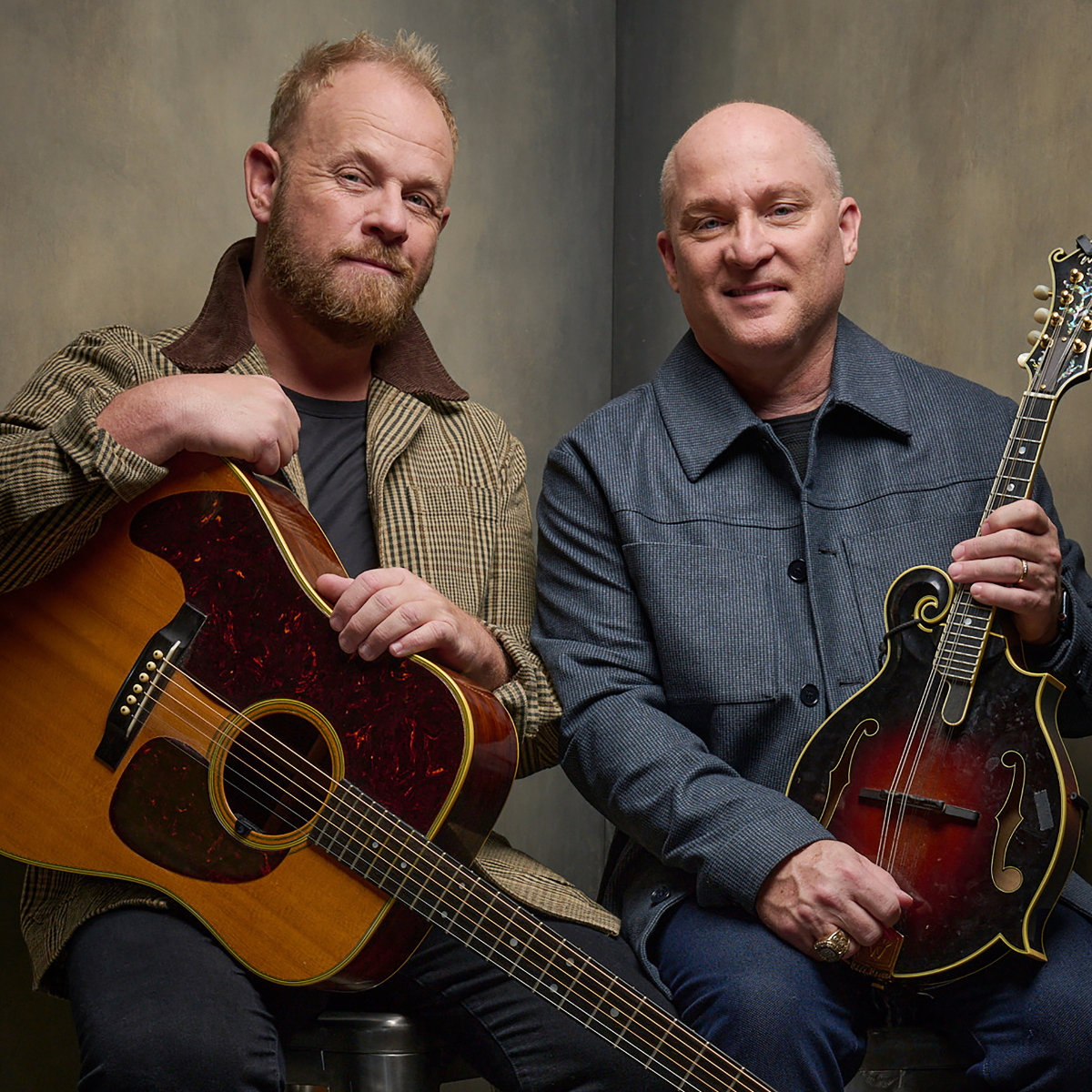

Since Jamie Dailey and Darrin Vincent began singing together as Dailey & Vincent in 2007, they have awed fans in many ways: through their musicality, their sincerity, and their professionalism. But most of all, it’s about their duet singing.
It’s the way their voices blend and weave, so closely it can be hard to distinguish one from another. It’s the way their so-tight harmonies set up a vibration that makes the world tilt a little bit when they reach the high notes. It’s the way we sigh after they stop singing, because all’s right with the world.
Although they aren’t related, Dailey & Vincent do the bluegrass phenomenon of a “brother duet” like nobody’s business. They capture the familial force that Grammy-winning bluegrass artist Laurie Lewis describes as delightfully “making the hair on our arms and legs stand up.”
With Dailey & Vincent as our Artist of the Month, we thought we would peek into the history and tradition of brother duets and other harmony-driven duos that led to this great contemporary partnership.
Two Brothers and Two Instruments
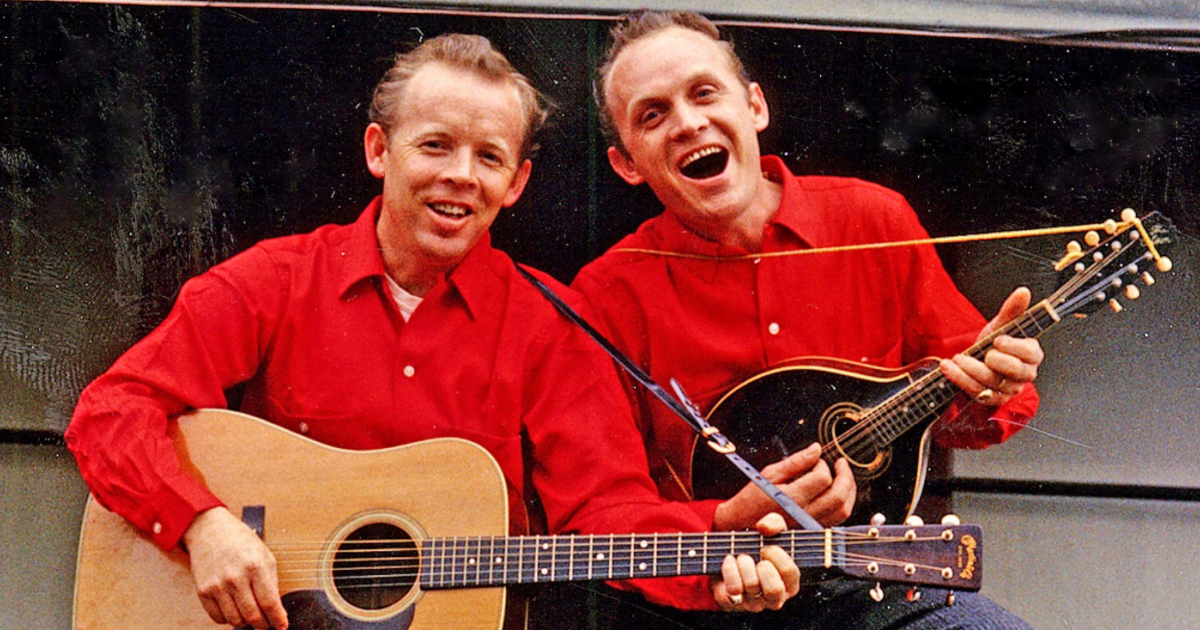
For bluegrass journalist, songwriter, performer, and teacher Jon Weisberger, the term “brother duet” refers to something very specific: “A brother duet is basically a guitar and a mandolin and two guys, and they could be brothers, like the Monroe Brothers or the Blue Sky Boys [Bill and Earl Bolick] or even the Delmore Brothers.”
But many of the early duos later added more musicians. “They became something else, in this sort of organic process … because they wanted to have a fuller sound and they wanted to be competitive on the radio…”
“This brother duet thing existed before bluegrass,” Weisberger continues, “and then it became part of bluegrass. Such that modern folks like Michael Daves and Chris Thile … are doing a lot of the original-style singing, with just two instruments. It says something about the vitality and the attractiveness of that style.”
Weisberger notes that Dailey & Vincent recorded Gillian Welch’s “By the Mark” with just their voices, a guitar, and a mandolin. There are many other similar examples in country, old-time, and other folk formats, but the style is still beloved – and common, thankfully! – in bluegrass today.
Brothers in Tone and Timing
For many, a brother duet has to do with the spine-tingling effect of very tight harmonies, in which every note matches up in every way. Laurie Lewis, who has taught harmony singing extensively and is known for her many duet recordings and performances, talks about it this way.
“It’s easy for brother duets or sisters to blend, because they grew up pronouncing all their words the same way, because they’re from the same place and the same family,” Lewis explains. “So, they’ve got a big leg up that way.
“The shape of a vowel is the most important thing to get right when you’re trying to blend with somebody. And consonants, you know, when you start or end the note. It’s placement, as well – where you place the tone: is it forward in your face? Is it back in your throat, or somewhere in between?”
Members of family bands and sibling duets often have the same vocal timbre – “high and lonesome,” in some cases, or deeper and more mellow in others. But, Lewis said, the brother effect can work even with singers whose voices have different qualities.
“Take Carter and Ralph Stanley, who sang so beautifully together and had really different voices. Carter’s was smooth,” she points out, while Ralph always had that rougher mountain quality.
Insights From Singing Brothers
Eric Gibson remembers when he and his brother Leigh first got the harmony buzz as teenagers. “We were working in the calf barn and I’d been listening to Jim & Jesse sing ‘Are You Missing Me?’ … I started singing it, and Leigh was maybe 10 or 15 feet away from me, when he hits the tenor. And I looked at him, and I just felt it, like, ‘What did we just do?’”
The Gibson Brothers have won national awards for vocal recordings, for songwriting, and for gospel albums. They both love using a horse racing analogy to achieve the brother duet sound. Leigh notes that in many duets and other harmony forms, the lead singer is out front, in volume and style. In contrast, Eric quotes Tim Austin as saying, “Your brother duet is like two racehorses. There’s not a lead horse out there with the harmony back here. They’re both fighting for position.”
Like horse racing, it takes discipline, and keeping the harmonies tight. “You have to stay on the straight and narrow.” The tenor singer has to follow the lead singer, and neither can add too much individual style.
Leigh adds, “You have to give some of yourself. If I wanted to throw our vocal thing into chaos, I’d start singing for myself rather than for the two of us.”
“It’s about really listening and even watching your duet partner,” he says, “how they’re shaping words, how they’re closing off a vocal sound, if it’s happening quickly or it’s a slow close off of that vowel sound.
“Listen and pay attention. I think that’s the best advice I could give anybody.”
Brothers by Birth
For a beautiful collection of brother duets drawn from some of the best and least-known brothers, visit the Gibsons Brothers’ 2015 album, Brotherhood. The liner notes are an engaging mini-history of brother harmonies.
Here are just a few of the other brothers who set the stage for the duets we hear today – and popularized or debuted many of the songs we still sing and love.
The Monroe Brothers
Let’s start with the Monroe Brothers. Bill, the father of bluegrass, began performing with his brothers Birch and Charlie (the uncles of bluegrass?) in the 1920s. Birch left the group when the other two accepted an offer to host their own radio show. The very popular partnership of Charlie on guitar and Bill on mandolin only lasted four years, because they both wanted to be the boss. Charlie continued assembling bands with musicians like Lester Flatt, Ira Louvin, and Curly Seckler. As for Bill, he launched a new genre of music that bears the name of his home state and his band, the Blue Grass Boys.
The Delmore Brothers
Alton and Rabon, the Delmore Brothers, grew up in a tenant farming family in Alabama. Grounded in church music, the Delmores distinguished themselves with their versatile songwriting, leading to membership in the Grand Ole Opry in 1933, extensive touring with Arthur Fiddlin’ Smith, and later with Grandpa Jones and Merle Travis. They are acknowledged as pioneers across country, bluegrass, and rockabilly circles. Songs like “Blues, Stay Away From Me” and “Gonna Lay Down My Old Guitar” remain standard bluegrass fare. Alton’s autobiography, Truth is Stranger Than Publicity, is a hoot and a half.
Blue Sky Boys
Bill and Earl Bolick first appeared on radio in 1935, when still in their early 20s. They later chose the name the Blue Sky Boys after Western North Carolina, Land of the Blue Skies. Steeped in gospel, their first recording, “Sunny Side of Life”/”Where the Soul Never Dies,” was such a big hit they earned the name “the New Hillbilly Kings.” They recorded 100 songs, both religious and secular, before joining the service. After the war they found they disliked newer music trends and they stopped playing entirely for a time when their label asked them to add electric guitar. The brothers played on and off, particularly at folk venues, until the late ’60s. Rounder Records pulled them out of retirement in 1975 for a bluegrass and folk tour.
The Lilly Brothers
Bea and Everett Lilly, the Lilly Brothers, performed on mandolin and guitar, influenced by the mountain music they heard in their home state of West Virginia. Their first local radio appearance was in 1938, and they later earned a spot on the venerated WWVA Jamboree. With Tex Logan and Don Stover – a configuration that would last 18 years – they moved to Boston, where they were welcomed in the folk scene. They are credited with bringing bluegrass to the Northeast, influencing musicians like Peter Rowan and Bill Keith. In Country Music: The Rough Guide, author Kurt Wolff quoted Bluegrass Hall of Fame inductee Joe Val as saying, “Those guys hit on like a bombshell. Nobody’d ever heard anything like that before.”
The Louvin Brothers
For many, the Louvin Brothers set the standard for brother duets. They began their duet career in the 1940s, continuing until 1963, when Charlie broke off from Ira for a solo career. Their harmonies were stunning, influenced by the shape note singing they grew up with, and their prolific writing and recordings left us with so many of the songs commonly heard in today’s bluegrass world. Their old-time religion permeated their work, as well as the life of the tormented Ira, who professed devotion while battling his demons. Emmylou Harris said, “There was something scary and washed in the blood about the sound of the Louvin Brothers.” The cover of their album Satan is Real is an apt visual representation of that thought. It is also the name of Charlie’s autobiography. Another great source is the Cocaine & Rhinestones episode on the Louvins.
Jim & Jesse
Jim & Jesse McReynolds from Colfax, Virginia are lauded as much for Jesse’s mandolin style as for their duet singing. Many of bluegrass’s most accomplished musicians passed through their band, the Virginia Boys, including Vassar Clements, Allen Shelton, Vic Jordon, Carl Jackson, and Glen Duncan. Their versions of songs like “Are You Missing Me” are mainstays of bluegrass jams, while they ventured into the folk rock world with “Paradise.” Jesse would later host a tribute to Jerry Garcia and Robert Hunter, too. Jim died in 2002 at age 75, ending what Wikipedia calls their 55 years performing together “the longest active professional brother duet in country music history.”
The Everly Brothers
Contemporary musicians from Graham Nash to Paul Simon have cited Don and Phil Everly’s duets as inspirational. Their harmonies were intricate, tight, and gorgeous. Coming from a country music background, they became hit pop stars, with “Bye Bye Love” in 1957. While many of their most popular songs were written by Felice and Boudleaux Bryant, the brothers were also prolific songwriters. They have been widely recognized by the music industry, from membership in the Rock and Roll Hall of Fame to a #33 ranking in Rolling Stone’s list of 100 greatest artists of all time. For an excellent review of their often tumultuous careers and relationships, pick up Blood Harmony: The Everly Brothers Story by Barry Mazor.
Sisters, Mothers and Daughters
Family bands featuring female singers have been popular for decades, even before the Carter Family blasted from radio stations in the 1930s. But sister duets have been less prominent than their brotherly counterparts. We can speculate that’s because, historically, women were less likely to venture out on their own, and because they were less welcome at the front and center of bluegrass and country.
But when these women stepped up, they truly shined.
The Whites
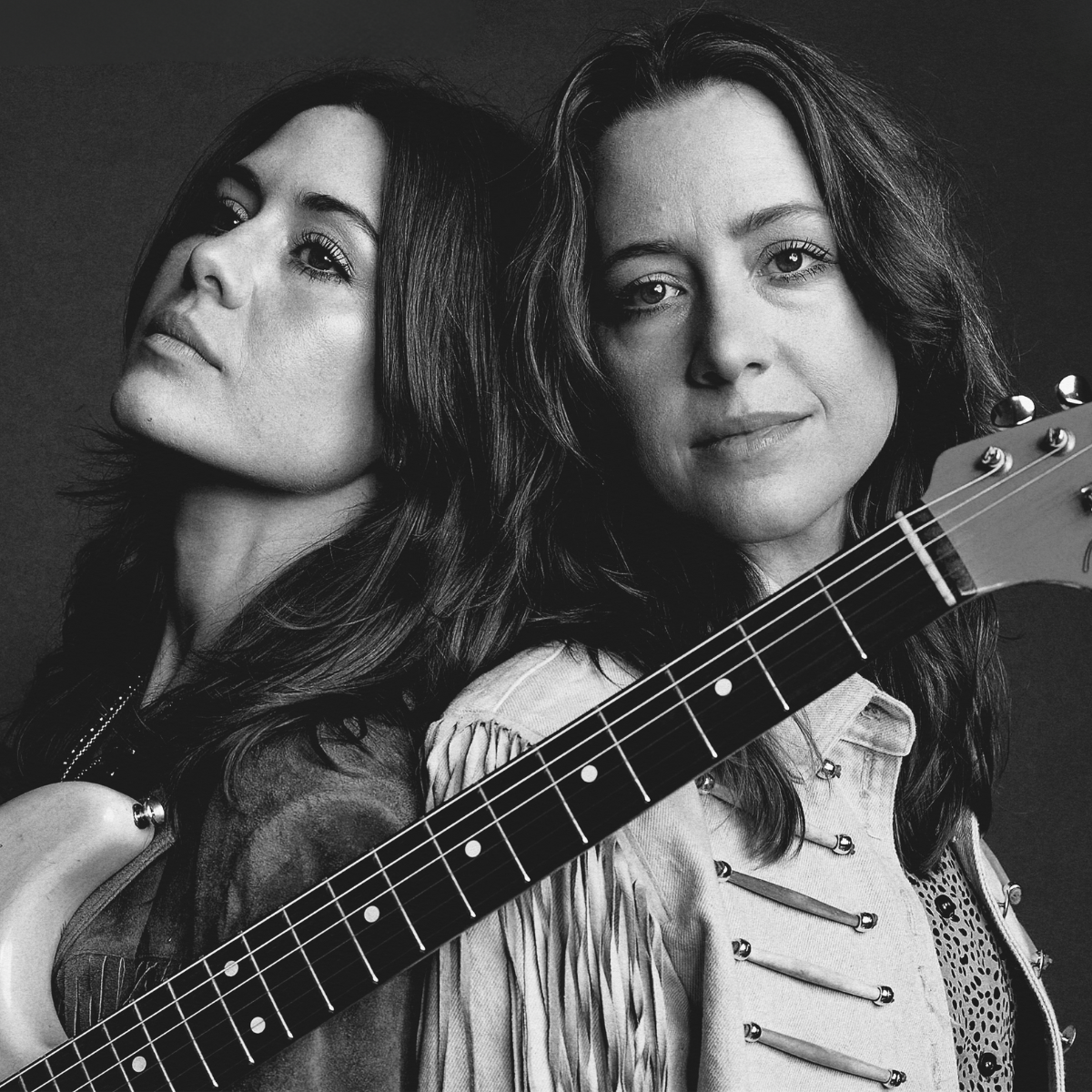
Sisters Sharon and Cheryl performed for decades with their father, Buck White, as the Whites. But it is their duet singing that ranks with the tightest and tingliest of any brother duo. Buck, a mandolinist and piano player, encouraged his daughters to take up music. The three recorded extensively beginning in 1972 and recorded “Keep on the Sunny Side” for the Grammy Award-winning O Brother, Where Art Thou? soundtrack. After Buck’s death in 2025, Sharon and Cheryl continue to perform, sometimes with Rosie, another sister, adding a high harmony. They have received highest honors in both the country and bluegrass fields, with more than 40 years as members of the Grand Ole Opry.
Kate & Anna McGarrigle
Kate and Anna McGarrigle were acclaimed Canadian folk singers and songwriters. Often passing the melody back and forth, it could be difficult to tell when one voice ended and the other began. Their harmonies were delicious. Linda Ronstadt had a big hit with the McGarrigles’ song “Heart Like a Wheel,” and Maria Muldaur, Emmylou Harris, and Judy Collins also covered their songs. Kate died in 2010.
The Judds
This mother/daughter duo certainly had the blood-harmony duet thing going big time with perfectly executed, soaring vocals. In a Cinderella-like story line, Naomi and her daughter Wynonna went from living on welfare to auditioning (in terror, as they described it) before a room full of recording executives – who signed them immediately. Within two years of the 1983 audition, they recorded the first of eight consecutive number one singles and received their first of five Grammys. Their family story is both fractious and inspiring.
More Essential Duets
Nowadays, it often seems the most common examples of high quality duet singing come from non-siblings, from chosen family, from lifelong musical partners. Turns out “blood harmony” is possible without the biological ties. (But of course it is.) Some of the best examples of the form are singers unrelated to each other.
Hazel Dickens & Alice Gerrard
Hazel Dickens and Alice Gerrard presented a side of duet singing that was at once sweet and gutsy. Although from very different geographic and social backgrounds, the pair came together through the Baltimore folk community in the 1970s. They sang with intense sincerity, performing older and traditional tunes and presenting Dickens’ heart-rending (and sometimes snarky) originals to the world. They were some of the first women to front a bluegrass act and are widely acknowledged as inspiring groundbreakers.
Ricky Skaggs & Tony Rice
In 1980, Ricky Skaggs and Tony Rice released what has become an iconic duet recording, Skaggs & Rice. Its content draws on traditional and pre-bluegrass tunes recorded by earlier brother duets. In fact, Weisberger points out, the album cover illustration, featuring the two men in uncomfortable-looking suits, is modeled after a Lilly Brothers photo. Skaggs and Rice taught us how two voices with starkly different qualities could blend, with sibling-like effect.
Ricky Skaggs & Keith Whitley
Skaggs and his wife, Sharon White, both sing in a high range, blending beautifully and adding intensity to everything they sing. And with his piercing tenor, Skaggs has the ability to create a brother sound with just about anyone. His partnership with Keith Whitley was equally natural, as they started singing together as teenagers in Kentucky. They began touring with the Stanley Brothers when they were both 16. In essence, they grew up together, as did their vocal blend.
Laurie Lewis & Tom Rozum
Laurie Lewis is another who can turn any duet into sibling-style harmonies. She and Tom Rozum have sung together for decades. Lewis said that in addition to working hard on their timing and pronunciation (the word “yours” was once problematic), they have the advantage of remarkably similar vocal ranges for a male and female. When they are both “in the head voice, you can really hear the tension in our voices,” an exciting aspect of their duets, she said.
Laurie Lewis & Kathie Kallick
Since the earliest configuration of Good Ol’ Persons, Lewis and Kathy Kallick have sung together, including producing two duet albums. Lewis said, “We have really different timbres to our voices. But we sometimes get confused as to who was singing which part on our old recordings. ‘Wait, is that me or is that Kathy?’” Lewis’ duet album, And Laurie Lewis, showcases her skill in joining voices with so many of her old friends.
The Johnson Mountain Boys’ Dudley Connell and David McLaughlin
Eric Gibson remembered terrific harmony singing by Dudley Connell and David McLaughlin in the Johnson Mountain Boys days. That revered group won the very first IBMA Award for Album of the Year (for At the Old Schoolhouse) and were inducted into the Bluegrass Music Hall of Fame in 2020. And since his days in the Johnson Mountain Boys, Connell has shown he, too, raises any duo to the level of glorious sibling sounds. Some examples are with bandmate Lou Reid in the Seldom Scene and his two duet albums with Don Rigsby.
Emmylou Harris & … Almost Everyone
The Gibsons both mentioned Emmylou Harris’ stunning ability to create tension and beauty in sibling duet style with so many. Examples range from her earliest recordings with Gram Parsons through all her singing partners in her band, including Ricky Skaggs and Rodney Crowell, and when she introduced a young country audience to the material of the Louvin Brothers on recordings such as “If I Could Only Win Your Love,” “When I Stop Dreaming,” and “Every Time You Leave.” Her 1990 duet album pairs her with male singers. In 1999, after the success of the Trio albums with Dolly Parton and Linda Ronstadt, she and Ronstadt recorded Western Wall: The Tucson Sessions, showing off the perfection of two beautiful singers who love to sing together.
Dailey & Vincent
Jamie Dailey and Darrin Vincent both grew up performing in family bands. Jamie started singing with his family at age 3, and by age 12 had mastered bass and banjo. For nine years, he sang lead vocals with Doyle Lawson & Quicksilver, a band noted for their excellent voices and superb harmonies.
An article in Entertainment News said the Vincent children “were practically raised on harmony” from their youngest days in the Sally Mountain Show. For nine years, Vincent sang the baritone parts with Ricky Skaggs’ Kentucky Thunder. The two men’s early training, the discipline gained from playing with exceptional band leaders, plus their perfect-for-bluegrass voices created a glorious blend of heartfelt harmony and musical excellence.
Their first album, released in 2008, was met with a flurry of enthusiasm. It earned the duo six IBMA Awards – including Album of the Year – plus two other nominations that year. They have continued to receive dozens of awards from bluegrass, country, and gospel organizations, as well as three Grammy nominations as a duo and two wins between them during their time with other acts. Their 10th album, A Beautiful Life, was released earlier this year.
Explore more of our Artist of the Month content on Dailey & Vincent here. Enjoy even more bluegrass duos here and country duos here.
Lead Image: The Louvin Brothers from Pictorial Press.