The Past Isn’t Finished: An Interview with Blind Pilot’s Israel Nebeker

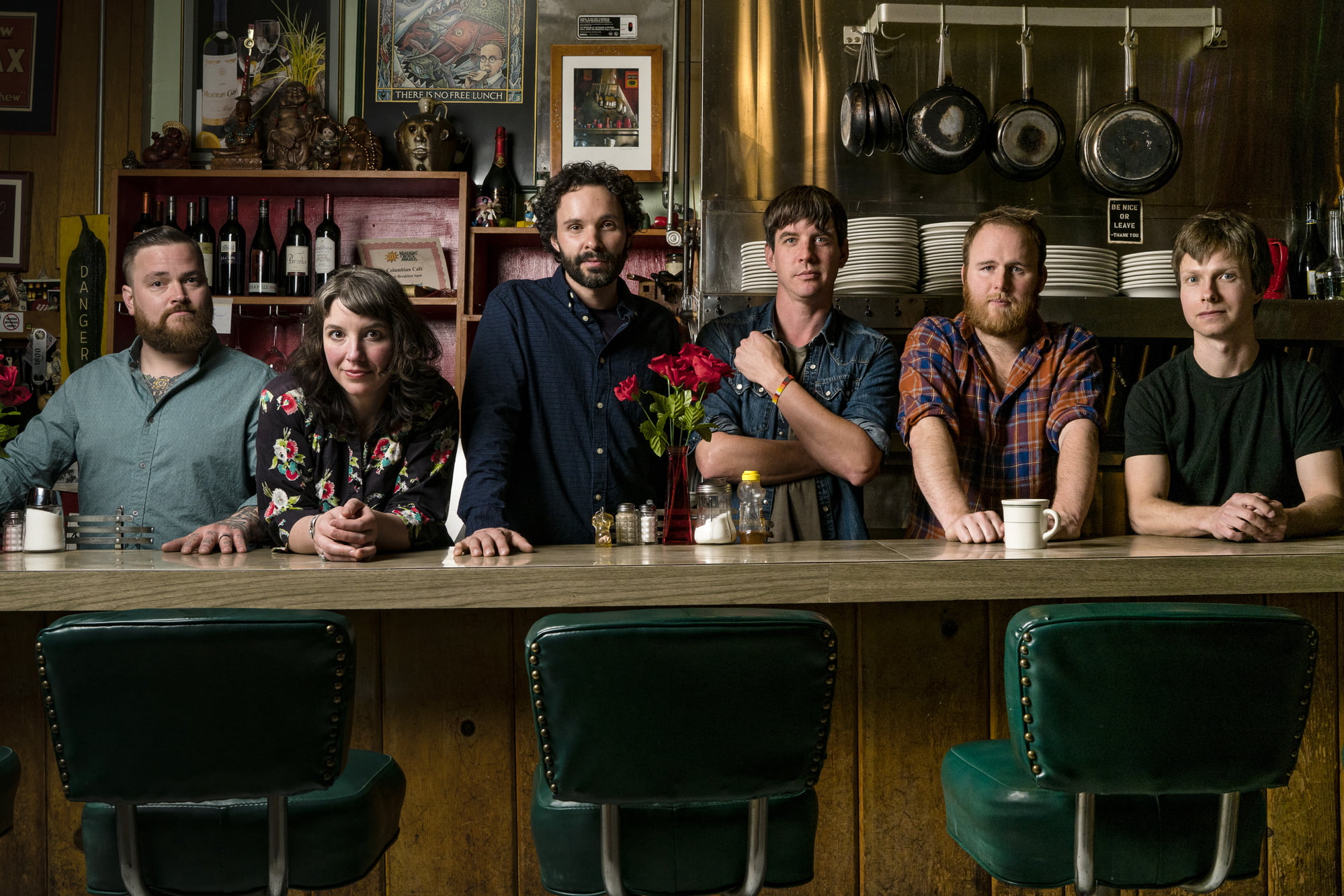
For Blind Pilot's third record, front man/songwriter Israel Nebeker had no choice but to dig deep, having just come through the death of his father and the end of a relationship. Moments like those tend to make or break a person. Certainly, Nebeker let the whims of the grief that followed bend him, but he never let them break him, choosing instead to let them make him a more potent songwriter, as evidenced time and again on And Then Like Lions. Produced by Tucker Martine, the album rises and falls along with the ebbs and flows that never fail to come in the wake of great loss.

We don't know each other, but is it okay if we just go for it, here? Because I, too, lost my father to cancer, as well as my dear, soulmate of a dog. It's a life-altering experience, going through that.

Yeah, definitely.

In what ways did it change you?

[Pauses] Yeah. Okay. [Laughs]

Is that too much to start with? [Laughs]

No, no. It's not. I'm just trying to think of the biggest ways it changed me. I think the biggest was just gaining perspective on our place here in this life and what it means — what things matter the very most. That was the biggest. It also changed my perspective a lot, the idea of death and how it relates to our lives. And, also, I was completely surprised by how many beautiful moments I had with my dad while he was sick. They were, by far, the most intimate and revealing and closest moments I'd ever had with him.

Also, I was surprised that the process of losing somebody close to you like that has a lot of beauty in it. There's a lot to be shared and given with my family and people closest to me. Those were the biggest things that were unexpected and definitely changed me.

That sounds about like my experience. Are there a lot of things you let slide now that you may have fought for in the past?

I think so. Yeah. I think that's right. It does put it in perspective that this life is finite and, even more than that, for me, it put into perspective that, if we do hold onto anything, it's in the connections that we make with people closest to us. I don't really understand it, but I just get a feeling that those connections persist past death, in whatever way you want to think about that — whether it's through ancestry and lineage or the stories we make or whether it's in a spiritual sense. But that's the feeling I get.

Yeah. One of the biggest take-aways I had was — I did this during that time and ever since — really being present in each moment and trying to bring my best self to each moment. But I feel like most folks don't know what to do with that. As I engage with people now, because it's so unusual for someone to not have ulterior motives or not be trying to get something out of somebody, they're a little bit put off by it.

Yeah. [Laughs] I had that exact same motivation during that time, that last year I had with my dad. I was incredibly present and that was my biggest motivation was to bring my best self and be as present as I possibly could be. I don't know if you found this, but I found it kind of relieving, in moments, to be forced into that kind of presence … whereas, usually in life, we're just trying to get there.

Yeah. Absolutely. I feel like we should always be as tender with ourselves and with others as we are in times like those.

Definitely. That's a good way to put it.

That wasn't the only upheaval you experienced. In what ways were the loss of your father and the end of your long-term relationship similar and different? Loss is loss, to a certain extent.

Right. Yeah. It kind of all came in one month. It was three different kinds of love important to me in my life and experiencing, in one form or another, losing it. My closest group of friends for a long time, we had a falling out. Separate from that, the end of that long relationship. It was all kind of wrapped up because I was going through it all at the same time.

It is interesting, looking back, how loss — as a bigger idea — is pretty relatable to all three of those experiences and to more. I guess what was useful about it coming at the same time was that it made me look more at the idea of loss as bigger than any of those situations — what it means to go through this life and experience loss and, especially, how we share it with each other and how we can give strength to each other through it.

As you were listing off those things, I flashed on Tig Notaro. Do you know her story?

Yeah, not super-closely. But I remember she had that incredibly brave performance when she found out she was diagnosed with cancer.

Yeah. She got sick with C. diff and her mom died and her girlfriend left her and she got diagnosed with cancer, and it was all in about a month. Her whole joke was the thing of how people say God never gives you more than you can handle. She has this bit about, “He looked down and said, 'Yeeeeeah, she can handle one more.'” [Laughs]

[Laughs] Yeah. That's funny.

So, I read a piece in which you stated — and I love this phrase — that “the past isn't finished with us yet.” That's a great way to put it because every moment we've ever lived is rumbling around inside us and comes out, sometimes, when we least expect it. Unpack that a bit for me, in terms of what you were going for.

Sure. NPR asked me where the song “Umpqua Rushing” came from. That was the first song I wrote on the album and it was dealing, specifically, with the break-up of this long relationship that was filled with a lot of meaningful memories for me, of course. I was looking at this decade of my life, thinking, “Okay. What do I do with all these memories now?” I had friends and family members saying, “You gotta just let it all go and just get over it. The sooner you get over it, the better. Just let all that stuff go.”

I think I was wrestling with this idea that I felt like I would be losing so much of myself and my identity and the things most important to me by throwing everything out and going with that motivation. So, I think, at that time, I was really trying to do that and I hadn't yet discovered that, for me, the real way through it was to embrace how important all those moments were and will always be with me. That was a much better way for me to be present and moving forward and okay that that was the past and it's not anymore.

I'd say it's the same thing with the loss of my dad, too. I think our culture really does a great job of showing support when families lose somebody to death … for a couple of months. [Laughs] Then, it's …

[Laughs] Yeah. Nobody wants to hear about it anymore.

Yeah, and maybe even, kinder than that, people want you to get over it because they want you to be happy again. I think we can do some work, as a culture, to understand that it's through embracing the meaning of the past and through embracing how badly loss hurts that we can move forward in a stronger, more cohesive, complete way.

Absolutely. To me, the grief is just as deep as the love was. So, the deeper the love, the deeper the grief. And it is what it is and it's gonna take its own pace and its own route and you're just gonna have to ride it. But I agree that a lot of people, unless they've been through it — and even some people who have and maybe didn't deal with it that well — feel like you should just buck up.

Yeah. Yeah.

So, translating that all into songs … was that a natural process for you? And a necessary one, I would assume.

It was. It definitely helped me to process what was going on and, more than that, I felt like, while I was writing this album, it was … Let me back up. What we were just talking about … I found it culturally difficult for a lot of my closest friends and even family members. Like you said, some who have and some who haven't dealt with that kind of loss. I found it really difficult for them to talk about. And I wanted to write some songs that would give an invitation to my family and closest people in my community to talk about it in a way that wasn't scary, because I could tell that people were frightened to talk about it and really look at the idea of these kinds of losses.

And what I found was that I was making songs that were where I wanted to be with it, trying to give courage to myself. And, also, making songs that were intended to give that kind of courage to my family, too.

As you were writing, were you hearing the hopeful elements coming through or did Tucker [Martine] tease those out more with his production? It's a serious and somber record, but it's not depressing.

Yeah, yeah. Definitely. This was the first time in my life, writing songs, where I gave myself somewhat of an agenda. It's always been important to me to take songs exactly as they come. But it was important to me, with this album, when songs would come and I'd be kind of wallowing in sorrow and grief … it wasn't that I was ashamed of it, but it was that I wanted to give people more than that. I didn't want to share that, because it wasn't the whole truth of it. So it was important to me, from the first stages of making the songs, that they were looking at the complete spectrum of what was going on — not just the darker side, or more painful.

I think that was the one intention that persisted throughout the process, and recording and mixing, too. If a song seemed kind of somber, I could call in Dave [Jorgensen] to put some on synth and trumpet lines or stuff like that. And, yeah, Tucker definitely helped with that process, too.

Okay. Let's lighten it up a bit to close it out. Originally, you guys were a duo. Now, it's a six-piece. How are you feeling about the current line-up and the sound you're making? And what challenges come along with an expanded roster?

Six people … it's a lot of individual lives to coordinate. It was lucky that the timing happened the way it did. Luke [Ydstie] and Kati [Claborn], who are both in the band, had a daughter during the time that I was going through my dad being sick. I'd say all six of us, our lives have changed quite a bit in the past couple of years.

Over the years, one of the big benefits of it is, with six people, it's easy to distinguish between interpersonal relationships and the music because you can't stay always on good terms with everybody in a group of six people, when you're always together. There's a lot of chance for ebb and flow of closeness. But it also kind of shines a light on what you're really doing here, in the band, which is to give yourself to the music, regardless of whatever's going on.


To continue the thoughtful songwriter conversation, read Kelly's interview with Hayes Carll.


Photo credit: Ben Moon
The Producers: Tucker Martine

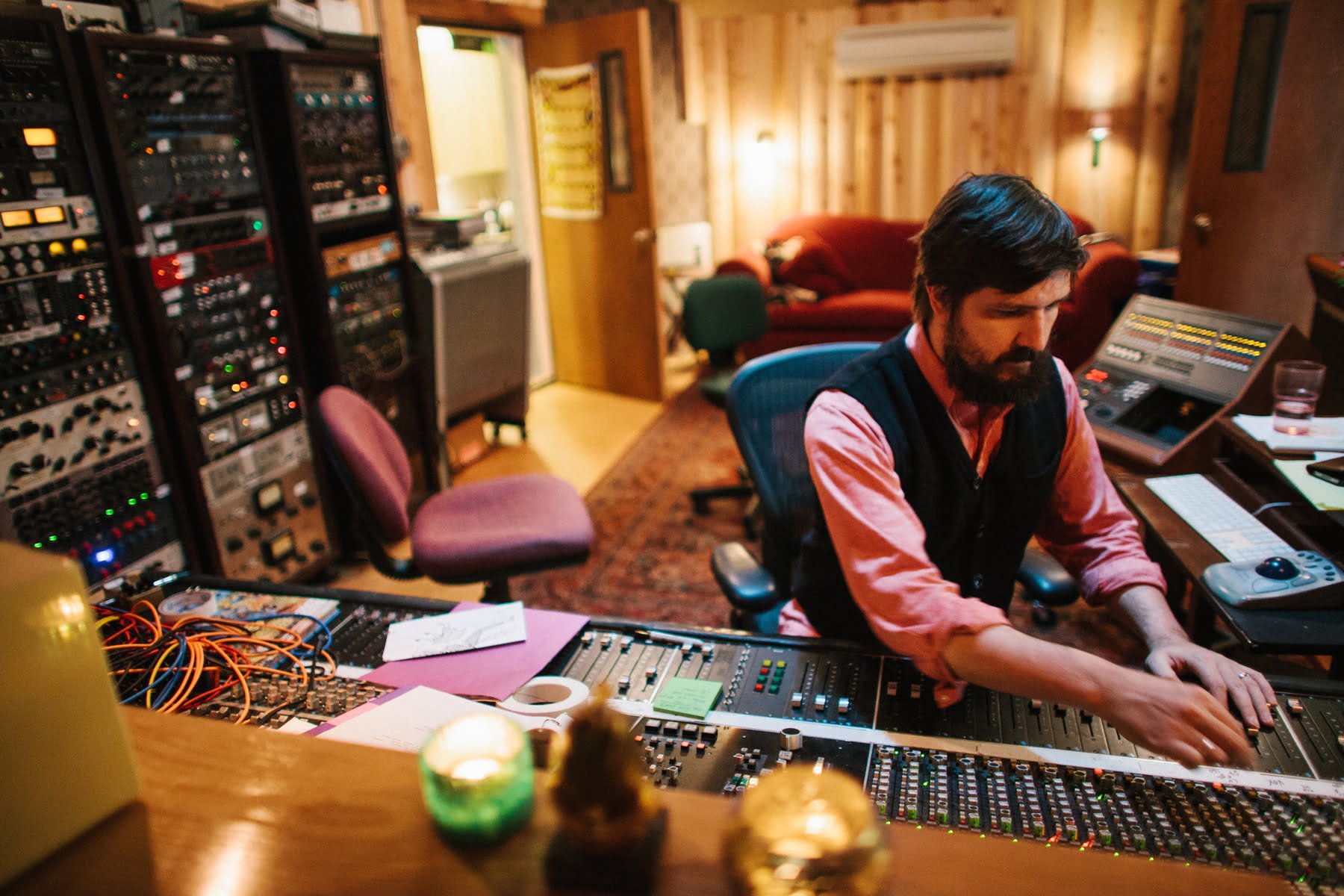
Tucker Martine had to move as far away from Nashville as he could before he could have a career in music. Just out of high school, he headed to college in Colorado, then kept heading west until he reached water. He settled in Seattle in the ‘90s, when that city was a center for American alternative music. Then he moved down the road to Portland, Oregon, just as that city was becoming a hub for indie rock.

In the 21st, Martine has become a central figure in Portland’s bustling roots music scene, producing national hits by almost every major local artist. He has added a spacy shimmer to almost every album by singer/songwriter Laura Veirs (who happens to be his wife) and, when the Decemberists graduated from a regional indie label to a Capitol Records, they hired Martine to conjure detailed backdrops for their diorama-songs about Russian shapeshifters and Irish gangsters.

Martine anchors the West Coast roots scene so strongly that even non-locals head west to work with him. Abigail Washburn hired him to combine Asian and American folk traditions with indie-rock techniques on her 2011 breakthrough, City of Refuge. More recently, he produced The Waterfall, My Morning Jacket’s darkest and most daring album in years.

While Martine does not thrust any particular aesthetic onto his projects, he has developed a distinctive ambience: a clarity of sound that is both ethereal and earthy, elaborate and direct, engaging but somehow mysterious, as though he’s reluctant for any album to spill all of its secrets on your first listen. Emphasizing the distinct tones of each instrument in the mix, he helps to convey a rich intimacy, as though even an acoustic set can sound like a headphones album. One of his latest projects is also one of the most highly anticipated albums of 2016: a new collaborative record by Neko Case, Laura Veirs, and k.d. lang — out in June on Anti- Records.

At what part of the process did you come in on the case/lang/veirs record?

Shortly after k.d. had sent an email to Neko and Laura asking if they’d be interested in starting a group together — which I think mostly meant making a record together, perhaps doing a tour for the record. I don’t think it’s a band that is going to be a long-term project. k.d. sent an email to them, and Laura and Neko quickly responded with an enthusiastic "Yes," and then they had a little back-and-forth between themselves. Maybe a week later, they cc’d me on the email thread and asked if I’d be up for working on it with them which, of course, I was honored and excited to be roped in, so I said yes.

I think it made a lot of sense — I mean, hopefully, musically it made perfect sense. I had worked with Neko on her last record and, of course, I’ve worked on a lot of records with Laura. I was getting to know k.d. a little bit because she’s a Portland resident now, and she’d done a couple of things at my studio. That brought one common element into a project that maybe, at least on the surface, didn’t appear to have a lot of common elements to start with. I think the process of making that record was about discovering where the common ground was between all of them. And that was really so much of the excitement of that record — and the challenge of it, too.

So figuring out how those pieces fit together becomes part of that process.

I don’t think any of us wanted to make a record that sounded like four tracks that could have been on the next Neko Case record and four songs from the next k.d. lang record, four songs from the Laura Veirs record. They wanted to figure out where all their sensibilities converged and how they could challenge each other to find interesting places outside of their comfort zones. And there was plenty of that, because they’re all used to being the leader, the person who ultimately calls the shots. But this was a bit of a democracy, and the whole dynamic of the group was being discovered while we were in the middle of making the record. It wasn’t like they had discovered some common chemistry beforehand and then thought, "Well, this means we should make a record." I think everybody knew it felt kind of risky. None of us were talking to people about it beforehand, because we were reserving the possibility that maybe it just didn’t quite work. But it did, and it was apparent on the first day that it was going to work. Everyone was pretty thrilled with how it was sounding right out of the gate.

What does your role, then, become for artists who are still finding out how they relate to each other?

There are so many facets of it. Making them all feel comfortable, for one. Assuring each person that their point of view isn’t going to get steamrolled in this mostly democratic process. I’m always looking to find the strength and the uniqueness of the artist, so I’m constantly having conversations with them about what they’re excited about, and checking in with them all the time to make sure they feel like they are being represented. And I would sometimes have to challenge people to maybe not rush to judgment but let it play out a little longer, and listen to the result rather than not try something because the suggestion sounded like a direction they wouldn’t normally take.

I think that’s something that I knew, but never but a fine point on it — that you’re not just overseeing things in the studio; you’re negotiating aspects of the art and trying to usher this person into making the best thing they can or the strongest thing they can.

Absolutely. All three of these ladies have such different working processes. And I had a little insight into what those processes were, in some cases more than their other collaborators did, because I’d spent many weeks in the studio with Neko and made records for years with Laura. I had only done demos with k.d., and she had sung on one of Laura’s records. So it was really just a matter of trying to honor a bit of each of their processes while reminding all of us that this is a new experience and it’s not going to feel like the process of making one of their solo records.

And that was what was exciting about it. Sometimes, when I thought maybe they were reverting to something too safe, I just tried to remind all of us that the exciting part of a collaboration like this is that it pushes us into some places that we wouldn’t normally go. I think most or all artists ultimately do want to get into some territory that feels new to them, so they feel like they’re moving forward and progressing. And I can only guess that k.d. chose Laura and Neko as collaborators because of how different they are from her, yet she still had a lot of admiration for them and their music and, I think, was looking to shake up her own music-making process. And by accepting that invitation, I think Laura and Neko acknowledged that the same thing was true for them.

It does seem like two generations of artists going back and forth.

I think I can speak for myself and Laura and Neko in saying that we’ve all been fans of k.d. for so long, but you have to remind yourself for a minute that, even though she’s this larger-than-life musical figure in our minds, she’s looking for a three-way collaboration between them. They all really got in there and had to fight for some of their ideas — in a healthy way. At the end of the day, each person got a final say in the songs that they were singing lead vocals on.

I had a moment when it was being planned when I wondered what I had to bring to a project for someone like k.d. lang, but she made it really clear that she wanted me to feel comfortable speaking up. I assured them, in the beginning, that I knew it was going to be a challenging record to make, but we weren’t going to call the record done until everybody was happy with it. It gets emotional, at times. It’s tricky to be giving people confidence while at the same time sometimes you’re asking them to be open to trying something new or to just trying to get a better take of it.

You mentioned that k.d. had recently moved to Portland, and I wanted to ask about that. There is certainly a strong roots scene there, and even though you’re from Nashville originally, I feel that you’re at the center of it … or at the very least a prominent figure there.

To me, the Portland community feels like the more immediate version of the larger music community. And a lot of the artists that I’ve been working with the last few years are not from here. Sometimes it’s artists from out of town, but there will be people from Portland who play on the record, or the artist is from Portland and we bring in some people from out of town to play on the record. There is just a ton going on in Portland, and there are some insular scenes — like the old-time music scene, the singer/songwriter scene, the indie rock scene, and all that — but also a lot of those people just overlap and play with each other.

I left Nashville the morning after my high school graduation because, as much as I loved growing up there, I just felt like there was a narrow-mindedness about music and what it could be — all the different ways it could be presented and written and explored. So it was healthy for me to leave at that time. Since then, of course, it’s transformed into something completely different, with all the transplants and musicians of every variety there. I think most of the Nashville scene is, and has always been, transplants. It’s just that they transplanted themselves there to do a specific type of music, where I think a place like Portland draws people — including myself — more for the environment and the lifestyle, and then that informs the music that comes out of it.

I hadn’t thought of Nashville that way. It’s like Portland — a city full of transplants.

Nashville’s a place where people go to make it. For the most part, Portland’s a place where people moved because it was inexpensive and it’s just a great place to live. You can bike or walk anywhere, and it’s gorgeous. You have access to the ocean and the mountains and the rivers. There aren’t a lot of labels and managers and industry stuff here. A lot of times the best music scenes just kind of come out of somewhere that’s affordable for young people to live. And, until recently, that’s been true of Portland.

It also seems like a place where more established musicians end up, like k.d. lang or Peter Buck or Patterson Hood.

If you’re in a position where you feel like you can be based anywhere and still do your work, then you just start looking at where you want to live regardless of what kind of infrastructure that place might have for your chosen field of work. It doesn’t make any sense that I moved away from Nashville and moved to Seattle and started producing records. I mean, to me it makes perfect sense, but people are always asking me why in the world I left Nashville, which is one of the premiere cities in the world for recording studios. But it just felt like a trap to me, at the time. I felt like, if I stayed, my growth would be radically stunted. I think it was the right move. I’ve always thought I might move back someday, because it’s still home to me. I couldn’t be more fond of it, even if it was necessary at that time in my life to be elsewhere and find my own identity outside of the familiar and comfortable.

And it does seem like you’ve developed a signature palette that I don’t hear in Nashville.

My sensibilities don’t seem to overlap a lot with what Nashville’s known for, although I certainly have loved some of the music that’s come out of Nashville. I’m not a fan of overly glossy productions, and certainly Nashville is known for that. But there are countless examples of records that have come out of there that weren’t that way. You had guys like Jack Clement making really interesting, soulful country records, and now you’ve got guys like Dave Cobb, who’s crushing everything he touches. It’s cool to see Nashville having a resurgence, but I feel like I’ve really found the right spot for myself.

But people don’t usually come to me because they’re chasing the latest, hottest sounds or because I have the latest chart toppers. Maybe there’s just some quality in the way the music is translated and presented that speaks to them. To me, my approach is different for every record and every artist; but for somebody less close to it than me, I guess you can hear some continuity — or, as you put it, a sound. And it’s convenient that people like Portland. Someone might be interested in working with me and, when they find out I’m in Portland, they usually get excited about the idea of coming here for a little while.

You mentioned that you approach every project differently, but are there elements that are common from one project to the other …

I really like to be surprised, so I always try to leave some room in the process for some things to happen that surprise all of us. Those often end up being favorite parts of records. I feel like, the longer I’ve done this, the less satisfying it is to just put up some mics and make everything sound perfectly nice, make sure that nothing sticks out, and there’s nothing that could possibly offend anyone. If it came to that, I feel like it would just be time to hang it up. I want to be moved by what’s coming out of the speakers, whatever that means. Sometimes, that means just blowing things up and making it sound ratty and raw. Other times, it means muting everything except for the vocal and the harpsichord.

At the outset, it’s just dictated by whatever the material suggests to me. I try not to take on a project where the songs don’t suggest a lot to me about how they could be presented. You want to leave plenty of room for it to end up going a different direction if something presents itself that is maybe even more interesting than what I imagined. And no record ever ends up sounding like whatever I thought it was going to sound like at the outset. Still, I think it’s important to have some kind of vision as a launching point, or else you’re all just sitting there looking at each other like, “I don’t know — what do you want to do?” Nothing gets done, or what gets done is just lifeless.

Are there any examples that come to mind?

Oh man, it could be anything! You might have an idea of a nice drumbeat for a track, and then you get everything set up and the drummer starts playing some angular, syncopated thing where you can’t even find the one. At that point, you can either say, “No, man, this is like a straight-ahead kind of thing.” Or you could say, “Let’s check this out. And let’s see how the rest of the band responds to that idea.” More often than not, those things end up sticking and being some of my favorite parts.

The song “Down I-5” from the case/lang/veirs record is a good example. The demo was okay, but I think we all knew it needed something — some joie de vivre — and we all had our own vague ideas of what that might be. I had spoken to Glenn Kotche, who was playing drums on that record, and I just told him that it really needed a unique perspective and that the reason he was there to begin with — why Glenn was chosen to be the drummer for that record — was because his default mode is unpredictable. I told him that this was a perfect scenario for him to lean on his instincts. I didn’t want him to try to guess what the singers are expecting to hear, and he just pulled out that wild beat. There was a look of confusion on the faces of the people in the room, but within a minute it had transformed to elation.

So that’s what I mean by surprises. It’s easy to tell people something that’s safe and predictable, and then you can just get it done and check it off the list. But that’s not why I do this. And that’s not why I think most of the people who call me are doing this. I just try to keep myself and the artists honest.

When you were talking about that, one album that came to mind is City of Refuge by Abigail Washburn. Every song seems to have that sense of discovery to it, some new idea to get across.

For that record, we approached every song from scratch. That wasn’t a record where we had a band for five days, pick a song, knock it out, and go to the next one. We would just start with a song, and sometimes the song wasn’t even finished being written, so we would just start with the one thing we knew it needed. Maybe that was Abigail and her banjo. Maybe it was something else. By the time that we tracked that, it suggested the next layer. We really weren’t too concerned with it all sounding like it happened in a short time span with the exact same people set up the same way.

In fact, one thing Abby and I found out was that we both love old Alan Lomax recordings and Folkways stuff, where there might be talking before a song. We approached “Bright Morning Stars” like a field recording. We just went into a church and told a bunch of people to meet us there. Abby showed them the songs, and they’re of course all playing into one mic, which means you can’t fix anything. Other songs, we meticulously put together. We hoped that if we committed to giving each song its own singular treatment, then the variety of production sensibilities would actually be a strength rather than a weakness.

Very often, you start in on the process, and things are pretty ambiguous. You don’t really know what the identity of the record is yet. But gradually, over time, it starts to show you. In that case, once we had enough songs, I started tinkering with the sequence, and once the sequence started making sense, the whole record started making sense. That helps you figure out what the songs do and don’t need, or which songs might transition well into the others, at which point you might add some extra layers to bleed over into each song. That’s the fun of it. You just take the next step and then it shines the light on where to go after that.

It seems like that might be pronounced when you’re working with an artist for the first time, but how do you keep it fresh for somebody like Laura Veirs or the Decemberists, with whom you’ve produced several albums over the years?

It’s unspoken with each artist that you don’t ever want to make the same record twice, even if you loved the last record you made together. With the Decemberists, when it really felt like we needed to shake things up, we went to a barn and just set up some gear out there. That can have a profound effect on the process in a lot of ways, technically and emotionally, for people. The one thing all the best records that I’ve worked on have in common is that we went into them wanting to do something we’d never done before. You do have to be conscious of that, but it’s a very natural thing to make sure that you’re not just rehashing old territory. We always have a dialogue early on about how to approach it in a way that’s unique compared to what we’ve done in the past.

And that starts with the songwriting. I try to be honest with the artists upfront, if I feel like we don’t have the material to make something that’s up to the standard of what we’ve made in the past, or if it just feels like rehashed versions of something we’ve already done. Often, when I hear demos, six of them sound like the bulk of a really strong record, and four or five seem like maybe they don’t fit in. But I do think when the artist really goes to bat for a song that I’m not feeling, it’s important to record it and try it out. About half the time, just on the strengths of their convictions for it, we find a way to get something we all feel is special. So there is a theme here: It’s important to have a vision, it’s important to have convictions for your ideas, but the second you stop being open to other ideas is the moment you stop being a good collaborator. And, for me, producing records is a collaboration.

There is an adrenaline rush when you start a record. It’s like you jump off a cliff into a river. You’re pretty sure everything’s gonna be fine, but you still get a rush the moment you jump, because you don’t know exactly what’s going to happen. At the start of every record, I’m always a little bit scared, but I’ve learned over the years that that’s a good thing. It always ends up working out, and it never turns into a disaster — no one ever dies, or makes a record that they regret or are embarrassed about. So it’s just that kind of excitement of not having any idea what’s going to happen.


Photo credit: J Quigley