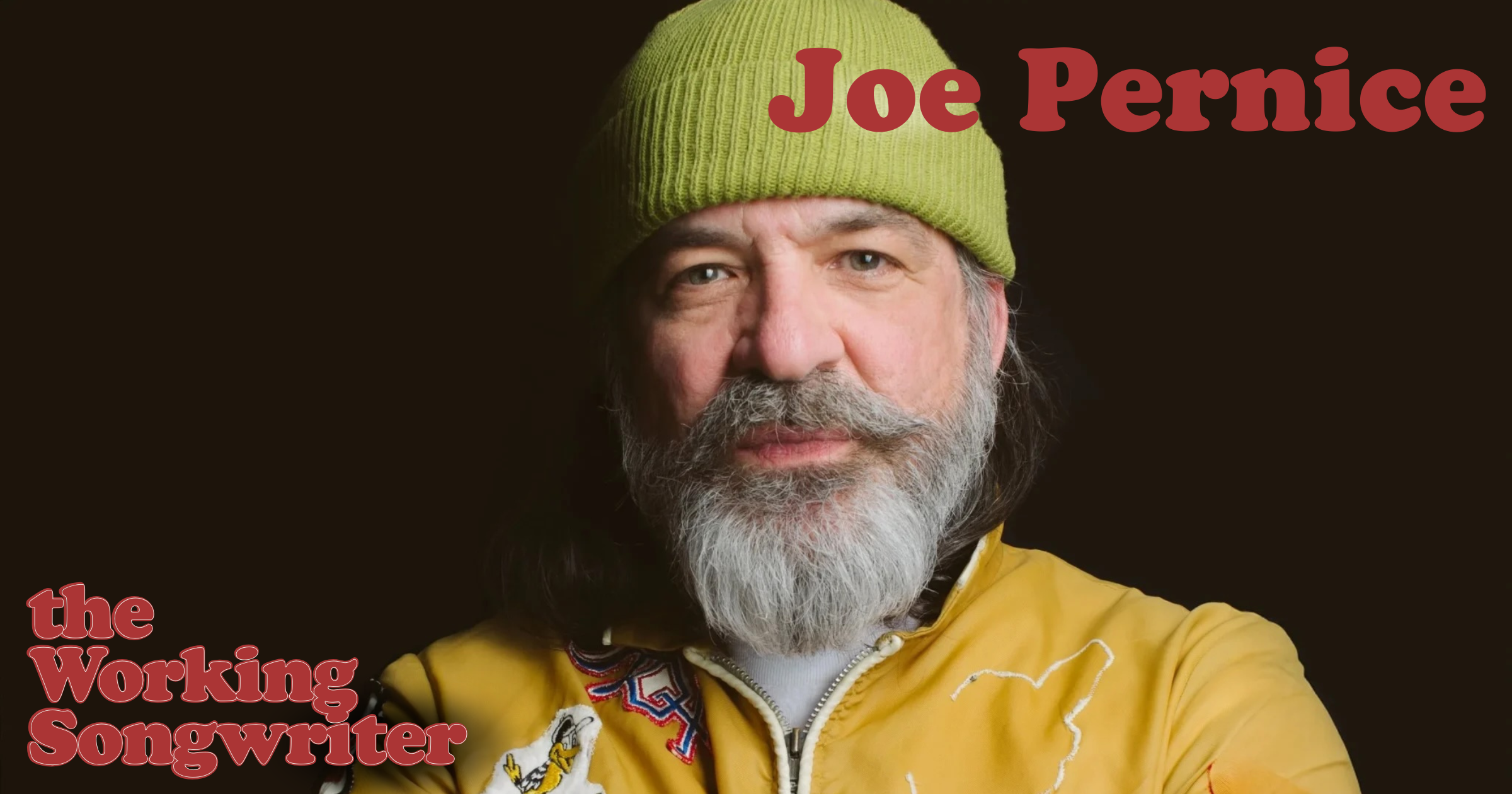
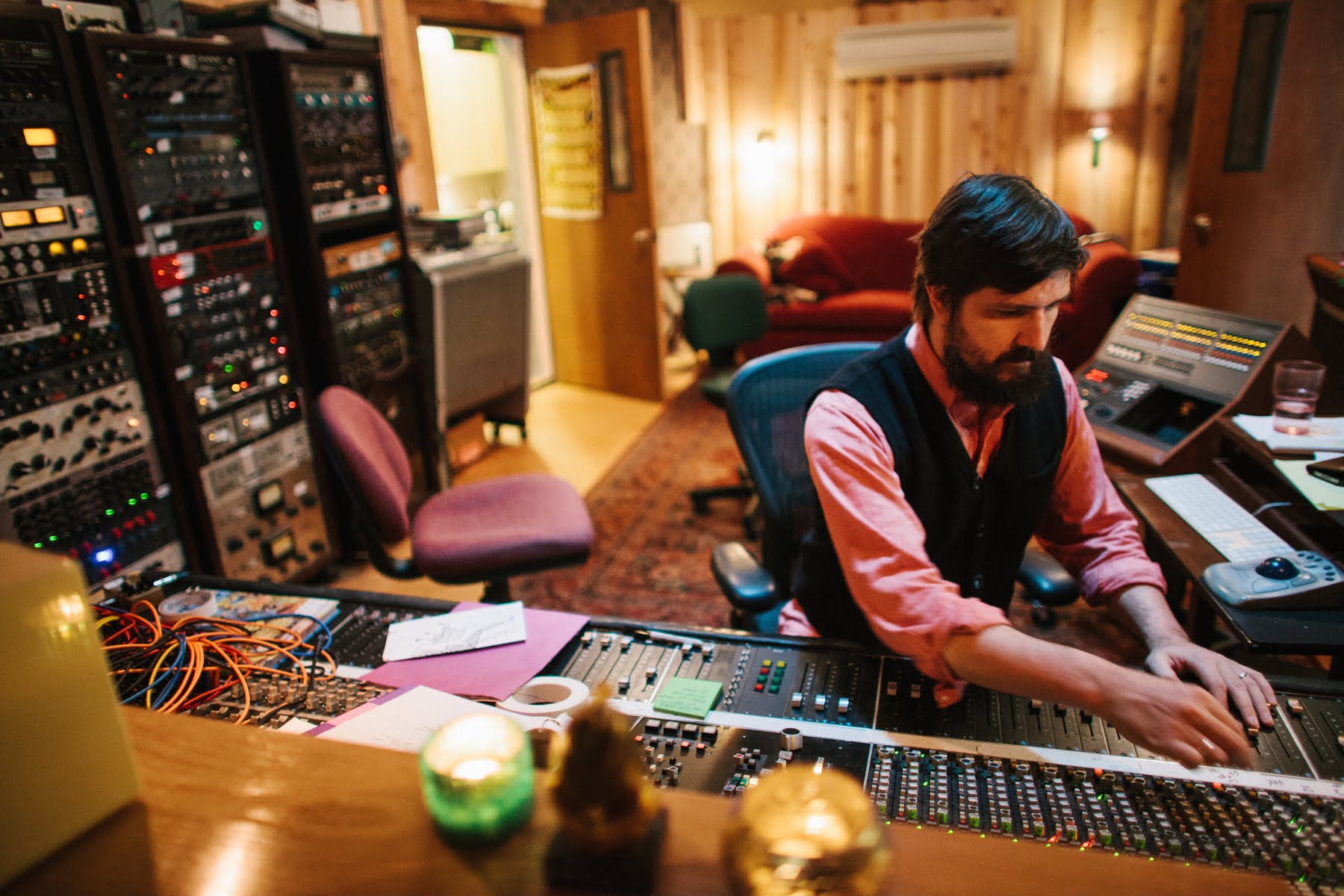
Our guest on the Working Songwriter this week originally hails from Boston, Massachusetts, and now makes his home in Toronto. Joe Pernice got his musical start, though, in Northampton, Mass. At the time, it was a hot bed of indie music creativity. His band the Scud Mountain Boys built a loyal following in the 1990s with a string of critically acclaimed releases. He’s recorded for Sub Pop, One Little Indian, Team Love, and New West Records.
Over the years Pernice has collaborated with a variety of blue-chip songwriters such as Aimee Mann, Neko Case, Norman Blake (of Teenage Fanclub), Jimmy Webb, Rodney Crowell, and Jim White. He’s also a man of many talents; his novel It Feels So Good When I Stop was published by Penguin Books in 2009. NPR calls him “a workhorse of a songwriter who delivers hard truths with the softest of whispers.” Brooklyn Vegan declared, “Few songwriters today imbue frustration and anguish into the sweetest of melodies as Joe Pernice.”
I got a chance to catch up with him a few months ago to hear about his musical journey so far.
Roots music was everywhere this year. It’s time we decide once and for all: Is roots music enjoying a “moment”? Or are these genres and sonic stylings alwaysthis foundational to popular and mainstream music?
Maybe roots is just at the center of everything we do here at BGS, but we’re inclined to the latter option. Roots music, folk music, whatever you want to call it, these styles are at the root – pun intended – of everything we love, not just in our scenes and spaces, but what we love about pop music, radio hits, and the musical mainstream, too. It’s no wonder, then, that roots shows up in albums and offerings by Bad Bunny and Sabrina Carpenter. That roots music finds its way across the globe in the fight for justice. That banjos and fiddles and the blues and bluegrass can be seeds by which entire resplendent artistic universes can be birthed, whether festivals or films or documentaries or albums or songs.
For our final year-end retrospective list of 2025, we asked our BGS contributors to reflect on the roots music and moments that stuck with them over the course of this year. Instead of setting strict criteria for what qualified as “roots music,” we did just the opposite, leaving our year-end “best” prompt as loose, open, and broad as possible. The results reaffirm our central belief that roots music isn’t a niche, it’s everything. There’s no limit to what it can touch on, impact, and transform.
We look forward to continuing to celebrate all things roots music and roots culture with you in 2026. In the meantime, enjoy our BGS Class of 2025. Roots music below, bluegrass here, and Good Country here.
Bad Bunny, DeBÍ TiRAR MáS FOToS
Last year, the most mainstream and far-reaching roots album was most certainly Beyoncé’s Cowboy Carter. The project has amassed billions of streams and listens, millions of sales, and has been certified Platinum by RIAA. This year, the most prominent roots album has received little to none of the controversial discourse of “belonging” and genre and roots-adjacency that Cowboy Carter attracted. Bad Bunny’s 2025 masterpiece, DeBÍ TiRAR MáS FOToS, is perhaps a bit sneakier in its rootsiness – or, being that it was made by a Puertorriqueño and is delivered entirely in Spanish, perhaps the same sorts of racism that put Beyoncé under the crosshairs may have relieved Bad Bunny of such targeting.
DeBÍ TiRAR MáS FOToS is jaw-dropping in its artistic and sonic accomplishments. Reggaeton and pop, hip-hop and house are grounded and contextualized by roots music, which does incredible heavy artistic lifting across the album. Interludes and intros reference many of the Latin and Caribbean folk styles that would birth the genres Bad Bunny currently inhabits. Calls of endemic frogs are mentioned alongside varied sounds of the diaspora, gentrification decried while advocating for self-determination. The album successfully does the work of so many solely folk and/or roots projects, but given its mainstream appeal and A-lister creator, that fact seems to have been lost in the glitz, glamour, and Super Bowl Halftime Show of it all. Make no mistake, though, for all the things that it is, DeBÍ TiRAR MáS FOToS is obviously roots music. – Justin Hiltner
Carsie Blanton
Singer-songwriter Carsie Blanton gave the most fun performances I saw on folk stages this year. Whether solo in the round or with frequent collaborators Sean Trischka, Joe Plowman, and Isa Burke, a Carsie show feels like a block party. People pack in corners to see what she will cook up next: a saucy tale, a power pop-influenced anthem of revolution, a quiet moment that demands reverent attention. Blanton has a gift for translating history into sing-alongs without softening any of her political edges. It takes an expert vocalist and arranger to sing “I guess America’s coming untied/ Half of my neighbors are living outside” without the audience feeling gloomy or preached at.
It helps that Blanton embodies the kind of working-class swagger that only a bad bitch from New Jersey can pull off. An outspoken feminist and member of the Party for Socialism and Liberation, this past October she brought the revolutionary hope of her songs to Global Sumud Flotilla to Gaza, where she risked her life as a member of the humanitarian coalition. Blanton, along with many of her comrades, was detained when the Israeli military intercepted their boats. Her bandmates were waiting at the airport when she got home. – Lizzie No
Brooklyn Folk Festival
Celebrating its 17th year, the Brooklyn Folk Festival is the best of the independent roots music community incarnate. Each November, the festival brings together members of the New York folk music community with musicians from across the country (and sometimes the world) for one weekend of homegrown joy, hosted in the Saint Ann and the Holy Trinity Episcopal church in Brooklyn. Musicians swap instruments and stories and audiences pack church pews and sit cross-legged on the floor to listen, intently.
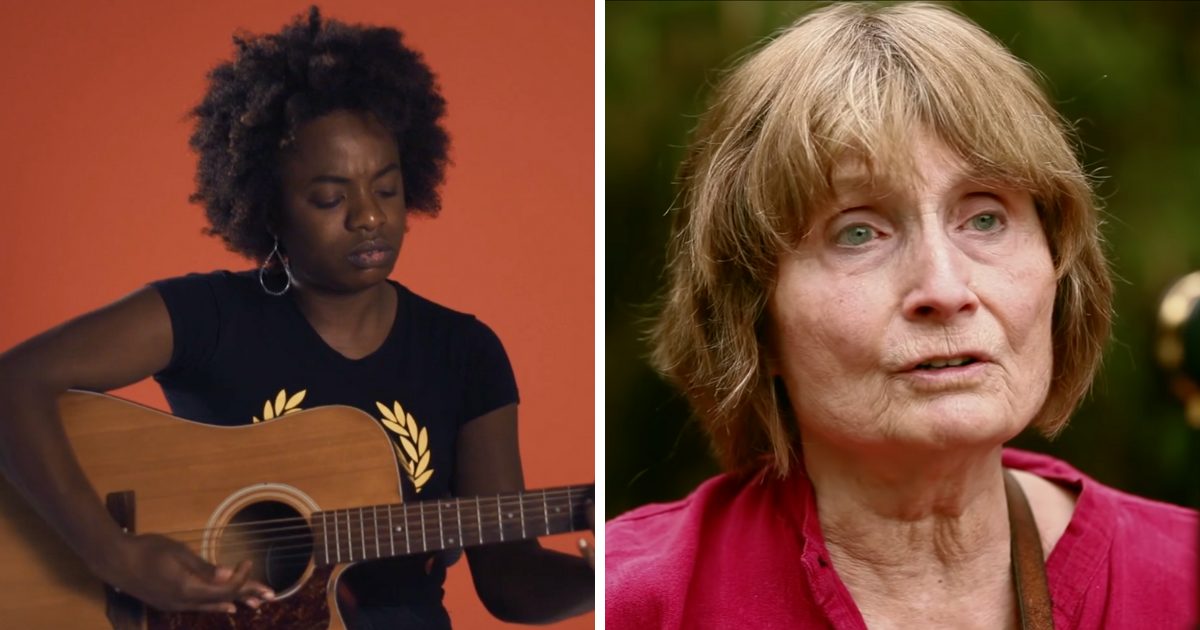
The festival fosters space both for old-timers and young musicians; each year students from the Jalopy Theatre and School of Music, which hosts the event, perform. This year, the mainstage audience waited patiently, giving grace to 91-year-old folk legend Alice Gerrard (of Hazel & Alice) as she remembered the lyrics to one of her songs. Friends, lovers, and children waltzed together to Black string band New Dangerfield. And when musician Nick Shoulders invoked folk music’s long history of protest and compared old-time music to public lands – dubbing both worthy and precious resources, which should be protected and preserved as free for all – the entire room cheered. Community uplift at its purist and sweetest. – Meredith Lawrence
Sabrina Carpenter’s Sneaky Roots
They say the Germans have a word for everything. Do you think there’s one for how good it feels when roots music sneaks into the pop mainstream? Maybe… Beyoncénfreude? There should be some term for it, because it’s a special kind of satisfaction, and this year the good vibes continued with Ms. Short n’ Sweet herself, Sabrina Carpenter.
The superstar had already shown a genuine appreciation for country when she teamed up with Dolly Parton on “Please, Please, Please” (even changing explicit lyrics to better suit the mild-mannered icon) and with the dreamy country-folk of “Slim Pickins.” But in 2025 two important things happened. 1) She made her Grand Ole Opry debut in October, beaming with pride and lavishing the institution with praise. “Please, Please, Please” and “Slim Pickins” were both part of her set. And, 2) “Man Child.” Beneath the disco pulse ran an undercurrent of country twang, with a rhinestoned electric guitar hook dripping in her signature campiness.
This alone would be a prime case of Beyoncénfreude, but the best part was how Carpenter felt no need to call attention to the matter. It wasn’t a play or statement. She just wanted some country in there and knew her fans would accept it. What that says about roots music and the mainstream is definitely a 2025 highlight. – Chris Parton
Neko Case, “Winchester Mansion of Sound”
The late great Flat Duo Jets guitarist Dexter Romweber, who died at a too-young 57 last year, was an inspirational figure to generations of artists, Neko Case among them. The Americana siren repaid that debt with a cameo on Dex Romweber Duo’s 2009 LP Ruins of Berlin, and goes one better with this eulogy from her latest album, Neon Grey Midnight Green. Over spectral tack piano plinking away, Case paints a picture of kindred spirits bound together by music:
I still think of you And your wild, recurve guitar Only you can play so far out of tune And still kick me in the heart.
By the end, shortly before the full band kicks in for the outro, Case concludes, “Only music is forever.” Perfect.
This has been just one of 2025’s Romweber afterlife artifacts, including posthumous induction into the North Carolina Music Hall of fame and depiction in the teen drama TV series, The Runarounds. But this one is the best of all. – David Menconi
Chatham Rabbits, Be Real With Me
Despite its general lamenting about growing older – something I can relate to all too well – I can’t get enough of husband-wife duo Chatham Rabbits on Be Real With Me. But instead of focusing on the aches, pains, and other changes that come with the passing of time, Sarah and Austin McCombie also reflect on the wisdom that accompanies it as well.
This manifests itself in missives like “Matador,” where Sarah sings about trusting people too fast and ignoring red flags along the way, and “Gas Money,” which touches on overcommitting to relationships with others before first looking after yourself. The duo also navigate everything from falling out with longtime companions (“Childhood Friends”) to wanting freedom while also having desires to build and nurture a family (“Collateral Damage”), painting an understandably complex web of stories in the process.
The result is a very millennial-leaning record that puts a positive spin on aging as a young adult and will leave any 20-something listening ready to do what Austin describes on the album’s lead track, “Facing 29” – “Grabbing 30 by the strap of its boots.” – Matt Wickstrom
Michael Daves, Early Morning Sun
2025 has been a bang-up year for new releases and one at the top of my list is Michael Daves’ five song EP, Early Morning Sun. Daves’ music is always inspiring, but this EP differs from his past releases. Unlike Orchids and Violence, which was a two-part album with one side being bluegrass covers and the other being electric covers of those same bluegrass songs, Early Morning Sun is just Daves and his guitar.
All recorded on a low-tuned Kay guitar in an old church in Brooklyn, the EP has a rough, thrashy bluegrass and somewhat country feel. It’s an album of covers that, if you live in Brooklyn, you’ve probably heard Michael play around town, especially at the Jalopy Theatre or in the old days at Rockwood Music Hall. What’s special about this EP is that you can really feel the energy of how it was recorded. The slight echo of the church compliments the songs in a unique way, bringing a lot of oomph to the songs both in his vocals and his guitar playing. – Emma Turoff
Flock of Dimes, The Life You Save
Feeling weighed down by life? Tired of propping up others who can’t (or won’t) get their act together? Friend, have I got a record for you.
Jenn Wasner has been telling survivors’ stories through exquisite, deeply textured music for two decades. Her third Flock of Dimes LP, The Life You Save, leans into the atmosphere of Wasner’s voice over instrumental theatrics. Its songs find her in the deeply wearying role of reluctant savior, trying her best to heal her little corner of the world – or at least herself. The album’s money shot is “Long After Midnight,” which sounds like it could be about anything – from trying to save a friend from a drug problem or a parent sliding into dementia. The video shows Wasner sitting on the floor singing as every piece of furniture behind her is removed, finally directing attention to herself near the end:
I live my life among the lucky ones When things are bad I never let them know When you come from where I come from There’s only so far you can go…
But if you try some time, you just might find, you get what you need. – David Menconi
Rhiannon Giddens & Justin Robinson, What Did the Blackbird Say to the Crow
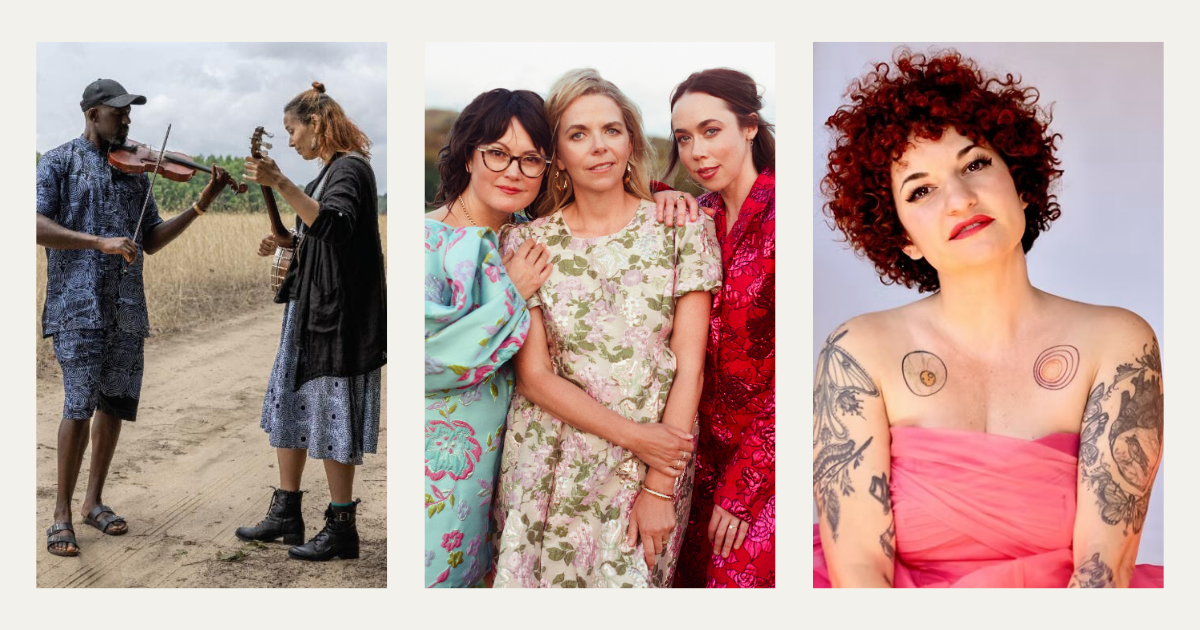
Rhiannon Giddens reunites with former Carolina Chocolate Drops bandmate Justin Robinson for what is essentially a crash course in the music of North Carolina. What Did the Blackbird Say to the Crow contains 18 songs – a healthy mix of instrumentals and tracks with lyrics. The music comes alive in the pair’s very capable hands and invites the listener to take a 44-minute stroll through Appalachia and North Carolina’s Piedmont. Their late mentor, Piedmont musician Joe Thompson, taught them all he knew, which is quite evident on selections such as “Hook and Line,” “Little Brown Jug,” and “Old Molly Hare.” Together, it’s like no time has passed between Giddens and Robinson, and they reach new heights in their work with some of the most propulsive and emotive string work of the year.
What Did the Blackbird Say to the Crow demonstrates that learning and growing never end. String work is best served when untethered to strict structures, but rather fluid and gently gliding, they evoke both a sense of whimsy and raw emotion. – Bee Delores
The History of Sound
I was in a cab going up the mountain to see Bugonia, and I was talking to another queer friend about The History of Sound. Specifically, about Josh O’Connor and Paul Mescal singing “Pretty Saro” and “Silver Dagger” to each other as a method of seduction. We talked about other versions of both songs – especially “Silver Dagger” – about how tender the song is in general, how O’Connor makes it softer, and about how his halting, half-good singing was effective in ways that, for example, Joan Baez wasn’t.
I thought a lot about the “Silver Dagger” scene, with a heat and a hunger, more than anything else in that film; a song which was too formalist to fully represent the erotic lives of the main characters. The movie made me sad and aroused, and what else can you ask for from a film? But it also made me worry about what songs we absorb from which traditions, and that the trading of these two famous songs as signifiers of a kind of melancholic, cock-blocked Appalachia only considers one kind of desire, one kind of hunger, and one kind of aesthetic. One marked by loss, and one which never completes except in death.
I wondered what it would mean, instead of “don’t sing love songs,” to sing every possible love song for every possible kind of love. In that too-short scene in the tent, Mescal and O’Connor sing to each other as a mode of seduction, but we get an incomplete song and an incomplete seduction. If we are listening to folk songs for their ardor, then the tradition must allow for all kinds of ardor – all kinds of desire. Sure, we have their version of “Pretty Saro” (the movie convinced me that nothing would be sexier than hearing that song post-coitally), but what about everything from “The Money Comes Rolling In” to “The Wanton Seed” to “The Two Magicians”? – Steacy Easton
I’m With Her, Wild and Clear and Blue
Right from the get-go, 2025 was a hard year. The Los Angeles wildfires ripped through homes and communities in January, displacing thousands of people, including many of my friends and music industry peers. Even for those of us whose homes were unscathed, everything suddenly felt untethered and dangerous, like it could disappear at any second.
For me, nothing captured that unnatural feeling quite like I’m With Her’s “Standing on the Fault Line.” “Is it when the reservoir runs out/ And the birds stop flying south/ Are we gonna know it’s time to flee?,” questions Sara Watkins. Many of us did have to flee, loading our cars with whatever we could grab; evacuating to anywhere that seemed remotely safer. But as climate change and economic and political upheaval continuously flip our world upside down, is anywhere really safe?
The rest of I’m With Her’s beautiful album, Wild and Clear and Blue, has been a soothing balm amidst these strange times. Each song captures a different aspect of womanhood, family, home, and the slipping of time – a testament to the shared songwriting duties of Aoife O’Donovan, Sara Watkins, and Sarah Jarosz. Their harmonies ring out like an old friend offering words of comfort on the other end of the line. – Amy Reitnouer Jacobs
Lilith Fair: Building a Mystery
One of the highlights of the late 1990s was Lilith Fair, a popular music festival co-founded by Sarah McLachlan and featuring the talent of such acts as Fiona Apple, Mary Chapin Carpenter, Sheryl Crow, Bonnie Raitt, and The Chicks over three years (1997-99). Director Ally Pankiw, known for I Used to Be Funny and two episodes of Black Mirror, pulls from a remarkable 600 hours of never-before-seen footage that cuts to the core of what Lilith Fair meant – and continues to mean – for women and female-identifying people. Interviews with Emmylou Harris, Brandi Carlile, and Jewel, among others, give new insight into the landmark festival and the tough-as-nails artists who stormed its stages.
Pankiw pulls back the curtain and offers the audience a peek into the blood, sweat, and tears that festival planners and the talent endured for the sake of the art and proving to the world that women artists were far more valuable than as tokens in a sea of men. Lilith Fair: Building a Mystery is raw, honest, and probing. For any casual music fan, it’s a must-watch of the year. – Bee Delores
Jess Sah Bi, Jesus-Christ Ne Deçoit Pas
Seven years ago, I worked on the reissue of Our Garden Needs Its Flowers (1985) by the West African country, folk, and afro-pop duo Jess Sah Bi & Peter One. Back in the 1980s, they were one of the most popular musical acts in Côte d’Ivoire (Ivory Coast), entertaining stadium-sized audiences at home, and later on, throughout Benin, Burkina Faso, and Togo.
When I first heard it, Jess Sah Bi & Peter One’s music was a revelation. In a sense, it offered a whole new lens through which to view country and folk music, while unlocking an entirely different set of African musical histories to learn from. Afterwards, Peter One scored a deal with Verve Records, culminating in his celebrated comeback album, Come Back to Me (2023).
Earlier this year, Awesome Tapes From Africa, the label that gave Our Garden Needs Its Flowers a second wind, reissued Jess Sah Bi’s rare early-1990s gospel, folk, and country solo album, Jesus-Christ Ne Deçoit Pas (Jesus Christ Does Not Disappoint). Written and recorded after recovering from a mystery illness and relocating from Côte d’Ivoire to the United States, the album’s seven songs, sung in French and Gouro, are soaring, transcendent, and undeniable. – Martyn Pepperell
Caroline Spence, Heart Go Wild
For me, 2025 has been typified by abject, all-encompassing grief. Singer-songwriter Caroline Spence’s past albums are certainly also heartfelt and lean towards tear-jerking and raw emotion-inhabiting, but Heart Go Wild feels particularly primed for a good, cathartic, therapeutic cry. Spence processes quite a few life and career changes within these songs, but the specificity by which these tracks and lyrics were born don’t hem them in or limit their relatability. On the contrary, by Spence opening up her own particular introspections to all of us, yet again, she enables each of her listeners to find our own healing, growth, and redemption in the same way she has. Through song.
Tracks like “Fun at Parties,” “Confront It,” “Why the Tree Loves the Ax,” and “Where the Time Goes” – really, the entire collection – have been remedies I didn’t know I would need so deeply when the album was first announced. Spence never needs to rely on tropes or platitudes to handle these sorts of topics. She rises above gratuitousness or melodrama, even while she acknowledges the sorts of grief, pain, and change she’s reckoning with aren’t aberrations from the human experience, they are the human experience. She’s reminding herself as much as each of us, and I suppose that’s where the magic of her particular skillset truly lies. – Justin Hiltner
Billy Strings at IBMA World of Bluegrass
When it comes to the International Bluegrass Music Association, two big things happened in 2025: the annual conference, festival, and awards show found new digs in Chattanooga, Tennessee, and Billy Strings finally returned to where it all began for the star. Taking home his fourth Entertainer of the Year award this year, Strings made a genuine, heartfelt effort to appear at the IBMA events. Not only to accept his recognition, but also to hang around the festivities all week.
Strings kicked off the conference with a stunning keynote address, only to then perform two shows in Chattanooga (one with his full band, one with guitar wizard and mentor Bryan Sutton). Throughout the week, Strings casually popped up all over the city, either jumping in on jam circles or merely stopping to chat with fans and fellow musicians alike, including a memorable jam with 90-year-old bluegrass icon Paul Williams. Strings’ presence was a well-received thing for a bluegrass community not only indebted to the six-string ace for what he’s brought to the scene, but also to remind everyone he hasn’t abandoned bluegrass — it’ll always be the essence of his melodic core. – Garret K. Woodward
Molly Tuttle, So Long Little Miss Sunshine
Molly Tuttle’s So Long Little Miss Sunshine actually comes loaded with sunshine and it’s evident from all angles. The empowered and fearless lyrics start on the first track, “Everything Burns,” and continue through “No Regrets” and “Story of My So-Called Life,” showing Tuttle standing proudly in feelings, intentions, and reflections that are true to this chapter in her life.
Whether she’s basking in a seemingly perfect headspace (“There’s no valley I can’t cross, or mountain I can’t climb/ I’m in a golden state of mind”) or making a messy choice and owning it without self-abasement (“Don’t try to fix it when you break my heart/ Knew when you hit me with your poison dart”), every moment is deliberate and delivered with confidence. That includes the sonic side of things, too – despite judgmental heat coming from folks who think Tuttle is trading in pickin’ parties for pop(ularity).
First: There’s plenty of Tuttle’s prodigious musicianship shining on this record. Second: take a cue from Tuttle herself and embrace what’s new as we go into the new year! Because for Tuttle, not all the personality on this album is new. It’s just new to us because she’s finally letting it out and letting it breathe. – Kira Grunenberg
Cristina Vane, Hear My Call
The Italian-born, Nashville-based singer and multi-instrumentalist Cristina Vane has long been at home playing bluegrass, country, blues and everything in between, but on Hear My Call she’s finally at home with the most important thing of all — herself.
Across the album’s 13 tracks Vane embraces the cultures and sounds that have shaped her, from finding joy in everywhere she’s been on the rock anthem, “Little Girl From Nowhere,” to relating to the stories of someone born an ocean away on the banjo ballad, “My Mountain.” While many songs on the record lean heavy into introspection and the strength that comes from it, others find power in everything from fun and sensual moments (“Shake It Babe”) to moving on from people who don’t value your presence and time (“You Ain’t Special”).
On top of Vane’s clever songwriting, I also can’t get enough of her playing on this album. Throughout, she moves effortlessly from banjo to slide guitar without skipping a beat, further reinforcing her staying power. This is someone to watch from 2026 onward. – Matt Wickstrom
Lead Image: Justin Robinson & Rhiannon Giddens by Karen Cox; I’m With Her by Alysse Gafkjen; Carsie Blanton by Bobby Bonsey.
Now that summer is finally here and I’m about to embark on tour to support the release of my new album, I’m dreaming about idyllic summer pastimes, driving with the windows down, and crossing my fingers that I can force the band to have ice cream on the beach at least once. My new album, Afterglow, celebrates the rebuilding of self and who we become in the wake of life’s big cosmic shifts. The album has an ethereal, playful energy unlike any other record I’ve ever put out and it feels fitting that it’s being released in June (a Gemini baby!).
I never went to summer camp. My best fantasies about it fall somewhere between Wet Hot American Summer, The Parent Trap, and the tales my best friend spun while sitting on top of her sparkly pink trunk, freshly home in the late summer of 1999. In my dream scenario here, I am in an old school bunk with the most amazing women and songwriters four walls can hold; can you imagine what the moonlit campfire harmonies would sound like?! – Anna Vogelzang
“Limelight” – Tune-Yards
This song has the best groove of the summer; I cannot stop listening to it. “We all get free in the family” –Merrill is an incredible soul and I want to be around her fierceness all the time.
“The Light” – Anna Vogelzang
Of all the songs on the new record, this one is the most groove-forward. When I think about summer I think about wanting to move and groove, and this song makes me move every time I play it (or hear it!).
“Night Still Comes” – Neko Case
If I puked up some sonnets, would you call me a miracle?
Neko Case is one of my musical heroes and this song is so singable. That transition from intro to tempo, the way the background vocals fill the spaces – it all feels like dancing on a warm night.
“(You Make Me Feel Like) A Natural Woman” – Aretha Franklin
The clip of Aretha playing this song at the Kennedy Center just resurfaced on my algorithm. Watching Carole King watch Aretha sing is such an incredible joy bomb and brought tears to my eyes, even though I’ve seen the clip a million times.
“Can I Talk My Shit?” – Vagabon
I love Vagabon’s melodies so much; I started hearing about her around town when I lived in LA and have been soaking up each album since. This “honestly I’m ready to go” hook is so dreamy.
“True Blue” – boygenius
“You said you wanted to feel alive so we went to the beach…” There are so many songs I love on this record, but this one is all summer, all the time. Belting out harmonies on this near-perfect chorus while driving along Lake Michigan is something everyone should try at least once.
“Baby I’m Sorry” – mmeadows, Monica Martin
I’m obsessed with this new song from two of my all-time favorite singers. I know from experience that Moni is down to belt it out late into the night and the production on this entire track is so killer, I can’t get enough.
“The Returner” – Allison Russell
When Alli does this song live with her Rainbow Coalition, it’s otherworldly. I had the joy of jumping on stage with them for this tune at Thalia Hall and the energetic power of singing out, “If you think you’re alone, hold on, I’m comin’” cannot be denied.
“Make It Hot” – Mirah
I have been in love with Mirah since I saw her sing in a basement of a neighboring college almost 20 years ago. I love the descending chord progression on this chorus so much and arriving at the outro feels like a moment of pure triumph.
“not a lot, just forever” – Adrianne Lenker
I got to hear Adrianne play this song at a campfire hang at Kerrville once and it felt like a spell being cast – her specific song sorcery is unmatched.
“We the Common (For Valerie Bolden)” – Thao
I am a forever Thao stan and could’ve chosen so many different songs of hers, but this one’s chorus is so goddamn catchy and such a great sing-along moment (and all while speaking truth to power).
“Scaled to Survive” – Leyla McCalla
Summer laid out for us in a groove! This guitar tone, the percussion groove, and Leyla’s heavenly voice create the perfect summer storm. I love Leyla and have such a deep respect for her artistry.
“Ancient Light” – I’m With Her
Another mixed meter groove-forward campfire jam. I love this song, especially the breakdown, but really I’m loving the whole new album so much. These ladies are such a great hang and I would love their hilarity and power trio vibes in our cabin party!
“California” – Joni Mitchell
There is no song hero greater than Joni, and there is no song that feels more like summer to me than California. The opener might as well be today: “They won’t give peace a chance; that was just a dream some of us had.” On days where I really miss LA, I find myself humming this tune without even realizing it.
“King & Queen” –Anna Vogelzang
This track opens Afterglow and is a totally casual ode to toxic relationships – and really hits how good it feels when you realize you’ve outgrown someone, or something, and finally leave them in the dust. It’s giving running on the beach and into the sunset.
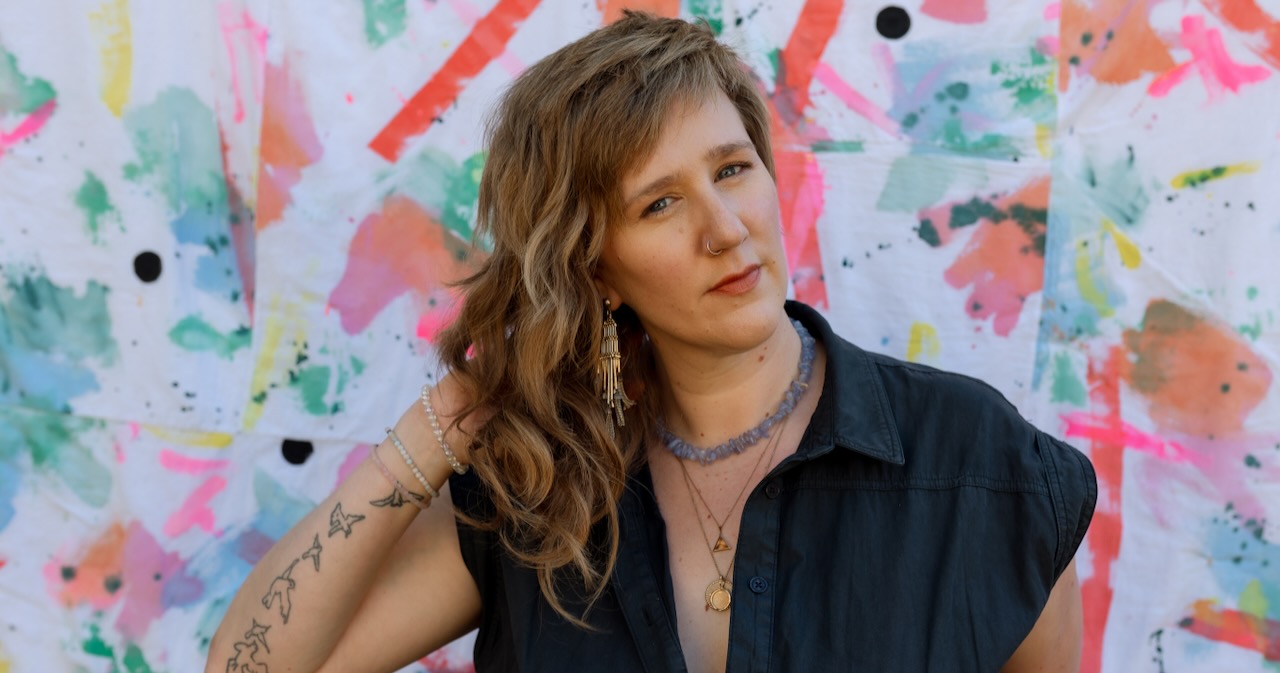
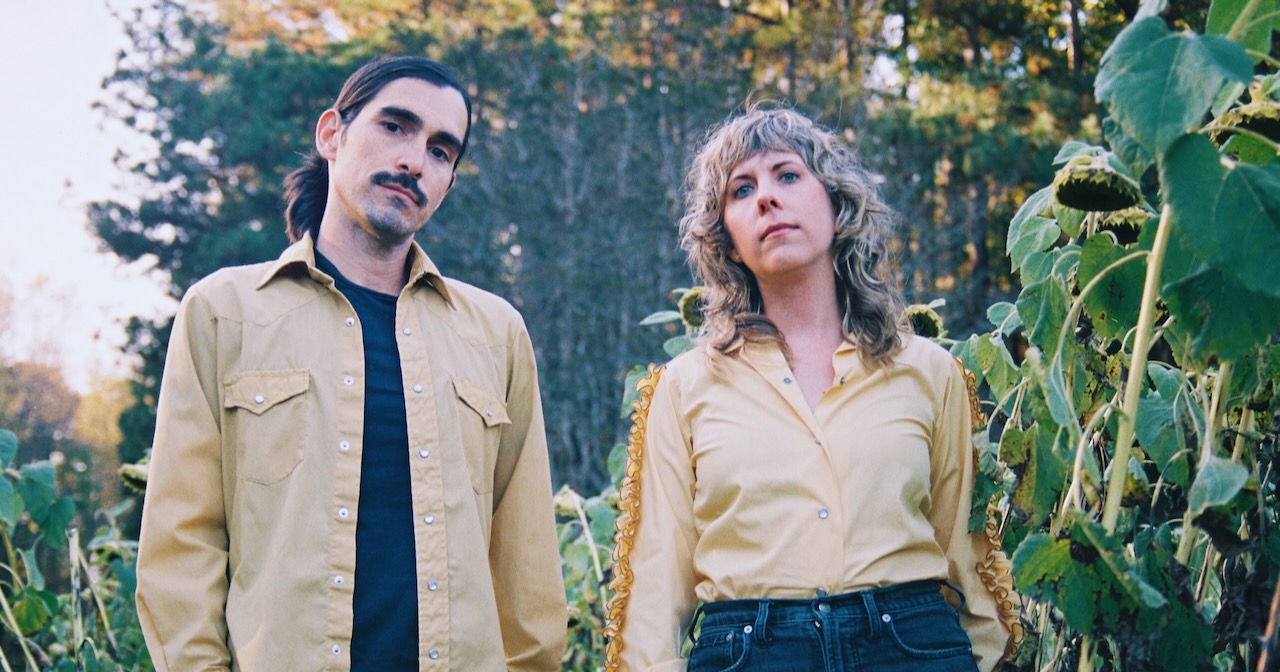
Artist:Blue Cactus Hometown: Chapel Hill, North Carolina Latest Album:Believer Personal Nicknames: Steph and Mar
If you had to write a mission statement for your career, what would it be?
“Slow and steady, always be on the rise.” I used to think I wanted to “make it” and I worked so hard at that, that it almost broke me, literally. I had stressed myself to the point that my mental stress had begun to manifest physically as various chronic health issues. I want to be a successful musician, which means for me that I am constantly making the music I want to create and not restricting myself to any specific rules or genre limitations. Once you “make it” there’s really only one place to go from there and so many artists have shared that their least happiest times were when their career was at its peak. I want to always be climbing, up and up, constantly evolving and learning new things about myself and abilities. – Steph
What other art forms – literature, film, dance, painting, etc. – inform your music?
I’m a perpetual hobbyist at heart and am always dabbling in some form of visual art – from film photography and cyanotype to linocut print-making and botanical dyeing – I find that having these other forms of art keeps me curious and inspired, which in turn feeds my inner-songwriter. When I look at my calendar, so much of my life feels planned out and I savor the mystery and surprise of what the film will reveal when it’s developed or how one print will vary from another when I lift the paper. It’s become essential for me to make art for myself that is separate from the business of making music and it’s taught me to embrace the happy accidents of art and re-framed my relationship with perfectionism. – Steph
Genre is dead (long live genre!), but how would you describe the genres and styles your music inhabits?
We have a deep love and respect for country and folk music, which is a sort of foundation for the music we make. There’s a bit of psychedelia and art rock swirling around, too, which seems to move us toward alt-country and cosmic country. We aspire to create songs that are strong enough to exist in varied genres, they just happen to be delivered in our vernacular. – Mario
If you didn’t work in music, what would you do instead?
Working in music has meant that I’ve also needed some other work to help pay the bills and I’ve been very fortunate to have been an instructor at a local outdoor nature program near our home in Chapel Hill, working with kids. I grew up in a very rural part of Catawba County, in the foothills of North Carolina, and was always out playing in the woods, building forts, and climbing trees. This work has kept me grounded and saved me from burnout. I suppose I’d just keep doing more of it if I changed career paths. – Steph
Since food and music go so well together, what is your dream pairing of a meal and a musician?
I’m thinking comfort food: meatloaf, mashed potatoes and gravy, and green beans paired with Roy Orbison. In particular, the album Crying. – Mario
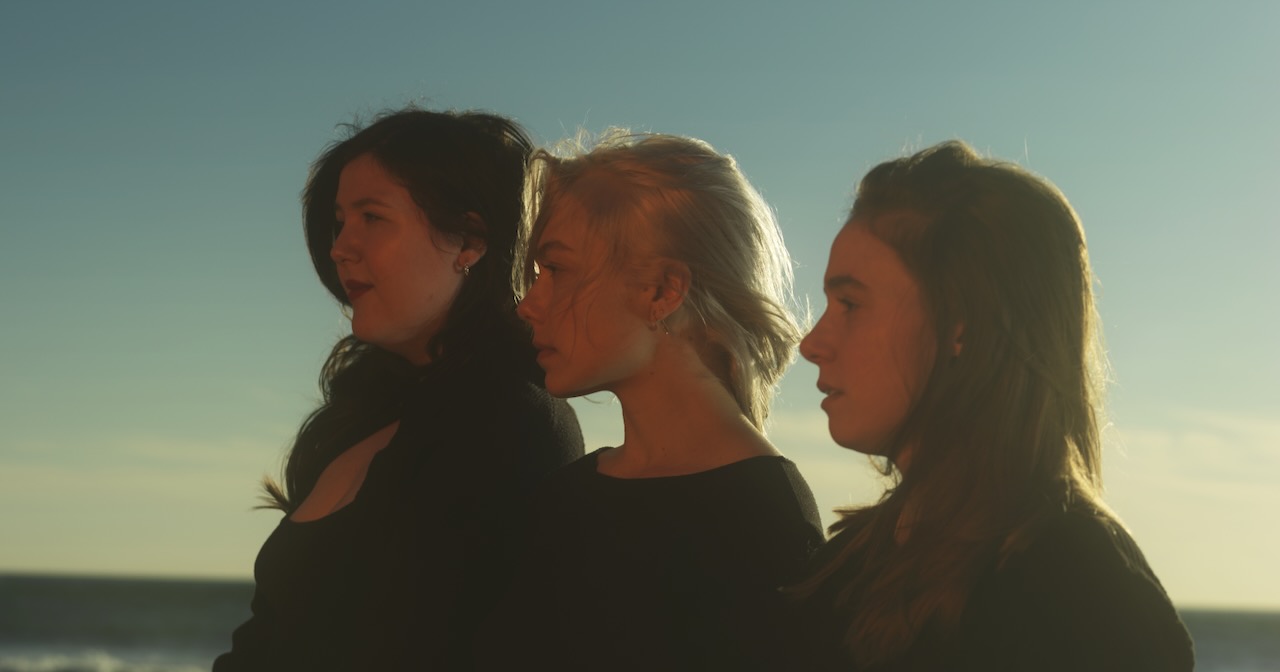
Can’t get enough of the record by boygenius?We understand and empathize. Did your ears perk up immediately when you heard the twinkle of the banjo on “Cool About It?” Do you rewatch the video of Julien Baker, Lucy Dacus, and Phoebe Bridgers performing The Chicks’ “Cowboy, Take Me Away” over and over and over again? If so, this list is for you.
It’s not hard to place boygenius within the universe of folk music and its endless variations, with their perfectly blended, nearly familial harmonies, their lyrics and song structures that are so singable, cyclical, and relatable, and the way, together, they exceed the sum of their individual parts by leaps and bound. Comparisons to other iconic supergroups – Dolly, Linda, and Emmylou’s Trio, or Crosby, Stills, Nash, & Young – illustrate further that boygenius are often a string band and always a folk group.
We’ve collected songs from 18 other folk groups that also center female and femme friendship, slippery harmonies, and egalitarian ensemble arrangements in their music. If you adore boygenius, these acoustic bands are for you.
(Editor’s Note: Scroll for the playlist version of this collection.)
The band JOSEPH’s latest release, The Sun, is perhaps their furthest foray into pop- and indie-folk, with a sound that’s not just adjacent to “the boys” of boygenius, but often parallels the genre and aesthetic territories explored by the latter trio. These songs are rich and fully realized, from the tender and contemplative to full-bore rock and roll. Remind you of anyone?
We’ve loved watching this California-based group grow and expand their listenership across the country and around the world, from the Bay Area to Cayamo and beyond. Like boygenius, Rainbow Girls have quite a few joyous, smile-inducing cover videos that are wildly popular on the internet, but the group really shines while singing sad, introspective songs that still make you feel so good.
Since their first studio album in 2004, the Wailin’ Jennys have become one of the most beloved vocal trios in bluegrass, old-time, and folk music, with a robust, devoted international fan base. Perhaps best known for their appearances on public radio, the Juno Award-winning ensemble is in a phase of part-time, infrequent touring while balancing motherhood and solo projects, too. Their cover of “Wildflowers” remains one of the most popular BGS posts in the history of the site.
An important addition to this list – the aforementioned “Cowboy, Take Me Away” cover by the boys notwithstanding – the similarities between the Chicks and boygenius are many. Righteous anger, agency, and collective rebellion, flouting gender roles, “tradition,” and industry norms – the list could go on and on. But perhaps the most striking throughline between both trios are their evident prowess as instrumentalists, whether guitar, fiddle, banjo, or voice. And there’s a tambour to Phoebe and Julien’s vocals that certainly conjures the crystalline, one of a kind singing of Natalie Maines.
What would boygenius be, together or separately, without longing? Without lost or waning or fading or burning or lustful or ethereal love? Love that’s sexual and romantic and hungry, but love that’s tender, platonic, and eternal, too. Mountain Man, who describe themselves as a “trio of devoted friends,” conjure all of the above within their catalog and certainly on “Baby Where You Are,” with a vocal arrangement that could have been pulled right from the record.
Country-folk duo Plains, a duo made up of Katie Crutchfield (Waxahatchee) and Jess Williamson, could be described, in a boygenius-centric way, as sounding like that band dragged through… well, the plains. There’s an agnostic, informal country aesthetic here that sounds just like the prairie of which they sing on “Abilene.” And, their origin story matches the boys’, as well, with Crutchfield and Williamson first admiring each other’s music before joining forces. There are far worse impetuses to start a band than mutual admiration.
Does the transitive property apply to trio supergroups? Because, if I’m With Her is a band of bona fide bluegrassers playing delicious indie-folk and folk-rock, then that makes boygenius, a delicious indie-folk and folk-rock band that much closer to being bluegrass, right? Right? Okay, it’s nonsense, but genre is dead. (Long live genre!) We love how our friends in I’m With Her, Sarah Jarosz, Aoife O’Donovan, and Sara Watkins have colored outside the genre lines across their entire careers, not just in their collaborations together. Now, for a collaboration between I’m With Her and boygenius. Please.
Trio
While Dolly Parton, Emmylou Harris, and Linda Ronstadt collaborated on Trio and Trio II at the heights of their careers, boygenius came together as a supergroup when each of its members were on steep ascents, launching into the stratosphere. Somehow, as with Trio, the collective art boygenius has created supersedes even their heightening fame, not just as artists and musicians but as celebrities, too. These are just some of the reasons Trio comes to mind in the same train of musical thought as boygenius. Another is the “True Blue” friendships underpinning both groups.
case/lang/veirs
Our hearts, be still, because a few short days ago kd lang shared a photo on Instagram with Laura Veirs captioned: “Waiting on Mr. @nekocaseofficial to bring the love…” Whatever they’re working on, it will be must-listen and anxiously awaited! There are so many connection points between this incredible assemblage of musicians and the boys. Queerness; ethereal production; poetic lyrics; swapped lead vocals; oh-so-much text painting. If you’ve never given case/lang/veirs’ 2016 self-titled album an in-depth listen, there’s no better time. But the lead track, “Atomic Number” is an excellent audio swatch for the entire record.
Though on indefinite hiatus, Lula Wiles remains one of BGS’ favorite folk groups to emerge from the New England / northeast string band scene in the 2010s. Like boygenius, Isa Burke, Eleanor Buckland, and Mali Obamsawin each have vibrant and widely variable (while interconnected) solo careers, so despite their music making as a group being on pause, there’s a wealth of music in their combined and individual catalogs to binge your way through. We suggest starting with “Hometown,” a track that’s stuck with us since its release on What Will We Do in 2019.
One in the solidly pop/pop-rock category, Lucius still have dabbled often and intentionally in Americana, folk, and country, as demonstrated by this track from their latest album, Second Nature, which features their friend and tourmate Brandi Carlile and country star Sheryl Crow. It listens more similar to Phoebe Bridgers’ or Lucy Dacus’ genre aesthetics overall, but still calls on two roots musicians and vocalists, highlighting the mainstream success such cross pollinations attract.
Known for their iconic, self-titled 1975 album Kate & Anna McGarrigle, often referred to as the McGarrigles or the McGarrigle Sisters, epitomized the post-folk revival appetite for sincerity, authenticity, and literature in song, but their music never felt trope-ish, cheesy, or painfully earnest at the same time. Instead, its impact comes from its vulnerability and raw emotion, as in “Go Leave,” a song written by Kate for her unfaithful husband (Loudon Wainwright III). The lyrics drip with an indelible pain, reminding of Lucy, Julien, and Phoebe all, who for ours and hopefully their own benefit, often bare their entire souls in song.
There’s a quality to boygenius’ music that reminds of church, of songs intentionally crafted for group singing and raising our voices up together. Perhaps it’s their bond as friends or their love of seamlessly blended harmonies and unisons, perhaps it’s their own histories with and upbringings in/around the church, perhaps it’s the relatability of their lyrics, but whatever it is their music begs to be joined. The same is true for Songs of Our Native Daughters, by roots music allstars Rhiannon Giddens, Leyla McCalla, Amythyst Kiah, and Allison Russell. You can hear their voices twining not only in sound, but in message and mission, and listeners can’t help but feel the urge to sing along. Music by community and for community, that centers and celebrates the friendships of those creating it.
The Secret Sisters have a penchant for the macabre, the spooky, the longest shadows and the darkest nights, often sung to a gritty minor key. They highlight the classic Southern Gothic aesthetics of their Alabama homeland with a groundedness and hair-raising realism. It’s not difficult to picture them, say, wearing rhinestoned skeleton suits. This collaboration with their friend and (sometimes) producer Brandi Carlile soars, highlighting the similarities between Laura Rogers’ and Lydia (Rogers) Slagle’s and Lucy Dacus’ voices.
Now, from which folk and acoustic group can you get the rock and roll, shredding guitar solo, writhing on the ground, leaping into the crowd, pyrotechnic, Julien Baker-sprinting-across-the-stage, grand finale level energy for which boygenius is becoming known as they tour the record? It’s that caricature of a caricature of rockism that boygenius do so well. Look no further than blues duo Larkin Poe, made up of sisters Rebecca and Megan Lovell (who, the diehard fans will remember, began their careers as a family bluegrass band). Every song on their albums or in their live sets is dialed to eleven on the face-melting meter. They skewer the performative masculinity of the genres they inhabit – just like boygenius – not by mocking, but by doing it better. And we love the genderfuckery and queerness they bring performing a lyric like “She’s a Self Made Man.” Again, just like boygenius.
The Roches
What could be more archetypically boygenius than exploring familial trauma? A gutting hook standalone, taken in this context sung by sisters Maggie, Terre, and Suzzy Roche, “Runs in the Family” is jaw-dropping. Another group lauded and adored for their releases in ‘70s and into the ‘80s. Their music runs in the family, too, with Lucy Wainwright Roche (daughter of Suzzy), who is an accomplished singer-songwriter. Keep Dacus’ “Thumbs” and the record’s “Without You Without Them” in mind as you listen.
Fuzzy, full, and angry guitar is the sound bed for this, the title track from The Burney Sisters’ latest album, Then We’ll Talk. One of the hallmarks of boygenius’ generation of women and femme rockers is that their expressions of anger, justice, agency, and self advocacy feel real, not just like costuming for a genre that prides itself on counterculture and middle fingers literal and proverbial. When you hear women express anger in rock and roll, it doesn’t feel affected or constructed, and that’s one of the main reasons why women continue to lead – and revive – the genre.
Part of the appeal of a group like boygenius, and Shook Twins as well, is the beauty in lyrics simply stating exactly what they mean. These songs are accessible, listenable, resonant, and thereby incredibly impactful. “Safe” by Portland, Oregon-based twin sisters Katelyn Shook and Laurie Shook is one of their most popular numbers – especially their acoustic version. The singer cries out to be seen, heard, and loved. A common refrain for Phoebe, Lucy, and Julien as well.
Since our first excursion to Bonnaroo in 2013 BGS has been filming, crafting, and releasing Sitch Sessions with the absolute best and brightest musicians and artists in roots music. We’ve been so fortunate to work with new and old friends, freshly discovered and up-and-coming artists, and legendary performers with enormous legacies. After nearly eight years, we’ve amassed quite an archive of sessions, and within that archive more than a few stellar songs and performances have seemingly fallen to the wayside.
These 8 Sitch Sessions from the BGS archives are a few of our most favorite, underrated moments from our years of shooting sessions. We hope you’ll enjoy a few of these “reruns” — and take a deep dive into our past featured videos yourself!
Nathan Bowles – “Burnt Ends Rag”
One of our favorite shooting locations is a rooftop in downtown Los Angeles, where countless BGS Friends & Neighbors have taped their Sitch Sessions over the years. One of our favorites is this clawhammer banjo performance by Nathan Bowles, which demonstrates that old-time music and its trappings can be perfectly at home in modernity — and in urban settings, too. More banjos in DTLA, please and thank you!
Andrew Combs – “Firestarter”
One fine AmericanaFest week in Nashville in September a few years back we partnered with Crowell Floral, Jacob Blumberg, and Dan Knobler on The Silverstreak Sessions, a series of Sitch Sessions set in a vintage Airstream and flanked by gorgeous flowers and verdant foliage. At the time, “Firestarter” had not yet been released — now you can hear it on Combs’ 2019 release, Ideal Man. For this session all Combs needed was his guitar, this heartfelt song, and that honey sweet, aching voice.
Alice Gerrard – “Maybe This Time”
Every opportunity we’ve had to collaborate or speak with Bluegrass Hall of Famer and living legend Alice Gerrard, we’ve taken it! This session is two of a pair we shot with Gerrard, the other a stark, awe-inspiring a capella number that was quite popular on our channels. This Alice original, “Maybe This Time,” is cheerier, lighter, and has that charming old-time bounce in its bluegrass bones.
With a new documentary film available, You Gave Me a Song, perhaps it’s about time for another session with this hero of ours!
Ben Sollee – “Pretend”
Maybe you’ve seen Mark O’Connor play fiddle while skateboarding, or Rushad Eggleston performing all manner of acrobatics and avant garde silliness with his cello, but do you remember when Ben Sollee toured America by bicycle? In this 2016 session, Sollee demonstrates his cello-while-pedaling chops.
We’re firm believers that the world needs more bluegrass, old-time, and Americana cello and we’re happy to return to this archived Sitch Session for that reminder!
Caroline Spence – “Mint Condition”
Another session filmed on our home turf in Los Angeles, Nashville-based singer-songwriter Caroline Spence brought “Mint Condition” to her taping fresh off her debut, eponymous release on Rounder Records in 2019. “Mint Condition” displays Spence’s unique skill for writing strong, unassailable hooks that on almost any other songwriter’s page might trend cheesy or trite. Spence instead displays the simple profundity in her lyrics, a skill evidenced plainly in this session.
Laura Veirs – “July Flame”
Over the years, we’ve partnered with festivals, companies, and brands on tailor-made sessions — like our Portland series, where we partnered with our friends at Ear Trumpet Labs on some of our most popular, most viral Sitch Sessions ever! This beautiful, sunny, summery rendition of “July Flame” by Laura Veirs certainly deserves a re-up.
In 2016, after this session was published, Veirs went on to release case/lang/veirs with Neko Case and k.d. lang. Remember that!?
Kelsey Waldon – “Powderfinger”
We first filmed a Sitch Session with Kentuckian country singer and songwriter Kelsey Waldon in 2015 — after the release of her debut album, The Goldmine, in 2014. In the time that’s elapsed since, Waldon has followed her golden debut with two more impeccable studio albums, the latest being White Noise / White Lines, which was released on the late John Prine’s Oh Boy Records in 2019. On the tail of White Noise / White Lines, Waldon gave us this gorgeous cover of Neil Young’s “Powderfinger” displaying her talent for cover song interpretations as well as original song sculpting.
Sunny War – “He Is My Cell”
Guitarist and singer-songwriter Sunny War has just released a brand new album, Simple Syrup, as charming and entrancing as ever and built firmly, yet again, upon her unique and idiosyncratic guitar picking style. In 2018 she released With the Sun, an album that included “He Is My Cell,” which ended up featured in a Sitch Session in early 2019 on BGS.
War recently appeared as a guest on our Shout & Shine series – read our interview here.
There’s so much going on in the world right now, I find myself feeling somewhat unhinged at times. For me, the best remedy for fighting that feeling is writing, playing, and listening to music. In September, I released a new album, Flames for the Heart, which was written on themes of hopefulness, resilience, and discovering how to keep yourself inspired to move through this life with joy. Here’s a selection of songs that help do that for me. — Lydia Ramsey
Chris Staples – “Walking With a Stranger”
Chris is a dear friend I met in Seattle, Washington. I’m always impressed with his simple and poignant arrangements, there’s an understated sweetness to his voice and cathartic messages in his songs. In most of his songs he’s playing all the instruments and he often also records everything himself in his garage.
Kevin Morby – “Aboard My Train”
Kevin Morby is another one for me who’s able to bring a sweet vocal tone with hopeful lyricism through fun musical ‘60s rock vibes. He’s been putting out so much great music, I like this tune in particular on a gloomy day.
Laura Veirs – “I Can See Your Tracks”
I love the fingerpicking in this one and the soft, makes-you-feel-like-floating arrangement she has worked out — with the reverb on her voice and background vocals creating lovely, layered textures. The lyrics have a theme of forgiveness I like to reflect on when I think about the difficult people in my life.
Lydia Ramsey – “Things Get Better”
I wrote this song thinking about all the good things happening around us every day. Good people helping each other out, and calling each other out when things aren’t right. I believe keeping hope in our hearts is paramount in keeping ourselves intact through the troubles we face.
Fruit Bats – “My Sweet Midwest”
I love the pace of this song, it feels like getting rocked in a hammock in the breeze. It always puts me in a good mood and it’s sweet thinking about all the beautiful parts of this vast country, and people everywhere celebrating the place they call home.
Julie Byrne – “Sleepwalker”
I fell in love with Julie through her record Not Even Happiness when I filled in for her on a show opening for Steve Gunn. The vocal stylings on this are so dreamy and that clear guitar tone is so gorgeous I could listen to this song for days.
Becca Mancari – “Golden”
I met Becca at a show she opened in Seattle when I sang backing vocals with the band Joseph. Her record Good Woman has this rad pedal steel all over it and I just love the swoony, warm tones of this song especially.
Adrianne Lenker – “symbol”
I love Adrianne’s sort of stream of consciousness lyricism, quick rhymes, and hypnotic melodies that later break free with the guitar into this little chorus. Her work with Big Thief is also great, but I often lean into these tender songs of hers a bit more.
Neko Case – “I Wish I Was the Moon”
You know how when you watch someone just shred on the guitar you think, “Oh, that’s how you play a guitar”? When I hear Neko sing I’m like, “Oh, THAT’S how you sing.” I think we all wish we could be the moon sometimes, where we can’t help but shine, high up above it all.
Lydia Ramsey – “Take My Only Heart”
A few years ago, two friends of mine sold their house and everything they owned to travel the world together. I wrote this song loving the idea that all we need is each other to face and embrace the unknown depths of the world.
Artist:Mark Erelli Hometown: Reading, MA Song: “Deep Red Bells” Album:Mixtape Release Date: January 26, 2018
In Their Words: “Neko Case is one of the great, modern American singers, with a timeless voice capable of telegraphing nearly any emotion in song. I am grateful her singing moves me so much, as her lyrics are often so impressionistic that I can only guess of what, exactly, she is singing about. I read once that this song is about a serial killer that stalked the Northwest, and perhaps that informs the sinister edge to my vocal here. I’m joined on the choruses by Lori McKenna and Jake Armerding, my two partners in crime when we first started our annual Under the Covers show at Club Passim 14 years ago. Lori insisted she couldn’t sing that high when she came to my house to record her harmony, but the track proves otherwise.” — Mark Erelli
Artist: India Ramey Hometown: Born in Rome, GA, but I claim Birmingham, AL Latest Album: Snake Handler Personal Nicknames: “Indie.” My grandaddy called me that. My sisters called me “Tush” (long story) and “Indiana Banana Copa Cabana.” There are many more, but in the interest of brevity …
Tucker Martine had to move as far away from Nashville as he could before he could have a career in music. Just out of high school, he headed to college in Colorado, then kept heading west until he reached water. He settled in Seattle in the ‘90s, when that city was a center for American alternative music. Then he moved down the road to Portland, Oregon, just as that city was becoming a hub for indie rock.
In the 21st, Martine has become a central figure in Portland’s bustling roots music scene, producing national hits by almost every major local artist. He has added a spacy shimmer to almost every album by singer/songwriter Laura Veirs (who happens to be his wife) and, when the Decemberists graduated from a regional indie label to a Capitol Records, they hired Martine to conjure detailed backdrops for their diorama-songs about Russian shapeshifters and Irish gangsters.
Martine anchors the West Coast roots scene so strongly that even non-locals head west to work with him. Abigail Washburn hired him to combine Asian and American folk traditions with indie-rock techniques on her 2011 breakthrough, City of Refuge. More recently, he produced The Waterfall, My Morning Jacket’s darkest and most daring album in years.
While Martine does not thrust any particular aesthetic onto his projects, he has developed a distinctive ambience: a clarity of sound that is both ethereal and earthy, elaborate and direct, engaging but somehow mysterious, as though he’s reluctant for any album to spill all of its secrets on your first listen. Emphasizing the distinct tones of each instrument in the mix, he helps to convey a rich intimacy, as though even an acoustic set can sound like a headphones album. One of his latest projects is also one of the most highly anticipated albums of 2016: a new collaborative record by Neko Case, Laura Veirs, and k.d. lang — out in June on Anti- Records.
At what part of the process did you come in on the case/lang/veirs record?
Shortly after k.d. had sent an email to Neko and Laura asking if they’d be interested in starting a group together — which I think mostly meant making a record together, perhaps doing a tour for the record. I don’t think it’s a band that is going to be a long-term project. k.d. sent an email to them, and Laura and Neko quickly responded with an enthusiastic "Yes," and then they had a little back-and-forth between themselves. Maybe a week later, they cc’d me on the email thread and asked if I’d be up for working on it with them which, of course, I was honored and excited to be roped in, so I said yes.
I think it made a lot of sense — I mean, hopefully, musically it made perfect sense. I had worked with Neko on her last record and, of course, I’ve worked on a lot of records with Laura. I was getting to know k.d. a little bit because she’s a Portland resident now, and she’d done a couple of things at my studio. That brought one common element into a project that maybe, at least on the surface, didn’t appear to have a lot of common elements to start with. I think the process of making that record was about discovering where the common ground was between all of them. And that was really so much of the excitement of that record — and the challenge of it, too.
So figuring out how those pieces fit together becomes part of that process.
I don’t think any of us wanted to make a record that sounded like four tracks that could have been on the next Neko Case record and four songs from the next k.d. lang record, four songs from the Laura Veirs record. They wanted to figure out where all their sensibilities converged and how they could challenge each other to find interesting places outside of their comfort zones. And there was plenty of that, because they’re all used to being the leader, the person who ultimately calls the shots. But this was a bit of a democracy, and the whole dynamic of the group was being discovered while we were in the middle of making the record. It wasn’t like they had discovered some common chemistry beforehand and then thought, "Well, this means we should make a record." I think everybody knew it felt kind of risky. None of us were talking to people about it beforehand, because we were reserving the possibility that maybe it just didn’t quite work. But it did, and it was apparent on the first day that it was going to work. Everyone was pretty thrilled with how it was sounding right out of the gate.
What does your role, then, become for artists who are still finding out how they relate to each other?
There are so many facets of it. Making them all feel comfortable, for one. Assuring each person that their point of view isn’t going to get steamrolled in this mostly democratic process. I’m always looking to find the strength and the uniqueness of the artist, so I’m constantly having conversations with them about what they’re excited about, and checking in with them all the time to make sure they feel like they are being represented. And I would sometimes have to challenge people to maybe not rush to judgment but let it play out a little longer, and listen to the result rather than not try something because the suggestion sounded like a direction they wouldn’t normally take.
I think that’s something that I knew, but never but a fine point on it — that you’re not just overseeing things in the studio; you’re negotiating aspects of the art and trying to usher this person into making the best thing they can or the strongest thing they can.
Absolutely. All three of these ladies have such different working processes. And I had a little insight into what those processes were, in some cases more than their other collaborators did, because I’d spent many weeks in the studio with Neko and made records for years with Laura. I had only done demos with k.d., and she had sung on one of Laura’s records. So it was really just a matter of trying to honor a bit of each of their processes while reminding all of us that this is a new experience and it’s not going to feel like the process of making one of their solo records.
And that was what was exciting about it. Sometimes, when I thought maybe they were reverting to something too safe, I just tried to remind all of us that the exciting part of a collaboration like this is that it pushes us into some places that we wouldn’t normally go. I think most or all artists ultimately do want to get into some territory that feels new to them, so they feel like they’re moving forward and progressing. And I can only guess that k.d. chose Laura and Neko as collaborators because of how different they are from her, yet she still had a lot of admiration for them and their music and, I think, was looking to shake up her own music-making process. And by accepting that invitation, I think Laura and Neko acknowledged that the same thing was true for them.
It does seem like two generations of artists going back and forth.
I think I can speak for myself and Laura and Neko in saying that we’ve all been fans of k.d. for so long, but you have to remind yourself for a minute that, even though she’s this larger-than-life musical figure in our minds, she’s looking for a three-way collaboration between them. They all really got in there and had to fight for some of their ideas — in a healthy way. At the end of the day, each person got a final say in the songs that they were singing lead vocals on.
I had a moment when it was being planned when I wondered what I had to bring to a project for someone like k.d. lang, but she made it really clear that she wanted me to feel comfortable speaking up. I assured them, in the beginning, that I knew it was going to be a challenging record to make, but we weren’t going to call the record done until everybody was happy with it. It gets emotional, at times. It’s tricky to be giving people confidence while at the same time sometimes you’re asking them to be open to trying something new or to just trying to get a better take of it.
You mentioned that k.d. had recently moved to Portland, and I wanted to ask about that. There is certainly a strong roots scene there, and even though you’re from Nashville originally, I feel that you’re at the center of it … or at the very least a prominent figure there.
To me, the Portland community feels like the more immediate version of the larger music community. And a lot of the artists that I’ve been working with the last few years are not from here. Sometimes it’s artists from out of town, but there will be people from Portland who play on the record, or the artist is from Portland and we bring in some people from out of town to play on the record. There is just a ton going on in Portland, and there are some insular scenes — like the old-time music scene, the singer/songwriter scene, the indie rock scene, and all that — but also a lot of those people just overlap and play with each other.
I left Nashville the morning after my high school graduation because, as much as I loved growing up there, I just felt like there was a narrow-mindedness about music and what it could be — all the different ways it could be presented and written and explored. So it was healthy for me to leave at that time. Since then, of course, it’s transformed into something completely different, with all the transplants and musicians of every variety there. I think most of the Nashville scene is, and has always been, transplants. It’s just that they transplanted themselves there to do a specific type of music, where I think a place like Portland draws people — including myself — more for the environment and the lifestyle, and then that informs the music that comes out of it.
I hadn’t thought of Nashville that way. It’s like Portland — a city full of transplants.
Nashville’s a place where people go to make it. For the most part, Portland’s a place where people moved because it was inexpensive and it’s just a great place to live. You can bike or walk anywhere, and it’s gorgeous. You have access to the ocean and the mountains and the rivers. There aren’t a lot of labels and managers and industry stuff here. A lot of times the best music scenes just kind of come out of somewhere that’s affordable for young people to live. And, until recently, that’s been true of Portland.
It also seems like a place where more established musicians end up, like k.d. lang or Peter Buck or Patterson Hood.
If you’re in a position where you feel like you can be based anywhere and still do your work, then you just start looking at where you want to live regardless of what kind of infrastructure that place might have for your chosen field of work. It doesn’t make any sense that I moved away from Nashville and moved to Seattle and started producing records. I mean, to me it makes perfect sense, but people are always asking me why in the world I left Nashville, which is one of the premiere cities in the world for recording studios. But it just felt like a trap to me, at the time. I felt like, if I stayed, my growth would be radically stunted. I think it was the right move. I’ve always thought I might move back someday, because it’s still home to me. I couldn’t be more fond of it, even if it was necessary at that time in my life to be elsewhere and find my own identity outside of the familiar and comfortable.
And it does seem like you’ve developed a signature palette that I don’t hear in Nashville.
My sensibilities don’t seem to overlap a lot with what Nashville’s known for, although I certainly have loved some of the music that’s come out of Nashville. I’m not a fan of overly glossy productions, and certainly Nashville is known for that. But there are countless examples of records that have come out of there that weren’t that way. You had guys like Jack Clement making really interesting, soulful country records, and now you’ve got guys like Dave Cobb, who’s crushing everything he touches. It’s cool to see Nashville having a resurgence, but I feel like I’ve really found the right spot for myself.
But people don’t usually come to me because they’re chasing the latest, hottest sounds or because I have the latest chart toppers. Maybe there’s just some quality in the way the music is translated and presented that speaks to them. To me, my approach is different for every record and every artist; but for somebody less close to it than me, I guess you can hear some continuity — or, as you put it, a sound. And it’s convenient that people like Portland. Someone might be interested in working with me and, when they find out I’m in Portland, they usually get excited about the idea of coming here for a little while.
You mentioned that you approach every project differently, but are there elements that are common from one project to the other …
I really like to be surprised, so I always try to leave some room in the process for some things to happen that surprise all of us. Those often end up being favorite parts of records. I feel like, the longer I’ve done this, the less satisfying it is to just put up some mics and make everything sound perfectly nice, make sure that nothing sticks out, and there’s nothing that could possibly offend anyone. If it came to that, I feel like it would just be time to hang it up. I want to be moved by what’s coming out of the speakers, whatever that means. Sometimes, that means just blowing things up and making it sound ratty and raw. Other times, it means muting everything except for the vocal and the harpsichord.
At the outset, it’s just dictated by whatever the material suggests to me. I try not to take on a project where the songs don’t suggest a lot to me about how they could be presented. You want to leave plenty of room for it to end up going a different direction if something presents itself that is maybe even more interesting than what I imagined. And no record ever ends up sounding like whatever I thought it was going to sound like at the outset. Still, I think it’s important to have some kind of vision as a launching point, or else you’re all just sitting there looking at each other like, “I don’t know — what do you want to do?” Nothing gets done, or what gets done is just lifeless.
Are there any examples that come to mind?
Oh man, it could be anything! You might have an idea of a nice drumbeat for a track, and then you get everything set up and the drummer starts playing some angular, syncopated thing where you can’t even find the one. At that point, you can either say, “No, man, this is like a straight-ahead kind of thing.” Or you could say, “Let’s check this out. And let’s see how the rest of the band responds to that idea.” More often than not, those things end up sticking and being some of my favorite parts.
The song “Down I-5” from the case/lang/veirs record is a good example. The demo was okay, but I think we all knew it needed something — some joie de vivre — and we all had our own vague ideas of what that might be. I had spoken to Glenn Kotche, who was playing drums on that record, and I just told him that it really needed a unique perspective and that the reason he was there to begin with — why Glenn was chosen to be the drummer for that record — was because his default mode is unpredictable. I told him that this was a perfect scenario for him to lean on his instincts. I didn’t want him to try to guess what the singers are expecting to hear, and he just pulled out that wild beat. There was a look of confusion on the faces of the people in the room, but within a minute it had transformed to elation.
So that’s what I mean by surprises. It’s easy to tell people something that’s safe and predictable, and then you can just get it done and check it off the list. But that’s not why I do this. And that’s not why I think most of the people who call me are doing this. I just try to keep myself and the artists honest.
When you were talking about that, one album that came to mind is City of Refuge by Abigail Washburn. Every song seems to have that sense of discovery to it, some new idea to get across.
For that record, we approached every song from scratch. That wasn’t a record where we had a band for five days, pick a song, knock it out, and go to the next one. We would just start with a song, and sometimes the song wasn’t even finished being written, so we would just start with the one thing we knew it needed. Maybe that was Abigail and her banjo. Maybe it was something else. By the time that we tracked that, it suggested the next layer. We really weren’t too concerned with it all sounding like it happened in a short time span with the exact same people set up the same way.
In fact, one thing Abby and I found out was that we both love old Alan Lomax recordings and Folkways stuff, where there might be talking before a song. We approached “Bright Morning Stars” like a field recording. We just went into a church and told a bunch of people to meet us there. Abby showed them the songs, and they’re of course all playing into one mic, which means you can’t fix anything. Other songs, we meticulously put together. We hoped that if we committed to giving each song its own singular treatment, then the variety of production sensibilities would actually be a strength rather than a weakness.
Very often, you start in on the process, and things are pretty ambiguous. You don’t really know what the identity of the record is yet. But gradually, over time, it starts to show you. In that case, once we had enough songs, I started tinkering with the sequence, and once the sequence started making sense, the whole record started making sense. That helps you figure out what the songs do and don’t need, or which songs might transition well into the others, at which point you might add some extra layers to bleed over into each song. That’s the fun of it. You just take the next step and then it shines the light on where to go after that.
It seems like that might be pronounced when you’re working with an artist for the first time, but how do you keep it fresh for somebody like Laura Veirs or the Decemberists, with whom you’ve produced several albums over the years?
It’s unspoken with each artist that you don’t ever want to make the same record twice, even if you loved the last record you made together. With the Decemberists, when it really felt like we needed to shake things up, we went to a barn and just set up some gear out there. That can have a profound effect on the process in a lot of ways, technically and emotionally, for people. The one thing all the best records that I’ve worked on have in common is that we went into them wanting to do something we’d never done before. You do have to be conscious of that, but it’s a very natural thing to make sure that you’re not just rehashing old territory. We always have a dialogue early on about how to approach it in a way that’s unique compared to what we’ve done in the past.
And that starts with the songwriting. I try to be honest with the artists upfront, if I feel like we don’t have the material to make something that’s up to the standard of what we’ve made in the past, or if it just feels like rehashed versions of something we’ve already done. Often, when I hear demos, six of them sound like the bulk of a really strong record, and four or five seem like maybe they don’t fit in. But I do think when the artist really goes to bat for a song that I’m not feeling, it’s important to record it and try it out. About half the time, just on the strengths of their convictions for it, we find a way to get something we all feel is special. So there is a theme here: It’s important to have a vision, it’s important to have convictions for your ideas, but the second you stop being open to other ideas is the moment you stop being a good collaborator. And, for me, producing records is a collaboration.
There is an adrenaline rush when you start a record. It’s like you jump off a cliff into a river. You’re pretty sure everything’s gonna be fine, but you still get a rush the moment you jump, because you don’t know exactly what’s going to happen. At the start of every record, I’m always a little bit scared, but I’ve learned over the years that that’s a good thing. It always ends up working out, and it never turns into a disaster — no one ever dies, or makes a record that they regret or are embarrassed about. So it’s just that kind of excitement of not having any idea what’s going to happen.
Photo credit: J Quigley
This website uses cookies to improve your experience. We'll assume you're ok with this, but you can opt-out if you wish.AcceptRejectRead More
Privacy & Cookies Policy
Privacy Overview
This website uses cookies to improve your experience while you navigate through the website. Out of these, the cookies that are categorized as necessary are stored on your browser as they are essential for the working of basic functionalities of the website. We also use third-party cookies that help us analyze and understand how you use this website. These cookies will be stored in your browser only with your consent. You also have the option to opt-out of these cookies. But opting out of some of these cookies may affect your browsing experience.
Necessary cookies are absolutely essential for the website to function properly. This category only includes cookies that ensures basic functionalities and security features of the website. These cookies do not store any personal information.
Any cookies that may not be particularly necessary for the website to function and is used specifically to collect user personal data via analytics, ads, other embedded contents are termed as non-necessary cookies. It is mandatory to procure user consent prior to running these cookies on your website.