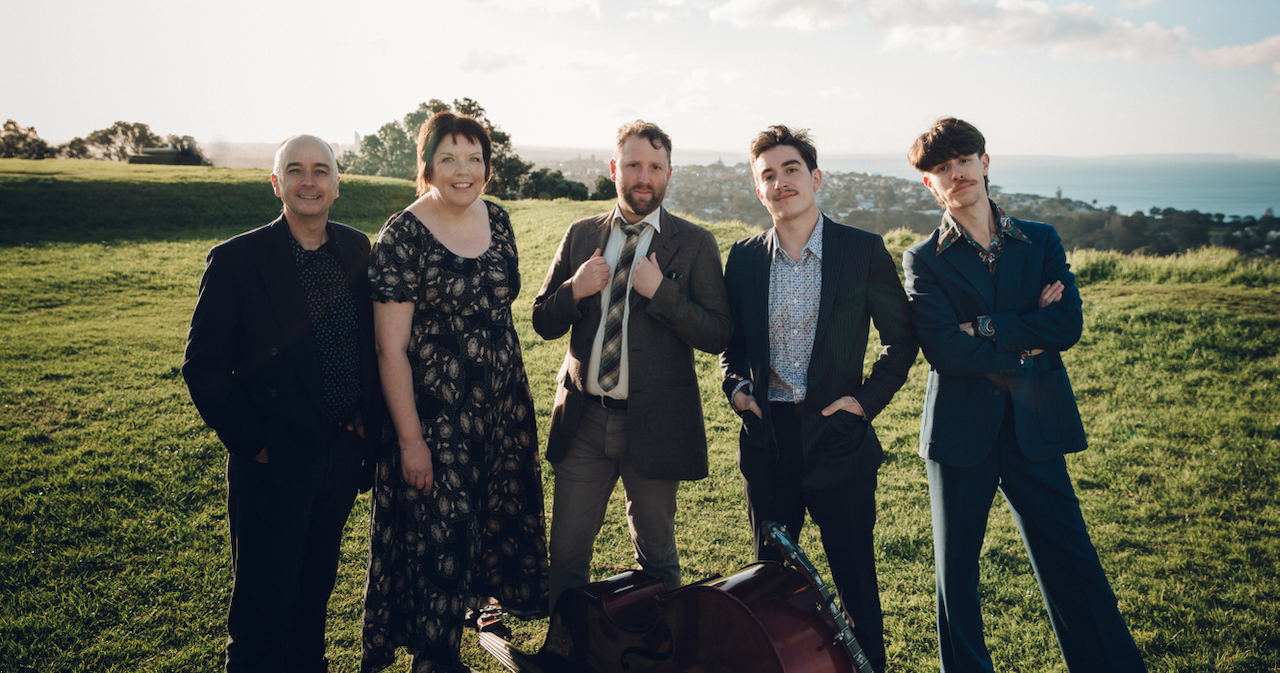
You, Me, Everybody Grow True Roots in Borrowed Soil

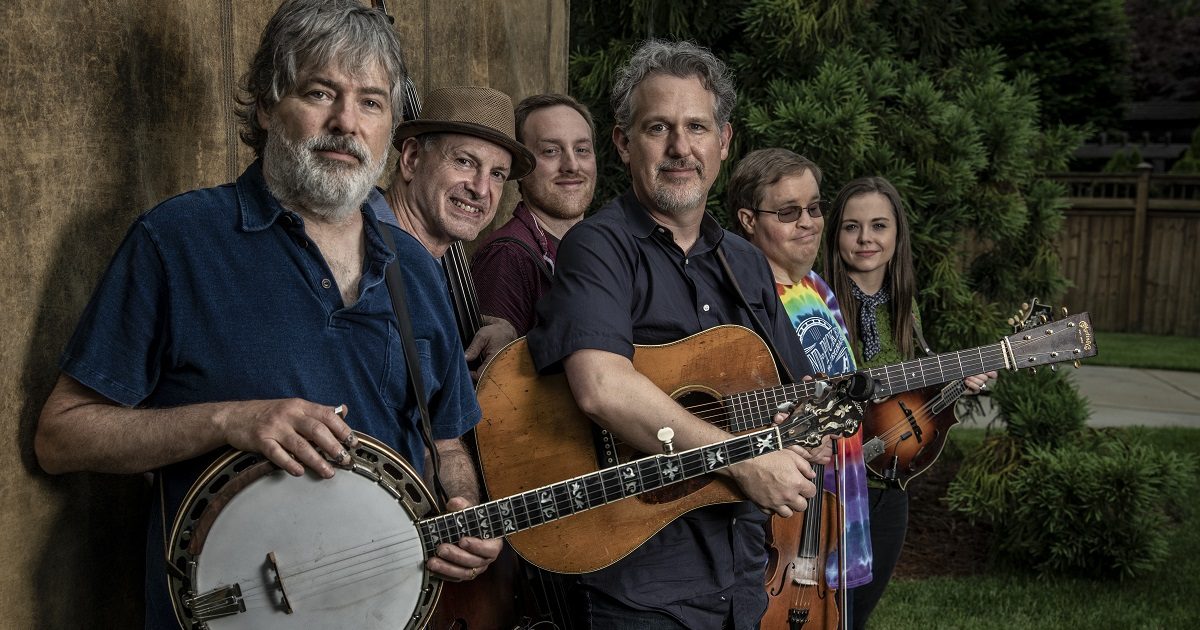
Aotearoa (New Zealand) doesn’t have a strong history of bluegrass bands – except one. If you mention bluegrass to New Zealanders, some will have at least heard of the Hamilton County Bluegrass Band. New Zealand has produced some great players, notably fiddle player George Jackson, banjo player BB Bowness, guitarist/singer Cy Winstanley, and bassist/singer Vanessa McGowan. (Now that we write this, these four would make a great NZ bluegrass band!) But while these names are well known in American bluegrass circles, it is fair to say they aren’t known (outside of folk circles) in Aotearoa.

Many of the songs on our new album, Midnight (out January 30, 2026), are situated within a day, or feature characters who are sitting at the cusp of who they have been before delving into something new. That sense of “in-between” also reflects our place within Aotearoa’s musical landscape, where bluegrass arrives without a long local history, but can be shaped in ways that feel natural to how we live and create here.

“Our Kiwi fans know bluegrass from traditional songs and contemporary artists such as Alison Krauss & Union Station, and Billy Strings. But they are more familiar with the other genres that bluegrass sits alongside. We’re also collectively members of the New Zealand folk, country, and jazz communities,” says our bassist, Rob Henderson.

Midnight starts with bluegrass at its core, but gently widens scope, bringing in different genres with their rhythms, broader chord progressions, and influences drawn from our own environment and lives lived in Aotearoa.

Here are the songs and tunes that anchor us in tradition and inspire us to find our own path as the clock strikes twelve. – You, Me, Everybody

“Ain’t No Grave” – Crooked Still

I love groove and the forward motion in all music, so when I heard this tune for the first time I was naturally inspired by the push of the cello part. This feel was a factor in my own bass playing across the album, especially for up-tempo tunes such as “Misdirection.” – Rob Henderson

“Dorrigo” – George Jackson

George Jackson’s tune “Dorrigo” feels friendly and familiar. It’s one of those tunes that will just keep going around and around the jam circle. When the Dorrigo Challenge did the rounds on the internet a couple years ago, it was a reminder of how a tune can bring people together. I had this in mind while writing “Sam’s Tune” on our album. – Sam Frangos-Rhodes

“Wildfire” – Watchhouse

I find when I sit down to write a song, I usually follow the same template or theme. Of course, there is variation in a lot of my songwriting, but I find rhythmically it’s always much of the same thing. A while back I wanted to break that cycle and try to write a more chilled out, slower tempo song, so I wrote “Heart of Stone,” which leads to “Wildfire” by Watchhouse. I enjoy this song because I think it has a very similar vibe to “Heart of Stone.” For me, it captures the same emotion and feeling I was looking for. I find it’s always nice to find what I was looking for in other people’s writing and relate that back to my own music. – Laurence Frangos-Rhodes

“Heart of Stone” – You, Me, Everybody

Laurence originally wrote this while we were producing our previous album, Southern Sky. I love the backbeat to it, but he also writes great chord progressions; they feel natural and authentic to the song and surprising at the same time. I’ve known Sam and Laurence since they were in their early teens and while our audience love our instrumentation, singing harmonies with them feels like home to me. “Heart of Stone” gives us an opportunity to showcase our vocal blend and milk those beautiful chords Laurence gifts to his songs. – Kim Bonnington

“Railroad” – Béla Fleck & Abigail Washburn

When I try to serve the song with three-finger banjo, I frequently look to Béla Fleck’s work with Abigail Washburn. He plays parts and the two of them fill out the texture of a song so well! Ironically, when we arranged “Silver Spoon,” I was hearing Abigail-like clawhammer behind it, so I did my best to provide that kind of sound with three fingers. – Nat Torkington

“A Hundred and Sixty Acres” – Marty Robbins

Our track, “The Ballad of Bubs and Beautiful,” started when I overheard a conversation between two women shearers in a camp ground in Waipukarau. I knew that I wanted to capture their relationship to each other and their working life, all framed within a day. My Dad’s vinyl collection is 50% Marty Robbins and I remembered the picture that “A Hundred and Sixty Acres” colored of a life well lived. That’s why the first line in “Bubs and Beautiful” is, “Up ‘fore dawn to greet the sun.” There’s a tendency for NZ songwriters to still write about American experiences and places due to an inability to describe ourselves that has been labelled “cultural cringe.” But I knew the description of the women was genuine when I heard someone go, “Oh” as we played the last line live for the first time. – KB

“Orphan Annie” – Tony Rice

As a guitarist, I’ve been heavily influenced by Tony Rice – who hasn’t!? Whenever I listen to the Church Street Blues album it leaves me feeling creative and inspired. I love the minimalism; stripped back to one guitar and vocals telling a story. A lot of the songs on Midnight started in this exact same way, guitar and vocals alone. So it only feels appropriate to give credit to Church Street Blues where credit is due. I cannot pick one track from the album as a favorite because they are all great, but here is “Orphan Annie.” – LFR

“Was It You” – Joy Kills Sorrow

“Was It You” is a song I love for how it drives. That rapid mando chop over a fast rolling banjo held down by a thumping bass is a sure way to make a foot stomper. I took a lot of inspiration from Jacob Jolliff’s mandolin playing in “Was It You” when I put together my part for our song, “Busy Without Me.” – SFR

“Busy Without Me” – You, Me, Everybody

Kim writes wonderful slice-of-life songs. The Midnight album has everything from the plight of an unwed mother to mother/daughter sheep-shearers. “Busy Without Me” is perhaps more #relatable, though: we have a short life with ample temptation for busyness, it says, but it’s important to take moments to “sit and breathe and let the breeze wash over me with nothing in my way.” I love the way the busy-ness of the music reflects the lyrics. – NT

“Caleb Meyer” – Gillian Welch

Country/folk/bluegrass songwriters have always done a great job of writing songs about things we won’t talk about, but make us happy to sing about them. Our song “Silver Spoon” was initially written to an Irish jig. But the joyfulness didn’t eclipse the bleakness of the lyrics. At different times when we were arranging it, different band members would say, “What would Caleb Meyer do?” and our producer Rachel Baiman asked exactly the same question when she arrived for our sessions before we recorded. It’s become the quintessential modern murder ballad. – KB

“Distant Sun” – Crowded House

I grew up in ’90s New Zealand with parents who would play in a country band at the local barn dance while my brother was DJing at the rugby club rooms. So while Marty and Merle would be in one ear, Crowded House was in the other. If you think of great bridges in songwriting, “Distant Sun” has one of them. It also has my favorite line ever in a song: “I don’t pretend to know what you want, but I offer love.” The melody lines in our own track, “The Rest of Us,” hark back to years of admiring Neil Finn as a songwriter. – KB

“The Rest of Us” – You, Me, Everybody

When Kim first brought the concept of “The Rest of Us” to the band I was immediately a fan, and thought it would a great fit on the album. Before we went into the studio we all spent some time together to arrange the new material. As a band I feel like we work uniquely well when it comes to putting a song together and it’s one of our biggest strengths. I think “The Rest of Us” is a great example of Kim’s songwriting and a great example of how we function as a band. – LFR

“Natchez Trace” – Béla Fleck

In my mind, this is the classic G minor banjo instrumental, from Béla Fleck’s landmark album, Drive. Recorded with his B string tuned down to B flat, Fleck often plays it live out without the re-tuning. That was the inspiration for me to write my own Gm instrumental for a banjo tuned to open G major. – NT

“What a Fool Believes” – The Doobie Brothers

I wrote “She’s Alright With Me” a few years ago before I joined You, Me, Everybody. At the time, I had been deep diving into a lot of Doobie Brothers music and the moving parts within their songs. When “She’s Alright With Me” was born, it was originally a heavy keyboard driving tune – having written it on an old 1960s Wurlitizer Piano and styled it on some of the Doobies’ keyboard parts. It’s safe to say it’s transitioned a lot as we don’t have a keyboard part, but you can hear the rhythm now being driven in the same way by Laurence’s guitar. – RH

“Old Train” – Tony Rice Unit

Laurence’s epic album-opening “Misdirection” is a straight-ahead driving bluegrass song, which nonetheless has a few surprise chords in it. For some reason that reminds me of this epic Tony Rice track. – NT

“Misdirection” – You, Me, Everybody

“Misdirection” fits nicely as the opener on our album. It’s a fun example of progressive bluegrass while still staying true to its roots. “Misdirection” is my favorite track on the album and I would like to think the amount of fun we had recording this song is reflected in the final result. – SFR


Photo Credit: Ebony Lamb
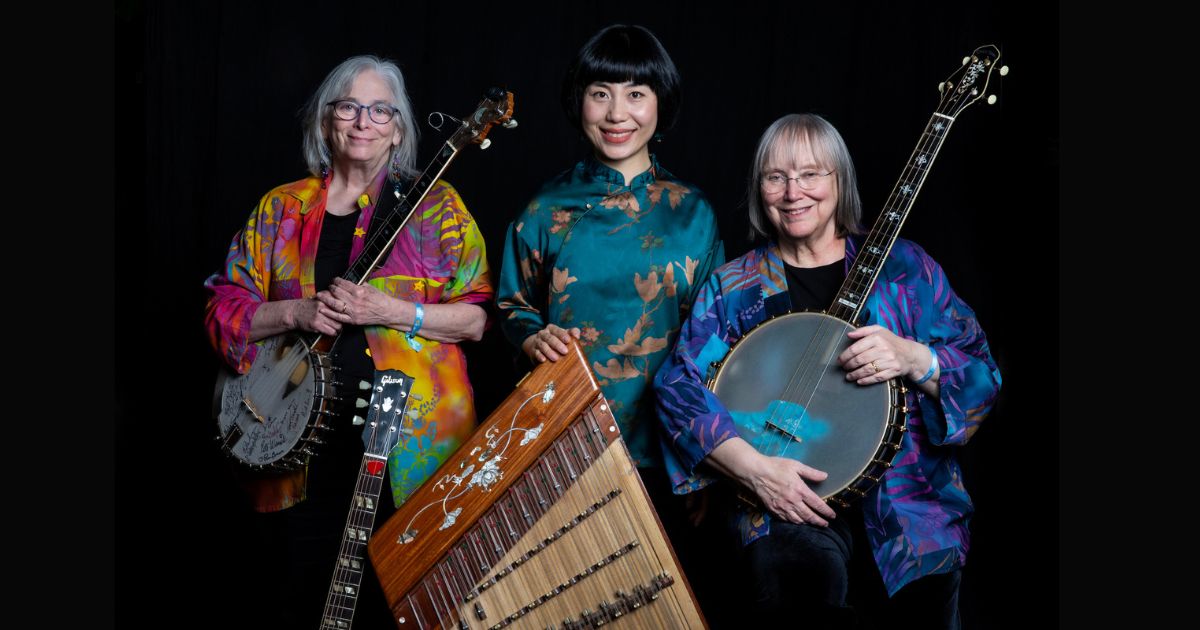
From China to Appalachia, It’s All About Musical Community

“What do Chinese and Appalachian music have in common?” is not really the central question in the minds of Cathy Fink, Marcy Marxer, and Chao Tian, whose From China to Appalachia concerts may first appear wildly random in their combination of instruments and styles. To these expert folk musicians, the real question is, “What don’t Chinese and Appalachian music have in common?” The latter would have a much shorter answer.

There’s a sense of belonging, of homeyness, of ease to this musical collaboration. With their primary configuration including Chinese hammered dulcimer played by Tian, clawhammer five-string banjo played by Fink, and cello banjo played by Marxer, those overarching moods could feel surprising, but for this trio there is really no such thing as not belonging.

Fink and Marxer have constructed every facet of their lifelong careers with community building centered – that’s how they connected with Tian, after all, when she participated in a fellowship program at Strathmore Arts Center nearby their home in Maryland. Fink & Marxer host their hugely popular UkeFest at Strathmore, and Fink is often a mentor of fellowship artists such as Tian. When the three began making music together, they realized the seamlessness of their musical and cultural vocabularies almost immediately.

@cathybanjo @chaotianmusic #yangqin #fromchinatoappalachia #banjo #clawhammerbanjo #culturaldiplomacy #grammywinners @freshgrassfoundation #hammereddulcimer #cellobanjo #trio #concert ♬ original sound – Cathy Fink

That realization, it turns out, is contagious. Recently, a simple promotional video of the trio performing a song to highlight a slate of performances went viral on TikTok. At the time of this writing, it has gained more than 550,000 views, more than 101,000 likes, and 14,000 saves. (Theirs is a music well worth holding onto for later.) Fink, Marxer, and Tian immediately noticed an impact from the viral video at their shows, with multiple dates selling out and new fans driving hundreds of miles to catch a tour date.

Listening to the three perform, the ease and charm of the music – however disparate its parts may feel – is immediately apparent, whether through a screen, a workshop, a community event, a concert, or a sing along. It’s clear that Cathy, Marcy, and Chao are using their music to teach the world and anyone who will listen that with roots music, there’s no such thing as not belonging.

We spoke to Fink, Marxer, and Tian via FaceTime last month, as they prepared for a short tour in the mid-Atlantic and immediately following their viral TikTok. The trio will continue touring From China to Appalachia throughout 2024 with appearances planned at Wintergrass, in the Northeast with special guest Jake Blount, and beyond.

Let’s start with your recent viral video on TikTok, I wonder what you might think is so exciting about this particular combination of instruments? Because, clearly there is something about this lineup that has resonated with folks! I have a couple of my own ideas about it, but I wonder what you think is particularly electric about banjos and Chinese dulcimer together?

Cathy Fink: Chao, do you want to start?

Chao Tian: Okay! So, I play the Chinese dulcimer, right? The most common question that people ask me in this country is, “What’s the difference between the Chinese one and the American hammered dulcimer?” They share a similar history. The Chinese dulcimer was actually introduced to China by British travelers back more than 500 years ago. And, somehow I have just felt, when I play with Appalachian musicians, or play American Roots music, I feel like I’m home. This instrument actually feels the same way – back home. It just melts into this genre of music smoothly and without any problems. The music languages are quite matchable, perfectly.

I feel like if I try to collaborate with musicians of any other type of genre – like, I play with jazz musicians – I need to learn their language. For Appalachian music, I just feel like I speak it, not the native language, but some kind of accent. But, without any limitations to communicate with those musicians.

I wanted to ask you, also, because one of the first things that came to mind for me when I saw your collaboration is Abigail Washburn collaborating with Wu Fei. Could you talk a little bit about the difference between a guzheng and a dulcimer and about your approaches and how they differ?

CT: Yes, that’s another question that people think about when they see our collaboration. Some of them just bluntly ask us, “What’s the difference?” Instrumentally we have some differences [from Wu and Washburn], because Cathy and Marcy, they are multi-instrumentalists. They can play more [instruments] and our music style is versatile.

The dulcimer’s history and background is quite different from the guzheng, because guzheng is a Chinese instrument traditionally and dulcimer is actually a worldwide instrument. As I said, [the U.S.] is a home country of this instrument.

We have a collaborative vibe and more like a family vibe. Like a family reunion… I define our collaboration as an intercultural collaboration. For most people’s opinions, they see us, too, like an intercultural thing. But when people talk about intercultural collaboration, we somehow initially think about what’s the difference between these two cultures, or three cultures, or among different cultures.

Our collaboration is based on mutual understanding and cultural respect. When we started this collaboration, we noticed there are a lot of commonalities between Chinese traditional music and American roots music. So this intercultural collaboration transformed from, “Let’s just try something” into, “Let’s delve into more about the musical language, the musical form, the scales–”

Because there are similar scales we use – the pentatonic scale, the modes. The format of the folk musics are similar, very similar. I always feel like even though folk music, those little tunes are short, but they can contain very powerful, immense messages that we can deliver to people.

And I really think our title, From China to Appalachia, actually is a very clear description. Yes, literally, but it’s not only that. Some people on TikTok suggested a very interesting idea, that we should replace China with my hometown, Beijing, because Appalachia is a region and China is a country, right? But actually we use that title not to describe the geographic thing, we are talking about music. We’re talking about culture. So from China to Appalachia, there is something that strongly linkages between them. Not only musically, not only culture, but also on a people to people level.

We should try our best to find what our commonalities are, more than trying to show, “I am special! I am special! You should listen to me! You should listen to me more!” So, it’s just musical healing.

That’s such a great answer and it makes me think of, Cathy and Marcy, how you’ve always placed community so central in how you make music. It’s not something that’s an after effect of music making for you. It’s something that’s very present in the beginning stages when you make music. Can you talk about how this project is another example of how you build community with all the music making that you do?

CF: It’s definitely that and I thank you for recognizing that. Right now, we’re in the midst of a tour that is co-sponsored by Mid Atlantic Tours of Mid Atlantic Arts. To our delight, one of the criteria for presenters participating [in the program] is that there be a community outreach event. In each place that we go, that event is different. We’ve performed for some high school kids, and this weekend our outreach was playing music at a Unitarian service. I have to tell you, it was the most beautiful service of community gathering and worship without using two words that you almost always hear in a church – God and Christ. Everyone was included. They didn’t care who you worshiped. They didn’t care who you were. If you wanted to come together and be in community, then please come in the door. For us to play music in that scenario was really amazing.

In Fredonia, [New York], it just so happened that Emily Schaad – a fiddler in the old-time music community, but also a phenomenal conductor and classical musician – had just moved to Fredonia, and we were playing at the Fredonia Opera House. They reached out to Emily and said, “How about putting together a workshop?” So, Emily had her orchestra students come and she reached out to all of the regional youth bluegrass organizations. We had a room of like 75 people – her orchestra students, kids learning bluegrass, Appalachian dulcimer players, tuba players, horn players, you name it. There was an amazing cello player who took over on Marcy’s cello banjo and immediately understood what it was.

We put together an arrangement of a tune and that was meaningful to everybody. Then, we have something coming up this weekend in Martinsville, Virginia at a place called Piedmont Arts and we’re so excited about it. Our first set is going to be based on our repertoire, we’re just going to pick what we want for an hour long set. In our second set, there’s a Chinese watercolor artist, local to that community, who has an exhibit at Piedmont Arts right now, and he’s going to be on stage creating a new watercolor while we play music, much of it improvised.

I think this grant [from Mid Atlantic Arts] has opened the door to more community. I think it will be a centerpiece of every place we go. When this grant is finished and presenters are interested in us, one of the things that we’re going to say is, “What collaborative community thing can we do?” How can we meet more people eye-to-eye, music-to-music, or whatever it may be?

Community is one of the most important things that this show and our collaboration stands for, and we’ve made music with Chao for, I don’t know, six years or so. She did some touring with us and Sam Gleaves, which was really fun. We did a little run out to Ashe County Arts Council there, in our neighborhood. And that was an interesting test for how does this music fly in Appalachia? It was just amazing, the response.

When we started doing more work together, remember that when COVID hit, there was a lot of anti-Asian sentiment in the country. We felt like making this music together was our statement of community and of humanity. We never had to say a thing about it. We just had to all be there together and present a very honest sense of community and love.

It’s perhaps another reason why this TikTok video of yours took off. Because, I think a lot of people, whether consciously or subconsciously, when they see banjos they might not know anything about banjo music besides stereotypes. I think there’s something about this lineup, and in particular the mission that you’re bringing to the music, that makes it so inviting to folks. You’re not just saying, “Come and listen to us.” You’re saying, “Come be a part of this.”

I think that’s part of why people see and hear this music and it might come off as intellectual or cerebral music, but they’re responding to it in a very down to earth way and they feel invited by it.

CF: And it’s very participatory. I will tell you, in Richmond, when we started singing and playing “High on a Mountain,” there were a lot of people there who knew the song. We just said, “Sing it with us!” And my God, did they ever sing it with us. There are several songs in the show full of sing-along participation, and I’m going to guess that a lot of the new fans through TikTok and social media haven’t been to a lot of folk concerts where that’s kind of an expected part of what happens.

But we have a very full circle story with a piece that Chao brought to the group after she heard a recording of Pete Seeger and Arlo Guthrie doing it. It’s a Chinese song called, “Three Rules of Attention and Eight Points of Discipline.” They recorded it in 1975. It’s a really awkward choice in many ways, because it deals specifically with peasants who were leaving Chiang Kai-shek’s army for the Red Army. They used this particular piece of music in the Red Army to teach what I’m going to call, “rules of humanity.” When you hear and read these rules of humanity, and you look at what’s going on in the world today, you go, “Oh my God, 1928, this song?” And Chinese people in the audience feel like we’ve brought them back to their home and their childhood.
It’s a really interesting thing. Pete has, of course, a thousand people whistling on it with him. I can’t whistle worth nothing. Marcy’s pretty good at whistling. but we get the audience singing “La” and taking over the song and we’re all there together

I wanna make a quick point about Abigail and Wu Fei, because so many people make that immediate connection, too. First of all, I wanna say that we’re friends with Abigail and Chao has met Wu Fei, and I find that what we do is, separately, is very complementary. There are some differences – you know, Abby speaks fluent Chinese! Chao’s trying to teach us to sing in Chinese, and we’re working on it every day. That’s a little part of how she’s stretching us in some ways. And then we’re stretching her in some ways.

Additionally, in our show From China to Appalachia, there’s a sort of hidden parentheses: “And beyond.” From China to Appalachia (and Beyond). It’s a big focus of ours to collaborate on Chinese and Appalachian music, but it is also a real joy to pick a Django Reinhardt piece like “Dark Eyes,” which Marcy plays on the mighty ukulele. So then we have ukulele and guitar and Chinese dulcimer. Or, we’ve kind of reinvented Cousin Emmy’s “Ruby.” We have a gourd banjo, Marcy on the doumbek – she’s got a pink Barbie doumbek – and Chao on hammered dulcimer. Chao does things on hammered dulcimer that no one else does. She’s got a slide she uses on it, she’s got all these interesting sounds.

We certainly see what we do as embracing a lot of different world music concepts and basically, we feel like it’s all very complimentary. We’d love nothing better than to share a show and collaborate with Abby and Wu Fei.

That’s perfect as a segue, because I also wanted to talk about sonics and about the music itself. Marcy, I wonder if you could talk a little bit about how as you’re crafting these tunes, how are you thinking about building the ensemble? How do you decide which instruments you’re going to utilize when?

Marcy Marxer: At first, we just try a bit of everything and see what works best. For me personally, the cello banjo is working really well in this group. My main instrument is guitar, of course, and I will be playing more guitar in the future, but I love the high angelic overtones of the hammer dulcimer with Cathy’s banjo ringing and then the cello kind of being, as Chao calls it, the panda of the group. [Laughs] The giant panda. [That combination] is just a sonic sound that I’ve never heard before.

You know, the hammered dulcimer was so popular in the ‘70s and ‘80s in old-time, traditional music. Then it kind of fell out of favor. Much of that had to do with the fact that the hammered dulcimer was hard to tune and the rest of the group would have to tune to the dulcimer. But it’s such an engaging sound. I mean, it really captured my heart ever since I was a little tiny child, listening to my grandma play, and then playing it myself. I think it’s really time for the hammered dulcimer to come back. I mean, we still have a generation or two of hammered dulcimer players who are 60 and over and some younger players, but I’m not so aware of them. But, I’d love to see the hammered dulcimer really come back into American traditional music in a way that younger people can still learn from the masters.

Audiences have always loved the hammered dulcimer. It’s just like old-time festivals and jams where it kind of fell out of favor to a point that some hammered dulcimer players just don’t go.

We need to bring that back, because there’s just a spirit and a liveliness to the dulcimer that nothing else has. You’ve got your percussion, you’ve got your sparkling tones, you’ve got your deep tones. It’s a real joy to play along with, to hear Cathy’s banjo and Chao’s dulcimer together just blows me away sometimes. It’s really stunning. And then to be able to add the lower stuff and take some solos. For me, that’s the comedy part, the cello banjo solos always make people laugh.

CF: Marcy’s kind of like the pinch hitter, right? I do three things: I sing, I play whatever banjo is the best banjo for the moment, and I play rhythm guitar. Like Marcy, I think the unique center of our sound is the cello banjo, the five-string banjo, and the hammered dulcimer. But then Marcy adds ukulele. She adds a mandolin. She adds tin whistle if it’s appropriate. She has percussion things. She plays the doumbek. With each song that we play, Marcy and I are going in our heads, “What does she play that might add something to this, that we don’t mind schlepping on the road?” [Laughs]

Marcy describes this sometimes like you have this box of crayons. Chao’s got a big fat crayon, I have two or three small crayons, and Marcy owns the rest of the box! [Laughs]


Photo Credit: Jeff Fasano

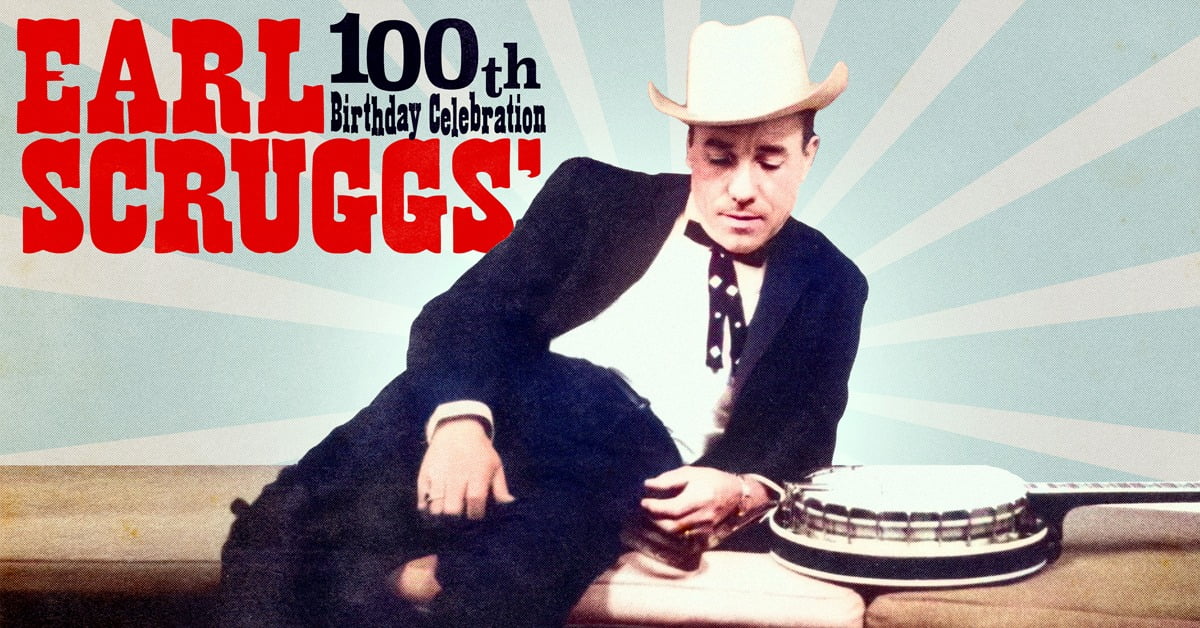
How to Watch Earl Scruggs’ 100th Birthday Celebration

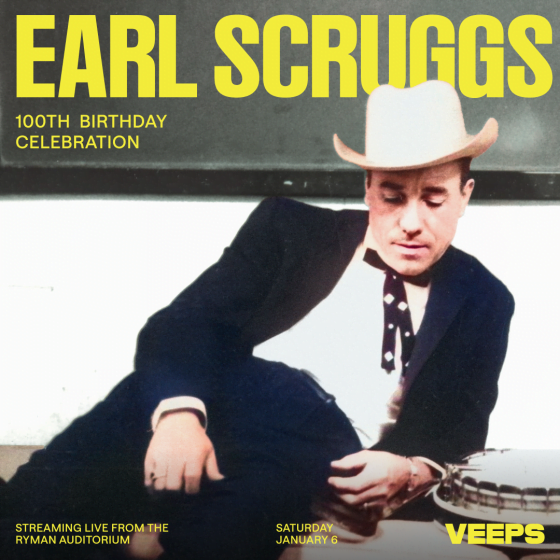
January 6, 2024 would be the 100th birthday of Earl Scruggs, a musician and artist who helped create bluegrass music and who was and is perhaps the most prominent and well known banjo player to have ever lived. Scruggs passed away in 2012, but this posthumous celebration – to be held at Nashville’s Ryman Auditorium – speaks to his undying musical legacy. The performance will benefit the Earl Scruggs Center, a museum in Shelby, North Carolina that’s dedicated to Scruggs, the local community, and its residents, and inhabits the former courthouse just up the highway from unincorporated Flint Hill, where he was raised.

The show, with musical director Jerry Douglas, will feature performances by bluegrass and roots music luminaries such as The Earls of Leicester, The Del McCoury Band, Gena Britt, Alison Brown, Sam Bush, Michael Cleveland, Stuart Duncan, Jimmie Fadden, Béla Fleck, Jeff Hanna, Sierra Hull, Bronwyn Keith-Hynes, Jim Mill, Justin Moses, Jerry Pentecost, Todd Phillips, Harry Stinson, Bryan Sutton, Tony Trischka, Abigail Washburn, Pete Wernick, and more. Limited tickets are still available and, for those who may not be able to attend in person, the entire show will be livestreamed via Veeps.com for $14.99.

It promises to be a quintessential Nashville evening, a star-studded lineup with endless appearances, special guests, and with certainly plenty of heartfelt remembrances and tributes in store. Livestream viewers will get a rare chance to be invited “flys on the wall” for a magical and one-of-a-kind concert.

Earl Scruggs’ legacy will certainly live on – for another hundred years and, we hope, beyond. BGS and many other roots music and bluegrass communities and organizations will continue to celebrate Scruggs’ centenary throughout the year, so keep an eye out for upcoming content that celebrates Earl Scruggs and his three-finger style.


Lead image courtesy of the Ryman Auditorium; inset graphic courtesy of Veeps.

Béla Fleck Explains How ‘The Beverly Hillbillies’ Set Him on a Bluegrass Path

Béla Fleck came to the banjo in quite possibly the oddest way imaginable — via The Beverly Hillbillies when he was a kid. Hearing Scruggs-style banjo on “The Ballad of Jed Clampett” while watching television, he was instantly smitten and fell in love with the sound. But he chose not to tell anyone.

“It would have made no sense to anybody else why I liked it so much, but it just took my breath away,” Fleck remembers. “It was this odd moment at my grandparents’ house, watching TV with my brother even though he doesn’t remember it at all. I never thought I could actually play that. It seemed impossible, not within human grasp.”

Afterward, Fleck got his mom to teach him enough guitar to play folk songs casually. He liked playing guitar, although it did not fire his imagination. But after his grandfather saw him playing guitar, he came upon a banjo at a garage sale and bought it for his grandson, who was 15 and about to start high school.

“Just this flukey thing,” Fleck says with a laugh. “’Here, you like stringed instruments, this was at a garage sale.’ I would never have had the nerve to buy one myself, and he bought it for me not even knowing my interest in it. Bringing it home on the train, I ran into a guy who asked if I knew how to play. I didn’t, so he tuned it in G, handed it back to me and I never put it down. Got a Pete Seeger book and got to work. It was a really profound thing and I became Type-A obsessed. Still am. I’m always thinking about it.”

That work ethic never changed, either. Bob Burtman was an early roommate of Fleck’s in Somerville, Massachussetts, in the late 1970s and recalls Fleck as the perfect roommate.

“Either he was off making money, or he’d be there endlessly practicing,” Burtman says. “He was so dedicated, you just knew how good he was gonna be. There was a mattress on the floor and he’d sit there playing scales for hours. Not typical scales, either — diatonic, weird Eastern European, just everything. Up and down, up and down. Word got around and people started hearing about him and dropping by to jam — people like Tony Trischka, Mark Schatz. I got to hang out and listen, which was fabulous. Béla soon moved on to bigger and better things, like his own apartment.”

Over the decades, Fleck has covered a lot of ground both literally and figuratively. He traveled to Africa to explore the African origins of banjo with the 2008 project Throw Down Your Heart and has also played jazz and classical as well as bluegrass with groups including New Grass Revival and his own Flecktones, winning 14 Grammy Awards. His most recent Grammy Award came in 2015, claiming best folk album for Béla Fleck and Abigail Washburn, made with his spouse and musical fellow traveler.

Strangely enough, however, he actually hasn’t done all that much straight-up bluegrass over the years. His latest album My Bluegrass Heart is a star-studded affair featuring notables old and new including Sam Bush, Michael Cleveland, Jerry Douglas, Billy Strings, Chris Thile, Molly Tuttle, and Sierra Hull. It’s just his third bluegrass album, and first in more than 20 years. But the timing does not feel coincidental.

“I always thought there’d be a time when I would want to do more bluegrass,” he says. “Growing up, it’s a great training ground before you spread your wings. Any great bluegrass musician has done that, pushed the edge, but they tend to want to come back when they realize how special the basic root is. Well, we had some family issues, my son got sick and we almost lost him. Once we knew he’d be okay, what to do then? Maybe it was feeling a lack of control, but I wanted to play music where I knew what to do rather than explore the unknown. I needed to connect with where I’d started, and the bluegrass community is one of the most beautiful things. You’re never alone when you play it.

“You know, I remember seeing Ricky Skaggs after he’d become a big country star, coming back to a bluegrass festival,” he adds. “He was this legit big star, and he played with eight bands that day. Bluegrass was still a part of him and servicing that part of himself and that community was important to him. That made a real impression. It’s important to me, too.”

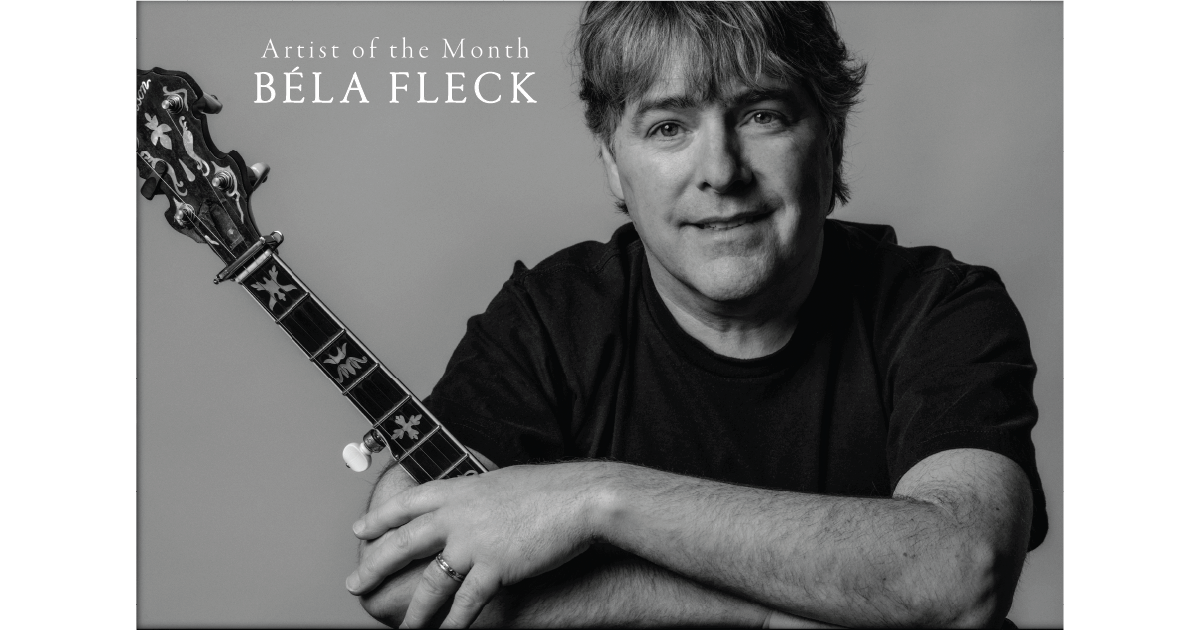
Editor’s note: Read about more about our Artist of the Month, Béla Fleck, here.


Photo credit: Alan Messer

WATCH: Béla Fleck, “Round Rock” (Live)

Artist: Béla Fleck
Hometown: Nashville, Tennessee
Song: “Round Rock”
Album: My Bluegrass Heart
Release Date: September 10, 2021
Label: Renew Records/BMG

In Their Words: “I’ve been saving this tune for a long time, looking for the right band to play it — but nothing seemed right ’til this project. Then it seemed real right! I think it’s at least 20 years old, but I certainly spruced it up as the recording dates loomed closer, writing a pair of bridges — and at the last minute, the night before the session — an intro and outro sequence with apologies to Ravel and Debussy. The title references the circular chord progressions, and with these two bands, it rocks!” — Béla Fleck

Editor’s Note: Filmed by Abigail Washburn, this video features Michael Cleveland, Sierra Hull, Justin Moses, Mark Schatz and Bryan Sutton. The album version features Cleveland, Jerry Douglas, Cody Kilby, Paul Kowert, and Dominick Leslie.


Photo credit: Alan Messer

Béla Fleck and the Flecktones Forge Their Own Path

What’s on Béla Fleck’s mind?

Balloons.

Just the day before, his Nashville house was filled with them, as well as with a few dozen kids. It was the 6th birthday of the eldest of two children of the three-finger-style banjo maestro and his clawhammer-style counterpart, frequent recording and touring partner and wife Abigail Washburn.

But the days surrounding this have also had a party vibe. He’s been in rehearsals with his cohorts in the beloved jazz-and-way-beyond Flecktones, in preparation for a tour marking the band’s 30th birthday.

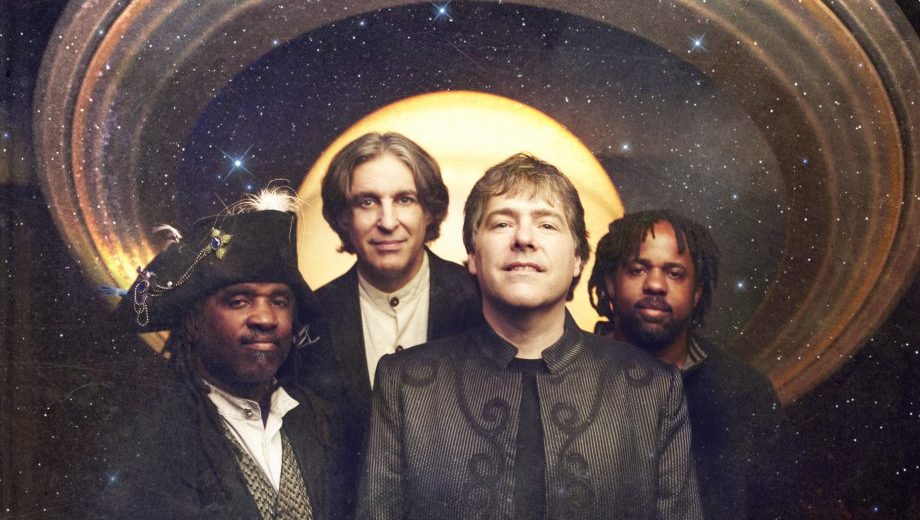
Working again with harmonica player/pianist Howard Levy, bassist Victor Wooten, and the singular electro-acoustic percussionist known as Futureman (a.k.a. Wooten’s brother Roy), digging deep into their group catalog of complex flights of fancy mixing daredevil chops, musical depth, and persistent whimsy has been a blast.

“They’re the same guys they were when I first met them,” he says, speaking from home. “Curious, interested, ever-expanding, ever-pulling me with them. There’s a very special bond we have together. I’m realizing it more and more as years go by, one of the great relationships in our lives, musically and personally.”

They’re even pulling out such rarely played and decidedly difficult gems as “Jekyll and Hyde (and Ted and Alice)” from the band’s second album, 1991’s Flight of the Cosmic Hippo. It’s challenging and exciting, enlivening the qualities that made this alchemical combo of characters special from the very start. Futureman, he says, is an “empath and enabler — musical enabler, brings consciousness underneath you.” Victor Wooten too. Levy is “the crazy ideas on top. He’s the brains of the outfit.”

Fleck’s role? “Somehow I thought I was the heart of it, limiting it but making it more understandable for the common man — I was the common man in the band, surrounded by these crazy guys.”

But with a moment to reflect on their collective history and achievements, he finds descriptions of the magic they work together to be elusive.

This is where the balloons come in.

“It has to have heart, has to have melodies, some harmonies,” says Fleck, who turns 61 in July. “Couldn’t just be a groove or a shred-fest. That’s the power of the band. The tunes are strong, good things to pour everyone’s musical power into. Like a balloon. It’s an empty piece of rubber. But these tunes I’d written, we filled them up with Futureman and Victor and Howard — the balloons get real handsome. With the balloons at the party, it occurred to me that you fill them up and they become joyful. That’s what this music is.”

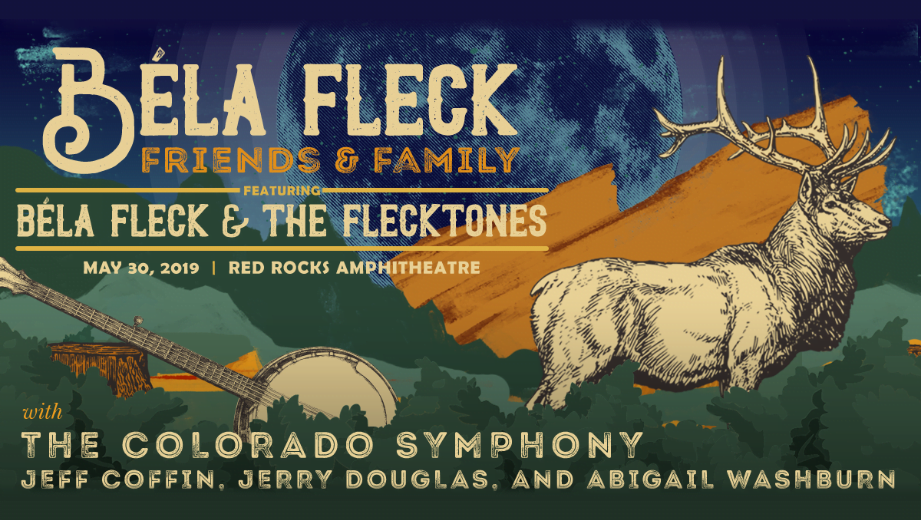
They’ll be sharing that joy on the road now, including two shows of particular import. This 30th anniversary tour began with a big “Friends and Family” kickoff May 30 at Red Rocks near Denver, the friends and family here including Washburn, saxophonist Jeff Coffin, Dobro genius Jerry Douglas, and the Colorado Symphony. And on June 8 they will be taking a cherished headlining slot at the Hollywood Bowl’s vaunted Playboy Jazz Festival.

The Playboy slot is, to Fleck, a particularly meaningful recognition.

“It’s one of the neat things to being around 30 years,” he says of that booking. “From the start I was begging to play it and they said, ‘Yeah, we’ll put you on at noon’ and we’d play once every four years or so. Now we’re in the headlining slot and we’re legacy artists.”

Sure, the Flecktones have had several albums go to the top of the jazz sales and airplay charts and they have won two Grammy Awards for contemporary jazz album, with Outbound in 2000 and The Hidden Lands in 2006. And last year the band was given the prestigious Miles Davis Award by the Montreal International Jazz Festival. And Fleck has found himself partnering regularly on recordings and tours with some of the greats of jazz, one in particular in an ongoing partnership. “I’m playing with Chick Corea, which is ridiculous, on a regular basis,” he marvels, having just returned home from a tour with the ceaselessly groundbreaking pianist.

But, while belated acceptance in the jazz world is frustrating, he understands. See, banjo is pretty much standard in any jazz band… in 1919. In 2019, not so much. Even after 30 years of forging a path for banjo in modern jazz, Fleck remains singular. Asked about others doing anything comparable today, he’s kinda stumped.

He cites New Orleans’ veteran Don Vappie, but he’s generally in the mode of traditions going back to those earliest years of jazz. There’s Matt Davis, a converted jazz pianist who’s on the faculty of the University of Michigan. And there are others who use some jazz chops and sensibilities while not strictly playing that style of music, notably Tony Trischka, Noam Pikelny, Alison Brown, and Pat Cloud.

“But yeah,” he says. “They’re rare.”

Not to mention that the Flecktones as a whole is anything but standard jazz, with a truly eccentric approach and reach into a lot of styles. The 3-CD Little Worlds set from 2003 showed a boundless range that felt to some at once excitingly delightful and confounding.

On the other hand, not fitting in any category is par for the course for Fleck. He’s made a career of it, holding the record for the most categories in which he has been nominated for Grammys, 16 total. The most recent win is a best folk album trophy in 2016 for Béla Fleck & Abigail Washburn.

He’s a charter member, he quips, of the “Modern American Attention Deficit Disorder Musicians.” There are really only two others he’d put in that association: Jerry Douglas (whose fusiony Jerry Douglas Band may be the only thing out there comparable to the Flecktones) and Chris Thile (who’s resumé runs from Nickel Creek to ongoing collaborations with classical cellist Yo-Yo Ma and jazz pianist Brad Mehldau).

There’s one side of his musical hexadecagon he’s underserved for a while now, though. Ironically, it’s the one that first brought him fame when he emerged as a precocious New York City musician in the ‘70s and ‘80s.

“On the bluegrass side, people go, ‘Whatever happened to Béla Fleck? He could have been a great bluegrass player.’” he says. “Someone told me he had heard that. That was when I was at the top of my game, selling out stadiums with the Flecktones on tour with the Dave Matthews Band.”

Well, it has been 20 years since his last true bluegrass album, the on-point-titled The Bluegrass Sessions. And the one before that, the breakthrough Drive, came in 1988, a year before the Flecktones genesis. Well, as it happens, Fleck has a new bluegrass album in the works with a cast of musicians including such longtime buddies as Douglas, mandolinist Sam Bush, Jerry Douglas, bassist Mark Schatz and fiddler Stuart Duncan (all of whom were on the 1988 album) and a mix of fellow veteran stars (bassist Meyer, mandolinists David Grisman and Chris Thile) and relative newcomers (fiddlers Billy Contreras and Michael Cleveland, mandolinist Dominick Leslie, and guitarist Cody Kilby).

The timing? Just seemed right, he says.

“Now the years have gone by and I didn’t have a place for bluegrass to fit in,” he says. “But I had these tunes burning a hole in my pocket and thought I would really love to have a place for them. These sessions have been a knockout. These are hard tunes. And we’re having a blast. It’s as good as I’d hoped.”

The results will be out sometime next year. But first there’s this Flecktones balloon to float.

“One thing I will guarantee you is you will never hear anything else like it,” he says. “There is nothing else like the Flecktones in the world. I promise that. And I am very proud that were are that, and that we are back together.”

MIXTAPE: Nate Sabat’s Quiet, Poignant & Powerful Playlist

Something completely magical happens when musicians find the perfect blend of darkness, quietness, and intensity. It almost feels like the bottom drops out of the music, guiding the listener’s ears into the void of beautiful nothingness below. I still can’t pin it, how such a soft sound can feel so immeasurably huge, like it somehow contains the entire universe within itself. It’s something I’ve grown to love over the past few years, and I hope these songs will touch you as they’ve touched me.

P.S: The tracks on this list have been responsible for the majority of my tears over the past few years, so get your tissues ready. — Nate Sabat

“Humble Me” – Norah Jones

The raw story mixed with the incredibly honest delivery of the lyric always gets me with this one. Norah at her absolute best. I also particularly love the line “it never rains when you want it to.” I feel like it sticks out in a really, really good way.

“Pink Champagne” – Kathleen Edwards

The combination of Kathleen Edwards’ brilliant songwriting and Justin Vernon’s production approach are in full force on this track. Since hearing this song I’ve made it one of my life goals to not feel like this on my wedding day.

“Unless” – Hawktail

I love the winding, lush melody of this tune, paired with the beautifully shot video at Nashville’s Downtown Presbyterian Church. And also, I like, TOTALLY geek out at Paul’s bass shredding. Ya know, as a fellow bass player and all.

“Louise” – Daniel Romano

I first heard Daniel Romano on WUMB, Boston’s premier folk music radio station, with his song “Time Forgot (To Change My Heart).” Since then I’ve dug into a ton of his stuff, and particularly love his record Modern Pressure, an ode to the psychedelic sounds of yesteryear.

“Dreams of Nectar” – Abigail Washburn

This track is so cool and collage-like. I’m such a sucker for horns, so was instantly pulled in from the start the first time I heard it.

“Turning Away” – Crooked Still

I love how exposed Greg Liszt’s banjo part is on this track. The track is so short, but also the exact right length.

“Bonden & fan / Leffes polska” – Hazelius Hedin

This pair of tunes from Swedish duo Hazelius Hedin are so dark, so expansive, and so, so rich. I always picture a dark Swedish forest after an intense rainfall when I listen to this one.

“Your Long Journey” – Sam Amidon

This song, written by Rosa Lee and Doc Watson, has been beautifully reimagined by the great Sam Amidon. In my opinion he’s one of the greatest interpreters of folk and traditional music on the scene today, so definitely check out more of his stuff if you haven’t already.

“Harbour Hawk” – Becca Stevens

Becca Stevens’ music is some of the most interesting stuff I’ve heard to date. Constant texture and groove changes are tied together with impeccably crafted lyrical content. I love the opening riff of this song, and how it re-enters throughout in such a smooth way.

“00000 Million” – Bon Iver

One day last summer I was in a dark place, so naturally I listened to Bon Iver, specifically the entirety of 22, A Million. This song, the final one of the record, was so comforting. I remember being amazed at how powerful music can be, that it could somehow reach into my mind and make me feel better.

“Closer” – Joe Walsh

Man, Joe wrote an absolute gem. I don’t know if I’ve ever heard a melody so simple and profound. I told him how much I loved this tune, and that I always thought of the name as meaning “closer to someone or something,” but he told me that it’s actually “the closer of the album,” as it is actually the closer of his latest album, Borderland. Go figure.


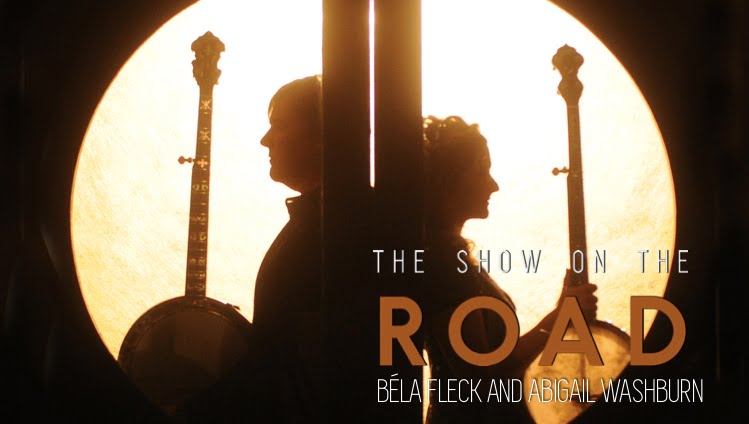
The Show On The Road – Béla Fleck and Abigail Washburn

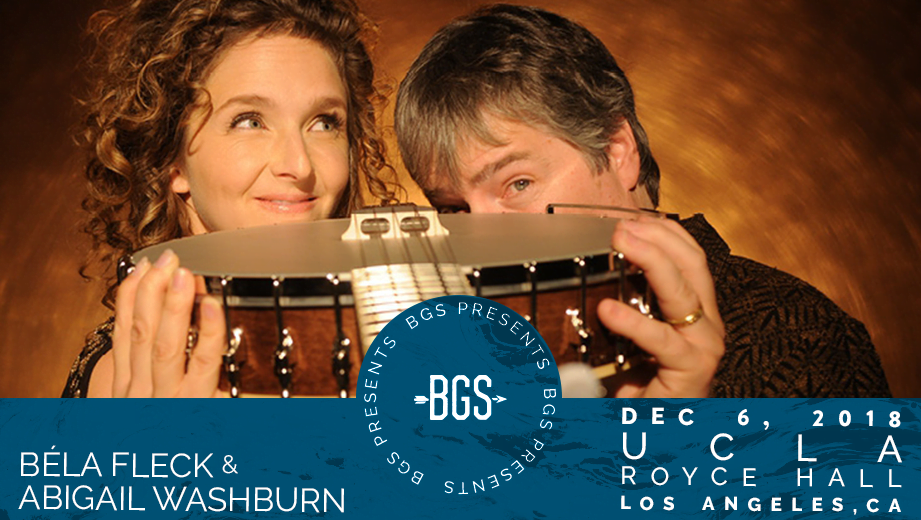
Béla Fleck and Abigail Washburn — two legends and innovators who’ve brought the humble banjo across four continents and have won over 17 Grammys between them in the process — talk with Z. before their show at UCLA.

Powered by RedCircle

LISTEN: APPLE PODCASTS • MP3

For over three decades now Béla has quietly revolutionized how the banjo is played, recorded, and perceived — taking it from of the front porches of Appalachia and into jazz clubs, symphony halls and rock stadiums from his hometown of New York City to Uganda and Tibet and back again.

Meanwhile, Abigail has forged her own unique path. A fiercely intelligent songwriter and activist fluent in Mandarin, she gave up on being a well regarded lawyer in China after a meditation retreat brought her to the realization that the banjo and not the briefcase was her destiny. After meeting at a Nashville square dance (yes, that really happened), Bela and Abigail’s banjo explorations became one. Slowly, they began touring and recording together, and that’s where Z. caught up with them, on a rainy Wednesday on UCLA’s campus in LA.

Featured Songs: “Big Country” and “Over The Divide”


Presented by Nomad Goods. Head to hellonomad.com/bgs and use code “BGS” at checkout to receive 15% off any full priced items through the end of January.