Joshua Burnside’s It’s Not Going To Be Okay is an Absolutely Shattering Album

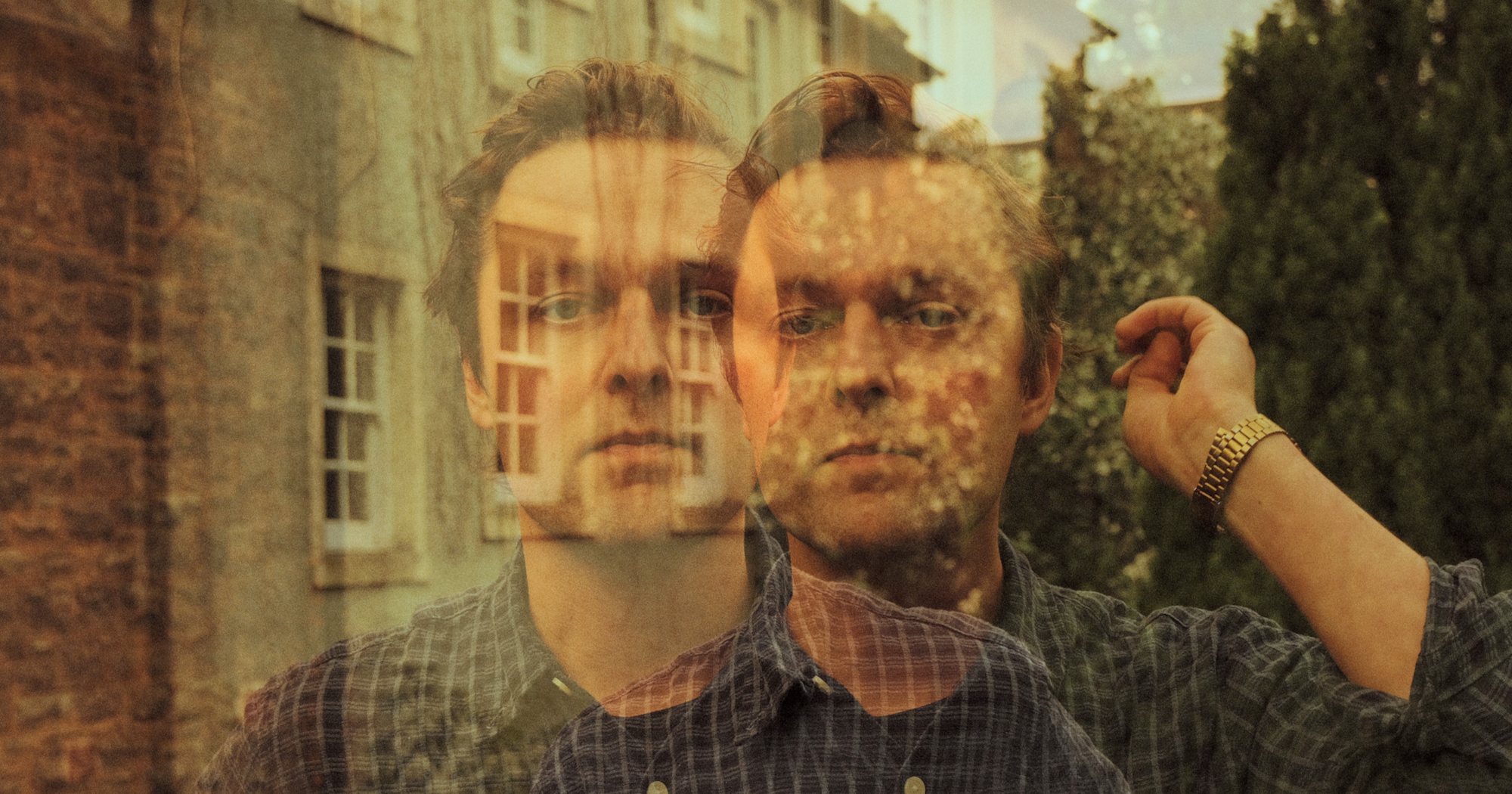
Irish folksinger Joshua Burnside has always shown an affinity for expressing grief, once calling it the reason he began writing songs as a precocious 13-year-old. He’s 36 now, and that sense of grief has never felt as overt as it does on his latest music. Burnside’s It’s Not Going To Be Okay is absolutely shattering, an album that more than lives up to its title. Written and recorded in the wake of the death of Burnside’s best friend Dean Jendoubi, who died of a drug overdose in August of 2024, the album is a bittersweet requiem.

Burnside’s previous albums combined Irish folk with electronic flourishes, worldly rhythms, and elements of sonic collage. His multi-layered experimentation reached a peak with 2025’s Teeth of Time, a record that felt like a major statement and milestone. Barely a year later, It’s Not Going To Be Okay could almost be his Nebraska move – bare-bones stark with minimal embellishment, focused on unadorned voice and guitar in the service of deep, deep mourning.

It’s a state of mind where everything brings back memories of the departed, like the opening of “The Last Armchair”:

Oh, the last armchair you ever sat on
Before you overdosed
Is the one I sit in every morning
To eat my egg and toast…

Ahead of the album’s release on March 20, 2026, we caught up with Burnside for a Zoom interview about his musical past, present and future plans.

It’s Not Going To Be Okay is quite a title. How did that come to be the name of this body of work?

Joshua Burnside: These songs are about the inevitability of pain, suffering, and death, which is what I was dealing with while accepting the loss of my friend. But it was at least a little bit tongue-in-cheek, too, such a ridiculously depressing statement to make. I thought it would be funny in a way. In Northern Ireland, we have a very strong sense of gallows humor. So I was drawing on that a wee bit. I don’t think it’s supposed to be taken literally.

How did you and Dean Jendoubi first meet?

Our paths crossed briefly in school and then we met playing music. Formed a band with a few other people. He and I were maybe 14 and got on immediately. Then there was a trio when we were 16. He played drums, I played guitar, and another friend played bass. We didn’t really gig, just played for the fun of it at his parents’ house. He was a great musician and songwriter himself. His music is amazing and beautiful and weird and dark, like him in many ways. He released a few EPs. The last one is called Skin Hunger and I sing on one of those tracks. Recorded in his mum’s greenhouse, our summer shed 10 years ago.

Since it’s been not much more than a year since Teeth of Time was released, when did you make It’s Not Going To Be Okay?

My sense of time has been so terrible the last few years. It was maybe a few months after Dean passed away in 2024, which is strange to say now. So, end of 2024 is when I started writing and recording and I finished it up autumn of 2025. I was recording it as I was writing it, and the last song I wrote was “It’s Not Going To Be Okay.” It was in the last month of making the record that that one happened.

Is it unusual for you to be working ahead like that, on the next record before the last one was even released?

It’s not typical. It was five years between Teeth of Time and Into the Depths of Hell. That one was a similar dark-humor title, but then COVID hit not long after I’d written those songs. That was some strangely perfect timing. So no, it’s not really normal for me to write and record this quickly. But I just felt an urgency, because one of the main ways I’ve always processed painful feelings is writing and singing about them.

The songs came quickly and easily. I had not planned to focus on just one topic, but most of what came out happened to be that. It felt natural to have them all together like this, almost like a grief journal. That’s the story. A lot of people thought some songs on Teeth of Time had been about Dean’s passing, but they were all written before that. Some of those songs seem resonant with this new record. That seems to happen to me a lot, I’ll write a song and then it seems like life imitates it. If I were not of sound mind, I’d start to worry about ever writing anything tragic or sad.

Was it your intention from the start for this one to be so sonically spare?

Absolutely. I’d been listening to Bill Callahan and Smog, A River Ain’t Too Much To Love. I love how sparse his records are – guitar and cymbal and voice – and they’re still so alive and rich. So sparse, you hang on every word. His voice is so clear. I wanted to do something like that.

Teeth of Time had a lot going on, so I wanted to go with more of a less-is-more principle. See if I could make the songs simpler, almost minimalist, and keep attention with straightforward and very to-the-point lyrics. So I challenged myself. Before that, I was almost hiding behind production and layered instruments. I’d maybe felt a little insecure. But after all these years, I’m feeling more confident.

What has the response been to this record and these songs?

It’s been interesting. I’ve already been playing a lot of these songs live, and so many people come up afterward to say how they lost a friend, dad, uncle, and how much it means to them to connect with my music in a time of grief. That’s powerful, makes me think it’s worthwhile to make music and do this at all. It’s special. I feel a great responsibility not to take this lightly.

I did send the album to Dean’s family, my family, his closest friends, to make sure it’s okay and wouldn’t upset anyone to put this out in the world. My brother and dad knew Dean as well and they told me they couldn’t finish it at first. Just too painful. It took them a while to come around to it. It’s so raw for people who knew him. A bit of an emotional whirlwind in general.

Touring with a record this intimate and personal seems like it would be challenging. Does it feel like you’re delving into difficult feelings every night?

Actors have an ongoing debate about performance technique, whether you should act an emotion or actually feel it. I think it’s similar to performing as a musician. I don’t know what’s more correct or authentic, but the main thing seems to be to stay present in the moment. Playing these songs does make me revisit those feelings a little bit. But I have to be careful with that because I only have so much emotional bandwidth. In performance, I try to remain as present as possible with the feeling of the song, the melody, sound of the words, and craft of the song, as opposed to tapping directly into the original emotion. Sometimes I’ll do that and it’s powerful. But I can’t do that the whole gig or every night, because then touring would be too much.

How many of these It’s Not Going To Be Okay songs will be in your every-show setlist this go-round?

I’ve been toying with the idea of playing all of it start to finish. I was thinking of it that way while writing these songs, how I wanted to play every track and have it hold up even if it was just me. I need to get into the rehearsal room with my bandmates to see if we can crack it. Would be nice to make some different arrangements with electric guitar and cello. We’re a three-piece most of the time.

What were you listening to while growing up?

Lots of heavier stuff, hardcore and post-hardcore, new metal, funk, grunge. Nirvana, Offspring, Fall of Troy. An endless list of screaming, shouting, loud bands, which I still love. But alongside that, I also got a heavy dose of what mom and dad were listening to – Simon & Garfunkel, Fleetwood Mac, Alanis Morissette. Jagged Little Pill was a favorite of my mom’s and I still love that one. Great pop record.

You’ve often cited the experimental duo The Books as a major influence and the source of some of your experimental tendencies.

I saw The Books playing when I was a student in Manchester 15 years ago and they just knocked my socks off. It did not sound like any music I’d ever heard before. All the sampling and found-sound collaging was just eye-opening, a completely different way of making music. I loved the aesthetic, the sound, the folksiness of banjo and cello with all that. It was just inspired.

I would not think about music the way I do without The Books. I still listen to them all the time, and you can hear their influence on loads of my tracks. “Under the Concrete” has city noises I recorded in a park in Belfast, sirens in the distance. I wanted that song to have the feeling of being set in that park in that city. It felt like that’s where it had to take place emotionally.

After two such vastly different records back to back, what’s next for you?

I don’t know yet. I need a bit of time for gestation and recalibrating why I make music and to try to come at it from a different angle. I’m very excited at the prospect of making something new that goes away from what I’ve done before, something a bit more experimental. That’s where my head is at now. Maybe someplace percussive. At the moment all I’ve got are loose imaginary mental soundscapes, but that’s enough to keep me happy for now.


Photo Credit: Tom Johnson

Foy Vance’s The Wake Is Really a Celebration

The second track on Foy Vance’s new album, The Wake, is simply titled, “Hi, I’m The Preacher’s Son.” Among a beautifully intricate and incredibly serene record dealing with overcoming deep grief and prolonged sorrow, the tune hits at the core theme and genuine emotion offered up within the entire body of work – learning to love yourself as you grow older.

“I am no fortunate son/ I am no favoured one/ I am but a loaded gun/ Fired into a world gone wrong,” the Northern Ireland-raised singer-songwriter rumbles through the song. “Face down in the dirt I learned/ You don’t always get what you deserve/ I can hide, I can try to run/ But I am what I have become.”

Captured by acclaimed British producer Ethan Johns, The Wake closes the door on the artist’s 26-year trek, both physically and emotionally, in dealing with the death of his father – what it means for Vance to let go of the pain and finally set his parent free, and himself, as well, within that process.

This journey began in January 1999 on the Spanish island of Lanzarote. Vance was in the midst of a performance when he slipped into this surreal, overwhelming trance, one that felt like the line was being blurred between reality and the cosmos above. The following day, Vance was informed of his father’s passing from a heart attack the previous evening.

“Only time will tell if I know you well/ Or if I did not know you at all,” Vance ascends on “I Think I Preferred the Question,” a selection from the album that squarely aims to put Vance’s past behind him. “It’s heaven, it’s hell/ It is well/ The spell dispels the more that I talk about it.”

The key to The Wake is the number seven. There’s a reason this chapter of Vance’s existence concludes on the seventh of his albums, all of which were inspired by his father. It’s directly linked to an ancient saying often used by Vance’s father, a traveling preacher, which eventually soaked into his son’s heart and soul: “Give me the boy to the age of seven, and I will give you the man.”

“You’ll be up high on the mountain’s peak/ Seeing everything that you just might seek,” Vance rolls through the final track, “Bathed in Light,” an uplifting tent revival number of redemption and closure. “When it gets time for town again/ I’m gonna tell you how you’ll feel right then/ Like nothing will ever bring you down.”

What Foy Vance has presented with The Wake is a raw and real album of sheer vulnerability and human strength, all wrapped up in melodies of such creative depth and sonic splendor. It’s a ceremonial, hallowed shedding of spiritual skin by one of the great songwriters of our day.

Where’s your head space at right now?

Foy Vance: Very good, the field is open. I feel like I walked a narrow road for 26 years, pretty single-minded and focused on one thing. And I don’t think I was even as aware of that at the time I was coming up on the seventh album, realizing that I’d set out on that journey and that was it. So, as you can imagine, finishing a journey that you self-imposed came with a sense of pleasure. Completing something feels good, but there was a bit of dread also, if I’m honest pretty straightaway. But, as is always the way, the end always reveals the new beginning, you know?

You talk about 26 years since your father passed away. What was that heaviness? Was it the relationship you had with him? Things that weren’t said? Things that could’ve been?

I came out [of the womb] singing. There were tapes of me singing at three years old, shutting my brothers up ‘cause they were singing it wrong, saying “No, I’m doing it well.” Music was huge in my life [growing up]. I had just turned 24 when my dad died. I was already playing music and trying to sing a career in it and trying to write songs. And I moved to Lanzarote to try and get away from the humdrum, the comfort zone of life. At home, it was just too easy to become comfortable. I wanted to go and find some time away from all that to seek songs.

And boy, did I find them, but I didn’t expect to find them the way I did. I think it was all the stars aligned at that moment. The moment my dad died, I’d already begun the song the night before as he was dying, and I didn’t even know that bit until the next day. But, the second I found out, I went back and I wrote the first song that mattered to me, the first song that was healing.

It’s like when those musicians were on the Titanic and they played “Amazing Grace” as it was going down. They weren’t playing that for a fee or for applause. Why were they doing that, Garret? You know what I mean? Therein lies something inherent in music that we’ve all but forgotten for the most part. And I think I had that moment [when my dad died] – everything became clear. I realized I’ve been sort of conning music into trying to make it fit my regime. And the whole time, it’s quietly beckoning me to grow and learn and glean. I’m glad I can pay my rent with [music], but that’s not what this is about. It’s not what music is. It’s not what it means.

Did you know that when your dad died or was it this revelation that came in later years?

No, I think I realized immediately, the second that song came and you realize it can come that way. It was like my antenna was out. A thin space was created between me and my dad. And obviously there’s a lot of things going on when you have that shock of grief, a monumental figure like a parent. I’m sure there are a lot of similarities between bouts of great creative inspiration and bouts of mental instability. Like an episode, if you will. So, I was making all kinds of connections that day. I guess I was grasping at anything to make sense of something and give myself something to hold onto and stick to and walk a narrow road with, and just stay focused. My dad was a big figure, and without him it was sink or swim – music was a vehicle for that.

Was he a tough love, hard to read kind of guy?

No. Tough love with three older brothers, for sure. But not so much with me. I think they wore him down by the time I came along. He was very soft and gentle, but he was a rough man. He was from East Belfast, born in 1945. He came from a tough background.

What is it you’re letting go of this far down the road since his departure?

The fact [the album] is called The Wake, it’s the end of it. Where I come from, [at a wake] you go to celebrate the life of someone, not to commiserate the death. You go and tell stories and you laugh your hole off. You raise pints and you sing songs and you have a wake. I realize it’s not the end of “the grief journey,” it’s the end of a grief journey – it’s never going to go away. I hope it doesn’t, because he’s been my co-writer, and I hope it remains that way. But, it just changed. It’s hard to put my finger on what lifted. Something lifted.

You know, I never went to college, I never even passed my school exams. I just left and got a job, didn’t even show up for the exams. I think this is as close as I’ll feel to walking [at graduation]. Like, setting out on a journey and then completing it and there’s your certificate.

In a short documentary about the album, one of the things you mentioned that really struck me was what your father would say to you, “Give me the boy to the age of seven, and I will give you the man.” How has that statement affected you as you’ve gotten older?

Well, because I have two boys. One of ‘em is still under five and I know that by the age of seven, that’s him – he’s locked and dialed. Whoever he is, it’s in there. I’m aware of that and I want to put as much good information in there as you possibly can, all the strong stuff that will be core beliefs when he grows up. [And] being very careful about how you speak to them, the tone you take, making sure that when they hear your voice in their head and you’re not around, it’s a comforting one, it’s a welcoming one. That all takes time and attention to detail and nuance.

I think it’s the same in work in art, like making those seven albums. It was like the making of me as an artist, I guess in my mind. Give me the artist of the age of seven albums and I’ll give you whoever he is. I guess I was making those sorts of connections in my mind. Like, I will have become whatever I am probably by then, I’ll be settled into something.

I have a lot of solidarity with that statement because it plays into another statement that “you learn most everything you need to know in life in the sandbox.” When you look back at who you were at seven, how much of that person is still who you are?

Garret, I’m 51 now. It’s taken me a long time to wander through some wild places, but I finally got back to [myself]. I was right at seven. You can trust your seven-year-old self.

One of the things I’ve noticed as I’ve gotten older is how much, in certain ways, I’m turning into my father. Do you notice anything like that?

Well, I think that’s what I got caught up with on “Hi, I’m the Preacher’s Son.” No matter how much you get away, try to run away from what your dad did. What I do is not a million miles away. Let’s face it, I’m just not preaching any truth of any sort, just talking about what’s happening, reflecting my own experience here or whatever. But, it’s not a million miles away [from what he did], that you go off and you dig for details and you articulate them. He always spoke in parables and riddles, so it’s not surprising that I became a songwriter.

Well, whether you perform onstage or you’re in a pulpit, you have everyone in that room facing the same direction, and everyone’s in there for a different reason. In the church or at a live concert, they’re focused on what you have to say and hopefully walk away with a better feeling of themselves.

Yeah. I guess the main difference is I’m not trying to sell them anything. I’m there having an experience, too. I’m caught up in the music. I, too, get lost in those two hours that we’re onstage. I go there. You can’t take anyone anywhere you’re not willing to go yourself.

Do you look at The Wake as maybe a death of an ego?

I’ve never really thought about it like that, but yeah.

It’s also a shedding of your own skin.

Yeah. Perhaps every album is a bit of a death of an ego. Putting to bed, marking the end of that journey and heading out into the next one. At the end of The Wake, I genuinely didn’t know if I was just going to take a few years off or what was going to happen. And then, I exploded, just absolutely exploded. By the time I got into the car [at the recording studio] in Bath, [England], and got home, I just wrote for the next two weeks. Endless ideas. What I thought was going to be the end was very quickly becoming a beginning.

It became fuel on the fire.

It really did.

What would your dad think about where you’re at right now?

It’s hard to gauge, because my dad applauded anything I did. If I boiled rice, he’d be calling my mom in to see how well I boiled the rice. He was very proud, so I don’t know if he could handle this. And I think it’s sort of sad that he doesn’t get to see it. But, at the same time, I wouldn’t have it without his passing – it’s the strangest gift I’ve ever been given.

There’s a lot of heaviness with the album. But, it does feel like, at the same token, there’s a big sense of release. It sounds like you’re in a good place right now.

Yes, I am. I’m done commiserating. I’m ready to celebrate. It’s the wake, you know what I mean?


Photo Credit: Gregg Houston

Emily Scott Robinson Stays Hopeful Through the Thick of It

Before embarking on a music career, Emily Scott Robinson worked as a social worker. The two occupations, she says, really overlap with who she is as a person. Talking from her home outside of Telluride, Colorado, Robinson shares that being a performing artist and playing shows has “a similar quality of service to it and connection that being a social worker did…”

“One of the things I loved about being a social worker is being able to help people,” she continues. “[Music] brings me a lot of joy and purpose. I get so much feedback from people that my songs help them. That’s the most important and meaningful thing that my music could do in this lifetime.”

On January 30, Robinson will launch Appalachia, her third release on Oh Boy Records and her fifth album overall. Its 10 tracks reveal her uncanny knack for conveying empathy, comfort, and compassion through a set of songs that explore topics such as a friend’s suicide, a grandparent’s death, her own divorce, and the destructive effects of Hurricane Helene on her home state of North Carolina.

Robinson recorded Appalachia with producer/musician Josh Kaufman (Bonny Light Horsemen, Josh Ritter) in late April and early May of 2025 at his Dreamland Recording Studios, near Woodstock, New York. Having loved his production work on Anaïs Mitchell’s 2022 self-titled album, Robinson wanted to work with him. “I want to make my version of what [Mitchell’s] record is,” she explains. She was thrilled that Kaufman not only was available to produce the album, but was also very excited about working with her.

Robinson’s road to becoming a singer-songwriter began when she was 14, when she went to a “super hippie summer camp,” as she describes it, in northern Michigan. There she fell in love with acoustic music she heard the counselors play at night during “mellow time” – songs by folks like Cat Stevens, Joni Mitchell, Dar Williams, and Ani DiFranco. After camp ended, she learned to play her mother’s old classical Yamaha guitar. Robinson loved to sing, but only played cover tunes whenever she would perform at coffee houses and open mic nights.

Her life changed, in many ways, when she took a Planet Bluegrass Song School workshop in 2014 while working as a social worker in Colorado. Besides learning about the art of songwriting, Robinson also discovered how to make a living as a musician. She quit her social worker job the next year and didn’t look back. “I felt such a strong sense of connection and purpose when I sang for people. Their response was so powerful, and I just thought this really feels like something I should pursue.”

That Robinson has a gift for words feels like a genetic inevitability. Her mother worked as a journalist and her father taught English. As she describes it, Robinson learned how to tell and edit a story from her mother, and how to write in a direct and active style from her father. “My parents taught me how to write… that stuff is burned into my brain,” she states. “I’m my parents’ child.”

2026 represents a significant career moment for Robinson with the new album arriving in January and tours crisscrossing the U.S. throughout the year. She took time out from a snowy winter morning to speak with BGS about Appalachia and the roads she took to make her album.

It has been several years since your last full-length album, 2021’s American Siren. How did this album come into being?

Emily Scott Robinson: It took me about four years to write this record. These are the songs written in the aftermath of a lot of upheaval and change in my life. I went through a divorce in 2021 and then moved away from Telluride the next year. And even though I didn’t move that far – I moved about an hour away – I left the only community that had really been home for me for about a decade.

And there were a lot of endings that felt really sad. Both my grandmothers passed away. [But] I also became a parent. I am now engaged to my partner, who has a nine-year-old son. And that has been amazing. So, my life kind of completely changed. These are all songs written in the thick of that – and [the] surrender and joy and grief all happening at once.

Was there a song that really kickstarted this album?

The first song I wrote for this album – and then it was the only one I had written for like a year and a half – was “Hymn for the Unholy,” which is, of course, the opening track. And that felt like my anthem. I wrote that song [when] I was going through this divorce. It was New Year’s Eve and I just couldn’t even fathom this whole movement of setting plans and goals for the new year when so many things felt like they were ending or becoming really unsure for me. It was the only new song I had for quite a while. And then, in about the last year and a half, I wrote almost all of the rest of the songs.

“Appalachia” I wrote right after Hurricane Helene hit Western Carolina. There were a couple songs that I wrote at a writer’s residency in Texas, [including] “Time Traveler” about my grandmother who passed away. I wrote “Cast Iron Heart” on another songwriting retreat. “And Bless It All” was really one of these songs that emerged that I wrote really quickly, like an homage to this chapter of life [about] raising a kid [and having] parents aging – like my generation is now doing the same.

“The Time For Flowers” is a song that you had for a while. How did that find its way on the album?

“Time For Flowers” is on here because it’s a song that has never lived on a full album. A lot of my fans would come up to me after shows and go, “Which record is ‘Time for Flowers’ on?’” … I released it in 2020 in the summer [during the pandemic as a single] and it grew legs and traveled far and wide. People started to perform it at funerals and with their choral groups and they started to sing it in church and ask for arrangements. It became a song that meant a tremendous amount to a lot of people.

I put a lot of heart and a lot of craft into that song. But the song has taken on its own life and that’s really beautiful for me to be a part of. And it means a lot again in 2025, to people who are living in what feels like an increasingly dark time. I wanted to put that on the album and to sing it in the way that I perform it at my shows, which is just acoustic.

I felt like, on this album, there was a feeling of expressing compassion and forgiveness and reassurance. A message of “finding a sense of strength” not only for yourself, but for listeners as well.

The one cover on the album is “The Water Is Wide” and I was wondering why you chose that old folk song to include.

I love that you wondered that because, to be quite honest, I felt a very strong instinct to put this song on here and I didn’t really know why. Sometimes I just feel a deep sense that needs to happen and so I just trust it and do it. I love that song and I had planned on putting it on there. I think, if I were to explain it on a more logical or grounded level, I would say that I felt that song – as old as it was – still speaks in both a deep and a fresh way. The lyrics strike me as being fresh and a little unusual every time. And it felt very timeless but also fresh, and so I just was drawn to it.

Sometimes I write a song, or I put a song on the record, and I just go, “I will find out later why I had to do this.” But, genuinely, I’ll find out along the way why it is that that song begs to be on this record. Also, Josh Kaufman, my producer, was so excited when I told him I wanted to put that song on there. He loves old folk songs and making them feel a little bit new or breaking them down a little bit and rebuilding them. And so do I, so it just kind of felt like it fit.

“The Fairest View,” which follows “The Water Is Wide,” closes the album. It holds an old folk song vibe although listening to it, you realize that it’s not.

“The Fairest View” was actually not a song that even existed until the last 24 hours that we were in the studio. My friend [songwriter Lizzie Ross] and I have a mutual friend who died before we were in the studio together. He really loved music and had grown up in Western North Carolina. He died by suicide and we were really writing this song for him, and to him. … We finished it the night before the final day. We were in such a great groove of creative flow that this just made total sense

I sent [Josh Kaufman] this voice memo. I think it was like 11:30 at night. I was like, “What do you think about putting this on the album tomorrow?” And he goes, “I dig it. Let’s do it!” He said that there was nothing really like this on the record, but it felt like it still fit sonically, lyrically, and melodically.

What were the important contributions that Josh Kaufman brought to the recording process?

Really the magic of working with Josh – the thing I love the most – is when we first had our first conversation. We were talking about how we work in the studio and he said something along the lines of, “You know, you play the song and we all start just kind of experimenting and playing around on instruments. We’ll know it when we find it, because you can hear it and you can feel it in your body when you have found the thing.” And that for me is exactly how I work creatively and in the studio. I’m comfortable with that kind of workflow and so I was like, “Yep, that’s exactly how I want to work.”

There is a wonderful intimacy to your vocals. I got the feeling I was sitting on a couch and there you were singing from just across the room.

D. James Goodwin, who is the [album’s] recording engineer and who mixed the record, created a specific reverb treatment based on the room in Dreamland, based on the actual recording space. … He started to measure the exact EQ and decay of all these different points in the room and then created his own reverb setting that he calls “the Dreamland reverb setting,” which is just meant to sound exactly how it sounds in the room.

You do a great duet with John Paul White on the track “Cast Iron Heart.” How did he get involved on this project?

John Paul White is a great interpreter of songs, because he doesn’t put too much on them. This is like an acting principle, which is “the more you’re trying to act, the worse it is.” But if you’re allowing the song to come through you, and you’re not getting in the way of that and you’re being honest to that song, then that’s when the powerful performance really happens. And John Paul is experienced enough to really know that.

I knew that I couldn’t have somebody with a fully polished country voice singing this. I wanted it to sound like somebody who had lived. I know John Paul and I know that he has lived and he has a family and he’s been making music for years. He embodies the person singing the song – the actual voice of the narrator of the song – and it was such a gift that he said yes to this. He’s the sweetest, most generous artist and human, so that’s how he got involved.

This is your third release for Oh Boy Records – how did you get involved with them?

I got a message from Jody Whelan [head of Oh Boy Records and John Prine’s son] and he said, “We’re really big fans of yours at Oh Boy and if we can ever help you in any way let us know – we’d love to work with you.” And I was like, “Did I just get offered a record?”

I reached out to Jody and I said, “I would love to talk to you. I have a record that I’m about to make and we should connect.” I’m a huge fan of Oh Boy and John Prine. I signed a fantastically supportive and artist-friendly record deal with Oh Boy. And I go on the record to say that as often [as I can]. … I genuinely hit the jackpot when I signed the deal with Oh Boy. I love working with them. Their heart has been, and always will be, in the right place. I’m really, really lucky.

Are there things you hope listeners take away from the new album, or from your live performances as well?

I hope that people do feel fortified, encouraged, and hopeful when they listen to these songs because this record is about finding those bright spots and finding that hope in the thick of all the other parts of being a human. It’s about leaning on other people and finding that in relationships and in community. I also hope that this record will comfort people who’ve lost somebody they loved recently.

I want this record to be of service to people. I want it to reach them in ways that they need to be reached. I don’t want people to give up hope in this time in history or this time in our country. I don’t want them to give up hope in themselves and each other.

I think we’re increasingly in a corporate media landscape and a very engineered social media landscape that has a lot of voices that say there’s no hope; there’s no reason to fight, it’s too late. And I think the social worker in me and the political activist in me wants to yell, “That’s fucking bullshit!”


Photo Credit: Angelina Castillo

WATCH: Donovan Woods, “Back For The Funeral”

Artist: Donovan Woods
Hometown: Sarnia, Ontario, Canada
Song: “Back For The Funeral”
Album: Things Were Never Good If They’re Not Good Now
Release Date: July 12, 2024
Label: End Times Music

In Their Words: “‘Back For The Funeral’ is a story that a lot of us end up experiencing. Big life events – deaths, births, divorces – seem to pull us out of the flow of time somehow. The days around these events can feel like a dream wherein the regular rules of our lives don’t apply. People fall back onto old habits or maybe construct a new temporary-self to shield them from grief or shock. What I like best about this song is that it reflects that dream-like feeling without sacrificing clarity. It feels the way those life-dividing days feel. I wrote it with Lori McKenna and Matt Nathanson. I’m about as proud of it as anything I’ve written. I hope it’s useful to people.” – Donovan Woods

Track Credits: Written by Donovan Woods, Lori Mckenna, Matt Nathanson.

Acoustic guitars, vocal, piano – Donovan Woods
Synths, drum programming – James Bunton
Bass – Mark McIntyre
Strings – Drew Jurecka

Recorded in Toronto at Union Sound Company – Studio B, Small Dog Sound.


Photo Credit: Brittany Farhat

Hannah Connolly is Finding Her Happy Little Emo Heart Again

Singer-songwriter Hannah Connolly, originally from Eau Claire, Wisconsin (the same as Justin Vernon and the Bon Iver crew!) has just released her second solo album, Shadowboxing. Written to reflect on musical and life transitions, it was recorded in beautiful Idyllwild, California, just outside of her new hometown of Los Angeles. While in that mountain town, Hannah reconnected with nature through hiking, finding joy in connecting with her friends and collaborators in music.

The process of making Shadowboxing, which was celebratory and fun, was crucial for Connolly’s mental health in music. Her debut album, 2020’s From Where We Are, centered around the trauma and healing she and her family faced after her little brother, Cullen, was killed by a drunk driver in 2015. Born with Duchenne Muscular Dystrophy, Cullen was the life of the party and a bright light in every room he entered. Being able to process and mourn his loss through the making of her first record was not only extremely difficult, but also very necessary for Hannah. In our Basic Folk conversation, we talk about who Cullen was and how he continues to influence Hannah’s life and music. These days, Hannah is looking for the fun and lightness again, which is exactly what her little brother would want her to do.

LISTEN: APPLE • SPOTIFY • STITCHERAMAZON • MP3

Even though Connolly’s visual storytelling and folky roots are strong, they are no match for her love of emo music, which has influenced her since she was a teenager. She even performed, recorded, and toured in an emo band prior to “going solo.” Hannah gets into her emo past, her childhood stint in musical theater and, of course, cheese curds in this new episode of Basic Folk. She also gives us the all important updates on her wedding planning! She recently got engaged to Eric Cannata of the alternative rock band, Young the Giant. I’m so happy for Hannah, not only for her future marriage, but also for creating this joyful new album.


Photo Credit: Phil Chester and Sara Byrne

WATCH: Phoebe Hunt, “Goin’ Gone” (Tribute to Nanci Griffith)

Artist: Phoebe Hunt featuring Tabitha Meeks and Makena Hartlin (the Pitch Pipes)
Hometown: Nashville, Tennessee
Song: “Goin’ Gone”

In Their Words: “I was introduced to the Pitch Meeting in Nashville by my dear friend Makena Hartlin. She kept telling me to come out to Sonny’s on a Tuesday here in Nashville. I had been reluctant to go anywhere during the pandemic, but this August, I felt like it was time and the Pitch Meeting graciously featured me as their guest artist. It was really special to see what can happen when a group of supremely talented individuals come together to support one another. I felt heard, held, supported and lifted up. I hadn’t played in a live setting with a full band in a really long time and it really lifted my spirits. The next week, Makena and Tabitha Meeks invited me to be a featured guest in their Pitch Pipes female songwriter showcase. Again, I was blown away by the support from these beautiful women.

“Nanci Griffith passed the day before I met up with the Pitch Pipes. My husband and I had her album, The Last of the True Believers, on repeat in our home and I felt deeply connected to her voice, her writing and the covers she chose to sing. You can hear genuine tenderness in her voice. You can feel her spirit. So, I brought ‘Goin’ Gone’ to Makena and Tabitha and asked if they would be open to learning it and paying tribute to Nanci with me. It feels sacred to sing the songs she sang in her wake. As if we can keep the music and her memory alive simply by playing the songs she held close. We’ve lost many beautiful souls lately and it feels important to sing the songs of those who pass and keep their spirit alive through the music they left behind.” — Phoebe Hunt


Photo credit: Nate Luebbe

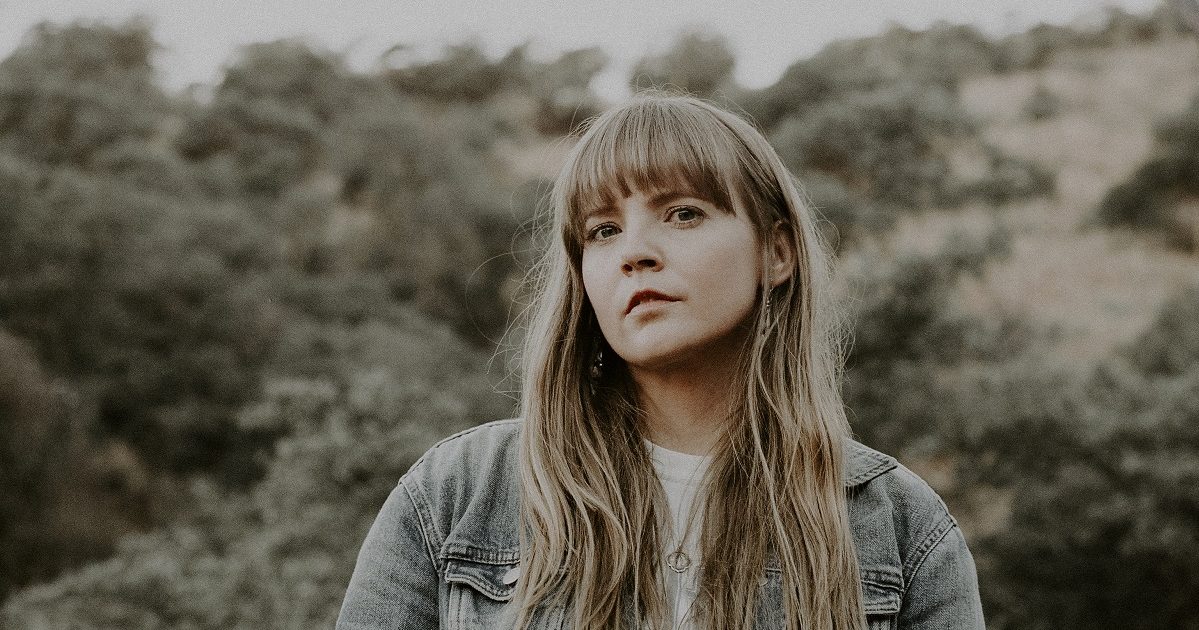
WATCH: Courtney Marie Andrews, “Burlap String”

Artist: Courtney Marie Andrews
Hometown: Phoenix, Arizona
Song: “Burlap String”
Album: Old Flowers
Release Date: July 24, 2020
Label: Fat Possum Records

In Their Words: “More than a decade ago, I would travel from my home in Phoenix, Arizona, to a quirky little historic Mexican border town in the southeastern hills of Arizona called Bisbee. In Bisbee, all the musicians play in old saloons, making a small but honest living off of tip jars. This special place became my haven as an artist. The entire town is ripe with characters and creativity. During my visits there, I befriended a local musician couple, whose moniker was Nowhere Man and a Whiskey Girl. They became my DIY musician mentors, being fifteen years older than me, and showing me it was possible to pay rent off of playing music. I adored them, and we did lots of shows together throughout my early twenties.

“About five years ago now, they both died unexpectedly within twenty-four hours of each other. Losing them was a devastating blow. They were a large part of the Arizonan community. I still go back to Bisbee often, as it’s where my heart belongs in many ways. During one of my visits a couple years ago, I discovered a special place called Young Blood Hill. It’s a hike to a sacred and rocky peak, littered with catholic influenced memorials, shrines and crosses. It turned out to be a place where many of my personal revelations happened, so naturally I chose to shoot the album cover for Old Flowers there.

“Unknowingly, while shooting the album cover under the last full moon of the decade, Nowhere Man and a Whiskey Girl’s memorial ended up in many of the press shots. When showing them to someone in town, they remarked how sweet it was that Amy and Derrick made it into those photos. It came as a beautiful gift and surprise, for I was unaware it was their memorial at the time. With that gift, I decided to shoot my music video for ‘Burlap String’ on Young Blood Hill. By the end of the video, I am placing flowers on Derrick and Amy’s memorial, as a way of reckoning with their loss and each loss we grieve throughout our lifetime. Though this song was written for one of the great loves of my own lifetime, I wish to place flowers on heartbreak’s memorial as well.” — Courtney Marie Andrews


Photo credit: Sam Stenson

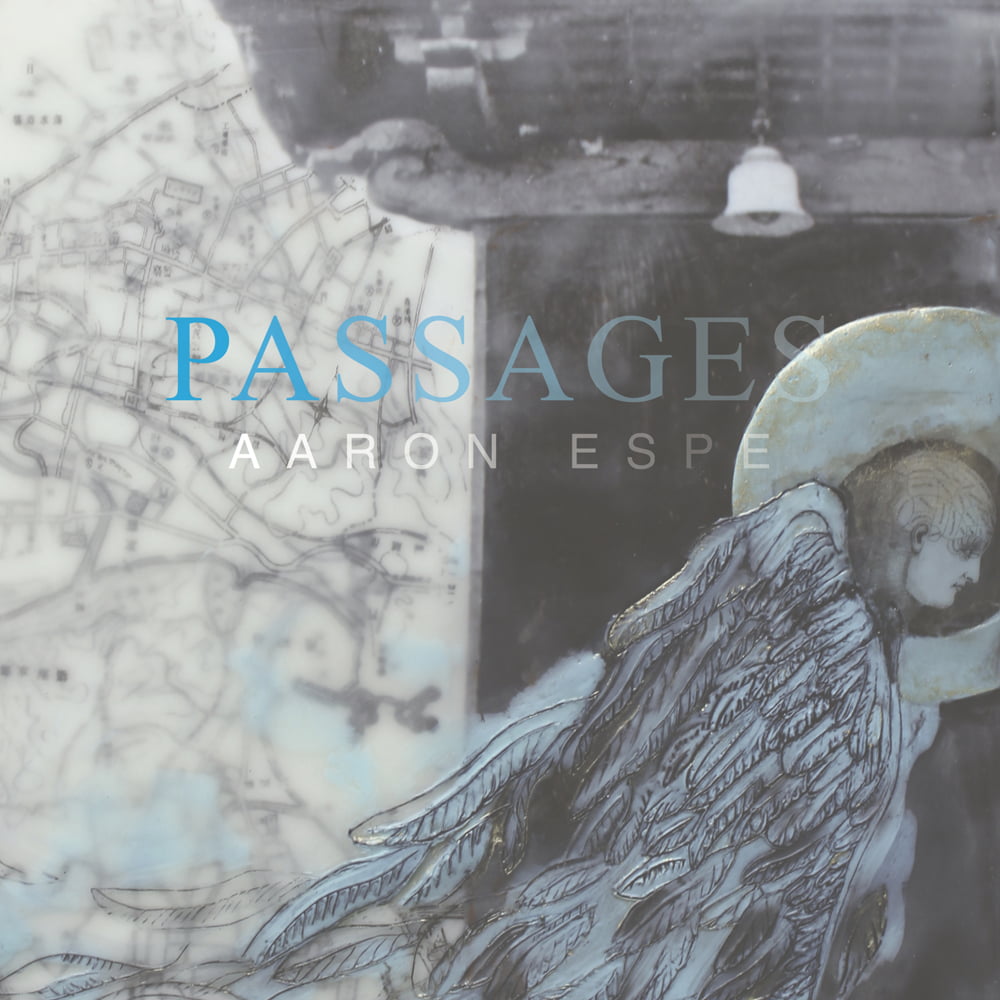
STREAM: Aaron Espe, ‘Passages’

Artist: Aaron Espe
Hometown: Roseau, MN
Album: Passages
Release Date: September 8, 2017
Label: Nettwerk

In Their Words: “I was thinking about my friend who died in 1995. And then I did what you do these days: I Googled him. But I couldn’t find anything except his grave index from the funeral home. It occurred to me that anyone who died before the Internet became popular (besides famous or notable people), there’s really not much out there. So I began to write a song about him.

This record started as a concept album, about him and a couple other friends and relatives who made an impression on me and died before the Internet. As you can imagine, it got pretty dark (go figure!) so I changed directions. One song, however, did end up on the album (‘Hello, Lou’), but I decided just to make the album about turning points in my life. So, yes, there’s the death turning point, but there’s also life and love, thank goodness. Hence, Passages.” — Aaron Espe

The Past Isn’t Finished: An Interview with Blind Pilot’s Israel Nebeker

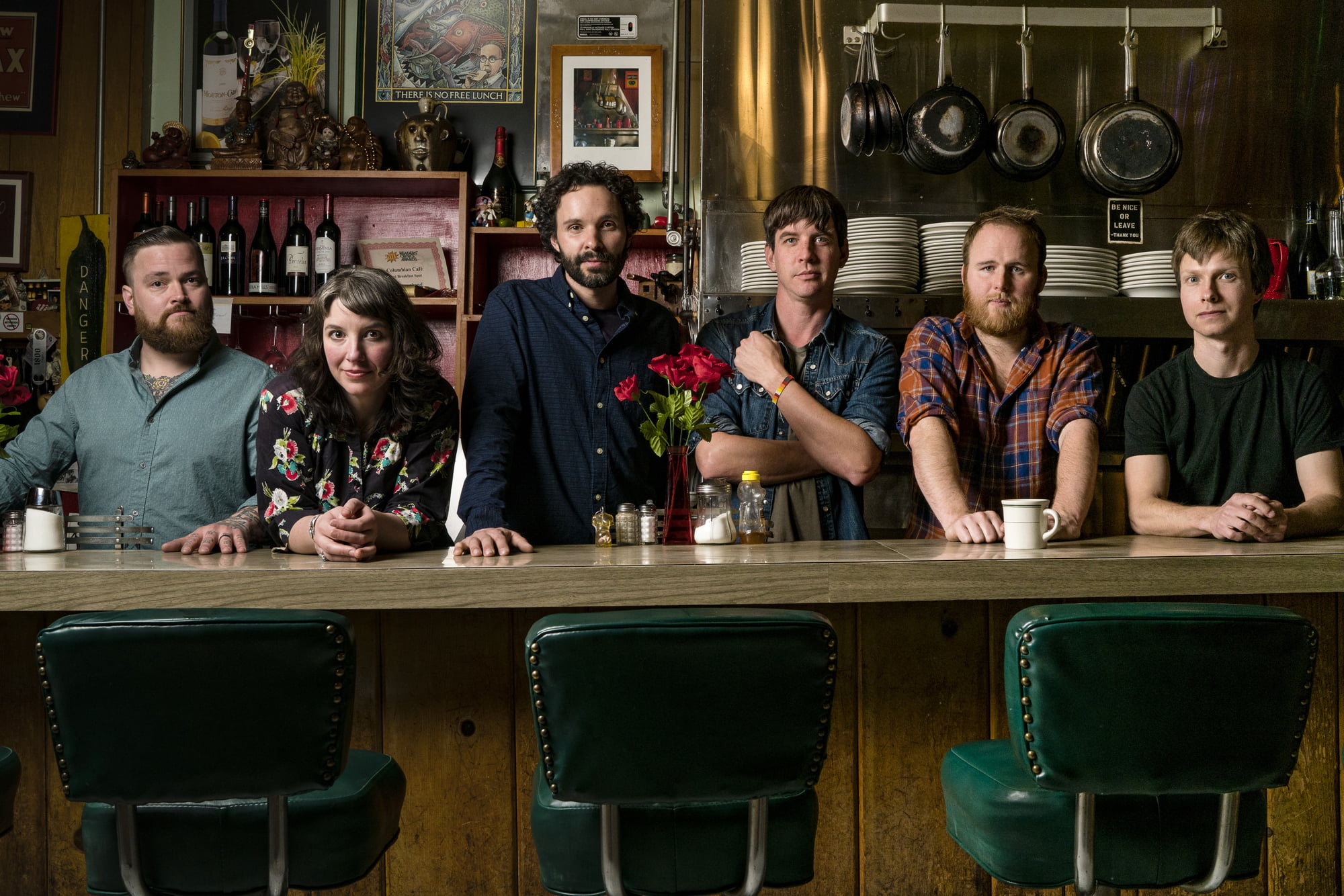
For Blind Pilot's third record, front man/songwriter Israel Nebeker had no choice but to dig deep, having just come through the death of his father and the end of a relationship. Moments like those tend to make or break a person. Certainly, Nebeker let the whims of the grief that followed bend him, but he never let them break him, choosing instead to let them make him a more potent songwriter, as evidenced time and again on And Then Like Lions. Produced by Tucker Martine, the album rises and falls along with the ebbs and flows that never fail to come in the wake of great loss.

We don't know each other, but is it okay if we just go for it, here? Because I, too, lost my father to cancer, as well as my dear, soulmate of a dog. It's a life-altering experience, going through that.

Yeah, definitely.

In what ways did it change you?

[Pauses] Yeah. Okay. [Laughs]

Is that too much to start with? [Laughs]

No, no. It's not. I'm just trying to think of the biggest ways it changed me. I think the biggest was just gaining perspective on our place here in this life and what it means — what things matter the very most. That was the biggest. It also changed my perspective a lot, the idea of death and how it relates to our lives. And, also, I was completely surprised by how many beautiful moments I had with my dad while he was sick. They were, by far, the most intimate and revealing and closest moments I'd ever had with him.

Also, I was surprised that the process of losing somebody close to you like that has a lot of beauty in it. There's a lot to be shared and given with my family and people closest to me. Those were the biggest things that were unexpected and definitely changed me.

That sounds about like my experience. Are there a lot of things you let slide now that you may have fought for in the past?

I think so. Yeah. I think that's right. It does put it in perspective that this life is finite and, even more than that, for me, it put into perspective that, if we do hold onto anything, it's in the connections that we make with people closest to us. I don't really understand it, but I just get a feeling that those connections persist past death, in whatever way you want to think about that — whether it's through ancestry and lineage or the stories we make or whether it's in a spiritual sense. But that's the feeling I get.

Yeah. One of the biggest take-aways I had was — I did this during that time and ever since — really being present in each moment and trying to bring my best self to each moment. But I feel like most folks don't know what to do with that. As I engage with people now, because it's so unusual for someone to not have ulterior motives or not be trying to get something out of somebody, they're a little bit put off by it.

Yeah. [Laughs] I had that exact same motivation during that time, that last year I had with my dad. I was incredibly present and that was my biggest motivation was to bring my best self and be as present as I possibly could be. I don't know if you found this, but I found it kind of relieving, in moments, to be forced into that kind of presence … whereas, usually in life, we're just trying to get there.

Yeah. Absolutely. I feel like we should always be as tender with ourselves and with others as we are in times like those.

Definitely. That's a good way to put it.

That wasn't the only upheaval you experienced. In what ways were the loss of your father and the end of your long-term relationship similar and different? Loss is loss, to a certain extent.

Right. Yeah. It kind of all came in one month. It was three different kinds of love important to me in my life and experiencing, in one form or another, losing it. My closest group of friends for a long time, we had a falling out. Separate from that, the end of that long relationship. It was all kind of wrapped up because I was going through it all at the same time.

It is interesting, looking back, how loss — as a bigger idea — is pretty relatable to all three of those experiences and to more. I guess what was useful about it coming at the same time was that it made me look more at the idea of loss as bigger than any of those situations — what it means to go through this life and experience loss and, especially, how we share it with each other and how we can give strength to each other through it.

As you were listing off those things, I flashed on Tig Notaro. Do you know her story?

Yeah, not super-closely. But I remember she had that incredibly brave performance when she found out she was diagnosed with cancer.

Yeah. She got sick with C. diff and her mom died and her girlfriend left her and she got diagnosed with cancer, and it was all in about a month. Her whole joke was the thing of how people say God never gives you more than you can handle. She has this bit about, “He looked down and said, 'Yeeeeeah, she can handle one more.'” [Laughs]

[Laughs] Yeah. That's funny.

So, I read a piece in which you stated — and I love this phrase — that “the past isn't finished with us yet.” That's a great way to put it because every moment we've ever lived is rumbling around inside us and comes out, sometimes, when we least expect it. Unpack that a bit for me, in terms of what you were going for.

Sure. NPR asked me where the song “Umpqua Rushing” came from. That was the first song I wrote on the album and it was dealing, specifically, with the break-up of this long relationship that was filled with a lot of meaningful memories for me, of course. I was looking at this decade of my life, thinking, “Okay. What do I do with all these memories now?” I had friends and family members saying, “You gotta just let it all go and just get over it. The sooner you get over it, the better. Just let all that stuff go.”

I think I was wrestling with this idea that I felt like I would be losing so much of myself and my identity and the things most important to me by throwing everything out and going with that motivation. So, I think, at that time, I was really trying to do that and I hadn't yet discovered that, for me, the real way through it was to embrace how important all those moments were and will always be with me. That was a much better way for me to be present and moving forward and okay that that was the past and it's not anymore.

I'd say it's the same thing with the loss of my dad, too. I think our culture really does a great job of showing support when families lose somebody to death … for a couple of months. [Laughs] Then, it's …

[Laughs] Yeah. Nobody wants to hear about it anymore.

Yeah, and maybe even, kinder than that, people want you to get over it because they want you to be happy again. I think we can do some work, as a culture, to understand that it's through embracing the meaning of the past and through embracing how badly loss hurts that we can move forward in a stronger, more cohesive, complete way.

Absolutely. To me, the grief is just as deep as the love was. So, the deeper the love, the deeper the grief. And it is what it is and it's gonna take its own pace and its own route and you're just gonna have to ride it. But I agree that a lot of people, unless they've been through it — and even some people who have and maybe didn't deal with it that well feel like you should just buck up.

Yeah. Yeah.

So, translating that all into songs … was that a natural process for you? And a necessary one, I would assume.

It was. It definitely helped me to process what was going on and, more than that, I felt like, while I was writing this album, it was … Let me back up. What we were just talking about … I found it culturally difficult for a lot of my closest friends and even family members. Like you said, some who have and some who haven't dealt with that kind of loss. I found it really difficult for them to talk about. And I wanted to write some songs that would give an invitation to my family and closest people in my community to talk about it in a way that wasn't scary, because I could tell that people were frightened to talk about it and really look at the idea of these kinds of losses.

And what I found was that I was making songs that were where I wanted to be with it, trying to give courage to myself. And, also, making songs that were intended to give that kind of courage to my family, too.

As you were writing, were you hearing the hopeful elements coming through or did Tucker [Martine] tease those out more with his production? It's a serious and somber record, but it's not depressing.

Yeah, yeah. Definitely. This was the first time in my life, writing songs, where I gave myself somewhat of an agenda. It's always been important to me to take songs exactly as they come. But it was important to me, with this album, when songs would come and I'd be kind of wallowing in sorrow and grief … it wasn't that I was ashamed of it, but it was that I wanted to give people more than that. I didn't want to share that, because it wasn't the whole truth of it. So it was important to me, from the first stages of making the songs, that they were looking at the complete spectrum of what was going on — not just the darker side, or more painful.

I think that was the one intention that persisted throughout the process, and recording and mixing, too. If a song seemed kind of somber, I could call in Dave [Jorgensen] to put some on synth and trumpet lines or stuff like that. And, yeah, Tucker definitely helped with that process, too.

Okay. Let's lighten it up a bit to close it out. Originally, you guys were a duo. Now, it's a six-piece. How are you feeling about the current line-up and the sound you're making? And what challenges come along with an expanded roster?

Six people … it's a lot of individual lives to coordinate. It was lucky that the timing happened the way it did. Luke [Ydstie] and Kati [Claborn], who are both in the band, had a daughter during the time that I was going through my dad being sick. I'd say all six of us, our lives have changed quite a bit in the past couple of years.

Over the years, one of the big benefits of it is, with six people, it's easy to distinguish between interpersonal relationships and the music because you can't stay always on good terms with everybody in a group of six people, when you're always together. There's a lot of chance for ebb and flow of closeness. But it also kind of shines a light on what you're really doing here, in the band, which is to give yourself to the music, regardless of whatever's going on.


To continue the thoughtful songwriter conversation, read Kelly's interview with Hayes Carll.


Photo credit: Ben Moon