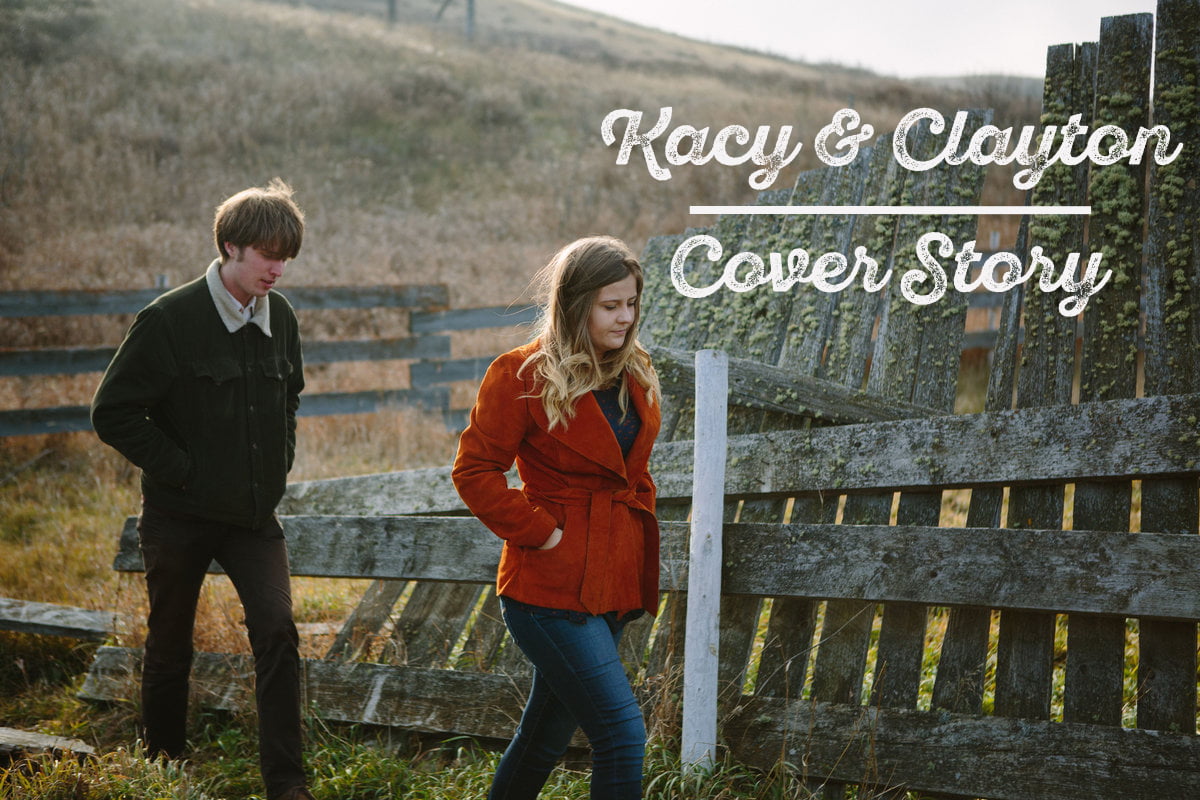
Cousins Kacy Anderson and Clayton Linthicum may hail from Canada — specifically the isolated Wood Mountain Uplands in Saskatchewan — but their music is by no means limited to that geographical region. Fans of older sounds than what they heard playing on the radio growing up, they sought out British folk and American roots music that broadened their horizons and went on to influence their own take on these classic traditions.
Their new album, Strange Country, contains darker subject matter that belies the pair’s young age: Kacy at 19 and Clayton at 21 write music far beyond their years. With Clayton’s clear, articulate guitar guiding the songs along and Kacy’s woeful, emotionally laden vocals — sliding from soprano to a weighted alto and back again — the pair have penned an album that feels woozy at times for the heights it soars and the depths it reaches, all dealing with tragedies in one way or another. Strange Country feels solemn and especially grave, both figuratively and literally. The album’s last song, “Dyin’ Bed Maker,” is a murder ballad Kacy wrote from the point of view of a female. The sheer desire that arises from the song’s melody and lyricism feels overwhelming: “I know he loved me best. I know he loved me best,” Kacy sings, her voice edging on provocation against Clayton’s mournful guitar.
It seems like the younger generations are largely interested in the past in an ironic sense. How do you keep your engagement more genuine?
Kacy: I think you can kind of stray away from clichés. If you know about certain song topics or things that have been overdone, in different periods or over time, then you can kind of be aware of that and draw from lesser-known influences. Yeah, just go for a more uncommon influence, I guess.
Clayton: Wow, that is so true. I did not realize that. [Laughs] This is educational for me, too. Keep ‘em coming, Kacy. That was genuine tone and it came off as sarcastic.
How do you avoid appropriating a musical tradition?
Clayton: I think not dressing like pioneers.
Kacy: Yeah, I think that’s actually the main thing. And not having press photos that show us churning butter and riding on wagons with a team of horses.
Clayton: That is one thing that we’ve really been striving for, is to take influence from that older world but not try and put on a theatre production.
Kacy: It’s cool if it’s done really well, but I don’t think I’m capable of being … like there are certain people, like Frank Fairfield, he’s just — I don’t know how to say this in a non-cheesy way because everything that’s come to mind is a total mom phrase — so authentic and he doesn’t try, but that’s where all of his interests are. He has no regards for the current world. There are certain people like that who can do it real well. Personally, I don’t think I can, so I’m not going to wear suspenders and little old timey shoes. That does not make sense for me, because I don’t want to spend all my time trying to find woven pants and stuff. That’s a whole new level of hard work.
Clayton: And hard work to wear them.
Especially in the Summer.
Clayton: Oh, yeah.
Kacy: I do also love pioneer clothes and acting in pioneer dramas that my Aunt Thelma writes.
Obviously, you’re both very young, but there’s a weighted solemnity about your music that suggests someone much older and experienced. Where does that sensibility come from?
Kacy: I think that it mostly just comes from listening to traditional music from certain areas where it’s so dark, and you are consumed by tragedy and death and music relating to hard parts of life, experiences you haven’t really had. I don’t know anyone that’s been murdered or anything. But you can listen to a murder ballad and get a sense for it and relate to it and try and make your own stories or work off of things that you heard. I think just talking about kind of heavy subject matter makes the music seem a little more mature.
Do you find that since you’re singing about characters that you almost inhabit characters?
Kacy: Yeah, I think when there’s a strong character in a song or a good story or something, you feel attached to it. You put yourself in the situation. I guess that’s the fun thing about singing songs: It’s getting to sing from other people’s perspective. With folk music, for sure. It’s not as fun to sing your own songs, because you know yourself. It’s boring.
You hail from the prairie provinces, but some of your songs, especially “Down at the Dance Hall,” have an Acadiana feel. What interests you about that sound?
Clayton: Well, if you’re wondering about where that influence came from, we were both listening to a lot to the Balfa Brothers around the time we recorded the album. Kacy had been playing around with the fiddle and I thought, "Who do we know that could play button accordion?" And the answer was not really anyone, so then I tried to learn the accordion and learned about two songs, and played it briefly on that song. That’s about all the progress I’ve made. It happened in about a month and then stopped.
Are you going to pick up the accordion again?
Clayton: You know, I think I will. I would like to take some lessons. I had a couple homespun Dirk Powell DVDs, which are great. I just need to motivate myself a little more. And someone gave us a negative review. They called it "unnecessary accordion," so that was a bit of a blow.
Kacy: Yeah, that’s a major blow.
I can see how that’s a set back, but don’t let it derail any future accordion plans.
Clayton: I won’t. I was just fishing for some pity. I think I was successful in that, so thank you.
Take me through your recording process. How did the frozen wilderness surrounding the recording studio eke its way into the record?
Kacy: It definitely made everything a little bit more urgent. When I was singing, I felt kind of tense and the studio furnace kicked out at a certain point. We had to wear mittens and coats when we could. When I heard the album, I was surprised by how fast all the songs were. I think it was just because it was cold. I would like to make a record in the Summer. I feel like you get a definitely laidback sound.
Yeah, it would languish a bit.
Clayton: We’ve made all of our albums in the Winter.
Kacy: Yeah, or even just record in a warmer climate during the Winter.
Are there any modern artists you admire?
Clayton: We definitely like Jason Molina. Is that what you were going to say Kacy? Did I steal that from you?
Kacy: No, I just said Jason Molina’s dead, so that’s not current.
Clayton: Well, I know that he’s dead but he’s …
Right, like artists in the past 20 years or so.
Clayton: I really like Ryley Walker and Daniel Bachman. I like what they did on the guitar a lot.
Clayton, do you tend to listen to instrumental songwriters or narrative songwriters?
Clayton: I tend to listen to mostly old country music these days, like Willie Nelson and Merle Haggard and that kind of songwriting. I think Kacy and I both are pretty influenced by that style of country imagery and country storytelling. We try to bring that into our British folk influences, as well, which is kind of what Richard Thompson was doing back in the Richard and Linda days. He was really into Buck Owens and Merle Haggard, but he’s also got the traditional British stuff.
That’s the interesting thing about watching artists develop. Once they introduce listeners to their own sound, they can begin stretching themselves by incorporating influences more heavily.
Clayton: It takes a while to get comfortable enough to try and mimic a style that you’re not really known for or what people expect. But I think that it’s kind of good for a longer career, if you’re able to do that.
And also for your own personal growth. I want to turn to murder ballads. I noticed that you composed “Dyin’ Bed Maker” from the perspective of a female. What provoked you to explore that subject matter in that way?
Kacy: I took influence from “Henry Lee,” where it’s just a lady and she’s very rancid. She does some dirty deeds. Basically, that one lacks a lot of detail — the storyline — I think, but I kind of liked that about it. There are no real characters introduced or anything.
Speaking of writing, how does the composition process work?
Kacy: We write back and forth, and then work together — try and come up with something good.
Clayton: It’s kind of a filtering process, you know? We both trust each other’s opinions and sometimes it’s kind of frustrating if something is rejected by the other person, but in the end, it’s kind of rewarding because you feel that much better about the songs if they pass through two minds. I think that’s something unique that you don’t get just working on songs by yourself.
Kacy: Yeah, having a person that you trust as much or more than yourself that can give just an opinion or change something or tell you what they think. Like things that I might be unsure about and then Clayton might think is really great, or maybe I’m really confident in it and Clayton thinks it’s awful and tries to cover it up by saying, "It’s fine, but …"
Is that how conversations usually go? There’s no nitty gritty critique?
Clayton: I say Kacy usually gives me the nitty gritty, and I have to dance around my point a lot.
Kacy: Well, your songs are really annoying.
Clayton: My songs are really annoying? Sheesh, I didn’t expect to get that on this interview call. I think what Kacy was saying is that she doesn’t really hold back with me, and I think what I’m saying is that’s just the way it is.
Photo credit: Dane Roy