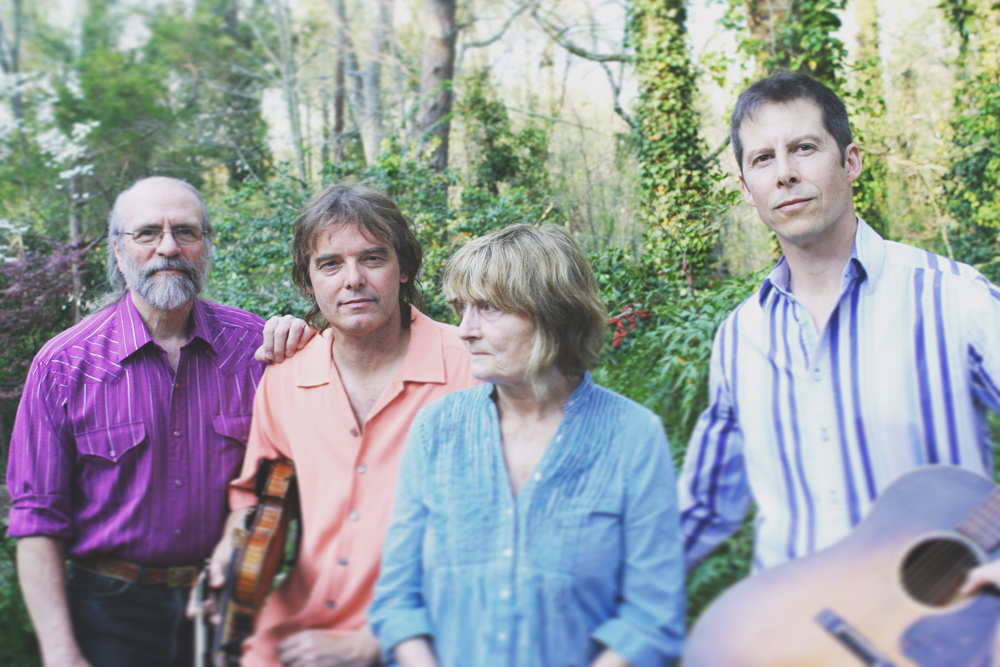
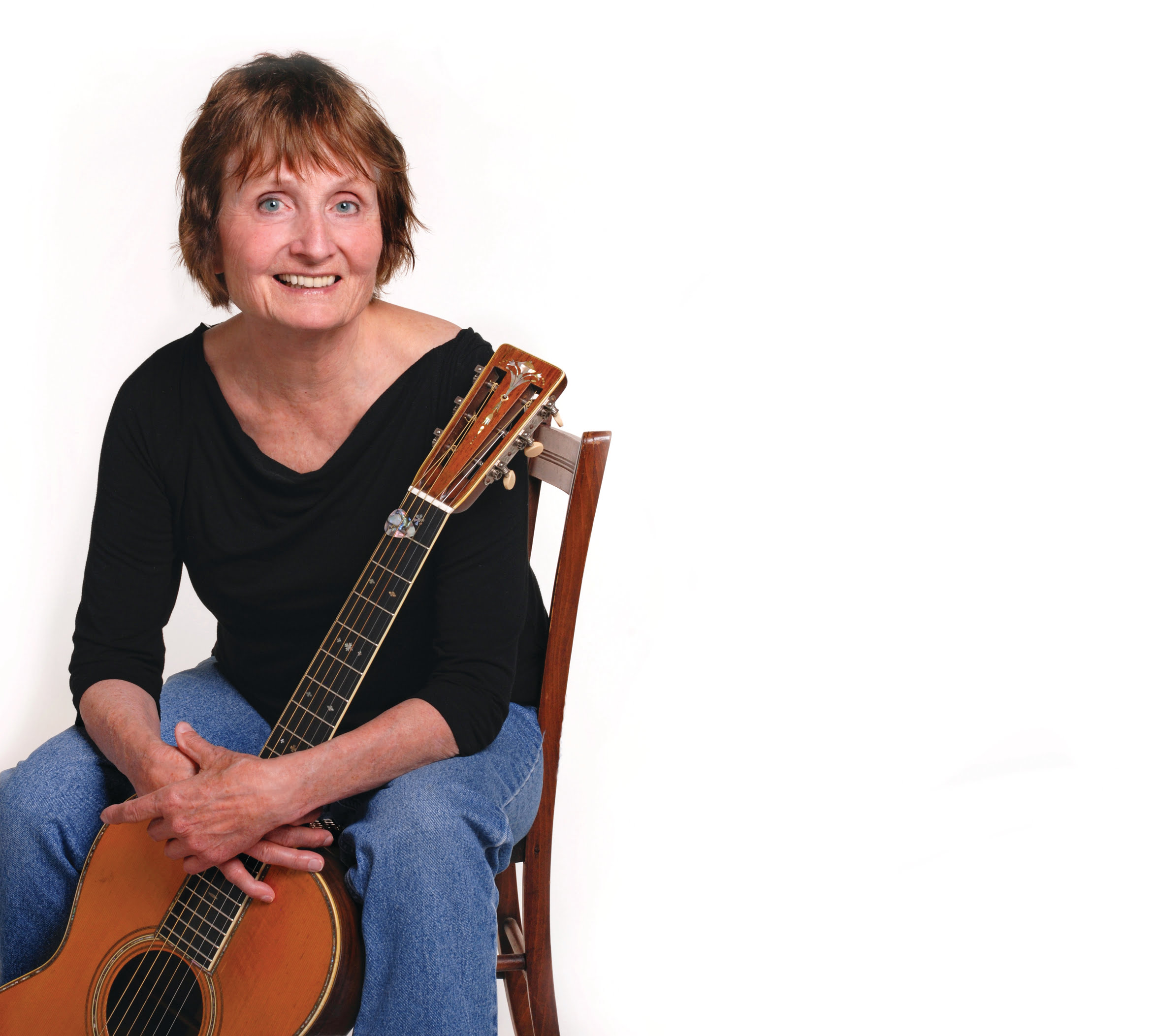
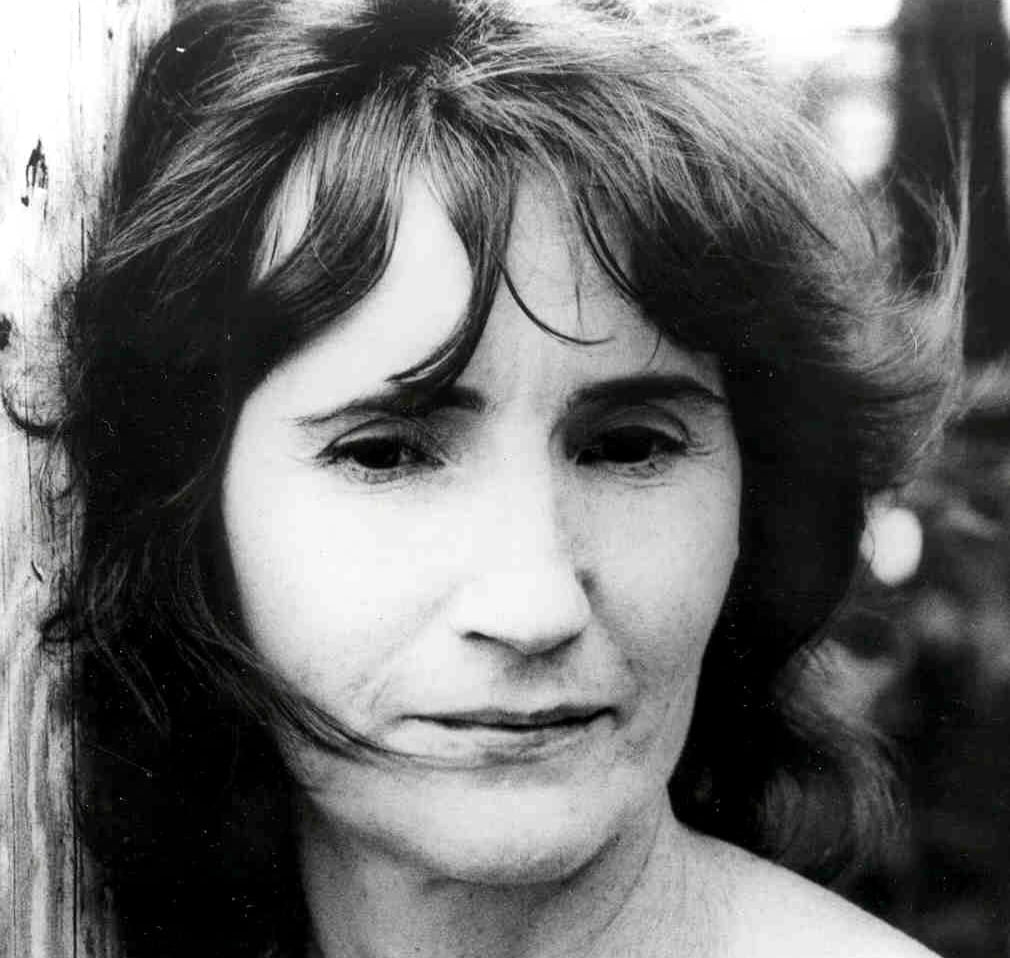
Some voices create passages to the past, as if they were secret wardrobes through which listeners can crawl and enter their own private Narnia. It’s not just what these voices sing about, but rather their color, tone, and timbre that conduct audiences to times gone by. Alice Gerrard has one such voice. She rose to fame in the 1960s and 1970s singing traditional bluegrass songs with her Appalachian music partner, Hazel Dickens. Their voices provided a juxtaposing force against one another, generating instinctive harmonies that felt closer to a familial note than any born from two unrelated musicians. Simply put, they raised the hairs on your neck.
Gerrard’s voice soars with Dickens, but it’s equally capable of standing alone, as sure-footed and earthy as the land that produced it. In 2015, she released her latest album Follow the Music, which she recorded with M.C. Taylor of Hiss Golden Messenger. The two met when he was a grad student and she a visiting instructor at the University of North Carolina. The project would go on to earn a Grammy nomination for Best Folk Album, and it’s easy to see why … or, rather, to hear. Her interpretations of classics like “Wedding Dress” and “Boll Weevil” pit her voice against the fiddle, the two rising to meet each other and fueling a thicker melody as a result. At 82 years old, Gerrard’s voice has aged, but it hasn’t withered. With over 50 years in the business under her belt, and a staunch determination to fight for traditional sounds, she proves how the past endures, offering its voice to any willing to listen.
What quality would you say age has brought to your voice?
That’s a hard question for me to answer. It’s probably better answered by people who have heard me. I don’t find that it’s diminished. I do find that it takes longer to get back into singing, if I’ve not been singing for a while. I think you do have to exercise it more as a muscle and it’s more important to do that when you get older. I find if I don’t do it for a while, it’s like “I’m not going to be able to hit that note so easily,” or little glitches come into your voice and you have to sing through a bunch of stuff and, eventually, it sort of comes back.
Male-male and male-female harmonies tend to be popular in bluegrass and alt-country. Female-female harmonies exist, but not to the same extent. What do you consider important about that kind of singing?
It’s pretty amazing when you get two or more women who can actually sing together. It doesn’t always work. You might love to sing with somebody, but maybe your voices are too much in the same range and it’s hard to harmonize, or something like that. To me, any harmony — whether it’s female-male, male-male — it’s all about the blend that you get with the other voice. There are many different harmony sounds. To me, it’s a sort of a special sound; it’s the same as if you had two brothers. It’s a well-known fact that within families, two sisters or two brothers, they have a family blend that’s unique, that you have to really work to capture, if you’re not a family member.
I was just listening the other day to Mountain Man — they don’t exist anymore — but it was three women, and they had beautiful harmonies. It had such a great blend. My feeling is that, no matter what the combination is, what you’re going for is that special kind of blend. Everybody has a unique voice, and the trick is to make your voice work with the other voice, and sometimes that just takes singing together a lot. When you sing together a lot, you tend to feel the other person’s energy and how they use their voice, but I think it applies to women and to men. I don’t see it as strictly a woman thing. But it’s always great to hear women harmonizing, when it’s a good harmony sound.
How long did it take you and Hazel to hit upon that blend?
Well, we sang together for a long time, and I think you have to pay attention to what the other person is doing. When you hang out with somebody a lot, it’s easier to sort of internalize some of the characteristics of their singing with your vocal sound. It’s like talking. When you grow up learning to talk as a child, you repeat whatever you hear around you, and it’s the same with singing. I was really listening to her. It’s not just two separate voices following their own path; it’s two voices listening to each other and bending and moving together. It becomes one voice.
It’s very interesting because I’ve been in a studio where they would track the lead vocals and then they track the harmony vocals. As you’re singing harmony to the lead vocals, you’re listening to it and you’re matching it, but then when they play your separate track — this happens to more people — you listen back to your track by itself and it’s like “Whoa!” It sounds terrible. Maybe it’s a little flat here, maybe it’s a teeny bit sharp there, that pronunciation is a little weird. But you put the two together and you realize what you’ve done is bent and accommodated to the other voice, and they’ve done it, too. But together it works, and that’s what it’s all about.
You’ve used the word “spare” to describe the photo that graces Hazel and Alice ’s album cover, as well as some of the more traditional songs. What does spare music offer that much of today’s overly produced music might not?
I can remember the days when you’d flip through the radio dial and you could immediately pick out the country station, and now you can’t. It all sounds like mass-produced pop music. To me, I always prefer — I like to listen to a lot of different kinds of music — but the American Idol over-production sound does not appeal to me. But I think people have gotten used to that in the mass market, so their ears are attuned to that over-produced, auto-corrected perfection. When stuff comes along that has a little more edge — a slight pitchiness or something that’s very simple — it can be a beautiful sound, but I think that a lot of people just don’t get it because they’re so used to the over-produced quality of most pop recordings. I know that that’s not my niche anyway, so who cares! There’s plenty of other stuff out there, and there’s a lot of really great stuff going on, so I don’t have to listen to that other stuff, if I don’t want to.
You’ve mentioned before, prior to releasing Follow the Angel, that happier songs don’t resonate the same way with you. Why is that?
You mean Follow the Music, not Follow the Angel. Woo hoo! Where’s that coming from? I might have to use that in a song.
You’re more than welcome to my mistake! What a slip.
I do not know. You could consult a psychiatrist, but I’ve always been drawn — there’s a kind of a melancholy side to me — and I’ve always been drawn to the darker, more melancholy side to country music. I love the dance tunes, too, but the things that really get my goosebumps up are the more melancholy sounds, and the sadder songs, and other kinds of stuff. I don’t know why that is true, but I’ve heard a lot of people — I’m not alone — say, “The sad songs are the best songs” or “Oh, man, I like those old mournful songs.” I think there’s something that raises the hairs on the back of your neck sometimes about some of them. I’m sure that there are people who prefer happier songs. This is probably an over generalization, but I don’t think too many people who are in the middle of, say, a bad breakup want to listen to happy music. They want to go and wallow around in slow George Jones or Merle Haggard or somebody like that.
They want that company.
Yeah, it’s very cathartic in some ways.
I’m not sure if you do this, but even when I’m at my happiest I really love listening to the saddest songs. It’s that idea of the sublime: watching something fearful from a distance.
There’s this saying, and I can’t remember who told me this, “The sadder the song, the happier I feel.” That can be true at times.
Bluegrass has come a long way since you first started singing. Is there anything about the way bluegrass has evolved that really excites you?
My heart is with early bluegrass, pretty much. I feel totally as though there’s room for all of it and I’m glad that some people hold the line and I’m glad that other people are experimenting. But my soul is much more in the Stanley Brothers and Bill Monroe. I feel like there’re some amazing musicians and they can do anything; they’re just really really talented musicians. Sometimes I feel like there’s too much emphasis on the technicality, rather than the soulfulness of the music. I have this sort of theory that, in this digital age where everything is very technical — you know there are computers and iPads and you can make everything perfect in a studio — there’s a huge emphasis on technical, so that I sometimes feel that people’s ears get used to what they think of as perfection: the perfect note, the perfect tone, the perfect blah. And, to me, that gets really boring. But there is so much good music out there. I think that’s what it’s all about.
Everyone finding their space.
Yeah, and there’s room enough for it all.
Do you have any advice for those interested in taking up the mantle of bluegrass?
I really feel like you have to follow your own path, and I always feel like, if what you’re doing musically has some basis in tradition, it will be more meaningful and have more soul, perhaps. That’s just my point of view. Songwriting is a very personal thing and people … there are factories that churn them out, for sure, but then there are people who don’t, who write really good songs, some of which will never ever get heard in this lifetime. And then there are people who write a lot of really bad songs, too. But I think you have to follow your path, and if you feel called by a certain direction, you have to try that path, see where it takes you. Get the editor out of your head.
Catch Alice Gerrard performing with Laurie Lewis at World of Bluegrass in Raleigh next month. To hear from another another bluegrass elder, check out our conversation with Del McCoury.
Photo credit: Irene Young