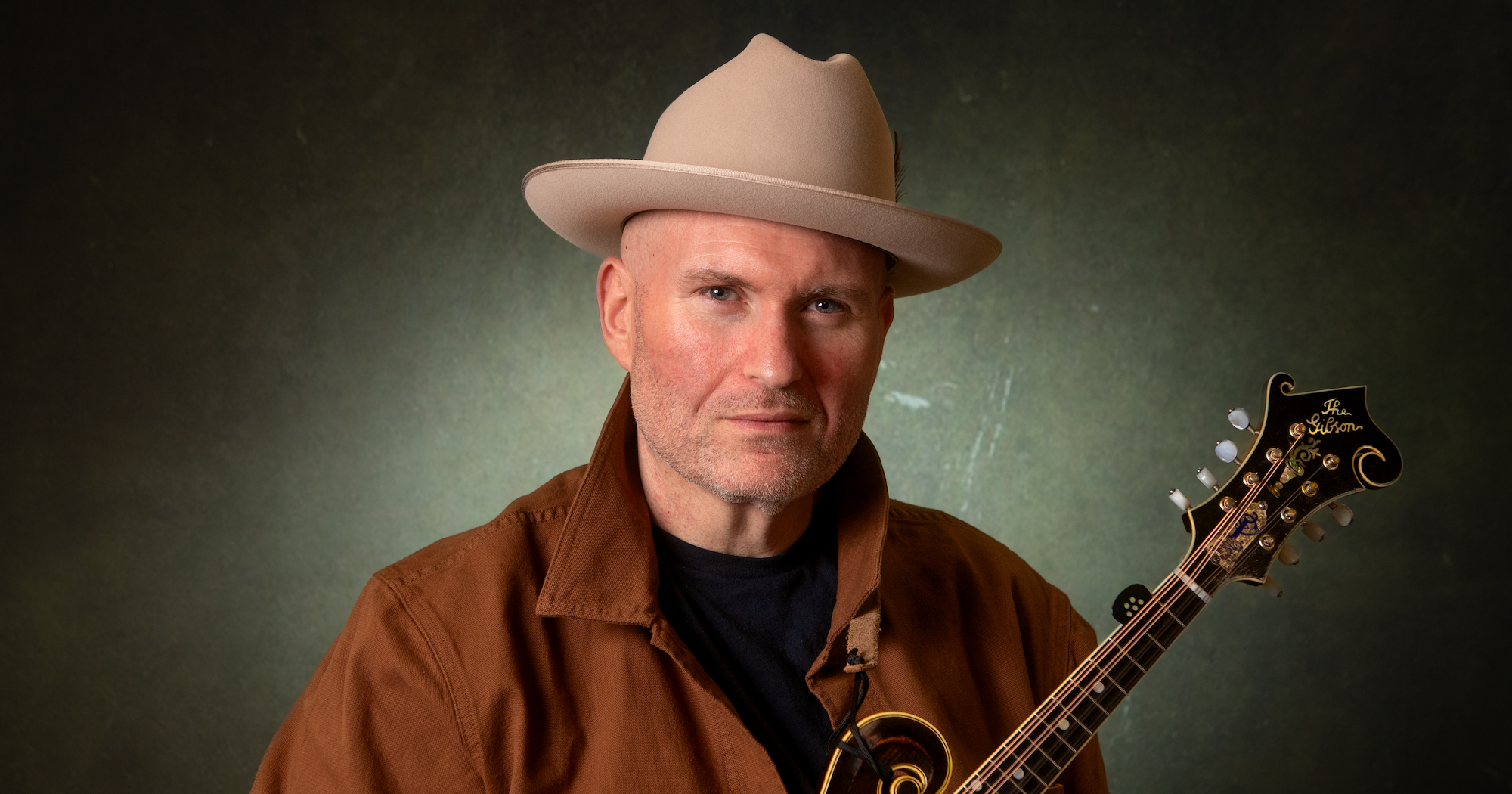
Darren Nicholson Wants His Style of Bluegrass to Sound Different

Over the past twenty-some years, Darren Nicholson has played mandolin all over the world – whether with Alecia Nugent, as a member of Balsam Range (a group he co-founded), or on his own (with or without a band). No matter where he traveled, you can be sure that Nicholson was bringing Western North Carolina with him. Nicholson was born, raised, and still lives in the area.

When BGS caught up with Nicholson, he was home in Canton, N.C., a town about 20 miles west of Asheville. It’s a region that he feels has been a bit overlooked in music history. “The oldest folk festival in the country [Mountain Dance and Folk Festival] is held in Asheville,” he shares. “There were recordings that happened in Asheville before the Bristol Sessions.”

The area he pointed out, despite its remoteness, also has been home to many significant musicians – as well as developing a dance-friendly style of bluegrass that drew from many different styles.

Nicholson’s love for the area has led to a rather unique sponsorship for his tour van and trailer. Through a friend he met with representatives of the Avalon Mountain Community, a private mountaintop neighborhood and development in the hills of Western Carolina. Nicholson calls it a “win-win” situation as he receives some financial support for touring expenses while Avalon now has a “rolling billboard.” “I even wrote a jingle for them,” he states.

Nicholson will be traveling around this year touring a fine new album, Lonesome Trails and Tall Tales. He counts it as either his fourth or sixth solo effort, depending on whether you factor in two EPs. Lonesome Trails and Tall Tales arrives after several particularly eventful years for Nicholson, including leaving his longtime band Balsam Range, getting sober, and acquiring a prized 1923 Lloyd Loar mandolin – all among the topics that he was more than willing to talk about with BGS.

How does your new album Lonesome Trails and Tall Tales tie in with your earlier albums?

Darren Nicholson: My records have a sound, you know. I’ve always been pretty much consistent – besides an electric country EP – doing the music that I consider my style of bluegrass or the bluegrass that I grew up on, which is to me the traditional bluegrass of the ’60s. Having a producer like Carl Jackson in the early days influenced how I made records, because Carl had played with Jim & Jesse and he came out of [when] an entire bluegrass movement had almost a country kind of feel to it. I love the sound of those records. And it was partly because I grew up in Western North Carolina and there’s a huge dance element here – the square dance music.

The old-timey driving style of rhythm with that light percussion – like Jimmy Martin, Flatt & Scruggs, the Osbornes – that really fits in with people who danced. And the modern kind of bluegrass – like the Alison Krauss style of bluegrass, which is amazing – does not lend itself to dancing. The modern style of bluegrass that was really kind of heavy on the one and three beat, and then the older style of bluegrass, which was very much more even, rhythmically.

And how does the new album differ from your prior ones?

What separated this particular recording from the others is just my growth as a songwriter… I was picking what I thought were the best songs I had or songs that were different from each other. A lot of times… [with] the way things are being mass produced now, if Nashville finds one song that’s a hit, they’ll write 10 more just like it for all the other artists. So they all start sounding the same.

To me, all the great artists of yesteryear, all their material was different. Their sound was different. Instead of just finding something you could mass produce, make a buck on, and then hop on to the next thing, they were actually creating art and trying to artistically be different. That was what was good about it.

So [in] the same way, I try to pick songs in my set. I don’t want to play five songs in a row that sound the same. Otherwise, it’s boring – I see bands do it all the time. They kick off in [the key of] B and they play five songs that could basically be the same song, you know? I understand why people who are non-bluegrass fans will go, “You know, all bluegrass sounds the same.”

I tried to pick six songs that were completely opposite from each other, so when you go down track by track, it’s a different journey and it doesn’t bore the listener. Every song is a different tempo, it’s a different groove, it’s a different key, it’s a different vibe, and so that’s how I put records together.

Were these songs ones that you’ve accumulated over the last couple years or are they all a recent crop of songs?

A few of them were really old and a few of them were really new. “Big Sky” has been around for a few years and I wrote it with Charles Humphrey. I thought it was “okay,” and this shows you how off-base I can be sometimes.

I’m driving to a gig one day with my buddy Kevin [Sluder]. He plays bass with us. It was a solo gig, but he was just riding with me. We’re listening to songs and Kevin goes, “That song is amazing. You’re an idiot if you don’t cut that song.” I was like, “That song? It’s okay.” He goes, “No, that song’s more than okay. That song is special. You need to cut that.” I took this batch of songs to Jeff Collins, who produced the record, and that was one of the first ones he picked. And sure enough, radio played it. Banjo Radio wore that song out. If it were up to me, I would have probably left that one on the pile of demos.

One of the newer ones was “Eager Overachiever.” I’d just written that song with Andrew Blythe. It was so fun. Every time I would sing it for somebody, they loved it. It’s a funny song about addiction.

It made me laugh, and the song also shows a lot of personality.

That’s the point, you know. That song has personality. One of my favorite artists [growing up] was Roger Miller and he would sometimes do these spoken pieces. Especially in country music, sometimes there would be recitations or things would set up songs. It was interesting and just funny, you know.

Can you talk a little about the music traditions of Western North Carolina where you grew up?

There’s a definite style. If you go across the country, there’s little pockets of bluegrass that have their own sound, for sure. But Western North Carolina and this region was so rural and cut off… If it’s 120 years ago and you’re in the mountains of Western North Carolina, people would walk for 10 miles to get to a barn dance or some place on Saturday night. And the band would be whoever showed up. It might be a banjo and guitar. It might be fiddle and banjo. But it changed the way you played. When Doc Watson plays his leads, he also plays his rhythm; he’s playing lead and rhythm at the same time. Where modern players who have a whole band behind them, they’re like playing rhythm and then when it comes time to take their solo, it’s a whole different mindset.

As [the area] grew and people got together more and more, they still played the same way. They passed it down from generation to generation, that strong sense of rhythm and timing that is a trademark for Western North Carolina. Look at Marc Pruitt and Steve Sutton; you know, Jason Burleson is from Western North Carolina. Doc Watson, Earl Scruggs, Mark Kuykendall, Tom McKinney, Mike Hunter – all of these amazing players are from Western North Carolina. Randy Davis – Bill Monroe introduced him every night for five years: “He’s the man from Asheville, North Carolina; he’s the man with perfect timing.”

At these musical gatherings in Western North Carolina, you’re describing how people frequently would bring whatever instruments they had – acoustic or electric. And it wasn’t doctrinaire about what a bluegrass instrument had to be.

Yeah, it was community. And I’m going to say this, and I don’t care to say this because I’m from here and I’m from generations and generations of people who play this music. It’s always somebody who got into bluegrass in college or they got into it older, and they’re not even from this area. It’s somebody that’s from New York or from California or from Oregon. They write articles, and they become self-proclaimed experts of bluegrass. And they say, “Well, this is bluegrass and this isn’t bluegrass.”

They didn’t come from generations of this music. They don’t know. They’re not at the epicenter of where it came from and how it started, but they’re always the ones who try to dictate. And then most of the time, they don’t even play. But that’s their way of being involved in the music somehow. It really hurts the music because any time you start segregating something, you’re just keeping somebody [out]. That’s not how this music started.

Do you think Earl Scruggs said, “I’m not going to play if there’s an electric bass here”? You know what I mean? Look at the people who created the music: Earl Scruggs, the Osborne Brothers – they had electric bass. They had drums. But there’s somebody, who’s basically a yuppie, who is trying to tell us what the music is. I do take offense to that.

That’s why the Gibson Brothers have that song called “They Called It Music.” That’s great. I love that because that’s what it was. It’s like, they just called it music. We got together and made music and everybody was welcome. And it sounded like bluegrass. It sounded like country. It sounded like old-time. And it’s just sad. It’s like bluegrass has almost tried to put too fine a point on itself. And it’s almost made itself smaller because of that.

To me, sometimes it feels like the more I write or listen to music, the less I know, in a sense – or, the more I learn, to say it another way.

That’s how we all should be. We should remain a green tomato. If we’re red, we’re done, right?

If I moved out to Seattle – I really enjoy grunge. And if after five years, I read about grunge as much as I could, all of a sudden I know more than the people who created it? But I see that happen [with bluegrass], you know. It’s almost like someone is such a fan or likes this so much that they take ownership to a point where they’re hurting it. It’s like a pet. They’re holding it and petting it so much that they’re actually hurting it.

Bluegrass can look like a lot of different things and so there’s different styles depending on the regions, too.

I was wondering who are the main musicians that have influenced your mandolin playing?

Basically, there are four guys who are on my Mount Rushmore of mandolin. Country music or bluegrass or whatever in roots music – and that’s Bill Monroe, Jesse McReynolds, Bobby Osborne, and Jethro Burns.

Every modern style has come out of those four guys or a combination of those guys. That’s where David Grisman, Ricky Skaggs, Doyle Lawson, Sam Bush, [were all] influenced by those. So, there are some songs that I try to sound like Bill Monroe and there’s some songs I cross-pick like Jesse. Then there’re some songs I play more fiddle-note stuff like Bobby and then there’re some songs that get a little swingy and jazzy and I’m channeling my Jethro, you know?

Those guys kind of set the landscape. My big influence, as far as players that I got to see and got close to, is Mike Hunter in Western North Carolina. He was a huge, huge influence. He was an incredible mandolinist.

You have said you tend to let the song guide you and not to impose a style on it. Did this approach come from someone’s advice or was it something you learned along the way?

I had a mentor named Steve Sutton. I started playing with Alecia Nugent in 2004 and Steve was the bandleader. He got me that job. During that time, musicians would come through in little waves, like in five-year clusters. A lot of my peers were Aaron Ramsey, Ashby Frank, Andy Ball, Jesse Cobb, and so there were a bunch of guys during that time. Not all of them are Adam Steffey clones, but a lot of my peers were influenced heavily by Adam Steffey.

It’s like, who can play like Adam Steffey? You can get close, but you’re not going to beat the guy. So, my mentor told me, “All of these other people are in that vein. You would be way ahead to do your own thing and just sound like yourself. You won’t mess up as much either, because instead of thinking about what somebody else did, you’re actually thinking about what you’re doing. So, your brain is actually in the moment with your hands.… Try to play what fits the song and instead of trying to settle into a style – just play what the song or the band needs.”

And, you know, I just never turned back from that. He really helped me with that. Then, all of the sudden, too, if you sound like yourself and everybody else is going after this other thing, then you’re a peacock in a room full of chickens.

A couple years back, you acquired a rare 1923 Lloyd Loar mandolin. How are you enjoying it?

Oh, it sounds incredible. It’s a hundred-year-old wood. You can’t replicate that. Ferdinand [named after the mandolin’s original owner] hadn’t really been played until I got it, but I’ve played it quite a bit. You can play that thing for just a few minutes and it’s just singing. It’s just unreal.

It gets better and better every minute that you play it. It’s balanced. It’s loud, but it’s also got these real pretty, sweet tones in it. It’s just a pretty magical instrument. It’s a life-changing instrument, for sure. It’s a rare bird amongst rare birds.

Early in the pandemic you got sober, which you’ve been quite open about. How has this changed your life?

Getting sober, I had all this time on my hands and I started getting productive. I started recording, writing songs, and all of a sudden, after all these years, I felt my creativity. I started throwing all my time into healthy things… I had my life back. I had my time. I had my energy. I had my mind, my spirit – all that came back because of sobriety.

So, I talk about it because I think talking about it is a great way to maybe touch someone who’s maybe struggling with it out there, you know? Give them a little shot in the arm and say, “You know what? If that poor bastard can do it, I can do it too.”

That was around the time you left Balsam Range too?

When I left that band, people were like, “Why would you leave a high-profile band?” And it’s like, there’s more growth over here [going solo]. The last year I was with them, we went on about 20 dates and I did about 160 dates on my own. I wasn’t stagnant anymore. A band has been together for a long time, people request the same songs and you’re playing the same songs all the time.

The pandemic also resulted in you having something of a revelation about performing music, right?

I found myself doing house concerts for 20 people, and they’re people who saw me on huge stages with Balsam Range. They would cry because they’d never experienced bluegrass like this. I’m like, “Well, this was how it was intended.” This was how it was created in these houses a hundred years ago in the mountains of Western North Carolina — community people entertaining each other.

So, there’s that. Then there’s sobriety. And then there’s like, “Wait a minute, am I doing this for my ego to get famous or am I doing this to be healthy and be part of a community?” It all goes together. Like, I talk about my sobriety to help others. I want to use my music to impact others.

If we do it with a good heart and the right intentions, all that other stuff will fall into place. We want to play anywhere. We’ll go and we’re ready. We’re road ready. We’ve got original music; we can do covers; square dances… I want to be the Bob Wills of Bluegrass.


Photo courtesy of the artist.
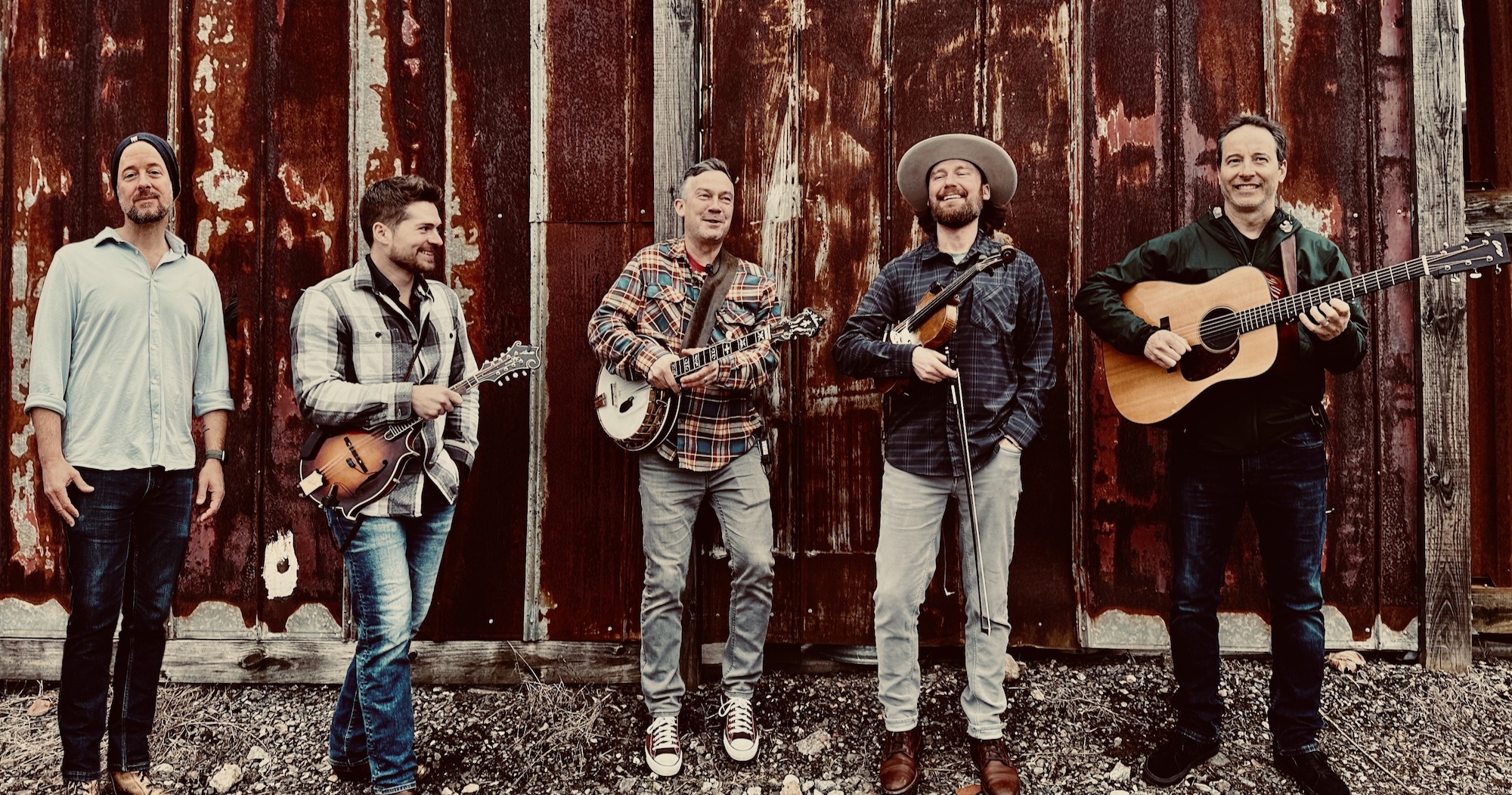
Yonder Mountain Never Meant to Change the Bluegrass Landscape, But They Did

Following instructions for listeners to Get Yourself Outside in 2022 and declaring they’re heading Nowhere Next in in 2024, jamgrass torchbearers Yonder Mountain String Band have reached their zenith on Good As True.

Released March 27, the collection finds the band embracing the skill sets of its newest members Nick Piccininni (mandolin, vocals) and Coleman Smith (fiddle) more than ever, as they dissect the human condition through nine tracks highlighting everything from falling in and out of love (“Brand New Heartache”), to confronting regret (“Blind”), and frustrations with today’s political climate (“The Lie”).

During a recent phone call, bassist Ben Kaufmann spoke with BGS about working Piccininni into the writer’s room, lessons learned from touring, how former band member Jeff Austin’s spirit sticks with him, and more.

This is your third album having Nick in the writer’s room with you, Adam [Aijala], and Dave [Johnston]. What has that evolution of bringing him into the fold there been like?

Ben Kaufmann: Yonder has always had its own special sound. There’s a very specific energy and communal taste with the music that we’ve been tapping into collectively for so long. Nick had already been writing for a while before coming aboard [for 2022’s Get Yourself Outside], so once we got him up to speed with our style we realized how intuitive he is. He has his own understanding of what a Yonder Mountain song is, which has made it fun when it comes to overhearing him workshopping songs or when we swap ideas backstage and on the bus.

We also knew, with recording time on the calendar, that we’d need more material. For most of Yonder’s lifespan we’ve had four writers – going all the way back to the days with Jeff, so it only made sense to give Nick the same opportunity when we saw what he could do. After putting songs from all of us “through committee,” a bunch of his wound up being cut [recorded] these last handful of years.

It’s especially important because Nick is such a wonderful singer. He’s great at everything he does, which is really inspiring to be around. He’s really stepped into his own as a featured vocalist and as a mandolin player. It’s been fun encouraging him to cultivate his own voice while also hearing him take the reins on some of Yonder’s oldest, most beloved songs.

What’s most satisfying for me with this band is writing my own songs, playing them with the band, and having people who are ostensibly there to hear the music enjoying it. There’s no better feeling than that and we wanted Nick to feel it too, since he’s currently in what seems to be a really prolific time of his life for songwriting. He’s the perfect fit for what we do. I’m so grateful he came into our lives and continues to enjoy making music with us. Being in a touring band isn’t for everyone, but everything with Nick has felt very natural from the start.

You just mentioned touring life, which I know the band touches upon with the song “Long Ride.” Do you have any good tips or wisdom you’ve picked up from your 28 years on the road with this band?

It’s like two hours of the greatest time of your life, every day, followed by 22 hours sitting in an airplane. [Laughs] In all seriousness, it’s been very different depending on the time in my life we’re talking about. I’ve handled it really well, but I’ve also handled it terribly. I’ve made mistakes and overcome them, but I’m sure I’ll make even more. When I was young I felt invincible. I’d drink too much and do all the drugs – not to the point of turning disastrous, but I lived that life. Doing that ages you so much faster than otherwise, and touring in general is already not easy.

Because of that I’ve spent so much time, energy, and money working on my personal growth through therapy and reading about ways I am deficient and could improve, to realize my full potential. A massively important part of my life is having a deep curiosity for how to be a better person, which is something I’d like to think I’d still be doing even if I worked in an office or at a place like FedEx. I don’t even know what else I’m qualified to do at this point except survive on the road.

What’s helped me through it all is paying attention to the people around me, investing in myself, and embracing the group dynamic so we can create the highest possible energy state and vibe. Essentially, don’t be a dick! [Laughs]

Lyrically, this record deals a lot with relationships, communication, and the fallout that can occur when those two things break down. With songs like “The Lie” and “One To One Another” this seems to deal partly with politics, but were there any other factors that motivated this direction on the record?

Not in the sense that we spoke about it ahead of time. We didn’t say, “Hey, we’re going to do a record so let’s write about A, B, and C.” A lot of our songwriting is done individually, but there still are some collaborative opportunities for us to get together, as well. As we got closer and closer to our recording dates and the song started being developed, [that] was when we first noticed those common themes. At the same time, I’m not surprised when common themes like this do emerge due to being on the road together and living the same life a lot of the time. When you’re seeing, doing, and talking about the same things regularly it’s easy to have a lot of synchronicity between what we’re writing about and creating.

Ultimately, we’re at our best when we’re writing about our own experiences and what we know. With “The Lie,” I like to think about Jesus, [and] all the bad actors in our world, many of which wield immense power. It makes me feel helpless at times as a bass player and musician – like, what am I supposed to do? It’s an overwhelming predicament, and that song for me speaks to that feeling of, “How did we get here?” It’s also very empowering to sing a song that speaks truth to something like that.

“The Lie” was also one of the songs that got my explicit vote when it came to making the cut for the record. When it came to sequencing, I also wanted that to be one of the first songs you hear when you put the needle down on your vinyl or press play.

“Blind” seems to be a song about regret, mental health, and realizing too late how much someone truly mattered. Have you ever thought about how that tune and what it’s describing relates to your fallout over a decade ago with the late Jeff Austin?

To this point I hadn’t connected that song with how I engage with Jeff’s spirit, but maybe I will now. His spirit and my thinking about him happens at every show. As time has passed, I’ve found that the thoughts I have about him that stick out are all the good times we had together, which wasn’t always the case for us. It was a deeply challenging and complicated relationship we had together and it wasn’t wonderful at the end, which is ultimately why we stopped playing together.

But as time passed, and with his passing – which remains one of the most tragic things I’ve experienced in my life – I became more and more crushed that he didn’t get the help that he needed. I don’t think he knew how important he was to so many people. I think more and more fondly of his spirit, energy, and memory with each passing day.

That original version of the band really changed bluegrass music by building a bridge between it and the jam world. What it did was really powerful, so it’s very interesting trying to think back and conceptualize what it was that we accomplished because we didn’t mean to do anything – we were just trying to play music the best we could.

As I look at it – especially as far down the road as we are now – I see the scene that’s developed from it and all the people doing amazing things with the music as a result. It’s all very humbling, and Jeff was a huge part of that. There’s never going to be anybody else like him, good and bad. We had a pretty complicated relationship – we were the best of friends for a while until we weren’t – but I always have and will love him.

One of my favorite moments on the record is the 17-minute jam on “Barroom Feather.” How did it come about?

One of the things that’s always interested us once we were able to start accessing the data is what our most-streamed song is, for better or worse. [Laughs] What we found is our most-streamed song is a cover of “Dancing In The Moonlight,” which is a good song, but not an original like I wish it was. Then our second most-streamed song is a tune called “Midwest Gospel Radio” that’s an instrumental from our self-titled record. On the album, when we first released it, the song was only two and a half or three minutes long, but along the way someone else released a nine-minute version that’s gotten millions of streams and is now second on our list of top songs.

It got me reflecting on our version and how comfortable we all were in the studio recording it, so when Dave brought us this song we pivoted from doing a shorter, “radio edit” version [that you also hear on Good As True] to something much longer. We recorded a couple takes that way, allowing ourselves to exist in that space and jam a bit, and I couldn’t be happier with the spaces and textures we came up with. It has this time-travel, hypnotic space-time warp thing about it that we were really psyched about. It works really well as both a more streamlined song and as a long jam like what we end the album on, so I’m excited to see how people listen to and engage with it.

You’ve been touring with Yonder for 28 years now. What continues to motivate you nearly three decades in?

First and foremost, I love music. That will never change. I also have a 14-year-old son that I love more than anything in the world. Music is part of the fabric of my flesh, blood, and spirit – I simply don’t know what else I’d be doing if not for it. I’m so blessed that this weird little music project called Yonder Mountain String Band happened, because looking back it doesn’t make much sense. Going from that to seeing what bluegrass music has become, having schools and colleges now devoted to bluegrass music, to [the] elevation of the music’s degree of technicality and musicianship, has been mind-blowing. None of that was the case when we were starting out in the ‘90s. We loved bluegrass music but were a lot more beholden to the spirit of the Grateful Dead than we were Bill Monroe, but we still wanted to play it.

I look at it in the sense of me being good at what I do, but by no means am I the best bass player around. None of us were the best at what we did and when you put it all together it goes against all the laws of physics, mathematics, and common sense. But two plus two equaled five for that one moment in time. I can’t tell you why, but it did and here we are now.

As a result, I get to live this extraordinary musical life that’s navigated some big ebbs and flows. That, along with all the fans who’ve embraced our music through the years and found us in different ways, is what keeps us going.


Photo Credit: Lead image by Robin Vega; alternate images by Mountain Trout Photography, Trent Grogan

Our Jamgrass column is brought to you in partnership with Preston Thompson Guitars.

Vince Gill Has Done It All (Part 1)

Vince Gill doesn’t give interviews; he gives conversations – lengthy, engaging conversations filled with the same reflection and storytelling that make his songwriting so relatable and successful. Factor in his enviable mastery of guitar and other instruments and the result is a well-rounded artist who has won 18 CMA awards, 22 GRAMMY awards, and eight Academy of Country Music Awards.

In 2025, he was presented with the CMA Willie Nelson Lifetime Achievement Award, and this year, on May 6, he will receive the Ken Burns American Heritage Prize. He’s been a member of the Grand Ole Opry since 1991 and in 2005 was entered into the Nashville Songwriters Hall of Fame. Two years later, he was inducted into the Country Music Hall of Fame.

Over the course of 21 albums his sales exceed thirty million with 45 chart singles. Coming up is a summer tour, which will wrap with a six-night residency at the Ryman Auditorium, while continuing his ongoing schedule with the Eagles. All of this is only a cursory glance at his many accolades.

Gill’s accomplishments, and the experiences that accompany them, are at the core of his latest project, 50 Years From Home, a yearlong series of monthly EPs marking the fiftieth anniversary of his leaving home to pursue a music career. Each collection features themed new songs and revisited classics, with photos of select guitars on the covers. The EPs are introduced via detailed conversations with friend and colleague Charlie Worsham – watch all episodes on Gill’s YouTube channel.

Down At The Borderline, released February 13, is the fourth and latest EP in the series, while the next installment, Lonely’s What I Do, already arrives this Friday, March 13. A few weeks prior to the release of Down At The Borderline, Gill made himself available for more interviews and conversations, including a talk with Good Country.

At this point, it’s difficult to imagine anything Vince Gill hasn’t done. In fact, there are two key things, neither of which he cares to pursue:

“I’ve never sent a text,” he says, “because I prefer talking to people. What you find out [with texts] is how many people really don’t want to talk to you!” And, “I’ve never posted anything on the internet,” although he does have a scrolling habit, which he gladly admitted to during this discussion.

As you move through endless interviews around these EPs, is there something you’ve always wanted to talk about but have never been asked? Now’s your chance to tell the world!

Vince Gill: I wouldn’t have a clue! I never was much of a planner. I think it’s a blessing that I just live in the moment. I don’t look ahead, I don’t look back much, and there’s not a lot of regrets in my life. I figure the mistakes I made were valuable to learn something. I never planned any of this. I didn’t sit down and have a diary that I’d go, “When I’m this age, I want to have done this and this.” I just answered the phone.

You should probably give classes on that, because this is an industry of nonstop worry: What’s going to happen? Will this work? Will this not work? To move from project to project, stage to stage of your career with that mindset is impressive.

I started out with absolutely not one dollar, so money has never been the reason for any of it. I bought a guitar when I was 18 years old and I moved away from home. It was an old pre-war Martin that was perfect for bluegrass. I spent every dime I had on it and I didn’t worry. I said, “My rent’s $15 a month, I’ll make a couple hundred bucks a week when we work, so I’ll be fine.”

Amazing.

Speaking of going from stage to stage of your career, the EPs are each a chapter told with collections of songs. Tell us more.

The majority of it is fairly new. From the time I started in 1975, there was no reason to have a publishing deal for a long time. Even after I had a record deal, I didn’t see the need because I had a place for my songs to land on my own records. I never partnered up with a publisher, to give away half the money, to give a monthly draw to help pay my rent or whatever. I was able to always pay the rent somehow – my house note, whatever it was – with playing and singing.

Three or four years ago, Jody Williams, who’s a lifelong publisher in Nashville and a friend of mine for 40-something years now, called me and said, “You’ve never had a publisher. Would you consider letting me manage your songwriting for a while? I think you still have a lot to say as a songwriter.” I said, “Yeah, I’ll try that out.”

He would call great songwriters and say, “Would you like to write a song with Vince?” I was never a very good self-promoter, so I would never do that on my own. I just let it unfold with people I would meet. So it started me down this path of writing a lot of music, and over the last three or four years I’ve written twice as many songs as I’ve recorded on this new 50 Years From Home project. I think I’m writing the best songs I’ve ever written. With time you should get better, and I think I have.

I don’t want to check out someday and have all these songs lost in a desk drawer somewhere, so I’ve started recording them all. It’s a different world now, a different way. If you want to release 75 songs, you can do it. You don’t have to have one album with 10 songs on it anymore. So I started thinking about what it would be. My first conception was to release two songs a week, like an A-side and B-side of a 45. “It’s Monday, it’s time for a couple new Vince songs.” The record company came up with the idea of, “Why don’t you do a series of EPs and have six or seven songs on each one?” I said, “That sounds cool. We’ll put one out a month.”

That’s where the whole thing started. I was trying to find a way to put all this out. I realize at this point in my life, I’m almost 69, I don’t have as much time left to be creative as I’ve had to this point, obviously. How much more it matters now is palpable. It really means something to me to be creative, and if I see myself improving, I want to nurture and foster that and continue, because it’s so dear to me, being musical, being creative, coming up with an idea, coming up with a story that could potentially move somebody, touch somebody. It’s unbelievable to be able to have that gift, to be able to do that. So I’m trying to take full advantage of it.

But 68 or 69 today is not the 68 or 69 of our parents’ years. When you’re a kid, your parents turn 50 and it seems ancient.

That’s true. My mom’s a hundred years old.

See? You have many more years to go, especially if you’re still 17 in your head, which happens in this business.

Yeah, and I am. I don’t feel any different than when I pulled out of the driveway and took off. I still have the same love and I’m so drawn to playing music. It’s such a huge part of me. I tell everybody, “My mom’s a hundred and I hope I’m really her son, so I have those genes! For all I know, she might have rented me out of a yard in southern Oklahoma somewhere!” But my dad checked out early. He died at 65 – and I was afraid of being 65. There’s so many instances of people passing at the same age as their parents and whatnot.

I’ve heard from others that it’s a strange feeling when you reach the age when a parent passed.

Absolutely. But my dad drank a lot, he smoked two packs a day, and he didn’t take very good care of himself. I don’t think I have too many of those qualities. I don’t smoke and I don’t drink. I eat bad, but that’s about it.

You’ve stated many times that your goal was always to be a recording musician. With reality shows and social media, do young players have that same goal, or is a lot of it about chasing clicks and stardom? Are you concerned about the future of musicianship?

No, because there are plenty of young kids out there that can play their brains out. There’s so many of them that you don’t worry about it. I tell people all the time, “If American Idol was on in 1948, Little Jimmy Dickens would’ve been on it.” I don’t really care for those shows – and not in a bad way, because a lot of talented people go on them – but sadly, you don’t see that really bear out with a lot of artists coming from those shows that have longevity. They have that moment, but we’re so ready to slide our thumb and move on to the next scrolling thing. It’s the same way with those shows: “The season’s over. Okay, who are the new ones?” And I never like seeing creativity be a contest.

But I don’t worry too much. You see someone like Sierra Hull, who can play better than anybody in the whole world, and Michael Cleveland, and so many that come along that can completely annihilate their instruments. It’s beautiful to watch. I don’t think that’ll ever go away.

Does AI-created “music” concern you?

Of course, but when I’m asked about it, I say, “The people who create it, deep down, they know they haven’t done anything. They know they’ve done nothing.”

As a recording and performing guitarist, singer, and songwriter over a lot of years, how has your approach changed? Your technique, your picking style, your ear, your tone?

It’s a combination of all of those things. I’ve spent the latter years realizing what I don’t need, what I don’t need to do, what I don’t need to play, what I don’t need to sing, what I don’t need to say in the lyrics. To me, the beauty of it is your willingness to try to say the most with the least.

I like my singing better now than I did when I had hits. I much prefer the way I sing and play my songs today. That’s motivation enough, that I feel like I’m better now than I ever was. My ears have never lied to me, and with that, if I feel like I’m making progress, that’s all the reason in the world to keep doing it. If I start wheezing like an old woman, I probably won’t wanna go out there and sing. But, thank God, that hasn’t happened yet,

With music, the more you do it, the more you learn. The point of it is not to impress, but to move people. If you can move people with what you play and sing and write, that’s the real gift. That’s when you really get something that matters out of it, rather than a big “Woo, that was incredible! That was impressive.” That’s fleeting in a way. I like the long haul.

I could have very easily stopped working on other people’s records and being a sideman and a harmony singer and guitar player and what have you. But I love doing that so much, because I always thought it was a harder job to complement somebody and what they’re doing, more so than doing what you want and having everybody follow you. It took more talent to do that – better ears, bigger ears, that kind of stuff. So I continue to do that. I’ve worked on over a thousand artists’ records in the last 50 years. The diversity of that, the willingness to go into any kind of world of music and try, and not just be shortsighted and only do this and only do that – I love all of it. I’ll find something good in any of it. If I can play a part in making something better that’s being done, then that’s a good feeling.

Can you draw a through line from your bluegrass roots to what you’ve done and what you do now?

“When I Call Your Name” wouldn’t have sounded like it did had I not played bluegrass. That high lonesome sound was totally taken out of my love and life of bluegrass. A song on one of my new records [Secondhand Smoke, EP 2] is called “Hill People,” with [harmony vocalist] John Meador – great singer, great player, it just blows my mind how good he is. That sounds the way it does, it was written the way it was, because of my history of bluegrass.

I was never one of those guys that [would say], “I can only play bluegrass and it has to be traditional.” I loved New Grass Revival. They were different than Bill Monroe and I loved it all. If you take whatever’s great about something and cast the rest aside, then you’ve done your job. I’m not critical of young people that don’t do it the way I did it, or the way my heroes did it. That doesn’t serve anybody any good, to be critical of stuff. I remember hearing Billy Strings talk about how he would go to jam sessions and felt unwelcomed, and that killed me. I felt so bad for him.

I experienced that once when I was 17. We were playing some bluegrass festival, a hardcore traditional-minded festival. We were up there playing “Rocky Road Blues,” which is a Bill Monroe song, but we were doing it real bluesy. The promoters kicked us out of the festival and said, “You can’t be playing that kind of music!”

As they were kicking us out, Jim & Jesse were playing Chuck Berry’s “Johnny B. Goode.” I said, “Now wait a minute. We’re playing a Bill Monroe song and we’re going to get kicked out, and they’re playing ‘Johnny B. Goode’ by Chuck Berry? What’s cool about that?” They go, “Their suits match. Get outta here!”

I’ve known Sam Bush for 50-something years. The story he tells about Monroe is that he said, “What is it you call that music you play?” Sam said, “We call it New Grass.” He goes, “Yeah, I hate that.” That kills me, but it didn’t impact Sam one bit. But that hardline thing – I don’t go for it.

You’ve said that the role of the artist is to speak for others. Are there songs that speak for you, or to you, in those moments?

I like the things that are the most honest, that are not trying to be something they’re not. I’m not a fan of singers that alter the sound of their voice to make it do something it doesn’t naturally do. I heard Merle Haggard say, “Man, just tell the truth.” That’s where I’m finding the biggest inspiration in songs is being truthful. I think the truth has always been the greatest thing you can lean on.

People talk about country music, and if you could point somebody to what you think country music is, I’d say Merle Haggard’s “Mama Tried.” How it starts– “I turned 21 in prison doing life without parole.” That’s pretty dark. That’s pretty sad. And then, “No one could steer me right, but Mama tried.” There’s your hope.

One thing they’ve never taken away from me is hope. Even though they quit playing my records on radio stations and I don’t have hits anymore, I’m always hopeful that something will slide through and move people. I had hope when I made my first record at 16 or 17 years old, and lo and behold, some radio station played it and I heard it in my pickup truck. That instilled a hope in me that’s never faded. They can pass on songs, they can not play them, they can do all that, but they have never dinged my hope in my heart for what it is that I want to try to do.

Where were you in your truck when you heard yourself on the radio for the first time?

I-40, Oklahoma City. I was driving and all of a sudden they started playing “July You’re a Woman.” It’s a John Stewart song and we’d done a bluegrass version of it. I was singing lead. I think some other bluegrassers had done that same song. I’m driving and all of a sudden they started playing it on the radio station and I get on the CB radio and start screaming, “You’re not going to believe it! They’re playing our record on the radio!” Truckers were coming back saying, “Hey, you sound good, kid! Hang in there.” Wow.

The first record I ever made, I heard on the radio. It put that dose of hope in me that has never faded.


Editor’s Note: Read part two of our Good Country conversation with Vince Gill here.

Want more Good Country? Sign up to receive our monthly email newsletter – and much more music! – direct to your inbox.

Photo Credit: David McClister

Two Decades of ‘Dusters Discography

With over a dozen studio credits and even more EPs and live albums to their name, the Infamous Stringdusters have been one of the most persistent forces in bluegrass and roots music ever since staking their claim with 2007’s Fork In The Road.

Even as members changed in those early years, the band quickly found its core – Andy Hall (Dobro), Andy Falco (guitar), Jeremy Garrett (fiddle), Chris Pandolfi (banjo) and Travis Book (bass) – and rapidly began homing in on a sound that’s equal parts traditional and progressive bluegrass with a touch of country, jam, and other influences along the way. That variance has led to each of the band’s recordings having a distinctly different flavor than its predecessors, from the harmonious bluegrass symphony of Silver Sky to the feature-rich Ladies & Gentlemen, hope-fueled Laws of Gravity and Rise Sun to the somber Toward the Fray.

“Making a record that sounds like the Stringdusters isn’t the challenge,” Book told me in 2022 for No Depression. “The challenge is seeing just how deep we can get on each song in order to make it the best, most authentic version of itself it can be. This requires us all setting aside our egos, being open to suggestions, and trusting one another to create the best music as possible.”

In celebration of our Artist of the Month, we take a look back on the Stringdusters’ sonic evolution and essential tracks from their two decades in service of bluegrass and the song.

“Fork In The Road” – Fork In The Road (2007)

On their emphatic 2007 debut, Fork In The Road, the band – then comprised of eventual Punch Brother Chris Eldridge (guitar) and Jesse Cobb (mandolin) alongside Book, Garrett, Hall, and Pandolfi – quickly struck a chord with bluegrass aficionados on songs like “No More to Leave You Behind” and the album’s title track. The latter of which positions the band’s fiddle maestro front and center as his high-pitch croon carries the weight of being at a crossroads. Whether it’s a hypothetical take or one rooted in the group’s own musical experiences, it’s safe to say the path the ‘Dusters have taken since has more than paid off with a legacy 20 years strong and counting.

“Magic #9” – Things That Fly (2010)

The band show off their picking prowess on the whimsical “Magic #9,” a track that resulted in their first-ever GRAMMY nomination at the 53rd annual awards in 2011. While the ‘Dusters can thrash and sing bluegrass harmonies with the best of them, songs like this also showcase the group’s knack for crafting their own instrumental compositions. Their tunes pack just as much story and emotion – if not more – into a three-and-a-half minute burst than most of their counterparts with vocalized accompaniment. Coincidentally, the GRAMMY the song was up for was not in a bluegrass category, but rather for Best Country Instrumental Performance. Given the band’s penchant for string music, unreal levels of improvisation, and the consistently inconsistent award nominations process, it’s the least bit surprising, if not even a bit fitting.

“Rockets” – Silver Sky (2012)

The song that first unlocked my captivation for the Infamous Stringdusters (and still my favorite to this day) is “Rockets.” It was around the time the album it’s included on, Silver Sky, dropped that I began seeing the band in concert for the first time and this song was always a staple. The uplifting temperament and optimistic nature of Book’s vocals combined with the meticulous instrumental timing – from Garrett’s fiddle interjections to Pandolfi’s hard-driving banjo backbeat and Hall’s slick Dobro tones – culminate in a joyous, borderline spiritual experience every time I hear it.

Because of this and other tracks on Silver Sky like “Fire,” “Night On The River” and “Walking On The Moon” I consider the record without a doubt their most essential project to date. Although, as you’ll see, the great tunes haven’t slowed down in the years since.

“Still the One” (featuring Nicki Bluhm) – Ladies & Gentlemen (2016)

The ‘Dusters’ 2016 effort Ladies & Gentlemen stood out for many reasons – most notably its more folk-leaning bluegrass numbers and star-studded list of collaborators ranging from Mary Chapin Carpenter and Lee Ann Womack to Sara Watkins and Jennifer Hartswick (Trey Anastasio Band). However, the most frequent collaborator from the record was Nicki Bluhm. Her contribution on “Still The One” blossomed into frequent support songs on the road performing not only that track, but several other cuts from the breakthrough album. It wound up taking the band’s already spectacular knack for partnering with others to another level. As for the song itself, “Still the One” is a powerful rallying cry about a love that persists even when heavy rain, or life’s difficult moments, try to get in between and tear you apart.

“Gravity” – Laws Of Gravity (2017)

After a decade of slinging bluegrass, country, and roots-adjacent bangers, the ‘Dusters finally reached the musical mountaintop with their 2017 album, Laws of Gravity, which earned them their second GRAMMY nomination and first-ever win for Best Bluegrass Album. Central to that accomplishment was the album’s de facto title track “Gravity,” an anthemic adventure.

Similar to the aforementioned “Still the One,” the song focuses on the story of two inseparable lovebirds charting out a future life of memories together, even if they don’t know exactly when, how or why it will all happen. Most important to them though is the memories being made in the current moment, whether that be together, at a Stringdusters show, or something entirely different.

“Rise Sun” – Rise Sun (2019)

With the lead and title track to their 2019 album Rise Sun, the Infamous Stringdusters make a late entry to folk music’s stomp-clap party, combining the early 2010s trend with heated string music like few 2010s contemporaries could muster. The track also features a noticeably hopeful hue set in motion by the metaphor of a rising sun not only spawning a new day, but bringing change and the opportunity for a fresh start, as well. In that sense, the band had no idea how much hope people would need the following year, when COVID shut down the world. The result of which inspired the band’s next original entry to this list. But first, the ‘Dusters pay homage to the father of bluegrass…

“My Sweet Blue Eyed Darling” – A Tribute to Bill Monroe (2021)

The bluegrass ballad in pole position on Bill Monroe’s 1977 album Sings Bluegrass, Body And Soul, was “My Sweet Blue Eyed Darling,” a track that holds the same spot on the Stringdusters’ 2021 recording, A Tribute to Bill Monroe. On it, Pandolfi leads the way with his steady, blistering banjo while Garrett and the others hit home on the signature high and lonesome harmonies that Monroe is legendary for.

Fittingly, this collective album honoring the bluegrass legend wound up earning the ‘Dusters their third GRAMMY nomination in 2022, though they came up short to Béla Fleck’s My Bluegrass Heart. Their foray into recording covers isn’t anything new for the band, who later went on to record a Flatt & Scruggs tribute along with a series of Undercover EPs (more on that later) in addition to weaving other folks’ material into their live sets on a nightly basis.

“Pearl Of Carolina” – Toward the Fray (2022)

While the Stringdusters’ members call many places home, there may not be a more appropriate individual place with which to associate the band than Western North Carolina. Touching on that connection to the Old North State, Book sings about love and longing to return home on “Pearl of Carolina.” The song’s title stems from an intro script he was crafting for his musical talk show podcast, The Travis Book Happy Hour, as a way to describe the region.

In addition to being grounded in a person or place, similar to “Gravity” or “Still the One,” “Pearl of Carolina” is also a reminder to search for the places and small things in life that bring you joy. While much of Toward the Fray takes on a darker tone, “Pearl” stands out as a burst of much-needed normalcy on a project otherwise finding inspiration in a world of disarray.

“Touch Of Grey” – Undercover, Vol. 3 EP (2024)

The band has covered a bevy of artists on their Undercover series of EPs, from Tom Petty to The Highwaymen, The Cure, and ZZ Top, but none fit the band’s style and sound (with the exception of the Monroe and Flatt & Scruggs stuff, perhaps) than their rendition of The Grateful Dead’s “Touch of Grey” on Undercover, Vol. 3. Released in 2024, the ‘Dusters’ take on the Dead’s most commercially successful hit combines the best of both groups, further adding to the song’s timeless nature – a message that, 40 years after its original release, feels just as relatable and relevant as ever.

“Working Man Blues” – 20/20 (2026)

Much of the Infamous Stringdusters’ journey over the past two decades has been inhabiting the role of blue-collar road warriors playing anywhere for anyone who would have them. With that in mind, there’s no more fitting song to kick off their next album, 20/20, than “Working Man Blues.” The band sings about a man clocking in before sunrise and doing hard labor all day before clocking out and heading to the bar in search of fun. It’s a combination of rugged, resistant, and rowdy that embodies the Stringdusters’ entire sound and ethos for 20 years now – and, if we’re lucky, will continue for another 20 more (and then some).


Continue exploring our Artist of the Month coverage of the Infamous Stringdusters here.

Photo Credit: Daniel Milchev

Laurie Lewis’ O California!
Was Made With Open Ears
and Open Minds

It’s noon in the Bay Area, and singer-songwriter/multi-instrumentalist/producer Laurie Lewis is sitting in her backyard on what she describes as “a beautiful sunny day.” She spent her morning pulling up oxalis, and now she’s painting a railing she purchased at Urban Ore.

“It’s a good handrail for our front steps and along the walkway for my partner, Tom,” she says, “so I’ve been sanding it, wiping it down, and painting it.” Later during this interview, she’ll continue pulling up weeds, noting, “It’s very liberating for me, getting my hands in the dirt. It feels really good.”

The reason for today’s call is Lewis’s new album, O California! Like its predecessors, it’s an emotional palette of songs – five originals, five traditionals, and a cover of close friend Alice Gerrard’s “Sweet South Anna River” – that blend the many genres influencing her work, from bluegrass to country, jazz, and even a hint of rock. O California! features the stellar musicianship and vocals that define Laurie Lewis and her band, The Right Hands: Brandon Godman (fiddle), Hasee Ciaccio (bass), and George Guthrie (banjo, guitar).

A two-time IBMA Female Vocalist of the Year and a two-time GRAMMY nominee, Lewis is no stranger to BGS readers, as she’s been featured many times. Dedicated fans are also deeply familiar with her longtime partner, mandolinist Tom Rozum, and his Parkinson’s disease diagnosis. “He’s doing pretty well,” Lewis says. “He had spine surgery in November and he’s recovering very well from that. He had been living with intense sciatica pain for a year and a half, and the pain is gone, so that’s great.”

What would you like readers to know about O California!?

Laurie Lewis: Let’s see… all kinds of things. I wrote five of the songs on the album and they’re all over the map, so they’ll say, “She’s got a lot of different musical influences.” We’ve also drawn from the folk tradition and some great traditional songs and thrown that in the mix. It’s all done with the same four people and same four voices on beautiful acoustic instruments. Sonically, it’s really nice. You really hear the personalities of these particular four people working together. It’s what made me want to make the album.

This is album number 25 in your catalog. Artists often speak of albums as chapters in their lives. Which chapter is O California!?

This chapter is this band at this moment in time, these particular four people. I wanted to celebrate our working relationships together. It’s something that wouldn’t have happened at another time in my career, because I wasn’t working with these particular people for as long as I have been on this album. They are all on the previous album, but that was me calling all the shots. This is me settling in, listening to everybody, and trying to make a whole out of the four parts.

How did this approach make the creative process different?

Usually I come into a recording situation with more of an idea of what I want a song to sound like. This one, I came in with snippets and vague ideas for [the band] to have their way with it. We collaborated on arrangements and we listened to every idea. It’s not that I don’t listen to other people’s ideas at other times, but generally there might be more input than just three other people if I’m doing that.

I’m a collaborative artist. One of the reasons I play music is because it’s my best way of communicating in the world. And that is, for me, to an audience. But it’s also true for me to my bandmates and other musicians. It was fun to say, “We’re making a band album. This is what it’s going to be. We’re going to let people toss out songs.” “How does this sound?” “Oh yeah, great. Let’s do that.” It was, “How shall we do it?” “I’ve got an idea.” “How about if we do this?” It’s a very free and open feeling.

[The band are] all very open-eared and open-minded about the music. It doesn’t have to be the way Earl Scruggs did it, or the way Bill Monroe did it, or anything. It doesn’t have to fit into a neat bluegrass category. I’ve played with musicians in the past who have been more or less open, and all it takes is one more closed-off person to direct the band in a particular direction.

You’ve stated in the past, paraphrasing here, that writing is sometimes specific and sometimes spontaneous, sometimes it’s almost random, sometimes it’s unfinished. What was it this time, or was it some of each?

I’d say it was some of each. With the song “O California,” I was writing lyrics in the studio. I did a scratch vocal and changed the lyrics three times before I came home and overdubbed an actual vocal. That’s unusual for me, that it was in such an unformed state when I got into the studio, but it’s when we had the time and I knew the bones of it were good. Some vocal lines, some lyrics, just were not right yet, but I knew what it was about.

When did the songs start coming together as an obvious collection? Was there an intention in mind, a theme, when you all got together?

We started this project in a different way than I have other projects. We had little tours booked, so we would get together a day early before every tour, because we all live in different parts of the country. They would fly out here, we’d rehearse a song, get what we wanted down, figure it out, and then go on our tour and play it every night. We’d have a studio day booked on the day we got back from the tour, so we’d go in and record whatever we had worked out the week before and played on the tour. It was a fun way to approach a project and it spaced it out over a long period of time. It took close to a year.

When it’s spaced apart that way, how do you make it feel like a collection, rather than recording individual pieces of music?

Because it’s all us. It’s like an old friend – you can pick up the conversation right where it was. You haven’t changed your tone or your relationship with each other so drastically that it doesn’t fit together. It would be different if I were doing something like that over a year and just getting together with whoever I thought was the right person to play on a particular song. Then, the only thing that would hold it together would be my production values.

Do you still write ideas on notes, or have you tech-ed your way up to phone apps?

Oh, no. I write. I like to write with a good pen or a pencil on a piece of paper. I will make notes sometimes on voice memos, but mostly that’s it. I’m old-fashioned. I feel like there’s something that happens, the tactile feel of a writing utensil on the paper, that is easier for me to get a thought out than to sit at a keyboard. I’ve been known to still write letters, in fact.

We live in a world of texts, emojis, phone scrolling, and what’s being called “an epidemic of isolation.” Bluegrass is associated with festivals, musicians getting together and jamming, and community. Is this still true?

Oh, definitely. In fact, here in the Bay Area it’s having a real resurgence of community jamming culture. That’s always been at the basis of bluegrass. It’s what everybody wants to do – get together and let their instruments do the talking, let the songs do the talking. It’s a wonderful thing. I love it so much.

You mentor and teach at workshops and music camps, where you connect with younger and up-and-coming musicians. What do they want to know? What do they need to know?

One of the things that I try and impart to people is the importance of finding your own voice, because many young musicians have heroes they want to emulate. That’s how you learn, but at some point you have to find what you want to say with your voice and your instrument. That’s one of the things I try to emphasize and help people feel confident that they have something to say and their own way of saying it.

There is intergenerational connection at these camps and workshops, contrary to the ageism on both sides, that society seems to push: “What do those kids know?” or “What do those old people know?” What is your perspective?

There’s still a lot of that, but luckily there are enough people, young and old, paying attention and willing to listen to each other. It’s especially helpful when there are youth music camps and stuff like that, because then the kids have each other, but they also have their mentors there. They’re there because they want to learn, and it’s usually the older people who are teaching them, but then they get to be with their cohorts, their age group, and that helps a lot.

I certainly learned a lot from teaching at kids’ camps. When I first was asked to teach at a youth-oriented fiddle camp, I thought, “I can’t do that. I don’t know how to talk to kids. I don’t know anything about that stuff.” I said yes because I tend to say yes to things, and I found it to be so enlightening and so important in my life. It’s very enriching.

On a 2021 FolkWorks podcast, you talked about The Good Ol’ Persons playing a trade show luncheon years ago in front of a room full of drunk men. You described it as being “thrown to the wolves.” Many years later, how are we doing?

In terms of women musicians out in the world, there are so many more, and it is so great to see. And the technical abilities – you can’t fault it. You can put Molly Tuttle up against any guy. It’s been some huge steps forward in the time I have been in the music business, but it’s still very male-dominated from the top. It takes generations to change things like this, these ways of thinking, and now there’s a real cultural backlash happening and I don’t know how that’s going to play out. Women have made huge strides and maybe that’s just going to be taken away. Every generation has to fight the same fights, apparently.

Overall, how is bluegrass doing, to your eyes and ears?

That’s a really hard question for me to answer. Honestly, there’s a part of it that has gotten very entrenched in staying within a particular genre. I hear a lot of songs by people singing in a bluegrass style about bluegrass music, or their cabin home and I think it’s in danger of becoming a trope instead of a living, breathing art form.

Luckily, there are enough people out there creating in the art form and doing great stuff. There’s so much of everything happening all the time now that it’s going in all different directions at once. There’s good stuff and bad stuff, and it all depends on your point of view.

Who is making an important contribution, in your opinion?

I hear a few things now and again that I respond to and like a lot. I’m not very impressed with a lot of technical brilliance. I want to be made to laugh and cry, and if it doesn’t do one or the other or both, I’m not all that interested in it.

In terms of bands, Mighty Poplar can do it, and the duo Paper Wings, two young women, Emily Mann and Wila Frank, who I actually met at a fiddle camp when they were teenagers. They’re pretty wonderful. And I always like hearing what my old friends are coming up with in terms of songs and writing. I love hearing whatever 92-year-old Alice Gerrard is coming up with. She has a way of putting her finger on the pulse of what’s happening in the world and is pretty great.

In 1998, you recorded a song called “The Refugee.” Twenty-eight years later, here we are …

Oh, I know. I find it unfortunate that [that] song is still so incredibly relevant – or more relevant. I find it very unfortunate that song has not outlived its message. It’s terrible. I wrote it when Guatemala was in such bad shape, people were fleeing, and there was all this backlash. It’s an empathetic song. These days, empathy – there’s a whole movement, “empathy’s a bad thing.” It’s so crazy.

In a 2020 interview with BGS you said, “Music has a real way of being able to soothe and heal grief.” Could you talk about that healing power, not only as a songwriter, but also as a lover of music, a listener?

Oh, yeah, it’s true. I stand by that. There’s nothing like it. It’s such a direct conduit to the heart. A song can sneak in and express something for you that you had no words for. It can help you, as a songwriter, to figure out a way to express what you might be going through in a way that makes it universal. You put it out there in the world, everybody can feel it and relate to it, and it makes you feel a part of something greater than just your little dark cell that you might be stuck in, or your own personal grief.

It has helped me deal with things, with grief in my life, to be able to learn a song that makes me cry. Every time I hear it, I learn it, and it becomes part of me. It becomes part of my way of being able to express myself, or to write a song that every time I start trying to sing it, I’m in tears or something. You learn to work through your grief by embracing it musically. It’s an incremental way of dealing with things, and it’s really healing.

It’s a sense of support through the company of songs that speak to us.

Yeah. You are not alone. Especially with all the internet stuff, people spend a lot more time not with actual other humans, having conversations or whatever. To hear something, to listen and understand that other people are going through the same alienation or grief or loss, or whatever it is that you are experiencing, makes it easier to bear.

The French author Jean Giono, who wrote The Man Who Planted Trees – I wish I could find this quote – said in an essay that an artist’s duty is to express yourself for all the people who don’t have the words or the art to express themselves. It’s your duty in society, your job, to put it out there for everybody who can’t.


Photo Credit: Dawn Kish

Larry Sparks Is a Surprisingly Zen Bluegrass Star

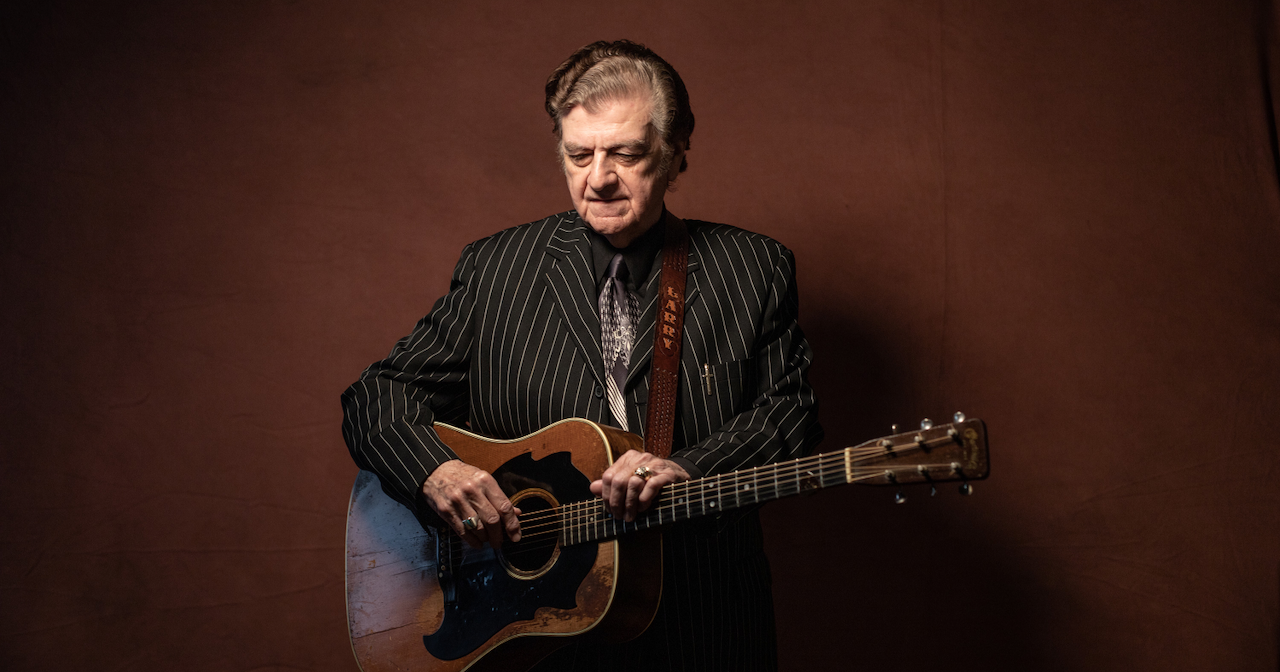
Speaking to Bluegrass Music Hall of Fame inductee and IBMA Award winner Larry Sparks over the phone, you might never guess you’re conversing with a living legend. He’s remarkably humble, down to earth, and plainspoken. And his approach to making bluegrass – as he has professionally for more than 60 years – is surprisingly zen.

His latest album, Way Back When, was released in late October 2025 and the project finds Sparks in exactly the same sonic space as any of his excellent LPs from the last six decades. If you were to take a short audio sample of Way Back When, it would be genuinely difficult to identify from which era of his lauded career it came. The project is warm, lively, and resonant, sounding like you’ve been dropped into a cozy living room with perfect acoustics and a superlative bluegrass string band.

The songs, as well, are timeless and classic, whether fresh tracks, iconic covers, or an old-timey instrumental fiddle tune with familial origins. Like his vocal style, guitar picking, and production preferences, Sparks’ song curation also feels like an intuitive extension of his personality. When he describes how he accomplishes this consistency across eras and executes the timelessness of his albums, it seems as though he becomes a sort of bluegrass guru.

“When songs touch me, they touch my feelings,” he explained to BGS . “When the song touches me, it’s saying something. I’ll take that and see what I can work with, and make it my song.

“The song’s me and I’m the song. And that’s the way that they did it back in the day. They become that song – the older singers, they became those songs. That’s the way that I do it, I try to make that song me and me the song.”

It’s a secret ingredient lacking from too many bluegrass records out there today. Not just his inhabitation of songs so that they can inhabit him, but also treating bluegrass like the forebears of this music did. As a living, breathing, cutting-edge thing that doesn’t need to be built on a foundation of regurgitation and emulation and litmus testing. Like Sparks puts it so simply – and eloquently – in our conversation, bluegrass has mainstream appeal. It requires heart, soul, and being present – becoming the music and becoming each song.

That right there is exactly how Sparks became a Bluegrass Music Hall of Famer and a hero to many – Alison Krauss, Billy Strings, and this writer included. It’s also how he’s maintained a consistent (never boring, stale, or regressive) sound over the course of his 62-year career. And, it’s what keeps him motivated to continue looking forward while inspiring all of us and reaching new audiences.

Let’s start by talking about your excellent new album, Way Back When. When I first listened to it in the fall, when it was released, I was struck by how old-school it sounds. The production style sounds so timeless, it sounds so warm and live – like real bluegrass. It also feels like it could have been pulled from almost any era of your career. with the way that it’s produced and the way that it stands out sonically. I wondered how you accomplished that?

Larry Sparks: I try to do things normal and just go for it. And all of the band– you just feel what you’re doing. You make it real. It’s hard to explain. It’s just, I sing and play from my heart, soul, and mind. Some songs you don’t have to do that, you just – like the old saying – rear back and let it go.

But some songs need attention, and you have to become that song and the song becomes you. That’s the way that I think probably all these songs are, everything I sing is pretty much that way. But, I don’t know, the feel just comes out natural. It’s more of an older feel, the real feel. That’s the way I like things. So much [that’s] added in today’s recording and music and everything, it’s okay – I’m not saying anything about it! But myself, I’d rather keep it pretty real, just like it used to be.

Are you tracking in isolation booths? Or are y’all tracking in the same room and live? It doesn’t sound like you’re putting the music under the microscope, as it were.

No, I don’t like that. You have to [sometimes], but I’d rather [not]. It’s [an] all in the same room deal. Sometimes you’ve gotta do an overdub break or something. You miss your hot lick, you gotta do it over again. Overdubs are good to use, but I don’t like to depend on them. I’d rather do it straight down the line, and if you make a mistake you do it over, you can overdub a spot or something.

Something else that stood out to me listening to the album is how consistent your sound has been over the decades. You have your own way of singing, you have a style that’s really consistent – as well how you pick the songs that go on your recordings. And you certainly have your own guitar-picking style. Almost no one picks like you these days. How do you think it is true, across 60 years in music, that when you listen to Larry Sparks, you know you’re hearing Larry Sparks and Larry Sparks alone?

It’s a natural style for me. I respect the older songs an awful lot. The older music and the older singers, that came along before I did, in the ‘30s, ‘40s, and ‘50s. I was a kid, but I remember the music mighty, mighty well in the ‘60s. All the older country singers were embedded in me, too. Some of the people just stayed in me. They were good singers and their music, their singing was real. It embedded in me.

I still had my own way of singing and playing. I never did wanna copy someone else. And although I respected what they did very much, the older music and the older country and bluegrass [artists] and whatever else – there is other music, too. It just became natural for me to have my own style of singing and playing, and I never really worked on it to do that. It’s just me, and the band pretty well feels what I’m doing.

The whole thing, you gotta keep it natural, real, and feel what you’re doing, from your heart and soul. That’s the way I do it. It’s nothing I plan to do. It just comes out that way.

I think that’s why it works and is so consistent across your entire career, because it’s not a costume that you put on, it’s not affectation, it’s not a target that you’re trying to hit. It’s just you being you.

People can feel that, too. The audience can feel what you feel. Most of ’em, they can feel exactly what you feel, what you do.

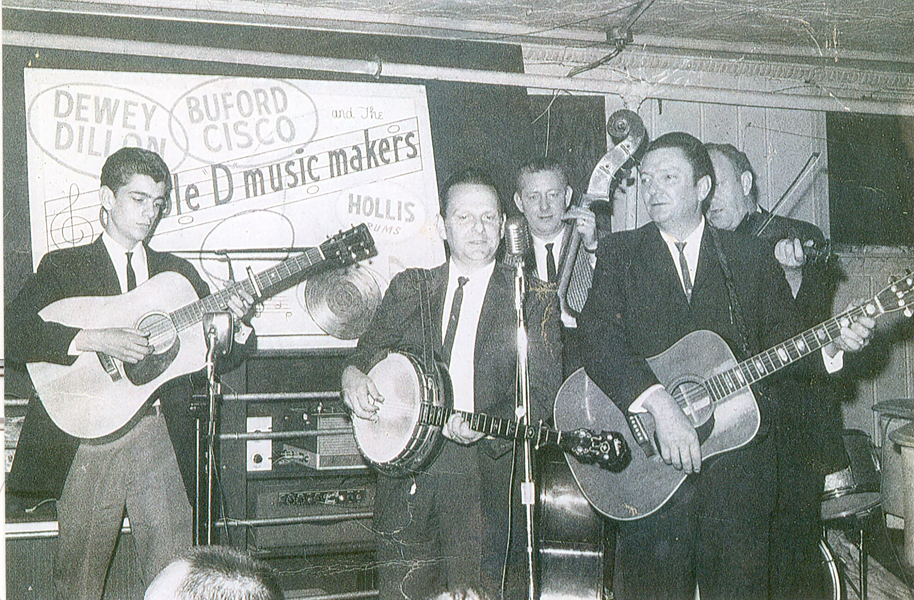
Larry Sparks (far left) performs with the Stanley Brothers before Carter Stanley’s death. Circa 1964. Image courtesy of Rebel Records.

I so appreciate that you bring up heart and soul, because I think people make the assumption that bluegrass is not a music that’s based on heart and based on soul. Especially when you listen to some barn burning, shredding bluegrass or jamgrass.

But for me, this music has always been as much about the stories, the heart, and the soul – and the feeling of it. And that’s clearly such an important part of it for you, too, and the storytelling. I think a lot of people don’t realize heart and soul are an important part of the tradition of bluegrass.

Yeah, sure it is. I’ve worked under the bluegrass name for years. Bluegrass is about 80 years old now, and I have been into it 62 of those years.

Wow.

I can’t believe I’ve been into it that long under the bluegrass name. My music is considered bluegrass, but actually a lot of my stuff could go either way. I’m considered bluegrass and that’s fine. I appreciate it. I’m honored, but a lot of my stuff can go into country or some other direction, too.

I just hold to what I’m doing and [what has] been a good business for me over the years. But you have to make it work and look ahead. The music is music, but you gotta make a business out of it. If you don’t, it’s not gonna work. And that’s what I did. It’s worked out for me. A lot of the bluegrass [industry] is not easy. It’s not one of the easiest forms of music to “make it” in.

And, it’s always been set behind [other] forms of music. I’d really like to see it be possible for bluegrass to be played on all stations. To play it [alongside] new country, modern country, rock and roll. Whatever it is, mix it up. But get bluegrass to program directors. If it ever could get played on other stations, with the right songs and the right artist – put in with everything else they’re doing – it would work. I don’t know if it’ll ever come to that or not, but that’s what it’s always been. We’ve always – like the old saying – took the backseat to the other forms of music.

But we got enough fans and that keeps it [going]. … I’m honored and I’m thankful for it. But it takes a lot of years, a lot of hard work. It’s not easy. I’ve done it all myself. I’ve done my own management, my own booking, my own phone calls, my own writing. This, that, this, that, this, that. I’ve done it all. Like I said, I’m gonna keep doing it, it’s working. It’s fine.

Like you mention, these songs really could go both ways. I love how much country is on this album, and you do such a great job of illustrating that bluegrass and country will always be related and that they cross-pollinate.

And I totally agree, bluegrass has mainstream appeal. And always has! I don’t know why we pretend like it doesn’t.

Yeah, we need more promotion on bluegrass. I wanna keep doing everything I can for it, because I respect it very much. Bill Monroe, the Stanley Brothers, and Flatt & Scruggs – these three names put [bluegrass] on the path and all that played bluegrass come after those three names.

Those three names are in you. I never did want to actually copy any one of those three names, but you take those three names – just to give you an idea. Take those three names I said and you put the Osborne Brothers with ‘em. Put Jim & Jesse with ‘em. Put Jimmy Martin, Mac Wiseman and others – and Larry Sparks – all those names. Every one of ’em are different sounds, different style. But they’re still on the same path. That’s what you gotta have. That’s what I knew, “I better stick to that and not be a copy.”

Let’s talk a little bit about your guitar playing style, because I think you’re carrying on a tradition of a particular kind of guitar picking in bluegrass that is rarer and rarer today. So few people who still make records and perform shows pick like you do. I love how front-and-center your guitar is on this album. Could you talk a little bit about your picking style and maybe who your influences were or how you came up in that type of picking?

Other guitar players are really good and there are a few players out there that can. But the way I do things, my playing is like my singing. I play the melody. And I don’t play over the melody. There’s less notes than normal guitar, it’s more of a feel. It’s hard to explain, but I just play the feel of the song and the melody. I try not to overdo it. I play it and when I hit a note or a slide or a backward– or whatever I do, a pull-off, I want it to come from me. I want it to be me and I wanna feel that note I’m doing, feel that slide I’m doing, whatever I’m doing. And [I want to] keep it that way and not overplay the song.

I also wanted to talk about the instrumental on the album, “Sleepin’ Lula.” Speaking of things that are rarer and rarer in bluegrass, having the clawhammer banjo on it is excellent. It feels like no one flogs the banjo anymore. There’s a lot of old-time players, a lot of clawhammer players, but it doesn’t really seem like anybody’s flogging it anymore. Hearing the instrumental, when the clawhammer kicks in, it was reminding me of that era of early bluegrass when you were just as likely to hear frailing banjo as a three-finger in a bluegrass band.

That’s great. Yeah, I thought it turned out pretty good. I was pleased with it. That’s an old tune. My grandpa, I got a recording of him playing that in 1953. Him and some guys, and he’s from Jackson County, Kentucky. Very good fiddle player. Very good. He was one of the best, he could’ve done something with his talent. He was born in 1877. Back in those days, up to the turn of the century, ‘20s, ‘30s, ‘40s, and ‘50s, he just played square dances around locally and stuff. He never did really go out. Stringbean asked him to go out with him some, but he never wanted to leave or go ‘round traveling and stuff. But he could have filled the bill for anything. He was that good.

I heard the tune from him. And I had never heard it before. “Sleepin’ Lula” – that was my grandma’s name, his wife’s name. She died in 1910 in childbirth and I never got to see her, of course. But her name was Lula, and so he recorded that “Sleepin’ Lula.” And I don’t know, I’m not going to say for sure if he wrote it. There’s a couple other fiddle players I heard play that from back in the ‘20s or ‘30s. But all respect to him. There wasn’t a player like my grandpa.

I don’t know who it came from. I don’t know if it came from my grandpa and he put it together because his wife’s name is Lula. Or if “Sleepin’ Lula” was the name [he gave another tune.] Someday I may try to trace that out a little further.

The other fiddlers that you know played it, did they use the same title for it, too?

Yeah!

Interesting. That’s so cool!

Yeah, it’s something else.

You’re a famous bluegrasser. You’ve been famous to me, for instance, my whole life. I was honestly nervous and a little starstruck to have this conversation. [Laughs] But you’re also becoming more famous at this moment, because two of the biggest bluegrass names to ever come out of the genre – Alison Krauss and Billy Strings – they’re such big fans of yours. I feel like both Alison and Billy see your legacy, they see how important it is, and they are translating that importance to people that maybe don’t know who you are or are just learning about you for the first time.

So I’ve just been curious to ask you, how do you feel about having these prominent “fans” – and it’s not just Alison and Billy, obviously. What does it mean to you to be part of that constellation of people that they look to as influences? And, what does it mean to you to see your music reach new audiences thanks to them and others?

It’s a new world. It’s a different world than what I’m used to. Which, there’s nothing wrong with it. I’m very honored that they stand behind what I do and my music. And, for the music, I’m very honored and thankful that they like it and that they maybe have it in their shows sometime or whatever.

But yeah, the new crowds in bluegrass – we have a very good crowd, but it’s bigger than it ever has been, now, bluegrass music is. But we still have that limited crowd [coming] from other forms of music. And that’s why I said, if it ever got to play on the big stations, give us a little room and respect for the bluegrass. It’s very important music and if the big country stations would give us some respect and get bluegrass to their program directors…

Don’t just [throw it out there]. You gotta be careful. Give it the right thing, the right artists, the right songs, and it would really help our music. It really would help.

But if it never happens, we still got a good crowd and we get more people all the time coming in. It’s a kind of a new crowd coming in, a new age group coming in. We still have a lot of the older people, but the younger people are coming into it. Teens to 20 years old, I’m seeing that happen more. That’s good. Bluegrass, it needs more push, it needs more promotion.

Do you see what Billy Strings is doing as that push or as that promotion? Can you tell, with younger fans coming in, that they started as Billy Strings fans and found you that way? I wonder, is there any way you’re measuring the impact of people talking about you and pushing your music?

I can’t really tell on that, for sure. I can’t. I’m just seeing people that’s young – teenagers and stuff – that wants to learn to play the music and are trying to play. And then that age group I was telling you about is. It’s coming in stronger all the time.

I’ll be honest with you. I don’t listen to other music. I don’t listen to anything hardly, music-wise. You gotta keep yourself fresh. But I respect other music. I respect it. All forms of music. I don’t have anything against the big bands and all the new names. But I like that old stuff. Of course, bluegrass and old country. And other things, blues, I like a lot of that.

You seem remarkably humble and so down to earth. You follow the songs, you put heart and soul into ‘em. But you’re literally a Hall of Famer and you’re one of the last of the first big generation of bluegrass makers that are still doing it today. You’re a legend to all of us. Does it feel like you’re a legend? To you, on the inside? Or no?

I would be to a lot of people, a legend, and to a lot of people I would be famous, I would be a star. But when I went into this business, went into music in my teens, I never looked at it as wanting to be a star or to be famous. I never looked at those two things. I wanted to take what talent I had. I knew I had something to offer. I had to put it together and see what I could do [to] make it work.

I don’t know if I’m a star or famous to people. I hope so, because that’d be nice. I’m pretty honored.


Photo Credit: Images courtesy of Rebel Records. Lead image by Michael Wilson.

The Man That Made All of Us Play the Banjo

(Editor’s Note: For Earl Scruggs’s birthday, Thomas Goldsmith revisits a star-studded bluegrass festival tribute to the banjo legend from 1971 in Camp Springs, North Carolina. The 102nd anniversary of Scruggs’s 1924 birth in Flint Hill, North Carolina, is January 6, 2026.)

Like speakers at a testimonial dinner, each musician strode to the microphone in turn.

But instead of heaping on words of praise, a stage full of well-known pickers and up-and-comers used banjos to pay a lively tribute to Earl Scruggs.

The scene was the 1971 Labor Day weekend bluegrass festival in Camp Springs, North Carolina, at a performance where some of the best banjo players around joined Scruggs on stage. Led by the five-string king himself, banjoists including Sonny Osborne, J.D. Crowe, Bill Emerson, and Alan Munde jointly played Scruggs’s signature tune “Foggy Mountain Breakdown,” some 22 years after its first recording.

The performance is a highlight of the 1972 documentary Bluegrass Country Soul, which enjoyed a 50-year deluxe re-release five years ago. Watch the clip here.


Sonny Osborne (left) gets emotional onstage after introducing Earl Scruggs (right). Screenshot from clip courtesy of Bluegrass Country Soul, Inc.

Promoter Carlton Haney invited more than a dozen banjo players on the festival schedule to play along with Scruggs, who was then 47. (A second group performance, of “Dear Old Dixie,” doesn’t appear in the film. And a couple of the “Foggy Mountain Breakdown” performers didn’t make it to the screen.)

Millions of viewers have seen the clip as part of the movie or on YouTube, with Osborne bringing Scruggs on with an introduction that sounds starstruck.

“(It’d) be only right to call out probably the man that has made all of us guys up here play the banjo, or either has been a great influence, as he has in my complete life,” Osborne said. “In my whole banjo-playing ability … I could probably credit to this one man.

“Let’s all give a tremendous welcome to probably the best in the world, Earl Scruggs!”

Scruggs seemed overwhelmed by the audience’s ovation. The cheering feels as though it lasts forever, but took only a minute and a few seconds.

“That really fills my heart with joy,” Scruggs said after Osborne introduced him. “I did want to say one thing: Thank you, and guys like this is what keeps me going, my boys who works with me and you people who keep preaching music.

“I just don’t know what to say, except I’m picking with some guys that plays a tremendous amount of banjo. Don’t underestimate anybody up here. Man, they’re great.”

Earl at a Crossroads

In 1971, Scruggs had only broken up with his longtime duet partner Lester Flatt less than two years earlier. Not even a month before Camp Springs he had recorded along with other greats for Nitty Gritty Dirt Band’s country-roots-popularizing Will the Circle Be Unbroken set. He was venturing into a country-rock sound with his band the Earl Scruggs Revue, along with his sons Randy, Gary, and Steve.

However, Scruggs’s work as a musical innovator remained – and remains – fundamental to the way a large share of bluegrass banjo players address the instrument. That’s true despite the introduction of a single-note style most associated with Don Reno and a chromatic or melodic approach heard in the playing of Bill Keith and Bobby Thompson.

Most of the pickers in the 1971 “Foggy Mountain Breakdown” performance used the three-finger picking style Scruggs introduced in a band with Bill Monroe and Flatt on the Grand Ole Opry in 1945. The exception among the Camp Springs pickers, Rick Riman of the New Deal String Band, caused something of a stir with his chromatic rendition of the tune, not to mention his long hair, full beard, and striped shirt and pants.

How did Riman, who had also studied Scruggs style closely, decide to use the flowing melodic style for “Foggy Mountain Breakdown”?

“I just thought, “OK, let’s see if I can make this work,’” Riman, 83, said on the phone from Denver, Colorado, speaking to BGS in January 2026. “Because I had not prepared anything, and I didn’t even know what was on the program. They just said they want all the banjo players up there to pay tribute to Earl. And I said, ‘OK, I’ll get up there and do it.’”

And what has the reaction been?

“Mostly negative,” he said, with a touch of humor.

“One person said they were really glad to see somebody step out of the standardized [method], and that felt very, very good. Somebody else said, ‘You won’t believe how many people thought that you shouldn’t have been on stage at all.’

“And I get that a lot. That’s mostly the reaction I get, that I shouldn’t have been on stage. I shouldn’t have even been in the parking lot, like the least talented person on the stage and probably the least talented person in the whole park.”

The chromatic style remains one effective tool in the hands of players such as Béla Fleck and Noam Pikelny, but Riman, 28 that day in 1971, has gotten a load of grief over his choice to add some variety to the line of Scruggs-style players. “I would say, over the years, it’s pretty much been like 50-plus years of derision,” he said.

Riman has had one regret. “I should have practiced more,” he said. “I should have been better, but I had no idea.”

Although at Camp Springs he performed in the more recently created melodic and chromatic styles, like everyone on the stage that day in North Carolina, Riman was schooled in the style of the man honored beside them.

“I was really fascinated by Earl and anybody else who played his style pretty well,” he said.


Earl Scruggs reacts to his introduction and audience ovation and applause onstage in 1971 in Camp Springs, NC. Screenshot from clip courtesy of Bluegrass Country Soul, Inc.


“Everybody Headed for the Stage”

We were fortunate to reach three of the banjo warriors who performed that day. Sadly, most of the players heard then have since died. Eddie Hoyle, then 14, the youngest of the Camp Springs lineup, is among the survivors and is still actively performing. He talked to BGS on the phone in December from his home in Georgia.

“I was up there playing with Curtis Blackwell and the Dixie Bluegrass Boys and I just remember them telling me that Carlton wanted all the banjo players to come down on the stage and play a tune with Earl,” said Hoyle, now 68. “So I got my banjo out, and everybody headed for the stage.

“I didn’t know if I’d get to take a break or not, but somebody got me in the line that was walking up to the mic. So it was pretty cool. And I remember I was not nervous; OK, probably didn’t know enough to be nervous.”

Most of the players that day stuck fairly close to Scruggs’s own licks on “Foggy Mountain Breakdown,” but Hoyle and others ventured a bit from the classic performance.

“I always tried to learn the right way, as Dad told us to do, but then I would try to put my own twist on it,” Hoyle said.

Nearly half the banjo players that day have been inducted into the Bluegrass Music Hall of Fame. They include Scruggs himself, of course, as well as J.D. Crowe, Bill Emerson, Alan Munde, Sonny Osborne, and Don Stover. Another banjo picker, Saburo Watanabe Inoue, founder of the pioneering Japanese band Bluegrass 45, won the IBMA’s Distinguished Achievement award along with his brother Toshio, in 1995.


Sab Watanabe (who passed away in 2019) of the legendary Japanese band, Bluegrass 45, takes his turn at the mic. Screenshot from clip courtesy of Bluegrass Country Soul, Inc.


Alan Munde Remembers it Well

Munde, 79, still a player and teacher, also spoke to BGS about the experience from his home in Springfield, Missouri. He recalled that he was playing with Jimmy Martin and the Sunny Mountain Boys at the festival and took part in the group performance because Martin wanted him to.

“Thinking back on it and also remembering at the time, I didn’t really want to be a part of it, just because, then and now, I thought I would be so unworthy,” Munde said. “But I think Jimmy wanted me to do it, and you notice he’s there [in the film.] He thought I needed to be there, so I did it.”

Munde remembers the day as a landmark for him, the only time he heard Scruggs play live. Given all the great banjoists and backing musicians including Martin and Charlie Waller, it was an enchanting moment from the sound of Scruggs’s first lick.

“The thing that I remember so much about it is … we’re all standing there and Earl’s talking, and then he’s going to start to play,” he said. “And he, I always call this his ‘chang,’ where he just plays the first, third, and fifth string together and starts into the tune.

“As soon as he did that, I thought, ‘Oh my God, there’s that sound.’ It just was immediately apparent that he was the one.”


Alan Munde (right) is flanked by Earl Scruggs during the all-banjos jam of “Foggy Mountain Breakdown.” Screenshot from clip courtesy of Bluegrass Country Soul, Inc.

Like the first players to tune into Scruggs’s playing in 1945 and like players from Béla Fleck on, Munde appreciates Scruggs’s sound in a way that seems almost mystical. Scruggs produced something that no other banjo player could.

Jimmy Martin, Munde’s boss at the time, used to tell a story involving the great banjo man Vic Jordan to illustrate the way Scruggs’s beautifully nuanced playing and full tone stood above the crowd of his followers.

“Jimmy was kind of down on Vic Jordan a little bit,” Munde said. “And he would tell this story to show that Vic didn’t know the right way. He said when Vic met Earl, he asked him what kind of microphone he used.

“And Earl said, ‘Sometimes I use those little bitty ones, and sometimes I use those real big ones.’

“And Jimmy’s point was that, in his mind, Vic was asking because he thought it was the microphone. But it didn’t matter. It all sounded like Earl every time.”

And hearing Scruggs’s sound that day at Camp Springs, not through a mic, not on a record, but right there next to him on stage, made Munde think the whole exercise was somehow wrong.

“When he did that pinch, I thought, ‘Oh, God, I don’t want to be a part of this.’ What we should have done is just stood back and listened to him, and then said, ‘Do it again.’”

Despite his misgivings at the time, Munde has wound up glad that he took part in the Earl-fest that day.

“Looking back on it, it’s been nothing but good for me, that I got to be there,” he said. “Here it is, 50 years later, people still bring it up. It’s helped get me a little legacy recognition, that I was there, so that’s been real good.”

A Star-Studded Lineup

The career of Sonny Osborne has been well documented, but Bluegrass Country Soul makes clear his admiration and friendship with Scruggs. During the tumult of applause following his introduction, Scruggs asked if he could say something, and Osborne appears to grin and say, “Not yet.” And Osborne cracks up when Scruggs uses his up-the-neck solo from “Foggy Mountain Breakdown” during the last time around for the tune.

Bill Emerson, whose long career included membership in the Country Gentlemen and much more, was interviewed at the time of the re-release of Bluegrass Country Soul. He talked about the pantheon of great banjo players.

“Don Reno, he had his style on the banjo; Earl Scruggs, he had his style on the banjo; Ralph Stanley, he had a style on the banjo,” Emerson said in the set’s booklet. “And on the radio, I could listen to any of them, just the first few notes of an intro, and tell you who was playing. Just by the style that they were playing, the tone that they had, and the timbre. Most people, when they started out playing the banjo back then, they got a bunch of Earl Scruggs’s records and sat down and tried to learn to play like Earl. But it’s mighty hard to sound like Earl, I can tell you. I was never able to do that, so I just tried to sound like Bill Emerson.”


Bill Emerson takes his turn playing a solo on “Foggy Mountain Breakdown.” Screenshot from clip courtesy of Bluegrass Country Soul, Inc.

Also on the show was multi-instrumentalist Jimmy Arnold (1952-1992), whose career was one of a kind, including excursions into Southern rock and solo albums on guitar and banjo as well as stints with Cliff Waldron, Charlie Moore, and the New Tradition, according to a 1983 Bluegrass Unlimited story. The article, by Chris Wathen, quoted Arnold on Scruggs: “When you learn all of what you think is hard stuff and then go back and try to play one of his tunes, you find out what the hard stuff really is. It’s his stuff. To play with that much power and volume, you’ve really got to be on top of things.”

Another of the clip’s well-known pickers, Don Stover (1928-1996), had been an early convert to Scruggs style, learning it not long after Scruggs’s first performances with Monroe, according to the Bluegrass Music Hall of Fame.

Stover was known for his work with brothers Bea and Everett Lilly during many years of performances in Boston. He played and recorded as a member of Bill Monroe’s Blue Grass Boys in 1957, even contributing harmony vocals to “In Despair.”

Earl’s son Randy, who appears playing an archtop banjo just before the end of the clip, went on to a distinguished career as a musician, songwriter, and producer.

Doing Their Times

The 55th anniversary of this notable moment in bluegrass will arrive in September. Looking back, the picking ranges from respectable to spectacular, but doesn’t maintain the dead-even tempo that’s supposed to prevail in bluegrass music. Fans remember the story that Earl and brother Horace Scruggs, as boys, used to start playing a tune, then separate to walk around their Flint Hill house in opposite directions. The idea was to check if they were still in time with each other after being out of earshot.

The dozen players on the Camp Springs group number would not have passed this test, based on a stopwatch run-through. While Scruggs’s December 1949 original recording had consistent solos of right at 11 seconds, he started the round robin at about 12.69 seconds and tempos wavered from there.

By the start of Riman’s melodic solo, near the end, the time was more than half a second slower. Randy and Earl Scruggs wrapped things up at roughly the same tempo.

But that’s just a quibble.


A contemporary of Earl Scruggs, Don Stover also performed a rendition of “Foggy Mountain Breakdown” during the jam. Screenshot from clip courtesy of Bluegrass Country Soul, Inc.


Remembering Earl

Bluegrass Country Soul director Albert Ihde did bluegrass lovers a real service by capturing these moments and others at the Camp Springs festival. And promoter Haney had another brainstorm resembling the story, pronounced “stoah-ry,” that he recreated of Bill Monroe and former band members six years earlier at Fincastle, Virginia.

Viewers will keep calling up the video for its closeups of Earl, smiling and even bobbing up and down for his breaks, and for the scenes of several of his outstanding followers, appreciating their moments on stage as they rolled their way through “Foggy Mountain Breakdown.”

Many videos of Flatt & Scruggs can be found on the web that illustrate Earl Scruggs’s unmatched musicianship. In the Bluegrass Country Soul segment viewers can also see a strong memorial to Earl Eugene Scruggs the person, his warmth, humor, and unselfishness as well as his brilliance as a musician.


Thomas Goldsmith is an award-winning journalist based in Tennessee and North Carolina. In addition to producing many hundreds of articles for newspapers and magazines, he edited The Bluegrass Reader and authored Earl Scruggs and Foggy Mountain Breakdown: The Making of an American Classic, both books for the University of Illinois Press.

Learn more about Bluegrass Country Soul and purchase a Golden Anniversary Legacy Edition box set of the film here. Read more about the box set and the making of the film here.

All photos courtesy of Albert Ihde, Ellen Pasternack, and Bluegrass Country Soul, Inc. Lead image: Earl Scruggs (left) and son, Randy Scruggs (right), perform “Foggy Mountain Breakdown” flanked by bluegrass banjo stars of 1971.

The Five Pillars of Doc Watson’s Legacy

What a difference a Doc made.

Lots of people would like to think their lives have made a difference – whether through their family life, or work, or some sort of creative endeavor.

However, even to approach the enduring heritage of the great musician Arthel “Doc” Watson, a person would have to achieve lifetime landmarks as imposing as the North Carolina Appalachian mountains that were his home. During a lifespan from his birth in 1923 until his death in 2012, Watson created a legacy of music, folklore, and goodwill that no one has entirely equaled.

First a little background: Arthel Lane Watson was born March 3, 1923, near Deep Gap – he is not from Asheville – in Western North Carolina. An audience member suggested the nickname “Doc” when his given name was found less than compelling for an entertainer.

His life story before and after becoming an admired folk musician has been often told, notably in Doc Watson: A Life in Music, a 2025 biography by Eddie Huffman published by the University of North Carolina Press.

Blind since infancy, Watson started to develop life skills and musical ability from an early age. He learned both formal and popular styles when sent to the state’s school for the blind in Raleigh at about age 10.

The boy was consumed by music and persistent in getting better at it. Watson had learned both the rudiments of harmonica and a few banjo tunes from his father, General Watson, before he went off to Raleigh. While living within the strict environment of the school for the blind, Watson learned braille and grew familiar with classical and church styles of music taught there. Perhaps as strong an influence as that education was fellow student Paul Montgomery, the talented friend from whom he learned guitar chords. Young Watson and Montgomery, later a well-known Raleigh pianist and children’s show host, shared enthusiasm for the popular music of the day, including jazz and big-band sounds.

His parents, Annie and General Watson, taught the boy skills of growing crops and basic carpentry, and he contributed to the family despite his blindness.

After years of mostly local performances back in Western North Carolina, it wasn’t until the early 1960s, when East Coast musician and historian Ralph Rinzler tuned into and promoted his far-reaching ability as a singer and picker, that Watson’s name gained national, then international attention.

According to an account at the Blue Ridge Heritage Area website Watson recorded over 50 albums and was honored with “the National Medal of Arts, a National Heritage Fellowship, the North Carolina Folk Heritage Award, seven GRAMMY Awards, and a GRAMMY Lifetime Achievement Award.”

As fans know, Doc Watson contained multitudes of skills, a breadth of ability that inspired this list of the five pillars of his musical and artistic legacy.

The King Flatpicker

Watson largely created the challenging fiddle-inspired guitar style that led many followers along a flatpicking trail.

It was during the 1950s, when playing an electric Gibson Les Paul in the local Jack Williams Band, that Watson developed a style that would transform the way the guitar was played in folk and bluegrass music.

Generally, earlier acoustic guitarists in roots-derived styles used a flatpick to create basic “boom-chuck” back up, perhaps throwing in some fills and Jimmie-Rodgers-style bass runs.

But when dancers at Williams’s gigs wanted music for square-dancing, Watson worked up single-note versions of fast fiddle tunes such as “June Apple” and “Bill Cheatham” on his Les Paul. This approach enables lead guitar pickers to achieve the same flowing, rapid attack that fiddlers used for tunes, many of which had come over from the British Isles in past generations.

It’s not possible to say that Doc Watson was the first guitarist to flatpick fiddle tunes. After all, it wasn’t until Watson emerged as a folk artist in the 1960s that the broader music scene caught on to his musicianship. And high achievers such as Arthur Smith on “Guitar Boogie,” Don Reno on “Country Boy Rock ‘n’ Roll,” and Bill Napier on the Stanley Brothers’ “Mountain Dew” – along with some jazz and blues players – all recorded hot-licks acoustic soloing before Watson did. Joe Maphis was also cranking out ultra-fast flatpicking numbers in the 1950s.

But it was Watson’s 1960s performances that created a precedent for a wave of guitarists who had to muscle up to the speed and dexterity he displayed.

A long line of guitarists at the top of the field – from Clarence White to Tony Rice, from Bryan Sutton to Billy Strings – all show Watson’s clear influence not just in recreating fiddle tunes, but also in rapid-fire picking and clean sound on a broad range of material.

Player and educator Alan Barnosky wrote in “An Exploration of Doc Watson’s Innovative and Joyful Guitar Stylings” for Acoustic Guitar in 2023 about the spread of this kind of playing.

“Watson amazed folk fans in the early 1960s by taking tunes typically reserved for the fiddle and reworking them for the acoustic with speed, clarity, and flash,” he wrote. “He never claimed to be the first to play fiddle tunes on a guitar, but for the majority of listeners at the time it was an entirely novel and groundbreaking approach.”

Another world-class, tradition-based player, Earl Scruggs, praised Watson’s adaptation of fiddle tunes as the two were joined by Ricky Skaggs for the 2003 The Three Pickers performance and album.

“He was the first man I ever heard on the guitar that was fooling with tunes like that,” Scruggs said in a Three Pickers introduction. “You had all these good G-C-D pickers – that’s chord positions – but I had never heard anybody that actually took over a lead like a banjo or a fiddle or a mandolin and do those tunes. He could do it.

“And what amazed me about Doc Watson’s picking, and still does, is he’s got that – I call it ‘mountain sound’ to his picking, and he’s one of the best to keep it in that mode of sound.”

New generations of players have immersed themselves in Watson’s style. When I interviewed him for a Bluegrass Unlimited article, leading guitar picker and multi-instrumentalist Bryan Sutton talked about being captivated by Watson’s playing during Sutton’s youth on Western North Carolina.

“Doc and Dan Crary were the first great influences on me,” he said. “Doc Watson was one of the first professional musicians/guitar players that I ever saw. He doesn’t live too far from Asheville, so I saw him play some different festivals and at Maggie Valley. So, he was the first one to really catch my ear as far as what you could do with the flatpick.

“My right hand – it may not as much anymore – but I remember at one time it was kind of like Doc’s. It’s kind of like the way Sam Bush plays, using the whole forearm and wrist involved in the playing, whereas with jazz players or Tony Rice it’s more of a wrist thing. I think I’ve got a little bit of both now.”

Billy Strings, the artist who’s likely doing the most to promote Watson’s legacy in the 21st century, sounded almost evangelical during a September 2025 interview for NPR’s Fresh Air.

“He’s like the ground upon which I stand, you know?” Strings said. “My dad played his music all around the house growing up. And by the time I could play guitar, you know, 5, 6 years old, I was learning those tunes, too. I might’ve been able to play some of them before I knew how to tie my shoes or something, you know?

“It was like, I was learning how to speak and talk and walk, and I was learning all these Doc Watson tunes at the same time. And it was just, like, a religion in my house, you know? His music is just – it’s the best.”

To see some of the top pickers in the field paying tribute, check out this video shot at the Merle Watson Memorial Festival – what would become MerleFest – in Wilkesboro, North Carolina, in 1992.

A Model Fingerpicker

From his first albums on, Watson regularly also played guitar with a thumbpick and index finger. As he noted with his customary self-deprecating humor in the DVD “Doc’s Guitar: Fingerpicking & Flatpicking,” “See, I just play with one finger and a thumb. I don’t use the sensible three-finger method that you should use on finger-style guitar.” (Watch below.)

Watson sounded great with that approach, making finger-picked tunes such as “Deep River Blues,” “Nashville Blues,” “Omie Wise,” and “Doc’s Guitar” fan favorites and objects of long study. For every striving guitarist who practiced hard on his fiddle-tune adaptations, plenty of pickers also worked on showcases such as “Windy and Warm,” with its alternating bass, pull-offs, note bending, and a jazzy minor sixth chord at its conclusion.

Watson’s fingerpicking often showed off his acquaintance with diverse approaches, as in “Deep River Blues,” with an E diminished as its second chord. It also illustrates the way he put his touch on existing pieces such as 1933’s “Big River Blues” by the Delmore Brothers, who played with flatpicks.

“There were two guitars, a tenor – a little four-string, and the regular flattop, and I never could get my guitar to sound like both of theirs did,” Watson said. “Then I began to hear brother Merle Travis, the late Merle Travis, on the radio. And I thought, Now, wait a minute. If I can steal me a lick off brother Travis, maybe I can learn ‘Deep River Blues.’”

Multi-talented Kentuckian Merle Travis (1917-1983) popularized a style in which the thumb plays an alternating bass on the guitar’s lower strings while picking the melody on treble strings. Watson also studied the work of the great guitarist Chet Atkins. The picking buddies released the album Reflections in 1980.

The centuries-old, transatlantic ballad “Georgie” would have once been sung unaccompanied, leaving Watson and others free to craft a brand new style of guitar back up. With no clear precedent on guitar, he might employ the flowing, almost classical patterns that became popular among folk revivalists.

And fingerpicking became the tool Watson used to play the blues that he loved and drew on so deeply, music he followed from the time he heard Mississippi John Hurt on the family’s disc player in childhood.

In the end, there’s no easy way to pin down the many elements Watson brought to his picking, musical points of view that enriched his listeners along the way.

A Standout Singer

Doc Watson’s vocal abilities don’t generally get as much attention as his top-drawer chops as an instrumentalist. However, he was also a tuneful singer with a natural, angelic mountain baritone.

Watson came along during an era when rougher-voiced vocalists such as Hobart Smith, Dock Boggs, and his picking buddy Clarence Ashley represented mountain singing to a growing audience. And Watson’s less mannered style likely contributed to acceptance among listeners less familiar with the high lonesome sound. His direct vocal approach was often heard in performances with no instrumental backing.

It’s useful to remember that Watson also enjoyed the smooth country vocalist Eddy Arnold so much that his son Merle Eddy Arnold was named not just after fingerpicker Merle Travis, but also for Arnold.

Tunes from the Tennessee Plowboy’s repertoire such as “Tennessee Stud,” “I Couldn’t Believe It Was True,” and “Anytime” also showed up in Watson’s repertoire. These were only a few examples of the eclectic side of Watson’s vocal approach, with emphasis on great material over genre labels.

Given his broad taste, Watson at times put some extra grit into his singing on a number such as “Blue Suede Shoes” from his Jack Williams days of the 1950s, later a concert favorite. But more often he sang songs straight, even on one like “Nights in White Satin,” a 1967 pop hit by British rockers the Moody Blues. With waltz-time guitar and plain singing, Watson makes the song come across as relevant to himself and listeners as songs by the Delmore Brothers and Jimmie Rodgers.

Watson’s first memories of vocal music came in church, and he prized the straightforward, no-vibrato sounds that carved such songs in his memory.

“If you love music, you have to listen from the time you’re big enough to notice music,” he told me when recording his 1991 GRAMMY-winning CD On Praying Ground.

“If you’re looking for old-time material in songs, those old songs that you heard when you were young were the easiest to put down.”

From his first commercial recordings on, Watson featured gospel numbers such as the a cappella version of “Talk About Suffering” from 1964 and “Down in the Valley to Pray” from 1966. Both radiate belief and unornamented clarity.

More recent listeners may know the latter song as “Down in the River to Pray,” as it was opportunistically relabeled to match a scene in the 2000 hit film, O Brother, Where Art Thou?.

Always A Song Man

Doc Watson had an impressively broad range of musical interests, perhaps markedly so, given the period in which he came along.

Country or folk music didn’t start appearing on commercial records until Watson was about two years old. In childhood he listened to down-home picking as well as church and gospel songs. It wasn’t until the 1930s that the family owned a radio that let them hear music beyond their 78-rpm record collection.

Virtually every great musician is a song collector at heart. And like Bob Dylan, Watson took on songs from tradition and added new elements. Take the mournful ballad “Omie Wise,” based on a North Carolina murder from the early 19th century.

In the 1920s notable old-time artists G.B. Grayson and Clarence Ashley recorded it with modal accompaniment that was neither truly major nor minor. When Watson recorded in the 1960s, he ventured into folky, arpeggiated picking that put it squarely into minor-chord territory, opening up the song to young folkies who couldn’t play fiddle like Grayson or banjo like Ashley.

In fact, Watson’s playing on “Omie Wise” occupied the same guitar realm as folk star Joan Baez’s playing on “East Virginia” and other traditional songs.


He also tuned into compositions by folk musicians Bob Dylan (“Don’t Think Twice It’s All Right), Tom Paxton (“The Last Thing on My Mind,” “Leavin’ London,” and “Bottle of Wine”), and Townes Van Zandt (“If I Needed You”).

Watson isn’t chiefly known as a songwriter, but he enjoyed notable success with “Your Lone Journey,” which he wrote with wife Rosa Lee. The starry duo of Led Zeppelin frontman Robert Plant and bluegrass’s own Alison Krauss released it as “Your Long Journey,” leading to what biographer Huffman called significant royalties for the family.

Watson’s greatest legacy in songs may have come with the wealth of lasting favorites – just a few are “Deep River Blues,” “I Am a Pilgrim,” “Banks of the Ohio,” “House Carpenter,” and “Shady Grove” – that made their way into the folk, old-time and bluegrass repertoire and could otherwise have been forgotten.

Ambassador for the Old-Time Way

This role for Watson may be the hardest to pin down, as it overlaps with almost all the others. By cleaving to his Appalachian heritage while also making the most of decades of change, Doc Watson was able to introduce countless fans to a rich, living culture.

“I don’t live in the past,” Watson told me in 1991. “I still burn wood in a furnace at the house, but I have heat ducts and a blower on it just like an oil furnace.

“I love to burn wood and I love to split wood. There’s a few of the old-timey things I love to do. I like good dried-apple pie and I like ‘leather britches’ beans.

“And I like to be at home, dadburn it. I hate the road.”

Watson’s long career of traveling to take his music to listeners, often in the company of his beloved son, Merle, nourished their taste for music that he built upon sold timbers of musical tradition.

Wade Smith, a legendary Tar Heel lawyer, told me once about his first experience of hearing Watson, at a small coffeehouse in downtown Raleigh in 1965.

“What word would I choose to describe how I felt?” Smith said for a later Raleigh News & Observer story. “Electrified, stunned at the speed of his fingers and the way he played single strings, and the clarity of the sound. Each note was like a piece of gold, so amazing.

“We stayed to the last note. When we left, I remember thinking that I had never heard anything like it and that in some way I had been changed by it, that I was in an altered state of existence.”

Watson’s national and international impact becomes more impressive given that he wasn’t heard outside his North Carolina stomping grounds until his late 30s. That’s when he honed his broad range of expertise into a mountain-based style that captivated and often amazed listeners at first hearing.

When the Society for American Music, a distinguished non-profit scholarly and educational organization, made Watson an honorary member in 2012, musicologist and musician Greg Reish paid tribute to Watson’s broad impact.

“As I discovered more of America’s traditional musical styles through my teenage years, Doc Watson always seemed to be at the core, an entrée into both older and newer styles,” Reish wrote. “Through Doc’s music I found my way to the pre-war music of the Carter Family, Jimmie Rodgers, and the Skillet Lickers; to the first-generation bluegrass of Bill Monroe and Flatt & Scruggs; to the classic country of Merle Travis, Chet Atkins, and Eddy Arnold; to the country blues of John Hurt and Frank Hutchison; and to the contemporary and progressive flatpicking of Clarence White, Norman Blake, and Tony Rice.”

Huffman’s book quotes the great bluegrass musician Roland White as he talked about the way his guitarist brother Clarence was caught up in Watson’s flatpicking after hearing him at California’s Ash Grove club.

“After seeing Doc, his picking became an obsession, an everyday part of everyday life. To play music and practice every day. Whether we played gigs or not, he was always playing music.”

Sixty years after White’s epiphany, Doc Watson’s music continues to gain and inspire new followers, whether through the picking and testimony of contemporary players such as Sutton and Springs, or through his own dozens of albums and videos. His legacy of tradition and innovation still flows like one of the ancient streams that nourish his cherished mountainsides.


Thomas Goldsmith is an award-winning journalist based in Tennessee and North Carolina. In addition to producing many hundreds of articles for newspapers and magazines, he edited The Bluegrass Reader and authored Earl Scruggs and Foggy Mountain Breakdown: The Making of an American Classic, both for the University of Illinois Press.

Lead image courtesy of MerleFest.

Explore more of our Doc in December Artist of the Month series here.

Doc Watson’s Legacy in Collaboration:
8 Essential Performances

Few musicians have ever moved as fluidly between eras, genres, and generations as Doc Watson. From front-porch duets to grand-stage bluegrass revivals, Watson’s collaborations have a way of dissolving categories entirely.

His flatpicking precision, rhythmic calm, and vocal warmth made him the kind of performer who elevated everyone within earshot – young prodigies, genre pioneers, folk-tradition torch bearers, and musical iconoclasts alike. His reputation as a consummate accompanist was built not on showmanship or flamboyance, but on musical generosity and an intuitive sense of timing, phrasing, and expression that allowed others to shine while retaining his unmistakable voice.

Part of Watson’s power lies in the consistency of his musical identity. He never strained to fit into a new format or trend; instead, others bent gratefully toward his center of gravity. Whether playing an old-time fiddle tune, trading licks with a jazz-influenced mandolinist, or harmonizing with a younger bluegrass singer, he brought a sense of ease and groundedness that anchored every ensemble. That stability gave his collaborators the freedom to explore, improvise, and innovate – knowing Doc would be right there, steady and sure.

This sense of balance between precision and freedom made him a model collaborator for musicians across generations, and his impact can be traced through countless recordings, festival lineups, and mentorships of younger players.

Watson’s influence was not just technical but communal. He could guide a performance without overwhelming it, offering the ideal blend of authority and humility. In his guitar, listeners hear the voice of the North Carolina mountains, the pulse of Appalachian tradition, and the adaptability of a musician able to engage any genre without losing authenticity.

Today, YouTube’s patchwork archive of footage allows us to witness these collaborations anew: small moments of musical connection, sometimes real-time, sometimes reconstructed from archival sources. Below is a curated set of eight standout filmed or recorded collaborations that illustrate Watson’s reach. From storied duets with Chet Atkins or Earl Scruggs to meetings with newer-generation players.

“Roll in My Sweet Baby’s Arms” – Doc Watson, Earl Scruggs & Ricky Skaggs
(The Three Pickers)

This relaxed but virtuosic performance features Watson, Scruggs, and Skaggs playing with the ease of a porch jam made public. Watson’s crisp flatpicking forms a warm foundation, while Scruggs’ banjo drives with characteristic agility and Skaggs adds mandolin flourish and bounce.

The trio exhibits mutual respect and joy, and their lines interweave with natural conversation.
The recorded performance comes from the 2003 album The Three Pickers. The energy and clarity of the musicianship exemplify Watson’s ability to anchor an ensemble while remaining entirely supportive, a model of intergenerational teamwork. It is a performance that displays the combination of technical mastery and intuitive musical empathy that defined Watson’s career.

“Tennessee Stud” – Doc Watson & Nitty Gritty Dirt Band
(Will the Circle Be Unbroken)

Watson’s performance of “Tennessee Stud” on the Will the Circle Be Unbroken project exemplifies his ability to blend seamlessly with both established musicians and a younger ensemble eager to learn from him. His deep, resonant vocals float over understated but fluid flatpicking, supporting the Nitty Gritty Dirt Band’s harmony vocals and rhythmic drive.

Watson’s musical sensitivity allowed for a dialogue that bridged generations, bringing traditional songs into a contemporary context while retaining their original heart and vibrancy. This track also highlights Watson’s ability to adapt to the studio environment, shaping a sound that was both authentic and polished. The 1972 studio album is well-documented, though various YouTube versions may mix studio, rehearsal, or live takes.

“Tennessee Rag / Beaumont Rag” – Doc Watson & Chet Atkins (Reflections)

In this medley, Watson and Chet Atkins engage in a playful, masterful guitar dialogue. Watson’s flatpicking exhibits crisp, percussive articulation, while Atkins’ thumb picking introduces a smooth, jazz-inflected counterpoint. Both artists navigate tempo and dynamics with precision, creating a performance that is both technically dazzling and deeply musical.

The track appears on the Reflections album and while some online performances derive from live shows or reissued audio, the studio recording itself exalts the collaborative interplay. This duet demonstrates Watson’s ability to move effortlessly between folk and jazz guitar traditions, honoring both while creating something uniquely their own. The performance underscores his adaptability, an essential quality in a musician sought after by so many genres and generations.

“Black Mountain Rag” – Doc Watson & Merle Watson

The father-son dynamic between Doc and Merle Watson is in full display in this live rendition of “Black Mountain Rag.” Merle’s nimble, rhythmic energy dances atop Doc’s grounded guitar tempo, producing an interplay that is conversational, playful, and intricate. Their shared history and years of touring allow for spontaneous embellishments and musical commentary woven into the tune.

This performance captures the essence of the Watson family legacy, showing how Doc nurtured both musical skill and expressive interpretation in the next generation. The piece also serves as a lesson in ensemble sensitivity, as Doc balances his playing to give Merle ample space while maintaining rhythmic and harmonic cohesion.

“What Would You Give in Exchange for Your Soul?” – Doc Watson & Bill Monroe

Watson and Monroe’s pairing on this traditional tune combines the latter’s piercing, high-lonesome tenor with the former’s warm baritone, creating a striking emotional contrast. Watson’s guitar provides steady, unobtrusive accompaniment, allowing the vocal interplay to take center stage.

This recording exemplifies Watson’s ability to adapt to any partner, responding in real time to vocal phrasing and tempo shifts. The performance demonstrates his interpretive sensitivity, highlighting how he could honor a song’s emotional core while integrating his own stylistic voice.

“Shady Grove / Summertime” – Doc Watson & David Grisman

Watson’s collaboration with David Grisman blends Appalachian folk with progressive acoustic styling. In this rendition of “Shady Grove,” Watson’s rhythmic guitar backgrounds Grisman’s mandolin flourishes, resulting in a lively, conversational back-and-forth. Improvisation is key, as both musicians respond to each other’s phrasing, demonstrating mutual respect and spontaneity.

This collaboration underscores Watson’s versatility, showing he could navigate between traditional melodies and innovative interpretations, elevating both in the process. It is a reminder of his role in bridging traditional and progressive acoustic music for audiences and colleagues alike.

“Amazing Grace” – Doc Watson & Jean Ritchie

Watson and Jean Ritchie’s collaborations were well-established, including performances at venues like Folk City in the early 1960s. However, the specific attribution of some YouTube uploads titled “Amazing Grace” is ambiguous. The Live at Folk City album recording is the most reliable source, showing their complementary styles: Watson’s gentle, precise guitar lines support Ritchie’s clear, expressive vocals, blending Appalachian tradition with personal interpretation. They represent the transmission of Appalachian folk music to wider audiences and the seamless melding of their similar sensibilities.

“Summertime” – Doc Watson & Mark O’Connor

Watson’s influence on multi-instrumentalist Mark O’Connor is well-known; O’Connor cites him as a formative inspiration and their collaboration remains significant as a symbolic bridge between generations. Watson’s teachings and style informed O’Connor’s fiddle mastery, illustrating Watson’s mentorship and the continuity of American acoustic tradition. Indeed, their shared repertoire speaks to the passing of musical knowledge and the sustaining of tradition through personal and professional interaction.

These eight performances above collectively highlight Doc Watson’s role not only as a primary musician, but as a profoundly generous collaborator. He created space for others to excel, whether alongside legends like Bill Monroe, Earl Scruggs, and Chet Atkins or with younger rising stars such as Alison Krauss and Mark O’Connor. Watson’s approach combined technical mastery with emotional intelligence, allowing him to respond intuitively to fellow musicians in real time.

His collaborations illuminate the breadth of his influence. Watson moved with ease between old-time Appalachian tunes, rag medleys, gospel-inflected ballads, rocking hillbilly sounds, and improvised jam sessions. Across these contexts, he remained unmistakably himself: grounded, warm, and adaptable.

By mentoring younger musicians, bridging generations, and seamlessly adapting to new musical contexts, Doc Watson demonstrated that tradition is not static; it is a living, evolving practice. His legacy continues to teach musicians the art of generosity, the importance of listening, and the beauty of musical dialogue. Perhaps in every collaboration, Watson’s spirit resonates, ensuring that his contribution to music endures across time, space, and audience.


Lead image courtesy of MerleFest.

Brennen Leigh’s Modern Retro Country

Brennen Leigh says she’s been a goner for country music since she was a teenager. But when it comes to her discography, she hasn’t been gone for long. Don’t You Ever Give Up On Love (released October 3) is the musician’s fourth album in five years, and it continues a creative streak that matches her love of traditional country arrangements with clever, well-crafted songwriting.

Recorded in Dayton, Texas, where Leigh now lives, Don’t You Ever Give Up On Love is a mostly up-tempo collection that should appeal to anyone who loves country from its golden eras. Catching up with Good Country, Leigh talks about the turning point in her love of country, her fondness for bluegrass, and how she really feels about one of Nashville’s most famous phrases.

I was curious about the title track, “Don’t You Ever Give Up On Love.” It’s got such a positive feel. Why did you choose that one to put on the cover of your record?

Brennen Leigh: I love the title of it, for one, and for two, I wrote that with a dear friend named Elijah Ocean. He’s a great writer and a player and we kind of came up through the mud together, I’ll say. He told me, “I just was thinking about you as I was writing it.” And not even about me singing it, but me as a person. He sent me the first verse – and I’m a procrastinator and I won’t read people’s texts and I won’t return phone calls – but he knows I love him, he doesn’t care. That’s how songwriters are. But about a month later, when I finally went and listened to it, I said, “Elijah, I hope you haven’t finished that, because I would love to participate.” He said, “Yeah, of course, that’s why I sent it to you.”

So I finished it. And it’s just two verses. That’s the whole song. I love that thing about songwriting, and specifically country music, where it’s just a quick statement and out. So many of the best songs are just a verse and a chorus, or even just a verse. We wrote it in the midst of recording this album and then we recorded it down in Dayton. And it’s like, well, that’s an obvious choice for the album, because it is so positive. I really like performing it.

It’s encouraging, too. Have you had a good response from the crowd with that song?

Yeah, I’ve had a lot of positive feedback from people. On the surface, it’s a love song and it’s a relationship record, but to me, it’s really more of a “Don’t ever give up on yourself” message. Because people come and go, sadly, in our lives, and for me, it’s more a story of resilience.

I think it’s similar to the song “Dumpster Diving,” where it gets the point across in a pretty cool way. You filmed that video for “Dumpster Diving” at the Sagebrush in Austin, right?

We did, and it was hot! It was like 90 degrees in April or something. We brought one of our favorite videographers, Oceanna, down from Nashville, and I just kind of threw her into this situation in Austin, but she rolled with it. She really has a wonderful eye. And we dressed me up and put me in a dumpster. [Laughs]

Then some of the other videos for this project look like ‘60s Nashville country. I love the vintage eyeglasses and that cool yellow-and-orange shirt in the “You’re Finally Hurting” video.

Those are my real glasses! [Laughs] I really have a prescription in them to drive with. And the thing specifically about the “Tell Me” video was that we wanted to make it look like we were the Nashville A-Team in the ‘60s. We were just going to work, like country business casual or Western business casual. Like, how an Anita Kerr or Chet Atkins would show up to work in kind of fancy dress, but casual. Read their charts, put the song down, and smoke a cigarette. You know, we weren’t smoking, but that’s kind of the idea.

“Tell Me” is a simple title, but that song says a lot. What was on your mind as you wrote it?

I was imagining calling somebody in a sweaty panic, like, “Oh, I heard something, I’ve got this feeling, and I need you to confirm my suspicions.” And not getting the answer that you want, but sort of trying to demand this answer. I love country songs that are one-sided conversations. There are so many good ones throughout history. For some reason, the one that is popping into my head is “I Met a Friend of Yours Today.” You’re feeling like a little bit of a psycho, like you’re losing your mind a little bit, and you confront somebody. That’s the sort of song that that is.

People often say country is “three chords and the truth.” Do you like that phrase?

I do like it, but I think in a way it’s not 100 percent accurate. We’re splitting hairs here, but for me, a lot of my writing is at least semi-fictional. Maybe I’m doing myself a disservice as an artist by saying that. But fans want to believe, and I think the listener wants to believe, that this is my story, and this came from me tossing in desperation on my bed and grabbing my notebook.

Well, you know, I’m a songwriter and it’s my job to make up stories. While this record has some truth on it, some of these stories are just straight made up! That doesn’t mean that there’s not feeling behind them, or that I haven’t experienced something similar, but I’m also a private enough person that I’m not going to just air things of a certain nature for the public. I do have lines that I won’t cross. Now, I’ll say some of these are true, word for word, and some of them are not. But that’s what imagination is for.

I think the song is not for me, it’s for the listener. So, if somebody gleaned something that they feel personally in one of these songs, I love that. And probably, as a Western swing person at heart, I should say we have a few more than three chords. But I do really appreciate and love that sentiment of like, “This is just no BS, I’m gonna sing this.” I mean, I like that saying, and I think at its heart, it’s pretty true.

How old were you when country music kind of sparked your interest?

I grew up hearing it around the house, but I was maybe 14 before I went headlong into it.

Was there a song or an artist that pulled you in?

There was one summer when my brother and I were already budding musicians. We were already playing gigs. He was heavily into Robert Johnson. I had gotten into that stuff, too, and I liked oldies. I liked ‘50s and ‘60s rock and roll and soul music, like Buddy Holly and Bessie Smith, and I liked some show tunes. We got into country one summer, courtesy of our parents’ record collection.

Then we got a free ticket – via donating a canned good to the radio station – to see Dwight Yoakam. I think I was turning 15, and I kind of flipped my lid. It was our county fair in Fargo, North Dakota and it was probably September or August – and it was probably 40 degrees. I stood there for that whole concert and went, “Wow!!” [Laughs] Then one friend gave me a box set of Hank Williams and that was huge. I already had heard him, but that Bear Family box set is like six or eight discs. I dubbed it onto tapes and that’s all I listened to.

Somebody else gave me a Smithsonian Folkways set that had Bill Monroe on it and it had Lucinda Williams on it, because it was more of a folk label. It was like, “Wow, there’s all these tentacles to country music.” And my family was into it, too. So, I was pretty well immersed, except geographically. I wasn’t around any live music, but I was around a lot of good recorded music.

Are you a fan of bluegrass?

Oh, yeah! Very much, and I grew up with it. My favorite guitar player is Norman Blake. I get asked all the time, “When’s your bluegrass record?” I would love to do something. I just need to get the songs together, because the bluegrass community, they’re the best fans in the world. Bluegrass fans are so loyal, and they know what they like and they don’t care what you look like. It’s a great culture and it’s diverse, and that’s a beautiful thing. So, yeah, that’ll happen.

You know, I wish there were two of me and I had double time. I’ve been loving East Nash Grass and Thunder & Rain. I love the Kody Norris Show. They’re so poised and so good. I’ve been feeling the influence to do something with bluegrass again, because it’s been a long time.

We can maybe wrap it up with this. What are you looking forward to the most coming up?

I just got off a three-week album release tour that was great fun. Before that, I was everywhere. [Laughs] So, to be completely honest, I’m looking forward to being home for a bit. But I’m also working on another project that’s even weirder than all the other ones I’ve ever done. I don’t want to say too much about it, but it feels like a spiritually important album for me to do. I’ve also got some songs in the can with my other band, Wonder Women of Country. We have a couple singles we’ve recorded and I think we’re going to be out together some next year, too.

You’re so collaborative and you’re not just off doing your own thing. It’s like a luxury to have such a great, rich community around you.

Well, thank you. And it is a luxury. Honestly that’s how I’ve gotten by and kept it sane, because I know it’s not about me. I know it’s about the art, and the art can be more fun than when you involve others sometime. Also, I’ve noticed a lot of the good things that have happened in my career are because I’ve worked with other people on musical collaborations. It’s just so much stronger together.


Photo Credit: Lyza Renee