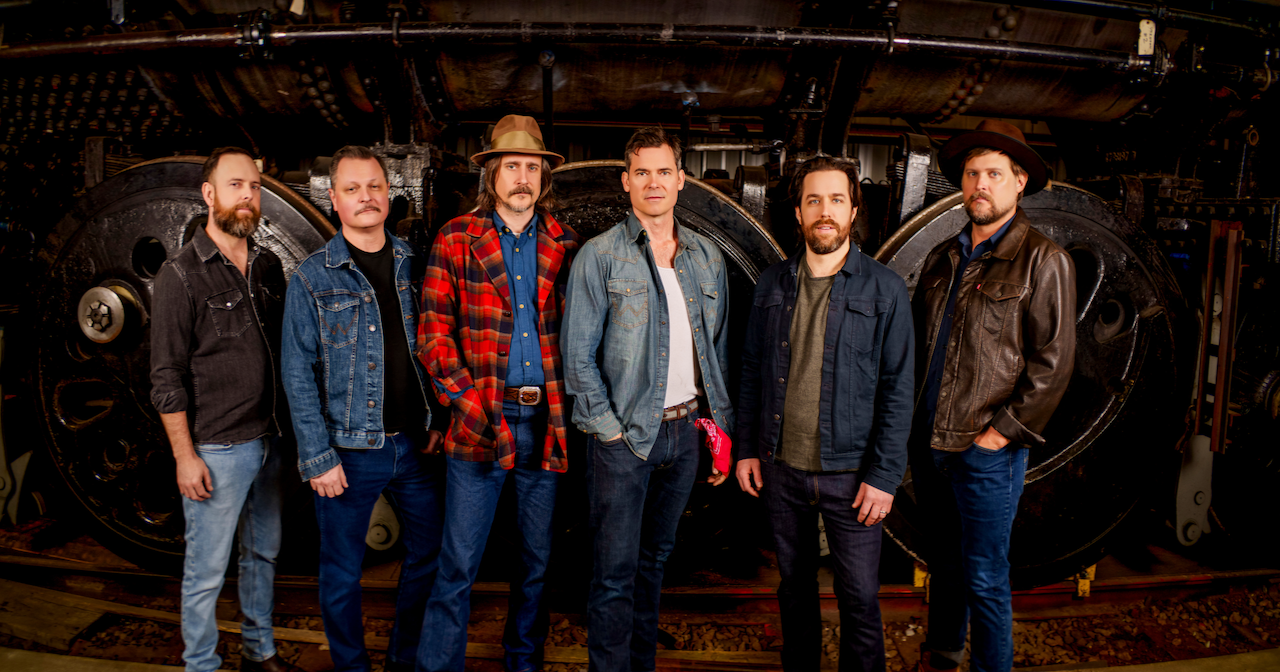
More than any of the world’s music, the songs of America are a reflection of a national identity and character. We are our songs.
Distilled into a few memorable minutes go the nation’s hopes and aspirations, the glories and tragedies of her past, and the promises of her future. This American canon is as diverse and vast as the country itself – our blues, breakdowns, or corridos are as different as prairies are from coastlines, as the Appalachians are from the Rockies. And yet, somehow, still our sound is a commonwealth, a singular voice rising from the chorus of many just like our national motto purports: “E Pluribus Unum.”
250 years is not a long time in the global scheme, and neither is 28 years of Old Crow Medicine Show‘s reign as an Americana string band. But somehow it is the vigorous and youthful American voice/song/songwriter/band (and not our transoceanic elders) that can best capture the world’s heart and soul in just a few minutes.
In this Mixtape, I’m proud to share some examples of this powerful artistry. You might already know every word to some of these songs while others you may have never heard, yet each is stitched together with a cloth of commonwealth that can only be found of uncommon ancestry. Though the singers may be perfect strangers, the songs that bubble up from our national cauldron are enough to nourish each and all. – Ketch Secor, Old Crow Medicine Show
“Howdy Do America” – Old Crow Medicine Show, Jesse Welles
Jesse Welles came whirling into the studio the other day and helped put a spit shine on this love song about the 50 states. I wondered if he was gonna get excited when he sang “Arkansas” and brother, he did not disappoint. Love this cat. He’s a brother, and I expect we’ll all be singing his tunes for years to come.
“Golden Rocket” – Jim & Jesse
I had the privilege of knowing Jesse McReynolds, even traveling and performing with him, and buddy there’s no wonder why Jerry Garcia thought he was the best of the bluegrassers.
“Field of Opportunity” – Neil Young
I was raised on Neil Young’s unique brand of tall prairie country rock. This track features the great Cajun fiddler Rufus Thibodeaux.
“Heaven Help Us All” – Joan Baez
Joan’s a real hero of mine. She’s like that tree planted by the water we all sing about, unmovable. Of all the singers on this playlist, I can say without a doubt if more people could be like Joan Baez, then this world would be a better place.
“I Wanna Go Country” – Otis Williams & the Midnight Cowboys
I love this Motown singer turned country crooner, and the world would have too, if Nashville hadn’t been so narrow-minded.
“Beautiful Land” – Old Crow Medicine Show, Maggie Rose, Lee Oskar
I wrote this one with a Baháʼí faith elder named Eric Dozier just down the street from the Tennessee State Capitol building. Sometimes politics feel like a fortress. But music has a way of wandering through the keyhole of even the most impenetrable door.
“There’s a Star Spangled Banner Waving Somewhere” – Elton Britt
I played this one for my kids on Memorial Day. They sat through it start to finish, and you should, too. It’s easy to get complacent about the sacrifice our grandparents and great-grandparents made in the 1940’s for each of us. Don’t do it.
“Oasis” – Molly Tuttle
Molly’s my favorite American singer. Here’s one of our travelogue-style songs. I had it stuck in my head all last week at the Tico Time Bluegrass Festival in Aztec, New Mexico.
“The Green Rolling Hills of West Virginia” – Hazel Dickens & Alice Gerrard
These girls rip. Back at MerleFest in the year 2000, I filled out Old Crow’s first ever W-2 form and gave it, with a shaky hand, to the great Alice Gerrard.
“How’s About You” – Dave Rawlings Machine
The Great Depression gave the world some of its most powerful songs. And even generations later, the events of the 1930s remained powerful enough to inspire music like this.
“Rock of Chickamauga” – Jimmie Driftwood
Songs about the Civil War are some of my favorites in the national cannon. Jimmie Driftwood is one of my favorite songsmiths. He’s an absolute master of the historical ballad.
“Across The Great Divide” – Kate Wolf
I am awestruck by the landscape of the West, and few songwriters can take you there better than the amazing Kate Wolf.
“What Did You Learn in School Today?” – Tom Paxton
I’ve been singing this one since I was a youngin. When I was 12, I discovered my uncle’s weathered copy of Vanguard’s album Newport Broadside: Topical Songs at the Newport Folk Festival 1963, and that was my introduction to Tom.
“The Tramp on the Street” – Molly O’Day
Born in Pike County, Kentucky, she’s one of my favorite bluegrass singers. She first heard this song from Hank Williams on a Birmingham radio station, and it became her signature song. American music has a way of championing the underdog better than most.
“Shenandoah” – Bob Dylan
I think I was 15 when I first heard Bob singing this gem, hidden in the ruffles of one of his more questionable ’80s albums. I thought, “Damn, Bob knows where I’m from.”
“Corrido de John F. Kennedy” – Los Reyes del Corrido
My band has been dabbling in conjunto for two decades now. We got to learn this one for next time we play the big D (Dallas).
“Which Side Are You On” – The Weavers
No collection of American songs is complete without a protest piece from the labor movement, the first dark corner where the full power of American music was unleashed.
“The City of New Orleans” – Arlo Guthrie
When we play Chicago, I always talk about Steve Goodman, who wrote this song. I sure would have liked to have known the guy. Thankfully his music will last forever.
“Cowboy National Anthem” – O.B. McClinton
O.B. left this world before he was fully known by the country music fanbase that would soon send black country singers consistently to the top of the charts. He was a man before his time, but the music he made reminds us that, just like Ray Charles said, “Country music is black music.”
“Deportee (Plane Wreck at Los Gatos)” – Old Crow Medicine Show
We love Woody Guthrie, and this is one of the numerous songs of his we’ve recorded through the years. In a nation of immigrants (I’m a French Huguenot), it’s hard to imagine how we could exist without a steady flow of new members to our American family.
“Big Backyard” – Molly Tuttle
When Molly and I wrote this, it was on account of having a massive vacant lot behind the house we were composing in. Now that same lot is full of little yellow flags and “coming soon” signs. Yet still we sing, louder this time.
“For What It’s Worth” – Buffalo Springfield
A few years back, I had the distinct pleasure of sharing an elevator with Stephen Stills, author of this earthquaking song which Buffalo Springfield recorded in 1966 – and we covered this year on our new album, Union Made. I wanted to tell him thanks, gush, and get my picture made. Instead, I stood quietly until he rasped, “I heard your soundcheck. Great band you got there. Keep ‘em together if ya can.” Thanks, I will Stephen.
“Louder Than Guns” – Old Crow Medicine Show
This summer, PBS stations across the country are broadcasting the film we spent three years making in a half-dozen tour stops along our travels. It’s a movie about bringing together the disparate ends of the 2nd Amendment debate during an era in which guns kill innocent Americans at shocking rates. It’s a tall order, coming together to flatten the curve, seeing past our silos and personal politics, but in town after town I watched people listening across the divide. As easy as it is to be hopeless, the film has made me hopeful we’ll get beyond this impasse and prioritize the safety of our communities. This song is the theme of this film.
“American Tune” – Allen Toussaint
I’m glad you made it through to the end. Old Crow opened up for the great Allen Toussaint in the Berkshires back around 2011. The record featuring this song had just come out and when he launched into it, I was nearly knocked off my feet. So powerful. So simple. Says it all.
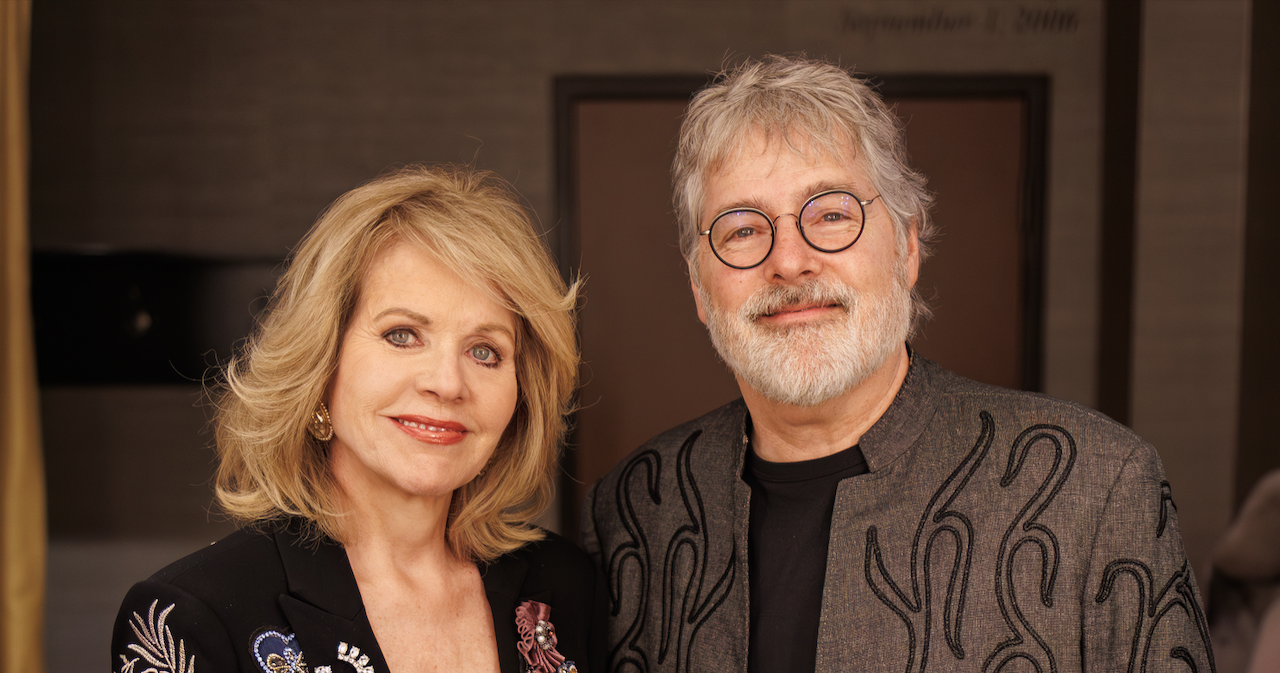
Renée Fleming, Béla Fleck, Appalachia, and an all-star bluegrass band. Though the knee-jerk reaction to this list might be to play “one of these things is not like the other,” there is much more to this premise than meets the eye – and ear.
Fleming is one of the most renowned opera singers of the modern day, but the internationally acclaimed soprano has a long history of musical curiosity and often enthusiastically indulges thereof. From this trait alone, she and Béla Fleck found a resonance within one another, embracing and making music beyond the bounds of their respective claims to fame. This resonance sparked an idea that endured for more than 20 years, culminating in The Fiddle and the Drum, an album of Appalachian songs sung by Fleming and produced by Fleck – one that, more than anything, reveals a journey of familiarity and discovery for both artists.
The pair joined BGS on a phone call to delve into the musical, historical, and personal connective dimensions of this record. The memories shared are rich and many. Some extend as far back as Fleming’s preteen years. Others revive Fleck’s contemplations of how each song might come to life through Fleming’s vocal prowess. Every one of their recollections is imbued with immense mutual respect and awe for each other as well as the album’s many collaborators; it’s clear they both appreciate the gifts each and every person brought to this record.
Our conversation isn’t without painful realities, as the album’s focus on love and loss and war prompts reflections on fights and fatalities happening today. But, ultimately, it’s a conversation colored by a range of emotions and experiences, not unlike the very music of The Fiddle and the Drum itself.
Renée, you’ve spoken extensively about your upbringing and how you formed your relationship with a lot of folk music and folk artists. In that vein, how would you describe the initial perspective you formed about the music of folk, bluegrass, and Appalachia during the younger formative years of your life?
Renée Fleming: I think it was in middle school that they offered a guitar class – which I think is a fantastic way to get kids interested in music, because it’s an instrument you can carry around and you can read tablature pretty easily and pretty quickly. So that got me interested in [music], but also some of the music that I really genuinely liked [and got me interested] came a little later, including my discovery of Joni Mitchell in junior high school and high school. Then I was exposed to it through my family as well, because my grandfather was a fiddler and a drummer, so we had very eclectic tastes in music. I just was constantly exploring. [I] wrote a lot of songs and wrote a lot of music, starting probably when I was 12 years old, and it just branched out from there.
Where did Béla Fleck initially come into the picture for you?
RF: I was already a fan of Béla because of Béla Fleck & the Flecktones. In college, I really started singing jazz with a big band and also with the trio every weekend, so I was a big fan of his [at that time].
Obviously everything worked out the way it was meant to, but you still carry those glimpses into other worlds – folk, jazz, and so on – and it helped somewhat shape where we are now. I think it’s really brought a lot of extra color, showing people that [music] doesn’t have to be so rigid and doesn’t have to be about genres and specific labels and I think that’s something that really shines through with The Fiddle and the Drum.
Béla Fleck: I think we all have a tendency to pigeonhole people and put them into a black-and-white kind of a concept. You know, “They do this, they don’t do that,” but people are nuanced and love all kinds of things, especially when growing up and you’re open, you’re trying things and figuring out where you’re going to land.
I was also a huge fan of Joni Mitchell, and I was a vocal major in school, even though I couldn’t sing worth a darn and was secretly working on the banjo in the closet. But being exposed to classical music in high school – and my stepfather is a cellist, so I was listening to string quartets and stuff when I was a kid. People might be surprised by that, or maybe not, considering the kind of music I like to do, which is very varied. But I think it makes all the sense in the world that all of these other interests make Renée an even better opera singer, if that’s the right thing to call her. But the bigger your world is, the more you can bring to the specific things that you do.
RF: I never heard that you were a voice major before. I love that.
BF: Don’t think I’m gonna sing, because I want to protect you from awful pain, agony, despair.
RF: I don’t believe it.
BF: Nobody ever gave me a voice lesson, but they started me on French horn. I got into my school playing guitar and then it became clear that I wasn’t going to be able to play the French horn. They said, “Listen, you could just go stand in the chorus and still be in the school.”
So they put me back in there, but they needed tenors. I wasn’t a tenor so I just kind of screamed, looked at the music, and tried to figure out what they were singing and sing along. Then, when I got to my final year, they said, “Oh, we found out we’re doing Rhapsody in Blue for the semi-annual concert, and we found a banjo part so you can get out of chorus. If you want to get out of chorus, you can play this banjo part on the final concert.” I was like, “I think I’ll stay in chorus.” I liked it at that point.
Then on the last day of school, the chorus teacher – a woman named Mrs. S, who was an amazing vocal teacher – she had never spent any time with me, but she got me in front of the piano and said, “Stand up straight, sing from your diaphragm!” And she gave me a few quick things she made me do and I was singing like a bird. I was like, “Holy cow, I wish you had given me a lesson when I started at the school. I would actually be able to sing!” She knew exactly what I needed to do. It was remarkable.
Speaking of singing technique, Renée, when you were preparing to record the songs for the album, where on the spectrum of vocal expression did you anticipate needing to steer your voice?
RF: I think it was Béla who kind of clocked that a lot of the songs we were choosing kind of fell in line with [themes of] love and loss – and war, as well.
One of the things that I do, especially when I’m singing outside the classical genre, is I try to avoid an obviously classical sound. That, typically for me, means the upper register. But we worked it in some songs and you just have to be mindful of vibrato. It’s really thinking about style and, for me, that’s the same as when I’m singing on a program of French art song versus an Italian aria. So I may sound the same, but the style is completely different.
What struck me as I listened to the album was just how subtle and yet impactful the differences in how you sing can be. It’s just shaping and forming your voice around the mood that needs to come through. And I visualized that, if your voice was some kind of an entity or something that could be shaped, that you just have this beautiful ability to mold it and manipulate it into exactly the shape and form and size it needs to be to express whatever the music calls for.
RF: I like to record. I like the idea of focusing only on what we hear and not adding so many other elements like you do in a live performance, where it’s also your acting and your movement and how you look and your facial expression. This is a very much more focused activity and we would do many versions of the same song. I left it to Béla to choose which versions he liked. I had almost no complaints about the choices he made.
BF: I loved to hear your voice on all the takes. And then sometimes there would just be a magic moment of, “Oh my god, the song is really happening here. We’ve got to make sure this is part of the final takes.”
I have a frustration when you have something killer that happens in one portion of the take and then the rest of the take isn’t as good. I like to find those magic moments and have them all end up on the record. But I also think for Renée, there’s an unconscious element to being a musician. [To Renée:] You’re inspired by a moment, and sometimes it’s hard to put into words all the things that you’re [doing]. You put the material in front of yourself, you decide [to] embody it, and the music is correct and things are happening in the right way – you just know what to do. And it’s hard to say how you know.
Renée and I worked really, really hard on our craft, but I think the craft is there to serve something that’s a little harder to quantify, which is just what the unconscious – what our bodies and our souls – wants to doubt when it’s time to make the music.
RF: And it has to do with the expression. I’m also thinking of specific pitches and words that relate to the song, but [to Béla:] I was really thrilled to hear how much you could vary what you were playing. Sometimes your harmonies would just come from another world and I’d say, “Wow, that’s so cool. Béla can kind of put in a jazz harmony once in a while.”
BF: You also pushed for that. I remember the first arrangements you said, “I think this could be more interesting.” And then in the moment, I had to come up with a better arrangement, a more interesting arrangement, for the first song on the record [“He’s Gone Away/Storms Are on the Ocean”]. I’m really proud of it. I think if you hadn’t pushed and I hadn’t reacted, we wouldn’t have ended up with that arrangement, which was quite unusual for that song, and then that kind of led the way to being a little bit more open.
It’s funny, when I’m playing with the Flecktones, or Chick Corea, or somebody like those folks, I feel very open harmonically. When I’m playing music that’s more traditional, I’m very careful not to get too harmonic. So, when I discovered this was a safe place to explore a little bit and look for just the right kind of harmonic additions to the basic chords, it was very freeing and inspiring. And of course, getting to work with a great vocalist like Renée… I’ve been a big fan of female vocalists since Joni Mitchell and Joan Baez and Linda Ronstadt and all of these people. I saw that there was a lot of art to working with a great vocalist like that. I was eager to have that opportunity and thankful to get a chance to try and figure out how to make it work from my end.
RF: It’s funny you say that, because I’m a huge fan now of Hazel Dickens, and you said that you had worked with her. Because there’s something so plaintive about the way she sings, it’s like Roscoe Holcomb, too. There’s something– I can’t describe it. It’s authentic and it’s immediate simplicity. I just absolutely love it.
BF: We used to talk about the “ancient tones” in the bluegrass world, and Bill Monroe had this quality. It might not always be perfectly in tune but it didn’t matter. It was just so pure and so powerful. And Hazel has that. It’s like it’s coming from another planet, almost. It’s so deep and powerful the ordinary rules don’t apply. It’s something else.
RF: I agree.
Connecting this topic of the intangible with the themes of the record, how are you both feeling about the album’s thematic focus, given the various experiences of war and loss that are happening in the U.S. and abroad?
BF: What happened was, we had a certain amount of songs we were committed to and we were excited about, and we were looking at quite a large list of additional songs that might finish out the record. That’s when I started looking at the original six songs we had recorded and thought, “You know, there really is a thematic arc.” Some of these songs were not working for me, and I couldn’t explain why until I put my finger on the fact that the six songs that we’d already recorded were telling me a story. When I explained what I was seeing to Renée, she said, “Oh, I see that. That makes all the sense in the world.”
It kind of starts with a romantic relationship that leads to commitment and then the man, in this case, goes off to war and doesn’t make it back. The woman is left on her own, maybe with a child, and then in the end, there’s a rumination about life and the way it goes like this often in the world. So that’s the story arc. Basically, to me, that is about when you make a man your boss, you give yourself up. You give up your beauty. You give up your individuality and all the promise that you could be if you weren’t in that kind of a relationship, you know what I mean? And in a way, the woman in this story is taken advantage of by bigger forces, a war.
Well, this stuff is happening every day, all over the world. And we’re in a big one right now, and there’s a lot of questions as to whether we should be there. Those questions usually come out a few years after the war is over, and everybody will say, “Oh, this was a terrible idea, and here’s why.” You don’t have to be a genius to know that we’re going to be saying the same thing about a lot of these conflicts before long. So to me, it just makes the record have that much more meaning. It’s happening right now, just like it always does – this is what people do. This is what mankind does. And it’s very disappointing that it keeps going back to this place.
RF: [My and Béla’s] generation has been fortunate that, in a way, we’re too young to have really understood what was happening in Vietnam. A lot of this repertoire really relates specifically to Vietnam. But there’s also the Civil War. And every once in a while, things really fall apart. We’re in a period now where the same thing is happening. And it’s really not useful. It’s not going to move the needle for Iranian citizens – it might even make it worse for them. So I just think it’s tragic when leaders feel like the only alternative is war.
BF: Renée also mentioned she wasn’t sure that “Scarlet Tide” would fit with the other songs, but we went ahead and did it because we both loved it. And then when we looked at what we had – again, those first six songs – it made all the sense in the world. The songs were leading us in a direction, one that, unfortunately, mirrored what mankind does.
RF: And my heart goes out also to people in the Ukraine. There are always conflicts happening around the world. There have been so many reasons for these things, it’s shocking that sometimes it’s just [plain] political. I find that really sad.
It certainly has just felt like a very heavy time, for quite a long time. So even though the themes on this album are rather heavy and emphasize a lot of the sadness that’s going on, I think it’s also very cathartic.
BF: It’s funny how in blues and bluegrass, sometimes you’ll sing the most terrible lyrics – little girl and the awful, dreadful snake or a guy killing a woman – and make this very happy, jolly song about it. It’s bizarre! And in blues, a lot of time you’re singing the saddest things, but it’s uplifting somehow to bring them out in the open and treat them maybe in a different way that allows you to experience them differently and work them through in different ways. Some bluegrass songs are really, really sad but they’re so jaunty you don’t quite realize it.
RF: Well, it’s also that we are practicing grief. That’s one of the things that scientists have come up with, that sad songs really help us process and learn how to process actual grief, because we’ll all experience it.
BF: I think also having kids – we’re both parents – but you realize that people process grief in really different ways. Some people don’t show it for a long time, but then it comes out. It’s handled in a lot of different ways.
When you were putting the music together, what kind of unexpected creative sparks came up amongst the two of you and also among the large group of immensely creative artists that are contributing to the album?
BF: I think with music, you can be over prepared because there’s a lot of things that happen very spontaneously when you have musicians of this caliber – people like Sam Bush, Jerry Douglas, Stuart Duncan. Just like Renée colors every take differently, they’re going to do the same. They’re going to be very responsive. Things are going to happen on the floor. Someone’s going to want to stay on the floor in the studio while we’re doing takes, someone’s going to say, “Yeah, I don’t know, that part’s not working for me.” And we’re going to solve it in a matter of seconds and something’s going to work.
It’s a very emotional place to get into when you’re recording, especially songs like this. As we’re all listening to Renée, we’re all inspired by how she’s singing them. They’re different than we’re used to hearing. So we’re playing differently than we’re used to. But we also come up with an arrangement, develop it, and do it a few times so we really think we have something and try not to rush through it. But there’s a tendency for things to really work out very quickly.
So with the producer role that I was in – and Renee didn’t have that experience with these folks, although she has with a lot of other musicians that are improvising musicians – where the parts are not written down and they’re very spontaneous, she was able to ride those waves very well. And whenever she spoke up, she gave me a lot of latitude, a lot of rope. But whenever she spoke up with any comment, it was always dead on the money. It was going to make it better. We listened and we tried to incorporate everything we could to make it her music.
RF: I think also that collaboration, for me– the example I would use is working with a conductor is, at best, very intuitive. You’re reading each other’s signals that you’re giving musically, in terms of dynamics, and it’s never the same way twice. I think that was true in this process as well. And having Béla, who had really created the structure for each of these arrangements, helped to anchor everything.
But to have those other musicians playing – they’re the crème de la crème of Nashville I think, and the singers as well. I mean, the way Dolly Parton was able to add her voice to the track I had already created [“In the Pines”] and just blend in amazingly, but then to also add so much to it. And the same was true for Jerry Douglas. Aoife O’Donovan, I already knew and had worked with her already on a project at the Kennedy Center. I didn’t know Sierra Hull and Sarah Jarosz, who are also just extraordinary musicians and terrific artists. For me, it was really a delight to be working with so many truly great musicians.
I’ve been fortunate to see Béla perform live in other genres with other musicians. [To Béla:] You never do anything easy, because I just wondered at your ability to manage these polyrhythms and changing meters, and then also to keep track of where you are. I mean, it just boggles my mind.
BF: Thanks. I feel like the banjo is like a percussion instrument. Like a tuned percussion instrument, similar to maybe a marimba. The rhythm of things is very fundamental to what makes me tick and what makes the banjo tick, because we don’t have sustain. So everything’s all about where you place the note.
So when they say, if you [lose or] don’t have a sense, your other senses become stronger – I think, as a banjo player, we have certain limitations that are almost like senses we don’t have. We can’t take a note and hold it for a long time. It’s just not possible. So we get better and better at timing and rhythm. If we’re on top of it, and we understand that, then we become rhythmicists.
It’s more challenging for me to do music with a lot of space, because I can’t do it. Banjo won’t do it. So notes will hang in the air for a little while. I can’t sustain like a piano with the whole pedal or things like that, but I find ways to work around it. In this case, I got to play the band. I couldn’t sustain, but I sure know who could. Jerry Douglas, Stuart Duncan, they know how to hold a note and have it mean something. It’s not just a length, it’s a feeling and a depth. So, I know I can step out of the way.
I mean, for a record that you’re kind enough to want my name on the record as an equal, I felt like I was really playing more of a producer role most of the time, and I really enjoyed that opportunity.
As the producer for the album, did you have a vision for the overall sonic profile of the music? Was there a particular way you envisioned blending the typical folk and bluegrass instrumentation with Rénee’s voice before you hit the record button?
BF: I did have the experience of hearing her sing live, doing opera in China. But I also listened to her recordings before taking the project on, because part of me was wondering, “Well, can she do this? Is this going to work?” I listened to some of her recordings and I heard some stuff that she did with Bill Frisell on one of her records, where she used a lower range. It was almost like a different person. I was amazed at how much I loved it. I love hearing her do her opera thing, because it’s the best it can be. It’s just so good. It’s like how I was not a basketball fan, but when Michael Jordan played, I wanted to watch.
I feel like Renée is like that with opera. Even if you don’t know about opera, or the form is strange to you and you’re not sure what you think about it, when you get a chance to hear her, do it. You want to see it. You want to do it, you want to hear it. I knew she was a world-class singer, but I didn’t realize that she had this other gear that was possible for her in her low range. I’m not trying to say that the opera stuff isn’t unbelievable. It’s just in a different language. It’s a different world of music. It’s a role. She plays these roles on every song.
I just didn’t know if she could translate her honest, personal humanity to these songs. And when I heard these Bill Frisell tracks, I went, “She can, she can! And it’s not a bluegrass/country singer doing their thing. It’s a whole different authenticity. I guess I didn’t know at that time that she had it in her family, and that it was music that she’d heard the whole time. So she wasn’t sitting there thinking or singing down to it, “Well, I can do this. This is easy. I do hard stuff.” She wasn’t like that. She was like, “I’m committing. I’m really going to do this thing.” So I was very impressed by her professionalism but also in the way she could summon up the emotion that felt true and authentic.
I think the album will just keep reinforcing to the listening population out there that people should embrace differences, embrace new, and embrace change – and maybe even embrace the unknown.
BF: I think it’s important to remember that it’s not just the idea that’s good or bad, it’s how it’s done. The same idea could be a disaster if it’s not done the right way.
We have something called a mashup, when you take two people that do completely different things and you throw them onto the same song and they alternate doing their thing. To me, that can be fun and enjoyable, but it’s not a true collaboration – where the artists actually have to change, grow, and listen to each other. You have to actually learn things. I look for those kinds of collaborations, where you’re doing something different from what you normally would do in order to play with this person.
But again, and you can talk about politics [in the same framing], too. Sometimes it’s not the thing that they’re doing, it’s the way that they’re doing it that is either good or bad. When you put musicians together from different musical worlds, often we can figure something out. We can work something out.
When I play with musicians from different parts of the world, people get really excited and happy. I do, the other musicians do, and we find a common ground. We find some way to play together. The people around that are there hearing it are uplifted by the idea that, “Hey, you guys worked it out.” And again, that’s what we need to do politically, too. We need to find ways to reach each other and connect with each other and listen to each other. It doesn’t need to be as hard as it feels like it is.
My most uplifting times have been playing with musicians from other cultures or from other musical worlds and finding common ground – finding a way to be yourself, together, and accommodate each other in that aural space.
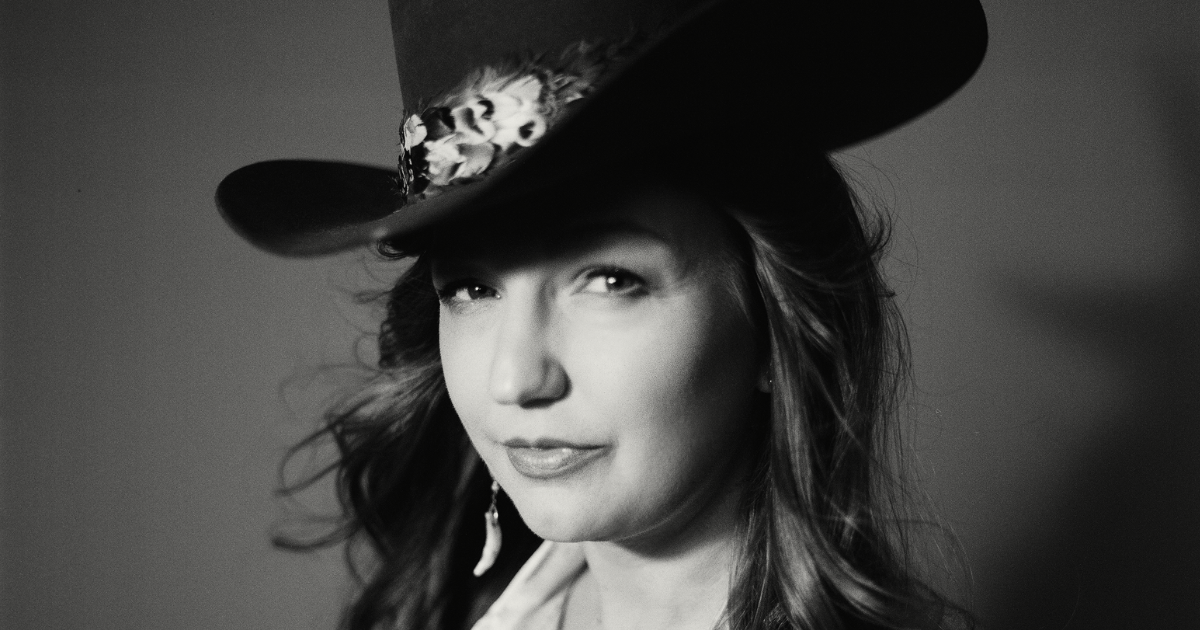
Ghosts are so much more than spooky or goofy animations; they represent lived histories, past selves, and the ever-unfolding work of becoming. With her latest album, Every Ghost, country singer-songwriter Kelsey Waldon gives grace to all the women she’s been along the way, entertaining their urgent lessons as she considers who she is today.
“There’s good ghosts and there’s bad ghosts. Some of them have unfinished business and maybe they feed off fear, or maybe they feed off your happiness. I certainly have them, I have a lot of ghosts,” Waldon says. “It’s those types of ghosts, but also the ghost of every version of yourself that you’ve been and just being proud of where you came from, where you’re going, and honestly, where you’re at; meet yourself there.”
On the album’s first track, “Ghost of Myself,” she lays out how she got here:
I had to get tough so I could get wise I’ve been a thousand women in my own time Been a thousand women and I’ve loved them all I had to get low so I could walk tall
From the album’s first lush, ebullient guitar run, Every Ghost is thick with layers of twang, accompanied by driving fiddle and classic country sounds. Waldon’s velvety voice, which has always been self-assured, sings clear and powerful. She’s standing on her own two feet; this is the album she’s been working toward over the last decade of hard work and meticulous touring.
Modern pop country is rife with men behaving badly or selfishly while extolling the unholy virtue of big truck worship. But long before their unceremonious relegation to the role of disingenuous machines, good for little else than scoring sex and drinking cheap beer, truck songs (usually about big rigs, not pickups) made poetry out of the long haul and produced some of country music’s most interesting characters. Look no further than Red Simpson and C.W. McCall’s catalogues, Jerry Reed’s “East Bound and Down,” Red Sovine’s “Phantom 309,” the Willis Brothers’ “Gimme 40 Acres to Turn this Rig Around,” or Kay Adams’ “Little Pink Mack.”
“Comanche,” track 2 on the new album (named after the 1988 Jeep Comanche Waldon bought recently) joins that lineage. “The rumble of the engine feels like my soul smooth when it’s runnin’/ A little rough when it’s not movin’,” Waldon sings.
Get behind the wheel on the open road, relax, blast some music, sort out your thoughts – there’s nothing like it. “We’ve all got our own amends to make/ We’ve all got our own hearts to break/ That’s the way it is,” Waldon continues, letting go of someone no longer in her life.
Spending time with an old, well-crafted object is a privilege and a joy in a commodified quick-fix world, one which Waldon manifests throughout the album as she tackles lessons and ghosts from a life lived deeply and broadly. The specters of Every Ghost include lost loves, of course; demons and vice; and also loved ones who are no longer earthside.
“Tiger Lilies” was written for her grandmother, whose beloved lilies she now tends in her own garden. Gardening and growth figure heavily in Waldon’s lyrics and worldview (notably “Season’s Ending,” off No Regular Dog and her cover of Jean Ritchie’s “Keep Your Garden Clean” on There’s Always a Song). “I think it’s sexy to know how to feed yourself and grow things,” she says. “What’s more country than that?” Later, she dwells more broadly on what we inherit generationally on “My Kin.”
The ghosts of vice have a particular way of lingering. “Happy new year, I’m scared to death/ My ol’ demons, they give me no rest,” Waldon sings on “Lost in My Idlin’.” Waldon has been, as she puts it “booze sober” for four years, but for her, the allure of letting loose and getting drunk lingers: “Wishin’ I was fucked up in some honky tonk/ Where they let me play my music way up loud.” Beyond an ode to temptation – and in some ways to simpler times – it’s an acknowledgement of those who’ve slipped and the hard work of holding the line. (Not to confuse resisting vice with moral superiority, addiction is a disease.) “I loved getting tore up from the floor up, that’s in my blood,” Waldon says; but staying sober is what’s best for her.
“I don’t wish for pain/ And I don’t dream of war/ When will it all end?? What are we killin’ for?” Waldon demands on the chorus of the wrenching, mournful “Nursery Rhyme.” “I honestly wrote that song after seeing pictures of children being bombed,” she says. Pertinent and direct, Waldon’s premise is simple: please, be kind and decent to each other. “How can you climb when you ain’t got a dime? / Workin’ your life away till you die/ Can’t pay what you owe ‘em, not in this lifetime/ Darlin’, it’s a nursery rhyme,” she continues in the song, lamenting the dissolution of the “American Dream” and economic parity for average people. “I’m a very, very proud American, but I know that sometimes the ‘American Dream’ does feel like a nursery rhyme,” Waldon says.
In 2019, that ability to zero in on the human condition landed Waldon the first new artist slot in 15 years on Oh Boy Records, founded by John Prine, who was likewise rivetingly dialed in to suffering and joy. Waldon’s bona fides include a bevy of appearances with Prine before his death in 2020. Before this she’s released six albums – Every Ghost her seventh – including 2020’s They’ll Never Keep Us Down, a cover album of protest songs including Nina Simone’s “Mississippi Goddam” and Prine’s “Sam Stone.” More recently, she released 2022’s No Regular Dog and 2024’s There’s Always a Song, covering some of her greatest musical influences.
Waldon’s been named a Kentucky Colonel, too. The highest title of honor awarded by the governor of the state, it’s often given to artists who guard Kentucky’s cultural traditions and further their future. She’s toured with Vincent Neil Emerson and 49 Winchester, the latter of whom she will join at the Ryman later in the year. She’s also looking forward to a long list of headlining shows, including at Under the Big Sky and FloydFest.
“That’s the only place that I do feel true freedom, honestly, is in the studio and then on stage doing whatever the fuck I want to, singing my heart out,” Waldon says. “I want the show to be a force to be reckoned with.”
Myriad wonderful songs have been written about ramblin’, but they’re all about men, Waldon says. She ends the album with one of the few exceptions, Hazel Dickens’ “Ramblin’ Woman.” At its release in 1976, the song represented a bold manifesto for female independence. As an album closer for Waldon, it acts as a bookend with “Ghost of Myself.” Waldon started the album telling listeners where she’s been and concludes with where she’s going.
“Hazel’s just saying ‘I got shit to do,’” Waldon says. “Women can ramble, too. I feel like we’re more than a girlfriend, a wife, a mother, even – and all these things that are so beautiful. We know we stand on our own. And we don’t have to explain it to anybody.”
Life is weird. In the words of Dan Reeder, “What the fuck is that about?”
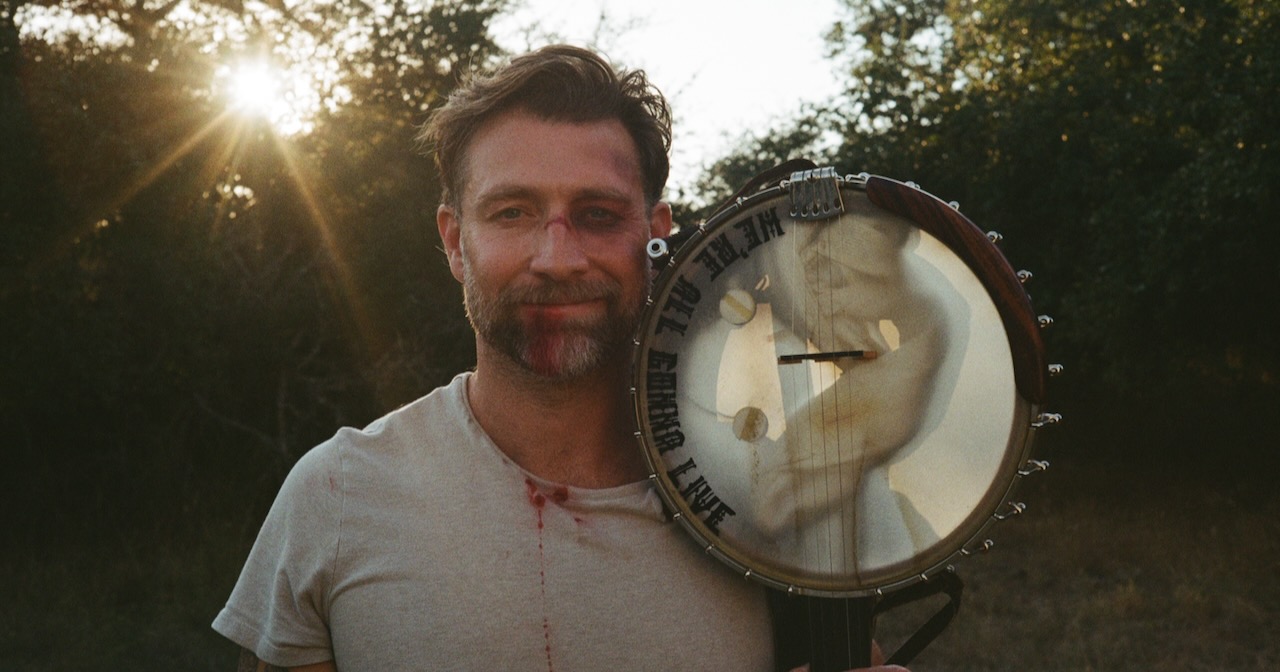
Everyone tells me I seem mellow and laid back – and I am. That said, if anyone were to take one step into my head, they’d be bombarded with a maelstrom of wonderings about death, intrusive thoughts, forgotten location of keys and wallets, constant attempts (mostly failures) at descriptive alliteration, wildly sweeping feeling of love, wildly sweeping feelings of grief – and constant hunger. All of which eventually spin back around to complete peace and acceptance.
Music tends to get me back to that point. These songs bring peace to my ’90s-fuzzy-porn-like mess of a mind by reminding me (in one way or another) that it’s somewhat preposterous that we exist at all. A lot of these tracks are attached to personal moments in my own timeline, but hope they bring you peace too. – Tony Kamel
“Deep Breath” – Riley Downing
“Take a deep breath, it’ll be alright…”
I love this guy’s tunes. He has a poignant way of presenting life’s weirdness. Also as a recent yogi, it’s a good reminder to come back to my breath.
“Monster Truck” – Ramsay Midwood
“You don’t like it, you can kiss my ass. ‘Cause I drive a monster truck…”
This record, Shootout at the OK Chinese Restaurant, is funny, odd, and just a fantastic timeless reflection on the insanity we’ll always exist inside. Is he celebrating or making fun of these people? I don’t know. I don’t care. It’s funny.
“People Talkin’” – Hurray for the Riff Raff
“People, they’re trying to tear us apart…”
Alynda Segarra is a national treasure. This record just blows my mind and has been a staple for me for a long time. It reminds me that I’m old now and I’m glad to be.
“Sue” – Tony Kamel
“If you’re livin’ and breathing, and doing that right, you ought to be lovin’ with all of your might…”
The second verse of this tune holds the keystone to my upcoming record, We’re All Gonna Live. Obviously, our relationships with other people define much of our lives. Sue was a wonderful person. I miss her dearly.
“Waxing and Waning” – Melissa Carper
“Waxing and waning, wishing and waiting…”
Melissa is one of the best writers and singers out there. Her retro voice puts me at ease.
“Don’t Tell the Boys” – Petey USA
“Lets talk about how childhood trauma guides our actions as adults…”
This tune reminds me of me and my old buddies. I’m lucky to have them. We’ve been friends for 30+ years and we can be ourselves and tell each other anything without fear or judgment – something I treasure deeply.
“Louie” – Arcy Drive
“Baby remember, this is our December…”
I just love this song and it’s reminiscent of ’90s alternative rock Weezer era. It makes me happy to see Gen Z-ers throwing down with a rockin’ live band like this. It feels cyclical.
“Problem Solver” – Slimdan
“Maybe I should be someone who listens and not try to fix it/ … You don’t want a problem solver…”
This is a beautiful love song about being a typical dude and doing typical dude things like I tend to do in my marriage. I’ve come a long way though… so has this guy.
“Joyful” – Kelley Mickwee
“The beauty of life is the movement of change…”
Kelley rocks and this album rocks. That’s all.
“The Illinois River Song” – The Brother Brothers
“I proclaim the Illinois River gonna swallow me up whole and not a soul will know that I am missing…”
I’m a sucker for a good river/life metaphor. The melodies that weave in and out of this tune are infectious. It could be about anything and I’d love it.
“Everything Is Everything” – Cappadonna
“Everything that you see ain’t reality, they’re just illusions…”
Hip-hop on a bluegrass website? Duh. Can always count on a member of the Wu-Tang Clan to remind you that we might live in a simulation.
“They’ll Never Keep Us Down” – Hazel Dickens
“We won’t be bought, we won’t be sold…”
Just because everything is uncontrollable bullshit doesn’t mean we don’t fight. This tune speaks for itself. Bless Hazel Dickens.
“Born a Worm” – Dan Reeder
“Born a worm, spins a cocoon, goes to sleep, wakes up a butterfly. What the fuck is that about?”
I do not know, Dan. None of us do. I implore everyone reading this to listen to Dan Reeder’s songs.
“We’re All Gonna Live” – Tony Kamel
Yes we are.
I’m tired of talking about myself. Y’all can figure it out. Love you.
In the wake of several viral country songs released in 2023 – most notably the ill-conceived pair of Jason Aldean’s “Try That in a Small Town” and Oliver Anthony’s “Rich Men North of Richmond” – renowned author and country journalist David Cantwell penned an essay for TIME magazine with an absolutely stunning (while quite simple) observation included. Cantwell considered place, citizenship, and ownership. To whom does the “small town” belong?
“…For most of today’s country fans that small town isn’t TV’s tiny Mayberry; it’s a suburb or exurb of some decent-or-giant-sized metro,” Cantwell explains. “I wish more country songs would talk about that proximity, how city folk and small-town folk flow back and forth for work and fun – and are very often the same people.”
And are very often the same people. Humans don’t live their lives along strict, black-and-white boundaries and borders – no matter how often society attempts such demarcations. Our lives are lived in the gray, in the blurry in-betweens, as collections of many disparate and often dichotomous parts.
Singer-songwriter Olivia Ellen Lloyd is just such a person, caught up in the nebulous purgatory between rural and urban, city folk and country folk, doing it for herself and doing it for ambition. Her brand new independent album, Do It Myself, finds Lloyd with a sense of confidence that could only be earned through a hard-working, bootstraps approach to making music – a mindset that, whether within or outside the arts, is well known to West Virginians like herself.
After a stint living in Nashville, Lloyd returned to New York City, following up 2021’s fantastic Loose Cannon with the heartfelt, sensitive, and often point-blank songs of Do It Myself. Like Loose Cannon, this material is danceable, country, honky-tonkin’, and bluegrassy while it boasts deft and majestic moments of WV DIY, punk, and rock and roll. After crisscrossing the country proffering her art, Lloyd seems to have realized that being both a city person and a country person is never a drawback, it’s a superpower. Having her feet in NYC, her heart in West Virginia, and her work anywhere and everywhere, Lloyd has clearly determined it’s not a dilution of the “authentic” or roots-music-ready facets of herself to straddle these arbitrary borders and own that duality.
As a result, Do It Myself is remarkably successful. Like Hazel Dickens in D.C. or Dolly Parton in Nashville or Tina Turner in Memphis, Lloyd has found her voice and found herself not by running from who she thinks she can’t be anymore, or editing out the parts of herself that don’t seem to “fit” with country tropes and perceptions of good ol’ American rurality. Instead, she’s reached this current era of music making by resting easy – or not so easy, at times – in the knowledge that the best she can do as a singer-songwriter-artist is to be herself, whoever that is, in the truest format possible at any given time.
We began our BGS Cover Story interview by discussing that ongoing search for herself and how that particular journey shows up throughout Do It Myself – in the lyrics, sonics, and beyond.
It feels like your music in general, whether we’re talking about Loose Cannon or the new album, Do It Myself, you’re most often turning over the idea of finding yourself – and not that that’s a static thing to be found. It’s not that you find it once and you’re done finding it. Your music orbits around these questions of, “Who am I? Is this me?” I feel that really strongly in this record. So, as you’re releasing this album I wondered, who is the self you have found? And how goes the search for yourself?
Olivia Ellen Lloyd: I think what’s really interesting is I don’t know that I would’ve put a finger on that until recently. I’ve also come around to the understanding that that is what my music has done, which is help me come back to myself and find myself. I would say it’s currently going pretty well, but boy it has been a journey to get there.
I think writing this record, I was much closer to her – to me – when I started writing this record, but I wasn’t as close as I thought I was. It’s taken not only writing it and realizing that I wanted to put it out and all that stuff, but also deciding to self release it and deciding to continue to champion my own work where I’ve truly found that. That, “Oh there she is!” [feeling]. I feel very recently like I have arrived at the person that I’ve been looking for and that’s exciting and also really scary, because boy, has most of my work orbited around, “What the fuck happened? How did we get so lost?”
I once was lost, but I’m pretty found lately.
How do you feel about writing songs that are so personal and that are so much about growth, introspection, and questioning and then having to carry them around on your back for a year or two or three on tour – or for the rest of your life! How does that process feel to you or that emotional or mental understanding?
Interestingly, at least with my first record, I think I wrote often with no aim, so there were no expectations. I mean it’s funny, Justin, because you are one of the few people in the music industry and in my music world who knew me when I was writing many of these songs, but not performing often. The process of writing was very much a way to try and tune into this inner voice that I’ve been learning to listen to. It was an attempt to get in touch with myself, which I really have struggled to do for various reasons throughout my life.
I think I’m also quite an impulsive person, historically, and I have a lot of tattoos – a lot of stupid tattoos – and I kind of think of these songs, especially the personal ones that no longer represent [me like tattoos.] I don’t drink anymore really – I wouldn’t say that I’m sober, but drinking is not a big part of my life anymore – and all of Loose Cannon and much of this record involves talking about those moments in my life. But I have this tattoo of a possum drinking a High Life. That’s not who I am anymore, but that was a part of how I got here. When I think about these personal songs that involve a lot of myself and a lot of what’s really going on I think, “Well, that’s a part of the patchwork,” but it doesn’t have to be – luckily – the whole story or the end of the story, either.
The way that you’re utilizing so many different roots styles, it’s disarming of a listener, so you can have a danceable, honky-tonkin’ track that’s still lonesome as fuck, tear in your beer. It feels like it can still be very country, very Americana in the way that it is melodramatic, but it still feels grounded in reality.
I think that playing with genre in the same way that we experiment with different sidemen and co-writers is just another tool that we can use. I see a lot of artists, especially right now, there’s just so much pressure to hit. There’s so much pressure to hit on a vibe, hit on a moment. Part of the joy of this is playing in those in-between spaces and finding something unexpected.
Come on, if we’ve got Dolly and Patsy and Loretta, they did a lot of the groundwork so we should get to play around that space! We’re not gonna outwrite or outsing those women, we simply cannot, so the opportunity we have is to explore. I don’t wanna go back. I don’t wanna go back to any type of past anywhere. The future is scary for me, but I’m really curious about what could come next, after those things, and how we can develop those sounds.
You’ve spoken on social media and on microphone about your approach to genre and how so much of it comes from growing up in West Virginia having this agnostic approach to genre aesthetic, on a practical day-to-day level. You’re doing West Virginia music, you’re bringing in Nashville, you’re bringing in New York City. Can you talk a little bit about that?
For the first record I got the feedback that you can hear the country and the city kind of intermingling together and someone was like, “This [new] record feels like so much more New York.” I think I understand where people are coming from, but actually I think what’s happened is I built a musical community in New York City around bluegrass, which I think is one of the great community music forms. It is a great way to bring people together. I’m so grateful that I knew a bunch of those songs and then I got better with those songs and then I met people who were passionate about that music. But actually, this record was more about digging into the sounds that I grew up with. I grew up going to DIY punk shows, I grew up with my dad listening to the Grateful Dead, the Band, some Jerry Jeff Walker, Nitty Gritty Dirt Band.
I think this record really returns to a landscape that’s more true to how I was raised, which was eclectic, a little bit daring, and a little bit more rock influence. I think I’ve been quoted once and I’ll say it again, I think the reason that the places in West Virginia gravitate more towards that kind of music is because music got gentrified and country became this bizarre fascist, patriotic propaganda wing of the Republicans and of government.
If you are not one of those things, if you were not a kid who could afford to go to Berklee and you were not somebody who was all that proud to be a fucking American in the 2000s, you likely grew up listening to a lot of that. Especially in rural places, you likely grew up listening to a lot of punk, a lot of rock, a lot of indie pop. Like many people do, I walked way far away from that stuff and dug into the roots of country and folk and bluegrass. I swirled around in that stuff for so long, and then I came back to myself; I came back to the first music that really inspired me and felt less academic.
In my opinion, the most interesting part is all of those genres coming together. I do think that I’m very wary of anybody who talks about “good folk music” or “real bluegrass” or anything like that, because typically some very nice man in a fisherman sweater in New England has told them [to think that way]. I learned to like music the way that most normal people learn, I just listened to it and I didn’t worry about whether I was listening correctly or not. I think we gotta return to that.
Community has come up multiple times already in our conversation and I know how important community is to you – how pivotal it’s been in your musical career. How do you balance the “doing it for yourself” with the “doing it with community”? How do you do it for yourself and trust yourself and give yourself permission to be who you are and take up space to do it your own way, while also being a member of a community and doing it for the collective at the same time?
Have you been listening to my therapy conversations? [Laughs] I struggle with deep individualistic tendencies. I have a tendency to be like, “Fuck it.” That can also be bad. Notably, have yet to accomplish a successful relationship, because of this thing I do. “Fuck it, I’ll deal with it myself. I’ll just do everything myself. I will stop relying on you. I don’t need to rely on anybody for anything.”
I hope it comes through in the music that many of my songs, including “Do It Myself,” include enough self-awareness to know that I’m talking about choices that I’m making and things that I’m doing and they are not always the healthiest choice or the best choice. That’s okay. I think there’s a side of this where, yeah, I have been way too [self-reliant]. As I sit here selling shows out, opening for Jeff Tweedy, and unable to get a booking agent or a manager. Yes, I have isolated myself a little bit too much for people to be paying close attention.
Certainly “doing it myself,” in this context, many people told me to wait to put this record out. Maybe that would’ve made sense for a more reasonable person, but I think this is really important: Your community is everything. You need to be able to trust that the people around you are people who are willing to let you show up like however [you are]. In the last two years, I have focused so hard on surrounding myself with people who I know I can trust to both keep me honest and on my shit and love me through mistakes and they will engage in conflict resolution. They will be gentle with me and like I can do the same for them.
It’s not possible to be self-sufficient, emotionally, creatively, if you do not have a community that supports that in you.
I love that on the album you have “Live With It” back-to-back with “Do It Myself.” I think it’s pretty striking, they’re kind of a reaction or a response to the other – and vice versa. That line, “If this don’t kill me…” feels like such a natural lead in to “Do It Myself.” I wanted to ask you about “Live With It” and also about that placement of those, like bookends.
Thank you for asking about “Live With It.” My producer Mike Robinson is gonna be so happy and that’s his favorite song on the record. I mean, that’s my pandemic [song]. The chorus of that song I wrote during the pandemic. Looking back, it was probably also the worst point in my life for my drinking. I was at a point where I was not in control. Things were so bleak that it was like, what’s the point of trying to slow down or get a handle on it? There was no future to look forward to.
But by the time I finished the song, what I really hoped to accomplish is [communicating that] there are many times in our life where we have a pessimistic view on our own personal outcomes. We’re not really convinced that things could get better and yet there is an interesting tendency with human beings, we just keep going anyway most of the time. I find that to be both very curious and also something that is inspirational in its own way. We can continue to live and survive through unsurvivable things, even when we don’t know entirely why or how. That’s what “Live With It” is about. It’s four people experiencing something that they, for whatever reason, don’t see why they have to live through it or how they’re going to, but they do.
I also love the feel change in “Every Good Man.” So good. It’s nasty. That song is a bit like “Stand By Your Man,” playing with country tropes in a really fun way, but that feel change – I think I made a stank face just listening to it. Can you talk about that one a little bit?
Once again I just have to say, I think a lot of what you hear and the really cool musical stuff is owed to the creative partnership that Mike Robinson and I have. I can’t say enough good things about him. I met Mike at a fucking bluegrass jam and he was playing the banjo, which is like his fourth instrument, you know? I think these days he mostly makes money as a pedal steel player. Everyone is sleeping on his ability to play the acoustic guitar. Like, truly.
I met Mike six years ago now and out of the blue he coached me into a music career. He would deny that, but that is 100% what happened. He bullied me into it. And something I really love is that I can bring songs to him and he finds exactly [how it should sound], especially when he’s excited about the songs. Both “Every Good Man” and “Live With It” were definitely high on his list of loves. He finds these like beautiful moments and we have such a similar [approach], we were raised on the same music. For “Every Good Man,” that feel change came from some moment in a John Prine song.
Another song that I really like – it might be my favorite – is “Knotty Wood.” It feels like country. It feels like church. The lyric, “Who says memories can’t be bought? We always sold ours for a song…” grabbed me. You’re talking about how we compare and contrast and measure ourselves against other people and our perceptions of other people’s lives. “Don’t they look good when you paint over the pain and knotty wood?” It’s such a great hook. I love the imagery of it. I love that it takes me to my grandma’s house. But I feel like it begs the question: Do you ever worry that in synthesizing your experiences, putting them into songs, and taking them to the world that there’s any part of that process that is also “painting over the knotty wood”?
Yes, and my mother would definitely say yes. The genesis of that song actually came from my mother and I growing up in the same small town. I grew up a mile from [where she grew up] and from our home to her childhood home it was less than a mile. That house, my grandparents’ house, I spent probably two days a week there and almost every day after school I walked from my elementary school to my grandparents’ house. It was my home, too.
It got sold after he died, we couldn’t hang onto it. It got sold again during the pandemic by an actually really lovely woman. She started renovating it on Instagram and I watched this place that held generational memories be stripped in some cases to the studs and rebuilt. It was pretty public. I felt a sense of ownership of our place – that I do not factually own and never have – that got me. Being curious about place and home made me think about the journey my grandparents went on to become property owners and to become middle class. And about that moment in the height of prosperity in the ‘50s, all the things my grandparents sacrificed.
I think the song is about thinking about those generational ties, thinking about the things my grandparents sacrificed, and did not sacrifice or did not give away. I’m also thinking about how, especially right now in this weird American moment – “Don’t other people’s lives look good when you paint over the pain and knotty wood” – how many people want to talk about their humble, hardscrabble beginnings without having to actually live them.
There are so many other reasons why it’s taken me so long to get here, why it’s taken me so long to put my songs out. But it all revolved around the generational trauma of growing up relatively poor and with people who had to give up everything in order to get anything.
You can’t have it both ways. You can’t have the small-town, Appalachian upbringing and also have the confidence and gumption of [privilege]. I mean, it’s rare. It happens, but you don’t often then also come equipped with the gumption to believe that you have the right to be a fucking artist. All my grandparents wanted was just a nice home in a small town.
I’ve been hustling, self-promoting my own art and music, and in a desire to attain the things that the people I’m criticizing have attained, we get to the third verse. … The crux of that song is, I think, a way more interesting story than “rags to riches.” It’s middle class to rags.
I mean, my grandparents went to war so they could get an education, right? My grandfather’s nickname was “Bones,” because he was so thin he looked like a bag of bones. The trajectory of their lives into middle class comfort is astounding, and the way that his grandchildren and children are sliding back into poverty is much more so. It’s much more true to what is happening in this country than this “rags to riches” bullshit that we are still being asked to sell, but it’s trickier to talk about.
After 53 years and 23 albums, the release of the newest Seldom Scene recording is still something to celebrate. Remains to Be Scene is their first recording since the death of founding banjo player Ben Eldridge in 2024 and the last before Dudley Connell announced his retirement. In addition to Connell, the album features Fred Travers on Dobro, bassist Ronnie Simpkins, mandolinist Lou Reid, and Ron Stewart on fiddle and banjo.
Since its earliest days, the Seldom Scene has been known for busting open once-limiting bluegrass boundaries. The latest album continues this tradition, with songs pulled from sources like The Kinks, Woody Guthrie, and Jim Croce. Another tradition is incorporating new talent.
In 1995, three of five band members left to form another group. Looking to replace them, founding member John Duffey invited Simpkins, Connell, and Travers to a picking session. To those who didn’t know him, Duffey, with his huge stage personality, was intimidating.
Remembering that day, Simpkins said, “I did not want to be late, but I did not want to be early. So, I got there way ahead of time, and I kept an eye on John’s house to see who else got there.
“And I noticed this other car down the street. That person was just sitting there and would ease the car up closer to John’s as the time drew near. And I came to find out it was Dudley. So, we timed it until Ben got there, and we all went in together.”
Simpkins takes Connell’s retirement as a continuation of the band’s legacy: “The band has always transitioned.” Today he welcomes Clay Hess, a band leader and a former lead guitar player with Ricky Skaggs & Kentucky Thunder, who stepped in quickly when Connell, injured in a fall, was unable to play the last few shows of 2024.
As always, the Seldom Scene is committed to the same scalp-tingling vocals, remarkable song selection, and quirky, sometimes outrageous, stage shows that fill festival seats after five decades. Simpkins said, “I just feel blessed to be in this group … and to try to keep the same spirit the original guys had when they started out back in 1971.”
On the release of his last recording as a Seldom Scene member, Dudley Connell spoke to BGS about Remains to Be Scene, his musical career – starting in the 1970s – and his memories of some of the greatest characters in bluegrass.
The Seldom Scene has a tradition of pulling songs from everywhere and the latest recording is the same way. How do you decide on songs?
Dudley Connell: If you look back at the Scene’s recording career, all the way back to the original guys, it was unique. John Duffey had very eclectic taste. He brought “Rider” into the band from the Grateful Dead. He brought “Sweet Baby James” in from James Taylor. And continuing that tradition, I brought in “Boots of Spanish Leather” by Bob Dylan and “Nadine” from Chuck Berry.
It’s interesting having a band of five people, all with slightly different tastes, but with commonality at the same time. So, that’s the way we’ve continued the work all the way through our 30 years together. Everybody would show up with a basketful of songs. Sometimes, Lou might bring a song in that he really liked and say to me, “I could hear you singing this more than me.” Likewise, I could say to Fred, “I really like this song, but I don’t think I could sing it as well as you could sing it.” And it worked that way really well.
How does a band stay together so long?
We, of course, spent a lot of time together, but we also spent a lot of time doing our own thing. Now, with [a band leader] like Bill Monroe or Ralph Stanley, they take the fee and then they give you whatever they want to pay you per show. But with the Scene, John [Duffey’s] feeling was that if you’re out there on the road and you’re doing the work, you deserve equal cut. So, everything we made was split equally. You could fly, you could drive, you could stay at the Waldorf Astoria, or you could stay at the Super Eight. It was your money to spend and to travel as you wanted.
I think it created a certain sense of camaraderie that continues to this day. Everybody’s getting paid the same, so everybody’s expected to do equal work, and it gives you a sense of belonging. There’s no boss, everybody has an equal say, and that was true from the very first rehearsal.
Every group you’ve been with has been known for exceptional harmonies. Can you talk about harmony a bit?
I think a musician’s greatest asset and greatest tool is his or her ears. If you’re singing a trio, you want the blend to be there. You don’t even have to actually know who’s singing what part. There’s a certain buzz you get when the harmony is just right, and you hit a chord just right, and everybody’s phrasing together, and their mouths are in the same sort of position. When that happens, this is just like magic.
Let’s go back to the Johnson Mountain Boy days, when I first met Richard Underwood. Richard learned to sing with me. When we sang together and I switched from lead to tenor on a chorus, you could hardly hear the switch. It came natural to him, because I’m the only person he ever sang with. You know, he later went on to become a great singer on his own right, but he was the first singer that I really worked with a lot on blending and making a pleasing sound.
Now, my experience with David McLaughlin was more organic, as it was with Don Rigsby. Don and David and I all grew up as disciples of the Stanley Brothers. They had such a tight blend.
Now a more challenging partner for me was Hazel Dickens. Hazel and I toured quite a bit together in the ’70s and ’80s. But Hazel had a completely different sort of approach. Hazel was full bore, wide open all the time, and sometimes she could get just a little bit pitchy. I looked at it as my job to try to keep her close to the melody. It was great for me, because it taught me how to blend and also how to pull her to the proper pitch when necessary.
When I came to work with The Scene, it was completely different. They were all about the harmony.
What are your memories of The Scene before you joined them?
The Scene were a huge influence on everybody in D.C. The Scene was almost like a gateway drug to bluegrass music. They were largely playing for urban audiences in the early days, and a lot of young people really responded to it. In fact, The Seldom Scene record Live at the Cellar Door almost has cult-like status. When I was a teenager, we’d go to each other’s houses to listen to music. Right next to Led Zeppelin and Jimi Hendrix and Bob Dylan would be The Seldom Scene Live at the Cellar Door.
I think what made that record so absolutely deserving of cult status is that it’s really freewheeling, it’s really the band live. It’s not just the music and the wonderful singing, the wonderful song selection. It’s also the playfulness with the audience.
As far as I was concerned, John Duffey was The Scene. It wasn’t just that he was a great singer and instrumentalist, but also he had this gift – presenting the music to all kinds of different audiences. You couldn’t not respond to John Duffey or his emcee work – or his pants, for that matter. An interesting thing about John that a lot of people don’t realize is that he was actually kind of shy, kind of insecure. This bigger-than-life character that emerged on stage – I’m not saying that it was phony. It really was John. But when he walked on stage, it was like a switch kicked on, and he became a great entertainer and a great communicator.
I think people who weren’t familiar with bluegrass, it put them at ease a little bit. It drew a lot of people in who maybe wouldn’t have paid attention to a banjo or a Dobro. All entertainers feed off audiences. If you’ve got a really lively, energetic audience, you pour a lot of that back. If the audience feels more relaxed, you slow down a little bit with your delivery and your introductions. And John was an absolute master of that. I learned a lot about presenting a show from my year with John.
And how did you come to play with The Scene?
The Johnson Mountain Boys were on their way out. I’d done a little bit of work with Longview by this time. Then I got this notice in the mail that T. Michael Coleman, Mike Auldridge, and Moondi Kline were leaving the Scene and forming a band called Chesapeake. And it was sort of assumed that the Scene were going to dissolve. I knew John well enough and I called him on the phone and said, “John, I’m really sorry to hear about this. It sounds like the end of an era.”
And he said in the off-the-cuff, John Duffey style of talk, “Well, we’re really not dissolving the band. We’re just looking for a lead singer, guitar player, tenor singer, bass player, baritone singer, Dobro player.” You know, basically replacing three-fifths of the band. I don’t know where it came from, because I really had not called John looking for a job, but after he told me what he was looking for, I said, “Well, John, let’s get together and sing sometime.” Complete silence.
After the initial silence, he said, “Well, do you know of any of our stuff?”
So, I went over to John’s, and Ronnie was there, and Fred. John had given me about half a dozen songs to learn and when I look back at it now, he was testing me. He wanted to see if I could sing harmony parts over and under him. By that time, I’d had the experience with Hazel and had sung with a lot of different people. I was ready.
So, we started these Wednesday rehearsals and we’d done this for about two or three months in preparation for our debut – New Year’s Eve at The Birchmere, 1995. By the time it actually came to play our first show. I was really, really into it. And it was one of the toughest shows I think I ever played, because all the original guys were there – John Starling, Mike Auldridge, Tom Gray. Lou Reid was there, too. And I’m thinking, “I don’t know, man. I don’t know if I belong in this – with these people that I’ve listened to for years.”
One of the things I remember was our opening song, “Our Last Goodbye,” which is this old Stanley Brothers song. I had worn these baggy chino kind of pants and I was so grateful that I didn’t wear tight pants because my legs were literally shaking, and I didn’t want anybody to see that.
So, it was a very exciting night, and after that we had a year with John.
You were quite young when you formed the Johnson Mountain Boys. Can you tell us about those years?
I came along at a very fortunate time in the Washington, D.C. area in the ’70s, and actually on through the ’80s as well. You could see bluegrass every night of the week between Washington and Baltimore.
Now, I’m not going to tell you that the places were swank and nice. They were kind of seedy bars. But when I look back on it now I think that was actually a very beneficial thing for us. We were young, we were very enthusiastic about the music, and we could go into these bars and play four or five sets ’til, you know, one or two in the morning … and then go play another one the next night. So, by the time that the ’80s rolled around and we started actually playing festivals for larger crowds, we were pretty well rehearsed.
I found that the musicians that we met, like Del McCoury and Bill Harrell and a lot of the acts around Washington, embraced us because we were doing something different – actually doing something [traditional bluegrass] that had been done before, but we were kids doing it.
Ben Eldridge– the first time I ever met him, we were playing this indoor bluegrass event. Ben came over and said, “I wish I was doing what you guys are doing.” I know that he was kidding me, but the point being that he really respected the traditional stuff. He said it because he was very sweet man and very kind man. But I think there was some truth in that, too.
How much time was there between you playing in the two bands?
We actually intertwined for just a little bit. When we got off the road full-time in 1988, we were kind of burned out. I went back to college. David [McLaughlin] started selling real estate. Eddie [Stubbs] went to work with his father and we just sort of drifted apart, personally and musically.
Now, we did get together and play some in the ’90s and we produced a record that was nominated for a GRAMMY, Blue Diamond. But that was not like the previous Johnson Mountain Boy records. So, The Seldom Scene coming along at that time in my life, when I was curious about experimenting with different kinds of music, was perfect.
They played a lot locally and I was working full-time for the Smithsonian and didn’t want to travel very much. And the Scene, to this day, has followed that model. We don’t get on the tour bus and go out for weeks at a time. It reminds me of the reason John Duffey left the Country Gentleman. He said he got tired of saving up to go on tour. I understand what he meant. They were just going out trying to get their name out there. The Johnson Mountain Boys did the same thing. I remember once we drove to Florida to play for 900 bucks for three days.
That’s another thing that John did, he just set the price to where it made it worth his while to go. Here’s a kind of famous John Duffey story: A promoter in California called John and said, “I really, really like what you’re doing, and I’d like to get you out here to California.” John said, “Great! Make me an offer.” The promoter said, “Will 500 bucks do it?”
John thought for a minute and said, “Which one of us do you want?”
I’d like to talk a bit about your career as an archivist. Did you go to school to learn that?
Actually, I didn’t. After the Johnson Mountain Boys got off the road, I went back to college. One of my classes was Career Development. There were a lot of people around my age who were looking for a change in their work and their livelihoods.
One of my assignments was to interview someone that I thought had a really interesting job. So, I chose to interview the curator and the director of Smithsonian Folkways records. His name was Tony Seeger, and yes, he is a part of the Mike and Pete Seeger world. The Smithsonian had just acquired Folkways Records. I went into the interview asking Tony how he got his job, what his educational background was, how he ended up at Smithsonian Folkways, what his life was like. About halfway through the interview, he started asking me about my background and what I’ve been doing.
Before I left his office, he basically hired me to come in and try to figure out how to how to keep Folkways alive.
And then you did archive work for another organization?
It’s called the National Council for the Traditional Arts. Since 1933 they have put on folk festivals with all kinds of ethnic and roots music. They started recording all the festivals in 1972. When I got there, they were just quite a thing of beauty – 5,000 hours of one-of-a-kind recordings in a non-climate-controlled room. So, I went to work there, preserving the recordings. And oddly enough, the very first that I put up to digitize was Alison Krauss. I thought, “I think I found the right place.” I worked there for 19 years.
Why retire now, and what’s next?
My wife, Sally, had retired from 40 years at the Smithsonian’s Natural History Museum. I had retired from the National Council for Traditional Arts. This would have been the end of 2023, so I was still traveling on the weekends.
During the pandemic, we got a dog named Woody. It’s almost like having a child in the house. He was adopted and he was afraid of everything, so we spent a lot of time with him. Before that, Sally used to travel with me everywhere and it got to be that she had to stay home and take care of the dog when I was out on the road. I wanted to have time to travel, to Europe and to different places that I’d not really been able to explore. I think it’s a misconception some people have about a traveling musician: “Wow, you got to go to all these great, cool places. You must have seen a lot.”
Well, I saw a lot of hotel rooms. I saw a lot of backstages, but I didn’t see some of the things these towns are known for. What Sally and I want to do now is, while we’re in reasonably good health and while we can still get around well on our feet, we want to do some traveling and not be restricted by a schedule.
Favorite memories?
Marrying Sally, definitely a favorite memory. In the ’80s, an organization called the United States Information Agency USA had a subgroup called Arts America. They created cultural exchanges with third world countries. I got to travel to Southern Africa and later Southeast Asia. You can’t buy that kind of education. It’s quite an eye opening event. I remember coming back from those trips and having a different way of looking at my lifestyle and where I live and how fortunate we are.
Another highlight was getting to meet my heroes and finding out that they were really nice people who didn’t want anything more than to see me and our bands, whether it be the Seldom Scene or the Johnson Mountain Boys, succeed. I never felt any jealousy or any animosity, you know, toward us, these young upstarts. In the ’70s and ’80s, everybody knew everybody, and everybody wanted everybody else to succeed.
But probably the biggest thing was having a year with John Duffey and many years with Ben Eldridge; hearing their stories, the hardships, and the fun stuff and the silliness that happens on the road. All those things are highlights for me.
Closing thoughts?
The music of the Scene is completely unique to anything else in the bluegrass world. I think the Scene could follow just about anybody. We followed Alison Krauss and we followed Ricky Skaggs, and I never really felt uptight about our performance following these major acts, because nobody else does what the Scene does. That’s true with Clay Hess taking my place, too. I’ve heard some of their performances on Facebook – sounds like the Seldom Scene to me.
I feel like I’ve lived a very full life. It’s like when Tony Trischka was asked, “Tony, have you been playing banjo all your life?” He answered, “Not yet.”
That’s the way I feel about music – I’m not done yet.
2024 is winding down and like any other year, there’s a lot to say goodbye to as we welcome in the future. Memories (the good and bad), loved ones, homes – all seem to eventually become markers in time.
A marker in my ‘24 was the release of my third record, The Never-Ending Years, in October. The theme of time is common throughout (as the title would suggest), and when BGS asked me to put together a playlist in celebration, I considered the many topical songs that have had an impact on me.
There may be some obvious players left out (sorry, Pink Floyd and Jim Croce) but really, these are simply the songs that have meant the most to me, songs I listen to in eternal recurrence, all having something to do with the fact that time moves on – with or without our blessing. – Thomas Cassell
“Where Did the Morning Go?” – Blue Highway
Blue Highway has had an incredible impact on everything I do. They really set a bar with thoughtful, original material in bluegrass music. This song in particular pulls a heartstring, as the every-quickening pace of life only blurs with time.
“Childish Things” – James McMurtry
There’s an innocence that we lose every day and much of our wonder and curiosity tends to disappear with it. But for me, the contentment of looking back brings calmness and comfort for the future. James McMurtry is on my Mount Rushmore of songwriters and this song (I think) is as good as anything he’s ever written.
“Mama’s Hand” – Lynn Morris (written by Hazel Dickens)
Leaving home is tough, as most anyone knows. Inevitable as it is, it can be hard to say goodbye, no matter the opportunity that awaits. Lynn’s music has brought me a lot of comfort in this life.
“Today” – John Hartford
John Hartford’s songwriting certainly doesn’t need my endorsement, but I think his early records are often overlooked. This song was released in 1967, Hartford’s LA era that gave us “Gentle On My Mind,” “No End of Love,” and so many others. There ain’t nothing but today.
“Last Time on the Road” – Nashville Bluegrass Band (written by Carl Jones)
This song found me at the right time. I was getting burnt out from touring and music in general had become a daily commitment that brought little joy. It was nice to know that others felt the same, but also that they were capable of salvaging the good and moving forward making great music – in the NBB’s case, four more great records.
“Needed” – Robbie Fulks
Robbie Fulks has been a favorite for a long time, partly for his unpredictable performance style – check out Revenge! (Live) – but also for his thoughtful lyricism and vulnerable storytelling. This song highlights the latter, and all the reflection and regret that comes with getting older.
“Blackberry Summer” – Dale Ann Bradley
Is it possible to be nostalgic for a childhood you didn’t have? I think so – at least that’s how I feel when I listen to this song. Dale Ann takes me back to all of my childhood summers, as similar or different as they may be.
“Nail” – Ed Snodderly
Ed is a songwriter’s songwriter, and one of the coolest musicians I know. His group The Brother Boys is an all time favorite, but this song from his 2017 solo record really fits the current theme. The nothin’ here leaves no more.
“Don’t You Know I’m From Here” – Brennen Leigh
Prairie Love Letter is one of those records that I downloaded before a flight and then proceeded to listen to three or four times through before landing (still do sometimes). The writing is incredible front to back, but the opening track really hit me hard. I’m from a very small town and every time I go home, I find I have less of a connection to the place – only a growing longing for one. This song of Brennen’s couldn’t articulate that feeling any better.
“Bed by the Window” – James King (written by Marnie Wilson and Rob Crosby)
The Bluegrass Storyteller. I’m not sure there’s a song that earned James King that title more than this one does. Here’s your reminder to go and visit the elderly in your life, wherever they may be.
“The Randall Knife” – Guy Clark
I couldn’t finish this playlist without including Guy Clark’s magnum opus. There’s a lot I could say about this song, but none of it as well as him.
“Autumn Leaves Don’t Fall” – Thomas Cassell
And if you’ve made it all the way to the end, I’ll reward you with a little bit of self-promotion. Jon Weisberger and I wrote this song after thinking about how the more people we lose, the quicker we seem to lose them. Time is exponential.
Banjo master Tony Trischka is a bluegrass and roots music renaissance man whose career goes back nearly 60 years, to his early days with his first group, the Down City Ramblers. He’s been making recordings for almost as long, appearing on-record for the first time on Country Cooking’s 1971 debut for the fabled Rounder Records label.
Given the width and breadth of Trischka’s career and sprawling discography, summarizing the man’s recorded legacy is not just a tall order, but a mountainous one. Nevertheless, we’ve made the attempt. Here are a dozen recordings that give a sense of Trischka’s many artistic sides as collaborator, innovator, teacher, keeper of the flame, and all-around musical good spirit.
“Kentucky Bullfight” – Country Cooking (1974)
Trischka was one of two banjo players in this collegiate ensemble. The other was future Hot Rize member Pete Wernick, who spent some time talking up his bandmate to Rounder Records co-founder Ken Irwin. “I was writing a bunch of tunes, and Pete told Ken, ‘Tony should do a solo album,’” Trischka remembered. “Ken said, ‘Sure, go ahead.’”
Irwin cites “Kentucky Bullfight” as the Country Cooking song that convinced him Trischka would be worth signing as a solo act, too.
“China Grove” – Tony Trischka (1974)
Trischka hails from the Northern environs of Syracuse, New York, and it was fairly common for Yankee banjo players of his era to indulge some unusual tangents. “My first album was, comparatively speaking, a little on the bizarre side,” Trischka himself admits. That’s certainly the case for this instrumental from his 1974 solo debut, Bluegrass Light. “China Grove” has East Asian accents throughout and even a saxophone solo from his Country Cooking bandmate, Andy Statman.
“Roll in My Sweet Baby’s Arms” – Tony Trischka (1976)
It seems like a rite of passage that everybody has to put their own stamp on the venerable Flatt & Scruggs bluegrass classic, “Roll in My Sweet Baby’s Arms.” That goes for Trischka on his 1976 album, Heartlands, but few other artists would have the imaginative audacity to kick it off with a drum solo (plus more saxophone).
“Don’t Let Your Deal Go Down” – Tony Trischka (1978)
Another piece of classic repertoire from the wayback machine, “Don’t Let Your Deal Go Down” is the song that made bluegrass forerunner Charlie Poole a star in 1925. Trischka cut it on 1978’s Banjoland in an ambitious all-star arrangement alongside fellow banjo players Bill Keith and Béla Fleck. Also present are resonator guitarist Jerry Douglas, mandolinist Buck White, and guitarist Tony Rice, who adds a definitive vocal.
“They’ll Never Keep Us Down” – Hazel Dickens (1981)
Formerly half of the pioneering female duo Hazel & Alice (with Alice Gerrard), the late great Hazel Dickens was one of Trischka’s best longtime collaborators. His elegant banjo and her emotionally raw voice were a great match on many songs, among them this classic from Dickens’ 1981 album, Hard Hitting Songs For Hard Hit People.
“Bill Cheatham” – Béla Fleck, Bill Keith, and Tony Trischka (1981)
In which three of the foremost roots music banjo virtuosos of the 20th century mesh with tasteful seamlessness while deftly keeping out of each other’s way. From 1981’s Fiddle Tunes for Banjo, this was one of the album’s three tunes that featured Trischka, Fleck, and Keith all playing together.
“Country Death Song” – Violent Femmes (1984)
From Milwaukee, this folk-punk trio puts a gothic spin on folk music. To that end, they often enlist unexpected collaborators to do cameo appearances, adding just-right punctuation. Here is one of the Femmes’ early examples, featuring Trischka’s banjo on their 1984 second album, Hallowed Ground. Nearly two decades later, the Femmes would return the favor by appearing on “Down in the Cider House,” a track on Trischka’s World Turning album.
“New York Chimes” – Tony Trischka (1985)
Trischka has always had a way with clever puns, “New York Chimes” among them. From 1985’s Béla Fleck-produced Hill Country album, “New York Chimes” is also a fine example of Trischka’s higher-gear fast playing. And the band is, of course, spectacular – Jerry Douglas, Tony Rice, Sam Bush.
“Old Joe Clark” – Tony Trischka (1992)
As a dedicated keeper of the flame and teacher/mentor, Trischka has always been up for putting the music into unusual places. One of the most unusual was a 1992 episode of the children’s cartoon, “Where in the World is Carmen Sandiego?,” on which Trischka wandered on camera playing the 19th-century fiddle tune “Old Joe Clark” during a game-show segment.
“World Turning” – Tony Trischka (1993)
Among Trischka’s many virtues as a player, one of the best is that he knows how to back up great singers. And here is a classic example from Trischka’s wildly eclectic 1993 album, World Turning. The title track is a cover of the 1975 Fleetwood Mac song, sung by Dudley Connell and Alison Krauss with Trischka adding just-right banjo flair.
“Shifting Sands of Time” – The Wayfaring Strangers (2001)
Another of Trischka’s far-flung, multi-hyphenate genre experiments is his 2001 album, Shifting Sands of Time, with a wide-ranging guest list that goes from bluegrass patriarch Ralph Stanley to ’90s pop star Tracy Bonham. The title track is at least as worldly as anything his longtime mate Béla Fleck ever put out.
“Brown’s Ferry Blues” – Tony Trischka (2024)
We close with another of Trischka’s all-star collaborations, the opening track from this year’s Earl Scruggs tribute album Earl Jam. “Brown’s Ferry Blues” kicks off with very choice guitar and vocals from modern-day superstar Billy Strings, and Trischka, Fleck, Bush, and fiddler Michael Cleveland are all right there with him.
My new album, The Liberated Woman’s Songbook, reimagines folk songs about women’s activism from a songbook published in 1971 at the height of the Women’s Liberation Movement. Songbooks were the playlists of the past. Before people could burn CDs or make mixtapes, if they wanted to share songs they would make books or zines. When I was researching for this project, I consulted a lot of songbooks and zines from the late ’60s and early ’70s and found so many delightful things! Here are a few of my favorite finds (most pre-dating 1971, when the book was published). – Dawn Landes
“Hard is the Fortune of All Womankind (1830)” – Dawn Landes
This traditional ballad was often sung at protests during the Women’s Liberation Movement in the late ’60s and early ’70s. It was recorded by Peggy Seeger in 1954 and Joan Baez in 1961 under an alternate title, “The Wagoner’s Lad.” The lyrics date back to its first printing by English song collector Cecil Sharp.
“Single Girl, Married Girl” – The Carter Family
I first heard this Appalachian song when I worked at a bookstore in NYC and would constantly listen to a Carter Family CD on repeat. Apparently Sara Carter didn’t like the song and didn’t want to record it in 1927, but I’m so glad she did!
“I’m Gonna Be an Engineer” – Peggy Seeger
This masterpiece was written in the ’70s by the great Peggy Seeger, an incredible musician, writer, and keeper of the folk tradition (also, the sister of Pete Seeger). She’s been an advocate for women’s rights throughout her long career and has recorded many folk songs on women’s issues.
“Lady, What Do You Do All Day?” – Peggy Seeger
Seeger’s epic retort to Ewan MacColl’s question at the top of the song is worthy of its own film. MacColl and Seeger were musical and life partners for 30 years and made so many amazing recordings together. Check out her memoir, The First Time Ever, for some wild stories about the two.
“It’s My Way” – Buffy Sainte-Marie
This was the title track to Buffy Sainte-Marie’s debut album in 1964. That whole album is mind-blowing, but this song stands out to me. It’s so self-assured and strong. She’s still performing it in her 80s and even released a rock version in 2015.
“You Don’t Own Me” – Lesley Gore
Lesley Gore was 17 years old when she recorded this in 1963! One of the song’s two writers, John Madera, said its sensibility was shaped by his upbringing and participation in the civil rights movement.
“Oughta Be A Woman” – Sweet Honey In the Rock
Bernice Johnson Reagan said, “June Jordan wrote the words to ‘Oughta Be a Woman’ after I talked about my mother.” I really love the narrators voice in the writing and the uplifting voices of Sweet Honey In the Rock singing this.
“Silver Dagger” – Joan Baez
This song casts such a spell and Joan Baez is one of my all time favorite singers.
“Which Side Are You On (1931)” – Dawn Landes
Here’s a labor song mashup that combines Florence Reece’s lyrics from “Which Side Are You On” with Aunt Molly Jackson’s “I Am a Union Woman.” I’m singing the part of Florence Reece and Kanene Pipkin (of The Lone Bellow) is singing the Aunt Molly lyrics. Both women wrote protest songs during the “Bloody” Harlan County, Kentucky miners strike.
“Custom Made Woman Blues” – Hazel Dickens & Alice Gerrard
I’ve been lucky enough to spend some time with Alice Gerrard and she told me that the first time she and Hazel Dickens performed this song at a women’s festival the audience clapped so loud they had to play it again! Immediately! Legends.
“I Am Woman” – Helen Reddy
The production on this song really places me exactly in the year 1971, when The Liberated Woman’s Songbook was published and Helen Reddy’s song was about to become a huge part of the soundtrack to the Women’s Liberation Movement. There’s a great documentary about her life and this song on Netflix.
March is Women’s History Month, and BGS, Good Country, and Real Roots Radio have partnered to highlight a variety of our favorite women in country, bluegrass, and roots music with our Women’s History Spotlight.
Each weekday in March at 11AM Eastern (8AM Pacific) on Real Roots Radio, host Daniel Mullins will be celebrating a powerful woman in roots music during the Women’s History Spotlight segment of The Daniel Mullins Midday Music Spectacular. You can listen to Real Roots Radio online 24/7 or via their FREE app for smartphones or tablets.
Then, we will have a Friday recap here on BGS featuring the artists highlighted throughout the previous week. No list is comprehensive, but we hope to feature some familiar favorites as well as some trailblazers whose music and impact might not be as familiar to you.
This week’s edition of our Women’s History Spotlight features musicians and artists like IBMA Award winner Dale Ann Bradley, the legendary Dolly Parton, Bluegrass Music Hall of Fame inductees Hazel Dickens & Alice Gerrard, early country hitmaker Kitty Wells, and Kentuckian-West Virginian Molly O’Day. Tune in next week for the final installment of our Women’s History Spotlight!
Dolly Parton
You knew it was coming. You can’t tell the story of country music (or American pop culture) without Dolly Parton. Growing up in Sevier County, Tennessee, she is not just the Queen of the Smoky Mountains, but quite possible the Queen of the Universe (if there was such a ridiculous title). Her rags-to-riches story will continue to be told and re-told for generations. Aside from her beautiful voice and philanthropic work (the millions of books that she gives to children through Dolly Parton’s Imagination Library is her proudest achievement), there are numerous other aspects about Dolly Parton that are remarkable.
Her business acumen is frequently praised, but it still bears repeating. Aside from her numerous endeavors (including Dollywood), it’s often worth remembering that she fought to regain control of her own career and decision-making from Porter Wagoner after her star began shining brighter than his scope of influence. (Remember, it was the ending of this business relationship that was the impetus behind Dolly writing one of her most famous songs, “I Will Always Love You.”) Call it a business decision or just genius, but Dolly’s ability to juggle embracing her role as an undeniable sex symbol and avoiding being labeled as “unwholesome” by conservative crowds has to be one of the most difficult tightrope walks in American entertainment.
Vanity Fair’s 1991 article “Good Golly, Miss Dolly“ did a deep dive into the dichotomy of Dolly’s role as a sort of clean sex symbol: “Dolly, in her openness, demystifies sex. ‘One of the things that makes the image work is that people understand that I look one way, but am another, that there’s a very real person underneath this artificial look,’ she theorizes. ‘It’s not like I am a joke. People can laugh at me, but they don’t make fun.’ … Indeed, Dolly Parton has become the billboard for sex without being the product itself.”
It is the way that she ensures that the “very real person” that is Dolly Rebecca Parton doesn’t get lost in the glitz, glamor, and boob jokes that is part of the reason why she is so endearing and universally beloved by folks from all walks of life; in a world where polarization is en vogue, Dolly is one of the few topics on which everyone agrees! She epitomizes the best of us.
Hazel Dickens & Alice Gerrard
Members of the Bluegrass Music Hall of Fame, Hazel Dickens & Alice Gerrard were an unlikely pair who blasted down doors for women in bluegrass. Hazel hailed from the mountains of West Virginia, while Alice was from across the country in Seattle, Washington. Alice attended Antioch College in Yellow Springs, Ohio, where she was exposed to folk and bluegrass music. While a student there, she helped coordinate bringing The Osborne Brothers to the Antioch campus, making history as the first major bluegrass concert held on a college campus! After college, she wound up in the D.C. area, becoming active in their flourishing bluegrass scene, where she became friends and musical partners with Hazel Dickens – who had moved to the region with her family to find factory work years earlier.
Hazel & Alice became some of the first female bluegrass bandleaders and recorded some classic albums for Smithsonian Folkways and Rounder Records before embarking on successful solo careers by the mid-’70s. With Hazel’s mountain sound and Alice’s more folk-oriented sensibilities, their music appealed to both traditional bluegrass fans and those who were being introduced to the genre via the Folk Revival. Their original material which highlighted a woman’s perspective were critical in bringing a voice to women in the bluegrass canon. Decades later, their music and legacy is still rippling across American roots music, with artists as diverse as Rhiannon Giddens and Dudley Connell still celebrating their influence and impact.
Molly O’Day
Born Lois LaVerne Williamson, country pioneer Molly O’Day was born in Pike County, Kentucky. She would become a popular radio star in West Virginia by the early 1940s, eventually leading Molly O’Day & The Cumberland Mountain Folks. Her band crossed paths with Hank Williams on the radio circuit and Molly even sang quite a few of his songs on radio and later in the recording studio. Molly learned “Tramp On The Street” from Hank Williams and it would land her a recording contract with Columbia Records. (Fun Fact: Her band at the time of her first Columbia recording session featured a young Mac Wiseman on bass!)
In an era when the term “hillbilly music” was still commonly used, Molly’s music, retroactively, could have country and bluegrass labels applied to it. Her powerful voice felt just as at home on an ancient balled like “Poor Ellen Smith” as it did on soul-stirring gospel songs like “Matthew 24.” By the early 1950s, Molly and her husband grew weary of life in the limelight and essentially retired from the music business, both dedicating their life to ministry. She would record a few gospel albums for some small record labels in the ensuing years, but her final album was released in 1960. She would pass away in the late 1980s, but she left a mark on country music and earned the respect of her peers at a time when the list of female country pioneers was relatively short.
Dale Ann Bradley
Revered as one of the most heartfelt bluegrass singers of her generation, this Kentucky songbird’s career started in earnest as a member of the Renfro Valley cast in her home state of Kentucky. The Renfro Valley Barn Dance was an extremely popular barn-dance style radio program in the 1930s and it spurred the creation of Renfro Valley as a country music entertainment destination in Kentucky. This helped kickstart the careers of folks like Steve Gulley, Jeff Parker, Dale Ann Bradley, and more by the 1990s.
While at Renfro Valley, Bradley would eventually join The New Coon Creek Girls, one of bluegrass’s only “all-girl” bands at the time, and aptly named after The Coon Creek Girls, a pioneering female string band of the 1930s who also started on The Renfro Valley Barn Dance.
Dale Ann’s soulful voice, largely influence by the Primitive Baptist tradition which she grew up around, quickly gripped the bluegrass world, leading to a successful solo career for the last three decades. In addition to recording songs that hearken to those familiar with mountain people and mountain ways, the appeal of Dale Ann’s voice has led her to adapt songs from outside of the genre to her style of bluegrass, tackling tunes from Tom Petty, Bobbie Gentry, The Grateful Dead, Jim Croce, and everyone in-between! Her diverse material has led me (and many others) to the conclusion that no matter the material, if Dale Ann is singing it, I already know I’m going to like it!
Kitty Wells
Hailed as the original Queen of Country Music, Kitty Wells hit a massive reset button on the role of women in country music after the massive success of her breakthrough hit, “It Wasn’t God Who Made Honky Tonk Angels.” Written by J.D. Miller, it was penned as the antithesis of Hank Thompson’s hit, “The Wild Side of Life.” After writing the song, the search began for a woman to sing it. Kitty Wells had pursued a country career, to little avail, and had essentially consented that maybe it wasn’t in the cards for her, when she was contacted to record the song. “It Wasn’t God Who Made Honky Tonk Angels” would become the first Number One hit by solo female in country music history, and its status as one of the most iconic country songs of all time only grows.
This explosion of success led to many other hit records by Kitty Wells, and opened the doors for those who would follow in her wake like Jean Shepard, Loretta Lynn, Dolly Parton and more! You can’t celebrate Women’s History Month without honoring the gal who famously sang the line, “It’s a shame that all the blame is on us women!” (Still kind of bummed that Margot Robbie didn’t sing that line in Barbie. Seems like a missed opportunity to me!)
As an added bonus, here’s another cool version from 1993, where Dolly Parton, Loretta Lynn, and Tammy Wynette recruited Kitty Wells to join them on a new version of this country classic on their collaborative album, appropriately entitled Honky Tonk Angels.
This website uses cookies to improve your experience. We'll assume you're ok with this, but you can opt-out if you wish.AcceptRejectRead More
Privacy & Cookies Policy
Privacy Overview
This website uses cookies to improve your experience while you navigate through the website. Out of these, the cookies that are categorized as necessary are stored on your browser as they are essential for the working of basic functionalities of the website. We also use third-party cookies that help us analyze and understand how you use this website. These cookies will be stored in your browser only with your consent. You also have the option to opt-out of these cookies. But opting out of some of these cookies may affect your browsing experience.
Necessary cookies are absolutely essential for the website to function properly. This category only includes cookies that ensures basic functionalities and security features of the website. These cookies do not store any personal information.
Any cookies that may not be particularly necessary for the website to function and is used specifically to collect user personal data via analytics, ads, other embedded contents are termed as non-necessary cookies. It is mandatory to procure user consent prior to running these cookies on your website.