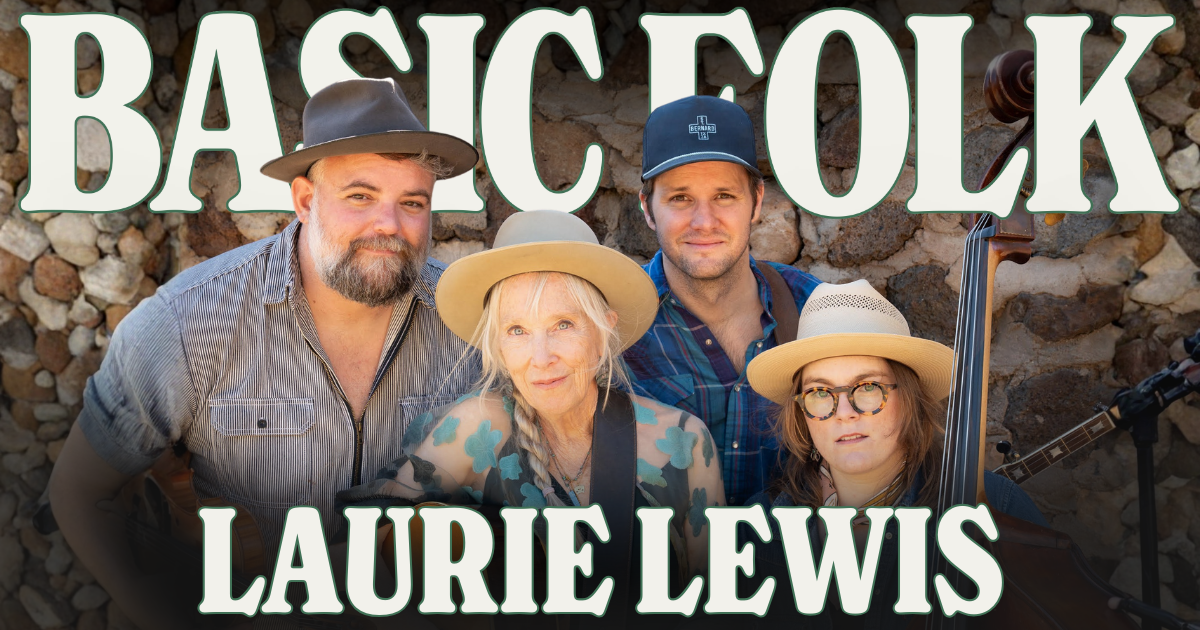
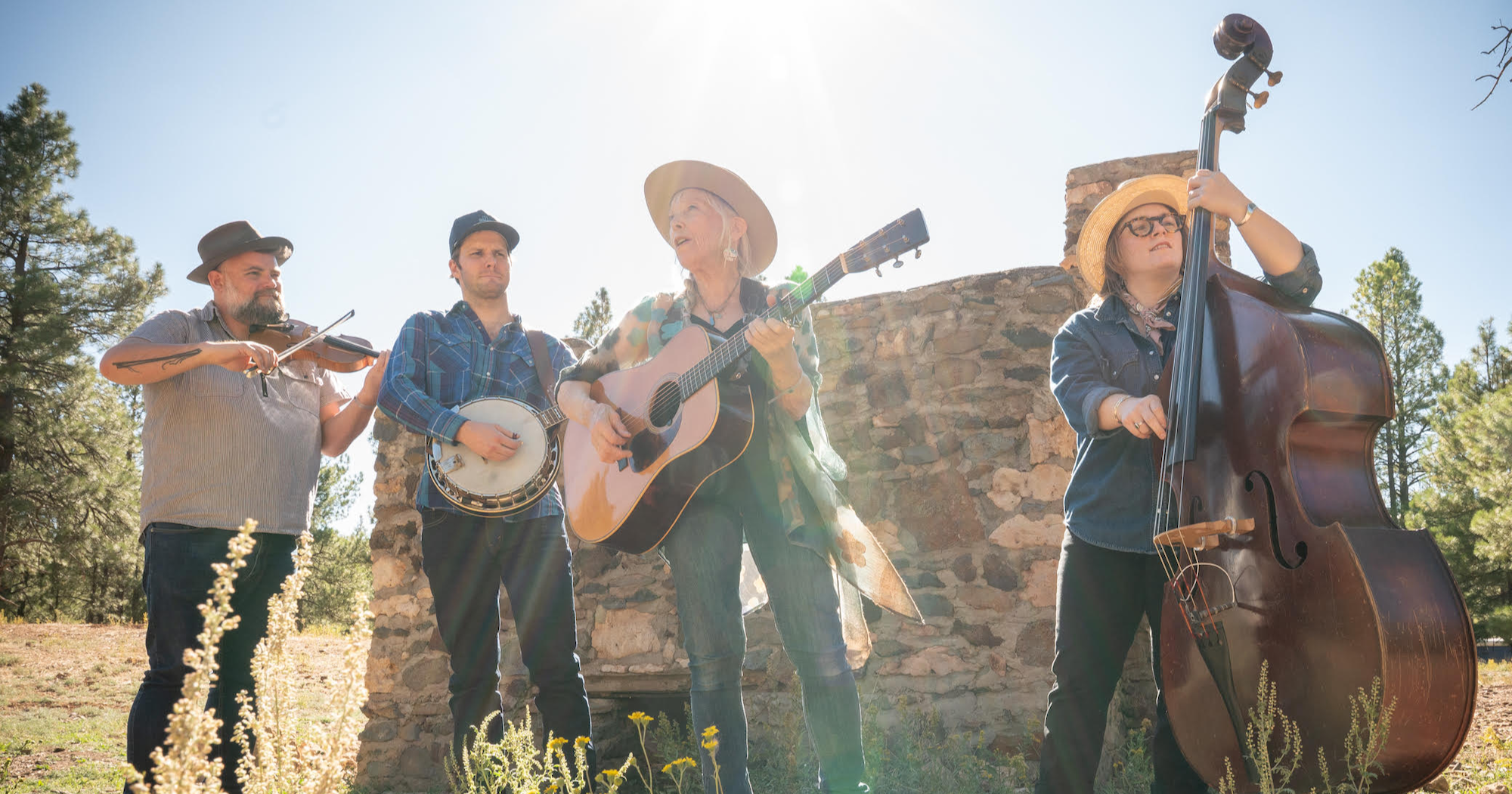
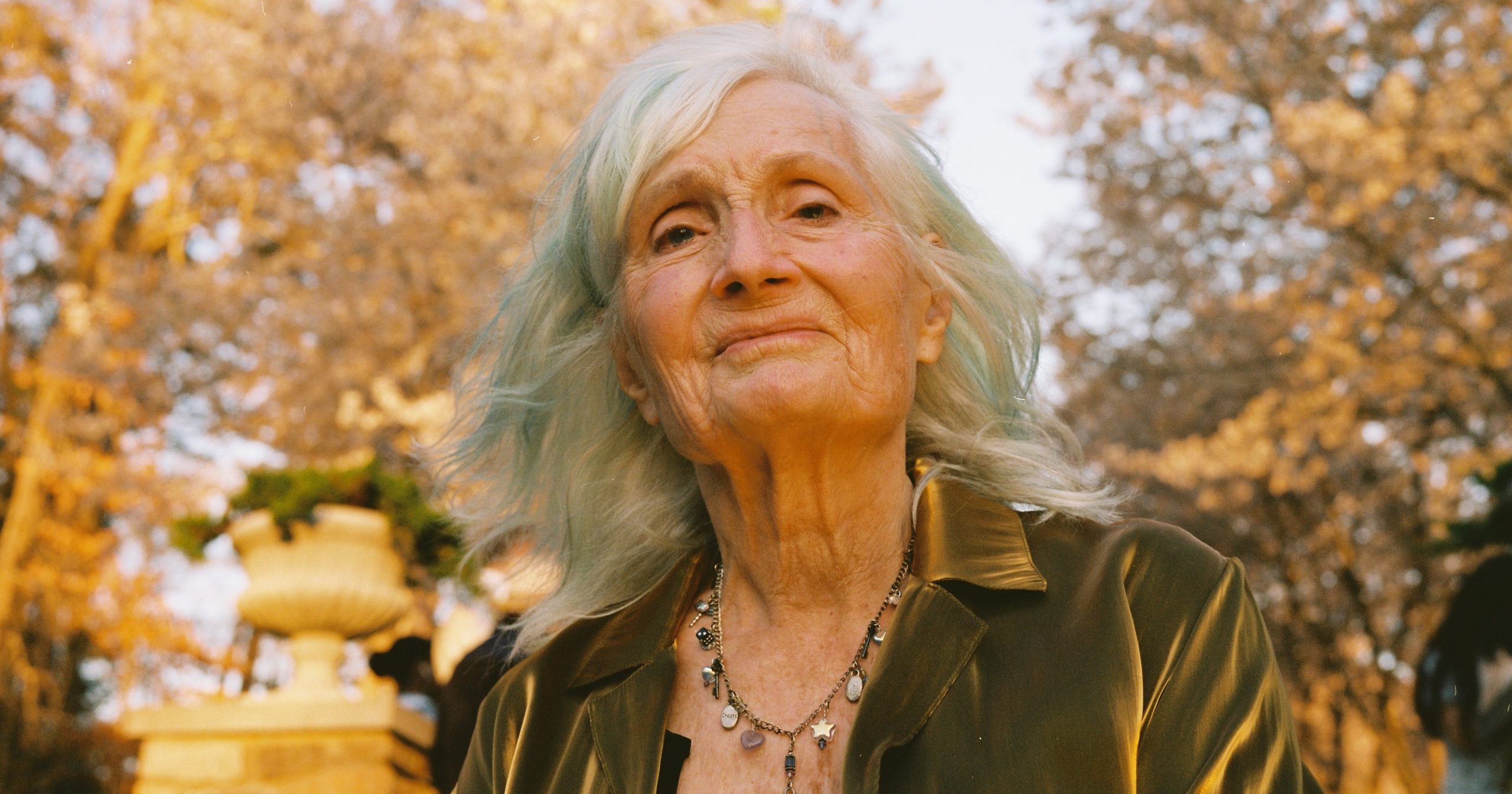
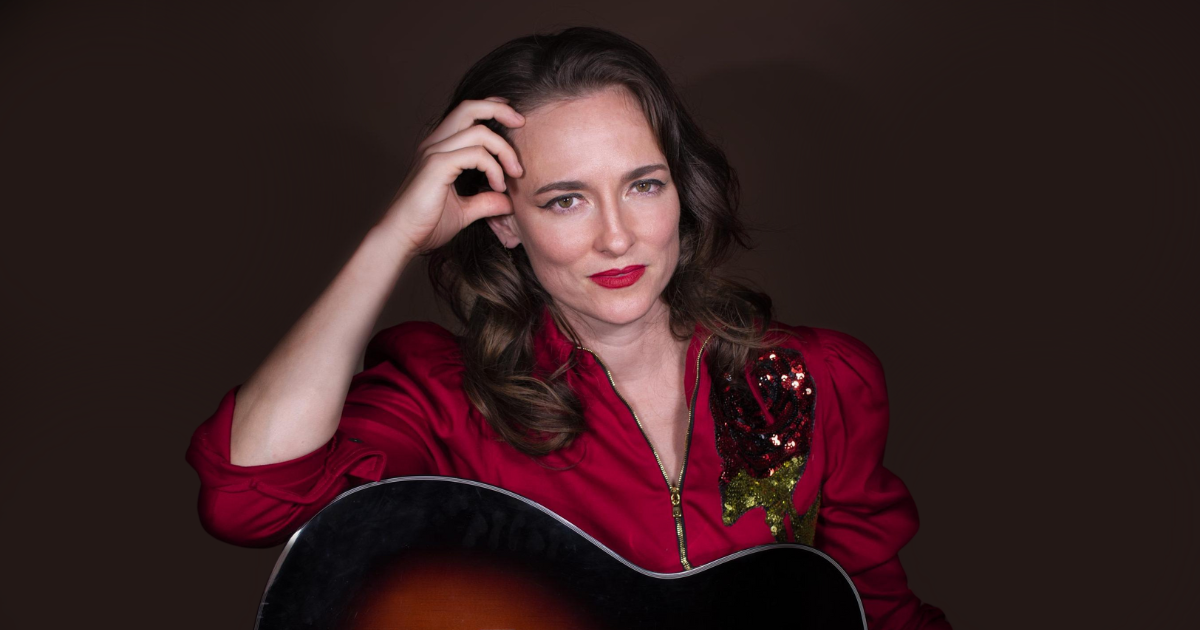
A foundational participant in the ’70s Bay Area bluegrass scene, Laurie Lewis knows the power of collaboration. She’s been a part of an ensemble in recent years that’s called Laurie Lewis & the Right Hands, with Laurie on fiddle, guitar, and vocals, Brandon Godman on fiddle, George Guthrie on banjo, and Hasee Ciaccio on bass. That group plays a huge part in her new album, O California!, a collection of songs that explore our own places in the natural world and in each other’s hearts. It also serves as a love letter to her home state. One standout track, the traditional “Fair and Tender Ladies,” is a duet with Ciaccio, which brings the song’s cautionary tale to life. In our Basic Folk conversation, Laurie talks about what it’s been like to learn traditional songs before actually catching their meaning, long after figuring out the tune.
Lewis emphasizes the communal and collaborative nature that defines her musicianship. She recounts her early exposure to music played socially when her father and his friends gathered at their home to play classical music when she was young. She credits that experience with solidifying her decision to learn to play, so she could have as much fun as they did. Laurie also opens up about her path to finding independence from her father’s expectations and her eventual return to music through modern dance and folk tradition. She touches on her passion for nature, recounting transformative hiking experiences, and reveals her thoughts on collaboration and mentorship within the music community.
Additionally, Lewis reflects on the profound impact of losing her voice in 2021 and the emotional journey of rediscovering her musical identity. We wrap up our conversation talking about her friend Alice Gerrard, whom she covers on the new album. After we hung up, Laurie emailed me an addendum about Alice that I wanted to share: “I forgot to say, when you asked me about Alice Gerrard, that I also greatly admire her community involvement in the music she loves, as evidenced by her starting and running the Old Time Herald for so many years. She’s a remarkable person. Plus, she trained her dog to fetch a beer out of the fridge for her and then put the empty can in the recycling!” Incredible.
It’s noon in the Bay Area, and singer-songwriter/multi-instrumentalist/producer Laurie Lewis is sitting in her backyard on what she describes as “a beautiful sunny day.” She spent her morning pulling up oxalis, and now she’s painting a railing she purchased at Urban Ore.
“It’s a good handrail for our front steps and along the walkway for my partner, Tom,” she says, “so I’ve been sanding it, wiping it down, and painting it.” Later during this interview, she’ll continue pulling up weeds, noting, “It’s very liberating for me, getting my hands in the dirt. It feels really good.”
The reason for today’s call is Lewis’s new album, O California! Like its predecessors, it’s an emotional palette of songs – five originals, five traditionals, and a cover of close friend Alice Gerrard’s “Sweet South Anna River” – that blend the many genres influencing her work, from bluegrass to country, jazz, and even a hint of rock. O California! features the stellar musicianship and vocals that define Laurie Lewis and her band, The Right Hands: Brandon Godman (fiddle), Hasee Ciaccio (bass), and George Guthrie (banjo, guitar).
A two-time IBMA Female Vocalist of the Year and a two-time GRAMMY nominee, Lewis is no stranger to BGS readers, as she’s been featured many times. Dedicated fans are also deeply familiar with her longtime partner, mandolinist Tom Rozum, and his Parkinson’s disease diagnosis. “He’s doing pretty well,” Lewis says. “He had spine surgery in November and he’s recovering very well from that. He had been living with intense sciatica pain for a year and a half, and the pain is gone, so that’s great.”
What would you like readers to know about O California!?
Laurie Lewis: Let’s see… all kinds of things. I wrote five of the songs on the album and they’re all over the map, so they’ll say, “She’s got a lot of different musical influences.” We’ve also drawn from the folk tradition and some great traditional songs and thrown that in the mix. It’s all done with the same four people and same four voices on beautiful acoustic instruments. Sonically, it’s really nice. You really hear the personalities of these particular four people working together. It’s what made me want to make the album.
This is album number 25 in your catalog. Artists often speak of albums as chapters in their lives. Which chapter is O California!?
This chapter is this band at this moment in time, these particular four people. I wanted to celebrate our working relationships together. It’s something that wouldn’t have happened at another time in my career, because I wasn’t working with these particular people for as long as I have been on this album. They are all on the previous album, but that was me calling all the shots. This is me settling in, listening to everybody, and trying to make a whole out of the four parts.
How did this approach make the creative process different?
Usually I come into a recording situation with more of an idea of what I want a song to sound like. This one, I came in with snippets and vague ideas for [the band] to have their way with it. We collaborated on arrangements and we listened to every idea. It’s not that I don’t listen to other people’s ideas at other times, but generally there might be more input than just three other people if I’m doing that.
I’m a collaborative artist. One of the reasons I play music is because it’s my best way of communicating in the world. And that is, for me, to an audience. But it’s also true for me to my bandmates and other musicians. It was fun to say, “We’re making a band album. This is what it’s going to be. We’re going to let people toss out songs.” “How does this sound?” “Oh yeah, great. Let’s do that.” It was, “How shall we do it?” “I’ve got an idea.” “How about if we do this?” It’s a very free and open feeling.
[The band are] all very open-eared and open-minded about the music. It doesn’t have to be the way Earl Scruggs did it, or the way Bill Monroe did it, or anything. It doesn’t have to fit into a neat bluegrass category. I’ve played with musicians in the past who have been more or less open, and all it takes is one more closed-off person to direct the band in a particular direction.
You’ve stated in the past, paraphrasing here, that writing is sometimes specific and sometimes spontaneous, sometimes it’s almost random, sometimes it’s unfinished. What was it this time, or was it some of each?
I’d say it was some of each. With the song “O California,” I was writing lyrics in the studio. I did a scratch vocal and changed the lyrics three times before I came home and overdubbed an actual vocal. That’s unusual for me, that it was in such an unformed state when I got into the studio, but it’s when we had the time and I knew the bones of it were good. Some vocal lines, some lyrics, just were not right yet, but I knew what it was about.
When did the songs start coming together as an obvious collection? Was there an intention in mind, a theme, when you all got together?
We started this project in a different way than I have other projects. We had little tours booked, so we would get together a day early before every tour, because we all live in different parts of the country. They would fly out here, we’d rehearse a song, get what we wanted down, figure it out, and then go on our tour and play it every night. We’d have a studio day booked on the day we got back from the tour, so we’d go in and record whatever we had worked out the week before and played on the tour. It was a fun way to approach a project and it spaced it out over a long period of time. It took close to a year.
When it’s spaced apart that way, how do you make it feel like a collection, rather than recording individual pieces of music?
Because it’s all us. It’s like an old friend – you can pick up the conversation right where it was. You haven’t changed your tone or your relationship with each other so drastically that it doesn’t fit together. It would be different if I were doing something like that over a year and just getting together with whoever I thought was the right person to play on a particular song. Then, the only thing that would hold it together would be my production values.
Do you still write ideas on notes, or have you tech-ed your way up to phone apps?
Oh, no. I write. I like to write with a good pen or a pencil on a piece of paper. I will make notes sometimes on voice memos, but mostly that’s it. I’m old-fashioned. I feel like there’s something that happens, the tactile feel of a writing utensil on the paper, that is easier for me to get a thought out than to sit at a keyboard. I’ve been known to still write letters, in fact.
We live in a world of texts, emojis, phone scrolling, and what’s being called “an epidemic of isolation.” Bluegrass is associated with festivals, musicians getting together and jamming, and community. Is this still true?
Oh, definitely. In fact, here in the Bay Area it’s having a real resurgence of community jamming culture. That’s always been at the basis of bluegrass. It’s what everybody wants to do – get together and let their instruments do the talking, let the songs do the talking. It’s a wonderful thing. I love it so much.
You mentor and teach at workshops and music camps, where you connect with younger and up-and-coming musicians. What do they want to know? What do they need to know?
One of the things that I try and impart to people is the importance of finding your own voice, because many young musicians have heroes they want to emulate. That’s how you learn, but at some point you have to find what you want to say with your voice and your instrument. That’s one of the things I try to emphasize and help people feel confident that they have something to say and their own way of saying it.
There is intergenerational connection at these camps and workshops, contrary to the ageism on both sides, that society seems to push: “What do those kids know?” or “What do those old people know?” What is your perspective?
There’s still a lot of that, but luckily there are enough people, young and old, paying attention and willing to listen to each other. It’s especially helpful when there are youth music camps and stuff like that, because then the kids have each other, but they also have their mentors there. They’re there because they want to learn, and it’s usually the older people who are teaching them, but then they get to be with their cohorts, their age group, and that helps a lot.
I certainly learned a lot from teaching at kids’ camps. When I first was asked to teach at a youth-oriented fiddle camp, I thought, “I can’t do that. I don’t know how to talk to kids. I don’t know anything about that stuff.” I said yes because I tend to say yes to things, and I found it to be so enlightening and so important in my life. It’s very enriching.
On a 2021 FolkWorks podcast, you talked about The Good Ol’ Persons playing a trade show luncheon years ago in front of a room full of drunk men. You described it as being “thrown to the wolves.” Many years later, how are we doing?
In terms of women musicians out in the world, there are so many more, and it is so great to see. And the technical abilities – you can’t fault it. You can put Molly Tuttle up against any guy. It’s been some huge steps forward in the time I have been in the music business, but it’s still very male-dominated from the top. It takes generations to change things like this, these ways of thinking, and now there’s a real cultural backlash happening and I don’t know how that’s going to play out. Women have made huge strides and maybe that’s just going to be taken away. Every generation has to fight the same fights, apparently.
Overall, how is bluegrass doing, to your eyes and ears?
That’s a really hard question for me to answer. Honestly, there’s a part of it that has gotten very entrenched in staying within a particular genre. I hear a lot of songs by people singing in a bluegrass style about bluegrass music, or their cabin home and I think it’s in danger of becoming a trope instead of a living, breathing art form.
Luckily, there are enough people out there creating in the art form and doing great stuff. There’s so much of everything happening all the time now that it’s going in all different directions at once. There’s good stuff and bad stuff, and it all depends on your point of view.
Who is making an important contribution, in your opinion?
I hear a few things now and again that I respond to and like a lot. I’m not very impressed with a lot of technical brilliance. I want to be made to laugh and cry, and if it doesn’t do one or the other or both, I’m not all that interested in it.
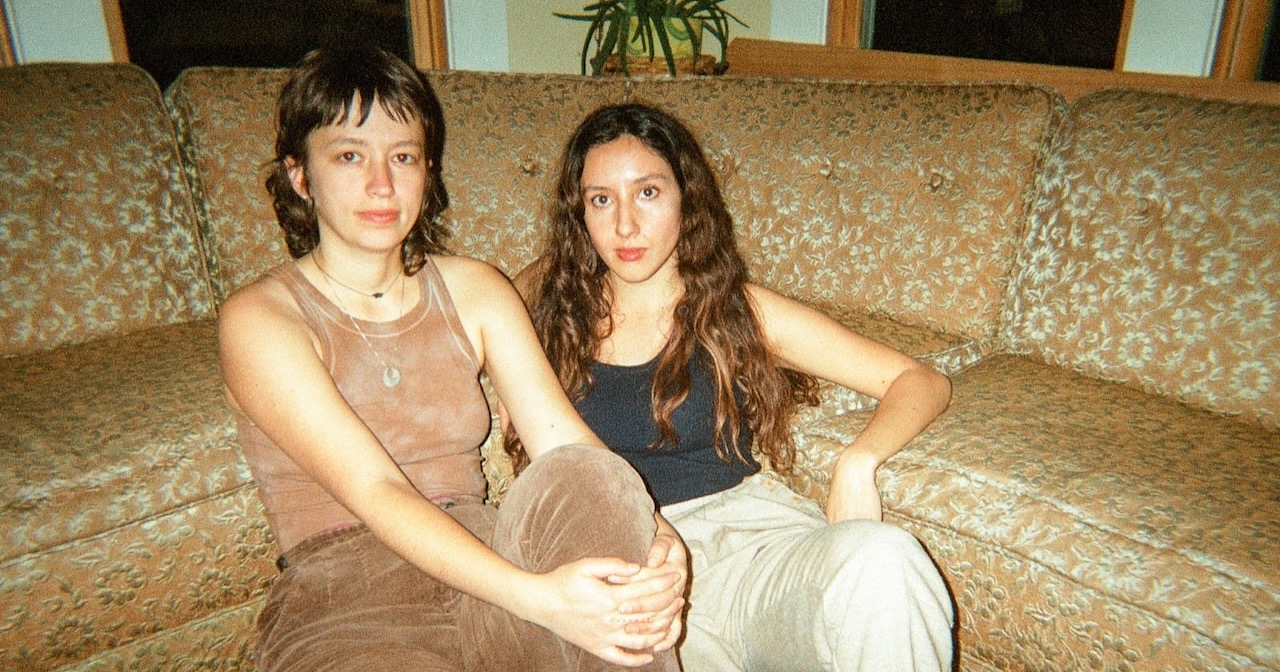
In terms of bands, Mighty Poplar can do it, and the duo Paper Wings, two young women, Emily Mann and Wila Frank, who I actually met at a fiddle camp when they were teenagers. They’re pretty wonderful. And I always like hearing what my old friends are coming up with in terms of songs and writing. I love hearing whatever 92-year-old Alice Gerrard is coming up with. She has a way of putting her finger on the pulse of what’s happening in the world and is pretty great.
In 1998, you recorded a song called “The Refugee.” Twenty-eight years later, here we are …
Oh, I know. I find it unfortunate that [that] song is still so incredibly relevant – or more relevant. I find it very unfortunate that song has not outlived its message. It’s terrible. I wrote it when Guatemala was in such bad shape, people were fleeing, and there was all this backlash. It’s an empathetic song. These days, empathy – there’s a whole movement, “empathy’s a bad thing.” It’s so crazy.
In a 2020 interview with BGS you said, “Music has a real way of being able to soothe and heal grief.” Could you talk about that healing power, not only as a songwriter, but also as a lover of music, a listener?
Oh, yeah, it’s true. I stand by that. There’s nothing like it. It’s such a direct conduit to the heart. A song can sneak in and express something for you that you had no words for. It can help you, as a songwriter, to figure out a way to express what you might be going through in a way that makes it universal. You put it out there in the world, everybody can feel it and relate to it, and it makes you feel a part of something greater than just your little dark cell that you might be stuck in, or your own personal grief.
It has helped me deal with things, with grief in my life, to be able to learn a song that makes me cry. Every time I hear it, I learn it, and it becomes part of me. It becomes part of my way of being able to express myself, or to write a song that every time I start trying to sing it, I’m in tears or something. You learn to work through your grief by embracing it musically. It’s an incremental way of dealing with things, and it’s really healing.
It’s a sense of support through the company of songs that speak to us.
Yeah. You are not alone. Especially with all the internet stuff, people spend a lot more time not with actual other humans, having conversations or whatever. To hear something, to listen and understand that other people are going through the same alienation or grief or loss, or whatever it is that you are experiencing, makes it easier to bear.
The French author Jean Giono, who wrote The Man Who Planted Trees – I wish I could find this quote – said in an essay that an artist’s duty is to express yourself for all the people who don’t have the words or the art to express themselves. It’s your duty in society, your job, to put it out there for everybody who can’t.
2025 was a standout year for roots music books. In a time of political upheaval and uncertainty, authors like Craig Shelburne & Brenda Colladay and Alisa Murphy brought us deep into the history of music institutions that have weathered generations of American ups and downs: the Grand Ole Opry and The Station Inn. Reading about these places is a reminder that culture is often a better litmus test than news cycles, when it comes to what a country stands for and where its soul can be found.
Biographies of Dolly Parton and Alice Gerrard (the latter written by Gerrard herself) highlight women who defied the odds to become iconic voices in country and old-time. Parton first debuted on the Opry at the age of 13 and her influence on American culture has spanned from highlighting women in the workplace with “9 to 5” to donating a million dollars for medical research to accelerate the creation of the Moderna COVID vaccine. Gerrard, while less of a household name, is considered one of the last of the old guard in traditional music; even if you haven’t heard of her, you’ve probably still been touched by her work. These books detail the unlikelihood of these women’s successes given the time and place of their work and both good reminders of changing gender norms that we now take for granted.
Two books on Black American fiddle and banjo music continue the quest to restore African music’s and African American musicians’ rightful place in the history of the American string band tradition. With additional archival and notation resources, these books offer not only scholarship, but an opportunity for dedicated pickers to add to their repertoire, too.
And finally, roots musicians Paul Burch and Charlie Parr channel their creative writing into novels Meridian Rising and Five, respectively, the former a fictionalized story of Jimmie Rodgers and the latter a wild meditation on the wanderings of a troubadour.
From coffee table aesthetics to novels and new tunes, 2025’s roots music books have you covered! See a list of our favorites and a collection of “honorable mentions” below.
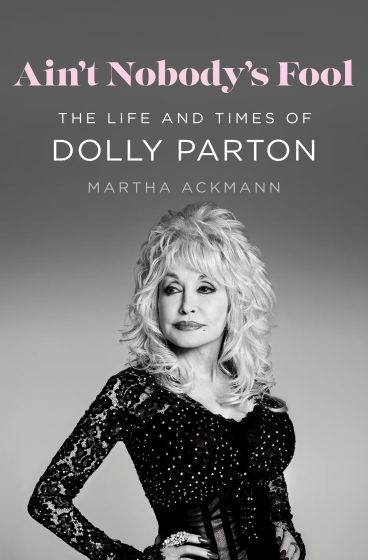
Ain’t Nobody’s Fool: The Life and Times of Dolly Parton by Martha Ackmann
Martha Ackmann is known for illuminating the stories of women who rise above societal expectations, so it’s only appropriate that she should tell the story of Dolly Parton’s ascent to success. With new interviews and documents, the book focuses on the price Parton paid for her early fame, penalized and criticized by those who saw it as a betrayal of her roots. Despite legal battles and struggles with her mental health, Parton persevered and went on to use her affluence to help her East Tennessee home, through the development of Dollywood, her charitable work, and the creation of The Imagination Library. Find it here.
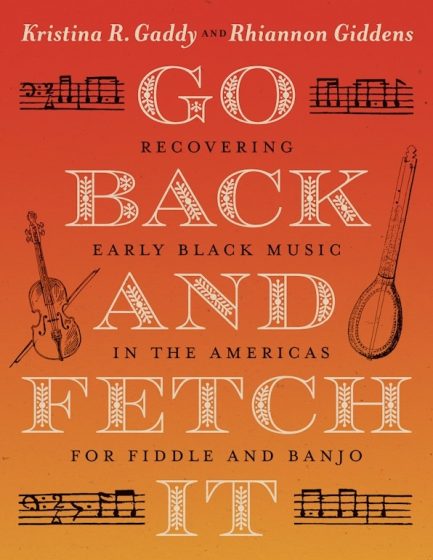
Go Back and Fetch It: Recovering Early Black Music in the Americas for Fiddle and Banjo by Kristina R Gaddy and Rhiannon Giddens
Appropriate for pickers and scholars alike, this collection of early Black Atlantic music is equal parts songbook and history lesson. Nineteen carefully transcribed tunes sourced from 1687 to the 1860s are presented in standard notation and banjo tablature, and accompanied by rich historical essays detailing their origins, cultural context, and evolution over time and place. This collection is another important step in the recovery of Black history of the American musical canon – and specifically the fiddle and banjo canon – from two lauded experts on the subject. Find it here.
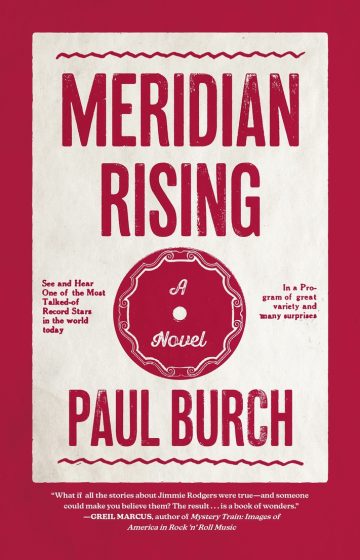
Meridian Rising by Paul Burch
Meridian Rising, the debut novel from Paul Burch, fictionalizes the life of country star Jimmie Rodgers and was released this fall to rave reviews. As the Chattanooga Free Press says, “Burch must have done a great deal of research to deliver a story that feels so authentic, but research alone doesn’t make a good novel. The writing is what matters, and Burch skillfully renders a large cast of narrators throughout Meridian Rising, especially its main subject, whose witty, sometimes barbed voice is vivid and memorable.” Find it here.
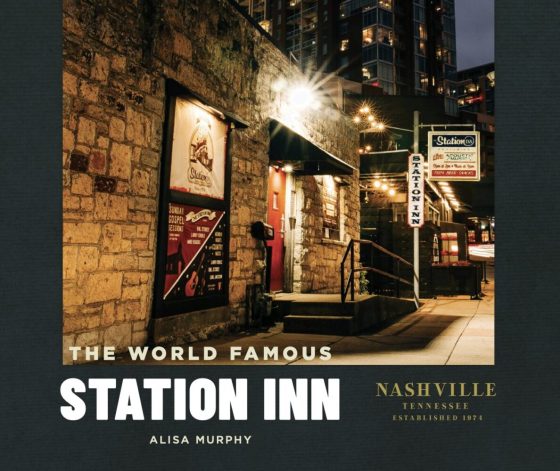
The World Famous Station Inn by Alisa M Murphy
The passing of JT Gray in 2021 marked the end of an era for The Station Inn. Although the venue continues its bluegrass legacy with new management, it has been long past time to commemorate this (as its name rightly points out) world-famous venue with a book of stories and photos. Author Alisa M Murphy spent two years immersing herself in the culture of the venue and conducting interviews to put together her coffee-table book, The World Famous Station Inn.Find it here.
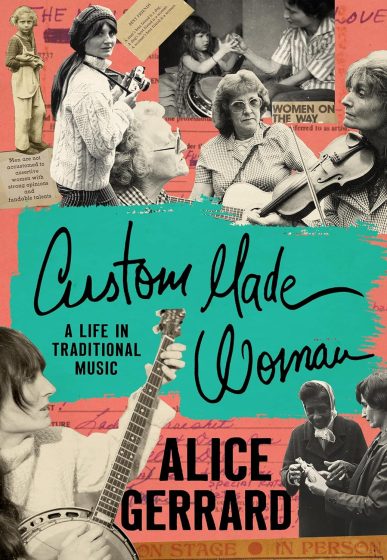
Custom Made Woman: A Life in Traditional Music by Alice Gerrard
This new memoir from one of our national treasures, Alice Gerrard, features over 100 of her personal photographs along with stories from pivotal times and an exceptional life in traditional music. Gerrard’s career saw her crossing paths with Bob Dylan, Doc Watson, Elizabeth Cotten, and many more. Recent rereleases of Gerrard’s trailblazing collaboration albums with Hazel Dickens have been put out by Rounder Records and Smithsonian Folkways, and they can be listened to in an entirely new context thanks to this book. Find it here.
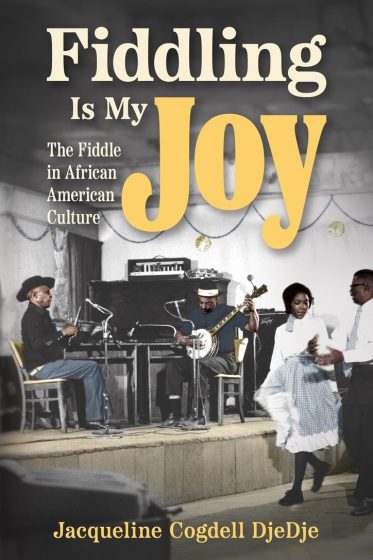
Fiddling is My Joy: The Fiddle In African American Culture by Jacqueline Cogdell DjeDje
UCLA Ethnomusicologist Jacqueline C. DjeDje investigates the fiddle in Black America, not only helping restore it to its rightful position in history, but also exploring why fiddle in African American culture disappeared from the mainstream story of the instrument in the first place. In addition to exploring geographic differences in African American fiddling traditions, DjeDje’s scholarship looks at fiddle traditions in West African and how their specific characteristics made their way to both Black and white American fiddlers. The book is accompanied by an online eScholarship Companion with primary source documents and audiovisual examples of music discussed in the text. Find it here.
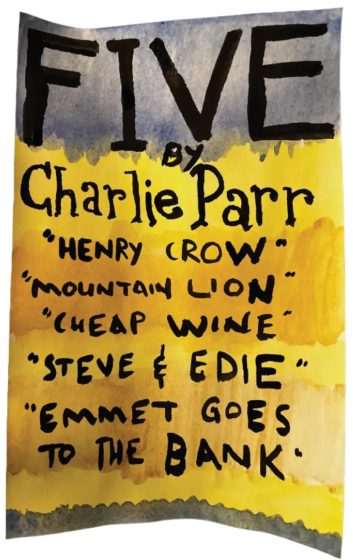
Five by Charlie Parr
The second collection of short fiction from beloved Minnesota musician Charlie Parr is not for lovers of a tight plot and succinct characters. Parr’s five stories are, according to his own description, “more like sad anecdotes told to you at the end of an impossibly long dinner party by the drunken spouse of someone that you barely know while you’re easing your way to the door, having already put your coat on around the time that these stories began.”
But, if you’re a fan of Parr and his 18 (!!!) studio albums, this collection is a must. Find it here.
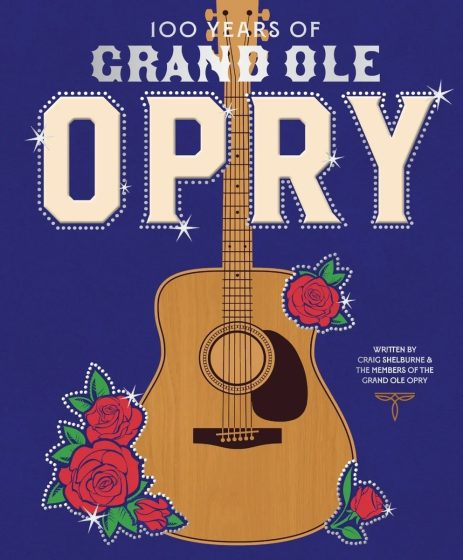
100 Years of Grand Ole Opry by Brenda Colladay & Craig Shelburne
Music journalist Craig Shelburne worked tirelessly with Opry historian Brenda Colladay – and dozens of artist, announcer, and Opry employee interviewees – to tell the story of the world’s longest-running live radio show over a century. The Grand Ole Opry is certainly the main character. This book is perfect for collectors and readers alike, since it’s full of illustrations and photographs. It’s separated into chapters by time periods, following the twists and turns of the Opry’s youth, adolescence, and adulthood. From Lester Flatt to the 2010 flood, the book is as deep as it is wide. An entertaining resource for country fans who like to get the full story. Find it here.
Other Reads From Our Inbox
Solomon Simon Dog Man Jack by Cindy Baucom, illustrated by Grace van’t Hof (Self-published)
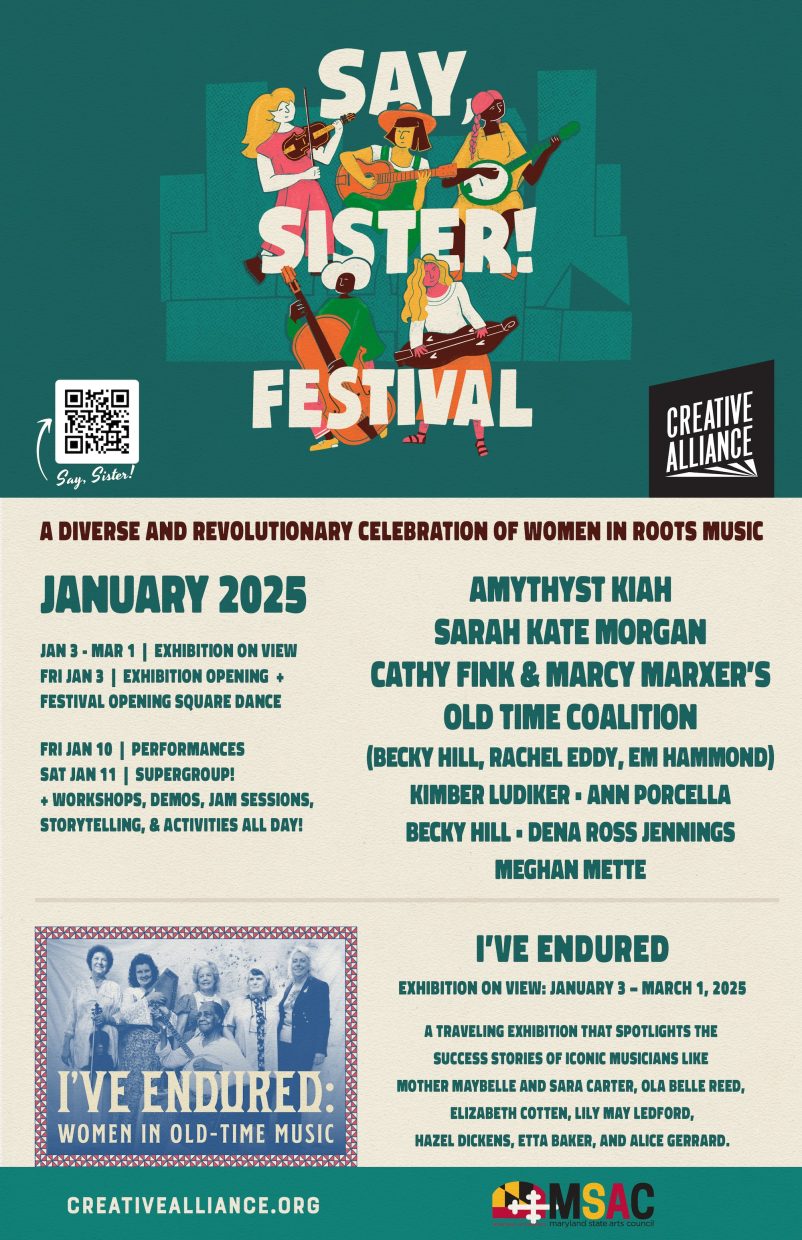
Celebrating the rich history of women in old-time music, past, present, and future, has been an obsession of mine for over 50 years. I’ve listened to archival recordings, sat in the living room with Ola Belle Reed, Jean Ritchie, and Alice Gerrard, toured with Patsy Montana, taught Maybelle Carter’s unique guitar style, and interviewed Lily May Ledford at the Renfro Valley Barn Dance.
I was a proud member of the team that created The Birthplace of Country Music’s exhibit, “I’ve Endured: Women In Old Time Music.” And I’m thrilled that Baltimore’s Creative Alliance is hosting both the exhibit and the Say Sister! Festival celebrating women in roots music in January 2025. This playlist includes music from the past and the “I’ve Endured” exhibit, present artists from the Say Sister! Festival lineup – and the future is coming! – Cathy Fink, musician and co-curator
“I’ve Endured” – Ola Belle Reed
Ola Belle (1916-2002) was born Ola Wave Campbell in Grassy Creek, North Carolina. She was a fine traditional banjo picker and guitarist and grew up with a rich repertoire of family music. She also became a prolific songwriter, realizing that she had her own things to say and her own way to say them within the structure of old-time music. This song has been covered hundreds of times by contemporary artists. Ola Belle received a Distinguished Achievement Award from the International Bluegrass Music Association in 1998 and was awarded a prestigious National Heritage Fellowship Award in 1986.
A native of Tennessee, Amythyst Kiah performs both original and traditional songs on banjo and guitar. She dug deep into old-time music as a student at East Tennessee State University’s roots music program. In “Polly Ann’s Hammer,” the legendary John Henry takes a back seat and his wife gets the lead role. Like the “I’ve Endured” exhibit, this effort brings light to someone who has not received the attention she may have deserved.
“When John was sick/ Polly drove steel/ Like a man, Lord, like a man … This is the hammer that killed your daddy/ Throw it down and we’ll be free…”
“Things Are Coming My Way” – Marcy Marxer
Marcy adapted this song from the singing of Bessie Jones and the Georgia Sea Island Singers. Marcy met the Georgia Sea Island Singers during various folk festivals and always delighted in this song. She’s been celebrating the rich history of women in country music in our duo for over 40 years. Marcy’s a multi-instrumentalist on guitar, cello banjo, mandolin, ukulele, percussion and more. This song showcases her fingerpicking guitar style.
“West Virginia Coal Disaster” – Sarah Kate Morgan
Sarah Kate Morgan steps follow right after Jean Ritchie with traditional and original songs and dulcimer playing. She’s an innovative Appalachian dulcimer player with a gorgeous voice and a love for Appalachian music and heritage. Here she sings Jean’s potent song about the 1968 Saxsewell No. 8 Mine disaster. Hang in there for the awesome instrumental at the end! Sarah Kate teaches at the Hindman Settlement School in Kentucky.
“Red Rocking Chair” – The Coon Creek Girls, Lily May Ledford
Lily May Ledford (1917-1985) from Powell, Kentucky played clawhammer banjo and fiddle and was the leader of the first all-girl string band on the radio, The Coon Creek Girls. Here her solo banjo playing is featured.
“Cotton Patch Rag” – Kimber Ludiker
Kimber plays fiddle and mandolin and sings with bluegrass group Della Mae. She’s a sixth-generation fiddler from Spokane, Washington. Here’s her winning performance of “Cotton Patch Rag” from the 2006 Grand Master Fiddle Championship.
“What The Lord Done Give You” – Cathy Fink
I was the first woman to win the West Virginia State Banjo contest (1980) – and went on to win it several times, total. In 2018 I also won the Clifftop Appalachian Music Festival Banjo Contest. This original song is played on a gut string fretless banjo, making a new tune sound old.
“I Will Not Go Down” – Amythyst Kiah featuring Billy Strings
From Amythyst’s most recent album, Still + Bright, comes this awesome collaboration with Billy Strings. It’s a powerful song and arrangement. I can tell you that if Ola Belle Reed were able to hear this song, she’d give it a big thumbs up! Speaking truth to power is part and parcel of women’s work in roots music.
“Muddy Creek” – Sarah Kate Morgan
Sarah Kate Morgan has redefined what can be done on an Appalachian dulcimer. Her trills, embellishments and awesome tone here are joined by fiddle, banjo and feet. This one will make you happy!
“Now Is the Cool of the Day” – Jean Ritchie
Jean’s clear soprano voice couldn’t be more beautiful than on this original song that draws on her traditional roots, while conjuring God’s calling to humans to take care of the earth. First released in 1977 and still timeless.
“No-See-Um Stomp” – Della Mae
Kimber tears up this original fiddle tune with an all-star band featuring Molly Tuttle, Alison Brown, Avril Smith, and Della Mae.
“Chilly Winds” – Cathy Fink & Marcy Marxer
Cello banjo (Marcy) and five-string banjo (Cathy) make up the instrumental duo behind the vocal duet in this classic old-time song.
“The Little Devils” – Jean Ritchie
Jean’s solo voice reminds us what it must have been like to gather round the fire after dinner and hear her mother sing to the family before the age of television.
“Banjo Pickin’ Girl” – The Coon Creek Girls, Lily May Ledford
This song has become the unofficial theme song of many a banjo pickin’ girl and string band. Lily May Ledford and the Coon Creek Girls sang this on the WLS Barn Dance (Chicago), Renfro Valley Barn Dance (KY) and Lily May continued singing it solo for the rest of her career.
Say Sister! Festival takes place in Baltimore, Maryland at the Creative Alliance on January 10 & 11, 2025. Tickets – in person and “watch from home” – are available here. The “I’ve Endured: Women of Old Time Music” exhibit opens at Creative Alliance on January 3 at 6pm.
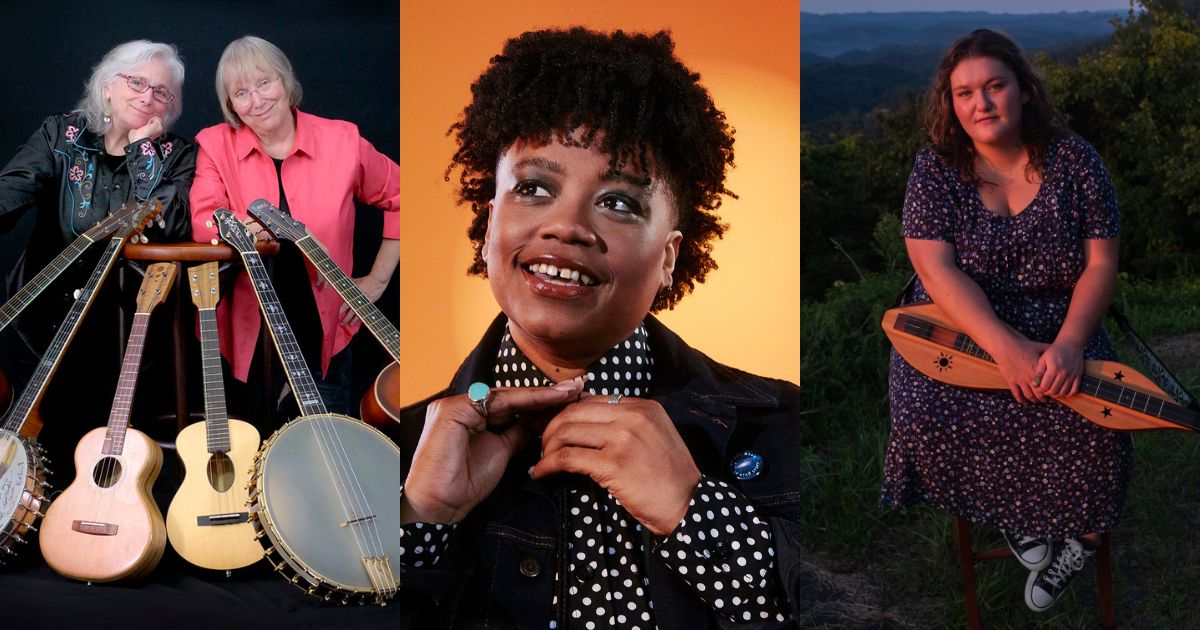
Photo Credit: Cathy Fink & Marcy Marxer by Irene Young; Amythyst Kiah by Photography by Kevin & King; Sarah Kate Morgan by Jared Hamilton. Poster Credit: Gina Dilg
When you wake up in a world where hatred and fascism have been resoundingly endorsed by so many of your neighbors and fellow citizens, how do you proceed? That question becomes even more daunting at its second or third or umpteenth asking.
Yes, music will play a vital role over the next handful of years, as we continue the fight for justice, self-determination, and agency for all people, in the U.S. and around the world. But music, the arts, and creativity won’t be enough to save us. They won’t be an end-all, be-all solution to the political and cultural hurdles we will have to clear in the near future.
This is a moment that calls for so much more. Solidarity, first and foremost – the idea that, at the beginning or end of the day, all we have is each other – and community, organizing, and advocating for each other will be essential. Mutual aid will be more necessary than ever. Putting our own privilege on the line in order to protect and ensure safety for those more marginalized than ourselves is the task immediately at hand. Showing up – yes, for our country, but more importantly, for our friends and neighbors – is the very next step. Literally and figuratively.
Still, the soundtrack we will all write, that we will all curate, that we will all partake in while opposing the craven and hateful policies being proffered by our would-be dictator will be a powerful tool. Music – especially roots music, country and bluegrass, blues and old-time, folk with a lowercase and capital F, and more – are traditions steeped in populism, in worker’s rights, in justice, in standing up for the downtrodden and beleaguered. There are no better genres for this exact moment. There are no betters artists, musicians, and songs than those in and made by our very community.
BGS and Good Country include in our mission a commitment to intentionally crafting a roots music space, a bluegrass- and country-centered universe, where everyone is welcome, regardless of identity, background, nationality, ethnicity, disability, class, or belief system. We are determined to continue that work, to be a place where – hopefully – anyone and everyone can feel seen, heard, safe, and valid in their love for and appreciation of all things roots music.
As we summon courage for the work ahead and lean on our community, here are eight songs perfect for this exact moment in history, to hold up as we remind ourselves our goals are the same at the end of this week as they were at the beginning: liberty, agency, and self-determination for all. – TheBGS & Good Country Team
“Mercy Now” – Mary Gauthier
A modern Americana classic, singer-songwriter Mary Gauthier shared “Mercy Now” on social media very early on Wednesday morning, after the news broke that Trump had won another term. It spread quickly on social media with many a repost and reshare. The message here, of mercy applied broadly, universally, and without qualification, is more than timely. It’s evergreen.
“Crisis” – Aoife O’Donovan
Connecting our current struggle to those of past generations is exactly how we continue to put one foot in front of the other, despite setbacks and losses and despair. Aoife O’Donovan’s latest record, All My Friends, is a perfect intergenerational connecting of the dots, centering women, girls, and femmes, and shines a light on the non-linear track that leads to victory. We know we will continue to return to this music over and over in the future, as a balm and a catalyst for progress.
And, as our friends at Basic Folk reminded us yesterday, Aoife’s and Dawn Landes’ episode of the podcast – which focuses on their similar albums centering women, feminism, and women’s issues – is an incredibly timely re-listen. Find that episode here.
“Sun to Sun” – Alice Gerrard
Looking to our roots music elders in this moment is exactly what we all need! Alice Gerrard’s most recent album, Sun to Sun, and certainly its title track, indicate a kind of perseverance and long view that we all could take on as we face the uncertain future.
With a loping, almost marching rhythm, there’s a grounded, realistic, and convicting approach here on “Sun to Sun.” While we all talk, and talk, and talk, and talk, the problems we face continue unabated and unchallenged. What will we do besides talk?
While we talk another fool goes and buys a gun…
“Listen” – Kyshona
Speaking of talking… why don’t we take a turn at listening? The challenge has been set by Kyshona, a powerful and restorative singer-songwriter and activist who channels her ancestors, connects generations, and builds community with every note and every word sung. Originally released in 2020, “Listen” is just as encouraging now as it was then, and just as indelible in its striving for a better, more compassionate world. Media, social media, and the internet all incentivize us to speak, to center ourselves, to prefer “me” and “I” over “us” and “we.” Let’s maybe listen more, instead. Especially right now.
“Beautiful” – Sam Gleaves
Appalachian singer-songwriter and multi-instrumentalist Sam Gleaves – who was raised in southwest Virginia but now lives in eastern Kentucky – released one of the most quietly and emphatically radical queer country and old-time albums of this year, Honest. “Beautiful” is the collection’s stunner, a track about how there’s endless beauty, mystique, and life lessons to be drawn from the ways we’re all different from each other. Through the lyrics, you see the world from the eyes of a young Gleaves, singing about sights and sounds unfamiliar and foreign to a boy from the mountains, loved and cherished by his family and shown that love without question.
Seeing beauty in our differences? What a way to live…
“The Numbers” – Mipso
THE ECONOMY! THE ECONOMY! THE ECONOMY!
What about those of us for whom this economy has never worked well or fully functioned? What about the millions who can’t make ends meet right now, under blue or red presidents? From their 2023 album, Book of Fools, Mipso turn over this very question, examining how and why “The Numbers” could be soaring – hiring numbers, the stock market, crypto values, Tesla market cap – while so many are still struggling day to day.
“Put No Walls Around Your Garden” – New Dangerfield
From Black string band supergroup New Dangerfield – which features Jake Blount, Kaia Kater, Tray Wellington, and Nelson Williams – “Put No Walls Around Your Garden” is an Americana-tinged old-time number, written by Kater, with a collectivist stance and a solidarity through line. There may be instincts in the near future to revert to an “every man for himself” sort of survival strategy, but the only way we’ll get through is together. Rather than hoarding, walling ourselves off, retreating, or recoiling, now is the time to throw open our garden gates and welcome each other in. Share our abundance, work through our scarcity and lack, and care for each other’s needs – big or small.
“Trees” – Laurie Lewis
Consider the trees. Consider the birds, the rivers, the oceans, the saguaro, the pikas, the whooping cranes. Did their realities change between Tuesday and Wednesday? Is the world any less or more likely to burn, to flood, to be blown away by hurricanes and tornadoes now than on Monday? Sadly, no. The march towards climate apartheid continues entirely unfettered, regardless of who holds the White House.
Laurie Lewis, a bluegrass forebear who has carried the mantle of climate justice for her entire life, embodies trees in the title track of her latest album. She and her band show how the fight for justice – climate justice, racial justice, gender equality, LGBTQ+ rights, immigrant rights – is a fight not measured by human lifespans and human time, but against earth’s clock. The trees will continue to watch, waiting, for us to either figure it all out or to fail at our mission.
We must not fail. The work continues and we’ll be working – and singing – alongside you all, the entire way.
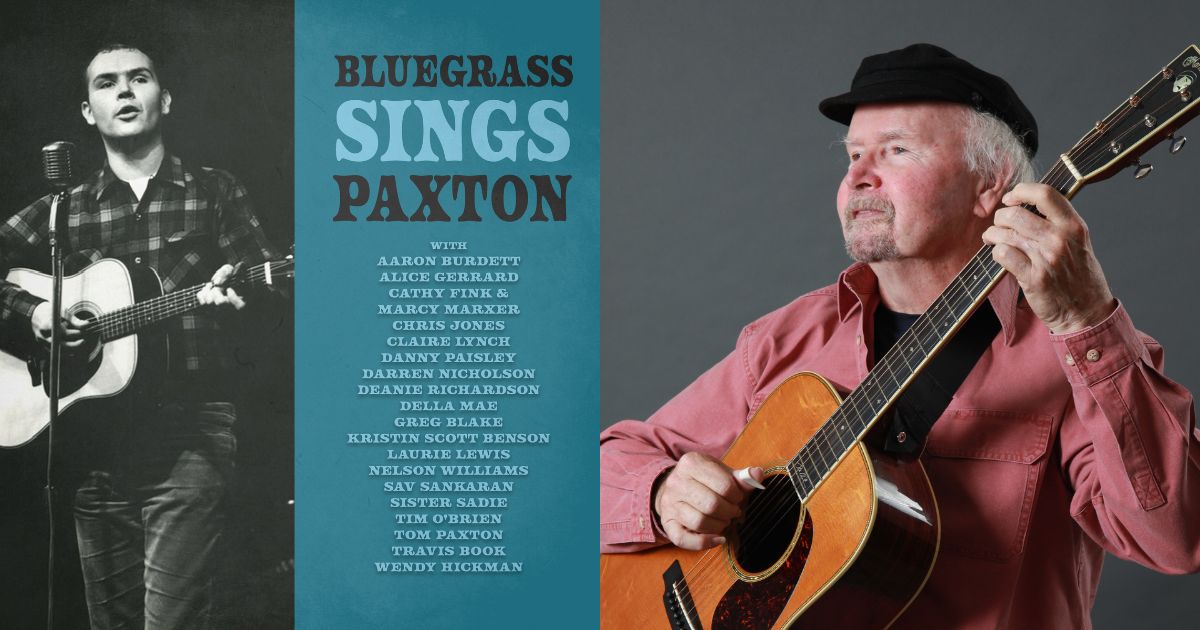
There is no disputing that Tom Paxton is a living music legend. In the early 1960s, he was a major player in the vibrant Greenwich Village folk scene, along with the likes of Bob Dylan, Phil Ochs, and Peter, Paul & Mary. The writer of such classic tunes as “Last Thing On My Mind,” “Bottle Of Wine,” “I Can’t Help To Wonder (Where I’m Bound),” and “Ramblin’ Boy,” Paxton has earned Lifetime Achievement Awards from the GRAMMYs, ASCAP, and the BBC. The beloved songwriter has had his tunes covered by a wide spectrum of acts, ranging from Harry Belafonte and Neil Diamond to the Pogues and Norah Jones. While several fellow singer-songwriters (notably Carolyn Hester and Anne Hills) have devoted entire albums to Paxton music, it took a group of admiring bluegrass musicians to deliver the first multi-artist tribute album of his songs.
Bluegrass Sings Paxton, which came out August 30 on Mountain Home Music Company, offers an impressive lineup of contributors that cuts across several generations of bluegrass musicians. Performers include celebrated acts, such as Alice Gerrard, Claire Lynch, Laurie Lewis, and Tim O’Brien along with younger stars, like Sister Sadie, Della Mae, Steep Canyon Rangers’ singer/guitarist Aaron Burdett, Unspoken Tradition’s Sav Sankaran, and current IBMA Male Vocalist of the Year Greg Blake.
Paxton, speaking to BGS from his home in Virginia, said that he had a mostly hands-off role in the making of Bluegrass Sings Paxton. “I just sat on the sidelines in amazement”; however, he confided, “I was just blown away” after listening to the entire album for the first time. The 86-year-old singer-songwriter was also being a little modest about his own contributions. This collection contains two new Paxton tunes, and he sings on a pair of tracks as well.
The genesis for Bluegrass Sings Paxton started with a conversation that GRAMMY-winning musician/producer Cathy Fink had some years ago with Paxton, who she has worked with since the early 1980s and has known even longer. “I know Tom’s catalog really well and have often thought there was great material there for bluegrass,” she shared with BGS. “I could hear this album before we even began.” The idea further evolved a while later when Fink brought up the idea to award-winning songwriter, producer, and Mountain Home executive Jon Weisberger at IBMA a few years back, and he immediately came aboard.
Several of Paxton’s tunes have been very popular in bluegrass circles over the years. A half century ago, Kentucky Mountain Boys covered “Ramblin Boy” while the Dillards and the Kentucky Colonels were among those who have recorded “The Last Thing On My Mind.” More recently, “I Can’t Help But Wonder (Where I’m Bound)” was a hit for Ashby Frank and “Leavin’ London” is a live staple of Billy Strings’ concerts. However, both Fink and Weisberger thought the project was a terrific way to get Paxton’s deep songbook better known in the bluegrass world. As Weisberger explained, “I had no doubt that there were more [songs] – both already written and yet to be written – that would work well within bluegrass, and that bringing them to light would encourage artists looking for songs to look to his catalog.”
Several acts came into the project with specific songs that they wanted to do. Blake, who fatefully was sitting at the same table with Weisberger and Fink at IBMA, quickly put dibs on “Leaving London.” Danny Paisley, who remembered his dad, ’80s bluegrass star Bob Paisley, taking him to the Philadelphia Folk Festival as a child and seeing Paxton play there, requested “Ramblin’ Boy,” because it was a song his father had performed. “I Can’t Help But Wonder (Where I’m Bound)” was already part of Della Mae’s live repertoire, so doing that tune was a natural fit for them.
When it came to what songs other acts took on, Fink gave the performers a lot of free rein to delve into Paxton’s vast treasury of tunes, a decision that worked out wonderfully. “Each artist made the song their own and it really worked,” she confided. Claire Lynch chose “I Give You The Morning” and Alice Gerrard selected “The Things I Notice Now” from Paxton’s 1969 The Things I Notice Now album. Chris Jones picked “The Last Hobo” from 1986’s And Loving You. Paxton’s 2002 album, Lookin’ for The Moon, was the source for both Aaron Burdett’s selection of and Sav Sankaran’s rendition of the title track. Laurie Lewis, meanwhile, found “Central Square” from 2015’s Redemption Road. In case you haven’t done the math, these songs alone cover nearly 50 years of Paxton’s recordings.
Paxton, too, was thrilled with the selections, proclaiming “I liked every one of the songs that they chose.” While he expected tunes like “Can’t Help But Wonder,” “Ramblin’ Boy,” and “The Last Thing On My Mind” would be part of the set, Paxton said he “was just tickled to death” over the inclusion of such lesser known numbers as “Central Square,” “The Same River Twice,” and “The Last Hobo.”
Chris Jones revealed to BGS that he picked “The Last Hobo” because the tune “felt like a classic Tom Paxton third-person story song, sort of in the spirit of ‘Ramblin’ Boy,’ in a way. It has a kind of tenderness that is so often present in Tom’s songs.”
Jones was also a member of the de facto “house band” that played on the majority of Bluegrass Sings Paxton’s tracks. A secret weapon behind the album, this team of bluegrass all-stars includes IBMA award-winners banjo player Kristin Scott Benson (the Grascals), fiddler Deanie Richardson (Sister Sadie), and Jones on guitar, along with mandolinist Darren Nicholson (formerly of Balsam Range), bassist Nelson Williams (Chris Jones & the Night Drivers, New Dangerfield) and harmony singers Travis Book (The Infamous Stringdusters) and Wendy Hickman.
Jones felt that everyone “clicked well together” and gave the music “a natural sound, which helped give the impression that these were bluegrass songs to begin with, even if they weren’t.” He also credited producers Weisberger and Fink for “coming up with arrangements that really fostered that feeling, too.”
Bluegrass Sings Paxton opens with one of the tunes that Paxton sings on. He was able to join Della Mae on “I Can’t Help But Wonder (Where I’m Bound)” as the band was recording in Maryland, not too far away from Paxton’s home base in Virginia.
“We did it live in the studio. No overdubs or anything,” he revealed. “I had a ball doing that track with them.” Paxton also sang with long-time collaborators Cathy Fink & Marcy Marxer – the three did a double album, All New, together in 2022 – on the up-tempo love tune, “All I Want,” which is also one of the two of new Paxton tunes on the project. The other new number, “You Took Me In” is a co-write with Tim O’Brien and his wife Jan Fabricius. One of the first tunes he wrote with the couple, Paxton said that “it had to be chosen. It’s such a good song.” He described it as “gospel without being gospel,” adding, “I took the literal gospel out of it and kept everything else.”
Fink & Marxer and O’Brien & Fabricius are among the handful of musicians that the still highly-active octogenarian collaborates with via Zoom each week. Folk luminary John McCutcheon, Colorado troubadour Jackson Emmer, and the rising Pittsburgh band Buffalo Rose are also among his regular online songwriting coterie. Paxton says he sometimes writes three to five songs a week. “Lots of folks would retire to the golf course at this point in their lives,” Fink marveled, “but Tom is driven by writing the next song.”
Over the years, Paxton has penned hundreds and hundreds of songs, and more than 60 albums bear his name, beginning with 1962’s I’m the Man That Built the Bridges that was recorded live at New York City’s fabled Gaslight Club. Even from the start, Paxton filled his records predominately with originals, which wasn’t typical at that time. Dylan’s 1962 debut, for example, contained only two originals. Dave Van Ronk, in fact, famously proclaimed in his memoir that it was Paxton who kicked off the folk scene’s “New Song Movement,” not Dylan as often credited.
The best-known songs from his debut, somewhat curiously, are three tunes that might best be described as children’s music: “My Dog Is Bigger Than Your Dog,” “Marvelous Toys,” and “Going To The Zoo.” Writing and performing kids songs was not an isolated occurrence for Paxton, who went on to release several children’s albums, including the GRAMMY-nominated Your Shoes, My Shoes, and to write books for kids. Paxton very much sees himself as continuing the legacy of his heroes, Woody Guthrie, Pete Seeger, and The Weavers – artists who performed all types of songs, from story songs and ballads to children’s tunes and political songs.
“Everything I do is really rooted in traditional music,” Paxton elaborated during his phone interview. “I’m always going back to that well of traditional folk music, Appalachian music, cowboy music. It’s a wonderful tradition – great, great songs, and I just keep trying to write songs that feel the way they felt.”
Paxton cites one specific musician – the late, great Doc Watson – to explains his “best route” to bluegrass music. He saw Watson when Ralph Rinzler first brought him to play in New York City and came away so impressed. “I was very fond of him and adored his music. I think he liked me, too. Doc recorded many of my songs over the years.” He also remembered sharing a bill with Watson once in Tampa and being brought out on stage to perform “Bottle Of Wine.” Paxton was rather intimidated over Watson’s and his guitarist Jack Lawrence’s virtuosity. “Why do I feel like I’m wearing painter’s gloves,” he recalled saying while admitting “it was a lot of fun.”
Weisberger describes Paxton’s place in American music as a unique one. “He was an integral part of the transition from wholly traditional folk music to the more modern conception of the field, with its inclusion of performing songwriters, but where a lot of his contemporaries moved on in one way or another, he went deep rather than broad… I think that’s what makes so many of his songs sound so natural and organic and almost effortless. That is an artistry that is really easy to overlook or under-appreciate, so I’m happy to have put together a collection that will, I hope, bring more attention and appreciation to that still ongoing legacy.”
When asked how his songwriting has changed over the years, Paxton replied that he hopes it’s deeper and more developed, adding rather humbly that “I’m still the same writer I was when I wrote ‘Last Thing On My Mind.’ It’s like a farmer who puts in the same crop every year. It’s the same farmer.”
Photo courtesy of Fleming Artists. Album cover courtesy of Crossroads Label Group.
My new album, The Liberated Woman’s Songbook, reimagines folk songs about women’s activism from a songbook published in 1971 at the height of the Women’s Liberation Movement. Songbooks were the playlists of the past. Before people could burn CDs or make mixtapes, if they wanted to share songs they would make books or zines. When I was researching for this project, I consulted a lot of songbooks and zines from the late ’60s and early ’70s and found so many delightful things! Here are a few of my favorite finds (most pre-dating 1971, when the book was published). – Dawn Landes
“Hard is the Fortune of All Womankind (1830)” – Dawn Landes
This traditional ballad was often sung at protests during the Women’s Liberation Movement in the late ’60s and early ’70s. It was recorded by Peggy Seeger in 1954 and Joan Baez in 1961 under an alternate title, “The Wagoner’s Lad.” The lyrics date back to its first printing by English song collector Cecil Sharp.
“Single Girl, Married Girl” – The Carter Family
I first heard this Appalachian song when I worked at a bookstore in NYC and would constantly listen to a Carter Family CD on repeat. Apparently Sara Carter didn’t like the song and didn’t want to record it in 1927, but I’m so glad she did!
“I’m Gonna Be an Engineer” – Peggy Seeger
This masterpiece was written in the ’70s by the great Peggy Seeger, an incredible musician, writer, and keeper of the folk tradition (also, the sister of Pete Seeger). She’s been an advocate for women’s rights throughout her long career and has recorded many folk songs on women’s issues.
“Lady, What Do You Do All Day?” – Peggy Seeger
Seeger’s epic retort to Ewan MacColl’s question at the top of the song is worthy of its own film. MacColl and Seeger were musical and life partners for 30 years and made so many amazing recordings together. Check out her memoir, The First Time Ever, for some wild stories about the two.
“It’s My Way” – Buffy Sainte-Marie
This was the title track to Buffy Sainte-Marie’s debut album in 1964. That whole album is mind-blowing, but this song stands out to me. It’s so self-assured and strong. She’s still performing it in her 80s and even released a rock version in 2015.
“You Don’t Own Me” – Lesley Gore
Lesley Gore was 17 years old when she recorded this in 1963! One of the song’s two writers, John Madera, said its sensibility was shaped by his upbringing and participation in the civil rights movement.
“Oughta Be A Woman” – Sweet Honey In the Rock
Bernice Johnson Reagan said, “June Jordan wrote the words to ‘Oughta Be a Woman’ after I talked about my mother.” I really love the narrators voice in the writing and the uplifting voices of Sweet Honey In the Rock singing this.
“Silver Dagger” – Joan Baez
This song casts such a spell and Joan Baez is one of my all time favorite singers.
“Which Side Are You On (1931)” – Dawn Landes
Here’s a labor song mashup that combines Florence Reece’s lyrics from “Which Side Are You On” with Aunt Molly Jackson’s “I Am a Union Woman.” I’m singing the part of Florence Reece and Kanene Pipkin (of The Lone Bellow) is singing the Aunt Molly lyrics. Both women wrote protest songs during the “Bloody” Harlan County, Kentucky miners strike.
“Custom Made Woman Blues” – Hazel Dickens & Alice Gerrard
I’ve been lucky enough to spend some time with Alice Gerrard and she told me that the first time she and Hazel Dickens performed this song at a women’s festival the audience clapped so loud they had to play it again! Immediately! Legends.
“I Am Woman” – Helen Reddy
The production on this song really places me exactly in the year 1971, when The Liberated Woman’s Songbook was published and Helen Reddy’s song was about to become a huge part of the soundtrack to the Women’s Liberation Movement. There’s a great documentary about her life and this song on Netflix.
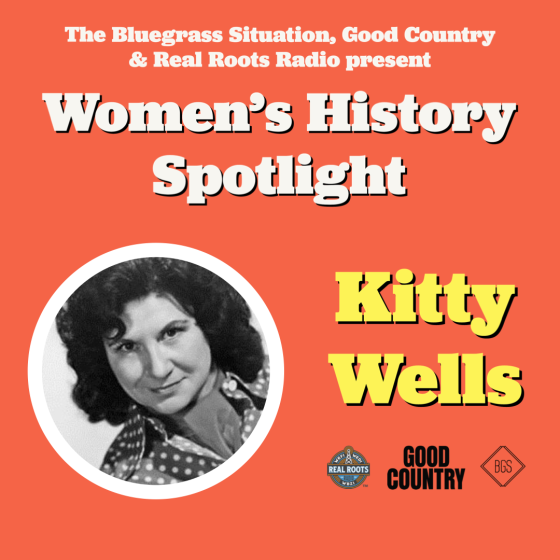
March is Women’s History Month, and BGS, Good Country, and Real Roots Radio have partnered to highlight a variety of our favorite women in country, bluegrass, and roots music with our Women’s History Spotlight.
Each weekday in March at 11AM Eastern (8AM Pacific) on Real Roots Radio, host Daniel Mullins will be celebrating a powerful woman in roots music during the Women’s History Spotlight segment of The Daniel Mullins Midday Music Spectacular. You can listen to Real Roots Radio online 24/7 or via their FREE app for smartphones or tablets.
Then, we will have a Friday recap here on BGS featuring the artists highlighted throughout the previous week. No list is comprehensive, but we hope to feature some familiar favorites as well as some trailblazers whose music and impact might not be as familiar to you.
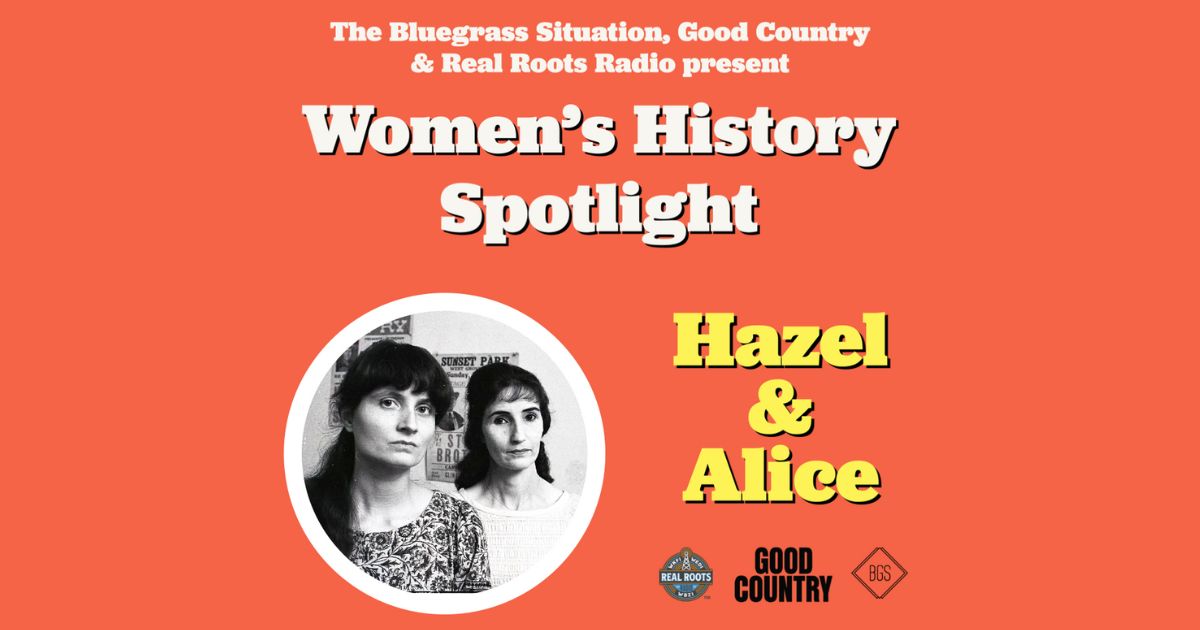
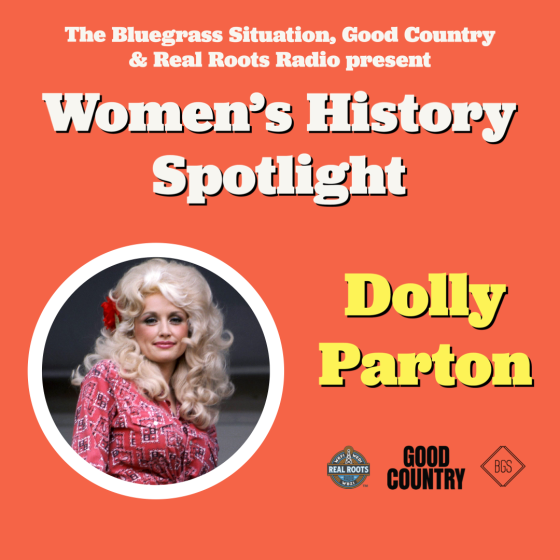
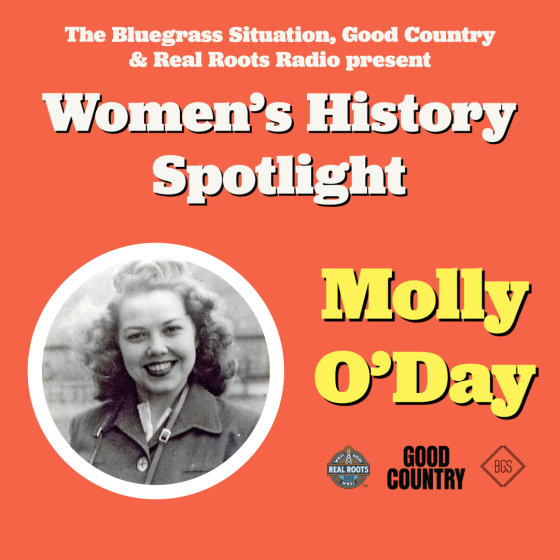
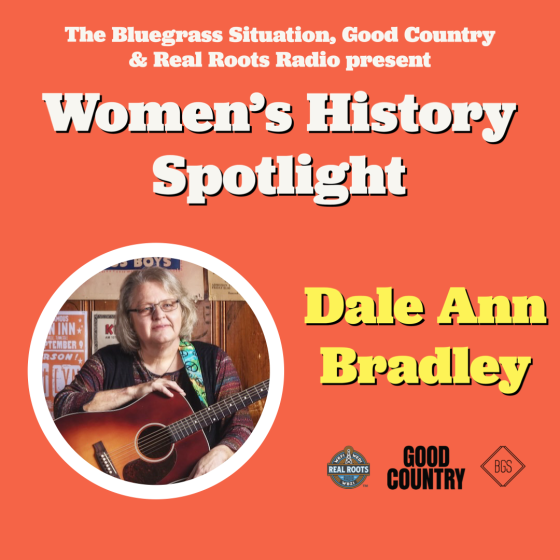
This week’s edition of our Women’s History Spotlight features musicians and artists like IBMA Award winner Dale Ann Bradley, the legendary Dolly Parton, Bluegrass Music Hall of Fame inductees Hazel Dickens & Alice Gerrard, early country hitmaker Kitty Wells, and Kentuckian-West Virginian Molly O’Day. Tune in next week for the final installment of our Women’s History Spotlight!
Dolly Parton
You knew it was coming. You can’t tell the story of country music (or American pop culture) without Dolly Parton. Growing up in Sevier County, Tennessee, she is not just the Queen of the Smoky Mountains, but quite possible the Queen of the Universe (if there was such a ridiculous title). Her rags-to-riches story will continue to be told and re-told for generations. Aside from her beautiful voice and philanthropic work (the millions of books that she gives to children through Dolly Parton’s Imagination Library is her proudest achievement), there are numerous other aspects about Dolly Parton that are remarkable.
Her business acumen is frequently praised, but it still bears repeating. Aside from her numerous endeavors (including Dollywood), it’s often worth remembering that she fought to regain control of her own career and decision-making from Porter Wagoner after her star began shining brighter than his scope of influence. (Remember, it was the ending of this business relationship that was the impetus behind Dolly writing one of her most famous songs, “I Will Always Love You.”) Call it a business decision or just genius, but Dolly’s ability to juggle embracing her role as an undeniable sex symbol and avoiding being labeled as “unwholesome” by conservative crowds has to be one of the most difficult tightrope walks in American entertainment.
Vanity Fair’s 1991 article “Good Golly, Miss Dolly“ did a deep dive into the dichotomy of Dolly’s role as a sort of clean sex symbol: “Dolly, in her openness, demystifies sex. ‘One of the things that makes the image work is that people understand that I look one way, but am another, that there’s a very real person underneath this artificial look,’ she theorizes. ‘It’s not like I am a joke. People can laugh at me, but they don’t make fun.’ … Indeed, Dolly Parton has become the billboard for sex without being the product itself.”
It is the way that she ensures that the “very real person” that is Dolly Rebecca Parton doesn’t get lost in the glitz, glamor, and boob jokes that is part of the reason why she is so endearing and universally beloved by folks from all walks of life; in a world where polarization is en vogue, Dolly is one of the few topics on which everyone agrees! She epitomizes the best of us.
Hazel Dickens & Alice Gerrard
Members of the Bluegrass Music Hall of Fame, Hazel Dickens & Alice Gerrard were an unlikely pair who blasted down doors for women in bluegrass. Hazel hailed from the mountains of West Virginia, while Alice was from across the country in Seattle, Washington. Alice attended Antioch College in Yellow Springs, Ohio, where she was exposed to folk and bluegrass music. While a student there, she helped coordinate bringing The Osborne Brothers to the Antioch campus, making history as the first major bluegrass concert held on a college campus! After college, she wound up in the D.C. area, becoming active in their flourishing bluegrass scene, where she became friends and musical partners with Hazel Dickens – who had moved to the region with her family to find factory work years earlier.
Hazel & Alice became some of the first female bluegrass bandleaders and recorded some classic albums for Smithsonian Folkways and Rounder Records before embarking on successful solo careers by the mid-’70s. With Hazel’s mountain sound and Alice’s more folk-oriented sensibilities, their music appealed to both traditional bluegrass fans and those who were being introduced to the genre via the Folk Revival. Their original material which highlighted a woman’s perspective were critical in bringing a voice to women in the bluegrass canon. Decades later, their music and legacy is still rippling across American roots music, with artists as diverse as Rhiannon Giddens and Dudley Connell still celebrating their influence and impact.
Molly O’Day
Born Lois LaVerne Williamson, country pioneer Molly O’Day was born in Pike County, Kentucky. She would become a popular radio star in West Virginia by the early 1940s, eventually leading Molly O’Day & The Cumberland Mountain Folks. Her band crossed paths with Hank Williams on the radio circuit and Molly even sang quite a few of his songs on radio and later in the recording studio. Molly learned “Tramp On The Street” from Hank Williams and it would land her a recording contract with Columbia Records. (Fun Fact: Her band at the time of her first Columbia recording session featured a young Mac Wiseman on bass!)
In an era when the term “hillbilly music” was still commonly used, Molly’s music, retroactively, could have country and bluegrass labels applied to it. Her powerful voice felt just as at home on an ancient balled like “Poor Ellen Smith” as it did on soul-stirring gospel songs like “Matthew 24.” By the early 1950s, Molly and her husband grew weary of life in the limelight and essentially retired from the music business, both dedicating their life to ministry. She would record a few gospel albums for some small record labels in the ensuing years, but her final album was released in 1960. She would pass away in the late 1980s, but she left a mark on country music and earned the respect of her peers at a time when the list of female country pioneers was relatively short.
Dale Ann Bradley
Revered as one of the most heartfelt bluegrass singers of her generation, this Kentucky songbird’s career started in earnest as a member of the Renfro Valley cast in her home state of Kentucky. The Renfro Valley Barn Dance was an extremely popular barn-dance style radio program in the 1930s and it spurred the creation of Renfro Valley as a country music entertainment destination in Kentucky. This helped kickstart the careers of folks like Steve Gulley, Jeff Parker, Dale Ann Bradley, and more by the 1990s.
While at Renfro Valley, Bradley would eventually join The New Coon Creek Girls, one of bluegrass’s only “all-girl” bands at the time, and aptly named after The Coon Creek Girls, a pioneering female string band of the 1930s who also started on The Renfro Valley Barn Dance.
Dale Ann’s soulful voice, largely influence by the Primitive Baptist tradition which she grew up around, quickly gripped the bluegrass world, leading to a successful solo career for the last three decades. In addition to recording songs that hearken to those familiar with mountain people and mountain ways, the appeal of Dale Ann’s voice has led her to adapt songs from outside of the genre to her style of bluegrass, tackling tunes from Tom Petty, Bobbie Gentry, The Grateful Dead, Jim Croce, and everyone in-between! Her diverse material has led me (and many others) to the conclusion that no matter the material, if Dale Ann is singing it, I already know I’m going to like it!
Kitty Wells
Hailed as the original Queen of Country Music, Kitty Wells hit a massive reset button on the role of women in country music after the massive success of her breakthrough hit, “It Wasn’t God Who Made Honky Tonk Angels.” Written by J.D. Miller, it was penned as the antithesis of Hank Thompson’s hit, “The Wild Side of Life.” After writing the song, the search began for a woman to sing it. Kitty Wells had pursued a country career, to little avail, and had essentially consented that maybe it wasn’t in the cards for her, when she was contacted to record the song. “It Wasn’t God Who Made Honky Tonk Angels” would become the first Number One hit by solo female in country music history, and its status as one of the most iconic country songs of all time only grows.
This explosion of success led to many other hit records by Kitty Wells, and opened the doors for those who would follow in her wake like Jean Shepard, Loretta Lynn, Dolly Parton and more! You can’t celebrate Women’s History Month without honoring the gal who famously sang the line, “It’s a shame that all the blame is on us women!” (Still kind of bummed that Margot Robbie didn’t sing that line in Barbie. Seems like a missed opportunity to me!)
As an added bonus, here’s another cool version from 1993, where Dolly Parton, Loretta Lynn, and Tammy Wynette recruited Kitty Wells to join them on a new version of this country classic on their collaborative album, appropriately entitled Honky Tonk Angels.
While we could easily be mistaken for “a pair of demure young ladies playing in a mid-19th century parlor” as thoughtfully observed by Bluegrass Today some years ago, we are in fact drawn to folk music not for its wholesomeness, but for its realness and its capacity to have you at the edge, staring down the rocky cliffs of life into the depths of your humanity. The songs that endure and have been carried into the future often tend to have a lot of darkness balanced with beauty (reverence and irreverence), because that’s what resonates with folks. It’s what we’re made of. And anyone who dares to sing complex truths and carry stories around in their heads can be a folk rebel.
On our new album, Listen to the World Spin, we stopped worrying about how traditional we sound or “should” sound and just made the music we wanted to make. These songs tend to have themes of the contrast between connection, solitude, our personal struggles, and how we relate to the greater world around us. We ask a lot of questions on this album, the answers to which could be complicated, but ultimately are simple because there is no answer. Sometimes the best thing one can do in life is just listen.
This playlist of songs features friends, heroes, and legends; inspiratoria from our pasts and present. As we refuse to put ourselves into a musical box, so too do the artists on this playlist. Best enjoyed on a long walk or drive, preferably alone or with someone who gives you company without robbing you of your sense of solitude. Much love, – W & E, Paper Wings
“Same Old Man” – Karen Dalton
I love this combination of rough old-time banjo and electric guitar. What a voice. – EM
“Nine Hundred Miles” – Barbara Dane
I remember hearing this track for the first time on Democracy Now and it hit me as being so so cool… a feeling I only really get from punk music and raw, gritty folk. If you haven’t heard of Barbara Dane, you must look her up. She was a very involved activist during the civil rights movement and also wrote some very sharp political songs. – WF
“Sunlight” – Rushad Eggleston
I am a huge fan of the cello goblin’s love song era. – EM
“I don’t love nobody” – Elizabeth Cotten
Nobody plays guitar this good. Elizabeth Cotten is a legend, not much else to say. – WF
“I’ll Wash Your Love From My Heart” – Hazel Dickens & Alice Gerrard
Hazel & Alice are such heroes of ours! Independent, fierce, deeply committed humanists and musicians who have shone light on the path of living a life that is true to those values. – EM
“What Will We Do?” – Foghorn Stringband
Reeb Willms and Nadine Landry are true modern badasses. This track features them singing a capella on this foghorn record, and somehow it’s just as energetic and captivating as when the whole band is playing. They are incredible instrumentalists, but they don’t even need their instruments to make really good music. – WF
“No Reason” – Sunny War
I first heard Sunny play this song live in Nashville and the guitar part instantly stuck in my head. It’s so satisfying, my brain craves it. – EM
“Bad Repetation” – Woody Guthrie
From the spelling of the title, to the pronunciation of “window,” to the fact that the timing changes on every refrain and I still haven’t worked it out, Woody is the epitome of bad-boy-American-folk-singer-fun-rebel-friend. – WF
“Say Darlin’ Say” – Laura Veirs
It was bold to do this song this way with electric guitar. The hook at the end gets stuck in my head from time to time. There are so many poorly reimagined/re-harmonized trad songs, and to me, this one works because it is sparse, it is catchy, and it isn’t perfect. – WF
“Lopin’ Along Through the Cosmos” – Judee Sill
Our friend John Mailander turned me onto Judee Sill in 2019 and I listened to nothing but her for months, absolutely obsessed. The words to this song mean so much to me, “However we are is ok.” Nobody writes a melody like Judee. – EM
“Cumberland Gap” – Spencer & Rains
I remember hearing Howard and Tricia practicing this version of “Cumberland Gap” at Clifftop as they were camped next to me and being totally obsessed. I don’t know where they dug up this version, but it’s so fun and a good reminder that even when you think you know the coolest version of a song, there is probably a cooler one still out there. Also, this whole album is fun and you can even hear Emily play bowed bass on it, watch out. – WF
“Chewing Gum” – The Carter Family
I dare you to jump rope with your best friend to this song and try not to laugh when you sing the words, “I wouldn’t have a doctor, I’ll tell you the reason why/ He rides all over the country and makes the people die.” – WF
“Left Hand Lane” – Paper Wings
We wrote this song on a night drive home to Berkeley, talking about doing our taxes and being afraid of accidentally doing them wrong. We had borrowed a car from our friend Vynce. I somehow managed to live in the San Francisco Bay Area for 7 years and never had a Fastrak beeper (the toll taking company for bridges, express lanes, IYKYK) but we got to live that Fastrak life on this particular trip and it made it into the song. Thanks Vynce!! – EM
“Pretty Bird” – Laurie Lewis & Linda Ronstadt
I listened to Laurie’s albums growing up and long before I even played music. I am lucky now to call her a dear friend. I love her writing and her taste in covers. To some this might be a song about a little bird but it takes next to no imagination to hear it cautioning a young woman “he would only clip your wings.” – EM
To complete our Dawg in December Artist of the Month series, we asked several musicians who have worked with and made music with the inimitable David Grisman what it’s like to really know him.
A mythological figure in American roots music, the Dawg remains remarkably accessible and embedded in the scene, despite his unofficial role as a sort of guru-meets-mentor-meets-hermit. He’s been a teacher and encourager of multiple new generations of pickers and mandolinists, from Grammy-nominated Ronnie McCoury to young, impressive upstarts like Teo Quale – who, with his brother Miles and band, Crying Uncle, performed for Dawg’s Bluegrass Hall of Fame induction at IBMA’s annual awards show in September. Others, like fellow Hall of Famer Alice Gerrard, began their friendships with Grisman long ago, before his skyrocketing notoriety and impact.
We asked these three pickers and friends of Dawg – Gerrard, McCoury, and Quale – to reflect on their relationships with the man, who despite being placed high upon a pedestal by many in bluegrass, new acoustic, and old-time music, remains a grounded and down-to-earth mandolin player with an extraordinary legacy.
Alice Gerrard
Alice Gerrard: “I remember sort of my first impression of David – I think it also was Hazel’s too, because he was this very young looking kid from New York, but he played this great mandolin. It was kind of, “What’s going on here?” you know, but the thing that really stands out in my mind is when we were riding to New York [once]. I don’t remember, it might have been my van, but it was a van, and we were going there to record the second Folkways album.
“I think that’s the one that had, ‘The One I Love is Gone.’ We were on our way to record that album in New York and Peter Siegel – who is a friend of David’s and I think Peter was the one who suggested that David play mandolin on the album, because we didn’t really know David at that point. But we did trust Peter. So, David is in the band with us and and we were practicing that song as we were driving up to New York from D.C.
“Hazel was singing the tenor, and I was singing the lead, and there was a problem. Because, you know, often those Bill Monroe harmonies are kind of a mix of major against minor and stuff like that. Hazel was having a hard time getting it, but I’m not. (I’d have to go back and really think about whether she had it right and Peter and David had it wrong.) But it ended up with David lying on the floor of the van between the front and back seats. I don’t know why he was doing that, but he was lying on the floor and singing it with Hazel, trying to get her to find this particular note.
“It was just hilarious! I mean, it was like, I don’t know, two or three hours worth of David’s face, singing ‘The One I Love Is Gone,’ and him fairly well convinced that she did not have the right note. I don’t remember. I mean, I don’t remember the specifics of that, but it was hilariously funny, and of course, what she ended up with was great, but I’m not sure whether he was trying to get her to hit a minor note or what.
“He was just this little kid, you know? From New York. And played this great mandolin. It was beautiful what he did on that song.
“I had to think about how we first met him and how we first decided to record. So I called Peter Siegel on the phone and he told me that he was the one– I mean, David was a friend of his in New York. [Peter] came down to D.C. with David. They were going to go to this bluegrass show, but that got rained out, so they didn’t go. They canceled the show. They [both] heard about this party. I remember where it was. It was at my cousin’s house, who at that time was living sort of on the edge of Georgetown.
“And so, according to Peter, they just came to the house and Hazel and I were sort of sitting somewhere singing together. It was Peter’s idea to use David. And I’m so happy that we did because yeah, he’s amazing.”
Ronnie McCoury
Ronnie McCoury: “When I started playing music, I started playing the mandolin with my dad. I was 14 ‘81– like ‘82 or ‘80, somewhere around there, either before I started playing or right after. My dad got this package in the mail and David had gotten a hold of him and said, ‘I found these tapes of a show we did in Troy, New York in 1966.’ And it was my dad, David, Uncle Jerry [McCoury], and Winnie Winston. [Dawg] said, they sounded pretty good and he’d like to put them out. So he did. It’s called Early Dawg on Sugar Hill. It was half this live stuff and the other half was studio. Along with that package he sent a couple albums of his stuff.
“I mean, that’s just how he is, you know? He just sent this along. He didn’t even really know that I was playing music at the time. I had no idea he was a California guy. I found these albums [he had sent], I had never heard anything like that played on a mandolin, because I was just [getting started]. You know, I’m a child of bluegrass. I was born into it. My dad started a band in ‘66. I was born in ‘67. [It’s] always been a part of me.
“This new music I was hearing, I couldn’t even grasp it. I didn’t know what it was, but I went to bed at night all through my teens putting his albums on and it would play one side and I’d be usually asleep by that time. I did that basically every night to David’s records.
“When I was probably 18 or so, David called my dad and said, ‘Hey, I want to do some bluegrass and I want to do this thing called the David Grisman Bluegrass Experience and we’ll do some shows.’ Basically, it was my dad’s band [backing him up]. We did that quite a bit, for a year or two – just on and off.
“I got to know David and every time we go west, we always were basically playing Northern California and either Grass Valley, California – for the festival – or touring out there playing with my dad. It was just starting for my dad a lot more in the West. He’d been going there for years, but sporadically, and we’d always wind up going to the Dawg’s house. I had been playing a Kentucky mandolin, and he told me, ‘Hey, I got a mandolin at my house for you.’ And I never thought anything about it, and I surely wouldn’t ask about it.
“My dad went out, while we were still in Pennsylvania, and he recorded with David for what is called Home is Where the Heart Is. Dad did a show at the Great American [Music Hall], I think, with Dawg, and he came home with this Gilchrist mandolin. The neck was coming out of it at the time and I had a guy repair it – Warren Blair, who was playing the fiddle.
“He laid that mandolin on me, I believe I was probably 19 or 20, and it’s the same one I play today. I’m 56. I got a Loar 10 years ago and played it a little while, but David and Sam Bush and all my peers said, ‘Hey man, stay on that Gilchrist.’ So I stuck with it. I owe him such a debt. He gave me something that is such a part of me, it defines me, I guess. I’ll tell you, it’s his giving heart. He has a huge heart.”
“My dad met David in 1963. He was playing with Bill Monroe and Ralph Rinzler was his manager at the time– Bill’s first manager. He played in New York somewhere and they stayed at David’s house. David’s father passed when he was 10 and his mother, I can’t remember if his mother was even there, but my dad would have been 24. [Dawg] would have been six years younger than my dad. He was a teenager, you know. I don’t know if Monroe did, but my dad wound up staying with David, because Ralph put him there. He and my dad go back to when he was a teenager. There’s such a long friendship there.
“One time, we were at Grass Valley and Dawg said, ‘Have you heard of this kid?’ He comes riding up on a little bicycle with his mandolin on his back and I said, ‘Well, I’ve heard the name Nickel Creek, but I didn’t really know much.’ He says, ‘Chris Thile’s his name.’ He comes riding up, you know, and he jumps off his bike and he wants to play for David.
“We’re standing around picking and [Chris] sings, ‘Roll in My Sweet Baby’s Arms’ – super high, you know – and he’s playing. David said, ‘Hey, man, do you know this tune?’ And he starts playing ‘Big Mon.’ Or ‘Monroe’s Hornpipe,’ I think it was. [Thile] didn’t know it, so David’s playing it and he starts showing him it. And [Chris is] just like a sponge. He starts just running it real slow, then he’s like, ‘Oh, that’s neat!’ And he hops on his bike and he’s off. Like an hour or so later, he comes riding up, jumps off his bike, and he’s got it down. It was pretty neat to see David show him.
“The first time I ever heard or met Jake Jolliff was with David. The first time I ever met Julian Lage was with David. Both of those guys, probably at the time, were 10 and 11, something like that.”
Teo Quale
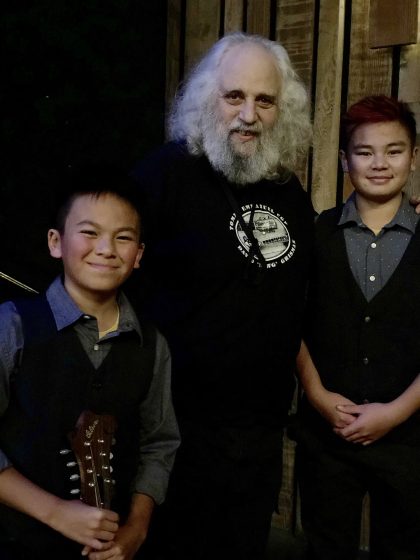
L to R: Teo Quale, David Grisman, and Mile Quale. (Photo courtesy of the Quales and Crying Uncle Bluegrass Band).
Teo Quale: “I first met Dawg as a young kid at a Manning Music event when I was about 6 or 7 – so about 10 years ago. Actually, the first time I was around David was when I was still a baby, but I don’t really remember that!
“Anyway, he jammed a bit with us and Tracy played bass. He and Chad [Manning] played later on. At the time, I was playing fiddle and I really wanted to start learning the mandolin, but my fingers weren’t strong enough yet. So, my mother got me a ukulele and replaced the strings with ones tuned in fifths. Then about a year later, I finally started on the mandolin.
“David has been an inspiration to me ever since meeting him. Over the years, I’ve also had the opportunity to take some lessons with him and he’s always been really generous with his time and his knowledge, but always in that relaxed Dawg way. His music has influenced the way I approach every aspect of my playing, from improvisation to composition.
“Most of my other heroes were also greatly influenced by David – Mike Marshall, Darol Anger, Ric [Robertson] and [Dominick Leslie]. I’m thankful that I get to call him a friend and that I’m also around so many musicians who were touched by him. I don’t get to see him as often as I’d like, but we keep in touch.
“He was born on the same day and year as my grandfather, both two really special people in my life. I play one of his old mandolins now (made in 2006, the same year I was born!), and I am thankful each time I pick it up, knowing that a part of Dawg will always be in this instrument.”
Photo Credit: Courtesy of Acoustic Disc.
This website uses cookies to improve your experience. We'll assume you're ok with this, but you can opt-out if you wish.AcceptRejectRead More
Privacy & Cookies Policy
Privacy Overview
This website uses cookies to improve your experience while you navigate through the website. Out of these, the cookies that are categorized as necessary are stored on your browser as they are essential for the working of basic functionalities of the website. We also use third-party cookies that help us analyze and understand how you use this website. These cookies will be stored in your browser only with your consent. You also have the option to opt-out of these cookies. But opting out of some of these cookies may affect your browsing experience.
Necessary cookies are absolutely essential for the website to function properly. This category only includes cookies that ensures basic functionalities and security features of the website. These cookies do not store any personal information.
Any cookies that may not be particularly necessary for the website to function and is used specifically to collect user personal data via analytics, ads, other embedded contents are termed as non-necessary cookies. It is mandatory to procure user consent prior to running these cookies on your website.