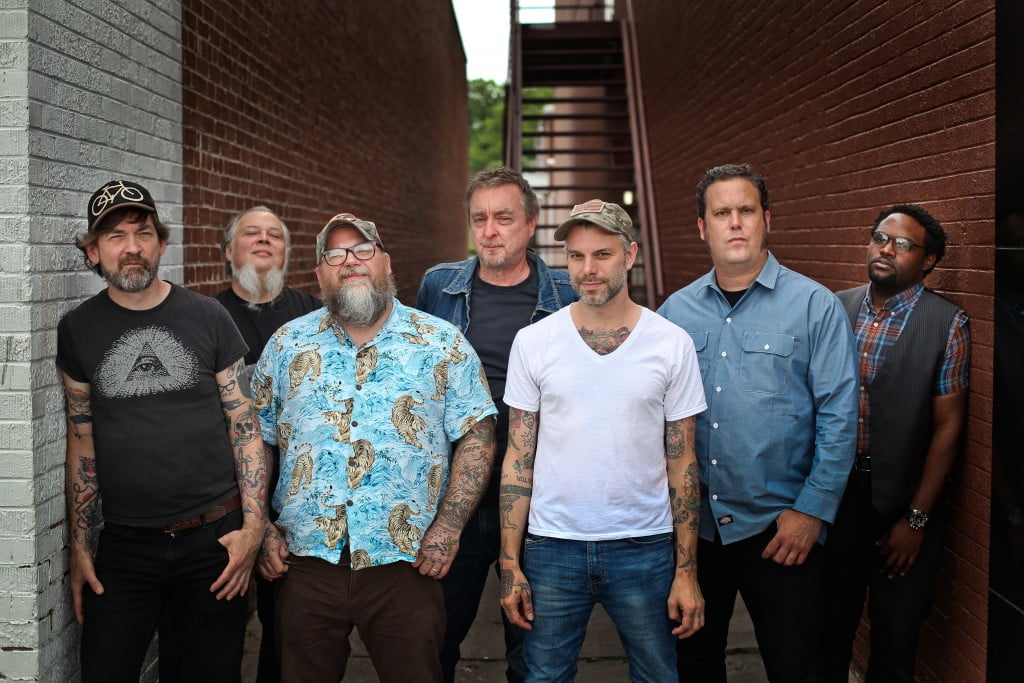
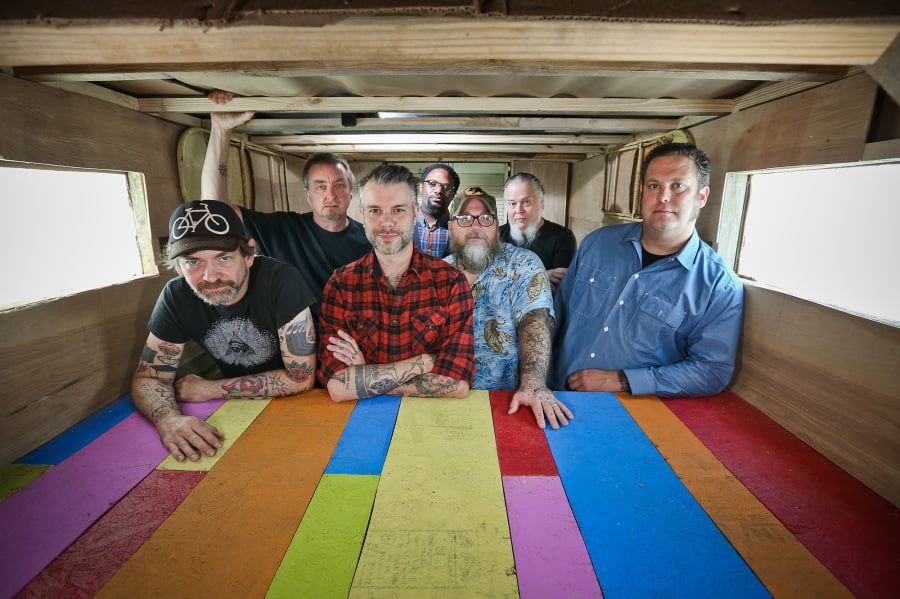
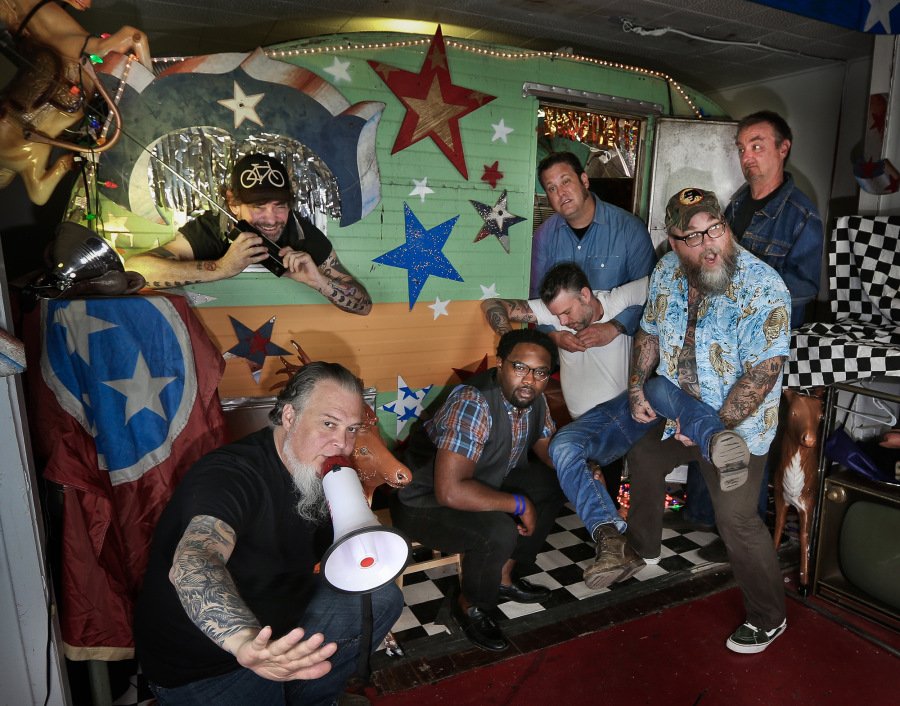
ROOT 66: Cereus Bright’s Roadside Favorites

Touring artists spend so much of their time on the road that they, inevitably, find all the best places to eat, drink, shop, and relax. Want to know where to find the best burger, beer, boots, or bunks? Ask a musician. Better yet, let us ask them for you.

Artist: Cereus Bright
Hometown: Knoxville, TN
Latest Project: Excuses
Release Date: July 29

Pizza: Art of Pizza in Chicago, IL. We have a few pizza snobs in the group, so any pizza experience that leaves everyone happy is a win. Their slices are pretty much a whole pizza in and of themselves.

Highway “Health” Food: Panera. It’s hard to eat “healthy” on the road. When we have a chance, we try to aim for a Panera. A salad a week keeps the doctor away, right?

Highway Fast Food: Chick-fil-a. When we have to jump off the interstate and eat something fast, Chick-fil-a is one of those places we look up. Plus, no matter where you are, there are few things better than starting your day off with a chicken biscuit.

Coffeehouse: Blue Bottle in Brooklyn, NY. Not only does Blue Bottle make incredible coffee, but they also ship it to us every two weeks so, needless to say, they are a big part of our coffee life.


A photo posted by Cereus Bright (@cereusbright) on

Bar: The Libertine in Green Bay, WI. Most nights, our alcohol consumption consists of the cheapest beer possible, but when we go to Green Bay, we get to live like kings. Let’s just say that my last drink consisted of some kind of whiskey magic topped with a partially burned cinnamon stick. Tony, the owner of the Libertine, is the man and he invites us to the bar after all our Green Bay shows. It’s worth whatever distance it takes for you to go there. So good.

Gear Shop: Chicago Music Exchange in Chicago, IL. It’s one of those spots we always try to hit when we’re in the area. One time, Tyler accidentally knocked down the whole front window display, so we owe them a blood debt now.

Listening Room: Sixth & I in Washington, D.C. Last Fall, we got to go out with the Oh Hellos and play the Sixth & I, which is a giant sanctuary of a historic church. Never have we gotten to play for that many people, and it still feel as intimate as a small venue. It was a powerful experience.

House Concert: We are in the middle of a tour right now, playing shows in non-traditional venues like houses, warehouses, and co-working spaces. We use a website called Closeup.fm that lets us facilitate those nights better than anything else we’ve ever used. We love Closeup and their passion for creating those intimate shows. 

Backstage Hang: Iron City in Birmingham, AL. It’s rare that an opening band gets the red carpet treatment, but we did at Iron City. They fed us well, it was so comfortable and clean, they even did our laundry. It was a little taste of the celebrity life, and we’ll never forget it!

Music Festival: Mile of Music in Appleton, WI. We first got invited to play Mile of Music because a few friends vetted us. What started as just another festival has turned into a second home. It’s rare that any place on the road feels as good as Appleton — even more so a festival. The staff, volunteers, and attenders of Mile of Music are some of the best you’ll find.

Least Favorite Highway Stretch: I40 from Memphis to Knoxville. It’s usually the first or last stretch of highway we see before or after home. It’s just so, so, so boring. One of those six-hour straight-aways that feels like it never ends. 

Radio Station: Spotify. I wish we could say we listen regularly to tons of radio stations, but we don’t anymore. Plus, our antenna has seen better days. We are big fans of Spotify. You can find a playlist for just about anything these days. We’ve all discovered really good music through it!


A photo posted by Cereus Bright (@cereusbright) on

Day Off Activity: Swimming. Although not everyone feels this way (looking at you Evan), most of us love a good swim. If we are, by chance, staying at a hotel with a pool or have a day off with a body of water semi-close, you better believe we’ll try to swim in it.

Tour Hobby: YouTube. The Internet is a terrible and wonderful place. Whether it’s awful covers, Tim & Eric videos, or Wife Swap clips, YouTube is usually at least a little part of every drive.

Driving Album: Voodoo by D’Angelo. It’s one of those albums that will always have more for you each time you listen. The dude’s so damn talented.

Most Memorable Show: Bluegrass Underground in McMinnville, Tennessee. We got the opportunity to open for honeyhoney years ago, as one of our first shows. If you don’t know about Bluegrass Underground, it’s a venue 350 feet underground in a giant cave. It’s one of the most unique, wild places we ever got to play. Definitely worth a trip to catch a show there!

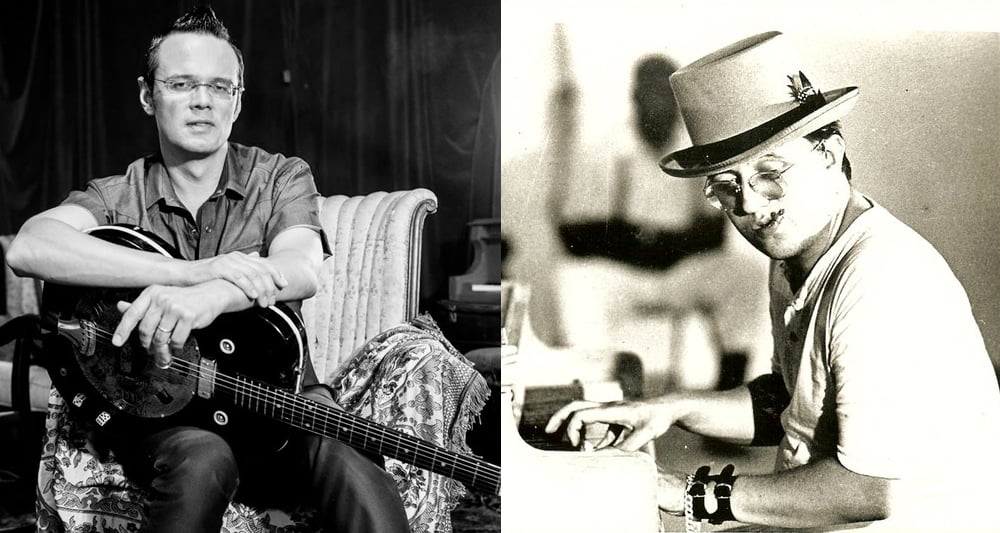
Squared Roots: Luther Dickinson Carries the Torch for Jim Dickinson

Jim Dickinson was a musician’s musician who worked with everyone from Bob Dylan to the Replacements to Sam & Dave. One of his earliest gigs was in the Dixie Flyers, a group much like the cats in Muscle Shoals who backed a multitude of great soul artists on big hits. But, on the advice of Duane Allman, Dickinson jumped ship in 1971 to go it alone. Though he made a few solo records — and various band records, as well — what Dickinson will likely be remembered for is his work as a side player and producer. Whether toiling alongside Ry Cooder or the Cramps, Dickinson always brought a little bit of Memphis with him.

He also passed that same Memphis mojo on to his sons, Luther and Cody. The two have spent the past 20 years as the North Mississippi Allstars, at least when Luther wasn't playing with the Black Crowes, producing records for Otha Turner, or working on solo records, like his recently released Blues and Ballads: A Folksinger's Songbook, Vol. 1 & 2 which finds him carrying on his dad's song collecting tradition.

I'm excited to talk to someone who has first-hand knowledge of the subject at hand. Usually, we're just speculating about “Why do you think Bobbie Gentry slinked away into obscurity?” or whatever. So … your dad was born in Little Rock, grew up in Chicago and Memphis. That's some blues cred, right there.

Yeah!

But he was so much more than just the blues. Did his passions run just as wide, or did he have a secret favorite style that he kept to himself?

You know, he was a song collector. When we were young and he started to teach us — because we were so interested, he said, “Okay, I gotta teach 'em.” He didn't force it on us. He started teaching us his repertoire and each song was a wildly different genre. But it all fell under roots music. There would be a Texas swing song into an R&B ballad to a country-honky tonk number to a blues song or a folk song or a jazz song that we were all struggling to get through. He just loved songs. And he really loved words. He was of a generation that really had its formative years without television, listening to the radio shows. Also, his vision was really bad, and he learned how to memorize what he heard because it was so hard for him to read. He just really had a way with words.

He was just a baby in Chicago … I think he was nine when he moved to Memphis. But growing up in Memphis — for a kid searching for, pre-rock 'n' roll … he'd hear some dixieland or some boogie-woogie that would have that feeling that the whole generation was reaching for. I think this is true of people from all walks of life: You can be a politician or a doctor or an athlete but, in that generation, the American cultures were really reaching for each other and music brought them together. Like on WDIA in Memphis, that's where he heard some R&B and some gospel, then found blues.

In the '60s blues revival, when the blues masters who were living in the South were rediscovered, that really changed everything. At this point, this is post-rock 'n' roll because the rock 'n' roll heyday was really short: Elvis went to the Army. Chuck Berry went to jail. Jerry Lee Lewis went to England. Carl Perkins had the crash. It was a really short explosion, but then folk music came and the song collecting came.

But, then … and this is what was so amazing … just the cultural phenomenon of North and South … the young music lovers from the North, they had the perspective to literally drive to the South and find the blues men and pluck them out of obscurity, rediscover them. Dad, you know, he'd listened to the records, he'd been to the library, he'd read about these men. And, through no fault of his own as a kid, the segregation was such that it took the musicians from the North to come down, to cross those lines. That's a beautiful thing, that perspective. Once that happened, that's when, in Memphis in the mid '60s, there's Furry Lewis, there's Sleepy John Estes, there's Bukka White, there's Reverend Robert Wilkins, there's Fred McDowell. It was unbelievable.

And, in Memphis, dad's generation … they weren't hippies. They were bohemians. They were behind the times. They didn't really like the hippies. They were a little bit older. When the art community and the blues men discovered each other in Memphis, a good time was had by all. [Laughs]

[Laughs] That's part of what I love about his career. He came up with the Dixie Flyers playing on all those great soul tracks with big artists. But he also championed underdogs, and found those folks who were either up-and-coming or somehow lost in the shuffle. He didn't just go for the gold. He really went for the music.

It's true. I think he felt like a bit of an outsider himself. That's part of how he perceived himself which becomes part of how you're perceived. But he left Memphis and went to college in Texas. He was so afraid of the draft, so he ended up going to Baylor because there was no ROTC. [Laughs] He didn't want ROTC. He didn't want fraternities. But he had to go to college to keep from getting drafted, so he went to Texas. When he came back, all of a sudden, he sees what is to become Stax. It took him a while to catch up.

His concept of “Memphis music” was that it was a group of outcasts making music in the middle of the night. And it goes back to Sam Phillips, really, because he was so ahead of his time. Sam Phillips and Dewey Phillips … Dewey Phillips was a disc jockey who would play any genre of music and that's, really, where that comes from. In dad's book that we're just now working on a deal for, he talks about how Dewey Phillips addressed his audience on the radio as “good people.” It was, “Hey, good people.” It wasn't a Black audience. It wasn't a white audience. It was just good people, and he would play any type of music — blues next to Hank Williams next to gospel.

But Sam Phillips, man … he was really searching for something and he pushed these people to invent rock 'n' roll. He discovered Howlin' Wolf in 1951. In Memphis, to enable the African-American artists like that is so heavy. Sam said discovering Wolf was more important to him than discovering Elvis. So, he recorded the blues catalog. But then, he found the young white kids and everyone searching for a new sound and he's turning them onto the catalog … it's the oral tradition. That's the American roots art — the oral tradition of the lyrics. He was searching for what became rock 'n' roll. He was trying to bring the cultures together to make a new thing.

And your dad was deep in all of that with a bunch of different bands. It seems like being just a side player wasn't quite enough for him.

Ohhhh … that was his favorite! He loved that.

Was it? So, when it was all said and done, was the level of success and respect he achieved enough for him? Or did he have bigger ambitions that never quite materialized?

Well, he was so happy to have played with the Rolling Stones on “Wild Horses.” He definitely wished that he could have toured with them. But, he did play on “Wild Horses,” and he loved it. He was also so thrilled when he did Time Out of Mind with Bob Dylan because that was one of his ambitions that he fulfilled. And it was so fulfilling. He would say, “A lot of things in life disappoint. Bob Dylan is not one of them.” He was thrilled. In typical Dylan form … dad was standing in the parking lot one day, smoking a joint, and Bob wandered over and said, “Hey, man, you know Sleepy John Estes, right? How do you make that C-chord, man? How do you play that lick in 'Drop Down Mama'?” [Laughs] So they hit it off!

Of all the many projects he played on, what's your favorite — the one that you always go back to or the one that you can't get over the fact that it's your dad on it?

Oh, man. Wow. [Pauses] You know, the Ry Cooder records, Boomer's Story and Into the Purple Valley, are really, really cornerstones. It's that whole idea of … I mentioned song collectors and the idea of repertoire in roots music — meaning anything from blues to country to gospel to jazz to anything under the umbrella — and reinterpreting it. With his band, they would improvise and play the music so loosely and unrehearsed and aggressively interpretive, they thought of playing roots music as jazz. So, that's one thing.

But the Ry Cooder records … Cooder was a song collector, but he had that California twist. He had the whole of Hollywood musicians and instruments in the palm of his hand. He could get the best musicians playing the most exotic instruments with a phone call. When Cooder recognized dad for who he was and what he knew and was capable of in the recording studio and hired him as a producer, they really made some great folk-rock records that still … there's just nothing like them.

What was interesting for us … we grew up learning Furry Lewis and Bukka White and Sleepy John Estes from our father and his friends. And his friends' sons all became musicians. The scene was so strong. Their band was Mudboy and the Neutrons. Our band is Sons of Mudboy and we keep the repertoire alive. The repertoire is what has to be protected and carried on. It can be interpreted however you like — that's the freedom. It's just about the melodies and the poetry.

The blues was something secondhand to us. We learned it through our parents. But, then, in the early '90s, I discovered Otha Turner and his family. And that was a lovely thing. But they played fife and drum music. Then, Kenny Brown, who was our friend and was a guitar player. But THEN, when I finally heard R.L. Burnside and went to Junior Kimbrough's Juke Joint, it was multi-generational, electrified country-blues in my backyard.

R.L. Burnside took me under his wing and took me on the road. He and Kenny showed me the ropes in '97, and we've been touring ever since. He literally took me out of town. [Laughs] I'd never been anywhere before. What blew dad's mind was that the blues exchange happened again. He didn't think that his sons would be able to learn and play with real blues men.

It just keeps going.

Yeah. You know what's something else? There was a period of time when they all passed away and we were all recovering. Everyone — the blues men, our father, his friends. It's just part of growing up and regaining your feet. I like writing songs about people, championing them as folk heroes in my art. Because Stagger Lee and Casey Jones were men who walked the earth, once upon a time. It was the songs that made them legends, so you sing the legend. [Laughs]

[Laughs] Exactly. Larger than life. Let 'em live on.

Exactly! The repertoire and the new songs about them.

So when I came home to the Hill Country Picnic, which is when everybody in Mississippi gets together, I couldn't believe there was this whole group of young kids playing with Gary Burnside, Dave Kimbrough, Duwayne Burnside … driving them around and letting them borrow their equipment, giving them lunch money. These kids, they didn't know R.L. and Junior. But, to them, Gary, Dave, and Duwayne are R.L. and Junior. It's happening again!


Luther Dickinson photo by Don VanCleave. Jim Dickinson photo by

Traveler: Your Guide to Memphis

There are two types of people in this world: those who love Nashville and those who prefer Memphis. I fall into the latter. Located on the banks of the Mississippi River, Memphis is one of the South’s most diverse cities. The music history is rich. Jazz and blues incubated on Beale Street. Stax Records brought the soul. The trail of tears crossed the Mississippi. With so much to see and do, it’s important to go in with a plan and some sights in mind.

Getting There

Unless you’re coming from nearby, the most obvious choice would be airplane. Memphis has a major international airport, so you should have no problem getting a flight. If you are coming from down South, take Highway 61. It might take a bit longer, but you’ll come up the blues trail. Be sure to make a pit stop in Clarksdale, MS. It’s full of juke joints and good eats. You’ll pass the crossroads where Robert Johnson allegedly sold his soul … It’s now a parking lot.

Accommodations

The Peabody Ducks. Photo credit: Roger Schultz via Foter.com / CC BY.

Memphis is not an expensive city to visit and there are ample places to stay. I stayed at my friend Tim’s house, but that’s not an option for you: He’s a private person and doesn’t take kindly to unannounced strangers.

A good place to start on a moderate budget is downtown. Most of the hotels have decent prices and are also close to all the sights. If money is not a problem, check out the Peabody Hotel. It is a National Historic Hotel and famous for its ducks. The penthouse is home to a family of ducks. Every morning at 8 am, they take the elevator to the lobby. They march to the central fountain and then swim for the rest of the day. At exactly 5 pm each night, they take the elevator back upstairs. It’s been happening for countless generations. A duck walk of fame surrounds the building. Of course, the ducks aren’t the only reason it is listed as a National Historic Hotel. The Peabody is beautiful and emanates old school glamour.

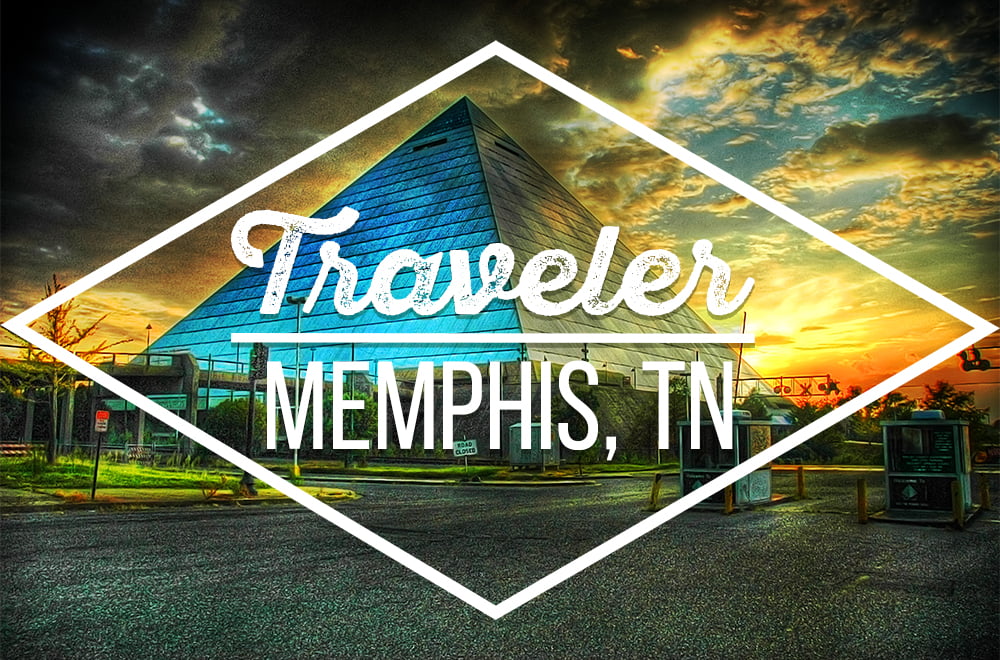
If you are the adventurous type, check out the Big Cypress Lodge at the Bass Pro Shops at the Pyramid. I know, it sounds bonkers. Bass bought the Pyramid that formerly housed the Memphis Grizzlies. They retrofitted it as a massive retail store and hotel. It is amazing. They spared no expense. The closest comparison is Disneyland’s Splash Mountain. There are water features and catfish and dioramas. An enormous faux cypress tree reaches the upper decks of the pyramid. It’s worth a visit, even if you decide on a more practical sleeping arrangement.

Food

Photo courtesy of Central BBQ. 

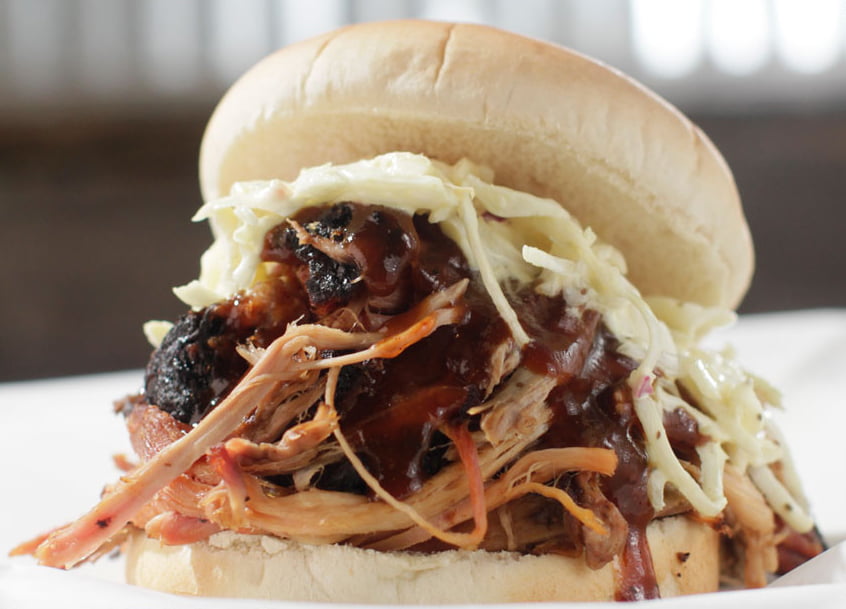
Though famous for its barbecue, Memphis has wonderful food, all the way around. But, playing to its strengths, Central BBQ is a good spot to try out some different styles. Be warned: It’s popular and it gets crowded. Don’t be afraid of their hot barbecue sauce. It wasn’t very spicy. The mustard and vinegar sauces are worth a dip or two. Be sure to check out the great Mississippi Blues Map mural in the backroom.

How about a bit of soul food for brunch? Check out Alcenia’s. For $12.95, you can consume a week’s worth of calories. I had the sausage omelet with fried green tomatoes, a biscuit, potatoes, and coffee. I still had at least one more side choice. All of their food is good. The chicken and waffles are top notch. You’ll also get a kiss on the cheek if Miss BJ, the proprietor, is there. Plan on spending some time at this joint. It isn’t fast food, but it is well worth the wait. Don’t hold it against them that Guy Fieri recommended them. I know he’s a divisive figure, but he’s right about Alcenia’s.

Soul Fish CafĂ© was my favorite restaurant this time around. The blackened catfish is absolutely phenomenal. (The fried catfish was also delicious.) I can’t recommend the Soul Fish CafĂ© enough. The tables fill up fast, but there’s usually room at the counter. Highly recommended.

In short, I would be enormous if I lived in Memphis.

Drink

Beale Street. Photo credit: charley1965 via Foter.com / CC BY-SA.

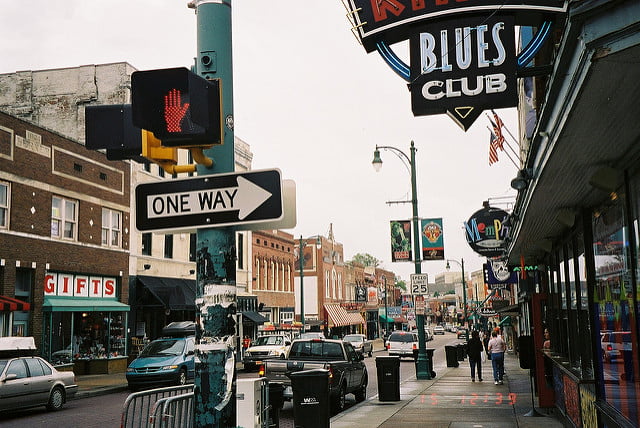
If you’re going to Memphis as a tourist, you need to do some touristy things. One of those things is getting drunk on Beale Street — the Bourbon Street of Memphis. Lined with bars, Beale Street is where you’ll find dueling pianos and Stax cover bands. There’s Almost Elton, an Elton John cover artist, and a gazillion blues groups. You can drink in the street, so it’s a good time and it’s probably not somewhere the locals want to hang, but it’s worth visiting while on vacation.

The Cooper-Young neighborhood is another great area for drinks. The Slider Inn is a popular joint. There’s also Young Avenue Deli, which has pool tables and airs the games. Don’t worry if you don’t like sports, the games are muted. Another Cooper-Young neighborhood joint is the Celtic Crossing. On the weekends, they have live Celtic music, often accompanied by clogging.

Best of all, beers are cheap in Memphis. You won’t break the bank with a wild night on the town.

Coffee

Photo courtesy of Café Keough.

Visit Coffeehouse Row. (Nobody in Memphis calls it this, but I think it has a nice ring.) On the way to Cooper-Young, you’ll drive down Cooper Street. You have three different, but good, coffee choices. The first is Muddy’s Bake Shop. This is a cutesy place. You can get cupcakes here. If it were an online retailer, it would be Etsy. Next, you have Other Lands. It’s a bit grittier. They sell beer. If it were an online retailer, it would be Craigslist. Your final choice is Tart. It’s the artsy coffee house. They have a huge outdoor patio that’s great for smoking cigarettes and getting deep. If it were an online retailer, it would be Ziibra. But CafĂ© Keough is my favorite coffee shop. It’s downtown and one of the only places with bagels. The place is huge and has a comfortable atmosphere. They also have great t-shirts.

Live Music

Boogie on Beale Street. Photo credit: Heath Cajandig via Foter.com / CC BY.

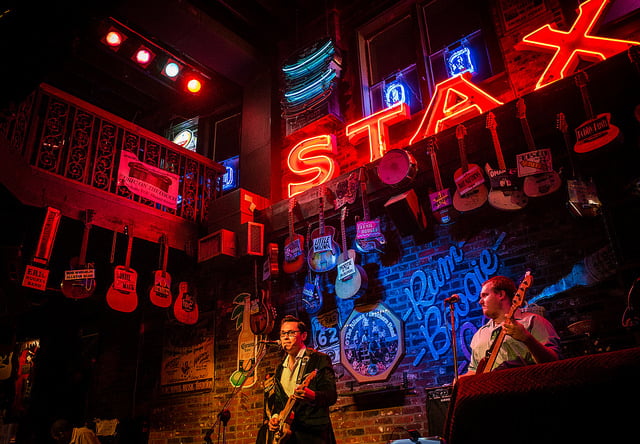
Hi Tone is one of the best rock ‘n' roll venues in America. We caught a great show while in town — local band the Dead Soldiers were back in town after a long tour. They brought the house down. There were sing-alongs and inside jokes, as drunk people fell off their chairs waving their hands in the air. (It was like they just didn’t care.) There was a lot of love in that room, and it was a pleasure to bear witness. Also, the beers were cheap. I loved it.

Wild Bills is the best blues joint in town. It’s a bit isolated, but they have some great acts. They also serve 40s. Be warned that the music doesn’t start until 11 pm. 

If you make it to Beale Street, you’re going to catch a lot of live music. Every storefront offers up something new — traditional jazz, blues, rock ‘n' roll, and soul. The history of Memphis music is proudly displayed seven nights a week on Beale Street. The Southern Folklore Center also puts on some great daytime concerts. Located downtown, they curate an excellent roster that ranges from gospel to blues and everything in-between.

Local Flavor

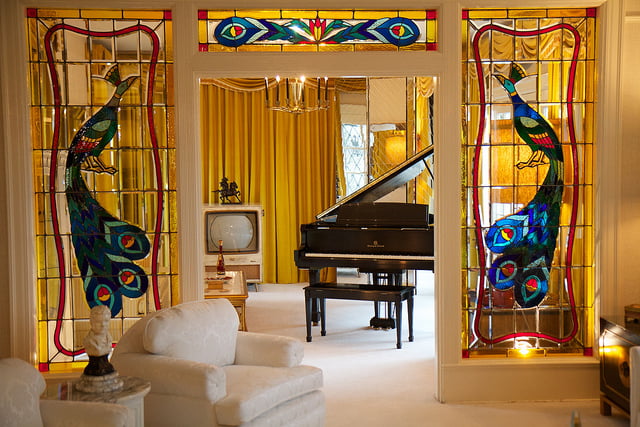
Graceland living room. Photo credit: Rob Shenk via Foter.com / CC BY-SA.

Memphis has four must-see destinations. You need to go to Graceland. Don’t worry about the plane tour and all the add-ons. They pile up quick. Just go and see the mansion. It’s $36, and well worth it. It comes with a guided iPad tour that is narrated by John Stamos. (Yes, Uncle Jesse from Full House.) The tour is informative and Stamos’s voice sounds a bit like George Clooney, which I had never noticed. The Jungle Room is one of the coolest living rooms ever. The Pool Room is lined in fabric and feels like a 1970s opium den. Elvis didn’t care what was cool. He liked what he liked and the results are a one of a kind home.

Next, you have to visit Sun Studio. So many iconic records were recorded there. It’s where Elvis and Johnny Cash got their start. Howling Wolf cut some amazing sides at Sun before heading up to Chicago. To stand where so many greats have stood before is a powerful feeling.

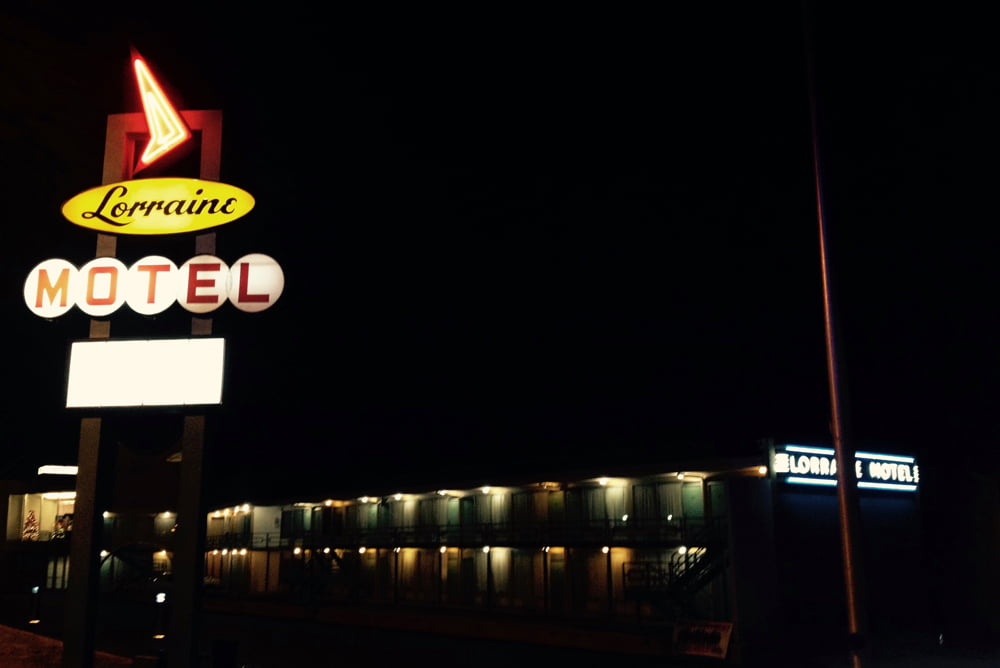
The Lorraine Hotel, now the National Civil Rights Museum. Photo credit: Andy Miller.

Any Memphis trip is incomplete without a visit to the Lorraine Hotel. This is where Dr. Martin Luther King, Jr. was shot. It’s now the National Civil Rights Museum. It’s heavy. And it will depress you. That being said, it is important to remember our past mistakes in order to learn from them, especially in today’s extreme world.

Finally, you need to visit the Stax Records Home of American Soul Museum. Isaac Hayes's gold-plated Cadillac is on display and Otis Redding cut his classics in those same halls. If you were ever on the fence between Motown and Stax, you will leave with two feet in Stax’s backyard.


Lede photo credit: BlankBlankBlank via Foter.com / CC BY.

From Memphis to Metal: Lucero Covers a Lot of Ground

Lucero is one of those bands that has been around so long, pretty much everyone's been a fan at one point or another. And, if not, the new album might just change that. With its acoustic underpinnings, All a Man Should Do is the country-rock outfit's most mellow offering to date … though it still kicks plenty of ass. For this set, frontman Ben Nichols had a lot to work through, not to mention a record he'd always wanted to make. So the gang packed into Ardent Studios in their hometown of Memphis, TN, and got down to business. That's guitarist Brian Venable's story, anyway … and he's sticking to it.

How's Milwaukee on this fine morning?

Brian Venable: Ahhh, let's just see. It is bright. Scott is not wearing a jacket, so it might not be too cold. And … that's about it. That's all I got. It looks like Milwaukee.

You're going into day three of five shows in a row. Man, if you're being held against your will, clear your throat or sneeze and I'll send some help.

Ha. I do have the sniffles, but it ain't nothing. We had two days off two days ago … three days … I don't know.

See? [Laughs]

But we've had some time off. [Laughs] And we're making up for it. In the old days, we would've left on October 1 and not come home until December 19. Now, it's two more shows and then we're off for a week-and-a-half, and then we do the West Coast. We have to pack them in a little bit knowing that we get to go home and actually be home for a little while.

Well, let's talk about home. Let's talk about Memphis. Obviously, it has a deep, rich musical history, but tell me about the scene that you guys came up in.

Memphis has always … I mean, it's Memphis. You love it. We're self-sabotaging, dirty, amazing people. We've got a chip on our shoulder. Nashville always thinks they're better than us and we always think we're better than Little Rock. It just trickles down.

But we all came out of different … we're punk-rock kids, to some degree. Ben grew up in Little Rock, so I think that's where we might've gotten our work ethic — a “We should do this, but we don't know how to do this, but that's not going to stop us” kind of thing.

There are always bands in Memphis. There's always going to be a local scene, whether you're part of it or not. Some days, I feel real old because I don't go out as much. We'd play shows pretty much by ourselves and then, at some point, you make friends and somebody's like, “Oh, come play a show with us!” Then, all of a sudden, it's Lucynell Crater, Lucero, Bicycle Thief, somebody else … every freaking weekend. Then, slowly but surely, you start opening for the big bands that come through. I think, in our world, the North Mississippi All-Stars were the first ones to make it out and they took us out opening for them way before we were ready … which was awesome. There's just always some sort of music going on and those bands maybe also put out a CD or a 7-inch and then break up six months or a year later and don't ever play again. Some of the best bands you've never seen in your life have been together, broken up, and moved on, and you're just like, “Man! What happened?!”

Just that moment in time.

Well, that's the thing … we're too dumb to quit. But we set ourselves up. “Dare to be great” sounds amazing, but it's more like “Paint ourselves in a corner” with the whole “Don't have real jobs. Move into one place and live together and buy a van you have to pay the note on.” I mean, we have to do this. A lot of people are like, “Nah. I'm going to be a graphic designer.” Or, “I'm going to go back to … whatever.” We don't really have anything to go back to.

Yeah, yeah. To me, the thing that makes Memphis — and the sound that comes out of there — special is somewhere between Sun, Hi, and Stax in a beautiful collision of Southern rock, soul, country, and blues.

Because we're all surrounded by it. I walked past Ardent [Studios] for four years before I knew what it was. It's that kind of stuff. I used to watch Alex Chilton wash dishes at Avalon CafĂ© because he didn't have money to pay for his food. I didn't really put it together, at the time. I was 15 or 16. You're surrounded by all of that and you throw in your Grifters, your Goner Records, your Oblivians — which is, basically, blues stripped down to its essence.

It's also hidden. We were able to play shows for almost two years to, literally, nobody — not necessarily no crowds, but no outside influence. Nobody told me not to play over Ben while he sang. Nobody told us about song structure or that we needed bridges. We made our own and that's part of the beauty of Memphis — you get to incubate longer and you can draw on all these crazy things. You can be like, “Man, I just heard this crazy something the other day.” And you can bring it in without anybody saying, “No. We only play country.”

I was a punk-rock kid who got fascinated with Lynyrd Skynyrd and worked my way back to “T Is for Texas.” And you find Jimmie Rodgers. Then you find the Carter Family. You take a curve and that leads you down to … I worked at Last Chance Records and some old dude had to sell his entire bluegrass record collection so I got swamped into that. You just find things and pull from it because there's not a scene, necessarily, that is so musically strict. You want to start a dance band, you start a dance band. But, if you play in a rock 'n' roll band and want to have a dance song, you write a dance song.

So, which of those things — if it's possible to pinpoint any — which of those varied influences would you say are informing this new record. It's definitely different than records past.

It's not necessarily a joke, because Ben has said it in press releases and interviews … it's that record we all wanted to make … for me, it was maybe before I discovered punk rock, when you're like, “Oh, the Smithereens, the Violent Femmes …” And somebody says, “If you like that, you should listen to this.” And there's that small window, for me anyway and a bigger one for Ben, where it was the Stone Roses and the jangly … I like to say we're a paisley shirt and a bolo tie away from being the Smithereens on this record. [Laughs]

[Laughs] You really are.

Cory Branan heard the record before it was out and said, “Man, that record sounds like it was made by a band with nothing to prove.” And I was like, “Is that a bad thing or a good thing?” [Laughs] But, really, it is. At this point, every record we put out is going to be “the big record.” We've been hearing that since the first record. After a while, we just make records we want to make.

Ben had some good life experience that was poured into the lyrics. It's a stronger record, lyrically, than the last few have been, to me. Not that they're bad, but this one definitely had a direction before it had a direction. And we'd done that stripped-down Texas and Tennessee EP and that kind of lit us. You can only get so loud in R&B and loud, solo-y Southern rock before you need to bring it back. I think that's part of it.

When we say “the old sound,” for me it's learning those country bends or learning a new soul-shaped chord structure and being able to actually introduce it. For him, it's being able to play acoustic and have that feel. We're older and, if you step back from it, our whole discography is a very dynamic one. It starts out quiet, crescendo, bring it back … Who knows? It might be quiet for the next two records and then we make a metal record or whatever. [Laughs]

[Laughs] You had a quote I love where you were talking about the different fans you can bring along: “I think our music is always open to so many different people that you can actually discover us as a 14-year-old Against Me! fan, that turns into a 25-year-old Wilco fan, that turns into a 45-year-old Kris Kristofferson fan.” I like it when I see bands aging gracefully, but still rocking …

Man. Will you write that down and send it to my manager — that we're aging gracefully? [Laughs] That's a third-party actual quote.

[Laughs] Will do. It seems, like you were saying, if your sound evolves with your life and maybe mellows a bit in pace with you and your fans, that's just good for job security, right?

I mean, we're the hardest-working, best-kept secret in the music industry, is what I like to think. We're still everybody's favorite band. We are not the popular band. And there's nothing wrong with that. We make a living. We have fun. We get to make the art we want to make. Nobody's telling us to change. But it's definitely something … we can be 80 years old, sitting on stools on stage and still making music.

But it's also hard to sell when you're … this is other people telling us this and it tickles me: “That range is great, but …” They can't put us in a box, going from the 14-year-olds to the 50-year-olds. Are we country? Are we bluegrass? “Oh, they're punk-rock kids.” “Oh, but we're going to put them on this country show.” But that, to me, does mean we'll last longer, because we don't get pigeon-holed, blow up, turn into a one-record wonder, and fizzle away. I like being that edgy, kind of tense, always hungry. We make fun records that we like to make. And we're very lucky that people want to hear them still. But it is an interesting dynamic … until we start getting drunk and fighting each other.

The beauty of that more mellow stuff is that you pick up pansies like me who love good acoustic rock more than the punkier stuff. So, I'm going to agree with Salon — I think this may be your best record yet.

Man, we were terrified to put this record out. We were just like, “Oh, we're about to make everybody mad.” People we thought would truly hate it were like, “It's like the old stuff!” And, we're going to let them say that, but it's nothing like the old stuff. “If you feel that way and you're not talking bad about it …”

When1372 came out with the horns, you'd have thought we were killing babies on stage. They were just like, “What is this shit?! Horns?! Rock 'n' roll doesn't have horns!” What are you talking about? Lynyrd Skynyrd. Listen to the studio records. Alice Cooper. It's ridiculous. Bill Haley & His Comets. We had the same thing when we put Rick [Steff] on the piano, a lot of people were like, “Whoa!” Nobody wants you to mess with their original formula and everybody's original formula comes on a different timeline in our career.

So we put it out and were like, “Alright. Get ready for some amazingly bad reviews.” Then everybody started liking it and it was, “Alright! I like this.”

Well, a lot of people talk these days about streaming and playlists being the thing. That's going to serve you guys really well because you can be on a lot of different playlists, right? So there's an upside here.

Yeah, and that's the thing … we don't argue about the track listing anymore because, in the end, they're going to buy the CD maybe. But most people are going to buy it off iTunes or whatever and they'll pull the four songs they like the most. At this point, it's almost a singles club. You could almost put out a new song every day for 12 days and let people put their own order into it and it would be no different.

Us doing 10 songs … just because you can put 20,000 songs on a CD doesn't mean you should. We like the days when it was five songs on each side, if you're lucky, of a record. That seemed to make more of an impact. It's interesting. We've gone through a couple of crazy shifts in the music industry and seem to have weathered them. We got the rock songs on this one for the people that want the country-rock. We got the acoustic rock. We cover all the borders …

Except the Southern metal that I know you love.

Aw, man! Phew! How'd you know that? [Laughs] That's my dirty secret! It's not a dirty secret … it's glorious! When [Jonathan] Athon from Black Tusk passed away, we were almost … it never came about, but we were going to do a Lucero version of a Black Tusk song, all kind of quiet. And, in the middle of it, I was going to get to holler and scream. And we were going to get as metal as humanly possible, then bring it back down and sneak it in. But, yeah … whew … I wish we could make one.

We've been doing “Noon as Dark as Midnight” because A$AP Rocky sampled it for that one song [“Holy Ghost”], so we've been trying to capitalize on that. But it affords me a five-minute guitar wank/freak out which, at this age, seems excessive. I get to use all 12 notes repeatedly. So that's kind of fun.

You busted me out just then. That's pretty funny.

Well, that's all I have. I won't divulge anything else. I'll keep the rest for next time.

Alright.


Photos courtesy of Lucero
The Main Street of Black America

It was a crisp fall day in Memphis, late October or early November 1909, when W.C. Handy loaded seven musicians onto a wagon and rode it to into the heart of the city’s business district. There, they launched into a lively piece of music he had adapted using elements picked from street musicians and gambling den entertainers, the newly penned lyrics stumping for mayoral candidate Edward Hull Crump.

Mr. Crump won’t ‘low no easy riders here

We don’t care what Mr. Crump don’t ‘low

We gon’ to bar’l-house anyhow

As Preston Lauterbach describes the scene in his fascinating new book, Beale Street Dynasty: Sex, Song, and the Struggle for the Soul of Memphis, it was a fairly raucous performance, especially for downtown Memphis. “As the song swung to life, [Handy] saw bosses twirling their stenographers in the windows above. Colored dancers swayed on the sidewalk.” The performance marks the first time blues music had been played for a public audience, the first time it crawled off of Beale and commanded the attention of the general public — or, to put it bluntly, white people.

Handy’s “true claim to fame was never to have invented blues music outright, but to have crossed the music over from Beale Street to Main Street, from colored honky-tonks to mainstream America,” Lauterbach writes, adding that the musician “had carried this Negro music to where it could be widely influential and historically recognized.”

None of the musicians on the wagon, nor any of the bosses dipping their secretaries, nor anyone within earshot would have understood the significance of the event, yet it might be considered the big bang of American popular music, as well as a turning point in local history. In Beale Street Dynasty, Lauterbach recounts the history of the neighborhood, its various rises and falls over more than a century. “What made Beale so unique was that there wasn’t another place like it in the 1800s,” says Lauterbach. “It was the Main Street of black America, the hub of Southern black culture. It was Harlem 40 years before the Harlem Renaissance.”

He portrays these events — the race riots, the political corruption, the musical innovation, the social striving — through the eyes of Robert Church, America’s first black millionaire and a dynamic character in Memphis history. “He had been born a slave,” says Lauterbach, “but he managed to build his fortune — first on saloons and gambling halls, then on brothels. He created this underworld empire, but funneled a lot of the proceeds into legitimate businesses and more progressive organizations. He was using vice to underwrite virtue.”

Of course, Beale Street had an amazing soundtrack, with musicians like fiddler Jim Turner and W.C. Handy playing in establishments up and down Beale and nearby Gayoso. Music was, for many years, only secondary to the business and political machinations, but “that’s reversed now,” says Lauterbach. “Now the way the story is portrayed, the music overshadows the power. The music is really what most people think of when they think of Beale Street.”

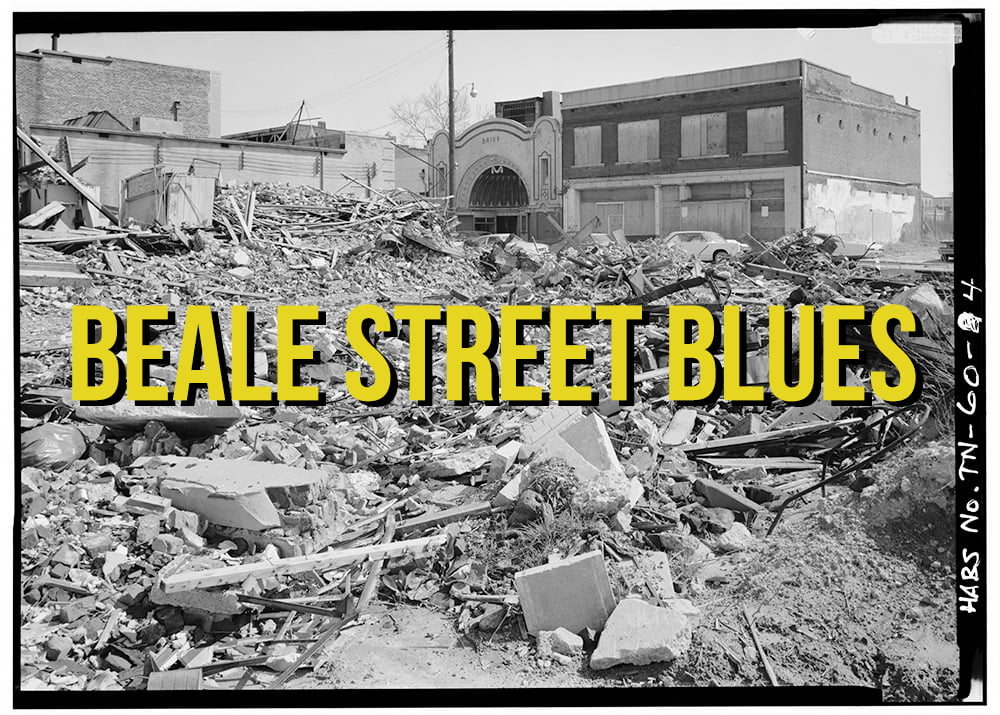
More than a century after Handy’s public debut, few non-musical remnants of the era remain, save for a few old buildings and some parks that bear names like Crump and Snowden. Much like the rest of downtown Memphis, Beale suffered during the mid- and late-20th century, when white flight left downtown all but empty. The neighborhood decayed, its buildings left to rot and collapse.”

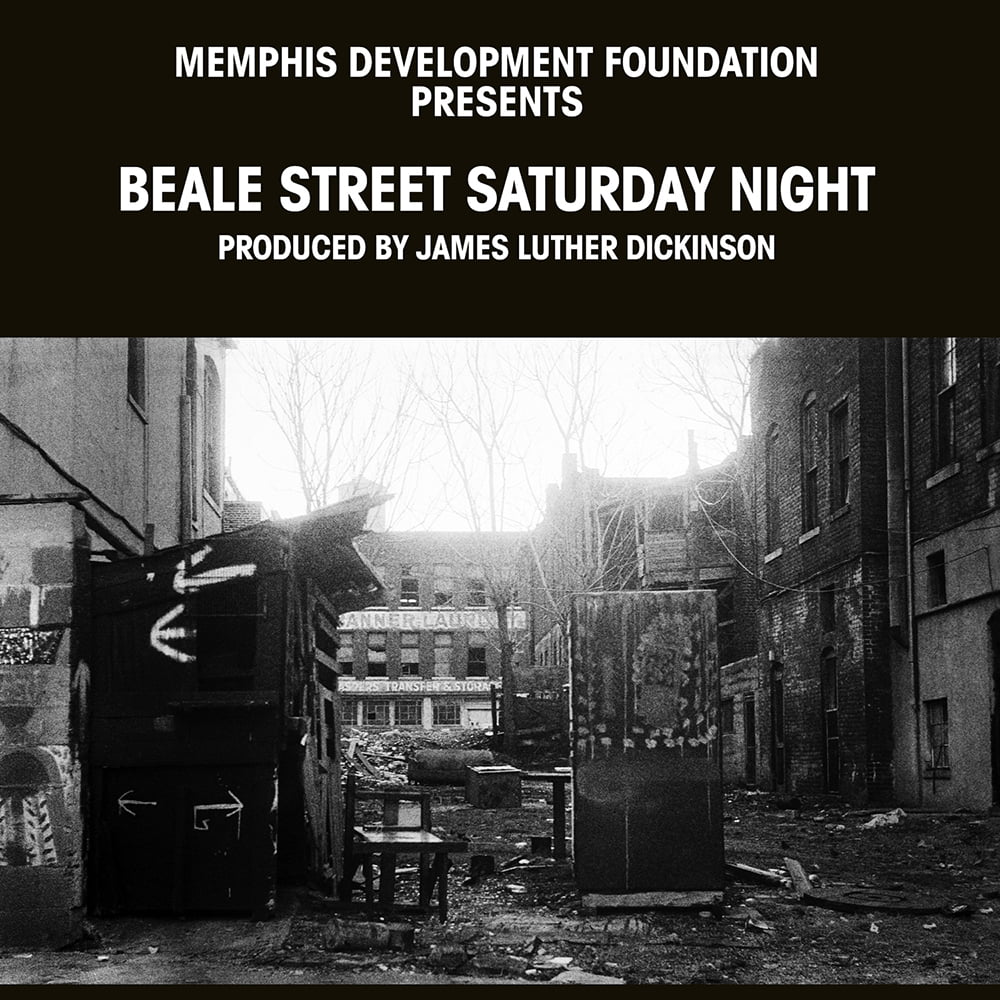
Even at its lowest point, however, the music continued to inspire subsequent generations of musicians grappling with these old sounds and their meanings. In the late 1970s, in an effort to fund the renovation of the nearby Orpheum Theater and to bring attention to Beale’s plight, a local musician and producer named Jim Dickinson produced an album featuring multiple generations of locals feting the famed thoroughfare — older blues acts like Sleepy John Estes and Furry Lewis alongside younger players like Teenie Hodges (from Al Green’s infamous backing band), Sid Selvidge, and Dickinson’s band Mud Boy & the Neutrons.

Listening to the album is like walking up Beale on a lively evening during its heyday, passing by all the bars and brothels, past A. Schwab, all the way up to the banks of the Mississippi. “Jim saw this record as a walking document of the street,” says Pat Rainer, who worked as a production assistant on the original album and oversaw the new reissue from Omnivore Records. “It’s really brilliant the way he conceived it and put it together. The original record had no grooves [between the tracks]. It just all flowed together, from one piece to the next, and that’s the way we’ve maintained it on this reissue.”

Until his death in 2009, Dickinson was one of the best advocates Memphis ever had for its culture and history. As a session player with the Dixie Flyers, he played on records for Aretha Franklin, Sam & Dave, and the Rolling Stones; returning home to the Mid-South, he produced albums by Big Star and, in the ‘80s and ‘90s, the Replacements, Screamin’ Jay Hawkins, and Amy LaVere. Today, his sons Luther and Cody carry on the tradition in the North Mississippi All Stars.

For this aural history of the neighborhood, Dickinson recruited a range of locals, some of whom were old enough to remember Beale’s heyday and others who only knew it as empty lots and decaying buildings. One of the more unusual tracks is performed by a man known only as Alex, who sings “Rock Me Baby” accompanied by a series of loud thwacks. “I don’t know if you can tell,” says Rainer, “but it’s actually somebody chopping wood. Alex was Jim’s family’s yard man, so Jim got him to bring an axe over and they recorded that in his carport. You can hear chunks of wood fly off and hit the speakers.”

If Lauterbach resettles Beale back into its proper place in local and national history, then Saturday Night depicts a scene unmoored in time — less a geographic location than a collective dream of the city of Memphis. The Orpheum was fully refurbished and continues to host concerts and musical productions, yet Beale has suffered a fate some might say is worse than the wrecking ball. “You go downtown on a weekend, and it looks like Disneyland,” says Rainer. “It’s really a shame.”


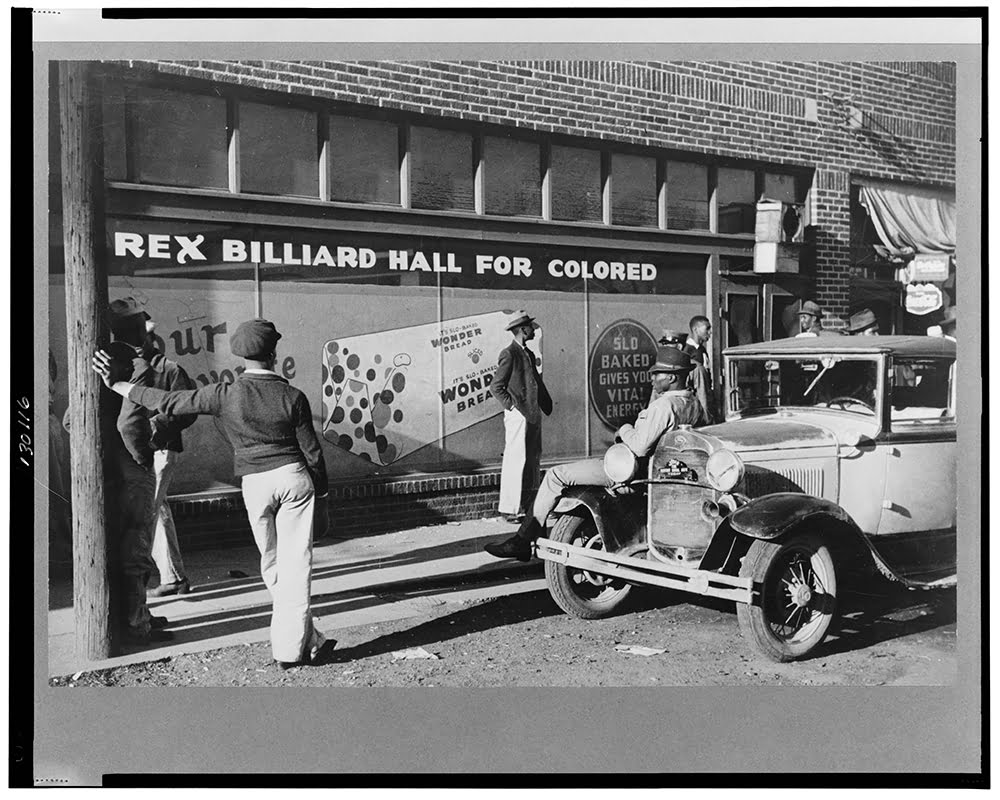
Photos courtesy of The Library of Congress. See more images of old Beale Street right here.