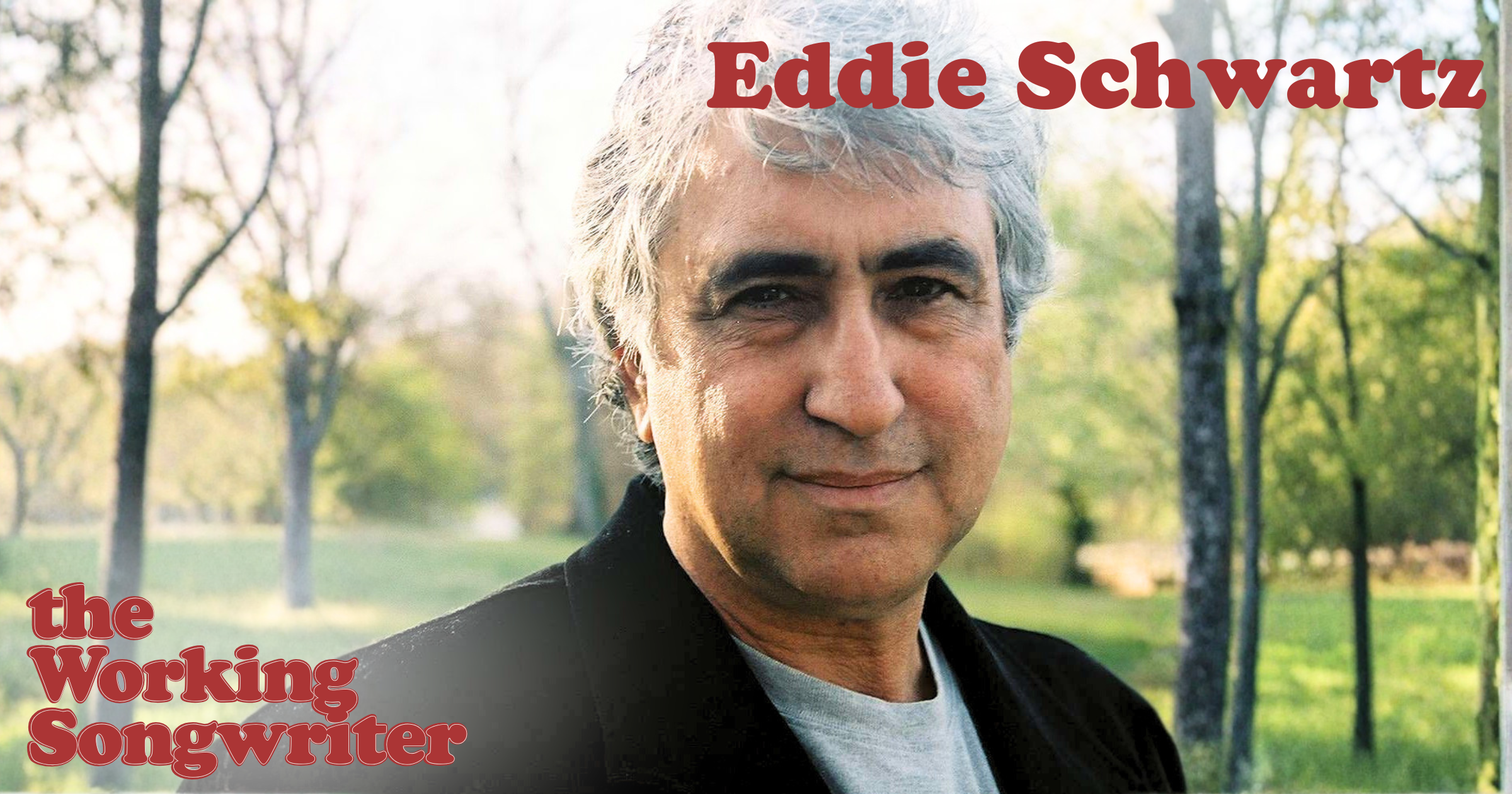
The Working Songwriter: Eddie Schwartz

Our guest this week on the Working Songwriter hails from Canada and has spent over four decades writing hit songs. Eddie Schwartz got his start as a solo artist, but has found great success writing for and with other artists. His song “Hit Me With Your Best Shot” was recorded by Pat Benatar and became a certified platinum crossover hit. He went on to pen songs for Donna Summer, the Doobie Brothers, the Pointer Sisters, and many others.

LISTEN: APPLE • SPOTIFY • REDCIRCLE • MP3

As a former president of the Songwriters Association of Canada and the International Council of Music Creators, Schwartz has been a tireless advocate for songwriters. He’s received multiple BMI, SOCAN, and JUNO Awards. In 2012, he was awarded the Order of Canada, one of the country’s highest civilian honors.

I got a chance to catch up with Mr. Schwartz a few months ago to hear about his musical journey so far.


Photo courtesy of the artist.

Put Your Movin’ Shoes on and Dance

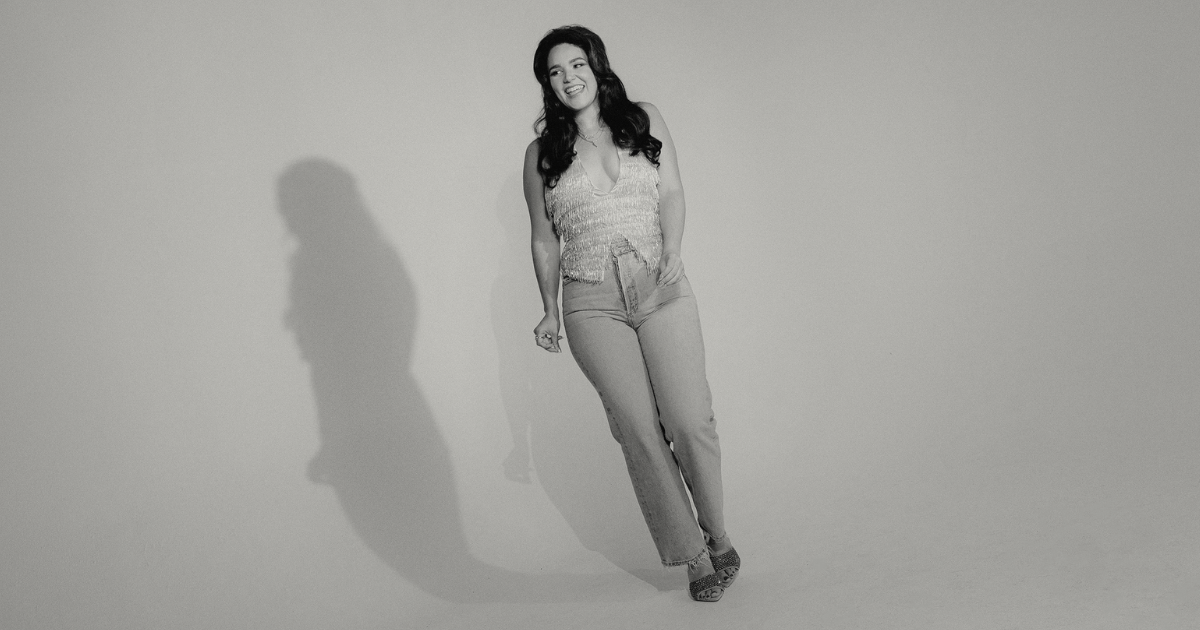
After spending time On The Ranch in 2022 and hopping in the car for 2024’s Drive & Cry, Emily Nenni now finds herself out on the dance floor with her latest record, Movin’ Shoes. Released May 1, the album is the California-born, Nashville-based singer’s third project in collaboration with New West Records.

It’s also her most ambitious and vulnerable to date, with Nenni singing about everything from feeling comfortable in her own skin (“Livin’ In Shame”) to getting caught up in a heated argument (“You Only Said It To Hurt Me”) and doing what makes you happy (“Not A Winner”). All amid a backdrop of Stax horns, pedal steel, and other accompaniments captured in Memphis with producer John James Tourville (of the Deslondes) and engineer Matt Ross-Spang. The two also worked with Nenni on Drive & Cry, but this time around the setting was at Ross-Spang’s new Southern Grooves studio, which offered up new opportunities to stretch out and experiment musically.

The result is a mix of honky-tonk and Southern soul that invokes Booker T & the M.G.’s and B.B. King (“Movin’ Shoes”); William Bell and Aretha Franklin (“What Have I Done Wrong”); Diana Ross (“Not A Winner”) and the Supremes (“Livin’ In Shame”). Even more crossover moments occur with a bluesy rendition of Paul Simon’s “Tenderness” and a reimagining of Cass Elliot’s (of The Mamas & The Papas) “Talkin’ To Your Toothbrush” that illustrate Nenni’s confidence in full bloom.

“This isn’t strictly honky-tonk like my former records, even though it’s still all the same influences,” Nenni explains. “I’m just drawing from more artists and genres than I have in the past.”

Ahead of Movin’ Shoes’ release, Nenni spoke with Good Country about the evolution of her sound, the relationship she has with her dog Edna (whom she sings about on the song “Home With My Dog”), her reverse lip sync video for “Livin’ In Shame,” and more.

One of my favorite songs from Movin’ Shoes that captures your new sound is “Yes It Hurt.” Did you always plan to incorporate horns in it?

Emily Nenni: “Yes It Hurt” was probably the most outside of what I’ve done on any of my past three records. It was a bit nerve-racking, because I initially just planned to record the phrase “yes it hurt” repeated with some harmonies to use as an interlude. I never envisioned it being a full song, but JJ [John James Tourville] came up with a whole thing around it that I added verses to the day before we went in to record. I didn’t really know what I was doing, but I trusted him, and getting to see three horn players shred on my song made it all worth it. I’ve always wanted horns on my record, but didn’t want it to be such a big departure from what I’ve been doing.

What was the timeline for these songs coming together?

Aside from the covers, the entire record was written over the course of a month and a half. I sent JJ voice memos of most songs about a week before heading into the studio, which left him no time for pre-production. We had been talking, though, and had both the musicians and space to record, so I just trusted it would all come together.

The only song I had to build my lyrics around JJ’s production was on “Take My Money.” I had all the lyrics but no melody, because everything I tried didn’t fit right. Then he went and made it into this really cool and funky honky-tonk type song that has become one of my favorites on the entire record.

Was this your first time recording in Memphis?

Yes. We recorded Drive & Cry at the Creative Shop in Nashville, but it was actually mixed in Memphis with Matt Ross-Spang. When JJ and I drove down there for that I could just tell the two of them would work really well together on a full record, so around six months later I emailed them both asking about it. It was bittersweet because this is the first record where I haven’t worked with Jake Davis as an engineer. That being said, we did capture some vocals for “What Have I Done Wrong” at his house, so he still was able to be part of the mix, which was very important for me.

What led to you making “Movin’ Shoes” the album’s title track?

After I wrote the song I began thinking it would be a good name for the record, because I primarily write for the dancers at our shows – it’s my favorite thing! Some of these songs aren’t in that vein as much, but you can dance to anything.

In the end, the idea of moving and the content of that song touching on how you treat others when you’re out in the world is an overarching theme of not just it, but the record as a whole, which made it a natural fit to place as the title track.

You’ve always been an empathetic songwriter. What made you want to lean into that side of yourself even more on this collection of songs?

I spend a lot of time with myself, especially when we’re off the road. I’ve taken time to sort out my thoughts about the world we’re living in and that can get really heavy. It’s starting to affect the way people are interacting with each other, so with every encounter I have I’m thinking nonstop about the best way to handle it. It’s so important to think about and discuss not just how we’re treating each other, but ourselves too. When you’re in a funky headspace it’s nice being able to put on a song as a reminder for how to exist. Sometimes we need encouragement to be ourselves. My hope is that this album can help to remind folks of that.

You just mentioned spending time alone, which I know is at the center of the song “Home With My Dog.” I also love how it directly follows a cover of Delbert McClinton’s “Honky Tonkin’ (Guess I’ve Done Me Some),” a song about wild nights inside Texas dance halls. Did you notice their contrasting messages when you placed them back to back?

They are very much like two sides of the same coin. I’m only 32 now, but in my early 20s I could go out six or seven nights a week and could get up early the next day with no problems, but nowadays I need five nights’ rest for every night I do make it out of the house. [Laughs]. But aside from that, our dog Edna had some health issues while we were on the road in Europe a couple years ago. So now when I’m off the road I just want to be home with her and that’s all that matters. Even though “Honky Tonkin’” is a cover, it got me thinking about my early days in Nashville, hopping around the bars and in and out of conversation, and what those conversations consisted of. It all made me realize what’s most important, which is being here with our sweet little girl, taking care of myself, and not being out past my bedtime.

I can totally relate. I don’t get out anywhere near as often as I do now. However, I also don’t live in Nashville. I imagine the pressure to make appearances is amplified there with everything going on and the industry so close?

Exactly! We also live really close to Skinny Dennis – which I love – but it’s also really easy to go there and have too much fun and [then I] can’t hang around with anyone for a while. [Laughs] It is wonderful though, so I do remind myself to remain involved in our lovely community here. It’s nice being around so many honky-tonk women and checking in to see how they’re doing or sharing stories. The world is a heavy place right now – from what we see in the news to the realities of life on the road – so being home is a good chance to reset. Even if I do it too much. [Laughs]

You also cover Paul Simon’s “Tenderness” and Cass Elliot’s “Talkin’ To My Toothbrush” on Movin’ Shoes. How do you go about deciding which songs from others to tackle?

I often will come up with a list of potential cover songs before going into the studio, because I always like having one to cover. But with this record we wound up doing three. It’s fun to pick a random song that somebody maybe hasn’t heard, to introduce them to a new artist’s catalog. I decided to cover “Honky Tonkin’” because I couldn’t get enough of it and thought it would be a fun one for the dancers, and the riff is really great. Then with “Tenderness,” lyrically it reflects a lot of the message of this record, which is how we’re treating each other. Sonically, I thought Paul Simon’s recording was a nice combination of country and soul and something I could replicate while also making it my own as well. And with “Talkin’ To Your Toothbrush” I just thought it was a great song that would be fun to cover. Cass has such a dreamy voice, and the Dobro on that song was so good too.

How did you get the concept for your reverse lip sync music video of “Livin’ In Shame,” which reminds me of a similar trick you used a few years ago on a video for “On The Ranch”?

Joshua Shoemaker developed and directed both of those videos! “On The Ranch” is a one-take and “Livin’ In Shame” is multi-take and backwards. This was my third music video with him – he also did “Get To Know Ya” [from Drive & Cry]. For “Livin’ In Shame,” Joshua heard the message clear as day, so it was filmed backwards to convey it. Wiping away makeup and left with just me!

The message of “Livin’ In Shame,” feeling comfortable in your own skin, goes hand-in-hand with another of my favorites on the record, “Not a Winner,” and its declaration of realizing your worth. What are your thoughts on those two songs and how they tie together?

The two songs are big on self-reflection. I have put in a lot of work to be more patient and present with myself and my journey. It’s certainly easier some days than others, and that’s okay. I hope these songs help listeners be kinder to themselves too.

Movin’ Shoes is dropping the same day that you celebrate 12 years in Nashville. What’s the biggest thing you’ve learned from your dozen trips around the sun in Music City?

I’ve just learned to be more confident in my own songwriting and the band I have around me. When recording and collaborating, I’ve also gotten more comfortable contributing my own thoughts. When I first moved to town my lack of confidence had me shying away from putting myself out there and sharing what was on my mind. I’ve got everyone I’ve played with these past 12 years to thank for welcoming and embracing me. They’ve all been very non-judgmental, and that’s made all the difference in the world.

What has bringing this record to life taught you about yourself?

That it is okay to step outside of your comfort zone. Trying new things like using different instrumentation, recording outside of Nashville and being more outspoken about asking for what I want have all helped to build my confidence too. I’m more comfortable than ever with the “new” and with myself, which I think will be very helpful to me in all aspects of life, not just music.

Other than releasing Movin’ Shoes, what’s next for you?

I have already started writing a new record and I’m looking forward to getting back to the studio!


Photo Credit: Emilia Pare

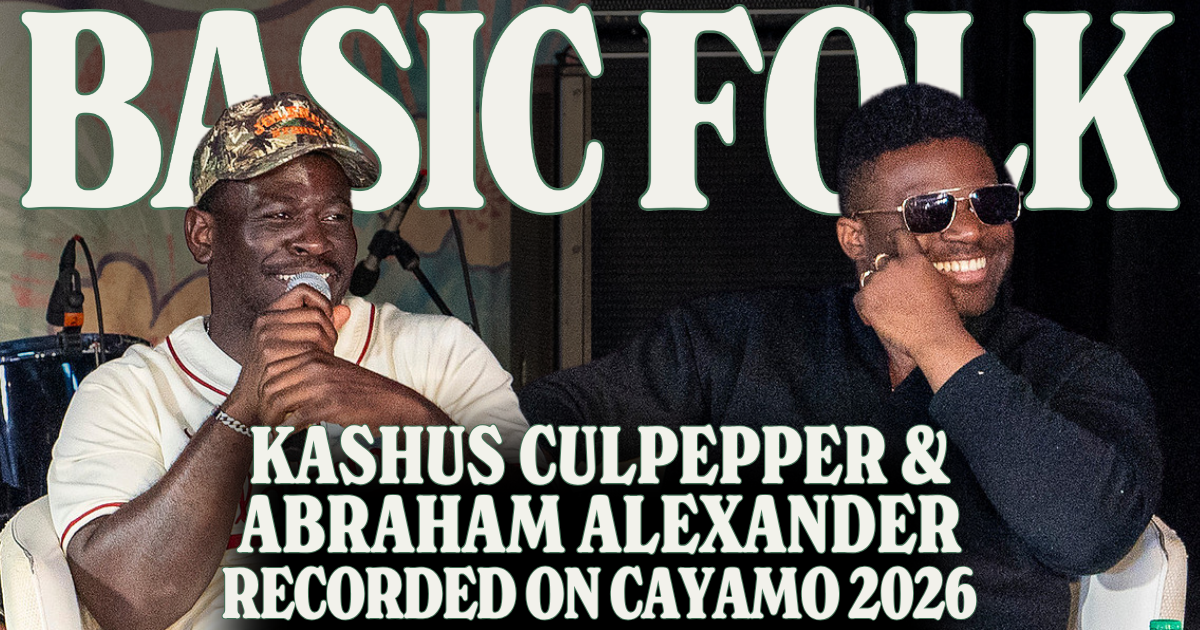
Basic Folk: Abraham Alexander & Kashus Culpepper

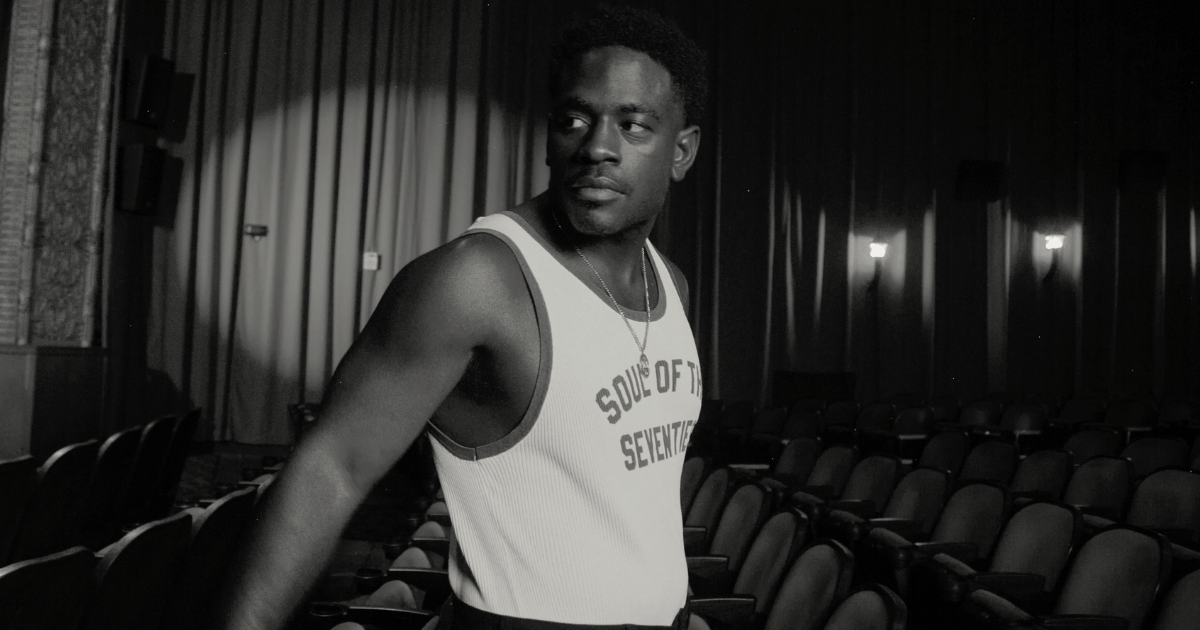
We are live at sea aboard Cayamo 2026 with Abraham Alexander and Kashus Culpepper! The pair had not met prior, but we found a couple of very cool parallels between them, so we decided to interview them together. Plus, we knew it would be more fun to have them both up on stage in front of an audience. Abraham, based in Ft. Worth, Texas, and originally from Greece, has had an impressive rise in profile thanks to opportunities from friends like Leon Bridges, Gary Clark, Jr., and Adrian Quesada (Black Pumas). Quesada actually worked with Abe on the song “Like a Bird,” which was nominated for an Oscar for its inclusion in the deeply moving 2023 film Sing Sing. Navy veteran Kashus Culpepper, born and raised in Alexander City, Alabama, grew up singing in church and learned to play guitar while deployed in Spain. His deployment actually occurred during the pandemic in 2020; left with nothing to do and nowhere to go, he spent his time learning guitar, drinking plenty of sangria, and playing for his fellow sailors (who would also be enjoying said sangria).

LISTEN: APPLE • SPOTIFY • AMAZON • MP3

Abe and Kash have a few things in common that we discuss: their emotive and boisterous singing voices, learning guitar as adults, intense histories with sports, and, of course, being very handsome. We introduce our conversation with the two musicians as “Handsome Club,” (a shout out to Lizzie No’s OnlyFans handle, @handsomelizzie) and ask them to speak about their relationship with beauty. After ensuring them that we were for real, they spoke of beauty found in the process of turning pain into something positive, and how confidence in yourself is everything. We have some poignant moments and some major laughs that are enhanced by an awesome crowd. Thanks to everyone on board Cayamo for making the first meeting of Handsome Club so successful!


Photo Credit: Joel Parks

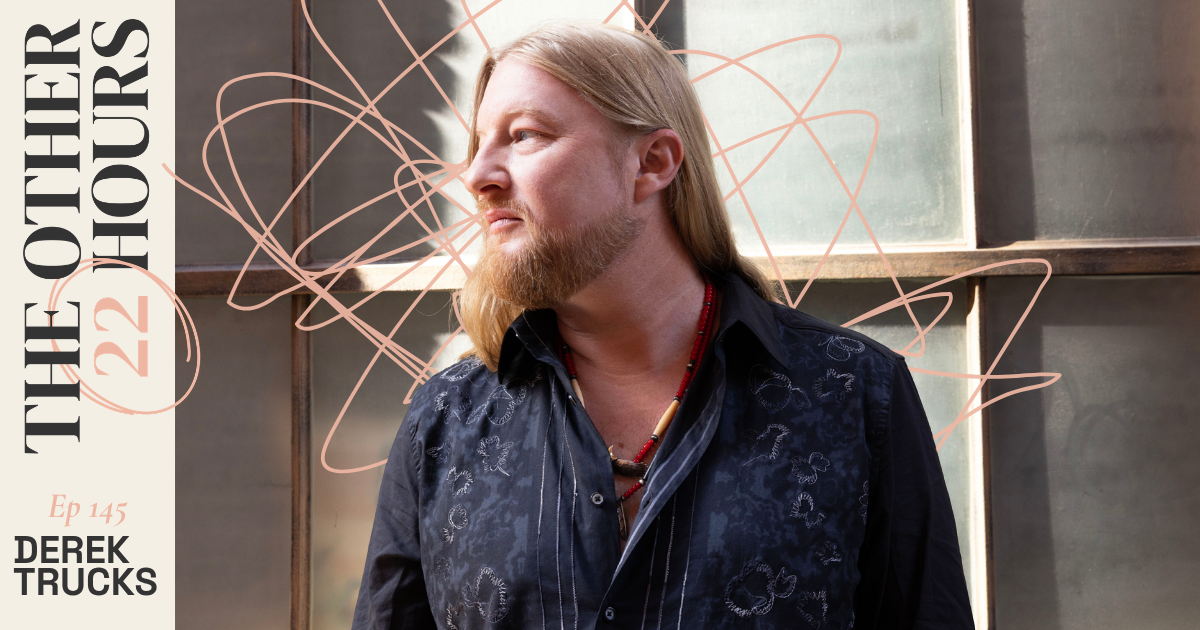
The Other 22 Hours: Derek Trucks

What happens to the creative spirit when you have been a professional “lifer” since the age of nine? Derek Trucks, widely considered one of the greatest guitarists of all time and a veteran of the Allman Brothers Band and Eric Clapton’s touring lineup, joins the Other 22 Hours to discuss longevity and leading a 12-piece musical circus. with his Tedeschi Trucks Band co-founder and wife, Susan Tedeschi. We explore the gradual shift from student to teacher, the grounding force of a musical marriage, and the essential practice of “turning the crops” to stay inspired.

LISTEN: APPLE • SPOTIFY • AMAZON • MP3

In This Episode:

Tedeschi Trucks Band
Allman Brothers Band
The Beacon Theater
Eric Clapton
Kofi Burbridge
John Lee Hooker
Koko Taylor
Ace Moreland
Colonel Bruce Hampton
Buddy Guy
Joe Walsh
Gregg Allman
Jim Scott
Tom Dowd
A Love Supreme
– Krishnamurti
Mad Dogs & Englishman (movie)

Go Deeper:

Watch: View this entire conversation above or on YouTube.
Explore: Find similar conversations in these themed playlists.
Connect: Join the conversation on Instagram.

The Other 22 Hours is hosted by Aaron Shafer-Haiss (producer, mixer, musician) and Michaela Anne (songwriter, artist, creative coach). More about Aaron’s workMore about Michaela Anne’s work.


Produced by Aaron Shafer-Haiss. Original music written, performed and produced by Aaron Shafer-Haiss.

Photo Credit: Chapman Baehler

Tedeschi Trucks Band Have Done It Again

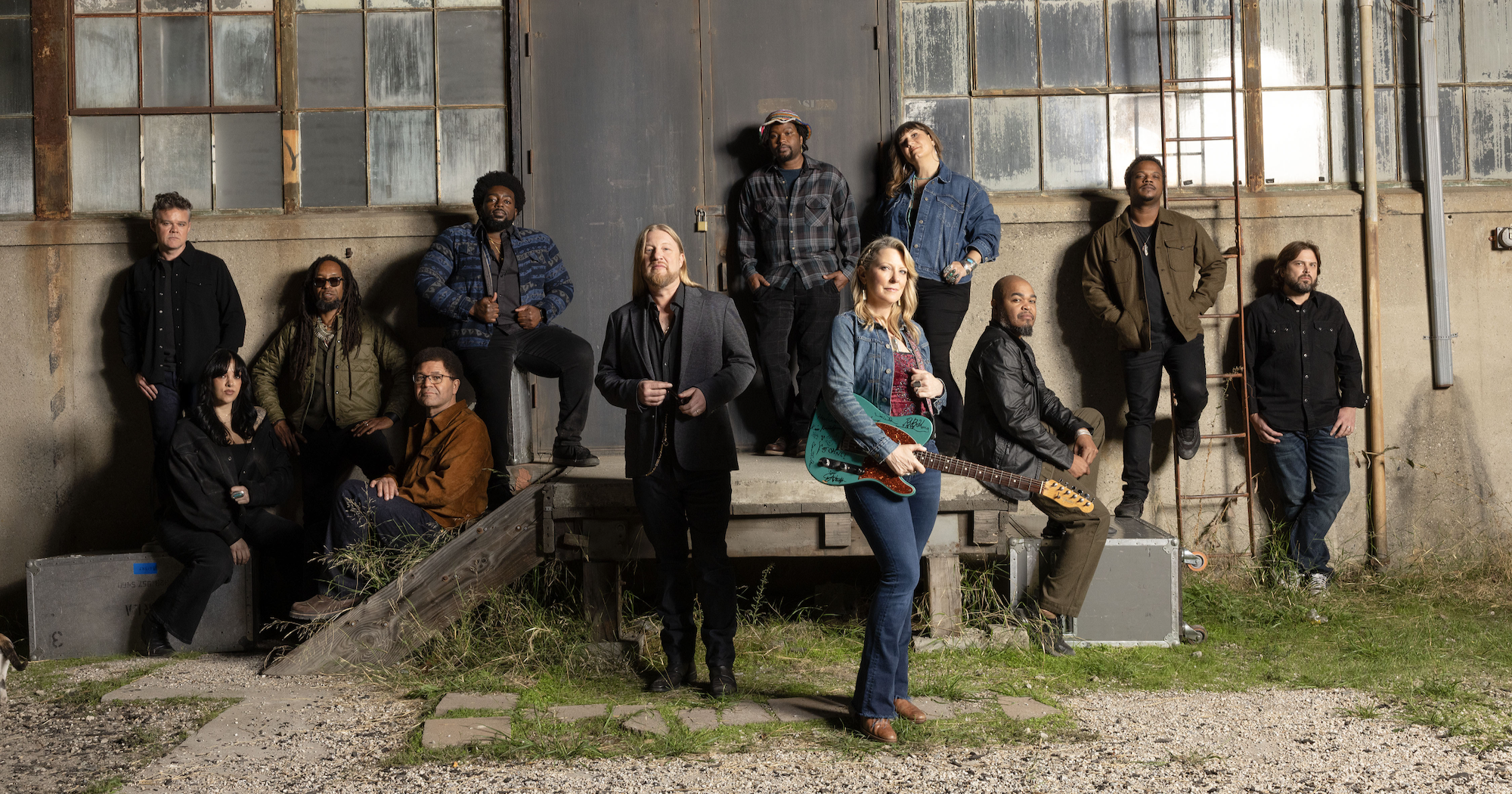
When it comes to entirely enjoyable, technically exquisite modern blues, Southern rock, and jam-band soul albums, Tedeschi Trucks Band have a statistically impossible batting average. Their new LP, Future Soul (released March 20 via Fantasy Records), is yet another “no skips” collection from the megalithic 12-person Americana group fronted by husband-and-wife guitarist Derek Trucks and guitarist-vocalist Susan Tedeschi.

On that strength of their catalog – and their ensemble – TTB have amassed hundreds of millions of streams, won eight Blues Music Awards and one GRAMMY, and a handful of their songs have become regarded as modern standards in the Americana and American roots music songbook.

Future Soul simultaneously feels like a surprising departure and familiar, essential territory for the band. With Mike Elizondo producing and songs and creative input sourced from across the group’s lineup, the set ends up sounding and feeling more acoustic than “usual,” while still reaching roaring crescendos and building it all on dank, wide open grooves. Perhaps those acoustic moments are a substantial contributing factor as well, but the cozy, plush pocket of the album is what gives it a laid-back, relaxed, and floating vibe no matter the track’s genre construction.

Screaming slide, no-holds-barred vocals, and wall-of-sound climaxes can all be found herein, as well. But the collection never thrashes or flails, it’s precise and exacting – as Tedeschi and Trucks are both known to be on their instruments, whether guitar or voice – but it’s certainly not sterile or gated or homogenized, either. It’s another remarkable feat for a group so large that you would almost have to assume, live or in studio, musical mud would be an inevitable byproduct.

But no, TTB seem to have no misses, at least not on Future Soul. It’s clear this group works together in harmony not just because of the down-to-earth and collaborative leadership of Tedeschi and Trucks, but because the artistic and musical responsibilities and ownership – of the songs themselves, of the album, of the makings of each, of “success” for the band – are decentralized and distributed throughout the group. The band has a sound, an art, that is consistently collective in the way it’s received by audiences and listeners because, forgive the obviousness, Tedeschi Trucks Band always work as a collective.

In our BGS conversation with Derek Trucks, the magic and unlikelihood of this creative dynamic and the processes by which the band continues to rack up success after success were on full display. We spoke about how they put together Future Soul as a group effort, the many inputs that went into Trucks fashioning his lyrical guitar style, and what bluegrass means to him personally, to Tedeschi, and the band as a whole. It was a joy-filled, passion-led conversation that again reinforced how this wailin’, rockin’, rollin’ band continues to flout and subvert expectations – and thereby has become so beloved.

Something that jumped out at me from the bio about the new album is that you say, “There’s just not a weak spot on this record.” I have to say, I totally agree. I think it’s remarkable that with a 12-person band and such a diverse catalog of recordings and releases, it really doesn’t seem like there’s any “fat” to trim or any duds to cull.

I have to ask, does it feel as magical on the inside of that process as it seems from the outside? It seems unlikely that y’all would work so well together towards a common goal, artistically, and be able to deliver again and again and again. And I don’t just mean commercially, awards-wise, or for audiences alone. Clearly you’re delivering artistically for yourselves and by your own standards, as well. So, does it feel as unlikely on the inside of that process as it maybe does to us on the outside looking in? [Both laugh]

Derek Trucks: That’s awesome. But it does, man! I mean, not every record you do feels the same way. They’re all their own beasts. For I Am The Moon, it was in a time of great uncertainty. We did four records and it was just kind of a heavy, heavy time – and that record feels like that.

This one felt completely different. The band felt much more confident [and] had been touring for two years straight. We had been playing so much together that when we finally got the core of the group up to our farm in Georgia to do some writing, there were a few songs right out of the gate. Like “Future Soul” and “Who Am I,” where immediately, Sue started singing, Gabe [Dixon] started singing these melodies. I got chills and I was like, “Oh, this is gonna be good.”

You’re always kind of worried about running out of ideas, or running out of runway – like a thing in the back of your head. But I feel like we’re incredibly fortunate where, when we’re together, everyone puts everything they have into it. Then, when we’re not on the road together, everyone’s all doing their own things musically. So, when we come back together, there’s a lot to talk about and a lot of music to remember together.

I think it keeps it really fresh and it keeps it moving forward. I feel like everyone’s out honing their craft when they’re away from this. When they come back, there’s a lot of new ground to cover. So far, we’ve been really, really lucky that way. And there’s a handful of just incredible songwriters in the band, so everybody comes in with two or three ideas. You’ve got a pretty strong record right out of the gate. That’s been something that I think me and Sue are just realizing – we’ve known how amazing that is but, you know, Gabe and Mike [Mattison], they show up with some serious ideas.

Then having Mike [Elizondo, the album’s producer] down, just some outside ears – I think that was really important. Sonically, he was trying some different things that I think inspired the band and made everybody play a little differently. That was exciting.

I was struck by the range of styles and the different genre infusions that y’all have put into this collection. What really stuck out to me, listening down to the project in one fell swoop, is there are still those really big energetic moments – and there are still those “wall of sound” moments that y’all are really known for. But I felt like this album is chill and laid-back in a way; it feels deep in the pocket. Can you talk about capturing those seemingly disconnected energies together?

I think one of the things is that with a band or an artist, I think if you’re maturing properly – we learn sometimes slowly – that you don’t have to force the issue all the time. You can trust things around you a little bit more, and sometimes the groove is enough. Sometimes the chord changes are enough, sometimes the melodies are enough. It doesn’t have to be these epic moments at all times. So when they do come, you’re excited about it and wrings you out. Then you lay them back down, and then you go on another little trip.

I think the band, having played together so much, we’re in a different place that way, where we realize that you don’t have to force the issue on every song. You can go to different spaces, different places. And then, again, having some outside ears – Elizondo really helps with that, too. He helps guide you to places that maybe you wouldn’t have gone naturally, so that’s a fun thing. Then you learn things about yourself musically in the band that you didn’t know before. That’s always a good place to be.

One thing that I’ve been obsessed with about your playing, specifically, ever since I discovered you as a teenager, is how lyrical of a guitar player you are. It jumped out at me from the bio, as well, when you’re talking about “I Got You” and how you’re doing a guitar-voice dialogue instead of guitar-guitar. I think of you as one of the most lyrical guitarists out there. You’re so present and so grounded. So I’ve always wanted to ask you how you’ve cultivated that style – as well as being able to have those moments of pure shreddy, lick-y wailing.

Then hearing that you really wanted to make that connection between voice and guitar on this album made so much sense to me, because I’m always thinking about how you’re a lyrical player. And Susan is, too, and you both dialogue with your instruments, and her voice, often.

Pretty early on I had a few musical epiphanies. One was Allen Woody, who played with Gov’t Mule and the Allman Brothers. When we toured with my solo band, opening for a Gov’t Mule in the early days, he would always turn me on to records. He gave me this CD by this guy named Aubrey Ghent, who was a gospel [steel] player. I put on “Amazing Grace” and I was like, “Wow, what an amazing voice.” And then I heard the pick and I realized that it was this guy playing lap steel! But it sounded like a woman singing. I got chills [over] my whole body, and I was like, “That’s it, that’s the thing.”

I had been listening to a lot of Indian classical music – a lot of vocalists and sarod players. Me and our old [Derek Trucks Band] bass player, Todd Smallie, went to Ali Akbar College of Music in San Rafael, [California] and they would let us sit in on classes. I realized he [Ali Akbar Khan] made all the instrumentalists take vocal classes, because his whole thing was that you should be singing through your instrument. So that made it just really obvious.

Those were a few of the things, and then there was a long time where I just stopped listening to any guitar player. It was only singers and horn players. That was kind of the idea [that] musical ideas can come from anywhere, but you really should be singing the thing. There’s time for all of it, but the stuff that moves me the most is, you know – even hearing Duane Allman on “Blue Sky” or something. It sounds like somebody’s singing, like somebody is walking down the road whistling. I think those are probably the touchstones for me.

Maybe I am projecting a little bit, because I’ve been a bluegrass banjo player my whole life – I started playing when I was seven. But when I think of guitarists, especially who end up reaching the pinnacle – whatever that is – or especially in flatpicking and in bluegrass, there tends to be this homogeneity of style. The people who get to the “very top” end up all sounding like each other. Then you have those folks that really stand out, and it tends to be because they’re using space and using air as much as they’re using 16th notes and 32nd notes. I think, being used to really shreddy flatpicking, that hearing steel or slide or blues guitar or jazz or acoustic jazz, anything plays with sustain and plays with space, I just drink it up.

Beautiful, man. I remember the first time I heard the Stanley Brothers, or Ralph Stanley, and I just remember it hit me in that place where those early blues guys hit me. There was just something about it. That kind of cracked that whole world open for me. I mean, I was always a Tony Rice fan. We have the same birthday, so I thought that was cool.

No way, I didn’t know that.

And I remember being at a MerleFest years ago, I think it was one of the last ones that Doc played. I remember seeing this old Oldsmobile or Cadillac – I don’t know, it seemed like an 1980s or ‘90s car – it pulled up to the stage and I see Tony Rice get out, just dressed to the nines. He pops the trunk, gets his guitar, hits the stage, and then right when that set was over, he was back in that car! I was over there thinking, “What a boss.” It was incredible, man. He went up and just annihilated everybody and got back in his car and drove his ass home. Pretty incredible.

So funny.

The last time we talked to you for the site, you were Artist of the Month in 2019 and you talked about Del McCoury and Jerry Douglas. I know you’ve played DelFest a bunch, you’ve collaborated with Billy Strings – oh, and I was super excited to see Molly Tuttle supporting on a couple dates of your TTB tour in April, too.

Yeah, we’re excited for that. That’s gonna be great.

What does bluegrass mean to you? Obviously, there’s Ralph Stanley, Tony Rice – there are pickers and makers in bluegrass that are infused into what you do, but what does the genre mean to you more broadly? And who in the space right now inspires you, or your musical vocabulary, or what you guys are doing in the band?

When I think of American music, I think of blues, I think of bluegrass, and I think of jazz. I think [those are] the things that we’ve really contributed to the world. To me, those are the cornerstones of it.

We’ve become good friends with Sturgill [Simpson] over the years, and he’s dipped into that [bluegrass] place. When I hear him sing it I’m like, “Oh yep, that’s because he’s from there.” He’s from the heart of it, and it makes me feel the way Ralph Stanley does at times. Even guys like Tyler Childers – and Sue’s a big Sierra Ferrell fan. She loves all those records.

That music, even the current guys, it’s always playing around here. I don’t know, it just feels inspiring to hear. People just get on an acoustic instrument and rip one. You’re like, “Oh yeah! There’s still people that know how to do things!” [Laughs]

That’s the big inspiration I take from it. Because [in the music industry] there’s a lot of cutting corners, and that’s a music that there’s no cutting corners. You gotta put your time in and take your licks or you’re just not gonna get on stage. I appreciate not just the dexterity, but the vocabulary and the heart that goes into it.

And there’s just something about seeing a group around one microphone just doing the dance that I think is always inspiring. We’ve done some shows recently with Sam Grisman, we did a benefit [for Camp Winnarainbow] out in San Francisco. Peter Rowan was on it, and me and Sue, and it was all acoustics. I had an old National, and just getting to play with that group – just the way that group felt. Sitting on a stool with a Dobro, and they were coming and going around the microphone. And then, getting to hang after the show with Peter Rowan and him telling these stories, man. It was just incredibly inspiring. Some of the songs that we got to play with them – that dude [David “Dawg” Grisman] has written some incredible music. That was one of the highlights of last year. It was pretty damn incredible.

There’s a lot of acoustics on this new album, too. I did find myself wondering, and maybe I’m biased, but does the world need a 12-piece bluegrass band? It might! It might! [Laughs]

Man, that sounds pretty fun to me. I mean, it would be a lot less gear to carry on the road! Which would make it more plausible.[Laughs]

If you wanted to speedrun pissing off a fan base, this might be the way to do it.

[Laughs] Yes, alright, we will be thinking about this! I’m gonna go talk to Sue.

This next one is kind of for me, so I thank you in advance for humoring me. But I wanted to talk to you about Jack Pearson. When I first moved to town, I just met this guy out jamming on mandolin at these bluegrass jams. I’d be like, “Man, this guy’s so nice.” He’s a great picker. He’s a great singer. I got a lot of practice playing swing with him at jams in town. Then folks started being like, “Hey, do you know who that is?” Oh my god, I did not know who it was. He was just my bluegrass jam pal. Then I worked at the Station Inn for a few years and I got to work a bunch of his trio shows. I’d die for the solo acoustic sets he’d do on the set break.

Incredible.

If I were to list maybe my top 5 favorite guitarists of all time, I feel like you and Jack would both be on that list. So I wanted to have a little nerdy moment to talk about Jack. [Laughs] Can you talk about his playing and your guys’ friendship? Of course, I see so many connections between your musical vocabularies and that lyrical style we were talking about.

Yeah, man I need to check up on him. It’s been a minute. I need to check in on old Jackie P.

He’s a monster, man. He’s one of the few people that can actually go play in a straight-ahead jazz band, in a bluegrass band, and then the Allman Brothers. I mean, maybe the only person that can actually do it.

I totally agree.

I mean, he played with Jimmy Smith. This dude is like, he’s an absolute monster. And a sweet fella! You can’t say enough good things. When I joined the Allman Brothers, Jack was just leaving. So all the tapes I got, like learning the new versions of the tunes, were Jack Pearson tapes. At the time, Bud Snyder was the sound man. He would mix these tapes for me with Jack really boosted in the mix. I could hear exactly what he was doing to learn these things. I got an intimate take on the way Jack was approaching these Allman tunes. It was so unique.

There’s no one [that] plays like him, and [his playing is] about as smooth as it gets. Sometimes, you watch him play – and I know he plays really light strings and he plays low action – and the way his hands move, I’ve never seen anyone play quite like that. Then he busts out a slide and you’re like, “Holy shit! This dude can do anything!” [Laughs]

I know!

He’s one of the unsung heroes. There’s no doubt about it.

He does this thing – and you do this as well – where you’re able to leverage that really gritty, aggressive, absolutely on-the-razor’s-edge style that comes with blues and Southern rock and Americana. Then at the same time, like you’re saying, with light strings and low action, still has such a deft touch. Yet he has such great attack and precision and cleanliness. He is a great lesson in taste. His taste is impeccable.

Yeah, I think that’s exactly it. I think we forget a lot of the time that most of what we love about music is the musician’s taste. I mean, you got to put in the work – and Jack has obviously done that, that dude is a master. But his taste is really as good as anybody.

I think he’s probably a bigger influence on me than I even realized. Probably because of that early Allman Brothers time for me. I was jumping in at 20 years old, 21 years old. And all of a sudden it’s, “Here’s 60 songs to learn, and rehearsal/tryout is in a few weeks. I was like, “Well, give me those dates.”

I’m stressed just hearing about that.

I mean, luckily most of that music I had listened to my whole life, but I had never bothered to learn any of them. I mean, I knew “One Way Out” and “Statesboro [Blues],” that doesn’t take long. It was all the other shit!


Photo Credit: Chapman Baehler

Queen Esther Made a Civil War Album Unlike All the Rest

Civil War albums are all too common in roots music, bluegrass, country, and Americana. Usually, these concept projects romanticize and valorize one of the darkest periods in our nation’s history, while cheerfully and cartoonishly detached from reality and untethered from the nuances of this horrifying and violent period of tumult in the U.S. Revisionism and imperialism are enacted by fiddles and banjos in loose, contrived musical period garb.

Audiences seem to devour this kind of idyllic reimagination of the Civil War and the issues that gave rise to it. Though chattel slavery and its foundational role in our economy were central to the conflict, Civil War concept albums rarely interrogate those facts, instead leaning on listeners’ love for story songs and cursory understanding of “brothers against brothers” narrative paradigms to sell records and tickets. The sketchiness of this practice is overlooked across the board, perhaps due to the sheer ubiquity of such efforts.

On February 6, artist, musician, songwriter, actor, and playwright Queen Esther released a very different sort of Civil War album, Blackbirding. Enabled by a grant from The National Parks Arts Foundation, Queen Esther worked and lived in residence at Gettysburg National Military Park in Gettysburg, Pennsylvania, for a month in 2020. During that time, she communed with the land, the place, and the losses and griefs seeped into the blood-soaked soil, plumbing stories, myths, memory, and feelings to craft her 12-song reckoning with the Civil War. Original songs, songs from that time period, and fascinating covers combine into a work of roots music and theater, dramatization and storytelling interwoven with knowledge-bearing and memory-keeping.

Queen Esther being a Southern Black feminist multi-hyphenate creative is exactly why Blackbirding stands out among its peers in the curséd Civil War concept album space. There is no idealization or revisionism happening in Queen Esther’s songs. Instead, there’s a tangible humanity and an awe-inspiring alchemy of grief, loss, and crimes against humanity into beautiful, redemptive music.

Queen Esther first brought Blackbirding into the world as a piece of performance art with a staged reading in 2024. Even now, in its LP form, these songs lean forward, doing narrative work perceptible whether on stage or off, and coaxing listeners to abandon passive listening and – as all theater asks – inhabit a third, artistic, creative space together in our interaction with these compositions.

The central point of the album is made over and over again across the 12 tracks and throughout our lengthy and in-depth BGS conversation. “Blackbirding,” the 19th-century practice of kidnapping free Black folks and selling them into slavery or back into slavery, never really went away. The Civil War was not won. Reconstruction failed. Slavery itself was not abolished, but rebranded. As such, Blackbirding, whether from the perspective of its content or its genre aesthetics, isn’t a throwback or time capsule album. This is music made in the present, for the present, about the present, and it calls on all of us – again, in the present – to reckon with and consider how we each contribute to or act in defiance of the continuation of racial apartheid and imperialism in the United States.

Do not fear, though, because Queen Esther’s approach to such musicmaking is remarkably joyous, grounded, and compassionate. It’s clear she’s not only ready to engage in the conversations this music evokes, but that is exactly her purpose. And the ultimate culmination of her many talents. In this way, she yet again distinguishes herself from other such concept albums in Americana.

I’ve been a fan of yours for a few years, ever since we discovered your TED Talk. When I first watched it, it was so revelatory. It felt like you supplied vocabulary – and knowledge and expertise – that I wish I would’ve had my whole life to help describe the multi-ethnic origins of roots music and bluegrass and country. If all of this came from “Scotch-Irish tradition,” then why does bluegrass sound like bluegrass? Why does country sound like country? Why doesn’t it sound like Irish music or Scots music or music from the British Isles? It sounds different.

I just wanted to start by saying thank you for that talk – and thank you for all of the insight, feeling, and emotion that you bring to these intellectual topics that people tend to forget are about real humans, real experiences, and real music.

Queen Esther: Absolutely. I really appreciate you saying that. I think more often than not, Black people have these conversations amongst ourselves. We wait until the door is closed and then we talk. I think we should have more conversations with everyone in the room. As long as they’re willing to listen. That’s a tall order. Much more so than you would think.

I’m really happy about this album, especially because people are starting to have conversations around the songs, topics, and everything that I’m bringing up. The fact is that slavery has never ended. It was just modified. The Civil War has never ended. It just evolved. “Blackbirding” has never ended. It just got a lot more inclusive.

Those three things are standing in the way of America being America. There is the America that is on paper – the one that is in the brochure with the Statue of Liberty, the flag behind it, and mom, and apple pie, and all of this stuff. And none of it is true. It’s all a marketing ploy. The actual America that really exists, that’s the one that Black people have had to endure and survive for hundreds of years. That’s the America that turned its back on us.

You know as well as I do that there are so many Civil War albums in bluegrass, folk, string band music, and Americana. So many are built upon the revisionist history that you’re talking about. The manicured, sanitized “picket fence and 2.5 kids” version of the “American Dream.” So, normally when I get a pitch about an album like this, it just goes straight to my email archive. Knowing you and knowing your work – and especially the way that you bring theater and all of your multi-hyphenate titles into crafting and creating – I was so excited to have a chance to talk about approaching the Civil War and approaching Gettysburg as an inspiration for music.

Blackbirding is set in the present. You’re talking about how slavery never went away, how reconstruction failed, and how the Civil War was not won. You’re contextualizing this art in the present sonically, as well. Because, like you’re saying, the Civil War never ended, slavery never ended, blackbirding never ended. Can you talk a little bit about placing all of this discourse in the present and not just in period garb, as it were?

I have to say perspective is a powerful thing. As a Black woman, as a Southerner, as someone that’s two generations removed from slavery, as a creative, I never heard any of this told from a Black perspective. It was always “the lost cause”: “These Yankees came and they just attacked us from out of nowhere. We were living this beautiful life and they just ruined everything.” When nothing could be further from the truth.

They literally terrorized Black people. They tore us apart, they raped our children. They did all manner of evil constantly, under the guise of Christianity. And it was even uglier than anyone would dare to imagine. Which is why they’re struggling to hide Black history, to hide lost history, to make sure that it stays lost. To not have anyone like me turn over the rock to see what’s underneath.

At the same time, these songs from minstrelsy, these songs from not that long ago, they’re important songs. They should be rediscovered. The problem that I’ve always had is that once you have that technical prowess as a musician and once you plumb the depths with that music, no one was bringing that music forward into the present. Not unless they were … putting it in a historical context, and that’s important, but to bring it into the now [is just as important]. …

Having a sense of intellectual curiosity, it’s really important. It doesn’t matter that you’re not the smartest, but that you are curious intellectually and that you are brave enough to explore that curiosity is way more important. That’s really my bedrock. That’s where I’m coming from now.

I’m a generative performing artist. … We are the ones who generate our work and we perform that work. Some people don’t necessarily perform their work. They just write it or they create it and they’re looking for other people to do the work, to perform the work, so that they can get their work out there. Lots of songwriters like that. Lots of lyricists are like that. That’s beautiful. That’s great. …

The songs would come to me, they would just float up in my head. It’s like a patchwork quilt. You take all these different kinds of fabric and all these bits and pieces. But you’re making this mosaic that turns into this overall image that is bigger than whatever bits and pieces you brought to it in the first place.

Talking about that mosaic, it makes me think that of course we would end up at this point, with a project like this, with a conversation like this, and with a body of work that couldn’t have been made if you had tried to step outside of yourself or your own identity to make it.

Exactly. All of that fueled me. I was reaching out in different genres, not just musically, but in the world. I was doing a lot of alternative theater, I was doing cabaret. I was doing performance art, I was doing solo performance. I was doing storytelling. I’d get up on stage and I would do just about anything. That was a world in and of itself.

Now, after a certain point, when you’re a generative performing artist, you’re looking for grants so that you can develop the work in general. It takes seven to nine years to develop a musical. It takes five to seven years to develop a play. When you see someone go, “Oh yeah, my new play, it’s up.” They put in a heavy grind! That’s five years of rewrites and workshops and readings. Some theater taking them on with their theater company and developing that work until it was ready for a test audience, not even necessarily ready [to open]. It’s just a lot of hard work and a lot of heavy lifting. There are certain grants that make that possible, where you just have to go away and you have to write and create.

I found a grant that would let me do that with this album through the National Park Service. The National Parks Arts Foundation has grants to at least a dozen National Parks. You can go to the park, you can live on the park, and they will pay you.

This project is also a work of theater. What jumped out to me first and foremost in that regard is what you’re talking about – the residency, the grant, being on location. Bluegrass, roots music, country music, they all ask us to be in a place together, but not in the same way that theater does. Theater is very much created so the audience are not passive participants. It actively invites listeners and collaborators and bystanders into a space and into a place.

You are doing that with this body of work – and with your residency at Gettysburg. I thought that was one of the most fascinating things about this project. Using theater, with a capital T, to help do that work of transporting all of us to the battlefield, to Gettysburg, to the geographical place that you are evoking with these songs.

I’ve been doing theater ever since I could stand up straight. Think about the cavemen, just standing in front of their brethren and telling a story about what happened to them that day. If my grandmother were here right now and in on this conversation, she’d tell you that I was telling stories ever since I could talk. I would just make things up. She would be sitting there washing dishes and I would try to distract her by making up something wild or crazy or imaginative. I don’t know, I just gotta say something to make her drop that dishcloth or at least laugh or something. [Laughs]

What is fantastic realism? Fantastic realism is when you have ordinary circumstances and then something extraordinary just pops right in. … So the idea of theatricalizing whatever was happening around me as a little kid, [that’s fantastic realism]. If we were sitting here at a table talking, for example, and then an elephant came along and took the hat off your head – that kind of a thing. Just the outrageous Southern tall tale. Bombastic storytelling is always floating just beyond your reach, I think, as a Southerner. It’s just how we do.

And of course, like everything in the South, this is an African tradition. This is an oral tradition handed down from West Africa. West African traditions [are] something else that people have a really hard time saying out loud and acknowledging. It’s not that other cultures didn’t tell stories, but our influence as Africans, as enslaved Africans, of our African ancestors on the South and on America, is seismic. It’s time for people to make the shift however small, however great, and center that and acknowledge it. They can’t even acknowledge it. …

I’m going to tell you a story. I almost always start [performances] with, “You wanna hear a story? I got a story to tell you.” Sometimes I’ll sing it, sometimes I’ll say it with music happening around me or behind me. But this is a story that you’re gonna want to hear. And every single song on [Blackbirding] is wrapped up in a story. There’s a story that’s around it that’s historical. There’s a story that resonates into the now, and there’s a story that I bring to you as an audience when I’m performing the song itself.

I’m thinking about how there’s so much music made in these genre spaces that is also putting on a costume, or telling a story, or doing theater, but that often isn’t grounded in reality at all. It’s all construction. So where some people might interface with your art and think, “Oh, this is a musical, this is theater, this is going to be a play, this is going to be ‘make believe.’” It’s actually so much further from that.

Oh no, it’s reality!

Exactly. And to me, that’s the whole story here. The thing I wanted to talk about most about Blackbirding is the point that you made right at the top – and that you’ve made throughout this conversation. You’re not talking about something that was happening a while ago and isn’t happening today.

Look, the 13th Amendment said slavery’s over “except.” Except? That’s a gigantic loophole. Except for what? Except for incarceration. That means if you’re incarcerated, you’re a slave. What if someone said to you, “You’re fired except on Tuesdays”? Then I’m not fired. You have to come in on Tuesday for four hours. Other than that you’re fired. You don’t work here. How much sense does that make? No one would hear an employer say that and go, “Am I fired or not?” Am I free or not?

You are free. Except they had to make that exception. They had to. Why? Because when the Civil War ended, this country was in absolute shambles. And because Black people were the actual currency. There were 4 million of us and we were basically worth trillions in today’s money.

We went off and we started our own little hamlets and towns, and we started working for ourselves. Suddenly there was this massive tilt. Black people were the money and had all of these resources, energy, and power. And just by sheer force of will, we started building for ourselves, which is why they started tearing us down. Showing up to each and every single community and just murdering people, burning people [alive] in their homes. Coming up with all of these lies built on pseudoscience to justify all of the things that they did. …

But it never ended. Pulling Black people over on the road, out in the middle of nowhere for no reason whatsoever. Beating them up. Maiming them, murdering them in some instances. This has always been the way. This has always been the case.

I’m imagining you on site at Gettysburg. How do you take that sort of emotional devastation or the intrinsic triggering and challenging nature of these topics and turn them into something beautiful? Do you see them as beautiful to begin with? I’m trying to imagine how you take care of yourself emotionally and psychically as you’re doing this important work. Because I think there must be an emotional toll to it, but you clearly are built for it as well. This feels like your wheelhouse – and the way you talk about it and the comfortability you have in having these conversations.

Simple. I am not an atheist. I am not an agnostic. I believe in God. I believe in Jesus. I’m a Christian, and I know that God is with me. I feel God’s presence upon me. I feel God hovering over me, protecting me divinely. I feel that I’m walking in divine purpose and in divine order. I know that I am divinely protected, that the blood of Jesus covers me everywhere I go. …

There’s this point at which inspiration takes over. There’s a point at which you are no longer there, and inspiration is there instead. An actor prepares– the idea is that you have technique, right? Your technique is there whether you’re playing an instrument or singing or washing the dishes or driving the car.

Let’s say driving the car. I don’t know how to drive. So, every time I get behind the wheel and the car is moving, even if it’s moving slightly, I’m screaming like a banshee. I’m so excited. But when I get in a car [with my partner], he just does what he’s been doing. He doesn’t think about it. He adjusts the window here and he readjusts this here, he puts the key in, and he does all of these dozen or more motions. He just does it automatically.

That’s the idea. When you make art, when you’re on stage, when you’re performing, when you’re creating, there has to be something that takes over. Inspiration takes over. Once you’ve got the technique, set the technique, learning how to drive the car, what do you do? Something else takes over. And I’m telling you, that’s something else for me, personally, is not my ego. For me, that’s the Holy Spirit.

I remember when I got to the house [at Gettysburg], everything was explained to me, and they gave me the keys. I’m sitting there in the parlor, I’m arranging everything, and it’s still light outside. I thought, “You know what? Why not?” I took my camera and I walked to Devil’s Den. The first song that I wrote was “The Devil May Care (But Jesus Knows).” I came back and I wrote that down like I was writing someone a letter. It just poured right out of me.

I can’t even begin to explain the process. I wrote it down and I wrote down the chords. I shaped it around everything that I did and I thought, “This is a complete song.” What is that song about? It’s about Devil’s Den, the Valley of Death, which is what they called that area in between Devil’s Den and Little Round Top. These soldiers would climb into Devil’s Den, which is these hulking, gigantic rocks. There was this big snake that lived there. It was huge. They called it the devil. It was so huge, it was as big around in the middle as a grown man’s waist. There were children that liked to play around that rock, so the townspeople got up the courage and killed it.

They would climb inside of that perfect coverage for a sniper and they would shoot Yankee soldiers that they could [see] from Little Round Top and they would fall into the Valley of Death. That was a run, Plum Creek – a run is a creek – and it was so filled with blood they just called it a bloody run. From where the creek started, all the way past the house that I lived in, all the way through that valley of death, was just nothing but human blood.

To be a soldier caught in [Devil’s Den] meant that you could not be saved. Someone would have to come and get you if you were wounded. More often than not, those soldiers died, not because they were shot and they fell down and they died. They died because no one came to get them. They died because they were wounded and the wounds got infected and they just bled out or [succumbed].

That Valley of Death comes for you, not just at the end of your life. It comes for you at any given moment, at any crisis that you have. Over and over and over again.

Can you talk a little bit about how you approached genre on these songs? Because I really love that you didn’t make a “time capsule” record that’s trying to sound like it came from the 1800s. At the same time, you’re collapsing time musically and creatively so that you can draw on those textures and on those sort of old-timey elements to do that storytelling for you, sonically. How did the production process actually look or feel as you were putting this collection together?

I think that when you have a kid or when you give birth to a kid, you just let that kid be the kid. You’re not sitting there going, “I want this kid to be this,” or “I want this kid to be that.”

That’s a really good metaphor. Just let them be themselves.

And what you’re doing, really, is sitting back and waiting to see what that kid turns into. You have no idea how they got so great at math. This kid is a mathematician. You can’t balance your checkbook. This kid is just explosively running in this whole other direction that you can’t even fathom. You have no idea what your children will do, what they will become. And none of it really has anything to do with you.

It’s the same thing. These songs came to me and when they came to me, sometimes fully formed, I literally wrote down what I heard in my head. And that really is it. Each song is its own world. I just let the song be what it is, whatever it is. However it came to me, I just let it be what it is.

I consider myself to be a transcriber of the song. I’m sitting there. The song is in my head and I’m just writing it down as quickly as possible. I’m someone with a butterfly net chasing the butterfly through the jungle. I’m running after the butterfly and I’m hoping that it doesn’t get away. It’s fluttering. It’s right above my head. Sometimes I capture it, sometimes I don’t. My job as a producer is to make sure that song sounds exactly the way it did in my head.

Even the cover songs, the Olivia Newton John song, “Magic.” When Olivia Newton John is singing that, it’s one way. It’s interesting. But I’m a Black woman and I’m singing that about my ancestors, and my family, and all of us in community. It turns into a completely different song.

You have to believe that we’re magic. Nothing can stand in our way. You have to believe that because, ultimately really, Black people never thought we were supposed to survive any of this.
Toni Morrison says that in an infamous speech that she gave, we were not just supposed to survive any of it. …

When the song comes, it comes as it comes. I knew that I had the goods as a producer, because the song sounded in the room the way they did in my head. That’s the best feeling. But moreover, more than anything else, you have to develop your own aesthetic. You have to know what’s good, what’s not good, and why. You have to know your own mind. You have to know your own aesthetic. And you have to have the courage and the willpower to stand on it.


Photo Credit: Whitney Browne
BGS 5+5: Trey Hedrick

Artist: Trey Hedrick
Hometown: Wilkesville, Ohio
Latest Album: Sing, Appalachia (released February 20, 2026)

What other art forms – literature, film, dance, painting, etc. – inform your music?

Literature. It has probably helped my writing more than anything besides the act of writing itself. Wendell Berry has had a huge influence on me and he’s far and away my favorite writer. His prose is exceptional. There is a restraint and steadiness to it. He’s extremely prolific and consistent, which isn’t an easy thing to achieve. He says a great deal with very little and I learn from that every time I read a page.

There are many great writers I draw from in the same way: McCarthy, Kingsolver, McMurtry, Leopold, Abbey, Rooney, Hemingway, Faulkner, Burroughs – to name a few. I read widely, but tend to gravitate toward certain styles when I’m working on a project of my own. I’m always reading and if I’m not I make myself feel bad until I do. It’s a big part of the peace my wife and I have built into our days. When I’m in a creative season, I am a bit more intentional about my picks.

Which elements of nature do you spend the most time with and how do they impact your work?

I love the out of doors. I grew up on a cattle farm in Appalachia and was usually either outside or in trouble. I still spend as much time as I can fishing and hiking and – something that is likely unknown about me – I love rock climbing and have traveled the world climbing. I am also a geologist in my straight job, which especially early on kept me working outside.

Nature shows up in almost every one of my songs. It is not something I reach for. It is just part of how I see things. Being outside has always been another place I find peace. If things are bad, going outside almost always makes them better to a varying degree for me

Admittedly, I do get tired of winter and the blues that come with it. That makes its way into the songs, too.

Genre is dead (long live genre!), but how would you describe the genres and styles your music inhabits?

I don’t think much about genre. My songs usually start on an acoustic guitar, so there’s naturally some bluegrass and country in them. That’s the language I grew up around. But I’m not trying to recreate anything. I don’t read music or know much theory and I don’t really know what rules I might be breaking. I’ve always had a good ear and I let that guide me. I’m lucky to have close friends who are incredible musicians, and they’d dress me down if something was off.

If someone needs a label, Americana works fine. Beyond that, I try not to overthink it or limit myself.

What is a genre, album, artist, musician, or song that you adore that would surprise people?

I love hip-hop, R&B, neo-soul type music. I especially love ’90s early 2000s neo-soul. D’Angelo, Erykah Badu, Lauryn Hill, Tevin Campbell, Mario, etc.

I enjoy those genres as much if not more, at times, than bluegrass and country. It’s like reading, I put on the music I need in the moment and I don’t limit myself. I guess that would surprise people, but I think it comes across in my singing some and may present in future sonic choices as well. We’ll see.

Since food and music go so well together, what is your dream pairing of a meal and a musician?

Fried potatoes from a cast iron skillet, greasy beans from Mamaw’s garden, macaroni noodles with tomato sauce, and a chicken fried steak. I could think of a lot of musicians to share that meal with, but the one who keeps coming to mind is Jerry Reed. He was hilarious and super intelligent. A great singer with excellent tone, and he was even a writer for Elvis on a couple tracks.

There’s a story about Elvis asking for Jerry to play on “Guitar Man,” a song Jerry wrote. Folks on Elvis’s team had to go get Jerry from the river where he was fishing to come to the studio and play the guitar part. None of the other session musicians could get it quite right. Legend. He isn’t really revered in modern memory for how brilliant of a technical player he was. He’d be a fun person to share that meal with.


Photo Credit: Chris Heidl

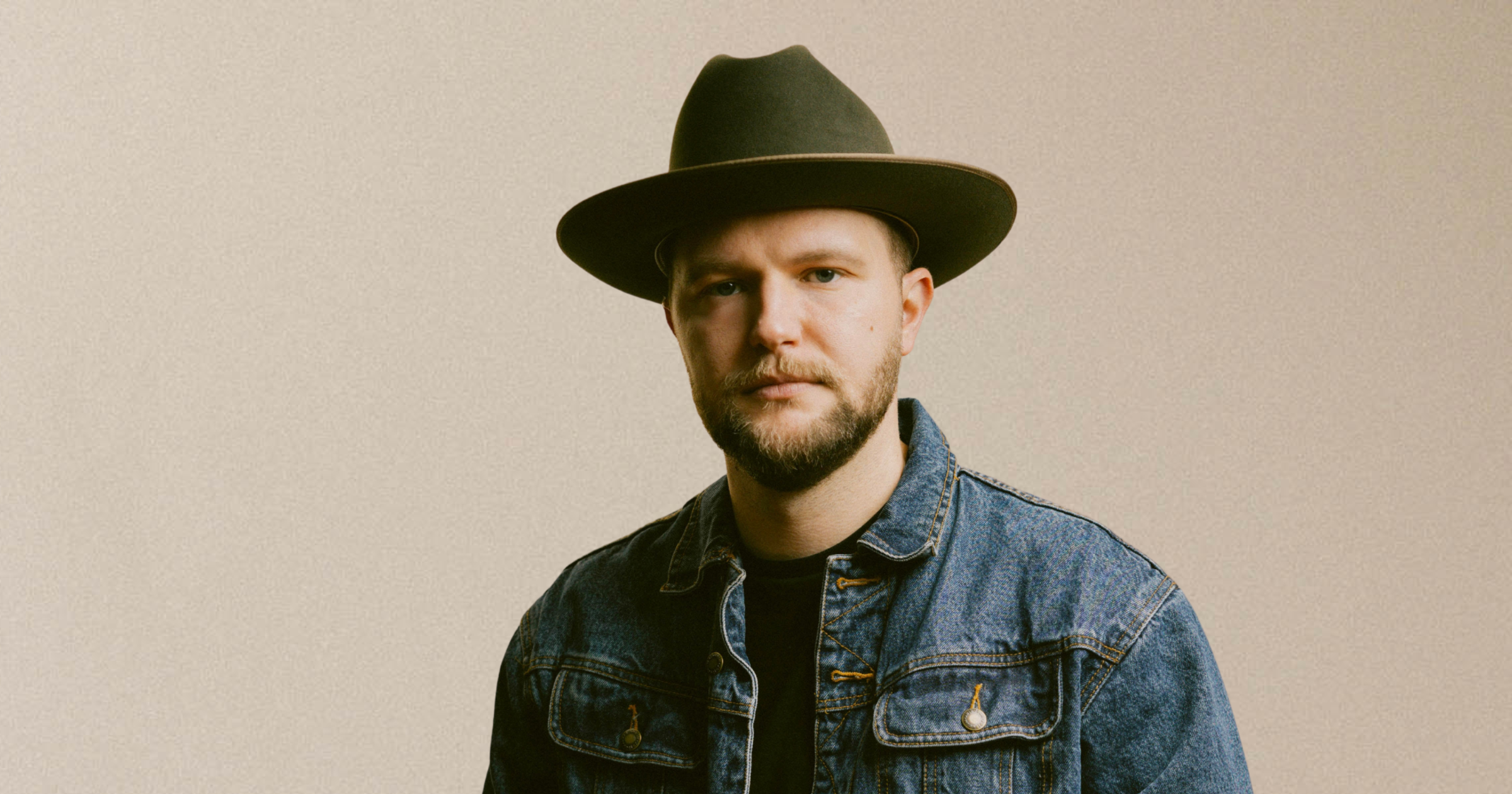
Kashus Culpepper Dreams Big on Act I

Elton John described him as “if Bill Withers made country music,” but for Kashus Culpepper that only scratches the surface of his unique sound, the multitudes of which are displayed in full force on his full-length debut Act I, which was released January 23.

Growing up in Alexander City, Alabama, the singer was always around music, whether it be in church or in the car, but aspirations for a career performing didn’t materialize for the former firefighter and EMT until he found himself stationed in Spain as a Navy corpsman during the pandemic.

“I wasn’t much of a player, but I was listening to so much music growing up,” recalls Culpepper. “I had headphones on all day, even at school, which caused me to get in trouble quite a bit. I would’ve loved to play back then too, but garage bands weren’t really a thing in our town when I was growing up. If they were, I would’ve tried jumping in with folks in a flash.”

During his period of isolation abroad, Culpepper was gifted a guitar, leading him to learn how to play and to eventually post cover songs online. After leaving the Navy in 2022, he returned stateside and began booking cover act shows at honky-tonks and dive bars across the Mississippi Gulf Coast. Although he immediately loved what he was doing, he also noticed that only playing other people’s material would have a short shelf life.

“Once I realized the cover thing would run its course, I knew in order to make a career in music that I needed to start writing my own songs,” he explains. “For so long the thought of writing my own songs and having people sing them back to me was just a silly dream, but now, less than three years later, I’m releasing an 18-track album I helped write the entirety of.”

Ranging from country to blues, rock and roll, pop, and soul, Act I is a full-on musical onslaught that caps off an amazing five-year journey for Culpepper, setting the stage for a continued meteoric rise in the years to come. On the album he’s joined by fellow stars-on-the-rise Marcus King (“Southern Man”) and Sierra Ferrell (“Broken Wing Bird”). But where the compilation really shines is on the tracks in between, like “Alabama Beauty Queen” and “Break Like Me,” that see Culpepper not only pouring his heart out, but doing so with catchy hooks and differentiating styles while remaining fully authentic to who he is – a Southern man making Southern music.

Less than two weeks before Act I’s arrival, Culpepper spoke with Good Country over the phone about his love for Tyler Childers, the importance of co-writing all the album’s material, what it was like earning the support of Samuel L. Jackson, how his collaboration with Sierra Ferrell on “Broken Wing Bird” came about, and more.

How far back do the origins of these 18 songs go? Are most from those early days of writing in 2023 or more recently as you’ve refined your voice?

Kashus Culpepper: Well, the ones that’s already been out [as singles], they’re definitely from around the same time that I was starting out writing. But a lot of songs that haven’t been put out yet, aside from “In Her Eyes” and “Mean To Me,” are all a little more recent.

In reality, none of these songs are that old if you didn’t start writing until 2023!

Exactly! When you think about it, none of these are that old. There’s so many artists who’ve been holding on to songs for years and years – like Chris Stapleton, who just won a GRAMMY for “White Horse” over a decade after first writing it.

Why was it important for you to have a hand in writing all 18 of these songs?

I’m all about developing myself as a songwriter, because it’s something that I can do for the rest of my life even after all the performance stuff is done. Songwriting is something that I truly believe in and love, so I want to be the best at it that I possibly can be. And to be the best at what you’re trying to do, you have to do it all the time and you have to write with people that are way better than you. That’s what I’ve been able to do with this record. I’ve been writing with people that are way better at writing than me. It’s been amazing.

The record is called Act I. Does that mean it’s part of a larger body of music to come?

At the moment, I don’t really know. I called it Act I not as an introduction to who I am, but because I’m a big movie guy. I love theater, movies, dramatics, all of it.

With that in mind, I know you had a run-in with A-list movie star and one of your biggest heroes, Samuel L. Jackson. What was that like?

Samuel L. Jackson is one of my favorite actors of all time. I got a connection with him when “After Me?” was coming out. It definitely makes the world feel a lot smaller when some of your favorite actors or your favorite artists know who you are. A lot of times growing up you think you will never be in connection with your idols, so it really was a humbling experience. It made me realize that anything is possible.

If you have a dream, you can do it. If one day you want to talk to Oprah Winfrey, you can. Don’t take your foot off the pedal just yet!

Has that one happened for you?

No, I have not talked to Oprah Winfrey, but I would like to! And you get a car! And you get a car! [Laughs]

With regard to “After Me?,” wasn’t that one of your first original songs to gain traction online?

My first big song on socials was “Who Hurt You,” but following that I posted a clip of “After Me?” and everything just went crazy. I’m really glad I put it up on socials after writing it with my boy Mark Addison. We didn’t think anything of it at the time – we were just writing. It’s been insane seeing what the song has turned into since then, especially live.

That’s another thing – it’s been cool to see all the new songs develop their own personality with the crowd. For a while, “After Me?” was people’s favorite song, but now it’s been overthrown by some of the newer ones, which I like because it tells me that I’m continuing to write new songs that people want to hear.

Was it always your vision for your debut project to be this massive or did it unknowingly balloon to 18 songs while in the studio?

I think it was the fact that I had so many great songs in my brain that showed the timestamp of a point in my music career and what I’m doing as an artist. Also, I didn’t want to hold back songs that I thought would be cool for my next project – I needed to put them out right now. When people listen to it, I want them to know exactly what was in my head at the moment I was creating it. That way it and everything I do that comes after it can always stand on its own.

You mentioning a desire to curate a specific moment in time reminds me of the intro track that kicks off Act I, where you’re playing the role of a radio DJ on KC 97 FM. Was that intentional on your part?

That’s exactly where I was trying to go with it. I was just trying to show people what it’s like in my head and trying to transport them to a new world as soon as the record starts. If you listen to it start to finish it feels like a radio station tailored by me. My goal is to bring listeners into my world. I hope people don’t skip it, because if they listen to it top to bottom, they’ll understand. It’s like, “Okay, Kash is curating a playlist with all kinds of influences, because he is a man with different sides to him as a person and musically.” I don’t really care about this or that in terms of genre, so long as the song makes me feel something.

And who knows… maybe someday Apple Music or iHeartRadio will come calling and give you the keys to your own real-life KC 97 FM?!

Don’t tempt me! [Laughs] I would love to do something like that. I don’t have time for it right now, but I would make time!

@kashculpeppermusic Messed up kid- Tyler Childers #tylerchilders #countrymusic #fypシ ♬ original sound – Kashus Culpepper

I know the church was a large part of your early musical upbringing, but what role did the radio play in all of it, if any?

For sure. I don’t remember the name of the radio stations, but there was something about summertime in small town ‘Bama, driving around with the windows down that was so freeing. And country music has always given me that same type of feeling. At the same time, I have so many memories not only with country, but also with soul and pop records. I remember a time when I’d even go around singing along to Lady Gaga.

Then when I was in the military and I found out about guys like Tyler Childers, Sturgill Simpson, and Kolton Moore, they turned into my backroad jams and even went on to inspire me to eventually start writing songs myself.

Speaking of Tyler Childers, didn’t you have a moment with his song “Messed Up Kid”?

Yeah, that was one of the first ones that really started popping off for me. Since then I’ve also done “Lady May” – which got a good response, too. I just love Tyler’s music. He’s got one of the most soulful voices I’ve heard in a long time. It reminds me of people I was in church with. In a way, I feel like Tyler and I probably went to the same church growing up. I’ve just connected with his music so much. Not just Tyler, but a lot of other people in Kentucky, too, now that I think about it. One thing musicians from there have in common is they love singing from their soul and being authentic.

Since you were just speaking about soul, one of the most soulful songs on Act I from my perspective is “Break Me Like.” Mind telling me about it?

That song definitely draws from the fact that I am with someone that I should not be with, but it’s okay because we’re in this moment and I know what she’s gonna do to me and it’s fine since right now I need to be with somebody. “Break Like Me” started with that idea in mind, then I had these really weird chords that I came up with while writing with Grady [Block] and Hank [Compton] over at Big Loud. After fumbling around with the lyrics that I had in my head, I came up with something that had a real funky, low-fi kind of vibe. We wanted it to tell a story and be relatively heavy, but while giving it production worthy of cruising to and vibing out with.

What about “Broken Wing Bird” with Sierra Ferrell. How did you bring her aboard, and did you always envision the song as a duet?

I wrote that song with my producer, Brian Elmquist, and at the time wasn’t thinking about it as a duet. We’re both lovers of Willie Nelson and wanted a song that felt like you could be on your back porch and listen to it morning, afternoon, or night with a drink in hand and not have to think about it too much. It’s a song that makes you feel warm and feel at home, but it wasn’t until the production of it when we thought about doing it as a duet.

Once the idea got brought up, one of us made the comment that whoever it is, it would have to be someone that has a voice that feels like it’s not from this time. Eventually Sierra’s name came up and it was like a lightbulb going off. She’s literally the first person that I would want in the whole world to be on this record, but I wasn’t sure if she’d be available to do it. Once we got the green light my excitement went through the roof. I’m so proud that she’s on this record, because she’s an artist that I truly love. I’m hoping somewhere down the line we might have something in the works that’s a bit longer of a project too.

I (and most other people) would not be against that one bit!

Looking back over the past five years, what has your musical journey thus far and bringing Act I to life taught you about yourself?

For so long, I thought I didn’t belong in places, that I wasn’t able to do this or that. The biggest thing I’ve learned is to just dream big because you never know what could happen. You just have to believe in yourself and you can do anything, no matter how crazy it sounds. For the longest time, I didn’t have a dream of doing music because I just thought I couldn’t do it. I thought I wasn’t the kind of person to be singing songs on stage, but look at me now!

With you referencing dreaming big I have to ask, what’s next on your musical bucket list?

My goal is to just keep creating, growing as a songwriter and learning more about myself along the way. If I do that I feel like everything else will follow and I’ll keep growing as a songwriter and as a promoter.


Photo Credit: Cedrick Jones

The Mighty Résumés of
Dan Penn and Spooner Oldham

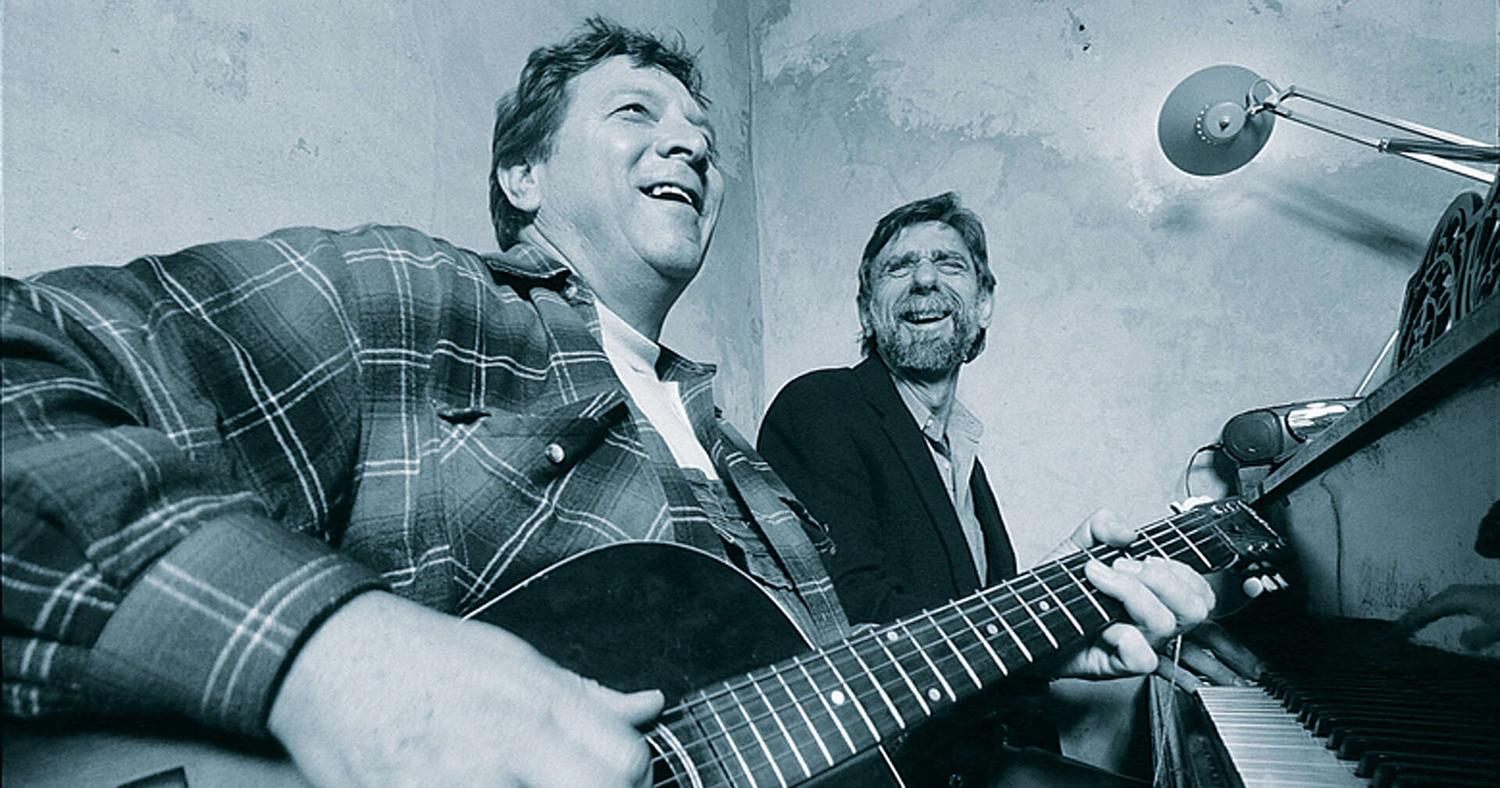
The duo of Dan Penn and Spooner Oldham have amassed an astonishing set of credentials, not only as exceptional soul, pop, rock, and country songwriters, but also as vocalists, producer (Penn), and session musician/sideman (Oldham). Both Alabama natives, they’ve maintained a successful professional relationship and close personal friendship since meeting in the late ’50s as teens. They’ve always characterized themselves as “country boys who love Black music.”

Penn initially viewed himself primarily as a singer. He was the lead vocalist for two local Alabama bands, the R&B group the Mark V Combo and a later one, Dan Penn and the Pallbearers. But he began to shift his focus in 1960, after his tune “Is A Bluebird Blue?” became an early hit for Conway Twitty. That song also reflected the joint musical influences that have always permeated the tunes co-written by Penn and Oldham. It’s country’s powerful storytelling edge combined with soul’s passionate energy and quest for personal salvation. Once the Twitty tune made it big, things changed in Penn’s mind. “That’s when I first decided that maybe this songwriting thing might work out,” he added. “After I saw some of the checks that were coming in, I decided to just keep going with it.”

Penn had already been working at SPAR Music studio, a place co-founded by Rick Hall and Billy Sherrill above a drugstore in Florence, Alabama. When Hall decided to open his own studio titled FAME (Florence Alabama Music Enterprises), Penn became their first resident songwriter. He and Oldham began writing together at FAME, and both say they had a chemistry from the very beginning.

“Back in those days, co-writing wasn’t quite what it is today,” Penn continued. “But just from hanging out with Spooner and getting to know him, we had real good rapport from the beginning. I got to know and like him, and then things just kind of took off from there.”

“What Dan says is pretty much how it happened,” Oldham added. “We got a rhythm going and it’s never been one of those things where we’ve had any problems or issues.”

Interestingly, Oldham views himself as a musician first, then a songwriter. A prolific organist and keyboardist, he got his start playing in a traditional jazz band while in high school. The extensive list of top musicians he’s played with over the years includes Arlo Guthrie, Jim Croce, Gram Parsons, The Everly Brothers, Jackson Browne, Linda Ronstadt, Gene Clark, Ry Cooder, The Flying Burrito Brothers, Delaney and Bonnie Bramlett, Bob Seger, Maria Muldaur, Rita Coolidge, Bobby Womack, Albert King, Helen Reddy, Harry Nilsson, Stephen Stills, J.J. Cale, and Neil Young. But in his earlier days, he also made his way to the FAME studios and had the first of many collaborations with Penn. Among their notable FAME triumphs were Percy Sledge’s “It Tears Me Up,” James and Bobby Purify’s “I’m Your Puppet,” and Joe Simon’s “Let’s Do It Over.”

But Penn wanted to produce as well as write and he left FAME for Memphis in the late ’60s, moving to Chips Moman’s American Studios. Oldham would later follow him there. Penn and Moman would craft their own set of soul classics, notably “Dark End of the Street” for James Carr, and “Do Right Woman, Do Right Man” for Aretha Franklin. Penn got his first major production opportunity in 1967, with the Box Tops and then 16-year-old lead vocalist Alex Chilton. Penn produced their number one hit “The Letter,” then joined forces with Oldham to co-write the group’s second smash “Cry Like A Baby,” and the Sweet Inspirations’ “Sweet Inspiration.”

Oldham would eventually depart for Los Angeles and a prolific career as a session musician and sideman. He played keyboards on Young’s 1978 album Comes a Time, and continued to work with him on such other albums as Old Ways, Harvest Moon, Silver & Gold, and Prairie Wind. Oldham joined Bob Dylan during his Christian era, contributing to Dylan’s Saved album, the Saved Tour and the Shot of Love Tour. With Dylan, he played 79 shows, appeared on Saturday Night Live, and on the GRAMMY Awards telecast. Oldham also partnered with John Prine for the 1984 album Aimless Love and appeared on the 1994 release, A John Prine Christmas.

When Crosby, Stills, Nash & Young reunited for their Freedom of Speech Tour, Oldham played keyboards. He also worked as a sideman and collaborated with Steve Wariner through the ’80s. They teamed on the song “Lonely Women Make Good Lovers.” During the ’90s, Oldham was featured on Jewel’s album Pieces of You, which produced the hit “Who Will Save Your Soul.” In the 2000s, he appeared on a pair of Frank Black albums, joined the Drive-By Truckers for their 2007 The Dirt Underneath tour, and played with Amos Lee, Aaron Neville, Bettye LaVette and Cat Power in 2008. He contributed to Keith Richards’ 2015 album Crosseyed Heart and Sheryl Crow’s Threads in 2019, as well as the Mountain Goats Dark In Here in 2021.

Penn established his own Memphis studio, then subsequently relocated to Nashville in the ’70s. He would have some country success with songs written for Ronnie Milsap and Johnny Rodriguez, and he’d also produce a pair of Milsap LPs – his debut album Ronnie Milsap, and co-producing A Rose By Any Other Name with Moman. He contributed the song “A Woman Left Lonely” to Janis Joplin’s album Pearl (later covered by Charlie Rich) and he’d cut an acclaimed solo album, Nobody’s Fool.

Penn and Oldham had another reunion in 1991 at New York’s Bottom Line, appearing in the songwriter series “In Their Own Words.” They also contributed to Arthur Alexander’s 1993 album Lonely Just Like Me. Later the duo made an acoustic tour throughout parts of the U.S., Europe, Australia, and Japan. It yielded the live album, Moments From This Theater, that was released in 1999. Penn also made another critically praised solo LP, Do Right Man, in 1994. Both Penn and Oldham are members of the Alabama Music Hall of Fame. Oldham is also in the Rock and Roll Hall of Fame as a sideman, as well as the Musicians Hall of Fame in Nashville and the Birmingham Record Collectors Hall of Fame.

Both men currently remain busy. Penn’s Christmas tune “One Blue Light” was released last November and it was a message of “remembrance and hope” to highlight the holiday season. It’s the first single from Penn’s upcoming album, Smoke Filled Room, which is scheduled for release later this year. “There’s a song on there that I worked on for 20 years and I finally got it right this time,” he said in discussing the upcoming album. “Billy Lawson mixed it and we finally got it sounding the way that we wanted.”

Smoke Filled Room was recorded at Penn’s home studio and will be available on various streaming sites. “When I started out as a singer in the studios I’d always pay attention to what they were doing on the boards, the engineering, mixing, all of it,” Penn added. “So it wasn’t that much of a shift for me to go to production.”

Besides playing dates last year with Neil Young, Oldham also played with the Scottish band Texas on the 2024 release The Muscle Shoals Sessions, a collection of soul covers that the group recorded at FAME studios. He will be playing on an upcoming Robert Cray LP, with the sessions set to begin the week after our interview. Together, Penn and Oldham are doing some select dates this year in both the United States and United Kingdom.

Unfortunately, Oldham suffered an injury early in his recent appearances with Young. “The first week out I fell playing basketball and just tore myself up,” Oldham said. “But I’ve moved from a wheelchair to a walker to a cane, so I’m doing alright.”

Neither man will commit to claiming any one of their classics as their favorite, nor will they cite any one artist as the greatest that has covered their songs. But Penn mentions some names he was particularly happy he worked with as either a producer or songwriter. “Alex Chilton, Aretha Franklin, Joe Simon – so many I can’t really name them all.”

“I’ll just say I’m grateful to all the wonderful singers that did our songs,” Oldham added. “I really saw myself starting out – and still do – as a musician first, and I approached songwriting from that perspective. Dan would work on getting the words right, if there was a problem, and I’d work on fixing the music if anything went wrong on that end.”

Penn added the name of one singer who’s not recorded one of his songs that he’d enjoy having cut one: “Tom Jones,” Penn said. “I doubt if that’s ever going to happen, but I’d love for him to do one of them. He’s got a hell of a voice.”

Their opinions on the phenomenon of streaming aren’t as tinged with anger as some of their contemporaries, though they acknowledge that the compensation end has its problems. “Well, this generation has really gotten accustomed to getting its music that way, and you’ve got to be willing to adjust to that reality,” Penn said. “I don’t really have anything against it, but really, as a songwriter, [you] aren’t going to make a lot of money off it.”

“They definitely need to address the payment side of it,” Oldham said. “It’s definitely a way to get the music out to the public, but the musicians themselves aren’t really getting the benefits from it. That’s the area that they need to address.”


The exploits of Dan Penn and Spooner Oldham are chronicled as part of the “Muscle Shoals: Low Rhythm Rising” exhibit at the Country Music Hall of Fame and Museum in Nashville. They will be appearing in concert at City Winery Nashville on January 18, 2026.

Photo Credit: Richard G. Mann

Southern Avenue: Music for Peace, Empowerment, and a GRAMMY Nomination

Through joy and sorrow – and they’ve known both in their ten years as a band – Southern Avenue do what they do best: make music. Lead vocalist/songwriter Tierinii Jackson, her husband, guitarist/songwriter Ori Naftaly, and her sisters, drummer/vocalist/songwriter Tikyra “T.K.” Jackson and percussionist/violinist/vocalist Ava Jackson, all reach into their spiritual and emotional wells to tell their stories through song.

It’s there on Family (released in April on Alligator Records), their latest and fourth album. True to its title, it’s a musical journey tracing the band’s personal and professional history. Family was recorded at Royal Studios in Southern Avenue’s home city, Memphis. GRAMMY winners John Burk and Boo Mitchell produced and mixed, respectively.

Southern Avenue write, record, and play with one goal in mind: “We’ve always been a band that speaks about peace and empowerment,” says Tierinii Jackson. “Our music is a place where we can leave the ails of the world outside. We can come together, be equal, and heal.” It’s a noble mission that comes from lived experience and presents in a unique blend of blues, funk, soul, gospel, country, and a healthy serving of guitars.

The rhythmic foundation upon which Southern Avenue is built stems in part from the guitar-and-drums pocket that Naftaly and Tykira Jackson create. “With Ori coming up with really juicy stuff and playing slide, it’s super easy for me to be inspired,” says Jackson. “I feel like what’s actually happening is we all allow ourselves to be creative and truthful to our stories, and we are connected to our ancestors, to our roots, to something much bigger than us. Within that, you get the pocket, because we are locked in.”

Naftaly seconds: “At the end of the day, nothing replaces two people that want to do right by the music, no matter what, and have almost a decade of doing it.”

First interviewed on BGS for Good Country in May 2025, the musicians reunited with BGS just weeks after learning of Family’s GRAMMY nomination for Best Contemporary Blues Album. As requested in their GC 5+5, there were no questions about “how [they] met and how the band started.” You can learn more about that here.

Congratulations on your second GRAMMY nomination. What does this mean to you, musically and personally?

Ori Naftaly: We’re very proud of ourselves, for sure. We felt that this album was special when we were writing and recording it, not just because it’s good music, [but also] because it’s coming from who we are as people. This is the most transparent we ever were. We felt that it is going to resonate. The circumstances for the album are special, and the story behind it. The [nomination] makes us proud because we’ve been so true to ourselves. It confirms our belief that you can create real music, without gimmicks, and it gets appreciated.

Tikyra Jackson: The first time we were nominated [for second album Keep On in 2019], just finding out, in that moment it does something to you that you wouldn’t expect, especially growing up watching the GRAMMYs every year. Five years later, to be nominated a second time, it feels like the first time all over again, because we work so hard.

A lot of times, when you’re the artist, you don’t take time to look at the work you’ve done. You just keep going. With this project being so personal to us, and representative also of our culture and those that came before us, it represents a lot. The GRAMMYs recognizing us also recognizes Memphis in a lot of ways. It gives us hope for the future, that we are becoming the world we live in and not just participants in it; that the world looks like us.

Tierinii Jackson: It makes me feel great. The first time we were nominated, I felt like we had something to prove. We were putting our best foot forward, trying to make everybody happy. But with this project in particular, we really wanted to embrace our roots. It had nothing to do with what people expected of us. It had nothing to do with trying to prove ourselves. It was our time to embrace our lineage, to embrace each other. This nomination is special because it came at a time where we finally found our identity in our journey of self-love. We’re being rewarded for something that’s very, very close to us. We proved we could do it while staying true to ourselves.

Ava Jackson: The previous GRAMMY nomination, I wasn’t [as] involved in the band. I would come in and record background vocals. So the nomination hit, but not as much as it does now. When we found out, my hands were shaking. I had way more involvement in this album as far as contributing to the harmonies, percussion, and fiddle. Having so much of myself involved and getting rewarded with a nomination is something I’m very grateful for. The album is so layered in who we are as individuals and as a family. It’s a triumphant thing to be rewarded and know that you did it wholeheartedly, you put yourself out there, it was authentic. There was so much effort put in even before we stepped into the studio. It’s such a privilege to get a nomination. I’m very appreciative of the process and how everyone has been receiving the album.

In an interview with Rolling Stone, you referred to yourselves as “the spirit of Memphis.” Memphis has a rich musical history … and also a “history.” In those contexts, what is “the spirit of Memphis”?

Tierinii Jackson: The music of Memphis has always reflected the story of Memphis – the struggles, the conflicts, the triumph of being resilient, all the challenges. That’s what we are as a group. We face challenges not only in Memphis, but also in the music business. As young Black women, and for Ori, as a foreigner, we face these challenges, but we turn it into something beautiful.

Our music is uplifting. Our music is positive. No matter what you hear about Memphis and the struggles the city goes through, when you walk into a store, somebody’s smiling at you. You still get that Southern hospitality. It still feels good here. That’s who we are. We are the spirit of Memphis. It doesn’t matter what we’re facing. We come through with this glorious, triumphant spirit. You dance and shout through all those troubles. We have fun. Our crowds – we make sure they’re clapping their hands, and we make it our intention to lift the spirits around us. That’s how you survive in Memphis – by being intentional with your words and how you communicate with your community. That’s how we reflect the spirit of Memphis.

The word “organic” is dreadfully overused, but it’s a bit inevitable with this album. Could you give us some insight into what happens when you create together? Maybe select one track and walk us through the process?

Tierinii Jackson: I would like to start with “Found A Friend In You.” We ladies were raised in church and that was all we knew for years. My father is from Senatobia, Mississippi, and he’s a guitar player. At some point, I wanted to know what the music was like where my father’s from, because I was looking to understand our identity in the blues genre. When I realized that the grooves we grew up playing in church was the sound of North Mississippi blues, we decided to dive in, because that came most natural to us.

“Found A Friend In You” is a Hill Country Blues groove, but it’s also a gospel groove, because blues and gospel are one and the same. That’s what we grew up playing in the church. So, foot-stomping, hand-clapping. It was the easiest to write. The lyrics flowed. The stops you hear right before the choruses – that’s organic. That’s second nature to us. When you hear that “dreadful” word “organic,” [all laugh] it means that when we’re our happiest, that’s the sound you hear, because that’s what comes from inside. That was put in us through generations of rhythms. It’s in our blood.

Tikyra Jackson: Getting into the studio, [there] came organic ideas and things. The tambourines on that song, you’ve got me playing on my hip, and Ava playing as well, and this energy of us being in a setting and worshiping in a way. We’re celebrating. You pull from your environment, and in the environment we grew up in, it was always extra instruments laying around. You just picked up something. In the studio, we came prepared, but a lot was inspired in the moment. When we talk about “organic,” we are so true to the sound and the music that we didn’t have the answers all the time throughout this process, and we trusted that we would find them along the way.

Ava Jackson: We recorded just about everything live and together. We did separate takes of our vocals with separate mics, takes with all three of us on one mic in a booth, and then we doubled all of that. It gives a very dense presence with the harmony. With this song, and in church, we’re hitting tambourines and it’s coming from the Holy Ghost, the spirit, and so you’re hitting it passionately.

What provides the drive in the song is us continuously playing that tambourine rhythm all the way throughout. Sometimes you add rhythmic ad-libs. With the harmonies, it’s like in church – you break out in song and everybody falls into place. I’ll be in the higher range, Tierinii in the mid-range, and TK in the lower range. We break out into that and it continues throughout the song, that reiteration of togetherness and the reflection of how we organically express what we’re singing.

The word “organic”– this style of music is innate for us. You weren’t taught how to do it. You were born into it. The fiddle adds another layer to the harmony and it also feels jovial. So towards the end it’s like you find your way. You’re triumphant. “Found A Friend In You” is like a foot-stomping, hand-clapping, praise type of song, and people receive it that way as well.

Ori, could you address the question from the perspective of guitars within Southern Avenue’s music?

Ori Naftaly: “Found A Friend In You” tells the story of me, Tierinii, and TK meeting and how it felt when we started playing together and finding peace. Past albums were different attempts at “What is the Southern Avenue sound?” When Ava joined full-time, I realized, “We have three singers. This is a family. This isn’t fabricated. This is who we are.” That’s the “organic” we talked about.

We doubled down on what makes us special and that also meant doubling down on guitars. I’ve been listening to Memphis music since I was 6 and I’ve been playing the blues since I can remember. The spirit of Memphis that we talked about earlier also comes from God putting me with Tony Pearson, a Black guitar player from Birmingham, Alabama, for a decade [in Israel], teaching me what it means to play the blues. Many blues purists will tell me that I am not a “blues guitar player,” but the blues is in everything I do; I can’t get away from it. It’s a feeling, not a formula. We play the blues all the time, but we don’t play traditional blues. We play original new music that ends up being blues. So the guitars are a reflection of my existence within the group.

Tierinii Jackson: For years, Ori was the blues guy and me and TK were trying to push the band to be more funk and contemporary. What we’re embracing today, Ori saw years ago. It took us a journey to get to this point where we said, “It’s time for us to embrace our roots and this sound.” We grew up very sheltered, so we were in our rebellious era. We wanted to be rock stars, funk stars, pop stars. We didn’t know who we were. We didn’t know what was special about us. Our fans saw us before we saw ourselves. When we harmonized, they heard the soul, the church, the blues. It took us a while to grow up and ask ourselves, “Who are we?”

When the pandemic set us down and we didn’t have the stage, the crew, the co-writes, and the producers, it was, “Who are we to our core and what can we do?” This is what we came up with. All the tours and festivals that we’ve been through, we haven’t heard anybody do the three-part harmony over the Hill Country grooves. Ori has always been the blues guy. He’s always been trying to get us to see what was special about ourselves. But he also respects us enough to allow us to have this journey.

Given your origin stories, the state of the world, and what you are trying to accomplish – in addition to the stressors of touring, the industry, parenthood, and life in general – how does music help protect your mental health?

Tierinii Jackson: It’s the only tool I’ve had since I was young. I grew up with six siblings. My house was chaos, and I never developed a relationship with my mother where I could talk to her about things and she could give me guiding advice. Music has always been my peace within the chaos. It was always my closest companion. Growing up, I had “friends” at school, but I never had close relationships where I could speak about things. So music has always been my only safe space. When I need to express myself, it’s music that I express myself into. When I need to be hugged, it’s music that will show up in the universe and hit me in the heart. It’s like God’s sign, letting me know I’m not alone. Music is my gift. It’s everything to do with my mental health. It’s the only thing that’s holding me.

Ori Naftaly: All of our albums, we write for our mental health. But there’s two aspects: keeping yourself sane [and] growing spiritually. We do both. We grow spiritually, and we use music as a barrier. We all used music as a gateway when we were kids and as we grew up. We do the same here. We choose to have lyrics that uplift people. If we wrote songs that don’t have messages in them, maybe we wouldn’t touch people the same way.

Ava Jackson: Being raised around music and church, it’s always been a communal thing. There’s always been people jamming and the enjoyment of making music. I think that does provide a certain amount of healing. Music provides release or relief. You hear a song, or you’re singing a song, you’re singing from your heart and soul, and what comes from the heart reaches the heart. Music is where people find true healing and where they can express whatever they’ve been holding in. Music enables you to release all of those emotions or tears. Mentally, I feel a lot better when I’m playing music. If I don’t practice my violin, or if I don’t play for a long time, I start to feel more of a depressive state. But when I do play, I feel that dopamine. I feel the rise in energy and I feel a lot more sharp. To have that at your fingertips is a privilege, and that’s something I know I’ll have forever.

Tikyra Jackson: For me, growing up, music was like drinking water. It was always there. I didn’t know how valuable it was. It was just something I could do. It was music and cinema. We watched so many movies growing up that showed me what the world could look like outside of going to church every day, because that’s really all we did. But in going to church, what did I love about it? The music. Our family was the musicians of the church. My mom was the organist. My dad was a guitar player. My big brother and me — drummers. Then you have the choir. All the girls are in the choir.

Today, music has given me experiences that let me know that as people, it doesn’t matter where you are. We’re all the same. We all want to be understood, we all want to be heard, and we all want to be loved. Music allows me to understand people without having, necessarily, a literal conversation, but a spiritual conversation. Each time you open yourself up in this manner, you evolve, you grow, you expand. Every time you play music, you create new neurological pathways. Within that, I agree with Ava. I have to do this. Music can reach you and touch you in ways that the natural world cannot. It reminds you of what’s important.


Photo Credit: Rory Doyle