More than any of the world’s music, the songs of America are a reflection of a national identity and character. We are our songs.
Distilled into a few memorable minutes go the nation’s hopes and aspirations, the glories and tragedies of her past, and the promises of her future. This American canon is as diverse and vast as the country itself – our blues, breakdowns, or corridos are as different as prairies are from coastlines, as the Appalachians are from the Rockies. And yet, somehow, still our sound is a commonwealth, a singular voice rising from the chorus of many just like our national motto purports: “E Pluribus Unum.”
250 years is not a long time in the global scheme, and neither is 28 years of Old Crow Medicine Show‘s reign as an Americana string band. But somehow it is the vigorous and youthful American voice/song/songwriter/band (and not our transoceanic elders) that can best capture the world’s heart and soul in just a few minutes.
In this Mixtape, I’m proud to share some examples of this powerful artistry. You might already know every word to some of these songs while others you may have never heard, yet each is stitched together with a cloth of commonwealth that can only be found of uncommon ancestry. Though the singers may be perfect strangers, the songs that bubble up from our national cauldron are enough to nourish each and all. – Ketch Secor, Old Crow Medicine Show
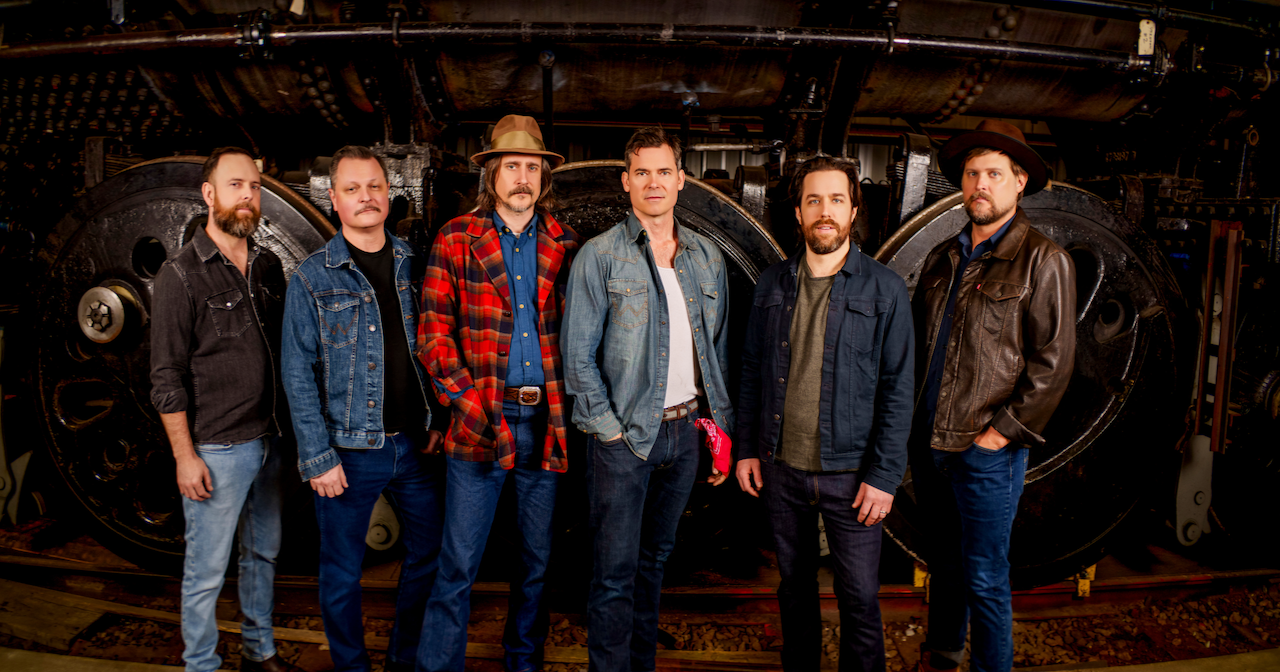
“Howdy Do America” – Old Crow Medicine Show, Jesse Welles
Jesse Welles came whirling into the studio the other day and helped put a spit shine on this love song about the 50 states. I wondered if he was gonna get excited when he sang “Arkansas” and brother, he did not disappoint. Love this cat. He’s a brother, and I expect we’ll all be singing his tunes for years to come.
“Golden Rocket” – Jim & Jesse
I had the privilege of knowing Jesse McReynolds, even traveling and performing with him, and buddy there’s no wonder why Jerry Garcia thought he was the best of the bluegrassers.
“Field of Opportunity” – Neil Young
I was raised on Neil Young’s unique brand of tall prairie country rock. This track features the great Cajun fiddler Rufus Thibodeaux.
“Heaven Help Us All” – Joan Baez
Joan’s a real hero of mine. She’s like that tree planted by the water we all sing about, unmovable. Of all the singers on this playlist, I can say without a doubt if more people could be like Joan Baez, then this world would be a better place.
“I Wanna Go Country” – Otis Williams & the Midnight Cowboys
I love this Motown singer turned country crooner, and the world would have too, if Nashville hadn’t been so narrow-minded.
“Beautiful Land” – Old Crow Medicine Show, Maggie Rose, Lee Oskar
I wrote this one with a Baháʼí faith elder named Eric Dozier just down the street from the Tennessee State Capitol building. Sometimes politics feel like a fortress. But music has a way of wandering through the keyhole of even the most impenetrable door.
“There’s a Star Spangled Banner Waving Somewhere” – Elton Britt
I played this one for my kids on Memorial Day. They sat through it start to finish, and you should, too. It’s easy to get complacent about the sacrifice our grandparents and great-grandparents made in the 1940’s for each of us. Don’t do it.
“Oasis” – Molly Tuttle
Molly’s my favorite American singer. Here’s one of our travelogue-style songs. I had it stuck in my head all last week at the Tico Time Bluegrass Festival in Aztec, New Mexico.
“The Green Rolling Hills of West Virginia” – Hazel Dickens & Alice Gerrard
These girls rip. Back at MerleFest in the year 2000, I filled out Old Crow’s first ever W-2 form and gave it, with a shaky hand, to the great Alice Gerrard.
“How’s About You” – Dave Rawlings Machine
The Great Depression gave the world some of its most powerful songs. And even generations later, the events of the 1930s remained powerful enough to inspire music like this.
“Rock of Chickamauga” – Jimmie Driftwood
Songs about the Civil War are some of my favorites in the national cannon. Jimmie Driftwood is one of my favorite songsmiths. He’s an absolute master of the historical ballad.
“Across The Great Divide” – Kate Wolf
I am awestruck by the landscape of the West, and few songwriters can take you there better than the amazing Kate Wolf.
“What Did You Learn in School Today?” – Tom Paxton
I’ve been singing this one since I was a youngin. When I was 12, I discovered my uncle’s weathered copy of Vanguard’s album Newport Broadside: Topical Songs at the Newport Folk Festival 1963, and that was my introduction to Tom.
“The Tramp on the Street” – Molly O’Day
Born in Pike County, Kentucky, she’s one of my favorite bluegrass singers. She first heard this song from Hank Williams on a Birmingham radio station, and it became her signature song. American music has a way of championing the underdog better than most.
“Shenandoah” – Bob Dylan
I think I was 15 when I first heard Bob singing this gem, hidden in the ruffles of one of his more questionable ’80s albums. I thought, “Damn, Bob knows where I’m from.”
“Corrido de John F. Kennedy” – Los Reyes del Corrido
My band has been dabbling in conjunto for two decades now. We got to learn this one for next time we play the big D (Dallas).
“Which Side Are You On” – The Weavers
No collection of American songs is complete without a protest piece from the labor movement, the first dark corner where the full power of American music was unleashed.
“The City of New Orleans” – Arlo Guthrie
When we play Chicago, I always talk about Steve Goodman, who wrote this song. I sure would have liked to have known the guy. Thankfully his music will last forever.
“Cowboy National Anthem” – O.B. McClinton
O.B. left this world before he was fully known by the country music fanbase that would soon send black country singers consistently to the top of the charts. He was a man before his time, but the music he made reminds us that, just like Ray Charles said, “Country music is black music.”
“Deportee (Plane Wreck at Los Gatos)” – Old Crow Medicine Show
We love Woody Guthrie, and this is one of the numerous songs of his we’ve recorded through the years. In a nation of immigrants (I’m a French Huguenot), it’s hard to imagine how we could exist without a steady flow of new members to our American family.
“Big Backyard” – Molly Tuttle
When Molly and I wrote this, it was on account of having a massive vacant lot behind the house we were composing in. Now that same lot is full of little yellow flags and “coming soon” signs. Yet still we sing, louder this time.
“For What It’s Worth” – Buffalo Springfield
A few years back, I had the distinct pleasure of sharing an elevator with Stephen Stills, author of this earthquaking song which Buffalo Springfield recorded in 1966 – and we covered this year on our new album, Union Made. I wanted to tell him thanks, gush, and get my picture made. Instead, I stood quietly until he rasped, “I heard your soundcheck. Great band you got there. Keep ‘em together if ya can.” Thanks, I will Stephen.
“Louder Than Guns” – Old Crow Medicine Show
This summer, PBS stations across the country are broadcasting the film we spent three years making in a half-dozen tour stops along our travels. It’s a movie about bringing together the disparate ends of the 2nd Amendment debate during an era in which guns kill innocent Americans at shocking rates. It’s a tall order, coming together to flatten the curve, seeing past our silos and personal politics, but in town after town I watched people listening across the divide. As easy as it is to be hopeless, the film has made me hopeful we’ll get beyond this impasse and prioritize the safety of our communities. This song is the theme of this film.
“American Tune” – Allen Toussaint
I’m glad you made it through to the end. Old Crow opened up for the great Allen Toussaint in the Berkshires back around 2011. The record featuring this song had just come out and when he launched into it, I was nearly knocked off my feet. So powerful. So simple. Says it all.
Next year, singer and songwriter MC Taylor will have been leading Hiss Golden Messenger for two decades. For most of that time, critics and listeners have relied on a few familiar narratives about Taylor: that he is a singular figure, for example; or that his move from California to Durham, North Carolina, marked a formal shift from punk to Americana; or even that he thinks slightly more than he feels. Talking to Taylor, from his home in Durham (well, there was a Zoom call involved), I found these cliches about his practices were limiting, factually accurate but emotionally untrue.
Instead of laser-focusing on one narrative, on telling the same stories over and over again, listening to Taylor speak, I encountered a new understanding of his practice, one which placed Taylor in the background and moved his bandmates and genre-play into the foreground – shifting from the centrality of a singular figure to a greater emphasis on generosity and expansiveness.
That the new album is called I’m People is the first clue that Taylor wants to expand the perception of his music; it’s a title that considers mutuality as central to the enterprise of musicmaking. So, how does one expand this thinking – one could consider him geographically or complicate these tales of origin, or think about who is playing on this record, or even refuse the standard narratives of genre.
Instead of focusing on the fact that Taylor began playing in hardcore bands in California, think about the other influences: that he played in a band named after Joni Mitchell’s Court and Spark, an album marked by an urbane distrust of other people’s desires. Or that, around the time he was carefully listening to Mitchell, he was also following that most American portable utopia, the Grateful Dead. Or think about his move to Durham, not strictly to play in a band, but to study folk music academically.
Or, consider how this album was recorded – at least partially – in upstate New York. A more cynical writer would note that Taylor borrows from Dylan’s Nashville Skyline, and that album itself was the foundation of a more isolated, lonely understanding of tradition after abandoning folk music, seeking a slightly more commercial understanding. Recording this in the Hudson Valley could be considered a pilgrimage or homecoming.
I don’t think that it is a homecoming just for Taylor; the record sounds lush, expansive formally, too. Perhaps because the people who sing or play on this record play in a collective of other bands, including Rhett Miller, the Mountain Goats, Bonny Light Horseman, and the Hold Steady.
The expansive nature of the band is not only connected to the history of music they listen to, or the other bands that they play in, but also more unexpected influences like Sade. The idea that Taylor is the band is false, and it is not even that Hiss is the band. Taylor expands the possibility of Hiss, but Hiss itself pushes the possibilities – because of where they come from, their other projects, and even the possibility of geography. Not because Durham is magically a place where music coalesces, but because for a long time it was a college town where rent was relatively cheap and lots of people liked playing music together.
When addressing genres, the promotional material calls the album Americana – but Americana is a useless category, one which might be country or folk or something else entirely. I’m People has a kind of intense richness that is neither of these genres. Listening to the LP, something happens where the expansion or fracturing of those playing on this record becomes its own kind of post-genre.
There are a lot of reasons not to love America right now, but emphasizing the American instead of Americana allows us to consider this album as a consequence of the totality of American music – Taylor addresses the improv nature of jazz as part of this, or traditional folk music, or even 1970s easy-listening. He speaks fondly of the detective novels of Elmore Leonard, and on at least one of his early albums the photography of William Gedney became a powerful totem.
I think of I’m People as a kind of ebbing and flowing for and against tradition, part of that decades-long wrestling with aesthetics and history. Consider the last song, “Depends on the River,” is another of his great songs about waterways. In a 2016 profile of Hiss, New Yorker critic Amanda Petrusich wrote about Hiss’s long tradition of river songs and how it fits into a century of metaphors from blues singer Geeshie Wiley to Joni Mitchell, working this tradition. Petrusich writes: “Taylor frequently evokes river imagery in his work; the river, of course, can be understood as its own kind of road, a direct line to somewhere else, far away.”
I don’t know if that’s wrong, but I also think about rivers as they turn into oxbow lakes, rivers which flow into swamps – literally bogged down – rivers that flow into oceans, and rivers that dry up depending on the season. Hiss’s meandering, deepening quality depends on that river, both the direct line that Petrusich talks about and the larger metaphor, one where Taylor literally talks about whether he dares to cross it. On I’m People, he not only crosses it and crosses it again, but brings along a whole community of other performers. And, an audience who is hungry for the difficulty and ambivalence of so much time playing – and thinking – with him, to the other side.
I know you have a degree in folklore studies, I also noticed that in the last few years there has been a cluster of second- or third-generation performers who have some academic training in folk traditions (see also: Jake Blount, Jake Xerxes Fussell, Willi Carlisle, etc.). Can you talk a little bit about the kind of intersection of formal and informal folk studies and also about your relationship to people who are making this kind of work? I’m thinking about the line on the song “Mercy Avenue” where you talk about the “boys on the corner knowing more than those with PhDs.”
MC Taylor: Well, it’s been a really long time since I was in the academics here. And that universe was one that I feel like I passed through briefly. I wasn’t destined to be in that realm forever. So, I’m not sure that I can totally speak to [that]. Like the place of academic/creative work.
I will say that my time in that space was a really good time for me, when I was restarting my brain and re-centering myself. School was a good way for me to step away from whatever I had been doing previously. I did a lot of field work at that time. I interviewed a lot of people, and I think that it made me a much better listener.
I think that, more than anything else, [that] is what I came away with, this feeling that people really, really like to be heard. So I think I just really tried to develop my listening skills.
Can you talk a little bit about working with a band – especially this band – and about how the bandmates are part of their own creative worlds? Is there a kind of politics there, or a kind of community making?
The basic tracking of the album was done with JT Bates playing drums and percussion, Cameron Ralston playing bass – both electric and upright – and Josh Kaufman, who was producing the record with me, playing guitars, mandolin, piano. My friend Chris Boerner was engineering the record. He plays guitar.
The road version of Hiss Golden Messenger, you know, [are] involved in a whole variety of things. JT, Cameron, and Josh play in Bonny Light Horseman. All three of them have also at various times been members of Hiss and have toured with Hiss. And in fact, that’s where those guys met – playing in Hiss. All of us have known each other for many, many years, so I consider those guys really good friends.
But we’ve never made a Hiss Golden Messenger record before. … They’ve worked on [other] records [together], but we never came together to create a Hiss Golden Messenger record together. It was this funny and unique situation in which we were already old friends, doing something that felt new and fresh. It didn’t feel like a complicated record to make for me. I think Josh Kaufman maybe would say the same thing, but Josh was performing sort of a different task than I was in the situation. It was a complicated record to write, but that was something of the solitary endeavor that took place over probably a year or a year and a half.
I really love those guys and I am delighted that they could be there to play on the record. I think of them as absolute top-tier musicians, every one of them. Cameron is currently playing with the Mountain Goats, he plays all kinds of jazz, he plays in the Spacebomb House Band. JT Bates plays drums with Big Red Machine, which is Aaron Dessner and Justin Vernon. And [he’s] just a legendary drummer in Minneapolis. Josh Galvin plays with everybody.
There are some songs on this album about hope and I wondered about making work about hope in this specific social and political moment? “Shaky Eyes” or “Heavy Worlds,” for example.
[I am interested] in how we [have] the energy to get through the messiness of life. And not only this particular time that we’re living through – although that is the most depressing. But just like life in general. I don’t think that we can do – or I don’t think I can do – life alone. So, in a way this record is me writing to myself. Maybe now [about] how important other people are.
I think I realized that the most important part is moving through, and needs to involve being around [other people]. Over the past few years, just speaking personally, the idea of community has felt like a more and more important part of it.
Thinking about that – and how dense/lush the production here is – though you are marketed as “Americana,” I wonder about how you view genre. And also how your band does – I’m thinking about background vocalist Annie Nero’s bio for radio: “She loves to find the common thread between musical ideas and genres…but also break free of genres because life’s too short to limit ourselves based on perceived taste!”
I listen to lots of different stuff. I think all of that stuff finds its way into what I’m doing. It’s a little tricky. I used to have a stronger stay-in-your-lane [attitude] about the term “Americana,” but I just don’t think that I care very much anymore. It’s not a word that I generally use. But I understand why it exists. Many of my favorite songwriters exist in that world.
What would you call your genre then?
I mean, I wouldn’t. I guess that’s what I’m saying.
Like, if I was at the dog park and I was talking to a stranger, and they said, “Oh, you’re a musician? What kind of music do you play?” I’d probably say, “Kind of rock and roll.” I generally am not describing my music in terms of genre, I guess. If I told someone that I played rock and roll, and they asked me to extrapolate on that, I would say something like, “Rock and roll that’s really swinging.” I try and concentrate on the rhythmic elements. I love singer-songwriter type music from the ’60s and ’70s. I like really oddball stuff. I love Bruce Ruffin reggae; I love free jazz. There’s a lot of music that I have inside of me. There’s a lot of music that Josh, Cameron and Chris – [that] we all have inside of us. I think it’s just a question of how we get it out and put it into use in a way that feels genuine and not forced. …
Thinking about the tension on this album between distinct geographical spaces and a more universal emotions – for example on “Seneca (Time is a Mother, Baby)” or “Mercy Avenue.” And also that becomes a larger theme of your work, thinking about how Amanda Petrusich writes about your decades-long commitment to writing about rivers. There’s even the river song on this album. What do you think your relationship is to the land, to rivers – especially. when you sing “Depends on the River.” Or is there specifically one river?
On previous Hiss records there are specific geographical places like city names mentioned. And not only are those places part of the fabric of the story that I’m trying to tell, but they sort of served as poles, maybe? What I’m trying to accomplish is sort of like a poetic travelog of my life growing up in America. I’ve been traveling as a musician since I was 18. I have been, it seems like, everywhere in this country – more than once or some places 10 times. I’ve been all over every highway. So, maybe the dimension of place names throughout is sort of like carving my name on a tree or something. It’s just kind of like, “I was here.” “This is where we are in this song right now.” “This is where we are in my life.” And then, “Now we’re over here.”
In terms of rivers, a river is always flowing, always changing. A river can kill you if you’re not careful. It can keep you alive and get you to the next place if you treat it with respect and understand its rules. The coda on that song, [“Depends on the River”], the last thing that we hear on the record is “the line depends on the river exactly.” I guess the meaning depends on what river of life we’re talking about. It depends how lucky we get.
I’ve always been impressed by the wide range of your reading, listening, and looking. For example, your careful thoughts on the photos of Gedney. What are you reading, what are you listening to, what are you looking at these days?
Well, you know what I’m reading right now? I’m like about 200 pages into this Gary Stewart biography. Gary Stewart, the country singer. It’s called I Am From the Honky-Tonks. Gary Stewart actually was someone that Chris Smith from [record label] Paradise of Bachelors turned me onto like 15 to 16 years ago. Those of us that are obsessive about him all knew that this book was coming. It’s finally out and yeah, if you’re Gary Stewart fan, it’s kind of like you can’t believe it exists. I’ve been waiting for it.
In terms of what I’m listening to, I’m always listening to all kinds of stuff. I just bought this record [that’s] The Sun Ra Arkestra doing Disney themes. It’s so beautiful, really makes you think about those compositions in a different way, [about] actually how deep they are. I’ve been revisiting some Ted Lucas. I’ve really been liking this McCoy Tyner record called Asante. It’s a 1974 record; might be my current favorite. It’s very deep in the zone with like Alice Coltrane and Pharoah Sanders – that era. Oh, it’s beautiful. [I’ve been listening to] some Paul Brady from ‘78. He’s amazing! I’ve been listening to Welcome Here Kind Stranger. [Also] a record that I was checking out for a while [was] by the Universal Liberation Orchestra. It’s kind of this weird, very minimal– I guess it would be jazz.
Befitting Lucinda Williams’ stature as one of the greatest songwriters of modern times, she might be the most covered artist this side of Bob Dylan (who, as far as I can tell, might be the only major artist never to have covered one of her songs).
From “Are You Alright?” to “You Can’t Rule Me” and all points in between, Williams’ catalog is broad, deep, and multivalent, with lavish emotional content to dig into. Truly, the woman’s body of work contains multitudes.
Where she’s coming from is no mystery, because Williams has always been generous about showing off her own influences and idols. She has covered too many other artists’ songs to count, by the likes of Dylan, Nick Drake, Howlin’ Wolf, and more. She has also done multiple tribute albums in her Lu’s Jukebox series, covering the Beatles, the Rolling Stones, Tom Petty, and even Christmas songs, among others.
There’s almost too much to choose from, but here is a small sampling of what other artists have done with Williams’ songs over the years – focused more on stylistic departures than faithful readings.
“Passionate Kisses” – Saintseneca (2014)
It’s hardly surprising that a great deal of this list of covers will come from 1988’s breakthrough album Lucinda Williams, starting with this forthright statement of purpose. The obvious “Passionate Kisses” cover choice would be Mary Chapin Carpenter’s 1993 hit version, which put both women on the map. But let’s go more left-field with the sprawling, atmospheric grandeur of the cover by Ohio indie-folk band Saintseneca. It’s never sounded more wide-open cinematic, to the point that I kind of can’t believe no one has put it onscreen yet. Cue opening credits.
“Bus To Baton Rouge” – Amos Lee (2023)
This Philadelphia-born soul man thinks enough of the Williams oeuvre to have covered 12 of her songs for an album, Honeysuckle Switches: The Songs of Lucinda Williams. Williams’ original appeared as the penultimate track of her 2001 release, Essence. The lyrics yield up the title phrase of Lee’s tribute LP, and it makes a stunning album-closer here.
“Side of the Road” – Ben Folds (2005)
In Williams’ hands, “Side of the Road” conveys stoic resolve on her 1988 self-titled joint. North Carolina native virtuoso Ben Folds transposes it to winsome piano pop for his 2005 solo album Songs For Goldfish, and the transition works beautifully.
“Change the Locks” – Tom Petty (1996)
Originally titled “Changed the Locks” on her eponymous album, this is in the conversation for Williams’ greatest songs. Her version coursed with undercurrents of the sort of domestic violence that would inspire a woman to, well, change her locks. So it’s interesting that so many men have taken a crack at this song in the decades since, including Silos, Vampire Weekend, Rostam, and Elvis Costello. But maybe best of all is Tom Petty, who recorded it for the soundtrack to 1996’s She’s The One, getting the defiance just right.
“Joy” – Bettye LaVette (2005)
As good as all of Williams’ records have been, it wasn’t until 1998’s GRAMMY-winning Car Wheels on a Gravel Road that she finally got herself a gold record. “Joy” was a high point, equal parts angry and exuberant. Still, powerhouse soul woman Bettye LaVette took it to a whole new level with a swamp-blues rendition on her 2005 comeback LP, I’ve Got My Own Hell to Raise.
“Abandoned” – The Lemonheads (2019)
While The Lemonheads’ troubled leader Evan Dando is a decidedly problematic figure, there’s no denying his taste in covers. The Lemonheads have released two volumes of cover collections with good, bad, and ugly songs by everyone from Townes Van Zandt and Yo La Tengo to Florida Georgia Line and GG Allin. From 2019, Varshons 2 also features a fuzz-toned version of Williams’ very forlorn “Abandoned” (yet another Lucinda Williams song).
“Concrete And Barbed Wire” – Bella White (2022)
There has always been a stateliness to the Car Wheels on a Gravel Road track “Concrete And Barbed Wire,” which was in Canadian songbird Bella White’s onstage setlist years before she released a studio version on 2024’s Five For Silver. The song’s waltz tempo makes a perfect fit for bluegrass – recorded live at the Green Mountain Bluegrass and Roots Fest in Vermont.
“Metal Firecracker” – Mary Lou Lord (2015)
Everybody’s favorite busker, Mary Lou Lord is best-known for solo deconstructions of songs from the indie-rock canon. But on her 2015 LP Backstreet Angels, Lord goes full-band indie-rock for “Metal Firecracker” (which Williams originally cut on Car Wheelson a Gravel Road). Lord sounds dreamy to Williams’ earthiness – but both versions come down to, “All I ask, don’t tell anybody the secrets I told you.”
“People Talkin’” – Hurray For the Riff Raff (2012)
Maybe the acid test of a song’s worthiness is how well it holds up if stripped all the way down to voice and quiet strumming. As if there could be any doubt, Williams’ “People Talkin’” (from 2003’s World Without Tears) is superb in this guitar-and-fiddle version that Hurray For the Riff Raff recorded in a London kitchen for an edition of “notes from mt. pleasant.”
“Fruits of My Labor” – Waxahatchee (2021)
“Fruits of My Labor” seems like a song that’s still going to be played around campfires a century from now. Its structure and vibe bear passing resemblance to that classic spiritual, “A Change Is Gonna Come,” and it’s been covered numerous times since first appearing on Williams’ 2003 LP World Without Tears – fine, fine versions by Margaret Glaspy, Mia Dyson, and Rostam, among others. But Waxahatchee (Alabama-born Katie Crutchfield) gets closest to the song’s soul with her cover from 2021’s Saint Cloud +3 album.
“The Last Time” – Lucinda Williams (2021)
We’ll break the format here at the end and give Williams herself the last word, showing everyone how one pays proper cover homage. From her 2021 tribute LP, You Are Cordially Invited…A Tribute to the Rolling Stones, “The Last Time” is a song with a long and winding road behind it. Originated by the Blind Boys of Alabama, it was famously covered by the Staple Singers in 1961. Four years later, the Stones fit it with a snarling lead-guitar hook that took it out of church – and here Williams moves it right on over to the honky-tonk.
Continue exploring our Artist of the Month coverage of Lucinda Williams here.
With a folk singer’s heart and a rock star’s swagger, Lucinda Williams gets it right on World’s Gone Wrong. Produced by Ray Kennedy and Tom Overby and released January 23, 2026, the topical album shows no love for the current president; instead, Williams turns to the musicians in her band, R&B legend Mavis Staples, and even a Bob Marley classic to put her own beliefs front and center.
As protesters take to the streets across America, Williams is reaching people where they live by maintaining an impressive tour schedule, just as she’s done for the last four or five decades.
BGS caught up with Williams for an Artist of the Month interview by phone, in motion and outspoken.
First off, I just want to say I love the electric guitar on this record.
Lucinda Williams: Yeah, I’ve got two of the best in my band, Doug Pettibone and Marc Ford. Marc was in the Black Crowes before and Doug’s been with me for a while. The two of them just play off of each other. They’re really great when you see the band live.
Thanks for saying that. I’ll pass that on! I’ve always managed to find really good guitar players to work with me. It’s important to me, having a good guitar sound in the band, both live and on the record.
This record’s got that live energy, which is hard to capture on an album. What were the sessions like putting this album together?
Wow! You’ve said all the right stuff that I want to hear! I love you! [Laughs] But like you said, it’s hard to get the recording to reflect that. That’s why I’m so excited that came across, but I always record live for the most part. … We’re all situated in that part of the studio where we’re recording, but the vocals are isolated, just for the sake of convenience, so we don’t have to worry about the [tracking band] bleeding in, in case there’s a mistake. But it has that live feel, because we’re not putting down certain things and then coming in later. The drummer is not coming in separately and putting the drum track down, that kind of thing. We’re putting down the basic track all at the same time, together.
I would be playing guitar normally, but since I had my stroke about five years ago, I’m struggling with it. That hasn’t come back all the way yet, unfortunately. Which makes it even more challenging, because normally I would set up the vibe and the feel on acoustic rhythm guitar, and then the guys would follow me and fall in behind me. So, now one of the other guitar players has to fill in for me. And even though they’re both great guitar players, nobody’s going to do a rhythm thing exactly like I do. That’s a little bit of a challenge right now, but we managed to pull it off somehow.
You’ve had so many musicians that have worked with you over the years. When it’s time to hire somebody in the studio or in your band, what qualities are you looking for?
Probably just being aware of different styles of music. I can’t read or write music, so for me to have to discuss something to another musician, I usually use a reference of another artist. And I might say, “I want to play this song kind of like Clifton Chenier,” like a zydeco thing. And if they don’t know who that is, it’s hard for me to describe it musically. So, the easiest and best way is just [bringing up] the sound of another style of music and using an artist to describe that.
What was on your mind as you were writing the song, “The World’s Gone Wrong”?
Well, what do you think? What’s going on right now, every single damn day. There’s some other crazy piece of news surrounding the so-called King of the United States. Or he wants to be king. He wants to name the Kennedy Center after himself. That stuff builds up in your mind, and after a while it’s therapeutic to sit down and write a song about it. Just get it out of your system. … I just remember, every single day there’d be something on the news, in the newspaper, on TV or somewhere online. You couldn’t get away from it. It was pervasive. It was just on my mind a lot, of course, and still is.
This might be venturing out a little bit, but it seemed like a love song too, because these two people in the song are leaning on each other.
Yeah, I’m glad you brought that up. I’m glad you saw that in there. I think it’s an interesting way of dealing with the political unrest, by painting a picture of a regular, everyday couple and what they’re going through. So you can express it that way.
I’ll shift it over to “Low Life,” because I feel like I’m sitting at that bar with you when I listen to that song. And I also like those bars where you can be anonymous and no one really knows you. When you’re out on tour, do you look for places like that?
Yeah, the guys and me will look for a cool little place to maybe go hang out after the show. It’s hard to find one, though, where they won’t know who we are, because then they’ll want to come up and talk and stuff. A lot of times the guys will go somewhere and I’ll be like, “I want to go! Take me! Take me!” And they’ll go, “Lu, you’re not going to want to go, because it’s going to be swamped with fans and everybody’s going to want to talk to you,” and all that. Then I get all disappointed because I can’t go. [Laughs] So I’d just stay on the bus.
We end up hanging out on the bus more often than not. That becomes our little bar. I like to fraternize with the band guys after we do a show. I like to bond with them a little bit on the tour bus.
I noticed you’re going on the road with the band Heart in March. When that offer came through, what made you think, “Yeah, I’ll do that.”
Well, turns out they were fans of my music, which I wasn’t aware of, and I guess their people reached out to my people… or my person [laughs] and wanted to take me out with them. Ann and Nancy Wilson are just two of the nicest people ever, real down to earth. We went out and already did some shows with them not too long ago. It seemed like with their fans and my fans, there was kind of an overlap there. It seemed to work musically as a bill.
I don’t think enough has been said about Nancy’s playing. I caught a documentary a while back on the music scene in Seattle back in the day, and with Heart a lot of people don’t realize they were there then, right when Nirvana was around. They were a little bit different, but I hadn’t realized how proficient Nancy was on the electric guitar and I was just sitting there watching it like, “Oh my God!” And Ann’s voice – they’ve got what it takes, that’s for sure.
You’re back out on the road, you’ve got this new album, and I’m sure there are a lot of other things in the works. What are you enjoying most about this stage of your career?
Being able to go out and do shows with artists like Heart. I got to go out and do shows with a tour featuring Bob Dylan and Van Morrison. I got to go out and do shows with the Allman Brothers. I’ve met so many fantastic, legendary artists over the years who like my music. And some might be a surprise. I was surprised, actually.
Like, Joey Ramone was a fan. David Byrne is a fan. Robert Plant is a big fan and I’ve done quite a few shows with him. So that’s been a big boost. Those probably have been the highlights of my career, being able to connect with those kinds of artists. The people I listened to when I was starting out and looked up to.
It was interesting to hear you include “So Much Trouble in the World” on this record. What did you like most about Bob Marley’s original version of that song?
First of all, I feel like that song was ahead of his time and it still rings true today. It’s still so fresh and could have been written yesterday. It’s still relevant. People still love the song. It’s got a great melody. Nobody can do it like Bob Marley did, though. I was a little self-conscious about that when we cut that song, because I was thinking, “What are people going to think? Me covering a Bob Marley song?” Like, “What does she think she’s doing?” But it’s a great song to play live. And like I said, it’s so much about what’s going on right now.
Having Mavis Staples on that recording is such a treat. What did she bring to the track?
She just added a whole extra level of soul, and thought, and everything. And we didn’t tell her what to sing or how to do anything. We didn’t give her parts to do or anything like that. We just showed her where the vocal booth was. You know, “Here’s the microphone,” turn it on, and she just let it rip. We’re so grateful to have her on there. And every single person I’ve done an interview with has mentioned her. Like, “What’s this about Mavis Staples on the record? How did you get her in the studio?” and all this. Everybody’s so excited to hear her on there.
I also wanted to ask you about “Too Far to Turn Around.” It feels like something we could sing at a protest march, but it’s kind of like a meditation, too.
Yeah. Thank you so much. I love hearing you say that, because that’s what I had in mind when I was writing it. Exactly that. I was thinking about songs like “We Shall Overcome” and everybody singing it together and holding hands. Because I experienced that myself back in the ‘60s. When I was a teenager, I used to go to all these marches and demonstrations. And music was the thing that kind of brought people together back then.
Those kinds of songs like “We Shall Overcome” were being sung and Bob Dylan was writing all those amazing protest songs like “Masters of War,” which I used to sing. I’d get my guitar, go to these things, and sometimes they’d ask me to sing. I’d do those kinds of songs, like Joan Baez and all. I mean, there was just a gamut of great folk singers. That’s what they used to call us! I kind of wish that would come back. Just call it folk music. The people’s music.
Continue exploring our Artist of the Month coverage of Lucinda Williams here.
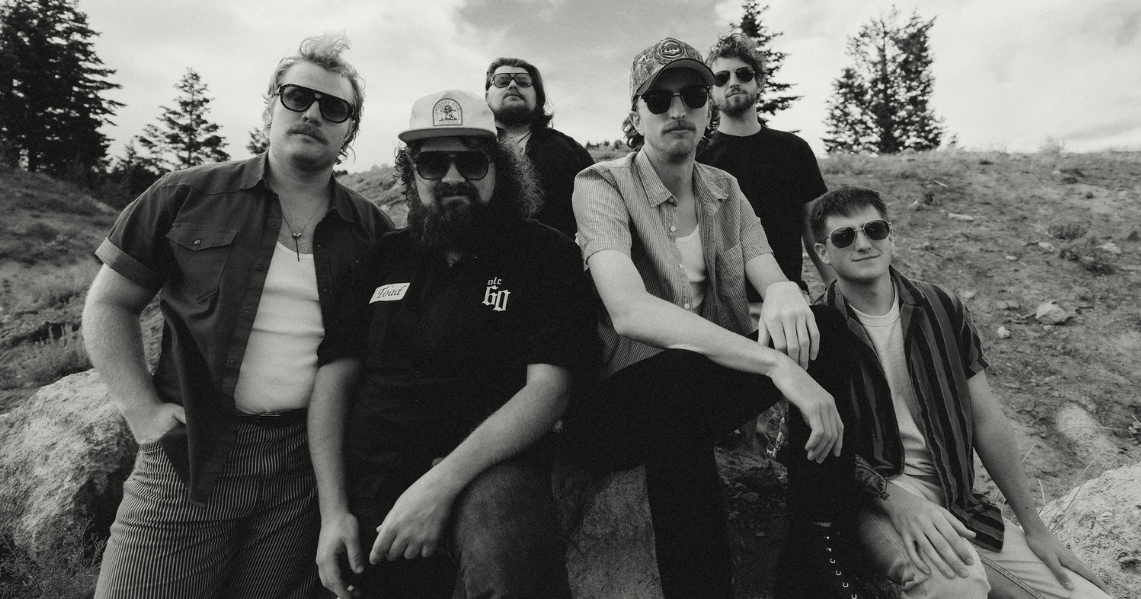
Pairing the slouchy charm of indie grunge with roots-rocking, small-town punk energy, Ole 60 spent 2025 becoming one of the most intriguing new acts in Americana.
With their debut album Smokestack Town – plus some fun-loving video content, huge opening-act performances with Zach Bryan, and first-time trips to Lollapalooza, the Ryman, the Grand Ole Opry, and more – the six-piece band came a long way from their blue-collar hometown of Hawesville, Kentucky. They even finished off the year with their biggest show yet, selling out their first-ever arena gig with an Owensboro homecoming. But there’s still more to do.
Inspired by a world of shift work and shitty luck, and powered by a rusty Toyota rolling on four bald tires, frontman and primary songwriter Jacob Ty Young fills his songs with vividly conflicted characters. Soaring garage-pop singalongs stand alongside sucker-punch ballads of screwing up and flaming out, each one struggling with the urge to get the hell out while still loving where you’re from. It’s a feeling anyone nursing big dreams in a small town will recognize, and Ole 60 shares it with a fresh voice.
In late January, Young told Good Country about the band’s quick rise and biggest year yet, while looking ahead to what comes next. There’s already a level-up tour underway and new music in the works. But Young pledges not to forget where they got their start – a pizza shop game room in a Smokestack Town.
In 2025, Ole 60 was out on tour, did big shows with Zach Bryan, made an Opry debut and released your first album. What’s it been like processing all that in the last month or so?
Jacob Ty Young: You try to take it in as it’s happening, but it’s a lot easier once you have some time to think. … I think it was definitely the best year we’ve had and now that we’ve had some time off, I’m eager to get back out and start touring again.
And I’ve been writing a lot. After putting out that first record, it was something that we’d never really done before. It was our first time making an album and we learned a lot of things and I think that everybody’s in the headspace that this next one’s going to be even better, so we’re working hard.
What was the common bond that brought you all together musically? You blend influences all the way from Smashing Pumpkins and Metallica to John Prine, right?
Five of the six of us are all from the same little small town in Kentucky, or bordering towns within about 30 minutes of each other. I kind of knew everybody before we started the band. We just got together and started jamming. I’m a huge Smashing Pumpkins fan. Most of the guys are big metalheads. They love Metallica, Black Sabbath, Primus, all that stuff. I think everybody bonded over just our love for rock music. There is obviously some country influence, but I never really considered it that. We were just a garage band, and it’s hard to not bond when you’re sitting there in a garage playing cover songs. The Pumpkins, Stone Temple Pilots, Black Crowes. It was that kind of grunge stuff that really glued us all together.
You can hear that still, and then there’s a rootsy folk side to it, too. When did you start writing songs?
I’ve been writing songs my whole life, but nothing ever really serious. I would write funny songs when I was in high school and I wrote a song about our basketball team one time, just as a parody thing. And I always really enjoyed playing guitar and being creative. I was into visual art and graphic design for a while. Then I kind of went through some stuff in my personal life and decided I wanted to sit down and write some songs about it. That ended up being the first EP [three twenty four]. That would’ve been 2023, I think. I always loved guys like John Prine and Bob Dylan and even Billy Corgan of the Pumpkins, just the uniqueness of the songwriting. I think for lyrics, I look to those guys, and then for the music we kind of look all over the place.
I hear there’s a pizza shop in there somewhere, right? We keep seeing pizza references in the socials and songs. Is the shop like an easter egg for you?
Yeah, I think so. I worked at a pizza restaurant in Hawesville, Kentucky, for about four years when I would come home from school. And then there’s another guy in the band, Ryan, his brother owned the pizza restaurant, so he worked there as well for years. When we first started practicing, rehearsing, and getting ready to go around playing bar gigs, we would rehearse in the back of Galaxy Pizza after close. We’d set up all our equipment back in the arcade section and jam until one in the morning. And then we got our bass player, Colby, and he had a garage, so we moved to his garage. But yeah, I grew up right next to Galaxy and it’s kind of a staple in our hometown, so we just try to let that side of us show through our content and all the visual side of stuff.
Tell me about putting the album together. Smokestack Town was one of my favorites of the year, so congratulations on how it came out. What did you want? I mean, creating a debut album is a pretty big moment. It might seem like an overwhelming task, so what were you going for?
We didn’t have a hardcore plan. I was just writing songs and I got six of ’em that I was really proud of. We went recorded and I was like, “Okay, I think this could be an album.” So I was writing as we were recording the album, and then the last song that I wrote was “Smokestack Town.” I was like, “That seems like a good name.”
I just wanted to push ourselves and try to do something different sonically than we had before. We got together with Jacquire King who produced it, and he’s one of the best of the best. He took my vision and ran with it and we’re very happy. We just wanted to put ourselves out there and let people in, see what kind of music we listen to.
That’s interesting, because it’s been presented as a concept album. But it sounds like you were building the concept as you went.
If it’s a concept album, it’s more so on the visual content side of things, because we’ve been putting out these little short videos of character acting. Taking the lead from the Foo Fighters.
Totally!
But there were just a lot of overarching themes in the record about home. Missing home, being homesick, being young. Plus that idea of small town, kind of dystopian … but not really.
Right, you wrote all these characters who are definitely small town people, with small town stories. But the thing I appreciate was they’re not stereotypical tailgate anthems or “I’m so country.” Nothing like that. Where were you coming from?
After I left Galaxy, I worked in an aluminum mill for a year and a half, and my dad works at the paper mill. Hawesville is a very industry-driven town. I think it’s different from your typical country town because it’s so labor-driven and everybody’s proud to be union and blue-collar. It’s less sitting on tailgates and drinking beer and more going to work a 16-hour shift and coming home and sleeping.
I wanted that to come through, because in country music it is a lot of sitting out in the boonies, drinking beer, and sitting on a tailgate. But I wanted to write my experience growing up in my little country town. There’s nothing to do, so we just ran around all the time and went to all these different places and got into trouble there. I wanted to write about that side of stuff, and less about the country stuff.
Being a new band coming into the indie and roots music scene, did it feel like there’s a lot of opportunity and energy out there?
Everything’s been so great. We kind of blew up on social media and I don’t know if any of us were ready for that to happen, but it did. I think that the reception’s been great. We went out and started headlining shows fairly early and we were selling them out. That’s a great feeling, because when you do blow up like that on social media, it’s hard to really put a gauge on what that means – until you go out and play a headline show and you see the crowd and they’re singing, and you go play a festival with all these big names and it’s your first time out there, and the crowd’s into it. And that’s kind of how it was.
True, and you finished last year with a huge statement in Owensboro, right? Hometown show, New Year’s Eve. Your first arena show and you sold it out. What was the feeling like on stage?
It was weird because it was both the most nervous I’ve ever been and the most comfortable I’ve ever been. You look out in the crowd, you see people you know, and you don’t get that a whole lot when you’re touring. It was just super cool. I got to sleep at the house I grew up in. The whole day just felt good. It was nice to be home and have family coming in and out and friends. Just the perfect way to end the year.
Y’all cleaned up nicely in the tuxedos. Did you put some extra polish on the performance, too?
Yeah, I thought it was New Year’s, we might as well get some tuxedos. I thought everybody looked nice. I want to do it more often. I dunno how the other guys feel about it. We’ll see.
You’re getting back on the road for the Smokestack Town Tour this winter. What’s everybody looking forward to? What’s the vibe?
The new year feels like a fresh start to change the show and really put a lot of thought into what we want to do with it. We’ve got some new production stuff, new lighting, and I’m really excited for everybody to see it. I think everybody just wants to go out there and every night needs to be the best show we’ve ever played. We’re playing bigger shows this year and we’re super excited, super grateful.
Earlier you said you’ve been writing, can you give us a hint about what’s been inspiring lately?
Yeah, I’ve been listening to a lot to indie rock, and what I listen to comes through in what I write. So definitely it sounds like Ole 60, but it’s new, and I’m still kind of figuring it out. But I’m really excited that the direction everything’s headed. I don’t have any idea about timelines for new music, but I have been writing a lot and I’m really excited about all of it.
Jacob, thank you for the time. I’ll leave you with the big picture – I always ask people what they hope listeners take away from their work. So what’s that look like to you?
I just hope that our story can be inspiring to others through the fact that we came from a town where after you graduate, you either go to college, you go to the military, or work in a factory, and that’s your options. And there’s always other options out there. You just got to put your head down, work hard and good things will come.
It’s 2026 and the world remains deeply shaped by persistent conflicts and social divisions, making songs of peace and love an essential “universal language” for fostering unity. As global tensions in regions like Ukraine and the Middle East continue to create an us-versus-them mentality, music serves as a critical bridge that transcends cultural and linguistic barriers to remind us of our shared humanity.
These songs do more than provide comfort; they act as a tool for disarming hearts and promoting reconciliation in an increasingly polarized landscape. By lowering anxiety and increasing empathy – the emotional foundation for peaceful coexistence – music provides a rare space where diverse groups can connect without prejudice. Now more than ever, these songs are needed to shift the global narrative from division and “moral degradation” toward a future built on compassion, harmony, and collective resilience. The lyrics of these amazing songs epitomize “peace & love” and speak for themselves. – Jason Sinay
“Imagine” – John Lennon
This song still remains a timeless global anthem that serves as a “hymn for peace.” It transcends cultural and political boundaries by challenging listeners to envision a utopian reality free from the divisions of nationality, religion, and material possessions.
“Blowin’ in the Wind” – Bob Dylan
Dylan uses evocative symbols like the “white dove” to represent the enduring human quest for a world without conflict. Its series of rhetorical questions challenges listeners to confront social injustices and the “cannonballs” of war, suggesting that while the answers for global harmony are as ever-present as the wind, they require collective courage to grasp and implement.
“Get Up, Stand Up” – Bob Marley & the Wailers
Marley emphasizes that true harmony can only be achieved through justice and the active defense of human rights. The song challenges listeners to seek fulfillment and equity “on earth,” rather than waiting for divine intervention, serving as a global rallying cry for unity against all forms of oppression.
“Give Me Love (Give Me Peace On Earth)” – George Harrison
This amazing song’s lyrics act as a personal mantra for divine guidance, asking for the “light” and “life” necessary to heal a world filled with conflict and social burdens.
“Ripple” – Grateful Dead
“Ripple” promotes a sense of shared humanity by acknowledging that while every individual must walk their own path, we are all “in the same boat” and should reach out to help one another.
“Heart Of Gold” – Neil Young
Written while Neil was physically vulnerable and recovering from a back injury, he describes himself as a “miner” traveling across oceans and forests. The song emphasizes that the pursuit of a loving and compassionate soul is a lifelong, global journey that connects us all.
“She’s a Rainbow” – The Rolling Stones
This incredible tune captures the vibrant spirit of the Summer of Love through its whimsical, baroque-pop arrangement. It functions as a “pure love song,” departing from the Stones’ typically gritty style to offer a colorful, psychedelic tribute to femininity and universal beauty.
“Ophelia” – The Band
While this song is often interpreted as a lively, Dixieland-style track, it functions as a song of peace and love in exploring the deep emotional bonds and protective concerns shared between friends or lovers.
“Feels Like Home” – Randy Newman
This song truly captures the profound sense of safety and belonging found in a deep connection. The lyrics contrast a harsh external world with the sanctuary of a relationship.
“The Best Part of the Day” – Elton John & Leon Russell
This incredible tune celebrates the simple sanctuary of a deep, lifelong friendship. It portrays a serene “peace of mind” found in the presence of someone who has shared one’s “crazy ways” and provides comfort through life’s trials.
The duo of Dan Penn and Spooner Oldham have amassed an astonishing set of credentials, not only as exceptional soul, pop, rock, and country songwriters, but also as vocalists, producer (Penn), and session musician/sideman (Oldham). Both Alabama natives, they’ve maintained a successful professional relationship and close personal friendship since meeting in the late ’50s as teens. They’ve always characterized themselves as “country boys who love Black music.”
Penn initially viewed himself primarily as a singer. He was the lead vocalist for two local Alabama bands, the R&B group the Mark V Combo and a later one, Dan Penn and the Pallbearers. But he began to shift his focus in 1960, after his tune “Is A Bluebird Blue?” became an early hit for Conway Twitty. That song also reflected the joint musical influences that have always permeated the tunes co-written by Penn and Oldham. It’s country’s powerful storytelling edge combined with soul’s passionate energy and quest for personal salvation. Once the Twitty tune made it big, things changed in Penn’s mind. “That’s when I first decided that maybe this songwriting thing might work out,” he added. “After I saw some of the checks that were coming in, I decided to just keep going with it.”
Penn had already been working at SPAR Music studio, a place co-founded by Rick Hall and Billy Sherrill above a drugstore in Florence, Alabama. When Hall decided to open his own studio titled FAME (Florence Alabama Music Enterprises), Penn became their first resident songwriter. He and Oldham began writing together at FAME, and both say they had a chemistry from the very beginning.
“Back in those days, co-writing wasn’t quite what it is today,” Penn continued. “But just from hanging out with Spooner and getting to know him, we had real good rapport from the beginning. I got to know and like him, and then things just kind of took off from there.”
“What Dan says is pretty much how it happened,” Oldham added. “We got a rhythm going and it’s never been one of those things where we’ve had any problems or issues.”
Interestingly, Oldham views himself as a musician first, then a songwriter. A prolific organist and keyboardist, he got his start playing in a traditional jazz band while in high school. The extensive list of top musicians he’s played with over the years includes Arlo Guthrie, Jim Croce, Gram Parsons, The Everly Brothers, Jackson Browne, Linda Ronstadt, Gene Clark, Ry Cooder, The Flying Burrito Brothers, Delaney and Bonnie Bramlett, Bob Seger, Maria Muldaur, Rita Coolidge, Bobby Womack, Albert King, Helen Reddy, Harry Nilsson, Stephen Stills, J.J. Cale, and Neil Young. But in his earlier days, he also made his way to the FAME studios and had the first of many collaborations with Penn. Among their notable FAME triumphs were Percy Sledge’s “It Tears Me Up,” James and Bobby Purify’s “I’m Your Puppet,” and Joe Simon’s “Let’s Do It Over.”
But Penn wanted to produce as well as write and he left FAME for Memphis in the late ’60s, moving to Chips Moman’s American Studios. Oldham would later follow him there. Penn and Moman would craft their own set of soul classics, notably “Dark End of the Street” for James Carr, and “Do Right Woman, Do Right Man” for Aretha Franklin. Penn got his first major production opportunity in 1967, with the Box Tops and then 16-year-old lead vocalist Alex Chilton. Penn produced their number one hit “The Letter,” then joined forces with Oldham to co-write the group’s second smash “Cry Like A Baby,” and the Sweet Inspirations’ “Sweet Inspiration.”
Oldham would eventually depart for Los Angeles and a prolific career as a session musician and sideman. He played keyboards on Young’s 1978 album Comes a Time, and continued to work with him on such other albums as Old Ways, Harvest Moon, Silver & Gold, and Prairie Wind. Oldham joined Bob Dylan during his Christian era, contributing to Dylan’s Saved album, the Saved Tour and the Shot of Love Tour. With Dylan, he played 79 shows, appeared on Saturday Night Live, and on the GRAMMY Awards telecast. Oldham also partnered with John Prine for the 1984 album Aimless Love and appeared on the 1994 release, A John Prine Christmas.
When Crosby, Stills, Nash & Young reunited for their Freedom of Speech Tour, Oldham played keyboards. He also worked as a sideman and collaborated with Steve Wariner through the ’80s. They teamed on the song “Lonely Women Make Good Lovers.” During the ’90s, Oldham was featured on Jewel’s album Pieces of You, which produced the hit “Who Will Save Your Soul.” In the 2000s, he appeared on a pair of Frank Black albums, joined the Drive-By Truckers for their 2007 The Dirt Underneath tour, and played with Amos Lee, Aaron Neville, Bettye LaVette and Cat Power in 2008. He contributed to Keith Richards’ 2015 album Crosseyed Heart and Sheryl Crow’s Threads in 2019, as well as the Mountain Goats Dark In Here in 2021.
Penn established his own Memphis studio, then subsequently relocated to Nashville in the ’70s. He would have some country success with songs written for Ronnie Milsap and Johnny Rodriguez, and he’d also produce a pair of Milsap LPs – his debut album Ronnie Milsap, and co-producing A Rose By Any Other Name with Moman. He contributed the song “A Woman Left Lonely” to Janis Joplin’s album Pearl (later covered by Charlie Rich) and he’d cut an acclaimed solo album, Nobody’s Fool.
Penn and Oldham had another reunion in 1991 at New York’s Bottom Line, appearing in the songwriter series “In Their Own Words.” They also contributed to Arthur Alexander’s 1993 album Lonely Just Like Me. Later the duo made an acoustic tour throughout parts of the U.S., Europe, Australia, and Japan. It yielded the live album, Moments From This Theater, that was released in 1999. Penn also made another critically praised solo LP, Do Right Man, in 1994. Both Penn and Oldham are members of the Alabama Music Hall of Fame. Oldham is also in the Rock and Roll Hall of Fame as a sideman, as well as the Musicians Hall of Fame in Nashville and the Birmingham Record Collectors Hall of Fame.
Both men currently remain busy. Penn’s Christmas tune “One Blue Light” was released last November and it was a message of “remembrance and hope” to highlight the holiday season. It’s the first single from Penn’s upcoming album, Smoke Filled Room, which is scheduled for release later this year. “There’s a song on there that I worked on for 20 years and I finally got it right this time,” he said in discussing the upcoming album. “Billy Lawson mixed it and we finally got it sounding the way that we wanted.”
Smoke Filled Room was recorded at Penn’s home studio and will be available on various streaming sites. “When I started out as a singer in the studios I’d always pay attention to what they were doing on the boards, the engineering, mixing, all of it,” Penn added. “So it wasn’t that much of a shift for me to go to production.”
Besides playing dates last year with Neil Young, Oldham also played with the Scottish band Texas on the 2024 release The Muscle Shoals Sessions, a collection of soul covers that the group recorded at FAME studios. He will be playing on an upcoming Robert Cray LP, with the sessions set to begin the week after our interview. Together, Penn and Oldham are doing some select dates this year in both the United States and United Kingdom.
Unfortunately, Oldham suffered an injury early in his recent appearances with Young. “The first week out I fell playing basketball and just tore myself up,” Oldham said. “But I’ve moved from a wheelchair to a walker to a cane, so I’m doing alright.”
Neither man will commit to claiming any one of their classics as their favorite, nor will they cite any one artist as the greatest that has covered their songs. But Penn mentions some names he was particularly happy he worked with as either a producer or songwriter. “Alex Chilton, Aretha Franklin, Joe Simon – so many I can’t really name them all.”
“I’ll just say I’m grateful to all the wonderful singers that did our songs,” Oldham added. “I really saw myself starting out – and still do – as a musician first, and I approached songwriting from that perspective. Dan would work on getting the words right, if there was a problem, and I’d work on fixing the music if anything went wrong on that end.”
Penn added the name of one singer who’s not recorded one of his songs that he’d enjoy having cut one: “Tom Jones,” Penn said. “I doubt if that’s ever going to happen, but I’d love for him to do one of them. He’s got a hell of a voice.”
Their opinions on the phenomenon of streaming aren’t as tinged with anger as some of their contemporaries, though they acknowledge that the compensation end has its problems. “Well, this generation has really gotten accustomed to getting its music that way, and you’ve got to be willing to adjust to that reality,” Penn said. “I don’t really have anything against it, but really, as a songwriter, [you] aren’t going to make a lot of money off it.”
“They definitely need to address the payment side of it,” Oldham said. “It’s definitely a way to get the music out to the public, but the musicians themselves aren’t really getting the benefits from it. That’s the area that they need to address.”
The exploits of Dan Penn and Spooner Oldham are chronicled as part of the “Muscle Shoals: Low Rhythm Rising” exhibit at the Country Music Hall of Fame and Museum in Nashville. They will be appearing in concert at City Winery Nashville on January 18, 2026.
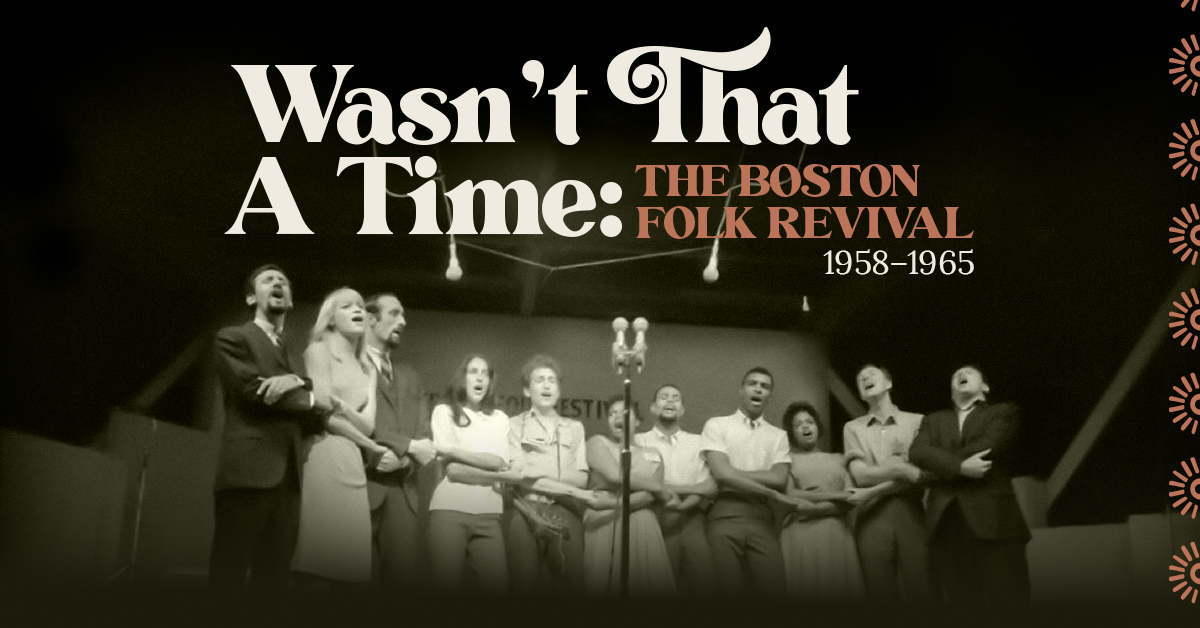
Editor’s Note: On September 27, 2025, the Folk Americana Roots Hall of Fame in partnership with the Bruce Springsteen Archives and Center for American Music held a collaborative symposium entitled Wasn’t That A Time: The Boston Folk Revival 1958-1965. Over the course of the day, attendees at the Arrow Street Arts Center in Cambridge, Massachusetts, enjoyed sessions and panels on such subjects as Club 47, Joan Baez, Bob Dylan at Newport Folk Fest, a conversation with Peter Wolf, and much more. The symposium programming was captured and filmed, and over the course of the next few weeks we’ll be sharing select sessions with our audience right here on BGS. Tune in and enjoy learning more about how Boston was at the epicenter of the folk revival in the ’50s and ’60s.
Speakers: Bob Santelli (moderator), Elijah Wald, Douglas Brinkley, Jeannie Brand, Court Carney.
About the Video: When Bob Dylan traded his acoustic guitar for electric at the 1965 Newport Folk Festival, he ushered in a shift to the traditional folk scene. How did the audience and his fellow performers respond, and why? How did this change folk at the time and continue to influence the genre?
“Continuing the series from our Symposium, we tackle one of folk music’s defining moments: Dylan going electric at Newport ’65. What followed changed everything. This panel brings clarity, context, and insight to a moment that continues to shape American music.” – Casey Soward, President and CEO of the Boch Center
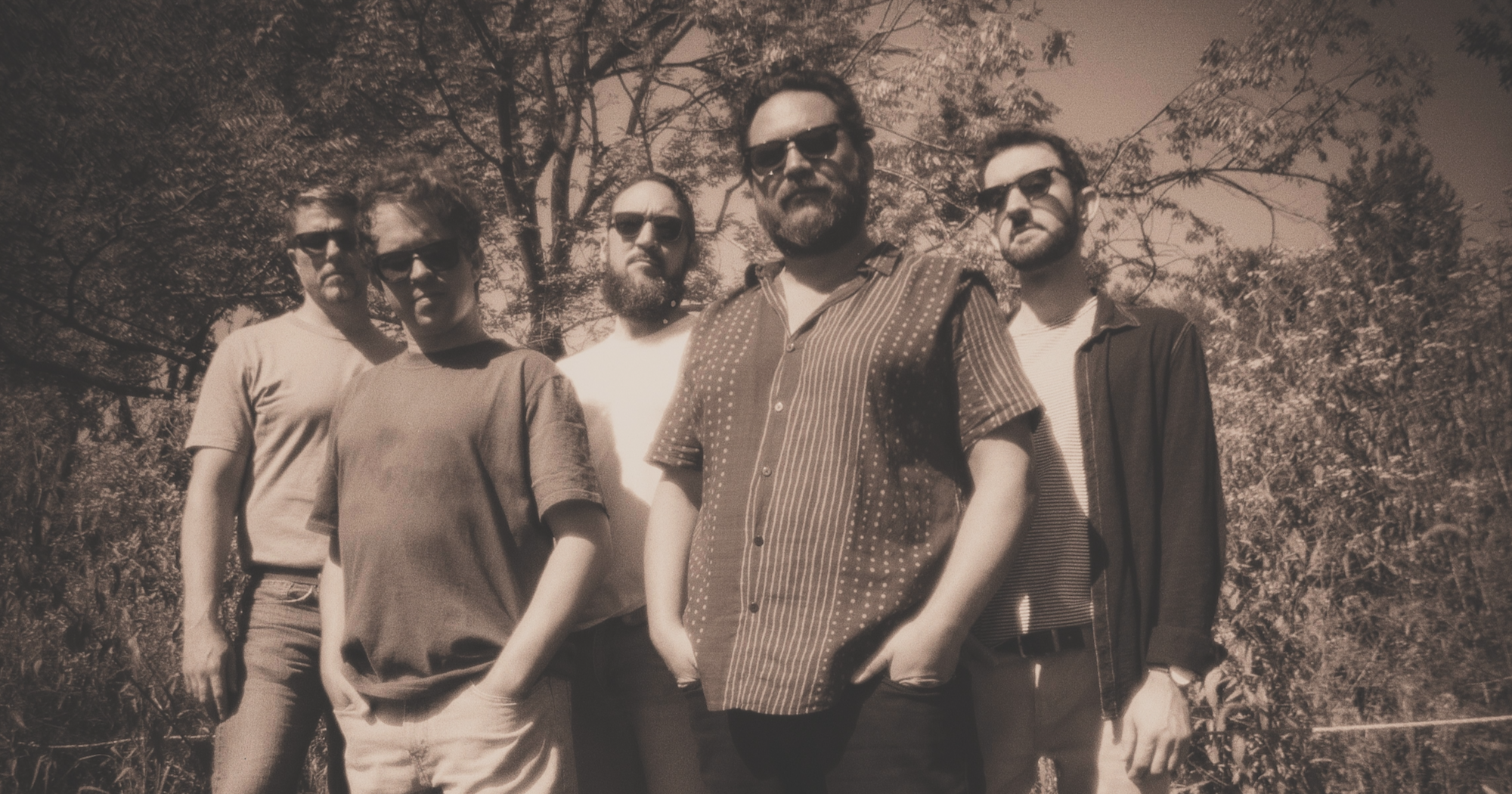
Artist:The Naked Sun Hometown: Philadelphia, Pennsylvania Latest Album:Mirror in the Hallway (set for release January 30, 2026) Personal nicknames (or rejected band names): “Fully Clothed Moon”; “Naked! Son.”; “The Naked Sons”
(Editor’s Note: Responses provided by The Naked Sun guitarist and singer-songwriter Drew Harris.)
What was the first moment that you knew you wanted to be a musician?
I have a very vivid memory from when I was maybe four years old. My mom wasn’t home from work yet, so I was being watched at someone’s house – some kid I barely knew. I was only there once in my life, a strange one-off moment that almost feels like fate. They had one of those old Casio-style keyboards with preset drum loops and out of pure boredom I started messing with it.
To this day, I can remember the feeling of a sort of flow state and being sucked into the music I was making. It’s really that exact feeling that keeps me coming back to the profound play that is making music. Something clicked. When my mom came to pick me up, I didn’t want to let the keyboard go. Something in her must’ve recognized that spark, because not long after we were driving around to strangers’ houses looking for a used piano that we could afford. I started lessons soon after and kept at them for the next six or seven years.
Which elements of nature do you spend the most time with and how do they impact your work?
We all spend a lot of time in nature. Tom, Dylan, and I are pretty avid cyclists. We have some incredible trails in and around Philadelphia that we spend a lot of time riding. Tim’s a trail runner and very recently took up bow hunting. James loves hiking the Wissahickon.
For me, the place that shapes my writing the most is the Delaware Bay. I walk those beaches for hours – staring at the tide, the sky, the sand shifting beneath me. I started doing it out of boredom, stuck at the shore when everyone else was gone, needing some way to fill the time. (Turns out: boredom = creativity.)
One night I walked all the way toward the Cape May–Lewes Ferry and watched a storm crawl across the bay – lightning slowly getting closer. It was beautiful and terrifying and overwhelming. I think that was the first moment I felt truly connected to nature, and something inside me clicked open. I’ve been returning to that shoreline ever since.
I think the ever-changing shoreline informs my music in a deep way. The beach is never the same twice – shaped daily by tides, wind, and waves, scattered with shells, rocks, horseshoe crabs, footprints, and whatever people leave behind. Every sunset lands at a slightly different angle, filtered through a new cloud formation or dropping into a clear sky without interruption.
Change.
Like the shore, our lives are constantly shifting – subtle in some seasons, dramatic in others. Music is how I process that movement. It lets me catalog who I was and who I’m becoming. When change feels heavy or uncertain, music is the valve that releases that pressure. Because the music will always be there, I know I can change.
How often do you hide behind a character in a song or use “you” when it’s actually “me”?
This is a really interesting question, because I think that, at least in my music, every song is about me in some way, shape, or form. Even when I’m writing from someone else’s perspective, when I pull the thread it always comes back to me. Even if it’s years and years after I’ve written a song I’ll look again with a fresh set of eyes and be like, “I thought that was about my mother, but damn, that was really about me.”
I remember writing in a journal years ago that all of my songs are really just letters to myself. And how could they not be? Even when I think I’m writing about someone else, I usually circle back later and realize it was me the whole time. It’s not that I’m hiding behind “you” – it’s that sometimes I don’t yet recognize the reflection I’m writing from.
But I’m increasingly drawn to exploring the true “you” in a song. The songwriters I admire most are shapeshifters – they step into other lives completely, almost like actors. They embody characters, perspectives, flaws, desires. They can disappear into someone else and still reveal something human and true.
That kind of writing fascinates me. It’s difficult – maybe the hardest thing to do, honestly – but I feel like it’s where I’m headed next. If writing has been a mirror, maybe now it becomes a window too.
What is a genre, album, artist, musician, or song that you adore that would surprise people?
Most people don’t expect this, but my all-time favorite band is the Canadian punk group Propagandhi. I first heard them at 14 or 15, walking into a head shop on the Wildwood boardwalk. It was angrier, smarter, sharper than anything I’d heard – political, passionate, direct. Perfect for a rebellious Catholic school kid
I’ve been listening to Propagandhi since their very first record. I’ve even been up to Canada to see them play and met Chris, Todd, and Jord. This style of music is so different from the music I make. I tried, believe me, I tried to write fast punk-metal riffs, I just wasn’t very good at it. (Propagandhi shreds.) I found Bob Dylan at the right age, taught myself how to play guitar and harmonica at the same time, and adopted a more folky sound.
But I think Propagandhi and folk share a similar ethos: anti-corporate, pro-people. I like to think that I’ve combined the two genres at times in my own abstract and artistic way.
Since food and music go so well together, what is your dream pairing of a meal and a musician?
I love to cook and have spent time working in kitchens as a line chef, and I even taught cooking for several years, so cooking, food, and of course music are always paired together. I have a little tradition when I go down the shore in the summer; the first summer meal that I prepare, which is almost always shrimp, scallops, and Jersey corn, I turn on “Mississippi” by Bob Dylan off of The Bootleg Series, Vol. 8: Tell Tale Signs. I just absolutely love this version of this song and it transports me back to making meals at my Mom Mom’s house down the shore.
Sorry, Bob, but since this is a dream meal, my dream meal is with Bob’s friend, Tom. My dream meal would be picking blue crabs, sipping beers (and probably a couple joints), listening to music, and chatting with Tom Petty. Tom’s a southern guy, so I think he’d appreciate some blue crab, corn, shrimp, potatoes, and of course a joint or two.
We’d sit outside down at the Jersey Shore and I’d let Tom control the aux and just shoot the shit while we imbibed. A crab feast is always really long, too, so I’d get some extra time to spend with my hero. Not sure I’d ask Tom any specific questions, I’d just want to listen to his tunes and listen to him tell me why he chose them, what he liked about them, what they remind him of, etc., while we sweat out light beer and fill up on blue crab.
Lots of people would like to think their lives have made a difference – whether through their family life, or work, or some sort of creative endeavor.
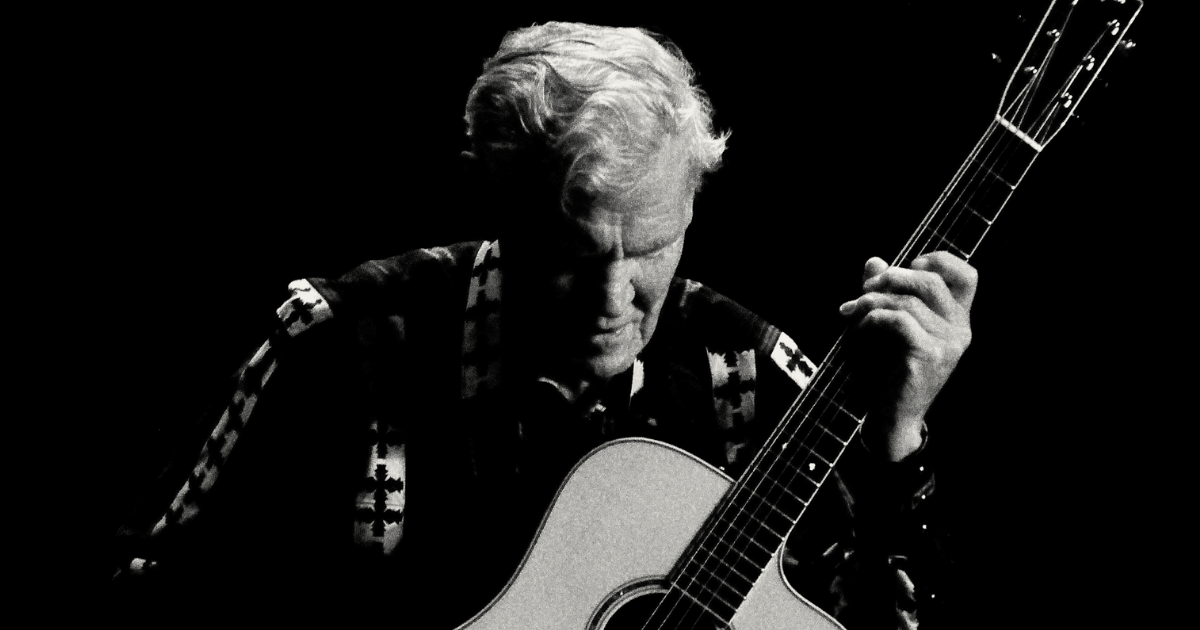
However, even to approach the enduring heritage of the great musician Arthel “Doc” Watson, a person would have to achieve lifetime landmarks as imposing as the North Carolina Appalachian mountains that were his home. During a lifespan from his birth in 1923 until his death in 2012, Watson created a legacy of music, folklore, and goodwill that no one has entirely equaled.
First a little background: Arthel Lane Watson was born March 3, 1923, near Deep Gap – he is not from Asheville – in Western North Carolina. An audience member suggested the nickname “Doc” when his given name was found less than compelling for an entertainer.
His life story before and after becoming an admired folk musician has been often told, notably in Doc Watson: A Life in Music, a 2025 biography by Eddie Huffman published by the University of North Carolina Press.
Blind since infancy, Watson started to develop life skills and musical ability from an early age. He learned both formal and popular styles when sent to the state’s school for the blind in Raleigh at about age 10.
The boy was consumed by music and persistent in getting better at it. Watson had learned both the rudiments of harmonica and a few banjo tunes from his father, General Watson, before he went off to Raleigh. While living within the strict environment of the school for the blind, Watson learned braille and grew familiar with classical and church styles of music taught there. Perhaps as strong an influence as that education was fellow student Paul Montgomery, the talented friend from whom he learned guitar chords. Young Watson and Montgomery, later a well-known Raleigh pianist and children’s show host, shared enthusiasm for the popular music of the day, including jazz and big-band sounds.
His parents, Annie and General Watson, taught the boy skills of growing crops and basic carpentry, and he contributed to the family despite his blindness.
After years of mostly local performances back in Western North Carolina, it wasn’t until the early 1960s, when East Coast musician and historian Ralph Rinzler tuned into and promoted his far-reaching ability as a singer and picker, that Watson’s name gained national, then international attention.
According to an account at the Blue Ridge Heritage Area website Watson recorded over 50 albums and was honored with “the National Medal of Arts, a National Heritage Fellowship, the North Carolina Folk Heritage Award, seven GRAMMY Awards, and a GRAMMY Lifetime Achievement Award.”
As fans know, Doc Watson contained multitudes of skills, a breadth of ability that inspired this list of the five pillars of his musical and artistic legacy.
The King Flatpicker
Watson largely created the challenging fiddle-inspired guitar style that led many followers along a flatpicking trail.
It was during the 1950s, when playing an electric Gibson Les Paul in the local Jack Williams Band, that Watson developed a style that would transform the way the guitar was played in folk and bluegrass music.
Generally, earlier acoustic guitarists in roots-derived styles used a flatpick to create basic “boom-chuck” back up, perhaps throwing in some fills and Jimmie-Rodgers-style bass runs.
But when dancers at Williams’s gigs wanted music for square-dancing, Watson worked up single-note versions of fast fiddle tunes such as “June Apple” and “Bill Cheatham” on his Les Paul. This approach enables lead guitar pickers to achieve the same flowing, rapid attack that fiddlers used for tunes, many of which had come over from the British Isles in past generations.
It’s not possible to say that Doc Watson was the first guitarist to flatpick fiddle tunes. After all, it wasn’t until Watson emerged as a folk artist in the 1960s that the broader music scene caught on to his musicianship. And high achievers such as Arthur Smith on “Guitar Boogie,” Don Reno on “Country Boy Rock ‘n’ Roll,” and Bill Napier on the Stanley Brothers’ “Mountain Dew” – along with some jazz and blues players – all recorded hot-licks acoustic soloing before Watson did. Joe Maphis was also cranking out ultra-fast flatpicking numbers in the 1950s.
But it was Watson’s 1960s performances that created a precedent for a wave of guitarists who had to muscle up to the speed and dexterity he displayed.
A long line of guitarists at the top of the field – from Clarence White to Tony Rice, from Bryan Sutton to Billy Strings – all show Watson’s clear influence not just in recreating fiddle tunes, but also in rapid-fire picking and clean sound on a broad range of material.
Player and educator Alan Barnosky wrote in “An Exploration of Doc Watson’s Innovative and Joyful Guitar Stylings” for Acoustic Guitar in 2023 about the spread of this kind of playing.
“Watson amazed folk fans in the early 1960s by taking tunes typically reserved for the fiddle and reworking them for the acoustic with speed, clarity, and flash,” he wrote. “He never claimed to be the first to play fiddle tunes on a guitar, but for the majority of listeners at the time it was an entirely novel and groundbreaking approach.”
Another world-class, tradition-based player, Earl Scruggs, praised Watson’s adaptation of fiddle tunes as the two were joined by Ricky Skaggs for the 2003 The Three Pickers performance and album.
“He was the first man I ever heard on the guitar that was fooling with tunes like that,” Scruggs said in a Three Pickers introduction. “You had all these good G-C-D pickers – that’s chord positions – but I had never heard anybody that actually took over a lead like a banjo or a fiddle or a mandolin and do those tunes. He could do it.
“And what amazed me about Doc Watson’s picking, and still does, is he’s got that – I call it ‘mountain sound’ to his picking, and he’s one of the best to keep it in that mode of sound.”
New generations of players have immersed themselves in Watson’s style. When I interviewed him for a Bluegrass Unlimited article, leading guitar picker and multi-instrumentalist Bryan Sutton talked about being captivated by Watson’s playing during Sutton’s youth on Western North Carolina.
“Doc and Dan Crary were the first great influences on me,” he said. “Doc Watson was one of the first professional musicians/guitar players that I ever saw. He doesn’t live too far from Asheville, so I saw him play some different festivals and at Maggie Valley. So, he was the first one to really catch my ear as far as what you could do with the flatpick.
“My right hand – it may not as much anymore – but I remember at one time it was kind of like Doc’s. It’s kind of like the way Sam Bush plays, using the whole forearm and wrist involved in the playing, whereas with jazz players or Tony Rice it’s more of a wrist thing. I think I’ve got a little bit of both now.”
Billy Strings, the artist who’s likely doing the most to promote Watson’s legacy in the 21st century, sounded almost evangelical during a September 2025 interview for NPR’s Fresh Air.
“He’s like the ground upon which I stand, you know?” Strings said. “My dad played his music all around the house growing up. And by the time I could play guitar, you know, 5, 6 years old, I was learning those tunes, too. I might’ve been able to play some of them before I knew how to tie my shoes or something, you know?
“It was like, I was learning how to speak and talk and walk, and I was learning all these Doc Watson tunes at the same time. And it was just, like, a religion in my house, you know? His music is just – it’s the best.”
To see some of the top pickers in the field paying tribute, check out this video shot at the Merle Watson Memorial Festival – what would become MerleFest – in Wilkesboro, North Carolina, in 1992.
A Model Fingerpicker
From his first albums on, Watson regularly also played guitar with a thumbpick and index finger. As he noted with his customary self-deprecating humor in the DVD “Doc’s Guitar: Fingerpicking & Flatpicking,” “See, I just play with one finger and a thumb. I don’t use the sensible three-finger method that you should use on finger-style guitar.” (Watch below.)
Watson sounded great with that approach, making finger-picked tunes such as “Deep River Blues,” “Nashville Blues,” “Omie Wise,” and “Doc’s Guitar” fan favorites and objects of long study. For every striving guitarist who practiced hard on his fiddle-tune adaptations, plenty of pickers also worked on showcases such as “Windy and Warm,” with its alternating bass, pull-offs, note bending, and a jazzy minor sixth chord at its conclusion.
Watson’s fingerpicking often showed off his acquaintance with diverse approaches, as in “Deep River Blues,” with an E diminished as its second chord. It also illustrates the way he put his touch on existing pieces such as 1933’s “Big River Blues” by the Delmore Brothers, who played with flatpicks.
“There were two guitars, a tenor – a little four-string, and the regular flattop, and I never could get my guitar to sound like both of theirs did,” Watson said. “Then I began to hear brother Merle Travis, the late Merle Travis, on the radio. And I thought, Now, wait a minute. If I can steal me a lick off brother Travis, maybe I can learn ‘Deep River Blues.’”
Multi-talented Kentuckian Merle Travis (1917-1983) popularized a style in which the thumb plays an alternating bass on the guitar’s lower strings while picking the melody on treble strings. Watson also studied the work of the great guitarist Chet Atkins. The picking buddies released the album Reflections in 1980.
The centuries-old, transatlantic ballad “Georgie” would have once been sung unaccompanied, leaving Watson and others free to craft a brand new style of guitar back up. With no clear precedent on guitar, he might employ the flowing, almost classical patterns that became popular among folk revivalists.
And fingerpicking became the tool Watson used to play the blues that he loved and drew on so deeply, music he followed from the time he heard Mississippi John Hurt on the family’s disc player in childhood.
In the end, there’s no easy way to pin down the many elements Watson brought to his picking, musical points of view that enriched his listeners along the way.
A Standout Singer
Doc Watson’s vocal abilities don’t generally get as much attention as his top-drawer chops as an instrumentalist. However, he was also a tuneful singer with a natural, angelic mountain baritone.
Watson came along during an era when rougher-voiced vocalists such as Hobart Smith, Dock Boggs, and his picking buddy Clarence Ashley represented mountain singing to a growing audience. And Watson’s less mannered style likely contributed to acceptance among listeners less familiar with the high lonesome sound. His direct vocal approach was often heard in performances with no instrumental backing.
It’s useful to remember that Watson also enjoyed the smooth country vocalist Eddy Arnold so much that his son Merle Eddy Arnold was named not just after fingerpicker Merle Travis, but also for Arnold.
Tunes from the Tennessee Plowboy’s repertoire such as “Tennessee Stud,” “I Couldn’t Believe It Was True,” and “Anytime” also showed up in Watson’s repertoire. These were only a few examples of the eclectic side of Watson’s vocal approach, with emphasis on great material over genre labels.
Given his broad taste, Watson at times put some extra grit into his singing on a number such as “Blue Suede Shoes” from his Jack Williams days of the 1950s, later a concert favorite. But more often he sang songs straight, even on one like “Nights in White Satin,” a 1967 pop hit by British rockers the Moody Blues. With waltz-time guitar and plain singing, Watson makes the song come across as relevant to himself and listeners as songs by the Delmore Brothers and Jimmie Rodgers.
Watson’s first memories of vocal music came in church, and he prized the straightforward, no-vibrato sounds that carved such songs in his memory.
“If you love music, you have to listen from the time you’re big enough to notice music,” he told me when recording his 1991 GRAMMY-winning CD On Praying Ground.
“If you’re looking for old-time material in songs, those old songs that you heard when you were young were the easiest to put down.”
From his first commercial recordings on, Watson featured gospel numbers such as the a cappella version of “Talk About Suffering” from 1964 and “Down in the Valley to Pray” from 1966. Both radiate belief and unornamented clarity.
More recent listeners may know the latter song as “Down in the River to Pray,” as it was opportunistically relabeled to match a scene in the 2000 hit film, O Brother, Where Art Thou?.
Always A Song Man
Doc Watson had an impressively broad range of musical interests, perhaps markedly so, given the period in which he came along.
Country or folk music didn’t start appearing on commercial records until Watson was about two years old. In childhood he listened to down-home picking as well as church and gospel songs. It wasn’t until the 1930s that the family owned a radio that let them hear music beyond their 78-rpm record collection.
Virtually every great musician is a song collector at heart. And like Bob Dylan, Watson took on songs from tradition and added new elements. Take the mournful ballad “Omie Wise,” based on a North Carolina murder from the early 19th century.
In the 1920s notable old-time artists G.B. Grayson and Clarence Ashley recorded it with modal accompaniment that was neither truly major nor minor. When Watson recorded in the 1960s, he ventured into folky, arpeggiated picking that put it squarely into minor-chord territory, opening up the song to young folkies who couldn’t play fiddle like Grayson or banjo like Ashley.
In fact, Watson’s playing on “Omie Wise” occupied the same guitar realm as folk star Joan Baez’s playing on “East Virginia” and other traditional songs.
He also tuned into compositions by folk musicians Bob Dylan (“Don’t Think Twice It’s All Right), Tom Paxton (“The Last Thing on My Mind,” “Leavin’ London,” and “Bottle of Wine”), and Townes Van Zandt (“If I Needed You”).
Watson isn’t chiefly known as a songwriter, but he enjoyed notable success with “Your Lone Journey,” which he wrote with wife Rosa Lee. The starry duo of Led Zeppelin frontman Robert Plant and bluegrass’s own Alison Krauss released it as “Your Long Journey,” leading to what biographer Huffman called significant royalties for the family.
Watson’s greatest legacy in songs may have come with the wealth of lasting favorites – just a few are “Deep River Blues,” “I Am a Pilgrim,” “Banks of the Ohio,” “House Carpenter,” and “Shady Grove” – that made their way into the folk, old-time and bluegrass repertoire and could otherwise have been forgotten.
Ambassador for the Old-Time Way
This role for Watson may be the hardest to pin down, as it overlaps with almost all the others. By cleaving to his Appalachian heritage while also making the most of decades of change, Doc Watson was able to introduce countless fans to a rich, living culture.
“I don’t live in the past,” Watson told me in 1991. “I still burn wood in a furnace at the house, but I have heat ducts and a blower on it just like an oil furnace.
“I love to burn wood and I love to split wood. There’s a few of the old-timey things I love to do. I like good dried-apple pie and I like ‘leather britches’ beans.
“And I like to be at home, dadburn it. I hate the road.”
Watson’s long career of traveling to take his music to listeners, often in the company of his beloved son, Merle, nourished their taste for music that he built upon sold timbers of musical tradition.
Wade Smith, a legendary Tar Heel lawyer, told me once about his first experience of hearing Watson, at a small coffeehouse in downtown Raleigh in 1965.
“What word would I choose to describe how I felt?” Smith said for a later Raleigh News & Observer story. “Electrified, stunned at the speed of his fingers and the way he played single strings, and the clarity of the sound. Each note was like a piece of gold, so amazing.
“We stayed to the last note. When we left, I remember thinking that I had never heard anything like it and that in some way I had been changed by it, that I was in an altered state of existence.”
Watson’s national and international impact becomes more impressive given that he wasn’t heard outside his North Carolina stomping grounds until his late 30s. That’s when he honed his broad range of expertise into a mountain-based style that captivated and often amazed listeners at first hearing.
When the Society for American Music, a distinguished non-profit scholarly and educational organization, made Watson an honorary member in 2012, musicologist and musician Greg Reish paid tribute to Watson’s broad impact.
“As I discovered more of America’s traditional musical styles through my teenage years, Doc Watson always seemed to be at the core, an entrée into both older and newer styles,” Reish wrote. “Through Doc’s music I found my way to the pre-war music of the Carter Family, Jimmie Rodgers, and the Skillet Lickers; to the first-generation bluegrass of Bill Monroe and Flatt & Scruggs; to the classic country of Merle Travis, Chet Atkins, and Eddy Arnold; to the country blues of John Hurt and Frank Hutchison; and to the contemporary and progressive flatpicking of Clarence White, Norman Blake, and Tony Rice.”
Huffman’s book quotes the great bluegrass musician Roland White as he talked about the way his guitarist brother Clarence was caught up in Watson’s flatpicking after hearing him at California’s Ash Grove club.
“After seeing Doc, his picking became an obsession, an everyday part of everyday life. To play music and practice every day. Whether we played gigs or not, he was always playing music.”
Sixty years after White’s epiphany, Doc Watson’s music continues to gain and inspire new followers, whether through the picking and testimony of contemporary players such as Sutton and Springs, or through his own dozens of albums and videos. His legacy of tradition and innovation still flows like one of the ancient streams that nourish his cherished mountainsides.
Thomas Goldsmith is an award-winning journalist based in Tennessee and North Carolina. In addition to producing many hundreds of articles for newspapers and magazines, he edited The Bluegrass Reader and authored Earl Scruggs and Foggy Mountain Breakdown: The Making of an American Classic, both for the University of Illinois Press.
This website uses cookies to improve your experience. We'll assume you're ok with this, but you can opt-out if you wish.AcceptRejectRead More
Privacy & Cookies Policy
Privacy Overview
This website uses cookies to improve your experience while you navigate through the website. Out of these, the cookies that are categorized as necessary are stored on your browser as they are essential for the working of basic functionalities of the website. We also use third-party cookies that help us analyze and understand how you use this website. These cookies will be stored in your browser only with your consent. You also have the option to opt-out of these cookies. But opting out of some of these cookies may affect your browsing experience.
Necessary cookies are absolutely essential for the website to function properly. This category only includes cookies that ensures basic functionalities and security features of the website. These cookies do not store any personal information.
Any cookies that may not be particularly necessary for the website to function and is used specifically to collect user personal data via analytics, ads, other embedded contents are termed as non-necessary cookies. It is mandatory to procure user consent prior to running these cookies on your website.