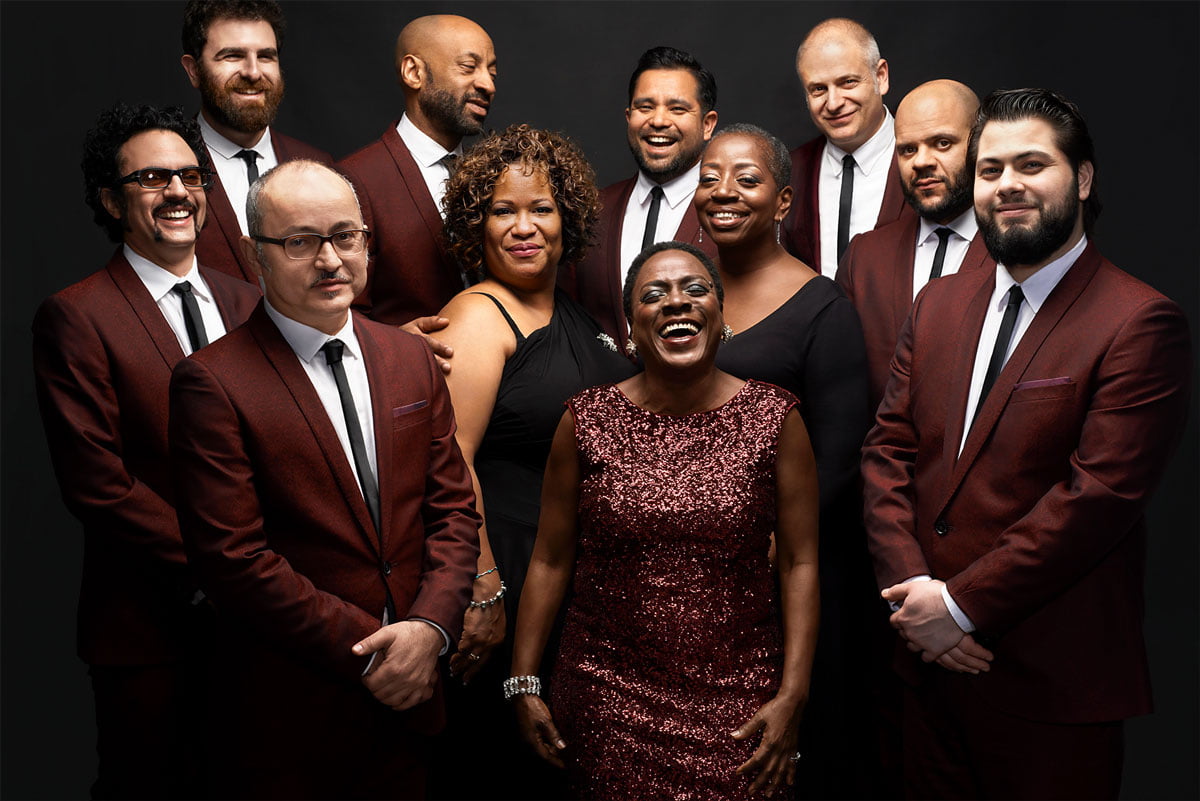
The Heart and Soul of Daptone Records

A young girl asks her mother, "How can Santa Claus visit them, when they don’t have a chimney? How can he leave presents under the tree, when he can’t even get into their apartment?" These are common questions most parents hear around the holidays, but it resonates powerfully in Sharon Jones & the Dap-Kings’ new Christmas chestnut, “Ain’t No Chimneys in the Projects.” “I said, ‘Mama, how can this be?” Jones sings in that outsized voice of hers, gift-wrapping every syllable for the listener as the horns flare and flash around her, the rhythm section grooves and the backup singers repeat her not-quite-rhetorical question. Somehow she conveys the innocence of the daughter pondering the rules of Christmas, as well as the affectionate concern of the mother who concocts a story about a magic chimney.

“Ain’t No Chimneys in the Projects” could easily have been cheesy and goofy, especially with its references to the projects and the ghetto — terms that sound antiquated in the context of a Christmas tune. Fortunately, the musicians play it straight, grooving hard to reinforce the powerful emotional resonance of the lyrics. It’s only when the little girl grows up and stops believing in Santa that she starts believing in something even more magical: It was her own mother who saved money throughout the year and put those presents under the tree. “Mama, now I know that you were the one!”

In addition to appearing on the new Oxford American Music Issue CD sampler, the song anchors It’s a Holiday Soul Party, the first holiday album from the venerable indie R&B label Daptone Records. It’s billed to Sharon Jones & the Dap-Kings, but it sounds like they invited the entire roster: Charles Bradley testifies mightily on “World of Love,” Saun & Starr harmonize beautifully on “Big Bulbs,” and seemingly the entire office staff sits in with the Dap-Kings. The album more than lives up to its party designation: With its lively energy and inventive interpretations of well-worn carols (This “White Christmas” is more Tina Turner than Bing Crosby.), it’s easily the best holiday album of the year.

“There’s some cute stuff on there and there’s some traditional stuff, as well,” says Neil Sugarman, who co-founded Daptone, produced the new record, and played saxophone on almost every song. “The nice thing is that there was no pressure. It was very impromptu. We just went in and jammed. And Sharon sings her ass off.”

The same, of course, could be said of nearly every Daptone release. Since it opened in 2001, the label has cornered the market on neotraditional soul music while also showing how loose that word “soul” can be. It obviously applies to the Stax- and Motown-derived R&B sung by Sharon Jones, Charles Bradley, and Saun & Starr. But it also includes the instrumental grooves of the El Michels Affair and the Sugarman 3, as well as the raw gospel of the Como Mamas and Naomi Shelton — even the cinematic funk of the Budos Band and Antibalas. Their records all sound like they could have been made in the 1960s or 1970s then excavated by extremely dedicated crate diggers at estate sales or junk stores. Yet, the music remains anchored in the 21st century and targeted to a contemporary audience.

It’s not a soul revival, precisely because no one at Daptone believes that soul needs to be revived. “People don’t say jazz music is retro or Latin music is retro,” says Sugarman. “But they do say soul music is retro.” It’s an odd popular prejudice, one that Daptone combats with music that consciously emphasizes the past while remaining doggedly engaged with the present. “It’s absolutely roots music,” he says, noting that it’s more urban than rural, more ghetto than holler. “We wear our influences on our sleeves, and there’s a lineage that we pay homage to every time we pull our instruments out of our cases. We try to groove as hard as the records that we love.”

When they formed Daptone nearly 15 years ago, Sugarman and Gabriel Roth tried to emulate the labels they loved, establishing a particular sound, a strong brand, and a loyal following that would take a chance on unknown artists. Charged with running a business, they both remained musicians first and foremost. Roth (sometimes known as Bosco Mann) plays bass, Sugarman blows the sax. “At this point in my life, I like having both. I like controlling the business and controlling my destiny as a recording artist. I love getting on the road with people like Sharon and Charles, and getting the kind of insight into their music that I couldn’t get if I was just sitting in the office answering emails and writing checks.”

For most of its life, Daptone only signed New York artists, many of them older and practicing their craft on the margins of the music industry. Charles Bradley was trained as a carpenter and had been hired to help Roth and Sugarman build a new studio, but he turned out to be an amazing singer whose live shows have galvanized audiences around the world. “He’s the guy we would call any time we needed help. We loved this guy so we wanted to work for this guy. We wanted to help him build a career.”

Similarly, Saundra “Saun” Williams and Starr Duncan Lowe originally came into the Daptone fold as back-up singers in the Dap-Kings, after having performed for decades as the Good 'N Plenty Girls. They quickly established themselves as a core part of the band’s sound — both in the studio and on the stage. “We always talked about making a record with them, but it takes a while to figure out who these people are,” says Sugarman, noting that it took them five years to plan, write, and record their debut, Take a Closer Look, released in May 2015. It was worth the wait, as the album reveals two spry singers with incredible chemistry, not to mention a band that adapted to complement their dynamic.

But the present is not what the past used to be. The market is changing, with newer labels like Colemine and 180 Proof crowding the scene, soul revivalists like Leon Bridges jumping straight to major labels, and consumers relying more and more on streams rather than outright purchases. “I’m not going to lie — it’s getting tricky,” Sugarman says. “Streaming services are taking a big chunk out of our revenue. When you look at the numbers, close to two million people per day click on a Daptone song. It’s exciting to see those numbers. The audience is there, but we’re not getting compensated. It could get to the point where it’s not sustainable as a business anymore, so you have to figure out how to keep putting records out.”

One way of surviving is to grow and expand, albeit very carefully and very gradually. In 2015, Daptone founded an imprint — Wick Records — to release 7-inch singles by New York garage rock bands, starting with a ferocious debut by the Mystery Lights. The label also signed a reggae band called the Frightnrs, whose first full-length is slated for release in 2016. Another upcoming release stands out even more: James Hunter’s Daptone debut, Hold On!, will hit stores (and, of course, streaming services) in Feburary. “He’s an English artist, so he’s the first artist we’ve signed who’s not from New York.”

Sugarman insists that the key to Daptone’s success has been — and will continue to be — its emphasis on community over market shares or compensation. “Not only do we need to like someone’s music, but they have to function within this family. That’s the way it has to be for the music to progress and stay honest. I don’t think we could have pulled off Daptone any other way.”


Photo courtesy of the artist
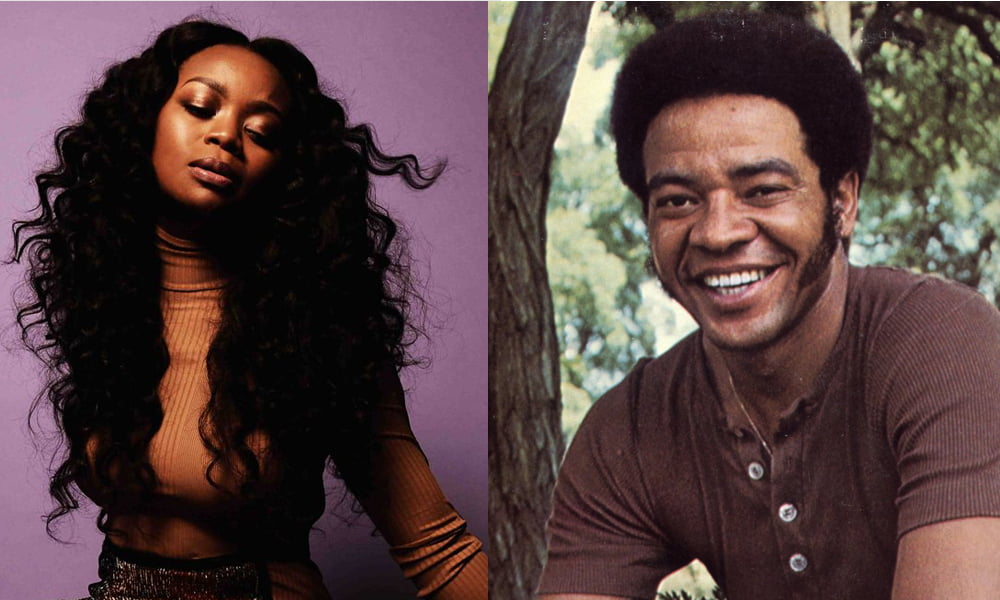
Squared Roots: Ruby Amanfu on the Simple Brilliance of Bill Withers

To escape the wilds of West Virginia, a young Bill Withers joined the Navy, where he worked as an aircraft mechanic. After his service, he landed a job in an airplane parts factory, but soon realized he could get girls by singing, so he decided to give it a shot. He taught himself guitar, wrote some songs, and got a deal with Sussex Records. Fun fact: His first single — the Grammy-winning, platinum-selling “Ain't No Sunshine” — was inspired by the 1962 movie Days of Wine and Roses starring Jack Lemmon and Lee Remick.

Withers kept up that pace with a string of hits that included “Grandma's Hands,” “Lean on Me,” and “Use Me.” After three records on Sussex, he shifted over to Columbia in the mid-1970s, where he released a few more albums … and encountered a bit of resistance. The label execs, which he called “blaxperts” because they were trying to change his sound to sell more records, all but halted his career. Withers has commented that he found it hard to swallow that his label would put out a Mr. T record while preventing him from releasing anything.

Though he collaborated with other artists and issued one more LP, 1985's Watching You Watching Me, Withers pretty much walked away from music. Since then, he has noted, "What few songs I wrote during my brief career, there ain't a genre that somebody didn't record them in. I'm not a virtuoso, but I was able to write songs that people could identify with. I don't think I've done bad for a guy from Slab Fork, West Virginia."

Singer/songwriter Ruby Amanfu was born in Ghana, and moved with her family to Tennessee when she was three years old. Growing up in Nashville, Amanfu couldn't help but gravitate toward music, studying at Hume-Fogg Academic Magnet School before heading off to Boston to attend Berklee College of Music, and finishing up back home at Belmont University. Around the time that Amanfu had a dance hit in Europe (2001's “Sugah”), she also connected with Sam Brooker in Nashville, and the two began writing, recording, and performing acoustic soul as Sam & Ruby. A handful of years on the road landed them a deal with Rykodisc for their debut LP, The Here and the Now, in 2009, and a follow-up EP, Press On, in 2010.

Appearances on NBC's The Sing Off (Season 3) and Jack White's Blunderbuss — as well as collaborations with Brittney Howard, Wanda Jackson, Patti LaBelle, Ben Folds, Chris Thile, and others — eventually led to Amanfu's latest release, Standing Still. It's a collection of songs by Bob Dylan, Brandi Carlile, Jimmie Dale Gilmore, Woody Guthrie, and the Heartless Bastards stunningly re-imagined and rendered in Amanfu's smoky soul voice.

Bill got a late start, but he came out of the gate with “Ain't No Sunshine” and followed that up with “Lean on Me” and “Use Me.” Even now, when he talks about those songs, he plays them way down … as if they hadn't made a mark on music at all. But we know better …

Yeah, yeah. In everything I've seen and heard from him, when he speaks or when people write word-for-word what he's spoken, he seems to be the epitome of humble. And it is so opposite of what most artists are. Most artists feel like, “Well, I need to be not humble because I have to act like I'm the greatest so that other people will believe I'm the greatest.” I'm just so fascinated by Bill Withers, and I adore him so much because he is so humble. And I think that's kind of the mode of operation that is more enticing, at least for me — in how I like music and how I receive music. If I have an artist who is like, “I'm the shit!” then I'm probably, just out of spite, be like, “Uh, nope. You're off my list.”

And yet you recorded a Kanye West tune.

Oh, I sure did. Guess what? That was a battle to the bank, honey. That was a battle to the bank. I had a couple of producers on this project and sometimes you gotta listen when people talk. There were obviously things I had to come around to, and I had to come around to that. What I heard in that song … when “Street Lights” was presented to me, I heard lyrics that I connected with. I heard a story, when I stripped away all of that production and I stripped away his voice, and I just received the words. I was like, “Oh, damn! That's actually legitimate.” He co-wrote that with a fella, Mr. Hudson, who is a brilliant writer and producer. I couldn't do a disservice to Mr. Hudson just because Mr. Kanye West was out there shootin' and salutin' and highfalutin! [Laughs]

[Laughs] That brings up an interesting point. To me, classic R&B like Bill Withers, you can feel the rhythm and you can hear the blues. That's not always the case in contemporary R&B. Sure, there's a slickness to the new stuff, but is there a more significant difference in the artistry between then and now?

Well, yeah, I'd say. With someone like Bill, I don't even know if he knew what slick was. And I think, now, I don't know why this happened, but part of me thinks that, as the world continued, as the years went by, as technology increased, I feel like people — artists and record labels and producers — I think they felt like they had to do more to keep fans' interest and attention. The attention spans, I do believe, have become less and less long. So I think there can be a bit of desperation where some of it is concerned.

I won't say it's all of it because I still listen heavily to R&B, currently. Sometimes you definitely hear production where you're like, “Man, slow your roll. Let's just hear the song.” But there's still a lot of classic-sounding singers out there who are still doing it. Even somebody like John Legend, when he just strips it away and it's him and the piano, he's a great example of somebody … you know that he gets that it's just about the openness and the vulnerability of the music. The attention span is shorter, so you gotta get hyped quickly. Obviously, I didn't do that on this record. [Laughs] I'm trusting that people will be able to take a breath and listen to this record from a completely open place. That's how I fit into this whole thing.

Right. Another difference is that, in the mid '70s, Bill released an album a year for five in a row. To be that prolific and, then, to just turn it off … because he kind of counts that as the end of his eight-year career. What does that take — because he wrote all his own stuff?

I know. I think he got fed up with the system which … [Laughs] is not hard to do. I got my first record deal — I was a baby — in 1999. Even then, the system was baffling. I did it as a means to an end … record deals and management deals and all of that. But it felt sickening on a number of occasions. I did it, but I can see how he, who is who he is unapologetically and is so homegrown and so grounded, that he was like, “You don't care about me. Why am I going to care about you?” This man who was … at first, he still kept his other job, even when he had a couple of hits. That's brilliant because he wasn't resting his laurels on that. Then, the labels were taking advantage of him. I heard once that he'd had a couple of hits and he was going to put out this album and his label said, “We don't hear a hit on that.”

Yeah, they wanted him to cover an Elvis tune.

Oh my gosh, that's right! “In the Ghetto.”

Yeah.

What did he say? Something like, “That's like asking to buy the bartender a drink.” Or something like that. And he was like, “I'm not going to go there.” It cracked me up. Because, exactly! They don't get it. They don't get you. That's the separation that has been cycling through the business.

I will say that I have seen a big difference here, in 2015, because everyone got hip to what was going on and got wiser, started to change the system to make it a little more genuine … at least for indie artists like myself choosing different paths that allow us to have creative rights again, and freedom. But Bill, at the time, was like, “No. That's not good enough for me.” And I respect that.

Well, when one of your A&R guys tells you, “I don't like your music or any black music, period” … you're not off to a great start.

No. No. And that's the thing … he knew it. He was like, “I'm gonna try this out and see what people are talking about.”

[Laughs] Or not.

Yeah. “That's what I thought you were talking about. Goodbye.” [Laughs] It's brilliant. And I'm like that, in a way. I don't think it was arrogance with Bill, and I'm not like that. But I definitely have convictions and sometimes people don't understand or relate to my convictions. But I still stand by my convictions. I have to. I think … I know for a fact, actually, that I have been inspired by Mr. Withers because of that. Because you can stand by your convictions and still do what you do, still be out there doing the music. I oftentimes say that, if I were ever to get to a point where I was surrounded by a team of people who didn't get that, then I would gladly, happily walk away and go put on my apron and start cooking in the kitchen. I would do that. But I'm really lucky right now. It's been a long time coming. This team around me totally gets me — what a concept — and supports me. We'll ride it out that way.

But there are no Withers' tunes on your new album. Are there deep cuts of Bill's that you love?

Well, “Grandma's Hands” I love so much. It's funny … the first version I heard of “Grandma's Hands” was … [Laughs] “No Diggity.”

Oh, yeah yeah yeah. [Laughs]

Sam [Brooker] and I had looked through a bunch of his songs to see what we could maybe do because I've always wanted to do a Bill Withers song. There were some on the short list for this record, too, but I had presented Sam with a song from Still Bill called “Who Is He (And What Is He to You)?” It's so simple, but that song is one for me.

Me'shell NdegeOcello did a pretty slamming version of that one.

She did. She nailed it. That's why I was like, “If Sam and Ruby are going to do it, it's going to be different.” But that's the thing … you bring up a good point … I find myself in that situation because there are some songs on this record that I'm like, “People I admire and respect have done slamming versions of these songs, but they mean so much to me and I believe in them so I'm going to go for it.” Not to do a copied version, but do something different. Obviously, when Brandi Carlile spoke up that she liked what I'd done [with “Shadow on the Wall”] … It was stressful. I was nerve-wracked to do that because I knew what she'd done with it.

But, anyway … the song “Hello Like Before” is amazing. “I Wish You Well” … but that's more of a hit than a deep cut. “Make Love to Your Mind” … that's a great one. That's the thing, just too many.


Photos by Shervin Lainez and Columbia Records