You Gotta Hear This: New Music From Darren Nicholson, Maya de Vitry, and More

To welcome you to the end of the week, we’ve got a slate of superlative premieres from across the roots music landscape.

Below, find new tracks from singer-songwriters – Maya de Vitry, who sings a song from her upcoming co-written with Caitlin Canty, as well as Lucy Isabel bringing “A Hero’s Welcome.” We’ve also got a few Western North Carolinians in our round-up, including bluegrass mandolinist Darren Nicholson playing a song about a true mountain man, John Colter, and Amanda Anne Platt & the Honeycutters offering “Big Year.”

Plus, guitarist Jacob Johnson is joined by Willie Nelson & Family harmonica player Mickey Raphael on an acoustic Allman Brothers cover and Tommy Emmanuel pays tribute to Chet Atkins’ 100th birthday with a video BGS premiered earlier this week.

It’s all right here on BGS – and You Gotta Hear This!

Maya de Vitry, “Odds of Getting Even”

Artist: Maya de Vitry
Hometown: Lancaster, Pennsylvania
Song: “Odds of Getting Even”
Album: The Only Moment
Release Date: July 12th, 2024
Label: Mad Maker Studio

In Their Words: “I wrote ‘Odds of Getting Even’ with my dear friend Caitlin Canty at a kitchen table in Nashville, several years ago. I was borrowing a friend’s snare drum at the time and having so much fun just grooving on that drum and singing. We were really moved by an article laying on my table, it was about the late Sharon Jones. Her story is powerful – her devotion to music in spite of so many years of rejection and really outright dismissal by the music industry – and then her battle with cancer, and performing in the midst of treatment… Against so many odds, she persisted in making her music. And singing was the only thing that could take her pain away.

“The band Della Mae made the first recording of this song on their 2020 Headlight album. It’s a real honor and thrill to hear another band bring your song to life. Then, Caitlin recorded her own version on Quiet Flame, which came out last summer. One of the things I love most about making records is making a collection of songs that feel like they magnetically want to live alongside each other, like companion plants or something – and this one just absolutely belongs in the song garden of The Only Moment. And to hear Phoebe Hunt on harmony vocals… well I just think Phoebe is an absolute legend. I’m so lucky to get to sing with her.” – Maya de Vitry

Track Credits:
Maya de Vitry – Vocals, acoustic guitar, synth
Phoebe Hunt – Harmony vocals
Anthony da Costa – Electric guitar
Ethan Jodziewicz – Bowed upright bass
Dominic Billett – Drums


Lucy Isabel, “A Hero’s Welcome”

Artist: Lucy Isabel
Hometown: Nashville, Tennessee
Song: “A Hero’s Welcome”
Album: All The Light
Release Date: June 28, 2024 (single); October 11, 2024 (album)

In Their Words: “‘A Hero’s Welcome’ is the only song on the album that wasn’t written specifically for the album. I taught myself to play guitar in college and started writing music pretty much right away. ‘A Hero’s Welcome’ was the first song that I ever felt proud of writing; I felt like I had found my voice. While I was in the process of writing the bulk of this album, I hung out with a college friend who reminded me of ‘A Hero’s Welcome.’ I suddenly realized that it was a perfect fit for All The Light and I added it to the track list. It’s been really fun to revisit this song that I wrote as a 21-year-old and hear how it’s transformed through the production process.” – Lucy Isabel

Track Credits: Written by Lucy Isabel Fortune-Cabrera.
Produced/mixed by Jared Anderson.
Mastered by Preston Cochran.
Lucy Isabel – Vocals, BGVs
Jared Anderson – Guitar, bass, pianos, percussion
Andy Ellison – Pedal Steel


Jacob Johnson, “Jessica” featuring Mickey Raphael

Artist: Jacob Johnson
Hometown: Greenville, SC
Song: “Jessica” feat. Mickey Raphael
Release Date: June 21, 2024

In Their Words: “It’s an unwritten rule for musicians that if your darlin’ (that’s how we say “significant other” or “partner” in the South) is named after a famous song, you must learn the song and you must use it to serenade them. Unfortunately, my wife was named after a 7-minute Allman Brothers jam. Eventually, I got serious and put together a solo/acoustic version of ‘Jessica’ that I later played as she danced with her dad at our wedding reception on May 31, 2019. It’s been knocking around in my head since then and earlier this year I decided it was time to flesh out the arrangement with some collaborators.

“Jack Ryan and Stephen Campbell from the dangerously hot Marcus King Band laid down a groovy, breathing foundation on drums and bass respectively, and Aaron Bowen supplied tasty keyboard lines throughout. In addition to the main melody, I played the second solo on my trusty Takamine acoustic guitar, but I knew I wanted to feature another special guest for the first solo section. I was completely blown away when my first choice, Mickey Raphael, legendary harmonica player for Willie Nelson and Family, agreed to participate. Mickey has played on some of my favorite albums of all time, and his lyrical, melodic style was just what the track was asking for. Having part of his magic on one of my tracks has been on my musical bucket list for many years.

“Of course, this entire project was created with lots of love and respect for its composer, the great Dickey Betts, who we lost not long after production was completed. If you know Southern music, you know he was one of the greats. Though I never had the opportunity to meet the man, I hope that my arrangement and attention to the details of this composition can honor his legacy in some small way.” – Jacob Johnson

Track Credits:
Jacob Johnson – Guitars
Mickey Raphael – Harmonica
Jack Ryan – Drums
Stephen Campbell – Bass
Aaron Bowen – Keyboards
Produced by Jacob Johnson.
Recorded by Shane Nelson at Asaph Studios & Mike McCarthy in Jack Ryan’s Garage.
Mixed by Shane Nelson at Asaph Studios, Greenville, South Carolina.
Mastered by Anna Frick at Ally Sound.


Darren Nicholson, “Big Sky”

Artist: Darren Nicholson
Hometown: Canton, North Carolina
Song: “Big Sky”
Release Date: June 21, 2024
Label: Mountain Home Music Company

In Their Words: “This is one of my favorite cuts of my entire recording career. I feel there’s a special spirit in the song and the way it turned out. It’s based on the true story of early American explorer, John Colter. He was a member of the Lewis and Clark Expedition and became the first known person of European descent to enter the region which became Yellowstone National Park. There’s several fascinating periods of his life and career. I became aware of him through a fabulous book about his survival and harrowing adventures called Colter’s Run. He was one of the first true mountain men. This was the inspiration for the song when Charles Humphrey and myself set out to write it. I also think it would make a great film. I feel the musicians knocked it out of the park in regard to capturing the mood and old-time essence. Hope you enjoy!” – Darren Nicholson

Track Credits:
Darren Nicholson – Mandolin, octave mandolin, lead vocal, harmony vocal
Tony Creasman – Drums
Kristin Scott Benson – Banjo
Zach Smith – Upright bass;
Colby Laney – Acoustic guitar
Deanie Richardson – Fiddle
David Johnson – Dobro
Kevin Sluder – Harmony vocal
Jennifer Nicholson – Harmony vocal


Amanda Anne Platt & the Honeycutters, “Big Year”

Artist: Amanda Anne Platt & The Honeycutters
Hometown: Asheville, North Carolina
Song: “Big Year”
Album: The Ones That Stay
Release Date: August 9, 2024
Label: Mule Kick Records

In Their Words:“I wrote the first line of this song in 2018, after what felt like a really big year. I would revisit it from time to time, trying to find the rest of the words. And while I was doing that, the years just kept getting bigger and bigger. Good stuff, bad stuff, life just gets overwhelming at times. And of course there was a global pandemic. I’m still waiting on a smaller year, but maybe I’m also learning how to ride the wave a little better.” – Amanda Anne Platt

Track Credits:
Amanda Anne Platt – Acoustic guitar, lead vocal
Matt Smith – Dobro
Rick Cooper – Electric guitar, vocal harmony
Kevin Williams – Piano, vocal harmony
Evan Martin – Bass, drums, percussion, vocal harmony

Produced by Scott McMicken and Greg Cartwright, FrogHouse Productions, and Amanda Anne Platt.


Tommy Emmanuel, “Mr. Guitar (Live)” 

Artist: Tommy Emmanuel
Hometown: Nashville, Tennessee
Song: “Mr. Guitar (Live)”
Album: Endless Road: 20th Anniversary Edition
Release Date: May 28, 2024
Label: CGP Sounds

In Their Words: “The one and only Chet Atkins would be celebrating his 100th year if he were still here in body. We miss him. We love his playing, we remember all the great lessons and wisdom he handed out freely to us.  We always use his example as the one written in stone. My fellow CGPs, John Knowles and Steve Wariner, have their own experiences and memories to share, and they have lived a different life to me. Yet, because of our love for Chet’s music, we are forever joined, like family…” – Tommy Emmanuel

More here.


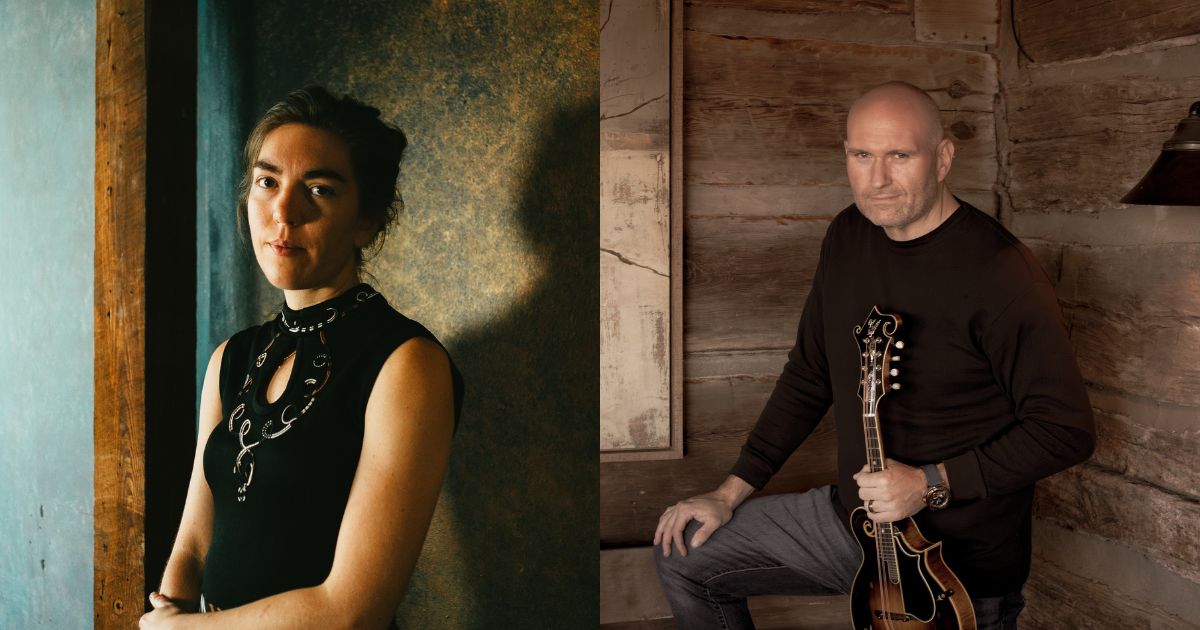
Photo Credit: Maya de Vitry by Kaitlyn Raitz; Darren Nicholson by Jeff Smith.

BGS Wraps: Irene Kelley, Jon Pardi, Wynonna, and More

To celebrate one of the most roots music-y times of year – the winter holiday season – we’ll be showcasing the best in new and classic holiday music from our BGS family with a weekly BGS Wraps round up. Welcome to its first edition!

Whether you adore or abhor holiday music – and we certainly understand both of those mindsets – we hope you’ll find plenty to love with our BGS Wraps playlist (below) and these bluegrass, country, folk, and Americana albums, songs, videos, and shows all celebrating the most wonderful time of the year. From Irene Kelley to Jon Pardi, Wynonna to Brandy Clark, Daniel Donato’s Cosmic Country Christmas to Warren Haynes’ Christmas Jam, BGS Wraps is a splendid roots music family reunion. Plus, don’t miss our weekly Classic Holiday Album Recommendations to close out each edition of this mini-series. Check it all out:

Brandy Clark, “My Favorite Christmas” / “I’ll Be Home For Christmas”

Brandy Clark’s self-titled, Brandi Carlile-produced album released earlier this year has been a favorite good country record of the BGS team this year. For the holidays, Clark has followed up the success of her full-length 2023 release with an A side / B side single of an original, “My Favorite Christmas” and a classic, “I’ll Be Home for Christmas.”


Helene Cronin, Beautiful December

Singer-songwriter Helene Cronin has released an EP of six original holiday songs entitled Beautiful December. This track, “I Could Use a Silent Night,” is described by Cronin as “a song for all who are holiday weary, tired of the commercial chaos that comes around every year at Christmas.” We can certainly relate! Roots music is always a perfect reminder of what really matters this time of year: People, love, kindness, and togetherness.


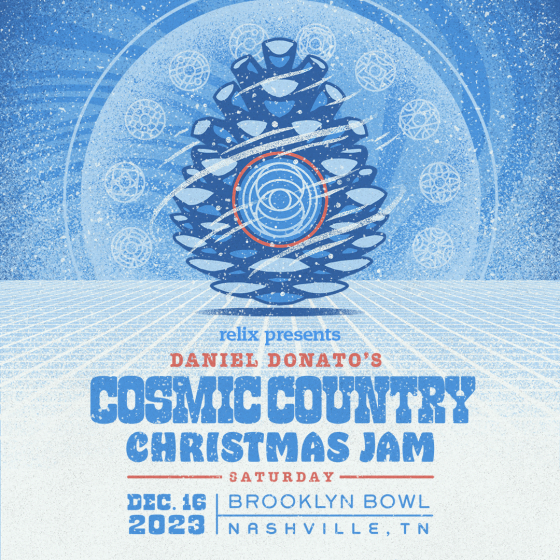
Daniel Donato’s Cosmic Country Christmas Jam (December 16, Nashville, TN)

If you’ve been enjoying Daniel Donato’s recent Cosmic Country Mixtape – a BGS exclusive – you won’t want to miss his Cosmic Country Christmas Jam at Brooklyn Bowl in Nashville on December 16. (Tickets and info here.) It’ll be pickers’ polar paradise with appearances by Sierra Hull, Duane Trucks, Grace Bowers, Willow Osborne, and many more. 


Steven Gellman, “Jewish Christmas”

An adorable and delightfully cheesy holiday song – as all of the best holiday songs are – that reminds us how cultural traditions blend and transform, not only in the American “melting pot,” but all around the world, too. Hear more from this award winning folk singer-songwriter with our October premiere of “Little Victories.”


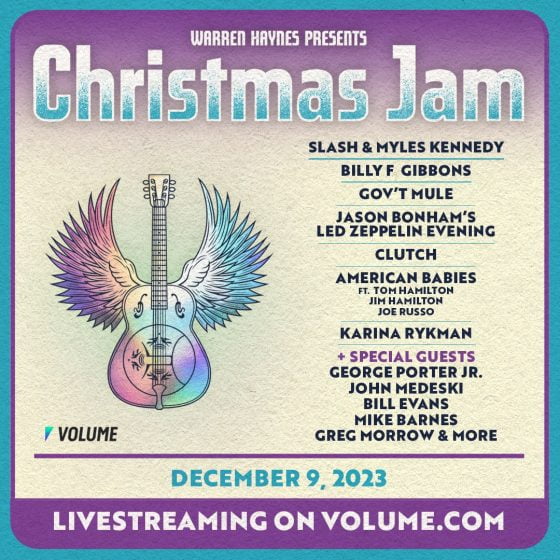
Warren Haynes Presents: Christmas Jam (December 9, Asheville, NC)

If you’re in North Carolina’s High Country, here’s a rockin’ Americana Christmas Jam you won’t want to miss. The annual event, organized and hosted by Grammy Award winner Warren Haynes, will be held on December 9, benefits Asheville Area Habitat for Humanity, and will feature appearances by Billy F. Gibbons, John Medeski, Gov’t Mule, Bill Evans, and many more. Plus, its bonus/offshoot event, Christmas Jam by Day, will showcase a handful of fast-rising roots artists including Colby T. Helms and Red Clay Revival. Tickets are still available and, if you don’t happen to live within striking distance of the Blue Ridge Mountains, you can stream Christmas Jam live on Volume.com.


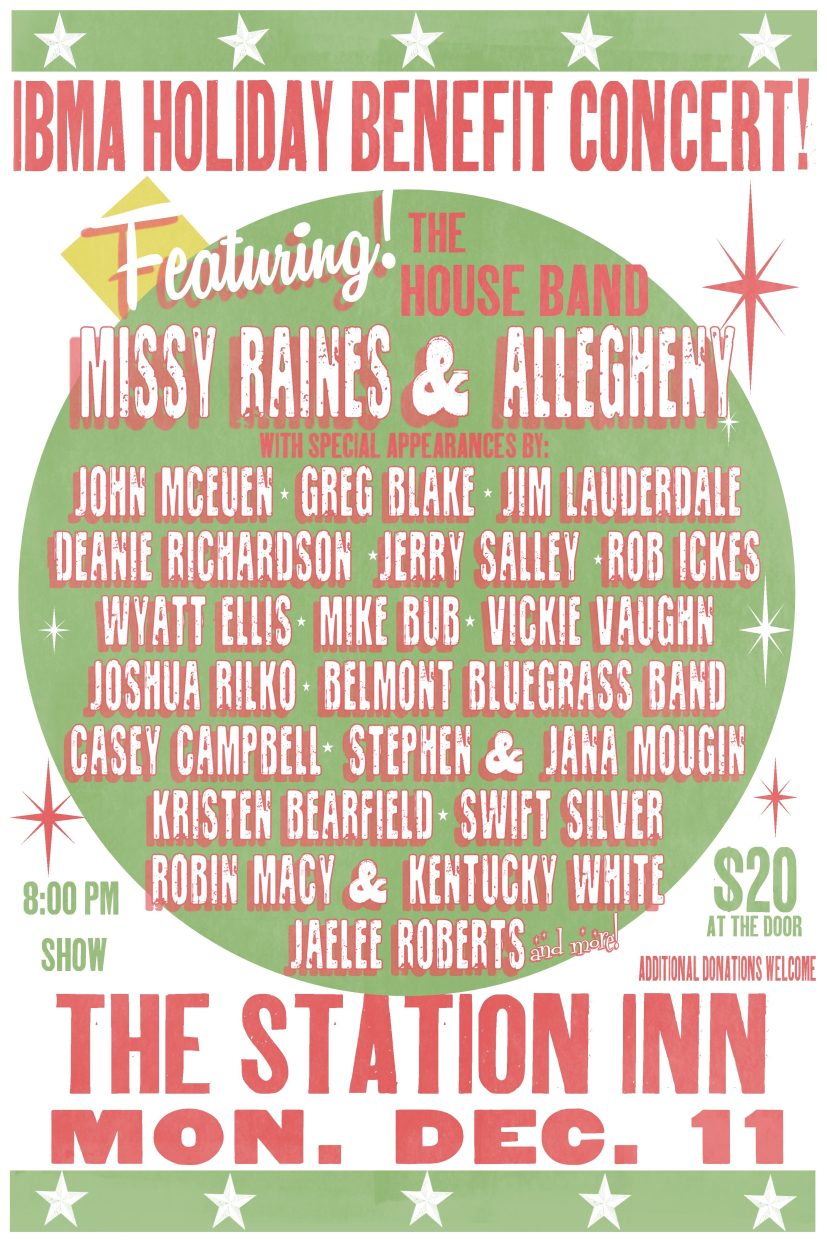
IBMA Holiday Benefit Concert (December 11, Nashville, TN)

A heavenly host of our bluegrass buddies will be convening at the World Famous Station Inn in Nashville on December 11 to raise funds for the IBMA Trust Fund and the IBMA Foundation. The lineup – anchored by house band Missy Raines & Allegheny – features a wide swathe of artists and community members from reigning IBMA Award winners to acclaimed songwriters to exciting up-and-comers. Holidays in Nashville are truly incomplete without a visit to a festively decorated Station Inn.


Irene Kelley and the Kelley Family, The Kelley Family Christmas

Staying with bluegrass for another moment, venerated bluegrass songwriter Irene Kelley has brought along her two talented daughters, Justyna and Sara Jean – both successful artists and songwriters in their own right – for a cozy and comforting album of holiday classics, Kelley Family Christmas. The project benefits Patio Records’ Healing Gardens initiative, with a goal of raising funds to build healing gardens at hospital treatment centers. It’s a lovely family-centered album that showcases how much great music runs in the veins of the Kelleys. 


Paul McDonald & the Mourning Doves, “Maybe This Christmas”

If the holidays make you blue, you’re not alone. There’s plenty to enjoy in this tune of Christmas misery from Paul McDonald & the Mourning Doves. “So maybe this Christmas folks will just leave me alone,” he sings, plaintively. “And quit asking how I’m doing without her and if I’m ever going to let that girl go.” There’s a delicious quality to holiday melancholy and that’s on full display here, in this languid and loping alt-country holiday song of lost love.


Mr Sun, Mr Sun Plays Duke Ellington’s Nutcracker Suite

We’re big fans of the bluegrass, old-time, and new acoustic tradition of artful and virtuosic cover albums. Here, Mr Sun bring the form to its highest level, synthesizing and transforming Duke Ellington’s Nutcracker Suite into compositions fitting of a four-piece, ostensibly bluegrass string band. We premiered a track from this collection, “Shovasky’s Transmogrifatron (Ballet Snow Scene),” earlier this week, so we can guarantee Grant Gordy, Joe K. Walsh, Aidan O’Donnell, and Darol Anger’s rendition of this classic record will make your jaw drop – and your toe tap!


Jamie O’Neal & Ty Herndon, “Merry Christmas Baby”

Pop country is often good country too, and this collaboration from Jamie O’Neal and Ty Herndon demonstrates how artful the format can be – that ear-grabbing chromaticism in the melody of the first line, for instance. “Merry Christmas Baby” is another holiday lament, but packaged in a radio-ready production style that belies the loneliness in the lyrics, co-written by O’Neal and Allen Mark Russell. If this track came on the local Top 40 country station, none of us would be complaining. Merry Christmas, BGS readers – wherever you are!


Jon Pardi, Merry Christmas From Jon Pardi

We can’t believe just how perfect this intro is played on pedal steel and, despite the fact that we don’t think Jon Pardi could hit Mariah’s whistle notes, his rendition of this quintessential holiday smash hit is ideal for Christmas boot scootin’. Pardi is a definitional example of timeless country traditions packaged for the mainstream. His entire holiday album, Merry Christmas From Jon Pardi, is a heavy dose of joy, fun, and delight executed with flawless old country musicality. Twin fiddles on “All I Want For Christmas?” Yes, a thousand times, yes.


Wynonna, “Beautiful Star of Bethlehem”

While we argue over which modern version of this track is the exemplary version – The Judds’ or Patty Loveless’, of course – the holiday season is the perfect time to hold our fond memories of Naomi while we celebrate how Wynonna and her husband/producer Cactus Moser pay tribute to 1987’s Christmas Time with The Judds with this new iteration of “Beautiful Star of Bethlehem.” No matter who sings the song, its bluegrass bones and Stanley Brothers touches are obvious, and we adore how simple and unpretentious this recording by Wynonna and Cactus is.


Our Classic Holiday Album Recommendation of the Week:
Sharon Jones & the Dap Kings, It’s a Holiday Soul-Party

We miss Sharon Jones desperately. Each year, when the holidays roll around, we go back to our (now classic) Non-Crappy Christmas Songs playlist and, in general, try to remind ourselves just how much actually good Christmas and holiday music exists out there. As we do, this album from Jones & the Dap Kings is one of the first to come to mind. It’s iconic, it’s traditional, it’s far out, it’s comforting, it’s surprising, and it’s effortlessly inclusive in its scope and its sonics. We come back to this record year in and year out, so it’s a perfect first pick for our Classic Holiday Album Recommendations.

More BGS Wraps are coming your way next week!


Photo of Jon Pardi: John Shearer
Photo of Wynonna: Eric Ryan Anderson
Photo of Brandy Clark: Victoria Stevens

The Show on the Road – Menahan Street Band (The Daptone Sound)

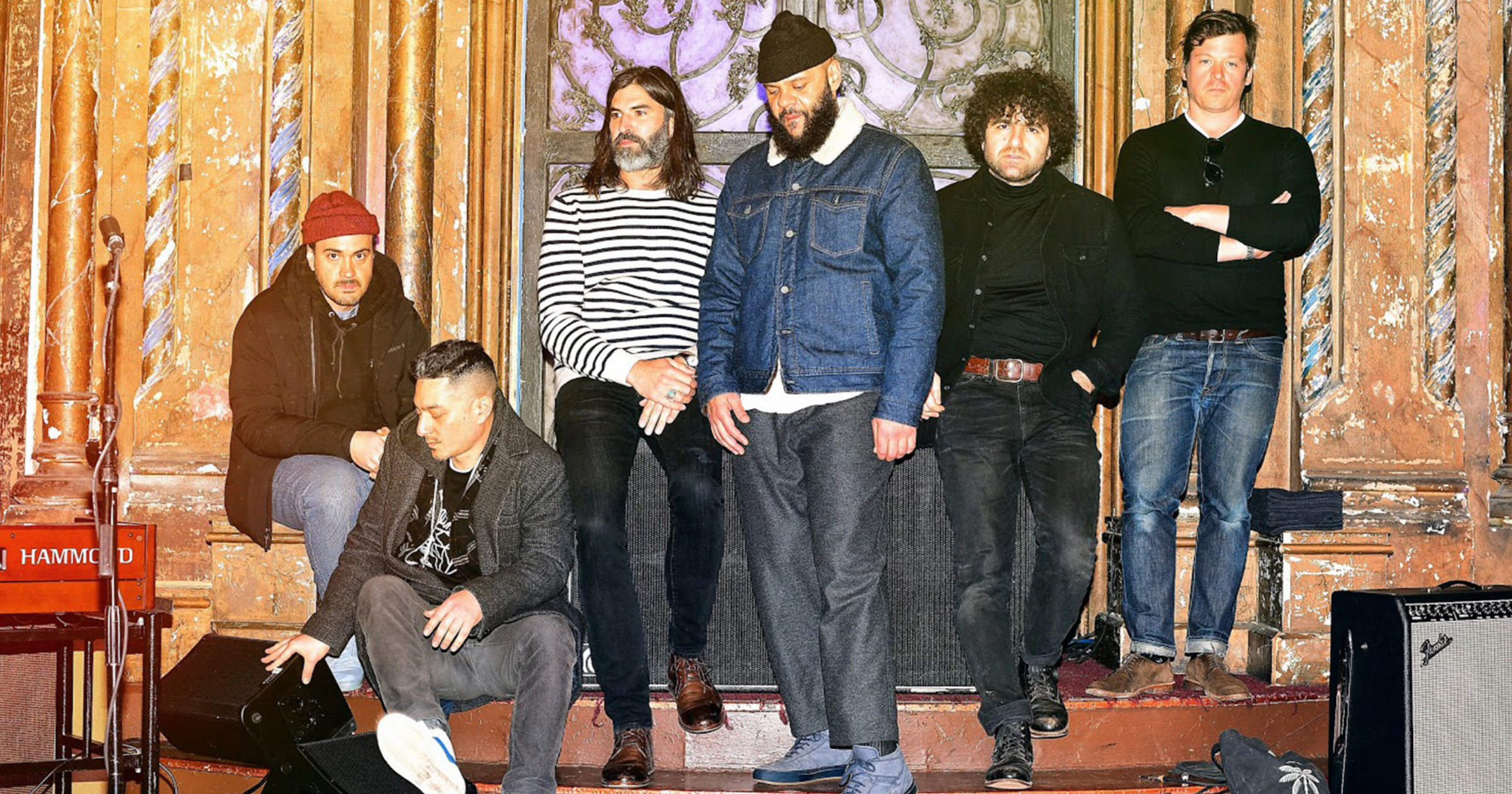
This week, The Show On The Road brings you a rare conversation with Thomas Brenneck and Homer Steinweiss, the braintrust behind brass-forward instrumental supergroup the Menahan Street Band. If Tarantino and Scorsese ever needed a custom-made, 1970’s greasy-soul soundtrack, MSB might be the perfect choice. While the timeless Daptone Records sound has gone worldwide thanks to breakout stars like the late Sharon Jones and Charles Bradley, most don’t know the bandleaders and songwriters behind their intricately arranged works.

LISTEN: APPLE PODCASTSSPOTIFYSTITCHER

Guitarist/producer Thomas Brenneck has been the secret sauce in helping hitmaker Mark Ronson create vintage backdrops for crossover stars like Amy Winehouse, while Homer Steinweiss’ slinky drumming can be heard across the Daptone universe, including on Jones, Winehouse, and Lee Fields and The Expressions records, not to mention his work with Lady Gaga, St. Vincent, and Bruno Mars. For the first time in a decade, MSB — which includes Dave Guy (The Roots), Leon Michaels (The Black Keys) and Nick Movshon (The Expressions) — have reconvened the troops to create their most effortlessly cinematic collection yet: the cheekily titled The Exciting Sounds Of The Menahan Street Band. The album art alone signifies a sensual, intimate evening is ahead to whoever listens. Is the design NSFW? Maybe.

Brenneck called into the episode taping from outside L.A. and Steinweiss from his studio in New York City. The conservation jumped back to how they formed the group in 2007, how they convinced Bradley to join them in making new music (he had been doing James Brown impression work), and how they find that out-of-body, improvisational zen zone which creates their aural moods of mystery and intrigue — showcased best in the reverb-y Bond-like jam “Starchaser.”

A favorite surreal moment that Brenneck mentioned was driving through Brooklyn hearing their song sampled by Jay-Z. For a moment, their horns were blaring from every car radio in the city. While hip-hop legends often find their beats and backdrops from classic soul and R&B vinyl, notables like Eminem, Kendrick Lamar, Travis Scott and 50 Cent have mined the funky MSB catalog for years. Sir Paul McCartney also used their services. If you need an instant vibe, they’ve got you. Even in sparkling trumpet-led themes like “Glovebox Pistol,” which clocks in at a minute and eight seconds long, you can see a velvet-boothed, smoke-filled scene unfolding, bringing to mind the lush scores of The Godfather or The Score.

Only recently have star backing-bands like The Wrecking Crew, The Swampers, and the Muscle Shoals Rhythm Section come to be appreciated for creating some of the most beloved songs in the American pop canon, from The Beach Boys and Aretha Franklin to Paul Simon, Bob Dylan, and The Staples Singers. It can be argued that in the 21st century, Brenneck and Steinweiss (and the work of The Menahan Street Band) deserve to be included in that conversation. With one listen of The Exciting Sounds Of The Menahan Street Band, you are transported — exactly where is up to you.


Photo credit: Shervin Lainez

The Show on the Road – Bettye LaVette

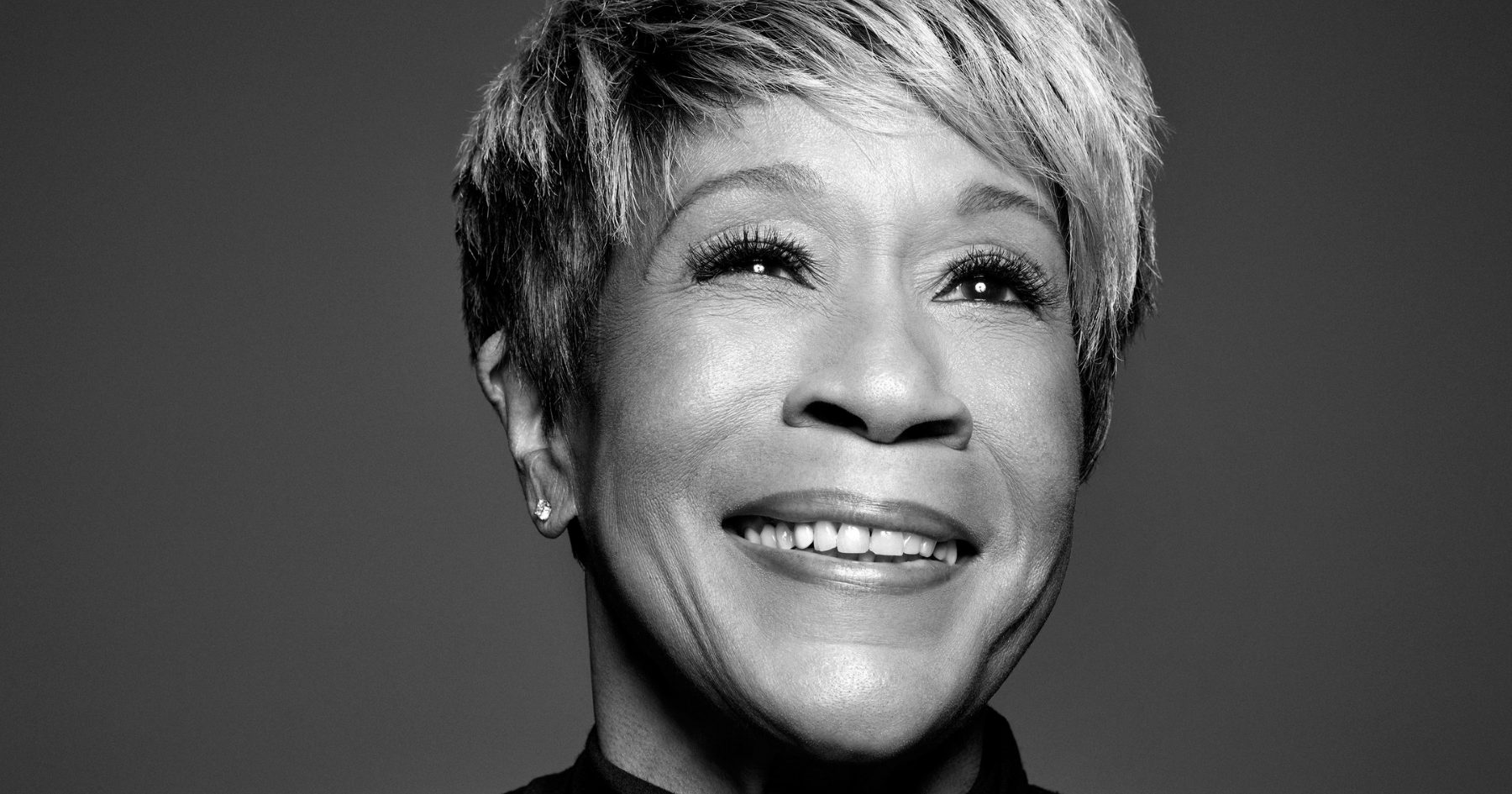
This week on The Show On The Road, we feature an intimate conversation with beloved soul and R&B singer, Bettye LaVette.

LISTEN: APPLE PODCASTSSPOTIFYSTITCHER

Covering her remarkable six decades in show-business, we dive deep into LaVette‘s beginnings as a Detroit hit-making teenager during Motown’s heyday (her neighbor was Smokey Robinson), to her early career touring with Otis Redding and James Brown, and the hard times that followed, as a music industry steeped in racist and sexist traditions largely turned its back on her.

While other soulful song stylists like Sharon Jones, Tina Turner, Mavis Staples and others saw their status and popularity rise with time, LaVette remains an underrated, best kept secret on the Americana circuit, with younger listeners just discovering her remarkable work covering anyone and everyone from The Beatles to Neil Young to Billie Holiday.

After nearly dropping out of music, her remarkable comeback began in 2005 with a string of acclaimed records — bringing her from half-filled bars to singing “Blackbird” at The Hollywood Bowl with a 32-piece orchestra, being nominated for five Grammy awards, and being inducted into the Blues Hall of Fame.

One thing you’ll notice immediately is her fiery laugh, which punctuates the episode — even when telling the darkest stories, like her early manager getting shot and her 1960s hits being recorded by white artists, leaving her versions largely forgotten. Her Grammy-nominated newest LP Blackbirds, produced by legendary drummer Steve Jordan, shows her at her most vulnerable best.


Photo credit: Mark Seliger

In Memoriam: 2017

The year end is a time for round-ups — reflections on the cultural, social, and political landmarks of the past 365 days. But the tragedies brought on by ideological conflict, mass violence, and natural disasters in 2017 are particularly hard to sum up in a few simple phrases or talking points. That’s where music comes in, lending form to feelings and ideas that we may otherwise struggle to put into words. Luckily, there were plenty of releases that did just that throughout the course of the year (and we’ve highlighted our favorites on our BGS Class of 2017 lists).

However, this function of songwriting is far from new. Music has provided respite or thrown down the gauntlet since its inception, and 2017 saw the passing of artists across all genres who have channeled this power brilliantly for years. We lost Sharon Jones, Curly Seckler, Butch Trucks of the Allman Brothers Band, Chris Cornell of Soundgarden and Audioslave, Hüsker Dü’s Grant Hart, AC/DC’s Malcolm Young, Steely Dan’s Walter Becker, Sister Sledge’s Joni Sledge, Montgomery Gentry’s Troy Gentry, Jimmy LaFave, Linkin Park’s Chester Bennington, Kevin Garcia of Grandaddy, and Pat DiNizio of the Smithereens, among others.

Here, we pay tribute to and honor the legacies of musicians who have bolstered communities, broadened the scope or forged new paths across this broad spectrum that we call Americana.

Chuck Berry (October 18, 1926 – March 18, 2017)

Chuck Berry is heralded as one of the preeminent fathers of rock ’n’ roll. His influence is so profound that John Lennon once famously remarked, “If you tried to give rock ‘n’ roll another name, you might call it ‘Chuck Berry.’” Born in St. Louis, Berry signed to Chicago’s Chess Records in 1955 and produced some of the biggest staples in American music like “Roll Over Beethoven,” “Sweet Little Sixteen,” “Rock and Roll Music,” and “Johnny B. Goode.” Berry contributed just as much to the landscape of country as he did to pop and R&B, and his songs became hits for heavyweights like Waylon Jennings, Emmylou Harris, and Buck Owens. His impact on the genre was recognized in 1982, when he was inducted into the Nashville Songwriters Hall of Fame. In 1984, he received the Grammy Lifetime Achievement Award and was inducted into the Rock and Roll Hall of Fame in 1986 as part of the inaugural class. Released in June, Berry’s posthumous record, CHUCK, became his first studio release since 1979. Tinged with playful nods to the past, it’s a fitting farewell from the architect of rock ’n’ roll.

Gregg Allman (December 8, 1947 – May 27, 2017)

As co-founder of the Allman Brothers Band, Gregg Allman was one of the most enduring figures in music. Allman and co. rose to fame as sonic trailblazers with their amalgamation of soul, gospel, R&B, country, and jazz. Allman was a strong proponent of the blues, and while he is often hailed as the king of Southern rock, it’s a moniker that he didn’t fully embrace. As Gregg Allman Band guitarist and music director Scott Sharrard told us in an interview earlier this year, “[Gregg] used to say to me all the time, ‘Nothing matters but the blues. You can go in all kinds of directions with music, but if you don’t have blues, you don’t have shit.’… And he also used to say something to me, which I thought was a really, really deep and important historical and contextual understanding of musicology in America, that there’s no such thing as Southern rock. All rock is Southern. It’s all from the South. All of it.” During Allman’s quest to preserve and build upon the blues tradition, he penned notable tracks like “Midnight Rider,” “Melissa,” and “Whipping Post.” He passed away in May due to a reoccurrence of liver cancer, leaving behind his posthumous release, Southern Blood, and a legacy of down-home soul that cuts right to the heart.

Glen Campbell (April 22, 1936 – August 8, 2017)

Selling 50 million records over six decades, the Rhinestone Cowboy reigned as country royalty, but is just as deserving of the title “Crossover King.” In the ‘60s, his guitar chops earned him a spot in the Wrecking Crew, a cast of sought-after session musicians in Los Angeles. As part of the Crew, Campbell played on infamous recordings like Frank Sinatra’s Strangers in the Night, the Beach Boys’ Pet Sounds, and Elvis Presley’s Viva Las Vegas. Toeing the line between pop and country, Campbell became a solo star in his own right, with a perfect croon that was unmatched. He was inducted into the Country Music Hall of Fame in 2005 and awarded with the Grammy Lifetime Achievement Award in 2012. In 2011, Campbell announced that he was diagnosed with Alzheimer’s and embarked on a Goodbye Tour, which was captured and subsequently released as a documentary film. He lived to see the June release of his final album, Adiós, which he recorded with the help of his longtime friend and banjo player, Carl Jackson. A pop star and a country legend, Campbell will forever be remembered as the down-to-earth farm boy from Arkansas who never lost sight of his roots.

Don Williams (May 27, 1939 – September 8, 2017)

The Gentle Giant got his start in the mid-60s, forming the Pozo-Seco Singers with Susan Taylor and Lofton Cline in his home state of Texas. After the trio went their separate ways, Williams moved to Nashville in the ‘70s and launched a prolific solo career that kept him on the top of the charts for decades. From 1974 to 1991 and over more than 40 albums and 50 singles, he never charted below number 22. Williams’ straightforward tunes and smooth vocal provided the framework for some of modern country’s biggest names, and his contributions were honored during his induction into the Country Music Hall of Fame in 2010.

Jessi Zazu (July 28, 1989 – September 12, 2017)

The word to describe Jessi Zazu is fearless. The Nashville-based singer/songwriter co-founded the band Those Darlins as a teenager alongside fellow musicians she met at the Southern Girls Rock Camp. Born out of an affinity for the Carter Family, Those Darlins sonically ran the gamut from rockabilly to growling punk and back again. On stage and off, Zazu was the epitome of grace and grit. An artist through and through, she was a staple in the Nashville scene who was just as prolific in the world of visual art as she was in songwriting. Those Darlins planned to go their separate ways, performing their final shows in March 2016 just weeks before Zazu was diagnosed with an aggressive form of cervical cancer. She publicly shared her diagnosis with a video last December in which she shaved her head and wore a t-shirt bearing the phrase “Ain’t Afraid” — a Those Darlins song written years prior. Zazu was a fighter and a creator until the very end; she continued coaching young women at the Girls Rock camp, recording solo music, and hosting art exhibitions. In her short 28 years, Zazu exuded a strength, determination, and passion that will serve as an example for young women for years to come.

Charles Bradley (November 5, 1948 – September 23, 2017)

James Brown’s frenetic set at the Apollo Theater on October 24, 1962 was given an official release the following year. One of the most acclaimed live albums of all time, its magnetism impacted generations of music fans, including a young Charles Bradley, who was in attendance at the show. In the years that followed, Bradley worked a series of odd jobs — from a cook to a James Brown impersonator — all while keeping his aspirations of a singing career in focus. Bradley’s big break finally came in the form of Gabriel Roth, who co-founded Daptone Records. Roth introduced Bradley to producer Tom Brenneck, and the result was Bradley’s debut album, No Time for Dreaming, released in 2011 when Bradley was 62 years old. Over the course of six years and two more albums, Bradley delivered captivating, worldly soul ballads that garnered him his own nickname — the Screaming Eagle of Soul.

Tom Petty (October 20, 1950 – October 2, 2017)

Tom Petty is a national treasure. Songs like “Mary Jane’s Last Dance,” “I Won’t Back Down,” “American Girl,” and “Free Fallin’” are so ingrained in the American fabric that it’s hard to imagine a time when you could turn on the radio and not hear Petty on the dial. After a chance encounter with Elvis Presley, Petty became interested in music, later dropping out of high school to join the band Mudcrutch. After its dissolution, he formed Tom Petty and the Heartbreakers — the platform which would solidify his status as a rock icon. He recorded two albums as part of the supergroup the Traveling Wilburys, which also included Bob Dylan, George Harrison, Jeff Lynne, and Roy Orbison, and was inducted into the Rock and Roll Hall of Fame in 2001. Petty and the Heartbreakers had just wrapped a 40th anniversary tour when he suffered a heart attack. Petty’s death came as a gut-wrenching shock, just a day after the mass shooting at the Route 91 Harvest Festival in Las Vegas that killed 58 people. But we can all find solace in Petty’s legacy, which is palpable. No doubt his contributions will continue to serve as mainstays in music for years to come.

Fats Domino (February 26, 1928 – October 24, 2017)

Fats Domino ushered in the early wave of rock ‘n’ roll, topping the charts in the ‘50s and ‘60s with “Blueberry Hill,” “Walking to New Orleans,” and “Blue Monday,” among others. His adept piano playing and hearty stage presence was infectious, and he was eclipsed on the charts only by Elvis Presley, coming in a close second. His New Orleans rhythm and blues captivated a wider audience and popular music was all the better for it. Rock ’n’ roll heavy hitters like John Lennon and Led Zeppelin later covered his work, and his accomplishments were recognized in 1986 when he became part of the first class of inductees into the Rock and Roll Hall of Fame. Fats’ brand of boogie woogie injected new life into pop, and his reverberations can still be felt today.

The Urgency of History: A Conversation with Rhiannon Giddens

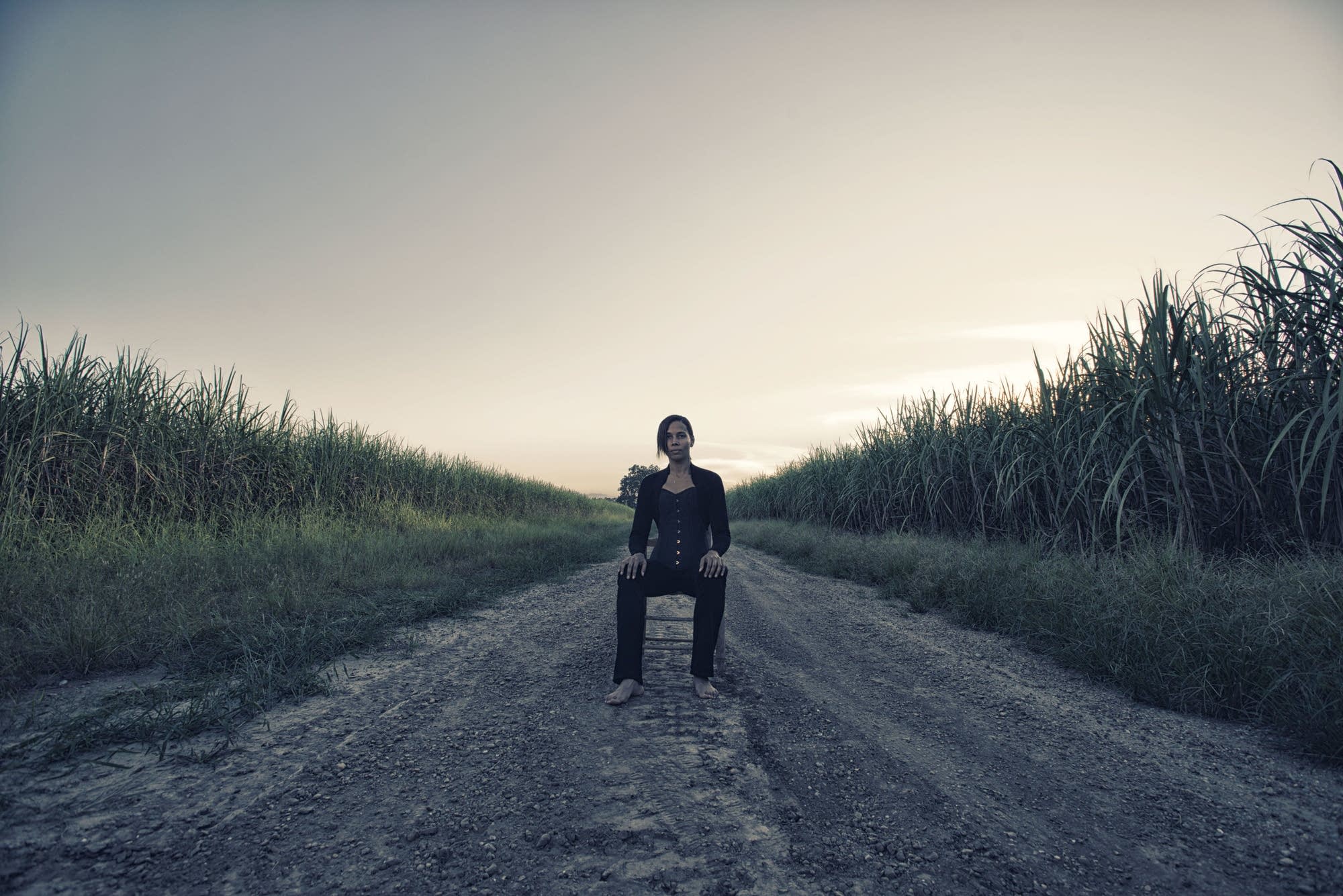
Every now and then, a voice comes along that is so thoroughly in tune with the times that it can’t — and shouldn’t — be ignored. This year, that voice belongs to Rhiannon Giddens. Her latest album, Freedom Highway , takes its cues from the warriors of justice who came before her … Joan Baez, Odetta, the Staples Singers, and others. And it takes its stories from the victims of injustice that suffer throughout history … slaves, children, Black men, and more.

Of course, Giddens couldn’t have known that, in the middle of her album cycle, Nazis would march and Confederate statues would fall. But march and fall they have, all while she uses her voice to speak truth to the powers that be and the masses that care. And, in case anyone dare challenge her assertions, the ever-curious student of history brings all the proverbial receipts to back up her truth.

The more this year rolls along, the more important and potent your record and voice become. How’s it feel, at this moment in time, to hold up a mirror of the racial injustices upon which this country is founded?

Somebody said, at the show yesterday, “Your album is more timely every day!” I was like, “Yeah. Isn’t that depressing?”

Isn’t it?

Isn’t that freaking depressing? I wrote and recorded this record last year, and I remember thinking, before the election, “I don’t even know how urgent this is going to feel to people.” [Laughs] Little did I know. Holy moly! I mean, it’s always urgent to me, because I see it there. It’s always there, but for it to be so on the surface …

The thing is, the record’s always going to be timely because we’re talking about things that are part of the fabric of America — completely systemic issues here. It’s just, now, it’s really on the surface. Now it’s really exposed whereas, if the election had gone differently, these issues would still be here; they would just be covered up, underground a little bit more.

So, on the one hand, I’m like, “Oh, God. I can’t believe this is going on.” On the other, it’s, “Yeah.” But it’s great that people can see it. There’s a population of us that have known this stuff was there, and now everybody else can see it. I have to stay positive. We’re in the middle of what people are going to look back on, like in the ’60s. That’s what we’re in, right now. It’s a little freaky.

It is weird to be discussing the cause of the Civil War in 2017. And having to argue about what the cause was …

Oh my God. I know! The book I’m in right now is Negroes in Colonial South Carolina from 16whatever through the Stono Rebellion and, when you get into the beginning of the country — like the very beginning, the settlements in South Carolina and Virginia and New England — African-Americans are completely intertwined with how the country came into being. Culture-wise, music-wise, economics … for the numbers, the impact was enormous. And when you also look at the primary sources and how the European-Americans, soon to be called “white,” talk about African-Americans, it’s a pretty negative, horrible thing.

To have that be the basis of a country … to have the genocide of natives be the basis of a country … to have racial discrimination be how the country has operated for however long … I mean, sure, of course it’s still an issue, of course this is deep-seated stuff. We’ve had a lot of surface progress and we have had some deep progress. I witness the number of white folks that are like, “Whoa! What?! This is wrong!” And that’s progress to me because, when you look at the numbers for how long it took Abolitionists to get a stronghold, how long it took the religious movement to get a stronghold … when you look at the overall thing, that’s a really positive development to me. And that’s what gives me hope, that there has been a lot of change in people. It’s just the system and the people in power are operating from this old thing. Of course! Why wouldn’t they? They benefit from it!

And they were taught — and continue to teach — a false narrative about how the country was founded.

Yes. Exactly! That’s a problem. When people with an open mind learn the actual history, they are horrified. But, if that’s not what you’re taught … My empathy only goes so far, though, because there’s an Internet and there are lots of books. There are just people who don’t want to dig. I get it: There’s a lot of stuff to watch on TV or whatever.

But there are books out there. There’s all this amazing, scrupulously researched documentation that’s coming out. I just got a book a couple weeks ago. It’s called The Other Slavery and it’s all about the slavery of Native Americans. It just came out last year and it’s thick and it’s footnoted to within an inch of its life. It’s all primary-sourced material that he’s gathered and is writing about. You start reading and it’s like, “Oh my God!” But it’s out there in the book store. Pick it up.

I don’t know. I’m in between, sometimes. I understand if you think the narrative is this, but that only goes so far because you hit human decency. Even if your knowledge of American history is flawed, there’s still, “Don’t be a Nazi.” You know what I mean? I can go only so far with sympathy. It’s like, “Cool. Yeah. You have a swastika? I’m done.” It’s a weird place to be.

As an artist of color and a woman, do you feel any internal or external pressure to meet certain expectations with this stuff … because you don’t have the luxury of mediocrity, like so many white guys with guitars have?

[Laughs] Oh, boy! You don’t hear that very often! Right?

[Laughs] But it’s true. It’s not fair, but it’s true.

It is true. But it can swing the other way a little bit. I’ll be honest: Chocolate Drops, when we started, we weren’t very good. I mean, we were very enthusiastic. [Laughs] There was a novelty aspect that brought some people to the show, but what we had was a connection to tradition. And that is what got us over the beginning of not being that great.

But what you’re saying is … there are two different ways to look at it: There are systemic issues that affect everybody, and then there are issues that anybody has. Right? Everybody has a particular set of obstacles to overcome in their life and then there are these systemic things. So I try to approach my professional life by trying to look at it as this specific set of obstacles that I’ve been given as a human being and not looking at it from the systemic point of view because I think, especially when it comes to me, I have a lot of advantages: I’m light-skinned and all of that kind of stuff.

I remember having a conversation with Sharon Jones, when we were on the set of The Great Debaters. We were part of a music scene in the movie for a split-second. I had never met her before and listening to her talk about how hard her life had been primarily because of her skin color and going, “Wow. I had no idea how bad it could be.” I just shut up and listened to her talk because this was a woman a generation older than me and she had a lot of shit she needed to say, and I needed to hear it. Having that experience, I took that into myself and felt like, “I’m going to use my advantages and I’m going to not really think about what may not be happening for me because of who I am.” I have to stay focused on that because I do have advantages and I do have privileges. And I’m going to use that to try to tell these stories.

I’ve been very, very blessed. The Chocolate Drops were blessed. We stayed focused on Joe [Thompson] and the mission. I think that overcame lots of things. Yeah, we had our share of stupid remarks and what not. But, come on: I read the autobiographies of Black musicians who were out in the ’20s and ’30s and it was nothing, nothing, NOTHING, not even a fraction of what they went through. So I considered us blessed and I used that to try to tell these stories of people who are less fortunate.

You’re in a unique position to bridge a few different gaps, particularly doing the keynote at the IBMA Awards this year. How do you address a crowd that is, notably, not diverse? Some of them may well be allies, some may not. So how do you frame your message to a crowd like that for the biggest impact?

This is where growing up mixed comes in handy. You just walk the line and be unapologetic about it: “Look, man, this is where I’m coming from.” We’ve been shunned by white family members. We’ve been treated not great, so I know that experience. But you can’t hate people. Because I’ve also seen the progress that the white side of my family has made. My grandmother became a bastion of love. She treated us the same as all her other grandchildren. She led that charge so the immediate family could see, over the years, how that love warmed things. So I’ve seen how people can change.

That’s why I get frustrated when people on the Left talk about “those rednecks” and are really dismissive of people I’m related to. You have to give people an opportunity to change. My grandmother’s a great example: She was poor, white, Southern, always looking out for survival, just very simple, straight-ahead, North Carolina, out in the country … her husband built their house, that kind of thing. Her first-born son goes to the big city metropolis of Greensboro and finds a Black woman and becomes a hippie. She had two choices. She was not like, “Oh, that’s great! Bring the Black woman home!” because that wasn’t her experience. In her life, they were the “other.” When my sister was born, she was like, “That’s my grandchild.” She was worried and wasn’t sure what they were going to do, but, then my sister was born, and she was like, “I don’t really care. I’m going to love this child.” She was always really nice to my mom. There were others who weren’t, but she stood fast. That, to me, is so inspiring. That’s where true change happens — when people fall in love and they bring people in. I come from that place.

It takes the “other” out of the equation because the “other” is now part of your family and are no longer an “other.” Like you said, you have to get on board or step all the way off, I guess.

That’s it. That’s absolutely it. It’s interesting. I come prepared knowing the history, so there’s a calmness. I know what happened.

You have truth on your side.

Yeah. You can say whatever you want, but …

Is it tiring or rejuvenating to sing these songs night after night? Is your next project going to be light-hearted kids’ songs or are you going to keep tugging this thread?

[Laughs] Good question!

I hope you keep tugging the thread until the whole thing unravels, but if you need a break, you do your self-care, Gids.

I go back and forth. I’m figuring out ways of not depleting myself. I emailed Joan Baez and asked, “How do you do this? You’ve been doing this for 50 years!” She had some really smart things to say. You have to figure out a way to tap into it without going all the way. You can’t go all the way every night. You’re supposed to be a channel, not provide all of it. So I’m getting better at it.

Every time I think, “Oh, yeah, I’m going to do a love album next,” I keep reading and I’m like, “No way!” [Laughs] There are too many things to say, too many things to write about.

Tug, tug.

Yeah.

Is there anything you feel that’s gotten lost in the conversation around this record that you want to make sure to point out? Or are people really getting it in the right way?

I gotta say, people are getting it. They’re getting the record and they’re getting the show. I’m just kind of stunned, sometimes, when I read the responses and what people have to say. It’s really great. I feel really good about it. It’s been pretty amazing.


Photo credit: John Peets

The Heart and Soul of Daptone Records

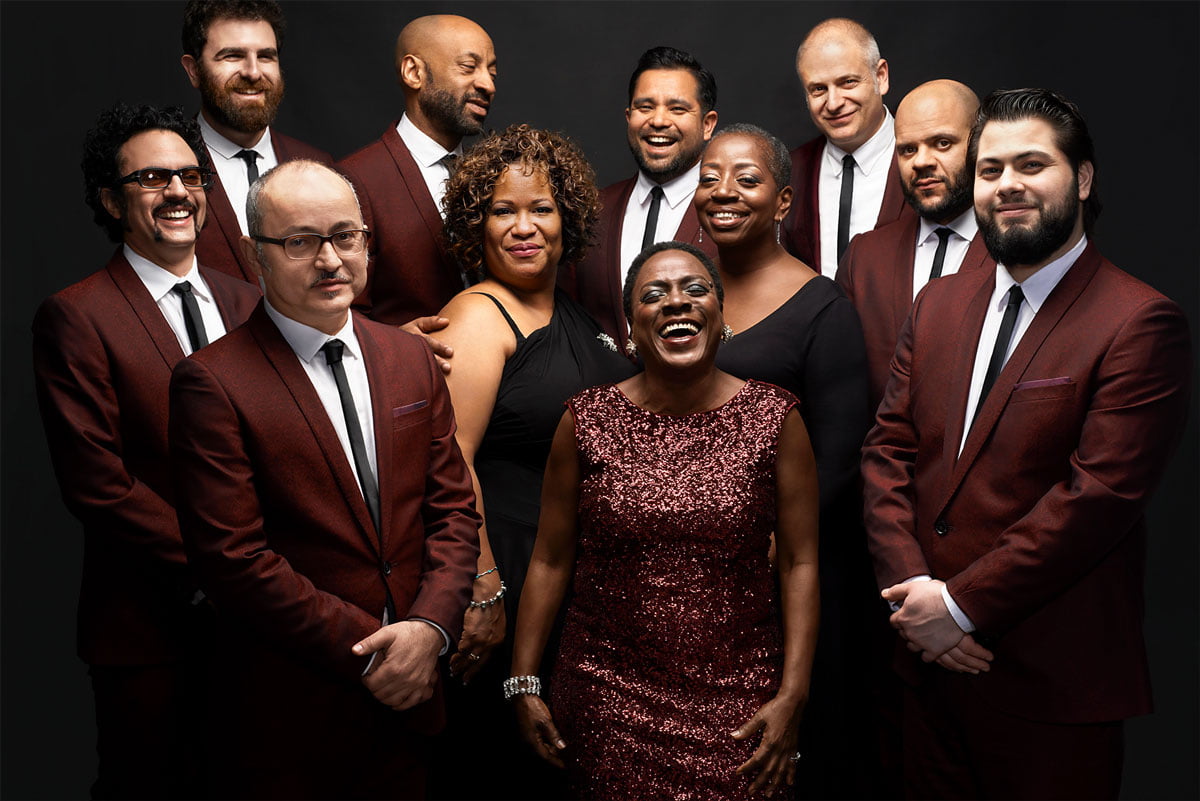
A young girl asks her mother, "How can Santa Claus visit them, when they don’t have a chimney? How can he leave presents under the tree, when he can’t even get into their apartment?" These are common questions most parents hear around the holidays, but it resonates powerfully in Sharon Jones & the Dap-Kings’ new Christmas chestnut, “Ain’t No Chimneys in the Projects.” “I said, ‘Mama, how can this be?” Jones sings in that outsized voice of hers, gift-wrapping every syllable for the listener as the horns flare and flash around her, the rhythm section grooves and the backup singers repeat her not-quite-rhetorical question. Somehow she conveys the innocence of the daughter pondering the rules of Christmas, as well as the affectionate concern of the mother who concocts a story about a magic chimney.

“Ain’t No Chimneys in the Projects” could easily have been cheesy and goofy, especially with its references to the projects and the ghetto — terms that sound antiquated in the context of a Christmas tune. Fortunately, the musicians play it straight, grooving hard to reinforce the powerful emotional resonance of the lyrics. It’s only when the little girl grows up and stops believing in Santa that she starts believing in something even more magical: It was her own mother who saved money throughout the year and put those presents under the tree. “Mama, now I know that you were the one!”

In addition to appearing on the new Oxford American Music Issue CD sampler, the song anchors It’s a Holiday Soul Party, the first holiday album from the venerable indie R&B label Daptone Records. It’s billed to Sharon Jones & the Dap-Kings, but it sounds like they invited the entire roster: Charles Bradley testifies mightily on “World of Love,” Saun & Starr harmonize beautifully on “Big Bulbs,” and seemingly the entire office staff sits in with the Dap-Kings. The album more than lives up to its party designation: With its lively energy and inventive interpretations of well-worn carols (This “White Christmas” is more Tina Turner than Bing Crosby.), it’s easily the best holiday album of the year.

“There’s some cute stuff on there and there’s some traditional stuff, as well,” says Neil Sugarman, who co-founded Daptone, produced the new record, and played saxophone on almost every song. “The nice thing is that there was no pressure. It was very impromptu. We just went in and jammed. And Sharon sings her ass off.”

The same, of course, could be said of nearly every Daptone release. Since it opened in 2001, the label has cornered the market on neotraditional soul music while also showing how loose that word “soul” can be. It obviously applies to the Stax- and Motown-derived R&B sung by Sharon Jones, Charles Bradley, and Saun & Starr. But it also includes the instrumental grooves of the El Michels Affair and the Sugarman 3, as well as the raw gospel of the Como Mamas and Naomi Shelton — even the cinematic funk of the Budos Band and Antibalas. Their records all sound like they could have been made in the 1960s or 1970s then excavated by extremely dedicated crate diggers at estate sales or junk stores. Yet, the music remains anchored in the 21st century and targeted to a contemporary audience.

It’s not a soul revival, precisely because no one at Daptone believes that soul needs to be revived. “People don’t say jazz music is retro or Latin music is retro,” says Sugarman. “But they do say soul music is retro.” It’s an odd popular prejudice, one that Daptone combats with music that consciously emphasizes the past while remaining doggedly engaged with the present. “It’s absolutely roots music,” he says, noting that it’s more urban than rural, more ghetto than holler. “We wear our influences on our sleeves, and there’s a lineage that we pay homage to every time we pull our instruments out of our cases. We try to groove as hard as the records that we love.”

When they formed Daptone nearly 15 years ago, Sugarman and Gabriel Roth tried to emulate the labels they loved, establishing a particular sound, a strong brand, and a loyal following that would take a chance on unknown artists. Charged with running a business, they both remained musicians first and foremost. Roth (sometimes known as Bosco Mann) plays bass, Sugarman blows the sax. “At this point in my life, I like having both. I like controlling the business and controlling my destiny as a recording artist. I love getting on the road with people like Sharon and Charles, and getting the kind of insight into their music that I couldn’t get if I was just sitting in the office answering emails and writing checks.”

For most of its life, Daptone only signed New York artists, many of them older and practicing their craft on the margins of the music industry. Charles Bradley was trained as a carpenter and had been hired to help Roth and Sugarman build a new studio, but he turned out to be an amazing singer whose live shows have galvanized audiences around the world. “He’s the guy we would call any time we needed help. We loved this guy so we wanted to work for this guy. We wanted to help him build a career.”

Similarly, Saundra “Saun” Williams and Starr Duncan Lowe originally came into the Daptone fold as back-up singers in the Dap-Kings, after having performed for decades as the Good 'N Plenty Girls. They quickly established themselves as a core part of the band’s sound — both in the studio and on the stage. “We always talked about making a record with them, but it takes a while to figure out who these people are,” says Sugarman, noting that it took them five years to plan, write, and record their debut, Take a Closer Look, released in May 2015. It was worth the wait, as the album reveals two spry singers with incredible chemistry, not to mention a band that adapted to complement their dynamic.

But the present is not what the past used to be. The market is changing, with newer labels like Colemine and 180 Proof crowding the scene, soul revivalists like Leon Bridges jumping straight to major labels, and consumers relying more and more on streams rather than outright purchases. “I’m not going to lie — it’s getting tricky,” Sugarman says. “Streaming services are taking a big chunk out of our revenue. When you look at the numbers, close to two million people per day click on a Daptone song. It’s exciting to see those numbers. The audience is there, but we’re not getting compensated. It could get to the point where it’s not sustainable as a business anymore, so you have to figure out how to keep putting records out.”

One way of surviving is to grow and expand, albeit very carefully and very gradually. In 2015, Daptone founded an imprint — Wick Records — to release 7-inch singles by New York garage rock bands, starting with a ferocious debut by the Mystery Lights. The label also signed a reggae band called the Frightnrs, whose first full-length is slated for release in 2016. Another upcoming release stands out even more: James Hunter’s Daptone debut, Hold On!, will hit stores (and, of course, streaming services) in Feburary. “He’s an English artist, so he’s the first artist we’ve signed who’s not from New York.”

Sugarman insists that the key to Daptone’s success has been — and will continue to be — its emphasis on community over market shares or compensation. “Not only do we need to like someone’s music, but they have to function within this family. That’s the way it has to be for the music to progress and stay honest. I don’t think we could have pulled off Daptone any other way.”


Photo courtesy of the artist