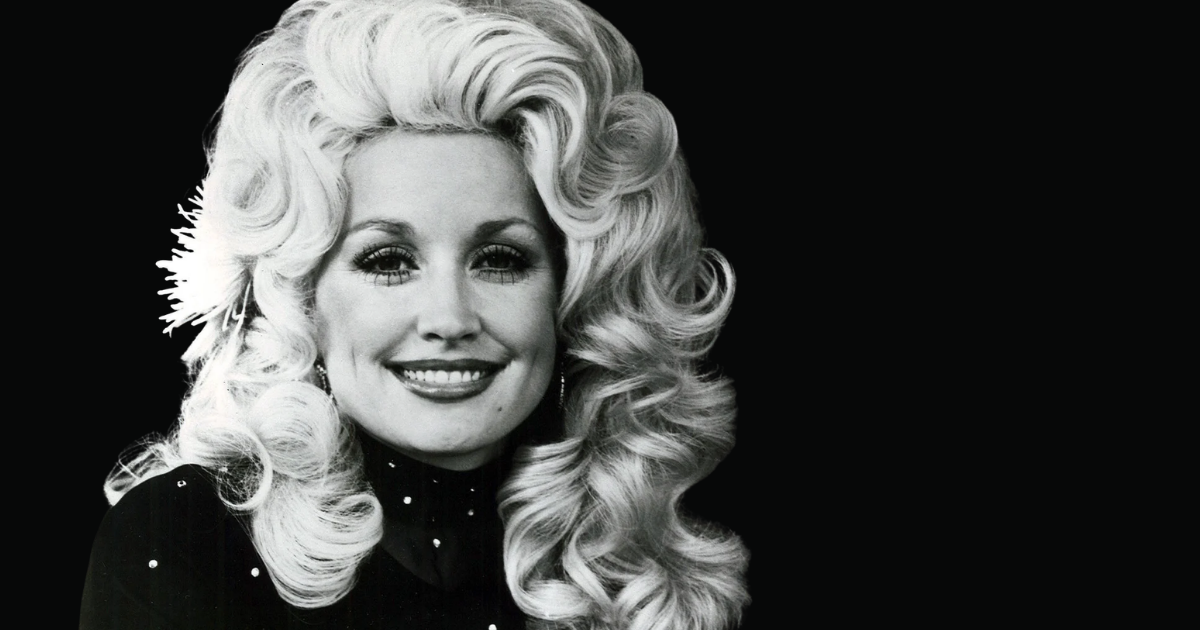
Country superstar Dolly Parton died on August 25, 2026, and the entire world is mourning a beloved musician, singer, songwriter, and picker – and the bluegrass community has lost one of its most prominent global ambassadors.
Born in 1946, Parton enjoyed a resplendent and diverse musical career that spanned seven decades, beginning in her beloved Smoky Mountains in East Tennessee, where she grew up steeped in “old-timey” and “mountain music.” She would go on to be inducted into both the Country Music Hall of Fame and the Rock and Roll Hall of Fame (despite her objections to the latter honor), as well as the Nashville Songwriters Hall of Fame. In 2005 she was awarded the National Medal of the Arts and in 2006 she received the Kennedy Center Honors. Parton would garner 11 Grammy Awards and a Lifetime Achievement Grammy (and more than 50 additional nominations), three Emmy Awards, 13 ACM Awards, 10 CMA Awards, four IBMA Awards, and many, many more accolades and trophies – including two Academy Award nominations and an honorary Oscar.
While Parton is known as an artist and songwriter – reportedly penning more than 3,000 songs in her lifetime – she enjoyed a well-rounded career in many fields, in the arts and beyond, starring in films, writing and producing stage shows, plays, and musicals, producing films and TV, publishing and writing books, bringing food and home goods lines to market, planning a chain of truck stops – and being “Dreamer-in-Chief” of Dollywood, her namesake theme park in her home county in East Tennessee. In the most recent days of her life and career, Dolly was a truly ubiquitous celebrity and cultural figure, not just in the USA, but around the world.
It would be nearly impossible to overstate her influence not only in country, roots music, and Americana, but in bluegrass, too. Parton was a devoted proponent and picker of bluegrass over the course of her entire career; she released more than a handful of decidedly bluegrass albums out of her dozens of LPs. Two of them, The Grass Is Blue (1999) and Heartsongs: Live From Home (1994), are often regarded as two of her best releases of all time – especially The Grass Is Blue, reportedly touted by members of her own team and inner circle. And bluegrass touches and influences would show up across her body of work, including in her original musical and her film and TV projects. Even more old-time and mountain music threads have been woven through her musical output than straight-up-and-down bluegrass has, with bedazzled mountain dulcimers and autoharps and tin whistles just as common in her videos and stage appearances as her trusty rhinestoned guitars and banjos.
At the turn of the century, Parton released The Grass Is Blue as well as Little Sparrow (2001) and Halos & Horns (2002), partnering with iconic bluegrass and country label Sugar Hill. The albums arrived at a tumultuous and fraught time in Parton’s career, when daytime television talk shows and tabloids seemed to be her business (and music’s) bread-and-butter. She and her management successfully leveraged the sounds, aesthetics, and cultural signifiers of bluegrass with this trifecta of albums – which were musically excellent, though critics regarded some of them with mixed opinions – to yet again employ a “rags to riches” storyline, as she had her entire career.
At this relative low point of visibility in her career, experiencing a sort of commercial and pop cultural lull, bluegrass was there to spark the resurgence that would bring Dolly not only back into the mainstream, but would lay the foundation for the peak of her cultural magnitude in the 2010s and 2020s. It’s a storyline – a trope and an archetype – she had inhabited across her career, from the little “one room cabin” Tennessee mountain home to Hollywood and her white “limozeen.” But just like those earliest days of her young life, as a youngster singing into a tin-can microphone she fashioned with a stick on her front porch, bluegrass, old-time, and mountain music have always been at the core of Parton’s success and her broad appeal.
Her collaborations with Linda Ronstadt and Emmylou Harris, especially Trio (1987) and Trio II (1999), boast perhaps the most superlative bluegrass recordings Dolly ever cut, and they are certainly the most well-known. Although The Grass Is Blue listens as more traditional, straight-ahead bluegrass and is adored by ardent fans, the Trio albums had much larger audiences. Trio included “Those Memories,” written by Alan O’Bryant (Nashville Bluegrass Band) while Trio II credited Del McCoury (“I Feel the Blues Movin’ In”), Harley Allen (“High Sierra”), and the Seldom Scene’s John Starling (“He Rode All the Way to Texas”) as songwriters. To this day both McCoury and O’Bryant joke about their Trio cuts being their biggest hits – and McCoury will giggle as he admits he never wants to sing “I Feel the Blues Movin’ In” again after Dolly had done it. Parton’s voice always typified the ever-elusive “high lonesome sound” of bluegrass, as coined by its proverbial father, Bill Monroe, but especially so with her sharp soprano combined with the powerful belt of Ronstadt and the soft patina of Harris’s voice.
Both Trio albums have all-star bands as well, including (but not limited to) Herb Pedersen, Mark O’Connor, John Starling, and Ry Cooder (Trio) and Starling, O’Connor, Carl Jackson, David Grisman, Roy Huskey Jr., Edgar Meyer, Larry Atamanuik, and Alison Krauss (Trio II). That’s right, Krauss – in 1999 already a multiple Grammy winner with two RIAA Gold records – was a side musician on the project, playing fiddle on four of the tracks. Heartsongs also had an incredible and vast roster of bluegrass greats lending their talents: Alison Krauss, Carl Jackson, Huskey Jr., Suzanne Cox, Rhonda and Darrin Vincent, Ronnie and Rob McCoury, Randy Scruggs, Ron Block, Adam Steffey, Jerry Douglas, Viktor Krauss, and more.
On 9 To 5 And Odd Jobs, a concept album of working class songs built around “9 To 5” and released in late 1980 just before the eponymous hit film, Bobby and Sonny Osborne can be heard joining Dolly on the vocal trio on “Hush-A-Bye Hard Times,” while Sonny lends banjo elsewhere on the LP, too. Parton’s White Limozeen (1989), a cosmic crossover journey from the mountains to the discotheque and back again, was produced by Ricky Skaggs – who played guitar and mandolin on the project – and featured Béla Fleck performing its striking banjo parts, like on the delightful opening track “Time for Me To Fly.” Little Sparrow, The Grass Is Blue, and Halos & Horns have similarly deep, impressive, and virtuosic credits as the Trio projects and Heartsongs, covering vast swathes of the bluegrass scene in the ‘90s and aughts. All of your favorite bluegrassers have picked with the queen.
Parton had a habit of surrounding herself with the best in bluegrass, in the studio and on stage. On morning and late-night television appearances, or during awards show performances, Dolly would be surrounded by pickers like Sam Bush, Chris Thile, Jim Mills, Bryan Sutton, Barry Bales, Stuart Duncan, and many more. Whether promoting Heartsongs, The Grass Is Blue, Trio, Trio II – or even going far back into her career, in its earliest days – Parton brought bluegrass and its influences and textures to many millions on TV. And still many more millions all around the world with her recordings, songs, and collaborators.
It seems everyone agrees that, despite her stratospheric level of fame, Parton is remarkably down to earth, present, and accessible. Taking a sample of her many features on songs by bluegrass artists demonstrates this. An international superstar, she would still – over and over – offer up her talents and time to guest with bluegrass artists on their own recordings and releases.
“Heartbreaker’s Alibi” by Rhonda Vincent is a downright craveable modern bluegrass rager, with Parton and Vincent sharing vocal duties and harmonizing effortlessly as they loop, swirl, and embellish around each other. That would not be the only time the pair would collaborate. Parton has gone on the record more than once to gush about bluegrass singer-songwriter Claire Lynch, who sang background vocals with Dolly on The Grass Is Blue and Little Sparrow. It’s clear she’s a true fan and inhabitant of this music; Parton has also been featured on songs by the Grascals, Carl Jackson, Joe Mullins & the Radio Ramblers, Reneé Fleming & Béla Fleck, Ralph Stanley, Doc Watson, Earl Scruggs, and oh-so-many more. Her live television performance of “Mule Skinner Blues” with Bill Monroe is one of her most iconic videos and appearances; it’s perhaps equalled only by her reprise of the track on The Grass Is Blue – and her lovely, giggling ad lib on that recording, “I’m a lady mule skinner.”
Her many forays in and through bluegrass were never seen as interloping, and the bluegrass community would respond with near unanimous support. (Which, for bluegrass, ought to be easily rounded up to “unanimous,” with how opinionated and divided its fans can be.) Parton has been nominated for awards by the International Bluegrass Music Association six times in her career since 2000, when she won Album of the Year for The Grass Is Blue. She was also nominated for Female Vocalist of the Year then (and in 2001), but lost both years to, remarkably, Rhonda Vincent. In 2000, she appeared at the annual IBMA Awards show – hosted by her longtime friend and collaborator, Marty Stuart – in Louisville, Kentucky. Audience members, fellow nominees, and performers present that night speak about how kind, funny, and accessible she was then, too. Parton laughed and joked with Stuart at the lectern after performing a track from The Grass Is Blue, clearly right at home among her bluegrass family.
Parton has also won three IBMA Collaborative Recording of the Year awards and most recently two Gospel Recording of the Year trophies for “In the Sweet By and By” (2022, with Carl Jackson, Larry Cordle, Bradley Walker, and Jerry Salley) and “Sacred Memories” (2017, with Joe Mullins & the Radio Ramblers, Ricky Skaggs, and Sharon White). It’s notable that, despite all of these bluegrass bona fides and accolades, and the universal love felt for Dolly in the bluegrass community – professionally and otherwise – that she’s not been awarded a Distinguished Achievement Award by the IBMA or inducted into the Bluegrass Music Hall of Fame. One anonymous IBMA elector commented that, to their knowledge, she had not yet at any point even made the ballot for what’s regarded as bluegrass’s highest honor.
If Parton were to be inducted into the Bluegrass Hall of Fame, she would join Bill Monroe as the only inductees in history to be honored by the Bluegrass Music, Country Music, and Rock and Roll Halls of Fame. She is certainly deserving of that honor. While some would argue the Distinguished Achievement Award from IBMA would be a better fit, with its broader scope, it’s indisputable that Dolly Parton meets the criteria for induction into the Hall. The basic standard, the first measuring stick of the IBMA and its panel of electors by which to measure eligibility, reads thusly: “Candidates should be judged according to their contribution to the advancement of bluegrass music and the indelibility of that impact.” Indelible describes it, doesn’t it?
Dolly Parton’s impact goes still beyond her recordings, her network of pickers, her global reach, her awards, and her media appearances. She’s also been an economic driver of her own on a regional and national scale, with Dollywood booking dozens of bluegrass acts each year for their shows, festivals, and special events. It’s a rite of passage in bluegrass to perform at Dollywood, and the bluegrass and country on offer at the park by touring regional and national bands is always first rate. Bands and acts like Della Mae, Willow Osborne, Blue Highway, Sierra Hull, Flatt Lonesome, the Grascals, Hillary Klug, Dailey & Vincent, Doyle Lawson, the Boxcars, and innumerable others have played gigs at Dollywood. Plus, the park employs pickers and musicians for their entire season, local or traveling, to perform daily, some strolling the grounds with their banjos, and others in theatrical shows, revues, or straight-up string bands.
Dolly and her thousands of songs are essential to the bluegrass canon – and the greater American roots music songbook, too. Go to almost any bluegrass show, festival, or jam around the country and you’ll hear folks play her songs. “Jolene,” “9 to 5,” “Wildflowers,” “Silver Dagger,” “Coat of Many Colors,” “My Tennessee Mountain Home,” and “Smoky Mountain Memories” are just a few of her essential originals fully adopted and absorbed into the bluegrass lexicon. It’s quite the feat to be a songwriter, let alone a successful one, let alone so prolific – but to have your songs regarded as folk songs and also accepted as bluegrass standards? An even rarer feat.
Much ado is made, at length and at regular intervals, about bluegrass as a trend, or bluegrass “having a moment,” or the various bluegrass inflection points in pop culture or commercial music over its near century of history. Folks point to Old & In The Way as the best-selling bluegrass record of all time – until O Brother, Where Art Thou?, of course. Or they point out the astronomical success of Alison Krauss & Union Station, or the huge ticket sales of the post-O Brother Down From the Mountain Tour. Nowadays, we all look to Billy Strings as a harbinger of what’s possible and an indicator of how far the ceiling has been raised on bluegrass’s upper reaches.
From Deliverance or The Beverly Hillbillies, to Steve Martin and the Steep Canyon Rangers or Kesha jumping on stage with Mountain Grass Unit, to Billy Strings selling 40,000 tickets in one weekend in one city or Hardly Strictly Bluegrass Festival packing more than 500,000 fans into Golden Gate Park each fall, bluegrass has its “moment” often. Over and over. On a nearly predictable cycle, listeners and fans pour into this community, finding music they’ll love for the rest of their lives.
Meanwhile, Dolly Parton, one of the most recognizable figures in the entire world – and in the entire history of popular music and commercial music – had been earnestly, consistently, and subtly, despite the rhinestones and false nails and blonde wigs piled to the sky, bringing bluegrass to the masses. Among the many wildflowers she’s grown in the Smoky Mountain meadows of her career, we often lose the old-timey, mountain music, bluegrass “forest for the trees.” Parton had been a proselytizer for bluegrass for more than 70 years, before she even knew she was, and certainly, by the time she reached fame, deliberately and intentionally spreading the bluegrass gospel for the rest of her life.
Dolly Parton’s contributions to bluegrass – as a singer, a musician, a producer, an artist, a performer, a stylist, a storyteller, and as a songwriter – are vast, varied, and essential to this genre. Her love of bluegrass validated the form, and her commitment to propagating and perpetuating the music was one of the most “bluegrass” things about her. With her passing, bluegrass has lost perhaps its most consistent and beloved global ambassador.
Below, go back through the BGS archives and continue to explore Dolly Parton’s rich impact and influence on bluegrass:
- Dolly Parton Proudly Shows Her Bluegrass Influences
- The Breakdown: Dolly Parton, The Grass Is Blue
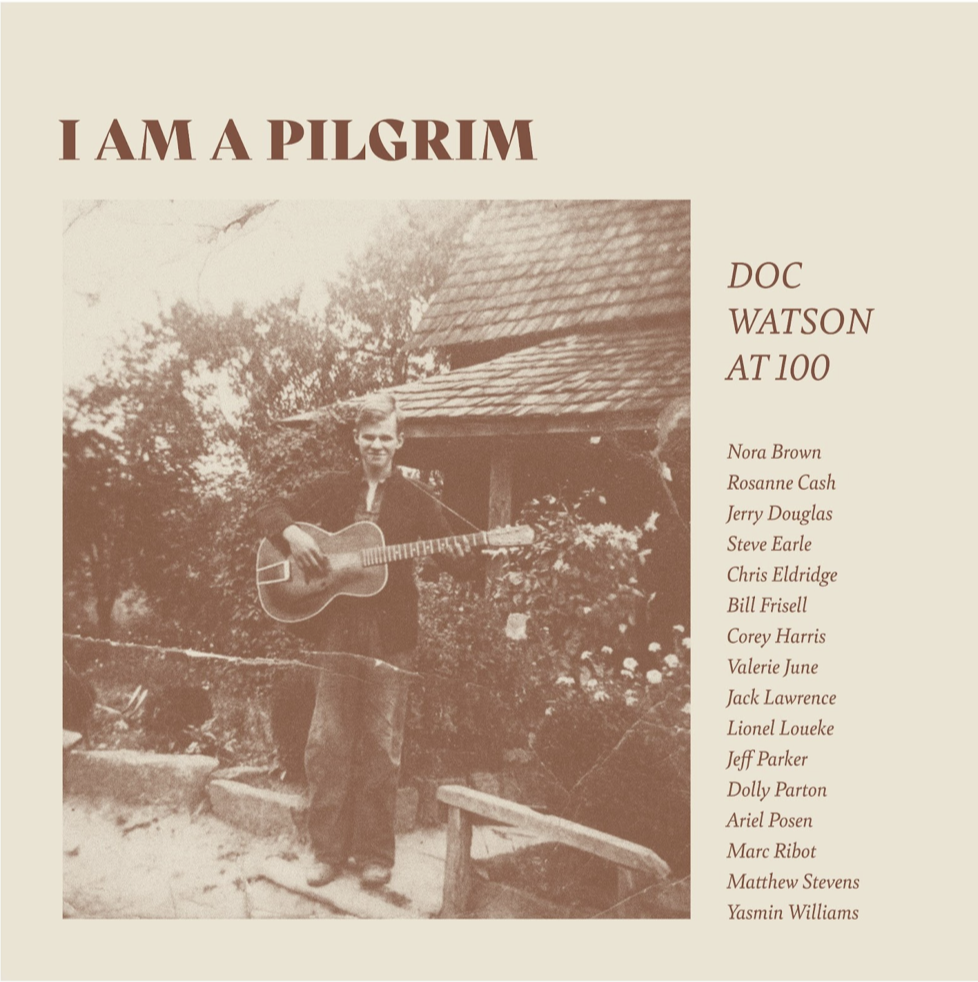
- For Doc Watson’s 100th Birthday, Dolly Parton Sings “The Last Thing On My Mind”
- LISTEN: Dolly Parton, “In The Sweet By and By” (with Larry Cordle, Carl Jackson, Jerry Salley, and Bradley Walker)
- Beth Behrs: What Dolly Parton Means to Me
- Harmonics with Beth Behrs: Light of a Clear Blue Morning – Rest and Clarity with Dolly Parton
- Remember When Dolly Parton Took a Bluegrass “Shine” to This Rock Anthem?
- Dolly Parton, Brandi Carlile, and the Women Who Wrote Our 2020 Soundtrack
- 2020: The Year of Dolly Parton
- LISTEN: Dolly Parton’s New Song Imagines “When Life Is Good Again”
- For Dolly Parton’s America Host It All Starts With “Muleskinner Blues”
- Dolly Parton Carries Childhood Memories Throughout Her Career (Artist of the Month)
- Deck the Halls With Lots of Dolly: 5 Favorite Christmas Moments
- 12 Best Quips From Dolly’s Return to the Ryman
Photo courtesy of the Country Music Hall of Fame ® and Museum.