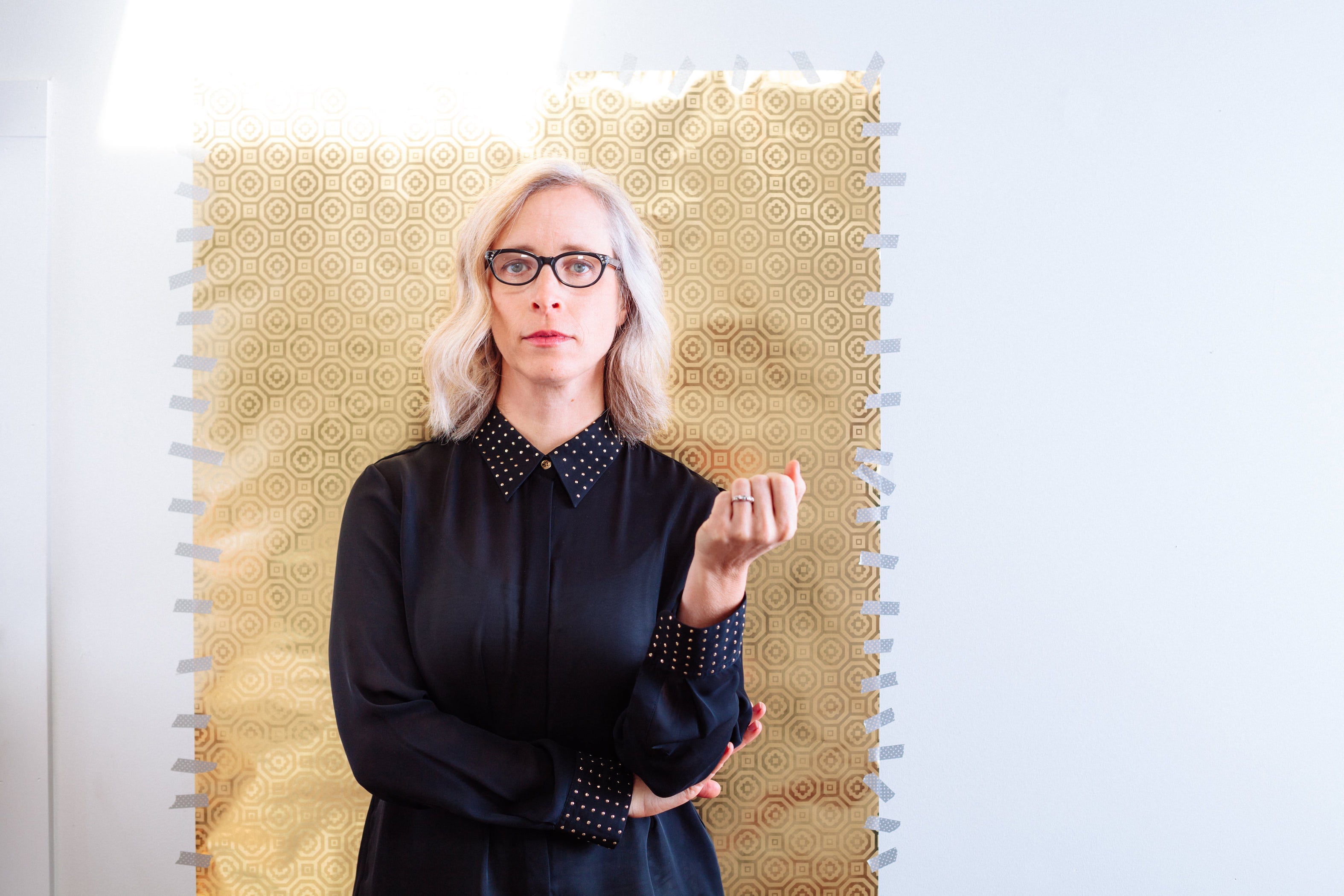
Keeping Watch: A Conversation with Laura Veirs

Laura Veirs’ new album, The Lookout, celebrates a significant milestone for the singer/songwriter: It marks her 10th solo album. For a musician 20 years into her career, that’s a significant output upon which to reflect at a time when reflection has become more crucial than ever. Like many indie folk artists — those forever attuned to the social, economic, and even political struggles of the world they attempt to capture in song — Veirs has been wrestling with the changes that have taken place since Donald Trump became president. In many ways small and large, his leadership has legitimized certain behaviors that once existed in the shadows. Now, they are out in the open. It’s time more than ever, then, to be on the lookout.

Veirs penned her new album around the trope of protection. The characters that surface across all 12 songs oscillate between protecting and needing protection, because humans, in all their complexity, never simply occupy one role. She punctuates that subject matter with stark and striking natural imagery — meadows, lightning, frost, fire … each setting or accoutrement placing in sharp relief exactly how fragile people truly are, and why we must take care of one another’s safekeeping. After all, as she sings on “When It Grows Darkest,” “When it grows darkest, the stars come out.”

The Lookout is filled with quiet flourishes. Veirs tapped Sufjan Stevens’ steady, whisper-soft vocals for “Watch Fire,” a reminder about staying vigilant for prowling wolves, while “The Lookout” praises the relationship she’s built with husband Tucker Martine — how it’s a safe haven in times of trouble. As foreboding as some of Veirs’ imagery is on The Lookout, her folk sensibility and elegant melodic strains leave the album leaning more toward hope than despair. Keeping watch can be exhausting, but it’s a worthwhile fight.

This album presents an interesting dichotomy: There are characters who protect and characters who need protection. Which side of the line do you think you fall on?

I’d say I’m more in the protector role, as a parent of young children, but I also feel very vulnerable and confused. It’s a very chaotic time and a very confusing time to live in, so I feel I need protection. That song, “The Lookout,” is about my husband Tucker and how he looks out for me, and how precious it is for someone to have your back like that, and how hard it is to trust everyday people sometimes, especially with the divisions we have in our country.

There’s this guy who killed another guy on a train in Portland, and that kind of racial violence and misogyny and the rock getting turned over is just so upsetting. I mean it’s always been like that, but I feel like, with this new administration, there’s this legitimization of violence that we haven’t seen in recent years, and it makes me feel like I want to protect and also need protection myself.

Speaking of parenting, it’s one thing to navigate these newer changes as an individual, but how are you helping guide your children?

He’s gone to protests with us in the past — he went to the Women’s March. We do everything we can to expose them to powerful voices of color, and powerful women, and to have friendships that are not just people exactly like us, to take him to public school, and to support the public school system as much as we can, and to be good citizens, and to show them that it’s a complicated world, but you have your own voice and you have your own power in this. Even though you’re just a child and even though we’re just artists, we can use our voices to try and make the world a better place.

Which is what makes this album so special because you’re working against that sense of complacency that got us to November 2016. On “Seven Falls,” the chorus includes that line about struggling to be kind, so how do you personally fight that?

I definitely have struggled to have compassion and empathy for people who have radically different political views from me.

It’s so hard!

It is hard, and they write us off, which is why we have such a divide, but we need to find a way to bridge it. In that song, it was a little more personal than political, in terms of me thinking that, even though I don’t want to be mean, sometimes I am. We all have a dark side. I need to look at that side of myself to move past it. It could be as simple as just yelling at the kids less, or speaking to my husband in a nicer tone instead of being short and quick. It takes discipline, basically, to not go to that dark place. It can be tiring. Sometimes you just want to be impatient and be a jerk. It’s about the dark side of human nature and how we contend with that, and how it can stay with you, even though you’re getting older. It doesn’t mean you’ve moved past it.

Absolutely, which is why it’s so important to keep talking about it. To pretend it doesn’t exist does everyone a disservice.

Yes.

Does your sense of wonder, either for life or language, feel dulled after 20 years in the business?

Oh, definitely. I think that’s one of the biggest challenges for artists who continue on through decades is how do you maintain your passion for the craft. So much of it is a slog; so much of it is grunt work and there’s no reward. I try to remember there is a reward, and for me they’re, “Wow! I totally got in the flow today, and I forgot time!” That’s a hard thing for a parent of young children to do, because we’re so under the clock. If I can get into that flow state, that feels like such a gift, and that is often where my good writing comes from. I can’t get there all that often, but when I do, it feels so good, and it fuels the next session of writing, which will probably be sort of fallow.

Also, it’s an opportunity to realize how you’ve done this a long time. There’s truly an infinite path here of discovery, whether that means totally changing the way that I’m writing lyrics, or whether that means I’m studying a different style of guitar — I’m learning new chords. I’m changing tunings. I’m studying how other people have written songs in detail. I’m reading books about songwriting. I’m using a very limited palette to limit myself, in terms of chords or guitars or instruments or tracks on a demo. It’s definitely a big challenge to stay in that beginner mind, because you’re not a beginner anymore, but if I can remember that sense of wonder that I felt in the beginning, it does remind me, like, “You still can get there because there’s still so much to learn.” It just takes effort.

It’s tough when you’re a parent because you’re balancing the needs of your children with your creative need, which is why I appreciate the song “Everybody Needs You,” because it’s such an honest moment. How do you carve out time for your creative needs knowing that, if you don’t, it will suffer?

Well, I do treat it as my job, and I’ve always done that. I feel privileged in that I can choose my own hours. I have usually four-to-six-hour days, four days a week. That’s my work schedule. I’ll usually write two-to-three hours of the morning, and then I’ll spend a couple of hours catching up on emails or shopping or cleaning the kitchen or just even going for a run. I don’t usually spend more than three hours writing; I just don’t have the focus. When I am writing, I’m really focused on that. I’ve always done it that way.

That kind of discipline is fantastic.

Yeah, I mean, certain days I guess I don’t really get to it, but mostly I do. And then I’ll take long periods off. I haven’t written a song since I finished making the record in July because I started a podcast, Midnight Lightning. It has taken a remarkable amount of time and energy, and also I wanted a break. I was so burnt out. I feel like breaks are good for people, too. If you get too wrapped up in what someone’s expecting of you, you’ll burn out quick.

How has Midnight Lighting been a different kind of creative influence for you?

I’ve been learning a lot about the art of interviewing, which I hadn’t studied at all. I’ve been listening to that podcast The Turnaround with Jesse Thorn, and he discusses interview techniques with different famous interviewers, and I learned a lot about that. I’ve only done 16 interviews, but I’m really enjoying it.

It’s kind of easy for me — in terms of the subject matter is so close to my heart — to connect with other people. This season, it’s the moms, and I might do another season with dads. It’s been neat to try out the creative side of coming up with questions that feel new and interesting, and then just the risk-taking of not really having notes, and just having a couple things jotted down and winging it. That’s been a good exercise for me. I’ve gotten a lot out of it, and it’s extended my community a lot, which is why I started it.

It’d certainly be interesting to hear from dads in the next season. Now, you said you wrote “Watch Fire” with Sufjan’s voice in mind. You’ve been friends for some time, so why this collaboration now?

I said in the press release that I thought of it, but actually Tucker did. He was really the one who heard Sufjan’s voice on there and, once he said that, I really could hear it. We’d never asked him before, but he’d asked me to sing on something, and it felt like a natural thing to try. He did it, and it sounds like a good fit for his voice, that line that he’s singing.

Right, and I love that sense of historical circularity — there’s always a wolf we have to watch out for. How do we stay on guard?

I think just looking up, looking out. Don’t get so buried in your phone. You see all these people on the street — I sound like an old lady — but they don’t even look up anymore. Keeping your eyes open and looking out for each other and staying awake, whatever that means. Stay alert.

Lastly, nature plays a large role on this project. You position people in places steeped in natural imagery. With your background in geology, are you always aware of this connection between people and the environment?

Yeah, my parents took us camping a million times growing up. We spent a lot of time outside. My dad was a physics professor and always explained how everything works, and my mom was an artist and craft weaver, and I really do feel like that combination of my mom and dad comes into my work a lot.
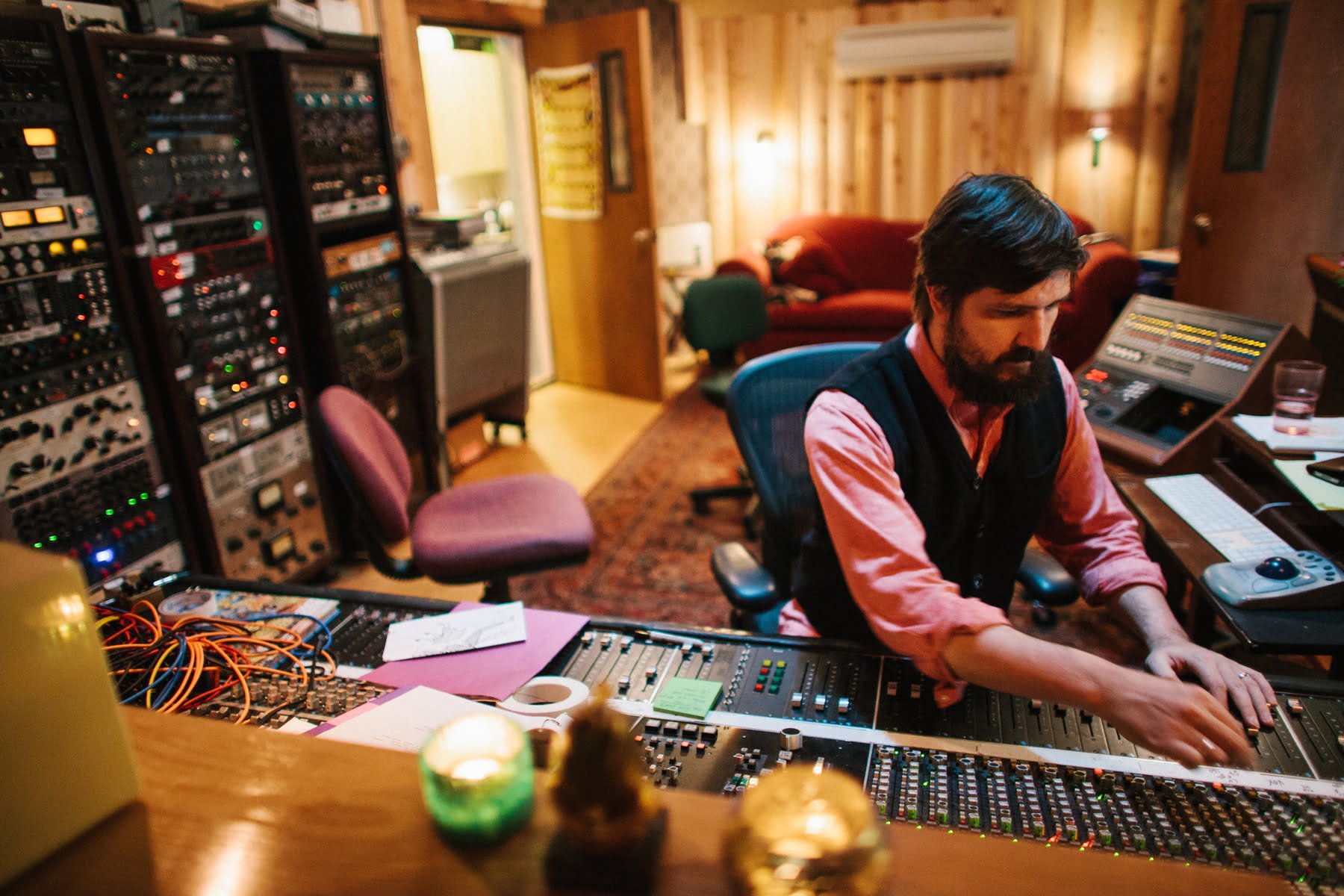
The Producers: Tucker Martine

Tucker Martine had to move as far away from Nashville as he could before he could have a career in music. Just out of high school, he headed to college in Colorado, then kept heading west until he reached water. He settled in Seattle in the ‘90s, when that city was a center for American alternative music. Then he moved down the road to Portland, Oregon, just as that city was becoming a hub for indie rock.

In the 21st, Martine has become a central figure in Portland’s bustling roots music scene, producing national hits by almost every major local artist. He has added a spacy shimmer to almost every album by singer/songwriter Laura Veirs (who happens to be his wife) and, when the Decemberists graduated from a regional indie label to a Capitol Records, they hired Martine to conjure detailed backdrops for their diorama-songs about Russian shapeshifters and Irish gangsters.

Martine anchors the West Coast roots scene so strongly that even non-locals head west to work with him. Abigail Washburn hired him to combine Asian and American folk traditions with indie-rock techniques on her 2011 breakthrough, City of Refuge. More recently, he produced The Waterfall, My Morning Jacket’s darkest and most daring album in years.

While Martine does not thrust any particular aesthetic onto his projects, he has developed a distinctive ambience: a clarity of sound that is both ethereal and earthy, elaborate and direct, engaging but somehow mysterious, as though he’s reluctant for any album to spill all of its secrets on your first listen. Emphasizing the distinct tones of each instrument in the mix, he helps to convey a rich intimacy, as though even an acoustic set can sound like a headphones album. One of his latest projects is also one of the most highly anticipated albums of 2016: a new collaborative record by Neko Case, Laura Veirs, and k.d. lang — out in June on Anti- Records.

At what part of the process did you come in on the case/lang/veirs record?

Shortly after k.d. had sent an email to Neko and Laura asking if they’d be interested in starting a group together — which I think mostly meant making a record together, perhaps doing a tour for the record. I don’t think it’s a band that is going to be a long-term project. k.d. sent an email to them, and Laura and Neko quickly responded with an enthusiastic "Yes," and then they had a little back-and-forth between themselves. Maybe a week later, they cc’d me on the email thread and asked if I’d be up for working on it with them which, of course, I was honored and excited to be roped in, so I said yes.

I think it made a lot of sense — I mean, hopefully, musically it made perfect sense. I had worked with Neko on her last record and, of course, I’ve worked on a lot of records with Laura. I was getting to know k.d. a little bit because she’s a Portland resident now, and she’d done a couple of things at my studio. That brought one common element into a project that maybe, at least on the surface, didn’t appear to have a lot of common elements to start with. I think the process of making that record was about discovering where the common ground was between all of them. And that was really so much of the excitement of that record — and the challenge of it, too.

So figuring out how those pieces fit together becomes part of that process.

I don’t think any of us wanted to make a record that sounded like four tracks that could have been on the next Neko Case record and four songs from the next k.d. lang record, four songs from the Laura Veirs record. They wanted to figure out where all their sensibilities converged and how they could challenge each other to find interesting places outside of their comfort zones. And there was plenty of that, because they’re all used to being the leader, the person who ultimately calls the shots. But this was a bit of a democracy, and the whole dynamic of the group was being discovered while we were in the middle of making the record. It wasn’t like they had discovered some common chemistry beforehand and then thought, "Well, this means we should make a record." I think everybody knew it felt kind of risky. None of us were talking to people about it beforehand, because we were reserving the possibility that maybe it just didn’t quite work. But it did, and it was apparent on the first day that it was going to work. Everyone was pretty thrilled with how it was sounding right out of the gate.

What does your role, then, become for artists who are still finding out how they relate to each other?

There are so many facets of it. Making them all feel comfortable, for one. Assuring each person that their point of view isn’t going to get steamrolled in this mostly democratic process. I’m always looking to find the strength and the uniqueness of the artist, so I’m constantly having conversations with them about what they’re excited about, and checking in with them all the time to make sure they feel like they are being represented. And I would sometimes have to challenge people to maybe not rush to judgment but let it play out a little longer, and listen to the result rather than not try something because the suggestion sounded like a direction they wouldn’t normally take.

I think that’s something that I knew, but never but a fine point on it — that you’re not just overseeing things in the studio; you’re negotiating aspects of the art and trying to usher this person into making the best thing they can or the strongest thing they can.

Absolutely. All three of these ladies have such different working processes. And I had a little insight into what those processes were, in some cases more than their other collaborators did, because I’d spent many weeks in the studio with Neko and made records for years with Laura. I had only done demos with k.d., and she had sung on one of Laura’s records. So it was really just a matter of trying to honor a bit of each of their processes while reminding all of us that this is a new experience and it’s not going to feel like the process of making one of their solo records.

And that was what was exciting about it. Sometimes, when I thought maybe they were reverting to something too safe, I just tried to remind all of us that the exciting part of a collaboration like this is that it pushes us into some places that we wouldn’t normally go. I think most or all artists ultimately do want to get into some territory that feels new to them, so they feel like they’re moving forward and progressing. And I can only guess that k.d. chose Laura and Neko as collaborators because of how different they are from her, yet she still had a lot of admiration for them and their music and, I think, was looking to shake up her own music-making process. And by accepting that invitation, I think Laura and Neko acknowledged that the same thing was true for them.

It does seem like two generations of artists going back and forth.

I think I can speak for myself and Laura and Neko in saying that we’ve all been fans of k.d. for so long, but you have to remind yourself for a minute that, even though she’s this larger-than-life musical figure in our minds, she’s looking for a three-way collaboration between them. They all really got in there and had to fight for some of their ideas — in a healthy way. At the end of the day, each person got a final say in the songs that they were singing lead vocals on.

I had a moment when it was being planned when I wondered what I had to bring to a project for someone like k.d. lang, but she made it really clear that she wanted me to feel comfortable speaking up. I assured them, in the beginning, that I knew it was going to be a challenging record to make, but we weren’t going to call the record done until everybody was happy with it. It gets emotional, at times. It’s tricky to be giving people confidence while at the same time sometimes you’re asking them to be open to trying something new or to just trying to get a better take of it.

You mentioned that k.d. had recently moved to Portland, and I wanted to ask about that. There is certainly a strong roots scene there, and even though you’re from Nashville originally, I feel that you’re at the center of it … or at the very least a prominent figure there.

To me, the Portland community feels like the more immediate version of the larger music community. And a lot of the artists that I’ve been working with the last few years are not from here. Sometimes it’s artists from out of town, but there will be people from Portland who play on the record, or the artist is from Portland and we bring in some people from out of town to play on the record. There is just a ton going on in Portland, and there are some insular scenes — like the old-time music scene, the singer/songwriter scene, the indie rock scene, and all that — but also a lot of those people just overlap and play with each other.

I left Nashville the morning after my high school graduation because, as much as I loved growing up there, I just felt like there was a narrow-mindedness about music and what it could be — all the different ways it could be presented and written and explored. So it was healthy for me to leave at that time. Since then, of course, it’s transformed into something completely different, with all the transplants and musicians of every variety there. I think most of the Nashville scene is, and has always been, transplants. It’s just that they transplanted themselves there to do a specific type of music, where I think a place like Portland draws people — including myself — more for the environment and the lifestyle, and then that informs the music that comes out of it.

I hadn’t thought of Nashville that way. It’s like Portland — a city full of transplants.

Nashville’s a place where people go to make it. For the most part, Portland’s a place where people moved because it was inexpensive and it’s just a great place to live. You can bike or walk anywhere, and it’s gorgeous. You have access to the ocean and the mountains and the rivers. There aren’t a lot of labels and managers and industry stuff here. A lot of times the best music scenes just kind of come out of somewhere that’s affordable for young people to live. And, until recently, that’s been true of Portland.

It also seems like a place where more established musicians end up, like k.d. lang or Peter Buck or Patterson Hood.

If you’re in a position where you feel like you can be based anywhere and still do your work, then you just start looking at where you want to live regardless of what kind of infrastructure that place might have for your chosen field of work. It doesn’t make any sense that I moved away from Nashville and moved to Seattle and started producing records. I mean, to me it makes perfect sense, but people are always asking me why in the world I left Nashville, which is one of the premiere cities in the world for recording studios. But it just felt like a trap to me, at the time. I felt like, if I stayed, my growth would be radically stunted. I think it was the right move. I’ve always thought I might move back someday, because it’s still home to me. I couldn’t be more fond of it, even if it was necessary at that time in my life to be elsewhere and find my own identity outside of the familiar and comfortable.

And it does seem like you’ve developed a signature palette that I don’t hear in Nashville.

My sensibilities don’t seem to overlap a lot with what Nashville’s known for, although I certainly have loved some of the music that’s come out of Nashville. I’m not a fan of overly glossy productions, and certainly Nashville is known for that. But there are countless examples of records that have come out of there that weren’t that way. You had guys like Jack Clement making really interesting, soulful country records, and now you’ve got guys like Dave Cobb, who’s crushing everything he touches. It’s cool to see Nashville having a resurgence, but I feel like I’ve really found the right spot for myself.

But people don’t usually come to me because they’re chasing the latest, hottest sounds or because I have the latest chart toppers. Maybe there’s just some quality in the way the music is translated and presented that speaks to them. To me, my approach is different for every record and every artist; but for somebody less close to it than me, I guess you can hear some continuity — or, as you put it, a sound. And it’s convenient that people like Portland. Someone might be interested in working with me and, when they find out I’m in Portland, they usually get excited about the idea of coming here for a little while.

You mentioned that you approach every project differently, but are there elements that are common from one project to the other …

I really like to be surprised, so I always try to leave some room in the process for some things to happen that surprise all of us. Those often end up being favorite parts of records. I feel like, the longer I’ve done this, the less satisfying it is to just put up some mics and make everything sound perfectly nice, make sure that nothing sticks out, and there’s nothing that could possibly offend anyone. If it came to that, I feel like it would just be time to hang it up. I want to be moved by what’s coming out of the speakers, whatever that means. Sometimes, that means just blowing things up and making it sound ratty and raw. Other times, it means muting everything except for the vocal and the harpsichord.

At the outset, it’s just dictated by whatever the material suggests to me. I try not to take on a project where the songs don’t suggest a lot to me about how they could be presented. You want to leave plenty of room for it to end up going a different direction if something presents itself that is maybe even more interesting than what I imagined. And no record ever ends up sounding like whatever I thought it was going to sound like at the outset. Still, I think it’s important to have some kind of vision as a launching point, or else you’re all just sitting there looking at each other like, “I don’t know — what do you want to do?” Nothing gets done, or what gets done is just lifeless.

Are there any examples that come to mind?

Oh man, it could be anything! You might have an idea of a nice drumbeat for a track, and then you get everything set up and the drummer starts playing some angular, syncopated thing where you can’t even find the one. At that point, you can either say, “No, man, this is like a straight-ahead kind of thing.” Or you could say, “Let’s check this out. And let’s see how the rest of the band responds to that idea.” More often than not, those things end up sticking and being some of my favorite parts.

The song “Down I-5” from the case/lang/veirs record is a good example. The demo was okay, but I think we all knew it needed something — some joie de vivre — and we all had our own vague ideas of what that might be. I had spoken to Glenn Kotche, who was playing drums on that record, and I just told him that it really needed a unique perspective and that the reason he was there to begin with — why Glenn was chosen to be the drummer for that record — was because his default mode is unpredictable. I told him that this was a perfect scenario for him to lean on his instincts. I didn’t want him to try to guess what the singers are expecting to hear, and he just pulled out that wild beat. There was a look of confusion on the faces of the people in the room, but within a minute it had transformed to elation.

So that’s what I mean by surprises. It’s easy to tell people something that’s safe and predictable, and then you can just get it done and check it off the list. But that’s not why I do this. And that’s not why I think most of the people who call me are doing this. I just try to keep myself and the artists honest.

When you were talking about that, one album that came to mind is City of Refuge by Abigail Washburn. Every song seems to have that sense of discovery to it, some new idea to get across.

For that record, we approached every song from scratch. That wasn’t a record where we had a band for five days, pick a song, knock it out, and go to the next one. We would just start with a song, and sometimes the song wasn’t even finished being written, so we would just start with the one thing we knew it needed. Maybe that was Abigail and her banjo. Maybe it was something else. By the time that we tracked that, it suggested the next layer. We really weren’t too concerned with it all sounding like it happened in a short time span with the exact same people set up the same way.

In fact, one thing Abby and I found out was that we both love old Alan Lomax recordings and Folkways stuff, where there might be talking before a song. We approached “Bright Morning Stars” like a field recording. We just went into a church and told a bunch of people to meet us there. Abby showed them the songs, and they’re of course all playing into one mic, which means you can’t fix anything. Other songs, we meticulously put together. We hoped that if we committed to giving each song its own singular treatment, then the variety of production sensibilities would actually be a strength rather than a weakness.

Very often, you start in on the process, and things are pretty ambiguous. You don’t really know what the identity of the record is yet. But gradually, over time, it starts to show you. In that case, once we had enough songs, I started tinkering with the sequence, and once the sequence started making sense, the whole record started making sense. That helps you figure out what the songs do and don’t need, or which songs might transition well into the others, at which point you might add some extra layers to bleed over into each song. That’s the fun of it. You just take the next step and then it shines the light on where to go after that.

It seems like that might be pronounced when you’re working with an artist for the first time, but how do you keep it fresh for somebody like Laura Veirs or the Decemberists, with whom you’ve produced several albums over the years?

It’s unspoken with each artist that you don’t ever want to make the same record twice, even if you loved the last record you made together. With the Decemberists, when it really felt like we needed to shake things up, we went to a barn and just set up some gear out there. That can have a profound effect on the process in a lot of ways, technically and emotionally, for people. The one thing all the best records that I’ve worked on have in common is that we went into them wanting to do something we’d never done before. You do have to be conscious of that, but it’s a very natural thing to make sure that you’re not just rehashing old territory. We always have a dialogue early on about how to approach it in a way that’s unique compared to what we’ve done in the past.

And that starts with the songwriting. I try to be honest with the artists upfront, if I feel like we don’t have the material to make something that’s up to the standard of what we’ve made in the past, or if it just feels like rehashed versions of something we’ve already done. Often, when I hear demos, six of them sound like the bulk of a really strong record, and four or five seem like maybe they don’t fit in. But I do think when the artist really goes to bat for a song that I’m not feeling, it’s important to record it and try it out. About half the time, just on the strengths of their convictions for it, we find a way to get something we all feel is special. So there is a theme here: It’s important to have a vision, it’s important to have convictions for your ideas, but the second you stop being open to other ideas is the moment you stop being a good collaborator. And, for me, producing records is a collaboration.

There is an adrenaline rush when you start a record. It’s like you jump off a cliff into a river. You’re pretty sure everything’s gonna be fine, but you still get a rush the moment you jump, because you don’t know exactly what’s going to happen. At the start of every record, I’m always a little bit scared, but I’ve learned over the years that that’s a good thing. It always ends up working out, and it never turns into a disaster — no one ever dies, or makes a record that they regret or are embarrassed about. So it’s just that kind of excitement of not having any idea what’s going to happen.


Photo credit: J Quigley

3×3: Dana Falconberry on Laura Veirs, Jeff Goldblum, and an Endless Supply of Coffee

Artist: Dana Falconberry
Hometown: Dearborn, MI
Latest Album: From the Forest Came the Fire
Personal Nicknames: Shuntel

Who would play you in the Lifetime movie of your life? 
Jeff Goldblum 

If money were no object, where would you live and what would you do? 
I'd live in a cabin on a cliff along the Pictured Rocks lakeshore and I would look for feathers all day long and drink wine and make weird art all night.

If the After-Life exists, what song will be playing when you arrive? 
Theme song from Jurassic Park — like when they are flying in the helicopter. 

What brand of toothpaste do you use? 
Tom's, duh

What was the last movie that you really loved? 
Let the Right One In (Swedish version)

What's your favorite TV show? 
Either Breaking Bad or Roseanne

Morning person or night owl? 
Night owl!

Johnny or Willie? 
Laura Veirs

Coffee or tea? 
Coffee forever everyday.

WATCH: Music for Wild Places

The great outdoors and music — each amazing on its own, but nothing compares to combining the two. That's exactly what Music for Wild Places, a company founded by musician Kai Welch that combines the majesty of nature with the beauty of music, does. 

"I was touring a lot a few years ago, going to these amazing parts of the world and seeing mostly airports, greenrooms, and hotels," Welch says. "I remember I was in Norway with Abigail Washburn, and we desperately wanted to go on an adventure in the mountains, but the logistics of figuring out where to go and getting geared up and finding the time got the better of us. So I watched the mountains go by from the train and thought, 'I'm going to book gigs in the wilderness.'

"The first Music for Wild Places trip had more musicians than guests. I just had no idea how to market it, and by the time we hit the river, there were four of us musicians, three river guides, and three paying guests. Needless to say, that trip didn't end up in the black. Now we are in our fourth summer, and the trips have been selling out. There are some very outstanding artists/bands on the MFWP roster and more to come. And we are finally able to donate some of our proceeds to the Western Rivers Conservancy, which is an important part of the mission of MFWP. This summer we aim to do three trips down the Snake and Salmon Rivers in Oregon/Idaho. And, next year, I'm hoping to add a backpacking trip and, if we're lucky, a very special float down the headwaters of the Mekong River in China."

Music for Wild Places just announced their latest venture, a rafting trip down the Salmon River with none other than Della Mae. As for what you can expect from the experience, Welch explains, "It can be hard to describe with words on a page. Expect to be treated to a very full experience — music, food, and camaraderie — in a place that you will keep in your thoughts for the rest of your life. I think a lot of our guests are surprised by how pampered and looked-after they are by the fine folks at Winding Waters River Expeditions. But also, expect to do some hooting and hollering."

Check out videos from the most recent trip, which featured Portland singer/songwriter Laura Veirs. If you're interested in joining the August 17 – 20 excursion with Della Mae, you can click here for more information. 

"Music for Wild Places" short documentary featuring Laura Veirs

"Wide-Eyed, Legless" – Laura Veirs

"I Can See Your Tracks" – Laura Veirs

"Shady Grove" – Laura Veirs and Kai Welch