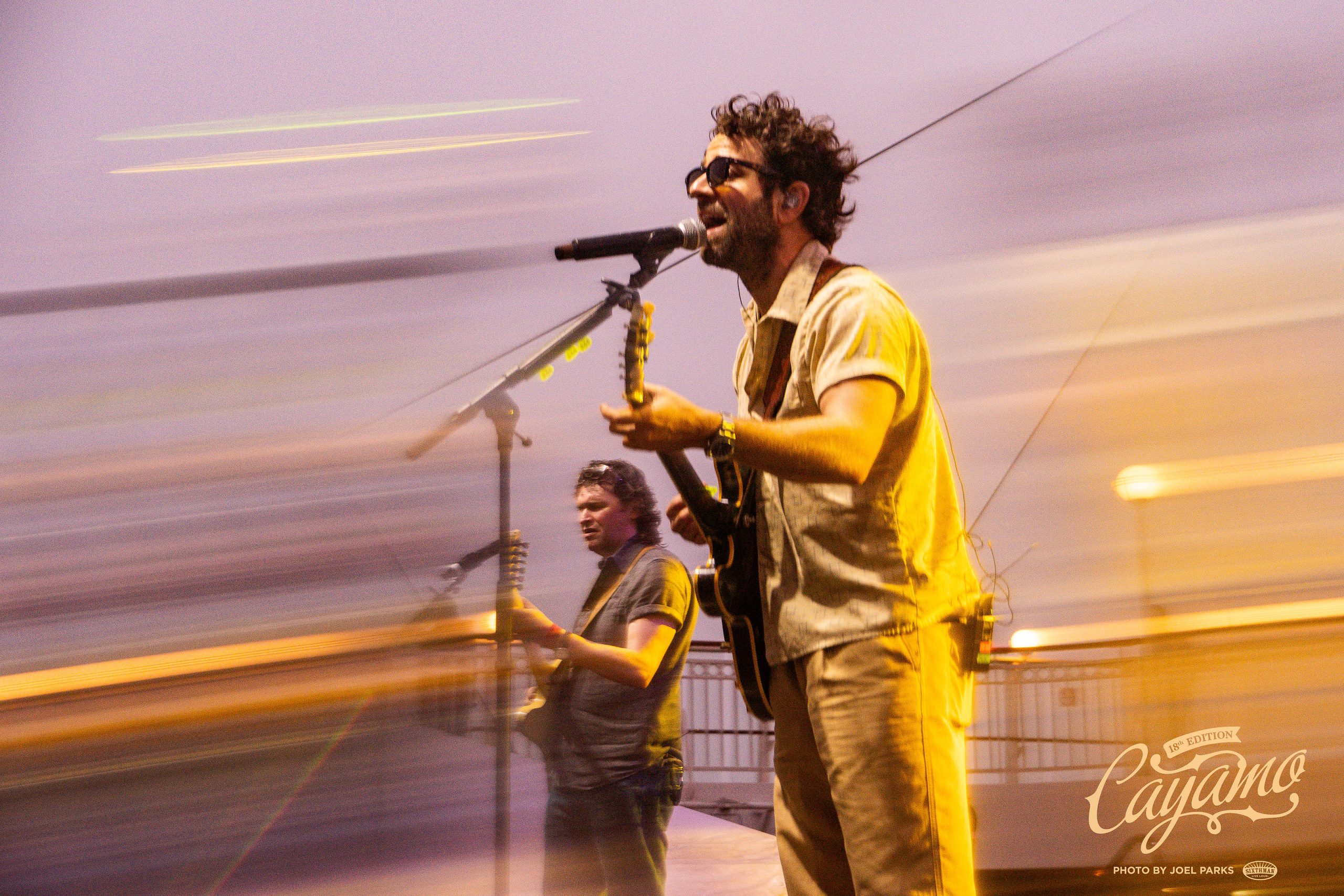
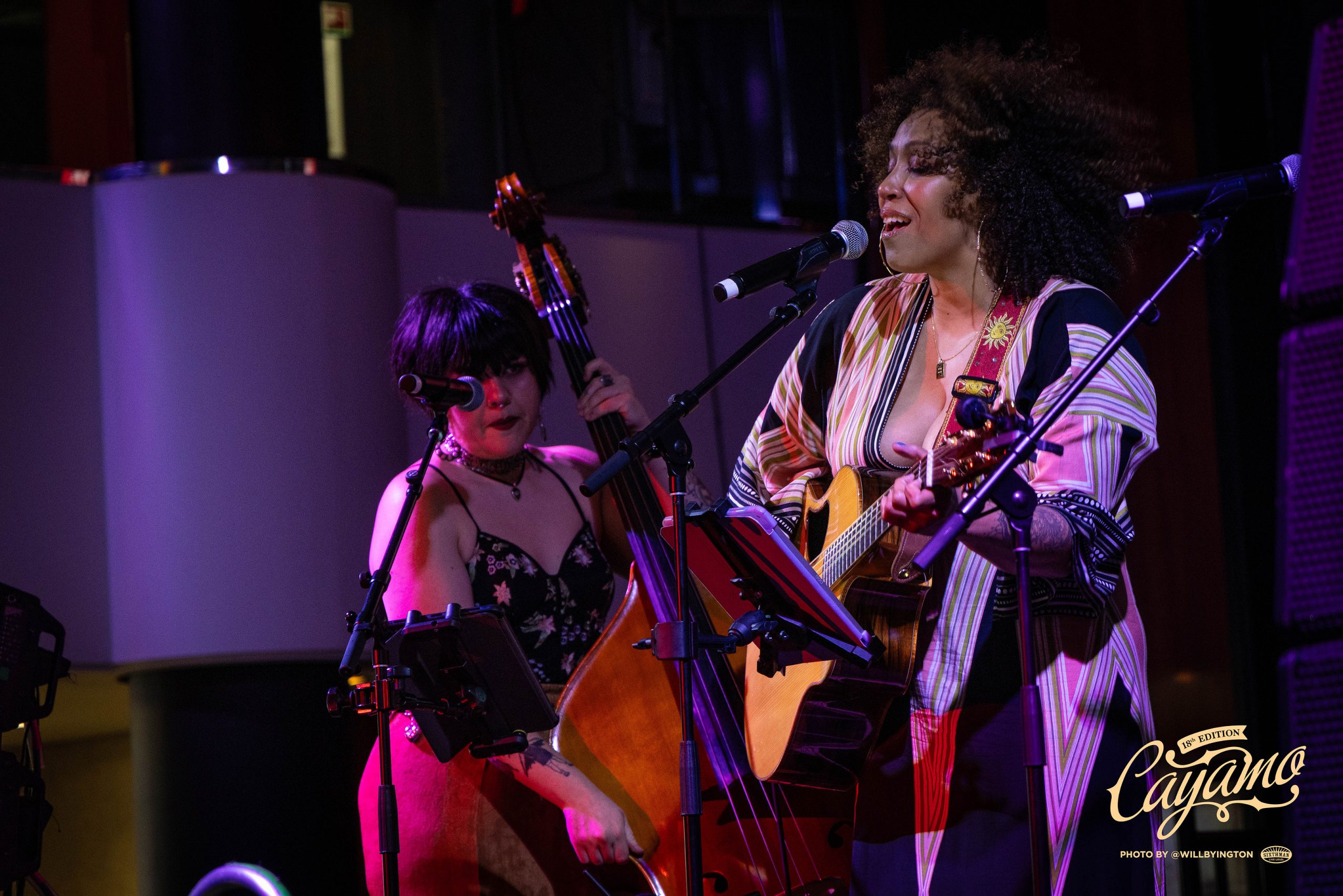
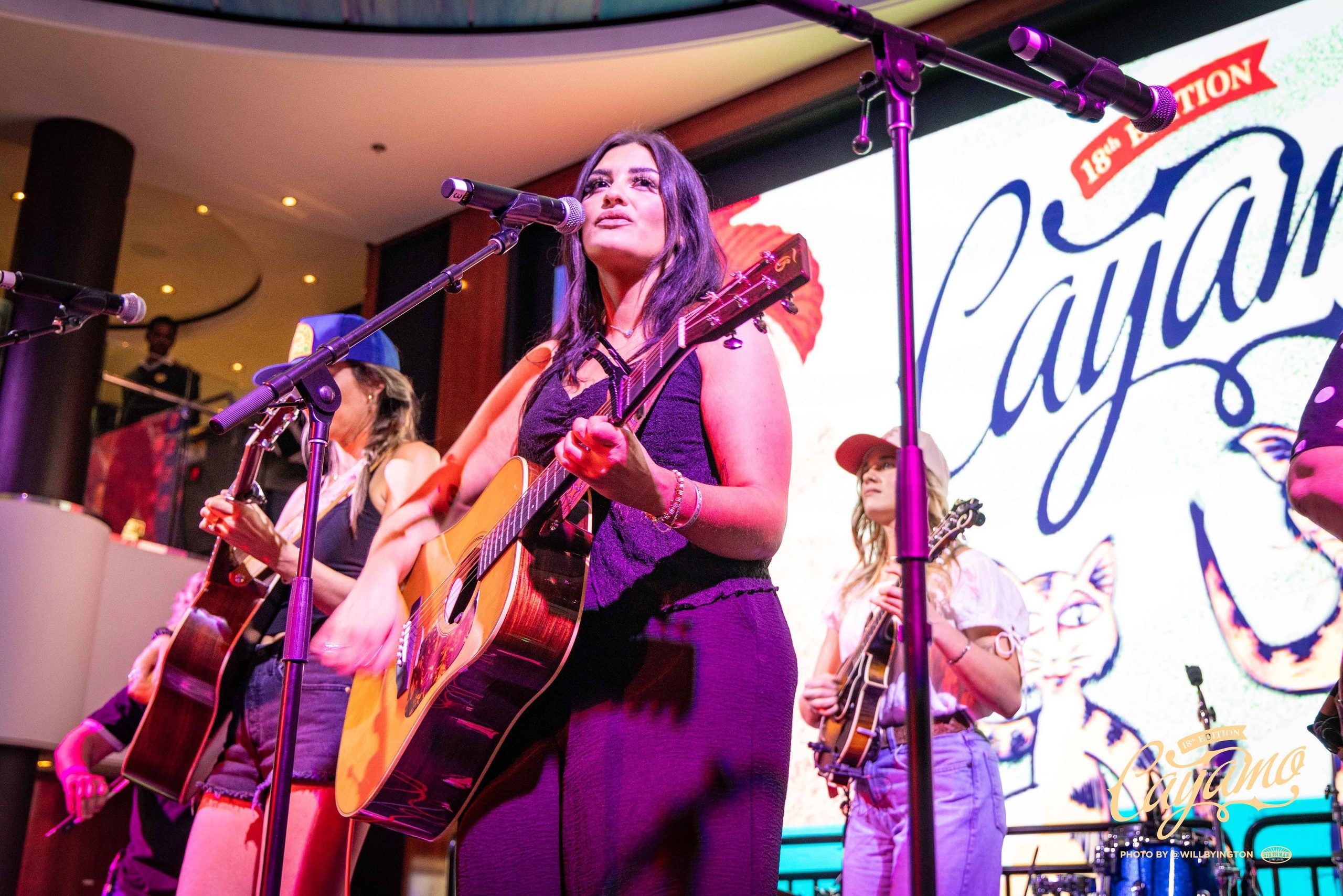
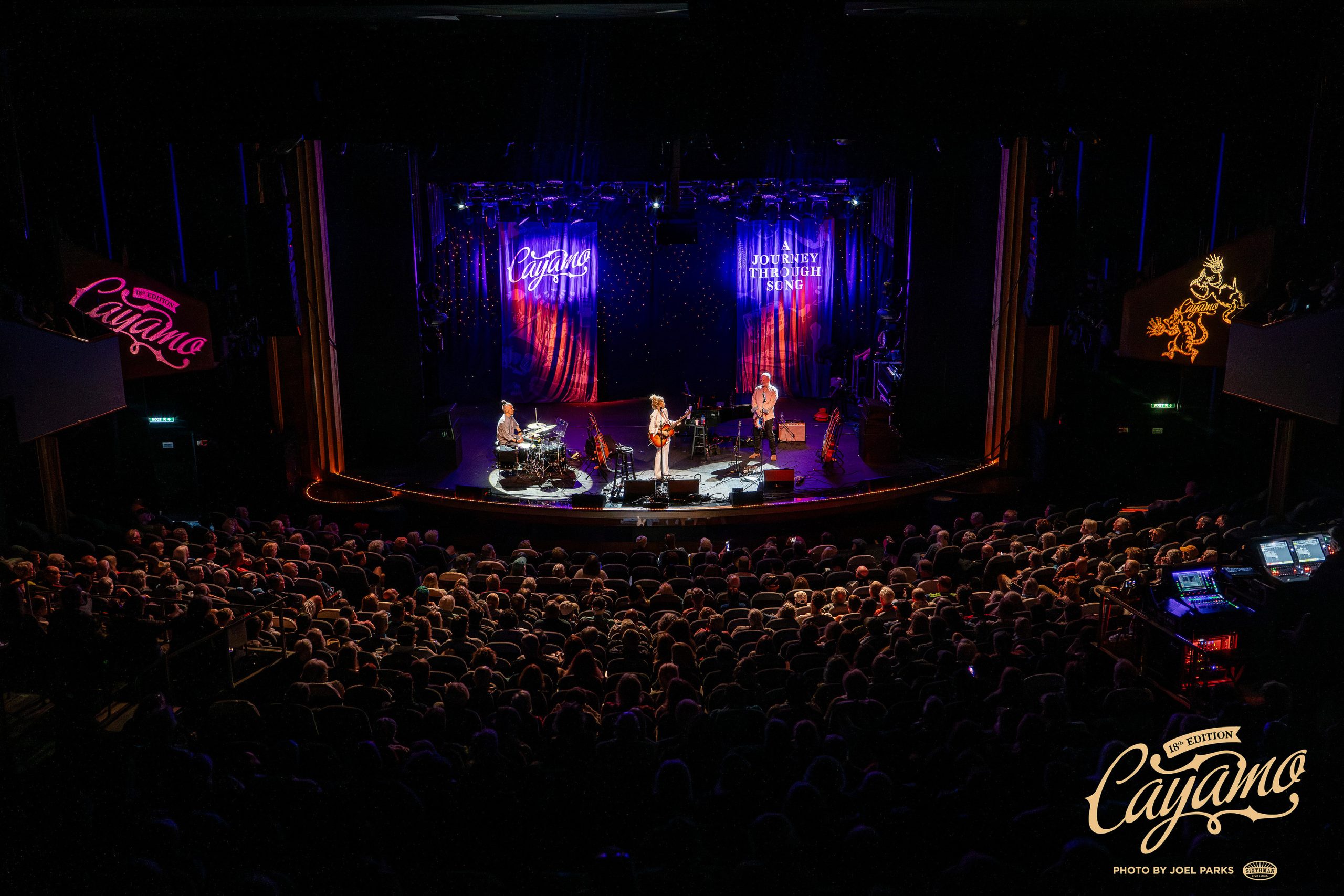
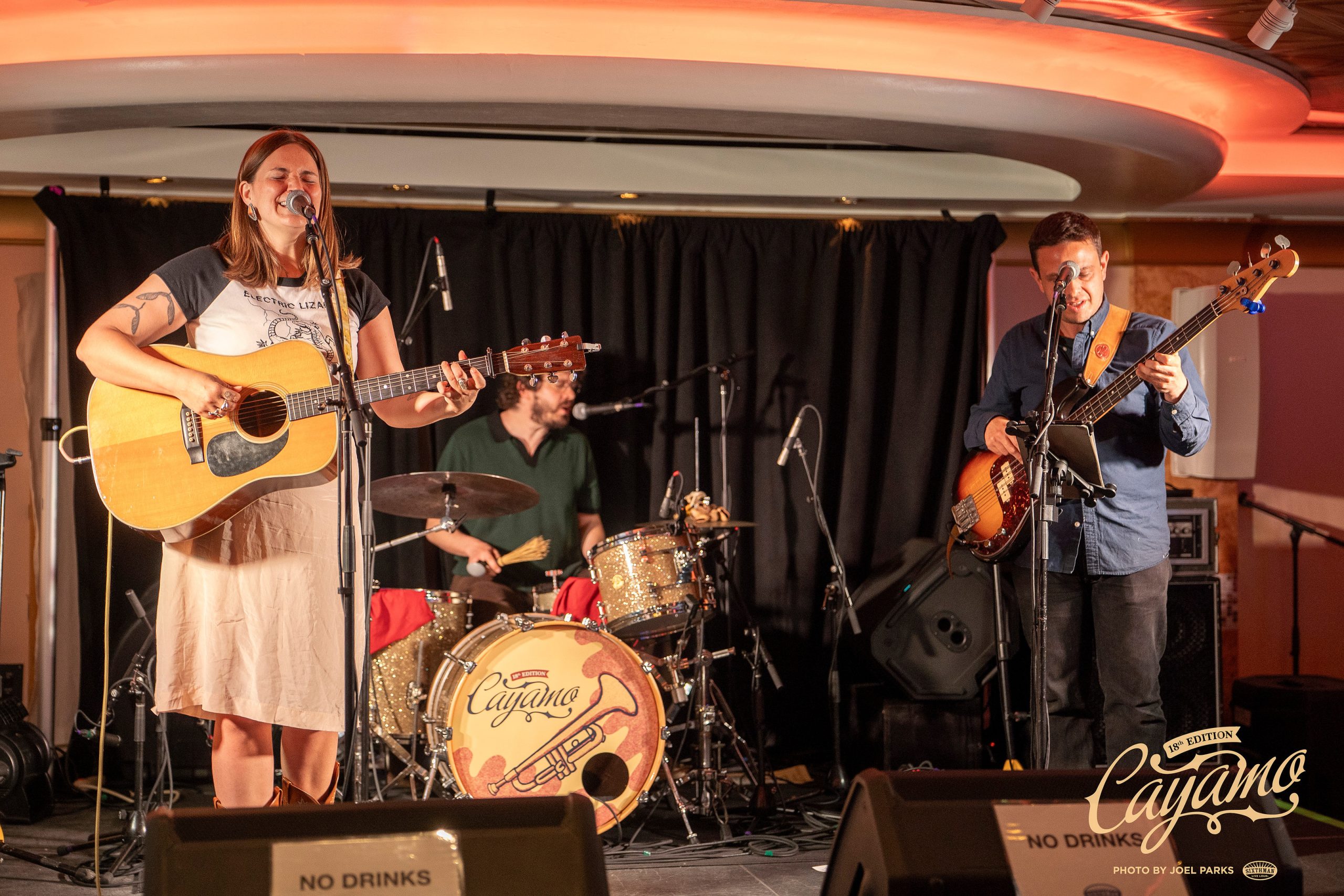
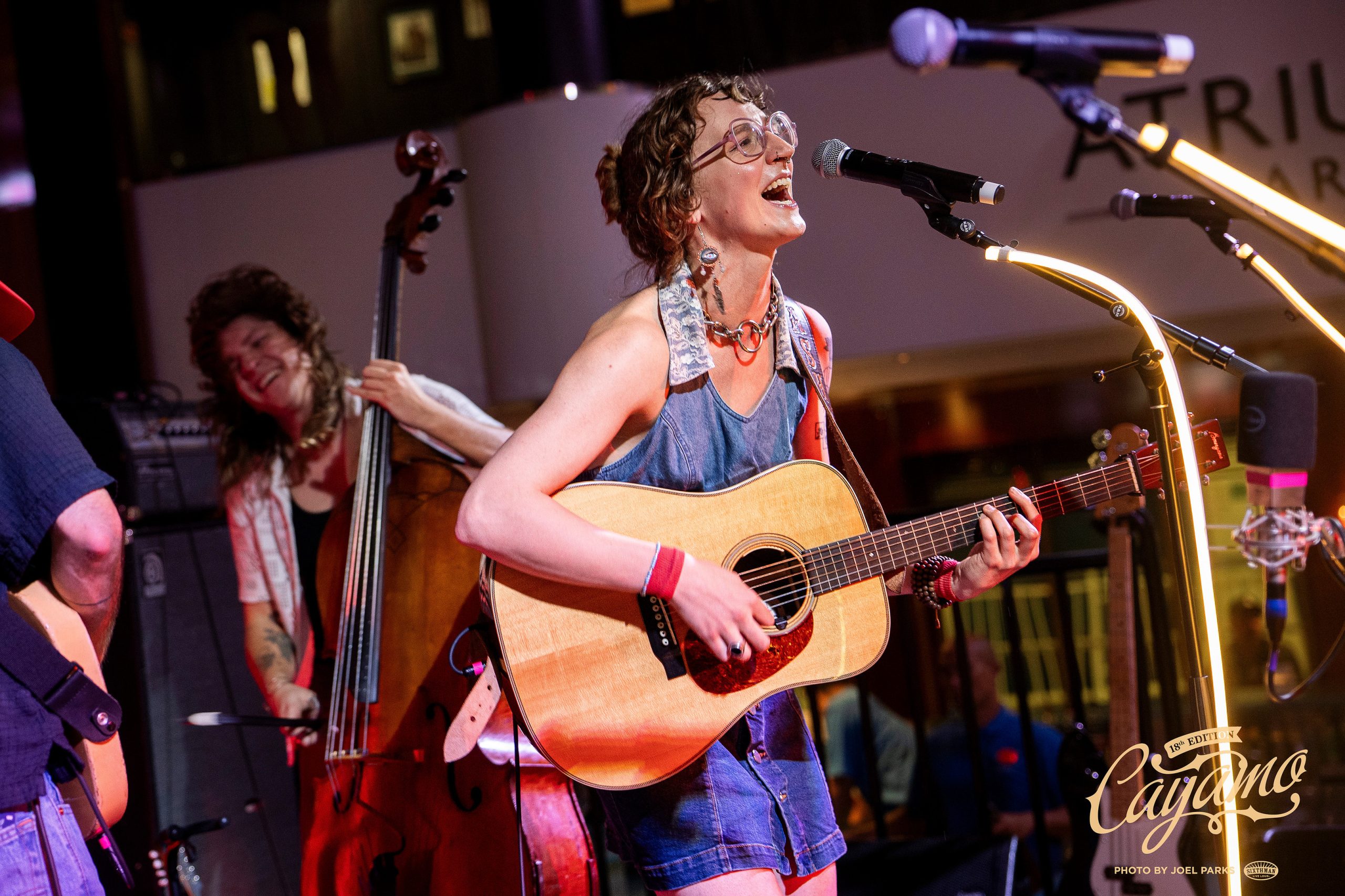
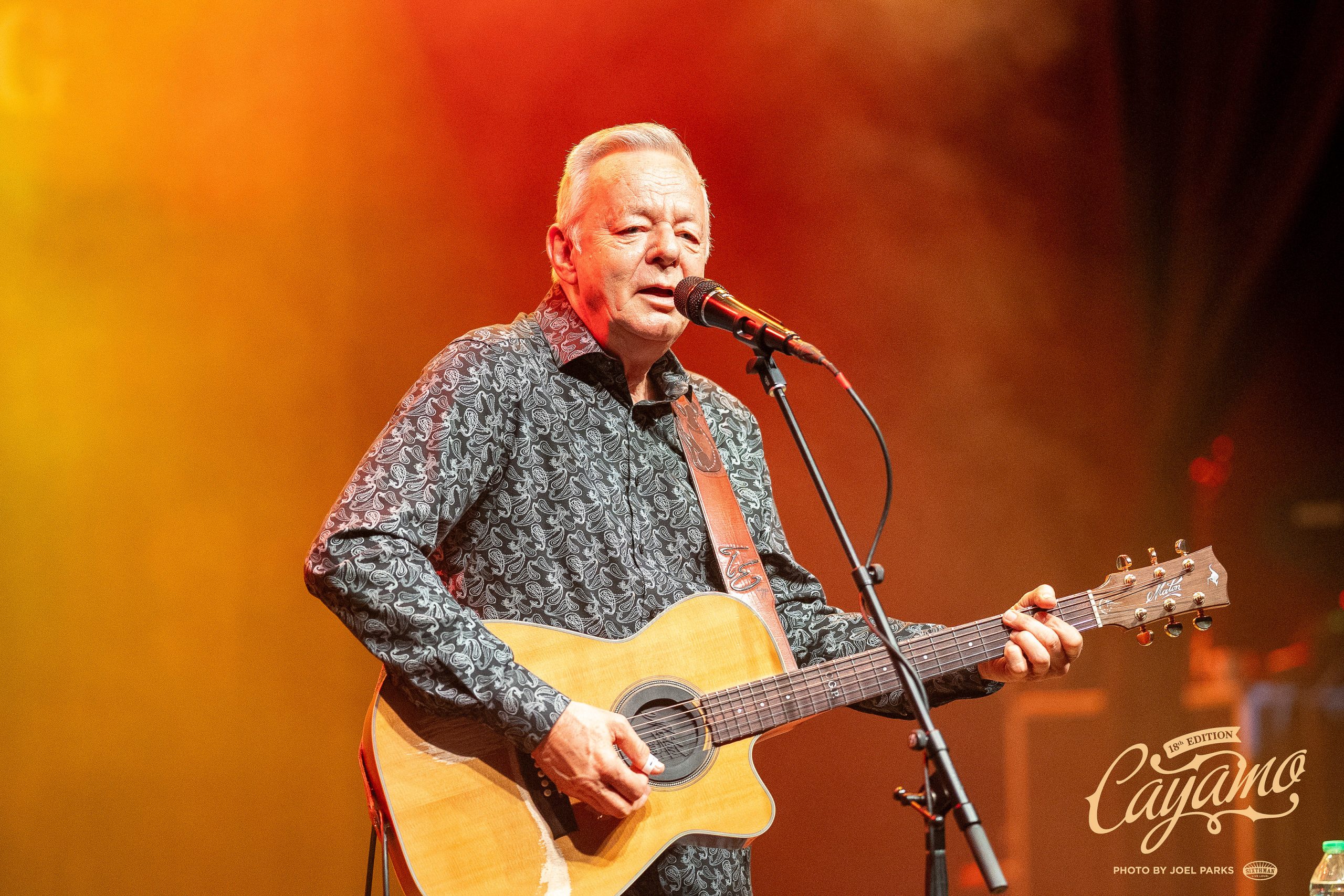
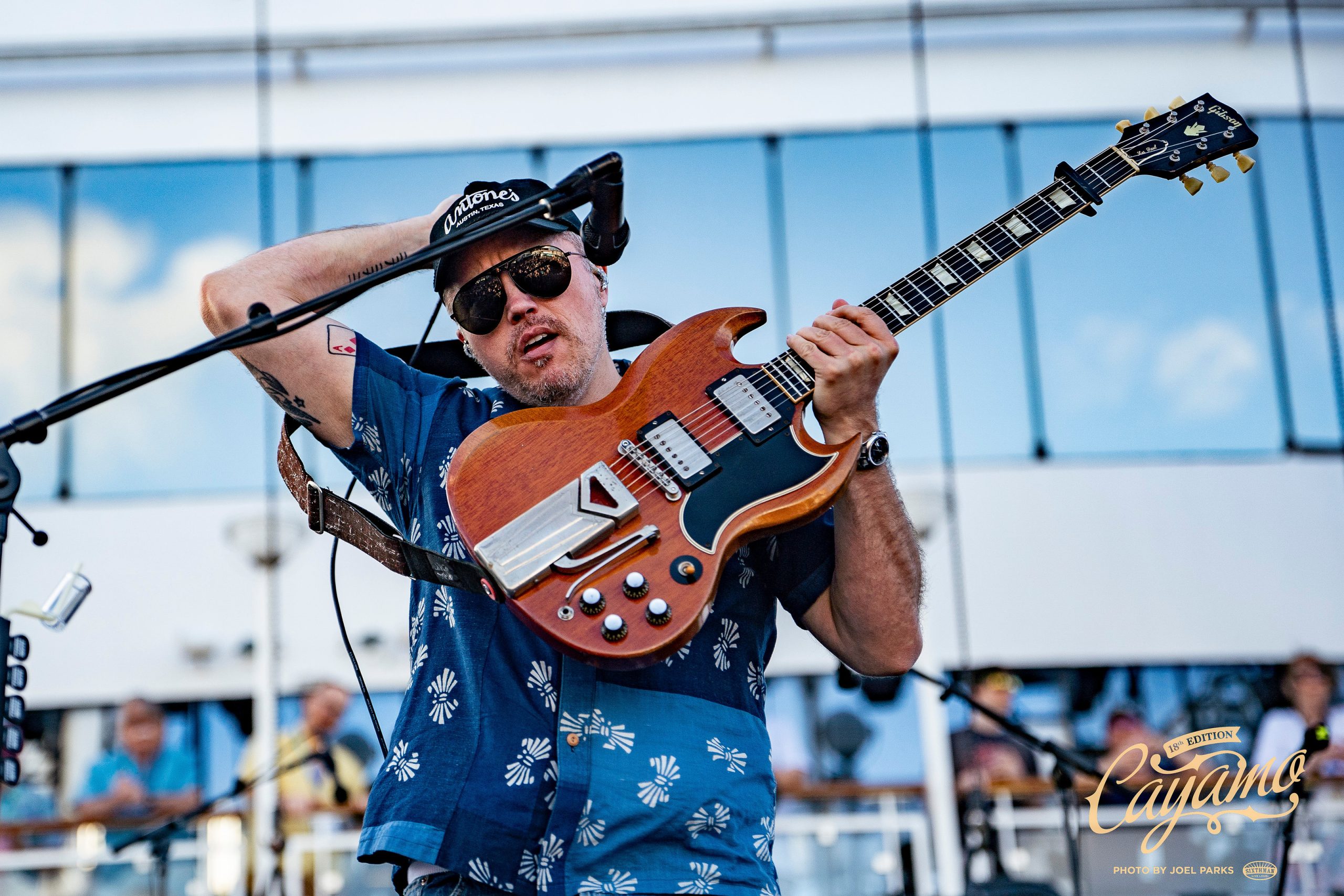
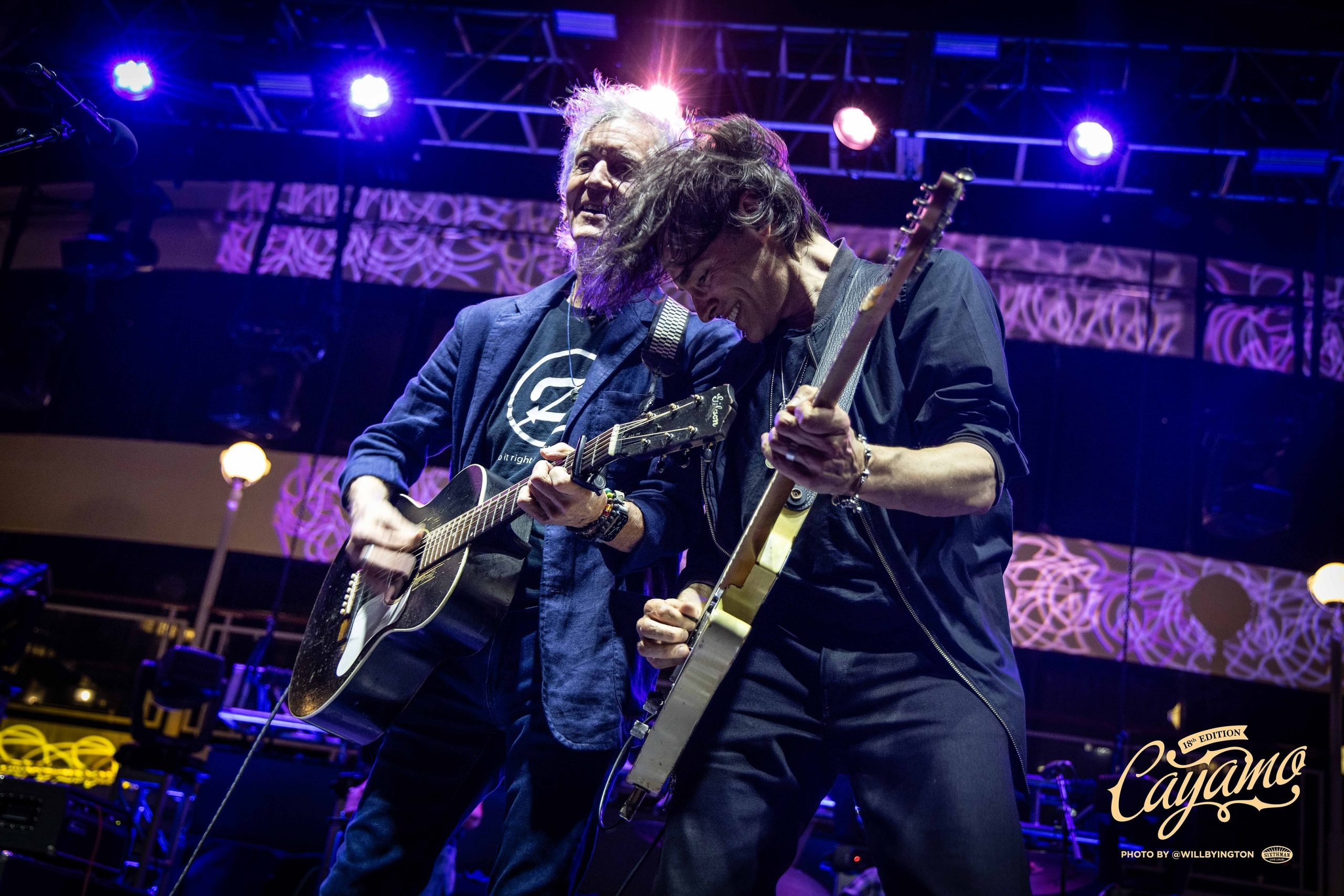
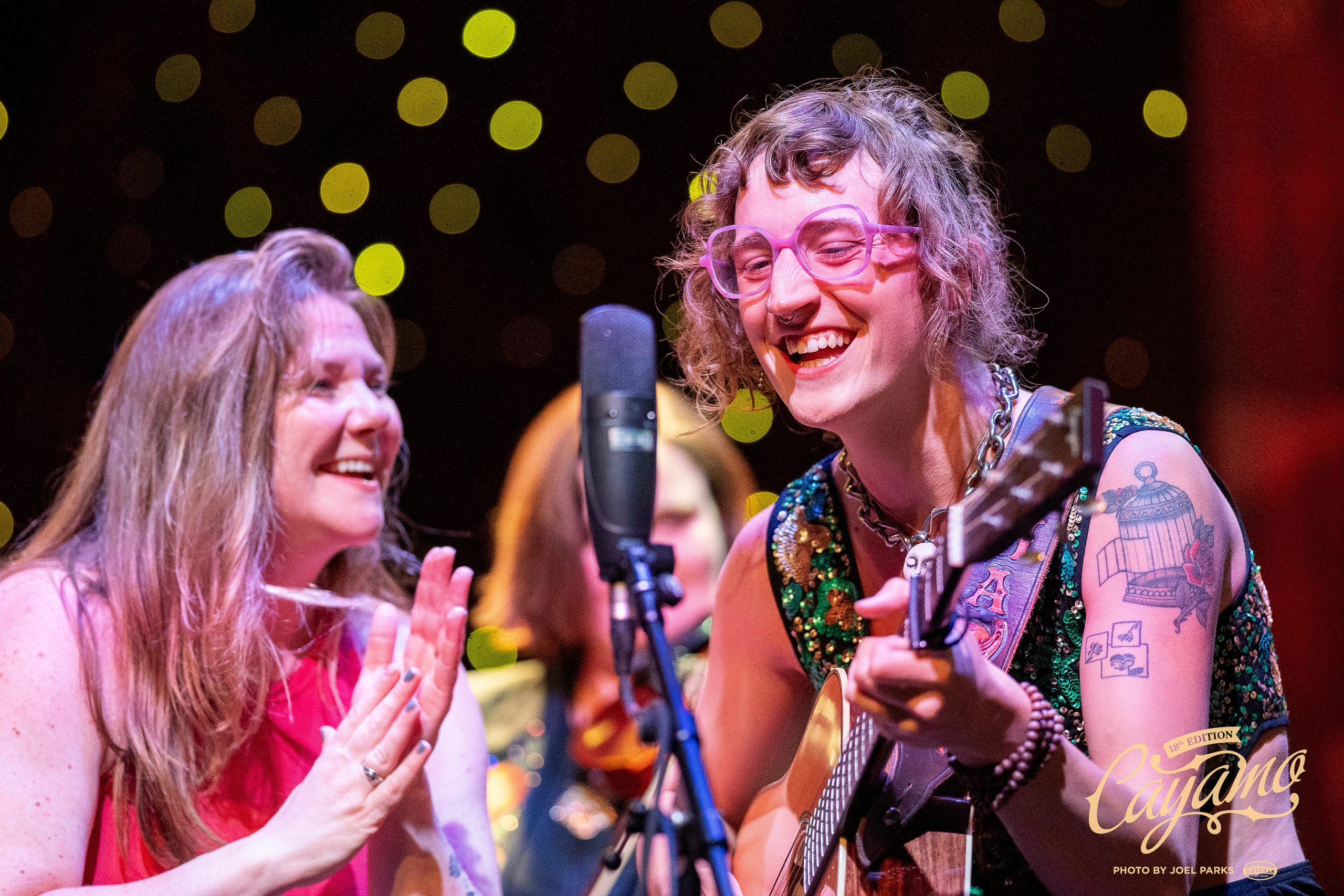
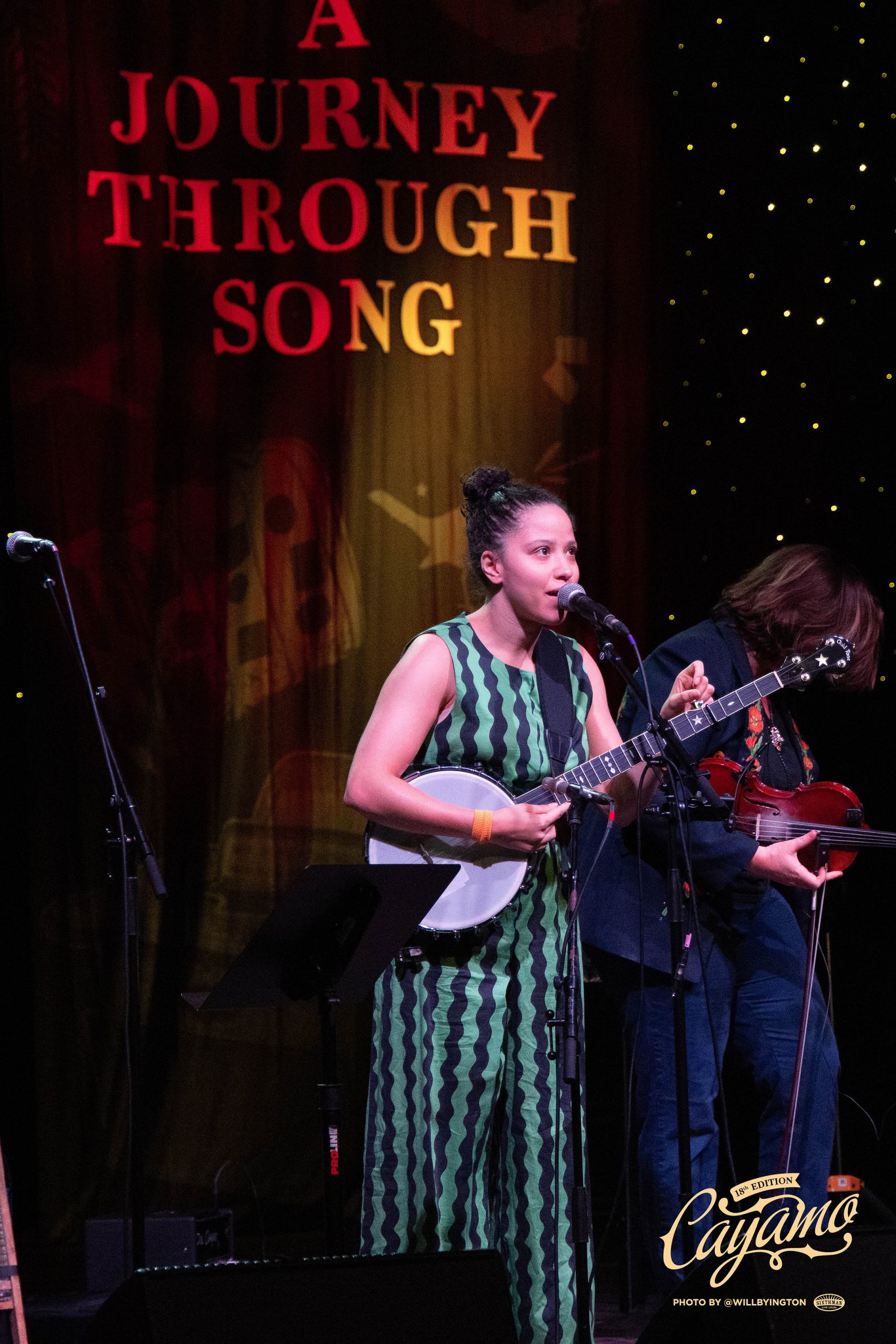
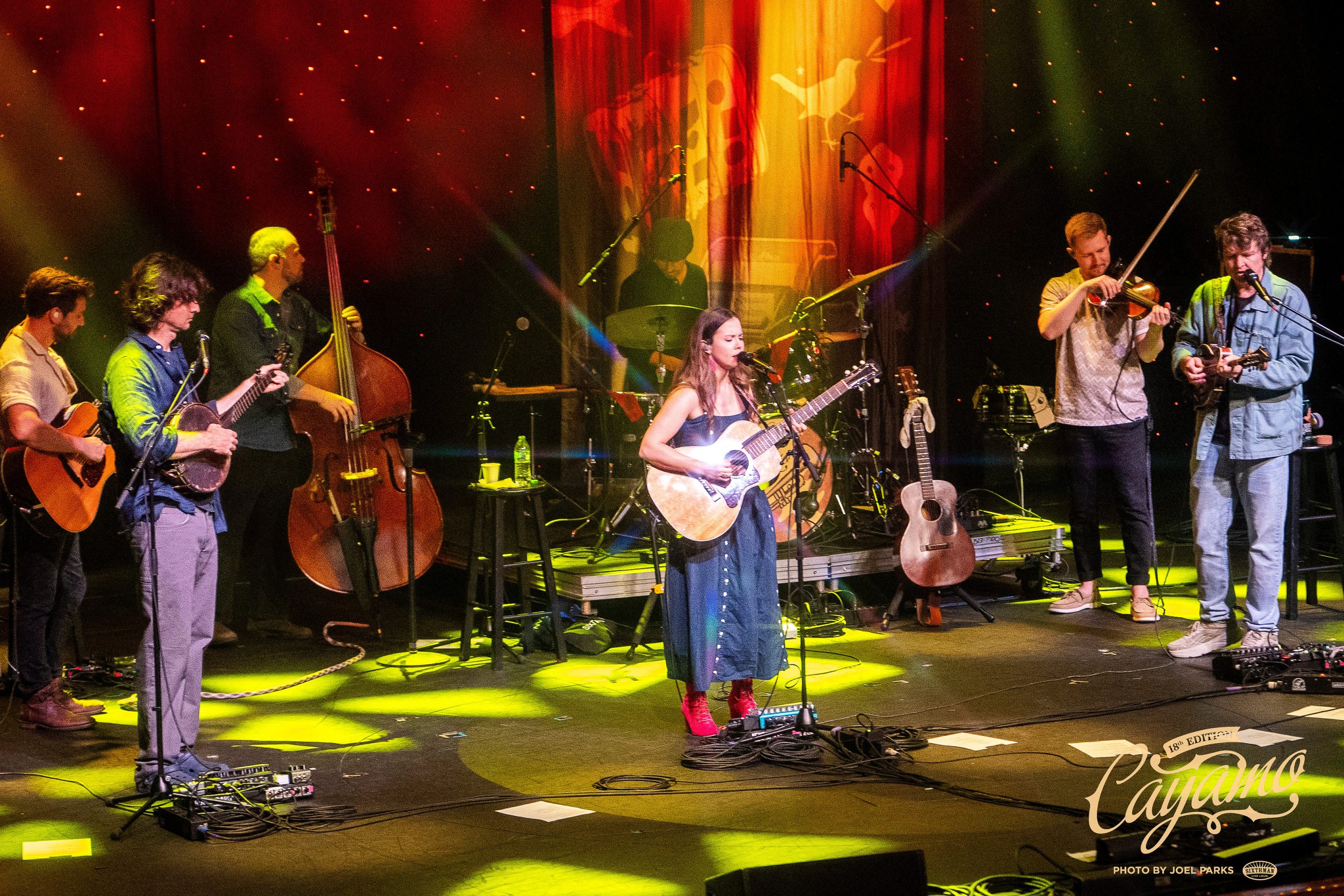
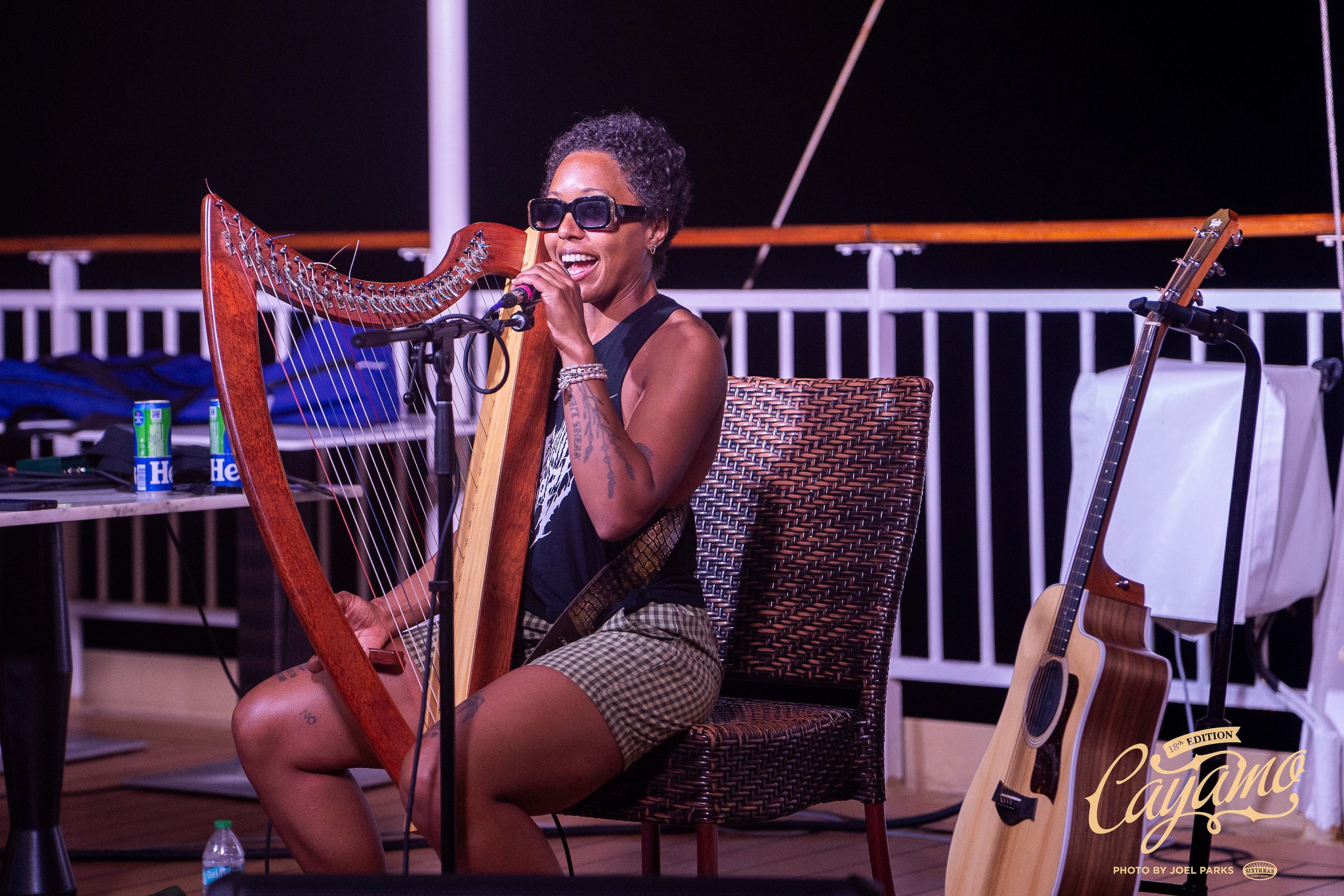
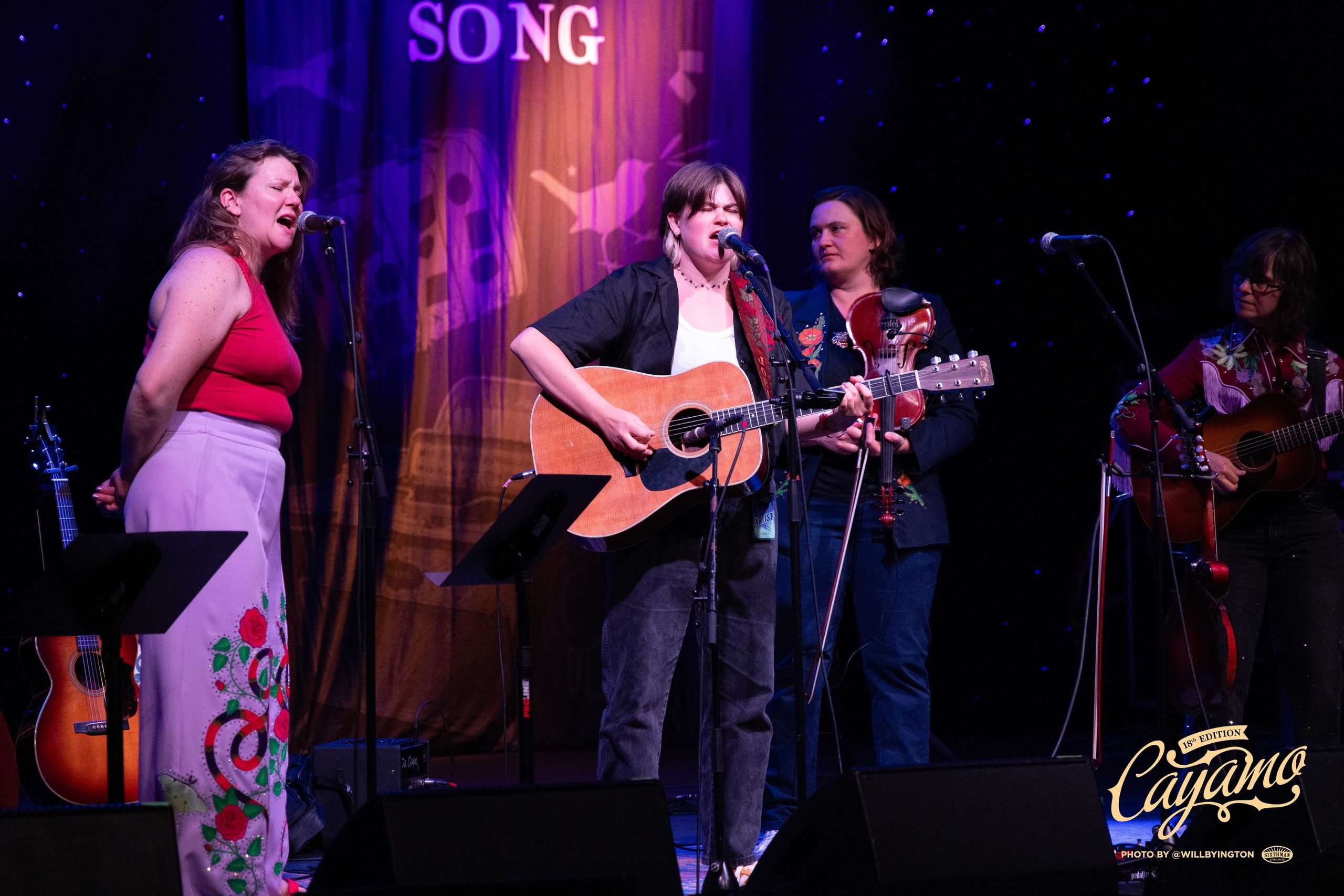
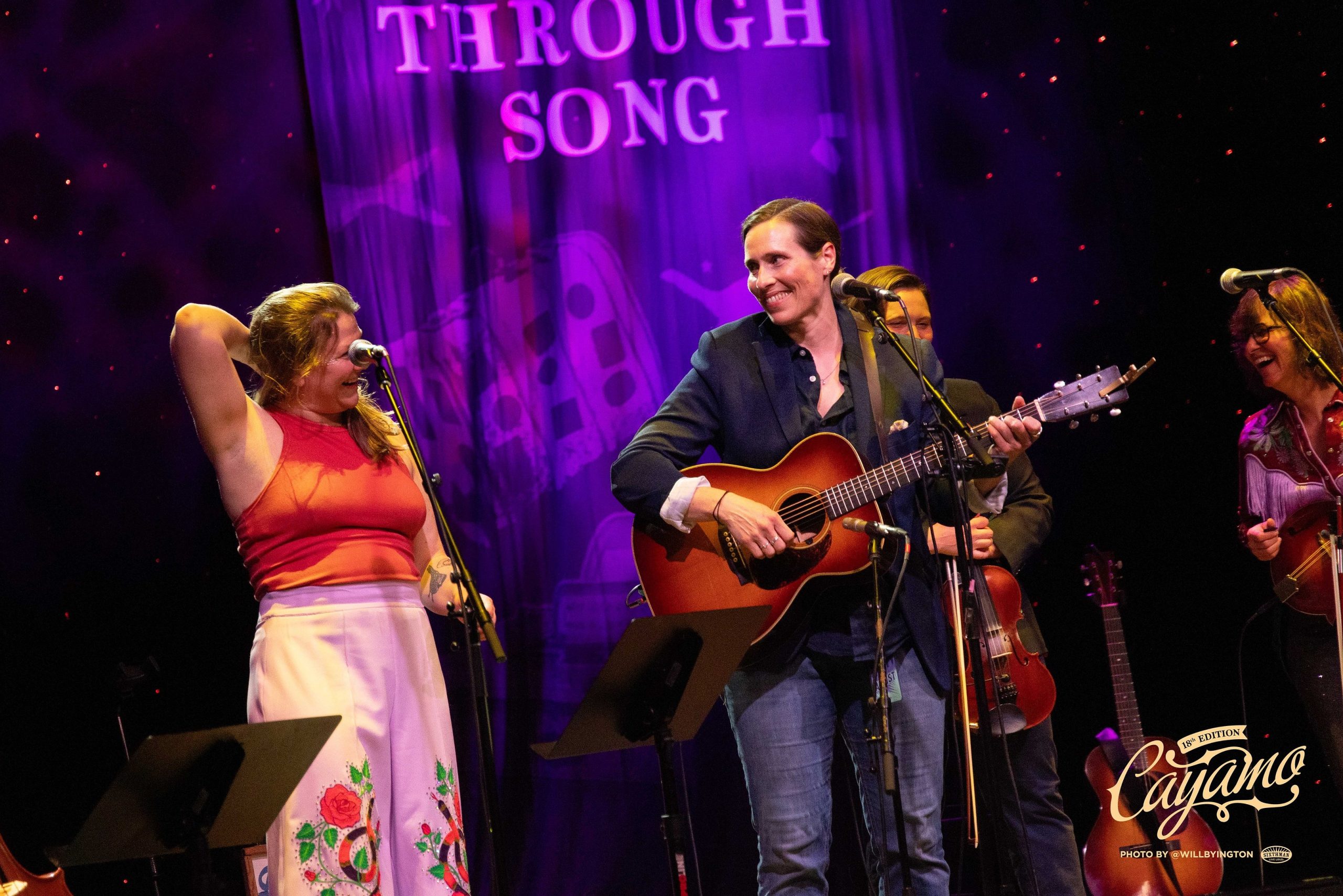
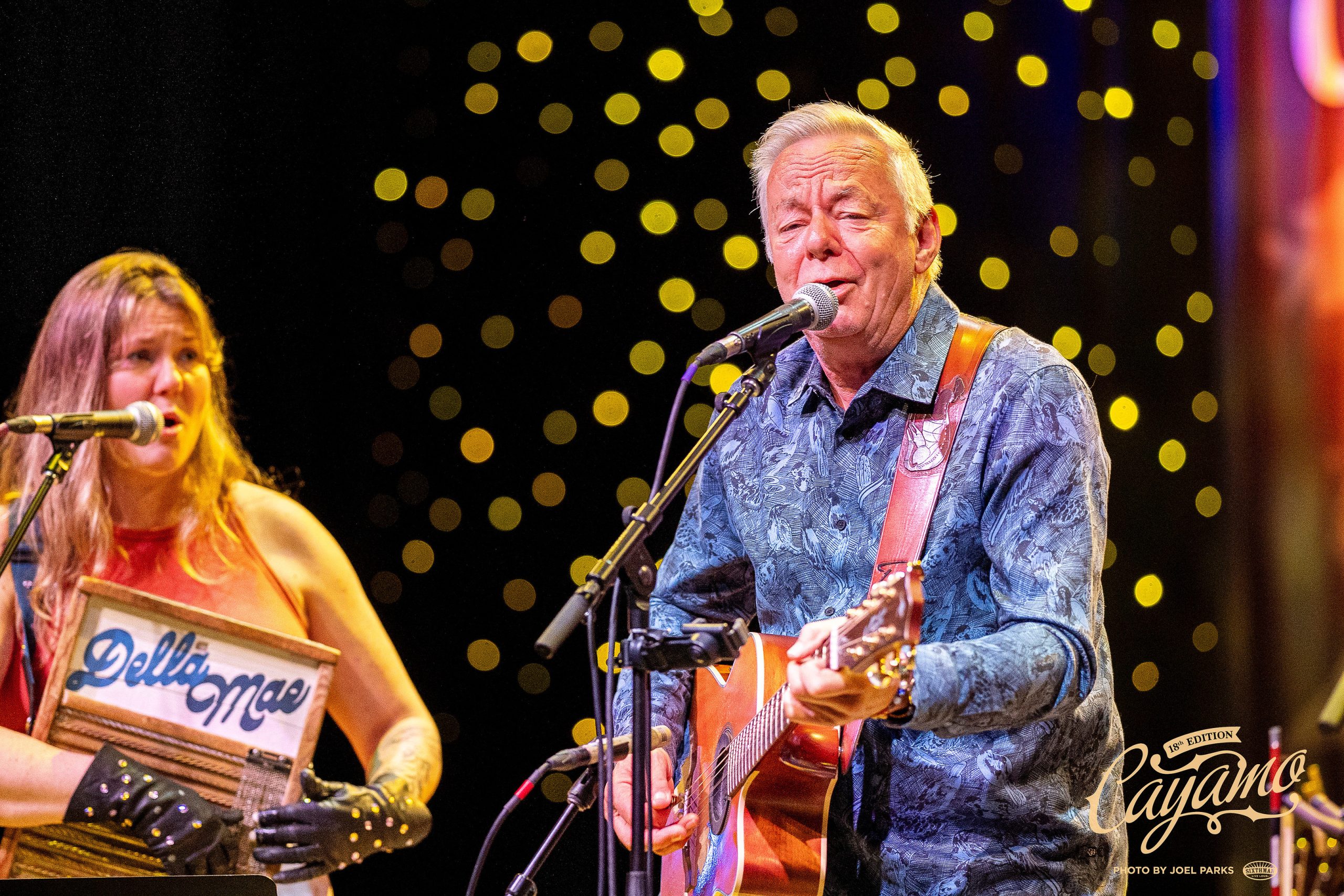
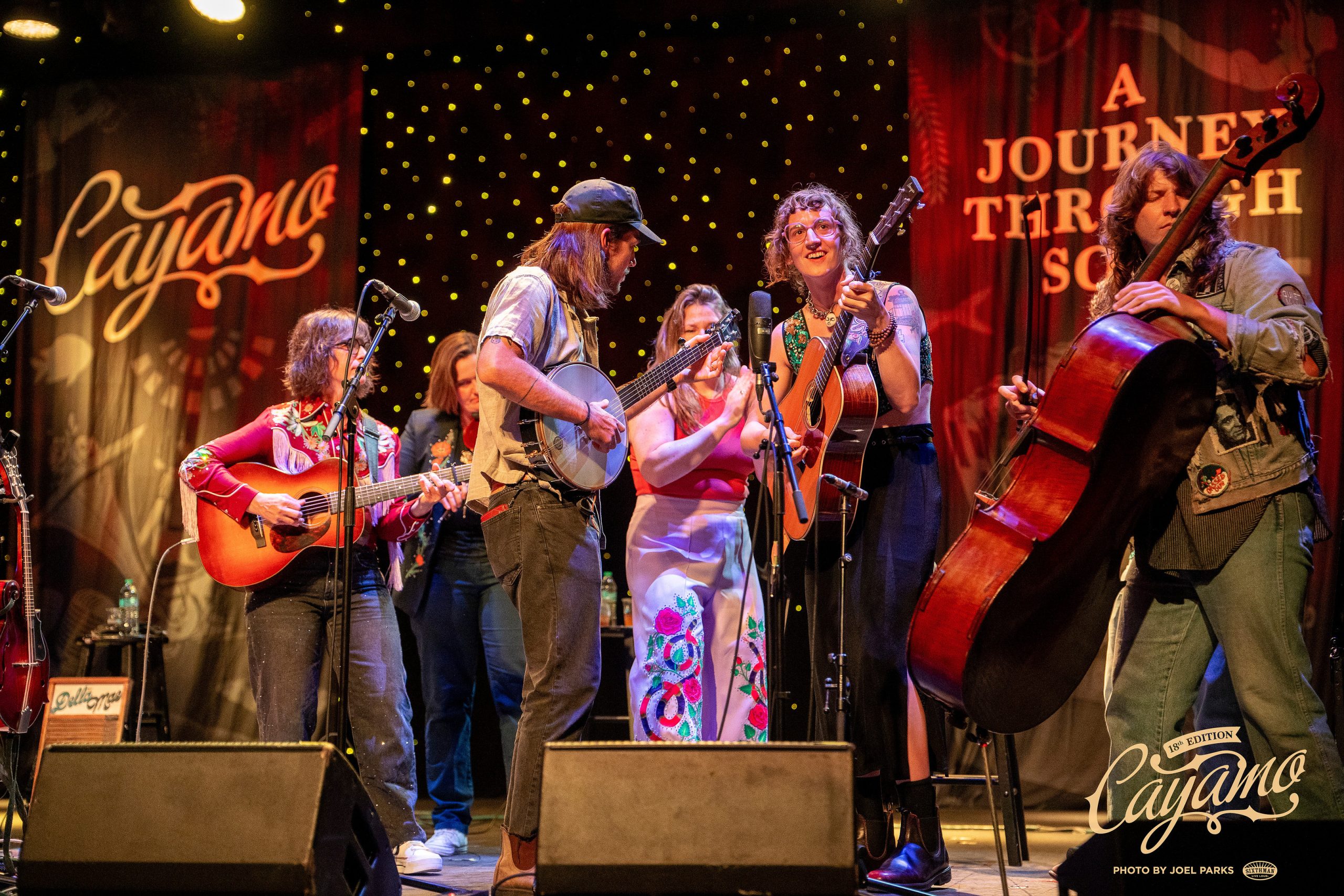
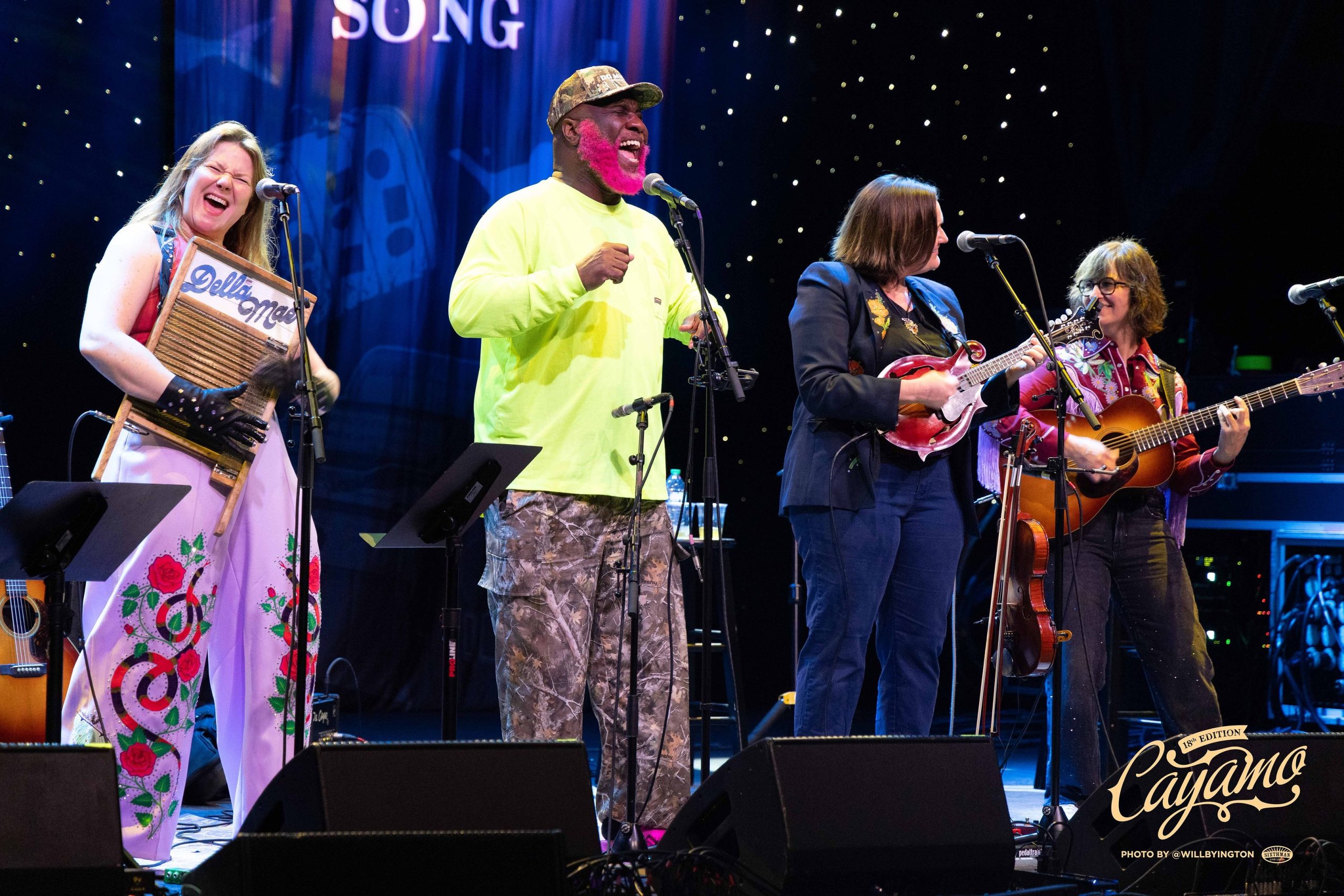
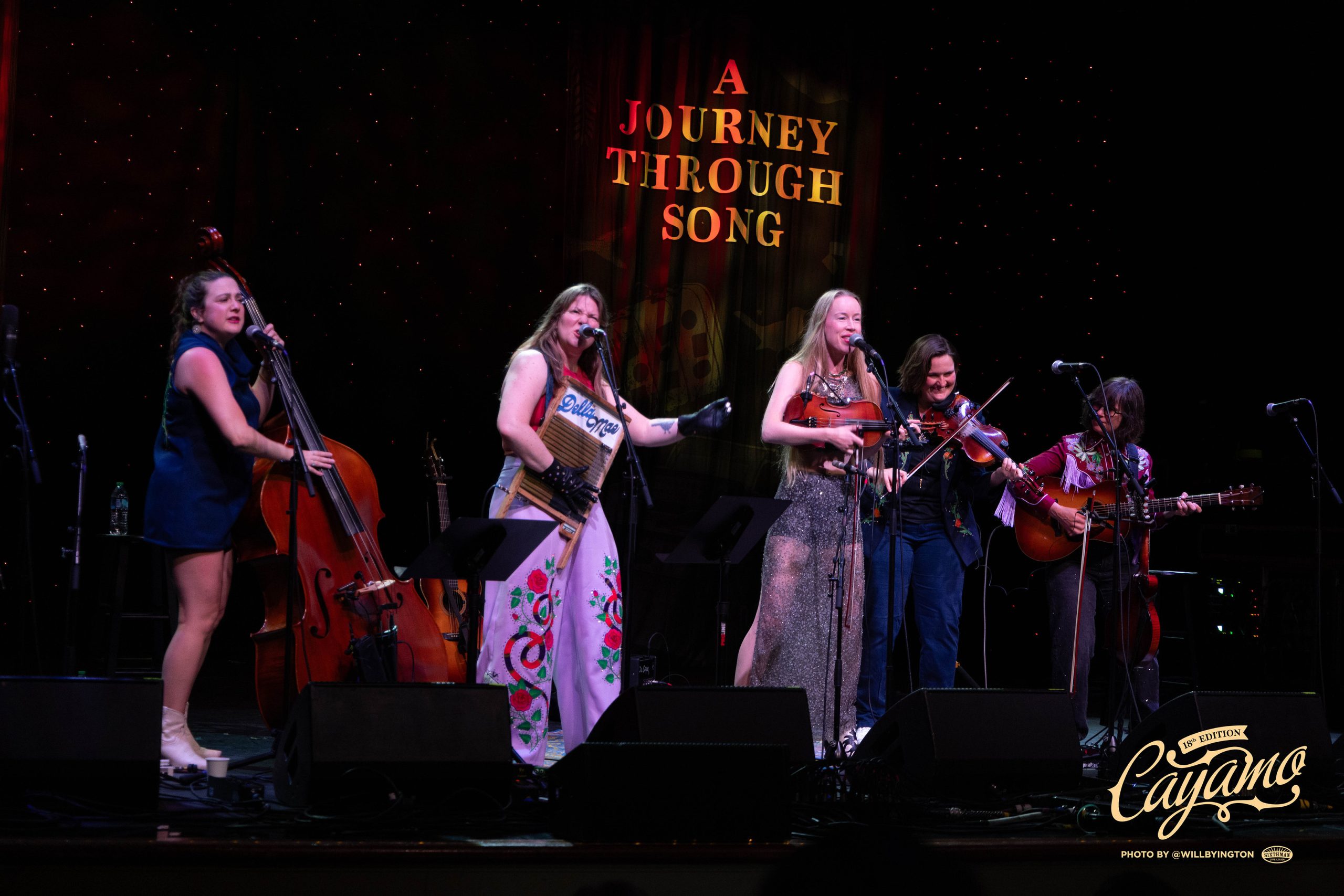
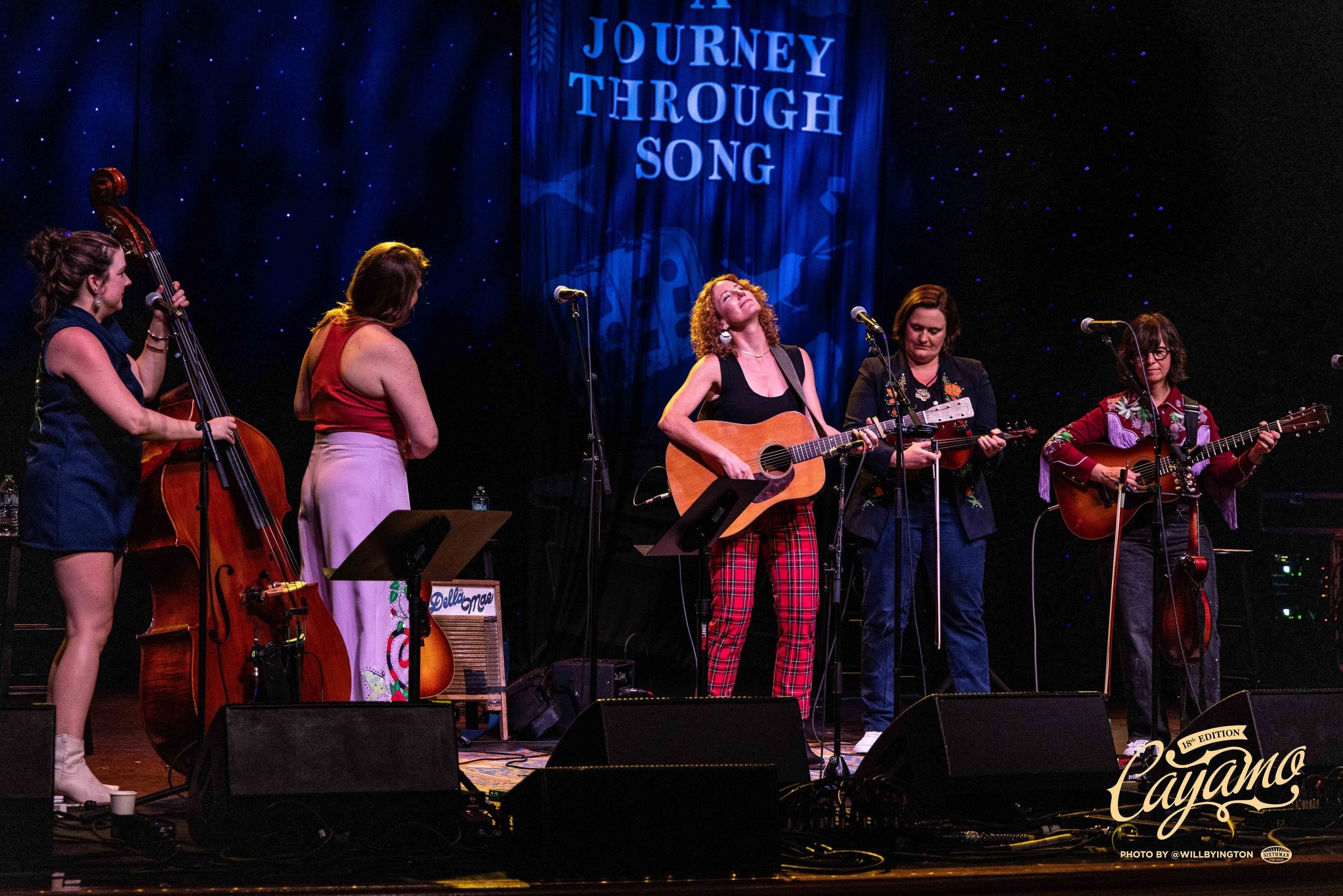
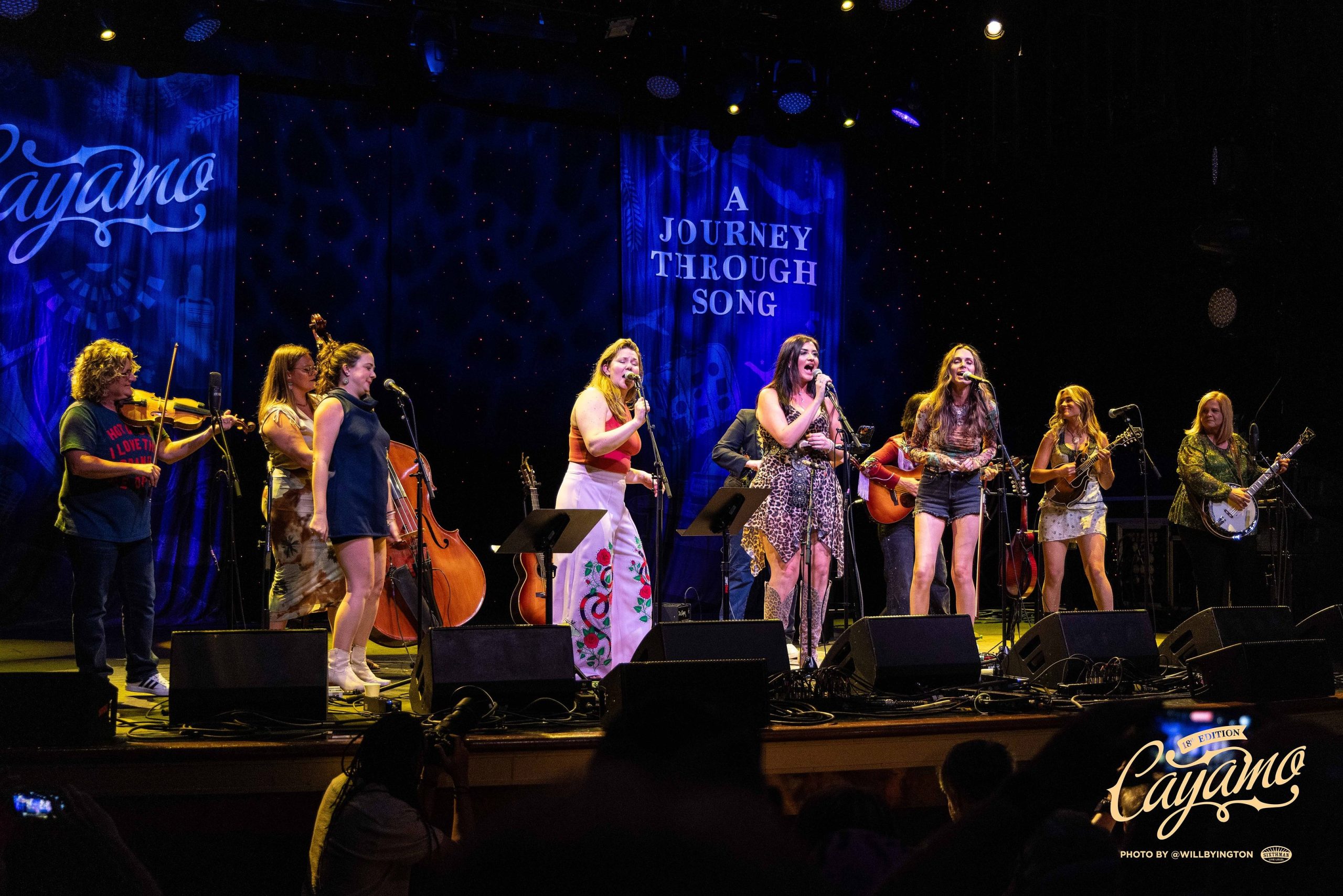
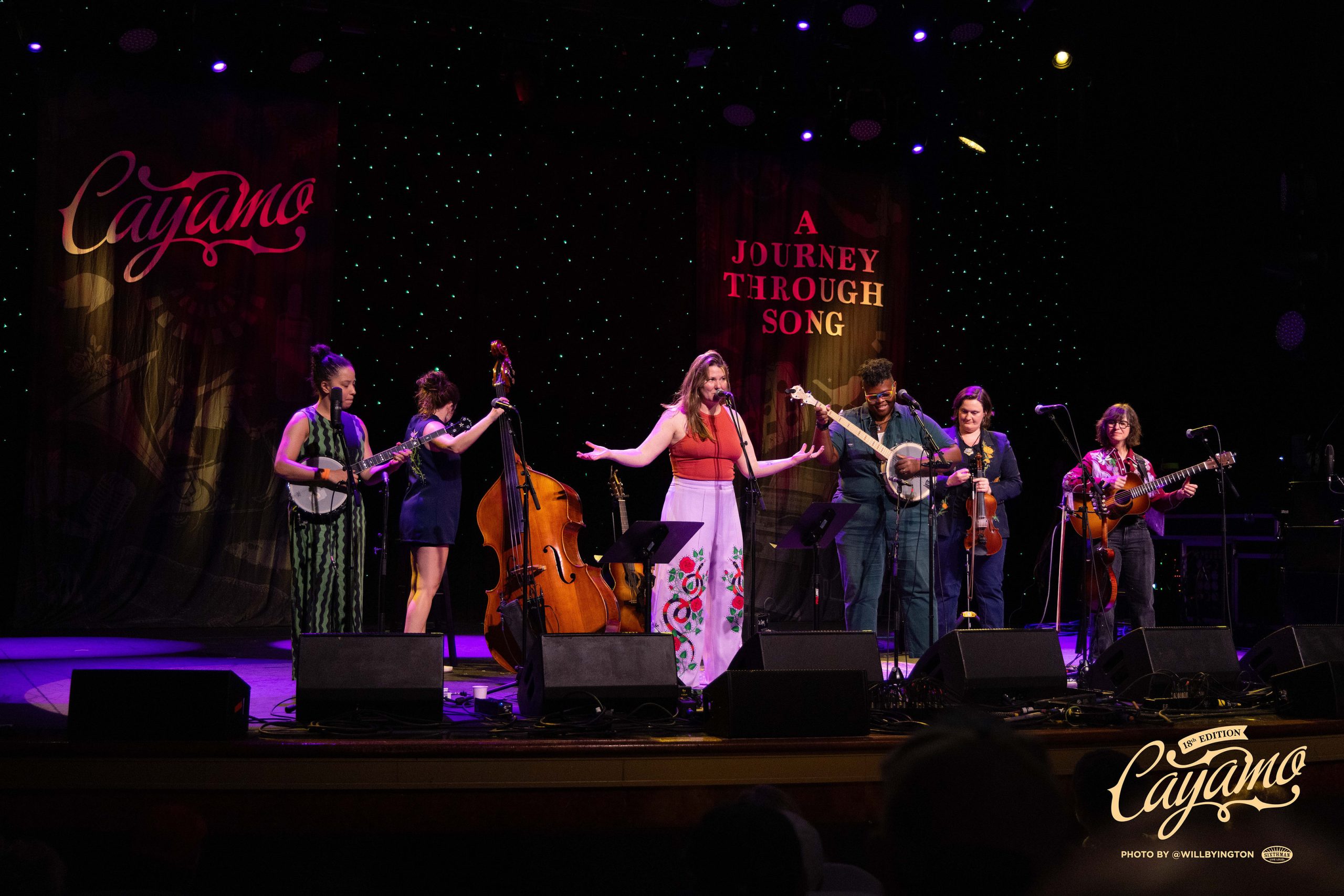
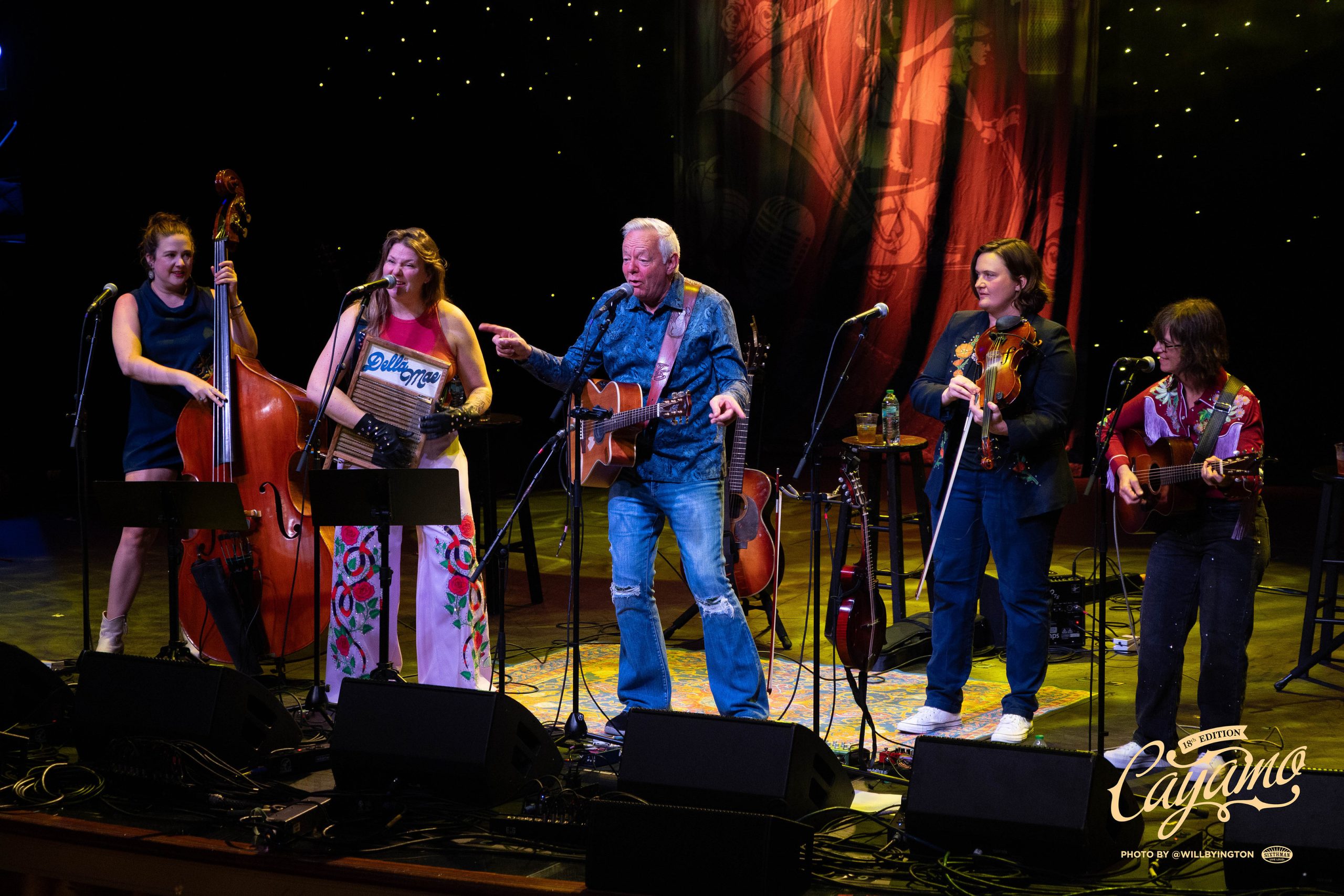
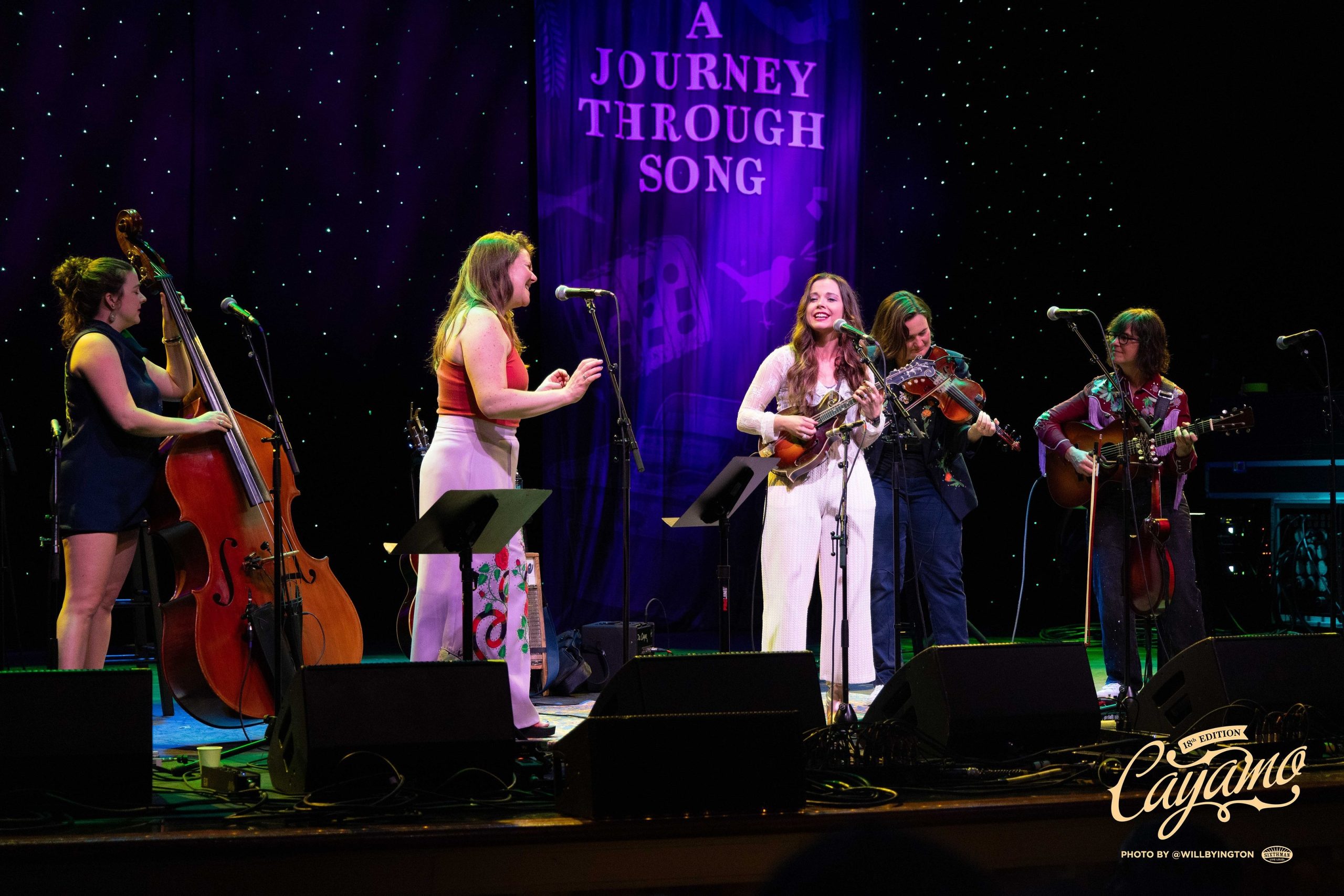
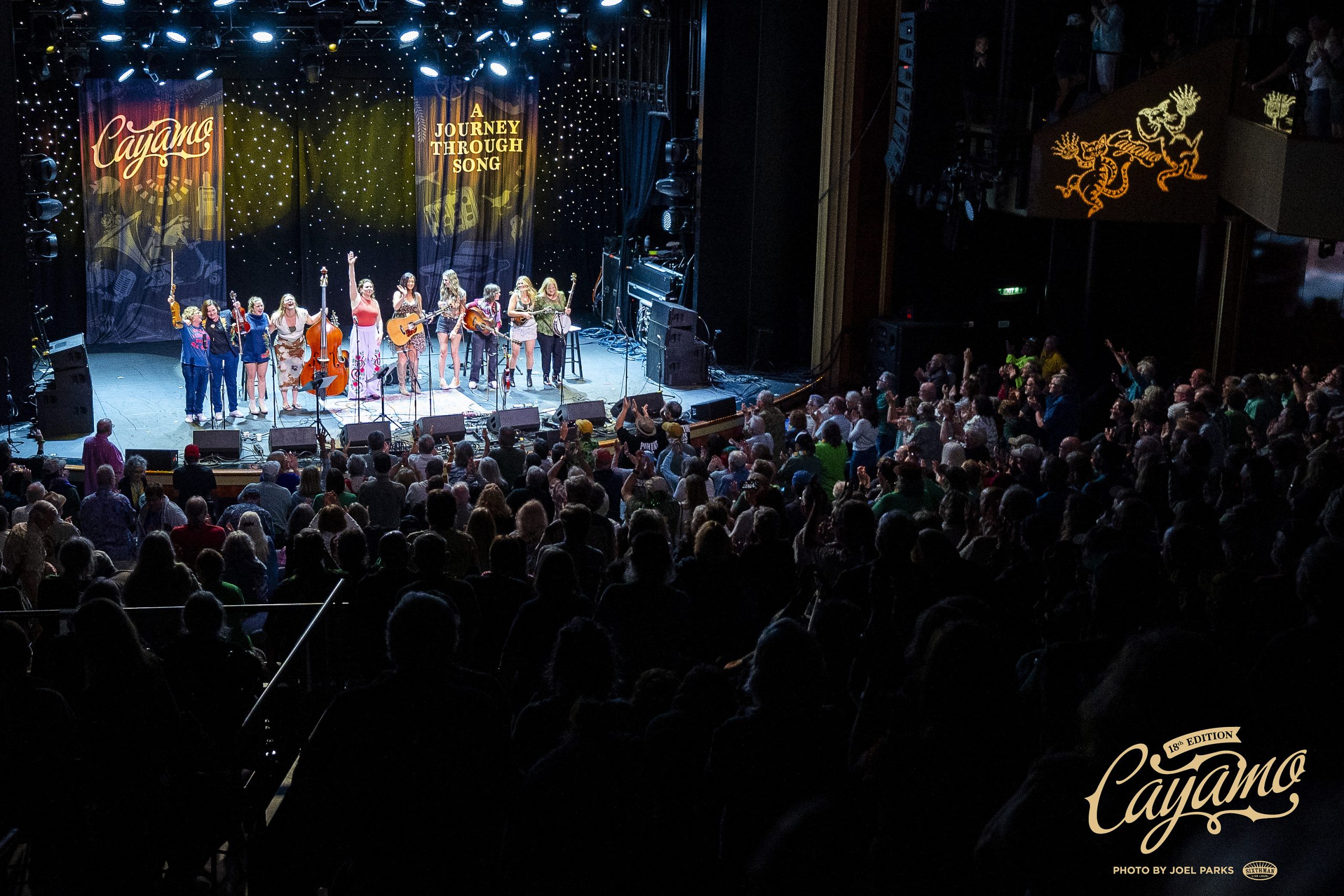
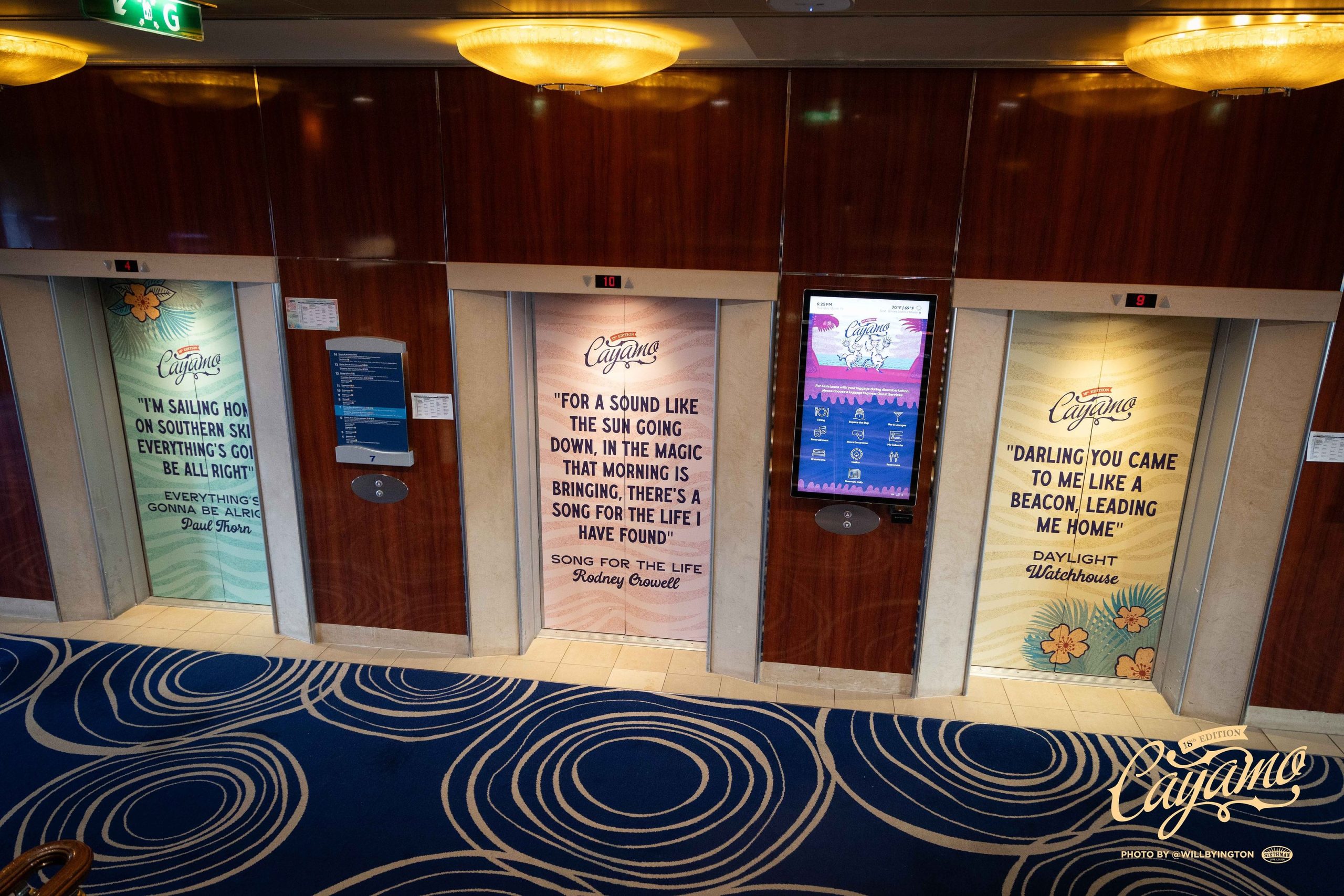
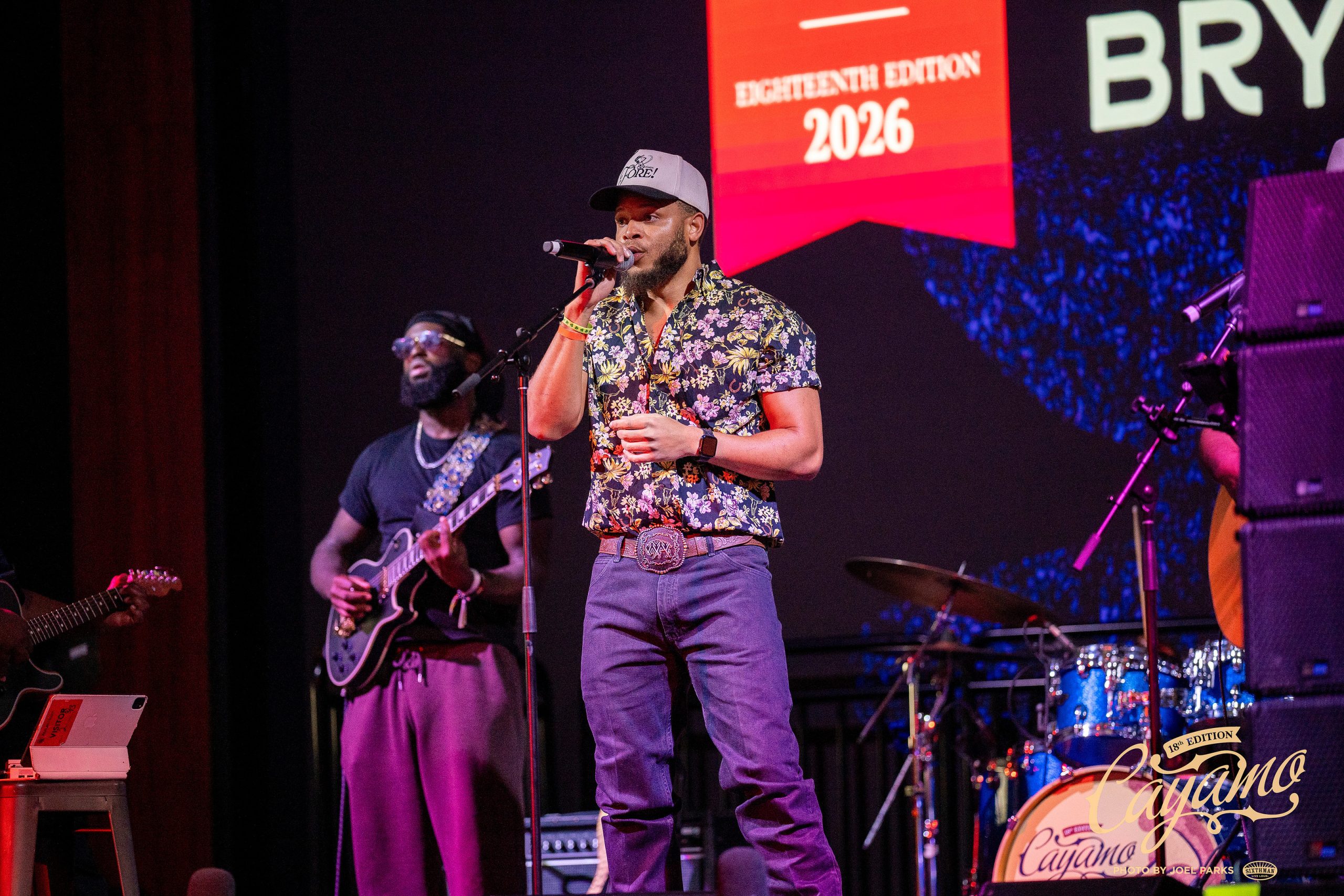
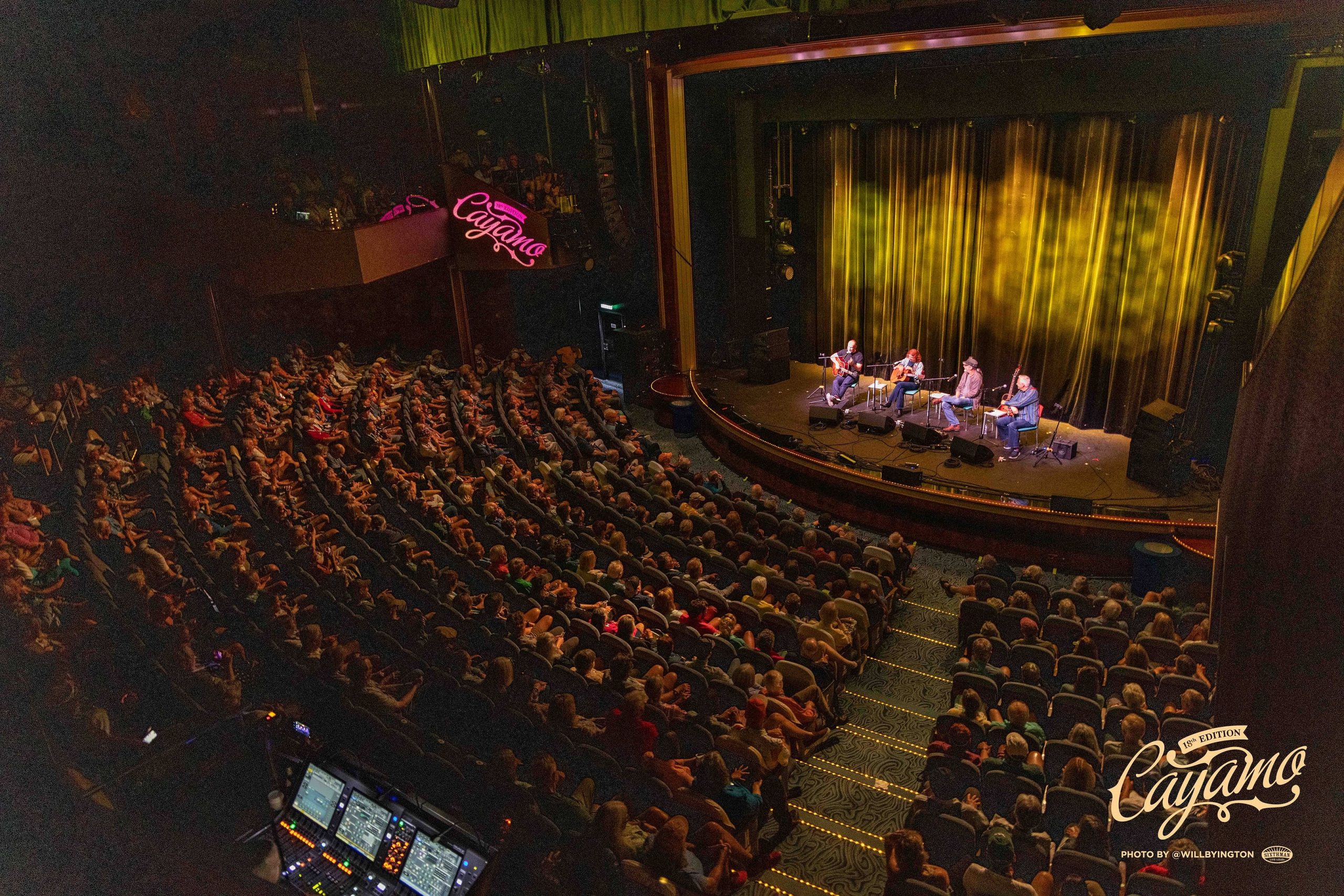
Last month, the BGS team once again embarked on Cayamo: A Journey Through Song, the 18th edition of the beloved week-long floating roots music festival that crisscrossed the Caribbean aboard the Norwegian Pearl. With performances by Jason Isbell & the 400 Unit, Dawes, Watchhouse, Patty Griffin, and many, many more, plus port visits in San Juan, Puerto Rico and Cayo Levantado, Dominican Republic, our team was more than ready to yet again partner with Cayamo and Sixthman to bring you special Basic Folk podcast live tapings on board and our fan favorite BGS Nightcap jam set, our fourth edition of the event.
There’s no festival or live music event quite like Cayamo, where ardent roots music fans and the best and most buzzed-about artists and bands come together on a floating sanctuary to enjoy music, art, community, and togetherness – and a break from the wintry weather, too. Below, enjoy a couple of clips captured on board and a series of photos from Cayamo 2026 that clearly demonstrate the joy and fun of this one-of-a-kind event.
Great news, too! The 2027 lineup for Cayamo: A Journey Through Song has already been announced (see above). Tickets go on sale on April 16th at 2pm EDT, but you still have time to join the final presale. More info here.
Days 1 & 2
It's time for Cayamo: A Journey Through Song!
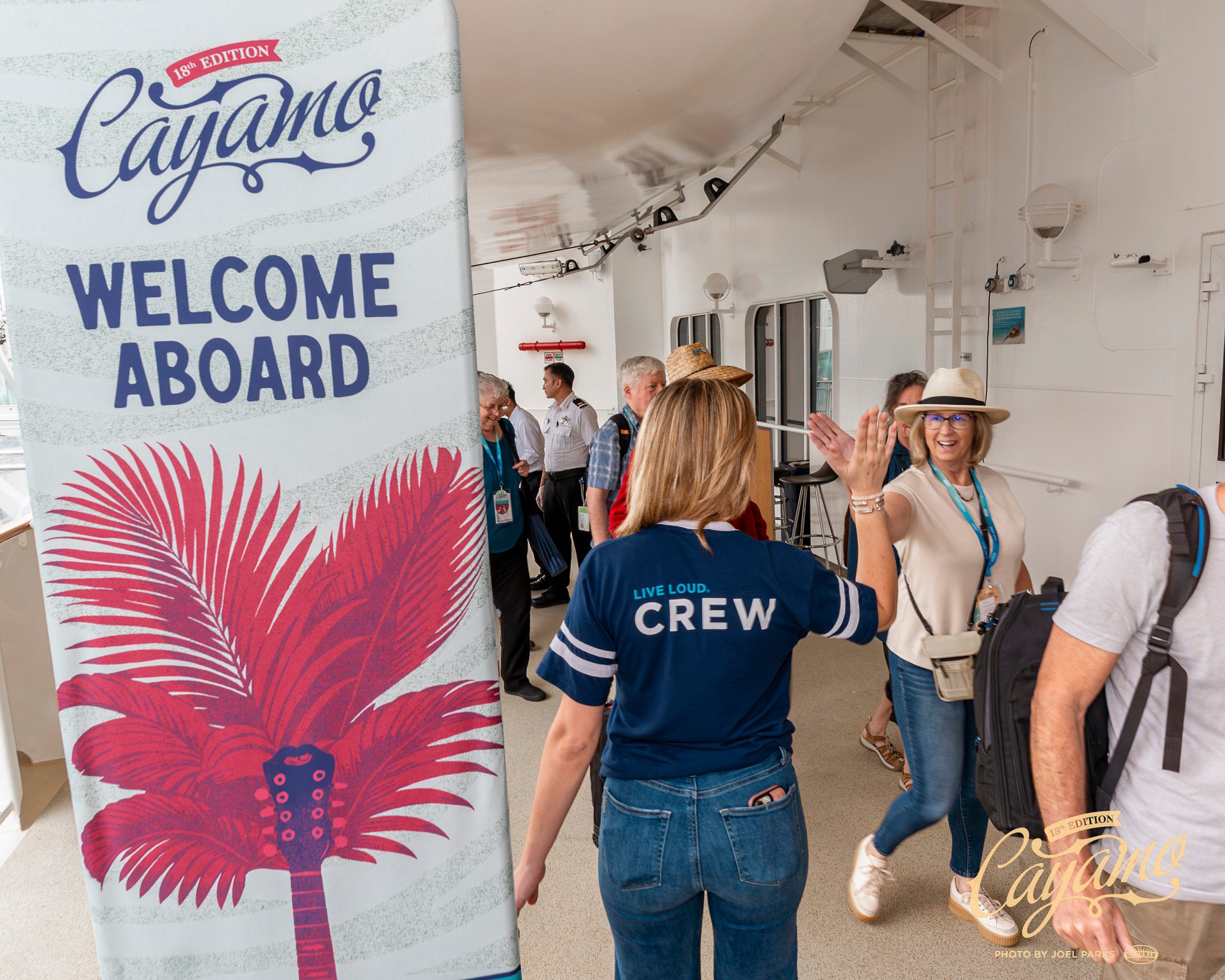
Welcome aboard...
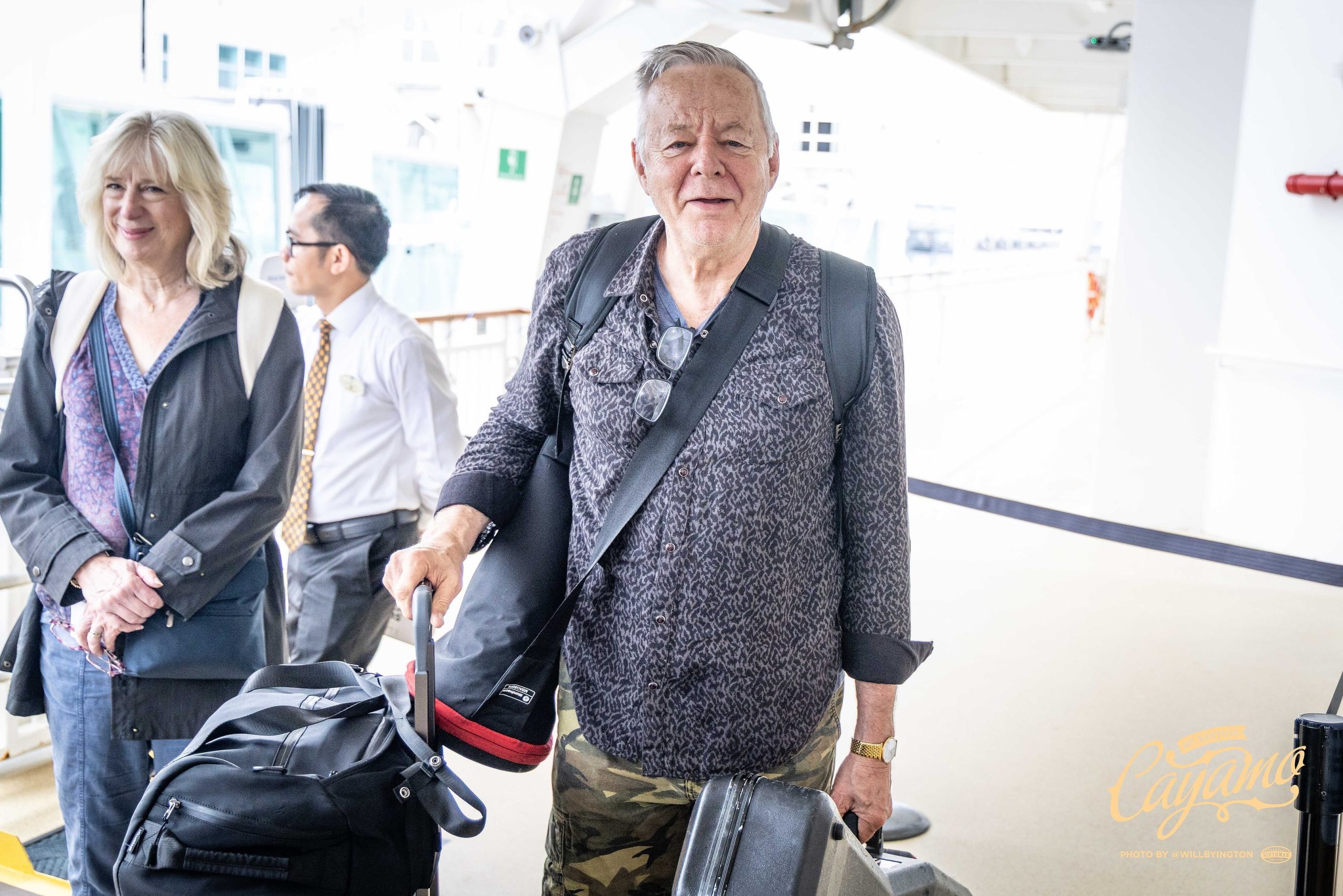
Tommy Emmanuel arrives.
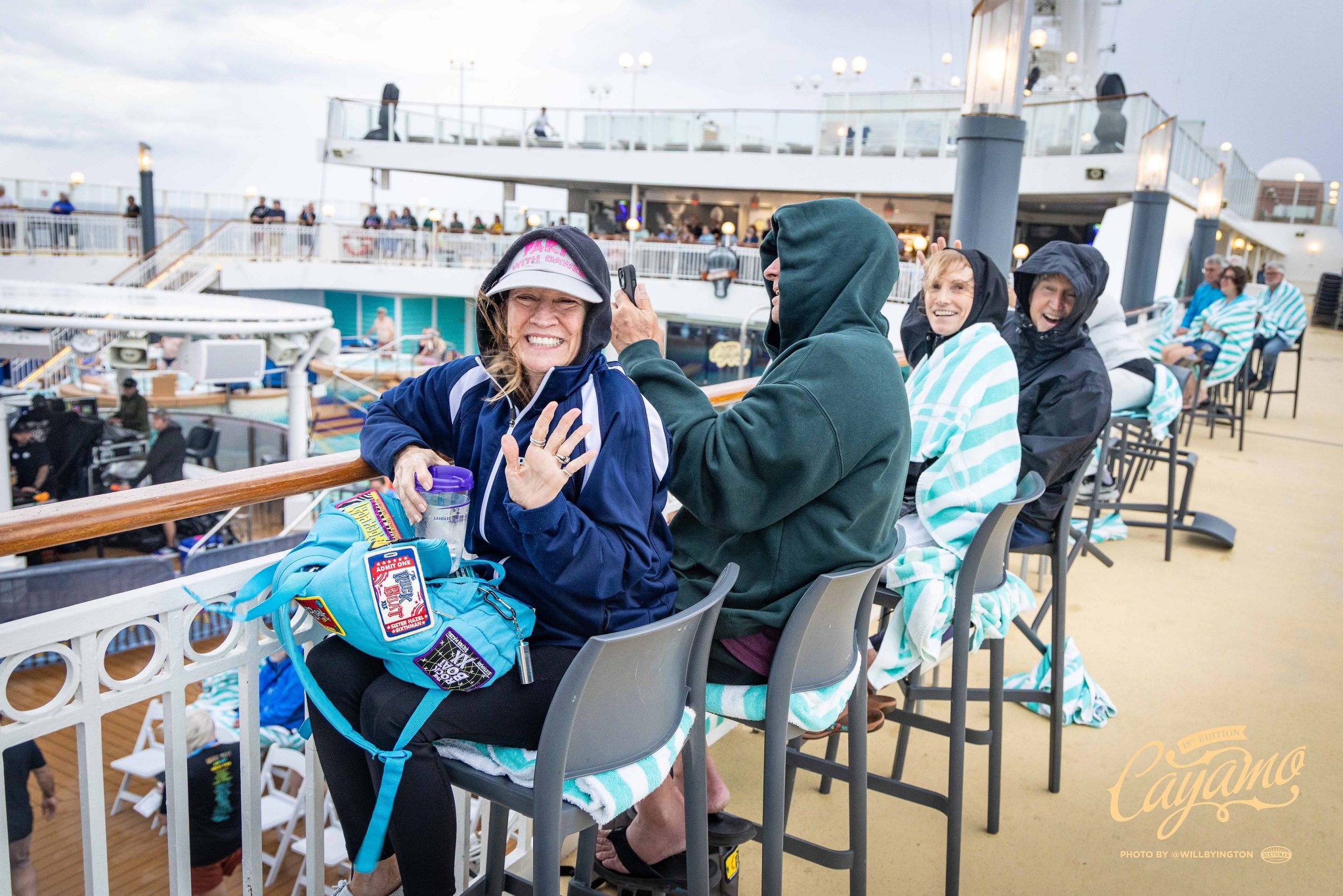
Fans brave the less-than-perfect weather before setting sail from Miami, FL.
Dawes perform for the sail away set on the pool deck.
Rissi Palmer.
Sister Sadie.
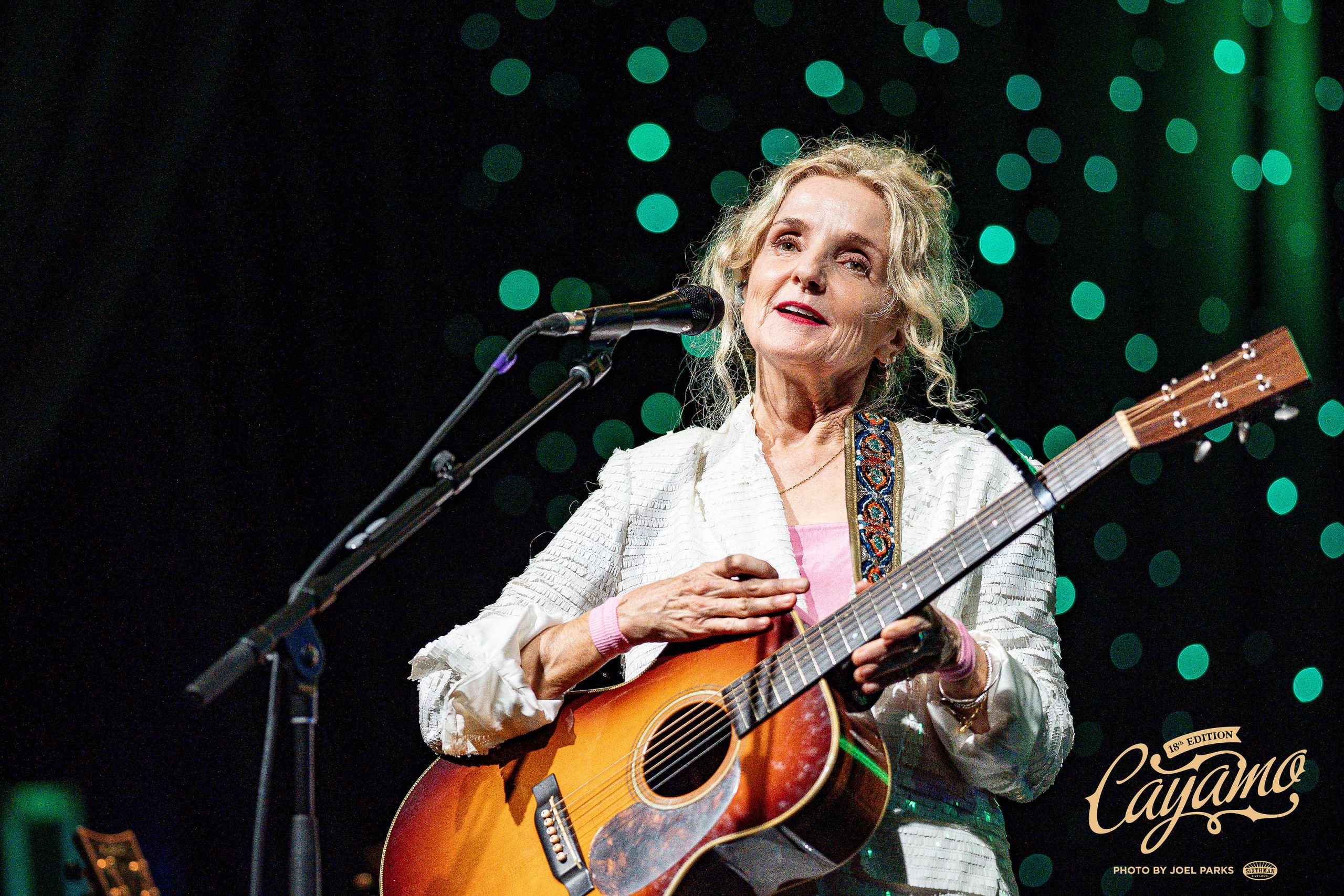
Patty Griffin performs to a packed theater.
Patty Griffin.
Erin Rae.
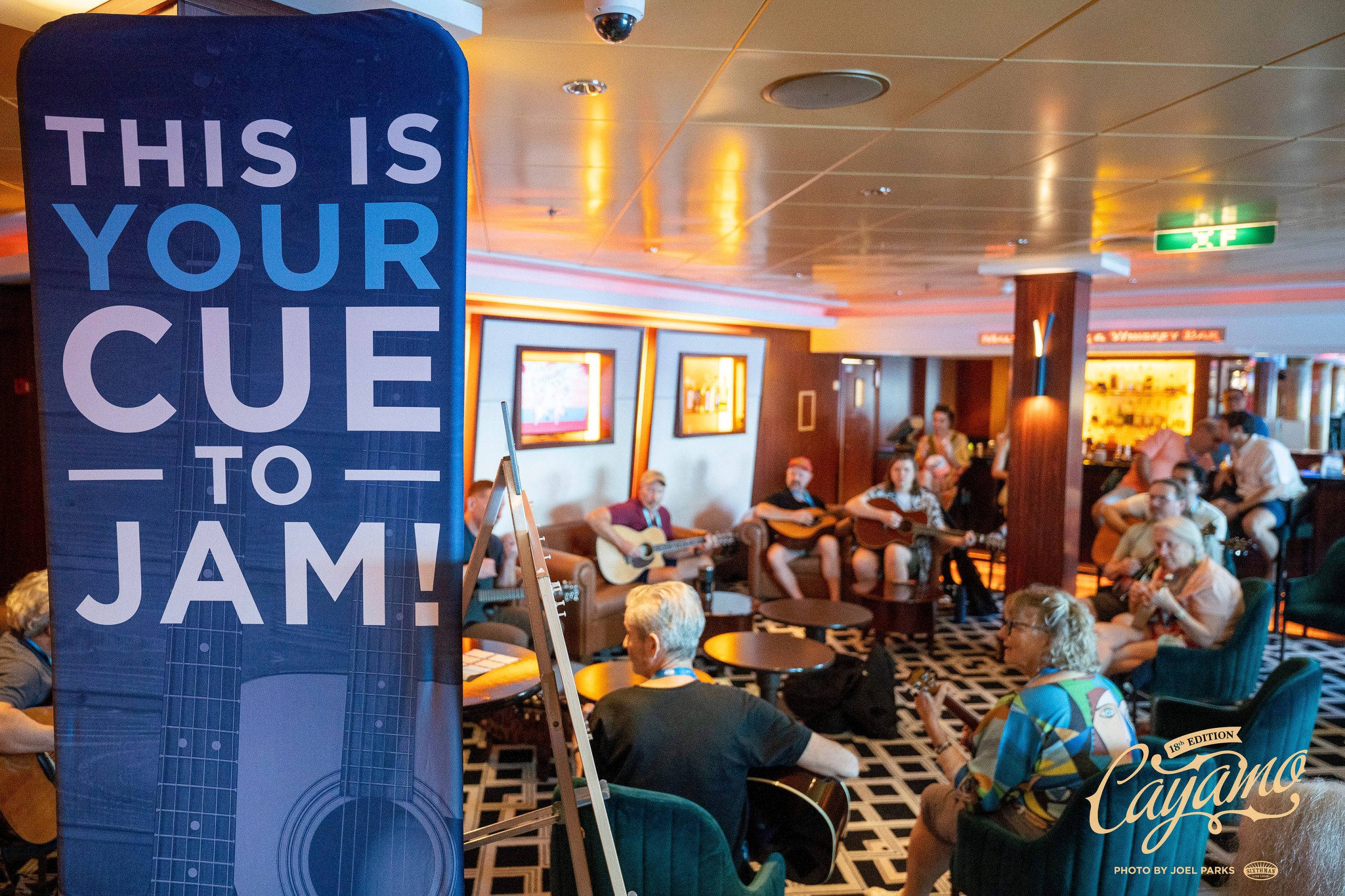
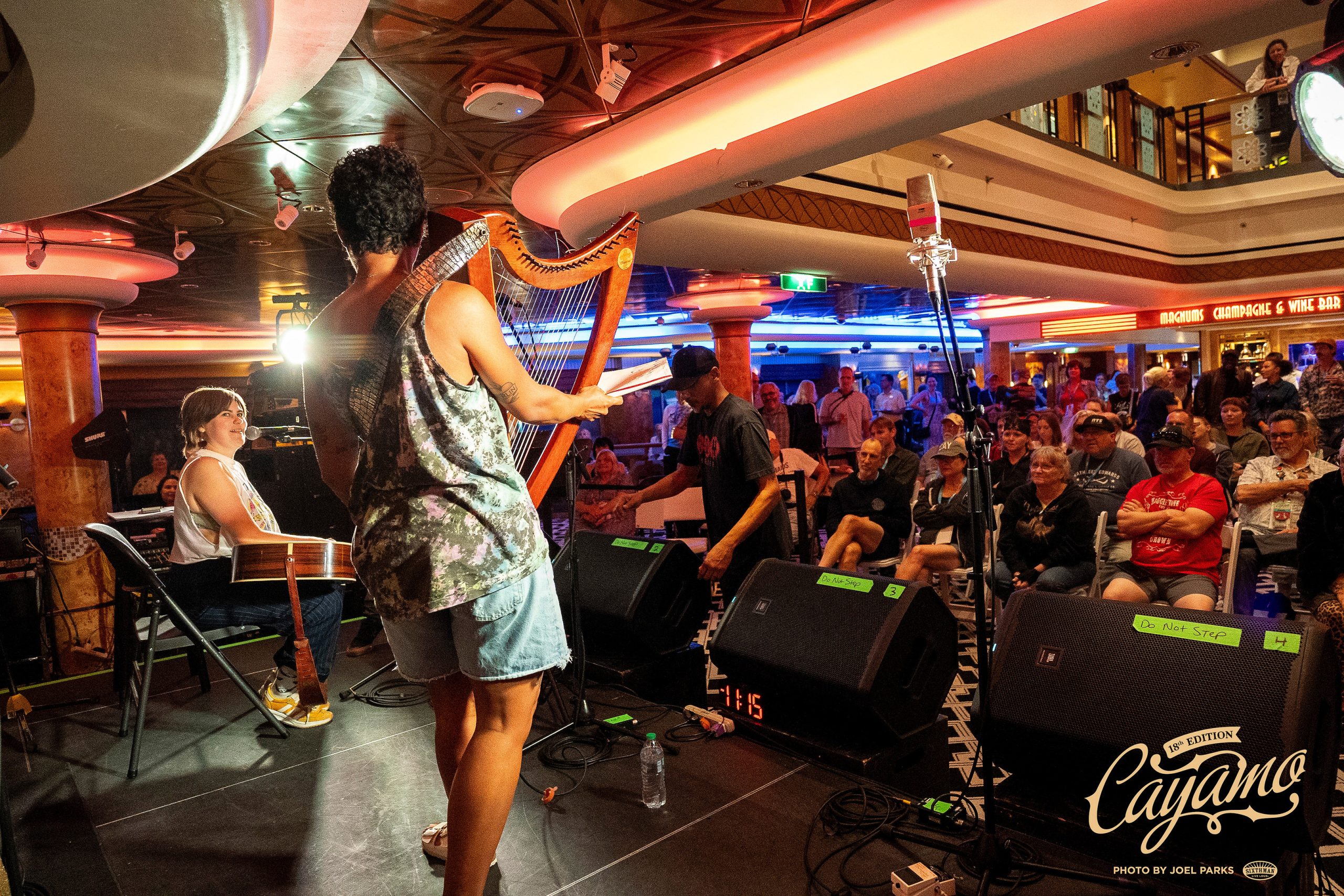
Did you bring your instrument? You can take part in the music, too!
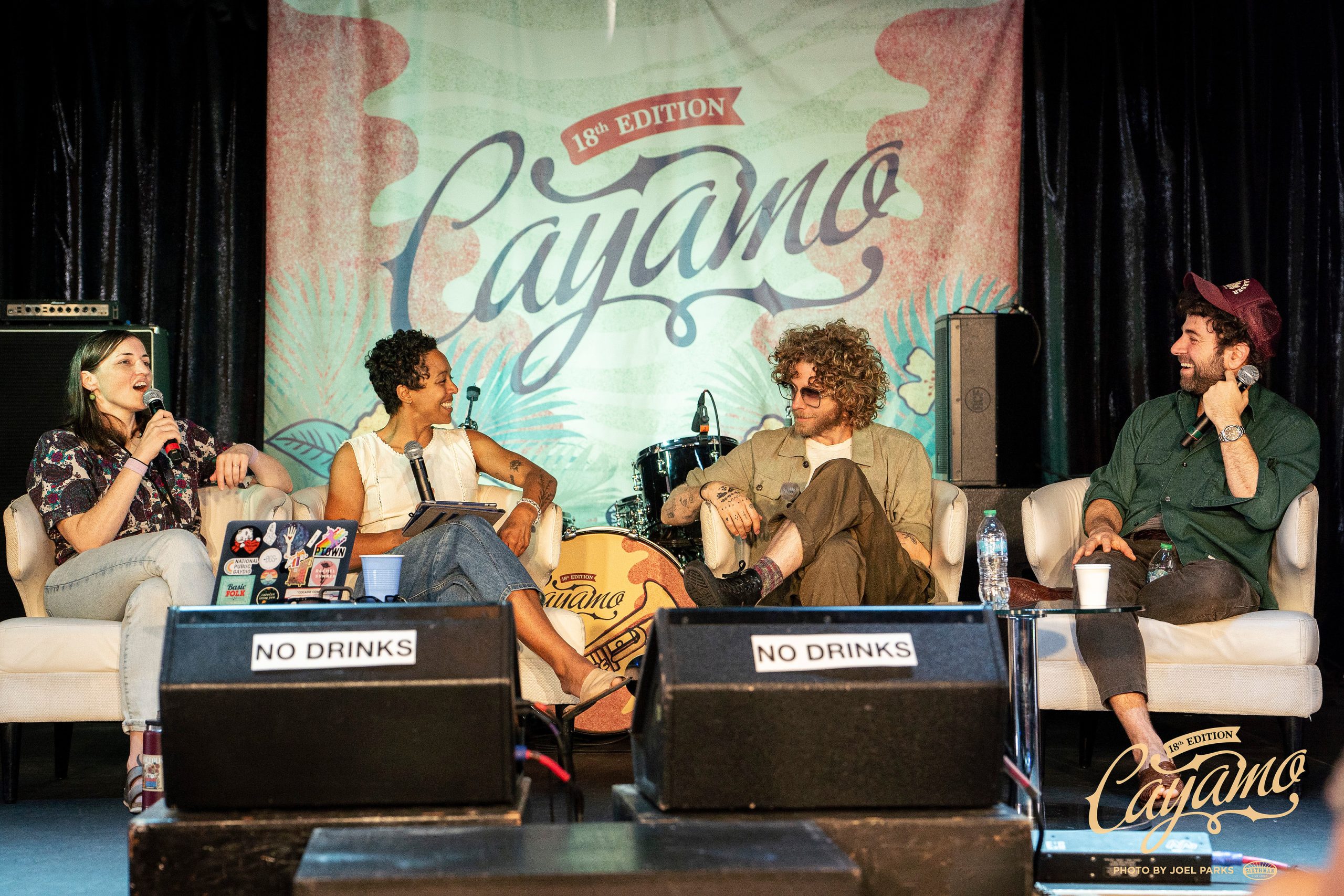
One of our live Basic Folk podcast tapings, hosted by Cindy Howes and Lizzie No and presented by the BGS Podcast Network.
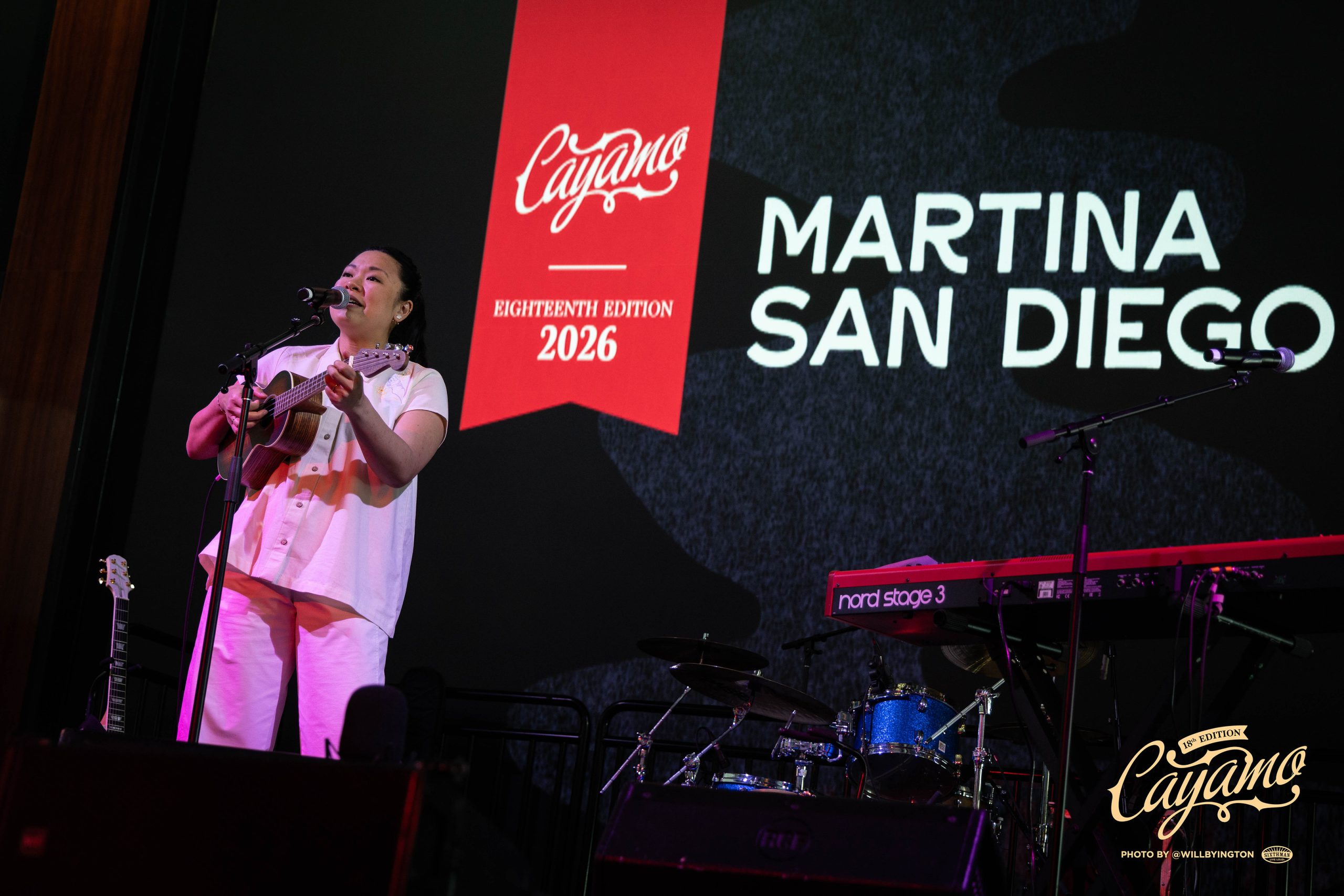
Martina San Diego.
Rose Cousins.
Enjoying tunes while soaking in the hot tub.
Ron Pope.
Crys Matthews.
Palmyra.
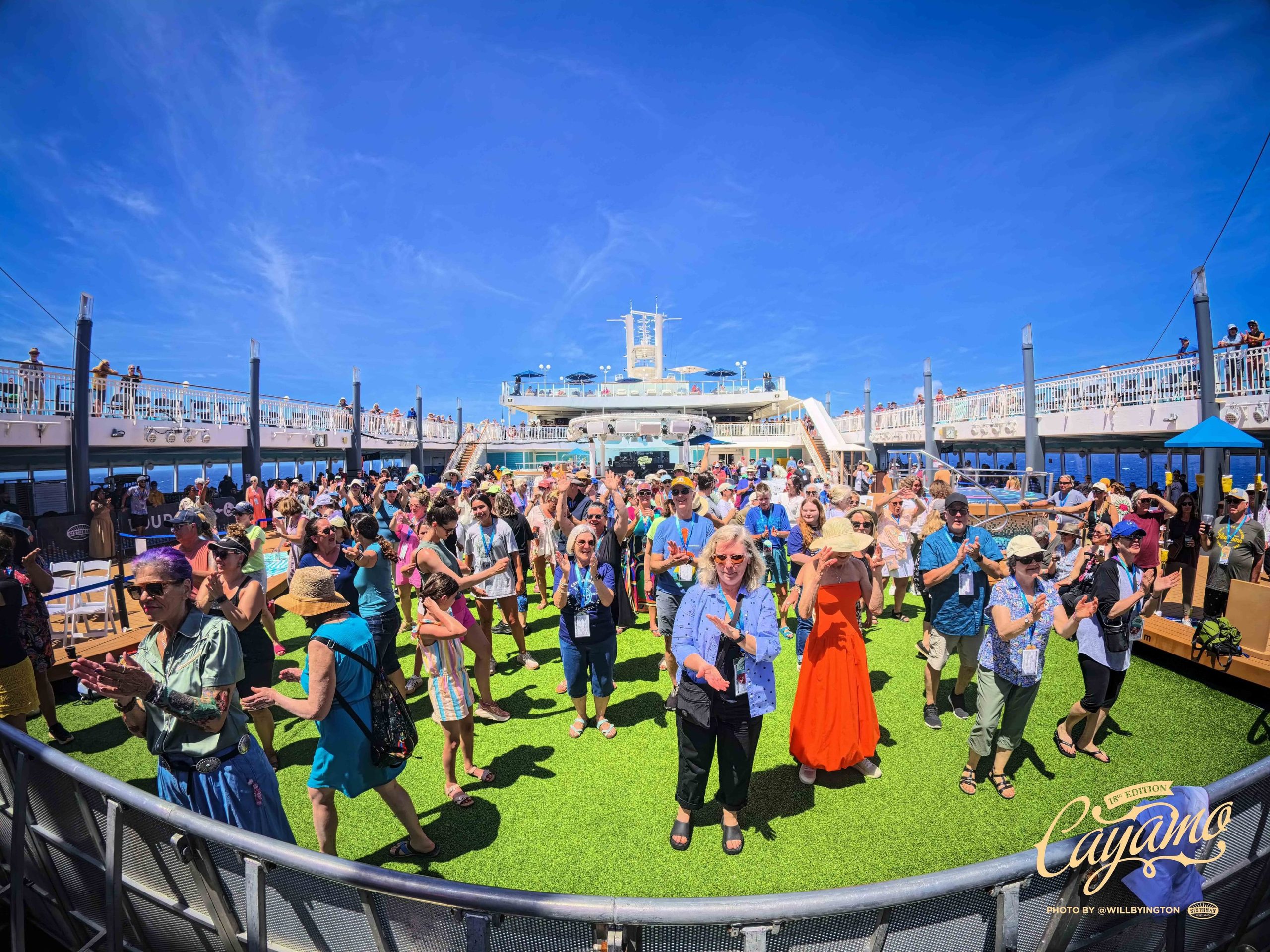
The adoring fans of Cayamo, filling out the pool deck.
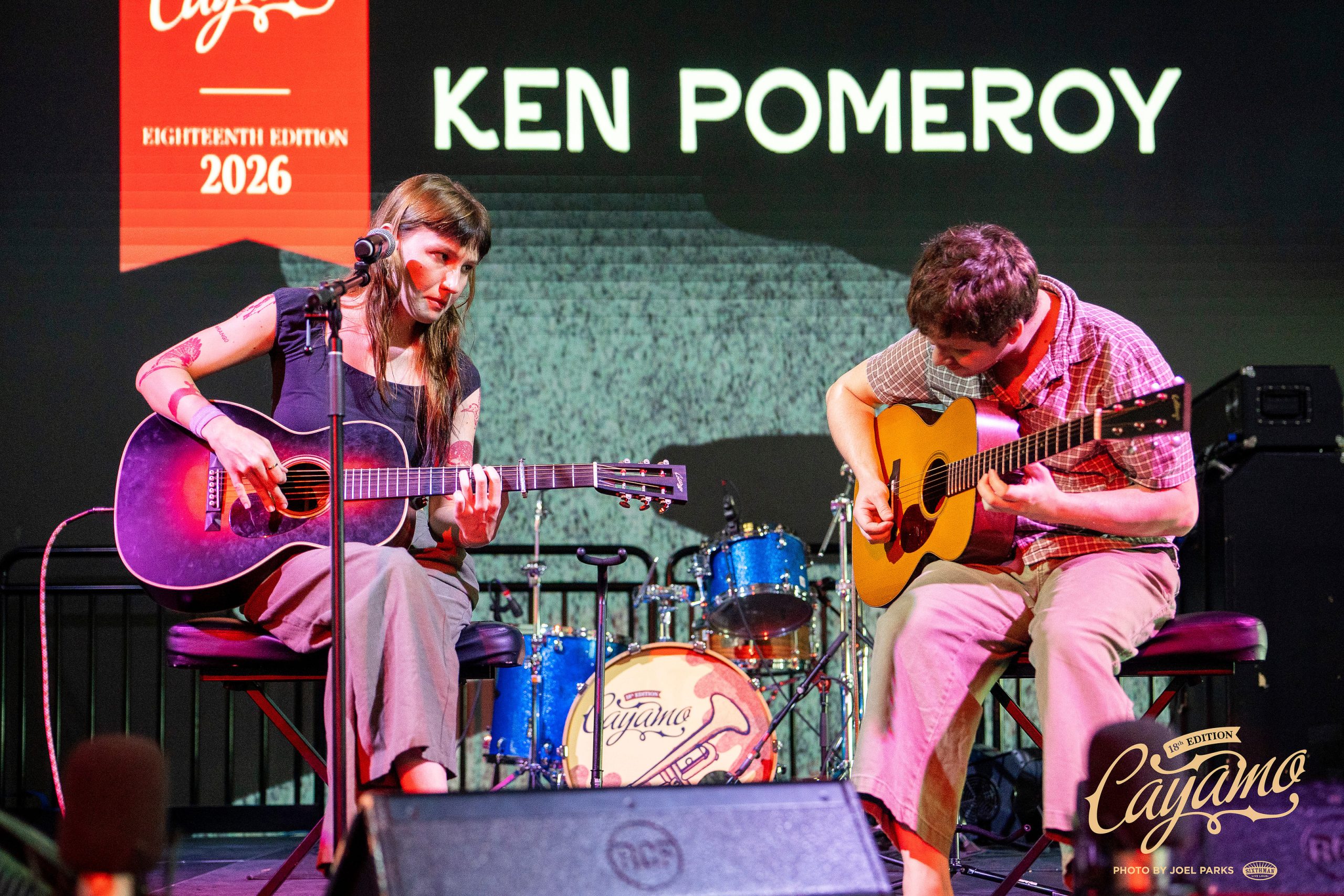
Ken Pomeroy.
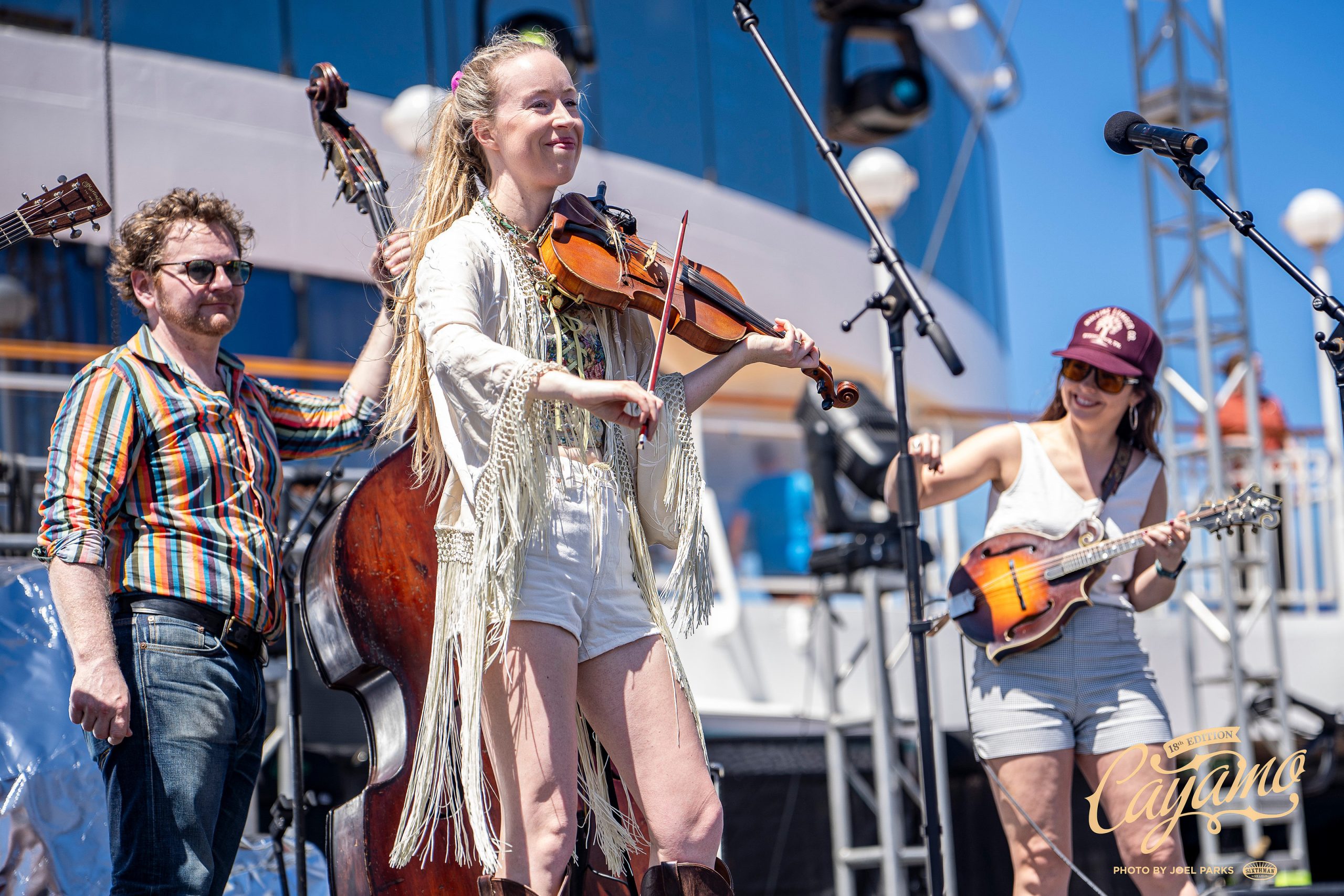
Bronwyn Keith-Hynes and band with special guest Sierra Hull.
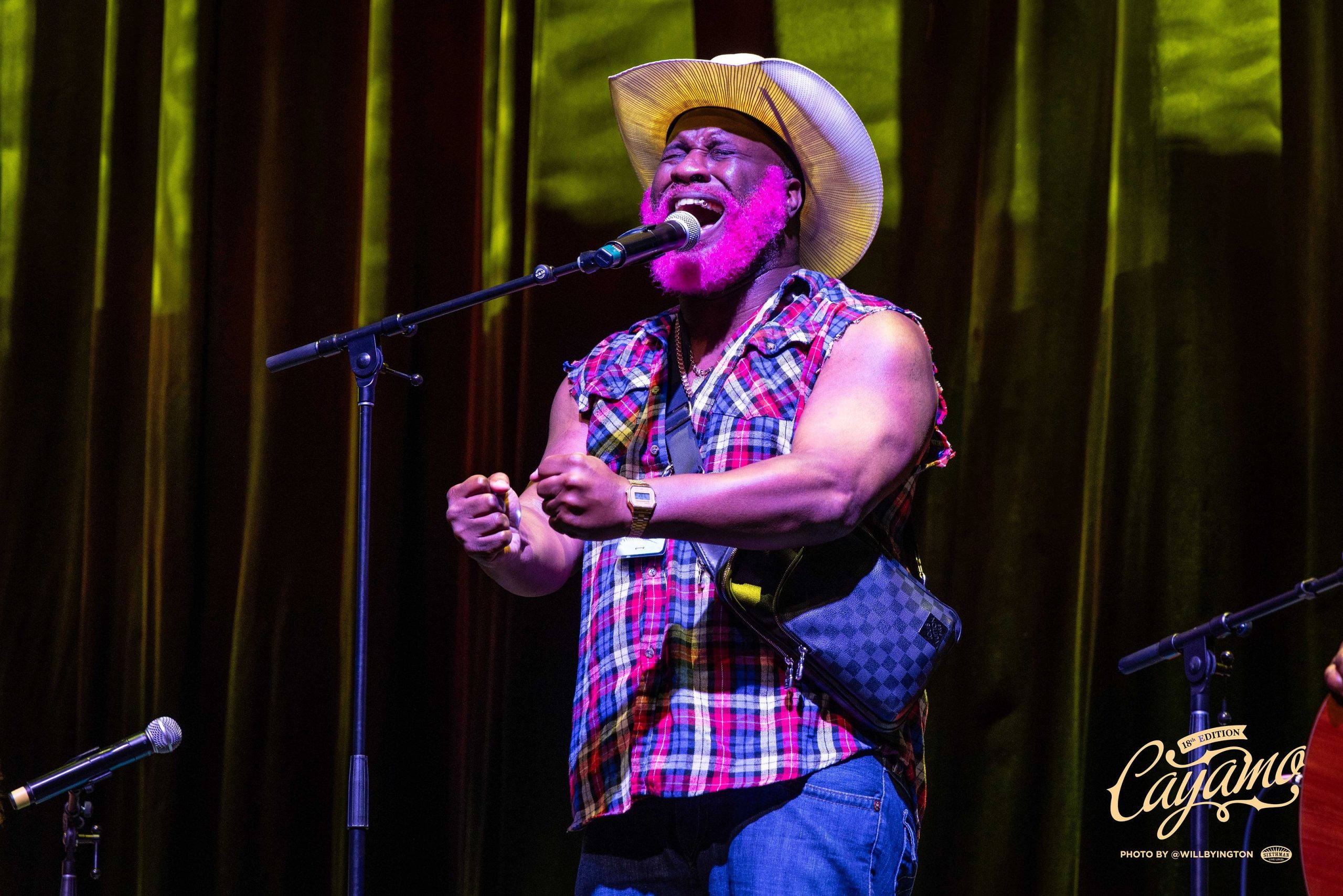
Pynk Beard
Tommy Emmanuel.
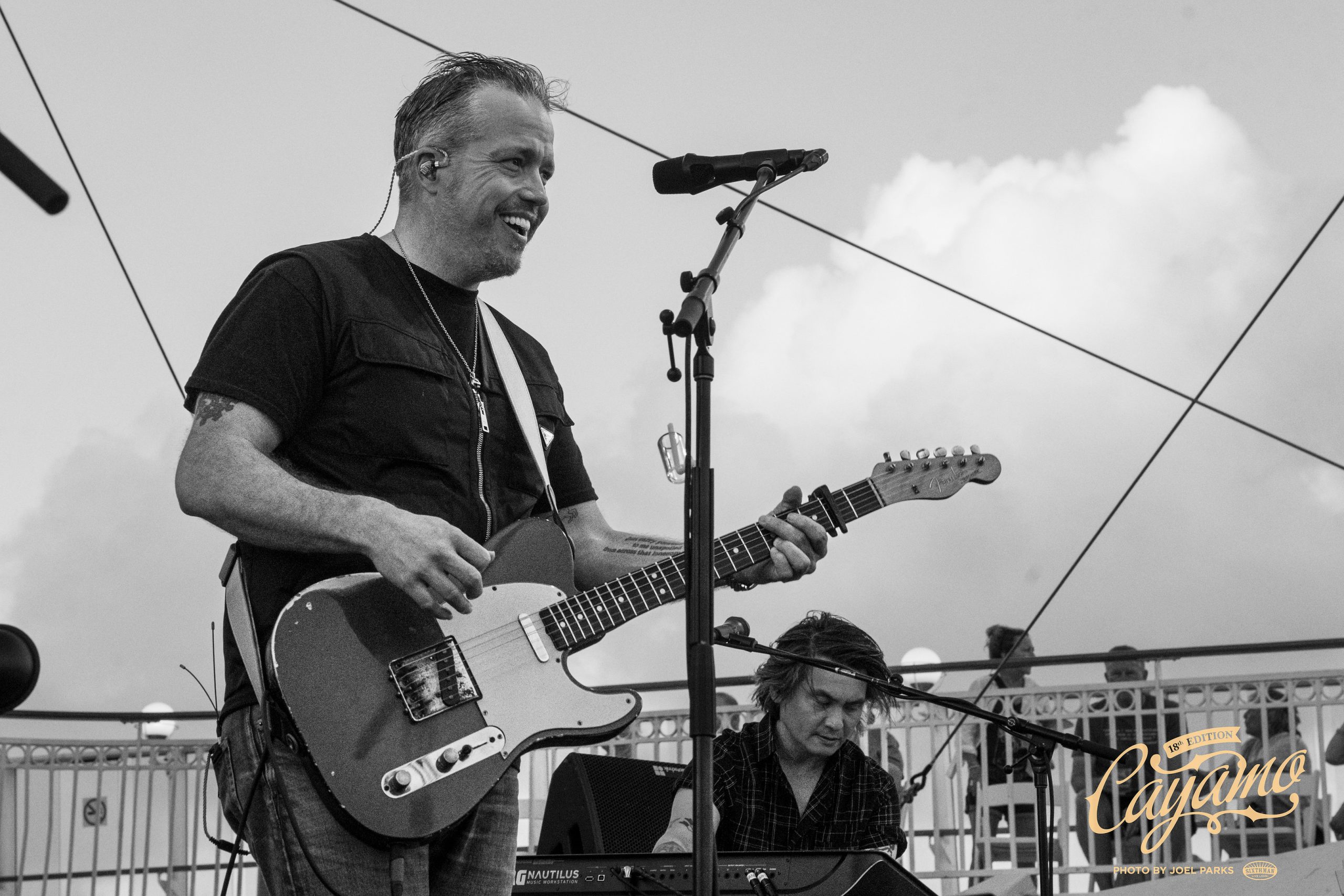
Jason Isbell strapping up.
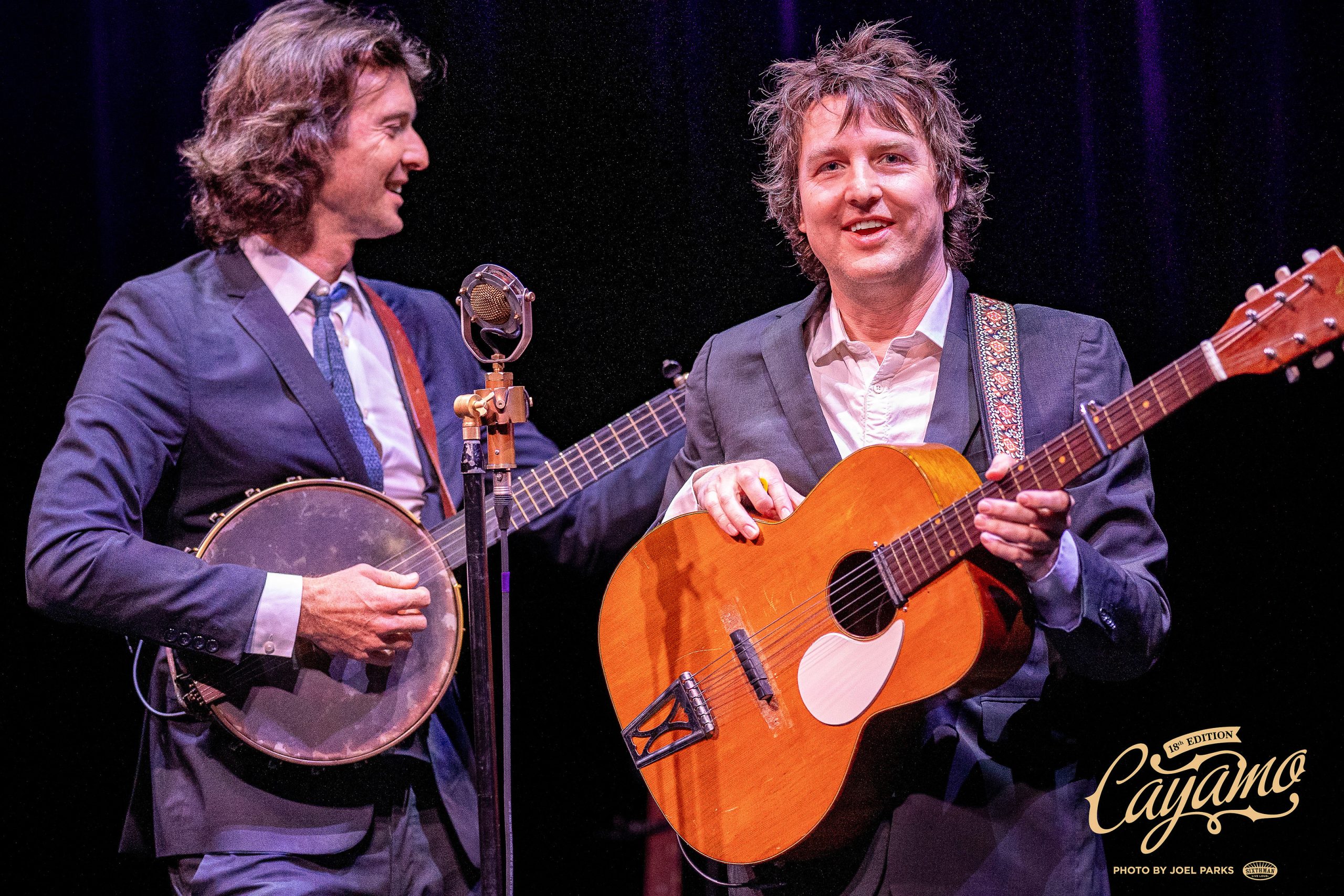
Sierra Hull and the Milk Carton Kids perform “Everybody’s Talking” at the Stardust Theater during Cayamo 2026, captured by BGS on board.
Days 3 & 4
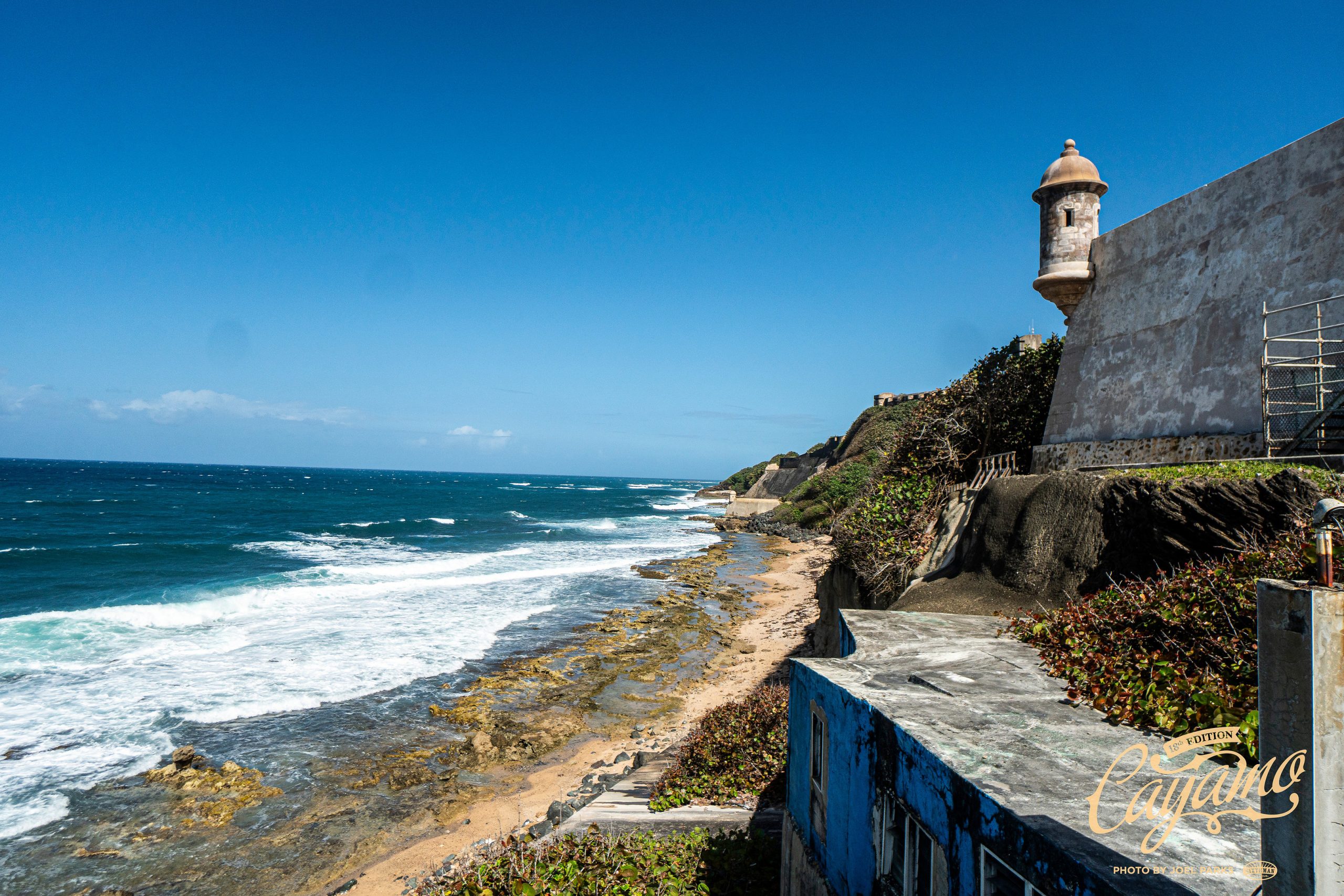
A gorgeous day to port in San Juan, Puerto Rico and leave the 'Norwegian Pearl' for some exploring.
Fortifications in Old San Juan.
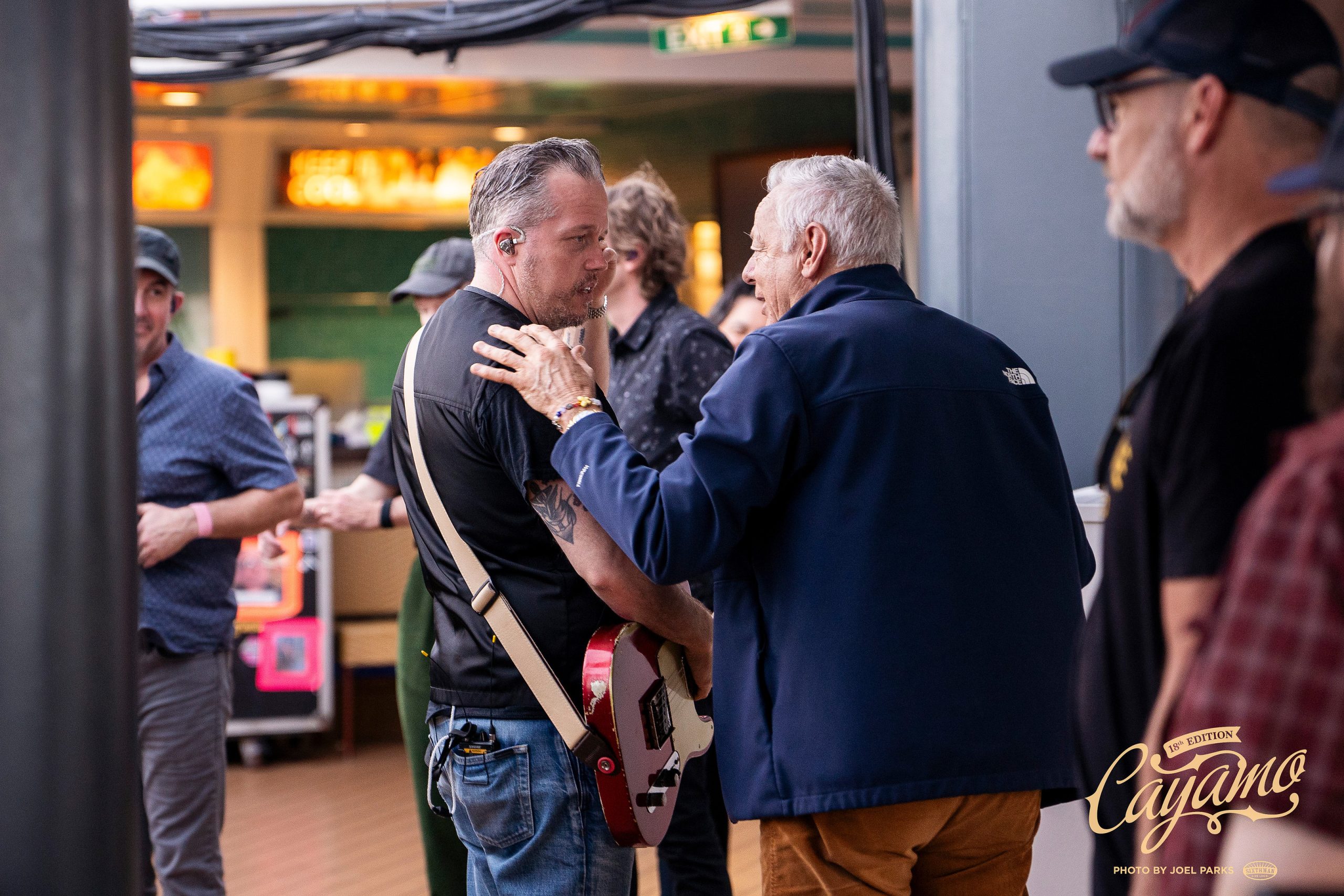
Jason Isbell and Tommy Emmanuel talk backstage.
Jason Isbell.
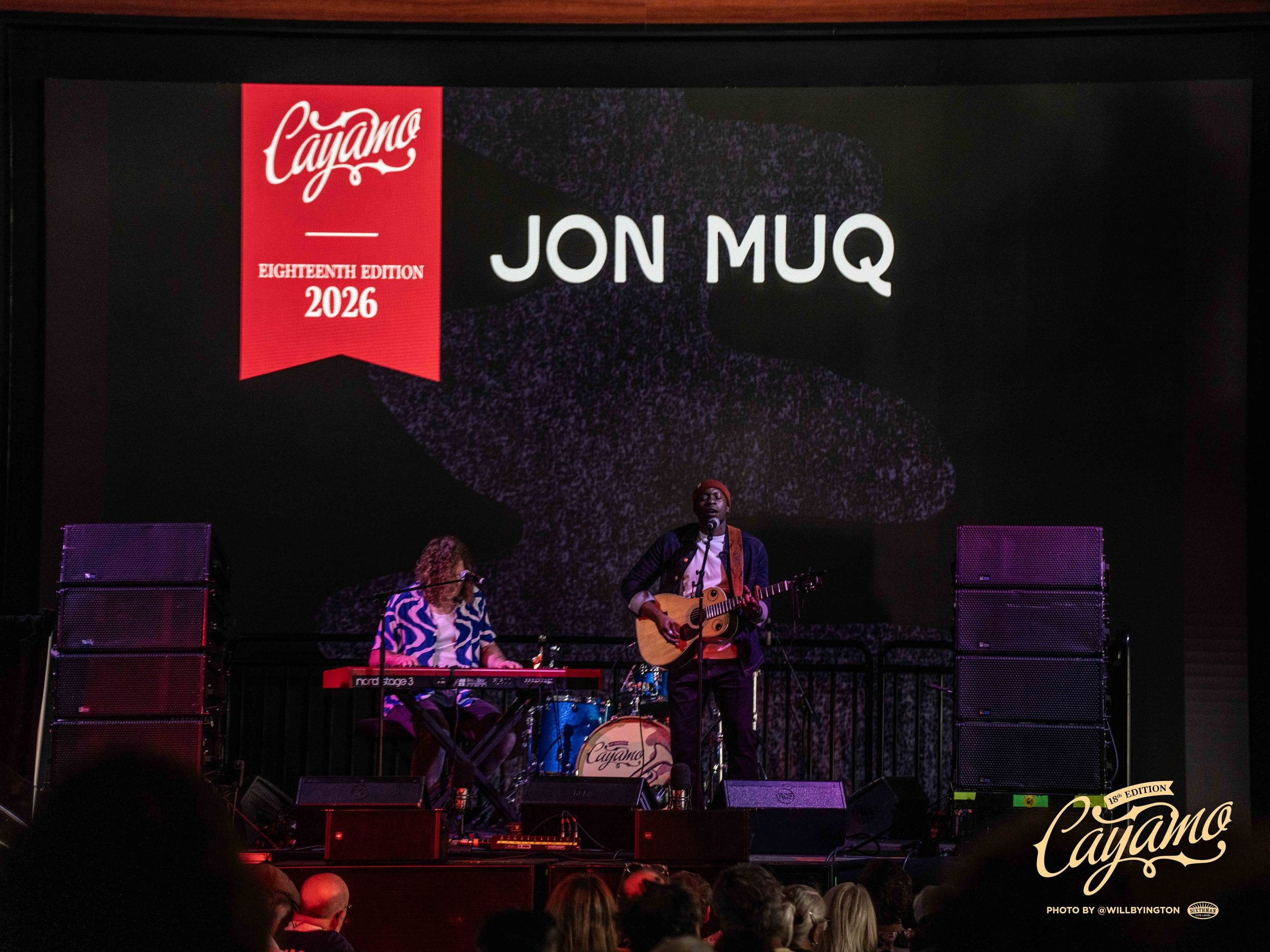
Jon Muq.
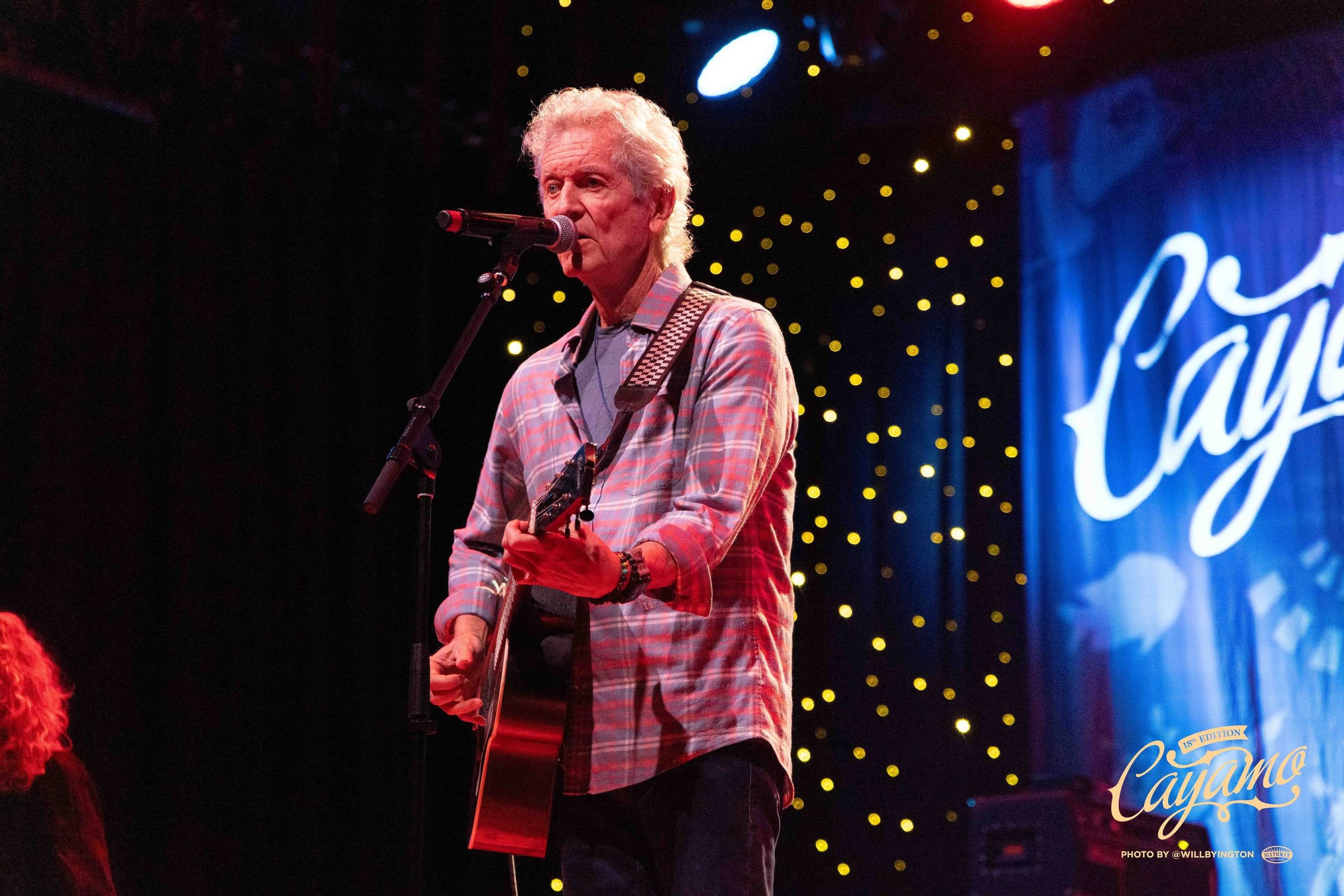
Rodney Crowell.
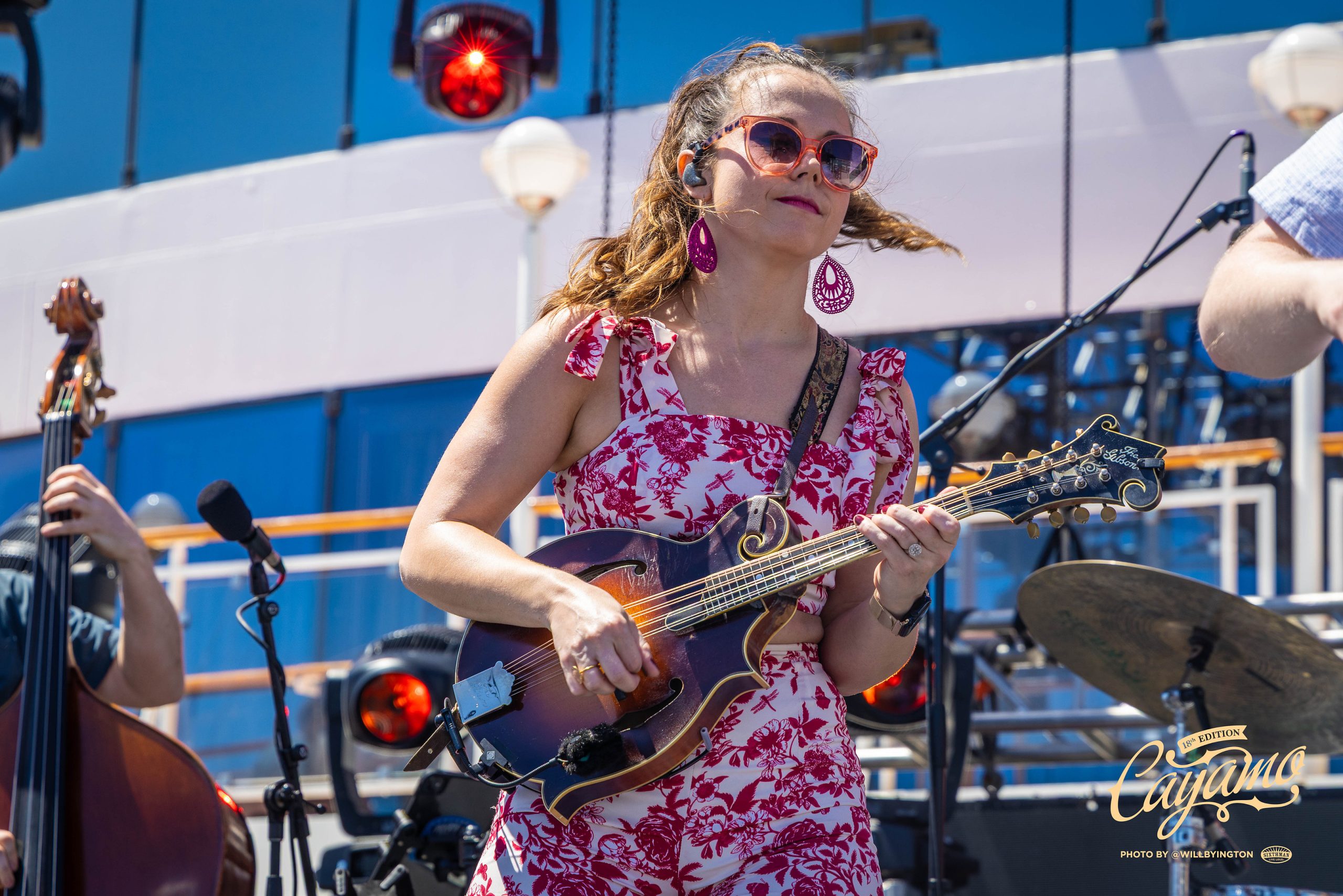
Sierra Hull performs on the pool deck.
Jobi Riccio and Lizzie No.
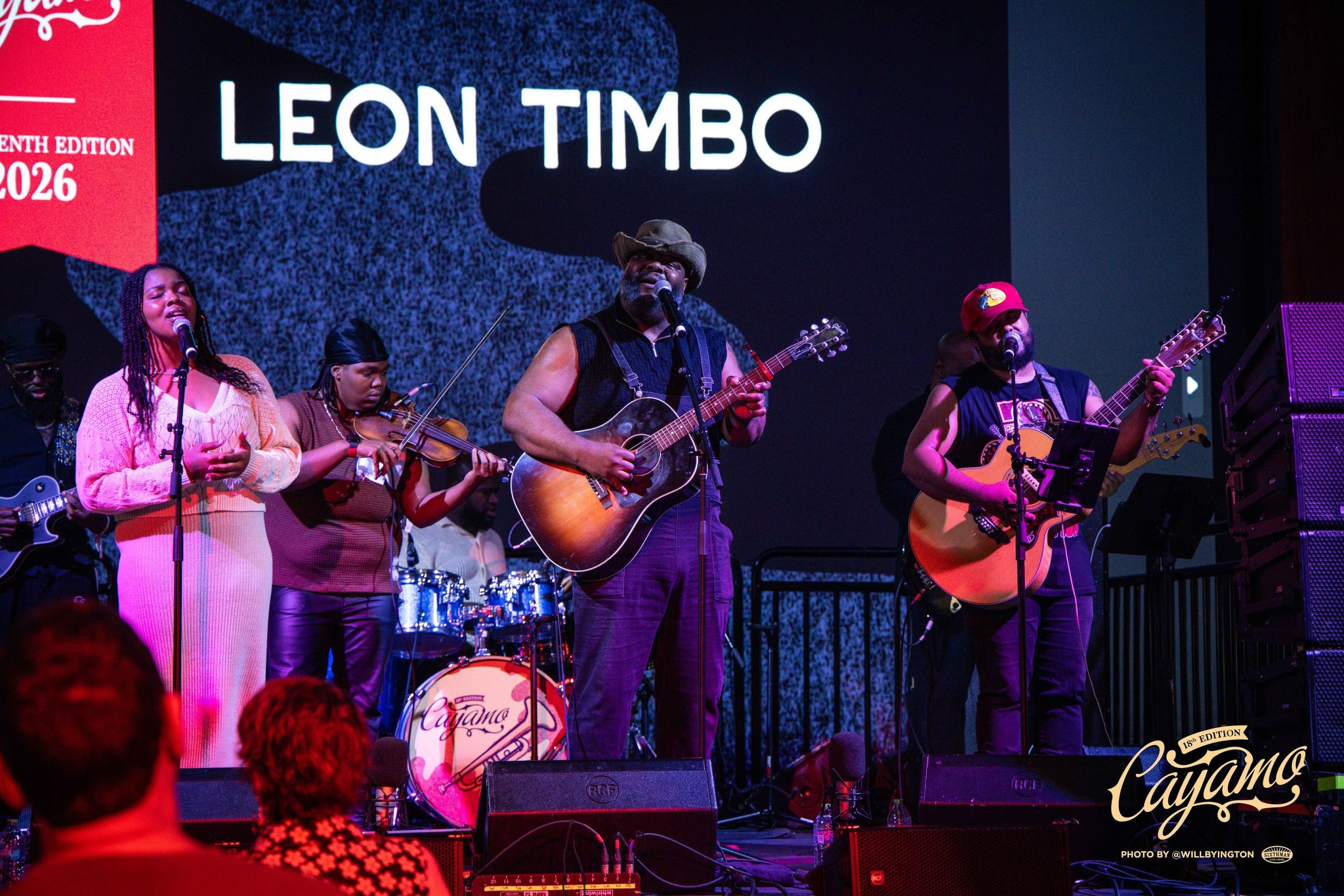
Leon Timbo and band.
Victoria Canal.
Kathleen Edwards.
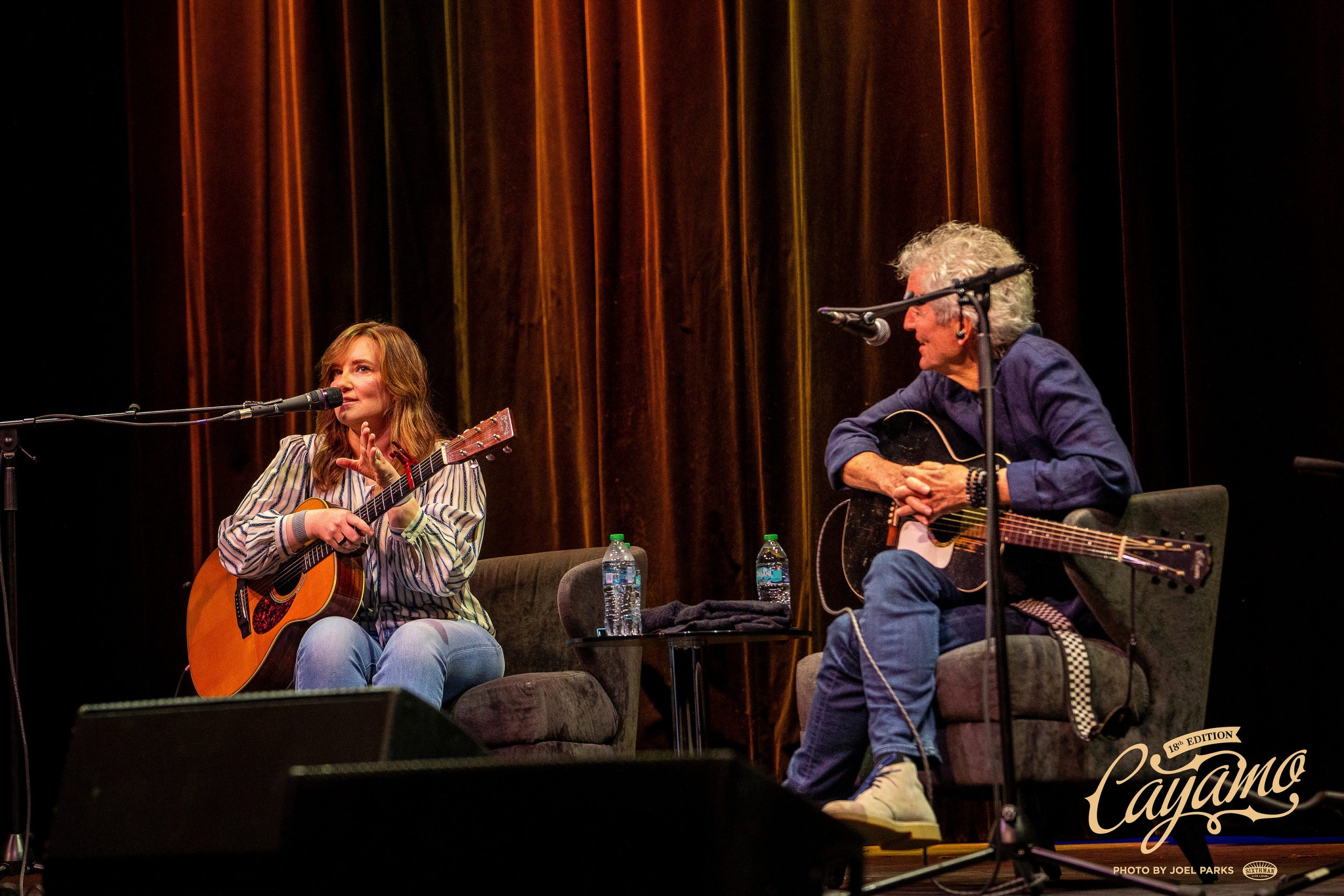
Brandy Clark and Rodney Crowell share songs and stories.
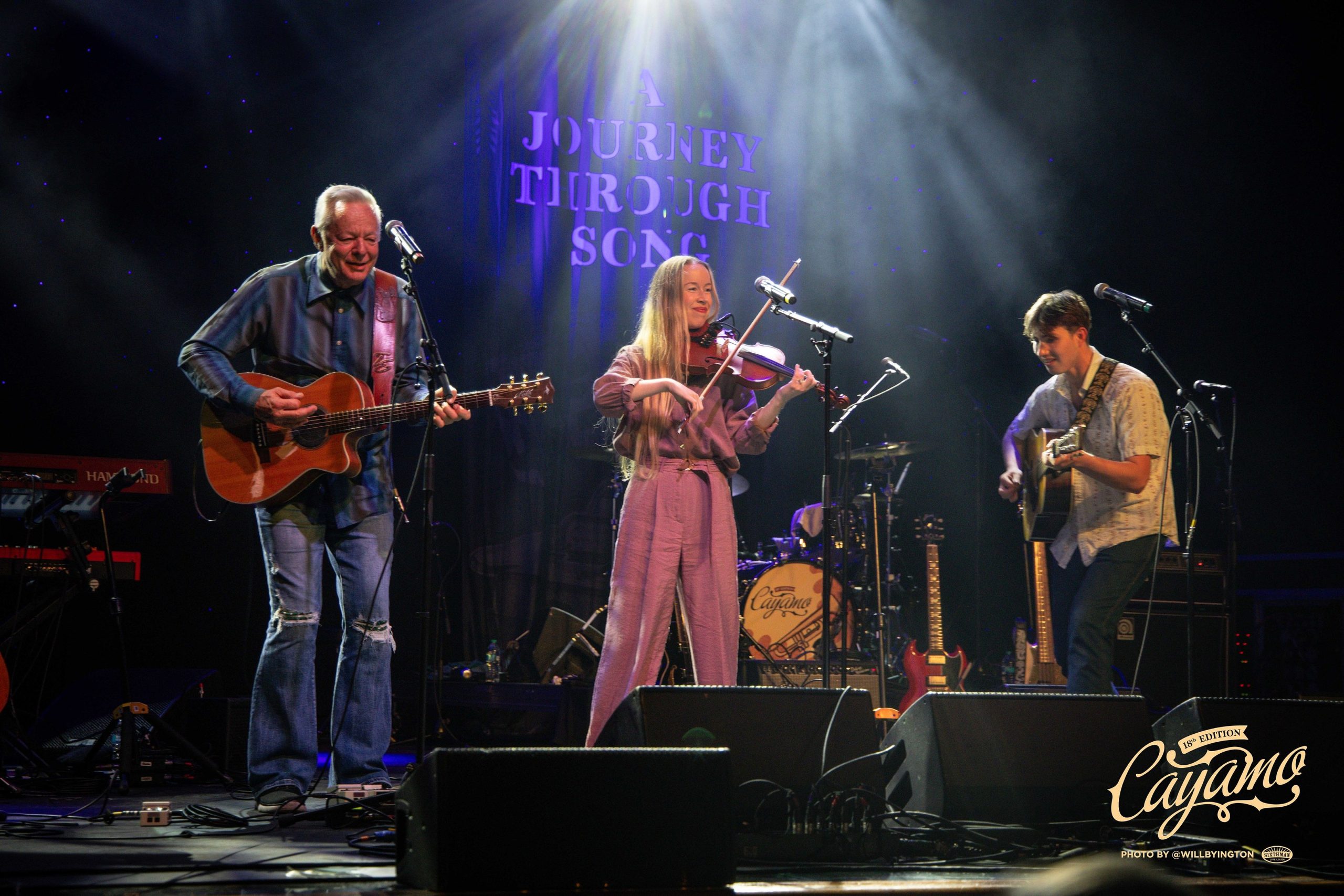
Bronwyn Keith-Hynes and her guitarist Grant Dresnok join Tommy Emmanuel on stage.
The Milk Carton Kids.
During our favorite event of the voyage – ahem, the BGS Nightcap of course – Kathleen Edwards joined Della Mae to perform “Six O’Clock News.” Thanks to Della Mae for recording and sharing this clip.
Days 5 & 6
It really is a floating festival!
Rodney Crowell performs.
Palmyra with Della Mae.
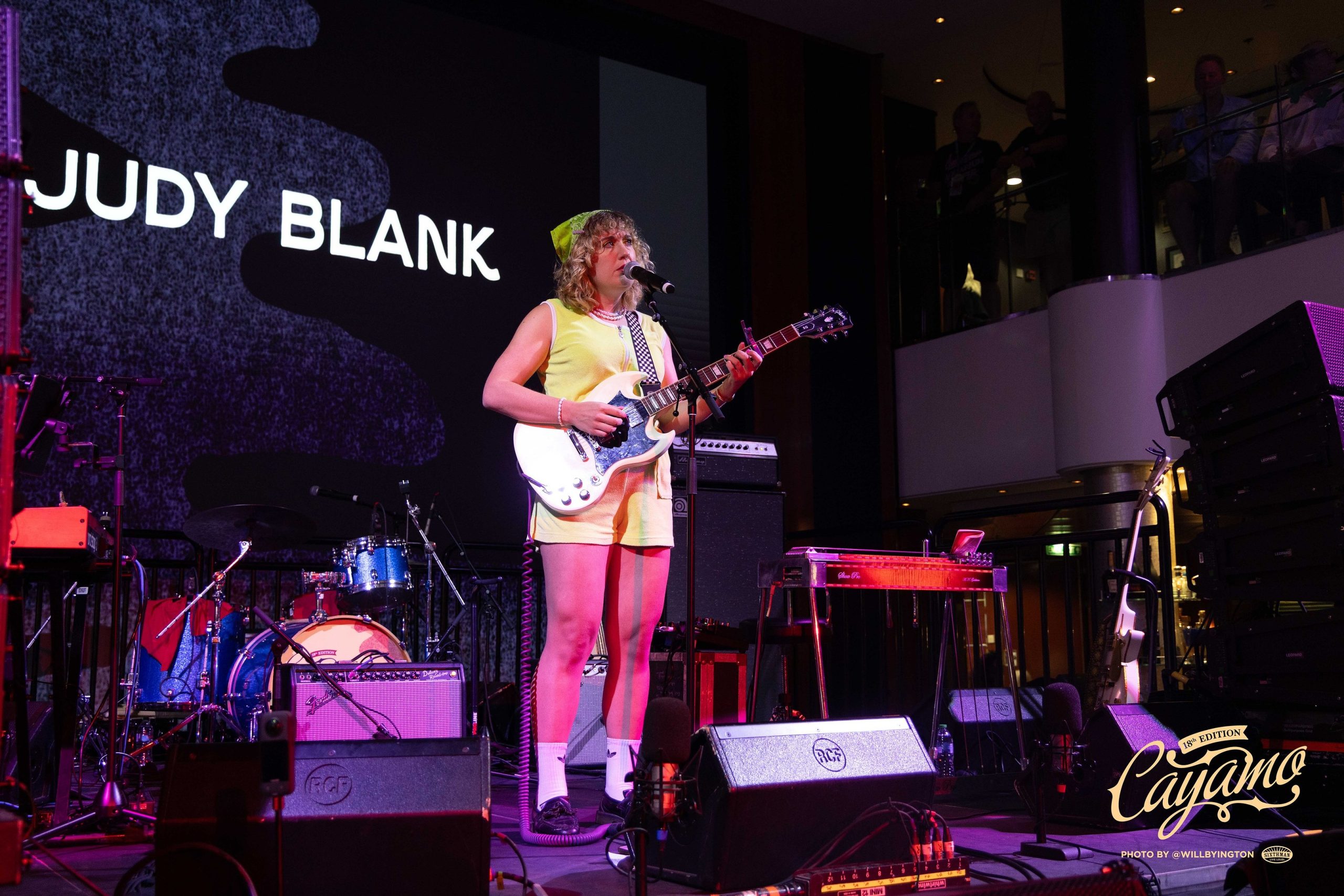
Judy Blank.
Kaia Kater.
The entire ship becomes a setting for so many different sorts of events, panels, and sessions.
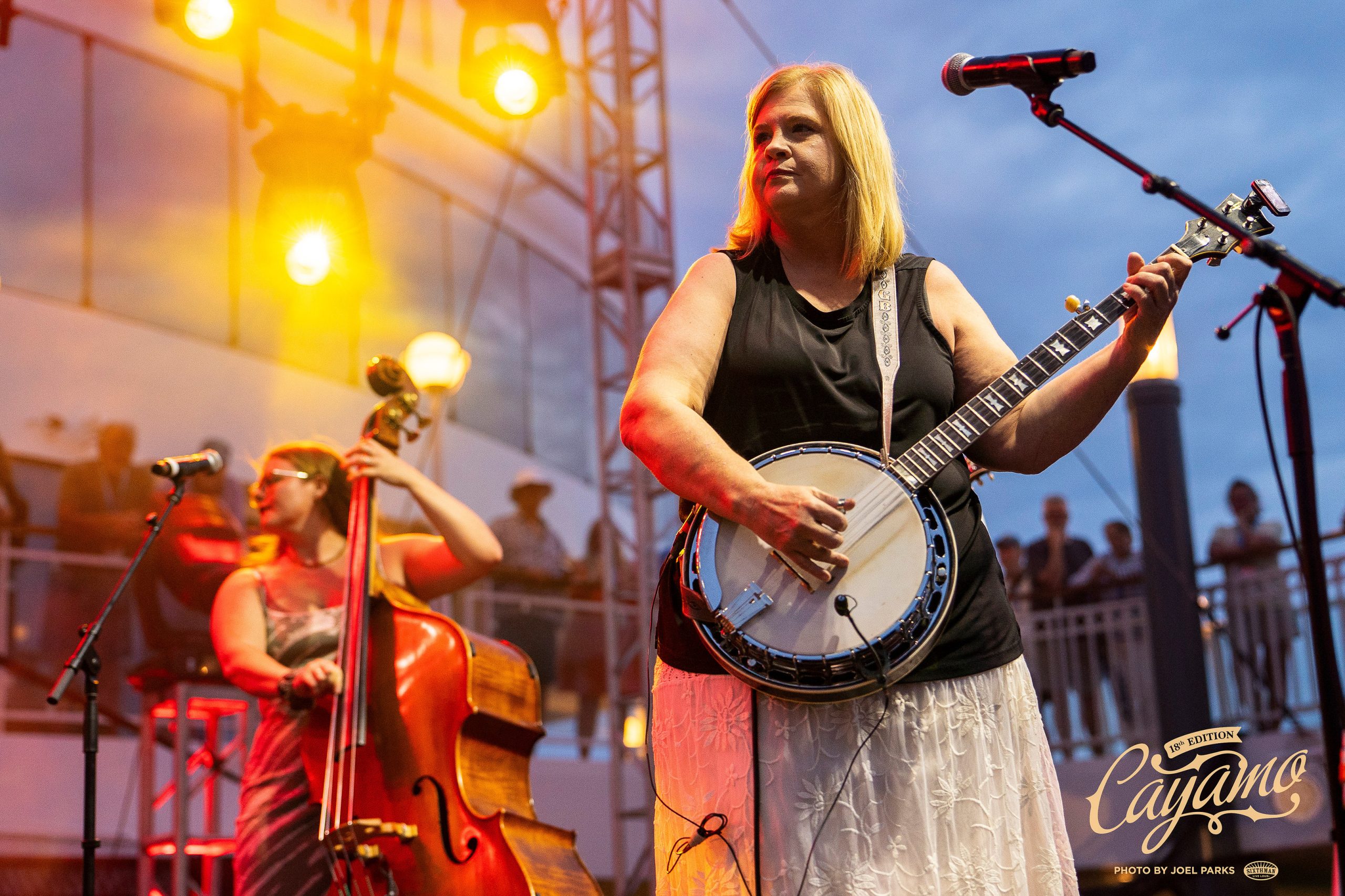
Banjoist Gena Britt of Sister Sadie.
Pynk Beard performs on the pool deck.
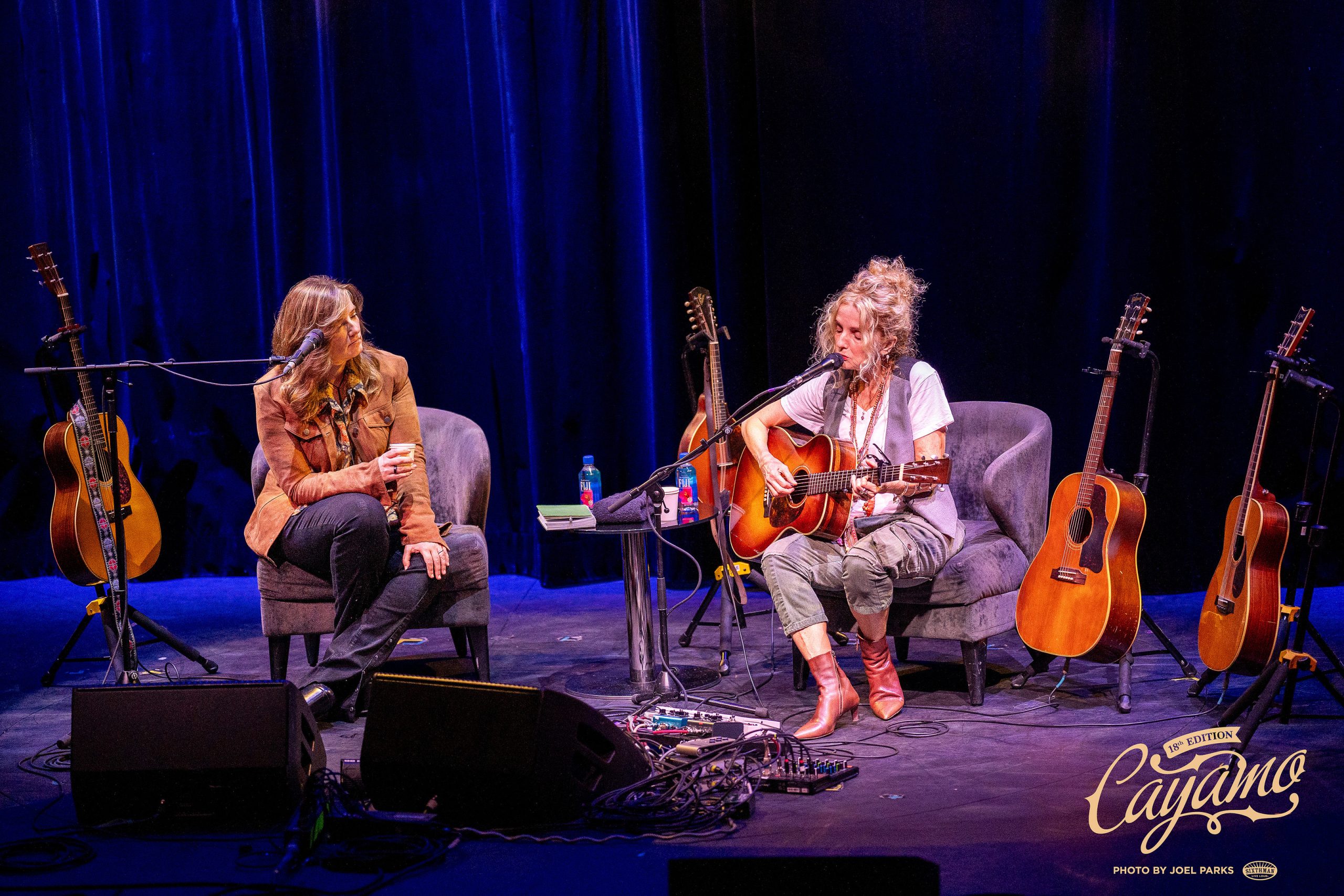
Brandy Clark and Patty Griffin, another crowd favorite event.
Della Mae.
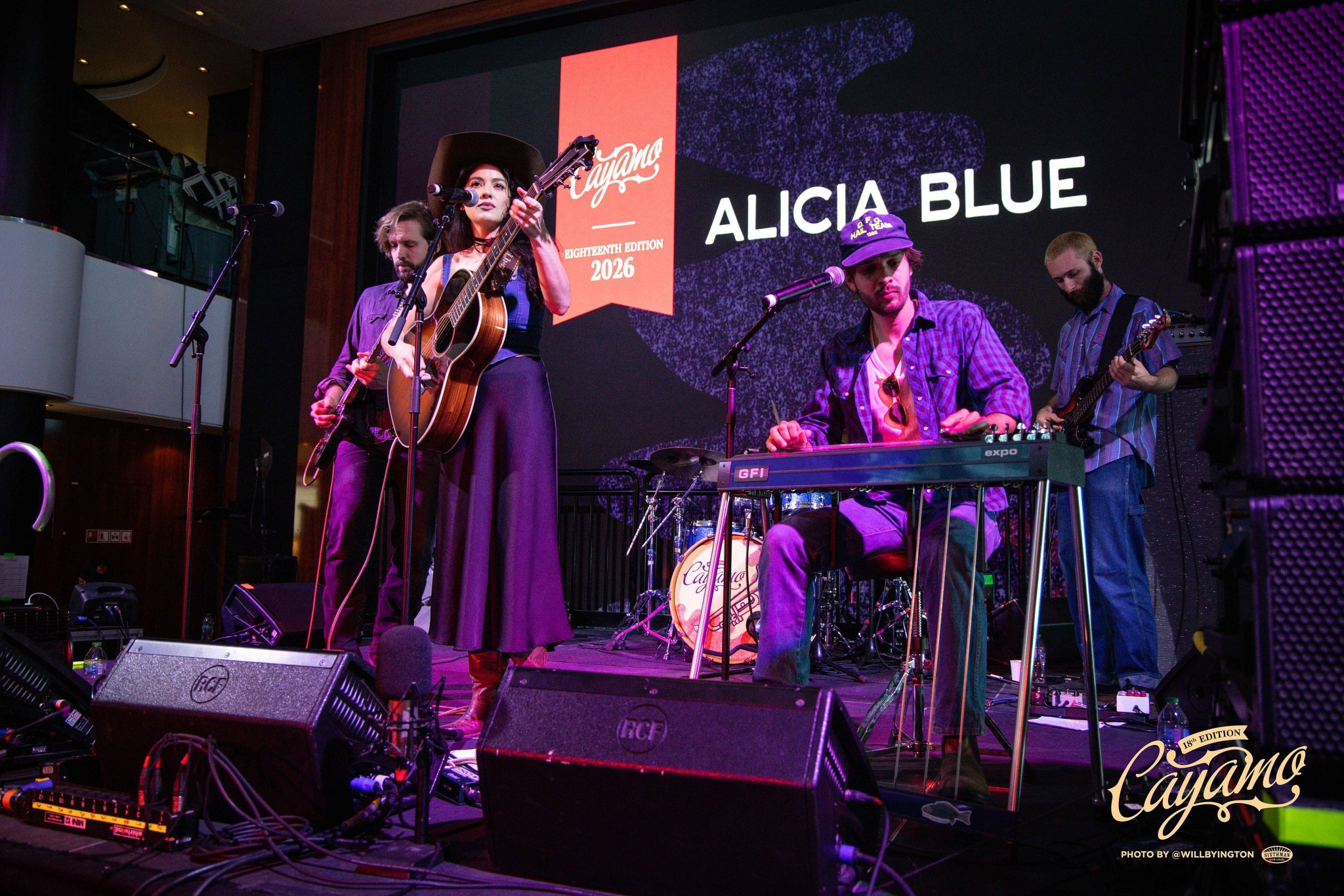
Alicia Blue.
Sierra Hull and band joined by Milk Carton Kids.
Lizzie No.
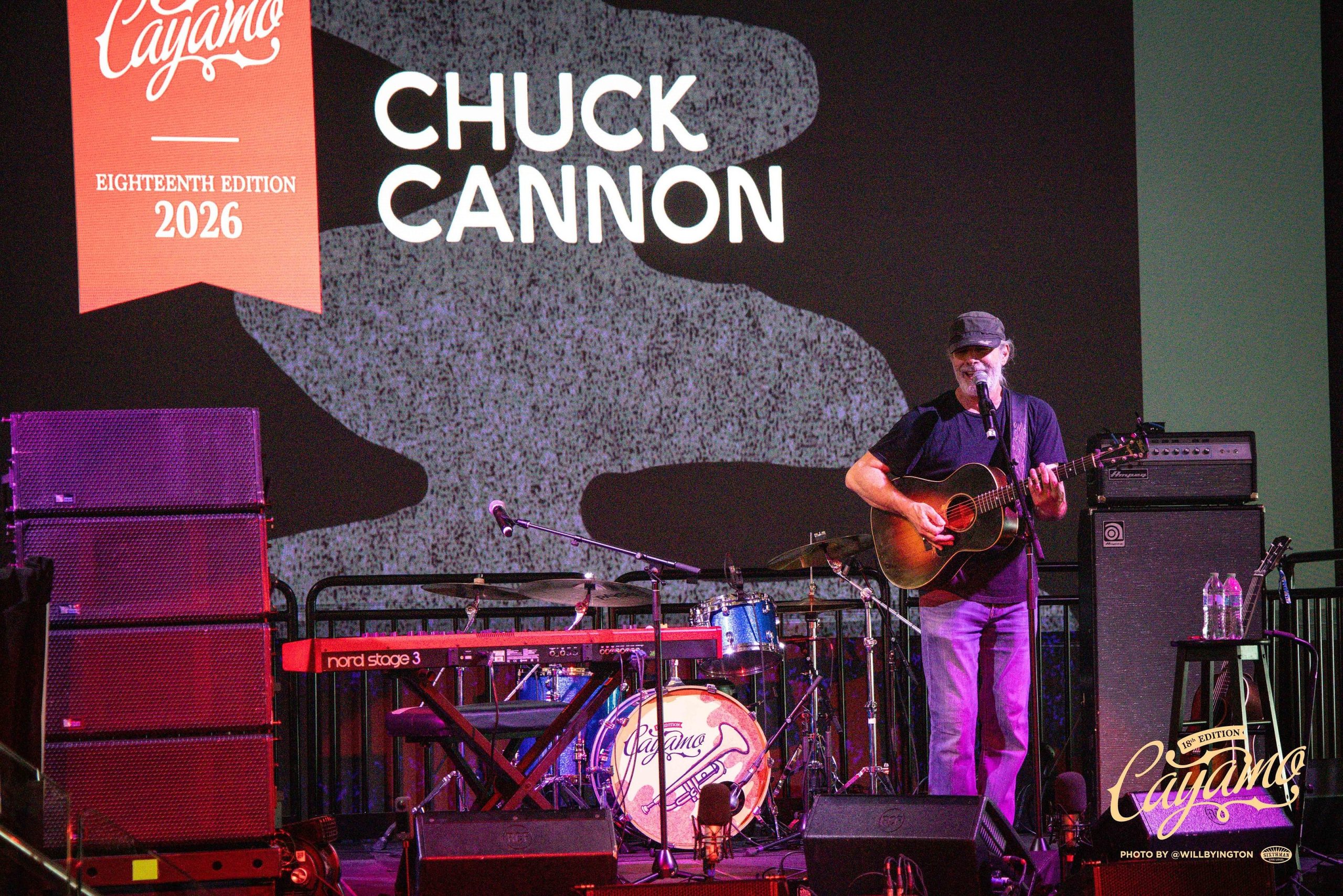
Chuck Cannon.
BGS Nightcap
Jobi Riccio joins our evening's hosts, Della Mae.
Rose Cousins.
Tommy Emmanuel and Celia Woodsmith of Della Mae.
Palmyra and Della Mae together, a match made in heaven.
Pynk Beard clearly got along great with our hosts!
Bronwyn Keith-Hynes made an appearance.
Kathleen Edwards. Watch a clip of her performance with Della Mae above.
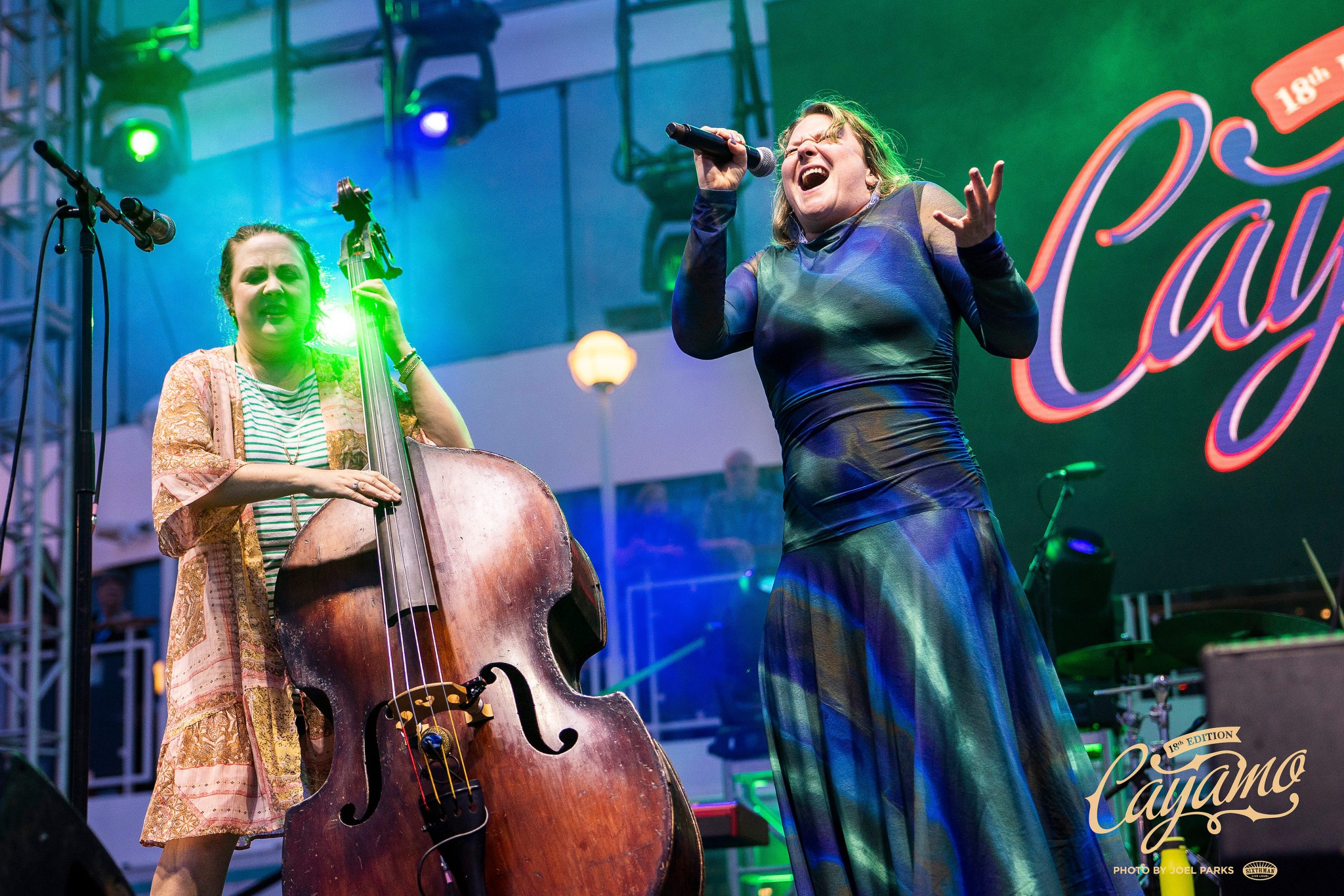
Sister Sadie and Della Mae together equals real musical power.
Kaia Kater, Crys Matthews, and Della Mae on the BGS Nightcap.
Tommy Emmanuel on the BGS Nightcap with Della Mae.
Sierra Hull.
What a night! Sister Sadie and Della Mae bid the audience goodnight.
The BGS highlight of the week! A Nightcap jam session is our favorite pastime, especially aboard Cayamo. What a lineup of artists and bands and special collaborations. And this year it happened to fall on St. Patrick’s Day itself – perfect for a roots music party.
Day 7
Everywhere you look, Cayamo, Sixthman, and Norwegian make the voyage a musicful experience.
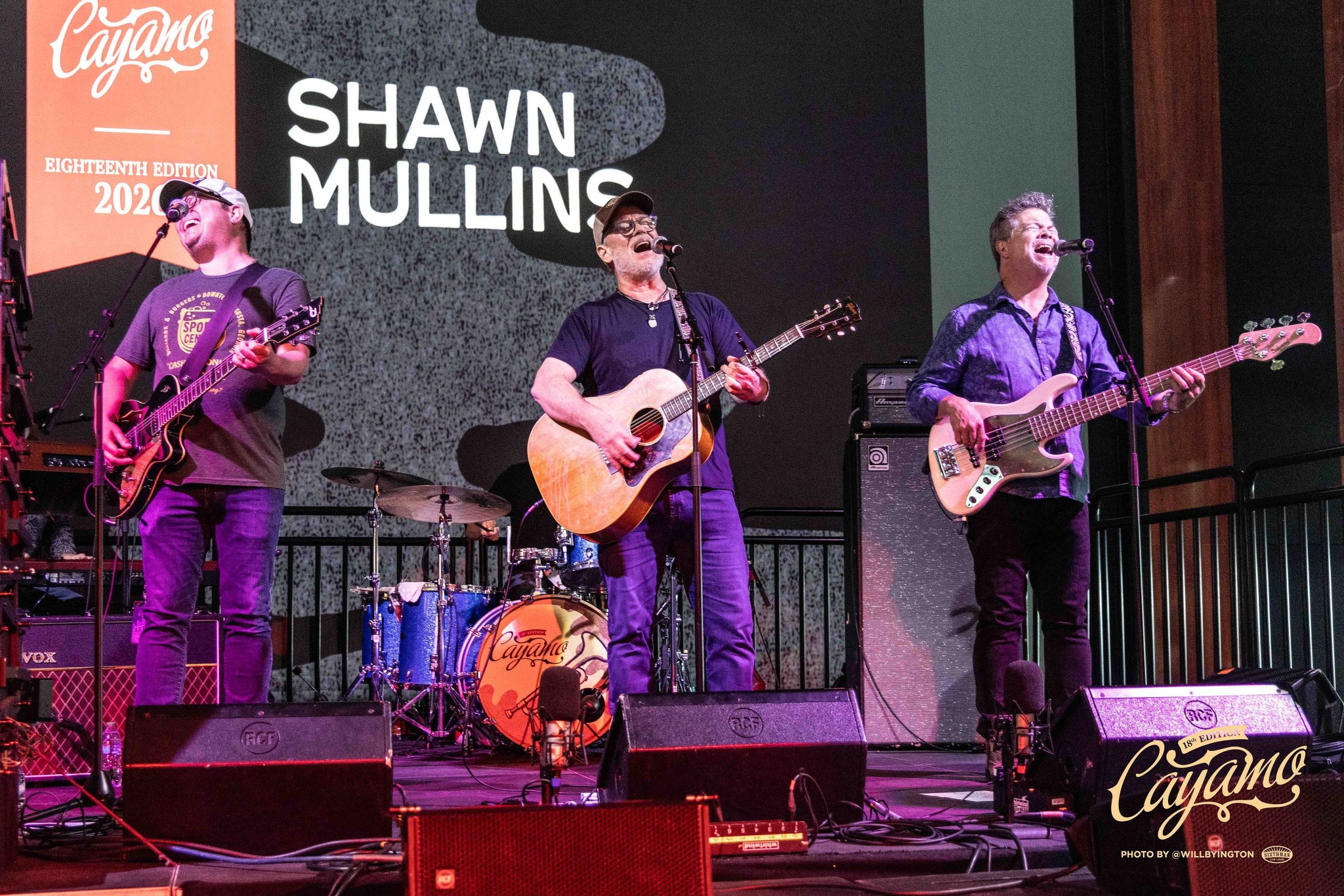
Shawn Mullins.
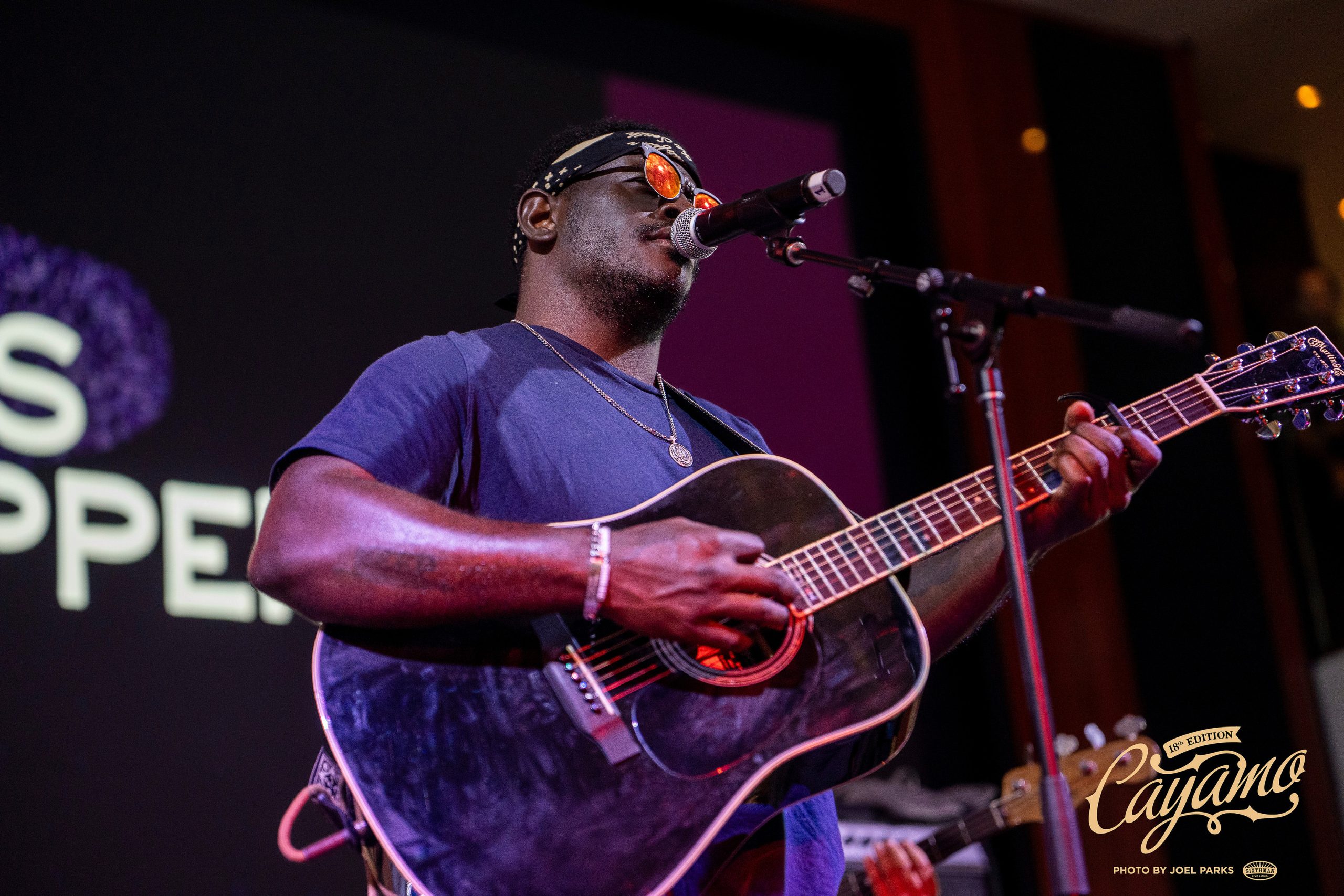
Kashus Culpepper brings country cinema to Cayamo.
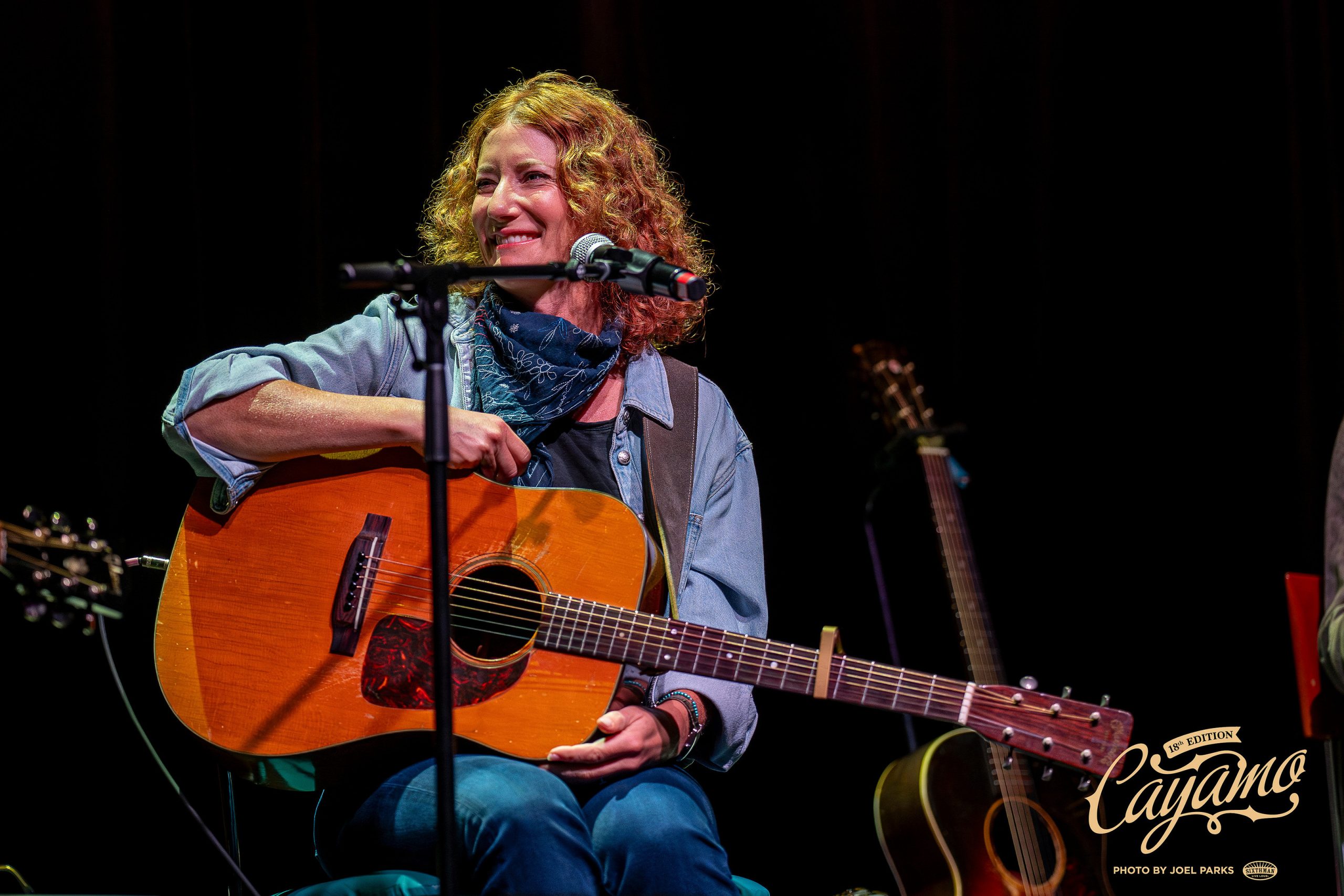
Kathleen Edwards.
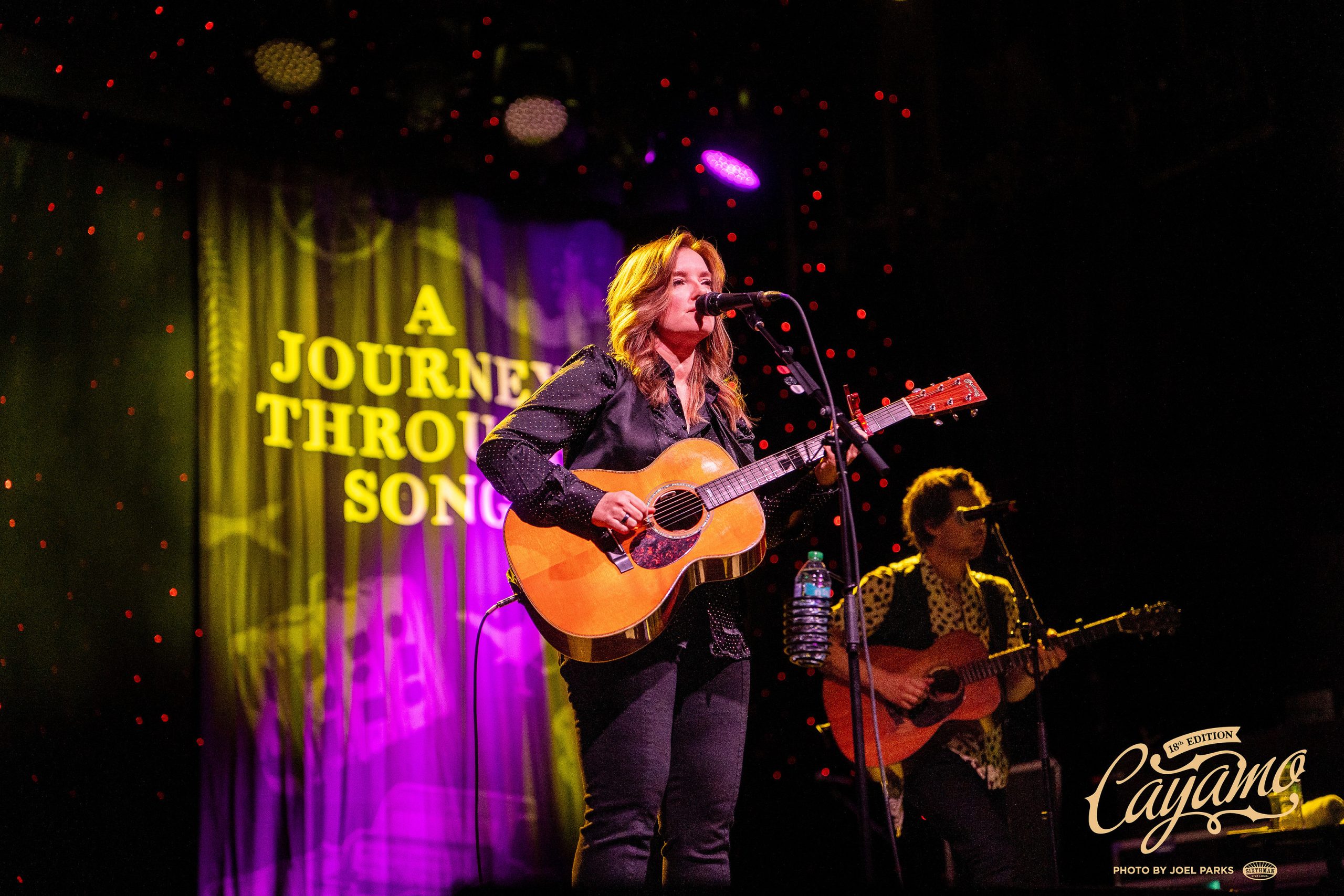
Brandy Clark's full band set.
Tylar Bryant.
A star-studded round and a full house aboard Cayamo.
Photos courtesy of Sixthman, credits as listed in each watermark. Lead image: Will Byington.
Fifteen years ago, bluegrass band Della Mae’s vocalist Celia Woodsmith wrote her future self a letter. She was 25 years old, burned out on trying to make it in Boston’s rock scene, and reeling from the loss of her father.
“If you can just die, why would you be doing something that you didn’t love to do?” she asked.
Her answer – and her hopes for her future self, which Woodsmith wrote into that letter – inspired the title track and underlying message of the band’s new album, Magic Accident, which marvels at the improbability of existence. As Woodsmith sings on “Magic Accident”:
We all start with something No one comes from nothing It took a millennia to get you here You’re a magic accident, the way that fate bent With a little carbon and gravity Carbon and gravity
“Our life is just a series of these little accidents – my parents meeting, their parents meeting. And it’s a beautiful and magical thing that we’re all here right now. It’s a beautiful and magical thing that Della Mae is here,” Woodsmith says. “That’s the basis behind that song, and it’s the basis behind how I think about a lot of my life. It’s just a beautiful accident that I’m here at all. So I might as well enjoy it and do the best thing, the best that I can, while I can.”
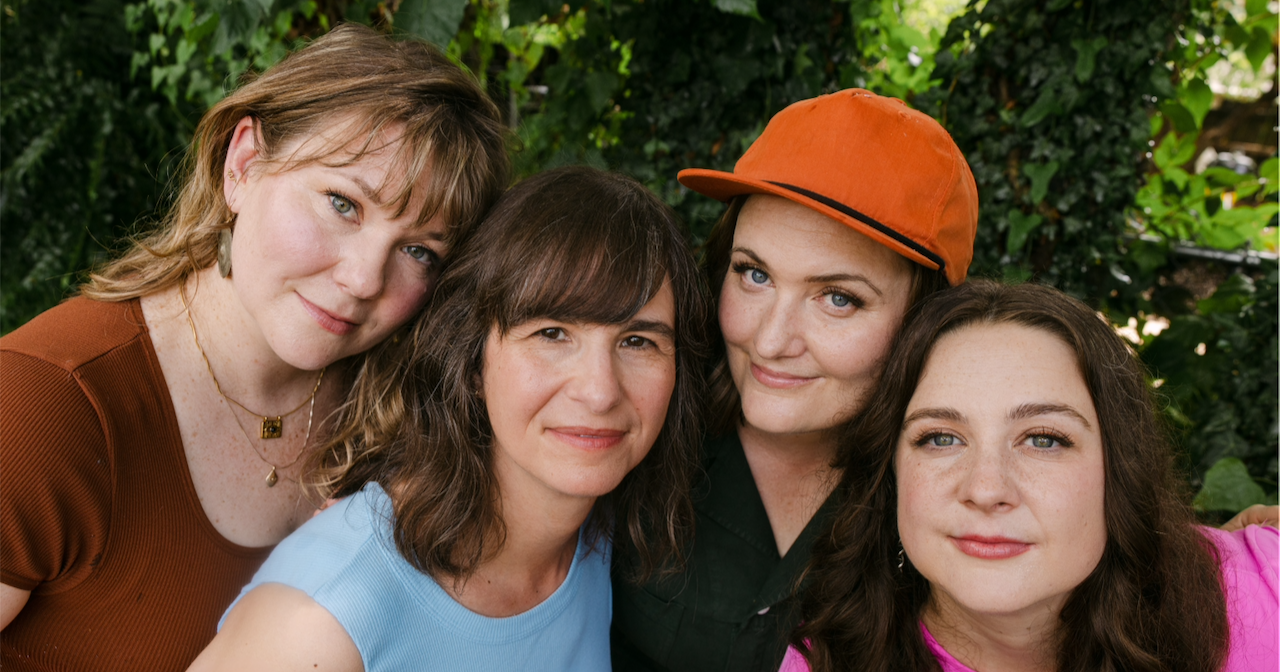
Magic Accident, as an album, a song, a concept, and a band ethos, celebrates following one’s own path. All four members of Della Mae – Woodsmith, founder and fiddler Kimber Ludiker, guitarist Avril Smith, and bassist Vickie Vaughn – lost their fathers prematurely, which bonds them as a band and altered how each woman sees the world. And making it as one of the few all-women bluegrass bands inherently required the Dellas to push boundaries and carve out space for their lives and stories.
“If I could talk to the little girl inside of me/ I’d let her know the world ain’t what it seems/ And if she would listen/ Could I keep her safe from making my mistakes?” the band wonders on “My Own Highway,” the album’s second track. Later, they remind the next generation of the same sentiment in “Out Run ‘Em,” written by Smith (co-written with Caroline Spence) for her pre-teen daughter, advising, “If you go with the crowd, you can’t out run ‘em.”
Indeed, all of Magic Accident listens like a set of love and advice letters to the band’s younger and current selves.
“I don’t think we could have written this album as young women. This is an older, wiser woman sort of thing,” Woodsmith says.
Elsewhere on Magic Accident, the band appreciates life’s small, sweet, desperately important moments. “Nothing at All,” which Woodsmith wrote with Spence, is a gentle appreciation of love that’s aged comfortably, while “Little Bird,” which the pair also wrote, relishes slow days and simple life joys.
“What do they say? One of the biggest forms of revolution is having joy in spite of what’s going on around you,” says Vaughn, about including these kinds of emotional interludes on the album. “And sometimes, the little things are all we have right now, whenever all this bullshit is happening.”
These songs would not be confused with light subject fare, though. The weight and wisdom of lived experience grounds Magic Accident in conviction and clarity, even when it may appear uncomfortable. “Family Tree,” a furious track driven by producer Alison Brown’s banjo picking and Ludiker’s fiddle, explores what it takes to break harmful generational cycles. “What You’re Looking For” ends a relationship that no longer serves the narrator. On the album’s only cover, Bruce Robison’s “Lifeline,” Vaughn on vocals (with Mary Bragg on harmony), reaches a hand down to anyone struggling to find their footing in the buffeting of life.
“The weight has become unbearable,” Woodsmith says. “We speak our minds and we fight for the things that we think are right; we all feel strongly about a lot of the same things, like women’s rights. But that can be a heavy load to bear and to sing constantly night after night.
“Sometimes we choose not to sing some of these songs that we believe so strongly, just because it’s become hard to bear that weight. I think this album lets us see the light a little bit.”
Though it’s full of interpersonal songs, on the final track of Magic Accident Della Mae zooms out to consider the state of the world. Sonically bluegrass and lyrically a protest, “Takes All Kinds” – co-written by Vaughn and singer/songwriter Melody Walker – asks the world to consider its future, as well:
Oh, the politicians who write the laws (Oh, lord it takes all kinds) They say they stand for the underdog (Oh, lord it takes all kinds)
But then they take my rights away (Oh, lord it takes all kinds) For a greenback dollar at the end of the day (Oh, lord it takes all kinds)
Ludiker started Della Mae in part out of frustration with how few women she saw on concert bills and in bluegrass bands. “After talking with a lot of people, it was pretty clear that maybe those bands also wouldn’t hire women for various reasons; I eventually got the idea to start my own band,” she says.
“My brain just wouldn’t accept the fact that [otherwise] maybe I wouldn’t have some of the [same] opportunities that I would have if I was a boy.”
To that end, Della Mae has been part of building a more inclusive, supportive community in bluegrass. Indeed, Woodsmith joined the band soon after writing herself the letter that inspired “Magic Accident.” At the time, she planned to quit music and join the Peace Corps. Instead, 15 years on, Della Mae has produced six studio albums (including their GRAMMY-nominated This World Oft Can Be on Rounder Records) and toured over 30 countries with the U.S. State Department music diplomacy program.
Della Mae is, by their own estimation, the longest-touring all-woman bluegrass band. Which would prove, as they put it on their website, “once and for all, that a band of all women is not, nor has ever been, a mere novelty.”
“Hopefully we can inspire other little magic accidents,” Woodsmith says. “Like other women or other young people who want to play, who see us at the right time in their lives to push them forward to playing music, and to step outside of their comfort zones and do something they thought might be impossible.”
If you’ve listened to bluegrass made in the last decade, odds are you’re not only familiar with but absolutely enamored by the utter powerhouse that is Vickie Vaughn. Named the IBMA Bass Player of the Year thrice in a row (2023, 2024, & 2025), Vaughn has established herself as more than a class act – she’s an integral anchor of today’s bluegrass scene and beyond. Presently touring with the acclaimed all-women supergroup Della Mae, Vickie has a slew of accolades under her belt, having sung background vocals with Patty Loveless, toured with High Fidelity, and collaborated with just about every esteemed bluegrass musician under the sun.
November 21, 2025 saw Vaughn set sail unto uncharted waters with the release of her debut full-length solo album, Travel On. Released by Mountain Home Music Company, Vaughn deploys an all-star cast to bring her dynamic compositions to light. The record features guest vocals from Ronnie McCoury, Casey Campell on mandolin, Wes Corbett on banjo, Cody Kilby on guitar, Dave Racine on drums, harmony vocals from Justin Hiltner, Lillie Mae, and Frank Rische, and fiddle from Deanie Richardson, who also serves as the record’s producer.
Travel On champions Vaughn as its frontwoman, a role she hasn’t chronicled in studio since her six-song EP came out a decade ago. Her songwriting is full of dynamic abundance, from the deeply stirring gospel song “The Pilot,” to the absolutely raging “Sleepin’ in the Rain” to the emotive and heartfelt “Mama Took Her Ring off Yesterday.” Vaughn manages to strike a full range of emotions throughout the album’s thoughtful arc, a narrative bound by her buoyant relationship to both rhythm and melody alike.
Ahead of the album’s release, BGS had the unmatched pleasure of sitting down with Vickie Vaughn for a chat about Travel On, music, machinations, musicianship, and more.
Congratulations on the album release! I want to hear all about Travel On, but I’m wondering if you’d be able to take us back to the start for a bit and tell us about your personal musical history.
Vickie Vaughn: Oh golly! I started really early because of my cousins, who I adored growing up. I really looked up to them and they were just great singers who sang all the time and could play piano and guitar. I grew up in a Baptist church. When I was little, maybe six years old, the preacher’s wife found out that I could sing, so she asked me to come sing in the choir. I grew up singing in church and then when I was nine years old, back in Kentucky where I’m from, I got hired as a background vocalist. I know it sounds insane – I’m so normal now, but I was like a freak kid! I could hear harmony and sing every part. When the guy running the Kentucky Opry found that out, I was hired as a kind of novelty act at nine years old. I was there every weekend from when I was nine to when I moved out at 17 as a resident female vocalist and background vocalist.
As for the instrument side of things, my parents had me play classical piano and I hated it so much. I honestly got into bluegrass kind of late for a bluegrass musician – around 14. You know, Sierra Hull, Kimber Ludiker – they started when they couldn’t speak words, but I was a little late to the game. I would go to these bluegrass jams and there would be a bass there, but nobody would be playing bass. So I would pick it up, and I could add decent rhythm, stay on beat, learn the open chords. But then I started taking lessons from this guy named Scottie Henson. He traveled with the Grand Ole Opry touring band back when that was a thing. He was a banjo player, but he taught me how to play bass, which is incredible.
When I was 17, I moved to Nashville to go to Belmont and I was a classical vocalist there. I moved to commercial vocals my junior year and bass was a hobby. I got involved in the bluegrass ensemble and that’s kind of how I got known as a bass player in school. And then I got hired by a touring band from a girl I knew from bluegrass ensemble. The rest is history!
As you were growing up drenched in music, do you recall any songs that particularly sparked inspiration or curiosity for you as a child?
I remember when I was in the car with my dad, I used to love the music he listened to. Mama would always listen to Southern gospel and that was just not my jam. I remember telling Dad, “I hate the stuff that mom listens to.” And he was like, “Oh god, me too.” And I just remember thinking, “You’re so cool, Dad.” Once, we were listening to a classic rock station and the freaking “Wreck of the Edmund Fitzgerald” came on – I know there are all these memes about it now. But I remember having a moment with him in the truck where I was just like, “What is this?” And he was like, “Oh yeah, it’s a true story.” And I was like, “Get out!” That one really struck me.
Another one, which isn’t really a song, but there was this radio station, the local country station – 93.3 WKYQ. On the weekends, starting at 10 p.m. on Fridays and Saturdays, there was a radio program called the Outlaw Hours, and they would play stuff like Waylon Jennings, Merle, Steve Earle, Charlie Robison. It was outlaw music, edgier rootsy stuff, even some edgier bluegrass stuff. I remember riding in the car back from the Kentucky Opry and I’m just like, “Daddy, let’s listen to Outlaw Hours.” He was like, “You like that stuff??” Because I was little, and you know, a lot of that was not appropriate for a child to listen to, but I just loved it.
I can totally see how that influence carries through into your music today.
Well, I liked the subject matter. It wasn’t all about love. I don’t really like to write songs about love. There are already a lot of songs about love. I don’t have anything unique to say about love. I have something unique to say about the way I process a hangover. Or my faith! My faith is so individualistic and personal. If I feel like I don’t have a new idea, I’m not gonna write it or sing about it.
What is the songwriting process like for you? How did you go about selecting the songs on this album?
This might sound silly too, but do you ever walk around the house and just sing about what you see? So many of my songs come out that way. Like with “Bottle of Wine” – I collect wine, so I always have some on hand. Then it was the day after a breakup and I was super hungover, because I had decided to just drink about it. I walked out of my bedroom and I saw all these empty bottles of wine on the coffee table. And I thought, “I don’t want to see another bottle of wine. Maybe I’ll write that into a song when I’m feeling better.” That’s how most of my songs come out, the hook will come to me and then I’ll just expand on it. Sometimes I like to co-write, like with Thomm Jutz, we co-wrote “Bottle of Wine.” But then “The Pilot,” a song about my faith, I wrote by myself. Faith is so, so personal. Even if a person of faith and I could agree on some fundamental levels, my faith and my walk are so different than literally anyone else’s. So I had to write my own unique faith-based song.
Then “Mama Took Her Ring Off Yesterday” I co-wrote with Deanie Richardson. I brought that idea to her because my dad passed and he was one of my best friends in the world. He hated sappy sad songs, so I didn’t want to write that. I knew I needed to write a song, then I went to visit my mom about three months after he passed. We went to a Mexican restaurant and she slid her left hand over past the chips and salsa, showing me that she took her ring off. I support her and everybody grieves differently, but I still told her I thought it was early for that. But she’s bootstrap Kentucky and she was like, “We have to move on. Life doesn’t stop.” I was just left thinking, “Wow, Mama took her ring off yesterday. That’s the moment I need to write about.” I took it to Deanie because she knew my dad and knows my mom and she really walked with me through my grieving process.
That one turned out so beautifully! I’m curious – you’ve had an extremely successful bluegrass career for a number of years. What made now feel like the right time to put out a solo album?
The awards. Women always apologize for winning and here I am, apologizing for saying “my awards,” but that’s really what it was. People are paying attention. If I’m gonna write a song, I don’t want it to hit deaf ears. Making a record is such an expensive and painstaking process and your heart and soul go into it. After my dad died – well, he was such a cheerleader for me. And an inspiration – he just inspired me. If I was feeling bad about something, I felt like if he believed in me, then I could do it, you know? I didn’t believe in myself without him for a long time, so I couldn’t do it. Especially in the music industry, you can’t do shit if you don’t believe in yourself. It’s too hard. So I waited a while until I felt like there were enough people who believed in me and then I believed in myself. That’s when I felt like I had the energy and the belief to make a record that people would actually hear.
That makes a ton of sense. How do you feel like your relationship to music has changed now that you’ve taken on the role as captain of a project?
This is the first time I’ve ever made a full-length record that’s my own and not just playing on somebody else’s. And of course, Deanie is producing it, but being in control of the material and the direction of the record – it’s funny that you ask, because I almost didn’t realize the direction of the record until it was done. I realized after I heard it all in one setting. The concept is vulnerable joy.
Working on anybody else’s record and supporting them in that way – especially with the bass, which is such a big vibe creator as an instrument – I never felt like I could choose, or was confident enough to choose, the direction. But finally, here I am in my mid-30s, and I’m ready. It was so fun taking the reins artistically, getting to sign off on every bit of it. Every choice I felt in my heart. I was able to say, “If this doesn’t scream Vickie as fuck Vaughn, then I don’t want it!” I would rather not make a record [any other way]. Because when I was younger, I made EPs that I thought other people would like. That was the point for me. But now I’ve traveled around and I know what works. I know what an audience likes to hear; that base is covered. The process of just having to make it totally “me” – that was my favorite part.
How did you go about choosing the community to help you out with bringing this record to life?
So the engineer, Sean Sullivan, I’ve worked with him for a long time on other people’s records, and then I did a small project with him that never got released. This might sound nitpicky, but I feel like the sound engineer in a recording process makes one of the biggest differences. It’s hard when there’s too much input – that’s the producer’s job. But I wanted to work with Sean because he’s so efficient, he’s quick and he has such a calm spirit. He gives direction or a suggestion so seldom that when he does I really take it to heart.
And then, as for Deanie Richardson, my producer, I always knew that she was an amazing musician, but this is the first time that I have really been enamored with her production abilities. It’s the first time I’ve worked with her as a producer. She has taken each song and made it into my record. I would come to her with just bass and vocals, and she would just shape each song and make them each sound different. She’s a freaking genius! And she’s totally unafraid to just be herself. She’s an unashamed woman and that’s the energy I wanted in my record.
The band on the record is all folks that I’ve known and played with here in town. I didn’t want there to be anybody on the record I hadn’t played with or loved or traveled with. Because it’s my first record and I know me, and I know that I would be self-conscious if there was a stranger in the room. And then Justin, my best friend, he just matched my freak so hard on there. We have such a beautiful community.
It’s so beautiful how y’all uplift and support each other! How is it feeling for you to finally have this piece coming out into the world?
I’m terrified, but I don’t know – I kind of like that! I like a challenge. If I’m not scared, then I don’t care. I’m really excited to hear what folks think about it. I want to see what songs touch people and learn from that. And I’m really excited for Deanie to be introduced as a producer, and for everybody to see her talents in that area. I’m really excited to learn from the release. I’ve learned so much in the process already, because there’s so many firsts, and I’m excited for the reception of this record to influence my next. That one will be even more me. I never want to stop growing!
In the late summer of 2022, Courtney Hartman realized that the songs she had written for a new album were not the songs she needed to release. “I had found out I was pregnant a few months earlier, [and already] had a batch of material I was working on for a new record. I felt this quiet urging to set all of that aside and give my attention to what was happening in our life and in my body,” she says.
She discarded everything and began writing her third album, With You, a personal journey through motherhood set to music.
“What was happening in our life” refers to a tumultuous string of events that saw Hartman and her husband, John, through the best and worst of times. Best because the couple were expecting their first child, rebuilding their house in Eau Claire, Wisconsin, and Hartman was on tour; worst because her husband fell off a ladder, could not work for months, lost two jobs, she was dropped by her booking agent, and they totaled their car.
The cumulative effect left the couple in need emotionally, physically, and financially. They soon found themselves uplifted by their community – their immediate one and her music community at large. The experience left Hartman deeply grateful and dedicated to giving back even more than she received.
In September of that year, Hartman began writing “in earnest” the songs that became With You. She and her husband welcomed their daughter in February 2023 – more best of times followed by worst of times as Hartman struggled with postpartum depression.
“At the end of [2023] I had all this material and realized I wanted to invite in other voices and stories and perspectives, specifically those of other mothers,” she says.
Once again, she drew on her community, calling on a fellowship of songwriter mothers – Sarah Siskind, Dawn Landes, Ana Egge, Tift Merritt, Kristin Andreassen, and Emily Frantz Marlin of Watchhouse – to help take her deeply personal new songs to an even higher level.
“I spent another few months, December [2023] to February [2024], writing mostly over Zoom, finishing the material with those other writers,” she says. With You was recorded in June and July 2024, at The Hive studio in Eau Claire, with Hartman producing and Brian Joseph as co-producer and engineer.
As one might expect from Hartman, there are plenty of guitars on the album – her Lawrence Smart Archtop, Bourgeois Parlor, PreWar (modeled after a Gibson J-45), Bischoff Dreadnought, Martin 00, and a Telecaster – but if you’re looking for the lightning flatpicking work that makes her a bluegrass force to reckon with, you’ll be best served on YouTube. With You tells a story that calls for understated guitars as a palette for its songs.
“Things weren’t all bright and shiny in that season,” she says, “but the impetus to write and pay attention helped me pay attention to some of those lighter moments. Not all the songs on With You are about everything being light, because that’s just not how it is. But there was this extra attention to some of those details that do help buoy your spirit when things are a little more challenging.”
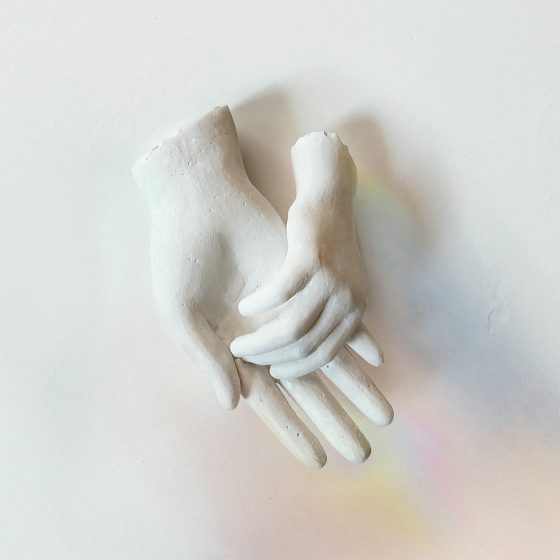
Courtney Hartman’s ‘With You’ album cover art, created by Claire Lindwall.
Completing the journey is With You’s striking cover art. The work of Hartman’s close friend Claire Lindwall captures the music’s delicate intimacy. “Claire is primarily a watercolor artist and illustrator,” says Hartman. “A special part of creating an album, for me, is giving the music to someone who then translates it into a visual piece of art. Every time, it’s surprising and expansive in a new way.”
Lindwall cast her own hand and that of her daughter’s, and positioned the casts so that one holds the other. “We experimented with drawings around it, then having just a splash of watercolor behind the piece,” says Hartman. “That’s all it needed.”
With this album now making its full debut, how do you feel about sharing so much vulnerability?
Courtney Hartman: The processing has happened in phases. I think it started just by saying yes to writing the material. There was an accepting of, “I’m writing about this thing that feels more vulnerable and more naked than anything I’ve written about before.” Bringing those songs to other writers, to collaborators, there was another level of vulnerability there.
A year ago I brought all of this material to my greater community and asked for support, because at that point I needed help putting the album out. Now, to give it to the rest of my community and listeners in the world, there’s a level of vulnerability, but I feel mostly excited. It feels like, “We made it.”
You’ve explained in other interviews that you had to use funding meant for the songs that came before these in order to get back on your feet. Needing financial assistance is also a vulnerable place and one that often brings publicly imposed shame and guilt. How did you process it?
You’re bringing up something that my husband and I have been talking about a lot, just with the news cycle and trying to get an understanding of what we can do for folks in our community. And having had small tastes of that in our life, because I know what we’ve experienced is so small compared to what so many people live through and are currently living through.
An important [word] that you touched on is shame – the shame of needing help; of not feeling like you can do it on your own or you can stand on your own two feet; of needing help for basic things like groceries. I think maybe accepting help and accepting care expands our capacity to feel compassion and to be able to then care for others.
In a podcast for Acoustic Guitar, you used the phrase “the intimacy of sound.” Could you talk more about what that means in the songwriting and guitar playing?
What I hear when you reflect that phrase back to me is the sound of the skin of your finger on the guitar string, or the sound of hands against a percussive instrument. When we went into the studio, I told the friends that were with me there on the first day, “Just as a guiding directive, whenever we imagine a sound that we want to create, let’s see if we can find something natural to create it with.”
Everyone took it in their own way, some on their instruments. Sean Carey was heavily involved on the record and he took that more literally in a lot of the percussion work. He found a nest outside when he was wandering around and that became the percussion on a track. Or even just the sound of skin on skin being a sound that we used as well; bringing in and magnifying some of these quieter sounds and allowing that to be a part of the soundscape [was part of the intimacy of sound].
Did you select the guitars around the songs or did some of the songs develop around your guitars?
Sometimes you think you know what a song wants before going into the studio and then you sit behind a mic and you’re like, “This isn’t serving it quite right.” And sometimes that experimentation takes a little longer than you think it will. Or sometimes you sit down with a first instinct and it’s totally right. That’s part of the reason it’s fun to have a good array of instruments in the studio.
Is the guitar as much a part of expressing your feelings as the lyrics?
It is. I think part of that comes from how long it’s been an instrument that feels like a voice to me. Songwriting came around the same time. I was about 12 when I started writing songs. Singing feels like something I still have so much exploration and learning to do.
How did working with other mothers, and their lived experiences, bring understanding to what you were going through?
What I was given [was the] shared experience and the acknowledgement of, “This is really hard. It’s really beautiful, but it’s also really challenging.”
So much of the caregiving that happens [as a mother], especially in that first year … so much of it is invisible. Maybe an aspect of that applies to all sorts of giving care – that it’s invisible other than to the one giving the care and the one receiving the care. When you feel invisible, it can also make you feel isolated and that can really feed into some of the struggles. A lot of folks have postpartum [depression] and societally we’re not set up to honor and support that season very well at all. It’s something I care a lot about, both from experiences with my family, but also as I’ve delved into work as a birth doula.
When you say, “Societally we’re not set up to honor and support that season very well at all,” what do we need to do?
We need to honor and uphold the importance of rest and nutrition and preparation. Parents are prepared for “Here’s what birth might look like,” but after that six-week checkup [traditional care usually ends]. Postpartum extends far longer than that.
A lot of [postpartum] mental health struggles won’t show up until maybe nine months or a year after a child is born. Better supporting [people postpartum] that would be the first thing I can think of. We live pretty isolated lives, as families in our insular homes, and so we’re not set up to receive support very well.
Or ask for it.
Yes, totally, [we need to be] preparing [people] to know that this is a time to accept and receive care. Preparing your heart for that is such a big piece of it, to know that we, as your village and your community, want to care for you in this time.
You’ve spoken openly about postpartum depression. What was that period of time like for you?
Moments of real happiness, but also moments of hitting my head against the wall … when I was struggling. [It was] hard to admit to myself and then to speak that [struggle] out loud to anybody. It wasn’t until afterwards that I could say, “That was hard.”
All depression is misunderstood and will often make people in your circle run away.
Let’s go back to your community, and the community of mothers, and how they lifted you.
I felt so cared for by our community in a way that was deeply humbling and in a way that somehow prepared me to do some of the caregiving that was going to be required of me. I was receiving so much love and support and meals and folks showing up. That kind of care is life-changing. It changes the way we see the world and our community around us.
My daughter was about nine months old or so when I started reaching out to other mothers, asking if they would collaborate on some songwriting. Having some tether creatively helped pull me through that season. It helped weave together the woman I was prior to having a child with the woman I was in that new space. … Sometimes it feels like … you almost can’t remember who you were before.
I was really afraid of [losing parts of myself]. I was afraid I wouldn’t create music again. There’s all these fears, irrational or not, that show up. Creating and being able to have these conversations that normalize what you’re experiencing. Having women who are [a] few years ahead of me be like, “It might be extra-challenging now, but it doesn’t stay that way forever.”
It’s almost 2026 and society still misunderstands and stigmatizes mental health, certainly PPD, and even some aspects of pre- and postpartum healthcare. Why are we uncomfortable talking about things that are so natural and important to discuss? Are we making progress or going backward?
I hope we’re making progress. It was a lot easier for me to ask, “Why don’t we talk about these things?” when I wasn’t part of the “we.” As soon as it was also part of my story to talk about and share, [I had to come] to terms with my own hesitancy. Why do I not want to talk about something as normal as pregnancy and motherhood in my songs? Why do I feel like if I put this music out, it will be discredited and potentially ignored, even though it may speak to so much of the population? …
I still don’t have an answer. Maybe it’s because there’s so many generations of women having to hide those things for fear of losing wages, or jobs, or discrimination, whatever it might be. For everybody’s sake, there’s so much we have to learn from mothers’ voices, and I hope we’re beginning to really listen.
On a podcast, The Other 22 Hours, you reflected on the period after Della Mae and the realization, at the time, that “Music was not a healing thing.” What role does music now play in your healing and mental health?
It has become healing again. Years ago, I was dealing with physical pain in my hands. That was magnified by touring all the time, being on the road so much, and the strain on my body. So I was speaking about it in a physical way. [Music] has become a lot more than just physically healing [for me]. I think this album exemplifies that.
You have worked with so many people. Who is your wish-list artist or artists?
Oh my gosh. The first person that came to mind – and maybe it’s because I’ve been listening to her record all week – I would love to play music in the same room as Brandi Carlile. She gives all of herself and it’s so good.
We had a listening party [for With You] and as I was listening to the album for the first time with a whole group of friends and collaborators, what I hear on it is my friends and heroes, which is such a joy. There are so many folks on this album that I look up to so much and who have been dream collaborators. So, in that way, a lot of it has been a dream list fulfilled.
Happy first Friday of November! Let’s kick off a month of new music roundups with our first edition of our usual weekly collection for November.
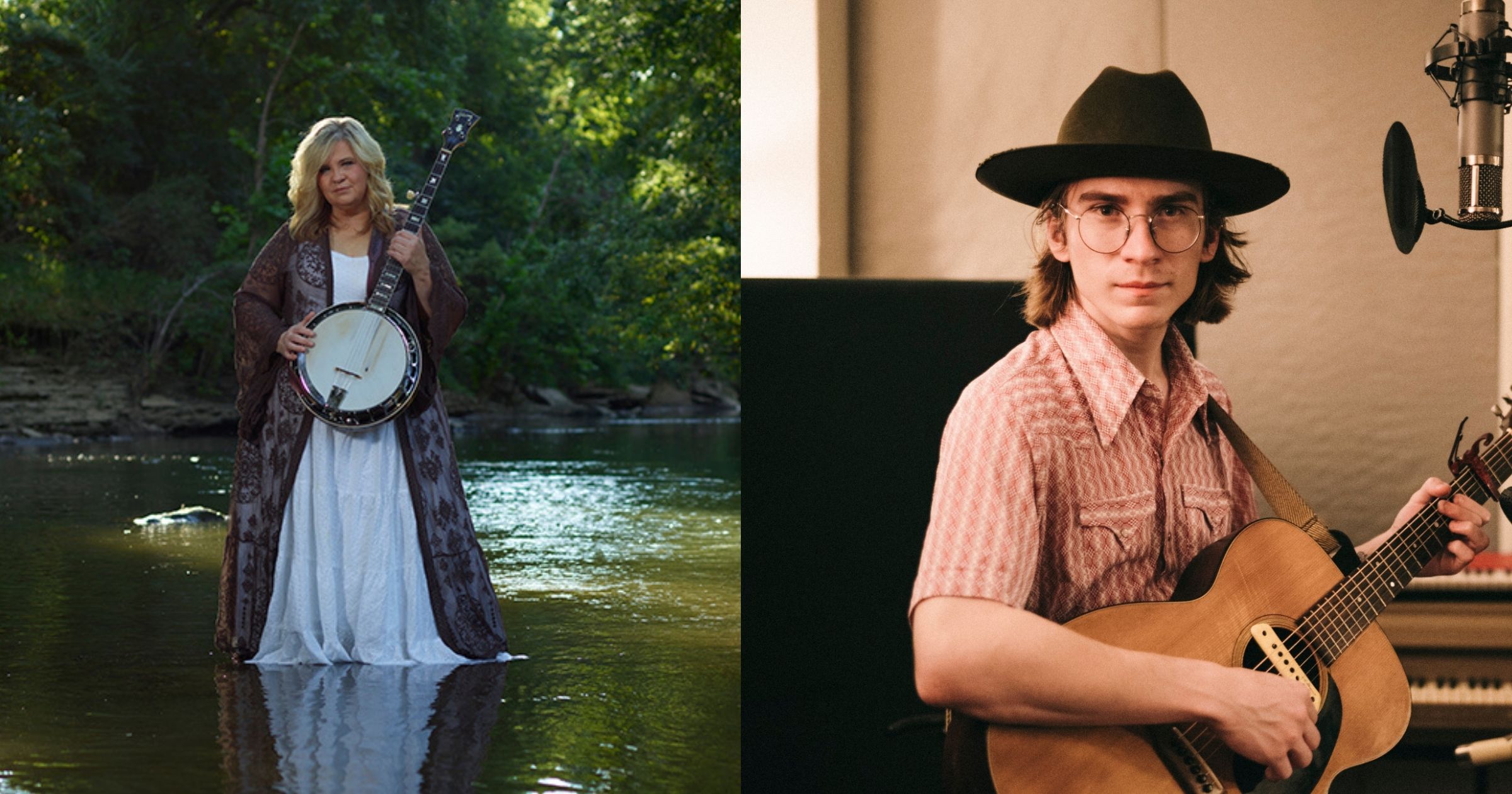
To begin, banjoist Gena Britt – whom you may know from Sister Sadie – releases her brand new solo album, Streets, Rivers, Dreams & Heartaches today. We’re sharing “What Kind of Memory Will You Be” off the new project to celebrate its launch. It’s one of Britt’s favorite tracks from the album. Her Sister Sadie bandmate, fiddler Deanie Richardson, is also included in our roundup today, joining fellow fiddler Kimber Ludiker (of Della Mae) on a twin fiddle rendition of a rip-roaring original instrumental, “No-See-Um Stomp.” It’ll have you dancing and smacking the hell out of some sandflies, too.
Singer-songwriter and guitarist Sammy Brue previews his upcoming album that pays tribute to one of his creative heroes, Justin Townes Earle, by crafting songs from inhabiting and being inspired by Earle’s journals. Brue wrote “Lonely Mornings” based on snippets of unrecorded lyrics in Earle’s journals, before Earle’s own recording of “Lonely Mornings” was released on ALL IN last year. The tunes stem from the same source, and feel connected, but show the intricate ways a single origin point can grow into two distinct songs. Watch the video for Brue’s “Lonely Mornings” below.
Our Missouri bluegrass pals the HillBenders bring us a brand new music video for their most recent single, a rock and roll and disco-infused string band version of Ola Belle Reed’s classic, “I’ve Endured.” The band leans into their genre-blending tendencies and highlight a couple of new members in the new studio music video, too. Plus, Americana-folk singer-songwriter Brendan Walter launches his new album, Disappearing Days, today and we’re sharing a new music video for his song “Pipe Dream.” Contemplating the realities and trials of building a career in the music industry, “Pipe Dream” and the album together demonstrate Walter’s goals in music are anything but far-fetched.
Make sure to check out a new single from guitarist-writer-archivist Cameron Knowler, as well, who covers Elizabeth Cotten’s “Wilson Rag” in a simple, pared-down arrangement featuring acoustic guitar, pedal steel, and kick drum. Knowler tweaks Cotten’s original arrangement slightly, continuing the age-old tradition of musical transfer and cross-pollination in bluegrass, old-time, and beyond.
It’s quite a nice roundup to get the month rolling, isn’t it? Check it out for yourself below, ’cause You Gotta Hear This.
Gena Britt, “What Kind of Memory Will You Be”
Artist:Gena Britt Hometown: Star, North Carolina Song: “What Kind of Memory Will You Be” Album:Streets, Rivers, Dreams & Heartaches Release Date: November 7, 2025 Label: Mountain Home Music Company
In Their Words: “This song was penned by one of my Sister Sadie bandmates Dani Flowers and co-written by Paul Sikes. She had actually sent it to us several years before she ever joined the band. I remembered it and pulled it back out when I was starting to gather songs for this recording. I asked her if she would mind if I recorded it one weekend that we were on the road and she graciously agreed. We had so much fun working this up and recording it in the studio. It ended up being one of my favorite tunes on the album. And, that Dobro ride at the end of the song by Jeff Partin is out of this world good! I hope everyone enjoys listening as much as we did recording it!” – Gena Britt
Track Credits: Gena Britt – Banjo, lead vocal John Meador – Guitar, harmony vocal Alan Bartram – Acoustic bass, harmony vocal Jason Carter – Fiddle Jonathan Dillon – Mandolin Jeff Partin – Resonator guitar Tony Creasman – Drums, percussion
Sammy Brue, “Lonely Mornings”
Artist:Sammy Brue Hometown: Ogden, Utah Song: “Lonely Mornings” Album:The Journals Release Date: November 12, 2025 (video); January 23, 2026 (album) Label: Bloodshot Records
In Their Words: “The song ‘Lonely Mornings’ was written in collaboration with Justin Townes Earle’s journals. After I wrote this song, New West Records released a new album of Justin’s called ALL IN which contained unreleased recordings and songs of his. I was ecstatic to find a song called ‘Lonely Mornings’; it was like a sign. Even though our songs didn’t sound similar, they are connected through a couple lines at the end of his last verse and a similar cadence on the tag line. I found the early rendition of his lyrics and they seemed to be almost a decade old, which goes to show how long Justin really carved a song like it was made of marble. I found inspiration and a whole song in just one verse of his true version of ‘Lonely Mornings’ before I even knew it existed. To me, this song holds the mundane scenes that go with living the artist lifestyle. It also holds a sentiment that we both share, which is the love of spending a morning alone… a writer’s heaven.” – Sammy Brue
The HillBenders, “Tradical Volume 1: I’ve Endured”
In Their Words: “We’ve always leaned into ‘bluegrass meets rock ’n’ roll,’ a tag our late manager Louis Myers, co-founder of SXSW, gave us early on. So when we started talking about a new recording project, we didn’t feel the need to change course. Like I tell people, we blame our love for traditional roots music and classic rock on our parents’ vinyl collections. There are so many great legacies to pull from in that wax.
“Instead of putting out a standard album or EP, we decided to start a new series called Tradical, where we let those two loves live together. The first release is Tradical Volume 1: I’ve Endured. For the traditional side we went to Appalachian songwriter Ola Belle Reed’s classic ‘I’ve Endured’ and gave it a rock almost disco groove.
“This track also lets you hear our newest bandmates and singer-songwriters, Andrew Morris (banjo/mandolin) and Jody Bilyeu (keys/mandolin). Jody takes the lead vocal on this first Tradical release. This song is our nod to the rocky road that is show business and to the people who keep going against the odds simply because they love music and performing.” – Jimmy Rea
Track Credits: Jim Rea – Guitar, harmony vocal Gary Rea – Bass, harmony vocal Jody Bilyeu – Mandolin, lead vocal Andrew Morris – Banjo John Anderson – Drums
Cameron Knowler, “Wilson Rag”
Artist:Cameron Knowler Hometown: Yuma, Arizona Song: “Wilson Rag” Album:East of the Gilas (Lagniappe Session) Release Date: November 14, 2025 (EP) Label: Castle Dome Records
In Their Words: “As far as anyone knows, Elizabeth Cotten composed ‘Wilson Rag’ and recorded it a few times on various projects. Though her performances often include a third part which changes slightly from take to take, I decided to focus on the first two parts, adding a bit of reharmonization to make the tune sing with my buddy Will Ellis’ pedal steel playing. Ellis also engineered this track at his home studio in East Nashville, where varied bird songs quietly spilled through a large window. I’m the one playing the ratty Lyon & Healy kick drum from the nineteen teens or twenties, which was performed live with an early-1900s Antonio Grauso acoustic guitar, tuned quite low. I’m also using one of Guy Clark’s old thumbpicks. This tune sure feels great under the fingers and is one that I’ve played for quite some time.” – Cameron Knowler
Artist:Deanie Richardson & Kimber Ludiker Song: “No-See-Um Stomp” Release Date: November 7, 2025 Label: Mountain Home Music Company
In Their Words: “I wrote ‘No-See-Um Stomp’ after meeting a flock of no-see-ums for the first time on the East Coast. As a PNW girl, I was mortified by their existence and the one billion bites I suffered. This tune came out of me very quickly. The first part is the swarm and the second part… human agony. I recorded it once with my band Della Mae and, although there’s an amazing ‘twin guitar’ moment with Avril Smith and Molly Tuttle, I always heard this tune as a twin fiddle tune. As you know, you never encounter just one of these bugs, so I’m very excited to have a twin fiddle version of this with Deanie Richardson. We took a mild ‘controlled chaos’ approach to this, which fits the tune perfectly. Instead of linear twin fiddle parts, we depart here and there, swarming around each other just like the little critters this tune was written for.” – Kimber Ludiker
Artist:Brendan Walter Hometown: Dallas, Texas Album:Disappearing Days Song: “Pipe Dream” Release Date: November 7, 2025 Label: RECORDS/Sony Music Nashville
In Their Words: “I started writing this song while I was still in college, when I was figuring out if I wanted to pursue my majors or follow my lifelong dream of being a musician. At first, music felt like a pipe dream due to the fact that I knew nothing about the industry or how to get started. During college and for about a year after graduating, I bartended full-time to survive while nurturing this dream to make music my full-time gig. Those long nights definitely lit a fire under me to fully pursue music. I had no idea how I was going to accomplish my dreams in this wildly new world, but I knew I wanted it more than anything else and I wasn’t going to stop until I could make it a reality.
“Now, having a couple years in the industry under my belt, I still feel like I’m the new kid on the block, but I know a lot of other artists have felt that way so I thought it was fitting to show a glimpse of my struggles and aspirations along the way. I also worked in a strum pattern inspired by Mumford & Sons, because their music got me into playing guitar and writing songs. I had the opportunity to play with session musicians for the first time when making my debut album and, on this song specifically, I got to play with the very talented Kurt Ozan. Hope everyone enjoys this one!” – Brendan Walter
Photo Credit: Gena Britt by Tom Turk; Sammy Brue by Joshua Black Wilkins.
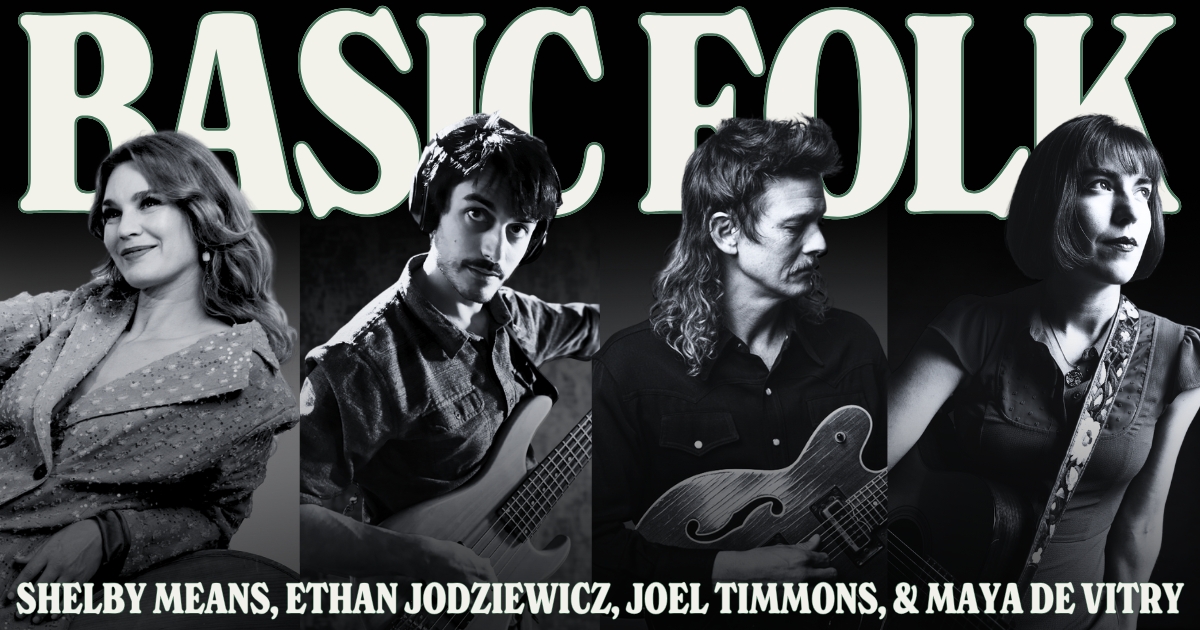
Maya de Vitry, Ethan Jodziewicz, Joel Timmons, and Shelby Means are on Basic Folk today talking about their new collaborations. Maya produced both Shelby and Joel’s debut solo albums this year; Joel and Ethan play in Maya’s band; and the two couples (Joel & Shelby are married and Ethan & Maya are partners) are all very close friends. They met in Nashville, where Maya & Ethan still live, while Joel & Shelby live in Charleston, South Carolina. Joel talks about the huge gesture Shelby made in leaving Nashville behind for his hometown of Charleston. He also talks about the elated feeling they both got when Shelby, who also used to tour with Della Mae, got the chance to play upright as a member of Molly Tuttle & Golden Highway.
Big themes of this friend group include trust, lifting each other up, and being one another’s “vibe coaches.” In our conversation we talk about choosing love, connecting with your music friends in non-musical ways, and, of course, the most epic hair in Americana: Joel Timmons and his mullet. The group shares insights on how they are still close and able to connect and spend time with each other despite the distance. Short flights and drives are worth it when you’ve got friends like this.
Photo Credit: Shelby Means by Hunter McRae Photography; Ethan Jodziewicz by Joel Timmons; Joel Timmons by Scott Simontacchi; Maya de Vitry by Kaitlyn Raitz.
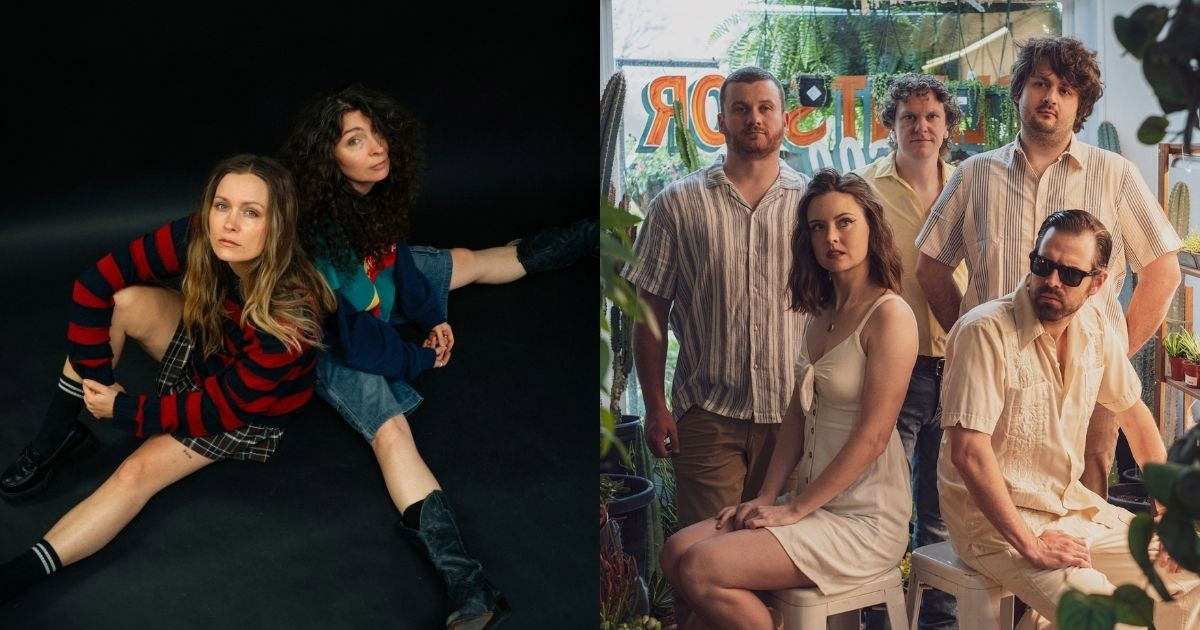
You Gotta Hear This! It’s another excellent roundup of track and video premieres plus new music arriving on digital “store shelves” today. There’s bluegrass, folk, Americana, and more.
Kicking us off, Kentucky’s Bibelhauser Brothers enlist their hero and friend Sam Bush on their rendition of “One Tin Soldier,” from their upcoming album, Down The Road. As an added bonus, Aaron Bibelhauser and Sam Bush had a nearly hour-long chat about the track, too – you can find and watch that video below. Also in a bluegrass space, Irish ‘grasser Danny Burns offers his cover of “Brother Wind,” a modern classic written by Tim O’Brien. Dan Tyminski joins Burns on the track, which does O’Brien and Darrell Scott’s versions of the song justice, for sure.
Alt- and indie-folk outfit JOSEPH return with new music, bringing us a video for their new track, “Bye and Bye,” borrowing a classic and often ecclesiastical line to explore growth, loss, and the drawn out transformations life brings each of us – while tipping their hat to a bar by the same name. You can also hear Appalachian mountain music duo the Wildmans perform “Autumn 1941,” a song co-written by Berklee’s Mark Simos and Roger Brown that touches on the harrowing reality of eugenics in the mountains of the Southeast.
East Nashville’s favorite band of lovable bluegrass delinquents, East Nash Grass, released a new single earlier this week, too! Don’t miss the excellent and lovely “Followin’ You,” written by ENG guitarist James Kee and new Travelin’ McCourys fiddler Christian Ward especially for Maddie Denton to sing. Plus, Nick Dumas is readying a bluegrass album, offering our readers a peek at a new video for “Where Have You Been,” a song about how sometimes folks you love “go away” without actually leaving.
There’s still more fantastic roots music, though! Award-winning fiddling phenoms Deanie Richardson and Kimber Ludiker are teaming up on a twin-fiddle album coming soon from Mountain Home Music Company; you can hear “Cacklin’ Hen,” the first offering from that project, below. And, wrapping us up this week, Jessica Willis Fisher went into the studio with Bryan Sutton playing guitar and mandolin to record the heartfelt and touching, “Seeds,” a country/Americana flavored track about interrupting generational cycles of pain and trauma and refusing to reap the seeds someone else may have sown in your heart and mind.
It’s quite the collection of music, and, as we say every week: You Gotta Hear This!
Bibelhauser Brothers, “One Tin Soldier” (Featuring Sam Bush)
Artist:Bibelhauser Brothers Hometown: Louisville, Kentucky Song: “One Tin Soldier” featuring Sam Bush Album:Down The Road Release Date: May 15, 2025 (single) Label: Common Loon Records
In Their Words: “Our latest collaborative effort, ‘One Tin Soldier,’ marks the first studio version of the familiar song that features Sam Bush singing and playing mandolin. The Father of Newgrass jumped right in as an honorary Bibelhauser Brother on this fourth single from our forthcoming album, Down The Road, slated for release this October. (I actually had a candid, nearly hour-long conversation with Sam on video to chat about the track – check that out here.) With his help, we’ve made an honest attempt to frame this song as a missing link in ‘newgrass’ history, connecting the dots between some larger-than-life personalities quintessential to the evolution of the bluegrass world. Much like many of our heroes, we’d like to keep the traditional torch burning bright, while igniting our own flame, fusing elements of blues, country-rock, and soul with our primordial bluegrass sensibilities.” – Aaron Bibelhauser
Track Credits: Sam Bush – Mandolin, vocal Adam Bibelhauser – Vocal, bass Aaron Bibelhauser – Vocal, guitar Steve Cooley – Banjo Jeff Guernsey – Fiddle
Danny Burns, “Brother Wind” (Featuring Dan Tyminski)
Artist:Danny Burns Hometown: Donegal, Ireland Song: “Brother Wind” featuring Dan Tyminski Album:Southern Sky Release Date: May 16, 2025 (single); August 22, 2025 (album) Label: Bonfire Recording Co.
In Their Words: “I first discovered ‘Brother Wind’ on the Transatlantic Sessions on BBC many moons ago. I’ve had the great pleasure of knowing Tim O’Brien and working with him — he was one of my very first collaborators in Nashville when we cut a few songs at John Prine and Ferg’s Butcher Shoppe [studio]. I asked him about ‘Brother Wind’ and he said, ‘Yeah, you should cut it.’ So, we did — tried to stay true to his original version while adding something new. Having Dan T. come in and sing on it brought it to another level of cool.” – Danny Burns
Track Credits: Danny Burns – Vocals, guitars Dan Tyminski – Vocals Ethan Burkhardt – Upright bass Billy Contreras – Fiddle Matt Menefee – Banjo, mandolin Cody Kilby – Guitars Jerry Roe – Drums
Video Credit: Shot by Ryan Kay at the Station Inn, Nashville, Tennessee.
Nick Dumas, “Where Have You Been”
Artist:Nick Dumas Hometown: Sturgeon Bay, Wisconsin Song: “Where Have You Been” Album:Where Have You Been Release Date: May 16, 2025 Label: Skyline Records
In Their Words: “Everyone has been in that place – where someone close to you just isn’t there like they used to be, even if they haven’t gone anywhere. This song really struck me because of how real and universal that feeling is. And when Jim Van Cleve came in to mix it, he completely brought out the emotional tension in a way that blew me away. There’s this haunting, almost cinematic atmosphere that he created in the mix – it’s ominous, raw, and it elevates the story in a way that made me hear the song differently. It gave the whole track this weight, like you’re walking through fog trying to find someone.” – Nick Dumas
Artist:East Nash Grass Hometown: Madison, Tennessee Song: “Followin’ You” Album:All God’s Children Release Date: May 13, 2025 (single); August 22, 2025 (album) Label: Mountain Fever
In Their Words: “East Nash Grass was touring Ireland the first time I heard the demo recording of ‘Followin’ You,’ which I was told that our guitar player, James Kee, and our good songwriting pal and fiddler, Christian Ward, had written for me to sing on our upcoming record, All God’s Children. We were on the way to our next gig, driving through scenery too incredible to describe, and I was enchanted by an iPhone recording of Christian playing the guitar and singing this new song. The chorus is simple: following you. That’s all. And right there, in the beauty of simplicity, I understood that we had all been brought together to make this music to share, not because someone told us to or because of any hidden agenda; but purely because there was no other option for us.” – Maddie Denton
Track Credits: Harry Clark – Mandolin James Kee – Guitar Jeff Partin – Bass Maddie Denton – Fiddle Cory Walker – Banjo Gaven Largent – Dobro
JOSEPH, “Bye and Bye”
Artist:JOSEPH Hometown: Portland, Oregon Song: “Bye and Bye” Release Date: May 16, 2025 Label: Nettwerk Music Group
In Their Words: “This song is about being a woman in her late thirties with none of the results she expected from the plans she made – no husband, no house, no kids, no religion. The start of the song came one night when I was getting dinner with my then-girlfriend Talia at a bar called the Bye and Bye on Alberta St. in Portland. Our sister Allie had just quit the band, I was about a year past my divorce, I had a hunch the relationship I was in couldn’t keep going in its current form. I told Talia, ‘I feel like, in a way, I just died. Like everything I am – every bit of identity I’ve had – is over.’ I started crying in the way that isn’t tidy so I ran to the bathroom and let the tears rip. It had been a rough few days and as I sat on the toilet lid bawling I opened my notes app and typed ‘Crying in the bathroom of the Bye and Bye/ Saturday’s mascara in my eye/ it’s Tuesday.’” — Natalie Closner
Artist:Deanie Richardson & Kimber Ludiker Hometown: Nashville, Tennessee; Silver Spring, Maryland Song: “Cacklin’ Hen” Release Date: May 16, 2025 Label: Mountain Home Music Company
In Their Words: “I’ve been a Kimber Ludiker fan for many, many years now since I heard her play at the Grand Master’s Fiddler contest. I was a judge that year and she completely blew me away. I think Kimber is one of the most tasteful, versatile fiddlers that we have in bluegrass music today and the work she’s done with Della Mae speaks volumes for her integrity and her talent. Kimber and I have been talking about doing a twin fiddle record for at least three years now and we’re so glad that we found a home and so glad that we found a place to record this record. Mountain Home has been so generous and good to me and allowed Kimber and I the space to come record this twin fiddle record. And we took it back-old school — just twin fiddles through the whole thing and we’re super excited for you guys to hear some fun music.” – Deanie Richardson
“Deanie Richardson has long been one of my favorite fiddlers and has always been my favorite to play with. We’ve been dreaming about a twin fiddle record for years and Mountain Home is the perfect label to share our excitement and vision. With our bands Della Mae and Sister Sadie, we’ve both had a long commitment to showcase and create a platform for women in this music, and we’re excited to add our fiddling to the canon of tunes in our music. I especially hope young girls will be excited to have more and more recordings of instrumentals played by women to inspire their learning.” – Kimber Ludiker
Artist:The Wildmans Hometown: Floyd, Virginia Song: “Autumn 1941” Album:Longtime Friend Release Date: July 11, 2025 Label: New West Records
In Their Words: “‘Autumn 1941’ is a song Roger Brown, former Berklee College of Music President, co-wrote with Berklee songwriting professor Mark Simos. Mark has written for Alison Krauss, the Infamous Stringdusters, and Del McCoury. Del recently released the other song in this series titled ‘Working for the WPA.’ The ‘Autumn 1941’ story hails from Roger’s North Carolina Appalachian roots, it was passed down through his family and while some of the specifics remain unknown, different versions of this story of eugenics prove to be true across Appalachian regions and more largely other minorities throughout American early-mid 20th century history. Stories of this same movement took place in Virginia and communities like Floyd, our hometown. Once we got into the studio with this song, it just flowed and out of it came a haunting authenticity we hadn’t yet discovered in our music.” – The Wildmans
Jessica Willis Fisher, “Seeds”
Artist:Jessica Willis Fisher Hometown: Nashville, Tennessee Song: “Seeds” Album:Blooming Release Date: May 16, 2025 Label: Bard Craft Records
In Their Words: “When we’re young, much of our life is shaped in ways we can’t control. Seeds are planted in our life and when we grow up, we can be left reaping the effects of toxic generational patterns. A big part of my life the last few years has been weeding out so many beliefs and habits that, if left to continue to grow, would choke me to death in many ways. Some days are harder than others and I still have doubts that rise up about which way to go in life, how to best move forward, how to heal from the abuse I experienced when I was younger.
“That vulnerability and honesty felt important to include on this record which centers around healing and growth.” – Jessica Willis Fisher
A quarter century removed from his passing, John Hartford’s music and overarching legacy may have a stronger hold on bluegrass and American roots music than ever before.
From modern-day stars like Billy Strings and Sam Bush playing his songs in front of thousands each night, to popping up in books, old-time jams, workshops, films, and other functions, Hartford’s songs are officially a part of the Americana zeitgeist.
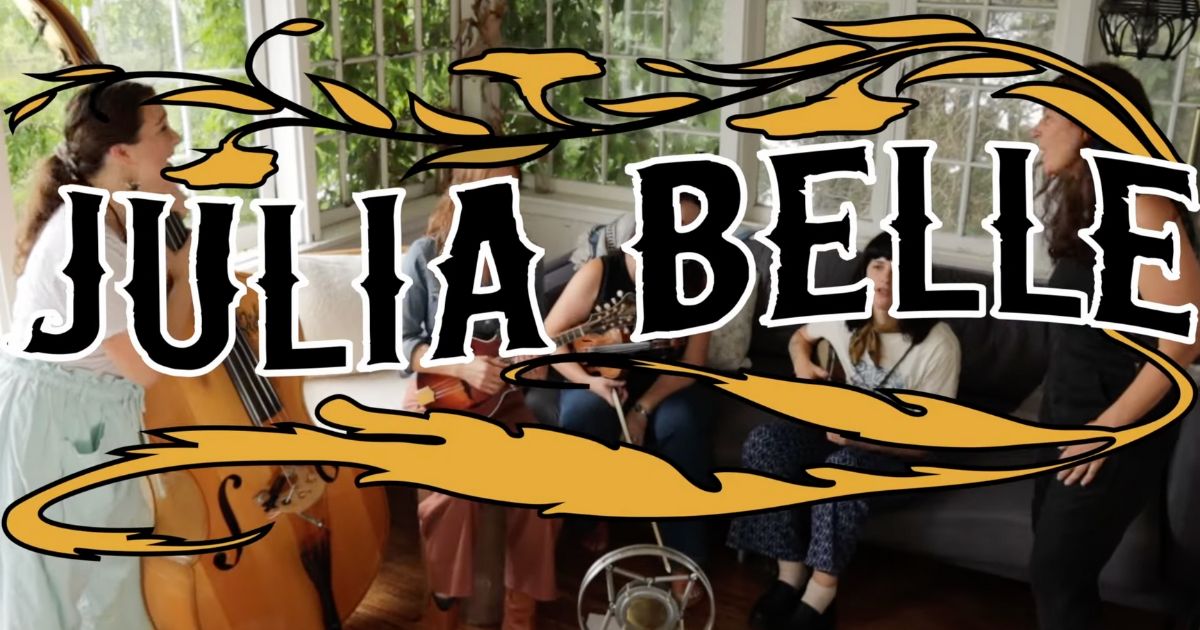
This trend continues on Julia Belle: The John Hartford Fiddle Tune Project Volume 2. Released February 28, the follow-up to 2020’s inaugural installment of the Fiddle Tune Project features another 17 songs from the always grinnin’, GRAMMY award-winning, steamboat-loving singer – this time performed entirely by women. Nearly 50 artists, musicians, and singers feature throughout, ranging from Rachel Baiman, Phoebe Hunt, Ginger Boatwright, Brittany Haas, and Deanie Richardson, to Allison de Groot, Della Mae, The Price Sisters, Uncle Earl, Kathy Mattea, Alison Brown, and Sierra Hull.
According to Julia Belle co-producer Megan Lynch Chowning (who was joined in that role by Sharon Gilchrist and Katie Harford Hogue, John’s daughter), once the decision was made to move forward with an all-women cast it came time to narrow down who to include on it–something that was as much of a dilemma as it was “an incredibly cool revelation.”
“We decided about halfway through to just make it a reality rather than a selling point,” she jokes. “It’s in the same spirit of whenever you open up a record from the Bluegrass Album Band, nobody says, ‘Wow, what a great all-male band that is!'”
Ahead of Julia Belle‘s release, Harford Hogue, Lynch Chowning, and Gilchrist spoke with BGS about their involvement in the project, preserving John Hartford’s legacy, and favorite moments from recording.
(Editor’s Note: Thefollowingare three separate conversations combined into one and edited for brevity.)
Nearly 50 artists are involved in Julia Belle. How did you go about deciding who to include on the project and which songs they’d play on?
Sharon Gilchrist: It was really important for us to have a multi-generational presence on this record. One of Katie’s personal wishes for the album was that every artist on the record have some personal connection to Hartford. With it being an all-female record, I was also curious to find women who had actually worked with or had some kind of rapport with him. For example, Laurie Lewis, Kathy Kallick, and Suzy Thompson are all on “Champagne Blues” and were all peers of Hartford’s back in the day. Ginger Boatwright actually inspired the song that John wrote which she sings on, “Learning to Smile All Over Again.”
In addition to the sheer number of people involved, I love how you also really allowed them to lean into their own creative tendencies while at the same time staying true to the style and spirit of John Hartford.
Katie Harford Hogue: Since Volume I the whole premise of this album series has been to choose artists that play this vein of music or consider my dad a mentor or someone they look up to. We hand them the book [John Hartford’s Mammoth Collection of Fiddle Tunes] and tell them to choose the tunes that speak to you, then come to the studio and put them through your filter.
For me to tell an artist how to do art – why would I do that? The whole point of being an artist is that you’re putting yourself into it and are using your own expressions, your own metaphors, and your own way of relating to the music. So we wanted their expression in it and the really cool thing is that Dad comes through no matter what we do. His DNA is in these tunes and there’s no way to get them out, not that we would ever want to. Having people come in and just go for it was risky, but an incredibly fun way to make an album.
Megan Lynch Chowning: A lot of the tones, audio, and overall vibe check comes from Sharon, who has been a John Hartford fan her entire musical life and is somebody who is so incredibly in tune with the sounds and feel that comes from his songs. She worked tirelessly listening to everybody’s work before they came in to record to get an idea of what’s going to help each person be the best possible version of themselves while they’re here.
Then there’s the issue of none of these songs – at least the fiddle tunes – having any chords assigned to them. When John wrote them there were no chord progressions, so every artist had to write their own. That in itself was a big part of people getting to take each song in their own directions. It was amazing to watch over and over again, and Sharon handled it all like an absolute rock star.
While some people’s legacy fades over time, it seems like John Hartford’s only grows stronger. What are your thoughts on that and how this project aims to further propel that legacy forward?
KHH: I’ve heard it said before that the way he communicated wasn’t limited to a particular generation. I don’t know if it was the way he thought about things or if some of the ways he did things were more universal. … You can go back to the masters of music and art – da Vinci, Bach – and their methods of creativity are still very valid now, they simply don’t go out of style.
When you hone into the foundation of it the relevancy goes with it, because everyone’s just going back to what’s real, which is what I think my dad also did. He was very true to the way he made music and the way he thought. A lot of people trying to make a career might stop and think, “What does the public want?” or “What do the masses want and how can I provide for them?” There’s nothing wrong with that, but there is another way to do it, making the music you want to make and not worrying whether or not it’s commercially viable.
That being said, “Gentle On My Mind” [Hartford’s most successful song, written in 1966] was very helpful in allowing him to do that full-time. Most everyone else has to get a full-time job and do the music on the side to stay true to themselves, but he got the best of both worlds in that way. He was able to take the success of that song and then go do his art with his heart and soul in it. I mean, who else writes about steamboats? Who else would write about the things that he wrote about and try the things he did on stage or just go out on a limb? And it all worked! In a way, everything aligned for him. That’s why I think he continues to be so relevant – he took a big risk and it paid off.
MLC: In the very first meeting the three of us had to discuss Volume II, preserving and carrying on the Hartford legacy was the focus of what we were trying to accomplish. On any given day you’ve got Billy Strings and Sam Bush playing John Hartford songs in their live shows. The biggest takeaway I have from this whole thing is John Hartford’s unceasing dedication to learning. He started transcribing and learned to write standard notation after he was diagnosed with cancer and instead of saying, “Oh no, I’m sick and this is going to slow me down,” he took it as a sign to move forward and learn a bunch of new things. That’s what led to him becoming obsessed with the fiddle, traditional styles and all that. That to me is the whole message behind these albums, that there’s so much more to do and so much more to write, play and learn. That’s been the most inspiring thing about being a part of this project.
SG: He was both a student and innovator of traditional music who forged his way forward by not sounding anything like anybody else. John is one of the largest beacons shining the way forward on how you do that.
What were your favorite moments from recording these songs? I personally can’t get enough of “Spirit of the South.”
KHH: What was so fun for me about these sessions was that even in rehearsals everyone was shredding. Upon walking in the room you’re hit with this energy and you just want to jump in. It was so exciting talking with everyone and feeling their joy around each song. Then there were the stories from Ginger Boatwright and Kathy Chiavola – both good friends of my dad – and Alison Brown telling me about his influence over her on the banjo.
Not being a musician, that all fed me, because that was a part of my dad’s life that I wasn’t necessarily connected with very much when he was alive. But now I can hear his music and I can see what he was doing and it just has a whole different impact on me. I’ve now had my own kids, raised them, done some things, and can relate more to what he was doing, so every time someone comes back to the studio and records a song, tells a story or talks about his influence, it feel like there’s a drawing of Dad and everyone’s going in and adding details that I hadn’t known about before or that just flesh out the picture that little bit more.
MLC: One favorite was getting Katie’s mom and John’s first wife, Betty, to sing on “No End of Love,” which is a song that John wrote for her. She is an incredible musician who first met John when they were both up for a radio show slot in the St. Louis area. After they got married Betty put her singing career on hold to manage the family, so being able to get her in the studio to sing that song with Katie and her granddaughter Natalie [Hogue] on guitar and hearing her voice – which has been on hold for a long time as she lives other aspects of her life – gave me chills. To me, stuff like that is the essence of folk music and why we do what we do in terms of keeping these songs and traditions alive.
Megan, didn’t you play John’s Tambovsky & Krutz violin on “No End 0f Love”? What was that experience like?
MLC: I actually have John’s fiddle here at my house and play it in the John Hartford Fiddle Tune Project live show, so I’ve been handling it for a while now. Talk about chills – it’s the fiddle he used the last five or so years of his life. It was his main fiddle for the “Down From the Mountain” shows and The Speed of the Old Long Bow record. It’s actually the fiddle on the cover of that album. Katie called me last year out of the blue and said she was moving houses and had taken the fiddle from one closet to another before questioning why it was there in the first place and not in my hands being played at these shows.
To play it on [“No End of Love”] was funny, because it sounds a lot different than my fiddle even though both were set up by the same person. It always felt comfortable to play, but the first few months I had it it was kind of dead from sitting in a closet for two decades. Since I’ve been playing it regularly it’s really come to life. Just the metaphorical part of this fiddle coming to life at the same moment these tunes are being brought into the world is special. It’s how I believe everybody who has the opportunity to be involved in traditional music should be thinking about it. We should constantly be honoring the stuff that came before us while also bringing it into new spaces.
Katie, you mentioned not being too connected to your father’s music when he was still alive, but what do you remember most about those times?
KHH: People saw his stage persona when he was out, but even when he was home he was still playing. He didn’t go home and just say, “Oh, I’m tired of that.” He played some more. “Obsessive” is not too strong a word to use when it came to the way his brain worked about music or art. It would be Thanksgiving or Christmas and he’d be working out melodies in the living room with Benny Martin simply because they enjoyed it.
Later on, my wedding reception was held at my dad’s house and we had originally set up music on a sound system so as not to burden him, but he, my brother, and my uncle ended up all grabbing their instruments and playing as a trio for it. He wasn’t a musician because he was trying to be famous; he was a musician because he couldn’t not be one. As much as his right hand was a part of him, his fiddle and his banjo were a part of him too.
What has working on TheJohn Hartford Fiddle Tune Project taught you about yourself?
MLC: These experiences have taught me that I’m capable at parts of this job that I previously shied away from. I grew up as a contest fiddler; that was my background. Because of that I was very good at learning specific arrangements of things and then executing them with precision. While that’s all great and fine – one: it’s not a very good living, and two: it’s not all that great for having a very broad musical vision or sense of yourself. That’s why I started playing bluegrass and working for country artists. My skills and musicianship both expanded, but working on these albums – both as a player on Volume I and as a producer/player on Volume II – I’ve learned much more about my internal ability to hear things I didn’t know that I could hear and to make decisions I didn’t know I could make.
It reminds me of this exercise that John Hartford used to do with people at his jams or in his band – called the “window exercise” – where everybody who’s playing has to do something different than everybody else and then has to change that thing every eight bars. If you’ve got five or six people sitting around in a circle, one person can be chopping, one person can be playing longbows, melody, harmony, shuffle pattern… but only for eight bars. It requires you to not only come up with new things, but also be aware of what everyone else is doing simultaneously.
It was a musical brain exercise he invented that we teach at our workshops and sometimes even at the live show. To me, working on these albums has been like a real-life window exercise. It feels like even from beyond the grave John Hartford is challenging me to go bigger, be more creative, and more aware all the time. He’s just expanded who I am as a musician and what I now know that I’m capable of that I didn’t know I was capable of before. It’s weird to be grateful to someone who’s been dead for 25 years, but that’s how I feel because I’m a different person and a different player than I was before I started this.
SG: It showed me the importance of being hands-off with other people’s musicianship and to give them every opportunity to bring as much of themselves to any project as possible. That’s when you’re going to get the best music out of somebody. This project was a lesson in learning to do that, but also knowing when to jump in and direct or provide guidance when necessary.
Katie did a great job of that as well. This whole project is her brainchild and was a huge undertaking and the coolest part is the way she’s doing it. She’s doing it just like her dad. He would be so honored and pleased to see her fostering that in his own tunes and giving others the opportunity to share in and carry on that tradition.
KHH: I was a stay-at-home mom when my kids were born and poured a lot into them growing up, but once my youngest got to high school I began backing off and looking to do some of the things I’d been putting off. Coincidentally, the fiddle tune project was coming to fruition around the same time.
It was like walking out on a limb – especially as an older woman – to go out and start on some of these things not having been in the industry or corporate world in quite a while, but I did it. I have learned so much about not just the music industry, but things like how to use computer software like Photoshop and Illustrator and doing video for social media. It’s a lot of fun and something I’m very proud to be able to say that I did. I want to encourage other women to do the same. Don’t worry about what other people are saying, what you’ve done before, how old you are or what stage of life you’re in – don’t let anyone devalue your experience. If you’ve got an idea, go do it!
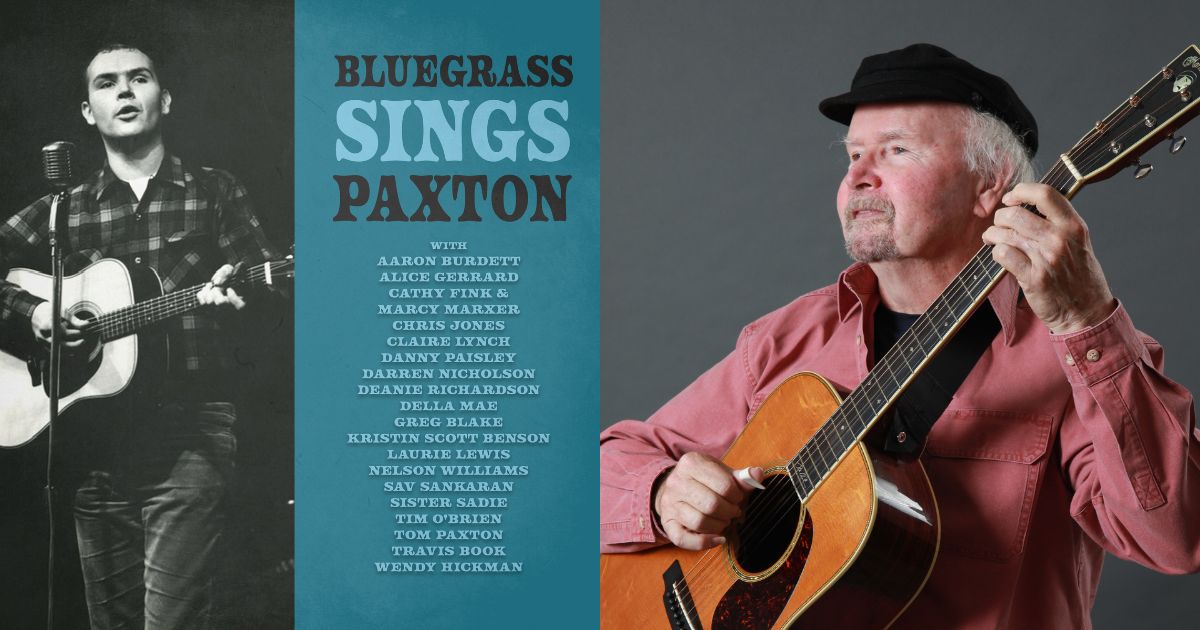
There is no disputing that Tom Paxton is a living music legend. In the early 1960s, he was a major player in the vibrant Greenwich Village folk scene, along with the likes of Bob Dylan, Phil Ochs, and Peter, Paul & Mary. The writer of such classic tunes as “Last Thing On My Mind,” “Bottle Of Wine,” “I Can’t Help To Wonder (Where I’m Bound),” and “Ramblin’ Boy,” Paxton has earned Lifetime Achievement Awards from the GRAMMYs, ASCAP, and the BBC. The beloved songwriter has had his tunes covered by a wide spectrum of acts, ranging from Harry Belafonte and Neil Diamond to the Pogues and Norah Jones. While several fellow singer-songwriters (notably Carolyn Hester and Anne Hills) have devoted entire albums to Paxton music, it took a group of admiring bluegrass musicians to deliver the first multi-artist tribute album of his songs.
Bluegrass Sings Paxton, which came out August 30 on Mountain Home Music Company, offers an impressive lineup of contributors that cuts across several generations of bluegrass musicians. Performers include celebrated acts, such as Alice Gerrard, Claire Lynch, Laurie Lewis, and Tim O’Brien along with younger stars, like Sister Sadie, Della Mae, Steep Canyon Rangers’ singer/guitarist Aaron Burdett, Unspoken Tradition’s Sav Sankaran, and current IBMA Male Vocalist of the Year Greg Blake.
Paxton, speaking to BGS from his home in Virginia, said that he had a mostly hands-off role in the making of Bluegrass Sings Paxton. “I just sat on the sidelines in amazement”; however, he confided, “I was just blown away” after listening to the entire album for the first time. The 86-year-old singer-songwriter was also being a little modest about his own contributions. This collection contains two new Paxton tunes, and he sings on a pair of tracks as well.
The genesis for Bluegrass Sings Paxton started with a conversation that GRAMMY-winning musician/producer Cathy Fink had some years ago with Paxton, who she has worked with since the early 1980s and has known even longer. “I know Tom’s catalog really well and have often thought there was great material there for bluegrass,” she shared with BGS. “I could hear this album before we even began.” The idea further evolved a while later when Fink brought up the idea to award-winning songwriter, producer, and Mountain Home executive Jon Weisberger at IBMA a few years back, and he immediately came aboard.
Several of Paxton’s tunes have been very popular in bluegrass circles over the years. A half century ago, Kentucky Mountain Boys covered “Ramblin Boy” while the Dillards and the Kentucky Colonels were among those who have recorded “The Last Thing On My Mind.” More recently, “I Can’t Help But Wonder (Where I’m Bound)” was a hit for Ashby Frank and “Leavin’ London” is a live staple of Billy Strings’ concerts. However, both Fink and Weisberger thought the project was a terrific way to get Paxton’s deep songbook better known in the bluegrass world. As Weisberger explained, “I had no doubt that there were more [songs] – both already written and yet to be written – that would work well within bluegrass, and that bringing them to light would encourage artists looking for songs to look to his catalog.”
Several acts came into the project with specific songs that they wanted to do. Blake, who fatefully was sitting at the same table with Weisberger and Fink at IBMA, quickly put dibs on “Leaving London.” Danny Paisley, who remembered his dad, ’80s bluegrass star Bob Paisley, taking him to the Philadelphia Folk Festival as a child and seeing Paxton play there, requested “Ramblin’ Boy,” because it was a song his father had performed. “I Can’t Help But Wonder (Where I’m Bound)” was already part of Della Mae’s live repertoire, so doing that tune was a natural fit for them.
When it came to what songs other acts took on, Fink gave the performers a lot of free rein to delve into Paxton’s vast treasury of tunes, a decision that worked out wonderfully. “Each artist made the song their own and it really worked,” she confided. Claire Lynch chose “I Give You The Morning” and Alice Gerrard selected “The Things I Notice Now” from Paxton’s 1969 The Things I Notice Now album. Chris Jones picked “The Last Hobo” from 1986’s And Loving You. Paxton’s 2002 album, Lookin’ for The Moon, was the source for both Aaron Burdett’s selection of and Sav Sankaran’s rendition of the title track. Laurie Lewis, meanwhile, found “Central Square” from 2015’s Redemption Road. In case you haven’t done the math, these songs alone cover nearly 50 years of Paxton’s recordings.
Paxton, too, was thrilled with the selections, proclaiming “I liked every one of the songs that they chose.” While he expected tunes like “Can’t Help But Wonder,” “Ramblin’ Boy,” and “The Last Thing On My Mind” would be part of the set, Paxton said he “was just tickled to death” over the inclusion of such lesser known numbers as “Central Square,” “The Same River Twice,” and “The Last Hobo.”
Chris Jones revealed to BGS that he picked “The Last Hobo” because the tune “felt like a classic Tom Paxton third-person story song, sort of in the spirit of ‘Ramblin’ Boy,’ in a way. It has a kind of tenderness that is so often present in Tom’s songs.”
Jones was also a member of the de facto “house band” that played on the majority of Bluegrass Sings Paxton’s tracks. A secret weapon behind the album, this team of bluegrass all-stars includes IBMA award-winners banjo player Kristin Scott Benson (the Grascals), fiddler Deanie Richardson (Sister Sadie), and Jones on guitar, along with mandolinist Darren Nicholson (formerly of Balsam Range), bassist Nelson Williams (Chris Jones & the Night Drivers, New Dangerfield) and harmony singers Travis Book (The Infamous Stringdusters) and Wendy Hickman.
Jones felt that everyone “clicked well together” and gave the music “a natural sound, which helped give the impression that these were bluegrass songs to begin with, even if they weren’t.” He also credited producers Weisberger and Fink for “coming up with arrangements that really fostered that feeling, too.”
Bluegrass Sings Paxton opens with one of the tunes that Paxton sings on. He was able to join Della Mae on “I Can’t Help But Wonder (Where I’m Bound)” as the band was recording in Maryland, not too far away from Paxton’s home base in Virginia.
“We did it live in the studio. No overdubs or anything,” he revealed. “I had a ball doing that track with them.” Paxton also sang with long-time collaborators Cathy Fink & Marcy Marxer – the three did a double album, All New, together in 2022 – on the up-tempo love tune, “All I Want,” which is also one of the two of new Paxton tunes on the project. The other new number, “You Took Me In” is a co-write with Tim O’Brien and his wife Jan Fabricius. One of the first tunes he wrote with the couple, Paxton said that “it had to be chosen. It’s such a good song.” He described it as “gospel without being gospel,” adding, “I took the literal gospel out of it and kept everything else.”
Fink & Marxer and O’Brien & Fabricius are among the handful of musicians that the still highly-active octogenarian collaborates with via Zoom each week. Folk luminary John McCutcheon, Colorado troubadour Jackson Emmer, and the rising Pittsburgh band Buffalo Rose are also among his regular online songwriting coterie. Paxton says he sometimes writes three to five songs a week. “Lots of folks would retire to the golf course at this point in their lives,” Fink marveled, “but Tom is driven by writing the next song.”
Over the years, Paxton has penned hundreds and hundreds of songs, and more than 60 albums bear his name, beginning with 1962’s I’m the Man That Built the Bridges that was recorded live at New York City’s fabled Gaslight Club. Even from the start, Paxton filled his records predominately with originals, which wasn’t typical at that time. Dylan’s 1962 debut, for example, contained only two originals. Dave Van Ronk, in fact, famously proclaimed in his memoir that it was Paxton who kicked off the folk scene’s “New Song Movement,” not Dylan as often credited.
The best-known songs from his debut, somewhat curiously, are three tunes that might best be described as children’s music: “My Dog Is Bigger Than Your Dog,” “Marvelous Toys,” and “Going To The Zoo.” Writing and performing kids songs was not an isolated occurrence for Paxton, who went on to release several children’s albums, including the GRAMMY-nominated Your Shoes, My Shoes, and to write books for kids. Paxton very much sees himself as continuing the legacy of his heroes, Woody Guthrie, Pete Seeger, and The Weavers – artists who performed all types of songs, from story songs and ballads to children’s tunes and political songs.
“Everything I do is really rooted in traditional music,” Paxton elaborated during his phone interview. “I’m always going back to that well of traditional folk music, Appalachian music, cowboy music. It’s a wonderful tradition – great, great songs, and I just keep trying to write songs that feel the way they felt.”
Paxton cites one specific musician – the late, great Doc Watson – to explains his “best route” to bluegrass music. He saw Watson when Ralph Rinzler first brought him to play in New York City and came away so impressed. “I was very fond of him and adored his music. I think he liked me, too. Doc recorded many of my songs over the years.” He also remembered sharing a bill with Watson once in Tampa and being brought out on stage to perform “Bottle Of Wine.” Paxton was rather intimidated over Watson’s and his guitarist Jack Lawrence’s virtuosity. “Why do I feel like I’m wearing painter’s gloves,” he recalled saying while admitting “it was a lot of fun.”
Weisberger describes Paxton’s place in American music as a unique one. “He was an integral part of the transition from wholly traditional folk music to the more modern conception of the field, with its inclusion of performing songwriters, but where a lot of his contemporaries moved on in one way or another, he went deep rather than broad… I think that’s what makes so many of his songs sound so natural and organic and almost effortless. That is an artistry that is really easy to overlook or under-appreciate, so I’m happy to have put together a collection that will, I hope, bring more attention and appreciation to that still ongoing legacy.”
When asked how his songwriting has changed over the years, Paxton replied that he hopes it’s deeper and more developed, adding rather humbly that “I’m still the same writer I was when I wrote ‘Last Thing On My Mind.’ It’s like a farmer who puts in the same crop every year. It’s the same farmer.”
Photo courtesy of Fleming Artists. Album cover courtesy of Crossroads Label Group.
“Bluegrass music is a truly American artform. It reflects the culture and the time in which it’s created, and as with many traditional artforms, a preservationist stance is held on a pedestal. Bluegrass music’s history is very gendered, and when this happens, the music can’t reach its full potential.”
My teacher Laura Orshaw told me this.
There has been no shortage of amazing women bluegrass musicians to come out of the roots department at Berklee College of Music. Gillian Welch, Sierra Hull, Molly Tuttle, Bronwyn Keith-Hynes, and on and on. I’m going into my senior year at Berklee this fall as a mandolin principle, and one of the reasons I went to Berklee was how inspired I was by these women and their music.
Towards the end of my sophomore year, my friend Katelynn Casper – a brilliant bluegrass fiddler – came up with an idea. She wanted to start a bluegrass ensemble of all women and non-binary folks. Katelynn approached Matt Glaser, the artistic director of the American Roots Music Program, about helping us create a class in which we would study and perform in a group. Excited by the prospect, he brought in Laura Orshaw (the Po’ Ramblin’ Boys) to be our mentor. In the past few years, there had been a strong influx of women who came to Berklee and wanted to play roots music, so it didn’t take us long to find people who wanted to join the project.
The ensemble started in October of 2023 with about 12 members, enough for us to break into two ensembles. I got to be in both groups, in one as mandolinist and the other as bassist. Our focus between both groups was to play music mostly written by women who we looked up to and were maybe overlooked.
Through the course of our year together, we moved through a catalog of songs and tunes written by our heroes and then delved into original material. We wrote songs and tunes together and on our own and fleshed them out as a band. It was an empowering experience to be a part of and it was beautiful to watch my friends explore a new kind of confidence in their music.
This past April, the American Roots Music Program sent all of us down to Washington, D.C. In June of 2022, the Smithsonian Center for Folklife and Cultural Heritage opened up an exhibit entitled Music HerStory: Women and Music of Social Change. Laura had caught wind of the exhibit and wanted us to visit, so we could witness its content and impact. The exhibit explored many women who were significantly overlooked in music, but yet the world would have been drastically different had their music not been a part of it.
We heard and read stories of when Loretta Lynn put out “The Pill” and how much of an uproar it caused; stories of how Elizabeth Cotten had to put her music on hold to raise her children and didn’t come back to it until she was in her 60s, putting out “Freight Train” and “Oh Babe It Ain’t No Lie” and still was not given much credit.
Walking through the exhibit, I couldn’t help but think about all the different musical influences I have and how so many of those influences were inspired by these women, but how that was never really talked about.
On the same trip, we also got the privilege of going to Smithsonian Folkways Recordings and learning about some of the history of their record label and how it came to be. When we were checking it out, both ensemble bands did a little recording in the archives to commemorate the trip. Playing our originals and covers written by powerful women was an incredible experience. We were surrounded by original recordings and records that made bluegrass and old-time what it is now and some of the music that brought each of us to the genres to begin with.
While we were down in D.C., we also got the chance to hang out with Kimber Ludiker (fiddle) and Avril Smith (guitar), two members of Della Mae. In both groups, the inspiration from Della Mae was so apparent – we all learned many of their songs. Getting to stand up and play their songs with them was a mind-blowing experience.
Taking part in this project has been such an inspiring experience. As a kid who grew up in the bluegrass and old-time world, there weren’t always a lot of women to play music with, so to get the opportunity to dedicate time each week to just sit down with a group of deeply passionate women and non-binary folks who are also such remarkable roots musicians was an indescribably moving experience.
A common conversation amongst us during that time was how freeing and comfortable it felt to play music in a setting like this. Whether or not you think about it, music as a whole is an intensely male dominated world – and bluegrass isn’t any different.
“Here’s a question that crossed our minds every week,” Laura said. “‘What would bluegrass be like without patriarchy or bias?’ The answer comes through music, not essays, and this project certainly chipped away at our goal.”
Being in this ensemble, I learned a lot about myself. Being surrounded by a community of women and non-binary folks playing music taught me a lot about my confidence as both a person and a musician. Being in that environment gave me an amazing place to explore.
“When Matt [Glaser] asked me to be the curator of this project, I couldn’t have guessed how impactful and enlightening it would be for me. Working in an all-women and non-binary band filled a void for all of us – creatively, academically, and socially,” Laura continued. “Students shared experiences of the not-so-glamorous parts of working in a male-dominated field. They studied the music and songs of their heroes, who sometimes got overlooked in other classes and ensembles. They wrote songs, arranged music, and tried on different leadership roles in the band.
“But most of all, they encouraged and inspired each other to be better musicians. The mutual dedication and enthusiasm were palpable in every rehearsal.”
It’s been an experience of a lifetime to learn the music I love with a group of women who want to push the boundaries of the genre. To sit with a group of people who understand the intricacies of being a woman or gender non-confirming person playing bluegrass – or even music in general – was a very comforting experience. We all grew so much as people and musicians.
Photos courtesy of Emma Turoff. Lead image: Ensemble, No Man’s Land. Inset image: Ensemble, Ain’t That Just Like A Man.
This website uses cookies to improve your experience. We'll assume you're ok with this, but you can opt-out if you wish.AcceptRejectRead More
Privacy & Cookies Policy
Privacy Overview
This website uses cookies to improve your experience while you navigate through the website. Out of these, the cookies that are categorized as necessary are stored on your browser as they are essential for the working of basic functionalities of the website. We also use third-party cookies that help us analyze and understand how you use this website. These cookies will be stored in your browser only with your consent. You also have the option to opt-out of these cookies. But opting out of some of these cookies may affect your browsing experience.
Necessary cookies are absolutely essential for the website to function properly. This category only includes cookies that ensures basic functionalities and security features of the website. These cookies do not store any personal information.
Any cookies that may not be particularly necessary for the website to function and is used specifically to collect user personal data via analytics, ads, other embedded contents are termed as non-necessary cookies. It is mandatory to procure user consent prior to running these cookies on your website.