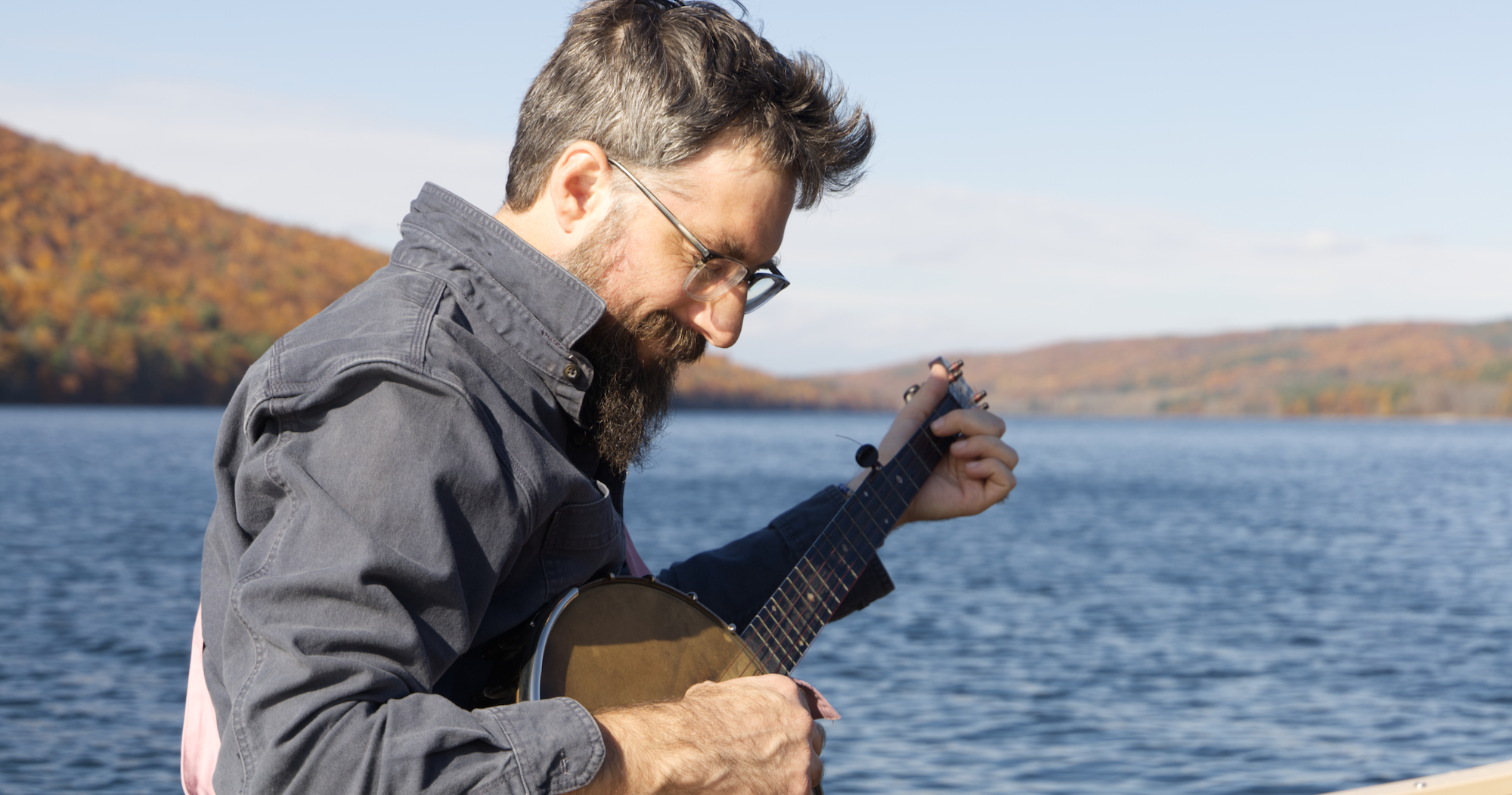
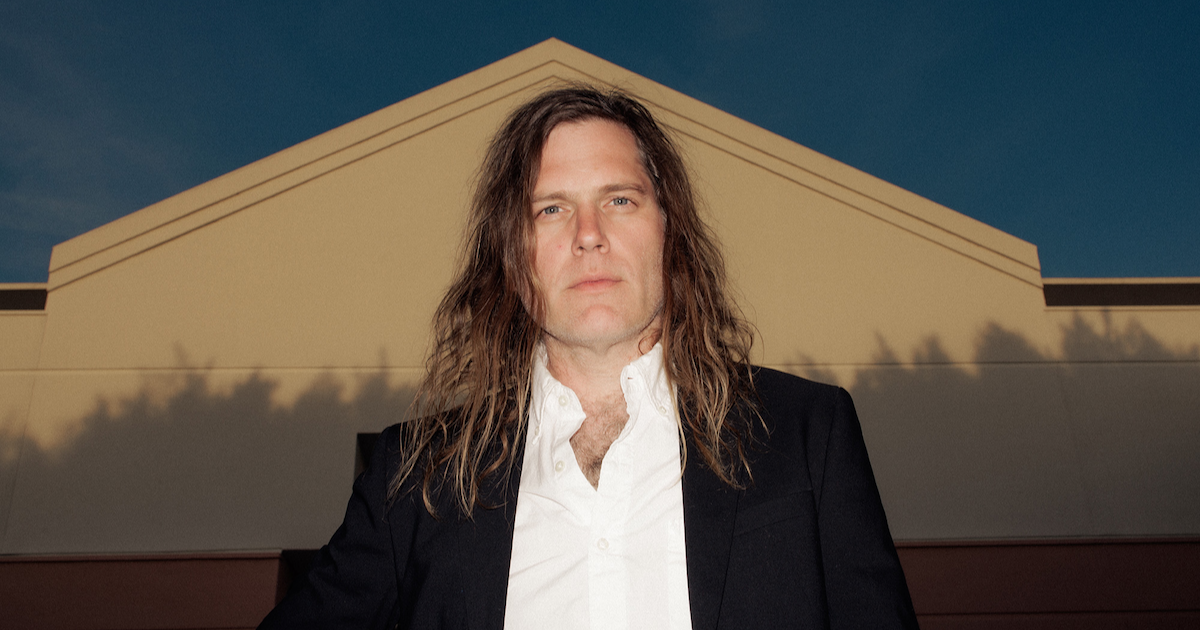
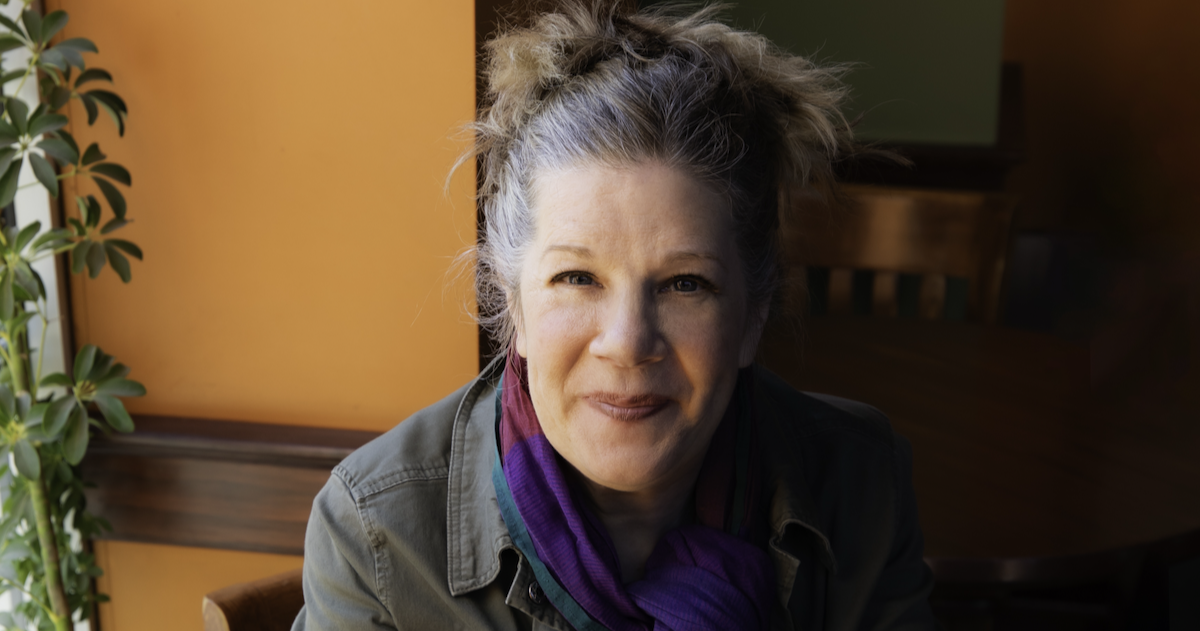
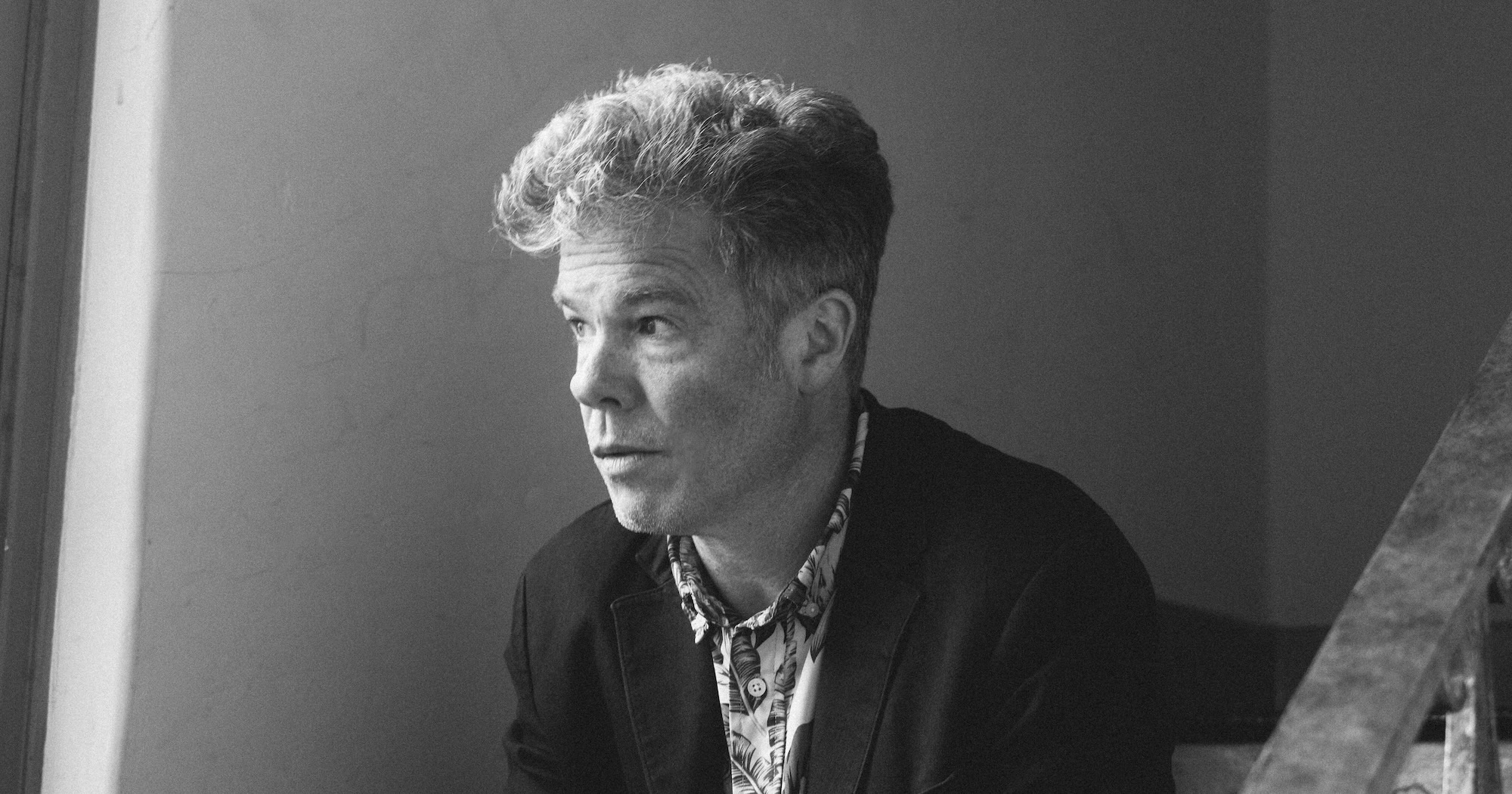
Artist:Benny Bleu Hometown: Hemlock, New York Latest Album:When I Am a Fossil (released June 5, 2026) Personal Nicknames (or rejected band names): My real name is Benjamin Haravitch. I like it just fine, and maybe someday I’ll release music as that guy. For now, Benny Bleu helps out.
Which artist has influenced you the most – and how?
Early on in my old-time journey, I became obsessed with the fiddling of Rayna Gellert. I said to myself, “I want to play the banjo like she plays the fiddle.” And that goal still stands. I love the way she records and releases music, especially her latest duo albums with Kieran Kane and also alongside Joachim Cooder. The music is accessible and rooted in traditional old-time music and also totally fresh with a clear point of view. Most importantly, it feels good and flows with perpetual motion. All things I try to do with the music I make.
What was the first moment that you knew you wanted to be a musician?
When I was about four years old, a new neighbor moved in next door. Gary. He had a band called Wilderness Family (banjo, fife, snare drum, upright bass, accordion) and I remember them playing for us in my driveway. When I was eight or so, the band threw a party in my backyard and invited all their freaky musician friends who camped out and jammed and juggled all weekend. I eventually grew up, but I don’t think I ever left that party. For a while I tried to work a 9-to-5 as a geologist. But the songs never stopped ringing in my head! I knew there was no avoiding the fact that I make music and that’s just what I do.
Which elements of nature do you spend the most time with and how do they impact your work?
All of the music I make is an echo of my relationship with the earth. Even the way I tour reflects this, primarily getting around on Amtrak. My new record When I Am a Fossil is entirely focused on our place in nature. In the title track, I reflect on my past life as an environmental geologist. Scientists in the deep future might find vast evidence of our human experiment, but will they ever find the steps we didn’t take?
I live in upstate New York, in a region known as the Finger Lakes. Two of these lakes – Canadice and Hemlock – have been lasting muses for me. Ancient worlds that have witnessed glaciation, generations of native cultures, colonial progress come and gone, and now provide water for the city of Rochester. This is a story I tell in the song “Abbey Lovely.” And “All I Want to Be” is a meditation on awe and the simple pleasure of being “here” in our place in nature.
Does pineapple really belong on pizza?
All toppings belong. Especially the under-represented ones, like pineapple. If a pizza is provided with a supportive crust, a zesty sauce, and savory cheese, then all toppings will manifest greatness. I don’t do the social medias, but in my newsletters I like to let my fans know where my favorite pies are as I travel around. I usually go for a simple slice of cheese.
What is a genre, album, artist, musician, or song that you adore that would surprise people?
The element of music that speaks to me most is rhythm. So I tend to love drummers and rhythmically adventurous musicians. I love Latin music. I love Fela Kuti and James Brown. Music that holds the groove above all else. Bernard Purdie, the legendary session drummer, is one of my favorite musicians and I hear a lot of similarity in how he keeps a song moving with how an old-time fiddler creates that perpetual forward motion. My desert-island-all-time favorite track would have to be “Sugar” by Stevie Wonder.
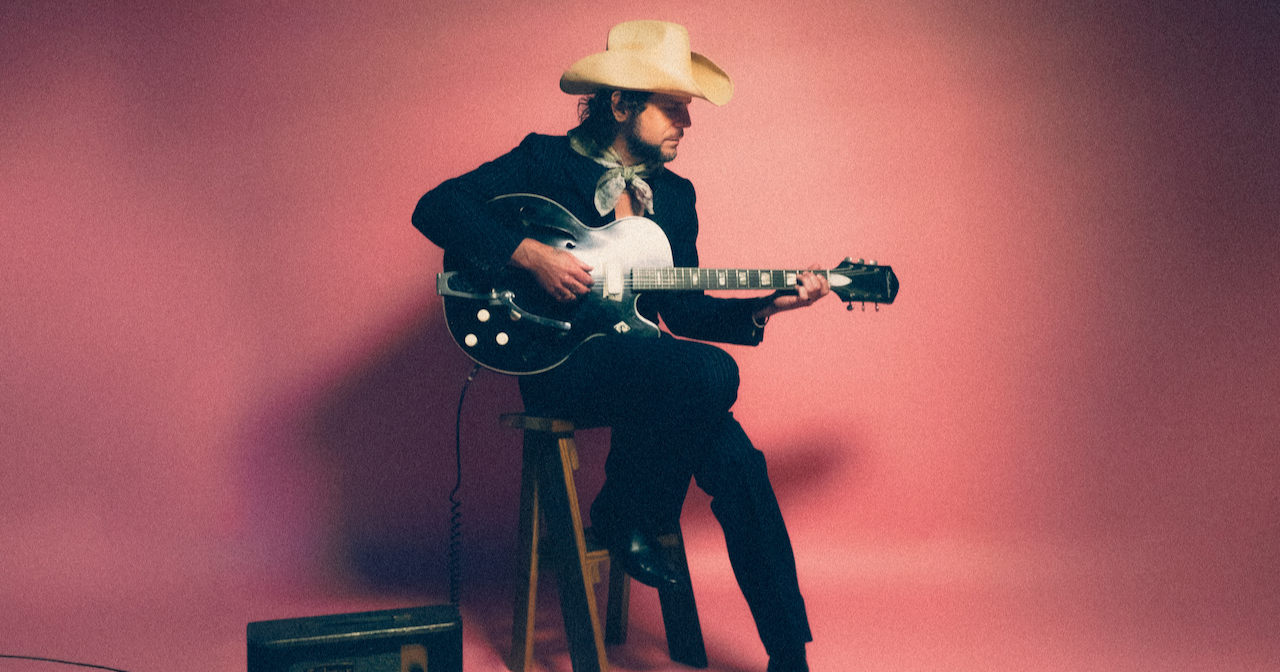
For more than 20 years, Langhorne Slim’s folk-leaning songs and rebellious nature have captivated crowds across the world. That trend continues on his ninth studio album, The Dreamin’ Kind, which takes a page out of Dolly Parton’s book and pivots toward rock ‘n’ roll in what’s arguably his most eye-opening collection of songs to date.
Out January 16 on Dualtone, the album is something Slim had long desired to make, finally coming to fruition after he had the opportunity to open for Greta Van Fleet at a show in Connecticut in 2021. The moment came mere months after having dropped what would be his debut on the Billboard Hot 200, Strawberry Mansion. But according to Greta’s bassist Sam F. Kiszka – who produced The Dreamin’ Kind – that wasn’t the band’s introduction to Slim. They’d been fans of his long before.
“I remember hearing Lost at Last, Volume 1 for the first time and it absolutely resonated with me,” Kiszka said in a press release. “[Slim] has the conviction of a hundred singers. He puts his entire body and soul into it. I listen to ‘The Way We Move’ and I think, ‘That’s a rock ‘n’ roll song, right there.’ Rock ‘n’ roll isn’t a sound, necessarily. It’s an energy, and he’s got it.”
Although the production takes on a strong Greta Van Fleet flavor on songs like “Haunted Man” and “Loyalty,” The Dreamin’ Kind also mixes in Slim’s folk-fueled identity as well, painting a sonic canvas that shows both where he’s come from and where he’s headed. Others, like “Strange Companion” and “Rickety Ol’ Bridge,” bring stylings together, with fuzzed out guitar licks and backbeats that portray a more folk-oriented stomp and clap mentality.
Ahead of the holiday season and a weekend run of shows opening for comedian Jordan Klepper (more on that below), Slim spoke with BGS about what inspired his foray into rock ‘n’ roll, how a letter inspired one of its songs, and how working with Greta Van Fleet’s Sam Kiszka and Daniel Wagner pushed him creatively.
What was your motivation for making the pivot to rock ‘n’ roll this deep into your career?
Langhorne Slim: It’s been a dream of mine for a long time. Some of the songs are definitely more of a departure from what I’ve previously done than others, but I don’t think that’ll come as a surprise to people who’ve been following me for a while now. Our live performances have always taken a page out of punk rock and rock ‘n’ roll, in addition to soul and folk music – genres be damned. Regardless of what it sounds like, most people just want to be moved by music.
When I first got started, I was playing a certain way, then a record deal followed and before you know it you’re forming an identity. But I eventually reached a point where I still loved my folky songs, but if I met new people or a fresh opportunity came about that would push me creatively, then let’s go for it! As I’ve grown older and built a family I think more and more about the identity I’ve built and what else is there when I start peeling back those layers – what else do I want to express? How might I want to use my voice or the instrument I play differently?
Rock ‘n’ roll was the natural progression of that, so when I became friends with Sam and Daniel from Greta Van Fleet, I think they saw that in me. From then on there was no pressure, we were just in it to have fun.
So this is something you’ve been wanting for a while, you just needed to find the right people to work with for everything to fall into place?
I’d been talking to a couple friends and people I admire about how when I made [2005’s When The Sun’s Gone Down] I wanted something at the crossroads of bluegrass and punk rock, like the Violent Femmes. I didn’t necessarily want to copy their sound, I just felt a kindred thing with their influences. So with [The Dreamin’ Kind], in my mind I was going for a garage rock meets gospel thing. I wouldn’t say that’s what the record actually became, but how I collaborated with Sam and everyone else for this record was so different from how I’ve worked in the past.
I liken it to a pitcher in baseball. As artists we sometimes focus too much on our strengths or “strong arm,” but I’ve only got so much time to live and I’m hungry to create. Before music my first thought ever about creating something had to do with building robots. With that in mind, the possibilities are endless when you think about all the people you could potentially collaborate with and the different creative bursts that could come from each.
That reminds me of something Ketch Secor told me in an interview a few months ago – “I am a container of multitudes.” It sounds like you’re the same way?
Ketch has been doing Old Crow for even longer than I’ve done my thing. I’m not somebody that says I don’t care if it lands, because I do, but most importantly I want my longtime supporters who’ve been so good to me to connect with this record. I’m not the first songwriter or creative person to say you can’t do the same stuff over and over, and I won’t be the last. At the end of the day, the power of music comes from the wonder and awe it provides us, so if what I’m doing doesn’t give me that same feeling then I’m not doing my job for the people, the energy and whatever else provides groove, melody and beauty in the form of music.
Another way you’ve pushed yourself outside your comfort zone lately has been on your gigs opening up shows for comedian Jordan Klepper. How did that connection come about and what have you learned from playing to a comedy show crowd?
I first met Jordan because my best friend Joel is a cameraman for The Daily Show. Jordan went on to officiate his wedding and through that Joel turned him onto my music. From there, we hit it off at the wedding and about a year later I got an email from Jordan about coming out and opening a few shows for him, which I was thrilled to do because, like you said, it’s out of my comfort zone. I knew there’d be a lot of people in the crowd not familiar with who I was.
That mix of excitement and fear reminds me of early in my career living in New York City, when I became friends with Eugene Mirman, a well-known comedian best known right now for his work as Gene Belcher on Bob’s Burgers. He had a comedy show on the Lower East Side that he’d invite me to be a regular musical guest on, so I did have experience playing comedy shows where nobody knew me. [Laughs] At one point Eugene invited me to play on a comedy tour that included him and a few other comedians who went on to make it big, like David Cross. They’d do their sets then I’d come out with my little hat and funny outfit and the entire crowd would start laughing thinking they were in for some musical comedy, but I was just playing my regular songs.
It was a tough place to break through at, but it taught me a lot. Jordan’s crowd is a little different though, because there’s people in the audience who actually know who I am, which is nice. I also try to cater the songs I play to his show to make them more topically relevant. It seems to be resonating so far – the reception I’ve received at the shows has been wonderful and beyond expectation.
It’s such a treat being on tour with a comedian, because when I’m on the road with another band I’ve found that I can’t watch them without analyzing and thinking how I could pull off what they’re doing. It’s hard to not put oneself in it, whereas watching a comedian it’s a lot easier to sit back, because it’s the same monologue and jokes. It’s how they’ve mastered the art of timing to add emphasis and help the joke land. It’s really fun to observe because I’ll just be sitting there laughing rather than wondering how I’d tell that same joke since it’s not the art form I do.
Sounds like a dream come true, which is also the name of one of the album’s songs. Is that a tune about manifesting the vision you have for your future, or are you unpacking something entirely different there?
You’re spot on. I wrote a letter to somebody, because my partner and I were thinking of moving out of the city and getting this country property, but it was way more than we could afford – I didn’t even know if they were gonna let our raggedy butts in there to take a look at it! So I wrote a letter to this woman and at the end I wrote, “It might be a long shot, but without a dream you can’t have a dream come true,” which also pulls a bit from Hammerstein’s “Happy Talk” (“If you don’t have a dream/ How you gonna have a dream come true?”).
On more general terms, it’s a song about casting aside your doubters and anything else in life that tells us to conform or dims the fire burning within us.
Like you said, you might not have gotten the house, but at least you got the song!
I look back now and there’s songs where I may not have gotten the girl (or in this case, house), but I did get the song, and that’s lasted longer than any relationship probably would. [Laughs]
Songs are like little miracles in that way.
While “Dream Come True” is all about looking ahead, you seem to be looking back on “Stealing Time” – which I’ve interpreted as a song about cherishing your moments with others and not taking them for granted. Is that the case?
There’s some reminiscing I’m doing on that one, too. Being a fairly new dad and sober man, I’ve noticed that being present and giving myself to and receiving somebody else’s time or energy is so rewarding. It’s so easy nowadays to run from our emotions and thoughts, which I used to do a lot with alcohol and drugs and all of us do now with our phones. There’s so many different ways that manifests and plays in my mind.
That song is also a phenomenon of love and infatuation and how one’s heart can be so on fire for somebody that closes theirs off to you. It’s like [Gotye’s] song “Somebody That I Used To Know” in that way.
Another song I wanted to ask about is “Haunted Man,” which to me comes off as the most Greta Van Fleet-sounding track on the album. What was the process for bringing it to life?
That song is the most collaborative that I did with those boys. It was also the tune that I fought Sam on the most, as far as not thinking it’d be a good fit [for the album]. Even after recording it, I didn’t think we’d include it as one of the dozen tracks, but Sam insisted I sit on it. Once all the songs were done I remember walking around my neighborhood pushing my son Silver in his stroller, listening to the songs, and making a mixtape of what stuff went well together. It was then when my perspective on the song changed and we decided to include it. Since then, the song has grown to become one of the most-liked tracks among our friends, which made me both happy and sad at first due to my ego. It’s easily the most different song on the record from what anybody’s heard me do before.
You just mentioned not thinking “Haunted Man” would make the cut onto the album. Does that mean you have extra material recorded we might hear more of sometime down the road?
For the basic tracks we spent nearly three weeks in the studio, with the first half with the Greta boys – me, Sam, Daniel, my dear friend Casey McAllister [who plays keys in my band], and multi-instrumentalist Cameron Neal [who mainly played electric guitar]. That portion was supposed to be the “rock” record, then for the second half I brought in my longtime band, The Law, to record a bunch of different stuff.
The plan was for them to be two separate records, but we wound up mix-matching a bit. Because of that, we have a bunch of leftover stuff we captured that I hope will be on my next record.
What has the experience of bringing this rock ‘n’ roll record to life taught you about yourself?
Do what scares you. See what else is there and burning inside you, don’t be afraid to take chances and rock out. I just want to keep making music that moves me and inspires other people. I never want to feel like I’m stagnant or compromising parts of myself.
I want to kiss the spirits in the way I feel they’ve kissed me so that I can give my all to the music.
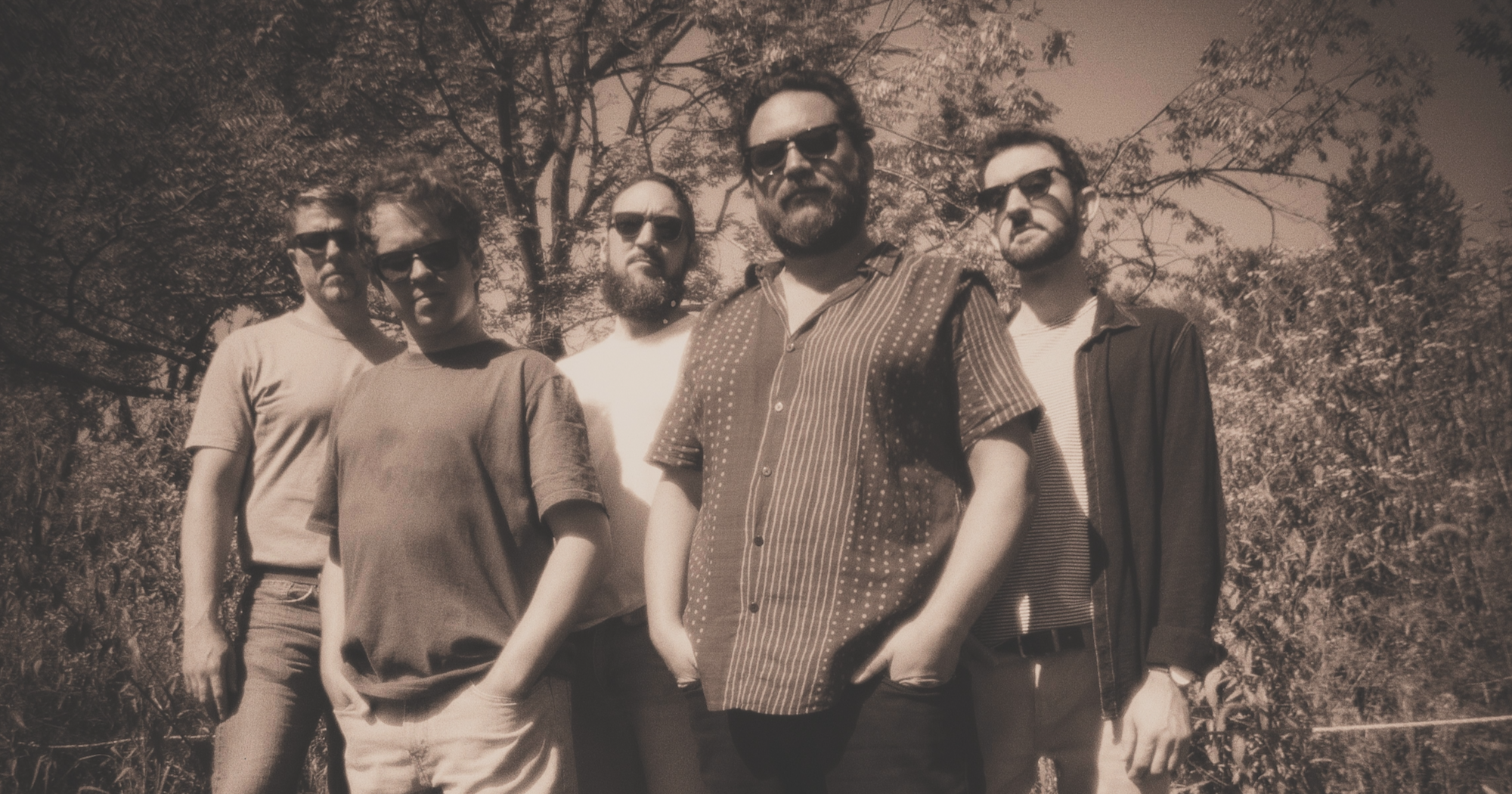
Artist:The Naked Sun Hometown: Philadelphia, Pennsylvania Latest Album:Mirror in the Hallway (set for release January 30, 2026) Personal nicknames (or rejected band names): “Fully Clothed Moon”; “Naked! Son.”; “The Naked Sons”
(Editor’s Note: Responses provided by The Naked Sun guitarist and singer-songwriter Drew Harris.)
What was the first moment that you knew you wanted to be a musician?
I have a very vivid memory from when I was maybe four years old. My mom wasn’t home from work yet, so I was being watched at someone’s house – some kid I barely knew. I was only there once in my life, a strange one-off moment that almost feels like fate. They had one of those old Casio-style keyboards with preset drum loops and out of pure boredom I started messing with it.
To this day, I can remember the feeling of a sort of flow state and being sucked into the music I was making. It’s really that exact feeling that keeps me coming back to the profound play that is making music. Something clicked. When my mom came to pick me up, I didn’t want to let the keyboard go. Something in her must’ve recognized that spark, because not long after we were driving around to strangers’ houses looking for a used piano that we could afford. I started lessons soon after and kept at them for the next six or seven years.
Which elements of nature do you spend the most time with and how do they impact your work?
We all spend a lot of time in nature. Tom, Dylan, and I are pretty avid cyclists. We have some incredible trails in and around Philadelphia that we spend a lot of time riding. Tim’s a trail runner and very recently took up bow hunting. James loves hiking the Wissahickon.
For me, the place that shapes my writing the most is the Delaware Bay. I walk those beaches for hours – staring at the tide, the sky, the sand shifting beneath me. I started doing it out of boredom, stuck at the shore when everyone else was gone, needing some way to fill the time. (Turns out: boredom = creativity.)
One night I walked all the way toward the Cape May–Lewes Ferry and watched a storm crawl across the bay – lightning slowly getting closer. It was beautiful and terrifying and overwhelming. I think that was the first moment I felt truly connected to nature, and something inside me clicked open. I’ve been returning to that shoreline ever since.
I think the ever-changing shoreline informs my music in a deep way. The beach is never the same twice – shaped daily by tides, wind, and waves, scattered with shells, rocks, horseshoe crabs, footprints, and whatever people leave behind. Every sunset lands at a slightly different angle, filtered through a new cloud formation or dropping into a clear sky without interruption.
Change.
Like the shore, our lives are constantly shifting – subtle in some seasons, dramatic in others. Music is how I process that movement. It lets me catalog who I was and who I’m becoming. When change feels heavy or uncertain, music is the valve that releases that pressure. Because the music will always be there, I know I can change.
How often do you hide behind a character in a song or use “you” when it’s actually “me”?
This is a really interesting question, because I think that, at least in my music, every song is about me in some way, shape, or form. Even when I’m writing from someone else’s perspective, when I pull the thread it always comes back to me. Even if it’s years and years after I’ve written a song I’ll look again with a fresh set of eyes and be like, “I thought that was about my mother, but damn, that was really about me.”
I remember writing in a journal years ago that all of my songs are really just letters to myself. And how could they not be? Even when I think I’m writing about someone else, I usually circle back later and realize it was me the whole time. It’s not that I’m hiding behind “you” – it’s that sometimes I don’t yet recognize the reflection I’m writing from.
But I’m increasingly drawn to exploring the true “you” in a song. The songwriters I admire most are shapeshifters – they step into other lives completely, almost like actors. They embody characters, perspectives, flaws, desires. They can disappear into someone else and still reveal something human and true.
That kind of writing fascinates me. It’s difficult – maybe the hardest thing to do, honestly – but I feel like it’s where I’m headed next. If writing has been a mirror, maybe now it becomes a window too.
What is a genre, album, artist, musician, or song that you adore that would surprise people?
Most people don’t expect this, but my all-time favorite band is the Canadian punk group Propagandhi. I first heard them at 14 or 15, walking into a head shop on the Wildwood boardwalk. It was angrier, smarter, sharper than anything I’d heard – political, passionate, direct. Perfect for a rebellious Catholic school kid
I’ve been listening to Propagandhi since their very first record. I’ve even been up to Canada to see them play and met Chris, Todd, and Jord. This style of music is so different from the music I make. I tried, believe me, I tried to write fast punk-metal riffs, I just wasn’t very good at it. (Propagandhi shreds.) I found Bob Dylan at the right age, taught myself how to play guitar and harmonica at the same time, and adopted a more folky sound.
But I think Propagandhi and folk share a similar ethos: anti-corporate, pro-people. I like to think that I’ve combined the two genres at times in my own abstract and artistic way.
Since food and music go so well together, what is your dream pairing of a meal and a musician?
I love to cook and have spent time working in kitchens as a line chef, and I even taught cooking for several years, so cooking, food, and of course music are always paired together. I have a little tradition when I go down the shore in the summer; the first summer meal that I prepare, which is almost always shrimp, scallops, and Jersey corn, I turn on “Mississippi” by Bob Dylan off of The Bootleg Series, Vol. 8: Tell Tale Signs. I just absolutely love this version of this song and it transports me back to making meals at my Mom Mom’s house down the shore.
Sorry, Bob, but since this is a dream meal, my dream meal is with Bob’s friend, Tom. My dream meal would be picking blue crabs, sipping beers (and probably a couple joints), listening to music, and chatting with Tom Petty. Tom’s a southern guy, so I think he’d appreciate some blue crab, corn, shrimp, potatoes, and of course a joint or two.
We’d sit outside down at the Jersey Shore and I’d let Tom control the aux and just shoot the shit while we imbibed. A crab feast is always really long, too, so I’d get some extra time to spend with my hero. Not sure I’d ask Tom any specific questions, I’d just want to listen to his tunes and listen to him tell me why he chose them, what he liked about them, what they remind him of, etc., while we sweat out light beer and fill up on blue crab.
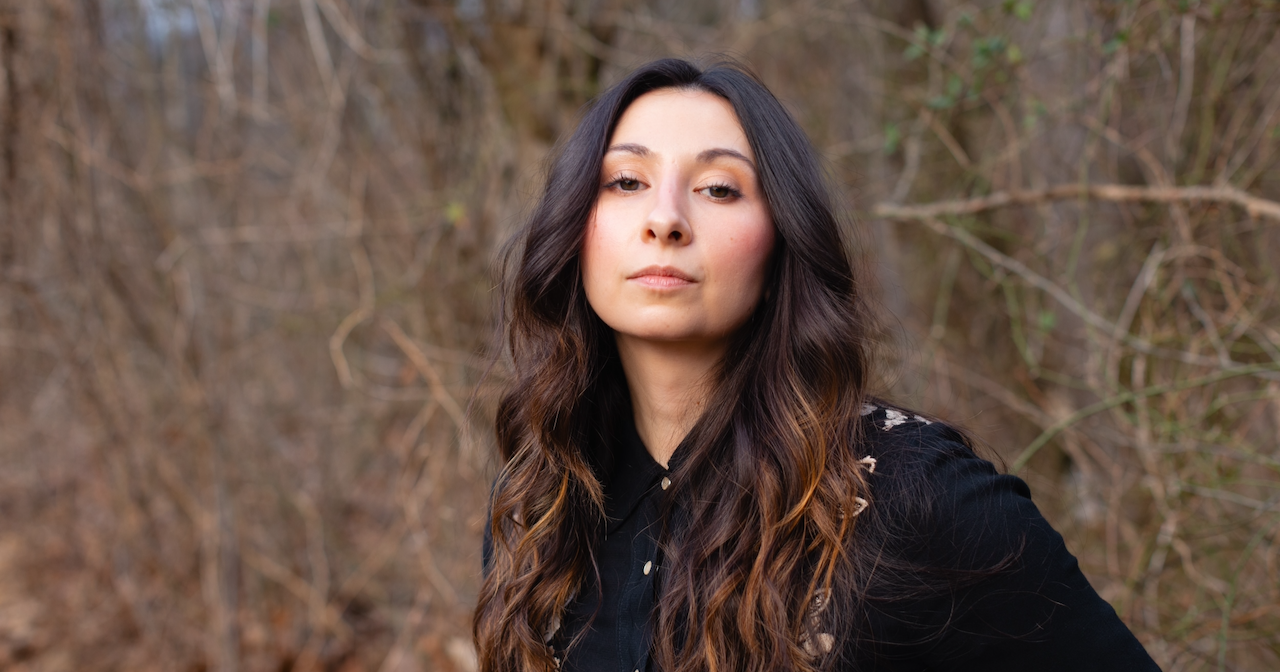
Artist:Jess Jocoy Hometown: Bonney Lake, Washington (South Seattle region) Latest Album:Cul-de-Sac Kid (released October 24, 2025)
What’s your favorite memory from being on stage?
There have been so many cool moments on stage, but the first one that comes to mind would probably have to be the first time I played a Sunday Spotlight show at the Bluebird Cafe here in Nashville. My mom has a picture hanging on the wall of me, almost in this euphoric state, and I think that encapsulates the night perfectly. It was my first time playing the Bluebird and it just so happened to be my birthday. The Sunday Spotlight shows are full band, so I had the privilege of sharing the moment with some dear buddies and my family and friends. It was just really, really special.
What has been the best advice you’ve received in your career so far?
Honestly, the best advice I’ve received hasn’t come from the industry, but rather my family. There are a lot of “best practices” and “you need to do this in order to achieve that” kind of advice that goes around and all of that can get overwhelming. In a time when I was really carrying the weight of anxiety from this (especially in my younger years), it was offered to me that I should “filter in what I need and filter out what doesn’t serve me.” It took a little bit for that notion to sink in, but once it did, I started to enjoy music more in the same way I did before I started chasing it as a career.
Genre is dead (long live genre!), but how would you describe the genres and styles your music inhabits?
I think my music is a collection of what moves me: I have always loved country music – the twang, the storytelling, the fearlessness to be real. And sometimes just the simplicity. I’m also influenced by music that is ambient and ethereal and almost cinematic, often found in post-rock instrumentals or even movie scores. I’ve been leaning into this idea of “cul-de-sac country,” because my music hasn’t really ventured too far into twangy (just yet! but there’s always room to keep exploring), but I so appreciate the depth of a good story in a song and a “swelly” instrumental, so my goal is to find a crossroads somewhere in there.
What is a genre, album, artist, musician, or song that you adore that would surprise people?
I love Irish/Celtic music (instrumental, ballads, jigs/reels) — all of it. One song I love that might surprise people is “The Parting Glass” (ironically enough, though, my favorite version I’ve heard thus far is Abigail Washburn’s). I just love everything about that genre and style of music. It can be fun and dance-y or lilting and heartbreaking. It’s great!
If you were a color, what shade would you be – and why?
I blame my roots in the Pacific Northwest for my love of a deep green! It’s earthy and moody and can go with dang near everything!
In the late summer of 2022, Courtney Hartman realized that the songs she had written for a new album were not the songs she needed to release. “I had found out I was pregnant a few months earlier, [and already] had a batch of material I was working on for a new record. I felt this quiet urging to set all of that aside and give my attention to what was happening in our life and in my body,” she says.
She discarded everything and began writing her third album, With You, a personal journey through motherhood set to music.
“What was happening in our life” refers to a tumultuous string of events that saw Hartman and her husband, John, through the best and worst of times. Best because the couple were expecting their first child, rebuilding their house in Eau Claire, Wisconsin, and Hartman was on tour; worst because her husband fell off a ladder, could not work for months, lost two jobs, she was dropped by her booking agent, and they totaled their car.
The cumulative effect left the couple in need emotionally, physically, and financially. They soon found themselves uplifted by their community – their immediate one and her music community at large. The experience left Hartman deeply grateful and dedicated to giving back even more than she received.
In September of that year, Hartman began writing “in earnest” the songs that became With You. She and her husband welcomed their daughter in February 2023 – more best of times followed by worst of times as Hartman struggled with postpartum depression.
“At the end of [2023] I had all this material and realized I wanted to invite in other voices and stories and perspectives, specifically those of other mothers,” she says.
Once again, she drew on her community, calling on a fellowship of songwriter mothers – Sarah Siskind, Dawn Landes, Ana Egge, Tift Merritt, Kristin Andreassen, and Emily Frantz Marlin of Watchhouse – to help take her deeply personal new songs to an even higher level.
“I spent another few months, December [2023] to February [2024], writing mostly over Zoom, finishing the material with those other writers,” she says. With You was recorded in June and July 2024, at The Hive studio in Eau Claire, with Hartman producing and Brian Joseph as co-producer and engineer.
As one might expect from Hartman, there are plenty of guitars on the album – her Lawrence Smart Archtop, Bourgeois Parlor, PreWar (modeled after a Gibson J-45), Bischoff Dreadnought, Martin 00, and a Telecaster – but if you’re looking for the lightning flatpicking work that makes her a bluegrass force to reckon with, you’ll be best served on YouTube. With You tells a story that calls for understated guitars as a palette for its songs.
“Things weren’t all bright and shiny in that season,” she says, “but the impetus to write and pay attention helped me pay attention to some of those lighter moments. Not all the songs on With You are about everything being light, because that’s just not how it is. But there was this extra attention to some of those details that do help buoy your spirit when things are a little more challenging.”
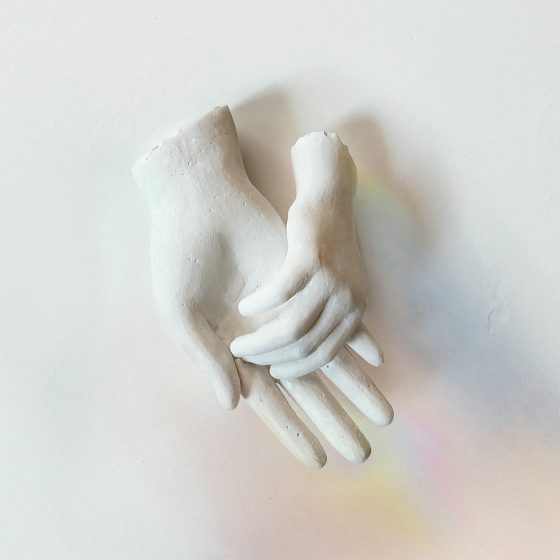
Courtney Hartman’s ‘With You’ album cover art, created by Claire Lindwall.
Completing the journey is With You’s striking cover art. The work of Hartman’s close friend Claire Lindwall captures the music’s delicate intimacy. “Claire is primarily a watercolor artist and illustrator,” says Hartman. “A special part of creating an album, for me, is giving the music to someone who then translates it into a visual piece of art. Every time, it’s surprising and expansive in a new way.”
Lindwall cast her own hand and that of her daughter’s, and positioned the casts so that one holds the other. “We experimented with drawings around it, then having just a splash of watercolor behind the piece,” says Hartman. “That’s all it needed.”
With this album now making its full debut, how do you feel about sharing so much vulnerability?
Courtney Hartman: The processing has happened in phases. I think it started just by saying yes to writing the material. There was an accepting of, “I’m writing about this thing that feels more vulnerable and more naked than anything I’ve written about before.” Bringing those songs to other writers, to collaborators, there was another level of vulnerability there.
A year ago I brought all of this material to my greater community and asked for support, because at that point I needed help putting the album out. Now, to give it to the rest of my community and listeners in the world, there’s a level of vulnerability, but I feel mostly excited. It feels like, “We made it.”
You’ve explained in other interviews that you had to use funding meant for the songs that came before these in order to get back on your feet. Needing financial assistance is also a vulnerable place and one that often brings publicly imposed shame and guilt. How did you process it?
You’re bringing up something that my husband and I have been talking about a lot, just with the news cycle and trying to get an understanding of what we can do for folks in our community. And having had small tastes of that in our life, because I know what we’ve experienced is so small compared to what so many people live through and are currently living through.
An important [word] that you touched on is shame – the shame of needing help; of not feeling like you can do it on your own or you can stand on your own two feet; of needing help for basic things like groceries. I think maybe accepting help and accepting care expands our capacity to feel compassion and to be able to then care for others.
In a podcast for Acoustic Guitar, you used the phrase “the intimacy of sound.” Could you talk more about what that means in the songwriting and guitar playing?
What I hear when you reflect that phrase back to me is the sound of the skin of your finger on the guitar string, or the sound of hands against a percussive instrument. When we went into the studio, I told the friends that were with me there on the first day, “Just as a guiding directive, whenever we imagine a sound that we want to create, let’s see if we can find something natural to create it with.”
Everyone took it in their own way, some on their instruments. Sean Carey was heavily involved on the record and he took that more literally in a lot of the percussion work. He found a nest outside when he was wandering around and that became the percussion on a track. Or even just the sound of skin on skin being a sound that we used as well; bringing in and magnifying some of these quieter sounds and allowing that to be a part of the soundscape [was part of the intimacy of sound].
Did you select the guitars around the songs or did some of the songs develop around your guitars?
Sometimes you think you know what a song wants before going into the studio and then you sit behind a mic and you’re like, “This isn’t serving it quite right.” And sometimes that experimentation takes a little longer than you think it will. Or sometimes you sit down with a first instinct and it’s totally right. That’s part of the reason it’s fun to have a good array of instruments in the studio.
Is the guitar as much a part of expressing your feelings as the lyrics?
It is. I think part of that comes from how long it’s been an instrument that feels like a voice to me. Songwriting came around the same time. I was about 12 when I started writing songs. Singing feels like something I still have so much exploration and learning to do.
How did working with other mothers, and their lived experiences, bring understanding to what you were going through?
What I was given [was the] shared experience and the acknowledgement of, “This is really hard. It’s really beautiful, but it’s also really challenging.”
So much of the caregiving that happens [as a mother], especially in that first year … so much of it is invisible. Maybe an aspect of that applies to all sorts of giving care – that it’s invisible other than to the one giving the care and the one receiving the care. When you feel invisible, it can also make you feel isolated and that can really feed into some of the struggles. A lot of folks have postpartum [depression] and societally we’re not set up to honor and support that season very well at all. It’s something I care a lot about, both from experiences with my family, but also as I’ve delved into work as a birth doula.
When you say, “Societally we’re not set up to honor and support that season very well at all,” what do we need to do?
We need to honor and uphold the importance of rest and nutrition and preparation. Parents are prepared for “Here’s what birth might look like,” but after that six-week checkup [traditional care usually ends]. Postpartum extends far longer than that.
A lot of [postpartum] mental health struggles won’t show up until maybe nine months or a year after a child is born. Better supporting [people postpartum] that would be the first thing I can think of. We live pretty isolated lives, as families in our insular homes, and so we’re not set up to receive support very well.
Or ask for it.
Yes, totally, [we need to be] preparing [people] to know that this is a time to accept and receive care. Preparing your heart for that is such a big piece of it, to know that we, as your village and your community, want to care for you in this time.
You’ve spoken openly about postpartum depression. What was that period of time like for you?
Moments of real happiness, but also moments of hitting my head against the wall … when I was struggling. [It was] hard to admit to myself and then to speak that [struggle] out loud to anybody. It wasn’t until afterwards that I could say, “That was hard.”
All depression is misunderstood and will often make people in your circle run away.
Let’s go back to your community, and the community of mothers, and how they lifted you.
I felt so cared for by our community in a way that was deeply humbling and in a way that somehow prepared me to do some of the caregiving that was going to be required of me. I was receiving so much love and support and meals and folks showing up. That kind of care is life-changing. It changes the way we see the world and our community around us.
My daughter was about nine months old or so when I started reaching out to other mothers, asking if they would collaborate on some songwriting. Having some tether creatively helped pull me through that season. It helped weave together the woman I was prior to having a child with the woman I was in that new space. … Sometimes it feels like … you almost can’t remember who you were before.
I was really afraid of [losing parts of myself]. I was afraid I wouldn’t create music again. There’s all these fears, irrational or not, that show up. Creating and being able to have these conversations that normalize what you’re experiencing. Having women who are [a] few years ahead of me be like, “It might be extra-challenging now, but it doesn’t stay that way forever.”
It’s almost 2026 and society still misunderstands and stigmatizes mental health, certainly PPD, and even some aspects of pre- and postpartum healthcare. Why are we uncomfortable talking about things that are so natural and important to discuss? Are we making progress or going backward?
I hope we’re making progress. It was a lot easier for me to ask, “Why don’t we talk about these things?” when I wasn’t part of the “we.” As soon as it was also part of my story to talk about and share, [I had to come] to terms with my own hesitancy. Why do I not want to talk about something as normal as pregnancy and motherhood in my songs? Why do I feel like if I put this music out, it will be discredited and potentially ignored, even though it may speak to so much of the population? …
I still don’t have an answer. Maybe it’s because there’s so many generations of women having to hide those things for fear of losing wages, or jobs, or discrimination, whatever it might be. For everybody’s sake, there’s so much we have to learn from mothers’ voices, and I hope we’re beginning to really listen.
On a podcast, The Other 22 Hours, you reflected on the period after Della Mae and the realization, at the time, that “Music was not a healing thing.” What role does music now play in your healing and mental health?
It has become healing again. Years ago, I was dealing with physical pain in my hands. That was magnified by touring all the time, being on the road so much, and the strain on my body. So I was speaking about it in a physical way. [Music] has become a lot more than just physically healing [for me]. I think this album exemplifies that.
You have worked with so many people. Who is your wish-list artist or artists?
Oh my gosh. The first person that came to mind – and maybe it’s because I’ve been listening to her record all week – I would love to play music in the same room as Brandi Carlile. She gives all of herself and it’s so good.
We had a listening party [for With You] and as I was listening to the album for the first time with a whole group of friends and collaborators, what I hear on it is my friends and heroes, which is such a joy. There are so many folks on this album that I look up to so much and who have been dream collaborators. So, in that way, a lot of it has been a dream list fulfilled.
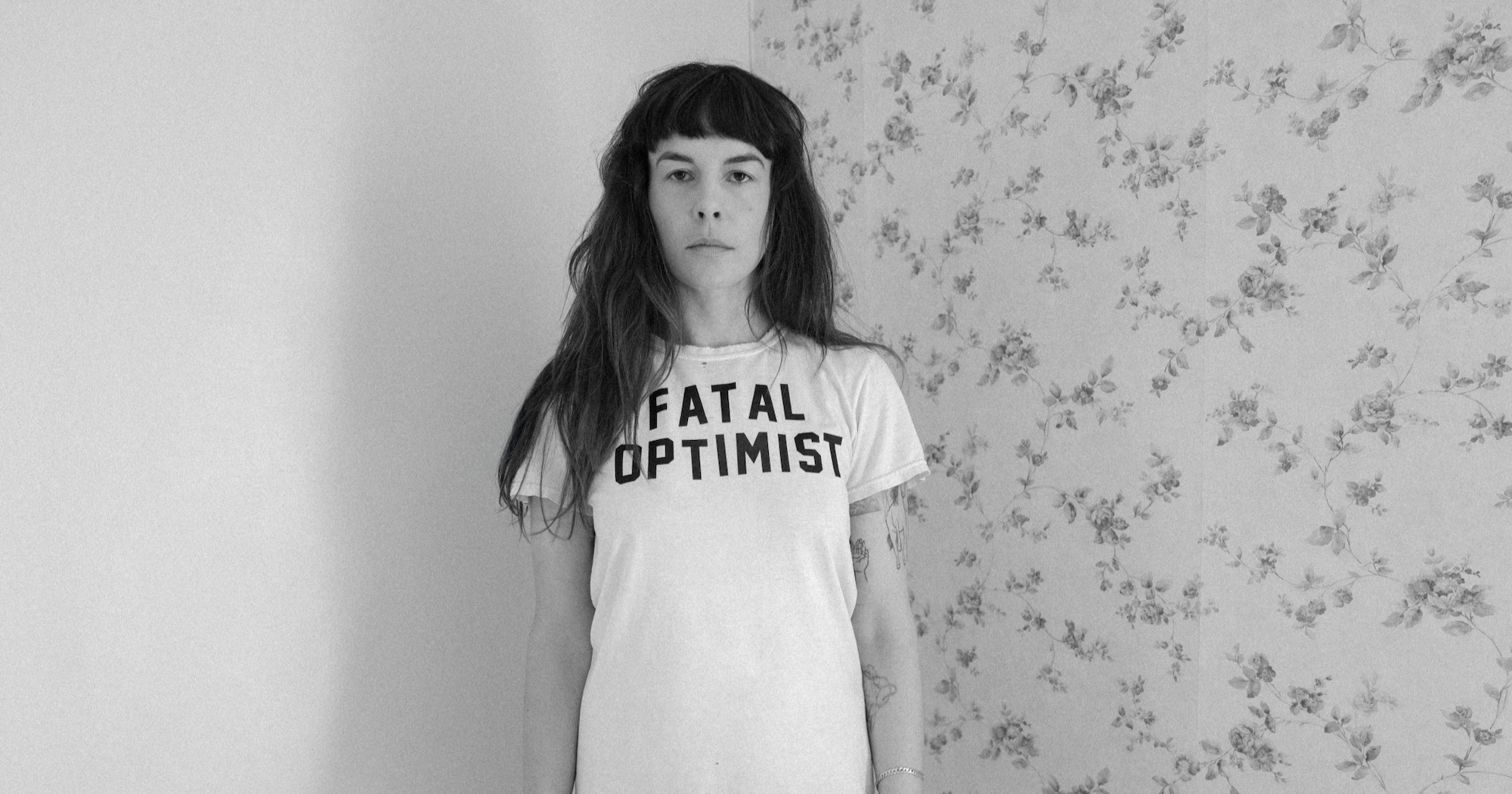
Hitting play on singer-songwriter Madi Diaz’s latest album, Fatal Optimist, one wouldn’t automatically identify her close-to-the-mic, chunky strums and anxious, confident vocals as “metal.” But keep listening and trust.
Fatal Optimist is heavy on numerous elements of metal – fantasy, humor, darkness, anger. For much of its runtime, it feels like the inside of a clenched fist, slowly but surely letting go. With songs that are, this time, centered around her solo voice and acoustic guitar, Diaz turns her liminal songwriting further inward than ever. This is saying a lot for an artist who’s no stranger to personal narrative. While her prior album, 2023’s Weird Faith, brushed up against hopeful optimism, this follow-up proves that earned optimism is perhaps the better version.
After all, Diaz chose to open the disc with the wordplay stunner “Hope Less,” a stiff shot of reality that reorients us to a heart at least as full of darkness as light. If the LP’s vibe is “clenched fist,” its songs play like spokes in a wheel rolling us toward the jubilant title track – a progression Diaz admitted in our recent BGS interview was equal parts intentional and inevitable.
This album starts out very quiet. It feels very close and very intimate, then it slowly opens up. Was that the intentional vibe and arc of the album for you?
Madi Diaz: It definitely ended up being a much more lean-in [kind of] record. The further I got down the road, the more it felt very obvious that was just what the song content needed. It’s kind of heavy stuff, I think. It was a lot of mining of the self, which I did a lot privately. So I felt like I wanted the songs to match that [vibe], in the end.
I was listening to it this morning, thinking about your song “Everything Almost” from the last record. Like, how optimistic and full of hope that song is and then this album starts off with a line like “hope less.” Obviously, when you’re writing about personal events in your own life, it’s easy to see connection in the rearview. But I’m wondering if there’s something more to what feels, to me, like a connection between that song and this project.
That’s funny. I was just talking about this. I do feel like a lot of the songs in the last record … are about following that gut intuition. That gut feeling. So a lot of the songs on Weird Faith are absolutely going like, “I think this is it. I think this is gonna work. I think we’re really gonna get there.”
There was a really funny moment I had recently. I was practicing for this tour and putting [together] the set list. I wrote this song called “This Is How a Woman Leaves” for my friend Maren Morris, her last record that she put out [Dreamsicle, 2025]. I am planning on releasing a version … at some point down the road a little bit. But I was practicing “Everything Almost” and then I wanted to go into “This Is How” because in “Everything Almost,” I’m packing the boxes and moving in. In “This Is How” I’m fucking moving out.
Like, “How it started, how it’s going.”
It’s the “fuck around and find out” journey right there, in a nutshell.
Nice. I was reading that you went to an island when you were writing the album. Can I ask what island you went to? And did you know that’s what you were going to do when you started your trip to that island, planning, like, “I’m gonna get it together.” Or was it just kind of like how life happens?
There were, actually, many islands. Physically, mentally. … I started off coming off of this European tour. We finished this tour in Italy, so I went to an island off the coast of Italy and was there by myself. I did a lot of journaling and walking – so much walking. I’m a big processor by walking and talking, so I would kind of record myself as I was processing things out loud. I really wanted to be in a space where I felt safe to do that. It felt like the safest thing was to just take myself away from everybody, so as to not barrage people with [my feelings].
I started off in Ischia and then I ended up, really wonderfully, being asked to be a part of this [songwriters’] colony in Nantucket. So I did that. I ended up going to Long Island with my dad, to Noyack, and just [did] a lot of journaling there.
Also, [I was] feeling very much like I couldn’t tell whether I was the island or the island was the island. It was just this very unescapable lonerism. Solo mission, you know. Like in a spacesuit, kind of feeling. I just couldn’t shake it, so I just took it with me everywhere I went.
Can you talk a little bit about the process of songwriting? Your songs are so personal, almost uncomfortably so. I wonder if that’s the result of writing in an actual journal on paper and if that’s a different kind of creative experience for you than voice memos on your phone, which so many people do now instead of journaling.
I definitely rely on journaling still. A lot. Sometimes, if I’m in a pinch, I’ll text myself an idea. Or, I have [the] Notes app open. A lot of Fatal Optimist was pulled from about a year’s worth of pretty serious journaling and going back over certain words that kind of stuck out. I love journaling. I think it’s like a life scrapbook, you know? There’s a funny thing that happens. Sometimes I’ll open a journal and I don’t even know what year it’s from, because some of the issues [are] so consistent. … But it’s kind of like a sweet reminder, of survival, I guess.
Totally. Do you remember writing the couplet at the beginning of “Lone Wolf”? “Lamb’s gotta lamb, god planned it/ Wolf’s gotta wolf, goddamn it.” It’s such a perfect little song, but it doesn’t feel trope-y. It feels, really, like a strike of inspiration.
Well, I remember it was dead of winter. I was sitting on my couch with Stephen Wilson Jr. and I was going through my journal. I was talking about what was on my heart that felt so difficult, about reaching this person who chose to be a loner. I mean, he literally said to me, “I’m a loner. I’m a lone wolf kind of guy.” And I [thought,] “You just said that. That’s ridiculous.” Like, have you not seen the Pee-wee Herman movie where he’s like, “I’m a loner, Dottie. A rebel!”
But it was this thing, you know, that I almost didn’t take seriously, because it was such a crazy thing to say. And I should have [believed him], obviously, because here we are. I was talking to Stephen about it and we were laughing about this wolf character and the lines just fell out. In the aftermath of it, it’s funny.
You know, when you push somebody that wants to be alone away, they tend to want to be less alone. They feel very confronted. I mean, I’ve been there. All of a sudden, you’re confronted with your loneliness and wishing that you actually had that connection. So, when I pushed him away initially, he would just kind of show up and stick around. I really wanted him to leave me alone. Damn it. “Goddamn it” definitely came from that.
The lyric on that song is so simple. You don’t go into a lot of poetry, you don’t go into a lot of storytelling. The wolf keeps showing back up, looking good, trying to get back in. Can you talk a little bit about trusting yourself to keep it so simple? Does that come from editing or did it just feel like that’s what the song was?
I try to say it in a way like we were just talking about it sitting in the bar. I’m trying to not be misunderstood. I’m trying not to feel misunderstood even to myself. So I think I try to keep it clear and cutting, and [the way] it comes out. If it’s possible to get even closer to it, I’ll edit, but I don’t really edit a lot.
Oh wow. So it just comes out that way. That’s impressive.
Sometimes it does just come out that way. Not all the time, but sometimes it mostly does.
The other line on this album that I really wanted to unpack is in “Heavy Metal.” The line is, “In some religions, repetition is spiritual.” I wanted to unpack it a little bit, because music is often a place where people will repeat words or phrases, for a whole bunch of reasons.
But that line made me really listen to the words and phrases you were repeating elsewhere on this album: “Whose move is it to move on.” “I always love you.” “God knows how long.” “Ambivalence.” Can you tell me a little bit about how you decide what to repeat? Is it a conscious choice or just part of the process?
I think when I’m repeating something, it’s because it feels different on every lap. I’ll repeat something when the feeling is lingering in a way that– maybe if I say it enough, some magic spell will break and I’ll be released by this thing. Sometimes I feel like the repetition of it comes from a bit of a desperate [place] like, “Just get it out of me.” Maybe if I do this ten times, I’ll never have to do this ever again, which is why the [line,] “In some religions, repetition is spiritual.” …
You’re always going to carry it with you. You can learn how to hold this. I can learn how to learn from it differently every time, you know.
I guess that’s why repeating “ambivalence” is really interesting to me, because it seems like repeating that particular word is a contradiction.
I guess that’s true. Ambivalence means “caught in the middle.” Feeling in so many different directions. For me, ambivalence feels like a very desperate feeling. It almost feels like it should come with a bit of an alarm bell. Like, “Oh God. I’m feeling all of the feelings at the same time and I don’t know which one to choose.”
That makes sense. The other thing in the song “Heavy Metal” – I wanted to ask about your mom. I feel like you have mentioned your parents in other songs on other albums. But this made me wonder about your relationship with your parents. Somehow, I don’t think people talk about their parents much in music. I can’t figure out why. Do you have any thoughts on that?
I think it’s scary. It’s so scary. When I know a song is about me, I definitely tend to listen with a microscope. No one is trying to hurt anyone, but we’re all really trying our best to process love, pain, joy. I don’t know. Our effect on each other. What’s mine, what’s yours. So yeah, it’s not an easy thing to write about. …
I feel like I’ve felt the most loved and I’ve felt the most hurt by both of my parents. I think that that’s pretty normal. Or maybe not? Maybe it’s not normal.
I think it’s pretty universal.
It always kind of ends up that way. The people closest to you hurt you the most, which is why you really have to trust the people closest to you. So that when they do hurt you, you can [heal].
I think “Heavy Metal” felt right to start you talking about my mom, because she’s kind of a badass and kind of a hardass. In all the best ways and all of the hardest ways. There are some things about being tough and resilient that I wouldn’t trade for the world. It helps me survive in so many corners of my life. But also, I’ve had to really undo some of the damage that being tough does. You start to weaponize that toughness against yourself and others in a way that I didn’t even know I was doing for a long time.
Then [again,] you just don’t want to piss them off because you also want to be able to go home for Thanksgiving and stuff.
Right. That’s what makes it such a metal move, you know, to comment on your mother in this way. I’m assuming she’s still alive. Has she heard the song? Does she have any feedback for you?
I haven’t heard [feedback] yet. I really don’t know. But I’m so grateful to my mom for raising me the way that she did and giving me and my brother the lives that she gave us. I feel so lucky that she’s my mom. It’s hard to have a song like this. … But that’s just fucking art, man. It’s so hard, at the end of the day. You know, we can make it as personal as it is or as just-about-me as it is.
The last thing I want to ask about is the song “Fatal Optimist,” which is sort of a sonic departure from the rest of the album even though it’s obviously very on-topic. As a listener, it feels like we just went on this long, arduous, emotional journey, and now we’re suddenly above the tree line and the drums are here and everybody’s in the room. Not to get too nerdy about sequencing and stuff, but was there any world in which that song could have been anywhere else on the album?
It would have been a nice break, wouldn’t it have been? I just couldn’t do that. I couldn’t interrupt the intensity of this record.
I do know that optimism is a soothing balm. When it hits you, it just hits you. There’s no explanation for it. And I knew that, for me, I want a reason to listen to a record again. … This whole record feels like one step after the other. It’s like my attempt at a gift or something [for] going through it. Hopefully, these [songs] can all be like little lights on the path that lead the way to this finish line of fatal optimism. Then we can run it all back again.
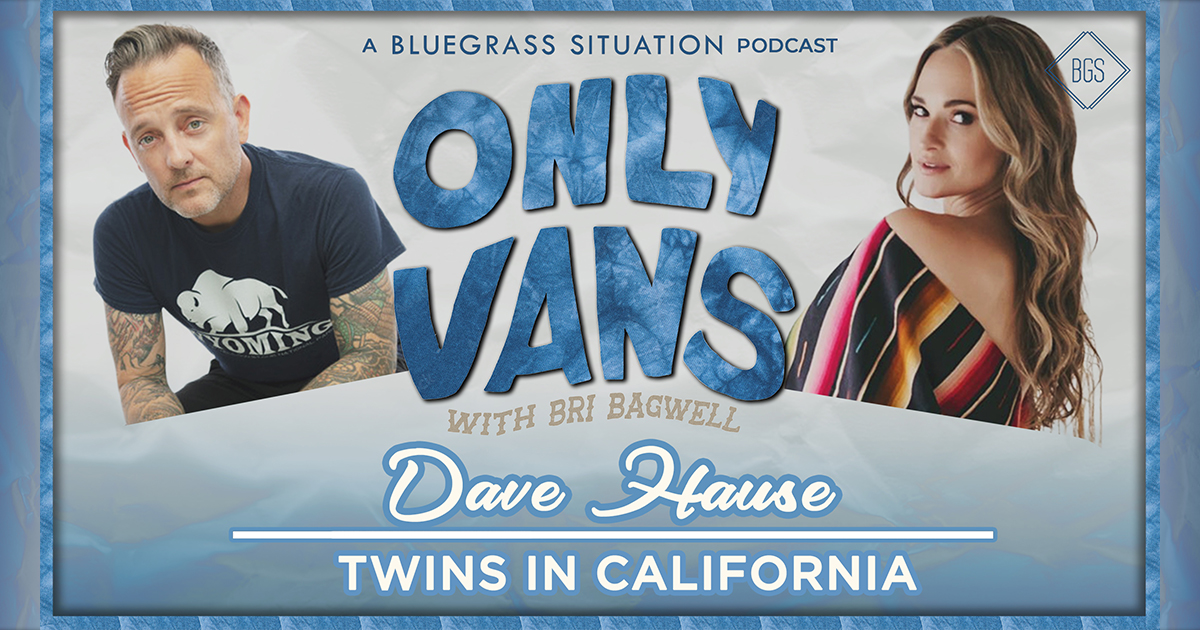
Dave Hause is a rock ‘n’ roller based in California. We share a booking agent that sparked our friendship, so I was very excited to have this conversation put on tape with my new friend, Dave. We talk about prioritizing your time as a musician, twins, touring being a gift, syncs and music supervisors, and his own music festival, Sing Us Home Festival. Dave’s new album …and The Mermaid is out now.
Today on Only Vans, I have my new rock and roll friend, Dave Hause (pronounced like “pause”), thanks to our mutual booking agent who we both love and adore – looking at you Alex Fang at New Frontier. We chatted via Zoom, because Dave was home in California before heading out on his giant multi-country tour to support his new album. It’s called Dave Hause …and The Mermaid.
We don’t talk enough about Will Hoge and how he produced a few of Dave’s records, because time flies while we chat about Dave’s journey and his incredible Sing Us Home Festival that he puts on with his brother, Tim. The former leader of beloved Philly punk rockers The Loved Ones is clearly loving this chapter of his life with his band, The Mermaid. He almost makes me cry with his kind and inspirational words about placing our value in ticket sales. Go listen to the new record! It rocks.
The road less traveled is always the road most traveled by singer-songwriter Eric D. Johnson, better known under the performing name of Fruit Bats. Johnson thrives in a world of creative dichotomy: he loves deadlines as much as he cherishes random twists and turns in his process.
He’s been making music this way for years, since time spent on the Chicago music scene, through his days with Califone, The Shins, and the creation and continuation of Fruit Bats. There’s also Bonny Light Horseman, the indie trio where he partners with renowned musicians and songwriters Josh Kaufman and Anaïs Mitchell. Their most recent album, Keep Me on Your Mind/See You Free, was released last year.
Johnson’s latest Fruit Bats project is Baby Man, a full-length album recorded earlier this year with longtime producer and friend Thom Monahan. The album is a reunion of sorts, after Johnson self-produced 2023’s A River Running To Your Heart.
Baby Man, which is his voice, guitar, piano, and little else, was an unexpected project – another deviation from original blueprint onto the less-traveled road. And one that called for Monahan’s expertise and sonic touch. The outcome, says Johnson, is “intimate and yet big. There wasn’t a lot of fuss over arrangements. Everything you hear came out of my hands or mouth earlier that day or the day before.”
It was early morning on the West Coast when Eric D. Johnson settled in to speak with BGS. “This is my second interview on this,” he noted about Baby Man, “so you’re hearing me work this out in real time in my brain.”
You have detailed this many times: iPhone voice memos, demoing, writing, the studio as a writing tool. You like a deadline, you like mistakes, you like left turns. Was this album true to method?
Eric D. Johnson: Yes. This was the leftiest of all left turns you could possibly take, because the original plan was a very lo-fi hair-metal covers album. [It was] basically a midterm project between album cycles.
During the pandemic I had done this full album cover of Smashing Pumpkins’ Siamese Dream. I had no real expectation for it other than a pandemic exercise/fun sort of bedroom thing and it hit a little bit. Everything I do is ambitious in some way, but this was a “throw something at the wall” idea originally and not a big deal.
I was talking to Thom Monahan, my producer/mentor. We hadn’t worked together in a few albums, although we’re still dear friends. I always talk to him before I make something, which is like, “What microphone do I put on this?” I’m asking all these questions, we ended up chatting for an hour and by the end of the conversation I was like, “I think you should do this record.”
This was all over the course of a very short amount of time in February. I started writing songs and I realized I was starting to do what I do, which is write a diary. Most of my records, songwriter-wise, are what’s happening now.
This record turned into something that was me and Thom working for probably a week and a half. It wasn’t a mandate I laid down, but the whole record was written and recorded in that space, which I almost never do. It’s usually fragments of things I’ve been putting together from notebooks or demos or sketches that are a year or more than a year old. So everything you hear is a week in the life.
When we delivered it to the record label [Merge], again thinking it was a midterm project, they were like, “This is really good. This is a real album.” So the hair-metal covers record will happen someday, but instead you get Baby Man.
How has your working relationship with Thom grown and developed?
If I had a breakthrough album, it’s probably Gold Past Life [2019], which was my last thing with Thom before this. I think that was us at the height of our language with each other in some ways.
I’ve learned everything from him. When we were first starting to work together, on Tripper [2011], I was just learning how to use Pro Tools and how to use the studio as a tool for writing. I would make demos and Thom would come in with a blowtorch on them, because I didn’t really know what I was doing yet.
We made a couple more records, and by the time you hear the stuff on Absolute Loser [2016] and Gold Past Life, if you went back and listened to the original demos, they’re surprisingly not that different. That’s Thom trusting me more, being like, “This sounds pretty good.” Obviously he adds an incredible boost to them. There are songs on that record, too, where Thom completely dismantled them and was like, “This sucks,” because he’s not afraid to tell me he thinks something sucks. Which is good. You need the extra pair of ears. So we kind of have a shared mind when we’re working together.
What have you learned from Thom that applies to your own production work? For example, Sarah Klang’s Beautiful Woman album.
I don’t do tons of it, but when I produce other artists, it comes from that demoing process I learned from Thom, where you go from skeleton of song, to demo, to studio project, to finished product. With Sarah, we worked together as writers first. When you write with me, and this has happened a couple times, we’re making demos and we realize, “We’re making a record now.”
That was what happened with Sarah. It was very similar to what Thom and I do together, which is me building a demo and then giving it to him. But in this case, you build a demo, you keep building it, go into a nice, big studio, and all that. So that was what that was about. It started off as a writing session and it snowballed into a record.
You’re taking Baby Man on the road. Alone. Could you strip it down any more than that?
It’s terrifying. I have no idea what to expect. Fruit Bats concerts have become big, rollicking rock shows. The audiences have grown and people have a good time. I think of it as a very intimate experience, but as much as we’re in the folk-rock realm, they’re big rock shows.
I’m nervous about this. I’ve obviously played solo shows, and I think I know how to do it, but there is a certain contract you have to have with the audience for that. You can’t just close your eyes and push through it. You have an extra responsibility to connect.
I’m always concerned with that, and not in a bad way. But if I’m playing to 1800 people, in my mind I still want to make eye contact with every single one of them, even though I know that’s not possible. So with the solo show, where it’s a little more intimate, you probably are going to make eye contact with however many people are there. It’s going to be very exposing and I don’t know what to expect.
You’ve said before that Fruit Bats is half your life and each album is like a chapter, a piece of an autobiography. Which chapter is this?
This chapter is … I am hesitant to say midlife, because I don’t know. My cliché answer is, “I’ve gotten better at making myself understood, but I care less about ma king myself understood.” When you’re a younger writer, you’re like, “You don’t get this!” Now I’m like, “You’ll get it, or if you don’t, that’s cool.”
I think I’m writing really well now. The very early Fruit Bats records are enigmatic because I didn’t know how to write yet. I came from indie rock. I came from Pavement. I loved Stephen Malkmus, and he wasn’t writing about feelings. And I had played in Califone, and those are impressionistic lyrics, very visual, so I was doing that.
When I accidentally wrote a love song with “When U Love Somebody” [Mouthfuls], in 2003, it kind of hit. I was never emo. Even though I’m from the emo generation and from Illinois, where all the emo dudes came from, I wasn’t doing emo. Maybe this is my emo period, I guess you could say. With Baby Man, there is that kind of feel. I’m writing some pretty direct stuff, but I still have my impressionistic side that gets smeared in.
Where does Bonny Light Horseman fit into that?
My work with them is not unlike my work with Thom, which is to say, it’s been an education. Josh Kaufman, as a producer, has been influential on my production and the way I approach albums, too, because he’s totally different from Thom.
Of course Anaïs, as a writer, has had a massive effect on me because she’s meticulous. She makes you be like, “What did you mean by this line?” So I’ve learned writing from her, and production and writing from Josh because he writes as well. Like with everything, you take things from it as you move along. I’m definitely “the guy in a band” in that band, the professional guy in a band.
On “Creature From The Wild,” you address pet loss and grief, which is too often met with “Just get another one,” as if the can opener stopped working, so just buy a replacement. Tell us about Pinto and the song.
Pinto was my first dog and, obviously, once you get a dog, the joys, the familiarity of it, and the relationship is really special. And Pinto was a unique dog. He was sort of a person, sort of a cat, but also a dog.
You raise pets and it’s such a foolish endeavor for us; it’s such a horrible thing that we do to ourselves, because we raise them like our children, but they have a lifespan of 15 years and so you have to understand that. You’re right – some people are like, “Get another one,” but I do think a lot of people get it, if they get it.
That was a song I wrote completely while on a run, into a voice memo, at about 10 a.m. The recording you hear is at 1 p.m., three hours later. The notion that they save you, the “for a while” part, is that these love relationships are destined to be fleeting.
I also wanted to write directly about him. He was a Mexican street dog, so I wanted to write a hero story and think of him as a little heroic hobo and it was a little bit of a hero’s journey for him. I was just trying to write what I know. It’s a love song. Grief really is love. My publicist Colette and I had a Zoom call over it and we both cried.
A portion of sales from the track and pre-orders are going to the Baja Street Dogs rescue.
Yeah. Pinto was a Baja street dog, not from that rescue, but there’s tons down there. This guy, this rescue, is like a shepherd. He has a flock of dogs. He rescues so many; the breadth of his work is really impressive. It’s his life’s work, which is fascinating to see somebody do something like that.
We have a lot of big problems in the world right now, which I totally get, and there’s probably bigger fish to fry in some ways than rescuing dogs. But there’s a certain eye-level universality to loving a dog, for me. They help us. There’s always the cliché of “We don’t deserve dogs.” And I’m like, “Fuck no, we don’t.”
You have spoken about music and mental health in the past. You’ve said that while you find your music riddled with anxiety, people say they find it comforting.
In the press materials, quoting, “Again and again, Baby Man sees Johnson ask a central question: Is any of this worth it? The album is the answer, a resounding ‘yes.’” But some of the lyrics … in “Let You People Down, ” it’s “days that I’ve wished that I cease to exist.”
I can say, with all honesty, that’s not suicidal ideation I’m writing about necessarily, even though it sounds like it might be butting up right against that and I’m trying to speak to it. If someone wanted to take that as that, I would allow it, but that’s not… my other publicist, Jim, really loved the record, but his first question was, “Are you okay?”
I’ve lost friends who ended their lives – Neal Casal and Richard Swift, who died from alcohol. In many ways it was a slow suicide, when you drink yourself to death in that way. So it’s some big, grownup shit, but that specific line isn’t about that per se. It’s “This world is hard.” It’s more like, “I wish I’d never been born,” but that’s not a direct nod to ending one’s life, either. It’s about the burden of living, which, like I said, certainly could butt up against something like that. I’ll let people take what they want from it. It’s a song about wanting to love and be loved.
Then there’s “That’s why I’m trying so hard not to die.” [“Moon’s Too Bright”]
Yeah. Again, the line, “I’ve never been good with goodbyes,” and death is the biggest goodbye, so I’m not singing about killing oneself. I’m saying, “Wouldn’t it be sad to leave? Isn’t it sad to leave? Isn’t it sad to say goodbye?”
I’ve always written a little bit about this stuff, but usually there’s a disco beat, which I love. I love the happy/sad nexus, like “A Lingering Love” [Gold Past Life], which has become this kind of pop hit. It’s really sad, but it’s got the “Dancing Queen” beat behind it. It’s the total cliché of “I’m laying myself bare lyrically.” I always have, but I think because of the production, you’re hearing it more.
I’m not afraid to answer you on those [questions], nor am I denying that I’m talking about some pretty heavy stuff in there. People can hear what they want to hear from it, but the central song of the record in some ways is “Baby Man,” which is some sort of Buddhist notion where I wasn’t alive before 1976. I was gone. I was dead before 1976. “Where were you during the Renaissance?” Those types of questions. “Baby Man” is this cyclical kind of Buddhist song – not to get too heady about it.
So my sad stuff always has an undercurrent of hope, and this record there’s a little bit of that in there, too. But the hope is sometimes buoyed by disco beats, and this one doesn’t have that.
Let’s end on a high note with a lightning round on a topic that comes up in many of your interviews: The Beatles. A Beatles song that always makes you feel good.
Ooh, this is real lightning round! I’m circling back on early Beatles, so “Please Please Me.” I probably would’ve said a Paul song from the White Album, if you’d asked me that not long ago, but I’m into older Beatles. Smash Hits has been my jam lately.
Most underrated Beatles album.
Is there an underrated one? Once again, I’ll say probably the early ones, like Help, but I don’t know if there’s an underrated one, because people who don’t like The Beatles will say they’re overrated, so you can’t say there’s an underrated one, but probably the early ones. Let’s say Help.
Beatles album you most would have liked to be a fly on the wall in the studio while they recorded it.
I probably would’ve said Let It Be, but then we got to be with that movie, which was one of the most astounding pieces of documentary filmmaking I’ve ever seen in my life. I couldn’t believe it. It was like finding the Dead Sea Scrolls. So I’m going to say White Album, because that’s the one that sounds the most like four solo records and I know it was a really fraught process, too. For a long time, in high school and stuff, that was my most influential Beatles record, so I’m going to say White Album.
The throughline from bluegrass to The Beatles.
Oh, that’s easy! A lot of people don’t realize how young bluegrass is of a genre, but the throughline from early American folk and country music to early rock and roll to The Beatles seems pretty simple to me – bluegrass obviously being its own little split-off in the 1950s… not to get all ethnomusicology on it!
Dar Williams toured a spice farm in Belize amid pristine jungles and primordial Mayan ruins. At a bumpy junction, the driver told the passengers that there were three possible options: steering east, veering west, or sticking to the middle road, which he called the Hummingbird Highway. The instant wholly seized Williams’ attention. Something about the trail choices resonated, especially the enticing description of the middle one, striking her as a vivid metaphor of human life.
Williams, one of folk music’s most cherished gifts, titled her newest LP Hummingbird Highway (her 11th album). It’s an homage to the interdependence of boundless getaway and eternal return and another impressive offering from someone whose heart first journeyed to music long ago and whose emotional vigilance and poetic vigor seems to only intensify with age.
Indeed, the more Williams thought about the variety of roads, the more similarities she hit upon between herself and the hummingbird. “Hummingbirds have these fantastic migrations and hummingbirds need constant fueling,” said Williams.
Shortly after her Belize trip, Williams met a woman who had a matching hummingbird tattoo with her daughter, which the woman described as symbolic of distance and closeness, departure and arrival, the desire to fly in each and every direction with an understanding that the lucky ones can always ground again at home. Williams treasured the richness of all of this imagery. Once again, she contemplated the hummingbird, finding scores of analogies to the human experience and extracting her own correlations.
“Curiosity, love, longing, we’ve got all of these ways of getting around,” she said. “And it’s not always going forward. Like an artist, the hummingbird goes upside down and goes inside out… Flexibility, creativity, fastness, travel – they all make for a complicated person and parent. Hummingbird Highway was written from the perspective of a child, one with a peripatetic, depressed – perhaps bipolar – frenetic, creative, generous, loving parent.”
In a recording career that began with a demo tape in 1990 titled I Have No History, Williams has long leaned on songwriting and other forms of writing (she has written several travelogues and non-fiction books) to cast off and expose her blood and beauty to the world. Her creative journey was nurtured early in childhood bolstered by the support of parents who, as she said, “leaned into the commons culturally.” Born and raised in Westchester County, New York, music was always in the air at home. So, too, was love and praise.
Her mother was a preschool teacher who believed in letting her students and children choose their instruments first and then take lessons to learn how to play them, not the other way around. Her parents always backed their community’s arts programs, on one occasion selling grapefruit to raise funds for the local orchestra.
“I think that that influenced my love of working with coffeehouses,” said Williams. “It has influenced my love of things like art spaces that somehow figured out how to run a complex sound system, places that were community crowdfunded by a bunch of people who retrofitted it themselves from an old shoe store.”
Most of the music shaping Williams’ preferences she first heard long ago in her parents’ vinyl collection. At age 17, home from school one afternoon, she pulled out a couple of Judy Collins’ records. She fell in love with Collins’ Wildflowers (1967), which featured powerful orchestral arrangements by Joshua Rifkin and included her nourishing tone on songs by Joni Mitchell and Leonard Cohen. She remembers lines to “Sons Of,” a track from the 1970 album Whales & Nightingales as if she had just heard them moments ago.
“On these two albums by Judy, there were songs about lost sons and going to war and never coming back and brilliant, classical arrangements by Rikfin. There was poetry, peace. Pete Seeger, Leonard Cohen, Jacques Brel. A song with whales in it… Music made around that time, the musicians literally considered themselves to be turning the wheels of life and death, of culture and civilization. I wanted to be a part of that fabric.”
Williams treasured the pomp and flaming fire of Marvin Gaye, his charged, sexualized characteristics, and his Motown expression, as well as his connection to the wider world of society and humanity. Because of him, music became more to her than just what was present in her home and town. Music could represent the fullness of the planet. She was no longer merely listening to voices and sounds, but comprehending human dignity. Simon & Garfunkel were key early influences, too.
“Paul Simon’s iconography of urban life and ordinary things, buildings, people, and food, influences me to this day,” she said. “The idea of trying to create a sacred landscape from our daily lives comes directly from Simon & Garfunkel.”
Hummingbird Highway is classic Williams, a fresh supply of drink from the ever-flowing spring, exemplifying all of the strong points that make her music enjoyable. Spot-on humility supplies the nourishment of every song. Some express gladness, some are heavy, some are weightless, and others reflect her attempt to reconcile everything in her person. Breadth and beauty reside in all of them, displaying and epitomizing a songwriting mantra that Williams has practiced for a while, which is to allow each song the latitude to grow and shine on its own terms.
“My personal motto is to stick to writing the song that you are writing,” said Williams. “You shouldn’t just bat away a perfectly delightful song about a dragonfly landing on your shoulder, right? You can get to the bottom of a song whether it is a lighthearted or not-so-lighthearted song. Just keep yourself in the shoes of the characters, and find out what’s really happening. Songwriting is committing to the world that you find yourself in.
“We go to music that makes us cry, helps us laugh, helps us bang our heads around and makes us forget things, or makes us be in the ecstatic moment and escape from the murky depths. Feel that first inspiration and keep on going. It ends up being deeper than you thought anyway, even if it’s a flaky song. It’s a way into your inner blueprint and there is a reason it surfaced at that moment. Who are we to say what’s deep and what’s not deep?”
Williams doesn’t journal or write every single day. She does, however, seek to be inspired daily, constantly looking for something surprising or special in the ordinary flashes of day-to-day life, a need that she can satisfy sitting at a museum or on a park bench.
“That’s part of the honest struggle between pedestrian things and poetic things,” she said. “The artist decides all of that on a personal level and decides what in their life it is that they would like to turn into poetry.”
The deeper that she dips into her career, the more that Williams realizes that there is a holy motion guiding each and every recording, pushed forward by an intention that’s both specific and accumulated.
“Music is like archeology, where there are a lot of layers,” she explained. “And each album is a layer and an album is an eon of my life. Looking back, I can pinpoint times of my life, depending on what album I was writing or touring with, and what issues were coming up. Like archeology, it all sort of seems to make sense in its own world, even though it doesn’t at the time [the album] comes out. There is a certain palate, a certain feel, a certain personality, and a certain neuroses attached to each album. It is another way to keep a chronicle of a life and another way to gauge a life.”
Many of the songs on Hummingbird Highway were written during the pandemic and hold numerous references to birds, indicative of a point when Williams spent hours alone staring at and refilling the bird feeder in the garden. There’s also “Tu Sais Le Printemps,” a French bossa nova tune, and “All Is Come Undone,” a piece of writing which came to Williams as she was breaking up earth in the backyard, attempting to convert an idle plot of dirt into a thriving meadow, listening to Thomas Hardy’s poem “The Later Autumn.” Williams’ stab at modern Americana, “Put the Coins on His Eyes” was inspired by the storied history of early labor unions, movements, and revolutions in the U.S., and all of the agitation, suppression, and violence marking their expansions and downfalls.
The joy of taking a batch of new songs on the road is still compelling to Williams, who approaches every night with an alchemist’s urge for transformation, worship of experimentation, and spiritual curiosity about the core quality of things.
“It is a great thing to walk out and feel the energy of the people,” said Williams. “It’s best when there is no skepticism and no suspicion. But some audiences are tentative. You can feel it within the first couple of songs, like a massage therapist who feels tension; you feel the accretion of awareness for what kind of energy field you are walking into. The goal is to get to another place musically together with the audience.”
Idaho-born singer-songwriter Josh Ritter has released a dozen studio albums over the past quarter-century, crafting an elegant body of work. A few years back, he earned the ultimate compliment in tunesmith circles when Bob Dylan covered one of his songs, “Only a River,” co-written with Bob Weir.
By now Ritter is well-acquainted with the wisdom of following the muse wherever it leads. Recently, however, he was moved to take a step back and focus more on the muse itself rather than the destination. That inspiration began with “Truth Is a Dimension (Both Invisible and Blinding),” a visionary song from his latest batch of compositions. Beautifully simple and unadorned, it’s just voice and guitar as Ritter summons up myths and memories surrounding “the one who got away.”
“Truth…” turned out to be one of the 10 songs making up studio LP number 13 for Ritter, the whimsically titled I Believe in You, My Honeydew, which releases today followed by widespread touring well into next year. Along the way, he’ll be posting regularly on Josh Ritter’s Book of Jubilations (one of the better artist Substacks out there) and at some point he’ll get back to working on his in-progress third novel. Fiction writing has turned out to be yet another thriving subset of Ritter’s career.
“I have a rough draft done,” he reports. “My wife Haley reads all my first drafts because she’s my best reader, so she’ll tell me the problems I need to fix. I’m excited about this one. I’ve written two other full novels since the last one came out, but they don’t have the spark this one does. It’s nice to have an ongoing project you can work on a little at a time, take a break and let it marinate.”
In the meantime, there’s lots to be excited about regarding I Believe in You, My Honeydew. BGS caught up with Ritter by phone from his home in Brooklyn.
You recently wrote a Substack post about first drafts, which you likened to a sculptor’s “acquisition of the stone” that will eventually be carved into a statue. An elegant way to visualize the slog of writing a book.
Josh Ritter: My true writing journey began through songs, which was the first form I really connected with. Writing songs, you can edit very quickly and on the fly. But after years and years of that, I was really struck by the different pace of editing when writing a novel. It takes no big effort to change things in songs. But with a novel, there’s just no getting around that you’re heaving big lumps of stone around – paragraphs that you have to haul from one place to another.
That makes it a lot heavier, but it can also be a joyful act. Pulling the rock is so exciting, that initial spark of inspiration and desire to heave this impossible stone. It’s beautiful when the story is exposed for the first time, all these rich characters. Same as a song.
Your first novel, 2011’s Bright’s Passage, actually started out as a song. Does that happen often, where a piece of writing starts as one thing but becomes another?
As a writer, what I have is water that will fill whatever container I put it in. Songs have a shape that can hold a whole story that could be a novel – like Springsteen’s “The River,” that could be a novel. At the same time, it’s fun to have novels as a different mountain to climb in your mind. Songs are something you can get to quickly, but you might also want to do this other kind of writing that takes a long time and a lot of love. Then you have to decide the economy of that: Is it important enough to you to be worth it?
I’ve always thought songs are like corridors where there are doors but not rooms. Turn on a song, listen to it, and you’re walking down that corridor. And off the corridor, the rooms are your own thoughts and memories, wondering about everything from what to make the kids for dinner to the nature of God. You can hear stuff on the radio that leads to profound questions that are not about that moment, but would not happen without the song. It’s really beautiful. Sometimes you just want to follow songs behind the door, wherever they go.
From your new record, “Truth Is a Dimension (Both Invisible and Blinding)” is such a beautiful, heavy, heartbreaking song. Listening from the outside, it feels like the heart of I Believe in You, My Honeydew. Does it feel that way to you, too?
There are certain songs I feel fortunate to receive, which is what that one felt like. It unfolded in such a quick and finished way, with such clarity, and it gave me so much to draw from. Not just the subject matter, but this idea I became obsessed with about truth becoming changeable. There’s a metaphysical aspect, but also more physical than we give it credit for. And as I was writing it, I realized I was writing this with a muse. Had to be.
Afterward, it occurred to me that this was not something I could’ve done by myself. Hemingway used to say that we all get lucky sometimes and write better than we can. But it all depends on who you’re writing with in your mind. Helps to have a third party in there, between the head and the heart.
That was the first song I wrote for this record, and the rest unfolded out of the same general idea. What I hoped to do was perceive a muse as something fuller than what I had appreciated in the past. To assume that a muse is a spiritual acquisition, that didn’t feel right. And to have “lost” one’s muse implies you had it to begin with. No one likes to be “had,” you know?
The bittersweet vibe of that song reminds me of one of my favorite songs and videos of yours, 2010’s “The Curse.”
That’s another one I fell into. A lot of the story songs are like a trance, with the song unfolding as it’s happening. The song is only as long as the trance lasts, and when it’s over it’s really done. I’m almost glad it doesn’t happen all the time. That sense of revelation is so powerful, and I don’t want it to wear off. I imagine it’s the same feeling as hitting a golf ball really, really far.
On that song and others, you really have an affinity for waltz time.
Oh, I love it. Waltz time is such a beautiful architecture that feels like a Viennese street, really fundamental and blocky. It’s a stone you can build on, a lot of melody can go on top of a waltz. So sweet and dark. If I could do it every time, I probably would.
So with the muse, do you have an actual mental picture of what it looks like? A visual manifestation?
It’s not something I can anthropomorphize, but the closest I’ve found is honeydew. It’s familiar and weird, almost self-luminous. Cut it open and it’s this mess of wires and biology in there. It tastes strange but also good when you eat it, unearthly but also familiar. Music is my way of exploring the euphoria and unexplainable elation of experiencing that vision. Sometimes it seems like ideas and feelings from other worlds are fearful, and I’m comforted by the idea that they can be communed with.
So, how to communicate with this thing? Because when you come right down to it, I couldn’t even assume it knew English. It could read my mind without knowing the language. So I had to teach it about things I love, invite it into this experience of being a 48-year-old man who writes songs for a living and lives with his family in Brooklyn. I had to be open to this other life force, show gratitude and offer it a place at the table.
The songs came out of that and I like playing these songs we worked on together. I wanted this record to be fun. I liked the idea of it being high-flying but also earthy. Like seeing something celestial at a Friday night bonfire party with Solo cups, one of those occasions with friends listening to music together and looking up at stars. That’s as holy a moment as can be found. I wanted to write about that moment as the setting for a soundtrack of that liminal passing as dusk comes on.
What other songs on this record do you like best?
I’m proud of “Noah’s Children,” which I remember as just a marvelous fun time to make in the studio. You could just feel it develop. I brought it in with that strum and quickly realized that Rich Hinman’s amazing guitar-playing really gave it the percussive slink I wanted it to have. It became something I really wanted to be singing at that moment.
“Kudzu Vines” was fun as well, just turn everything way up. And starting the record with “You Won’t Dig My Grave” was intentional. Records are about a moment in the time and life of an artist, and that song’s definitely about surviving bullies and forces that seem dead set against humanity, dragging us downward from our potential. Sometimes the only way to defeat someone like that is to outlive them.
You mentioned that this record was fun to make. Have some of your other records been more of a struggle?
In different ways, every record is never separate from the lives of the people making it. I’m sure every member of my band would have a different answer but [2023’s] Spectral Lines was very difficult to make. It was during the pandemic and also following my mom’s death – like [2013’s] The Beast In Its Tracks followed my divorce. Those were moments of personal crisis, living in that moment and what came out of it. Often there was not joy. But there was need and there’s some joy in that.
So yeah, some records are harder to make than others, but that almost doesn’t make it into the equation as soon as it’s done. You’re proud of it and that bad feeling goes away. I guess there’s a reason we do things twice. Whatever mountain you climb, the hurt is forgotten if you love it enough.
Now this one was all recorded in a way that’s the most fun for me, everybody together in a room, just a great time in Minnesota way out under the stars. No reason for it not to be a good time. I’m very proud of the story and its conclusion.
Long ago, you started out intending to follow your parents into the field of science – until taking organic chemistry in college at Oberlin. Maybe they were disappointed at first, but given your successes they must be pretty sanguine about your career choice.
I always say, never let college get in the way of your schedule! On the one hand, I was really disappointed not to be whatever idea I had at that time. At the same time, I was profoundly impressed with how many of my peers were doing things of just magical intent of purpose. And I was left there thinking, “Okay, this is going to change some things. I have to think about this because I’m not going to be who I thought I was.”
But my parents took it well. My mom died a few years ago and my dad is living in Minnesota with his new wife. It’s been fun, he comes out to the shows. When your mom dies, suddenly you don’t have someone to show your booboos to. I’ve been fortunate that he has become that for me, someone to share both victories and griefs with. Seeing parents go on to new lives and loves is a beautiful thing. It’s one reason why this is such a happy record.
Photo Credit: Jake Magraw
This website uses cookies to improve your experience. We'll assume you're ok with this, but you can opt-out if you wish.AcceptRejectRead More
Privacy & Cookies Policy
Privacy Overview
This website uses cookies to improve your experience while you navigate through the website. Out of these, the cookies that are categorized as necessary are stored on your browser as they are essential for the working of basic functionalities of the website. We also use third-party cookies that help us analyze and understand how you use this website. These cookies will be stored in your browser only with your consent. You also have the option to opt-out of these cookies. But opting out of some of these cookies may affect your browsing experience.
Necessary cookies are absolutely essential for the website to function properly. This category only includes cookies that ensures basic functionalities and security features of the website. These cookies do not store any personal information.
Any cookies that may not be particularly necessary for the website to function and is used specifically to collect user personal data via analytics, ads, other embedded contents are termed as non-necessary cookies. It is mandatory to procure user consent prior to running these cookies on your website.