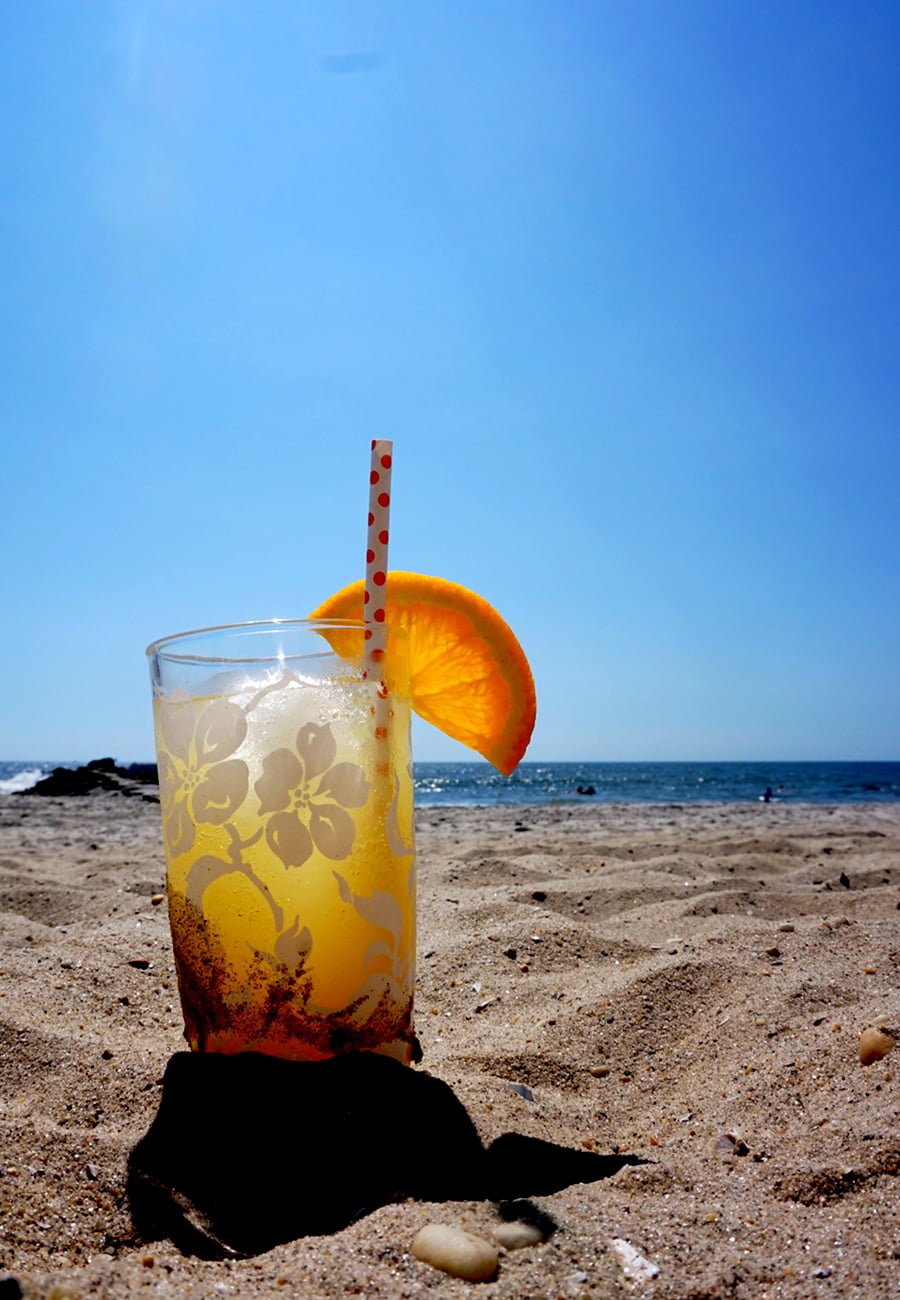
Bluegrass Cocktails: Nine-Pound Hammer

With a commanding name like Nine-Pound Hammer, you might expect a stiff drink … so why something light and somewhat sweet? This tune is one in the tradition of hammer songs, which lament the struggles and grueling labors of railroad workers. In that case, a cooling cocktail seems even more necessary — the combination of Drambuie and pineapple lends the drink a delicate candied quality, and the yellow Chartreuse brings in a distinct herbal element, all for a libation that’s refreshing and easy-drinking. Add in those few dashes of absinthe, and this one is a real doozy — which anyone could use after a hard day's work.

INGREDIENTS
1 oz aged rum
3/4 oz Drambuie
1/2 oz yellow Chartreuse
1 oz pineapple juice
3/4 oz lemon juice
2 dashes absinthe
Seltzer water
Orange and brandied cherry for garnish (optional)

DIRECTIONS
Add all ingredients (except seltzer) to shaker with ice and shake vigorously until cold. Strain into a collins or high-ball glass with ice and top with seltzer water. Garnish with orange slice and brandied cherry.

Reading List: 5 of the Best Bluegrass Biographies

We've offered you plenty of options for learning about the history of bluegrass masters via streaming, but what about good old-fashioned books? For those of you who like your learning a bit more in-depth and enjoy the heft of a good book (or, we hate to say, the sleek screen of a Kindle) in your hands, we've rounded up a handful of the best bluegrass biographies (and autobiographies) out there. 

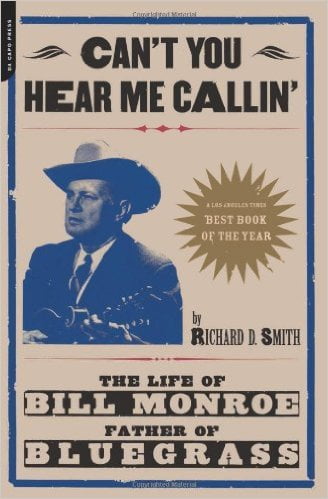
Can't You Hear Me Callin': The Life of Bill Monroe, Father of Bluegrass, by Richard Smith

Few musicians have had more influence on bluegrass than Bill Monroe, and this biography seeks to explain that influence — one that, truth be told, no book could sum up — in 352 pages of extensive interviews, thoroughly researched musical history, and rare glimpses into Monroe's personal life. There's no better lens through which to understand bluegrass than the career of Bill Monroe, and this book is as close as you can get to the man himself.

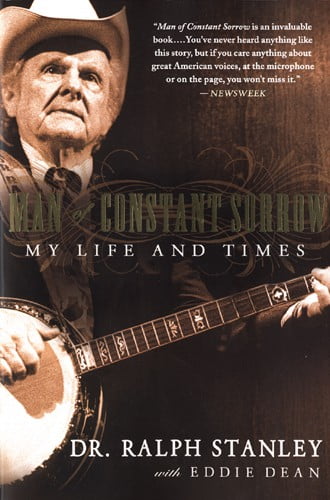
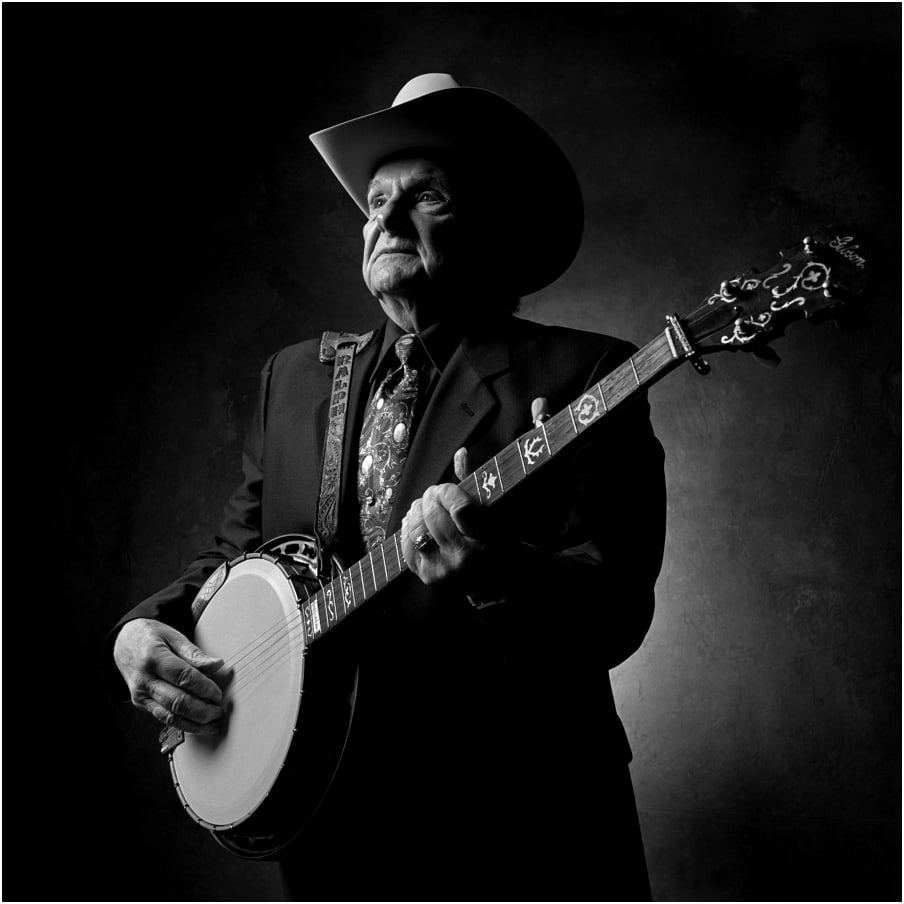
Man of Constant Sorrow: My Life and Times, by Dr. Ralph Stanley

There's nothing quite like hearing it from the man himself, and there's no man we'd want to hear "it" from more than Dr. Ralph Stanley. In this 2010 autobiography, the banjo pioneer reflects on his monumentally influential career, from his early days learning his craft in Virginia to his time touring well into his '80s. This is a must-read for any bluegrass fan.

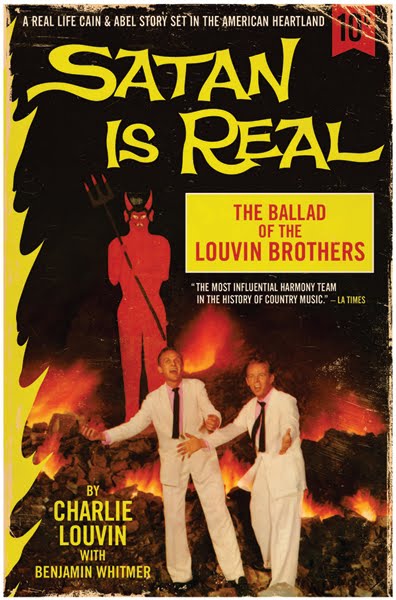
Satan Is Real: The Ballad of the Louvin Brothers, by Charlie Louvin and Benjamin Whitmer

Two of the godfathers of country harmony, Ira and Charlie Louvin traded their gospel roots for country music around the time the genre was picking up unstoppable speed in the mainstream. Devout Baptists with a handful of sinful habits (particularly in Ira's case), the brothers were a "real life Cain and Abel," as is described in this Charlie-penned autobiography. This one should appeal to fans of music and William Faulkner alike.

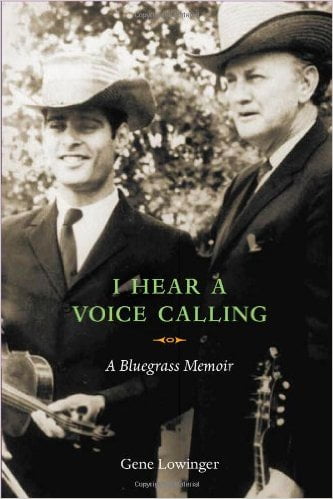
I Hear a Voice Calling: A Bluegrass Memoir, by Gene Lowinger

You may not know the name Gene Lowinger (or, hey, maybe you know enough about the genre that you should write your own book), but the New Jersey born fiddler was around for Bill Monroe's final years, and he documented the father of bluegrass in a series of intimate photographs that show the legendary musician both on and off stage. Lowinger also shares tales of brushes with other bluegrass greats, including the New York Ramblers and the Greenbriar Boys.

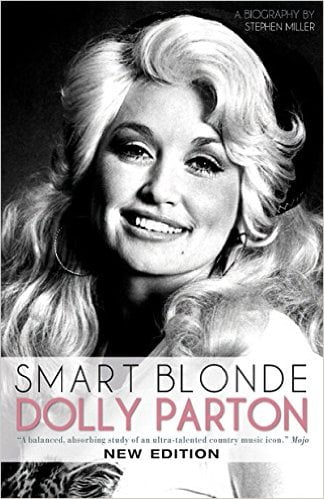
Smart Blonde: Dolly Parton, by Stephen Miller

Dolly Parton may not be a bluegrasser in the traditional sense, but her rags-to-riches tale of growing up in the mountains of east Tennessee to become one of the biggest country stars on the planet falls in line with the career trajectories of many of our grassier favorites. And while there are countless books on Parton available, this one, which will receive an updated reprint in May of this year, is often considered the definitive source.


Lede photo credit: azrasta via Foter.com / CC BY-NC-SA

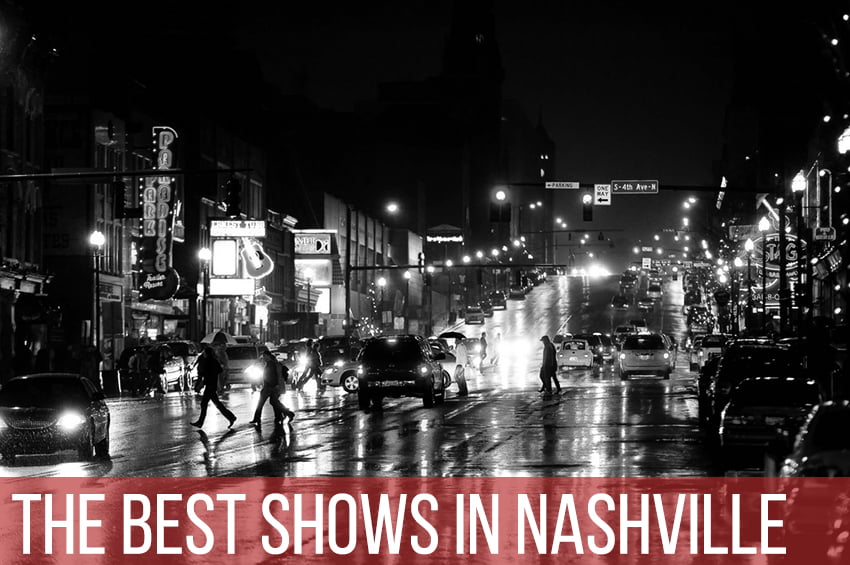
Hey Nashville, Get Off Your Ass and Go See Some Live Music in September

Summer's winding down. Kids are back in school. And AmericanaFest is coming right up. Get Off Your Ass, America.

September 2, 3, 24 // Rosanne Cash // Country Music Hall of Fame and Museum
Rosanne Cash is doing a residency at the Hall of Fame. Three nights, three completely different performances. See you there!

September 4 // Los Colognes // The Basement East
Want to know where the cool kids will be tonight? At the BEast with Los Colognes.

September 10 // Farewell Drifters // Station Inn
The Farewell Drifters have a few shows on the books, including one last month with Julie Lee. Catch them while you can.

September 12 // Ralph Stanley & the Clinch Mountain Boys // Centennial Park
We'll just leave this right here. 

September 12 // Jimmy Webb, Bobby Whitlock // City Winery
How do you celebrate seeing Ralph Stanley? By seeing Jimmy Webb, for Pete's sake. Oh, and Bobby Whitlock, too. 

September 14 // Kevin Gordon // City Winery
If you like tales of Southern living done up with the just-right balance of grit and grace, check out Kevin Gordon.

September 15-20 // Americana Fest // All Over Town
Sam Outlaw, Nathaniel Rateliff, Ryan Culwell, Lee Ann Womack, Lera Lynn, HoneyHoney, Whitey Morgan, Patty Griffin, JD McPherson, and a whole bunch of other great artists will be playing shows all over town. Get you some.

September 22 // Indigo Girls // Ryman Auditorium
It's the Indigo Girls. How can you not go see the Indigo Girls?!

September 22 // BB King Birthday Tribute // City Winery
It must be nice to have your birthday celebrated by Claudette King, Gary Nicholson, Mike Farris, T. Graham Brown, Stacy Mitchhart, Derek St. Holmes, Crystal Shawanda, and more, right BB?

September 30 // George Ezra // Ryman Auditorium
This George Ezra kid … he's got something. His record and his live show are both thoroughly charming. You should maybe go.

September 30 // Cory Chisel Celebrates City Winery's One-Year Anniversary // City Winery
And yet another birthday party happening at City Winery … their own!

A Legend Past His Prime: Reflections on Aging Artists and Seeing Ralph Stanley Live

In September 2010, I was supposed to see banjo pioneer Earl Scruggs perform at UNC-Chapel Hill with the Red Clay Ramblers. I had a ticket, but something came up and at the last minute I couldn’t go. Scruggs couldn’t perform anyway due to illness. The show went on without him, and his performance was never rescheduled. He passed away on March 28, 2012, and I never got another opportunity to see him.

Back in May, as I left work one night, I reminded myself to buy a ticket to see Doc Watson at the North Carolina Museum of Art (scheduled for June 30th) with my next paycheck. A few nights later, I got off work to find a text informing me of the guitarist’s death. Watson passed on the 29th, three days before that paycheck came.

So it was natural that, when I heard that the legendary Dr. Ralph Stanley was supposed to play at a small venue called the ArtsCenter just down the road from my house in Carrboro, I jumped at the opportunity to be there. Fortunately, there were no illnesses or falls to get in the way, and the show went on as planned. I had expected to be awestruck and delighted, but left feeling more guilty and heartbroken instead.

Don’t get me wrong — I felt honored to be in the presence of one of the last living pioneers of bluegrass. Chills ran down my spine when he sang  “O Death,” and my heart swelled during “Will The Circle Be Unbroken” and “Angel Band.” But the same time, all I could think was “You’re having a good time, but is he?”

Though the 86-year-old Stanley seemed genuinely humbled by the audience’s turn-out and enthusiasm, he didn’t seem entirely “there” for much of the performance. Arthritis prevented him from playing the banjo for all but a few songs. When he sang, it was mostly back-up; even then, he had to be constantly reminded of what song the band was playing. He forgot many of the words of “Amazing Grace.” And on a few songs, his grandson, Nathan Stanley, had to shout lyrics to him as the song was going on.

For the songs Stanley didn’t sing on, he stood quietly with his hands clasped in front of him while the band played and Nathan sang. The audience chuckled at his forgetfulness and the couple of times he sassed Nathan. The younger Stanley is himself a talented performer, with a voice that sounded much more mature than his age might reflect. But it wasn’t quite as fulfilling as hearing Ralph’s legendary timbre.

It was less of a show in the performing sense, and more of a experience that was telling me “aren’t you glad you get to be in the presence of Ralph Stanley?’  that is to say, the whole thing felt more than a little forced. Yes, I was glad. But it’s one thing to see someone who’s glad to be “there” in every sense of the word — physically, mentally, emotionally. It’s something completely different to see someone who’s standing on a stage for two 45-minute sets, mostly doing nothing.

None of this is to say that performers must be put out to greener pastures once they hit certain ages. I’m all for musicians creating and performing long as they can. But maybe sometimes they can’t, or even don’t want to anymore. And when that’s the case, shouldn’t we respect that? Even if that means I miss seeing another genre giant, I think — I hope — it means the image of their enormous talent lives on in our collective memory a little bit longer.