20 Years Old, Then Again by Rodney Crowell Is Remarkably Current

Some records arrive exactly when they’re meant to. Others wait patiently in the dark, gathering meaning with every passing year. For Rodney Crowell, Then Again belongs to the latter category.

Recorded in 2006 but quietly shelved for nearly two decades, the album was never abandoned because Crowell doubted the songs. Instead, time itself became part of the recording’s story. When he eventually rediscovered the tapes, he wasn’t simply listening with older ears. He was listening with a different heart.

“I heard a record I wasn’t tired or bored of,” Crowell said with characteristic candor. “I was no longer tired and bored with myself. That’s what 20 years will do for you.”

It is a remark that says as much about life as it does music.

At 75, Crowell has little interest in nostalgia. He speaks instead about perspective – about learning to regard the younger man he once was with affection instead of criticism. The years have softened neither his standards nor his curiosity, but they have granted him something perhaps more valuable: compassion for himself. Then Again sounds less like an archival release than a conversation between two Rodneys separated by 20 years yet bound by the same restless artistic spirit.

That spirit was forged long before Nashville embraced him as one of America’s premier songwriters.

Crowell’s education began in southeast Texas, where songs traveled not through record collections but from one human voice to another. His father, who grew up on a sharecropper farm in western Kentucky, possessed an extraordinary gift for remembering music.

“He had a butterfly net to catch songs,” Crowell recalled. “Once he had them, he knew them.”

As a boy, Rodney sprawled across the floor while his father sang old Appalachian ballads, heartbreaking country laments, and weathered tales passed along through generations. There were no carefully cataloged albums lining the walls, no elaborate stereo system. The music lived in memory, carried from person to person through an oral tradition stretching back decades. Those songs became Crowell’s first inheritance. When he left home at fifteen to join a band, his father’s advice proved surprisingly prophetic.

“Tell them you write your own songs.”

Rodney didn’t write songs yet. He promptly claimed an Otis Redding classic as his own before the rest of the band recognized the bluff. The deception didn’t last, but the challenge did. His father had planted an idea that would eventually shape American songwriting.

Those early years unfolded across Legion halls, rodeo dances, Gulf Coast clubs, and small-town gathering places east of Houston. The humid Texas evenings smelled of beer, cigarette smoke, and dusty dance floors. Bands moved effortlessly between Beatles tunes, country standards, and surf instrumentals, playing whatever kept couples moving beneath strings of lights hung over community halls. The venues have mostly disappeared.

“I went looking,” Crowell said of one former dance hall. “The location was there, but the building wasn’t.”

Like so much of America, those landmarks surrendered to suburban expansion, leaving only memory behind. Memory also carried Crowell to Nashville, where another education awaited. He arrived knowing few original songs but possessing something the city’s finest writers admired: an encyclopedic knowledge of old country music learned from his father. Around late-night gatherings with Guy Clark, Townes Van Zandt and Mickey Newbury, Crowell discovered that his familiarity with forgotten ballads earned him a place among extraordinary company.

Guy Clark became a mentor as much as a friend. Crowell remembers first hearing Clark’s name from an unlikely source before unexpectedly finding the legendary songwriter asleep on the bed he had been renting. Their friendship blossomed into an apprenticeship unlike any classroom could offer.

“Guy was a curator of early Nashville songwriting,” Crowell said.

Clark introduced him not merely to songs but to standards. He played Bob Dylan recordings. He encouraged deeper language. He challenged Crowell to pursue authenticity rather than cleverness.

“Your language has got to be that real.”

Townes Van Zandt provided another kind of lesson. Late one night, around one in the morning, Van Zandt quietly announced he had written something new. Then he played “Pancho and Lefty.” Crowell sat stunned. Inside, he remembers thinking, “This is what you’ve got to do.”

Van Zandt possessed a competitive streak, unveiling masterpieces that simultaneously inspired and humbled everyone fortunate enough to hear them first. Clark, by contrast, nurtured younger writers with generosity. Mickey Newbury demonstrated that lyrical sophistication could coexist with a soaring tenor voice, freeing Crowell from believing every great songwriter needed the baritone gravity of Cash, Kristofferson, or Billy Joe Shaver.

Together they became an informal graduate school of American songwriting. Years later, Crowell would write songs that entered the same conversation. Yet success brought its own hazards.

When a remarkable run of No. 1 country hits made him one of Nashville’s hottest writers in the late 1980s, Crowell sensed something unsettling happening. Walking into rooms, he realized people no longer saw Rodney Crowell, the songwriter. They saw Rodney Crowell, the hitmaker. He began constructing, almost unconsciously, a version of himself shaped by other people’s expectations.

His ego, he says now, became a dangerous collaborator. “If you let your ego get involved, you can get hurt,” he reflected. “It would rather sabotage the art.”

Rather than feeding celebrity, Crowell deliberately resisted it, sometimes awkwardly. During promotional radio appearances, while enthusiastic hosts tried to sell records to morning commuters, he answered questions with monosyllables, refusing to play the role expected of him. Looking back, he laughs at his own stubbornness while recognizing the lesson beneath it: fame is fleeting, but authenticity demands constant vigilance.

That understanding would prove invaluable during another extraordinary chapter of his life – one lived within the orbit of perhaps the most recognizable voice in American music. As Johnny Cash’s son-in-law, Crowell could easily have embraced proximity to legend. Instead, he did everything possible to establish himself as his own man.

“I ain’t coming around here because you’re Johnny Cash,” he remembered thinking. “I’m around here because I love your daughter.” Cash understood. More remarkably, he respected it.

Years later, after his marriage to Rosanne Cash had ended, Crowell discovered just how deeply those family bonds still ran. When Johnny and June learned that Crowell had begun dating Claudia, the woman who would become his wife of more than three decades, they invited the couple to dinner. Driving home, Claudia couldn’t understand why Johnny and June had worked so hard to make her feel welcome.

“I said, ‘Because they love me.'”

It remains one of Crowell’s favorite memories – not because it involved two American icons, but because it revealed the generosity beneath their fame.

Cash also delighted in gently puncturing Crowell’s youthful swagger. Looking back now, Crowell smiles at the younger version of himself who insisted on proving his independence every chance he got. Rather than embarrassment, he feels something closer to tenderness.

“I’ve developed a compassion…for that me,” he said. “Good go, young Rodney. You were just trying to establish who you were.”

It is difficult to imagine a better description of Then Again itself. The album captures an artist still determined to prove himself, while the older Crowell who finally released it understands that proving oneself eventually gives way to understanding oneself. Time didn’t erase the younger man’s ambitions; it simply placed them within a larger frame.

That perspective echoes throughout one of the album’s most affecting songs, “If I Could Speak to Leonard.”

Written years before Leonard Cohen died in 2016, the song has become something more profound with time. What began as an expression of admiration now sounds almost like a farewell whispered across generations of songwriters. Crowell insists it was never intended as an imagined conversation.

“It was a love song,” he said simply. “It’s expressing my love for his work.”

For Crowell, Cohen represented far more than literary songwriting. He offered a blueprint for aging with artistic purpose. While many performers spend their later years revisiting past triumphs, Crowell watched Cohen continue reaching toward new creative heights. Albums like Old Ideas and You Want It Darker became, in his words, breadcrumbs showing how an artist could continue growing even as the body inevitably slowed.

“I want to continue to create art at a high level as I wane,” Crowell said. “I don’t want the art to wane with my physicality.”

That aspiration permeates Then Again. Although recorded years ago, the album feels uncannily current because Crowell himself has finally caught up with it. Songs once left behind now carry fresh emotional resonance, illuminated by experience rather than youthful urgency. The years have also sharpened his awareness of time itself.

“I’m 75,” he reflected. “Time is more precious. I don’t have much time to waste.”

There is no trace of resignation in those words. Instead, they carry the quiet urgency of a man determined to spend his remaining years loving his family well, encouraging younger writers, and pursuing songs that continue asking difficult questions.

He speaks often of longing – not for youth, but for continued artistic growth. That philosophy shapes the songwriting workshops he still conducts, where he finds himself most energized by young writers willing to rethink a lyric or reshape a narrative. Their openness reminds him that songwriting remains an act of discovery rather than certainty.

For Crowell, certainty is often the enemy. The same conviction explains his skepticism toward artificial intelligence creating music. Songs, he believes, are more than carefully arranged words and melodies. They carry the fingerprints of the people who lived them.

As a child listening to worn Hank Williams records spinning across the living room floor, Crowell wasn’t merely hearing music. He was beginning a relationship with another human being. That relationship later extended to Buck Owens, Chuck Berry, Johnny Cash, Bob Dylan, Merle Haggard, and eventually Leonard Cohen. Great songs invited listeners into another person’s emotional world, something Crowell doubts machines can genuinely replicate.

“I want to wrap my arms around the artist,” he explained.

It is an observation that also reveals why Then Again feels so personal. These are songs created by a younger Rodney Crowell but embraced by an older one, each version reaching across time toward the other. Crowell often compares an album to an art gallery.

“When you walk into the room that is this record,” he said, “there are ten or eleven paintings hanging on the wall in the form of music.”

It is a beautiful metaphor because it captures the experience of listening to a complete album. Each song occupies its own space while contributing to something larger. Rather than rushing past individual tracks, listeners wander from one canvas to another, discovering unexpected connections along the way.

That idea feels increasingly radical in an era dominated by playlists, algorithms and abbreviated attention spans. Crowell remains committed to albums as immersive experiences, invitations to linger rather than scroll. Perhaps that explains why Then Again never sounds like an artifact rescued from storage. Instead, it resembles a gallery whose doors have finally opened. The paintings were always there.

Only, the artist needed twenty years before he could walk through the room without judging every brushstroke. For Rodney Crowell, that may be the greatest gift age has offered. Not perfection. Not certainty. Simply enough grace to recognize the younger man who created these songs and enough wisdom to appreciate what he had accomplished before he knew it himself.

Some records capture a particular moment. Then Again captures two. In an industry that often celebrates novelty over endurance, Crowell has offered something rarer: proof that good songs, like honest friendships and enduring love, are not diminished by time.

If anything, they become more fully themselves. And perhaps so do we.


Photo Credit: Claudia Church
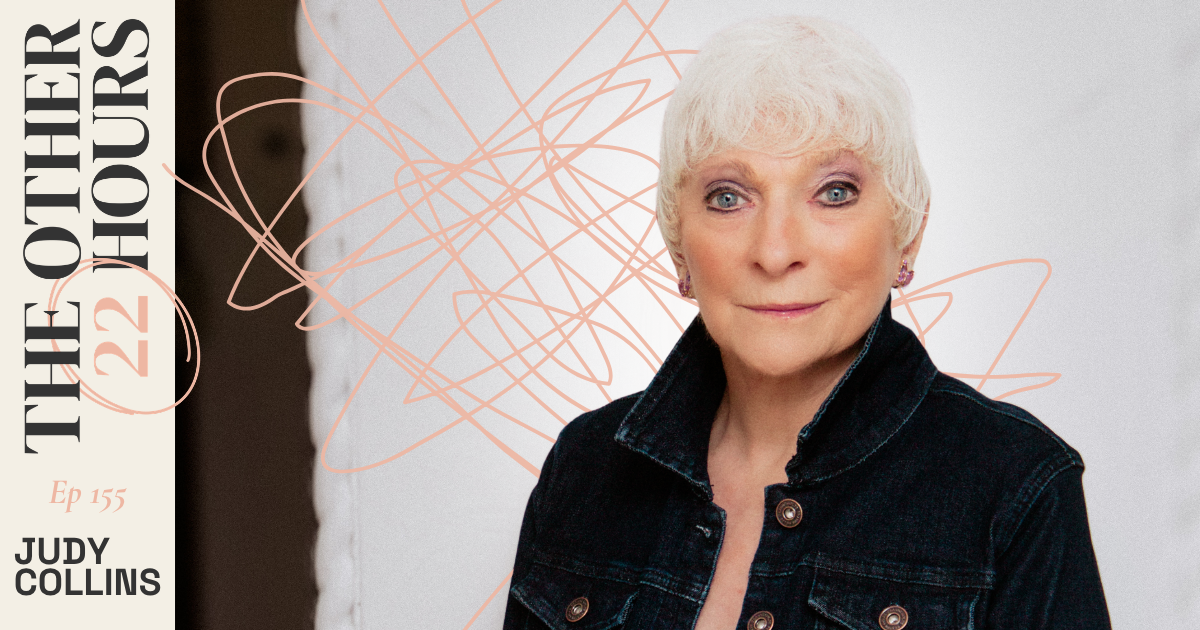
The Other 22 Hours: Judy Collins

“We write to find out who we are.” For over six decades, Judy Collins has been a pillar of American music: from a GRAMMY award for “Both Sides Now,” two platinum records, and an Oscar nomination to writing more than eight books and landing her first No. 1 album at 80 years old.

LISTEN: APPLE • SPOTIFY • AMAZON • MP3

But behind the staggering accolades is an artist who still treats her craft as a sacred, daily blue-collar job. In this episode of The Other 22 Hours, we explore the quiet discipline of her daily routines, the sanctuary of her 48 years of sobriety, and what she calls the “secret channels of songs.” Judy shares her philosophy on processing grief through poetry, the necessity of maintaining community in a solitary profession, and turning off the noise to protect the soul.

In This Episode:

Judy Collins
Catcher in the Rye – J.D. Salinger
Antonia Brico
Mark Ruffalo
Spotlight
Hemangioma
“The Lonesome Death of Hattie Carroll” – Bob Dylan
Ep 100 – Rosanne Cash
Ep 16 – Rodney Crowell
Telluride Bluegrass Festival
Jo Stafford
Barbara Allen
Al Kooper
Al Grossman

Go Deeper: 

Watch: View this entire conversation above or on YouTube.
Explore: Find similar conversations in these themed playlists.
Connect: Join the conversation on Instagram.

The Other 22 Hours is hosted by Aaron Shafer-Haiss (producer, mixer, musician) and Michaela Anne (songwriter, artist, creative coach). More about Aaron’s work. More about Michaela Anne’s work.


Produced by Aaron Shafer-Haiss. Original music written, performed and produced by Aaron Shafer-Haiss.

Photo Credit: Patrick Donovan

The Other 22 Hours Joins BGS Podcast Network

BGS is ecstatic to announced The Other 22 Hours, a beloved podcast hosted by singer-songwriter Michaela Anne and music producer Aaron Shafer-Haiss, is joining the BGS Podcast Network. Beginning Wednesday, March 4, new episodes of The Other 22 Hours will be distributed by BGS and hosted right here on our website, as well. Founded in 2023, the show has produced more than 130 episodes – which drop weekly – featuring conversations with renowned musicians and artists who share tools for resilience, helping all kinds of creatives to feel more inspired, connected, and confident in their creative journey. If an artist, creative, or musician is “performing” only a couple of hours each day, what do they do with the other 22 hours? The brand new season of the pod will launch Wednesday with an interview with producer, musician, and singer-songwriter Butch Walker. Subscribe now.

“BGS is thrilled to welcome The Other 22 Hours to the BGS Podcast Network,” said Cindy Howes, who directs the network for the Bluegrass Situation and Good Country. “Michaela and Aaron have developed a beautiful space to hold conversations that offer a unique look behind the humans who make the art we love. There’s so much the public at large does not know about what it takes to live and maintain a creative life; Michaela and Aaron help us all be more responsible patrons of the arts as well as seeding inspiration for our own creative endeavors.”

SUBSCRIBE: APPLE • SPOTIFY • AMAZON

Michaela Anne is a celebrated singer-songwriter and folk/Americana artist who has been covered by BGS and featured on our stages many times over the years. Shafer-Haiss, her husband and collaborator, is an accomplished record producer, drummer, songwriter, and composer. Together, they’ve have had thoughtful and down-to-earth conversations over the past few years with incredible creatives like The Milk Carton Kids, Leyla McCalla, Rodney Crowell, Adia Victoria, Mary Gauthier, Lori McKenna, Watkins Family Hour, Miko Marks, Brandy Clark, Tift Merritt, Raye Zaragoza, and many more.

“We’ve been friends and occasional collaborators with the BGS family for years,” Michaela Anne and Shafer-Haiss share via email, “so bringing The Other 22 Hours to the network feels like a bit of a homecoming. Our show has always been about the reality behind the highlight reel, a community-built road map to sustaining a creative life. We’re thrilled to get to align our conversations with a network that values the craft just as much as the art.”

To celebrate the Other 22 Hours joining the BGS Podcast Network and in anticipation of the new season launching this week, we’re sharing five of ours, Michaela Anne’s, and Shafer-Haiss’s favorite archive episodes from the podcast’s three existing seasons. Dive in, catch up on what you missed, and stay tuned for more episodes of The Other 22 Hours coming weekly right here on BGS and wherever you get podcasts. More info on the show here.

Rosanne Cash (EP 100, April 2025)

“We talk with the legendary songwriter about navigating insecurity and imposter syndrome, measuring your own success by your talent and not your validation, and allowing yourself to be called an artist. We also get into prose vs. songwriting, respect for yourself and for the audience, and Cash’s rituals.”


Maggie Smith (EP 96, March 2025)

“We talk with New York Times best-selling author about keeping the purity of your creativity, being integrated as a human, and trusting yourself to do what’s needed to keep this career going. Plus, being your own safety net, being open to completely revamping work, and arm wrestling.”


Yancey Strickler (EP 126, October 2025)

“We talk with the co-found of Kickstarter (and the Creative Independent, Metalabel, and Artist Corporations) about revolutionizing the creator economy. We talk about his concept and creation of Artist Corporations – think incorporating independent artists – the systemic exploitation of artists, how DSPs trade convenience for meaning and depth, platform boycotts, and ‘winning’ in its purest sense.”


JOHNNYSWIM (EP 113, July 2025)

“We talk with the folk/soul/pop duo about staying curious in your pursuits and creating space for wonder and childlike-ness. They offer their thoughts on how to rejuvenate yourself and your creativity on the run, the blinders of fixation, family, and more.”


Joe Henry (EP 39, 2023)

“We talk with the acclaimed songwriter and producer about keeping yourself in the creative stream, knowing when to step away, acceptance, and the quote, ‘How you do anything is how you do everything.'”


Photo Credit: Sam Wiseman

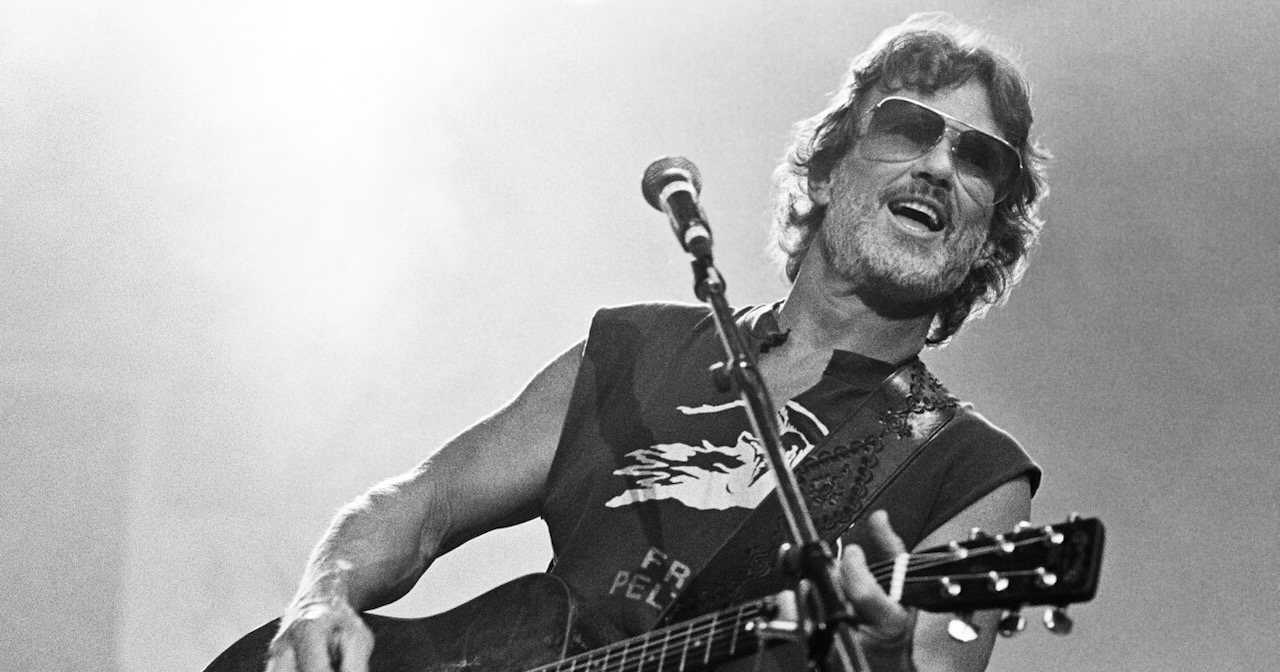
Kris Kristofferson’s Most Human Moments

After passing away on September 28 at the age of 88, Kris Kristofferson has rightly been eulogized as a renaissance man without compare. It makes sense, since the colorful character’s legendary resume includes time as a Rhodes scholar, Golden Gloves boxer, U.S. Army Ranger, Golden Globe-winning actor, janitor at Columbia Studios, and helicopter pilot who once brought Johnny Cash a demo by landing on the superstar’s front lawn.

In fact, it was only after all of these accomplishments that Kristofferson became the icon we remember – a songwriter’s songwriter, and one of the most authentic and impactful artists to hit country and roots music since its development. Yet his longest-lasting gift to all of us may prove to be his humanity.

Emerging onto an American landscape just beginning to feel the pangs of decay – the “Sunday Morning Coming Down” of its post-war glory – Kristofferson’s work found beauty in even the ugliest moments life had to offer. He broke every mold of what a country star “should” be, choosing substance over style, embracing the unwanted, and cutting a trail for generations of artists to follow. Stunning empathy seemed to be his primary tool and as a man of many lives, he was well suited to put himself in the shoes of whatever characters he conjured up.

That deep well of human empathy might be the source of his gravity on camera and on stage. Maybe that’s why his songs came alive for the 450 other artists who covered them. But whatever it was, Kris Kristofferson accessed emotion and compassion without pretension. His humanity will live on now like a beacon, guiding others away from the shallow posturing of country songcraft and toward the authentic depths of the art.

In honor of his life, legacy, and impact, here are eight moments where Kris Kristofferson’s humanity shined bright.

“Help Me Make It Through the Night” on The Old Grey Whistle

After his debut album in 1970, Kristofferson made frequent TV appearances with duet partner and soon-to-be-wife Rita Coolidge – with one capturing his tender side especially well. Singing “Help Me Make It Through the Night” on the UK variety show The Old Grey Whistle in ‘72, Kristofferson and Coolidge were just a few months away from their marriage and seem enchanted with each other. Sharing a microphone and never more than a few inches apart, you can almost feel the sensual spark.

“Help Me Make It Through the Night” on The Muppet Show

Same song, different duet partner – and a totally different view of Kristofferson as an artist. Fast forwarding to 1978 and Season 3 of The Muppet Show, the respected singer-songwriter showed he was good sport by doing “Help Me Make It Through the Night” with none other than Miss Piggy. Clean shaven and re-creating the close proximity of the first clip, Kristofferson could barely hold back the laughs as he serenaded a swooning swine – then lost it completely as Miss Piggy broke into the chorus. Hopefully he and Kermit patched things up later.

“Sunday Morning Coming Down” on The Johnny Cash Christmas Special

Later in 1978, Kristofferson had the chance to perform alongside an idol and show his respect for the artist who had done more to popularize his work than any other. Joining Johnny Cash for the Man in Black’s yearly Christmas special, Kristofferson was left almost speechless as Cash introduced the vivid “Sunday Morning Coming Down,” which they then took turns singing. After Cash noted he’d been making the song his own for years, Kristofferson responds, “Up until now that was the proudest moment of my life. Now this may be the proudest.”

“Me and Bobby McGee” on Austin City Limits

Kristofferson appeared on Austin City Limits a few times, but in 1981 he had a hot band behind him and that led to a rollicking delivery of his biggest rock hit, “Me and Bobby McGee.” Made famous by the late Janis Joplin 10 years before, the freewheeling anthem put Kristofferson’s range – and a sense nostalgic joy – front and center. Although, there’s still a tinge of sadness embedded in the tone. From our perspective now, the iconic line “Freedom’s just another word for nothing left to lose,” is matched only by “I’d trade all my tomorrows for one single yesterday.”

“For the Good Times” with Tanya Tucker

Kristofferson always looked more comfortable in a flannel shirt than a black tie, but in the long run, that only made him more endearing. Joined by Tanya Tucker on a 1982 awards show, Kristofferson climbed into a tux and delivered the one-last-time anthem “For the Good Times” in classic pop style. Backed by an orchestral score and with Tucker taking the lead, it was a rare ballroom-country presentation of a song also recorded by Ray Price, Al Green, and more, which proved the Hollywood heartthrob would truly rather be hanging out with friends at the local dive.

“The Hot Dog Tree” with Pee Wee Herman

By 1988 Kristofferson had built up decades of acclaim as an actor, artist, songwriter – and as an international sex symbol. But he was never too big to have fun. Playing opposite Pee Wee Herman in the kid’s comedy Big Top Pee Wee, Kristofferson slipped into silliness with an easy charm. The iconic scene sees Pee Wee unveiling his top-secret Hot Dog Tree to Kristofferson, and the star’s initial skepticism – and then child-like awe – will brighten any day. Despite being held up as a talent of rare caliber, he never took himself too seriously.

Encouraging Sinéad O’Connor at Madison Square Garden

If you want to know about Kris Kristofferson’s character, look no further than what he did for Sinéad O’Connor at New York’s Madison Square Garden in October 1992. A few nights earlier, O’Connor had shocked the nation by protesting the Catholic Church’s still-under-wraps sex abuse scandal on Saturday Night Live, ripping up a photo of Pope John Paul II as cameras rolled.

When she then took the stage for Bob Dylan’s 30th anniversary concert, the crowd erupted in boos. As O’Connor stood there, unable to begin her performance through the rain of jeers, Kristofferson stepped beside her and spoke the famous words of encouragement, “Don’t let the bastards get you down.” He didn’t try to save her or get her off stage, or diminish her in any way – he just let her know she wasn’t alone. For her part, O’Connor went on to scream sing an a-capella rendition of “War” over the crowd, before staring them down as she left the stage. She said the moment created a lifelong appreciation for Kristofferson.

“Loving Her Was Easier (Than Anything I’ll Ever Do Again)” with Rosanne Cash at Willie Nelson’s 90th Birthday

Kris Kristofferson made his final public performance in 2023, appearing at the Hollywood Bowl in honor of his longtime friend Willie Nelson’s 90th birthday. The moment was filmed for a special airing on CBS and gave us one last moment with an icon.

After a shaky walk to the microphone, Kristofferson joined Rosanne Cash for an arm-in-arm rendition of “Loving Her Was Easier (Than Anything I’ll Ever Do Again),” a devastating ballad first released at the start of his career. Following Cash’s lead with a wide smile and a twinkle in his eye – one armed raised in triumph – Kristofferson soaked up the moment, while the rapt attention of the audience evolved into a thunderous applause. As Cash adapted the song’s hook to address Kristofferson himself, the whole world seemed to send him out on a high note:

Loving you was easier than anything I’ll ever do again…


Photo Credit: Scott Newton, courtesy of New West Records.

It’s a Great Time for Roots Music on Broadway

Utter the phrase “Broadway musical” and most folks are likely to assume you’re referring to the jazz-hands-inspiring works of Richard Rodgers and Oscar Hammerstein; the emotionally manipulative drama of Andrew Lloyd Weber; or the inventive playfulness of Steven Sondheim. But folk and roots music have a long legacy on the great white way — and a bit of a folk boom has been happening in those storied theaters lately.

Granted, Broadway producers have long presented shows that pull in the music of roots-informed artists. Folk-pop singer-songwriter Duncan Sheik delivered a stunning musical score for the groundbreaking Spring Awakening, cementing the careers of Broadway stars Lea Michelle and Jonathan Groff back in 2006. Let’s not forget brief runs of musicals that pulled from the catalogs of Dolly Parton (2009’s stage adaptation of 9 to 5) and Bob Dylan (Girl from the North Country, which debuted in 2020).

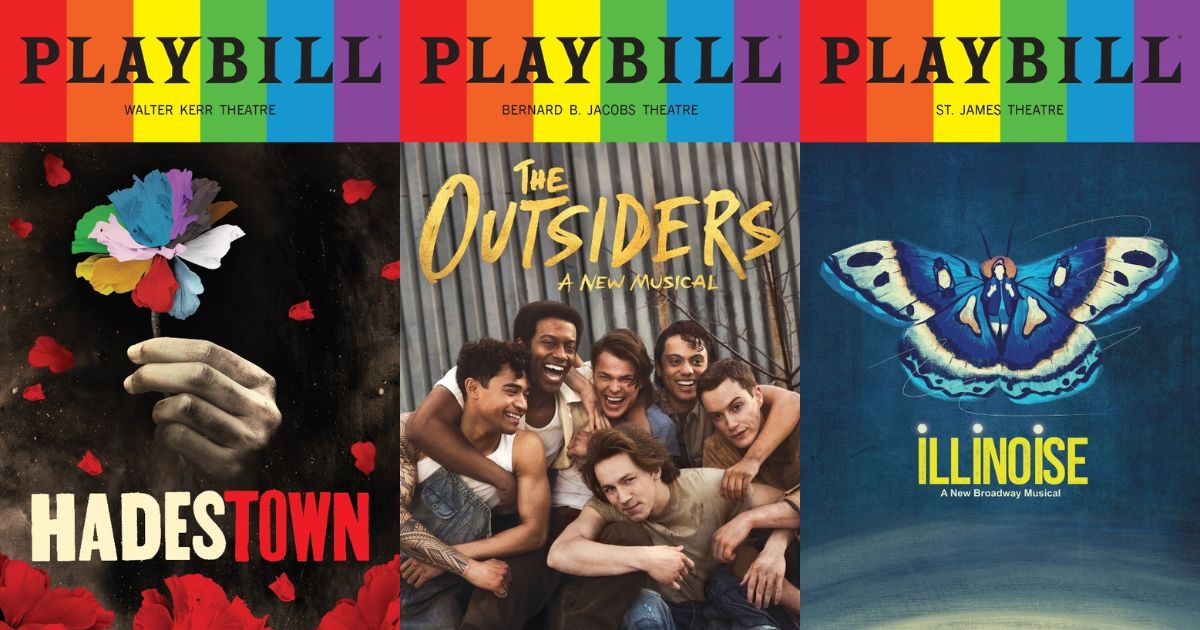
Of the shows currently occupying midtown theaters, Anaïs Mitchell’s Hadestown has run the longest, having just passed its five-year mark. With eight Tony Awards from its 2019 debut, the musical pairs the Greek myth of Orpheus and Eurydice with that of Hades and Persephone. Though its original cast has scattered to other projects, beloved folksinger Ani DiFranco spent a bit of her winter and spring this year offering a stunning run as Persephone.

Ani DiFranco and Anaïs Mitchell outside the Walter Kerr Theater in New York City. Photo by Matthew Murphy.

Fans may know DiFranco trained for many years as a dancer, even as she was building her singer-songwriter street cred. She proves to be a triple threat in the role, embodying the storied arbiter of summertime with a deeply rooted, empathic swagger. And though her June 30 departure feels like the end of an era for the musical, her latest album Unprecedented Sh!t (released May 17 on Righteous Babe Records) charts some new sonic territory via her political POVs.

Further, it’s hard to mourn DiFranco moving on when it was recently announced that British country favorite Yola will replace her in the role of Persephone, beginning July 2.

Hadestown was briefly joined last year by fellow roots musical Shucked, which came and went too soon. Awash in silly corn puns and Tampa-centric storyline, its earworm score was penned by Nashville mainstays — and Grammy darlings — Brandy Clark and Shane McAnally.

Last month, Illinoise opened at the St. James Theater on 44th St. Pulling tracks from Sufjan Stevens’s sprawling, ambitious 2006 album of the same name, the show reorders the songs to depict a group of friends sharing stories around a campfire. There is no dialogue. Instead, a 12-piece band and a trio of vocalists in magical butterfly wings perform the music in the background.

Upstage, Illinoise tells its stories through exquisite choreography that runs the gambit from lyrical contemporary to hip-hop, some sweet Broadway jazz, and even one number (“Jacksonville”) with a lightning-fast tapper in pinstripes. Dancers touch on love and loss, fear and transcendence.

“Zombies” becomes a scene about the immigrant experience, as dancer Jeanette Delgado (“Jo”) tries to outrun the ghosts of America’s founders, whose complex legacies still haunt the present day. “The Man of Metropolis” becomes a comical superhero-themed character romp. And former Billy Elliot star Ben Cook (“Carl”) delivers a heartbreaking and inspired series in Act II to track an emotionally complex love triangle.

By show’s end, there is a pervasive sense of the opportunity art grants us to transcend our selves and build a better world together. It’s no wonder the show was nominated for four Tony Awards, including Best Musical. If it wins, it will be the first time a dance musical has won the prestigious award.

The Outsiders, meanwhile, is running now just one block away, at the Bernard B. Jacobs Theater. It sets to music the novel by S.E. Hinton, which was immortalized in a 1980s film by Francis Ford Coppola. Produced in part by Angelina Jolie, with a book by New York theater fixture Adam Rapp (Wolf in the River, The Sound Outside) and music by Americana mainstays Jamestown Revival, this musical version unfortunately doesn’t measure up to the other two roots musicals in the neighborhood.

Granted, perhaps it doesn’t have to. The Broadway League and American Theater Wing don’t seem to be anything less than impressed, having nominated the musical for a whopping 12 Tonys this year. It may not translate seamlessly to the Broadway stage, but The Outsiders is a story that has been beloved by numerous generations. It was a treat to witness members of Generation Alpha giddy with excitement to take in the narrative arc of Ponyboy and the other Curtis brothers — a story that feels to this writer as though it’s rooted in Gen X sensibilities, despite being set in the 1960s.

Choreography by Rick and Jeff Kuperman was athletic and stunning — plenty of leaps and jumps and long, denim-clad legs spinning in the air like human helicopters. The Kuperman brothers’ martial arts background comes through even beyond the inventive dance-fight scenes. There is water on the stage, somehow, and it splashes up from time to time, for some reason. It doesn’t matter why. The effect is properly dramatic.

Brent Comer, who plays “Darryl,” steals the show with his powerful Zac Brown-reminiscent twang. He has some of the most compelling solos, embodying the exhaustion of a stay-at-home-mom as he folds clothes and laments his lot in life, “somewhere between brother and father” since their parents died. Jason Schmidt as “Sodapop” matched his rootsy musicality with the second-act heart grabber, “Throw in the Towel.”

But it is Joshua Boone’s “Dallas” who is perhaps the show’s greatest revelation, with his Bill Withers-esque vocals on solos like “Little Brother.” Brody Grant as Ponyboy seemed a bit lacking during the matinee performance this writer recently caught, but it could have been an off moment. Eight shows a week requires almost superhuman amounts of energy reserve.

Or perhaps it was a side effect of Grant being in his 20s while his character is supposed to be 14. Indeed, despite the electricity of The Outsiders’ score and choreography, the script doesn’t feel as authentic as its emotional realities demand. Hinton’s book offered readers a revolutionary view of teen struggles, written by a teenager. Perhaps the Broadway show should have brought in some teenagers to consult.

Regardless, both Grant and Boone were nominated for Tonys (as was Sky Lakota-Lynch, who delivers a haunting performance as Johnny). For folks just interested in what Jamestown Revival did for the show’s score, an Original Broadway Cast Recording is available now.

All told, there is no indication Broadway is going to break its love affair with roots music anytime soon. The Avett Brothers are set to make their Broadway debut with shipwreck-themed musical Swept Away this fall. The show has previewed in California and Washington, D.C., and has received critical praise already. Swept Away’s score is drawn from the Avetts’ 2004 album, Mignonette, plus four other songs from their canon — a treat for the band’s incredibly loyal fanbase and Broadway subscribers alike.

Further on the horizon is an adaptation of the classic labor movement-inspired film Norma Rae, with music by Rosanne Cash. In an email, her manager indicated a possible 2025 opening. One can only hope. And, just last week, Dolly Parton announced an upcoming original musical, Hello, I’m Dolly, set to arrive on Broadway in 2026.


The 77th Tony Awards will be held on Sunday, June 16, 2024 and will air on CBS. Find out how to watch here.

Playbill images courtesy of Playbill.com

MIXTAPE: JigJam’s Irish Bluegrass

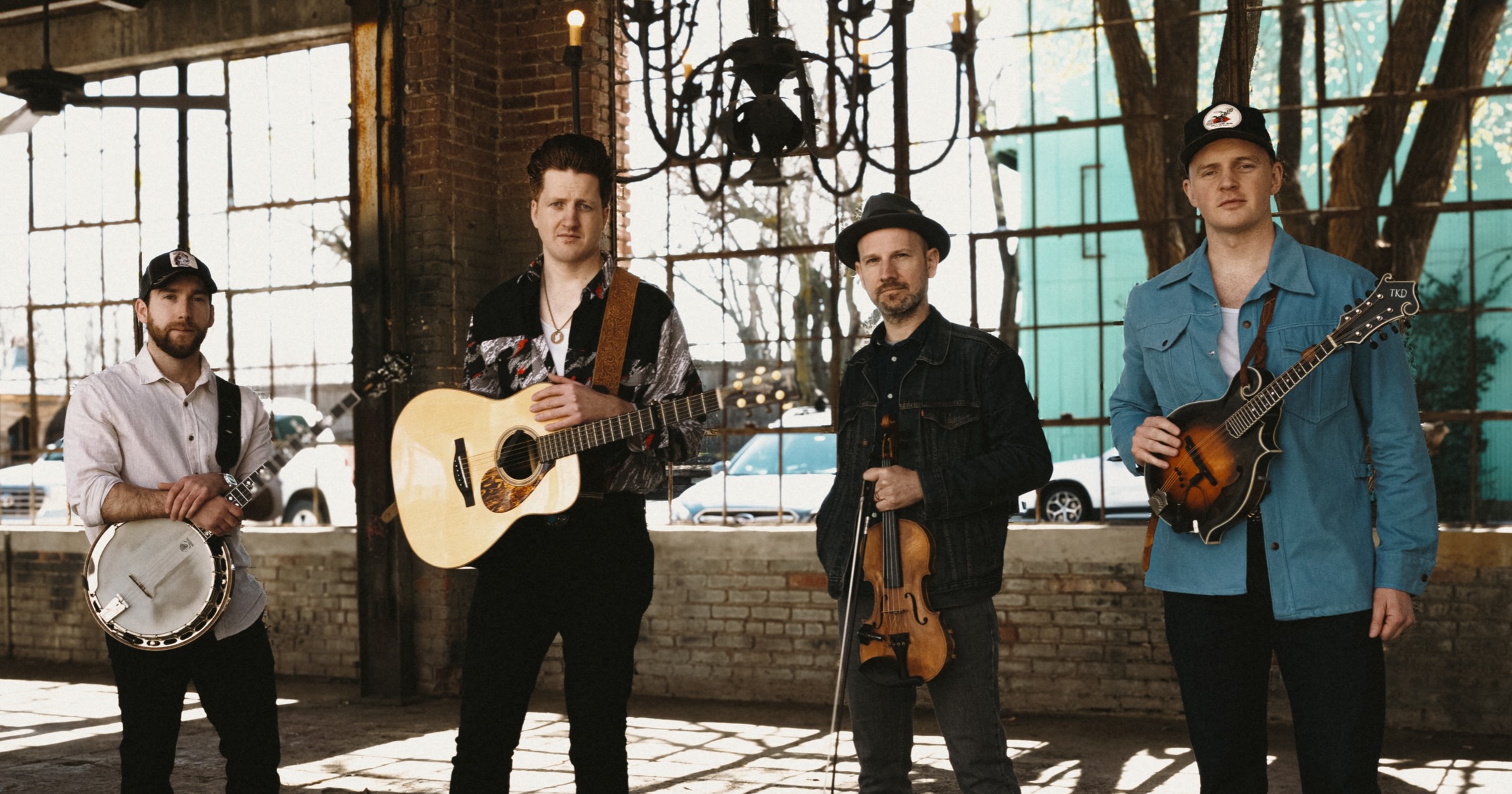
We all grew up in rural Ireland in small communities in the midlands around County Offaly and County Tipperary. From a young age we were brought up with traditional Irish music, learning the tunes and playing in local sessions. Bluegrass was never a part of our musical upbringing, however, little did we know how strong the relationship between Irish and bluegrass music is. Our band JigJam was formed in 2012 and over the years we developed a sound which captures the crossover between these musical genres.

The creation of bluegrass music and its development over the years is heavily influenced by Irish music. When the Irish people emigrated to North America years ago they brought their music and culture with them, which you can hear within bluegrass music from tunes, melodies, and songs.

We released our new album, Across The Pond, on March 1st of this year. The theme of Across the Pond is to creatively celebrate the deep connection between Ireland and North America through newly composed material that is a dynamic fusion of bluegrass, old-time, and Irish traditional music. By also including traditional tunes and songs which are popular amongst the people from both Irish and American traditions, we added their voice to this transatlantic conversation. This album has been inspired and composed on themes of immigration, nostalgia, cultural difference, and cultural amalgamation. It views the immigrant experience through the lens of pre-immigration, the journey of immigration itself, and their lives upon having settled in North America.

This is our Irish Bluegrass Mixtape, hope you all enjoy! – JigJam

“Good Ole Mountain Dew” – JigJam

Here’s our version of the bluegrass standard, “Mountain Dew,” that we put our own spin on. There’s a similar Irish song called, “The Rare Old Mountain Dew.” It’s about the same subject – “Good Old Mountain Dew” is obviously about moonshine. What we call the “mountain dew” at home is poitin, which is Irish moonshine.

We took some of the lyrics of that song and put it into our version and also wrote our own lyrics based on where we come from. We took the instrumental tune from “Rare Old Mountain Dew” and put it in “Good Old Mountain Dew” while also adding in a bit of Irish lilting. It’s a mashup of both cultures in one song!

“Classical Grass” – Gerry O’Connor

When I was young and first learning how to play the tenor banjo one of my musical heroes was Gerry O’Connor. I was always mesmerized by the speed and precision of his banjo playing. The first time I saw him in concert was at a banjo festival in Ireland called Johnny Keenan Banjo Festival. He was sharing the bill with Earl Scruggs and his band. As a 12-year-old Irish boy, I had no idea who Earl Scruggs was at the time. Little did I know the influence he (Earl Scruggs) would have on my music and JigJam’s music in years to come, when we discovered what bluegrass was and where it came from!! In this track from Gerry, he shows his bluegrass influence himself with pristine crosspicking along with his renowned clean triplets, which was always a favourite of mine growing up.

“Colleen Malone” – Hot Rize

“Colleen Malone” is one of our favorite songs that Hot Rize recorded. Here’s a great live version from their Hot Rize’s 40th Anniversary Bash album. A lovely song co-written by Leroy Drumm and Pete Goble about an Irish girl, Colleen Malone.

“Tennessee Stud” – The Chieftains

In many ways The Chieftains paved the way for Irish bands touring in America and that is something for which we’ll always be incredibly grateful. Their album, Down The Old Plank Road: The Nashville Sessions, paints a vivid picture of the crossover between between the Irish and American music traditions.

“B/C Set” – Beoga

Beoga are an Irish trad band who we all listened to as kids growing up. They were known for thinking outside the box and being ahead of their time as regards arrangements. The second tune in this set is “Daley’s Reel,” which I only realized in recent years when I heard some of the great bluegrass players like Bryan Sutton and Aubrey Haynie playing it. Beoga have a very unique version of “Daley’s Reel,” played on two button accordions and accompanied by piano, bodhrán, and even brass near the end of the track. Certainly a fun one to listen to!

“Streets of London” – Tony Rice

This is one of my favourite songs sung by Tony Rice. “The Streets of London” is a very popular song in Ireland and has been covered by many Irish artists. Written by English songwriter Ralph McTell, I learned this song from the playing of the great Liam Clancy of The Clancy Brothers, Irish powerhouses. I only heard Tony Rice’s version in recent years when I delved into bluegrass guitar playing and I loved it straight away. Tony Rice’s rendition is beautiful as he incorporates his flawless bluegrass crosspicking and signature approach to this classic.

(Editor’s Note: Watch JigJam guitarist Jamie McKeogh perform “Streets of London” for a recent Yamaha Session here.)

“Water’s Hill” – JigJam

“Water’s Hill” is a song off our new album, Across The Pond. The lyrics were written by Ken Molloy as he tells the story of a couple falling in love together and marrying on water’s hill, a mound near Tullamore in County Offaly. The music is by Jamie McKeogh and Daithi Melia along with an old traditional Irish reel that is incorporated into the middle of the song. “Water’s Hill” features a driving Scruggs-style 5-string banjo part along with a strong mandolin backbeat, fiddle counter melodies, and rhythmic acoustic guitar which creates the JigJam sound, capturing the crossover between Irish and bluegrass music.

“Forty Shades of Green” – Rosanne Cash and Paul Brady, Transatlantic Sessions

The Transatlantic Sessions is an amazing platform for the collaboration of Irish and bluegrass musicians. With the likes of Jerry Douglas, Aly Bain, Mike McGoldrick, and many more, this project has wonderfully captured Irish and bluegrass crossover for years. I could have chosen many songs from their repertoire, but I went with this one. It’s “Forty Shades of Green” from the legend that is Johnny Cash. Here, it’s being sung by his daughter Rosanne and Irish singer-songwriter Paul Brady, backed up by the Transatlantic band.

“Sally Goodin / The Blackberry Blossom” – Gerry O’Connor

Gerry O’Connor from Co. Tipperary is the reason I began to play the tenor banjo and he has always been a musical hero of mine – his music still inspires me to this day. This set showcases his skill set, pickin’ on these classic bluegrass fiddle tunes.

“Battersea Skillet Liquor” – Damian O’Kane, Ron Block

One of my favorite tracks off one of my favorite albums. I always loved the groove in this track and of course the playing from this star-studded crew of players always leaves me feeling inspired.

“Bouli Bouli” – JigJam

This set combines the traditional Irish jig, “The Miller of Glanmire,” with the bluegrass fiddle tune, “Big Mon.” It showcases the dynamic and genre fluid nature of JigJam through seamlessly traversing both traditions while highlighting each instrument’s capabilities. We’ve been having a lot of fun playing this one live!

“On Raglan Road” – Dervish & Vince Gill

I always enjoyed this song being performed by the great Luke Kelly from The Dubliners and recently came across this beautiful version of Patrick Kavanagh’s “On Raglan Road” by the legendary Dervish featuring the iconic vocals of Vince Gill.

“The Stride Set” – Solas

I love this set by Solas from their album, The Words That Remain. We are influenced by their creative way of arranging Irish tune sets. I love the addition of the 5-string banjo featured on this track.

“Did You Ever Go A-Courtin’, Uncle Joe” – The Chieftains

Here’s a mighty set from The Chieftains’ live album, Another Country. The crossover between Irish and American genres is great here with a medley of American songs and Irish tunes and also featuring a 5-string banjo. With a great lineup of The Chieftains with Chet Atkins, Emmylou Harris, Nitty Gritty Dirt Band and Ricky Skaggs.

“County Clare” – New Grass Revival

New Grass Revival are one of our biggest influences as a band. Béla Fleck is one of the reasons why I fell in love with the 5-string banjo and started to learn ‘Scruggs style’ while delving into the bluegrass world. Here’s his great instrumental “County Clare,” which Béla wrote inspired by his time spent in Ireland.


Photo courtesy of the artist.

You Gotta Hear This: New Music From Sister Sadie, John Leventhal, and More

This week, BGS readers enjoyed a track premiere from California-based string band Moonsville Collective, as well as our very first Rootsy Summer Session featuring an exclusive performance by Israel Nash on the streets of Falkenberg, Sweden. Also, in this week’s edition of Out Now, we highlighted a brand new single from Mary Bragg, too.

Featured in today’s premiere round-up, You Gotta Hear This, is new music from bluegrass supergroup Sister Sadie with their illustrious friend, Ashley McBryde, plus producer, guitarist, musician extraordinaire John Leventhal, Liam Purcell & Cane Mill Road, the Grackles featuring Kat Edmonson, and North Carolina bluegrass/Americana outfit Unspoken Tradition.

We hope you enjoy a week’s worth of new music and videos; ’cause You Gotta Hear This!

Sister Sadie, “Ode to the Ozarks” (featuring Ashley McBryde)

Artist: Sister Sadie
Hometown: Nashville, Tennessee
Song: “Ode To The Ozarks” (featuring Ashley McBryde)
Album: No Fear
Release Date: January 26, 2024
Label: Mountain Home Music Company

In Their Words: “This song was originally sent to me by a great songwriter from Nashville that we’re all big fans of, Marcus Hummon. When I heard the demo, I could hear us doing it immediately in my head and sent it around to the band. I thought it would be a great fit for us and had some awesome vocal harmony possibilities. The song was co-written by Ashley McBryde and Kat Higgins, who we’re also big fans of. In the meantime, Dani Flowers had joined Sister Sadie and is very close friends with Ashley. So of course she was an advocate for doing the song as well, and asked Ashley if she would consider singing on it with us in the studio. She graciously agreed and we were so honored to have her join us! We’re grateful to Marcus, Ashley, and Kat for entrusting us to give it the right treatment. It has a very ‘swampy’ feel and is such a FUN song to perform live. We got to perform this song on the Grand Ole Opry with Ashley and that was such a special memory for us all! Hope you love it as much as we do.” – Gena Britt, banjo

“I am so happy with the way ‘Ode To The Ozarks’ turned out. It ended up so funky and dirty with the stellar musicianship of Seth Taylor, Tristan Scroggins, and Tony Creasman added to the Sadie girls. We are so honored that Ashley McBryde agreed to sing on this one with us. The icing on the cake!” – Deanie Richardson, fiddle


John Leventhal, “That’s All I Know About Arkansas” (featuring Rosanne Cash)

Artist: John Leventhal
Hometown: New York, New York
Song: “That’s All I Know About Arkansas” (featuring Rosanne Cash)
Album: Rumble Strip
Release Date: January 26, 2024
Label: RumbleStrip Records

In Their Words: “Rosanne had these lyrics. I wasn’t sure what they were actually about, but I loved them and they seemed to fit with a weird West African-bluegrass riff I had. There are two distinct guitar solos, each a tip of the hat to two musicians to whom I owe a debt: Ry Cooder and Clarence White.” – John Leventhal


Grackles, “Top Of The World” (featuring Kat Edmonson)

Artist: Grackles
Hometown: Austin, Texas
Song: “Top Of The World” featuring Kat Edmonson
Album: Grackles
Release Date: February 24, 2024 (album)

In Their Words: “‘Top Of The World’ was a beautiful chord structure Jason [Mozersky] had, that we all sat and strummed together on acoustic guitars live in the studio with upright bass and brushes on the drums. It instantly felt so warm and welcoming. I knew I wanted to sing it way lower than normal, so got Kat Edmonson to sing the melody with me. Sort of a Lee Hazelwood and Nancy Sinatra vibe. Lyrically, it’s pretty straight forward. It’s such a short, honest piece, I really tried hard not to let the words get in the way. I’m happily married and with a beautiful daughter and find my own life to be pretty damn great. Meanwhile the world around me crumbles. We bounce from one shit storm to the next, and try desperately to keep it together.” – Noah Lit


Liam Purcell & Cane Mill Road, “Homesick For Virginia”

Artist: Liam Purcell & Cane Mill Road
Hometown: Deep Gap, North Carolina
Song: “Homesick For Virginia”
Album: Yellow Line
Release Date: January 26, 2024
Label: Pinecastle Records

In Their Words:“This song (penned by Colton Kerchner) is a story of misadventure and longing for home. Though the song is straightforward and wrapped in a 3/4 bluegrass power waltz, I felt like a lot of folks could relate to the message behind it. Being young, 20-something musicians out there on the road, home is always on our minds along with our friends and family, who we frequently miss. This is one of the more traditional tunes on the album, and I thought the guys really knocked it out of the park with the feel of that old Stanley-inspired sound.” – Liam Purcell


Unspoken Tradition, “Weary Town”

Artist: Unspoken Tradition
Hometown: Cherryville, North Carolina
Song: “Weary Town”
Release Date: January 26, 2024
Label: Mountain Home Music Company

In Their Words: “Our hometown was a great place to grow up. It thrived for decades because of a trucking company founded by some of its citizens. Many locals found work there; it was almost analogous to a mining town. That trucking company was bought by a larger corporation that ultimately closed the terminal, and the town became a shell of its former self in a matter of a few years. It hurts in a way only bittersweet nostalgia can, to know that the town where I made so many memories exists in name only. When John Cloyd Miller sent us this one, it just ripped at my heart, because it makes the struggle and loss of a fading town so real. ‘What’s it gonna take for us to hold on?’ Iris Dement couldn’t have written a better love letter to a fading town!” – Audie McGinnis


Israel Nash, “Lost In America” (Rootsy Summer Sessions)

Last summer, in picturesque Falkenberg, Sweden, Rootsy Music held Summer Fest ’23, a gathering of twenty-some Americana, country, folk, and roots bands – many imported all the way from the United States. BGS video collaborators and contributors I Know We Should were there; they curated, directed, and shot a series of gorgeous live performances in and around the festival and scenic Falkenberg.

The first in the series features Israel Nash – a Rootsy artist, as well as a frequenter of Rootsy stages and festivals – performing an original song, “Lost in America.”

Read more here.


Moonsville Collective, “Helen Highway”

Artist: Moonsville Collective
Hometown: Whittier, California
Song: “Helen Highway”
Album: A Hundred Highways

In Their Words: “Friendships are often forged on some highway to nowhere. We left Pappy & Harriet’s, said goodbye to our wives, and drove across the country chasing the rookie leagues…” – Corey Adams

More here.


Mary Bragg, “Only So Much You Can Do”

Artist: Mary Bragg
Hometown: Nashville, Tennessee
Song: “Only So Much You Can Do”
Release Date: January 23, 2024

In Their Words: “‘Only So Much You Can Do’ is about chasing joy in the company of another person. I’ve been thinking a lot lately about that New York Times article about the secret to happiness – and how relationships are the key to it. We are pack people; we need each other; we need other human beings around us in order to be our best, happiest selves. Friends plus community plus honesty equals joy…” – Mary Bragg

Read the full Out Now interview here.


Photo Credit: Sister Sadie by Eric Ahlgrim; John Leventhal by Wes Bender.

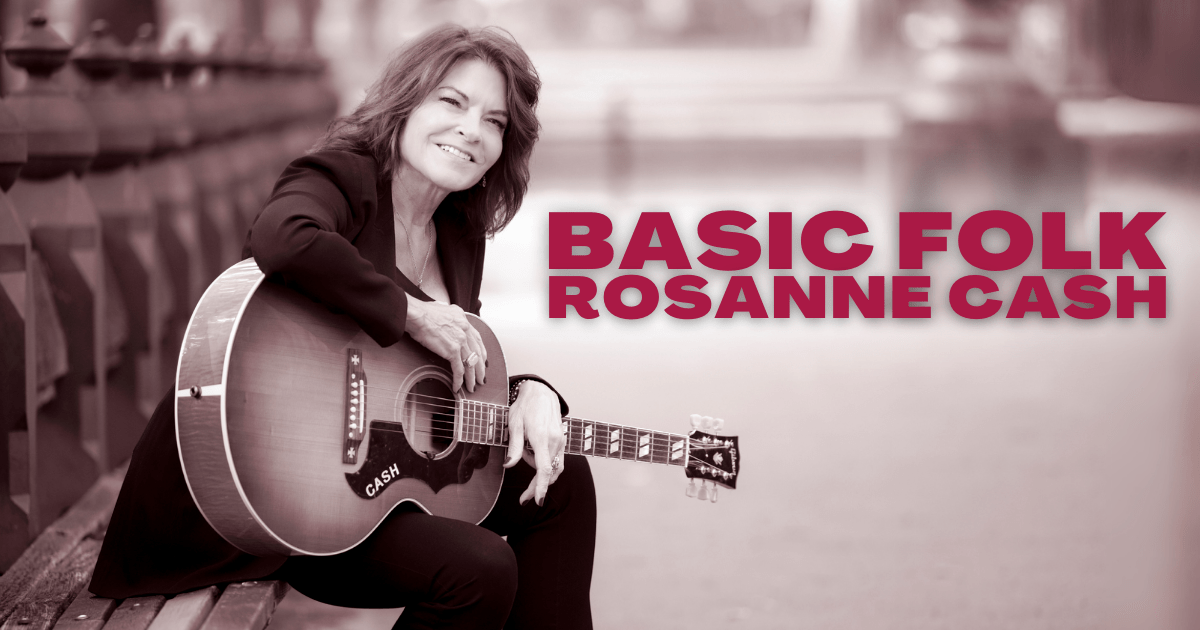
Rosanne Cash Is Not a Regular Mom (Basic Folk)

Thirty years ago, Rosanne Cash experienced an all-encompassing transformation. She had just left Nashville, her major label record deal and her marriage. She was living in New York and found herself falling in love with her producer, the guitarist John Leventhal. Her previous album Interiors had set the stage for the new Rosanne. With her landmark album, The Wheel, Cash and Leventhal came together to work on a brand new sound for the artist, who had a well established career in mainstream country along with multiple #1 radio hits. She blew it all up for love! Cash had been unhappy and was yearning to live a life of authenticity in her music and her personal life. Three decades later, she’s reissued The Wheel and is ready to TALK ABOUT IT.

LISTEN: APPLE • SPOTIFY • STITCHER • AMAZON • MP3

In our conversation, Rosanne addresses the inner critic and how she’s come to harness its power for good in the editing process. She took a painting class, where she painted a picture of her inner critic and has never looked back. After her divorce, she struggled with motherhood: being a good mom and trying not to ruin her kids’ lives. She looks back now with regrets and guilt as most mothers do. Her saving grace is that she was not a normal mom. Her oldest daughter assures her that she would not want a normal mom. We also talk about John’s upcoming solo debut album and why the two have established their own record label. Rosanne Cash is a treasure and I very much appreciated this deep dive into such a pivotal moment in her career and life!


Photo Credit: Pamela Springsteen

WATCH & LISTEN: Two Tracks from John Leventhal’s “Debut” Album

Earlier this week renowned guitarist, producer, and engineer John Leventhal announced his debut album, Rumble Strip, to be released on RumbleStrip Records, a label founded with his wife and collaborator Rosanne Cash that will be distributed by Thirty Tigers. Yes, you read that right, a man known for his nearly 50-year, multi-hyphenate career in roots music is releasing his first ever proper solo album. Leventhal made the announcement with the release of two tracks, an instrumental guitar piece entitled “JL’s Hymn No. 2” and a gritty, rockin’ Americana duet with Cash called “That’s All I Know About Arkansas.”

“JL’s Hymn No. 2” showcases the guitar prowess that has made Leventhal such an in-demand sideman and session player across his entire career. On both of these tracks, his playing reminds of such country and roots renaissance men as Marty Stuart, Buddy Miller, David Bromberg, and Larry Williams with each of his constituent musical skills – as engineer, producer, and picker – on full display. “That’s All I Know About Arkansas” is like a post-modern “brother” duet, with Cash stepping into the role of Buddy’s Julie Miller, or Larry’s Theresa Williams, bolstering and supporting her musical- and life-partner in a touching and artistically successful role reversal for the pair. You can hear the passion they have for each other’s music, for each being members of each other’s “bands.”

With a resume and career as exhaustive and expansive as Leventhal’s, it’s remarkable that he’s only reached this pivotal, “debut” milestone at this late-stage point. And, more remarkable still, is that Rumble Strip is clearly another opportunity for Leventhal to challenge himself, break new ground, experiment with new sounds and textures, and continue to grow, morph, and develop as a quintessential musician-producer. It’s engaging and exciting to hear him turn his studio control room magnifying glass onto his own music, his own record.

Rumble Strip will be released on January 26. Enjoy these two tracks from the project now, right here on BGS.


Photo Credit: Wes Bender

WATCH: Rosanne Cash, “The Truth About You”

Artist: Rosanne Cash
Hometown: Born in Memphis, Tennessee; Now lives in New York City, New York
Song: “The Truth About You”
Album: The Wheel 30th Anniversary Deluxe Reissue
Release Date: October 26, 2023 (video); November 17, 2023 (reissue)
Label: RumbleStrip Records

In Their Words: “I was turned inside out when I wrote these lyrics. I was full of so much longing that I thought I would drown in it. I was also trying to come to terms with the idea that I might not get what I wanted. It was a deeply melancholy moment, but it had the light of possibility. I gave the lyrics to John, like a supplication in code, and he wrote the music. That was a good sign.” – Rosanne Cash


Photo Credit: Pamela Springsteen