You Gotta Hear This: Vickie Vaughn, Theo Lawrence, and More

Every Friday, BGS shines a light on some of our favorite new tracks in bluegrass, folk, Americana and beyond. Then we ask the artist about the inspiration behind the music and pass their wise words along to you.

This week, we bring a new video from bluegrass group Ashleigh Graham & Appalachian Highway, who bring their song “Pinewood Prison” to life inside Brushy Mountain State Penitentiary in East Tennessee. Meanwhile, Los Angeles musician Paula Fong puts her own spin on “Turn, Turn, Turn” with a feature from Sean Watkins, while Alex Miller & Carson Peters offer a satisfying rendition of the Delmore Brothers classic, “Hillbilly Boogie.” In addition, Lost Dog Street Band frontman Benjamin Tod digs into the bluegrass canon with Larry Sparks’ “Natural Thing to Do” and Vickie Vaughn tips her hat to John Hartford on “Paducah.”

Nashville fans of Alison Krauss & Union Station will have a lot to look forward to as Theo Lawrence opens the ensemble’s shows at the Ryman Auditorium later this month. Get a taste of his style with “Today Is a Good Day,” which he wrote with Opry legend Bill Anderson. Finally, don’t miss Texas musician Red Shahan’s first-person reflections in “14 Miles From Home” or folk poet Amy Speace’s thoughtful original, “Days of Letting Go.”

We mean it when we say, You Gotta Hear This!

Ashleigh Graham & Appalachian Highway, “Pinewood Prison”

Artist: Ashleigh Graham & Appalachian Highway
Hometown: King, North Carolina
Song: “Pinewood Prison”
Label: Pinecastle Records

In Their Words: “‘Pinewood Prison’ grabbed me from the very first listen because it isn’t just a song—it’s a story that unfolds in your mind like a movie. When we decided to take that story to the screen, we knew we wanted to create something that felt bigger than a traditional music video, and filming inside the walls of Brushy Mountain State Penitentiary gave us an atmosphere we never could have manufactured.

“There were moments during filming when the place became so quiet and intense that you almost forgot there were cameras rolling. You could feel the history around you, and that brought an emotion and authenticity to the performances that I think people are going to see immediately. We wanted the video to be cinematic, but most importantly, we wanted viewers to become completely invested in the story. This was one of the most unique creative experiences I’ve ever been part of, and I’m incredibly proud of what we captured. Turn the lights down, turn the volume up, and watch all the way through!” — Ashleigh Graham


Paula Fong, “Turn, Turn, Turn” (Ft. Sean Watkins)

Artist: Paula Fong
Hometown: Los Angeles, California
Song: “Turn, Turn, Turn” (ft. Sean Watkins)
Album: A Bird on the Wing
Album Release Date: October 2, 2026
Label: Head Bitch Music

In Their Words: “With 10 songs already tracked, the album felt nearly finished but still needed something to round it out. We went through countless ideas before my manager Steve finally suggested a cover of ‘Turn, Turn, Turn’ – that timeless scripture-turned-song I’d grown up hearing from the Byrds. It was my producer Justin Sinclair who introduced me to Pete Seeger’s original, which I’d never heard before, and something about it felt magical enough to chase. It’s one thing to play a cover live, but my co-producer Phil Glenn felt strongly that a studio cover needed a real reason to exist. So we pulled ideas from several different versions of the song and shaped them into an arrangement of our own.

“As we talked through what that arrangement could be, the idea emerged to build it around artists who’ve influenced my music along the way. Abby Posner was an easy first call, I knew I wanted Justin’s voice on it, and Phil’s playing was clearly already woven throughout the entire track. In what seemed like an amazing moment of serendipity, Justin’s growing connections in Bell Choir Studios led to Sean Watkins agreeing to come play guitar on the track as well. On recording day, Sean laid down a series of gorgeous solo takes, and then even hopped up to the mic to sing on it as a featured artist. All in all, it felt like the stars aligned in a way that I couldn’t have imagined to bring this track into being and I’m incredibly excited to get it out into the world.” — Paula Fong


Theo Lawrence, “Today Is a Good Day”

Artist: Theo Lawrence
Hometown: Paris, France
Song: “Today Is a Good Day”
Release Date: September 4, 2026
Label: Warner Records

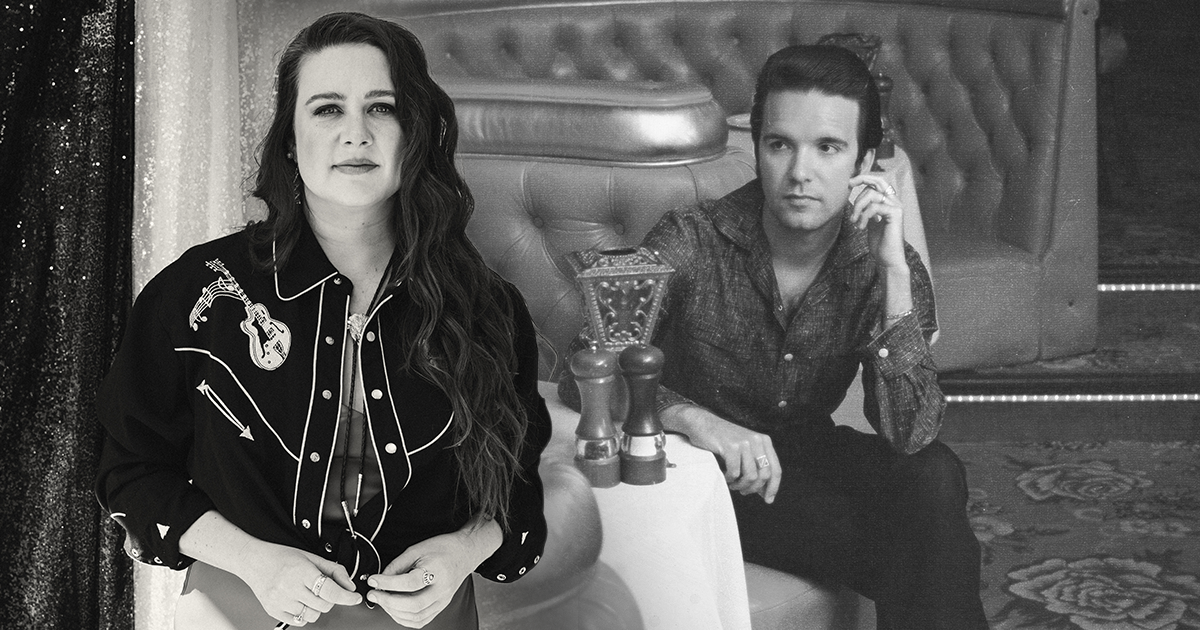
In Their Words: “When I heard I was going to be on the Opry, it felt like a good time to release a country song I’d been playing on tour with Alison Krauss called ‘Today Is a Good Day.’ It had been getting a warm response every night, so I called my friend Chris Scruggs and a few days later we recorded it together, leaning into that early ’60s Nashville sound. I wrote the song in Nashville with Bill Anderson, who knows a thing or two about country songs. His first big hit as a writer was ‘City Lights’ for Ray Price back in 1958. The song is about that moment when doing something sad feels like the right thing to do. Packing up and leaving before your heart gets broken beyond repair.” — Theo Lawrence


Alex Miller & Carson Peters, “Hillbilly Boogie”

Artists: Alex Miller & Carson Peters
Song: “Hillbilly Boogie”
Album: A Century of Strings, Stories & Songs: A Tribute to The Delmore Brothers
Album Release Date: October 1, 2026
Label: Billy Blue Records

In Their Words: “‘Hillbilly Boogie’ is a song that my grandad introduced me to, and it has remained a very special song to me! He had the 78 of The Delmore Brothers singing this song and I vividly remember cranking up his old Victrola and learning to sing it. Recording this song was one of the best days I’ve ever had in the studio, and I hope it shows when you put your ears on it. I was honored not only to be on this project and work with my producer, Jerry Salley, but also to pick with my good friend, Carson Peters. Carson’s musicianship is unmatched, and he’s one of the best songwriters and singers in Nashville. Hopefully this is the first of many collaborations to come.” – Alex Miller

“I am so happy to be a part of this project, and to be on one of my favorite Delmore Brothers songs with one of my favorite people in town, and produced by another one of my favorite people in town, makes it even better! Alex is part of the refreshing, authentic kind of talent that the current country music community is embracing nowadays, and I’m honored to be on this track with him. I can’t wait for the people to hear it!” – Carson Peters


Red Shanan, “14 Miles From Home”

Artist: Red Shahan
Hometown: Bluff Dale, Texas
Song: “14 Miles From Home”
Album: Hard Land
Release Date: August 6, 2026
Label: Make Wake Records

In Their Words: “I’ve had it in my head that I would never record this song for almost 20 years but maybe I’m getting soft, or maybe my wife and friends finally talked me into it. Regardless, getting to cut this one with Josh Serrato whom in a previous band we had played this one night after night made it worth it alone.” — Red Shahan


Amy Speace, “Days of Letting Go”

Artist: Amy Speace
Hometown: Nashville, Tennessee
Song: “Days of Letting Go”
New Release: The Cardinals (a collection of poems)

In Their Words: “I went to graduate school in Louisville, Kentucky, and somewhere on 65 North there was a large black billboard with white writing that said, ‘Opium Kills. Jesus Saves.’ I was working on a series of ‘persona poems’ – poems where the narrator isn’t me, is a character, a specific voice – and I imagined it as a male narrator driving back home after the funeral of his father. Of course, my own father had died in late 2019 and that was also a subject I was writing about in my work at the time. I wrote the poem with the repeating refrain – clearly in song form – but wanted to keep it a poem, until one of my mentors asked me why it wasn’t a song. I sang the whole thing to my friend Vance Gilbert and he said, ‘You know what would be cool? If you spoke the verse lyrics.’ And I told him it was originally a poem and he laughed.” — Amy Speace


Benjamin Tod, “Natural Thing to Do”

Artist: Benjamin Tod
Hometown: Sumner County, Tennessee
Song: “Natural Thing To Do”
Album: Country Is Dead
Release Date: September 4, 2026
Label: Thirty Tigers

In Their Words: “This has become a bluegrass standard in many circles now and I became obsessed with it after hearing it at a honky-tonk in Nashville at some point. Something about the brokenhearted longing and relentless loyalty harkens to something I can relate with personally. It is a natural thing to love someone enough to intentionally ignore trifling behavior. I believe this song sits well in a country western format and I love singing this one in the shower.” — Benjamin Tod


Vickie Vaughn, “Paducah”

Artist: Vickie Vaughn
Hometown: Nashville, Tennessee
Song: “Paducah”
Label: Mountain Home Music Company

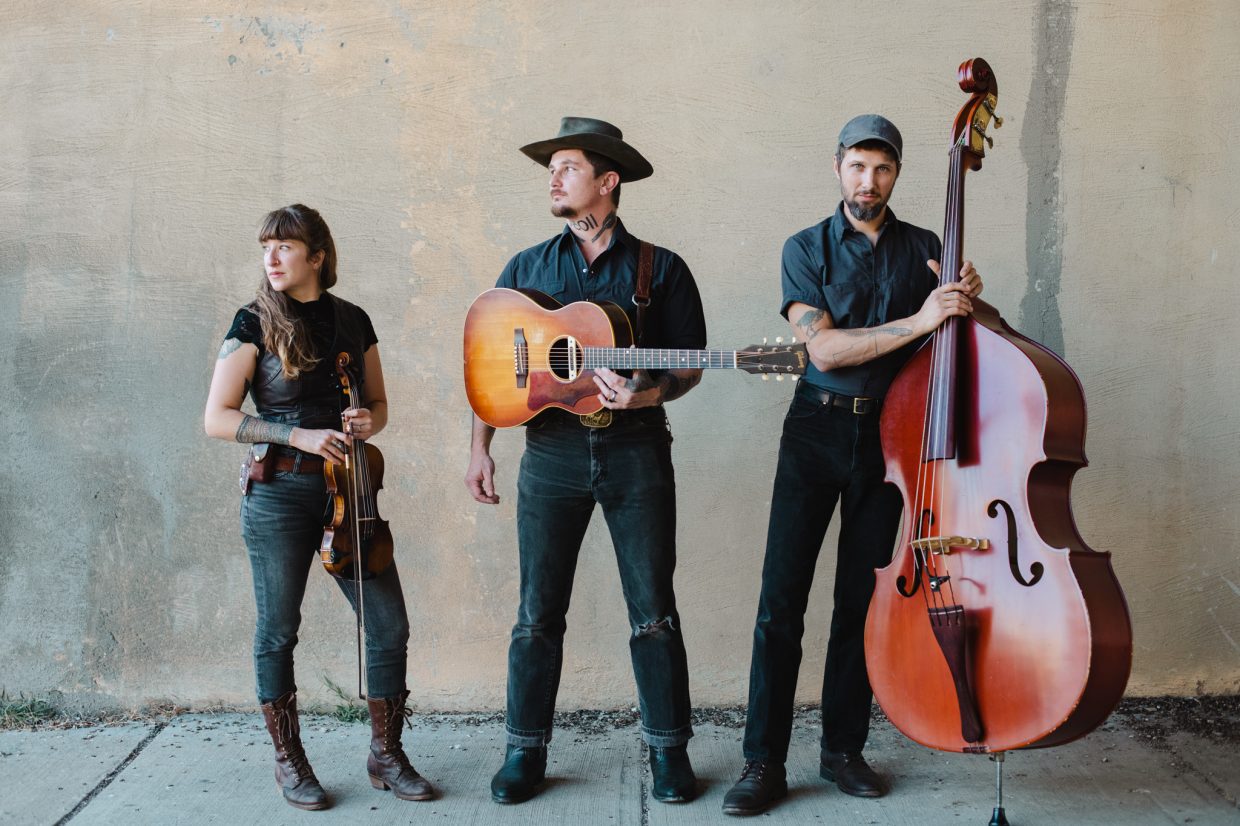
In Their Words: “The first time I heard John Hartford’s ‘Paducah’ was when a friend performed it about twenty years ago on Murray State University’s campus. I thought it was so dang cool and humorous that I asked him about it immediately after he played it. Since then, I’ve been dying to put my own spin on it. Paducah is and will always be the most creative city I’ve known. I was lucky to grow up in the river bottoms on a farm in Symsonia, Kentucky, 20 minutes away from town. Paducah is full of hard-working, wildly creative people who let their hearts lead them in their artistic endeavors. It’s rich with the most talented, down-to-earth people you’ll meet. It’s easy to see how Hartford loved it so.” — Vickie Vaughn


Photo Credits: Laura Schneider (Vickie Vaughn), Jo Anna Edmison (Theo Lawrence)
LISTEN: Benjamin Tod, “The Paper and the Ink”

Artist: Benjamin Tod
Hometown: Muhlenberg County, Kentucky
Song: “The Paper and the Ink”
Album: Songs I Swore I’d Never Sing
Release Date: September 23, 2022
Label: Anti-Corp Music

In Their Words: “I wrote this song about the notebook passed down to me from my late friend Nicholas Ridout. It was one of his dying wishes for me to carry on his music and his wife gifted me his last notebook that held 4 entries from him. It is my prized possession and it keeps me dedicated to the art and craft of songwriting.” — Benjamin Tod

Lost Dog Street Band’s Benjamin Tod Examines What ‘Glory’ Means to Him

In conversation, as in his songs, Benjamin Tod is an open book. As lead singer-guitarist for the Lost Dog Street Band, he’s not afraid to speak honestly and candidly about his struggles with heroin addiction, a debilitating mental state or a rough childhood that led to most of his adult life being out on the road and in search of something, anything to take the pain away.

Whether consciously or subconsciously, the endless wandering perpetuated his restless urge to play music, either on a street corner, subway platform or wherever someone might drop a dollar in the bucket so he could afford to eat that night. Tod, 31, is an old soul who has traveled as many miles as someone twice or three times his age, with his formative years spent hopping trains, hitchhiking or just walking endlessly toward the unknown horizon with guitar in hand.

He survived the darkness, the trials and tribulations of simply being human, by having a well-earned chip on his shoulder, this defense mechanism of sorts to keep the wolves at bay. And it’s that chip he’s trying to eliminate moving forward, where the once dreaded notion of showing vulnerability to others is no longer seen as a weakness, but now something to be embraced.

That sense of reflection and self-discovery resides at the core of the Lost Dog Street Band’s latest album, Glory. Alongside Tod’s life partner and violinist Ashley Mae and bassist Jeff Loops, the trio’s latest offering is a rollicking adventure seeking truth and redemption through sorrowful melodies and lyrics aimed at practicing patience and gratitude — another chapter in the journey of one of today’s most revered and intriguing folk acts.

BGS: There’s been a lot going on, not only in the world these last few years, but also in your personal life. Where’s your head at these days?

Tod: Well, when we’re not on the road, I’m very much a homebody now. I own 200 acres in Muhlenberg County, Kentucky. Ashley and I built a cabin and live off the grid. It’s an incredible amount of work. I’ve established a lot of roots there in Muhlenberg County. We’ve started a nonprofit organization that helps disenfranchised kids get instruments and music lessons. So, I’m pretty well entrenched there and it’s certainly a lot harder to get back on the road now. I’ve been on the road since I was 16, basically. It certainly doesn’t have to glamour that it used to.

Even before the shutdown, I know a lot of people were starting to feel that burned out vibe of having to tour, because you couldn’t rely on other avenues of revenue as a performer.

Yeah. I have established myself with royalties and publishing, things of that nature. So, I can always float by without the performance side of things. It’s not necessary financially for me to tour any longer. But it is nice, for bigger projects on the land [in Kentucky], to be able to get that one-two punch [of revenue]. And it’s also good to continue to keep your name in the general public’s recent memory. You know, I think that’s the biggest fear with any artist. If you haven’t been touring for six months or however long, you’re always watching what other people are doing. You’re like, “I need to get back out there.”

It’s a hard thing to do, to not compare yourself to others, even if you don’t want to.

Well, I keep a flip phone, so I don’t generally keep the types of apps and stay as connected as most people my age do, or most people in the general industry, or people in general nowadays. But, no matter how you slice it, it affects you psychologically if you start to keep up with what other people are doing. It’s also hard in the situation of how we have built our fan base and our career. We have been clawing for every single inch for over a decade — without PR, without management, without a booking agent for most of it.

That also shows that you’re looking at things in the long run. Is that something that’s in the back of your mind?

I certainly imagine my legacy a lot. I think the younger that you start envisioning your life through the lens of your legacy, the better off you are. It makes you a better person, in general. It has nothing even to do with art. But there are so many things working against me, personally, right now with my body. My arms give me a lot of trouble. I’ve got nerve damage in them and it’s getting harder and harder to be on the road and play guitar.

How is your mental health right now?

My mental health has been better the last year than it ever has been. It’s a continuous struggle. I’m a little bit later in my recovery now. I don’t even know how to explain it, but every stage matures, like any other thing in your life. With guitar playing, it’s like compared to when I started at 15, I’m a much more mature guitar player. [Nowadays], I can pick it up and I can set it down for a month, and pick up right where I left off, as opposed to when you first begin. This last year, it’s been rebuilding the patterns in my mind that I had destroyed for so many years — all of the unconscious patterns you build, the way you react to things, the way your defense mechanisms spike. I’ve been really working at rebuilding all of that. The key for me is patience and gratitude. Those two things are the most important thing for anyone. But, especially for me as an individual going through recovery, it’s constantly coming back to patience and gratitude.

So, does that mean that you subscribe to the idea of “the now”?

Yes, absolutely. I mean, there’s always a constant balance and fight between taking advantage of the opportunity or just the vision of now, and the feeling of now, and also preparing yourself for the future.

When you talk about rewiring your thought process, I would surmise that one of those defense mechanism is that vulnerability is weakness. But, to rewire your mind, you realize that to show vulnerability is to show growth, of being aware of your emotions and not running away from them.

Yes. “Stand up tall and learn to fight in the face of all you writhe.” That’s a line from my new solo album I just finished recording — just finalized the master today actually.

How does the title of your new album, Glory, play into your life right now?

Well, the first and last songs [on the album] are two different perspectives of glory that exist in my own psychology. One that’s a really angry, passionate fight for life, a fight for something great than yourself. And the other being something much more gentle, appreciative. Like, we’re here and it is a miracle that you and I can sit here on a telephone and talk to each other. And it took so much human suffering and turmoil, and just one right decision made a generation [or more] ago. You know, you think about how drastic the condition of the entire world could have been just in a couple of bad decisions from the people in power in the past. Somehow, democracy and freedom have triumphed here on this tiny little continent, on this planet, and we’re able to enjoy it.

It’s all one thing, this ripple effect within all of us.

Yes. Metaphysics. I think on that a lot in life, and especially intuition. Learning to really trust your intuition the older that you get. Do you get a bad feeling about someone or a situation? Listen to that. There’s something there.

On the new album, only busker friends of yours were used on the recordings. I’m curious about that, and the idea of the busker in a world of digital technology and distraction. These are incredible performers who learned how attract an audience when no one was there to be an audience.

Yeah, you can hear ’em from a mile away. People will talk about how the decibels you sing at are crazy. Well, I learned to sing and perform on Lower Broadway in Nashville. I’ve busked in every single market in this country. So, if you wanted to make money, if you wanted to eat, you were competing with the bars, with their windows open. We know how to get people’s attention. Busking is not just playing music on the street; it’s its own type of theater. There’s certainly an element of theater to it. Vaudeville, this kind of showmanship that doesn’t really exist on a broader scale. Now you see people pretending to do it and it’s really bad. But when it’s authentic, you can taste it.

And I’ll be honest, as far as I see it, [busking] is dead. COVID did a big hit on it. There’s not the street culture there used to be. I walk in these downtown areas and I don’t see crusty kids. I don’t see a lot of like transient panhandlers. I don’t see a lot of artists on the streets anymore. I don’t see it anywhere. The way that artists used to move in this country — as far as the way that they traveled, the way that they lived, the entire aura of it — it doesn’t exist in the same capacity as when I grew up.

And that scares me, because when I was growing up, we were all friends back in the day. I know hundreds of people from that era, if not thousands, that are established artists now. Where is this next generation of artists going to come from that’s organic, and that is going to create real art? Folk music comes from that very special part of the lower class. It comes from that very special part of the poor — that’s where it originates from. Berklee College students can play folk music, but who gives a shit? Have they ever lived? Where is this next generation of real folk music and real culture going to come from?

And then you have yourself, being a longtime busker, a transient trying to survive on the streets, now in demand on big stage in front of large audiences.

To see it manifest over the past few years with the general public has been incredible from the perspective of knowing that the reason people connect with my music is because I am succeeding in my intention — to take dark feelings and perfectly ascribe them into a song, into words, into melody. My intention with music is to help people be better at being themselves. For me, my music is a prescription for my own madness, and it happens to be the prescription for some other people. It’s not a cure, but it helps. It helps me. And I’m ecstatic that it helps other people. Now, the struggle is just getting the notoriety from the industry. I’m a competitor. So, I want to hear from the gatekeepers.

It’s a constant challenge of calibrating how much it affects me and doesn’t. I always relate back to Guy Clark’s legacy, who is my absolute idol. The way that he handled business. The character that he showed throughout his entire career of not being willing to compromise the most important things to him, you know? I’m always going to hold that. And I’ve come to terms with knowing that I might end up like Guy. I might end up being every other artist’s favorite songwriter, but not respected by the gatekeepers or the industry elite because I won’t play their game, and I’m not going to. I’m reconciled with that. I’m okay if that happens, but I’m going fight like hell to get in that door.


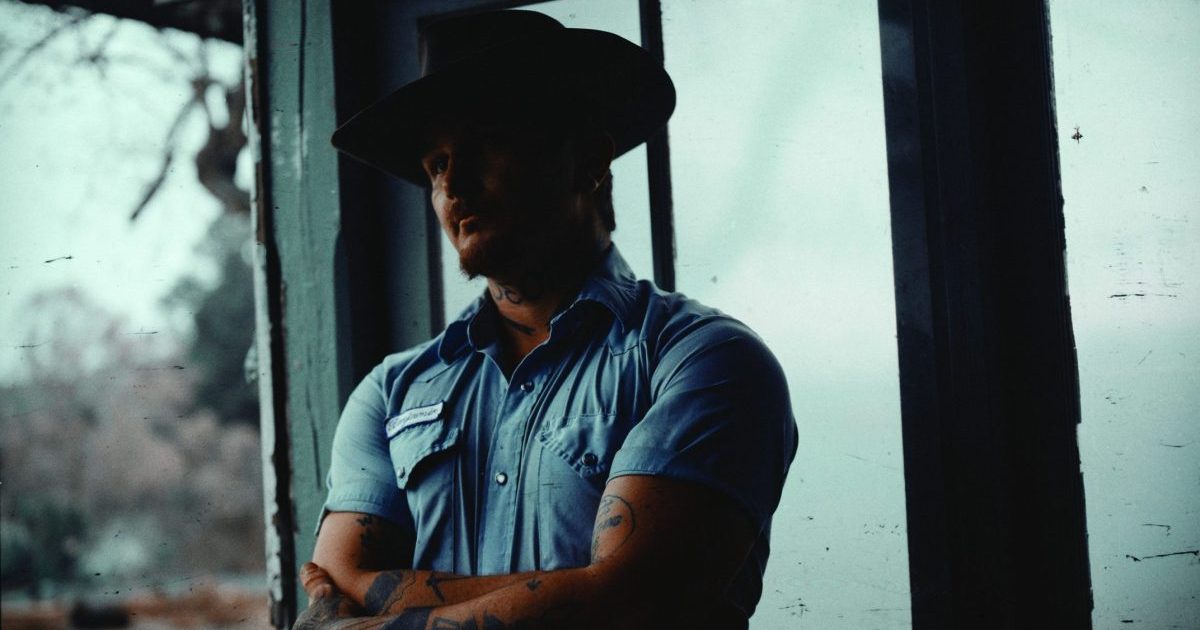
Photo Credit: Cass Blair (top); Melissa Payne (insert)