John Reischman: Between the Salish Sea and Salt Spring

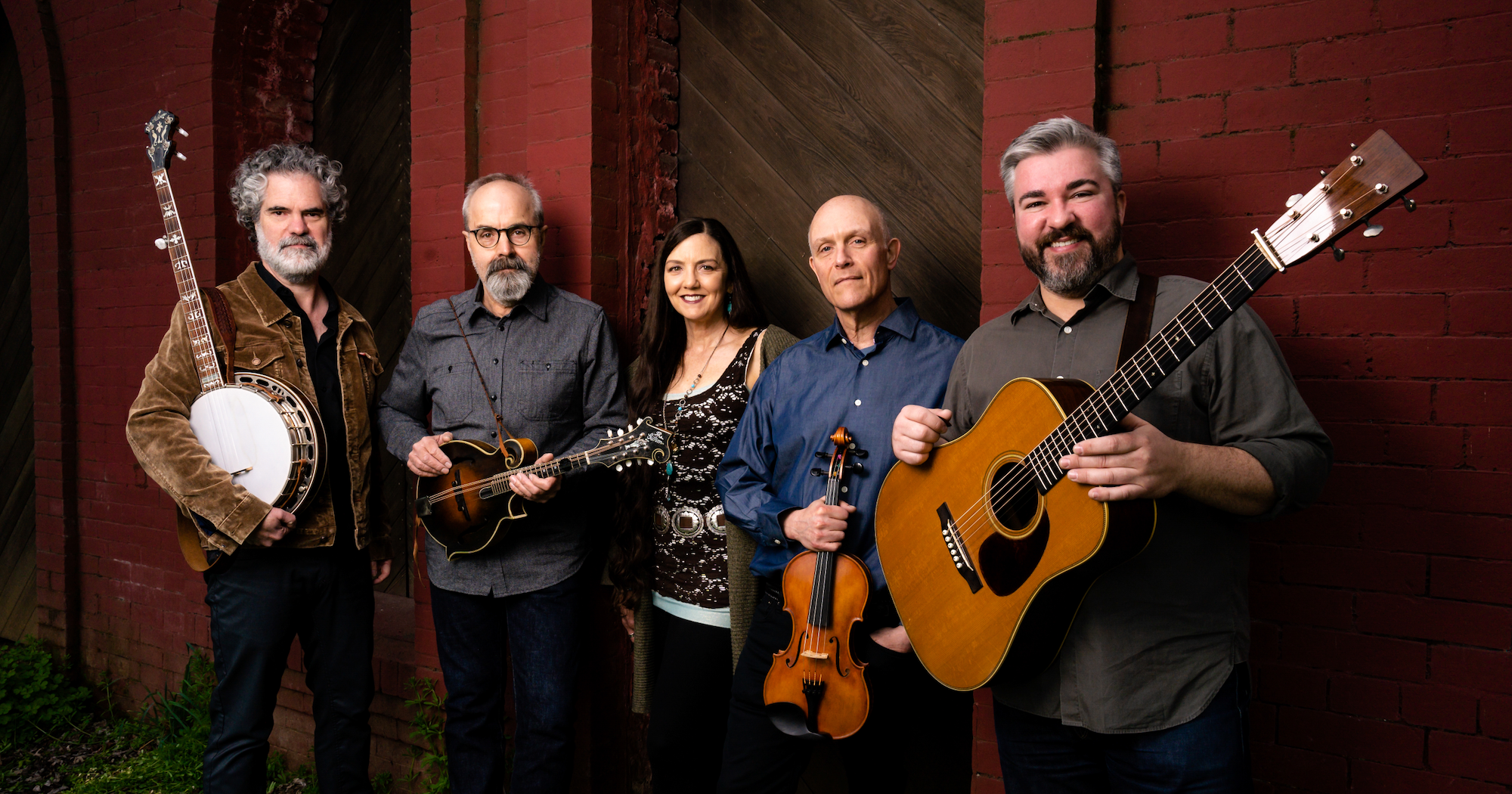
There are no U.S./Canada border wars when it comes to John Reischman. The revered mandolin master was born in Northern California but has lived in British Columbia since the early 1990s. His longtime band, the Jaybirds, are a quartet that includes two members who are also based in British Columbia (bassist/vocalist Trisha Gagnon and banjoist Nick Hornbuckle) and two who reside in America (fiddler Greg Spatz lives in Eastern Washington and guitarist/vocalist Patrick Sauber is from Southern California).

Their latest album, The Salish Sea, refers to the body of water between Vancouver Island and the British Columbia mainland. The record is their first since 2017’s On That Other Green Shore along with being the first to feature “new” guitarist Sauber on the entire album. The song “The Salish Sea” not only serves as the album’s title, but also is part of an original “Bluegrass Concerto” that Reischman was commissioned to create for FreshGrass in 2024. The honor is just one example in a long line of accolades for Reischman, who began his career in the Bay Area bluegrass/folk scene of the 1970s (including a stretch with the Tony Rice Unit) before moving to Canada, where he started the Jaybirds as well as performing solo and in other groupings.

In recent years, Reischman has seen his song “Salt Spring” become something of a modern bluegrass classic. He spoke with the BGS from his home in Vancouver about “Salt Spring” as well as The Salish Sea, his famous Lloyd Loar mandolin, and how he got into bluegrass music.

What was the process of putting the new album together?

John Reischman: There was one venue in Washington State where we had a residency. It was in the fall, in a beautiful spot. It was just ideal. So we took the extra day, worked up like six new tunes, and then started performing them right away. I guess this was October of ‘23.

And then you recorded the album in Vancouver?

In December of ‘23, I wanted the band to check out the studio here in Vancouver, where we ended up ultimately recording. I just want to make sure everybody was cool with it. I knew I liked it, because I had used it for my solo record, New Time & Old Acoustic. They all liked it. At the end of any tour we had that was close to Vancouver in 2024, I’d book a day or two in the studio, and we’d go record two or three or four songs. We were able to perform all this material mostly before we recorded it. … And it was great, because we’d be warmed up from the tour and we’d go in and track some tunes.

This album was the first in a while, and also the first that Patrick Sauber was fully on it.

Right, On That Other Green Shore came out in 2017. That was kind of the tail end of our time with [guitarist] Jim Nunally being a band member. He was exploring other things and decided he’d leave the band. We had a few more tracks to do… and we had some dates on the calendar.

I thought of Patrick immediately, because I’d known him for many years and I thought he’d be good. So he signed on for a tour and then another tour and it was just like, “This works great.” We asked him to join and he immediately said yes. He was a great fit.

How did the Jaybirds come together in the first place?

I didn’t really set out to have a band, except for the fact that I had a solo record called Up in the Woods. There was a local festival, so I put the band together to help promote the record. Seemed like a good idea. And I liked playing with all those people and it just continued on.

It’s called John Reischman and the Jaybirds, because I conceived of it. My name was probably the most well known at the time, but I wanted to be integrated into a bluegrass band. People present stuff, and I almost always accept it. Mostly it’s a pretty democratic presentation, I think. That’s what I like. It’s not Gladys Knight & the Pips.

Can you talk about the title track and how it’s also part of a larger project?

I had been asked to write what they call a “Bluegrass Concerto” by the East Coast festival FreshGrass, and I came up with these three tunes that work together. The first tune was the first movement, which ultimately was called “The Salish Sea.” I thought this will be my contribution to the new Jaybirds record, because they were involved with the performance of the Concerto.

We performed it [at FreshGrass in 2024] and I really liked the idea of having two mandolins and I’ve always loved two fiddles. I knew Darol Anger was going to there, so I asked him if he’d play twin fiddles on it. And then Sharon Gilchrist is a good friend and great mandolinist; we’ve played a lot together, and I asked her to play a mandolin on two of the three pieces.

I’ve got to acknowledge David Grisman, because the music is influenced by his “Dawg Music.” It’s also the sound that I initially heard on his first solo record, The David Grisman Rounder Record. He incorporated harmony mandolin on a lot of it.

It must have been very inspiring and gratifying to receive this commission.

You know, I’ve written a lot of tunes and a lot of folks have learned my tunes, which is really gratifying. But to have been commissioned to write this and have the confidence of this great festival and organization, yeah it was.

I had plenty of time to work on it and the time that it mostly came together was when I think my wife was visiting family. I had the house to myself. That first piece, in particular, really developed over a period of time. The second one [“The Family’s Farewell”], I came up with the A part pretty quickly and it took a while to get a bridge for it.

The third part [“The Little River Ramble”] was similar. … The thing about the concerto format is the third movement typically has an extended solo section and it’s often a bender where it’s just the featured soloist playing solo without any accompaniment. But I wasn’t really comfortable so much with that. I thought, I’ll just have it break down and I’ll solo all through there but have it build back up.

I’m really happy with the response it has gotten. Even playing it just as the five-piece band, I think the band sounds great on it. It’s only like icing on the cake when the twin fiddles and the twin mandolins are there.

And this spring, you’re going to record the entire concerto?

At the end of March, we’re going to be on tour on the East Coast and the FreshGrass Festival has a recording studio. They offered to make the studio available, so we’re going to record that just as we performed it, with Darol and Sharon joining in. That will be part of a solo record, even though I’m using those musicians. And I have other sessions planned. I’ve done one session that will add to the whole thing. Those three tunes of the concerto will just be one component of the new recording.

“Salt Spring,” one of your older songs, has become a highly popular instrumental now in the bluegrass world. How much of a pleasant surprise has that been?

It’s kind of remarkable to me that it’s as popular as it is. I mean, I’m not complaining. It’s great. … But it’s interesting how it’s just traveled all over and people think it’s just a traditional tune in some circles. They have no idea that it was composed by me. That’s cool, too.

The Jaybirds recorded it and it came out on a CD in 2001. We were at a music camp with some folks from Colorado and they learned it. I think that’s largely the beginning of it getting circulated among other people – where they took it back to Colorado. They’re the “patient zero,” I guess.

I know that a certain generation of Berklee students were playing it a lot, and maybe a bit later – maybe 10 years later. It’s pretty cool having people play your tune when you’re not there. That CD was never available digitally until recently, but we made a video of it around 2011… and that was the source, I think, for a lot of people learning it.

And then you recorded it again with Molly Tuttle, Alex Hargreaves, Max Schwartz, and Allison de Groot on your 2021 solo album New Time & Old Acoustic.

I didn’t have all the material when I started that whole project, but I knew I wanted to re-record “Salt Spring” with some of these younger musicians who had grown up playing it.

What do you remember about writing it? And why do you think so many musicians have gravitated to playing it?

I was on Salt Spring Island [in British Columbia] staying with some friends and they had a little old turn-of-the-century Martin small-body guitar. I was just playing the guitar and I was playing out of a D chord shape, and the A part of the tune just kind of took shape under my fingers. It was memorable enough that I don’t think I had to record it to remember it. The B part was just this little phrase I would play on the mandolin, just noodling around … so I just kind of stuck it on there and it worked pretty well.

I think the thing about the tune is the basic melody is very simple, but the way I played on the mandolin, the technique I use, is not quite cross-picking. But it falls into a right-hand pattern that sort of mimics the way the frailing banjo is played with that “bum-ditty, bum-ditty, down-down up, down-down up” pick stroke. So, these extra “down ups” are drone notes and that just kind of enhance the whole overall effect. Because of that, it lays out really nicely on the banjo. Then on the fiddle, you can add drones and add to it that way. And on the guitar also, you can fall into that kind of “bum-ditty” pattern as well.

I think you can learn the tune pretty easily. It’s not super challenging like some fiddle tunes where they’re very detailed in the melody. It’s pretty straight and so I think that’s partly why people gravitate towards it.

You grew up in Northern California. How did you get interested and involved in music, specifically bluegrass music?

Have you heard of a guitar player named Robben Ford? He grew up in the same town where I did in Northern California. He was in a high school band with my neighbors. I must have been 12 or 13. They were rehearsing on a patio and I went over to listen. I was interested in music and I heard them play the Freddie King tune “Hideaway,” which Eric Clapton recorded on the John Mayall & the Blues Breakers record. My brother Steve had that record. I recognized the tune and I thought, “What? This is impossible. This sounds as good as the record!”

From then on, I was just focused on trying to play the guitar. I had taken guitar lessons prior to that, but it didn’t really work. But there were guitars around the house. So that was the thing that really sparked my interest in learning to play. But I was open to all kinds of music. I’d have access to the PBS station KQED and they’d often air Pete Seeger’s Rainbow Quest, where he’d have different folk musicians, bluegrass musicians, old-time musicians. I thought, “Oh, this is cool!” And then the mainstream presentation of bluegrass with The Beverly Hillbillies, having Flatt & Scruggs on it, and the Dillards and the Country Boys playing on The Andy Griffith Show.

At some point, I had access to a mandolin, which I associated [with] bluegrass music, and taught myself to play it. I tuned it to an open chord for a long time, like a banjo, which was incorrect. And I didn’t use a pick. But eventually I got things squared away.

I discovered the John Hartford Aereo-Plain record. I saw them on TV as well. That was very inspiring. Then I discovered Norman Blake and Vassar Clements. I come to find out they had their own records. … That first Norman Blake record, I couldn’t believe it. I just flipped over that, and I thought, “This is so great!” And I’d heard Doc Watson at that point, so I just got really interested in it, and focused on that music, primarily.

So, was the Good Ol’ Persons your first significant band?

Yeah, it was the first real pro band I was ever in, and I was a fan of theirs before that. I [had] lived in San Francisco for a short while and saw their original lineup, which included all women. And it was exciting to get the opportunity to play with these folks. Because I was living near Eugene, Oregon, and I was just playing the mandolin all the time – a lot with my brother, Steve – but I wasn’t in a band, and I was working on a farm, just part-time. And a friend from the Oregon bluegrass scene had joined them and they needed a mandolin player. He said, “I know a guy.”

That placed me in the Bay Area, which was a great scene. There were lots of good bluegrass bands. And the Grisman Quintet was there. … But the thing that set Good Ol’ Persons apart was their original material, because Kathy [Kallick] is a fantastic songwriter. And Paul Shelasky, who was in the band, also wrote great songs. That opened the door for me to try and write tunes – because, “Oh, these guys write tunes. I’ll try it.” I wrote a few and people liked them. That just gave me encouragement to keep at it, which I have done.

So consequently, when Grisman and Tony Rice parted ways, Tony was aware of me. He’d heard me play at the local bar. He wanted to put a band together and needed a mandolin player. So, I went to the audition and he hired me.

You are well known for having an antique Gibson Lloyd Loar mandolin. What do you think makes those mandolins so special?

I guess that [mandolin] was kind of the ultimate expression of Gibson mandolins. But there’s plenty of new makers and a lot of them are using that basic design. So, aesthetically and as far as the craft of the instruments, some of these builders are way better than the Gibson mandolins were to look at, but the Gibsons have 100 years of aging and playing.

I think the playing of the instrument contributes hugely to its sound. Because, if there’s a Lloyd Loar that left the factory and went into someone’s closet and never came out for 50 years, I don’t think it’s going to sound like one like mine that has been played consistently over time.

I feel fortunate to be the caretaker for this great instrument. I think for most bluegrass musicians, it’s not only the music, but it’s the tools. These vintage instruments, like the Martins from the ‘30s and ‘40s, and Gibson mandolins from the ‘20s, and old banjos, it’s just a vibe that goes along with the music and aesthetic.


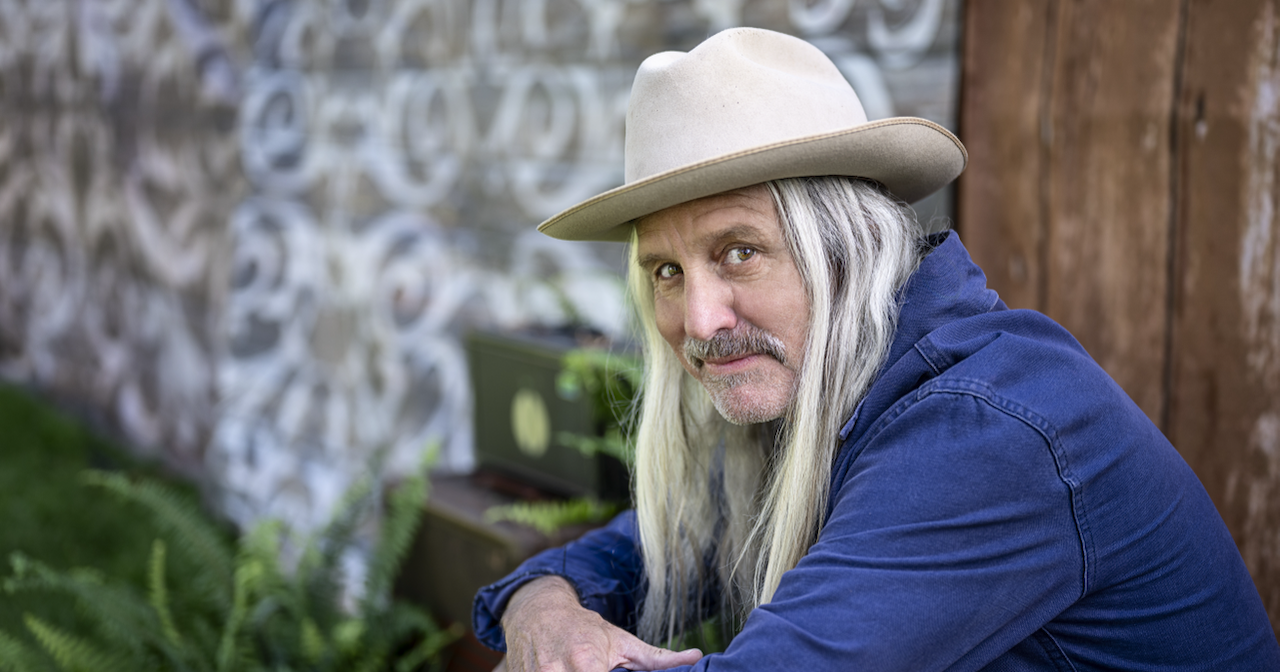
Photo courtesy of John Reischman.
BGS 5+5: Jesse Appelman

Artist: Jesse Appelman
Hometown: Oakland, California
Latest Album: Where We Go (released February 20, 2026)

If you had to write a mission statement for your career, what would it be?

For me, music is about community, connection, and collaborative creation.

It’s about the intimacy of singing harmony with someone, or finding musical ideas that only occur to me because of what someone else just played. I’m in awe of people like Keith Jarrett who can carry a full solo show, but my musical voice only feels complete in collaboration. I play best when I have things to respond to.

I leave most festivals with at least one new real friendship, forged through a shared language and the vulnerability of playing music together. There are not a lot of spaces where this can happen so easily, especially once you’re past your 20s, and they only exist because people keep showing up and participating.

I’m most interested in the music that results when musicians prioritize the collective sound while still bringing their full and unique personality to the table. When everyone listens and tries to make everyone else sound better rather than demonstrating their own ability. It’s easy to take for granted the ability to sit down with strangers and create music in real time but we are so lucky to get to do it.

Genre is dead (long live genre!), but how would you describe the genres and styles your music inhabits?

I don’t think anyone involved in this record ever discussed what genre of music we were making. Not John Mailander, who produced the album, and not the band (Eli West, Sami Braman, and Emily Mann). We talked a lot about the how and the why. We talked about density and space, groove, melody, interaction, texture, and flow. Nobody asked if they should be playing these tunes like bluegrass, old-time, Americana, or anything else.

So what kind of music is it? It’s the sound of these particular musicians playing these tunes, trusting their ears and instincts, and adding their unique personalities to the stew. Bluegrass is certainly in there, and old-time, and probably some jazz and classical, but it’s not a conscious “little bit of this and little bit of that,” it’s just what comes out when we play without thinking too hard.

I remember listening back to the tunes at the end of the first day in the studio and John said something like, “Isn’t it cool how you can do all this planning and arranging and preparing, but you have no idea what the album will sound like until you start making it?”

Some musicians immerse themselves in a single tradition or lineage and spend a lifetime going deep inside it. I listen to a lot of stuff like that, and it’s some of my most beloved music, but when I play I’m most interested in what happens when you agree on priorities and principles, and let musical identity emerge. My priorities come from lessons learned from musicians in my West Coast string band community. Some get called innovators, some traditionalists, but all share a commitment to deeply-felt, collaborative, and highly personal music-making.

Music is an activity and genre is a labeling system; the best I can do is focus on the activity and get the right people together and trust that the result will sound like us.

If it needs a label, maybe string band music that breathes?

What rituals do you have, either in the studio or before a show?

I have a loose mental checklist that I try to review before I go on stage or into the studio or even to a jam. I don’t succeed at all of them all the time but it’s a north star to aim for.

The first is from Chick Corea:

1. Play only what you hear.
2. If you don’t hear anything, don’t play anything.

This is simple and sometimes really hard. To me it means that every note should exist in my mind before it comes out of my hands – whether it’s a particular texture when playing backup or a phrase in a solo. Even down to the tonal color, dynamics, and articulation. This takes deep focus and deep listening both outward to the band and internally to your own ideas. When I listen to my favorite improvisers – Jim Hall, Stuart Duncan, Keith Jarrett, David Rawlings – I hear this level of intentionality.

The second is from John Hartford: “Style is based on limitations.” This means giving myself permission to play within my actual capabilities rather than the ones I wish I had. If I have to take solo over something that is outside of my comfort zone in terms of tempo, harmony, or whatever, I search for the most musical solution available within the boundaries of my own technical and conceptual limitations. This might be something simpler and more spacious than what I might feel like I’m supposed to play, and consequently truer to my own voice.

The rest of the checklist: Stay relaxed in mind and body. Listen deeply at all times. Never sacrifice groove or tone to execute an idea. Never go on autopilot when playing behind someone else’s vocal or solo. Search for the most beautiful idea, not the cleverest.

Which elements of nature do you spend the most time with and how do they impact your work?

My happiest place outside of music and family is underwater. I scuba dive and snorkel for the same reasons I play music. It feels like a portal into another universe. Diving requires an intentionality of every movement that I try to apply to making music. Your time underwater is limited by the air in your tank, and the more you exert, the faster you breathe. Every muscle movement costs you air and time, and the best divers carry themselves in the water with a calm and economy of movement that is almost meditative. It’s a flow state that slows your breathing and lets you focus your attention fully on the environment around you. I make my best music when I find that same state and put most of my awareness on what’s happening around me.

I find a lot of inspiration in California’s landscapes and colors. Kelp forests, rocky coasts and windswept coastal meadows with washed-out browns and green, golden hills dotted with green oaks, the pale gray granite of the High Sierra. There’s an aesthetic minimalism to these environments that I think shows up in some of my music, like “Lyell Fork,” a stream that flows from a glacier on a high peak in Yosemite and flows through alpine meadows and over granite slabs before joining the Tuolumne River. Or “Montaran” which is a stretch of coast south of San Francisco. In both cases I thought those tunes sounded like how those places feel.

What would a perfect day as an artist and creator look like to you?

Waking up to my kiddo climbing in bed for a cuddle. Breakfast, immediately followed by some quiet unstructured time with an instrument in my hands with an extremely good cup of coffee, before all the details of life fill my brain. A hike or bike ride with my wife. Some silly afternoon play time with my kid. Cooking mapo tofu for family dinner. Tunes and songs in the evening with a few dear friends. Someone else sends all my emails for the day.


Photo Credit: Giant Eye Photography

Steve Poltz Loves a Tangent

Steve Poltz has built a career by following each song wherever it wants to go. Sometimes that means a meticulously fingerpicked melody. Sometimes it means a story that veers off into comedy, confession, or absurdity before circling back to the heart of the matter. That tangential nature – equal parts songwriter, raconteur, and road-tested troubadour – has become his signature, especially onstage, where no two of his shows are ever the same.

Poltz’s new album, JoyRide (released January 30, 2026), reflects that same restless curiosity. Trim, deliberate, and capped at 10 songs, it distills decades of touring, collaboration, and lived experience into a tightly sequenced record designed to be heard in one sitting. From satirical observations about modern life to deeply personal reflections shaped by years on the road, JoyRide captures Poltz at a moment of clarity – still chasing the perfect song, still trusting instinct over plan, and still finding meaning in the long way around.

Long before JoyRide, Poltz earned his reputation the slow way – by logging miles, swapping verses with fellow songwriters, and learning how a room breathes. Founder of the San Diego-based rock band the Rugburns and co-writer of Jewel’s breakthrough “You Were Meant for Me,” he has never been defined by that early success, instead carving out a singular path marked by humor, humility, and an almost reckless openness.

In a conversation with BGS, we spoke with Poltz about the making of JoyRide, the longtime relationships that have sustained him, and the zany, unpredictable ride that has been his career. Whether sharing a bill with old friends or holding a crowd rapt with nothing more than a guitar and an improvised aside, Poltz approaches music less as a performance than as a conversation – one where the destination matters less than the unexpected connections made along the way.

Let’s start with early memories. Was there a moment when music really clicked for you?

Steve Poltz: I remember when I was in second or third grade, I stuttered, had asthma, eczema, and I didn’t hang out with many people. I started playing guitar when I was six. So I brought the guitar to school for show and tell. And I sang the song “Sloop John B” in class. And other kids brought snakes, brought their moms who were nurses or doctors or firemen, and their dads and stuff. I sang a song on guitar. I went out and sat alone. I remember I opened my lunch and I looked up and there were six girls around me. I thought, “This is all I have to do!” That was it. That was the plan.

I had a friend who was a DJ at San Diego State University [radio station] KCR, and she moved in with these roommates. They had brought this record by that had just come out by this woman named Rickie Lee Jones. It was her eponymous debut LP. And, oh my God, I listened to that record nonstop. There was a song called “On Saturday Afternoons in 1963,” which is still one of my favorite songs. It was in the movie Stripes with Bill Murray.

Man, two years ago I played Byron Bay Bluesfest in Australia and Rickie Lee Jones was on after me. Just the way the world works and the universe works, I knew her percussionist who plays the vibes, Mike Dillon. He sees me, and he’s sitting with Rickie Lee Jones, who’s like my hero. She’s one of my favorite lyricists ever. I’m a Dylanologist, and still, Rickie Lee Jones – those first two records especially – her poetry, the way she puts the songs together, I put it at the top of my whole pyramid.

[At Bluesfest] I told her I’d do a cover of “On Saturday Afternoons in 1963” and I segue into it from John Hartford’s “Presbyterian Guitar.” She loved John Hartford, too. She comes out during the song in front of 5,000 people, sings the second verse, and I just started crying. It was one of those full circle moments. These are the people that are my heroes.

You’ve become very deliberate about keeping your albums, like JoyRide, short and sweet. Why?

We’re just in such a quick world, where people don’t have the attention span. I’ve come to this conclusion that 10 songs is the perfect amount of songs to have on a record. Leave all these other ones on the cutting room floor. Put them out later on B-side compilations or something. Keep it under 33 minutes. It fits on vinyl perfectly. It doesn’t lose any of the resolution. If people are into you, it’s not too hard to give 32 minutes of your time. My hope is they go, “Let’s hear it again.” That’s my fantasy. One day I’ll get it right.

You’re known as a road warrior. What still thrills you about touring?

I feel like I’m kind of like the Grateful Dead in that I’m better experienced live than on record. Live, there’s magic. I’m still looking to make the perfect record. Maybe when I’m 80. I can’t believe Bob Weir just died, I mean he’s so young, 78. I’m like, “God, that’s like 12 years older than I am, I better get my shit together.”

I love it when things don’t work on the road. When something goes wrong, when animals attack. It took me a lot of years to get there, but sometimes things are really good when they don’t work. It messes with the audience. It’s like mental jiu jitsu.

Perhaps not surprisingly, you often reference comedy as an influence. How important is humor to your music?

I loved Andy Kaufman. I loved Richard Pryor. The early Steve Martin albums, Cheech and Chong – I memorized all that stuff. When I heard Allan Sherman sing “Hello Muddah, Hello Faddah!” I remember thinking, “Why can’t every song be like this?” Same thing with listening to the Dr. Demento [radio] show. Dr. Demento was huge. He played the Rugburns [on his show]. “Weird Al” Yankovic used to come to our shows and loved [our 1995 record] Dick’s Automotive. Because of that song, he wrote “Albuquerque.”

What are some of your earliest musical memories? You mentioned Rickie Lee Jones earlier. What are some other early prominent memories of being moved or touched by a song? Where were your first performances?

My uncle took me to see Julian Bream at the Hollywood Bowl. Classical guitar. That was it. I wanted to learn classical guitar. You know, with my left foot up on a stool, with a nylon string guitar, the way you hold it all in the proper classical way. I learned to read music. Fernando Sor’s etudes. My first gigs were in Mexican restaurants in San Diego. Four hours of classical guitar. Free meals. One night I got the courage to sing “Time in a Bottle.” The waitress said, “I didn’t know you could sing.” That night ended with me running out a window and leaving my left shoe behind. I never went back to that restaurant.

And then there was another one in El Cajon and it was called El Amigo. The El Amigo Ballroom. Then I got a job at Round Table Pizza in La Mesa. I got fired because I sang on the mic and I sang “The Rodeo Song.” One night, I got really drunk with the manager and I didn’t know the owner was in the audience. That was where I kind of learned mic control, because the manager was like, “Man, you’ve got a good voice for speaking. I want you to be the guy who says, ‘McDonald, party of four, you’ve got a large pepperoni pizza.’”

One night the manager got me really drunk. He was a younger guy. I started singing “The Rodeo Song,” which was this Canadian song that went, “Well, it’s 40 below and I don’t give a fuck, got a heater in my truck and I’m off to the rodeo.” And the chorus goes, “You piss me off, you fucking jerk, you get on my nerves.” It’s like a really juvenile song that was played on the radio in the late ‘70s. They would have all these bleeps where the cuss words were. And I sang it on the mic. Then the next morning I got a call from the manager. He’s like, “You need to come in and pick up your check.” I said, “We’re getting paid early.” And he goes, “No, you’re fired. We need pizza makers, not entertainers.”

Let’s talk about JoyRide. Tell us about the opening song, “If It Bleeds, It Leads.”

It started with a guitar riff. A major seventh chord. Then the melody. Then the words came. And the next morning when I woke up, I was kind of laughing. I always saved ideas, it’s like a junkyard of melodies, words, everything in my iPhone on my notes page, and then also in my voice memos. And I went, “Oh, this fits.” [Quotes:]

I can never watch the news with you because you yell back
You scream like they can hear you in the television set
What am I to do when all you’re doing is yelling at the top of your lungs?
You’re even scaring all the pets.
You’re scaring all, you’re scaring all, you’re scaring all the pets.

And it just worked out perfectly. You just kind of shave off syllables and fit it into this sort of Sudoku puzzle or something.

And next thing you know, it’s like you’re fishing and you have this song on the line. Like, where do I want it to go next? You can say, “I remember one time when you went and grabbed your pistol.” And so that harkens back to Elvis Presley, who I was lucky enough to meet when I was nine years old. He put me on his shoulders. I’m like, “I gotta name check Elvis in this.”

The songs comprising JoyRide seem especially quirky, even by your standards. Can you tell us about some of the ones that you have the most affection for?

“Petrichor,” which is track two, I really love because it’s really fast fingerpicking. I wrote that with Gary Nicholson, who wrote a bunch with John Prine and toured with Guy Clark. He’s just a wonderful songwriter. I went over to his house and I was like, “I have this idea for this song called ‘Petrichor.” I showed him the guitar riff, we wrote that song, and it’s a banger. I love playing that live. There’s one called “At It Again” that I wrote with Jim Lauderdale that I love playing live, and I love playing “Love a Little Bigger.”

There’s a song called “Hair Lift,” where I learned a tuning from Richard Thompson. It’s just my E string goes down to C and my A string goes down to G, and everything else is the same. He uses that tuning in “1952 Vincent Black Lightning,” but he capos it up. So I took that tuning and wrote this song called “Hair Lift.” I love singing that song because it’s got lines in it that are just so goofy, they still make me laugh. Stuff that I find funny, not everybody else does, which makes me laugh even harder.

My favorite one to do live is called “The Son of God,” and that’s because I get to play myself and Jesus. I’m having a conversation with Jesus, and that whole song came about because when I was a kid – it’s one of my fondest memories – [there] was this door-to-door salesman [that] came to our house. He was selling Funk & Wagnalls encyclopedias. Dude, it was like a new iPhone. All the answers to everything were in this set of encyclopedias, and I begged my parents to get them. I begged them and they got the Funk & Wagnalls encyclopedias for me.

My mom said, “You gotta read every one of them cover to cover.” And I did. Every day I would just read the encyclopedia, because I found all this knowledge so fascinating about everything. Words I’d never heard of and countries I’d never heard of. Niger! I mean, come on. And I’d want to read everything about it. So I was thinking when I made up this song, “The Son of God,” like, “Hey, whatever happened to all those Funk & Wagnalls encyclopedias?” I had this fantasy that Jesus called me up and he was trying to get rid of them, because you have to have a storage unit in heaven.

What came together perfectly on this record?

It’s hard to get me into the studio, so just that it happened is like a dream. I’m always on the road. But I recorded at this guy’s house in Nashville. The vibe was good. That’s everything to me. I wrote songs with Jim Lauderdale. One with Vince Herman. It all came together naturally.

You spent ten years in Nashville before returning to San Diego. What did that city give you?

From the moment I got there, it was where I was meant to be. Everywhere you go, you’re making contacts. Coffeehouses are where everything happens. People are polite. You don’t know who anyone is. Your Uber driver might get you a record deal. I remember I was at this coffeehouse and I looked over and there was Lisa Loeb, who I hadn’t seen in years because I toured and opened for her back in the ‘90s. I hadn’t seen her since that tour and she just happened to be in town and I was in this coffeehouse and she was like, “Steve?” “Lisa?” And she said, “You know, I always come here to write and hang out.” Then, the same coffeehouse, there is another amazing person just a week later. And then at a different coffeehouse, Jim Lauderdale. Then me and Jim became really close – and must have like 30 songs [written together] – and it just went on and on and on. Like wherever I went, I was just making contacts.

Circling back to where we started our conversation, some people don’t want humor or irony or banter in their music, staples and bedrocks of JoyRide and perhaps your entire career. How do you continue to approach and navigate those variables?

Luckily, there are hundreds and thousands of artists for everything. Some people want to slam dance or listen to really serious bluegrass. Some want to cry. My audience wants stories. They want to laugh and to cry. They want to hear some guitar playing. In today’s world, part of the whole thing is you got to be consistent, you’ve got to get out there, and you got to keep doing it, because nobody’s going to just tap you on the shoulder and say, “Hey, kid, I’m going to make you a star.” It just really doesn’t happen.

I like small rooms. Low ceilings. Shoulder to shoulder. Quiet listening rooms. Tangents. That’s the ultimate job.


Photo Credit: Jay Blakesburg

Country Stars
Country Songwriters

While every country star knows how to tell a good story, it takes a particular strain of excellence to also be able to write one.

Songwriting is the gravitational center around which Good Country orbits. Lyrics that strike at the oceanic spread of human existence, chords that evoke its sprawling underbelly – the songwriter weaves both words and notes together, using each as a tool to explore the other.

Uniquely attuned to the value in lyrical narrative and authenticity, country music self-selects its fair share of multi-hyphenate talents who, beyond their performative prowess or instrumental skills, have a knack for setting pen to paper. From Willie Nelson to Kacey Musgraves, country carries an extensive lineage of talented songsmiths. The following collection merely scrapes the surface of the best country star songwriters. Unsurprisingly, this list is a tangled web with many superb songwriters covering, popularizing, and collaborating on one another’s songs in true communal country fashion.

Willie Nelson

With over 300 songwriting credits to his name, Willie Nelson is indubitably one of the most prolific songwriters of all time – not just in country. Having written his first poem at the age of six, Nelson has nearly nine decades of steadfast dedication to the craft under his belt. Patsy Cline’s 1961 recording of “Crazy” lifted his songwriting further into the limelight. His pen went on to produce such potency that it helped define an entire new subgenre in the ‘70s— “outlaw country.”

Prized for his rebellious and forthright lyrical attitude, Nelson values raw emotion over placative commercial appeal, ironically earning him one of the most successful careers in country history. Over the years, Nelson has delivered a seemingly endless stream of hits performed by both himself and countless other musical giants, including Loretta Lynn, Merle Haggard, and Dolly Parton, just to name a few.

Bobbie Gentry

Bobbie Gentry is the keeper of a robust legacy of composing and performing. Having written her first song at age 7, Gentry taught herself to play a slew of instruments throughout her youth. When she attended college at UCLA, she began performing her songs out at the occasional nightclub, signing to Capitol Records some years later as an aspiring songwriter. In 1967, Capitol Records released “Ode to Billie Joe,” a song that Gentry had written and recorded herself. Gentry told The Washington Post that despite wanting to write songs for other artists, she only sang “Ode to Billie Joe” herself because it was cheaper than hiring another singer.

Despite her previous obscurity and the song’s dark tenor, “Ode” crept up the charts, surpassing the likes of Aretha Franklin and The Doors until it eventually pushed “All You Need is Love” out of the No. 1 spot. This astronomical success marked only the beginning of an industrious career for Gentry; she would go on to write and perform several other smash hits in addition to becoming the first woman to host a variety show on the BBC. She would later produce, choreograph, and write the music for her own nightclub revue in Las Vegas prior to retiring from show business.

Roger Miller

The King of the Road had range! Roger Miller’s songwriting legacy entailed chart-topping hits he wrote and performed himself, such as (of course) “King of the Road,” “Dang Me,” and “England Swings,” in addition to many that he wrote for other artists, such as “Billy Bayou” for Jim Reeves and Ray Price’s “Invitation to the Blues.”

His imaginative impulse made him uniquely qualified for the projects he took on later in life, including writing the music and lyrics for several songs in the 1973  animated Disney film Robin Hood, in which he also voiced Alan-a-Dale, the film’s rooster narrator. His acting career was even furthered by another musical project – Miller wrote the entire score for Big River, a Broadway musical based on Mark Twain’s The Adventures of Huckleberry Finn. The musical premiered in 1985 and earned a total of seven Tony Awards, including Best Score. Miller even played the part of Pap (Huck Finn’s father) onstage for three months following the original cast member’s departure for Hollywood.

Kacey Musgraves

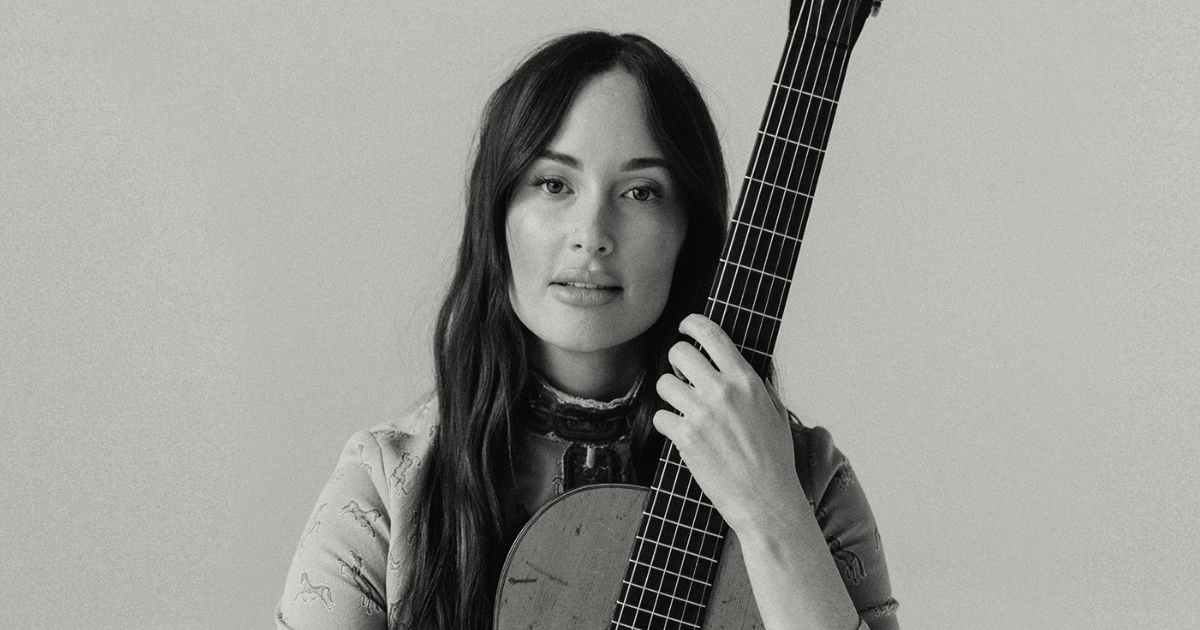
One of the most influential women in today’s country sphere, Kacey Musgraves has sculpted a name for herself for both her instrumental/vocal prowess and her impactful songwriting capabilities. Her solo catalog is chock-full of compelling songs that explore the “nuances of being a human, alive and experiencing consciousness,” as she told The Cut. The thoughtful universality of her songwriting has attracted a distinguished array of performers, with Musgraves contributing her skills to songs performed and recorded by Martina McBride, Miranda Lambert, and Deana Carter, among others.

Kris Kristofferson

This September marked a year since his passing, but Kris Kristofferson’s legacy continues to burn bright. His songs maintain a rugged, raw quality without sacrificing any of their vibrance. Though Kristofferson only landed one No. 1 hit on Billboard’s Hot Country Songs chart performing his own original material, his songs were platformed by many others featured on this list, including “Help Me Through the Night,” which Sammi Smith, Loretta Lynn and Willie Nelson recorded, and “For the Good Times,” a tune made famous by Ray Price that was later recorded by Dolly Parton, Merle Haggard, Willie Nelson, and more. Kristofferson also penned a fair number of tunes for The Highwaymen, the country supergroup composed of Waylon Jennings, Willie Nelson, Johnny Cash, and Kristofferson himself, including their titular hit, “Highwayman.”

Trisha Yearwood

Author, singer, chef, Food Network television show host – just when we thought Trisha Yearwood had done it all, her 16th studio album, The Mirror, arrived this past July to showcase yet another talent you may not know that she held all along: songwriting. In an interview with Billboard, Yearwood recounts that discouragement during her college years largely held her back from incorporating songwriting into her career over the past three-plus decades. “It made me think I wasn’t a songwriter and I just always downplayed it,” she says.

The Mirror boasts powerful co-writes with many songwriters who’ve contributed to Yearwood’s earlier albums, including Rebecca Lynn Howard (“I Don’t Paint Myself into Corners”) and Maia Sharp (“Standing Out in a Crowd”). Of homing in on her songwriting craft, Yearwood shares, “It was really something that clicked a couple of years ago. I started writing and it was really kind of therapeutic and really evolved naturally out of something I felt like I needed to do and I’m so happy with how it came out.”

Merle Haggard

Widely recognized as one of the most legendary singer-songwriters of the country canon, Merle Haggard was a staunch believer in writing from his own experiences – of which he had many worth writing about. After losing his father at age nine, Haggard wound up in all sorts of trouble, from several stints in juvenile detention to developing a strong hitchhiking and train hopping habit. His rambunctious tendencies followed him into adulthood and eventually landed him in prison after an attempted robbery and subsequent failed jailbreak.

In 1960, Haggard’s life changed forever upon attending a Johnny Cash concert while incarcerated at San Quentin State Prison, which deeply inspired him. Upon his release later that year, Haggard set out to forge his own country career, garnering unspeakable success. From “Workin’ Man’s Blues” (co-written with Roy Edward Burris) to “The Bottle Let Me Down,” many of Haggard’s songs have become perennial classics.

Jimmy Buffett

Of all the narrative-focused songwriters, Jimmy Buffet undoubtedly took the premise of “world-building” the most literally. “Margaritaville,” the hit song which Buffett claimed took him only six minutes to write, has a transcendent legacy. From hotels to casinos to Broadway musicals, Buffett’s profoundly popular songwriting grew an empire. Of course, “Margaritaville” was certainly neither the beginning nor the end of Buffett’s extensive songwriting career; having released 30 albums (8 of which are certified gold and 9 of which are certified platinum or multi-platinum by the RIAA), Buffett was credited on upwards of 350 songs over the course of his life.

Don Gibson

Responsible for the songwriting behind some of the most famous songs in country history, Shelby, North Carolina, native Don Gibson was such a force that he, in fact, penned two of his most influential songs in the same day. “Oh Lonesome Me” and “I Can’t Stop Loving You” – which would go on to be recorded over 700 times by other artists including Ray Charles, Kitty Wells, and Loretta Lynn – were both conceived in a trailer park north of Knoxville, Tennessee, in 1957.

Bonnie Raitt

In addition to being the utter powerhouse musician that she is, Bonnie Raitt also knows her way around some lyrics. Having written most of her own music and with artists like Stevie Nicks and The Chicks covering her songs, Raitt’s songwriting has left an indelible mark on the blues, country, and Americana scenes. She’s known for her thoughtful and emotionally dynamic posture; for instance, her song “Down the Road” was inspired by a New York Times article Raitt read about a prison hospice program. Another, “Just Like That,” earned her a GRAMMY for Song of the Year and was inspired by a news segment featuring two families experiencing either end of an organ donation. Written from heartful depths, Raitt’s lyrics are both inspired and inspiring.

Cam

Best-known for her Grammy-nominated 2015 hit, “Burning House,” Cam (AKA Camaron Ochs) is one of the most prominent songwriters in the contemporary country scene. Another star and composer, in addition to her own four studio albums, Cam has writing credits featured on work from some of the largest industry giants in any genres. She has composed material for artists from Sam Smith to Miley Cyrus and 2024 saw her songwriting, backing vocals, and production lending a hand in several songs off of Beyonce’s chart-topping, culture-shifting country release, Cowboy Carter.

John Hartford

John Hartford’s talents truly knew no bounds. In addition to his multi-instrumental expertise, he was a fleet-footed clogger who could tear up a rug while he played. And he sure did know how to write a song. His most successful songwriting credit, “Gentle on My Mind,” (popularized by Glen Campbell and henceforth covered over and over again) earned him three GRAMMY awards and a listing among BMI’s Top 100 Songs of the Century. With covers from folks like Loretta Lynn, Willie Nelson, Dolly Parton, Merle Haggard, and many more, it’s safe to say Hartford was one of the most respected – and most recorded and most covered – roots songwriters of his time. And of our time, too, as evidenced by this I’m With Her performance of “Long Hot Summer Days,” a Hartford original fiddler Sara Watkins once recorded on her own solo project.

Chris Stapleton

A fav of Good Country and our audience alike, Chris Stapleton has had a tremendously successful performing career in both bluegrass (via The SteelDrivers) and country (as a solo artist). His guitar prowess and smoky vocals aren’t his only claims to fame; even before his rise to stardom, Stapleton had written songs for some of the most commercially successful names in country and beyond. He’s been the pen-power behind songs for industry giants such as Luke Bryan, Kenny Chesney, Darius Rucker, George Strait, Lee Ann Womack, and more. Adele even recognized the potency of Stapleton’s powers back in 2011, having recorded a version of his smash hit SteelDrivers song “If It Hadn’t Been for Love” on a deluxe version of her album 21.

Dolly Parton

They don’t call Dolly Parton the queen of country for nothing! Illustrious and industrious, Parton estimates that she’s composed nearly 3,000 songs in her lifetime, with somewhere around 450 of them recorded. Her ability to world-build through dynamic characters and narratives has set the modern country standard for story-songs, with “Coat of Many Colors,” “9 to 5,” and, of course, “Jolene” being just some of her most chart-topping successes. She’s also written plenty for other artists – think Merle Haggard, Kenny Rodgers, Hank Williams Jr., Waylon Jennings, Emmylou Harris, and Tina Turner, just to name a few. And of course, we’d be remiss not to mention that Parton penned the biggest hit of Whitney Houston’s career!

Darrell Scott

In 2007 Darrell Scott was named the Americana Music Association’s Songwriter of the Year, and this year, 2025, he received a Lifetime Achievement Award from the organization, too. In short, Darrell Scott is a songwriting powerhouse – in addition to his status as one of Nashville’s premiere session musicians.

Similarly to many other artists on this list, albeit with his own stylistic flares, Scott champions the narrative song, writing tunes full of dynamic characters and story arcs that mesmerize. Outside of his own successful solo work, songwriting for others is the bedrock of Scott’s career. Among countless other contributions, Scott wrote the Chicks’ “Long Time Gone” (later to be sampled in Beyoncé’s “Daddy Lessons”), Travis Tritt’s hit song, “It’s a Great Day to Be Alive,” and the ever-relevant “You’ll Never Leave Harlan Alive,” which has been covered by Patty Loveless, Brad Paisley, Chris Stapleton, Kathy Mattea, Luke Combs, and many more.


Want more Good Country? Sign up to receive our monthly email newsletter – and much more music! – direct to your inbox.

Photo Credit: Kelly Christine Sutton

Brad Kolodner’s
Gourd Banjo Journey

My gourd banjo journey began on a crisp, winter day in downtown Ithaca, New York. While an undergrad at Ithaca College early in my banjo-playing days, I stopped by the local acoustic instrument store and saw a peculiar banjo-like creature hanging high up on the wall. I was instantly hooked. It had five strings and a short drone string just like my banjo. I could play the same clawhammer style I was familiar with, but everything felt and sounded different. The instrument had an earthy, plunky, and rich tone. Besides being completely fretless and tuned a few steps low, the head was made of a gourd that smelled like dirt. Flash forward 15 years and here I’ve just released an album of solo, unaccompanied gourd banjo music called Old Growth.

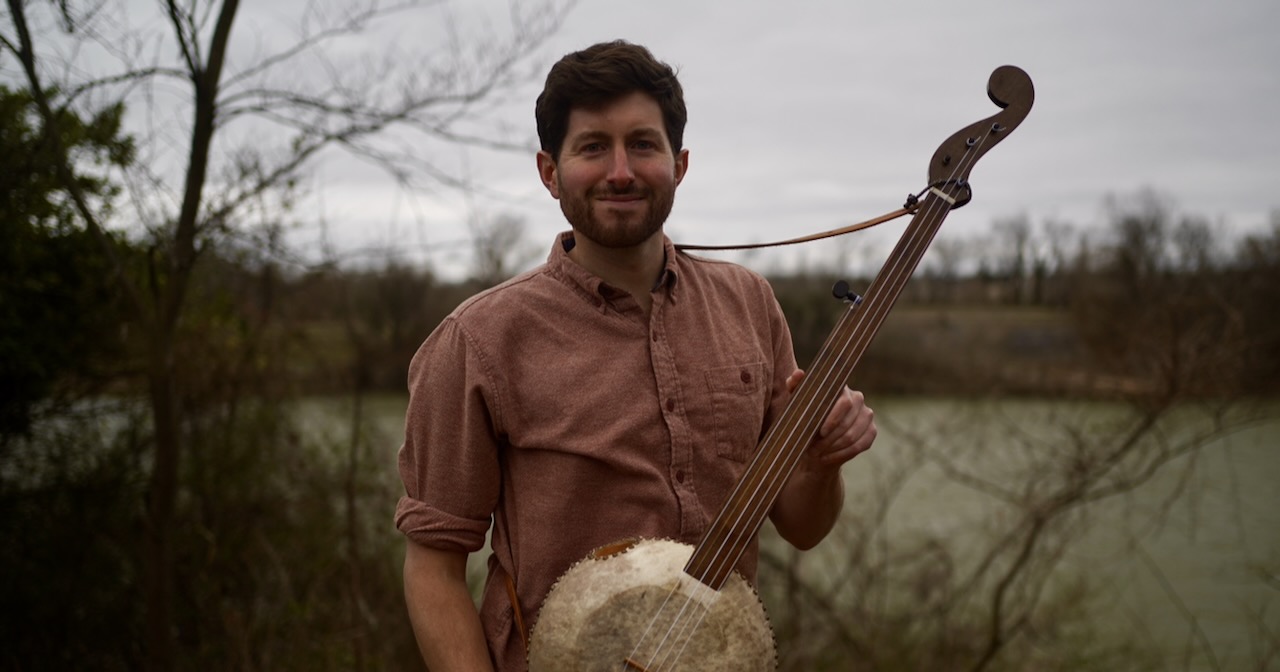
These days, I play a gourd banjo built by Pete Ross, an immensely talented banjo maker who lives in my hometown of Baltimore, Maryland, a town full of banjo history. The first professional banjo maker in the world, William Boucher, set up shop in Baltimore in the mid-19th century. The neck of this banjo, notably the scroll-shaped headstock, is modeled after the Boucher style. In addition to being a tool for creative exploration, the gourd banjo serves as a prism into the complex history of the banjo. It’s a reliable conversation-starter everywhere I go. For more on banjo history, I encourage you to read Well of Souls by Kristina Gaddy.

While compiling this list, I was struck by the sheer variety in tone and texture possible with the gourd banjo. While the instrument connects to the early roots of old-time music, it continues to serve as a platform for innovation. Every player is unique. This list features gourd banjoists from around the world playing traditional and original material. Let’s go on a deep dive into the gourd banjo! – Brad Kolodner

“Josie-O” – Adam Hurt

Arguably the most influential gourd banjo album of our time, Adam Hurt’s Earth Tones is sublime. Cover to cover, this is a dreamy album of solo gourd banjo pieces and it’s on regular rotation at my house. Adam is one of today’s most influential clawhammer banjo players and there’s no question his gourd banjo playing, and this album specifically, introduced the gourd banjo to much wider audiences inspiring countless musicians along the way.

“Old Growth” – Brad Kolodner

The title track of my new album Old Growth is a dark, spooky tune I wrote in the depths of winter, yearning for those sun-filled summer days in the vibrant forests just north of town. I tuned my banjo extra low on this track, hence the extra mellow vibes. The title speaks to the seemingly ancient sound of the gourd while nodding to how this music continues to evolve.

“Julie” – Rhiannon Giddens

A song inspired by a conversation between an enslaved woman and her mistress during the Civil War, Rhiannon Giddens’ use of the gourd banjo is particularly poignant on “Julie.” Rhiannon is a tremendous ambassador for the banjo. She’s reframing the conversation around the history of the instrument and the role Black folks have played and continue to play in American Roots music. The early incarnations of the banjo made by enslaved Africans were gourd banjos.

“Rolling Mills” – Pharis & Jason Romero

Based in Horsefly, British Columbia, Pharis & Jason Romero build some of the most gorgeous (gourd-geous?) banjos in the world. Jason Romero built the gourd banjo he’s playing on this track. Both are immensely talented musicians who take great care in their instrument building and songcraft.

“Darling Cora” – Nora Brown

One of the most exciting young banjo players on the scene today, Nora has a deep reverence for the roots of old-time music. Her playing is absolutely sublime. She plays a gourd banjo very similar to mine also built by Pete Ross in Baltimore. All gourd banjos are handmade, which gives each one a unique sound.

“Long Hot Summer Days” – John Showman & Chris Coole

Chris Coole is a banjo hero of mine and his gourd banjo playing on this John Hartford track fits perfectly. The slinky nature of the fretless gourd truly embodies those sluggish long, hot summer days.

“Gourdness” – Arnie Naiman

Arnie is one of Canada’s finest banjo players and a clever tunesmith to boot. I first heard his playing on the compilation album The Old Time Banjo Festival produced by Cathy Fink & Marcy Marxer.

“Goodbye, Honey, You Call That Gone” – Jake Blount

Ok so, technically, Jake isn’t playing a gourd banjo on this track. He’s playing a fretless banjo with nylon strings which sounds an awful lot like a gourd banjo. The next incarnation of the banjo in the mid-19th century after the gourd banjo was along the lines of what you’re hearing on this track.

“Four and Twenty Blackbirds Dancing on a Deer Skin / Twin Sisters” – Teilhard Frost

Teilhard Frost resides on Wolfe Island in Ontario and is a longtime member of the band Sheesham, Lotus & Son. He set out to build gourd fiddles many years ago and now specializes in gourd and tackhead banjos.

“The Rain Done Fell on Me, Pt. 1” – Justin Golden

Primarily known as a blues guitarist and songwriter, Justin Golden plays a mean gourd banjo. Based in Richmond, Virginia, Justin is a gem of a human – and he’s been going through a real challenging time as he’s currently battling stage 4 cancer. There’s a GoFundMe for him here.

“Wild Bill Jones” – Ken & Brad Kolodner

When my father Ken and I first started making music together nearly 15 years ago, we figured the fiddle and banjo would be the core focus of our music. We soon realized the percussive nature of the hammered dulcimer and the drive of clawhammer mesh together beautifully. The gourd banjo adds yet another dimension to this unusual texture, especially when cranked up to the tempo of “fast.” That’s Ken Kolodner on hammered dulcimer, Rachel Eddy on guitar, Alex Lacquement on bass, and myself on gourd banjo.

“Western Pine” – Talise

In compiling material for this list, I came across this lovely original song by the Canadian artist Talise featuring gourd banjo. I’m excited to dig more into her work!

“Jagged Mountain Is on Fire (Gourd Banjo)” – Andrea Verga

Born and raised in Italy, Andrea Verga is one of today’s most inventive and creative clawhammer banjo players. He writes adventurous melodies; this tune is inspired by the jagged peaks of the Dolomite Mountains in Andrea’s home country.

“Ard Aoibhinn / The Hunter’s Purse” – Steve Baughman

Steve is one of today’s most influential Celtic fingerstyle guitar players – he’s also one of the most creative banjo players out there. He even plays clawhammer on guitar! This medley features a pair of Celtic tunes played on gourd and mandolin.

“Pompey Ran Away” – Clarke Buehling

Considered to be the first banjo melody officially documented, “Pompey Ran Away” dates back to the 18th century. Hailing from Fayetteville, Arkansas, Clarke Buehling is a renowned banjo player and historian who has long been an advocate for the gourd banjo.


Photo Credit: Frank Evans

50 Years of 0044: JD Crowe & The New South’s Landmark Album

Writer Marty Godby called it “The convergence of 1975.”

The elements: a band that would only be together for 10 months, a benevolent venture capitalist who loved bluegrass, and an upstart record label from Boston. The resulting product was unprecedented and unforgettable: The New South, Rounder Records 0044. Bluegrass fans know it simply as “0044.”

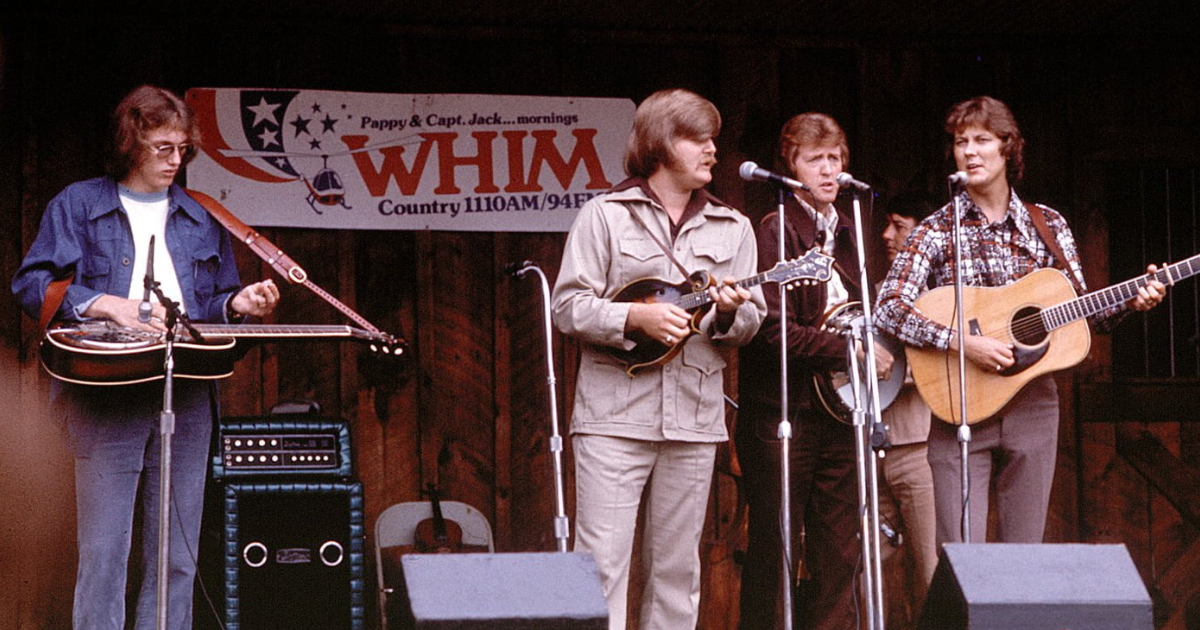
The New South of this recording was J.D. Crowe on banjo; Tony Rice on guitar; Ricky Skaggs on mandolin; Bobby Slone on bass; and Jerry Douglas on Dobro. The impact of that configuration and the album were stunning. Yet, within a year of the recording, Rice would leave to become a founding member of the David Grisman Quintet. Skaggs and Douglas formed Boone Creek. Crowe and Slone continued performing together for years.

Rounder 0044 was influential enough to be preserved in the Library of Congress’ National Recording Registry in 2024 and was awarded induction into the GRAMMY Hall of Fame this year. This month, Real Gone Music will re-release the album on vinyl, as will Craft Recordings later this year on compact disc.

Both the origin story and legacy of 0044 have inspired great narratives, probably more than any other bluegrass album. Bill Nowlin, one of the three founders of Rounder Records, wrote three articles for BGS on the album’s 40th anniversary. They offer a step-by-step look at what happened in 1974 and 75, plus hilarious and poignant anecdotes and quotes.

David Menconi dedicated a chapter of his excellent book, Oh, Didn’t They Ramble: Rounder Records and the Transformation of American Roots Music, to 0044. In 2016, radio host Daniel Mullins focused his college history capstone project on the album. Of course, it was 44 pages.

THE SHORT VERSION


J.D. Crowe, already revered for his banjo playing and baritone singing, led a band called The Kentucky Mountain Boys. From 1968, they had a six-nights-a-week gig at the Red Slipper Lounge in a Lexington, Kentucky Holiday Inn. Crowe added non-traditional bluegrass instruments and songs to the Holiday Inn repertoire. This was as much to please a diverse audience as it was to keep the musicians from getting bored. In 1971, Crowe changed the band’s name to The New South.

Of the name change, Rounder’s Marian Leighton Levy said, “It was obvious that this was a new kind of bluegrass.” From a broader view, “It was an era when the South was, in a way, trying to self-consciously reinvent itself as a new, modern place. And they [The New South] were kind of the musical representation of that wider political context.”

It was the ’70s, and change was brewing – even in the tightly controlled world of country music, Levy noted. Around the same time, Willie Nelson and his Outlaw Country compatriots were reaching out to new songwriters and moving away, physically and musically, from “the factory system of Nashville publishing companies.”

In 1974, lead singer Larry Rice left the New South and brother Tony took over singing lead. Ricky Skaggs’ pure tenor mixed with Rice’s unmistakable mid-range voice, creating a new, dynamic tension for their duets and trios. In the summer of that year, Crowe and the band toured without any product to sell. At the annual Gettysburg Blue Grass Festival, Crowe, his friend and manager, venture capitalist Hugh Sturgill, and the young founders of Rounder Records initiated “The Great Convergence” – an agreement for a studio recording. An innovative contract led to the first New South album.

THE BLUEGRASS WORLD EXPLODED


As soon as they heard the test pressing, the Rounder founders knew they had something remarkable on their hands. “Jack Tottle [who, along with John Hartford, wrote liner notes for the album] was stunned, and he kept saying, ‘This is one of the most amazing records ever made.’ And he was not given to exaggerating,” Levy said.

“It was clear. It was crisp … and the more you played it, the more you wanted to hear it.”

0044 came out in the spring of 1975. Levy said by festival season, other bands were playing the tunes from the record “pretty much note for note.” One observer said that at one festival, almost every band on stage played “Old Home Place.”

So, what is it about that record? Let’s start with the musicians. Skip Heller, who initiated the 0044 Real Gone Music reissue, said everyone in that group of players “would talk about it like it was high school prom and their first love … they had all been in good bands before, but this was the first time they had been in a band that was as great as anything in bluegrass music had ever been.”

Levy said, “They absolutely knocked each other out. … And I think that long before anybody heard the record, they knew the band would stand the test of time – because of all of them, not just one person.”

The record’s title was The New South. Only after the first printing sold out, three band members had moved on, and it was time to redo the cover (read about the cover photo – a great story in itself), was it retitled J.D. Crowe & the New South. Crowe, born in 1937, was the venerated elder and a banjo icon. After entering Jimmy Martin’s boot-camp-of-a-band at age 18, he developed impeccable timing, his own take on Scruggs-style banjo, and excellence as a baritone singer. And he knew how to pick his band members.

The influences of Tony Rice (age 24 at the time) on bluegrass and related music are limitless – from cementing the role of guitar as a lead bluegrass instrument, to modeling impeccable rhythm playing and singing, to excelling in so many genres outside the bluegrass boundaries. At 21, Skaggs had the instrumental chops, a stunning voice and the instincts to become successful in both country and bluegrass. Rounder’s Ken Irwin attributes much of 0044’s innovation to Skaggs, including bringing a teenaged Douglas into the mix.

Douglas is to Dobro what Rice is to lead guitar. Fifty years later, after 14 GRAMMY awards and countless other honors, he continues to inspire and encourage musicality and creativity in Dobro playing. Touring with Alison Krauss since 1998, it’s likely that he has been heard live by more people than any other resophonic guitar player. Of the veteran, Bobby Slone, Mullins said, “Everyone in the band wanted to make sure that Bobby got a lot of credit. … He was such a rock solid force on that band, not just on bass, but as far as camaraderie was concerned.”

By the time The New South entered the studio, Crowe, Slone, and Rice, later joined by Skaggs, had spent hundreds of hours performing together at the Holiday Inn. Individually, they were superb musicians. Together, they were as tight as a band could be.

THE SONGS


Long before 0044, Crowe had blasted out from under bluegrass constraints, incorporating songs like Fats Domino’s “I’m Walkin,” and at Larry Rice’s suggestion, The Flying Burrito Brothers’ “Sin City.” The songs on 0044 were just a small set of a huge repertoire. While the unconventional musical choices sparked controversy among traditionalists, they also sparked a flame of excitement that spread quickly and widely.

In 1975, Mullins said, Ralph Stanley & the Clinch Mountain Boys, Jimmy Martin, and Bill Monroe were still “killing it” at festivals with their first generation bluegrass sound. “On the other end of the spectrum, Seldom Scene recorded Live at the Cellar Door,” an immensely popular recording, that year. Like the Country Gentlemen, the Scene had been recording songs totally out of the bluegrass box, using bluegrass instrumentation, but with an emphasis on rich melodies and harmonies, rather than just the drive of traditional bluegrass.

Mullins said, “You go to Crowe, who’s got the street cred from all his records with Martin, but he’s also looking ahead, and so he’s able to get it all in there. A lot of bands were playing to one side or the other … but to have one that hit right in the middle, right at that time, was unreal.”

“When they saw J.D. Crowe’s name up front, and they knew that he had played banjo with Jimmy Martin on all those records they had loved for 20 years, it probably made some of those hard-edged fans pay more attention,” he said.

Whatever the dynamics of the time, The New South became synonymous with great bluegrass. And 0044 made Ian Tyson’s songs forever acceptable in bluegrass jams.

ON AND ON


Kristin Scott Benson, six-time IBMA Banjo Player of the Year, was born the year after 0044 came out. Benson said she was about nine the first time she saw J.D. Crowe. He was playing with the Bluegrass Album Band, “and that was a formative experience. That band was so explosive, and the crowd had an air of chaos, because everybody was so excited to hear the band. Every time Tony Rice ended a solo, you couldn’t hear any music.” (Because of the crowd noise.)

It would be four years until she picked up the banjo, and two more years until she learned about The New South album – and what it meant to a banjo player.

On 0044, she says, “If you just talk quintessential banjo solos, you’ve got ‘I’m Walkin’ and ‘You Are What I Am.’ His tone is aggressive. It’s just such confident, groovy, greasy, pristine banjo. It’s impossible to overstate how good it is and how influential it is.”

“But I think you should listen to his contributions on the less banjo-friendly songs [‘Home Sweet Home Revisited,’ ’10 Degrees’], because Crowe was great at that. He was a magical backup player.”

Billy Failing, who currently plays banjo with Billy Strings, agrees. Failing started out his banjo life drawn to more progressive players like Béla Fleck. But, he said, “As time goes on, the more I circle back to J.D. Crowe. I think of how much of a gold standard he is for bluegrass banjo, and how interesting his playing is.”

“He’s considered a traditional player,” Failing continued, “but then I’m always hearing some lick that surprises me. It’s been a gradual thing, but it becomes more meaningful as time goes on. I was just listening to The New South album, and on ‘Cryin’ Holy’ – it’s just so slamming! He’s turned it up to 11 constantly on that one.” And, like Benson, he points out what he calls Crowe’s “intricate touch” on banjo.

“It’s such a cool kind of push and pull between whether he’s out front or whether he’s playing backup … it catches your attention in such a cool way.”

Benson said, “It’s easy just to be drawn to those obvious picks [like ‘Old Home Place’] but the album is so much deeper than that. This particular band presented a tightness and a level of execution that was new – I don’t think there had been a bluegrass record up until that point that was so well done.”

“The vocals, the arrangements are so well thought out. Everybody’s playing so well together. It was just a special moment and a special group of people, and I think it raised the bar for bluegrass albums,” she said, and made an imprint on so many contemporary musicians.

Benson poses the question, “Who’s the most influential modern bluegrass guy? It would have to be Tony Rice, because he affected the genre with his rhythm guitar playing, which is phenomenal. And that type of rhythm playing affects the entire groove of the band. It became the new standard, what most people go for.”

“Never discount the importance of his rhythm,” she continued, “and then obviously his lead playing, but also his singing and his material choice … so if someone pinned me down and I could only name one, he might be the guy.”

Failing, speaking of his bandmates, said, “Everybody’s inspired by The New South. I hear Billy [Strings] constantly talking about his inspiration by Tony Rice, and Jarrod [Walker] by Ricky Skaggs.” (Walker wrote liner notes for the Real Gone Music re-release.)

Mullins noted that the Rice/Skaggs blend – a lead singer with a baritone-range voice coupled with a high tenor – established a hair-tingling blend that continues to be emulated, from Ronnie Bowman and Don Rigsby in Lonesome River Band through Alison Krauss’ duets with Dan Tyminski and Russell Moore.

Benson said, “It’s an important record for the genre as a whole, and it’s also an important record to me, personally, and really, to any banjo player who is serious about learning. It’s one of those essential albums.”

UNANSWERED QUESTIONS


First, how did it come to be widely known as 0044? Well, nobody’s sure. Irwin and Levy remember being in the very early stages of their operations at the time – with both a new label and a new distribution company. All three Rounders had been totally immersed in music, but they were learning the business as they went, developing it on their own terms.

Levy speculated, “It is possible that it went back to when we were just calling records by their numbers,” when there just weren’t that many products. “So, it may have been something we started when we were talking, and other people picked up on it, not intentionally. And we thought it was sort of humorous.”

And how did members of Emmylou Harris’ Angel Band get left off the credits, as well as the fact that J.D. played guitar on it? John Lawless goes into depth in his fascinating Bluegrass Today article.

HAPPY 50TH BIRTHDAY


As the liner notes to the Real Gone Music re-release say, “Virtually no other album anywhere in history is known to its audience by its label number. Not Kind of Blue, nor Pet Sounds, Glenn Gould’s Goldberg Variations, none.”

That says quite a bit about the recording’s importance. So does the fact that two labels are issuing re-releases this year.

The Real Gone Music edition is pressed on gold-colored vinyl for its golden anniversary. Both re-releases contain two cuts not included on the original product: “Why Don’t You Tell Me So?” and a version of “Cryin Holy” with Emmylou’s voice in the mix.

Failing sums up what 0044, J.D. Crowe, and the musicians he surrounded himself with mean to him and to many of the pickers making the best music today.

“Every time I circle back to the Bluegrass Album Band, The New South, and J.D. Crowe, I’m reminded, ‘that’s how it’s done!’”


Photo Credit: Phil Zimmerman

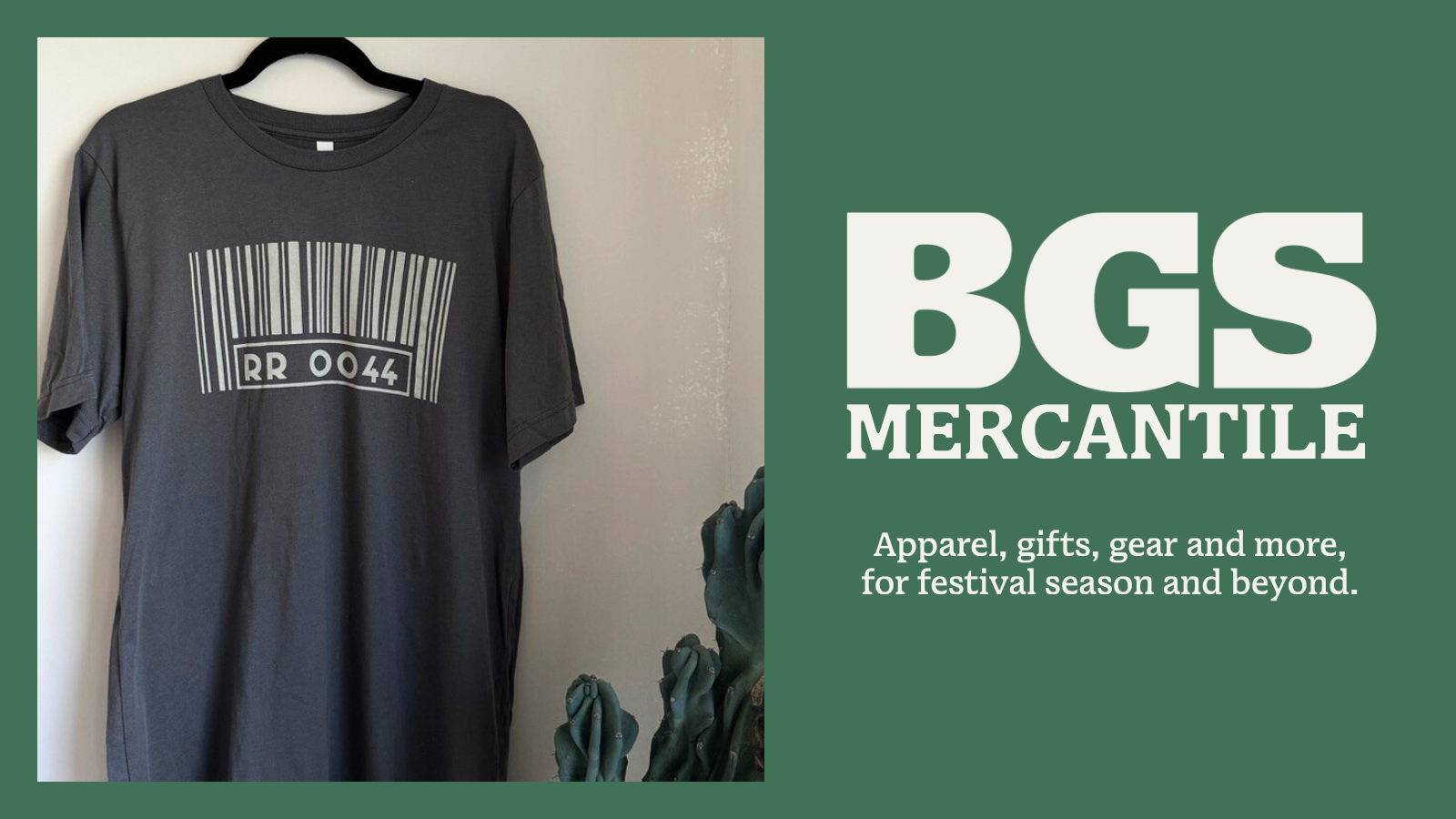
Wear your love for 0044! Shop our exclusive RR 0044 tee on the BGS Mercantile here

Jason Carter & Michael Cleveland’s New Album is a Fantastic Twin Fiddle Workshop

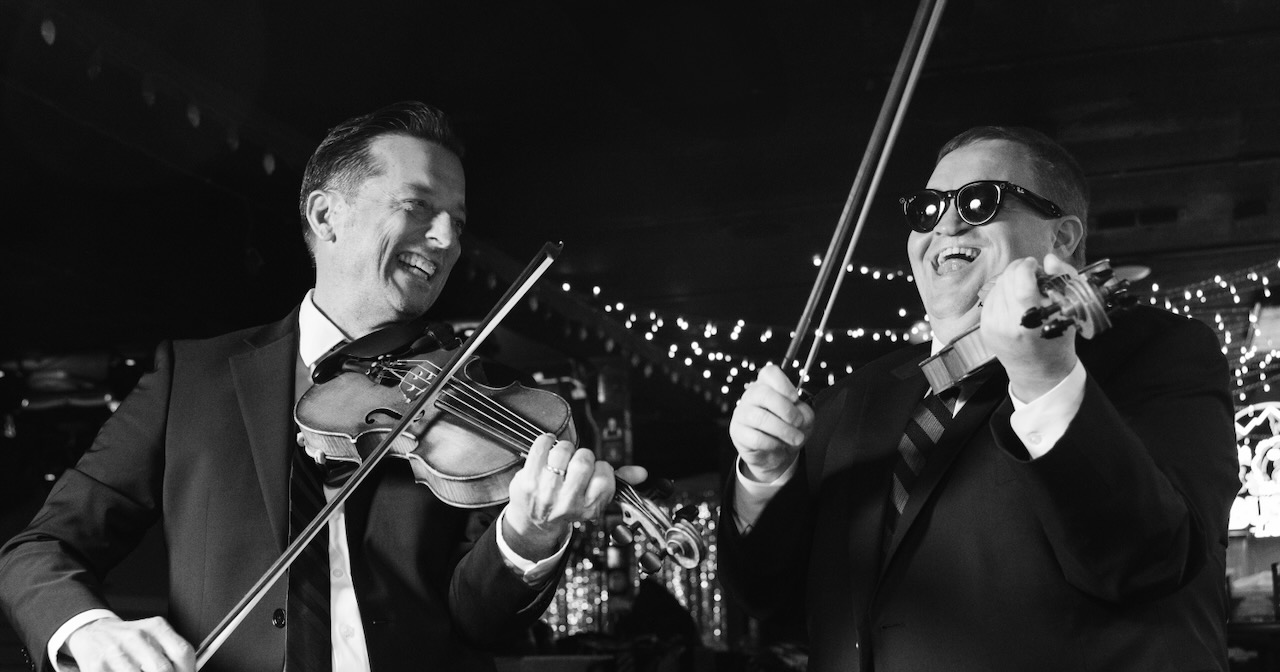
Following more than 30 years since first meeting and countless times sharing the stage during festivals, the two most accomplished fiddlers in International Bluegrass Music Association history have finally teamed up for their debut album together.

Released March 14 via Fiddle Man Records, the aptly titled Carter & Cleveland sees the combined 18-time IBMA Fiddle Players of the Year Jason Carter and Michael Cleveland flexing their bluegrass muscles on compositions from some of the most prolific songwriters around – like Darrell Scott, John Hartford, Tim O’Brien, and Del McCoury.

Coincidentally, it was with McCoury and his sons’ band, the Travelin’ McCourys, with whom Carter spent the last 33 years playing until the February announcement that he’d be stepping away from the groups to focus on his solo material and collaborative projects, like this one with Cleveland.

“I just thought it was time to start pursuing other things, like my own career,” explains Carter about his decision to leave the bands. “That being said, I never thought I’d be leaving the [Del McCoury] Band. I recently gave a fiddle lesson and the person I was teaching told me he was surprised I left the band and I remember telling him, ‘I’m kind of surprised too.’ [Laughs] But it’s so rewarding to be doing something new with my own band along with getting to play with Mike.

“I’m also really excited to see the McCourys play with their new mandolin player, Christian Ward,” he continues. “There’s no bigger fan of Del or the Travelin’ McCourys than me. This will be the first time since I was 18 years old that I’ll be able to sit out in the audience and watch his show. I can’t wait!”

It was also with McCoury where Cleveland, then 13, first met Carter back in the early ’90s during one of Carter’s (then 19) first gigs with him.

“[The Del McCoury Band] has always had the players that I aspire to be like,” says Cleveland. “I remember going to and recording the band’s shows from the soundboard when Jason was just starting out with them. Then I’d go home and try to play guitar over the recordings to best imitate each part. They quickly became some of my biggest influences in this music, and still are.”

Ahead of the album’s release, BGS spoke with Carter & Cleveland over the phone to discuss the duo’s years-long partnership, the process of bringing this record to life, and their thoughts on the history of duo records in bluegrass music.

You have tunes from Del McCoury, Darrell Scott, John Hartford, Bill Monroe, Buck Owens and other roots music legends on this project, but no originals. What was behind that decision?

Jason Carter: Well, for me, I didn’t have any original tunes at the time we started doing this, so I just started throwing out songs I liked. Then I called some songwriters – Tim O’Brien, Terry Herd, Darrell Scott, and others – and the songs I liked most of what they sent I then played for Mike. I’ve only written one fiddle tune so far, but actually have four or five writing sessions lined up this week, so maybe if there’s a Carter & Cleveland Volume II, I could have a cut on there.

Michael Cleveland: We’ve talked about needing to sit down and write together, it just hasn’t come to fruition yet. When I’ve sat in with Del or Jason in the past we never had time to rehearse, which is similar to how these songs came together. We were able to talk about material and send things back and forth, but we didn’t have much time to sit down and rehearse before recording because we’re both so busy. I hope we get to do that someday, but at the same time songwriting isn’t the main focus for me. I know folks that’ll write a tune every day, but for me that only happens once in a while; when it does I make sure to run with it.

What are some standout songs for y’all on this project?

JC: That’s tough, because I like all the songs on the record. At any given time I could have a different favorite. There’s also some that didn’t make the record we still have in the can and might put out later that could actually be my favorite songs. That being said, I really like the part of “With a Vamp in the Middle” where [Mike] finger picks the fiddle while I’m strumming…

MC: That was your idea!

JC: I heard you play something that sparked that. [Laughs] When you’re in the room as a fiddle player and you hear Michael Cleveland play, it’s all special. He [is] leagues above everyone else.

MC: It’s hardly ever a problem that you have too many good songs, but that was definitely the case when we went in to record. As soon as we put the word out about it we had a bunch of our musical heroes sending us songs to record and they were all great! When I first heard the demo of “Give It Away” from Tim O’Brien I liked the song immediately. Tim was playing old-time banjo on it in the key of D while singing, but once I heard Jason sing it in the key of B I knew it was meant to be a hard-driving bluegrass song.

I also really enjoy “Kern County Breakdown.” The only time I’d ever heard that – which made me want to record it – was from Alison Krauss. She used to play it as a fiddle instrumental and I always wish she recorded it. I don’t know if it’ll happen, but I’m still holding out hope that she’ll put out a fiddle album one day.

She does have her first album in 10 years dropping later this month, so you never know!

Throughout the history of bluegrass music there have been many timeless duo records from the likes of Ralph Stanley & Jimmy Martin to Ricky Skaggs & Tony Rice to Bill Monroe & Doc Watson. What are your thoughts on being the next chapter in that series of collaborations?

JC: I hadn’t really thought of it like that before…

MC: If this album is mentioned in the same breath as any of those, that would be great! We also talk a lot about our favorite twin fiddle albums, which this seems to be more of, and have tossed around the idea of doing this project for 15 years. There’s albums from Kenny Baker and Bobby Hicks, Buddy Spicher and Benny Martin, Buddy and Vassar Clements, and so many more, but there hasn’t been one for a long time now. That’s what originally inspired us to do this. In the last few years people have also finally figured out what a great singer Jason is, which afforded us a lot more room to experiment than if it were a twin fiddle instrumental album.

JC: Mike just has such a good ear. I remember sending him a couple versions of demos I played and sang on and he’d immediately get back to me with suggestions like adding a fiddle lick at the beginning, like on “Outrun The Rain.” He thought it would be great for a high harmony thing two above the lead. As soon as he heard this stuff he had ideas. It was really cool to see how that all came together.

Mike just mentioned the idea for this album has been floating around for 15 years. When did y’all eventually get to work on it?

JC: We started recording a couple years ago. The first session we recorded we actually did at [guitarist] Cody Kilby’s house during COVID, then it was another year or so after that until we got working on it again. Because we didn’t have any rehearsal time, I remember sending voice memos of myself playing fiddle, guitar, and/or singing to Mike to listen to and send suggestions back. I remember being at a show with Del tucked away in the dressing room by myself trying to record versions of these songs or trying to run through an arrangement before sending it to Mike through text message.

MC: I had a great run with the label I was previously involved with, Compass Records, but they weren’t really interested in collaboration albums. With all of my projects and Jason as busy as he is, we were always just in the middle of other things until Jason put out [2022’s Lowdown Hoedown] and I completed [2023’s Lovin’ Of The Game]. It was around that time we decided to take the leap and finally start working on this.

Speaking of taking a leap, I know y’all co-produced this record too. What was your motivation behind that?

MC: We had talked about bringing somebody in. I’ve worked with Jeff White for years on my albums. In a way he helped to produce this one too, which is fitting because I always felt like we co-produced my albums together. For this record there were people we’d send stuff to listen to, even down to the final mixes, just because we respect their opinions, but the final calls were all us.

JC: Even when you’ve got someone like Bryan Sutton in the studio for tracking, he may have an idea he throws out that becomes a big help as well. That could come from anyone involved in the session, even engineer Sean Sullivan, who we leaned on heavily as well because they do this every day. These people are here for a good reason, because they’re super talented and play some of our favorite music. And when it comes to Cleve, I’m all ears. He always has good advice.

MC: When you first start recording, you don’t always know what sounds good. It’s like with playing, singing, or anything else, the more you put yourself in those situations the more you understand what you want to hear and how to achieve it. Working with Jeff in the past, we’d be together during the day when all of the sudden he’d say, “Hey Mike, I gotta take off for a few hours, produce for a while.” It freaked me out the first time he did that, but it forced me to get comfortable in the situation and forced me to trust my ear more. Jeff having that faith in me also gave me a little more confidence in myself that I was making the correct decisions and to continue trusting my instincts.

JC: With the Travelin’ McCourys, all of those records were produced by the band along with most of the stuff we did with Del, too. I did produce my solo record, Lowdown Hoedown, though. But even on that, when we were recording Sam [Bush] and Jerry Douglas were there. I remember Jerry – who produced a lot of the McCourys’ stuff early on – always had great ideas on arrangements and different things to put in when he spoke up, which was a huge help. Getting to be in the studio with him is an education you can’t get anywhere else.

Jason, you briefly spoke of a few of the album’s players there. But they’re far from the only top-notch pickers you have on this record, with the likes of Vince Gill, Charlie Worsham, and Sierra Hull, among others. How’d y’all go about deciding who to bring into the fold?

JC: We just tried to think of who would best fit with the songs as we listened to demos for each.

MC: It also came down to who was available at certain times. Guys like Bryan Sutton, Cory Walker, and Alan Bartram played on most of it. I remember days where Sam Bush was available on mandolin and others where Harry Clark filled in. Some of the first sessions we did after the pandemic were with Cody Kilby and Casey Campbell followed by David Grier and Dominick [Leslie].

And going back to something Jason said earlier, I also leaned on Bryan a lot, specifically about what songs he thought it would be good to have Sam on, which led to his inclusion on “Middle of Middle Tennessee” and a few others.

What has music, specifically the process of bringing this record to life, taught you about yourselves?

MC: This was one of the first things I’ve done without a producer being there. Most of the time we would agree on decisions, but other times you don’t know what the right thing is and somebody has to make the call, because that’s typically something a producer would do. When it’s just you there’s no question, but when you’re working with somebody you want to make sure it’s a collaboration and not one person running the ship. Recording this album has taught me to be more aware of that.

JC: The singing part of this too, that’s still pretty new to me. I’ve sung on other people’s records, my solo album and with the Travelin’ McCourys, but being the lead singer throughout is a new venture for me and something I really enjoyed getting to do with Michael.

What do the two of you appreciate most about one another as both musicians and people?

JC: Everything about Mike’s playing, he’s just on another planet right now, and as a person he’s the same way. I recently got married and Mike was my best man, because no matter what he does he is the best man!

MC: Hearing Jason play with Del, he’s always been the fiddler I’ve wanted to be. We’re both into the same stuff, which is why I think we work together so well. It’s why we’re able to jump on stage and play twin fiddles without rehearsing, which is usually a mess when you do that. Getting to work with him on this album has been a dream come true for me.


Photo Credit: Lead image by Sam Wiseman. Square image by Emma McCoury.

A Women’s Lib Boat: John Hartford Fiddle Tune Project’s ‘Julia Belle’ Embarks

A quarter century removed from his passing, John Hartford’s music and overarching legacy may have a stronger hold on bluegrass and American roots music than ever before.

From modern-day stars like Billy Strings and Sam Bush playing his songs in front of thousands each night, to popping up in books, old-time jams, workshops, films, and other functions, Hartford’s songs are officially a part of the Americana zeitgeist.

This trend continues on Julia Belle: The John Hartford Fiddle Tune Project Volume 2. Released February 28, the follow-up to 2020’s inaugural installment of the Fiddle Tune Project features another 17 songs from the always grinnin’, GRAMMY award-winning, steamboat-loving singer – this time performed entirely by women. Nearly 50 artists, musicians, and singers feature throughout, ranging from Rachel Baiman, Phoebe Hunt, Ginger Boatwright, Brittany Haas, and Deanie Richardson, to Allison de Groot, Della Mae, The Price Sisters, Uncle Earl, Kathy Mattea, Alison Brown, and Sierra Hull.

According to Julia Belle co-producer Megan Lynch Chowning (who was joined in that role by Sharon Gilchrist and Katie Harford Hogue, John’s daughter), once the decision was made to move forward with an all-women cast it came time to narrow down who to include on it–something that was as much of a dilemma as it was “an incredibly cool revelation.”

“We decided about halfway through to just make it a reality rather than a selling point,” she jokes. “It’s in the same spirit of whenever you open up a record from the Bluegrass Album Band, nobody says, ‘Wow, what a great all-male band that is!'”

Ahead of Julia Belle‘s release, Harford Hogue, Lynch Chowning, and Gilchrist spoke with BGS about their involvement in the project, preserving John Hartford’s legacy, and favorite moments from recording.

(Editor’s Note: The following are three separate conversations combined into one and edited for brevity.)

Nearly 50 artists are involved in Julia Belle. How did you go about deciding who to include on the project and which songs they’d play on?

Sharon Gilchrist: It was really important for us to have a multi-generational presence on this record. One of Katie’s personal wishes for the album was that every artist on the record have some personal connection to Hartford. With it being an all-female record, I was also curious to find women who had actually worked with or had some kind of rapport with him. For example, Laurie Lewis, Kathy Kallick, and Suzy Thompson are all on “Champagne Blues” and were all peers of Hartford’s back in the day. Ginger Boatwright actually inspired the song that John wrote which she sings on, “Learning to Smile All Over Again.”

In addition to the sheer number of people involved, I love how you also really allowed them to lean into their own creative tendencies while at the same time staying true to the style and spirit of John Hartford.

Katie Harford Hogue: Since Volume I the whole premise of this album series has been to choose artists that play this vein of music or consider my dad a mentor or someone they look up to. We hand them the book [John Hartford’s Mammoth Collection of Fiddle Tunes] and tell them to choose the tunes that speak to you, then come to the studio and put them through your filter.

For me to tell an artist how to do art – why would I do that? The whole point of being an artist is that you’re putting yourself into it and are using your own expressions, your own metaphors, and your own way of relating to the music. So we wanted their expression in it and the really cool thing is that Dad comes through no matter what we do. His DNA is in these tunes and there’s no way to get them out, not that we would ever want to. Having people come in and just go for it was risky, but an incredibly fun way to make an album.

Megan Lynch Chowning: A lot of the tones, audio, and overall vibe check comes from Sharon, who has been a John Hartford fan her entire musical life and is somebody who is so incredibly in tune with the sounds and feel that comes from his songs. She worked tirelessly listening to everybody’s work before they came in to record to get an idea of what’s going to help each person be the best possible version of themselves while they’re here.

Then there’s the issue of none of these songs – at least the fiddle tunes – having any chords assigned to them. When John wrote them there were no chord progressions, so every artist had to write their own. That in itself was a big part of people getting to take each song in their own directions. It was amazing to watch over and over again, and Sharon handled it all like an absolute rock star.

While some people’s legacy fades over time, it seems like John Hartford’s only grows stronger. What are your thoughts on that and how this project aims to further propel that legacy forward?

KHH: I’ve heard it said before that the way he communicated wasn’t limited to a particular generation. I don’t know if it was the way he thought about things or if some of the ways he did things were more universal. … You can go back to the masters of music and art – da Vinci, Bach – and their methods of creativity are still very valid now, they simply don’t go out of style.

When you hone into the foundation of it the relevancy goes with it, because everyone’s just going back to what’s real, which is what I think my dad also did. He was very true to the way he made music and the way he thought. A lot of people trying to make a career might stop and think, “What does the public want?” or “What do the masses want and how can I provide for them?” There’s nothing wrong with that, but there is another way to do it, making the music you want to make and not worrying whether or not it’s commercially viable.

That being said, “Gentle On My Mind” [Hartford’s most successful song, written in 1966] was very helpful in allowing him to do that full-time. Most everyone else has to get a full-time job and do the music on the side to stay true to themselves, but he got the best of both worlds in that way. He was able to take the success of that song and then go do his art with his heart and soul in it. I mean, who else writes about steamboats? Who else would write about the things that he wrote about and try the things he did on stage or just go out on a limb? And it all worked! In a way, everything aligned for him. That’s why I think he continues to be so relevant – he took a big risk and it paid off.

MLC: In the very first meeting the three of us had to discuss Volume II, preserving and carrying on the Hartford legacy was the focus of what we were trying to accomplish. On any given day you’ve got Billy Strings and Sam Bush playing John Hartford songs in their live shows. The biggest takeaway I have from this whole thing is John Hartford’s unceasing dedication to learning. He started transcribing and learned to write standard notation after he was diagnosed with cancer and instead of saying, “Oh no, I’m sick and this is going to slow me down,” he took it as a sign to move forward and learn a bunch of new things. That’s what led to him becoming obsessed with the fiddle, traditional styles and all that. That to me is the whole message behind these albums, that there’s so much more to do and so much more to write, play and learn. That’s been the most inspiring thing about being a part of this project.

SG: He was both a student and innovator of traditional music who forged his way forward by not sounding anything like anybody else. John is one of the largest beacons shining the way forward on how you do that.

What were your favorite moments from recording these songs? I personally can’t get enough of “Spirit of the South.”

KHH: What was so fun for me about these sessions was that even in rehearsals everyone was shredding. Upon walking in the room you’re hit with this energy and you just want to jump in. It was so exciting talking with everyone and feeling their joy around each song. Then there were the stories from Ginger Boatwright and Kathy Chiavola – both good friends of my dad – and Alison Brown telling me about his influence over her on the banjo.

Not being a musician, that all fed me, because that was a part of my dad’s life that I wasn’t necessarily connected with very much when he was alive. But now I can hear his music and I can see what he was doing and it just has a whole different impact on me. I’ve now had my own kids, raised them, done some things, and can relate more to what he was doing, so every time someone comes back to the studio and records a song, tells a story or talks about his influence, it feel like there’s a drawing of Dad and everyone’s going in and adding details that I hadn’t known about before or that just flesh out the picture that little bit more.

MLC: One favorite was getting Katie’s mom and John’s first wife, Betty, to sing on “No End of Love,” which is a song that John wrote for her. She is an incredible musician who first met John when they were both up for a radio show slot in the St. Louis area. After they got married Betty put her singing career on hold to manage the family, so being able to get her in the studio to sing that song with Katie and her granddaughter Natalie [Hogue] on guitar and hearing her voice – which has been on hold for a long time as she lives other aspects of her life – gave me chills. To me, stuff like that is the essence of folk music and why we do what we do in terms of keeping these songs and traditions alive.

Megan, didn’t you play John’s Tambovsky & Krutz violin on “No End 0f Love”? What was that experience like?

MLC: I actually have John’s fiddle here at my house and play it in the John Hartford Fiddle Tune Project live show, so I’ve been handling it for a while now. Talk about chills – it’s the fiddle he used the last five or so years of his life. It was his main fiddle for the “Down From the Mountain” shows and The Speed of the Old Long Bow record. It’s actually the fiddle on the cover of that album. Katie called me last year out of the blue and said she was moving houses and had taken the fiddle from one closet to another before questioning why it was there in the first place and not in my hands being played at these shows.

To play it on [“No End of Love”] was funny, because it sounds a lot different than my fiddle even though both were set up by the same person. It always felt comfortable to play, but the first few months I had it it was kind of dead from sitting in a closet for two decades. Since I’ve been playing it regularly it’s really come to life. Just the metaphorical part of this fiddle coming to life at the same moment these tunes are being brought into the world is special. It’s how I believe everybody who has the opportunity to be involved in traditional music should be thinking about it. We should constantly be honoring the stuff that came before us while also bringing it into new spaces.

Katie, you mentioned not being too connected to your father’s music when he was still alive, but what do you remember most about those times?

KHH: People saw his stage persona when he was out, but even when he was home he was still playing. He didn’t go home and just say, “Oh, I’m tired of that.” He played some more. “Obsessive” is not too strong a word to use when it came to the way his brain worked about music or art. It would be Thanksgiving or Christmas and he’d be working out melodies in the living room with Benny Martin simply because they enjoyed it.

Later on, my wedding reception was held at my dad’s house and we had originally set up music on a sound system so as not to burden him, but he, my brother, and my uncle ended up all grabbing their instruments and playing as a trio for it. He wasn’t a musician because he was trying to be famous; he was a musician because he couldn’t not be one. As much as his right hand was a part of him, his fiddle and his banjo were a part of him too.

What has working on The John Hartford Fiddle Tune Project taught you about yourself?

MLC: These experiences have taught me that I’m capable at parts of this job that I previously shied away from. I grew up as a contest fiddler; that was my background. Because of that I was very good at learning specific arrangements of things and then executing them with precision. While that’s all great and fine – one: it’s not a very good living, and two: it’s not all that great for having a very broad musical vision or sense of yourself. That’s why I started playing bluegrass and working for country artists. My skills and musicianship both expanded, but working on these albums – both as a player on Volume I and as a producer/player on Volume II – I’ve learned much more about my internal ability to hear things I didn’t know that I could hear and to make decisions I didn’t know I could make.

It reminds me of this exercise that John Hartford used to do with people at his jams or in his band – called the “window exercise” – where everybody who’s playing has to do something different than everybody else and then has to change that thing every eight bars. If you’ve got five or six people sitting around in a circle, one person can be chopping, one person can be playing longbows, melody, harmony, shuffle pattern… but only for eight bars. It requires you to not only come up with new things, but also be aware of what everyone else is doing simultaneously.

It was a musical brain exercise he invented that we teach at our workshops and sometimes even at the live show. To me, working on these albums has been like a real-life window exercise. It feels like even from beyond the grave John Hartford is challenging me to go bigger, be more creative, and more aware all the time. He’s just expanded who I am as a musician and what I now know that I’m capable of that I didn’t know I was capable of before. It’s weird to be grateful to someone who’s been dead for 25 years, but that’s how I feel because I’m a different person and a different player than I was before I started this.

SG: It showed me the importance of being hands-off with other people’s musicianship and to give them every opportunity to bring as much of themselves to any project as possible. That’s when you’re going to get the best music out of somebody. This project was a lesson in learning to do that, but also knowing when to jump in and direct or provide guidance when necessary.

Katie did a great job of that as well. This whole project is her brainchild and was a huge undertaking and the coolest part is the way she’s doing it. She’s doing it just like her dad. He would be so honored and pleased to see her fostering that in his own tunes and giving others the opportunity to share in and carry on that tradition.

KHH: I was a stay-at-home mom when my kids were born and poured a lot into them growing up, but once my youngest got to high school I began backing off and looking to do some of the things I’d been putting off. Coincidentally, the fiddle tune project was coming to fruition around the same time.

It was like walking out on a limb – especially as an older woman – to go out and start on some of these things not having been in the industry or corporate world in quite a while, but I did it. I have learned so much about not just the music industry, but things like how to use computer software like Photoshop and Illustrator and doing video for social media. It’s a lot of fun and something I’m very proud to be able to say that I did. I want to encourage other women to do the same. Don’t worry about what other people are saying, what you’ve done before, how old you are or what stage of life you’re in – don’t let anyone devalue your experience. If you’ve got an idea, go do it!


You Gotta Hear This: New Music From Ashleigh Flynn, Carter & Cleveland, and More

Happy Friday! We’ve got another excellent premiere round-up for you to finish out your week with a roots music high note.

Check out brand new tracks like “Heartless” from singer-songwriter Dustin Brown. It’s a song about finding redemption in self-doubt in an alt-country meets Americana package. Plus, North Carolina bluegrass outfit Unspoken Tradition pay tribute to Acoustic Syndicate and Steve McMurry with their new cover of “Katie and Burl.”

Just in time for Valentine’s Day next week, Nick Taylor debuts his video for “Lover’s Dream,” a lovely number built around tender fingerpicking that came to Taylor in the middle of the pitch-dark night. We’ve also got a honky-tonkin’ music video from Portland, Oregon’s Ashleigh Flynn & the Riveters. Their new track, “Drunk in Ojai,” retells a story of too much tequila and an unlikely guardian angel named Dutch.

You won’t want to miss “With a Vamp In the Middle,” a brand new single from Jason Carter & Michael Cleveland from their just announced debut duo album (due in March) that premiered on BGS earlier this week.

It’s all right here on BGS. Scroll now to find all these songs and more, because You Gotta Hear This!

Dustin Brown, “Heartless”

Artist: Dustin Brown
Hometown: Moody, Texas
Song: “Heartless”
Album: Dustin Brown
Release Date: March 28, 2025 (album)

In Their Words: “Everyone comes into this life clean, unmarked, and full of love. Unfortunately, on the other end, some come out dirty, marred, and heartless. This song comes from a place of resolve, in accepting that at times you must be a little crazy especially when dealing with folks that suffer from a heartless nature. I suppose it’s a redemption song about self-doubt and how powerful of a driving force that can be in life and love.” – Dustin Brown

Track Credits:
Dustin Brown – Lead vocal, songwriting, guitar
Rachel Cole – Backing vocals
Joel Allan – Lead guitar
Christopher Smith – Drums
James Bartosh – Bass


Carter & Cleveland, “With a Vamp In the Middle” (Live at the Grand Ole Opry)

Artist: Jason Carter & Michael Cleveland
Hometown: Nashville, Tennessee and Charlestown, Indiana
Song: “With A Vamp In The Middle”
Album: Carter & Cleveland
Release Date: February 5, 2025 (single); March 14, 2025 (album)
Label: Fiddle Man Records

In Their Words: “This song has always felt like a national anthem for fiddle players and it’s our tribute to the legendary John Hartford and Vassar Clements. It’s long been a favorite for Michael and me to jam on – perfect for twin fiddles and a blast to improvise and trade licks on. Having Darrell Scott’s harmony vocals on [the studio version of] this track was an absolute honor, and his contribution took it to another level. I hope y’all enjoy it!” – Jason Carter

More here.


Ashleigh Flynn & the Riveters, “Drunk in Ojai”

Artist: Ashleigh Flynn & The Riveters
Hometown: Portland, Oregon
Song: “Drunk in Ojai”
Album: Good Morning Sunshine
Release Date: April 4, 2025 (album)
Label: Blackbird Record Label

In Their Words: “This song wrote itself – it’s a true story! Nearly a decade ago, I crashed Nancy’s (record producer) wedding with our mutual friend who had introduced me to her. I had played a solo gig the night before at the Deer Lodge in Ojai. After the show, the owner at the time was losing his mind (in a good way) because the entire cast of Mad Men had just shown up for dinner – likely to celebrate the show wrap. He came up to my friend and me, and invited us to the bar, as we all marveled at ‘Don Draper and Co.’ filing into the back banquet room.

“The owner proceeded to offer us a taste of nearly every tequila at the bar after which he pointed us toward the late-night hang, ‘The Cantina,’ where, for better or worse, we continued to imbibe tequila. As the night wound down, we opted not to drive ourselves back to the hotel, because we were clearly too tipsy. We asked the Cantina bartender for taxi suggestions and she handed us a card that simply said ‘Dutch’ and included a number… We called the number, and minutes later an off-white Bronco with ‘Ojai Fire and Rescue’ painted in red across the doors pulled up. ‘You gals called for a ride?’

“When I got to the wedding the next day, a friend there asked, ‘So what did you do last night?’ I said, ‘I got drunk in Ojai. I didn’t know where I was. Caught a ride from the fire and rescue; the driver’s name was Dutch.’ That friend literally sang that line back to me and that was that – took five minutes to finish it as soon as I got my hands on a guitar. The band adds, ‘We are grateful to Dutch for getting us home safely.'” – Ashleigh Flynn

Track Credits:
Ashleigh Flynn – Lead vocal, acoustic guitar
Nancy Luca – Electric guitar
Carmen Paradise – Bass
Leila Chieko – Drums
Kat Fountain – Harmonica
Kathryn Claire – Harmony vocals, violin
Jenny Conlee – Piano, organ

Video Credits: Art direction, animation by Lupo Studio.
Videography, editing by Polly Lisicak, Cai Indermaur.
Special thanks to the staff of Laurelthirst Pub and Music Portland/EchoFund.


Nick Taylor, “Lover’s Dream”

Artist: Nick Taylor
Hometown: Austin, Texas
Song: “Lover’s Dream”
Release Date: February 14, 2025

In Their Words: “I wrote ‘Lover’s Dream’ in the early days of a relationship. I was living in a first-floor apartment that was basically a cave and came home one night with a song in my head. I sat down in the dark and played the song all the way through without stopping. When I woke up in the morning I realized I hadn’t written any of it down, so I got to work trying to reconstruct what I could remember. I still have no idea what how similar this version is to what I played that night, but I have been waiting a long time to release it out into the world as a single.

“We recorded this one in Nashville, just me and my guitar in the studio with Bryce, the recording engineer. We set up in the middle of the biggest room and it felt just like the first time I played it, quiet and still. The song is mostly stream of consciousness, reflecting on my own faults while declaring a true and lasting love – which is any lover’s dream I think, to be accepted and loved with all their imperfections.” – Nick Taylor 

Video Credits: Produced by Charlotte Avenue Entertainment.
Shot by Dominick Sotis and Hayden Westberry.
Color Grading by Color Sync Visuals.


Unspoken Tradition, “Katie and Burl”

Artist: Unspoken Tradition
Hometown: Cherryville, North Carolina
Song: “Katie and Burl”
Release Date: February 7, 2025
Label: Mountain Home Music Company

In Their Words: “When I was a kid, probably 11 or 12 years old, there was a local music venue called Leatherwoods in Shelby, North Carolina. It was in the back of this old comic book store and there was a door in the back that opened into a listening room. Acoustic Syndicate used to play there all the time. My dad knew the McMurry boys and fished with Steve some when I was a kid, so we went to Leatherwoods every time they played there. Steve wrote ‘Katie and Burl’ for their first album and this was about the time I got my first guitar. I learned several songs on that album and ‘Katie and Burl’ was one of them. I was so honored that Steve was willing to come sing a verse on our version of his own song!

“I’ve always been drawn to songs that have a sweet but sorrowful sense of loss. It’s a song about two young people against the world, experiencing joy and sadness along the way. Symbolically, Burl the farmer returns ‘to the earth where he came from’ and today he wouldn’t understand the farm he once owned as it’s been repurposed for modern men. In fact, when I wrote ‘Land‘ back in 2016, the themes of ‘Katie and Burl’ served as inspiration: that our existence here is both meaningful and insignificant in the grand scheme of things.” – Audie McGinnis

Track Credits:
Audie McGinnis – Acoustic, lead vocals;
Steve McMurry – Guest vocals
Sav Sankaran – Bass, vocals
Tim Gardner – Fiddle
Zane McGinnis – Banjo
Ty Gilpin – Mandolin


Photo Credit: Ashleigh Flynn by Christine Lupo; Jason Carter & Michael Cleveland by Sam Wiseman.

WATCH: Carter & Cleveland, “With A Vamp In The Middle”

(Editor’s Note: Today, award winning fiddlers Jason Carter and Michael Cleveland announce their upcoming debut duo album, Carter & Cleveland, out March 14. To celebrate the announcement and the project’s lead single, we’re premiering a special live performance of the track, “With A Vamp In The Middle,” from the fabled stage of the Grand Ole Opry.)

Artist: Jason Carter & Michael Cleveland
Hometown: Nashville, Tennessee and Charlestown, Indiana
Song: “With A Vamp In The Middle”
Album: Carter & Cleveland
Release Date: February 5, 2025 (single); March 14, 2025 (album)
Label: Fiddle Man Records

In Their Words: “This song has always felt like a national anthem for fiddle players and it’s our tribute to the legendary John Hartford and Vassar Clements. It’s long been a favorite for Michael and me to jam on – perfect for twin fiddles and a blast to improvise and trade licks on. Having Darrell Scott’s harmony vocals on [the studio version of] this track was an absolute honor, and his contribution took it to another level. I hope y’all enjoy it!” – Jason Carter

Credits:
Jason Carter – Fiddle, vocals
Michael Cleveland – Fiddle
Alan Bartram – Bass, harmony vocals
Cory Walker – Banjo
Bryan Sutton – Guitar
Harry Clark – Mandolin


Photo Credit: Sam Wiseman