Editor’s Note: Last month, we featured an interview with singer-songwriter Cole Chaney on the site for the very first time. The Kentuckian artist was more than generous with his time, spending a couple of hours speaking to BGS and Good Country contributor Alison Richter.
Many lovely portions of their interview ended up cut for length, so we’re excited to share a few selections from those edits here as a bonus follow-up to our feature conversation. Below, enjoy Chaney discussing how songs morph and change over time, his practice regimen, guitar and songwriting as crafts and forms of expression, and much more.
Songs Evolving Over Time
The intention is the same as it was back then [when they were written], but your taste grows as you develop as an artist and musician.
When you listen to the Mercy version of “Ill Will Creek” (above) and the Live AF version, those are two almost completely different songs, but they’re still the same. The thread, the root of the song, remains the same. They’re just wearing a different coat.
Practice and Technique
I don’t have a concrete practice routine. I’ve never been able to sit down and make myself do scales or anything like that. I’d probably be a lot better guitar player if I did more technical playing.
I’ve always idolized guys like Hendrix, and if you look into how he looked at it, he didn’t have time to practice because he was always writing riffs and coming up with cool guitar licks or creating in some capacity. That’s what I do when I have a guitar in my hands. I warm up and play some scales or whatever, but it eventually turns into, “Oh, man, that sounds cool. What can I attach to that?” and I start writing riffs. That’s just how I do it.
I would be a much more technically proficient guitar player if I actually did sit down and make myself practice a lot. But I think a lot of that creativity comes out of me having a weird picking style and not being necessarily educated on what is supposed to sound good and where that’s supposed to go, and just letting stuff happen where it happens.
Guitar As Expression
Especially in recent years, as we talked about the bands I’m influenced by – very guitar-heavy bands, for me – it always starts with a riff. I like chunky, heavy stuff a lot of the time. A song doesn’t always call for that; sometimes you write something that may sound a little more sensitive, but the direction it’s gone with me has been catchy riffs that stay in your head when you play it. That’s when I know I’ve got something cool and that I should keep plugging away.
I sat down last night with a little $300 Breedlove and plucked away at this riff I’ve been messing with for two-and-a-half hours, just seeing what I could add in here, if this would sound cool there. And so, yes, the guitar is just as important, if not more, to my music as the lyrics.
The Craft of Songwriting
It’s not always riffs first, lyrics second, but I find that is most often the way it goes down. I don’t know. I can’t give you a way my songs come together. It feels like it happens in a different way every time. I’m very melody-driven; it’s the way I listen to music. Everybody’s got different things they’re trying to get out of the songs, but, for me, the melody is the most important thing.
Reinterpreting “Spirit” for In The Shadow Of The Mountain
It was a work in progress, because there’s a challenge in having songs be out for two or three years on their own as solo acoustic pieces.
I kind of look at the OurVinyl [Sessions] as demos– in a way, that was not necessarily what I saw as the finished product for any of those songs. And then they get the attention, that becomes the versions of the songs that people know and love, and it puts pressure on the situation of, “Oh, damn, people care about this song now, so I have to do it justice.’ It has to be tasteful, it can’t be too much, and all these things. It’s an equation that you’re trying to find the answer to.
“Spirit” maybe took the longest out of all of them. There’s me and Duane Lundy and Zachary Hamilton co-producing. If you talked to them, they would probably tell you the same thing – it took us the longest to get that song to where we were all feeling really good about it.
We were maybe one day away from having to have the mix completely wrapped up on everything and send it off to be mastered. I was listening to “Spirit” on my way to the studio and I was like, “This sounds really good, the groove is there, but something’s missing and I don’t know what it is.” It was driving me nuts. I was wracking my brain. “What would sound good on this? What would sound good?” And I was like, “It needs a piano, an actual piano.”
I’m a huge Bruce Hornsby fan, so I wanted something nimble like that. The one person I knew I could lean on to do it was Aaron Bibelhauser. I called him, and it was one of those “something that’s meant to be” type of things. It was, “Man, I don’t know if you can get in here today. We’ve only got one day left to finish this thing, but ‘Spirit’ really needs a piano on it. And if you’re around” — he’s from Louisville — “and you can make the trip, I’d love to get you to put some piano on it.” He said, “I’m actually in Lexington right now, so I can just run right on over.”
I think it really tied the whole song together and made it the full picture that I had been envisioning for that song the whole time.
Looking Ahead
I still write and love to write folk songs, but I keep running into this issue while I’m writing folk songs of trying to make them a little too brooding or complex when they don’t need to be all the time. You can have complex folk songs. I think Billy Strings is a good example of that. “Gild the Lily” is a fantastic song, and that’s complex, but it’s still very much a string band song.
There’s a lot of creative energy flying around in the Cole Chaney realm right now. I don’t know what it looks like yet, so I can’t step out on a limb and say a whole lot about it, because there’s nothing certain happening.
But we’re all working on contributing towards something that will be really interesting and cool, if it ends up coming to fruition, which I think it will. It will probably be a thing on its own. I need to do a dedicated rock project — I’ll just leave it at that. I think it’s safe to say at some point there will be electric guitars involved.
While many young talents, willingly or hesitantly, bow down to music industry boardroom suits who promise stardom if they’ll follow a professionally curated path, Cole Chaney takes a hard pass. He knows exactly who he is, what he does, and how he wants to get there. He creates songs, not content. He’s a career musician, not a brand. And the only thing he hopes to influence, maybe, is someone, somewhere, who wants to make music for all the right reasons.
Chaney grew up in Catlettsburg, Kentucky, surrounded by the legacies and storytelling of his elders. After graduating high school he worked as a welder, uncertain of his career path, but already fueled by his passion for music. Today, he keeps one musical foot in the bluegrass traditions of his Appalachian roots and the other in guitar-centric, amplified bands like Soundgarden, Nirvana, Alice In Chains, and Stone Temple Pilots.
His debut album Mercy and subsequent OurVinyl Sessions reflect his love of acoustic music and showcase his leanings toward introspection and melancholy. In the Shadow of the Mountain, released last fall, takes that darkness to a new place, balances it with moments of light and leans into the aforementioned rock influences, while never losing the origins of his sound. All of this shines at peak level onstage, captured by Western AF on a Live AF Session.
Sitting outside at home on an April morning, drinking coffee and surrounded by the sounds of birds and a breeze, Chaney spent a couple of hours on the phone with Good Country. He spoke candidly about his music, faith, values, mental health, and the intertwining of inner peace and inner turbulence that make all these things uniquely him.
When you were ready to do this professionally, you went to Lexington. Most songwriters would have chosen Nashville. Was yours a deliberate decision or a natural one?
Cole Chaney: To understand that decision, you have to look at who I was looking up to at the time – and still do – and what drove that decision. When I was in high school, probably around my freshman or sophomore year, 2014 or 2015, I started getting into this band called Sundy Best. They’re from Prestonsburg, Kentucky, which is just down the road from me. This was pre-Tyler Childers. At the time, in Eastern Kentucky, these guys were the biggest thing coming and going. They leaned heavily on being from Kentucky, the same way I do, and they moved to Lexington to get a foothold.
That was my early example, watching those guys. I knew they weren’t going about it the traditional way, which was to go to Nashville and pray somebody picks you up. They did it in Lexington. A couple years later, Tyler Childers comes along – another super-influential figure in my musical upbringing. Of course, he’s anti-Nashville – not the city, but the machine, if you will. I’m pretty sure he lived in Lexington, or at least around the area in the scene, for a while. So did Sturgill Simpson. The list goes on.
I was like, “What business model makes more sense to me? Do I go to the place where there’s more songwriters than the rest of the entire planet or somewhere where people will actually understand what I’m saying and I can maybe build myself a little bit of a foundation?”
The way I saw it is if I started building a sort of fan base or if I had enough ticket buyers, places like Nashville or Denver, these big music scene cities, what choice would they have other than to book us? That’s the way I looked at it.
And it worked.
It did work. It’s a simple business model, but the difference between that model and the other is you’re not sitting around waiting for something to happen. It’s on you to go out and make your own connections. It’s a very grassroots and organic way of doing it and that’s the way I like to do things. I’m anti-machine. Even though I work with some bigger companies, I keep it as limited as possible. That’s so I can play pretty much wherever I want, whenever I want, and they understand that.
On the Whiskey Riff Raff Podcast you said, “Music found me.” Would you mind expanding on that just a bit?
It did. I never would have dreamed at 16 years old that I would be doing this as my full-time job at 25. That was never on the horizon for me. I didn’t know what I was going to do. I knew I was going to weld for a little bit, see what happened, and maybe try to start my own business. And I did. But I really didn’t think it was going to end up like this.
I started realizing that people liked to hear me play and sing around the same time that COVID hit really hard. That gave me an opportunity to sit down, write some songs, and think about what I wanted to do with the rest of my life.
I’m very much a subscriber to the Bible, and I think the Lord has a mysterious way of working. He put me on a path without me even realizing it way back then and I do my best to stay on it now. I think my job while I’m here is to create as much good stuff as I can, stuff that means something, get it out to the people, and get out in front of them and play it for them. As somebody who enjoys going to shows in their free time and watching my favorite bands perform live, I know how that feels, and it’s truly a privilege to be able to offer that same service to other people.
There is music in your bloodlines, not professionally, but family members who played in church and at home. You obviously assimilated the sound of the area, and also this wider scope with bands like Alice In Chains and Stone Temple Pilots. When did all of that begin seeping into your songwriting?
We listened to the radio when I was growing up. I didn’t get educated on music or how to play until I started really getting into it. To this day, I’m still being educated and learning how to play on a daily basis. Part of what keeps it so fun to me is how much I don’t know and constantly learning about things.
Mercy was my first album, and I had access to what was around me. I had just moved to Lexington and I was really into bluegrass. There’s a band called the Wooks that, to this day, Glory Bound is one of my top three favorite records of all time. I was infatuated with that sound and that was what I wanted Mercy to sound like, or at least as close to it as I could get. A lot of the Wooks ended up playing on that album, plus Michael Cleveland. It was crazy.
Alice In Chains has been a mainstay in my musical taste since I was probably 15 or 16 years old. Since I first found them, I was very drawn in by the tone of Layne Staley’s voice and the weight of Jerry Cantrell’s guitar. It feels like you could bite it and chew on it. I don’t know how to describe it.
I’ve also always loved bluegrass, so it was [figuring out] how to bridge the gap of what I listen to and where I want to go with my writing without completely abandoning that sound. And bringing the alternative rock sound into the folk realm, where you have mandolin, upright bass, fiddle, acoustic guitars, and drums. The biggest change in the sound has been the addition of drums over the past two years, navigating that and seeing how it fits into the whole equation. It opened up a lot of avenues for me as a songwriter.
You began playing guitar at 13 or 14. Did you always play acoustic?
The thing about electric guitar, for me, is that it’s such a deep realm of gear and a deep dive. I’ve always been attracted to good-sounding acoustic guitars and players like Tony Rice, so I felt my effort was best spent getting really good at playing the acoustic guitar.
That will carry over whenever I decide to pick up an electric guitar, more so than if I only played electric guitar and tried to write some bluegrass-style acoustic lines. It would be a tougher transition to come over from light gauge strings on an electric guitar to .013s on a dreadnought and trying to play “Blue Railroad Train” or something like that.
Do you have an electric guitar?
I have several electric guitars. I’ve got a ’57 reboot Stratocaster, an American Professional Telecaster, my old Paul Reed Smith that I learned how to play electric on, and a nice Vox amp. I don’t know all that much about electric guitars. I still have a lot to learn.
Prior to this interview, you sent over your touring rig: a Gibson J-45 Banner in standard tuning with a K&K Pure Mini pickup, and a Breedlove sitka/rosewood Custom Dreadnought in drop D/double drop D, with an LR Baggs Element VTC pickup. Also two Grace BiX DI’s and a Lampifier Model 711 cardioid mic for lead vocals.
Those are my road guitars. They aren’t the ones I recorded everything with, but those are what you see at the shows.
In addition to the Gibson and Breedlove, do you have other acoustics?
I have two Gary Cotten guitars. [On] OurVinyl [Sessions, that] was my first Cotten I recorded with. On In the Shadow of the Mountain, many of those songs are my newer Cotten, which is sinker mahogany and an Adirondack top. “Alone?,” “In the Shadow of the Mountain,” “Into,” “Feels Like Rain,” and “Spirit” [were all recorded] on the Cotten.
That guitar sounds huge. It’s an outstanding guitar. I don’t tour with it because I’m scared something would happen to it and it’s too special to me. And Gary’s a great dude. He’s always taken really good care of me, and I want that guitar to stick around for a long time.
I don’t have any electronics in it, either. It’s a very traditional style, it’s a dovetail, and I want to keep it as traditional as I can and keep as much weight out of it as I can, because the more weight you add, sometimes it makes them sound worse.
What makes the Gibson and Breedlove right for touring?
They’re super-versatile and they both sound fantastic plugged in. That Breedlove is the longest-standing guitar I have that I’ve consistently played shows with. I got it in 2019 from 4 o’clock Rock Guitar Shop in Ashland [Kentucky]. It’s a custom dreadnought that they shop-ordered and it’s got the LR Baggs VTC Element in it. It has always sounded so good plugged in. I mean, all guitars sound bad plugged in, but it’s a matter of how much of the original sound can you actually preserve when you plug it in.
I’ve gotten to the point where I am almost starting to desire a little bit of that direct input texture. Maybe it’s because I’m listening to too much MTV Unplugged, but I’m starting to desire that kind of cardboard bad sound.
The Gibson, I put a K&K Pure Mini in and it sounds really close to what it sounds like not plugged in. Man, that Gibson is a beast. I love that guitar. It’s been to every show with me since I bought it last year.
I still have a Paul Reed Smith acoustic guitar and it’s a damned good little guitar. I’ll probably end up using it again on some stuff. It’s one of those that you plug in and it sounds great, too. But when I got into the whole bluegrass thing, I knew I needed something with a little more body.
Sometimes you use a pick, sometimes fingers. Either way, your attack is strong. How did your technique develop?
It’s one hundred percent out of necessity. I had a really bad injury in 2015 and I damn near cut my index finger completely off at the knuckle. I can’t wholly bend my index finger and I can’t feel the picking side of that finger. If you watch some of my older videos, my index finger is flailing around all the time. It’s because I’m picking with my thumb and middle finger, and that’s where I’m holding the pick. That took me long enough to learn how to do.
In recent years I’ve learned how to use my middle finger to lock my index in place and be able to hold a pick. It looks normal, but if you could see how the sausage is made, it’s not that pretty. I wish I had that dexterity in my finger. The takeaway message from that is, “Take care of your hands, y’all.”
Let’s talk about the through line from bluegrass to bands like Stone Temple Pilots and Alice In Chains. You blend the genres seamlessly and it all makes sense. Did you always feel that connection?
If you listen to any playlist I’ve had, I’ll go from Ralph Stanley to Chris Cornell in a heartbeat. Obviously the music is different, but there are common themes between the two. Mountain folk music, hard rock, and that era are very dark and brooding, and they can be heavy in their own ways too.
What is heavy? What makes a song heavy? You’ve got people drop-tuning their guitars, but it’s still not as heavy as Pantera or Black Sabbath or something like that. So it’s not necessarily the sound that makes it heavy. It’s the vibe of the song.
I feel like a salesman a little bit, trying to sell this idea that this stuff can be brought together and related in an authentic capacity. Let’s take [Stone Temple Pilots’] “Big Empty,” for example. To do a cover of that and be looked at as a folk artist or an Appalachian artist, or some people will even say country – which I disagree with, but whatever – it always seems like somebody will start into a cover of this great song, but then they’ll get hokey with it and it loses all its purity.
That’s not at all the intended purpose for me. It’s to say, “This is a fantastic song and it fits the vibe that we’re all going for in this realm.” A lot of people probably didn’t know that a mandolin or fiddle sounds great on “Big Empty,” but now they do, because it fits. That’s the way I listen to that kind of stuff. It’s just how to pull that off without being cheesy or coming off in a capitalistic way. More so in a way of, “I love this song and you guys should listen to it.”
Was it challenging to find musicians who understand going from bluegrass to Stone Temple Pilots and back again?
The band, I think through a lot of prayer/manifestation, has come together and, as you hear, they’re fantastic. They can play anything in any style. Ella [Webster] and Kyle [Kleinman] come from a more traditional folk music side of things. Kyle is a bluegrasser and Ella is an old-time fiddle player. Lars [Swanson] and James [Gooding] are jazz cats, so they have infinite vocabulary when it comes to music. If you can play jazz, then you’re going to be all right. If you can pull off that stuff, you don’t have anything to worry about when it comes to my type of music. Stone Temple Pilots is a walk in the park for you.
In our van, the most listened-to bands between us are Soundgarden, Pantera, whatever James’s choice of jazz is, and Alice In Chains MTV Unplugged. That’s a really good piece of music. But yeah, they’re a great band and they can play anything.
Did Lars and James know each other before they joined your band? To lock in a rhythm section…
No, they didn’t. Once you start playing with a jazz drummer, you need somebody who can comprehend the stuff he’s laying out and answer that on the bass. To have those two sit in a room and jam is really something to witness and listen to, because they speak a language to each other that I don’t understand. But I love when they do it, and it’s great to hear.
I’ll be playing onstage, singing and doing my thing, those guys are behind me and I’ll hear them back there, talking to each other while we’re doing this thing, and it’s awesome. They’re special. Those two dudes – they’re incredible. They’re the unsung heroes of music in general. That’s your metaphorical offensive line right there. If you don’t have a Lars and a James, then your quarterback’s getting sacked all the time.
This is you in 2025 on The Western Side, talking about Shadow: “a lot of darkness and an equal amount of joy in other songs. It’s a good depiction of where I’ve been for the past two years. A tumultuous and chaotic time period, but also great. And I’m still here.”
Then, In 2021, on With A View: “I load the pressure on. It’s how I operate. My brain lives in constant turmoil.” In 2020, talking about “Fever Dream,” “a song about trying to keep it all together. … the way I deal with this is isolation. And when you isolate yourself, you don’t have much of a choice but to hash some things out in your head.”
You are no stranger to the dark place.
Hearing those things, I look at that younger version of myself almost as I would look at a younger brother. Part of me wishes I could put an arm around that kid’s shoulders and be like, “You’re going to be all right, buddy.” Times got a little tough, as they probably should for anybody at points in their life. You can’t really enjoy the great parts of your life without having a little bit of adversity to overcome or deal with. The darkest part, for me, was maybe just growing up and gaining a new understanding of the way the world actually operates and how hopeless that can be at times, but also how beautiful it can be in the same stroke.
What I’ve realized is you get out of this world what you pay attention to, because whatever you want to find, you can find it. It’s there and it’s aplenty, whether you want to find the negativity and suffering, or whether you want to find the positive and the good. I don’t have the answer to where folks are supposed to operate and live, but I think it’s good to help people who are in that suffering side of things. But you can’t let that dominate your existence, and for a little while, I was maybe dominated by the darker side of life.
I try to be as empathetic as I can, but with that comes feeling a lot and also accidentally hurting people sometimes. That’s really tough, because then you have this cycle of guilt that you deal with trying to make it right in your head. As I’ve gotten a little older and maybe figured a couple things out, I try to have a lot more grace for myself. What I’ve learned about the pressure is that it’s really just perceived pressure and none of that exists, and you should just care less what people think.
Obviously, music is where you go during those times.
Absolutely. If something is eating at me that I’m having a hard time getting out in a linear fashion, a lot of times I find myself writing about it without even realizing it. My mom is an abstract painter, so I grew up with an understanding of what “abstract” means and abstract concepts. That’s how I materialize a lot of that stuff, because some of it is things I would never come right out and literally write down, for multitudes of reasons, but things you want to indirectly address. That’s when [abstraction] becomes a great tool for addressing those kinds of things. Metaphors.
It seems, when it comes to expressing those things, you’re in the balance between the emotionally open world of Cornell, Cobain, and others and the world of bluegrass, country, hunting, fishing, and those stereotypes of “manly men” – and not so much emotional transparency.
Not necessarily. I don’t know about the whole “alpha male” personality type. It’s always seemed to me that a lot of times the guys who are trying to be perceived as macho are probably the ones who need a hug the most. Now it’s everybody else’s problem because their dad didn’t do it, and that sucks.
As I’ve emotionally developed a little bit, I’ve really started to respect individuals like Chris Cornell. If you look into him as a person and watch some of his interviews, he’s intelligent and seemingly self-aware. I respect the way he conducted himself, especially in interviews, and the way he made sure to pay attention to people and make them feel seen. The only way you can empathize with people like that and make sure of those types of things is if you’ve been on the other end of that stuff and you’ve felt looked over and brushed off.
I may not be the best at answering Instagram DMs, and I definitely don’t stay on the internet because I think it sucks, but if I talk to somebody in person, I always try my best to give them that and be present in the moment. Somebody else that does a fantastic job of that is Nicholas Jamerson, the frontman of Sundy Best, who’s a mentor, friend, and hero of mine.
Have you ever felt any hesitation about publicly ripping off the mental health Band-Aids? Or, conversely, is there a feeling of opening the door to people having these conversations?
Sure, there’s hesitation about a lot of things. There’s a lot of decisions about, “How do you want to portray yourself in a public light?” But my main goal is and has been to just be as authentic as I can, as representative of how I feel about things as I can, and to be accepting of people and understand that they come from different places and have different perspectives.
With that hesitancy, there’s also much more in the way that when we were talking about 20-year-old Cole, the way I want to put my arm around that kid and comfort him, that’s what I want my music to do for people that feel the way I was feeling at that time.
Listening to you, I’m reminded of something Charlie Daniels said to me during an interview years ago: “Music is too precious for me to prostitute it.”
Oh, yeah. Absolutely. And, too, Charlie Daniels is one of the greatest country musicians ever. I want to go on record saying that.
The way I look at it is, could I see my heroes, people I look up to, going online and being like, “Comment what song you think I should release next”? No, I don’t think I could. When I see someone who has musical and artistic integrity, that’s how I’m going to operate. I’m going to try my hardest to uphold my integrity and not do the TikToks and the really cheap stuff.
You absolutely will suffer financially for not playing the game and if you don’t kiss the right ass, but, to me, that suffering is not negative suffering. I’m honored to be able to suffer like this, because if my options are suffer or have to watch Country Central’s “Hot Take Tuesday,” then give me suffering all day long, because I’m not paying attention to that bullshit. It’s ridiculous. I don’t care who’s beefing and I don’t care what dude is playing cowboy this week.
That’s why I’m trying to get out of the country scene. It’s becoming so fake and there’s so many people trying to be carbon copies of other people. There’s no authenticity. Everybody’s full of shit. We went through this period where people like Tyler [Childers] drove the spear through the heart of this mainstream country thing and it was akin to when Nirvana came on the scene and effectively killed hair bands for a while. But then the Nirvana copycats came along and garnered a lot of the same attention.
I’m not saying that just Tyler Childers is responsible for this. People like Sturgill, and a lot of smaller artists in their own scenes, are responsible for the turning over of the dirt, if you will. But it’s getting stale. It’s past getting stale. It is stale and it’s bad. There’s a lot of really shitty music being put out right now and I don’t want any part of that.
If I’ve got to step away and back off and be out of the internet eye, then fantastic. That doesn’t bother me one bit. If it means a few less people know who I am, then so be it. But I hold out hope that people will eventually realize how cheap and bad a lot of the music is that is being promoted right now, and there’ll be another turning of the dirt soon.
Yes, art is subjective, but art is subjective. Not this corporate bullshit that they’re trying to push. That’s not art. That’s six dudes in a room trying to come up with a song that’s going to sell on the radio or sell on the internet, or “We’re going to put thirty tracks on this album” so they can set streaming records. It’s like, “Man, y’all have lost the complete plot of the whole thing.” There’s nothing interesting about that to me. I’m all about authenticity. I want to believe the person on the other side of the microphone from me, and if I don’t believe you, then I’m out.
After writing with Dan Auerbach for her 2021 debut, Real Me, and with Sturgill Simpson on 2023’s Kentucky Blue, Brit Taylor instead looked in-house to bring her latest effort, Land Of The Forgotten, to life.
Cue up her husband, Adam Chaffins. Taylor not only co-wrote seven of the album’s 11 songs with Chaffins, but asked him to produce the record, as well – his second straight after doing the same for Kentucky Bluegrassed (2024) as well. Together the two homed in on tunes rich in working class and Appalachian themes that push back and occasionally lean into narratives about the region and its people.
From the hillbilly manifestations of “Broke No More” to throwing all your ex’s possessions out on the curb (“All For Sale”), to the resilience of mountain folk (“Land Of The Forgotten”) and infidelity with the bottle (“Warning You Whiskey”), Taylor shows that Appalachia is much more than just a footnote or only worth mentioning when things go sideways.
“It puts a lighthearted spin on some of the tougher things about life,” says Taylor. “Not to make light of difficult times, but to remind us two things can exist at one time. And, [remind us] not to forget to take a look at the bright side too, and to not take it all so seriously.
“There’s a lot of awful things happening in the world that we need to be aware of and need to do what we can to change, but dwelling on it and ignoring all the good things around us in the process doesn’t help anyone.”
On the eve of the album’s March 6 release, Taylor spoke with BGS about motherhood, outsider perceptions of Appalachia, black sheep, and more.
Leading up to Land Of The Forgotten’s release you mentioned achieving a sound with this project that you’ve been trying to attain since first moving to Nashville in 2007. What was it you captured and how were you able to do it?
Brit Taylor: Just that bluegrass influence on country, particularly the late ‘80s sound of The Judds, Ricky Skaggs, and Patty Loveless. When I go back and listen to those things I noticed they’re all very acoustic driven. At some point all of that became really unpopular – fiddle, steel, and mandolin all went out of style for a while. We had a lot of fiddle on the last record, but [we’re] incorporating those instruments more than ever before on this album, which gave it a very “back to my roots” feel.
Everything, down to how this record is mixed, turned out just the way I wanted it to. A lot of it’s because Adam grew up [just over an hour away] in Louisa, [Kentucky] – so we listened to the same radio stations and the same types of Appalachian country music. Us understanding each other so well musically is what made this all click.
I know that most of the album wasn’t written with bluegrass in mind, but I find it interesting that you say this album is more bluegrass-y than Kentucky Bluegrassed. Are there any key differences between the two?
Even those bluegrassed versions weren’t “actual” bluegrass songs, because they still had drums on them. We made that record to showcase bluegrass versions of those country songs. We weren’t really shooting for a country record with that one, but the goal with Land Of The Forgotten has very much been to make a country record, but one that’s heavily influenced by bluegrass instrumentation similar to anything from Patty Loveless to Lee Ann Womack when she sings “Does My Ring Burn Your Finger.” On those songs you could strip the drums out and they would feel right at home as bluegrass songs even though they all come from country-leaning records.
You just touched on Patty Loveless (Emory Gordy) and Lee Ann Womack (Frank Liddell), both of whom recorded frequently with their husbands as producers as well. Tell me about that connection, both with them and your husband Adam, and how each informed the project?
It started out with me just making a giant playlist of songs I love that were all over the map with no goal in mind. But as I started listening to it I began noticing a lot of similarities between the songs on it, whether they were from Willie Nelson, Ricky Skaggs, Dwight [Yoakam], Patty [Loveless], or Lee Ann Womack. Then I noticed that a lot of them were produced by Emory Gordy or Frank Liddell, whether it was Lee Ann Womack or the Pistol Annies.
From there, I went to Adam and told him, “These are the things that I love – I need you to be my Frank and Emory.” [Laughs] They’re two of my favorites, and just so happened to have worked with their wives, so it made so much sense for me to do the same. Adam knows me better than anybody else and hears me sing in a billion different places. He just knows me, just like [Emory and Frank] knew their wives and knew what they wanted and how to get it as well as pushing and encouraging them at the same time.
Another family tie to this record is that it’s released only a few months after the birth of your first child, Beulah. What was it like bringing this project to market while also going through that experience?
We cut the record last January, and at that point I was not pregnant yet. We’d been talking about wanting a kid for a really long time, and this record came out exactly the way I wanted it to. When we found out about the pregnancy I was like, “I need to be as fearless about the personal decisions in my life as I am about music, and stop letting the stigmas about what the industry thinks of women with kids dictate the way that I live my life.” Or else I’m going to run out of time to get the things done that I want. So we just decided to take a leap of faith and it’s all worked out, as it often does when you trust the universe, that it has your back, and that everything’s going to be okay.
It was so much fun starting out the year cutting that record and then going on tour with the Nitty Gritty Dirt Band and Adam was with me. It was while in St. Augustine, Florida, doing that when we found out we were pregnant. I started back with them on another leg of the tour in July and showed up with a big belly, and it was so fun! I did that entire tour with no shoes. Jeff Hanna was always cracking up because I was just barefoot and pregnant on tour. [Laughs] It’s been really empowering to know that you can have it all, you just have to be brave and stop listening to the limitations that other people would like to put on you all the time.
Of all your albums so far, Land Of The Forgotten has some of my favorite wordplay. A prime example is “Warning You Whiskey,” a drinking song disguised as a ballad about an unfaithful lover. How did the idea for that one come about?
I love when songs have a twist or they’re not quite what you think they are. I also love a good story, so when my husband and I sat down with Adam Wright and he started telling us about this idea for a song called “Warning You Whiskey,” that sounds like you’re talking about a woman at first. I loved it from the beginning. We worked out the music and got that first verse and chorus written so fast that it wrote itself.
When we got to the second verse, I remember sitting there looking at both of them saying, “Man, I really want to kick this whiskey bottle’s butt!” [Laughs] Then my husband blurted out, “I’ll grip my hand around your long, skinny neck” and I just lost it. I jumped out of my chair because I was laughing so hard. Then Adam Wright popped out a line, I did the next, and within five minutes we had the entire thing written.
It reminded me so much of something Loretta Lynn would write and makes me think of women in my family that I’ve observed growing up. My mamaw really fought hard in the beginning of her relationship with my papaw, with him drinking, and she stuck by his side. Sometimes all he needed was a butt whoopin’. She’d just stand by his side and helped him through everything.
In the past you also haven’t hesitated to write a catchy song about getting through the daily grind, like “Rich Little Girls.” This album has two: “Lately I’ve Been Thinkin’” and “Around and Around.” Is there anything beyond that ties the ones on this record together?
“Around and Around” is just about life in general. It’s funny because everybody expected us to tie a really pretty bow on it in the bridge, but we just didn’t, because sometimes that’s how life is – we just keep spinning and spinning. Sometimes we figure out how to get out of the rat race and sometimes we don’t. The song is an observation of this girl who is finally becoming self-aware enough of her circumstances to stand outside of them and decide if she wants to change them or not.
As for “Lately I’ve Been Thinkin’,” it’s definitely inspired by the music industry. We were actually writing a different song that’s going to be on Adam’s record, but in the middle of writing [we] began talking about one of the award shows taking place that week, how much we hated it and all of the butt-kissing that goes on at them. Then [my husband] said, “Lately I’ve been thinking, I don’t like much stuff” and Adam Wright started cracking up. It was so funny because it all just started from a conversation. By the end of it, we all were like, “Well, it’s really not that bad. We get to sit here and write songs. We actually have it pretty good.”
It seems like many of the songs on Land Of The Forgotten originated from spontaneous writing moments. Is that a regular occurrence for you?
Those are my favorite songs. When the three of us write, we never sit down and think we’re gonna write a song for a specific person today. We just write what’s in the room, what’s moving us, and what we’re feeling. That usually ends up being something out of conversation and is oftentimes funny, because the three of us have the same sense of humor and [same] kind of outlook on life. I know a lot of people can get a bad taste in their mouth about co-writing and how like “white-coat” it can be, but when you find your tribe and you find your people, it’s awesome. It’s so much fun.
Earlier you discussed how distinctly Appalachian this record is. In my opinion, one of the best embodiments of that is the title track, “Land Of The Forgotten.” Was there a specific moment or place that inspired it?
I don’t remember if I wrote the song around when the floods happened, but I remember writing the hook down when all the floods happened back in my native Knott County in 2022. I feel like that’s the only time that we’re remembered, when tragedy strikes, and then we’re just kind of forgotten again until somebody can make fun of us. A lot of people have negative perceptions of what they think Eastern Kentucky or what hillbilly is, but it’s nothing like what people think. It’s about resilience, and strength, and honor, and family, and beauty, and folklore. Appalachia is so beautiful and so misunderstood.
I’ll spend the rest of my life trying to write a song as good as Darrell Scott’s “You’ll Never Leave Harlan Alive.” I don’t know if I did that with this song by any means, but that’s always the goal when trying to write about home. I think that’s probably why I’ve never had a song about Appalachia. I’ve had a song about Kentucky in general, but it was more of a love story. I’ve tried to write it a million times, but I finally did one that I’m proud of, and that’s “Land Of The Forgotten.” When we put all these songs together, it quickly became a lot of stories about blue-collar life, surviving, and just how hard it is right now in this economy. Through that, “Land Of The Forgotten” became the theme of the record without even trying.
One of the album’s more lighthearted moments comes on “Crazy Leaf,” which sees you ruminating on that one black sheep we all have in our family. How did that one come to be?
When we sat down to write that – my husband, Jeremy Bussey and I – we started talking about all the crazy people we had in our families. It was Bussey who had the idea for the title, “Crazy Leaf,” which is a combination of these characters from our families into one song. But we didn’t want to pick on anybody too hard or put too much truth in there that you hurt somebody’s feelings.
My favorite thing was when I played it for my mom, and there’s that baptism line – “He got baptized for the fifth time, because the first four didn’t work” – where my mom said, “Your mammy used to say that if the water was too cold in the creek, the baptism wouldn’t take.” [Laughs] But in all honesty, it’s probably me – I’m the crazy leaf in my family.
From “Crazy Leaf” to motherhood and bringing this album to life with your husband as producer, Land Of The Forgotten has a whole lot to do with family. That won’t change anytime soon either with you and Adam going on a co-headlining tour together this spring. What are you most excited for about that?
I could not be more excited to be able to travel with Adam and for both of us to be able to do our own sets. We both work together a lot, but we’re still two individual artists as well, which I think confuses people sometimes. People will ask, “What’s your band name?” I’ll have to say, “No, I’m Brit Taylor and this is Adam Chaffins.” Maybe we’ll do a band thing eventually.
I’m also nervous because we’ll have the baby on the road for the first time, but that’ll also be really fun too. I can’t wait to show her pictures one day. I’ll be taking her on tour with me this summer out west with Nitty Gritty Dirt Band, too. She was in my belly through all those tours last year, so it’s gonna be so fun to have her on the road this time. My goal is to one day be touring bigger venues on a bus with my entire family there so we can travel the world together – that’s the dream.
What has the process of bringing Land Of The Forgotten to life taught you about yourself?
It’s a continuation of what everything keeps teaching me, which is that I just need to trust my gut and stop second-guessing things all the time. Adam has been a huge help with that. I feel like I can be hard on myself and always assume that somebody else knows better than me because they’ve got more experience. I don’t know if the creative process works that way. I think it only works when you’re true to yourself, and that’s something that isn’t always easy for me as a people pleaser and somebody that doubts herself a lot. So just learning to stand in my own truth and stand in my power and be confident in myself.
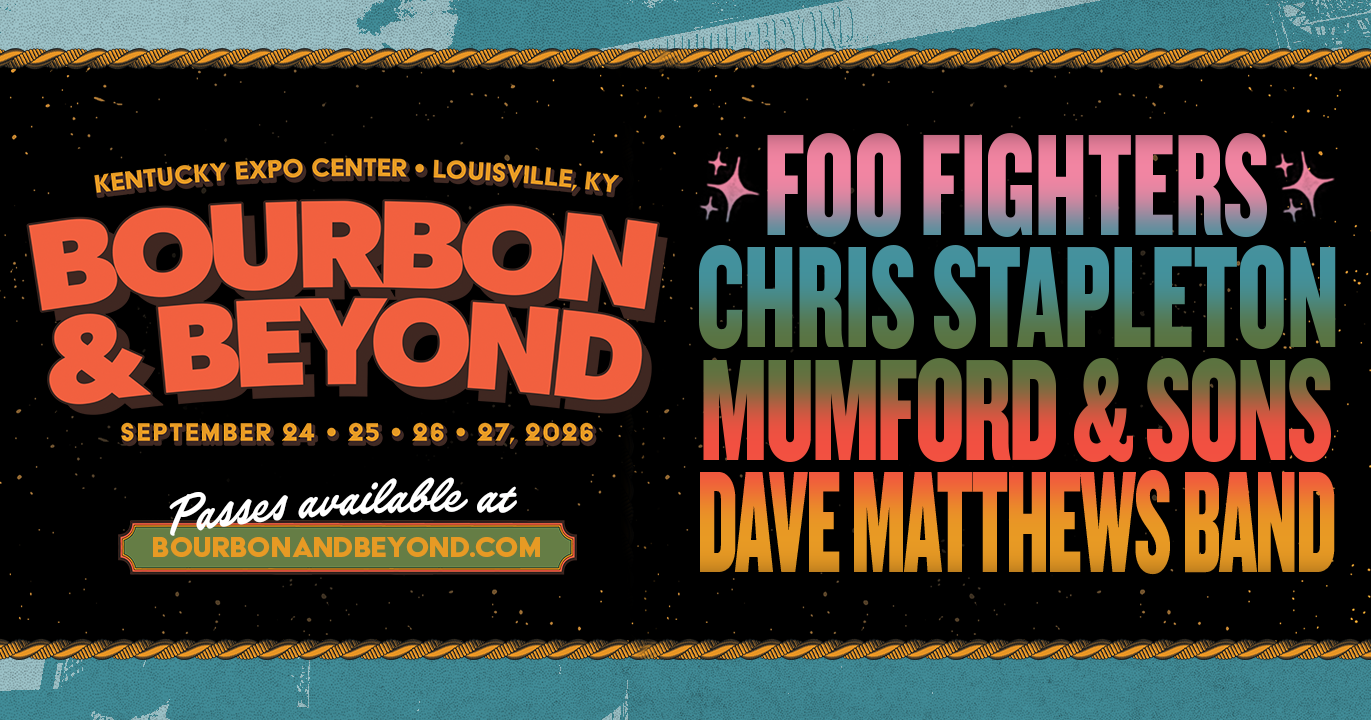
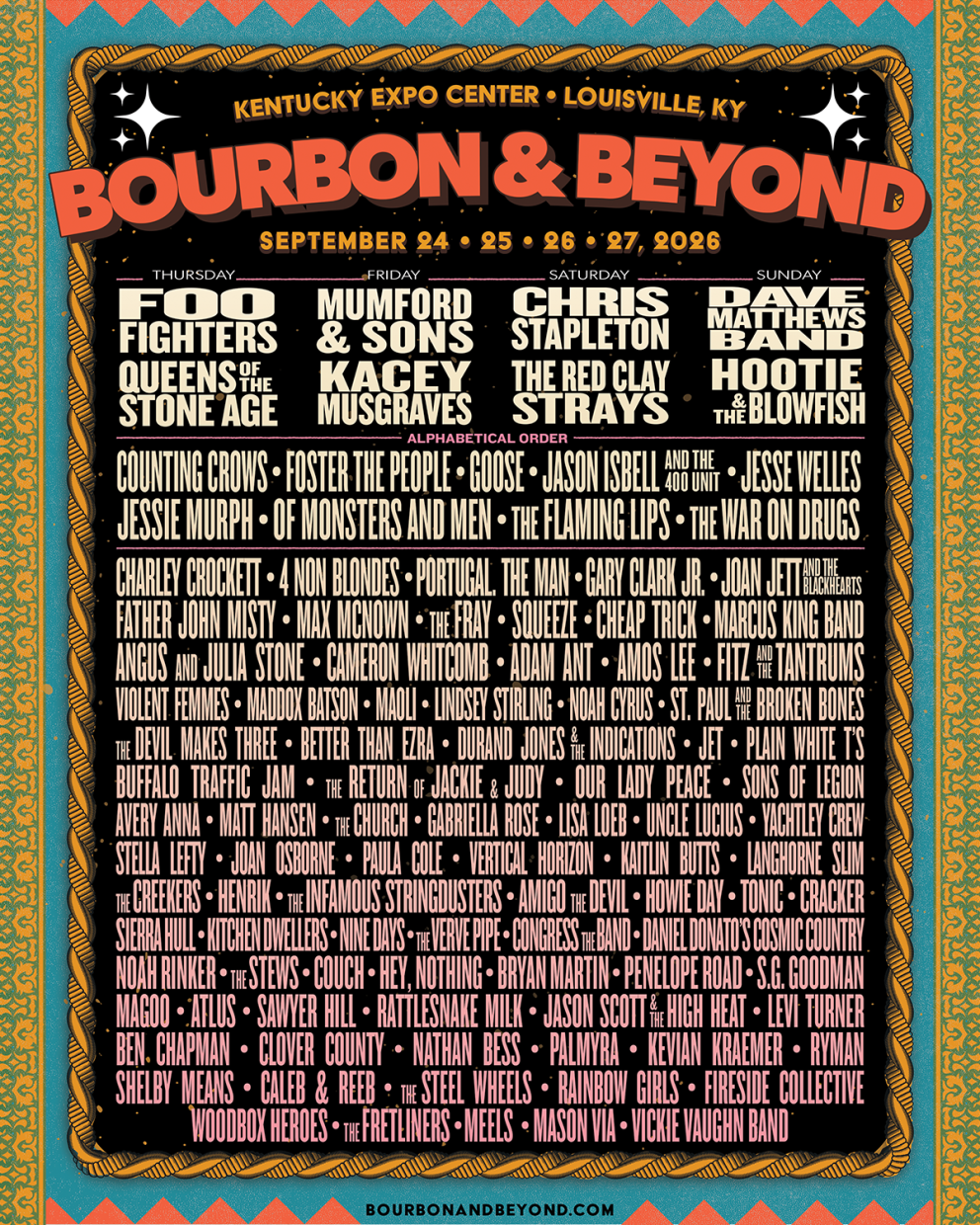
Danny Wimmer Presents has announced the full lineup for the 2026 edition of Bourbon & Beyond, the world’s largest music and bourbon festival. Held September 24-27 at the Kentucky Expo Center in Louisville, Kentucky, the hugely popular event – which attracted more than 200,000 attendees in 2025 and boasted more than $40 million in local economic impact that year alone – will include headline performances by Foo Fighters, Queens of the Stone Age, Mumford & Sons, Kacey Musgraves, Chris Stapleton, the Red Clay Strays, Dave Matthews Band, and Hootie & the Blowfish. Passes are on sale now; view the full lineup poster below.
For our eighth consecutive year, BGS will return to Bourbon & Beyond to curate and present the Bluegrass Situation Stage inside the mouthwatering Kroger Big Bourbon Bar tent. Over four days, Thursday to Sunday, the BGS Stage will include performances by some of the most exciting and buzzworthy bands in bluegrass, Americana, jamgrass, and folk. Headlining acts on our stage will include mandolinist and GRAMMY nominee Sierra Hull, psychedelic jamgrassers Kitchen Dwellers, our current February Artist of the Monththe Infamous Stringdusters, and the expansive sonic universe of Daniel Donato’s Cosmic Country. Other performers on the BGS Stage include Wood Box Heroes, Magoo, Shelby Means, Rainbow Girls, Meels, Caleb & Reeb, and many more. See our full BGS Stage lineup below.
Though we tend to stay close to our own stage during Bourbon & Beyond – we’re partial, what can we say! – each year the DWP team does an excellent job of spreading roots music, country, bluegrass, and Americana across the event’s five stages. This year, we’re excited to catch performances by so many of the artists and musicians included on the lineup, from Charley Crockett, the Red Clay Strays, Mumford & Sons, and Kacey Musgraves to Langhorne Slim, Maoli, Paula Cole, Kaitlin Butts, Clover County, S.G. Goodman, the Devil Makes Three, Palmyra, Amos Lee, Max McNown, and many more. Plus, we’ll be sure to catch Kentuckian viral sensations the Creekers while on-site.
Music isn’t the only draw, of course, as bourbon, food, and fellowship are equally tempting alongside the superlative roster of bands and artists. Hundreds of bourbon labels from dozens of distilleries will be on sale or available for tastings as well as impeccable food by local chefs and celebrity culinary personalities. Catch cooking and beverage demonstrations at the Fork & Flask stage curated by Kroger or enjoy bourbon panels and workshops at the Bourbon Experience. Our team, partial to tiki vibes and tiki drinks, will be sure to stop by the Jim Beam Black Tiki Barrel Bar over the course of the weekend, as well.
BGS has been proud to partner with Bourbon & Beyond and Danny Wimmer Presents ever since the festival’s very first iteration more than eight years ago. We are so excited to return to Louisville to celebrate bluegrass, roots music, bourbon – and beyond! – with you all in 2026. Buy your passes now and check out our full BGS Stage lineup below. We’ll see you at the Big Bourbon Bar in September.
The 2026 Bourbon & Beyond Bluegrass Situation Stage Lineup
Thursday, September 24
Wood Box Heroes Mason Via Magoo Sierra Hull
Friday, September 25
Fireside Collective Rainbow Girls Shelby Means Kitchen Dwellers
Saturday, September 26
The Fretliners Meels The Infamous Stringdusters
Sunday, September 27
Vickie Vaughn Band Caleb & Reeb The Steel Wheels Daniel Donato’s Cosmic Country
All artwork courtesy of Bourbon & Beyond and Danny Wimmer Presents.
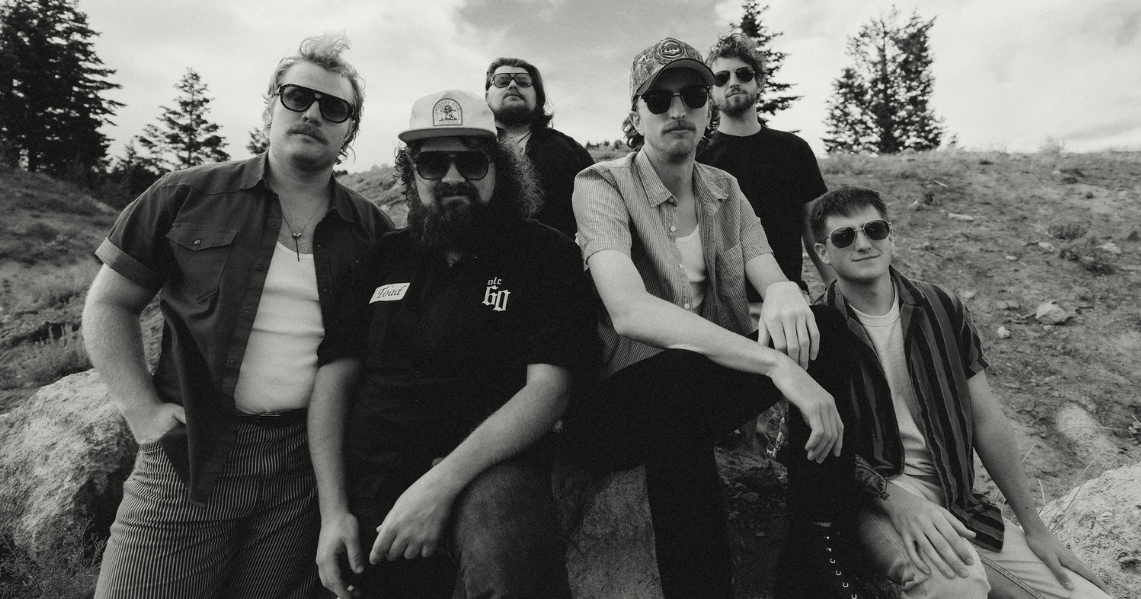
Pairing the slouchy charm of indie grunge with roots-rocking, small-town punk energy, Ole 60 spent 2025 becoming one of the most intriguing new acts in Americana.
With their debut album Smokestack Town – plus some fun-loving video content, huge opening-act performances with Zach Bryan, and first-time trips to Lollapalooza, the Ryman, the Grand Ole Opry, and more – the six-piece band came a long way from their blue-collar hometown of Hawesville, Kentucky. They even finished off the year with their biggest show yet, selling out their first-ever arena gig with an Owensboro homecoming. But there’s still more to do.
Inspired by a world of shift work and shitty luck, and powered by a rusty Toyota rolling on four bald tires, frontman and primary songwriter Jacob Ty Young fills his songs with vividly conflicted characters. Soaring garage-pop singalongs stand alongside sucker-punch ballads of screwing up and flaming out, each one struggling with the urge to get the hell out while still loving where you’re from. It’s a feeling anyone nursing big dreams in a small town will recognize, and Ole 60 shares it with a fresh voice.
In late January, Young told Good Country about the band’s quick rise and biggest year yet, while looking ahead to what comes next. There’s already a level-up tour underway and new music in the works. But Young pledges not to forget where they got their start – a pizza shop game room in a Smokestack Town.
In 2025, Ole 60 was out on tour, did big shows with Zach Bryan, made an Opry debut and released your first album. What’s it been like processing all that in the last month or so?
Jacob Ty Young: You try to take it in as it’s happening, but it’s a lot easier once you have some time to think. … I think it was definitely the best year we’ve had and now that we’ve had some time off, I’m eager to get back out and start touring again.
And I’ve been writing a lot. After putting out that first record, it was something that we’d never really done before. It was our first time making an album and we learned a lot of things and I think that everybody’s in the headspace that this next one’s going to be even better, so we’re working hard.
What was the common bond that brought you all together musically? You blend influences all the way from Smashing Pumpkins and Metallica to John Prine, right?
Five of the six of us are all from the same little small town in Kentucky, or bordering towns within about 30 minutes of each other. I kind of knew everybody before we started the band. We just got together and started jamming. I’m a huge Smashing Pumpkins fan. Most of the guys are big metalheads. They love Metallica, Black Sabbath, Primus, all that stuff. I think everybody bonded over just our love for rock music. There is obviously some country influence, but I never really considered it that. We were just a garage band, and it’s hard to not bond when you’re sitting there in a garage playing cover songs. The Pumpkins, Stone Temple Pilots, Black Crowes. It was that kind of grunge stuff that really glued us all together.
You can hear that still, and then there’s a rootsy folk side to it, too. When did you start writing songs?
I’ve been writing songs my whole life, but nothing ever really serious. I would write funny songs when I was in high school and I wrote a song about our basketball team one time, just as a parody thing. And I always really enjoyed playing guitar and being creative. I was into visual art and graphic design for a while. Then I kind of went through some stuff in my personal life and decided I wanted to sit down and write some songs about it. That ended up being the first EP [three twenty four]. That would’ve been 2023, I think. I always loved guys like John Prine and Bob Dylan and even Billy Corgan of the Pumpkins, just the uniqueness of the songwriting. I think for lyrics, I look to those guys, and then for the music we kind of look all over the place.
I hear there’s a pizza shop in there somewhere, right? We keep seeing pizza references in the socials and songs. Is the shop like an easter egg for you?
Yeah, I think so. I worked at a pizza restaurant in Hawesville, Kentucky, for about four years when I would come home from school. And then there’s another guy in the band, Ryan, his brother owned the pizza restaurant, so he worked there as well for years. When we first started practicing, rehearsing, and getting ready to go around playing bar gigs, we would rehearse in the back of Galaxy Pizza after close. We’d set up all our equipment back in the arcade section and jam until one in the morning. And then we got our bass player, Colby, and he had a garage, so we moved to his garage. But yeah, I grew up right next to Galaxy and it’s kind of a staple in our hometown, so we just try to let that side of us show through our content and all the visual side of stuff.
Tell me about putting the album together. Smokestack Town was one of my favorites of the year, so congratulations on how it came out. What did you want? I mean, creating a debut album is a pretty big moment. It might seem like an overwhelming task, so what were you going for?
We didn’t have a hardcore plan. I was just writing songs and I got six of ’em that I was really proud of. We went recorded and I was like, “Okay, I think this could be an album.” So I was writing as we were recording the album, and then the last song that I wrote was “Smokestack Town.” I was like, “That seems like a good name.”
I just wanted to push ourselves and try to do something different sonically than we had before. We got together with Jacquire King who produced it, and he’s one of the best of the best. He took my vision and ran with it and we’re very happy. We just wanted to put ourselves out there and let people in, see what kind of music we listen to.
That’s interesting, because it’s been presented as a concept album. But it sounds like you were building the concept as you went.
If it’s a concept album, it’s more so on the visual content side of things, because we’ve been putting out these little short videos of character acting. Taking the lead from the Foo Fighters.
Totally!
But there were just a lot of overarching themes in the record about home. Missing home, being homesick, being young. Plus that idea of small town, kind of dystopian … but not really.
Right, you wrote all these characters who are definitely small town people, with small town stories. But the thing I appreciate was they’re not stereotypical tailgate anthems or “I’m so country.” Nothing like that. Where were you coming from?
After I left Galaxy, I worked in an aluminum mill for a year and a half, and my dad works at the paper mill. Hawesville is a very industry-driven town. I think it’s different from your typical country town because it’s so labor-driven and everybody’s proud to be union and blue-collar. It’s less sitting on tailgates and drinking beer and more going to work a 16-hour shift and coming home and sleeping.
I wanted that to come through, because in country music it is a lot of sitting out in the boonies, drinking beer, and sitting on a tailgate. But I wanted to write my experience growing up in my little country town. There’s nothing to do, so we just ran around all the time and went to all these different places and got into trouble there. I wanted to write about that side of stuff, and less about the country stuff.
Being a new band coming into the indie and roots music scene, did it feel like there’s a lot of opportunity and energy out there?
Everything’s been so great. We kind of blew up on social media and I don’t know if any of us were ready for that to happen, but it did. I think that the reception’s been great. We went out and started headlining shows fairly early and we were selling them out. That’s a great feeling, because when you do blow up like that on social media, it’s hard to really put a gauge on what that means – until you go out and play a headline show and you see the crowd and they’re singing, and you go play a festival with all these big names and it’s your first time out there, and the crowd’s into it. And that’s kind of how it was.
True, and you finished last year with a huge statement in Owensboro, right? Hometown show, New Year’s Eve. Your first arena show and you sold it out. What was the feeling like on stage?
It was weird because it was both the most nervous I’ve ever been and the most comfortable I’ve ever been. You look out in the crowd, you see people you know, and you don’t get that a whole lot when you’re touring. It was just super cool. I got to sleep at the house I grew up in. The whole day just felt good. It was nice to be home and have family coming in and out and friends. Just the perfect way to end the year.
Y’all cleaned up nicely in the tuxedos. Did you put some extra polish on the performance, too?
Yeah, I thought it was New Year’s, we might as well get some tuxedos. I thought everybody looked nice. I want to do it more often. I dunno how the other guys feel about it. We’ll see.
You’re getting back on the road for the Smokestack Town Tour this winter. What’s everybody looking forward to? What’s the vibe?
The new year feels like a fresh start to change the show and really put a lot of thought into what we want to do with it. We’ve got some new production stuff, new lighting, and I’m really excited for everybody to see it. I think everybody just wants to go out there and every night needs to be the best show we’ve ever played. We’re playing bigger shows this year and we’re super excited, super grateful.
Earlier you said you’ve been writing, can you give us a hint about what’s been inspiring lately?
Yeah, I’ve been listening to a lot to indie rock, and what I listen to comes through in what I write. So definitely it sounds like Ole 60, but it’s new, and I’m still kind of figuring it out. But I’m really excited that the direction everything’s headed. I don’t have any idea about timelines for new music, but I have been writing a lot and I’m really excited about all of it.
Jacob, thank you for the time. I’ll leave you with the big picture – I always ask people what they hope listeners take away from their work. So what’s that look like to you?
I just hope that our story can be inspiring to others through the fact that we came from a town where after you graduate, you either go to college, you go to the military, or work in a factory, and that’s your options. And there’s always other options out there. You just got to put your head down, work hard and good things will come.
While Kentucky is the birthplace of the father of bluegrass and as a hotbed for country artists, it also has much more to offer. Proof lies with Magnolia Boulevard, who’ve been turning heads with their mix of Appalachian soul and southern rock since their formation in 2017.
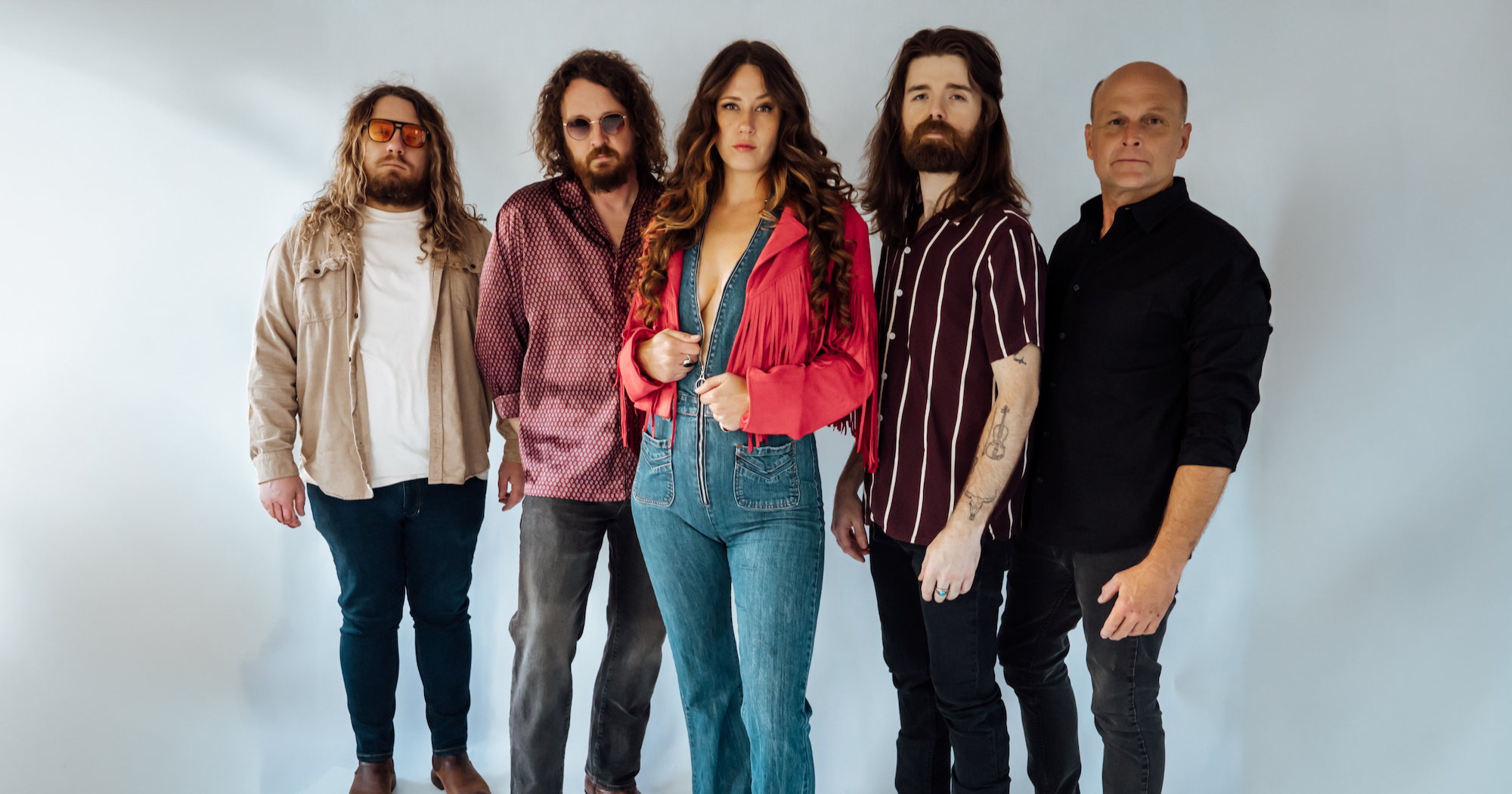
Led by powerhouse vocalist Maggie Noëlle – whose voice has drawn comparisons to everyone from Susan Tedeschi and Bonnie Raitt to Grace Potter and Amy Winehouse – the Lexington-based group has experienced highs like winning the band competition at Virginia’s FloydFest, hitting the road with Blues Traveler, and earning the personal endorsement of Paul Reed Smith and PRS Guitars – not to mention Noëlle becoming a mother. However, they’ve also experienced the lowest of lows, from having some of their biggest shows to date cancelled during the COVID pandemic to the unexpected death in 2021 of their drummer and founding member, Todd Copeland, that have done everything but derail them.
But instead of crumbling under the pressure, the band – now comprised of Ryan Allen (keys), Roddy Puckett (bass), Austin Lewis (lead guitar), Brandon Johnson (drums), and Noëlle – have fought through those trials and tribulations to deliver their long-awaited debut album. The self-titled effort looks at strength and perseverance in its many forms, from leaving relationships that are no longer serving you (“On My Own”) to learning to overcome and adapt regardless of the circumstances (“Strong-Willed Women”) and forgiving Noëlle’s father for never being around (“Nomad”).
According to Noëlle, the album marks a noticeable shift in her songwriting that reflects a much more personal tone and side of herself that she’s refrained from showing fully on stage, going all the way back to her days before the band when she sang in the bluegrass outfit Moonshine District.
“It’s taken a long time, but I’m finally realizing that songwriting for me is very much therapy,” she says. “Writing things down and getting it out and releasing it is just so gratifying and feels so empowering after being scared to do so for so long.”
During a candid conversation at an indoor market on Lexington’s north side, Noëlle spoke about everything from the long road to the band’s first album. We chat about how the sudden loss of Todd Copeland rocked the band’s world, the confluence of Appalachian and Southern music that informs the band’s sound, and more.
Why was now, eight years into the band, the right time to release your debut record?
Maggie Noëlle: I’ve wanted to put out a full-length record for years and years now. A lot of why we hadn’t yet was due to the age of streaming and constantly fighting the algorithm to get our name in front of people. Because of that, we’ve focused a lot on single releases as a way to gain more traction and win the algorithm over. But we also have a good, hard-working group of guys that are 100% for the music as a collective. Playing with them just comes so naturally, which has made everything from playing to writing together a lot easier. It’s about damn time! [Laughs]
Indeed it is! Regarding the song “It’s About Damn Time,” is it a reference to that long road to bringing the album to life, or something else entirely?
Ryan and I actually started “It’s About Damn Time” when we were driving to New Orleans to play an acoustic duo set at JazzFest. The idea was to portray the feeling of waiting around for things to change but ultimately realizing it’s you who has the control to change what you want in life. Even though it wasn’t originally meant for us as a band, it’s definitely shed some light on the progression of the group. It’s about damn time we finally have a full-length album!
You’ve had a lot of turnover in the band since 2017, from members coming and going to Todd Copeland’s death in 2021. What’s it been like continuing to make music as all of that has happened around you?
First and foremost, this band was Todd Copeland’s baby. He had an idea and knew he wanted to essentially give me a platform for my voice that I’d never had before with electric music. We kind of peaked during COVID after winning FloydFest’s On The Rise band competition in 2018 and going on tour with Blues Traveler in November 2019. But soon after, the world shut down, leading to the summer being letdown after letdown as we watched all the huge festivals we had lined up get canceled.
When 2021 rolled around, we were all excited to get back into the world until Todd’s unexpected passing, which shook all of us up in a way that we didn’t even understand. Obviously we were mourning our brother and friend, but it definitely shifted a lot of our energy. We’ve dealt with some more heavy punches since then, but we’ve also overcome a lot as well. Having someone in the group now like Roddy, who was close with Todd and played with him in the band Green Genes during the ‘90s, has made everything feel very full circle.
This album will also mark the band’s first vinyl release. What are you most excited about with that?
It’s something that fans have been asking us for for a while, so we’re thrilled to finally be giving it to them. We started taking some with us to sell at shows earlier this month and have already gone through a bunch of what we ordered. At the same time, though, it bugs me that so many songs from it are already released as singles. With records, I love listening to them front to back because oftentimes the track sequencing tells a story. But with how we approached releasing this it feels like it’s stealing some of the magic even though the full album still features three tracks – “Nomad,” “Anything,” and a cover of Robinella’s “Man Over” – that won’t be unveiled prior to it coming out.
Tell me about the Robinella cover?
When I was really little my aunt and uncle took me to Bristol Rhythm & Roots and I saw her perform. I was only 11 or 12 and fell madly in love with her and have been listening to the band ever since. She has a song called “Man Over” that I’ve long covered in my solo sets that Ryan really likes, so we decided to bring it to the band and put our own spin on it.
How did you decide which songs to put out as singles and which ones you wanted to save for the full album release?
Aside from the cover, “Nomad” and “Anything” are definitely two of my favorites that we recorded for the album. The latter is one that Ryan actually co-wrote with Madelyn Baier, who I didn’t meet until after the fact. When I did I told her how much I loved the song and she told me she thought it was meant for me to sing it. When Ryan first sent it to me I remember replaying it over and over. Before long, it turned into a mantra of sorts to help me acknowledge the special people and moments in my life and not turning a blind eye on things just because shit gets hard.
“Nomad” is also a very special song. Something I’ve always struggled with in my songwriting is opening up about my personal life, mental health, and emotions. That tune is a bit of a forgiveness song for my dad, who’s never really been a presence in my life. Rather than be bitter about it, I wanted to write a song that forgives him for that absence and reflects on how good a person I’ve turned out to be despite that.
“Strong-Willed Women” is another song that appears to take on a similar tone of highlighting strength to overcome adversity. Mind telling me about it?
I initially wrote that song when I was 17 or 18 about a health scare the women in my family were dealing with. It’s a song I never really expected to throw at this band, but Ryan always liked it and even helped me rewrite the bridge portion of it. It’s one we’ve been playing since the start that I don’t think I’ll ever get tired of. Lyrically it’s very close to what you described – about a person going through something really hard and overcoming it. Strength and resiliency are both really big parts of not just this track, but of the whole album.
You just mentioned how old “Strong-Willed Women” is compared to the other songs on the record. How do you feel you’ve evolved as a songwriter since penning that song in comparison to the newer tracks it joins here?
The difference is night and day and confidence is a big reason why. Ryan has always been in my corner encouraging me and trying to light a fire under my ass. He tells me that I have good songs inside me, I just need to practice and learn to use the tool correctly. I think a lot of what held me back in the past was being afraid to let all my dirty laundry out – not that I have much to begin with anyway. It’s taken a long time, but I’m finally realizing that songwriting for me is very much therapy. Writing things down and getting it out and releasing it is just so gratifying and feels so empowering after being scared to do so for so long.
With that in mind, what does it mean to you to be celebrating the album’s release back home with your biggest fans and earliest supporters at The Burl during your second annual Soul Stuffing Friendsgiving?
Being able to finally have a full length record out is such a personal achievement for me, and to share that with the community and people that have stood with us for eight years now is the icing on the cake. There’s some people – like you – who’ve been coming to all of our local shows and then some since the very beginning that have been begging us for this moment. There’s nothing more gratifying to have this moment with them back where this journey began. We’re also just very blessed – not only in Lexington, but Kentucky in general – to have so many talented musicians and other folks that we call friends who’ve been championing us for a long time too. It all feels like we’re one big family, which will make this celebration just after Thanksgiving all the more special.
What has the process of bringing this record to life taught you about yourself?
Like I said earlier, it’s taught me to have more confidence in myself – both on and off the stage. It’s taught me that I’m capable of letting people in more than what I have in the past and that I still have so much to learn. I’m always going to be my own worst critic, but when you have so much great feedback from great musicians and engineers like Duane Lundy it’s made it easier for me to accept their praise and keep my own thoughts and criticisms to myself.
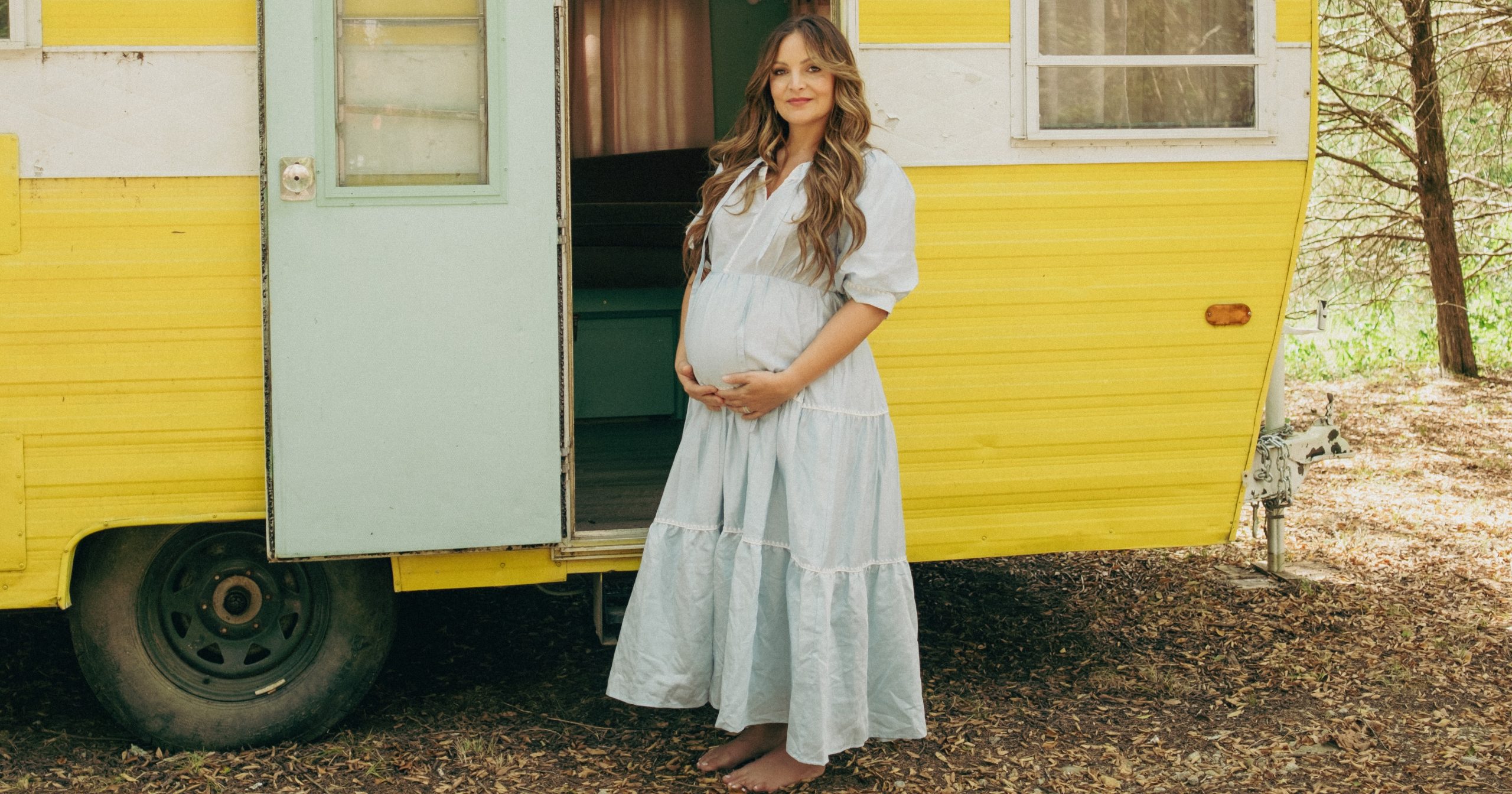
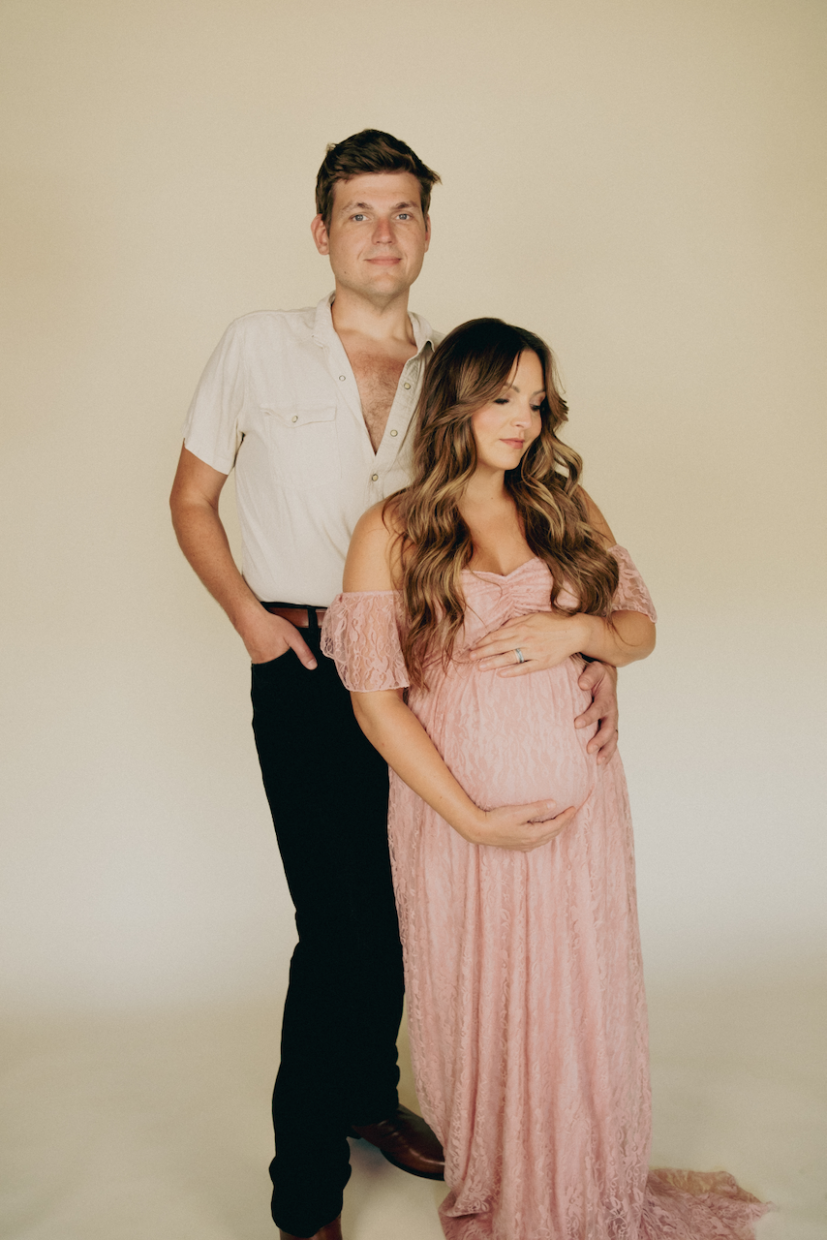
Sitting here in my baby’s room, feeling her kick in my belly while looking around at the dusty pink painted walls, baby owl wallpaper, refurbished 1960s furniture, a painting from her great grandmother on one wall, and her name – shared by two other great grandmothers – on the other wall, I’ve never been more certain that I’m exactly where I am meant to be in my life at this moment. Beulah Anne Chaffins. We love her so much already.
Like so many women in the music industry, I put off having a family thinking when my career takes off, then I’ll have my family. But “takes off” is so subjective, especially when you’re constantly moving the finish line for yourself. Earlier this year, I realized that if I kept waiting, I could literally wait myself forever out of the opportunity to have a family. I’m about to play Bourbon & Beyond, the biggest festival I’ve ever played, and I will be almost 8 months pregnant. It’s funny that this is actually the most outlaw thing I’ve ever done.
I didn’t grow up in a musical family. “Playing music” to my parents meant turning on the radio. I’m really excited to bring my daughter into a world of music. My husband, Adam Chaffins, and I do everything together. We garden, take care of our animals, travel, tour, write songs, and make records together. Beulah Anne already lights up when she hears us sing and play. I can feel her ball up in my belly, close to my guitar, and kick and turn as her daddy sings.
I put together a playlist of songs that I believe will be great to play for Beulah Anne when she finally gets here! It’s full of uplifting songs that don’t make us want to beat our heads against the wall. I know, I know, that will come eventually when she’s able to choose, but maybe if we start by instilling good taste early, it won’t be so bad? Wishful thinking? Maybe! – Brit Taylor
“Oo-De-Lally” – Roger Miller
Should be on any children’s playlist.
“Little Green Apples” – Bobbie Gentry & Glen Campbell
This wasn’t meant to be a kid’s song, but it is such a great love song and the melody is so simple and easy to remember. Adam and I love singing this one together.
“The Big Rock Candy Mountain” – Harry McClintock
The O Brother, Where Art Thou? soundtrack is one of my favorite albums. There’s something about the old timey sound of this one that makes me feel like we’ve travelled back in time when things were just more simple.
“Didn’t Leave Nobody but the Baby” – Gillian Welch, Alison Krauss, and Emmylou Harris
This is from the same soundtrack. I can see myself singing this one to baby Beulah, trying to get her to sleep. Maybe I’ll leave out a line or two!
“You’ve Got a Friend in Me” – Randy Newman
An amazing way to let your kid know they’re not alone. I love this one by Randy Newman from Toy Story.
“Here Comes The Sun” – the Beatles
Could put anyone in a good mood.
“You Are My Sunshine” – Norman Blake
There’s so many great versions of this song, but I love this one by Norman Blake on the O Brother soundtrack. The Dobro gets me.
“(Let Me Be Your) Teddy Bear” – Elvis
This is a requirement for any children’s playlist I make. My daddy would play this one for me – along with every other Elvis song ever recorded.
“Build Me Up Buttercup” – The Foundations
Another one my Dad would play and sing to me. I remember loving this one and naming one of our dogs Buttercup!
“I Love” – Tom T. Hall
Tom T Hall was a poet and also from my hometown of Hindman, Kentucky. I love this one from his children’s record.
“Love is Like A Butterfly” – Dolly Parton
This has such a whimsical vibe! I love having this one in the mix. It transports you to a fairytale land.
“What A Wonderful World” – Louis Armstrong
I want Beulah Anne to always be able to see the beautiful things in the world. I don’t want her to be afraid of it. Perspective is key and songs like this can do just that.
“God Only Knows” – The Beach Boys
Adam and I sang this song on a Valentine’s Day livestream when he surprised me by proposing! My answer was a big fat “yes,” obviously. I can see us singing and dancing to this one with Beulah in our arms!
“(They Long to Be) Close To You” – The Carpenters
I always loved the Carpenters when I was little. My mom would play them for me. Especially at Christmas. Karen Carpenter’s voice is like a warm hug. There’s just something dreamy about this song, and I love the lyrics.
“Top Of The World” – The Carpenters
I want Beulah Anne to have a positive outlook on life. I want to instill positive self-talk, so when she hears her inner voice it’s encouraging instead of scary or mean. I hope starting her off on music like this will help her always feel more like she’s on top of the world instead of down in the gutter, even in the hard times of life.
“Ol’ Blue” – Willie Nelson
A must. Beulah’s first dog will be our dog, Blue, so this one was definitely a sure bet.
I remember my very first snipe hunt. I was a teenager and my family, along with a handful of others, had recently left our former congregation, deciding to spend each Sunday alternating between our various houses to hold “home church” instead. This particular Sunday afternoon, we had already finished our DIY service, had enjoyed our shared meal, and were sitting scattered in lawn chairs and on the front porch of a humble little brick home in the foothills of southeastern Ohio.
A few of the more mischievous, prank-minded adults had begun gathering as many of the kids as possible, from toddlers to teens like me to young adults, with empty plastic grocery bags spanning the distance between our arms as we tramped off from the porch to the surrounding trees and woods. We were taught to shout, to bang sticks together or against tree trunks, and to keep those grocery bags open and ready, as the snipe were hiding above and – when correctly startled using these certified methods – would fall directly and immediately into our waiting plastic sacks.
We made attempts, we marched around, we laughed and shrieked and ran about. No, we didn’t catch a single snipe that day, but that’s not how I determined it was a prank. It was my very first snipe hunt – we weren’t a Scouts or summer camp sort of family – and still, as soon as they began passing around grocery bags, I knew a joke was being played. I wasn’t on the inside of it yet, but I knew what was happening – even though I really had no clue.
As a young teen, I had at that point spent my entire life obsessed with two things: banjo and birds. So when the jokester adults began spinning their yarn about how we were going to all catch snipe together, I knew we most certainly were not. After all, I knew Wilson’s Snipe were the only snipe species native to North America and that they preferred grasslands, marshes, beaver ponds, shorelines, and flooded meadows to lush hardwood forests in the foothills. Plus, at that time of year they would have already migrated back to their summer grounds in the north.
I had also already passed my Ohio Department of Natural Resources Hunter Safety Course – incredibly proud that I had scored 100% and hadn’t missed a single question – and knew that Wilson’s Snipe were hunted across the U.S. as upland game birds. I hadn’t hunted or bagged any, but having already spent countless hours across multiple seasons tracking down pheasant, partridge, and grouse, I knew that a grocery bag wouldn’t be our first choice if taking home snipe were really our aim.
Though I had never before been initiated into the lore or ritual of such a snipe hunt, I immediately knew what was happening, why it was happening, and – somehow, despite the odds – I overcame my primary instinct as a know-it-all bird nerd and didn’t “Um, actually…” obnoxiously and ruin the joke for everyone. I stretched out that Kroger bag and ran alongside all my home church friends as we hunted for snipe.
On July 25, Kentuckian country megalith Tyler Childers released Snipe Hunter, a Rick Rubin-produced Appalachian fever dream of an album that has had a remarkably polarizing effect across the diverse and disparate swathes of folks who profess to be Childers fans. Drawing from grunge and garage rock as often as old-time fiddle and bluegrassy mountain music, the 13 songs of Snipe Hunter are impeccable, harlequin, and mystifying. This is a fantastic collection – superlative yes, but even moreso, these songs are pure fantasy.
Being a snipe huntin’ veteran myself, as I first listened through the LP, I was floored. As each unpredictable, unhinged, unparalleled song ended and the next began I was all at once shocked and surprised, but still knew exactly what was coming next – and why. (Even though, as for that first snipe hunt as a kid, I actually had no idea what was going on. How could any of us?)
It’s just, I was already on the inside of this joke, too. While the internet (especially TikTok and Instagram Reels) quickly became swallowed up in wall-to-wall speculative videos about the album – claiming it was a prank, a litmus test, a Rorschach inkblot, a middle finger to the red hat-wearing fans who blow capillaries in their eyes screaming for “Feathered Indians” at every show – a host of folks pushed back on their front porch gliders and smiled to themselves. Because, if you’re Appalachian, or a lifelong folk musician, or even just an ardent and committed fan of true country, Americana, and bluegrass, you know exactly what this album is – and you know without a single shred of doubt that it’s not a prank.
It’s clear that many listeners feel challenged and excluded by Snipe Hunter. Many folks think it must be a joke purely because the thing is downright silly, or because Childers forsook the Sturgill Simpson or Zach Bryan trajectory he could have taken quite a few records ago and they’re still grieving what could have been. Other listeners seem to think the album is unserious not because it’s hilarious, but because they don’t hear the country in it. Or the Appalachia in it. Or the homespun, DIY, front-porch, hay-barn-recording-studio, rural-East-Kentucky-VFW-hall of it all throughout the sequence.
But to folks from inside the scenes Childers paints, to folks who’ve lived their lives in or touching on the regions he tributes with these poetic (and ugly and greasy) songs, to folks who still have grounded, everyday relationships with this type of rural mountain creativity and the folkways he draws on, this is just a standard phenotypic Appalachian country record. With more than a dash of Childers panache, of course.
There are eye-widening and jaw-dropping tales of far-off and exotic places (“Down Under,” “Tirtha Yatra”); there are eyebrow-raising retellings of hunting trips that seem just a bit too good or too successful or too chaotic to be true (“Dirty Ought Trill,” “Poachers,” “Snipe Hunt”); there are songs about sticking it to the man, sticking up for the working class, and sticking out your wrist to clown your not-as-rich neighbors (“Eatin’ Big Time,” “Nose On The Grindstone,” “Getting to the Bottom”); there are tributes to the true, multi-ethnic reality of Appalachia and the Southeast (“Tirtha Yatra,” “Dirty Ought Trill”); and of course, there’s “transatlantic” “Scotch/Irish” present, too (“Tomcat and a Dandy”). In short, it’s a country album. It’s an Appalachian album. Rick Rubin be damned.
For a record that has been regarded by thousands and thousands of listeners as a “prank,” it’s striking how grounded in Kentucky, Appalachia, and the Southeast this set of songs really is. Though you may need to be viewing it from the inside of the kaleidoscope to hold onto this fact.
This is a traditional album; it might even be Childers’ most regional and culturally anchored project yet – which is saying something, given the terroir of Long Violent History, the Can I Take My Hounds to Heaven? trilogy, and well, you know, his entire remaining catalog of country and bluegrass. Plus, he tracked the thing in Hawai’i. Quite a different set of mountains than East Kentucky.
Snipe Hunter is only a joke if you see Appalachia as a joke. And, my, how so many folks are telling on themselves in this moment. Luckily, Appalachians are used to being the butt of the joke. (And Childers is, too, as he writes himself into that role over and over again – on Snipe Hunter for sure, and beyond.)
The area grew its regional and cultural identity that we all still venerate today from being the first “wild west” of the New World. An ancient mountain range – the bedrock older than trees, older than our current continents, and older than bones themselves – with its hidden hollers, switchbacks, and impenetrable forests and hills, it was the perfect hiding spot for hardscrabble working class folks of all backgrounds and ethnicities fleeing civilization on a continent that didn’t have a lot of that to go around anyway. Villages and towns were often multi-ethnic (white, Black, Asian, Native American) and, by necessity, were remarkably communitarian as, until the advent of the railroad, survival, getting anything done, and getting anywhere in the Appalachians was a tall task that required insider knowledge and a host of help. Back then “it took a village” to survive in Appalachia, and it does to this day.
Alongside the trend of speculating about the intrinsic prank of Snipe Hunter online you’re just as likely to encounter dozens and dozens of vertical videos explaining and hyping up Appalachian folklore about cryptids, ghosts, and paranormal activity. Never before in the history of the region have skinwalkers and unexplained whistling in the middle of the night and beings like Mothman held such cultural power outside of the mountains themselves. You can make an entire career off of explaining creepy Appalachian myths without ever having been there yourself – and with an accent so passé you could be from anywhere.
You wouldn’t think these brands of videos – “Tyler Childers made Sniper Hunter to piss off the fans he doesn’t like” vs. “Here’s what to do when you hear a voice call your name in the middle of the night in rural Appalachia” – would be so analogous, but they really and truly are.
With these kinds of Appalachian myths, of monsters and cryptids and spirits and ghosts, their validity is entirely based upon their contexts, right? Appalachians know there’s no easier way to spot an outsider, a city slicker, or a poverty tourist in their midst than by letting someone who thinks they know what they’re talking about do just that with all the unearned confidence of a person who actually doesn’t know what they mean. These myths, while in many communities and families are held up as true in particular contexts or shared as knowledge – an amalgam of legend, myth, truth, science, and spirituality – their purpose has always largely been to determine one thing: Who’s an insider and who’s an outsider?
If you hear a stranger on TikTok explain to you that you should: 1) never go outside in Appalachia at night and 2) if you do, and you hear a voice you recognize call your name, you should 3) not do that and go back from where you came and thank your lucky stars that you respected this magical place enough to learn your lesson in advance – that person is not an insider. And, if you believe that video as truth or as cultural knowledge, you may not be an insider, either.
And that’s where we land. Tyler Childers’ Snipe Hunter is not a prank, except it most certainly is. It’s a cryptid. A litmus test to show who is on the inside of what he’s making and who’s on the outside. It’s artful, stunning, and resplendent because he makes his musical test such that anyone can pass, anyone can enjoy the product, and anyone can be a part of this wild, ridiculous, and joyous reality. But will you be inside the joke, or outside of it? Will you be shuddering in your car, doors locked, afraid of skinwalkers? Or will you be out under the stars on a ridgetop listening to the hounds bray as Dirty Ought Trill chases the dogs who are chasing raccoons down the holler?
Either way, the music will still hit, but wherever you start or end up here will change how the snipe hunt goes for you – and will determine whether or not you take anything home with you in that crinkled-up grocery bag.
Next to fellow Kentuckians Sturgill Simpson and Chris Stapleton, you’ll be hard pressed to find a singer more influential on the Commonwealth – or on all of Appalachian music – than Tyler Childers.
The Lawrence County-born artist first began cutting his teeth on dark corner stages inside diners across Eastern Kentucky and in grainy YouTube videos prior to laying the foundation for the cult-like following that’s been enamored with him since with 2011’s Bottles & Bibles and 2016’s Live On Red Barn Radio I & II. The following year he burst onto the national scene with his Simpson-produced studio debut, Purgatory.
From a voice as gritty and raw as the black gold he sings about on songs like “Nose On The Grindstone” and “Coal” to lyrics that shatter stereotypes and perceptions cast down on his home region by those outside of it, it’s easy to see why Childers’ music has become a soundtrack for not just part but all of Appalachia.
Whether it be the combination of humility and holler-bred antics within Purgatory, the intimate honky-tonk vignettes of Country Squire, the fiddle tunes of Long Violent History, the gospel-fueled experimentation of Can I Take My Hounds To Heaven? or the spiritual embodiment of Elvis on Rustin’ In The Rain, Childers has found success by shaking expectations at every turn, keeping old fans on their toes and bringing new ones in along the way.
When violence perpetrated by police was front and center during the aftermath of George Floyd’s death in 2020, Childers opted to cap off that fiddle album with its only vocal track, the protest anthem “Long Violent History.” During a heated societal moment, he approached the tune from an angle of empathy rather than pretentiousness as he tried contextualizing everything going on with past events like the Battle of Blair Mountain. Then in 2023 he had his first hit on country radio with “In Your Love,” an epic love tale that he recast as a gay one with the help of then Kentucky Poet Laureate Silas House in 2023.
While some fans have been turned off by his “political” statements, his viewpoints ultimately led to more people going down the rabbit hole of Childers’ catalog than ever before. This growth has culminated in sold-out shows at fabled venues like New York City’s Madison Square Garden, Lexington’s Kroger Field, London’s O2 Arena and the Los Angeles’ Hollywood Bowl. It also resulted in recording a track for last year’s TWISTERS soundtrack, collaborating with Olivia Rodrigo for a cover of “All Your’n” during a GUTS tour stop in Kentucky, and performing during The White House’s Fourth of July celebrations in 2024. Close to 10 years removed from his breakthrough moment, the singer is as popular and influential as ever.
That influence is sure to grow with the release of his latest studio album, Snipe Hunter. Recorded with and produced by Rick Rubin in Hawaii in early 2024, the 13-song compilation charts the red-headed stranger’s creative and spiritual coming of age with stories of the band’s success. The project is sprinkled with a bit of anti-capitalistic sentiment (“Eatin’ Big Time”), a yearning to escape on a trek to India (“Tirtha Yatra”), his fear of Koalas (“Down Under”) and hunting for whitetail deer (“Dirty Ought Trill”).
Much like its predecessors, Snipe Hunter captures Childers signature sound while also sounding like nothing he’s released before it, a fact no doubt aided by Rubin’s knack for crafting material that sticks to the cultural zeitgeist like superglue. Songs like “Nose On The Grindstone” and “Oneida” – a story about falling for an older woman – have been in Childers’ performance rotation, on YouTube playlists for years, and traded as coveted bootlegs, but the versions captured for Snipe Hunter, with their additions of organ, synths, and other studio toys, has each feeling reborn and completely new again.
Collectively, the album feels rooted in country funk bands of old like Goose Creek Symphony just as much as it incorporates more modern influences like Charlie Brown Superstar (whose remixes for Can I Take My Hounds To Heaven? are sublime) and Eric Church, serving up the perfect combination of past, present and future sounds in the process while sticking to the deeply personal Appalachian flavoring that has long highlighted his grand storytelling.
Bluegrass and country fans may recognize Kentucky-born, San Francisco-based fiddler Brandon Godman from touring, recording, and performing with folks like Dale Ann Bradley, Laurie Lewis, Jon Pardi, the Band Perry, the Music City Doughboys, and many more. He’s also an accomplished business owner and luthier, helming two fiddle repair and retail shops based in Nashville (The Violin Shop) and the Bay Area (The Fiddle Mercantile.) In addition, Godman helped found Bluegrass Pride and was instrumental in organizing the non-profit association’s float and marching contingent that won the coveted “Best Overall” ribbon from the 2017 SF Pride Parade.
Godman has played fiddle his entire life, beginning on the instrument as a young child in Northern Kentucky. His skills span old-time, bluegrass, western swing, country, contest fiddle, and beyond, and his career, by necessity often, has been remarkably varied, boasting stories of success, trials, tribulations, and highs and lows beyond his years. Now, filmmaker Bria Light has crafted a remarkable, heartfelt, and stunning documentary short all about Godman and his journey on and with the fiddle.
Shot and crafted in 2022 and 2023 as Light’s thesis film at UC Berkeley’s Graduate School of Journalism, The Road Home is an intimate and gorgeous look at Godman and his relationship with his instrument, his career path, and his rural home in Kentucky. The film includes lovely original music – much drawn from Godman’s acclaimed 2024 solo album, I Heard the Morgan Bell – that offers many varied samples of his expansive skillset on fiddle throughout, a perfect score and soundtrack for the 20 minute-plus documentary. Together, Light and Godman travel from California to Kentucky, visit with Godman’s family, share old memories and stories, and examine the complications and intricacies of family and community, the transient, intangible nature of “home,” and the pains and reliefs of leaving and returning.
Now, for the first time, The Road Home is available to screen online, right here on BGS and on YouTube. (Watch below.)
Light has a deft and artful touch as a filmmaker and director, utilizing the fiddle and Godman’s original compositions as an enormous character in these narratives, propelling the story forward and entrancing viewers with the sights, sounds, textures, and mythos of Northern Kentucky – as could only be delivered by a musician and creative like Godman. The end result is moving and illuminating, subverting expectations of the region, the instrument, the genres we associate with the fiddle, and the communities we expect – or don’t expect – to love these traditions and the people who keep them alive.
We spoke to Light via email about the film, its conception and making, and the twists and turns along the way that led Light and Godman to this stellar piece of visual, aural, and narrative storytelling.
Let’s begin by going back to the beginning. Can you tell us a bit of the story of how this film project came to be? What inspired you and how did you get connected with Brandon?
Bria Light: I made this film for my thesis film in the documentary film program at UC Berkeley’s Graduate School of Journalism and when it came time to look for a story that I would be spending all year working on, I knew I wanted a story that was music-related. But I also wanted to find a story that revealed something deeper about how music can help us find our way through the sometimes fraught path of being human. I eventually got connected with Brandon, who agreed to let me into his life and tell me this slice of his story.
This film tells such an expansive story in a relatively short amount of time. What was it like trying to condense such an interesting and often complicated narrative into this short film “package”?
I’ve sometimes used the metaphor that making a film feels like having the vast expanse and depth of the ocean stretching out before you and your job is to chart the best course from continent to continent. It can feel overwhelming! At every turn there are not only creative decisions to be made (What part of this person’s complex life do I focus on? Do I shoot this scene? Do I interview that person?), but also ethical ones (Who is affected by telling this story and how? Should I or should I not reveal someone’s identity? What impact am I hoping for this film to have and how is that best served?).
While you’re finding and crafting the story, it’s not always self-evident what the best, most meaningful storyline is and you want to explore a million different possible paths. You end up with hours and hours of footage (the ocean) that you have to fully explore to find the best course. And the thing is, you have to try things out to see if they work in a movie and until that golden moment where something works, it, well, doesn’t work. So it is a process of months – or years for feature docs – of trial and error, during much of which you suspect you might be terribly lost at sea and had no business becoming a sailor in the first place, to follow the metaphor… until one fine day you’re like, “Land ho!” and things start coming together and you can sleep again at night. [Laughs]
I feel like you let the music itself, and the tradition of fiddle music and roots music, do a lot of the storytelling here. What is it like translating music to a visual media like film in this way and leveraging it to help advance your narrative?
Absolutely. One of the key elements of my vision of the film from the beginning was to leverage the richness of this musical tradition and Brandon’s music within that to assist in telling his personal story. In fact, I pictured the music almost as a character itself. Music, of course, is a storyteller, even when it doesn’t have lyrics. So thinking of the music almost like the narrator of the story felt very natural.
Of course, Brandon creating his album of original tunes, I Heard The Morgan Bell, is part of the film’s narrative as well, so it all tied together organically. Additionally, since part of the film delves into the past and the creation of the album was the part of the story that was unfolding in the present, it helped provide a narrative thread to follow and to tie Brandon’s musical and personal evolution together from his past to his present.
Can you tell us a bit about what it was like traveling to Kentucky with Brandon?
It was very, very cold! Our trip to Kentucky took place over Christmas week and it just so happened to be during a cold snap that swept the entire country. It was in the single digits temperature-wise, in the negatives with wind chill, and the roads were covered in thick ice. I had envisioned going there and shooting scenes on the family farm with golden winter light sparkling in the crisp air, etc., and instead there was roaring wind so bitterly cold that you could barely be outside for two minutes before your fingers were completely numb. At one point, my camera was having some issues because it was so cold! But of course we filmed mostly inside and Brandon’s family was so warm and welcoming. I ate a copious amount of Mamaw’s famous chocolate peanut butter squares!
The music of the film is so stunning, and some of the selections went on to be included on Brandon’s 2024 album, which you mentioned already, I Heard the Morgan Bell – it was one of our favorite bluegrass albums of last year. Was there a “music supervision” process for the film? Did you leave it up to Brandon? What was it like collaborating on what would become the soundtrack and soundbed for your visuals?
Brandon was so generous in granting me permission to select music from his album, which was still in process, to use for the film. Through the course of our many hours of conversation over the year, he told me many of the stories behind the songs, of the inspiration and ideas that led to their creation. So I used that, along with the general feel and mood of the tune, to inform my choices as to which pieces to include where. Normally, you’re right, there would be a music supervision process, but in this case I had the privilege of working directly with Brandon, who was essentially also the film’s composer!
Do you have a favorite moment in the film? Or from the process of crafting it?
Hmm, there are so many memories attached to the creation of this film! I loved filming and editing the “Morgan Bell” scene in the church. The music is so gorgeous and I knew I would love filming in low light with stained glass church windows as the container for that wordless song that expresses so much emotion.
I also loved the moment in the editing process where I found the old footage of Brandon as a young teen on a local TV show. In Kentucky, his parents had given me a paper bag full of photo albums and old VHS tapes of Brandon at fiddling contests and other things to go through and see what I could use. Late one night, after a full day on campus, I headed back to the edit rooms in the journalism school to continue digitizing and going through the old VHS tapes. I got to one tape, began watching it, and it seemed to be all recorded re-runs of Days of Our Lives. After fast-fowarding through so many episodes of Days of Our Lives, I was wondering if that tape had been mistakenly included. I was about to stop when suddenly it cut to the footage of Brandon on the local TV station. It ended up becoming of my favorite scenes in the film, thanks to the very enthusiastic TV show host and a young, guileless Brandon.
Another favorite part of making the film was simply working with Brandon and getting to know him throughout our many conversations together. He’s such an old soul was a joy to work with, which is of course not always the case when making a film about someone’s real life. He was always open and willing to go along for the ride, despite the vulnerability required.
Filmmaker Bria Light, creator and director of ‘The Road Home.’
Maybe it’s an obvious question to ask, but what’s your goal? Making such an incredible and involved piece of art is goal enough, but where do you hope to take this film? How are you thinking about getting it in front of audiences? What’s next for the project?
I had several goals: I hoped some people might see a bit of themselves in the story and feel that they, too – despite having been made to feel othered in the past – belong in bluegrass and country music, that this music can be a home for everyone.
I also hoped that people would see Brandon’s story and say, “Wow, I didn’t realize there were still folks facing this type of persecution in the music industry.” This wasn’t so long ago. And unfortunately, as we all know, we are seeing today the continuation and resurgence of anti-LGBTQ laws and bigotry all over the country and the world. Another hope I have for the film is that by sharing stories that elevate the depth and humanness of the characters onscreen, folks from all sides of the political spectrum might, over time, begin to think about these issues in a new light.
What’s next? Recently the film screened to lovely and engaged audiences at the Sebastopol Documentary Film Festival and next it will play a bit farther from home at the Sound on Screen Film Festival in South Africa. I’m also hoping to show the film at music events or conferences, to continue to share Brandon’s story with audiences around the country.
What did you learn during the making of The Road Home that was unexpected? What will you take with you into future projects – whether in a similar vein or in another space entirely?
I learned so much! I learned the importance of finding that balance of pre-planning and knowing what the story is about while at the same time going with the flow of real-life, nonfiction storytelling – that is to say, you can’t actually predict how life is going to unfold, so you have to hold your preconceived ideas in one hand, while leaving room for the story to reveal itself to you as it unfolds in real time in the other. One thing I “learned” (in quotation marks because I’m still learning it…!) is to trust the creative process, with its highs and lows, self-doubts, rewarding moments, and ultimately, you find that you have gotten to the end of your creative process and survived! There are really too many things I’ve learned that I’ll be taking with me into future projects, so I’ll just leave it there for now.
Film, poster, and images courtesy of Bria Light.
This website uses cookies to improve your experience. We'll assume you're ok with this, but you can opt-out if you wish.AcceptRejectRead More
Privacy & Cookies Policy
Privacy Overview
This website uses cookies to improve your experience while you navigate through the website. Out of these, the cookies that are categorized as necessary are stored on your browser as they are essential for the working of basic functionalities of the website. We also use third-party cookies that help us analyze and understand how you use this website. These cookies will be stored in your browser only with your consent. You also have the option to opt-out of these cookies. But opting out of some of these cookies may affect your browsing experience.
Necessary cookies are absolutely essential for the website to function properly. This category only includes cookies that ensures basic functionalities and security features of the website. These cookies do not store any personal information.
Any cookies that may not be particularly necessary for the website to function and is used specifically to collect user personal data via analytics, ads, other embedded contents are termed as non-necessary cookies. It is mandatory to procure user consent prior to running these cookies on your website.