
BGS Class of 2015: Songs

What an overwhelmingly fantastic year for roots music! We couldn't fit all the greatness into our album list, so we picked another 21 of our favorite songs.

Anderson East, Delilah, "Find 'Em, Fool 'Em, and Forget 'Em"


A song from the heart of Southern soul music, AndersonEast found this little George Jackson/Rick Hall gem hiding down in Muscle Shoals and made it his own.

Brandi Carlile, The Firewatcher's Daughter, "The Stranger at My Door"

While "The Eye" would be the obviously outstanding song to pick, this little ditty is sneakily special and captures so much of what is great about Brandi Carlile.

Dave Rawlings Machine, Nashville Obsolete, "The Weekend"


It's always a good year when we get new music from Dave Rawlings Machine, and this opening track from Nashville Obsolete expresses a sentiment we can likely all relate to: hitting the weekend like a freight.

David Ramirez, Fables, "Harder to Lie"


This is one of those tunes that absolutely rocks you back on your heels with its unabashed forthrightness. Good luck getting past it to hear the rest of the record.

Drew Holcomb, Medicine, "American Beauty"


Drew Holcomb captured lightning in a bottle with "American Beauty" — a love song for anyone who has had to let go sooner than they wanted.

Glen Campbell, I'll Be Me, "I'm Not Gonna Miss You"


One of Campbell's final recordings, "I'm Not Gonna Miss You" may, at first listen, sound like a kiss-off to a former lover, but it was actually inspired by the legendary songwriter's ongoing battle with Alzheimer's, a fact that makes the depth of the lyrics and quality of the song all the more impressive.

HoneyHoney, 3, "Big Man"


Never did a song about the death of a "Big Man" sound so sweet. Suzanne Santo's voice is just about perfect … and the fiddle-laced song ain't too shabby, either.

Indigo Girls, One Lost Day, "Fishtails"


Amy Ray crafted some mighty fine tunes for the latest Indigo Girls' record, including this stunner that shows how powerful a well-placed horn part can be.

JD McPherson, Let the Good Times Roll, "Head Over Heels"


This Oklahoma boy knows how to rock ’n’ roll! Under the production guidance of Mark Neill, “Head Over Heels” sounds like the Flamingos went on an extended acid trip. Vibrato Fender dreams oscillate behind McPherson’s crooning, a chorus of handclaps, and a tack piano from Hell. Oh yeah, it’ll make you dance, too.

Julien Baker, Sprained Ankle, "Sprained Ankle"


“Wish I could write songs about anything other than death,” Julien Baker sings within the first seconds of this crippling ballad, led by an electric guitar and tritone anxiety. Having grown up in Memphis, the songwriter has the lyrical talent of a serious Delta blues player, but her music is darker and more daring than much of what Tennessee knows.

Kacey Musgraves, Pageant Material, "Good Ol' Boys Club"


Less outwardly biting than the album’s title track, this cut from Pageant Material stands out in a year dominated by a ridiculous question: Just where do women belong in the salad that is country music? Plus, that inside baseball slap-in-the-face to Big Machine is pretty rad.

LP, Muddy Waters, "Muddy Waters"


LP really knocked this darkly plodding one out of the park. Elements of it echo back to her pop past, but her bluesy roots are also showing.

Mavis Staples, Your Good Fortune, "Fight"


A collaboration with Son Little, this groovy track from Mavis Staples' EP snaps and snakes, using gospel-inspired backing vocals to drive it all home.

Nathaniel Rateliff & The Night Sweats, S/T, "S.O.B."


Ladies and germs, Nathaniel Rateliff has finally arrived. The Midwestern singer was bound to hit a new level of popularity with each year that passed — but that moment never seemed to arrive. That is, until Rateliff traded folk music for soul. Now you simply can’t escape that "S.O.B." This Stax-approved prison pen jam gets in its licks early, and washes it down with dirty bourbon.

Rayland Baxter, Imaginary Man, "Freakin Me Out"


We’re all losing our minds … some of us are just more freaked out by it than others. Rayland Baxter provides the sing-along anthem for those of us on the “more” end of the spectrum.

Rhiannon Giddens, Tomorrow Is My Turn, "Black Is the Color"


Rhiannon Giddens is known for her work with the Carolina Chocolate Drops, but she is also a formidable solo artist. This cover of an Appalachian folk tune — the excellent accompanying video for which was shot at historic Fisk University — shows off all Giddens has to offer: her soulful voice, knack for finding a groove, and ear for interpretation.

Russell Moore and IIIrd Tyme Out, It's About Tyme, "Brown County Red"


This Kyle Burnett-penned tune is filled with danger, bootlegin’, and cold-blooded murder on the banks of the Ohio River. When a moonshiner emerges from his secret corn liquor corner, he has an unfortunate run-in with the law, killing dead a few deputies. It’s the bluegrass equivalent to Juice. Kid just can’t stop killing! The best part about “Brown County Red,” is that it’s cast upon a major key backdrop. Surreal does not begin to describe it.

Ryan Culwell, Flatlands, "Flatlands"


Hailing from the great expanse of nothingness known as the Panhandle of Texas, Ryan Culwell speaks fondly of his childhood home and its understated beauty. “Take me back where I can see miles of dirt in front of me,” he sings. It’s something every God-fearing Midwesterner/Southerner knows to be true: Life is easier in the heat and emptiness of the flatlands … but we left them anyway.

Sufjan Stevens, Carrie & Lowell, "The Only Thing"


The sonic equivalent of David Foster Wallace’s “Good Old Neon,” the important distinction being that Stevens’ narrator sees Perseus twinkling in the clear night sky just in time to correct the steering wheel. 

The Weather Station, Loyalty, "Way It Is, Way It Could Be"


From the mind of Canadian songwriter Tamara Lindeman comes this tune, “Way It Is, Way It Could Be” — a meditation on the other side of the fence. The place where the grass always seems to be greenest. The song, off the fabulous Loyalty, has the snowy imagery of an Edith Wharton novel and the leary suspicion of Virginia Woolf. Lindeman sings in falsetto equanimity: “Was it a look in your eye? I wasn’t sure. The way it is and the way it could be both are.” Painted with images of frozen Quebec, this opening track sets the mood for the Weather Station’s best album yet.

Wilco, Star Wars, "Random Name Generator"


Wilco’s surprise album also had a few surprise hits, like “Random Name Generator.” Like the song’s “flame creator” protagonist, this tune packs plenty of dirt and burn. “I think I miss my family I found,” Jeff Tweedy laments, resigning himself as a father who simply names things. It is one of recent Wilco’s most affecting songs.

For more musical goodness, check out the full Class of 2015. Follow the playlist on Spotify and add your own favorite songs to it:
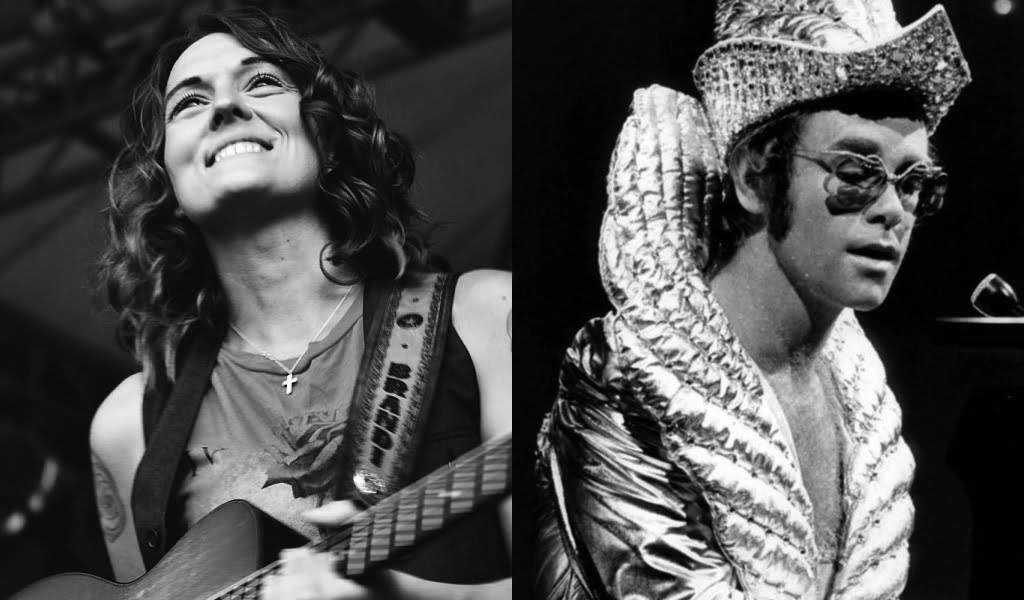
Squared Roots: Brandi Carlile Makes the Case for Elton John

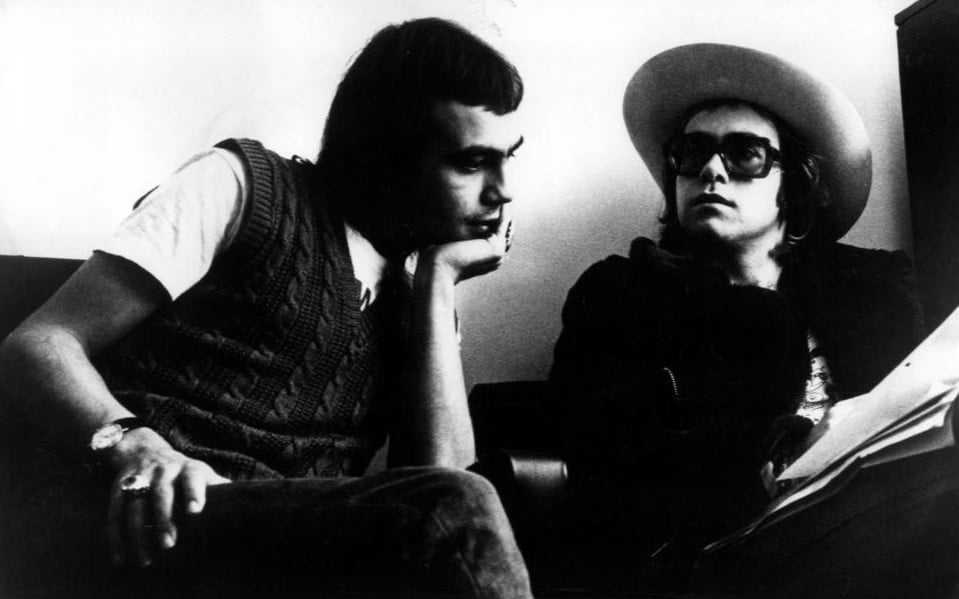
The classically trained Sir Elton John wasn’t always just so. In his early days, Reginald Dwight was so hooked on the American sounds of Elvis Presley, Ray Charles, Jim Reeves, Bill Haley, and Jerry Lee Lewis that the band he formed in 1962 was called Bluesology. Then, in 1967, John met lyricist Bernie Taupin and music history would soon be made. The pair continues writing together today, after more than 57 Top 40 hits (in the U.S.) on 30+ albums … and nearly as many awards.

“Border Song,” “Tiny Dancer,” “Crocodile Rock,” “Philadelphia Freedom,” and myriad other John/Taupin collaborations fill the soundtracks of so many lives … singer/songwriter Brandi Carlile‘s among them. She grew up idolizing the two British music men and, after combining their influence with a dash of Johnny Cash and a pinch of Patsy Cline, found her own rootsy sound evolving and emanating from that somewhat surprising foundation.

To connect the dots between Sir Elton and American roots music, you have to go back to his days as Reggie Dwight. Draw that line for us.

I feel like sometimes an artist’s separation from their influences by proximity and culture almost intensify and exaggerate the effect that a certain genre has on them. Examples of this that come to mind are Paul McCartney’s passion for Buddy Holly and American rock ‘n’ roll; Old Crow Medicine Show cutting their teeth in Ithaca, NY, only to become incredible live Appalachian bluegrass on steroids — complete with Ketch Secor’s almost savant encyclopedia of knowledge on the genre and his preoccupation with southern culture; British, bluegrass-influenced arena band Mumford and Sons and Colorado-based Lumineers are also good examples of this … not to mention my personal obsession with country music and the South as a northerner or, as an American, my obsession with Brit Pop — Freddie Mercury, the Beatles … but, above all these, Elton John. Admiration from a distance is the strongest kind.

While Elton, by definition, is decidedly British, he has pushed the envelope on genre so far that it’s completely inapplicable to him. He was deeply influenced by American rock ‘n’ roll and roots music. Being so far away from Little Richard, Chuck Berry, Jerry Lee Lewis, and Elvis Presley only seems to have fueled the obsession with the culture of early American rock ‘n’ roll roots music for him.

Elton once said that Elvis looked like an alien to him. My great uncle Sunny, a guitar player and singer, told me that he was too busy (along with his friends) being jealous of Elvis Presley to be influenced by him at the time. The space between an artist and the music that inspires them becomes purer as it grows, erasing lines of competition, jealousy, even racism and politics. Elton John is a lover of early American rock ‘n’ roll roots music, pure as the driven snow. He could probably teach you and me a thing or two about it!

The most defining influences from early to current Elton John are his deep love for Leon Russell and Buffy Sainte-Marie. It took an eccentric British man in his 60s to teach me about these two absolute pillars in American folk/roots and to see something fundamental that was right in front of my nose whole time.

Once he teamed up with Bernie Taupin, things shifted. What threads of honky tonk, gospel, and other roots do you hear in their early work?

When Elton John started writing with Bernie Taupin, it was like rock ‘n’ roll met roots — Captain Fantastic meets the Brown Dirt Cowboy — and now you don’t only have early American overtones, musically, but they’re touching lyrically on early American themes. The entire Tumbleweed Connection record is Civil War fantasy meets early American Western. Good guys and bad guys, riverboats, Yankees and the Union, sons of their fathers, New Orleans, and “good old country comfort in my bones.”

Early American gospel makes its way onto Elton John many times, most notably in “Border Song” complete with a nod to ending racism. These themes are a constant throughout their career and continue to be. “Texan Love Song,” to Roy Rogers, all the way to the T Bone Burnett records of today, The Union and The Diving Board.

Bernie Taupin, to me, is the best lyricist there is and certainly the most fantastical and unselfish in his work. He is deeply interpretative and, honestly, self-revealing while also introducing us to fantasy and objectivity unchanged for 40 years.


Elton John with Bernie Taupin (left) in 1971. Photo credit: Public domain.

You have a thing for big personalities in your musical heroes … Elton, Elvis, Freddie Mercury, Johnny Cash. So you clearly don’t think Elton’s flamboyant, costumed persona took anything away from his respectability as an artist. Correct?

No! No way! Elton John’s eccentricity is authentic. Picture Elton John in the hipster attire of his time — skinny jeans and a beard, all browns and fedoras with a tiny tie. Who’s going to believe anything a guy has to say about “Bennie and the Jets” in that? He proved that he could make you cry dressed like Donald Duck. That means everything. Little Jimmy Dickens and Minnie Pearl probably loved him.

There aren’t many artists who could do a duets album that included Tammy Wynette, Leonard Cohen, and RuPaul. So what is it about Elton and his music that create such a wide berth?

The thing about Elton John that creates a wide berth is that he is a truly authentic person who thrives on enthusiasm and loving people! In fact, he loves so many different kinds of people that he regularly offends someone over his acceptance of someone else. Dolly Parton also has this rare gift. Elton tends to embrace the unacceptable — from collaborating with Eminem when he was in such hot water, to playing at Rush Limbaugh’s birthday party, to insinuating that Jesus might be gay, to now getting on the phone with Vladimir Putin on behalf of LGBT Russian citizens. As a result, when Elton john speaks out against something, everyone listens … I certainly do.

Elton is wildly diverse in his efforts to become a bridge builder. He’s very intriguing and his musical collaborations have been very reflective of that. I used to listen to Duets, his collaborative duets record from the ’90s, and I never got tired of it because even if I was over [Don] Henley that day, I could hear him sing with Tammy.

Which album can we point to as the one where he moved completely away from his early influences? Or is there an argument to be made that they are still there, even in “Circle of Life”?

The beauty of Elton and Bernie is that there are no absolutes that can be applied to any one of their albums. They are a wild ride of genre twists and turns, career long. Say what you will about musical consistency, none of these records are background music. You don’t want to have them playing while you’re hosting a dinner party.

If I had to point to a departure from roots music — although never completely — I’d say maybe some of the mid-80s to early-90s stuff. From Leather Jackets, Breaking Hearts, maybe Too Low For Zero, or The Big Picture. However, having said that, those records made a huge impact on me and, last time I checked, I’m still a roots artist. Elton’s Americana leanings are firmly in tact. His last two records with T Bone Burnett are truly some of the best of his career. The Union with Leon Russell is a favorite of mine and The Diving Board is a return to form in a way that feels to me like hearing Johnny Cash sing alone on American Recordings.

Elton and Bernie have deeply influenced me as an American roots artist from 5,000 miles away! Thanks for giving me the chance to say so.


Brandi Carlile photo courtesy of Brandi Carlile. Elton John photo credit: Heinrich Klaffs / Foter / CC BY-NC-SA.