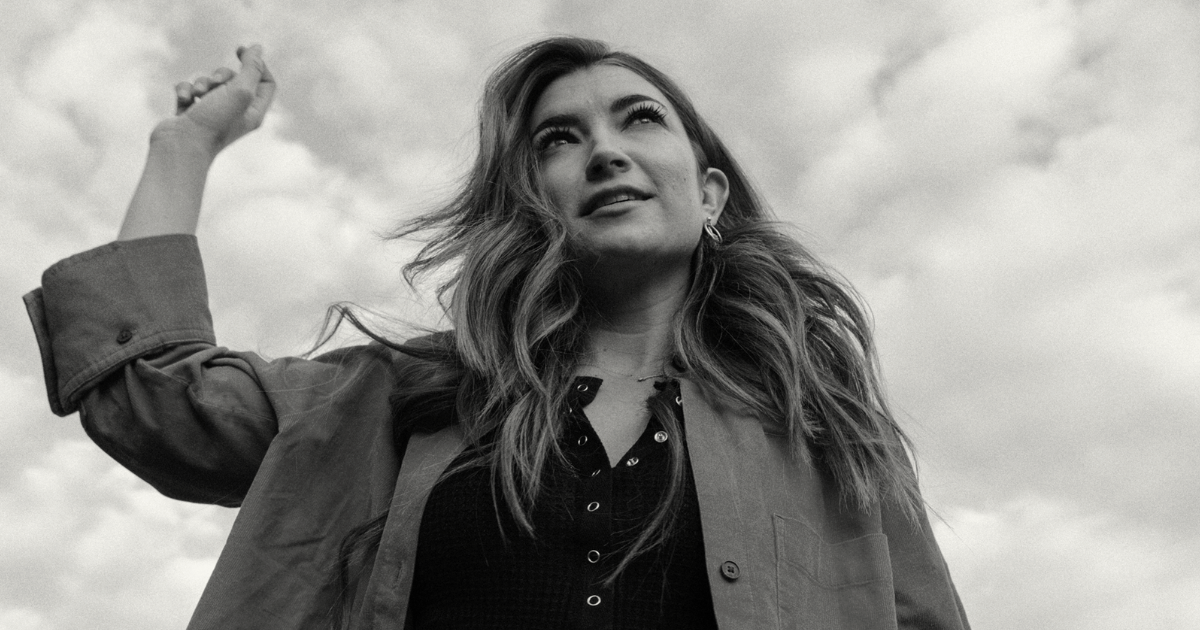
Artist of the Month: Tenille Townes

(Editor’s Note: This article originally published on Good Country in December 2024. At that time, Good Country content was available exclusively on Substack.

Townes was included as part of our end-of-year coverage in 2024, examining how many country artists across the continent have blurred genre lines to connect with new audiences and plumb greater depths of self-expression. Jewly Hight spoke to Townes about her recently becoming an independent artist at that time and together they examined where she stood and where she was headed. 

Now, on April 10, 2026, Townes will release the first full-length album of her independent era, The Acrobat. To celebrate, we’re naming her our Good Country and BGS Artist of the Month. And we’re re-sharing this piece from the archives to kick off the month. Below, enjoy an excellent interview on our website for the first time and check out our Essential Tenille Townes playlist. Dive into our brand new feature interview with Townes on The Acrobat and a special bonus article of Townes in her own words.)

“Genres are a funny little concept, aren’t they?” Linda Martell poses rhetorically during the spoken intro to “Spaghettii,” roughly halfway through Beyoncé’s western epic Cowboy Carter.

“In theory,” Martell goes on with sly poise, “they have a simple definition that’s easy to understand. But in practice, well, some may feel confined.” Martell knows what she’s talked about. She endured all manner of efforts to hem in her musical sensibilities and diminish her agency back when she was country music’s most visible Black, female talent.

And now, because she lent her voice to a track where Bey and Shaboozey go hard with down-home boasts over a lurching beat, she’s up for a GRAMMY for Best Melodic Rap Performance. Other tracks from Cowboy Carter are in pop, country and even Americana contention, a staggering range of styles for one project to cover.

That’s the kind of boundary-blurring year it’s been, with Shaboozey translating country gestures and imagery to broody, contemporary hip-hop cadences with tremendous savvy and both Jelly Roll and Post Malone furthering their paths from rap origins to ever more fully embracing – and being embraced by – the country music industry.

Things haven’t been any tidier on the rootsy side of the spectrum. After being treated like a pop prodigal during her Star-Crossed era, Kacey Musgraves’ shimmering, urban folk revival-echoing ruminations on Deeper Well have been received as a country homecoming of sorts. Noah Kahan has helped bring on a resurgence of cozily folk-forward, singer-songwriter sensibilities in pop music.

A major country record label snatched up the Red Clay Strays, the type of crowd-pleasing, Southern blues-rockers that have long been celebrated in the Americana scene, where many other pivotal voices – first Allison Russell last year, then Sarah Jarosz, Amythyst Kiah, Adeem the Artist, Kaia Kater and others – experimented with lusher or more polished arrangements and production aesthetics in their latest work.

Tenille Townes offers us a particularly compelling example of an artist charting her course against the background of that extreme slippage between genre lineage, stylistic markers, and industry affiliation. She tried the major label country route in 2018, greeted as a promising new voice at a moment when the broad appeal of Kacey Musgraves’ Golden Hour ruminations made the industry a little more receptive to artists with a personalized, writerly bent, and she’s emerged independent on the other side. In her mind, being unfettered in a time of great genre fluidity is cause for optimism.

Townes began her tenure on Columbia Nashville with spare acoustic recordings, and concluded it this year in similar fashion. She was, and remains, an ardently openhearted singer-songwriter, bent on tapping deep veins of empathy whether she’s in observational or confessional mode. When I first interviewed her, it made all the sense in the world to hear her say she felt a kinship to singer-songwriters like Patty Griffin and Lori McKenna. It also struck me that Townes’ singing – curling syllables and stretching out lines with feeling, a style sometimes called “cursive” singing – was far from the hearty enunciation for which country music has been known.

In between then and now, Townes dropped an album that bore a super-producer’s digitally sharpened touch, won a pair of ACM awards to go with the pile of honors she’s received from the Canadian Country Music Association – which began to recognize her promise when she was a teen with dreams of pursuing music beyond Grande Prairie, Alberta – and she toured with big country names like Miranda Lambert and Dierks Bentley. Townes also faced enough professional hurdles, and observed enough changes in the landscape around her, to reconsider where her songs might belong. And I very much wanted to hear about that.

You’re presently on tour in Canada, aren’t you?

Tenille Townes: I’m having the best time on this run. It feels like a community at these shows. We’ve done a few tours through Canada at this point, but this was our first time going as far east as we did. I feel like live music in general is a little bit more scarce over there. They don’t get as many people making the trek. And so [I could feel] the appreciation.

They sold out the shows so fast and they’re singing all the words. And very quietly listening intently and leaning in a really vulnerable way. And then also having a blast and being loud, which is so cool to me, for it to feel like a living room and a rock club at the same time. That’s been such a big part of my vision.

I don’t know how far out you planned this tour, but I wonder if it’s become an important chance for you to return to your home turf, regroup and get reinvigorated.

Yeah, it honestly feels really essential in my creative journey. I could not be more grateful for the way the timing has aligned this year for this moment on the road. It feels like the ingredient that I’ve been craving. In January, I’m going to be so ready to dive in with my whole heart and make [the music] I’m going to share next. I don’t think that the recipe could have ever been complete without this tour in this moment. It feels so timely, because so much of this past year has felt terrifying.

And just standing on my own two feet as an artist again, pretty much entirely, I feel so excited and grateful to be making this leap into the arms of these people showing up at the shows who are so excited about this new chapter. And it’s such a wave of encouragement to go, “Oh yeah, I think I’m on the right path, doing the right thing.”

How is it different from when you’ve toured the U.S., in terms of headlining versus being an opener, the size of venues and how you’re engaging with the audience?

There’s been a lot of theaters for us on this run, which have a bigger capacity than some of the clubs that we’ve played in these towns before. It’s our first time playing a handful of these [places], but this is our third headlining tour in Canada.

What I noticed that’s different is when it’s our shows and our community, it just feels like people show up with open arms and they’re requesting songs that I haven’t played in so long. They know the deep cuts. They’re showing up excited for a night of feeling whatever they need to feel. And I think that emotional permission feels different at our shows than it does at a show where we’re a guest [in the opening slot] going to make some new friends. And it’s been really cool hearing from people that were like, “I saw you on the Dierks [Bentley] tour and this is our third Tenille show.”

One thing I always say at the top of the shows is I want our time together around my songs to be a place where everyone who walks in the door feels safe to show up and be whoever they are and to feel embraced and welcomed for that. And I thank everyone for buying a ticket and for showing up as that community. And I really feel like they’re embodying what that means.

Years back, I took note of the fact that Corb Lund had what was considered fairly mainstream country success in Canada, but he played Americana events when he came to Nashville. I’m curious whether you’ve seen folk, Americana and country are treated as separate genre categories in the Canadian market, like they are in the U.S. How do you tend to get categorized in Canada?

At least from my experience, it feels different to me. Because in Canada, I have been really grateful to have felt super embraced by the country community, by the CCMAs, by country radio, by the community of people listening to country music. And we have fit in that bubble there. And I don’t know that we fit the same way in the States.

I relate to what you’re saying about Corb Lund. I think maybe the lane is just not as narrow in Canada. And I think that they’re just more in it for live music of any capacity. I think most fans [who come see me] would be like, “Oh, I’m at a country show.” Which is funny because when we play shows here, that doesn’t necessarily feel the same. I do feel like the Canadian country music community definitely jumped on board with what I’m creating. And the music [I release in both markets] is very much the same, so it’s so strange.

I will say that the people coming to our shows, our headline club shows that we’ve done in the U.S., they feel very similar, like-minded people to me.

You’re a little more than a decade into your Nashville tenure at this point. Why is it important to you to stay?

Even though this town has a lot of jagged edges or hard things about it, I really do still feel inspired here. I feel like there’s a tapestry of artists who have come to this town with their dream and worked at sharing their art and building a group of friends and people around them who support that. I have a front row seat, you know, going to an Emmylou Harris fundraiser at City Winery and watching all of these people that she’s embraced in her life that she’s written with or jammed with that’s really a legacy.

I love this community, and I do feel inspired musically, having access to so many songwriters and musicians and producers. There is a heartbeat to this town that I want to continue to be present in and be a part of for sure.

I can picture the show that you were just describing. The atmosphere was very similar at the tribute to Mary Gauthier during Americanafest, a multi-generational gathering of Nashville’s singer-songwriter community.

When we first talked all those years ago, you described being an astute student in Nashville, paying particular attention to singer-songwriters like Lori McKenna and Patty Griffin. At the time, you considered them touchstones because of how they used the language of the heart in their storytelling.

In terms of their career arcs, their material’s been recorded by big names in country, but as respected as they are among songwriting connoisseurs in that world, they’ve had contemporary folk careers as performers. They’ve often released their music on independent labels. Were you also taking note of what their professional paths have looked like? Or are you now?

I honestly don’t know that I was conscious of it back then. It was just the music that I loved. I don’t think I even had an understanding of the choices made on an artist’s path to stay true to that route.

I’ve learned a lot in the last handful of years: “Oh, that makes sense why a certain path, like Patty Griffin’s, unfolds in a certain way.” I never thought of it as a ceiling or an alternate route. It just was where the music had taken her. That’s been inspiring to me.

I never want to look at any options of teams to work with or whatever with any closed-doors feelings. I would love to play the music that I make in stadiums. That’d be great if that still unfolds that way. But I also just really want to tell my stories and my truth, and whoever is going to come as the audience, that’s amazing to me. The idea of seeing it as a wider horizon than maybe a stereotypical path, that doesn’t seem scary to me. I think that’s because I’ve looked up to people like Patty or Lori, people who have always stayed true to what they’re doing and figured out the path there regardless. But I don’t know if I’ve ever actually intentionally thought about it that way.

Your intention has been clearer than ever this year. It wasn’t lost on me that the final two songs you released earlier this year, before you parted ways with your label – “As You Are” and “The Thing That Brought Me Here” – each were expressions of commitment to staying the course. What did you want to communicate?

I love that you noticed these themes. At the end of that journey, “As You Are” felt like such a great theme to end that season on. There was lots of resistance [from the label] in several years of working on music and getting to a point of actually getting to put it out. But that song always had a green light from them, which I really appreciated.

I wrote that song thinking it was about showing up and being a support system for someone. I had friends in mind that I was thinking of. It was just like, “I will be that safe place.” And then listening back to the demo after the [session] on the drive home, I was like, “No, I wrote this ‘cause this is what I want to hear when I’m struggling to let somebody in.” That’s been something that I’ve felt even in my professional journey for sure, just wanting to feel seen.

@tenilletownes if you’re hearing this song I’m glad you’re here 🫶🏼 can’t wait for where we’re going together next #songwriter #newmusic #indieartist #aboutme #doglover ♬ original sound – Tenille Townes

It really seems like you’re the one communicating on your own TikTok. In recent months, a lot of your posts have been about celebrating your professionally “single” era. When you shared the news that you were no longer in your major label deal, you framed it as a breakup that you were happy about. What felt right about striking that tone?

It felt honest. It was a lot building up to that decision, and it was not easy, and it was terrifying. All of those emotions were a part of it. I just felt like, “I can’t continue to share the music I want to make if I’m not letting people in on my process of that vulnerability, even when it’s hard.” Making those videos felt scary, for sure. But that just feels like the kind of artist that I want to be, to walk the walk.

Also part of my intention was, “This is something that creatively feels really empowering to me, to take back the ownership of my music.” And for any young girls out there, I want them to know, “That’s a possible feeling for you, to stand up for yourself at any moment in any kind of career, or on any path of your life.” It’s brave to take that step. And I guess I just want that invitation to be there for anyone following along.

And I want to bring together the community of people. Like, it is an “independent artist,” but I think it should be called a “community village artist,” because you can’t get your stuff out there without people believing in what you’re doing and coming with you. I wanted it to be very clear that we’re in this together. We’ve always been in it together, but it feels very defined to me now. And I wanted to make sure everyone knew that.

And now we have the benefit of accumulated perspective, so I want to reflect back. At the beginning of your label journey, what was in the atmosphere at the time in Nashville or the country music scene in the U.S. that contributed to a sense of possibility for you?

At the beginning, it was excitement. And [I] look back and think, “How crazy cool that I got to be a part of a major label deal that let me put out a debut single about homelessness, and then follow it up with a song called ‘Jersey on a Wall’ about losing someone in a car accident?” I’m so glad they gave me a chance to put out songs that were different and that sonically didn’t sound like a sure bet. I will always appreciate that. And it set me up with so many people who heard this record and the songs because of the way that they helped lift it up.

So I have nothing but love for that season. It might not have hit the thing over all of the world’s fences by any measure of what you measure as success. But to me, it’s a win to think that I got to share that art and that people found it and that they get to keep finding it because of that.

Years back, you told me that in one of your initial meetings, when you played some songs in a boardroom, the head of the label compared you with Jeff Buckley, which was a funny thing. In hindsight, I think that kind of speaks to the fact that you were bringing a sensibility as a singer-songwriter that might’ve been a little bit outside of their frame of reference.

And maybe the Jeff Buckley comparison – as much of a stretch as it was – was a gesture of someone who lacked the frame of reference or language for what they were hearing. Because the way you elongate your vocal phrases and hold onto lines is more akin to the “cursive” singing style that’s been a thing in indie music, folk, pop and R&B than in country, with its crisp enunciation. What kinds of conversations did you have about what you were doing, how they heard it and how they thought it fit into that world?

It is really fun to reflect on that. I definitely think from that initial meeting, they were going, “This is something that doesn’t necessarily fit in what that normal trajectory would be.”

I think that has been the compass that’s directed it a little bit left of where things would traditionally fit coming out of the system that they’re used to. I think they knew that all along. And at moments, that definitely made things a little bit bumpier or harder, because it wasn’t something that naturally made all the sense in the world, I don’t think. And I’m totally great with that.

I revisited the body of work that you released on the label, and I didn’t hear you bending your songwriting approach, singing style or artistic identity to any kind of mold that was really popular in country music at the time. What did it take to maintain that?

There was never an intention of, “Okay, that’s mainstream, so I’m closing the door to that.” I’ve always felt very openhearted in the writing room. It’s just what was coming out of what I was making that I loved the most. The Lemonade Stand came out in 2020. Then I wrote the songs for Masquerades all on Zoom in my house by myself. It was a time when I didn’t feel as much outside influence of commerciality. I was just honestly writing to express something and feel better.

We certainly, production-wise, had moments of trying to be strategic about what kind of things might — I don’t know — reach more people or something, or sonically be something that could be more mainstream. So there wasn’t a lack of strategy in that. I just had to follow the songs, I think.

On TikTok, you’ve shared clips of songs that you’ve had in the can for years that you said the label didn’t want to release. How did the disagreements over your artistic direction begin to emerge? And what was at stake for you when they did?

I think the biggest rub maybe was being able to plan far enough down an artistic vision, because it was just like, “We’ll see how this one does.” And the targets just kept moving. Mentioning putting out an EP or a record was scary. They were like, “No, we can’t. We gotta just take it one step at a time.” So I think that became the hardest thing, and where a lot of songs fell through the cracks, because we didn’t hit certain measures to be able to go to the next. We still found ways to push through and get music out. It just didn’t happen in a guaranteed, planned-out manner, necessarily.

“It's like the metaphor of having a [limited] number of crayons in your hand and trying to make a picture out of that. I felt I wanted the whole box back.” - Tenille Townes
What brought you to the place where you were ready to part ways?

I could feel it building for a while, for sure. And when it came to the point of putting out “As You Are,” there was a group of songs that were ready, and we were just getting resistance on putting out more than one or two out again. And honestly, they came to us and [said], “I don’t think we can put out the rest of these.” And it was like, “Okay, I think it’s time to go.” It wasn’t like I’d arrived at this place of courage. Circumstances were like, “Okay, I think the arrows are really pointing that this is the moment to take the leap, and I’m just going to do it.”

What did you see yourself as leaving behind and moving towards instead?

The idea of taking back ownership of what I create and jumping into this place of freedom in the sense of less hoops to get through to actually get songs to people. I think creatively, I needed change as well.

I’m so proud of that whole journey. I have no regrets, but in a lot of ways, it’s like the metaphor of having a [limited] number of crayons in your hand and trying to make a picture out of that. I felt I wanted the whole box back. I never felt like I was trying to create something to fit within [the industry], but I do feel like that kind of a system can’t not have an effect on what you’re doing creatively. I feel this freedom in my hands. What do you do? That’s a whole other process that I’m in the middle of right now, trying to figure out exactly what I want to say and how I want to sound next. It’s so liberating, and it’s also just, “Oh, this is up to me now.”

When you look back on it, do you think that label partnership was no longer the right fit for you, or that the mainstream country marketplace that it exists in was not the right fit for you?

I don’t know. I think maybe a little bit of both. But mostly, I think the major label system just ran its course for me. And I feel open to whatever team there may or may not be in the future. I wouldn’t write that experience off ever again. I think it just depends on the season I’m in creatively and what people are behind it.

What’s funny to me is looking back on the history of country music, the things that have [at certain moments] laid on the outside have actually [become] pillars of what’s created the format that we love and know. So it doesn’t scare me to [say], “I don’t actually feel like I belong in what we call right now the mainstream of country music.” I’m just going to do my thing and whatever we want to call it later, looking back, it’s fine with me.

Earlier we were talking about the singer-songwriter ecosystem that’s long existed in Nashville and has amorphous boundaries – those songwriters play their own intimate shows and write for bigger names in other lanes.

But there’s been far more visible crossing of boundaries than that this year. We’ve had pop superstars going country, and Kacey Musgraves – who never fully left her country label, but was viewed as drifting towards pop – made a folk-pop album that’s gotten her country awards nominations again. And then there are artists like Noah Kahan. I know you’ve expressed admiration for what he does. He’s been having great success with songs that are grounded in folk, but he exists in the pop world – and yet he’s also gotten Americana and country nominations. Have you been looking around you and taking note of how other artists are transcending genre boundaries?

Yes, and it feels so encouraging to be like, “How about you just make what’s you?” And then, what if there are different categories of music lovers who want to listen to stories and songs and voices and actually don’t care what sticker you put on it?

[As for] Noah, that’s just songs that are speaking to people at such a loud volume. I don’t know what you call it, and it doesn’t matter. Longterm-wise, I think Brandi Carlile’s path is a flashlight, to have something that’s just evolved with her as an artist and fit in so many different places. And I think about Patty Griffin. Even somebody like Billy Strings, Marcus King, I think is incredibly inspiring looking at all of these people who are not sticking to one lane.

You are actively narrating the decision-making process for your audience and frequently discussing what it looks like to be an independent artist, what that means, what your aims are, what challenges you face. From what I’ve read, you’ve kept some important parts of your team, management and publishing, but other aspects of the model have changed. What do you feel are the most significant differences in how you’re operating at the moment? What do you most want people to know about your present reality?

I think the biggest shift is how much making videos is a part of actually getting a song to be heard at all. And the creative output of just trying to make noise in a place that’s got way too much noise going on, the internet. That’s the most overwhelming thing that’s very different than what I thought it meant to be a singer-songwriter and write songs and tour.

I’m trying to balance the creative output of constantly being like, “Hey, I’m over here. This is what I’m working on.” And also making sure that my soul is in a good place, not just spinning on a hamster wheel, so that I can make something that I’m really proud to stand on in my life.

I’ve heard that you are working on new music. Are you broadening your circle of collaborators?

Yeah, definitely. I’ve been reaching out to people I’ve not written with before, people I’m just fans of their music and [asking], “Hey, let’s write or let’s get together and just jam.” And then I’m in the stage [where] I’m always writing. I’m at a point where I have a lot of songs and I’m trying to just zoom out and go, “Which ones are speaking the loudest to me?” The theme for me right now is very much about betting on yourself and getting to the heart of the matter without everything feeling too heavy and serious.

I’m at the spot of taking song inventory and trying to make some new friends and keep writing, and working on what might be next.

Won’t it be wild if you have an album that is on a Canadian country chart and then in the U.S., is on Americana and folk charts, the same collection of songs?

I think it’s possible. I believe it is. I love you putting that out there. I’m declaring it right now.

The expression of music is going to fit differently in different places. And I think that’s more possible in the landscape we’re in now than it ever has been.


Read our 2026 interview with Tenille Townes on her brand new album, The Acrobat, here.

Want more Good Country? Sign up to receive our monthly email newsletter – and much more music! – direct to your inbox.

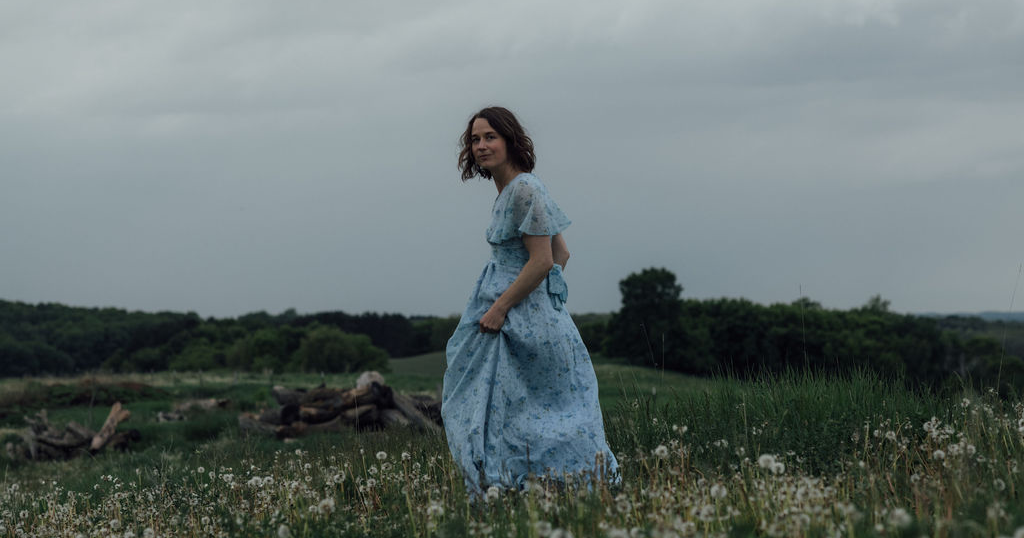
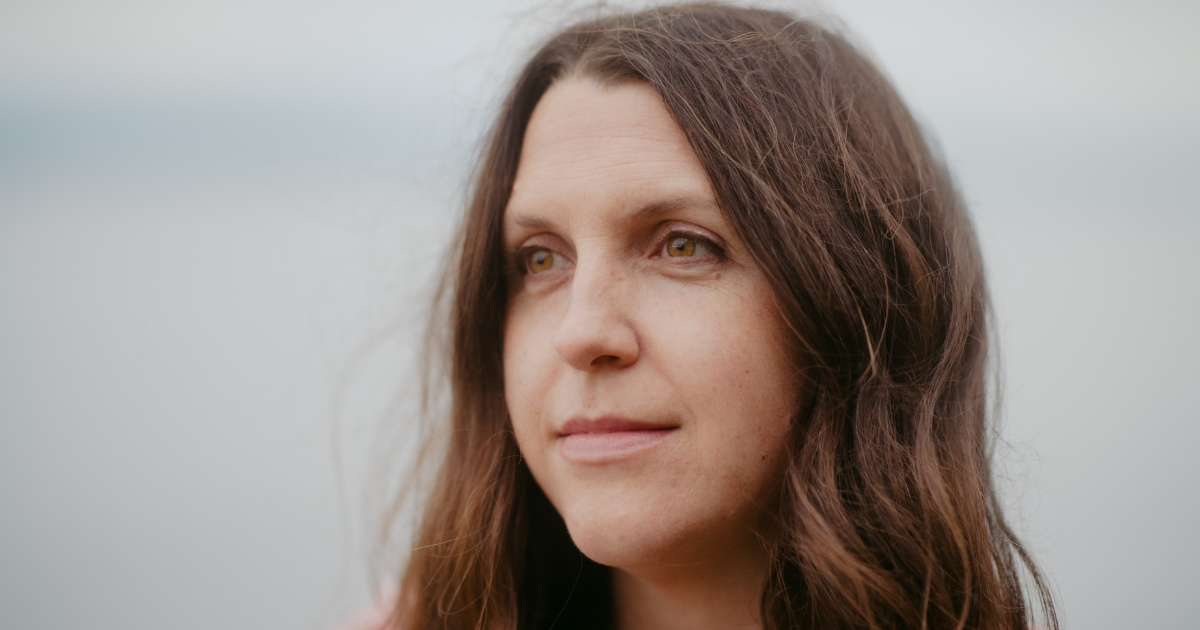
Photo Credit: Lead image by Madison Rensing; inset image by Robert Chavers.
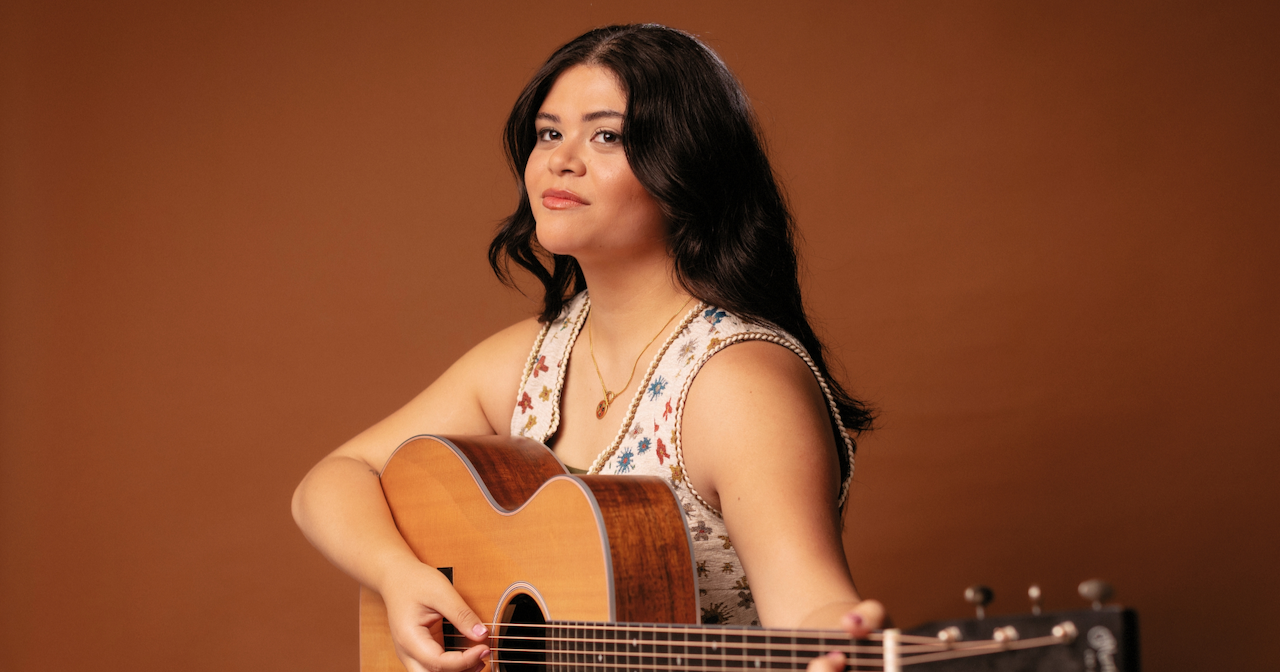
BGS 5+5: Natalie Del Carmen

Artist: Natalie Del Carmen
Hometown: Los Angeles, California
Latest Album: Pastures (released January 20, 2026)
Personal Nicknames (or rejected band names): Natalie, Nat

Which artist has influenced you the most – and how?

Brandi Carlile has been such a north star for me. There just aren’t enough big kid words to describe how much Brandi Carlile has influenced me. I heard The Firewatcher’s Daughter and never looked at songwriting the same. Then In These Silent Days came out and there just wasn’t a higher artistry bracket I could’ve dreamt of reaching.

My favorite writer these days is Izaak Opatz. I found him about 3 years ago now. I feel sorry for folks who haven’t gotten the chance to take a road trip and listen down to his discography and have a full meltdown over how good the material is alone in your vehicle. Opatz will never tell you how to feel about anything, but somehow, you leave every song feeling like you were just exposed a little. This guy overflows with ways to punch you in the gut without saying much at all.

What other art forms – literature, film, dance, painting, etc. – inform your music?

I like to joke to people around me that it really is just me and my hobbies. “Natalie and her hobbies. And one day, may she make money off of one of them!”

I suppose I’ve always been interested in learning new things with my hands and indulging in anything creative. I taught myself guitar, cross stitch, knitting, paint by number… I believe the internet is an endless place to learn a number of things on your own. That being said, I tend to walk a pretty straight and narrow path. Songwriting and artistry will always be my first priority, but I happened to have chosen a career that doesn’t always offer stability in the ways I crave it. Something about my creative hobbies gives me something to do mentally when the world gets kind of loud. I can’t ever just sit there.

How often do you hide behind a character in a song or use “you” when it’s actually “me”?

It’s funny, I think the answer should be pretty often, just to avoid outing myself so much. But the real answer is almost never, at least these days. These days, I’m usually writing in first person and admitting exactly what I hope to say, as me. But, it was something I wrestled with on my first record as a late teenager, the whole “you” versus “me” dilemma. I wrote a lot more cutting back then, cutting and directed to one person, without the confidence to really back it up. I hid behind “you” a lot. It’s like walking into a fight and saying, “Actually, put someone else in my place to throw it down for me.” When I’m choosing storytelling, “you” still works beautifully and I love it. But my favorite songs, from any artist, are always known and personal.

What is the most random interview question you’ve ever been asked?

I got asked recently what my go-to karaoke song was and I said “Goodbye Yellow Brick Road” by Elton John, which was a solid choice upon a very quick answer, but the actual response is “Anywhere But Here” by Hilary Duff, so this is me setting the record straight.

What is a genre, album, artist, musician, or song that you adore that would surprise people?

I really love a few alternative or indie bands that I don’t get the chance to talk about often. Music from the band Hippo Campus is some of the best you’ll ever hear, honestly. Big Djo fan. Besides that, one of my favorite songs is “Tubthumping” by Chumbawamba and I’m really glad I get to say that in at least one interview.


Photo courtesy of the artist.

How Courtney Hartman
Made With You

In the late summer of 2022, Courtney Hartman realized that the songs she had written for a new album were not the songs she needed to release. “I had found out I was pregnant a few months earlier, [and already] had a batch of material I was working on for a new record. I felt this quiet urging to set all of that aside and give my attention to what was happening in our life and in my body,” she says.

She discarded everything and began writing her third album, With You, a personal journey through motherhood set to music.

“What was happening in our life” refers to a tumultuous string of events that saw Hartman and her husband, John, through the best and worst of times. Best because the couple were expecting their first child, rebuilding their house in Eau Claire, Wisconsin, and Hartman was on tour; worst because her husband fell off a ladder, could not work for months, lost two jobs, she was dropped by her booking agent, and they totaled their car.

The cumulative effect left the couple in need emotionally, physically, and financially. They soon found themselves uplifted by their community – their immediate one and her music community at large. The experience left Hartman deeply grateful and dedicated to giving back even more than she received.

In September of that year, Hartman began writing “in earnest” the songs that became With You. She and her husband welcomed their daughter in February 2023 – more best of times followed by worst of times as Hartman struggled with postpartum depression.

“At the end of [2023] I had all this material and realized I wanted to invite in other voices and stories and perspectives, specifically those of other mothers,” she says.

Once again, she drew on her community, calling on a fellowship of songwriter mothers – Sarah Siskind, Dawn Landes, Ana Egge, Tift Merritt, Kristin Andreassen, and Emily Frantz Marlin of Watchhouse – to help take her deeply personal new songs to an even higher level.

“I spent another few months, December [2023] to February [2024], writing mostly over Zoom, finishing the material with those other writers,” she says. With You was recorded in June and July 2024, at The Hive studio in Eau Claire, with Hartman producing and Brian Joseph as co-producer and engineer.

As one might expect from Hartman, there are plenty of guitars on the album – her Lawrence Smart Archtop, Bourgeois Parlor,
PreWar (modeled after a Gibson J-45), Bischoff Dreadnought, Martin 00,
and a Telecaster – but if you’re looking for the lightning flatpicking work that makes her a bluegrass force to reckon with, you’ll be best served on YouTube. With You tells a story that calls for understated guitars as a palette for its songs.

“Things weren’t all bright and shiny in that season,” she says, “but the impetus to write and pay attention helped me pay attention to some of those lighter moments. Not all the songs on With You are about everything being light, because that’s just not how it is. But there was this extra attention to some of those details that do help buoy your spirit when things are a little more challenging.”

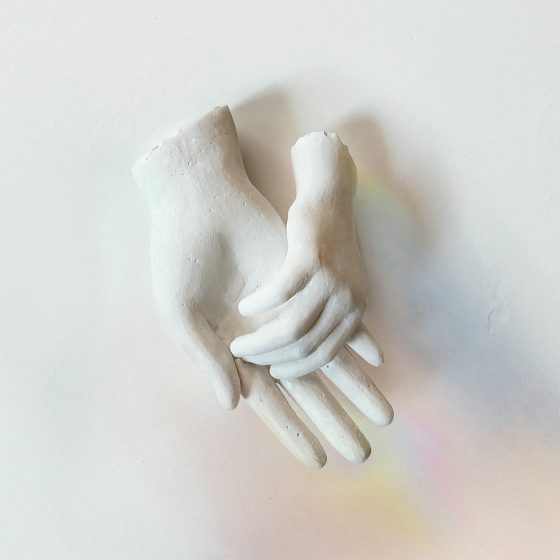
Courtney Hartman’s ‘With You’ album cover art, created by Claire Lindwall.

Completing the journey is With You’s striking cover art. The work of Hartman’s close friend Claire Lindwall captures the music’s delicate intimacy. “Claire is primarily a watercolor artist and illustrator,” says Hartman. “A special part of creating an album, for me, is giving the music to someone who then translates it into a visual piece of art. Every time, it’s surprising and expansive in a new way.”

Lindwall cast her own hand and that of her daughter’s, and positioned the casts so that one holds the other. “We experimented with drawings around it, then having just a splash of watercolor behind the piece,” says Hartman. “That’s all it needed.”

With this album now making its full debut, how do you feel about sharing so much vulnerability?

Courtney Hartman: The processing has happened in phases. I think it started just by saying yes to writing the material. There was an accepting of, “I’m writing about this thing that feels more vulnerable and more naked than anything I’ve written about before.” Bringing those songs to other writers, to collaborators, there was another level of vulnerability there.

A year ago I brought all of this material to my greater community and asked for support, because at that point I needed help putting the album out. Now, to give it to the rest of my community and listeners in the world, there’s a level of vulnerability, but I feel mostly excited. It feels like, “We made it.”

You’ve explained in other interviews that you had to use funding meant for the songs that came before these in order to get back on your feet. Needing financial assistance is also a vulnerable place and one that often brings publicly imposed shame and guilt. How did you process it?

You’re bringing up something that my husband and I have been talking about a lot, just with the news cycle and trying to get an understanding of what we can do for folks in our community. And having had small tastes of that in our life, because I know what we’ve experienced is so small compared to what so many people live through and are currently living through.

An important [word] that you touched on is shame – the shame of needing help; of not feeling like you can do it on your own or you can stand on your own two feet; of needing help for basic things like groceries. I think maybe accepting help and accepting care expands our capacity to feel compassion and to be able to then care for others.

In a podcast for Acoustic Guitar, you used the phrase “the intimacy of sound.” Could you talk more about what that means in the songwriting and guitar playing?

What I hear when you reflect that phrase back to me is the sound of the skin of your finger on the guitar string, or the sound of hands against a percussive instrument. When we went into the studio, I told the friends that were with me there on the first day, “Just as a guiding directive, whenever we imagine a sound that we want to create, let’s see if we can find something natural to create it with.”

Everyone took it in their own way, some on their instruments. Sean Carey was heavily involved on the record and he took that more literally in a lot of the percussion work. He found a nest outside when he was wandering around and that became the percussion on a track. Or even just the sound of skin on skin being a sound that we used as well; bringing in and magnifying some of these quieter sounds and allowing that to be a part of the soundscape [was part of the intimacy of sound].

Did you select the guitars around the songs or did some of the songs develop around your guitars?

Sometimes you think you know what a song wants before going into the studio and then you sit behind a mic and you’re like, “This isn’t serving it quite right.” And sometimes that experimentation takes a little longer than you think it will. Or sometimes you sit down with a first instinct and it’s totally right. That’s part of the reason it’s fun to have a good array of instruments in the studio.

Is the guitar as much a part of expressing your feelings as the lyrics?

It is. I think part of that comes from how long it’s been an instrument that feels like a voice to me. Songwriting came around the same time. I was about 12 when I started writing songs. Singing feels like something I still have so much exploration and learning to do.

How did working with other mothers, and their lived experiences, bring understanding to what you were going through?

What I was given [was the] shared experience and the acknowledgement of, “This is really hard. It’s really beautiful, but it’s also really challenging.”

So much of the caregiving that happens [as a mother], especially in that first year … so much of it is invisible. Maybe an aspect of that applies to all sorts of giving care – that it’s invisible other than to the one giving the care and the one receiving the care. When you feel invisible, it can also make you feel isolated and that can really feed into some of the struggles. A lot of folks have postpartum [depression] and societally we’re not set up to honor and support that season very well at all. It’s something I care a lot about, both from experiences with my family, but also as I’ve delved into work as a birth doula.

When you say, “Societally we’re not set up to honor and support that season very well at all,” what do we need to do?

We need to honor and uphold the importance of rest and nutrition and preparation. Parents are prepared for “Here’s what birth might look like,” but after that six-week checkup [traditional care usually ends]. Postpartum extends far longer than that.

A lot of [postpartum] mental health struggles won’t show up until maybe nine months or a year after a child is born. Better supporting [people postpartum] that would be the first thing I can think of. We live pretty isolated lives, as families in our insular homes, and so we’re not set up to receive support very well.

Or ask for it.

Yes, totally, [we need to be] preparing [people] to know that this is a time to accept and receive care. Preparing your heart for that is such a big piece of it, to know that we, as your village and your community, want to care for you in this time.

You’ve spoken openly about postpartum depression. What was that period of time like for you?

Moments of real happiness, but also moments of hitting my head against the wall … when I was struggling. [It was] hard to admit to myself and then to speak that [struggle] out loud to anybody. It wasn’t until afterwards that I could say, “That was hard.”

All depression is misunderstood and will often make people in your circle run away.

Let’s go back to your community, and the community of mothers, and how they lifted you.

I felt so cared for by our community in a way that was deeply humbling and in a way that somehow prepared me to do some of the caregiving that was going to be required of me. I was receiving so much love and support and meals and folks showing up. That kind of care is life-changing. It changes the way we see the world and our community around us.

My daughter was about nine months old or so when I started reaching out to other mothers, asking if they would collaborate on some songwriting. Having some tether creatively helped pull me through that season. It helped weave together the woman I was prior to having a child with the woman I was in that new space. … Sometimes it feels like … you almost can’t remember who you were before.

I was really afraid of [losing parts of myself]. I was afraid I wouldn’t create music again. There’s all these fears, irrational or not, that show up. Creating and being able to have these conversations that normalize what you’re experiencing. Having women who are [a] few years ahead of me be like, “It might be extra-challenging now, but it doesn’t stay that way forever.”

It’s almost 2026 and society still misunderstands and stigmatizes mental health, certainly PPD, and even some aspects of pre- and postpartum healthcare. Why are we uncomfortable talking about things that are so natural and important to discuss? Are we making progress or going backward?

I hope we’re making progress. It was a lot easier for me to ask, “Why don’t we talk about these things?” when I wasn’t part of the “we.” As soon as it was also part of my story to talk about and share, [I had to come] to terms with my own hesitancy. Why do I not want to talk about something as normal as pregnancy and motherhood in my songs? Why do I feel like if I put this music out, it will be discredited and potentially ignored, even though it may speak to so much of the population? …

I still don’t have an answer. Maybe it’s because there’s so many generations of women having to hide those things for fear of losing wages, or jobs, or discrimination, whatever it might be. For everybody’s sake, there’s so much we have to learn from mothers’ voices, and I hope we’re beginning to really listen.

On a podcast, The Other 22 Hours, you reflected on the period after Della Mae and the realization, at the time, that “Music was not a healing thing.” What role does music now play in your healing and mental health?

It has become healing again. Years ago, I was dealing with physical pain in my hands. That was magnified by touring all the time, being on the road so much, and the strain on my body. So I was speaking about it in a physical way. [Music] has become a lot more than just physically healing [for me]. I think this album exemplifies that.

You have worked with so many people. Who is your wish-list artist or artists?

Oh my gosh. The first person that came to mind – and maybe it’s because I’ve been listening to her record all week – I would love to play music in the same room as Brandi Carlile. She gives all of herself and it’s so good.

We had a listening party [for With You] and as I was listening to the album for the first time with a whole group of friends and collaborators, what I hear on it is my friends and heroes, which is such a joy. There are so many folks on this album that I look up to so much and who have been dream collaborators. So, in that way, a lot of it has been a dream list fulfilled.


Photo Credit: Michelle Bennett

Shooter Jennings’ Heartfelt Tribute to His Legendary Father

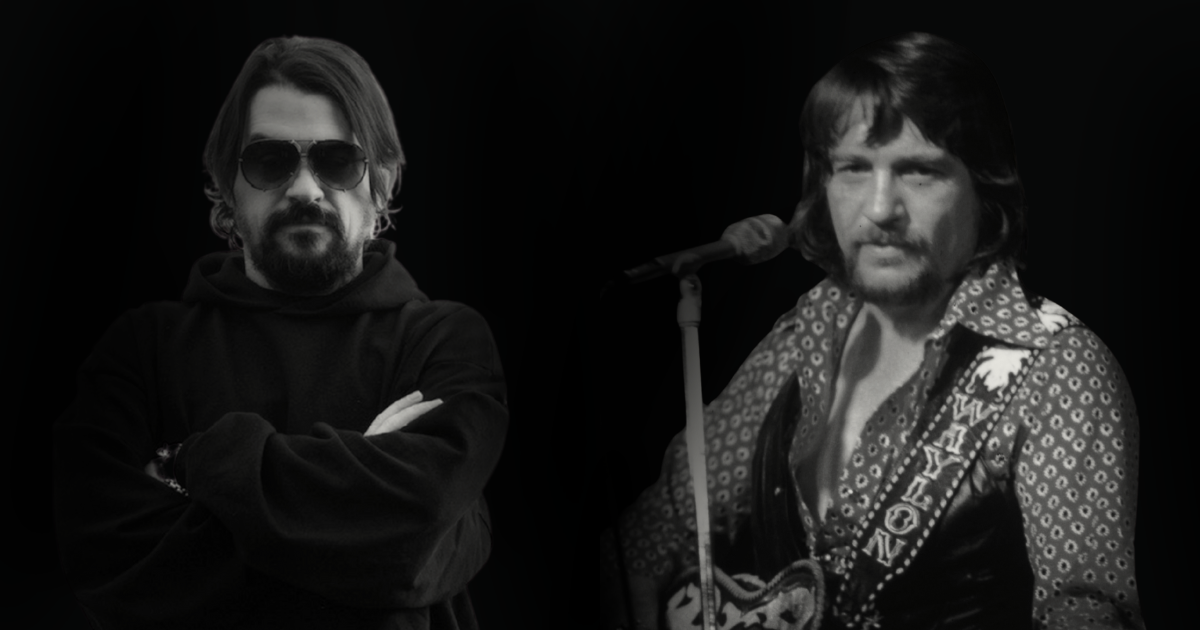
Being the son or daughter of a legendary artist can often cause self-esteem and identity problems, especially if offspring choose their famous parent’s profession. But that clearly hasn’t been the case with Waylon Albright Jennings, much better known to music fans as “Shooter.”

The son of greats Waylon Jennings and Jessi Colter, Shooter Jennings has forged an impressive career as a singer, songwriter, instrumentalist, and producer covering over three decades, while displaying an idiomatic flexibility that’s seen him excel with both country and rock projects. Though he never uses the term “prodigy,” he was playing drums at five, taking piano lessons at eight, and sitting in with his father’s band on guitar at 14, while often spending time riding on his dad’s tour bus. Since then, he’s done an array of projects from heading bands to helming sessions, but he’s also always upheld a mantra of his father’s, which is stressing authenticity and passion in whatever he’s doing, writing, or playing.

Towards that end, Shooter’s newest venture both pays tribute to his famous father and reaffirms the musical values both have always championed. That’s the album Songbird (released October 3 via Son of Jessi/Thirty Tigers), which is the first of a planned posthumous trilogy of releases from the famed vocalist, who was one of the most distinctive and dominant voices to emerge in modern country during the ’70s and ’80s. Waylon’s landmark recordings, both as a solo artist and later in collaborations with Willie Nelson, Johnny Cash, Kris Kristofferson, Tompall Glaser and Jessi Colter, not only ushered in the “outlaw country” movement, they signaled a major step forward for artistic independence and creative freedom that resonated across the popular music spectrum.

Waylon Jennings was an innovative and vital figure not only as a performer, but as a personality. His voice and stature helped give gravitas to an otherwise forgettable TV show (The Dukes of Hazzard) and helped fuel a drive for authenticity within country. Still, despite that quest for freshness and originality, Waylon knew how to make hits. He had 16 number one tunes on Billboard‘s Hot Country Songs chart and 11 number one albums on Billboard‘s Top Country Albums chart during his amazing career, while always being a staunch advocate for his view of what constituted country.

Though Shooter has always called himself “an MTV kid who went down the rabbit hole with rock and roll,” he’s also long held a great reverence and respect for country. He began sorting through hundreds of his father’s personal studio recordings during the summer of 2024. Having just begun an exclusive residency at Hollywood’s historic Sunset Sound Studio 3 (which he redubbed “Snake Mountain”), Shooter began examining the tapes with veteran engineer Nate Haessly. Things moved quickly, his initial goal of finding previously lost Waylon songs he could share with the world morphing into instead deciding the best way to present what turned out to be a rich treasure trove of recordings. The material he was hearing was recorded between 1973 and 1984 and featured such guest stars as Tony Joe White and Jessi Colter.

“I started listening to this material last year and knew right away I had to put it out,” Shooter said during a recent phone interview with Good Country. “Once we began thinking about what we would put out there first, ‘Songbird’ just really kind of took over.

“Everyone that I played the song for heard it and they were really emotionally affected. Many broke out in tears the first time they heard it. It was an example of my father’s philosophy about doing songs from other people. Any song that he chose to record he would turn it into his own type of anthem. I really think that was the case with ‘Songbird,’” Shooter continued. “It gives the album a power and special flavor, and I’m really proud of everything on it.”

Songbird was released the first week of October, with Jennings’ evocative and stirring cover of the Fleetwood Mac tune its lead single. It debuted at number six on Billboard‘s Top Album Sales chart and it’s been in either the Top 10 or 20 on a host of other charts as well, representing the highest any Jennings LP has charted in 35 years. The 10-track release contains several other notable singles, most of them already previously complete. But on a couple of cuts, Shooter utilized the talents of surviving members of The Waylors, including guitarist Gordon Payne, bassist Jerry Bridges, keyboardist Barny Robertson, and backing vocalist Carter Robertson to add some spice. Elizabeth Cook and Ashley Monroe were also enlisted to help propel Songbird to new heights. Shooter mixed the songs in a purely analog fashion on Sunset Sound Studio 3’s custom 1976 DeMedio API mixing board.

Another song that’s quite appropriate in these times of extreme social conflict and division is Waylon’s version of Johnny Rodriguez’s “The Cowboy (Small Texas Town),” which finds him urging both cowboys and hippies to direct their ire away from each other and towards those causing greater structural harm to society. Additional recommended cuts include a sizzling Jennings version of Johnny Cash’s “After The Ball” and “I’d Like To Love You Baby” that features Jessi Colter.

Both “Wrong Road Again” and “I’m Gonna Lay Back With My Woman” are trademark Jennings numbers, while his version of Jesse Winchester’s “Brand New Tennessee Waltz” is also solid. The one criticism that some hardcore Waylon fans might make is Songbird doesn’t offer any previously unissued gems that he penned, feedback that Shooter’s been around long enough to anticipate. “What we went through and chose here were numbers that were made memorable through his treatments,” he continued.

“That’s something that my father always talked about and stressed, that whenever you do a song, make sure that you’re not just replicating something else, you’re making your own statement. That’s why Songbird has such an impact and that’s the case with everything on this album. These are songs that he loved from other people and wanted to perform and put his own stamp on them.”

Though born in Nashville, Shooter made the move to Los Angeles in 2001. Since then, he’s comfortably moved back and forth between rock and country. He’s had a mixed amount of success as a performer, cutting 11 albums and EPs in both genres. His biggest country hit came on the 2005 LP, Put The O Back in Country. That album’s lead single, “Fourth of July,” peaked at No. 22. The album version featured a cameo by George Jones, who sang the chorus to his signature song, “He Stopped Loving Her Today,” at the end. Unfortunately that was purged from the radio version, but Jones was credited on the Billboard charts.

The album also spotlighted Shooter’s then-new band, The .357s, which consisted of Leroy Powell on guitar, Bryan Keeling on drums, Ted Kamp on bass, Robby Turner on steel, and backing vocals by Bonnie Bramlett. Later that year his song “Busted in Baylor County” was featured in the 2005 film version of The Dukes of Hazzard. Furthermore, Jennings portrayed his father in the Johnny Cash biopic Walk The Line alongside Joaquin Phoenix and Reese Witherspoon. His rendition of his father’s song “I’m A Long Way From Home” was featured on the film’s soundtrack.

Still, Shooter’s greatest fame has come as a producer for a wealth of recordings. He was introduced to the studio as a child, his earliest exposure being inside Chips Moman’s studio in Nashville. His rock influences come through in his at times freewheeling use of studio technology that wasn’t in general use during his father’s heyday, but on any of his productions he’s never let the artist’s voice be overwhelmed by layers of excessive production or backdrop.

He’s been nominated for five GRAMMYs in that role and won two. A short list of memorable sessions he’s produced include such artists as Brandi Carlile (Best Americana Album GRAMMY), Tanya Tucker (Best Country Album GRAMMY), and American Aquarium, as well as Jessi Colter, Jamey Johnson, Jaime Wyatt, The White Buffalo, Hellbound Glory, The Mastersons, Julie Roberts, Kelsey Waldon, Yelawolf, Marilyn Manson, Jason Boland, Billy Don Burns, Avi Kaplan, Billy Ray Cyrus, and Angry Grandpa. Just this year alone, Shooter Jennings produced acclaimed releases by the Turnpike Troubadours, Charley Crockett, and Jake Owen.

When asked what he enjoys most or looks for in terms of production collaborations, Jennings says, “The people that I truly enjoy working with the most are the ones who have their own ideas of what they want to do, how they want to sound, or what they want to sing. Then they bring those ideas into the studio and we take it from there. I’m not really quite as good when it comes to just taking someone who doesn’t really have a sense of who they are and saying why don’t you try this or try that.

“With Charley [Crockett], for instance, that guy comes into the studio and he’s already got all these things together and we can just hit the road from there and take it forward. A guy like Duff [McKagan], who can just write their ass off, or a group like American Aquarium, I can get really excited. Brandi [Carlile] came to me and wanted me to work with her and that was a fantastic experience. But in general, if you’re someone who has their concept of what they want to do, then we can sit down and really make it work in the studio.”

Shooter also has amassed some good credits in the worlds of broadcasting, film, and television. As well as getting the chance to portray his father in the 2005 film Walk The Line, he has made celebrity appearances on television shows CSI, Marvel’s The Punisher, and American Revolutions, while also playing a gunslinger in the 2013 film The Other Life.

Back in 2009, Shooter participated in a CMT Crossroads session, paired with close friend and fellow musician Jamey Johnson. The evening’s set list consisted entirely of duets, including a cover of “Outlaw Shit” from the Waylon Forever album, two songs from Jennings’s discography – “God Bless Alabama” and “It Ain’t Easy” – and four songs from Johnson’s album That Lonesome Song including “High Cost Of Living,” “Mowing Down The Roses,” “Between Jennings and Jones,” and “In Color.”

Shooter cites Glenn Danzig and the band Oasis as folks that he hasn’t yet worked with whom he’d like to in the future. But right now, his main focus is on the two remaining Waylon Jennings posthumous recordings – though he’s not sure yet exactly when they will come out or what will be on them.

“One thing I can say for sure is that there’s a lot more great music coming,” Shooter concluded. “I was really amazed at how much great stuff is there, and I think the fans are going to really be thrilled when we get these next two out there. My father did a lot of great music before he passed, and we’re going to get as much of it out there as we can.”


Photos courtesy of Shooter Jennings.

Mumford & Sons Continue to Matter, In Americana and Beyond

“Well, we’ve been here before…”

When Rushmere was released in March of this year – Mumford & Sons’ first album in seven years – critics noted its homecoming feel. The songs, the sound, the oh-so-yearning lyrics; they all combined to take the listener back to the beginning.

Tracks like “Malibu” and “Caroline” do not, perhaps, hit the wild highs of “Little Lion Man.” There’s a subtler expression at play in the album, reflecting an evolution from youthful exuberance to the quiet wisdom that only comes with experience. But a decade and a half on from Sigh No More, the band have clearly doubled back from their more experimental forays – 2018’s Delta; Marcus Mumford’s solo project, (self-titled) – to celebrate what brought them together in the first place. In Rushmere they had returned to their rootsy roots, and found peace there.

This month, the band heads back out on tour to Chicago, Philadelphia, Montréal, and more. In November, they’ll return to Europe, and ultimately to the UK, where their final leg will climax at London’s 20,000-capacity O2 arena. Months on the road this year and playing to sold-out venues have proven one thing: people still can’t get enough of them.

And yet the world is a very different place to when their debut album hit the shelves in 2009. When Mumford & Sons first toured Sigh No More, Barack Obama was President of the United States. In the UK, the biggest question on people’s lips was what Kate Middleton would be wearing at her royal marriage to Prince William.

Today’s social backdrop feels meaner, more fractious, less optimistic. Widening rifts in society have made it harder for people to celebrate shared values, even cherish the same moments together. Mumford have split with one of their own band members as a direct consequence of our rapid political polarization. What is it, then, that felt so fresh back then – and that still appeals today?

Matt Menefee first encountered the Mumford sound when his progressive bluegrass band, Cadillac Sky, were at their peak. “We were heading up out of Texas to play Telluride in 2010, and we played some gigs en route,” says Menefee. “So we’d stopped at a hotel, and there was Marcus on MTV, and someone said, ‘Oh, this band’s headlining the festival.’ Our lead singer already had the record and so we listened to it all the way up there.”

For a group of musicians that favored a raucous, punk rock vibe, Mumford’s gleeful-yet-soulful energy was something new. “We were like, ‘Oh man, this is something else!’” Menefee recalls. “To hear these cohesive, in-your-face anthems… it was raging. The melodies and the lyrics were beautifully crafted as well. It was a force that blew our guys away.”

Mumford’s Telluride set became an instant classic (it’s still spoken of in awe today). “It was just a party,” remembers Jerry Douglas, whom the band had asked to join them on stage. “The guys looked so excited. I’ve been to that festival so many times and you can get jaded. But I’m watching them jump up and down and I’m going, this is what it’s supposed to feel like.” He describes that electric closing set as one of the best he’s seen in Telluride’s 51 iterations.

Douglas is one of the many Americana musicians that Mumford and bandmates Ben Lovett, and Ted Dwane sought out to learn from in their early years and have built enduring relationships with. They included Douglas in their performance at the SNL 50th anniversary show, after he had recorded lap steel for Rushmere track “Caroline” – although he laughingly points out that it didn’t make the final mix. “It changed it, it took the band away from just sounding like themselves. I kind of Jackson Browne-ed them a little bit…”

Those collaborative relationships are one of the reasons that Mumford & Sons continue to matter, not least to the musical communities they’ve done so much to elevate. After their first meeting, Menefee became a regular guest artist with the band and has been their go-to banjo player since Winston Marshall’s departure. “You watch them interact with people,” says Menefee, “and they’re so humble, so sweet, so encouraging. They really look after everybody. They’re good, good dudes.”

In August, Mumford & Sons relaunched their Railroad Revival Tour, whose 2011 iteration involved travelling the Southwest in vintage trains alongside Old Crow Medicine Show and Edward Sharpe and the Magnetic Zeros. This summer’s rolling festival picked up where that one had left off, traveling between New Orleans and Vermont. The long list of musicians joining them on board ranged from Nathaniel Rateliff and Ketch Secor to Lainey Wilson and Molly Tuttle to Trombone Shorty and Chris Thile.

Lucius’s Jess Wolfe was one of the musicians sharing the stage with Mumford, after forging a bond with Marcus at celebrated, now infamous jams arranged by Brandi Carlile in Joni Mitchell’s living room. “Sitting listening to our hero sing – that’s such a humbling experience, it’s going to bring people close quite quickly,” laughs Wolfe. She describes Mumford & Sons as “natural collaborators – they feel like brothers from the minute that you step foot in the room with them.” It’s that comforting familiarity that expresses itself in their music and forms a major part of their appeal.

Having first heard their sound while working on the Brooklyn open mic circuit, Wolfe was struck by how it reflected the songs that her peers were writing, “except that these were songs that everyone could suddenly, with ease and without thinking, just sing along to. It was like a conversation you were having with an old friend.”

Their pulsing, anthemic melodies, underlaid with a signature stomp, quickly became an in-demand and much replicated sound in the industry. Banjo and mandolin players found themselves getting far more calls for session work. For musicians like Menefee who had spent years justifying their choice of instrument and trying to persuade a sceptical mainstream of its charms, the change was remarkable. “When Mumford hit, it was like, banjo’s cool!”

“I’d go do demo sessions for songwriters on Music Row and for years the publishers would ask you for ‘like, a Mumford thing,’” Menefee continues. “And I should say that’s not all they do – their Delta record is one of my favorites, with its beautiful marriage of electro pop and effects. But I witnessed the success of the other bands that followed in Mumford’s wake. They had a huge influence.”

Douglas believes it’s no exaggeration to say they changed the sound of the musical landscape. “And people either liked it or they didn’t. But it’s a heartbeat, you know? That’s the thing about it. It gets people excited and it makes them feel good. That endorphin rush happens and everybody goes to their happy place. And we need that right now. We need to go to our happy place.”

There, perhaps, lies the key to their successful return after seven years away from the limelight. Every night they play, Menefee sees crowds “losing themselves” in the singalongs. “There’s an anger and a vulnerability that really pierces the heart,” he says. “And it’s so freaking singable.”

The band themselves have admitted to be “stoked” to be headlining festivals in the UK again and there’s little sense of ego at their appearances. Instead, they host shows that have the feel of a party at which they themselves are enthusiastic guests. “It’s just so much fun,” says Menefee. “There’s a real joy in it, a rest from all the chaos.”

Perhaps, right now, we all need a bit more Mumford in our lives.


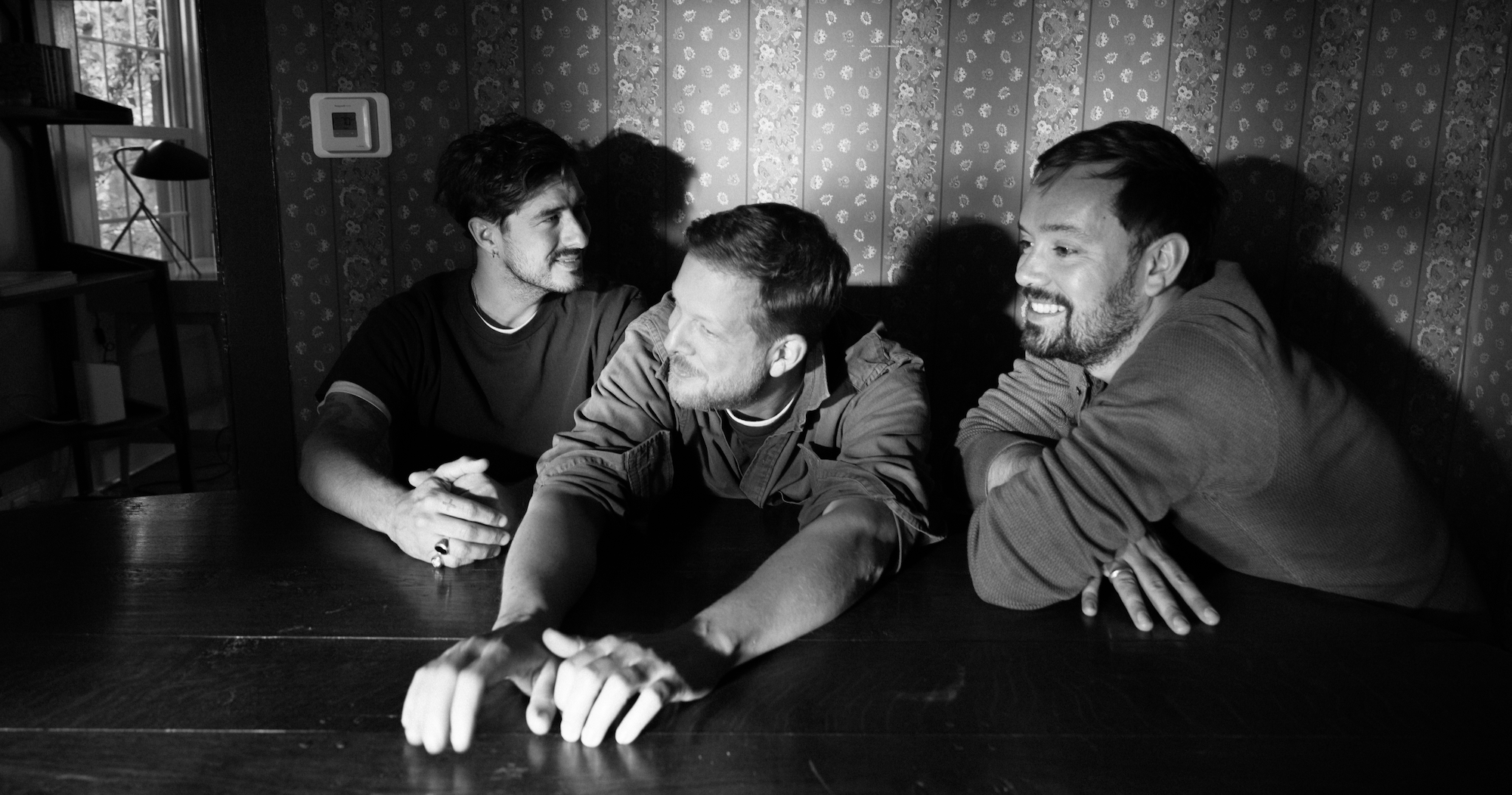
Photo Credit: Marcus Haney

Your Favorite Artists and Songwriters Love Caroline Spence

Caroline Spence knows better than anyone the importance of community in the roots music scene. Since her 2015 debut album, Somehow, the singer-songwriter has risen through the ranks with four additional solo albums including her latest, Heart Go Wild. Stylistically, Spence fits within the realm of Natalie Hemby, Aoife O’Donovan, Lori McKenna, and Mary Bragg, with a smattering of Mary Chapin Carpenter sensibility. She has garnered praise from both direct peers and industry giants alike. From signal-boosting her work online to recording her songs, many musicians and artists have used their platforms to give Spence a well-deserved spotlight.

Throughout the past decade, Spence has used these moments to nurture friendships within a thankless industry. “The acknowledgement and validation from artists that I respect have been vital in keeping the fire burning under me when parts of the industry have threatened to put it out,” Spence tells BGS.

“No ‘suit’ can convince me I’m not good enough when I have worked with my heroes and have the respect of artists I admire.”

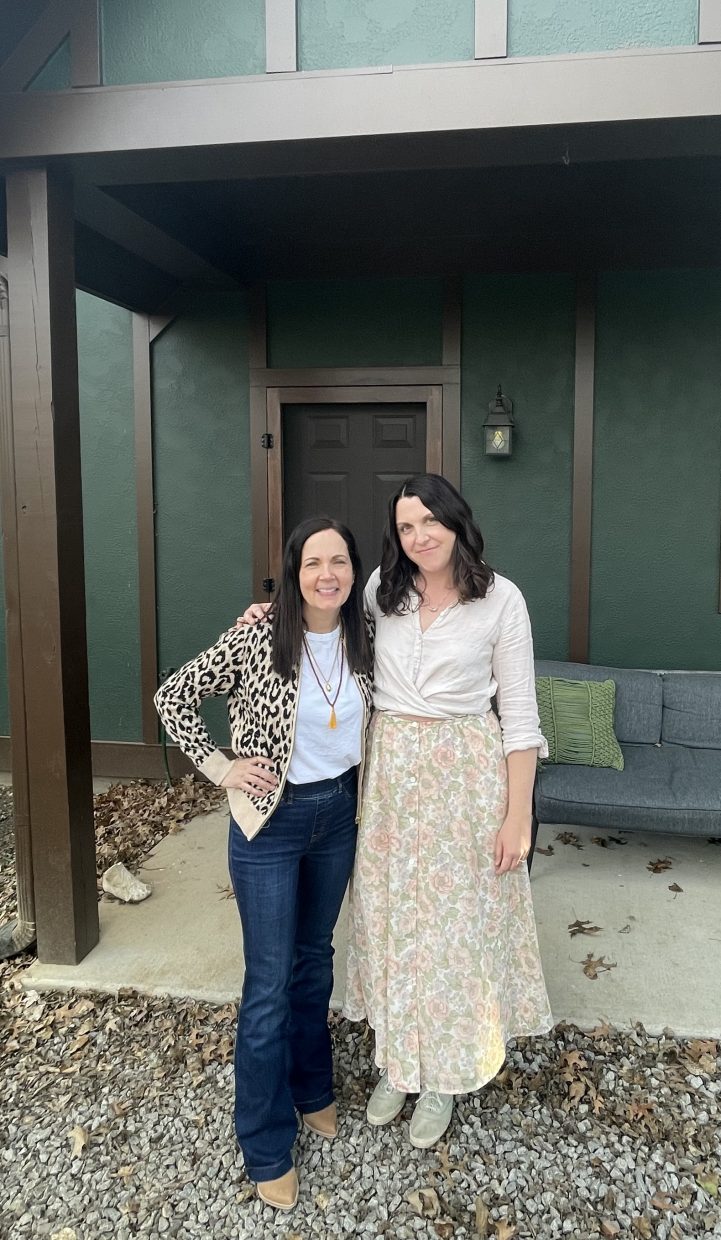
Lori McKenna and Caroline Spence after recording “The Next Good Time” together. Photo by Jordan Lehning.

Reciprocated applause and mutual admiration prove essential to building relationships, in addition to contextualizing an artist’s music within the scene for those fans who may not be familiar. For example, Miranda Lambert has enlisted countless lesser-known artists for her tours, including Gwen Sebastian, Ashley Monroe, and Angaleena Presley. These placements introduce her loyal audience to talent they might not have discovered elsewhere, thus giving those artists more name recognition.

Even more importantly, Spence finds these shout-outs and promotional spots to be her “life force” in keeping her inspired to push through trying times. “My primary goal has always been to be good at my craft and to get better at it,” she says. “To me, the most important judges of that are those who are masters of theirs, and it’s been deeply meaningful every time someone I admire has paid attention to, let alone praised, what it is that I do.”

In her career, Spence has tumbled into the orbits of countless artists who have shown unwavering support for her work. A big Hayes Carll fan, she covered his song “It’s a Shame,” from his 2002 album, Flowers & Liquor, early in her career and later toured with him in 2021 – a moment Spence describes as coming “full circle.” She’s also toured with John Moreland and Madi Diaz. In addition, she wrote “Heavy” with Carl Anderson for Andrew Combs’ album Worried Man and another song she wrote, “We Don’t Know We’re Living,” was recorded by Lucie Silvas, Brandi Carlile, and Joy Oladokun. “[Brandi] called it ‘a once in a century song,’” notes Spence.

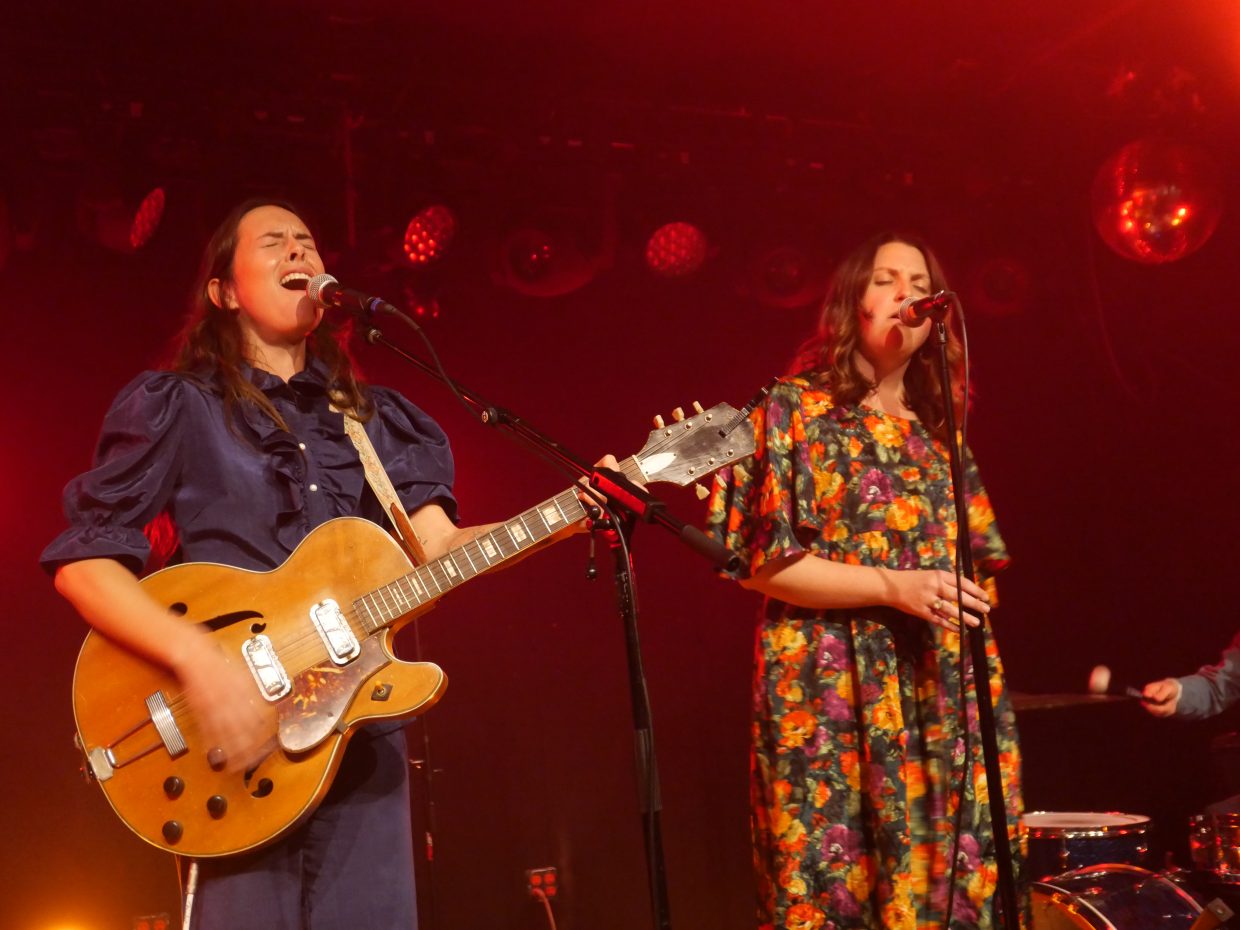
Madi Diaz performs with Spence as special guest and opener on tour in 2022.

Despite not having a “game-changing platform,” as she puts it, she pays it forward by sharing “the work of my peers and what I am loving listening to. I think word-of-mouth from trusted personal sources is still the best way to get someone to pay attention to music.”

She takes a moment to shout out others, beginning with Ken Yates & Brian Dunne before mentioning several other artists she’s been listening to, including Angela Autumn (“Her song ‘Electric Lizard’ is intoxicating and reminds me of some of the tracks that made me fall in love with music in high school,” she says), Brennan Wedl & Mariel Buckley, and Danny Malone, “an incredible songwriter out of Austin that I recently saw at a house show in Nashville and was absolutely floored by.”

In our conversation, Spence names an additional six artists, from Miranda Lambert to Tyler Childers, who have uplifted her music over the years.

The National

 
“The fact that I have a duet with Matt Berninger is still completely insane to me. When I was in college in Ohio, falling in love with The National, I could have never even dreamed that I would cross paths with Matt, let alone have him sing words I wrote. I love that band, and his voice is legendary. It still feels unreal.”

Miranda Lambert

 
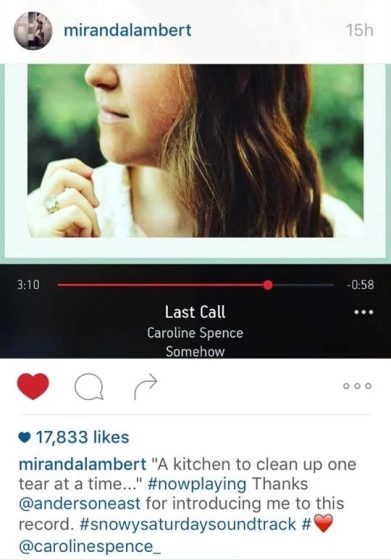
“[She] posted about my first record back in 2016, and that totally blew my mind. I had just been in the studio making my second record [Spades and Roses] and was questioning a lot, and that really felt like a sign to keep doing what I was doing. Part of my dream when I moved to Nashville was to write songs for her, so that was an incredibly validating moment.”

Miranda Lambert shared a Spence original, “Last Call” on her Instagram in 2016.

Lori McKenna

 
“Lori added my music to her monthly favorites playlists that she makes. She featured on a song we wrote together called ‘The Next Good Time.’ One of my biggest heroes and one of the people who inspired me to start pursuing this work.”

For our Artist of the Month feature, Spence joined McKenna for an intimate and engaging conversation. Read here.

Clare Bowen

 
“Clare recorded my song ‘All The Beds I’ve Made’ on her self-titled album.”

Tyler Childers

 
“I’ve known him since 2014 and he opened for me in early 2016 – a month after Miranda posted about my record, and she actually came to the show. I toured opening for him in 2017 and 2019. At some point, he posted about my album on his IG.”

Spence and Tyler Childers backstage together on tour in 2019. Photo by Jace Kartye.

Mary Chapin Carpenter

 
“We connected on social media and she eventually invited me to open some shows for her. A treasured memory was performing in the round with her at the Edmonton Folk Festival and her asking me to play ‘I Know You Know Me’ and her singing it with me.”


Continue exploring our Artist of the Month coverage of Caroline Spence here.

Photo Credit: Caroline Walker Evans
Inset images and screenshot courtesy of Caroline Spence. 

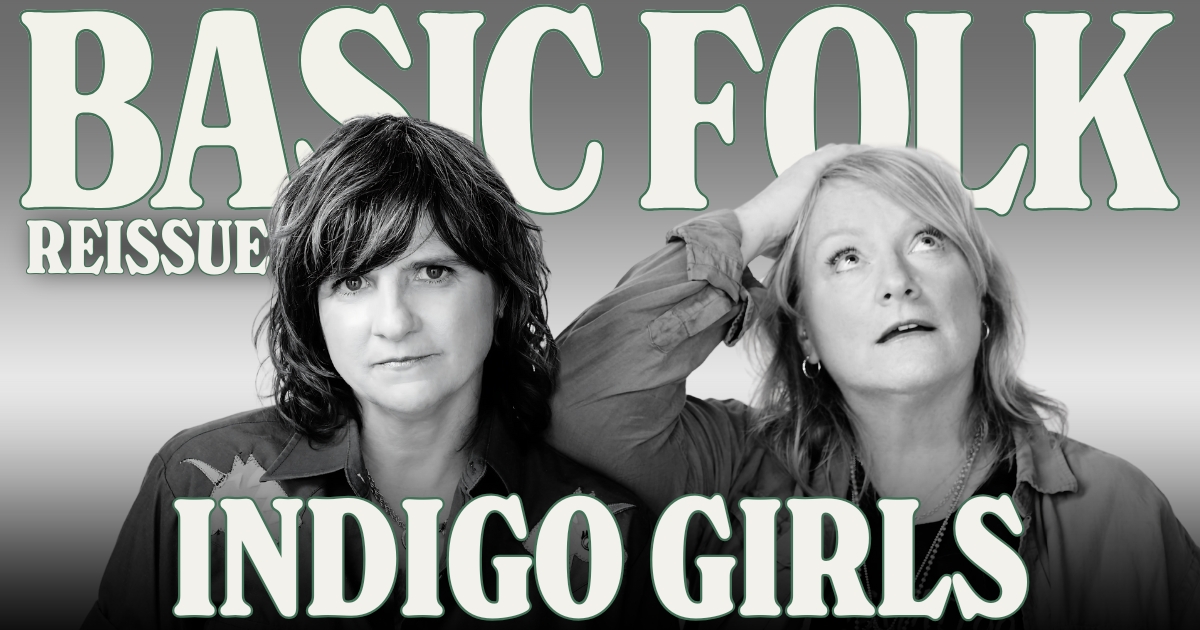
Basic Folk: Indigo Girls (Reissue)

(Editor’s Note: Welcome to our Reissue series! For the past several weeks, Basic Folk has been digging back into the archives and reposting some of our favorite episodes alongside new introductions commenting on what it’s like to listen back. This is our last Reissue for now, so please enjoy!

This episode featuring separate interviews with The Indigo Girls – Amy Ray and Emily Saliers – and host Cindy Howes was originally posted winter 2019.)

Back in 2019, my now-wife and I attended the inaugural Girls Just Wanna Weekend in Cancun, Mexico, which featured an all-women lineup curated and hosted by Brandi Carlile. I was lucky enough to be able to interview The Indigo Girls there in two separate solo interviews. I still feel nervous thinking about the scene of talking to both Amy Ray and Emily Saliers in each of their (very nice!) hotel suites on my new little Shure mic that connected to my phone. Lucky for me, both Amy and Emily were really into my new mic, so it served as the best possible icebreaker. Both were very generous with their time and with their answers to my unorthodox questions.

LISTEN: APPLE • SPOTIFY • AMAZON • MP3

First I got to speak to Amy Ray, who talks about growing up in a conservative, modest Southern family with her radiologist father and a smart, scholarship-attaining mother. She speaks to how her suburban upbringing and intake of conservative values of the South has influenced her identity. She shares about her father’s deep involvement in community service and the impact of her father’s generosity on her own activism. I also asked Amy about her sense of fashion and how it challenges traditional gender norms. She talks about her love for creative clothing and that her historically unconventional approach to style serves as a form of activism.

Next up: Emily Saliers. She talks about her relationship with guitar playing, tracing it back to childhood lessons at the YMCA and musical members of her family. She also points out how playing electric guitar changed the game, particularly through collaborations with Amy Ray. Emily talks about first solo album, Murmuration Nation. Released in 2017, it took a long time to come to fruition due to challenges and emotional hurdles she faced during its creation. Lyris Hung, longtime Indigo Girls friend, collaborator, and producer – including on that solo album – brought her expansive musical imagination and played a critical role in shaping the record. We also get into Emily’s love for hip-hop, specifically political hip-hop, and the profound impact the genre has had on her. Emily ends with talking about her other great love, food, by drawing parallels between the communal nature of music and cuisine, illustrating how both bring people together in meaningful ways.


Photo Credit: Jeremy Cowart

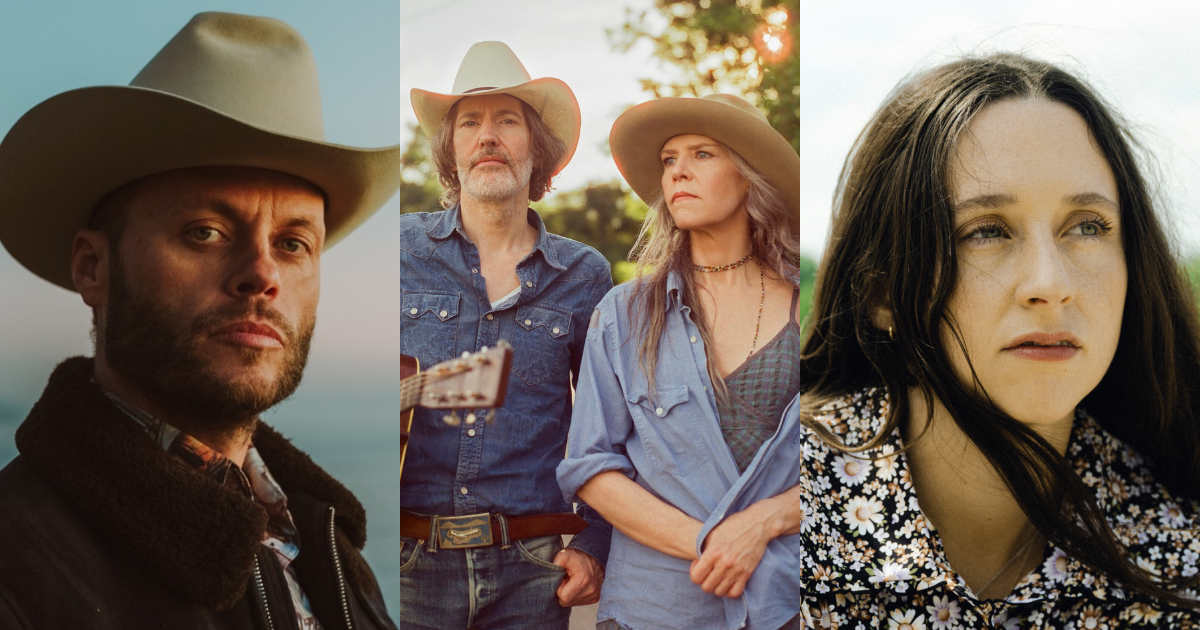
Charley Crockett, Gillian Welch & David Rawlings, Waxahatchee Among Americana Nominees

The Americana Music Association has announced the nominees for its 24th annual Americana Honors & Awards. This year’s nominations were revealed by Brandi Carlile, Kashus Culpepper, S.G. Goodman, Jim Lauderdale, Kacey Musgraves and Molly Tuttle in a social media announcement.

The winners will be announced during the Americana Honors & Awards on Wednesday, Sept. 10, 2025, at the historic Ryman Auditorium in Nashville. The celebrated program is the hallmark event of AMERICANAFEST, which returns for its 25th year on Sept. 9-13, 2025.

A full list of categories and nominees for the Americana Music Association’s 24th annual Americana Honors & Awards is below the video player.

ALBUM OF THE YEAR:

Lonesome Drifter, Charley Crockett; Produced by Charley Crockett & Shooter Jennings

Foxes in the Snow, Jason Isbell; Produced by Jason Isbell & Gena Johnson

Manning Fireworks, MJ Lenderman; Produced by Alex Farrar & MJ Lenderman

South of Here, Nathaniel Rateliff & The Night Sweats; Produced by Brad Cook

Woodland, Gillian Welch & David Rawlings; Produced by David Rawlings

ARTIST OF THE YEAR:

Charley Crockett

Sierra Ferrell

Joy Oladokun

Billy Strings

Waxahatchee

DUO/GROUP OF THE YEAR:

Julien Baker & TORRES

Dawes

Larkin Poe

The Mavericks

Gillian Welch & David Rawlings

EMERGING ACT OF THE YEAR:

Noeline Hofmann

MJ Lenderman

Medium Build

Maggie Rose

Jesse Welles

INSTRUMENTALIST OF THE YEAR:

Fred Eltringham

Alex Hargreaves

Megan Jane

Kaitlyn Raitz

Seth Taylor

SONG OF THE YEAR:

“Johnny Moonshine,” Maggie Antone; Written by Maggie Antone, Natalie Hemby & Aaron Raitiere

“Ancient Light,” I’m With Her; Written by Sarah Jarosz, Aoife O’Donovan & Sara Watkins

“Wristwatch,” MJ Lenderman; Written by MJ Lenderman

“Sunshine Getaway,” JD McPherson; Written by Page Burkum, JD McPherson & Jack Torrey

“Heartless,” Nathaniel Rateliff & The Night Sweats; Written by Nathaniel Rateliff


Photo Credits: Charley Crockett courtesy of the artist; Gillian Welch & David Rawlings by Alysse Gafkjen; Waxahatchee by Molly Matalon

GC 5+5: Rebecca Lynn Howard

Artist: Rebecca Lynn Howard
Hometown: Salyersville, Kentucky
Latest Album: I’m Not Who You Think I Am (out May 2, 2025)
Personal Nicknames (or rejected band names): My family and friends call me Aunt B

What has been the best advice you’ve received in your career so far?

The best advice I’ve ever received is to tell the truth, no matter how hard, no matter how messy. People don’t connect with perfection, they connect with honesty. When I started writing from that place, everything changed. Music became more than just a craft. It became a way to heal, not just for me but for my fans too.

What’s the toughest time you ever had writing a song?

Honestly, the hardest songs to write are the ones I need to write the most. There was a time after my dad passed away when I couldn’t write at all. Every time I tried, it felt like I was staring into this giant void of grief and I didn’t have the words to make sense of it. Eventually, I stopped trying to force it and just let myself feel everything. When I finally sat down to write again, the song came out in one sitting. It was like the words had been there, waiting for me to be ready.

Which elements of nature do you spend the most time with and how do those impact your work?

Water, hands down! There’s something about being near water, whether it’s the ocean, a river, or even just a hard rain that takes away the noise in my head. It’s where I think the clearest and where my best lyrics come from. It helps me know that everything moves in seasons, especially the hard things.

If you were a color, what shade would you be – and why?

I’d be a deep blue… the kind that’s somewhere between dusk and the ocean just before a storm. That kind of blue is my favorite color cause it holds a lot of depth, beauty, a little bit of sadness, but also an understated kind of strength.

Since food and music go so well together, what is your dream pairing of a meal and a musician?

I’d love to sit down to a slow, home-cooked Southern meal. Something warm and comforting, like my mom’s homemade biscuits and honey butter, with a side of conversations about Jesus. And the perfect soundtrack? Probably someone like Johnny Cash or Brandi Carlile. Something raw – and real – and full of stories.


Photo Credit: Allister Ann

Out Now: The Accidentals

Our next band featured on Out Now is the Accidentals, a group that I met over a decade ago, tucked under the oak trees in Northern Michigan at Interlochen Artist Academy. Interlochen is a hub for music and arts education. Katie Larson and Savannah Buist (founders of the band) attended the academy at the same time I did. I’ve admired their artistry and dedication ever since. I remember listening to Interlochen Public Radio, hearing a song they wrote, and thinking these artists were going somewhere. Spoiler alert… they have already gone everywhere, touring all over the U.S.!

Before they attended Interlochen, Katie and Savannah were already playing together in an orchestra and exploring their musical chemistry. The pair are creative, dedicated individuals, curious souls, skilled instrumentalists, and incredible writers. They built a successful career while still very young, touring and playing festival stages in their teenage years. Both turned down college scholarships to hit the road instead. After high school, they added Michael Dause to the band as their percussionist. In 2023, Michael parted from the band; they now play as a trio again with Katelynn Corll.

The Accidentals just released their latest single, “What a Waste.” It’s an honor to highlight this phenomenal band on Out Now. Learn all about their plans for the future, why they create music, and about their incredibly creative minds in our interview with Katie Larson and Savannah Buist.

You’ve been playing together since high school. What has it been like for you to create, write, record, and travel together for the past decade?

Savannah Buist: All of those processes – creating, writing, recording, and traveling – demand different parts of us, and all of them have changed and grown over the years. Creating and writing used to be a more solitary process, and yet [now] we find ourselves collaborating and co-writing with some of the people who inspired us to become songwriters in the first place. Recording went from being solitary, to with producers, to us becoming engineers and recording many of our own projects, to recently joining forces with producer Mary Bragg for a collaborative record. Traveling together used to mean 250 days on the road, sleepless nights living on the opposite schedule of everyone we loved – and now, we ease into it, take our time with it, and the number of people in the van seats, their names and faces have changed over the years.

But the thing that remains true is the constitution of our friendship and our trust. I lean on Katie more than I’ve ever let myself lean on anybody before. She’s the reason why I constantly challenge myself to do better, not just musically but as a person too. She’s a natural listener; she’s observant and deep-thinking. She’s the kind of person who would make an incredible documentary carefully examining both sides of a complex situation and reaching some inevitable core of truth. It’s been incredible watching her grow and change, too, just like all the processes that we engage in together. I think the growth and change I’ve undergone is just as dramatic and important. It’s what keeps us open to each other and supportive of our many interests and endeavors.

Adding Katelynn Corll to the band a couple years ago was like picking up a golden retriever to tour with. She’s always positive and brings balance to the band with her ability to see the big picture, ask good questions, and amp up the energy on stage. She’s got both our backs all the time. It’s a no-ego dream band reality.

Katie Larson: Some days, 10 years sounds like a lifetime and other days it feels like a drop in the bucket. Think about how much change people go through from their late teens to late 20s, then add in the inevitable ups and downs and major transitions you go through in the music industry. What a privilege to have someone by your side who has known your heart since day one. Not only that, but a friend who’s a true collaborator, business partner, and salsa-making science geek who’s always ready to dive into philosophical rabbit holes and will fiercely have your back no matter what. We take a lot of inspiration from the Indigo Girls, a few years ago we got to watch Ann Powers interview them during Americanafest. They’ve been playing music together for almost 40 years now and are still true friends.

Your early success, including playing at various festivals, is impressive. What were some of the most memorable moments or experiences from those early days of touring?

SB: I’ve kept journals for many years and those have sort of fallen into the digital world via Tour Blogs, which we write weekly on our Patreon. Cataloging our experiences has given us a plethora of perspectives. There are times I look back through those journals and blogs and think to myself, “How are we still alive?” From busted trailers to stolen gear to pedalboards lighting on fire from faulty power, playing in caverns and drained swimming pools and stages so tiny we stood shoulder-to-shoulder trying not to poke each others’ eyes out with our bows; farmer’s markets and people’s dogs and their bookshelves when we crashed at their houses, and the strangers who became family along the way. It’s literally too much to recount, because that’s thousands of memories stacked into some neural Jenga of nostalgia. I will say that the early days are like the later days in that we’ve never stopped learning, and never thought we were incapable of learning more.

KL: As an introverted teen, I remember being shocked by kindness from strangers. It still amazes me, but back then it seemed crazy that music could be a catalyst for people making us a home-cooked meal, letting us stay in their homes, or giving us boxes of books to read on the road. One time in the Upper Peninsula of Michigan a man handed us an entire smoked salmon after our set. On another tour in Colorado, we kept accumulating homemade pumpkin bread wherever we went. It wasn’t just gifts – music was also a fast pass to personal conversations with fans at the merch table or with our hosts who became family.

I remember playing a coveted electronic festival called Electric Forest the summer after we graduated high school. Playing folk rock in our dorky dresses (mine covered in pop art chickens and Sav’s covered in cats), we were probably the biggest outlier on the bill, but our artist badges gave us all access. We could go to any stage and watch Lindsey Stirling and Phantogram and Skrillex perform from behind the curtain. In the artist lounge there was this huge juicer, and the women there made me this juice concoction with beets and apple and fresh garlic, and they laughed and said I was glowing. I couldn’t believe we were there.

What was it like for you to start touring and building a career at such a young age?

SB: It was a lot. We thought we were just having fun playing some music with each other and it took on a life of its own. Sometimes in the early years it felt surreal, like a plane taking off and you’re running down the tarmac trying to get on it. I think having a team early was key. We’ve always had the support of our respective parental units – both our moms and dads are musicians and singers and songwriters, so they understood our ambitions and goals and sought tirelessly to lift us up. Having a parent that understands the industry and was willing to support us full time was a lot of the reason we were able to be full-time musicians from a young age.

My mom took us on a brutal “trial tour” in the summer of 2012 – she booked 30 shows in 27 days with radio shows a lot of those mornings, to convince us to go to college. It didn’t work. It just solidified that Katie and I were compatible on the road. At the end of that tour, Katie and I knew we wanted to do this music thing to the extent of both of us [gave] up scholarships to college. My mom agreed to manage/tour with us and we signed our first deal right out of high school. She buffered a lot of the stigma attached to young females playing in clubs they weren’t old enough to be in and took a lot of the verbal abuse that comes with this industry and recording with people you don’t know very well and we watched her handle it.

We learned to start with respect – even when it isn’t mutual – but stand up for ourselves when necessary. We learned to compromise when we could and if we couldn’t live with it, hold our ground. We were made acutely aware of the power of “core base, fans, supporters, road family” and FAMgrove, the fanclub was born. They have kept us going through all the hardest parts.

KL: It was eye opening for a lot of reasons. We had an amazing support system and we were eager to learn and become better musicians. A lot of artists and people in the industry took us under their wing and I learned so many life lessons from those who treated us with mutual respect. There were times when people assumed we put ourselves on a pedestal and didn’t know how to use our gear or hold our own, because we were young. We learned quickly that being alone in the wrong place at the wrong time could be very dangerous and relied on our tour family to keep each other safe. Contradictions can be true. I think touring made us more independent, and also more dependent on each other. It made us more self confident, and more self-conscious.

You founded a nonprofit organization, Play It Forward, Again and Again, to empower youth and provide better access to instruments, lessons, and mentors. What led you to that kind of work, and do you have plans and hopes to continue? What is your vision?

SB: We do a lot of workshops for kids all over the country – songwriting workshops, improvisational workshops, alternative styles for strings workshops. When we were in high school, a duo called the Moxie Strings came to our school and did a performance playing electric violin and cello. That was so monumental to us; it showed us that it was possible to take those instruments to a contemporary world and succeed and it also showed us that there were women out there making it happen. We started doing workshops for exactly that reason – to perpetuate that cycle of inspiration and encouragement; to allow people of any background to have the opportunity to express themselves via music.

It’s hard to do that when budgets for music programs are typically the first to get slashed. Many schools we traveled to had only a choir or a band program, if any program existed at all. The underprivileged areas we visited often contained extremely talented kids who were naturally gifted, but lacked access to the tools due to financial constraints. Instruments can be incredibly expensive, especially in the orchestral world, and it keeps them from being accessible to kids who could use them for therapeutic purposes, who could change the world with them.

So, that led to us establishing a nonprofit with the goal to get instruments into those kids’ hands. Not only that, but we want to establish a support system for them to get follow-up lessons from a musician local to their area. This allows them not just the tools for self-expression, but also instruction on how to use those tools, too. We wanna connect schools with bands that are touring through and provide funding for the band and school to show kids that it’s possible to make a living doing something you love.

For anyone reading this who might not be out of the closet, were there any specific people, musicians, or resources that helped you find yourself as a queer individual?

KL: I’m still figuring out where I identify on the LGBTQ+ spectrum, so one of the most helpful things for me is to talk to friends about their experiences. It allows me to sort through things I resonate with and gives me a safe space for self-reflection. I’m not always the best communicator, but since I was a kid I always thought I had a good understanding of myself. That makes it hard for me to acknowledge that there are still parts of myself I’m learning about. It helps to hear other people I admire doing the same thing at various points in their life. These are a couple articles I’ve read that come to mind: Lucy Dacus on coming out and Amelia Meath of Sylvan Esso talking about her identity.

Who are your favorite LGBTQ+ artists and bands?

SB: I think it’s important to clarify that many artists and bands have LGBTQ+ members without being an “LGBTQ-themed” band, per se. It’s hard for me to definitively know if a band with LGBTQ+ members or an artist who lies somewhere on the LGBTQ+ spectrum wants to be considered an LGBTQ+ artist or band, unless they’re specifically writing songs about their queerness – otherwise it leads to assumptions that I don’t think it’s my place to make.

I think identification can be both empowering and entrapping. We contain multitudes and we are so much more than who we love. It’s a big reason why I don’t always talk about my queerness. That being said, there is an important aspect to identifying with your queerness and resonating with it that creates a safety net for others to be themselves and I am all about that kind of inclusion.

There are artists of the LGBTQ+ community paving the way for inclusivity every day: Ani DiFranco and Brandi Carlile were the firsts for me, then I had a writing session with Maia Sharp and it opened up my world. She was the first person to tell me that I was OK. Then I met Crys Matthews, Heather Mae, Ethel Cain, Spencer LaJoye, and I felt safer talking about it. There is space for queer artists to create art about their queerness and queerness as a whole, and there’s also space for queer artists to create art that’s not about their queerness, at least to themselves. My favorite LGBTQ+ artists and bands write all kinds of music, while staying true to themselves – whether they are out of the closet or still deciding how to verbalize how they feel.

What is your ideal vision for your future?

SB: We made a pie chart at the beginning of ’24 and we each decided how much time we wanted to give to each project. My ideal vision for the future is balance. Right now I’m feeling pretty good about playing as a side artist with Lainey Wilson and still sitting in with artists like Ashley McBryde, Hannah Wicklund, Beth Nielsen Chapman, and Kim Richey. Katie and I played strings (and other instruments) and sang on 40+ other albums this year and we loved that. So we’re always down for more session work.

The Accidentals are touring less in ’25 to make room for other projects and that was the plan that came out of the pie chart conversation. We’ll put out a couple albums in ’25 that we’ve been working on for two years, a TIME OUT 3 album (first single just dropped), a children’s album written with Tom Paxton, and a Christmas album with Kaboom Collective Studio Orchestra. We’ll tour those albums, but not much aside from that. We’re also looking at a “Michigan and Again” children’s book deal.

As far as long term, I’m one semester away from my bachelor’s in biology so I’ll likely finish that when time allows. The takeaway from all that is we are in love with the process, the learning, the growing, the becoming. We find gratitude everyday for the opportunity to explore all those things and become the best version of ourselves.


Photo Credit: Jay Gilbert