Best of: Brandi Carlile

For years, Brandi Carlile has been turning out beautiful tunes about the human experience. Her newest release, By the Way, I Forgive You, being no exception. The album is a powerful collection of 10 songs spanning themes such as love, loss, memory, addiction, and so much more. Take a listen and I’m sure you’ll have it playing on repeat all year long.

Can’t get enough of February’s Artist of the Month? Here are five videos to celebrate Carlile’s amazing career so far:

“Turpentine”

Uploaded in 2008, this performance of “Turpentine” from Carlile’s second studio album, The Story, is the oldest video on the Brandi Carlile YouTube page. Pick a part and get ready to sing backup vocals with the rest of her Boston audience!

“Dreams”

Carlile debuted on Music City Roots live from the Loveless Café on June 16, 2010. She and the band give it their all in this high-energy performance of “Dreams” from her 2009 album, Give Up the Ghost.

“A Promise to Keep”

“A Promise to Keep,” from Carlile’s Bear Creek album, is a touching song full of keen observations about the way life works. The ambling guitar picking beautifully mimics the ways in which we continue on in the process of moving on from loss.

“The Things I Regret”

“The Things I Regret” is one of my personal favorite Brandi Carlile songs. In this video from the Red Rocks Amphitheatre in Morrison, Colorado, Carlile shows off her skill as a performer. Flanked by twins Phil and Tim Hanseroth, Carlile brings an energy and power to the stage that is truly captivating.

“The Mother”

There is no mistaking the pure love in Carlile’s eyes as she serenades her daughter, Evangeline, in this performance of “The Mother” from By The Way, I Forgive You. The song is just one example from Carlile’s newest album of the ways in which the artist has grown and gained new life experiences to share with her listeners.


Photo credit: Alysse Gafkjenh

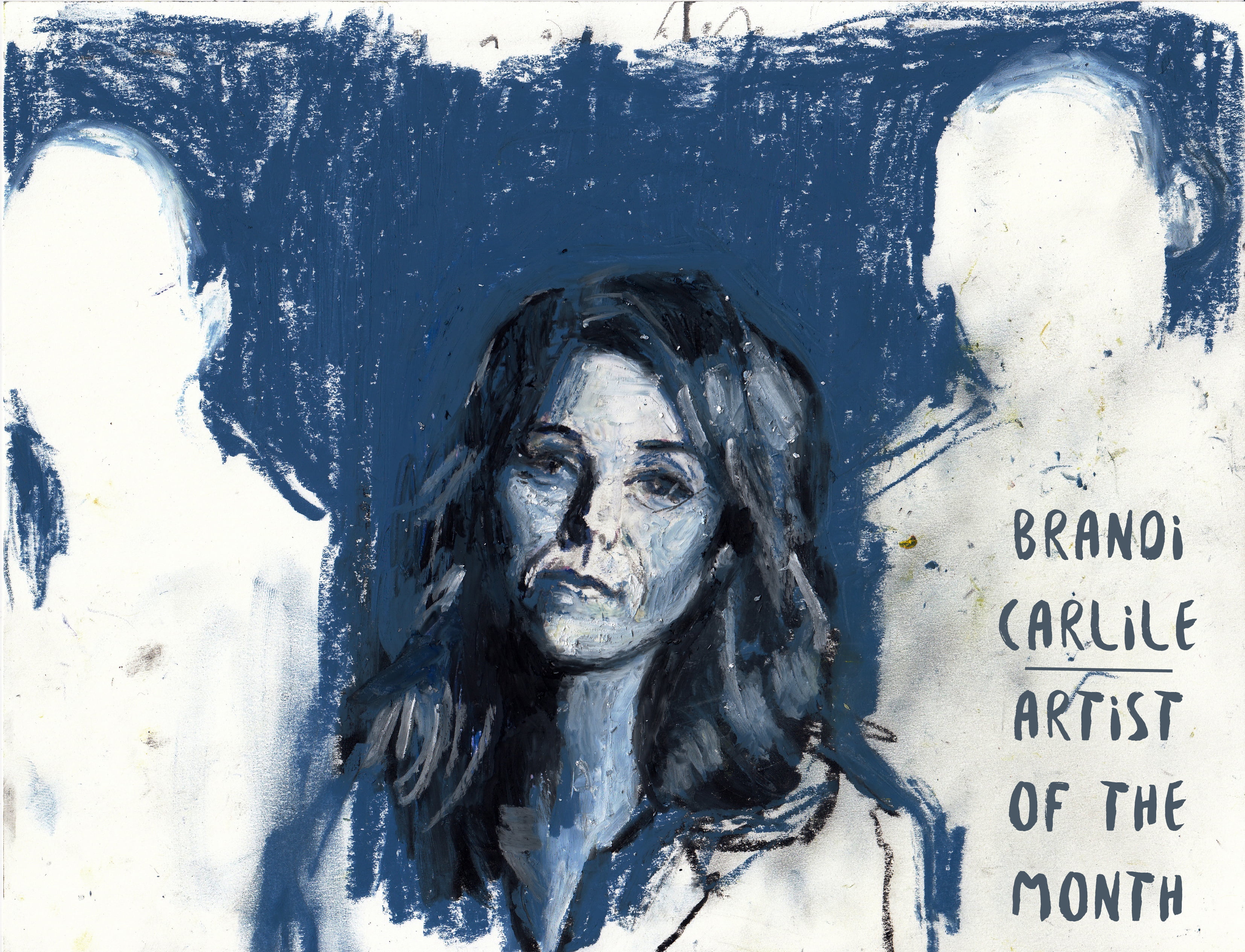
Brandi Carlile: The Work, in Progress

“A lot of times, as artists, we don’t write about what we’re good at; we write about what we struggle with,” Brandi Carlile confesses, then adds with a laugh, “I think I tend to write a lot about forgiveness because I’m quite judgmental. I’m a work in progress.” As evidenced in that thesis statement and the work’s title, forgiveness — for ourselves and others — is the tie that binds her new musical masterpiece, By the Way, I Forgive You.

Co-produced by Dave Cobb and Shooter Jennings, and filled with ’60s and ’70s folk-rock flourishes, By the Way, I Forgive You is the album many of Carlile’s fans and critics — as well as Carlile, herself — have been waiting for her to make, as it captures both the expansive power and vulnerable intimacy that make her live shows so indelible and affecting. From the glory and gravitas of “The Joke” to the heart-warming humility of “The Mother,” Carlile — along with Phil and Tim Hanseroth — turned her gaze simultaneously inward and outward, weaving the political into the personal to achieve a new level of honesty in the songwriting and performances.

Carlile and the twins know very well the potency of the musical pen, alluding to exactly that on the album’s buoyantly sentimental opener, “Every Time I Hear That Song.” Aptly, the tune circles around the idea of having memories triggered by a song on the radio. Now 15 years in, Carlile and company have crafted quite a few trigger songs of their own. “I love when I hear that because I know exactly how that feels,” she says. “There are so many activities that, when I do them, I’ll make a playlist and only listen to, like, the Indigo Girls on that camping trip because it’s nostalgia and it’s so important. Certain times in your life are marked by a soundtrack. To be that for somebody else is insanely satisfying for me.

“But ‘Every Time I Hear That Song’ is a little bit different. It’s not really about a song, is it? That’s the least important thing, the song that conjures up those feelings. It’s the fact that they’re still in there somewhere that’s so irritating,” she laughs. This particular album, though, really is about the unique power of a song — or, rather, 10 of them — to conjure up feelings, each one building and bridging toward the next.

A noted activist and humanitarian in her personal life, the closest Carlile had come to drafting a political statement before By the Way was with “Mainstream Kid” (off 2015’s The Firewatcher’s Daughter) because she didn’t feel that she had the skill required to do it well. Then came November 8, 2016 and all that has followed. And, now, not all bets are off, but a lot of them sure are, with “Hold Out Your Hand” and “The Joke” serving as two particularly political rallying cries.

“I think we all woke up, rather disturbingly, in November of 2016, just to realize that certain epidemics still exist, and we live alongside really damaging forces in the world, especially in our own country,” she says. “Becoming a parent has been a part of it, and wanting to do as much as I can to make the world a better place for my kids, while also recognizing that what got me to where I am and gave me a platform in the first place isn’t being political. And trying to honor that — that people want to listen to my music and have real feelings about interpersonal relationships and love and parenthood and loss, as well. So striking that delicate balance and just honoring the times we live in were really important motivators for me, on this record.”

The humanity required to see and strike that balance is, perhaps, Carlile’s greatest gift. It’s in the way she connects with people en masse and in private. It’s in the way she pours everything in her into every note. It’s in the way she exudes sheer joy every time she steps on stage. And it’s in the way she tackles topics almost too tender to touch.

Tales of addiction, abandonment, depression, and suicide have often cropped up on Brandi Carlile records, and By the Way is no exception. Here, “Fulton County Jane Doe” sweetly memorializes an unknown woman found dead in Georgia and “Sugartooth” sympathetically recounts a high school friend’s lost battle with drug abuse, while “Party of One” compassionately resolves to live up to personal promises made to a partner.

Carlile can tell these stories because she has lived these stories. “There’s nothing unique, really, about me,” she offers. “I’ve got all that in my family and all that in my life, too. I’m coping with it right alongside you and everybody else in the world. I think that God gave me the privilege and gift and ability to write about it, and I’m just really happy to be able to do that.”

Because of all she has dealt with in her life, one of the tools Carlile employs in a lot of different situations is the Al-Anon philosophy of love and acceptance: “I find it to be a really versatile philosophy to love someone just because they are worthy of being loved and not because they are meeting your expectations. That is easier said than done, but so important to experience growth.”

Confusing co-dependency with commitment is another addiction-related thread that has run through multiple albums. In keeping with the spirit of forgiveness and signaling a spurt of growth, Carlile takes that on in “Whatever You Do,” albeit with a newfound confidence that comes from counting yourself in the equation rather than succumbing to invisibility. “It’s all there — all of that gravity around having a savior complex and realizing how, subconsciously, we decide at a young age to love each other within the boundaries of what sustains us personally,” she says. “Realizing how necessary it is to let go of that is sort of groundbreaking.”

Across the final 45 seconds of the song, Carlile wails into the wind. What did that symbolize for her? “That it’s not easy,” she says with a laugh.

But Carlile didn’t sign up for easy. She signed up for real … in all its unfathomably beautiful and inestimably horrible glory.

“The kind of white-washing of humanity and saying that everyone’s just doing the best they can and trying to exist at any given time means that we’re not really capable of great things, either,” she explains. “Because, if we’re not really capable of awful things, we’re not capable of great things. It’s the high-highs and the low-lows that are real life. That’s why forgiveness is so necessary — and accountability is so necessary — in our little speck-of-dust lives. That’s what makes the really good shit happen.”

That philosophy of living up to our highest potential against every possible odd is what pulses so profoundly through “The Joke,” the album’s centerpiece. The stunning cut serves as an anthem of empowerment for the marginalized and vulnerable who face bullies and barricades in life. Forgiveness is found there, too. In order to rise above those who would hold us down, it has to be.

“That’s the thing about transgression and grief and fallibility: There’s going to come a time when you and I and all of us are going to be in dire need of forgiveness for some things we can’t believe that we did. And hoping that it’s there is a real shot in the dark because it’s an easy thing to talk about and a hard thing to do,” Carlile says. “At the end of the day, though, if we do it, we have longer lives and we’re happier people.”


Illustration by Zachary Johnson

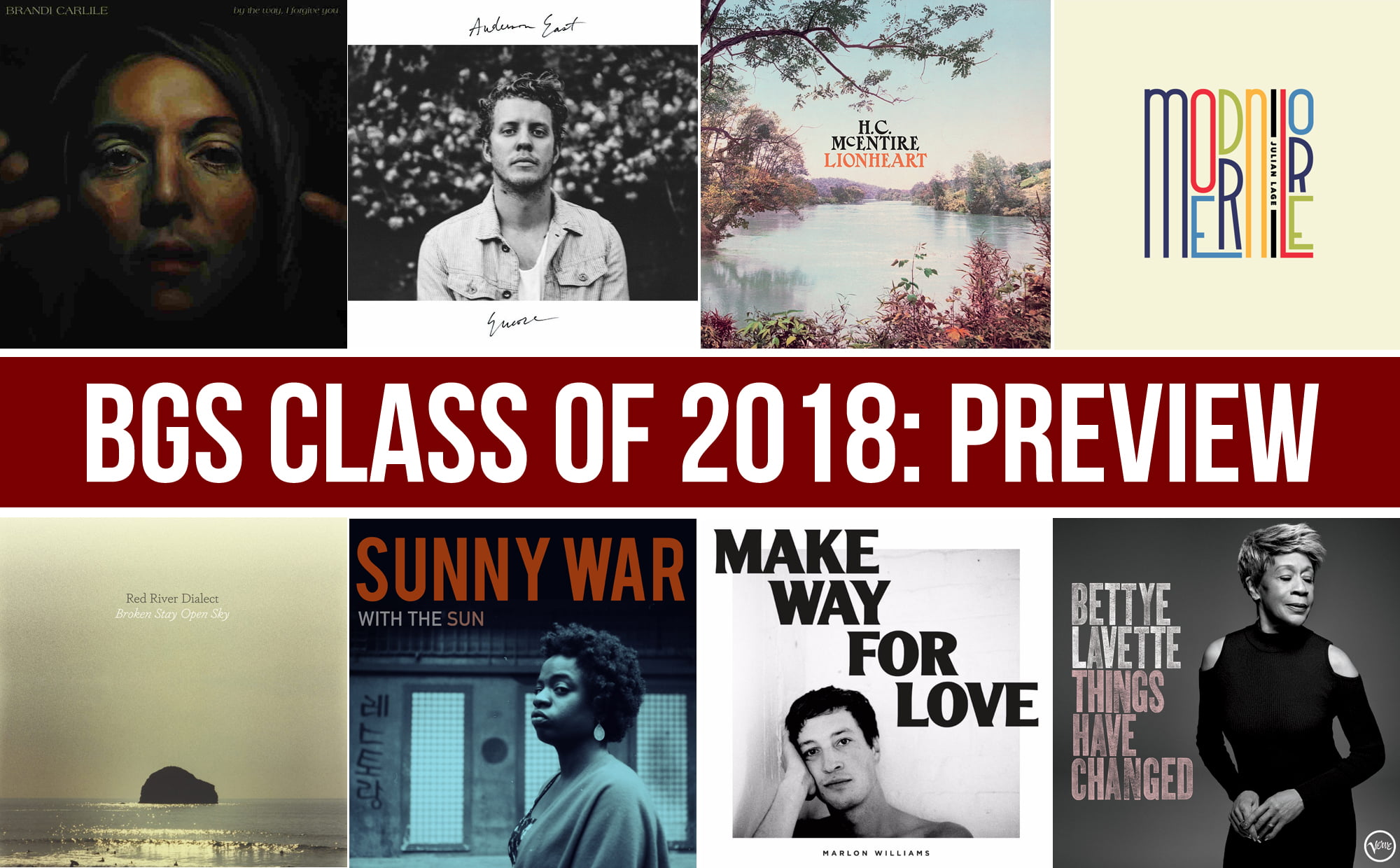
BGS Class of 2018: Preview

At only 11 days old, this year already looks to be a stellar one for roots music. From Marlon Williams to John Prine, Sunny War to Bettye LaVette, artists young and old are making some of the best records of their careers, and it is a thrilling thing to behold. Here are some of the releases that our writers are most excited about you hearing.

Brandi Carlile: By the Way, I Forgive You

Marlon Williams: Make Way for Love

Anderson East: Encore

HC McEntire: Lionheart

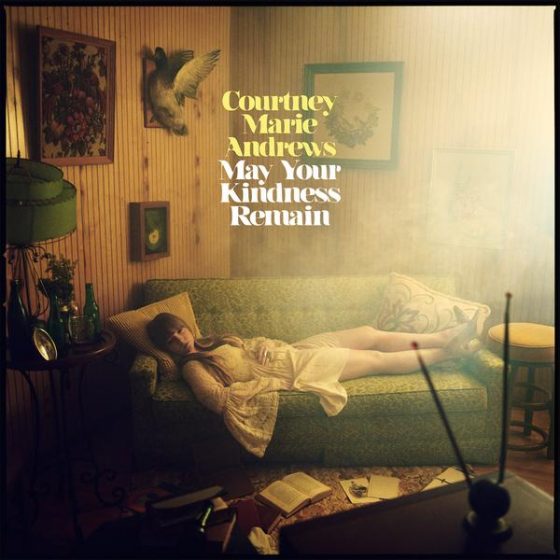
Courtney Marie Andrews: May Your Kindness Remain

John Prine: TBD

Gretchen Peters: Dancing with the Beast

Sunny War: With the Sun

Lindi Ortega: Liberty

— Kelly McCartney

* * * * *

Stick in the Wheel: Follow Them True

Belle Adair: Tuscumbia

Julian Lage: Modern Lore

Red River Dialect: Broken Stay Open Sky 

Jerry David DeCicca: Time the Teacher 

Ed Romanoff: The Orphan King

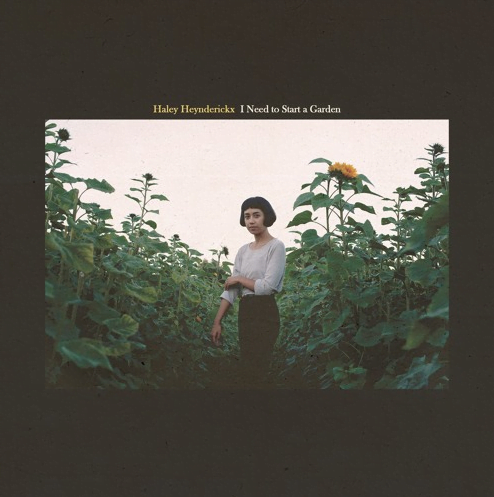
Haley Heynderickx: I Need to Start a Garden

Various: The Ballad of Shirley Collins OST

Bettye Lavette: Things Have Changed

— Stephen Deusner

* * * * *

Brandi Carlile: By the Way, I Forgive You

First Aid Kit: Ruins

Lucy Dacus: Historian

Anderson East: Encore

Kacey Musgraves: Golden Hour

Jack White: Boarding House Reach

Darlingside: Extralife

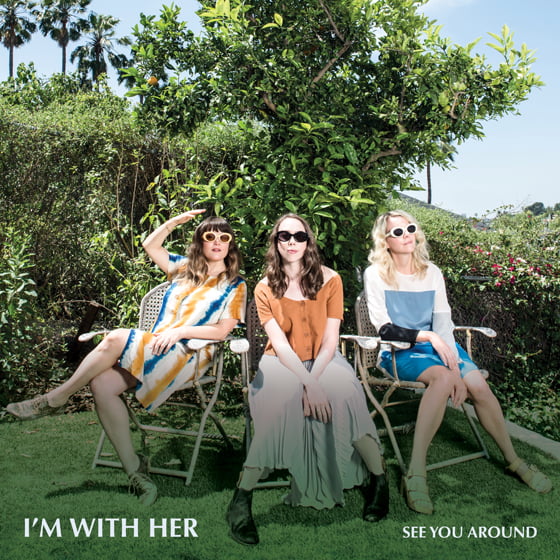
I’m With Her: See You Around

Calexico: The Thread That Keeps Us

Sunflower Bean: TBD

— Desiré Moses

* * * * *

Anderson East: Encore

Marlon Williams: Make Way for Love

First Aid Kit: Ruins

Loma: Loma

Femi Kuti: One People One World

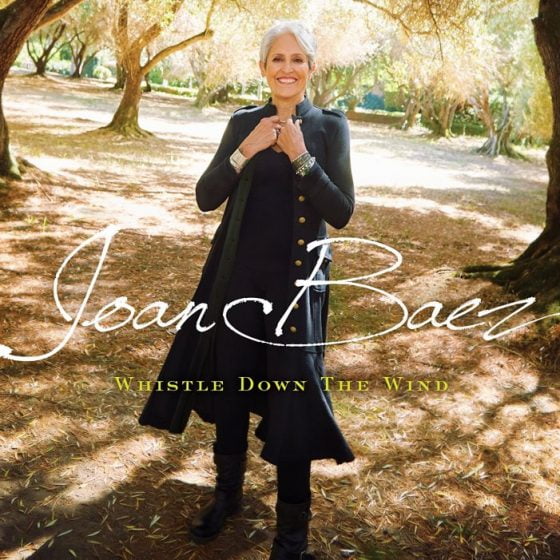
Joan Baez: Whistle Down the Wind

S. Carey: Hundred Acres

They Might Be Giants: I Like Fun

— Amanda Wicks

* * * * *

Jack White: Boarding House Reach

Brandi Carlile: By the Way, I Forgive You

Ashley McBryde: TBD

Brothers Osborne: TBD

Joshua Hedley: TBD

Traveller: TBD

Bruce Springsteen: TBD

Courtney Marie Andrews: May Your Kindness Remain

John Prine: TBD

Kacey Musgraves: Golden Hour

— Marissa Moss

* * * * *

High Fidelity: TBD

I’m With Her: See You Around

Ms. Adventure: TBD

Hawktail: TBD

Missy Raines: TBD

Jeff Scroggins & Colorado: TBD

— Justin Hiltner

* * * * *

Sunny War: With the Sun

I’m With Her: See You Around

David Byrne: American Utopia

Hawktail: TBD

Jamie Drake: TBD

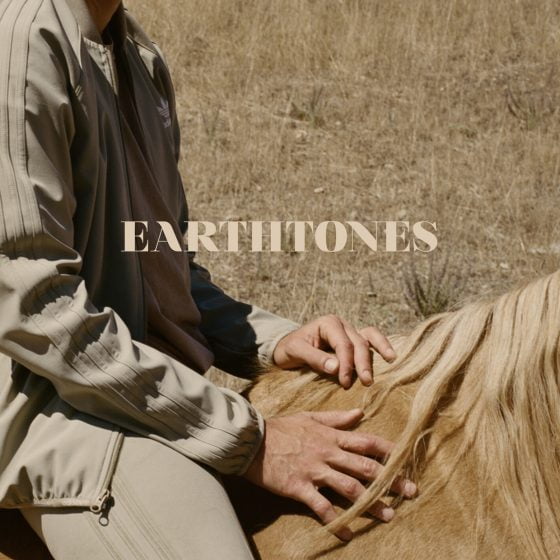
Bahamas: Earthtones

Fruition: Watching It All Fall Apart

Darlingside: Extralife

— Amy Reitnouer

From BGS with Love: Non-Crappy Christmas Songs

Cynical though it may sound, a lot of holiday music is pretty crappy. Just turn on your local soft rock radio station and try withstanding the onslaught of ratings-boosting renditions of “Rudolph” that, these days, seem to begin sometime around Halloween. Save for “Feliz Navidad,” a couple of Carpenters’ tunes, and anything by Bing Crosby, it all pretty much sucks.

To the rescue we come with our exclusive playlist of Non-Crappy Christmas Songs.

We like this list because it has a little of everything: heartbreak, humor, sentiment, and sadness — plus a performance by one of the great folk artists of all time … Kermit the Frog. So, kick back and let Joni Mitchell and Johnny Cash, Brandi Carlile and Burl Ives serenade your holidays.

For those of you who like your carols a little more on the country side of the street, the ginormous Ultimate Country Christmas Playlist we did last year rocks pretty steady.


Photo credit: ginnerobot via Foter.com / CC BY-SA

MIXTAPE: The Shook Twins’ Songs by Siblings

Being in a band with my twin sister, and writing songs that we sing together, is a very special and powerful thing. Blood harmony is a true gift that we always knew deep down that we could not waste! Playing music with family members has a wholesome and comforting quality that I think fans can feel and it brings them this sense of warm nostalgia even without them knowing it! Here is a list of some of our favorite songs from my favorite bands that have siblings in them. — Katelyn Shook 

The Wood Brothers — “The Muse”

This song gets me every time. It’s a song about Oliver Wood’s muses — his wife and child — and something about his brother, Chris, holding down the back bone of this beautiful song on the bass makes me think that he’s supporting his brother in these tender moments of pure love and joy.

The Barr Brothers — “Even the Darkness Has Arms”

This might be one of my favorite songs of all time. It doesn’t surprise me that the way the groove and the rhythm make me feel is attributed to the brothers Brad and Andrew Barr locking in so perfectly in the pocket on guitar and drums.

DeZurik Sisters — “The Arizona Yodeler”

Someone told us about these sisters when they heard my twin and I doing some interesting vocalizing, but the way Mary Jane and Carolyn yodel is a whole new level of singing together! They grew up on a farm in the ’30s, and their yodeling style is said to mimic the birds around them. It’s our life goal — my twin and I — to be able to sing like the DeZurik Sisters.

The Brothers Comatose — “Cedarwood Pines”

These guys are friends of ours, and that’s not the only reason I love their newest single. This is a bit of a new sound for them and it really grabbed me and kept me there. Usually, Ben Morrison is the dreamy lead singer, but on this track, his brother Alex is leading, and his voice has a very captivating quality that surprised the hell out of me. I love the good feeling groove this song brings. I’m so happy they wrote this.

First Aid Kit — “My Silver Lining”

I love this song so much. The production, the vocals, the message … just everything seems to be perfect. These Swedish sisters, Klara and Johanna, really do it for me.

Joseph — “Whirlwind”

This band is even extra sibling-y because there are twins involved! Meegan and Allie (identical sisters) join their big sister Natalie, and they absolutely kill it. These girls are also friends of ours, and we really love the music this beautiful family makes.

Brandi Carlile — “The Eye”

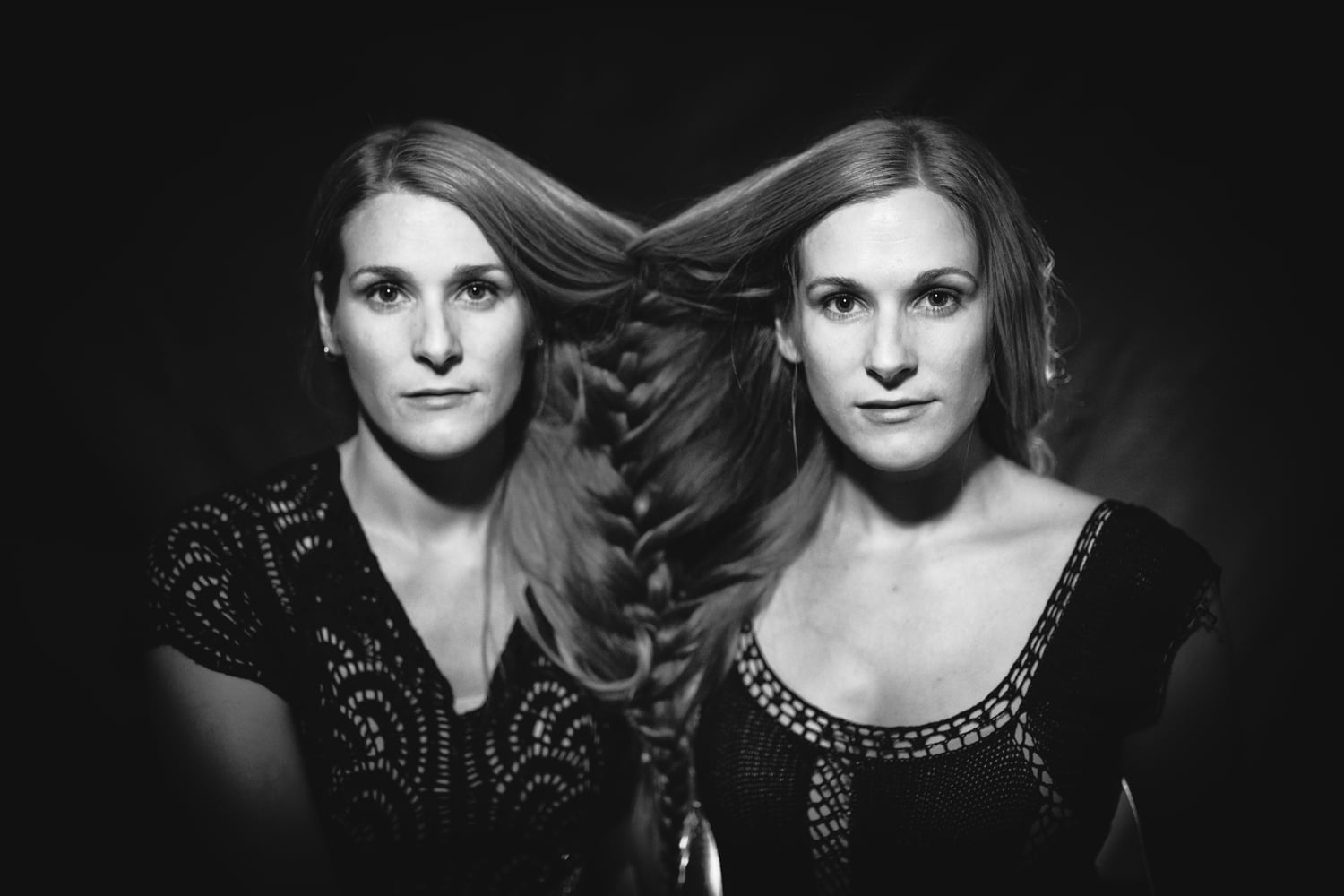
Most people know that Brandi’s band includes identical twins, Tim and Phil Hanseroth. They harmonize with her so perfectly, you’d think she was their triplet. This song displays that beautiful three-part harmony they achieve so well together.

Boards of Canada — “Peacock Tail”

This duo is one of my staples for calming my nerves and chilling the F out. They are creative and soothing, and it, of course, consists of two Scottish brothers, Michael and Marcus.

The Kinks — “Sunny Afternoon”

This is an amazing band that I have loved for years, fronted by two brothers, Ray and Dave Davies. They made such amazing music together for so long, it’s a shame their creative differences grew too large to keep going.

The Staves — “Tired As Fuck”

These three beautiful sisters are courageous and powerful. Love this song and love their sound.


Photo credit: Jessie McCall

Rewriting the Story, Redrawing the Lines: A Conversation with the Secret Sisters

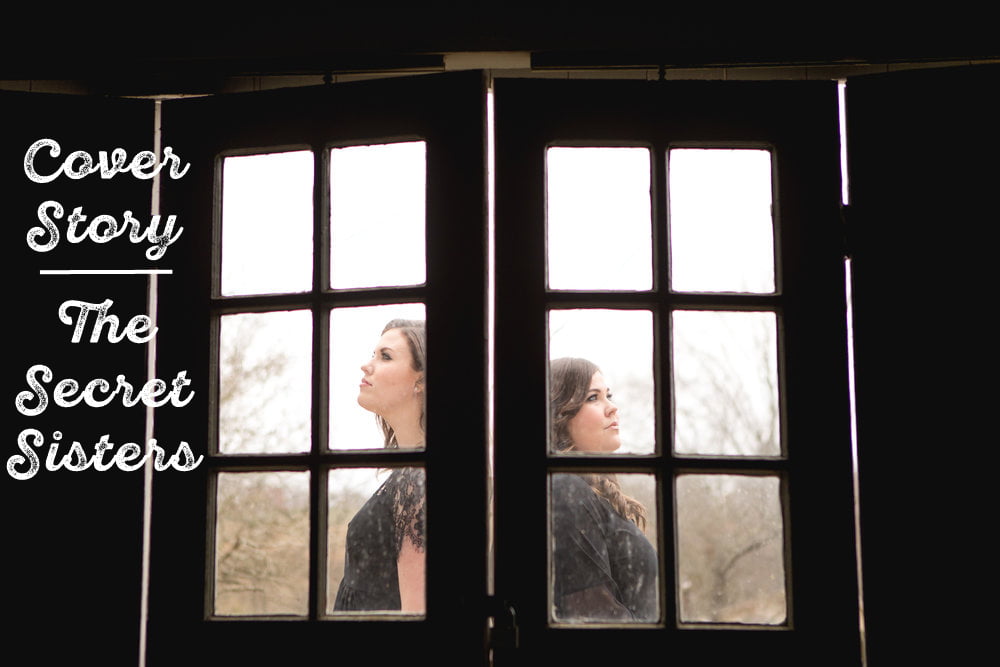
The Secret Sisters had all the markings of instant success. Their first recording contract came attached with producer Dave Cobb and executive producer T Bone Burnett, and they toured with the likes of Brandi Carlile, Ray LaMontagne, and even Bob Dylan. But those factors, while exciting, weren’t a guarantee. Where music’s history is riddled with instances of surprising discoveries that led to shooting star fame, it’s more heavily peppered with the ones who didn’t make it to the finish line. For every Elvis Presley, there’s the Bobbettes. It seemed that the Secret Sisters, Laura and Lydia Rogers, were destined for some version of the former, but no one anticipated the turn things took after they released their second full-length album, Put Your Needle Down, in 2014. Slow sales caused their record label to drop them, and they soon found themselves underwater, financially and emotionally.

Looking back now on their story, it seems evident they would always turn things around; fate, having dealt them such lucky cards before, wouldn’t let that hand go to waste. At the time, though, that was harder to see. The sisters are back after three years, recently signed with New West Records, and raring to go with their third studio album, You Don’t Own Me Anymore. Produced by good friend Brandi Carlile, the album places its finger on the bruise their adverse experience in the music industry caused and doesn’t let up. “It’s about as personal as it gets,” Laura says.

Having learned a lesson or two over the past eight years, the pair are gritting their teeth but not biting their tongue. As with Sara Bareilles’s 2007 hit, “Love Song,” their title track flippantly states their independence from industry expectations. It’s more than being protective of their music; it’s about being protective of the Secret Sisters, themselves. If the business doesn’t take kindly to determined young women — and this trope has certainly fallen by the wayside as the years have produced firecrackers like Dolly Parton, Jessi Colter, and Miranda Lambert — the Secret Sisters now know the rules to the game. Still, that doesn’t mean their relationship with their music is idyllic. Songs like “Carry Me” and “He’s Fine” express the sacrifice that always follows creative success. For every hit single, there’s a home left empty while they worked on it; for every successful tour, there are two hearts left yearning as the road carries them farther away. These are not new burdens for musicians to carry, but Laura and Lydia wrestle with their meaning in invigorating ways, their harmonies speaking to their weighted and contemplative experiences as much as their lyrics do. Some returns are triumphant, others honest, but rare are the ones that exist in the nexus between those two signifiers: something bruised and brave and becoming..

Music, like many creative forms where people are trying to “make it,” involves its fair share of rags-to-riches stories, but yours involves many twists and turns. What have you learned or what are you learning from your own narrative?

Laura: I feel like I could write a book that probably no one would ever want to read. We’ve transformed so many different times. All of a sudden, we land with this larger-than-life situation, where we have a record deal and we’re touring like crazy with all these artists who are so inspirational and so successful compared to the two of us. Then, to go into this dark phase where literally everything has fallen apart and we aren’t really even sure that we’re going to create music again, and then to be where we are now … it’s so insane. If I had known it would be so up and down, I probably would’ve never went with it. But I’m glad. Even though it’s hard to go through the valleys and exhausting to be on the mountaintop, who it has created out of the two of us is pretty special. I think we’re so grateful to be where we are.

I would imagine there was a sense of security when that deal first came through, but nothing in life is a given, even if certain narratives suggest otherwise.

Laura: From the outside looking in, it seemed like this Cinderella story. All of those things were so great and, at the time, they were huge and important, but they don’t mean anything. They can be taken away. They don’t have the weight to carry you through the turmoil you might endure. You can’t get too comfortable and assume those things will sustain you.

Lydia: Also, at the end of the day, we had to rely on those relationships we had developed in the early days to get back on our feet away. We had to rely on our friends, like Brandi [Carlile], and John Paul White. Ultimately, that’s what got us out of it.

It would seem so easy to look back and say, “Of course, we were always going to make it again.” But in the moment, it’s harder to see. Is there a central take-away you can see yourself applying as you move forward?

Laura: With the first two records, we didn’t control any of it. We just showed up and we sang. We went through this phase of being these sweet, submissive, Southern girls, because that’s what we were raised to be. Moving forward, I think we’ve learned the power of saying “No, thank you.” I don’t want to sound like we’re all of a sudden divas, because we’re still the same people, but I think we have a better sense of our power and what we want and where we’re going, and a lot of that just comes with age. Going through the darkness helped us realize that, too.

That comes across in the album. There are moments of anger that shift into determination, or what the South likes to call “grit.” Where did you find your grit?

Lydia: We kinda had to reach down deep into ourselves. Well, I say that, but I guess we didn’t have to reach too deep. It was all there on the surface. We were hurt, and so we got a lot of that determination within ourselves, but also Brandi instilled that into us, too. She would call us every few months and ask us how we were doing, and she’d give us advice. When we were having bad days, she would remind us why we do what we do, and why we had to keep going. She has been such a good friend to us for a long time now, for seven years or so. She was one of the very first tours we ever did. We were on the road with her and Ray LaMontagne. Ever since then, she has been a big sister to us, and stayed in touch.

Especially during a time when a lot of people were turning their backs on you.

Laura: That’s so true, and I think people’s true colors really show; you start to realize what their motivation is all along. We’ve worked with some kind, amazing people, but the people who checked in on us really proved to us how much they believe in us, as humans and as musicians. Those are the relationships that — thank goodness — we had those handed to us in the early days, because they’re what brought us out of the moment that really could’ve been the end of the Secret Sisters. I think one thing that has happened with these records — and we’re not these over-the-top, outspoken feminist activists; I mean, obviously, we think women need to be revered and respected and equal — but I think one thing we really became aware of is what it means to be a female musician in a world dominated by male musicians and male businessmen who make all the decisions for you, as a woman. We really evolved into knowing our power as women. I hate to even talk about that because I feel like it’s such a hot button issue.

But it happens all the time in the industry!

Lydia: It’s so true, and we never realized it, until we had these conversations with Brandi. Just because of the climate that we all live in and exist in and work in now, it became apparent how many times our gender actually does impact how successful we are or how people talk to us. We do not have it nearly as terribly as many women do, and I’m trying to keep all of that in its proper place, but I think that it’s a tiny sentence in a very long conversation that’s happening right now about what it means to be a woman in a man’s world, and what it means to embrace your power and say what you have to say without being angry or …

Laura: Feisty. There’s an added layer because we’re also Southern. I think the main perception of Southern women is to be submissive and quiet and let the men take charge. That’s still very prevalent in the South, and it’s hard to fake that as Southern women, even being millennials. It’s definitely something we still have to overcome ourselves.

There are so many stereotypes associated with proper and improper behavior for women in the South.

Laura: Oh yes, especially in small towns. I think, for us, it’s a delicate balance, because we come from a very Christian environment, and we come from a very family-oriented Southern environment, and we love and revere it so much, but I think the fine line is figuring out how to be kind and respectful and Southern sweet to everyone, but then also realize when someone isn’t doing right by you because of who you are and the gender that you are. Also, I think that Lydia and I have had to figure out that it’s okay to be sweet and Southern and submissive when it’s necessary, but there are moments when you don’t need to be, and you need to stand up for yourself or you’re going to get plowed over.

It reminds me of another Southern stereotype: the firecracker.

Laura: I wish I could be 50 percent firecracker and 50 percent Southern belle, and I wish I could know exactly when to pull out each.

If you ever find out, let us know.

Laura: It’s so funny that you mentioned firecracker because our grandmother is on the cover of our new record. That’s our paternal grandmother who is now 86. She’s the definition of a firecracker. Hopefully we have a little bit of balance on that record.

What were you trying to invoke after your first two album covers?

Lydia: We were kind of, honestly, tired of putting our faces on the covers. We love our first couple of album covers, but we wanted to put something — like you said — gritty and meaningful, and she’s this really incredible woman who is kind of argumentative, but also kind of sweet and, honestly, everything that we aspire to be. We love that picture because it looks like she just came from a street fight.

Laura: She had just gotten her hair permed for the first time in that picture, but she looks like she had just come from a women’s rally.

I was struck by this sense of sacrifice that keeps coming up throughout the album. You love your music, clearly, but it requires you to give up something you hold dear. So what’s your relationship with music now?

Laura: If I’m being completely honest, it’s a love/hate relationship, a lot of the time. I think I get frustrated sometimes just how incredibly hard you have to work to try and get your music out there and respected, and it seems like a continual battle. You may make a little progress, but then you realize, “Oh, but I’ve still got a really long way to go.” I’m 31 now, and, Lydia, how old are you?

Lydia: I’m 28.

Laura: We had a different trajectory for ourselves, and our timeline hasn’t gone exactly like we thought it would, and we’re in this really interesting phase right now where we’re just trying to figure out what it means to be a complete adult who has responsibilities and a marriage and family relationships and things that really matter, more than music even. My husband has a day job and he works really hard to provide for us, and sometimes — and he doesn’t project it on to me, I project it on to myself — I feel like, “Oh, here I am just chasing a dream.” It’s not the same as working an 8-to-5 job. Because I expected a different life for myself, I’m still adjusting to what it means to continually chase that dream of making great records that I’m really proud of. I’ve had to realize that there’s no end goal; it’s just keep making good records and keep playing great shows, and hopefully be able to pay your bills, and really that’s all you can ask for, and even that feels a little bit extravagant.

Lydia: I’m of the same mindset. I think Laura and I had these expectations, in the beginning, because things were handed to us, and I think we expected things to be on a different level than they are now. We’re having to adjust to the reality that it didn’t go that way, and we have to embrace being musicians wholeheartedly and enjoy the ride, as cliché as that sounds. It’s definitely a sacrifice every single day. It’s working all the time for that hour-and-a-half onstage.

It sometimes can feel like a curse — maybe that’s not the best word — but creative individuals always struggle, even when things are going well.

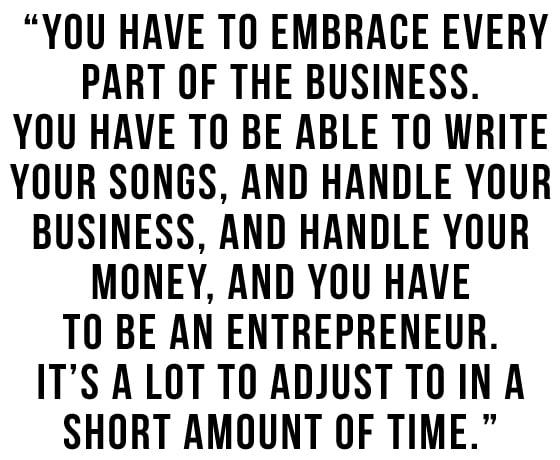
Lydia: You have to embrace every part of the business. You have to be able to write your songs, and handle your business, and handle your money, and you have to be an entrepreneur. It’s a lot to adjust to in a short amount of time. It was so different eight years ago, when we started.

I can’t even imagine. I know many musicians who have quit because they love the music but they hate the business.

Laura: That’s a constant temptation. Even when things are going extremely well and you have a really great timeline of a record release or a tour, it’s still hard because you think of how many hours you’ve put into it, and if I were putting this many hours into a job at McDonald’s, I would make infinitely more money than I do as a musician. Again, if the money is what you’re in it for, you’re going to be so disappointed. You’re going to have months and years where it’s unbelievable, and you’re going to have months and years where you literally have to ask your parents for help with the mortgage. I’m an example of that. Then again, if you love it, it’s part of who you are.

Lydia: Sorry, we just got really honest.

When you say “it’s part of who you are,” a creative life often means your identity is fused with your work.

Lydia: It’s like showing your diary to someone.

Laura: I think that’s why, when we went through the bad spell, it did such a number on our self-esteem and our confidence and our abilities, because we identity as Secret Sisters. It’s who I am, it’s what I do, people know that it matters to me. When all of a sudden that completely falls apart, and people are asking you, “When are you going to make another record?” and you want to tell them, “I literally can’t afford to pay my bills right now. I can’t even think about making a record.” We’ve had to learn not to place so much of our identity in what we do.

That’s smart.

Laura: You live and die by it. If it goes south, your self-esteem goes with it. So, try not to let that happen in the future.


Photo credit: Stephen Jenkins

Reasons to Rock: A Conversation with Rhett Miller

“I only had four hours of sleep last night,” says Rhett Miller of Old 97’s. “I might be more honest than I otherwise would be.”

Truth be told, Miller’s always been honest. Since the early days of Old 97’s — a band that helped define what would come to be known as Americana, something they are arguably not credited with enough — he’s dug deep into his own history to create songs that help unlock the human experience, one story at a time. And for Graveyard Whistling, their 11th album, Old 97’s decided to use a little of their past to help reflect on their own future: They headed back to the West Texas studio, Sonic Ranch, where they made their major-label debut, Too Far to Care, to lay down a collection of tracks that flirt with mortality while still feeling vigorously alive.

“I paid my dues, I paid my debts,” sings Miller on one of the album’s seminal tracks, “Good With God.” “I made a mess, but it’s my bed.” Full of cow-punk fury, it finds God as a woman, with Brandi Carlile playing the role of a maker who doesn’t let her mortals off too easily. Whether 18 or 80, it’s never too early or too late to measure our mistrials and mistakes and see the people we’ve hurt or impacted, not just the gapes in our own conscience.

And while nostalgia can sometimes be a dirty word, Miller and the Old 97’s don’t get mired in it for Graveyard Whistling — old memories and worn-out relics serve as a reminder to keep going and not to just look back. 

You’ve been making records since back when people held up lighters at concerts, not iPhones. Do you find yourself nostalgic for the early days?

The biggest thing that has changed from that era is that we can no longer play a brand-new unreleased song unless we are completely comfortable with whatever shitty version of that song being released. That’s been a bit of a change. But I’ve never minded cameras or recording: You’re trying to put on a good show anyway, and it’s not like the fact that you’re suddenly maybe going to be recorded is going to change the level of performance. There are no shows where I just go out there and think, “Oh, nobody is recording this, so I’ll muddle my way through and just get paid.” I enjoy challenging myself to put on the best show I can every night. People holding up their phones as if this is something worthy of recording for history or posterity is fine with me.

But speaking of nostalgia, going back to the same studio where you made your major label debut, Too Far to Care, must have shook loose so many memories.

That part was crazy, going back to the tiny little down — really a stop on the highway outside of El Paso, near the Mexican border. Since then, the studio itself, in the past 20 years, has grown into a world-class studio with multiple facilities and a lot more lodging. Each of us stayed in the same bedroom where we had stayed 20 years earlier. And that experience was definitely a sweet thing, because it brought back memories of how exciting that time was, and made it feel like there was a full circle component, 11 albums into this band, feeling like we are doing the right thing. Here we are, all these years later, and we are fundamentally the same four people. With added decades and perhaps wisdom, and a lot of gratitude that maybe our younger selves were too inexperienced and green to have discovered yet.

Did you stumble on any particular moments of déjà vu?

When we talk about déjà vu — that sensation of having experienced something before — it’s good luck. It’s an indication that you are on the right track. That was the experience that we had at Sonic Ranch. And I found a note in the bedside table drawer of my bedroom that I had left there 20 years earlier. There was a note in my handwriting: My girlfriend at the time, I wrote down her phone number in New York City. It was yellowed with age and unmoved. It was crazy, since I remember standing in the same exact spot where I had stood when we recorded Too Far to Care and I remember having flashes at the things that would obsessively occupy my brain. I don’t have those kind of fears anymore. I remembered those fears and they seemed quaint to me when, at the time, they were paralyzing.

That note must have felt like a good sign, though.

It felt like a talisman and that the universe was giving me a thumbs up. It also felt like a testament to the shoddy housekeeping.

Old 97’s were at the forefront of what we now generally refer to as Americana. Do you feel like you get credit where credit is due for influencing that genre?

It was “alt-country” then, right? I remember the Bloodshot folks [Old 97’s first label] kept trying to push “insurgent country,” which seems really weird. We’ve always been fueled by this idea that we are underdogs and that we are hungry and that, in some ways, we have been underappreciated and overlooked. As we go on, it’s harder and harder to convince myself of that narrative. I do see more people who point to us as being influential. We wondered if we would ever hit a moment when young bands said they were influenced by us or drew inspiration from us, and now it happens with relative frequency and it’s always a surprise and such an honor.

Anyone in particular?

The Turnpike Troubadours. I’ve gotten to be friends with Evan Felker, and I love his writing, and I discovered him before I became friends with him. They have a song called “7&7,” and I remember thinking, “Either this guy listened to a lot of the same stuff as me and wound up in a very similar place, or maybe he listened to me,” because we are sort of honoring the same principles and finding the same beautiful moments, in terms of turns of phrase and finding little moments in the song to flip it on its head. I just thought he and I were kindred spirits. It turned out, as he explained to me the first time we ever talked, that the whole idea of the Troubadours, according to Evan, is that they wanted to be the Old 97’s with a fiddle. Which is so cool.

Do you remember having moments like that, when you met your idols early in your career?

I remember starting out, the first time I got to meet John Doe, and knowing so much of what I did was from being a fan of X, and trying not to sound like a fanboy. I just think music is a continuum, and one of the reasons I chose music as a profession over other creative endeavors is that it is centered around friendship and a community of musicians. I’ve tried to be something of a mentor to the folks that have presented themselves to me in the way I did to John Doe all those years ago. Getting to work with Waylon Jennings … he was so kind to me, and he could have been a complete asshole, and I still would have cherished the time that we spent with him. I tried to take those lessons from those people I looked up to when I was really young and pass it on.

Do you still think that musical kinship is as strong as it once was? The Internet can make everyone feel a sense of quantity over quality, in terms of interpersonal relationships.

If anything, it is more alive than ever. With the old business models — with the CEOs and the tall buildings you had to pass through — it was a detriment to the music scene. If anything, it created competition where there didn’t need to be, competition and divisiveness. Now, I would be lying if I didn’t watch the Grammys with a level of envy and bafflement, like, “Why? Why are these the people who get the golden or silver ring?” I don’t know what they are; I’ve never gotten one. But I think that we live in a world where the emphasis is less on that and maybe particularly because the prize element has been taken out of it. It’s not so much a lottery to win but music to be made.

Do you ever worry about music becoming too enamored with roots traditions and losing the ability to rock?

Bands with pedal steel can still rock. There is room for everything under the umbrella, and I think kids are always going to like to rock. I like to rock, and I am always grateful when I see a young band that gets out there and shreds. We need more reasons to come together, and live music is such a great reason to come together en masse and celebrate something. Especially when it’s exciting and fun and not everybody has to sit down and be quiet and focus on the performer so he can tell you about his misery. Miserable music and music inspired by misery has fed my children for years. But I personally have found a way to hide it in fun, inclusive sing-along-sounding rock music. And I like it when other people do that.

You definitely address some of the misery of mortality on Graveyard Whistling. Do you think about death a lot?

I think I go through waves of being really aware of mortality. Especially if you have a friend or loved one pass away. [Our last record, 2014’s] Most Messed Up was a record that functioned like a teenager might function: immortal in that teenager sense. You can do anything and get away with anything. The narrator was immune, in his own mind, to repercussions. When I looked at that pile of songs for this record, that narrator was no longer immune and painfully aware of culpability and his own mortality. Sins coming home to roost pervade.

Speaking of sins, asking Brandi Carlile for penance on “Good with God” is pretty genius. She’s a darn good lord and savior.

I grew up going to church a lot. I was in choirs. I was an acolyte. I really liked the music of church and I liked so much of the fundamental message that was conveyed. But I ended up having problems with organized religion. As far as God, I think our society uses that concept more as a tool or a weapon. So when I was writing “Good with God,” I was on tour with Nikki Lane, and Nikki is such a strong female presence to begin with, when I realized that God in this song is a woman. It’s such a fun moment, when this guy in the song realizes that: He realizes he wasn’t going to get away with things he thought he was going to get away with. And Brandi … lyrically, she demanded that he be held accountable, which is important. I’ve got a 10-year-old daughter and I’ve always told her that, throughout history, women have been treated poorly, but it’s a trend I thought was moving in the right direction. Until last year, when suddenly I really started questioning if that was true or not. I didn’t anticipate this song having this darker timeliness that it has wound up having. But I’m certainly proud of it.

But Brandi’s voice is just so huge. She just fills up a room. If you are looking for evidence or proof of God, that kind of voice is just a compelling argument for her existence.

MIXTAPE: Songs to Crawl Inside

Aren’t half-somber, half-hopeful songs the most comforting? Through gloomy Winters when you’re chilled to the bone, snuggled under your favorite fleece with a piping hot cup of herbal tea, perhaps you find yourself newly single, binge-watching reality television and taking a spoon directly to that pint of Ben & Jerry’s … or when you’re staring down four years of an unqualified, immature, egomaniac, C-list celebrity/Twitter personality occupying the White House — crawl inside any or all of these songs.

Brandi Carlile — “That Wasn’t Me”

I’d be lying if I said I hadn’t ever put this song on repeat and sobbed the lyrics over and over. Whether accidentally or purposefully, we’ve all had experiences when our true selves haven’t shown through. Maybe our intentions have been mischaracterized through no fault of our own or maybe we hide behind intricate facades. “Do I make myself a blessing to everyone I meet? When you fall, I will get you on your feet. Do I spend time with my family? Did it show when I was weak? When that’s what you see, that will be me.”

Darrell Scott — “Someday”

“Someday” is a really difficult word to handle, but it’s a beautiful thing when it’s hopeful rather than daunting. Someday the world will change for the better; someday it will all fall into place; someday we’ll finally be the people we want to be; someday we’ll look back and understand. As usual, Darrell Scott sings with goosebump-inducing conviction, “I will love someday. I’ll break these feet and these eyes and this heart of clay … someday.”

Lee Ann Womack — “Little Past Little Rock”

This song is a mandatory addition to every road trip playlist I make, but it’s not just a comfort for travelers and everyone eastbound on I-30. This is a song of liberation, of staring fear in the eye and finally standing up for oneself. If LAW is at peace with not knowing what the future holds, then we can be, too. Let that baritone guitar tug your heartstrings.

Alison Krauss & Union Station — “Find My Way Back to My Heart”

“I used to laugh at all those songs about the rambling life, the nights so long and lonely. But I ain’t laughing now …” And with just the first line you find yourself curled up within this song like a warm, impossibly soft snuggie. We would all crawl inside Alison’s comforting, plaintive voice on its own if we could, right? Then the slight, lilting asymmetry of the lyrics and the haunting, iconic So Long So Wrong aesthetic draw us in even further.

Ashley Monroe — “Like a Rose”

It takes a zen mindset to acknowledge your past with its good, bad, and ugly, and appreciate how it’s brought you to where you are today — especially if where you are today isn’t quite where you want to be yet. But if you can understand that you can still be your best self in any of those contexts, well, you really have come out like a rose. Lemme just crawl inside that beautiful moral-to-the-story.

Jason Isbell — “Flagship”

With a setting that would rival the best indie movie — a crumbling hotel, a harlequin cast of characters — Isbell aspires to a love that will last longer than structures, that won’t fade or grow stale, and will stand out as a banner for all to achieve. At first seemingly naïve or out of touch, the realism of the unmanicured surroundings make us feel like this kind of connection is not only attainable, but right around the corner. And that idea is just so gosh darn reassuring.

Erin Rae and the Meanwhiles — “Minolta”

Here’s another voice you’d crawl inside, if you could. Erin Rae shines a more positive light on our culture of constant social media and photo sharing, but with a vintage twist. Imagine a friendship so dear that you wish you could follow that special person around just to see the world through their eyes. “Good things are on their way for you, and if I’m not beside you for the ride, take a picture I can stop and look at sometimes.” Friendships like this help us all get out of bed in the morning.

Hot Rize — “You Were On My Mind This Morning”

If you’re thinking about someone and reminiscing, this song is for you. If you’re scared a certain someone isn’t thinking about you, this song is for you. If you wish Tim O’Brien were thinking about you this morning, well … us, too. The seminal, progressive bluegrass sounds of Hot Rize are excellent, as always, but my personal favorite recording of this song has to be our Sitch Session of Tim serenading the mountains.

Chris Stapleton — “Fire Away”

Let’s talk to each other more. Let’s listen to each other more. Let’s let it all out more. Let’s warm up with Stapleton’s smoky voice and cuddle up in his beard. Wait … wut?

Dolly Parton, Linda Ronstadt, Emmylou Harris — “Feels Like Home”

This song had to make this list. But perhaps the more important thing here is the version. Of all the recordings of this modern classic, could there be a single one more comforting and soothing than Linda, Dolly, and Emmy? Hint: The answer is no. (Give “High Sierra” a spin, while you’re at it. It gets an honorable-crawl-inside-mention.)

Sara Watkins — “Take Up Your Spade”

Okay. It’s time to get to work, put one foot in front of the other, and push slowly but surely toward our goals. Oh, and don’t forget to give thanks along the way. We all have a lot to be thankful for.


Photo credit: Martin Cathrae via Foter.com / CC BY-SA.

Finding Your Folks the Festival Way

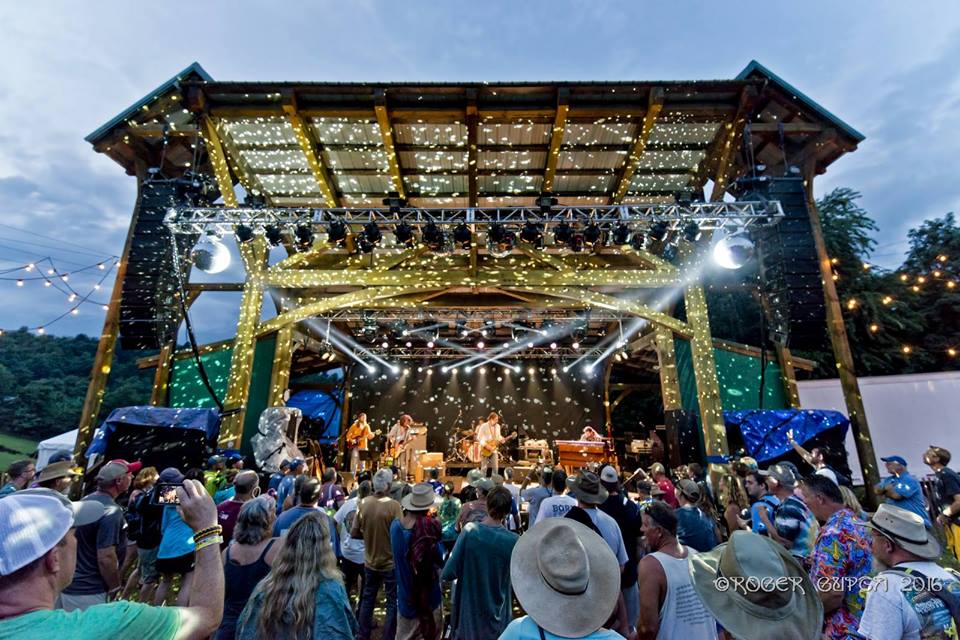
Last July, Brandi Carlile stood on a hand-built timber frame stage at the annual FloydFest music and arts festival. Before launching into the next song in her set, she pitched her guitar over her shoulder and stepped up to the microphone. “Our music wouldn’t exist without these mountains,” she announced to a roaring crowd.

Carlile’s brand of powerful folk-rock does find its origins in the bluegrass and old-time music harvested in the Blue Ridge Mountains, which encircle the festival grounds. Perched high above the crowd, they provide the backdrop for this idyllic musical playground nestled deep in the foothills of Southwest Virginia. Since the 18th century, Appalachia has been a melting pot of Native American music, spirituals, gospel music, and fiddle tunes. By tapping into the roots of the region, FloydFest co-founders Kris Hodges and Erika Johnson have cultivated a rare environment that’s all spirit and diversity.

“It's not just about, you know, throwing together the most popular bands and hoping for the best with a bunch of drugs,” Hodges says. “We wanted a more holistic lifestyle. We wanted to introduce the regular person into conscious living, and that was really the initial vision and intent behind FloydFest.”

Hodges and Johnson, along with their production company, Across the Way, have been improving upon FloydFest since its inception in 2002, finding new ways to connect with the community and pay homage to its rich heritage.

“People were saying, ‘Well you need to get this band,’ and they were just throwing out all these jam bands cause the jam band thing was really on the move. We're like, 'No. Look where we are. We're in the Appalachias,'” Hodges remembers. “And so that was always a huge part of what we were trying to create. We wanted to make an authentic event that was geographically relevant.”

Cue the Virginia Folklife Workshop Porch, which has become one of the most treasured stages of the festival. With a façade that looks like a front porch, it harkens back to the long-standing tradition of pickin’ parties. It’s where big-name acts play stripped-down versions of songs, tell stories, and host a Q&A session before their headlining set on the main stage.

“Every stage is a different experience and that's the idea,” Hodges explains. “The workshop porch definitely represents that: Let's bring it back home and let's get intimate here; let's actually truly engage with the artist. It's not just there's an artist on stage — but they're a part of the festival. We're all the same, we're all equals, and we all inspire each other so the porch is definitely a launching pad for that.”

FloydFest newcomer Shakey Graves got a taste of this homegrown feeling when he made his debut on the Workshop Porch this year.

“When it really comes down to stuff like this, the people are people and it’s really more about the community,” he said. “It’s really nice to come home to a festival like this. It’s not lost on me and it means a lot.”

Another way FloydFest promoters stay true is by making use of patron feedback. They painstakingly comb through every survey and social media comment made by attendees, doing what they can to incorporate suggestions. In 2015, they responded to patrons’ requests for more female performers by presenting a female-topped bill. In addition to Carlile, headliners included country legend Emmylou Harris and rock ‘n’ roll powerhouse Grace Potter.

“I think FloydFest really prides itself on the intimacy of the festival and the personal experience,” Potter says. “It's about feeling not like 'We built this city and we're all living in it and we're all just like ants on the anthill,' but feeling like we all have our own anthills that have all come together in this beautiful colony that is this music festival for these two or three days.”

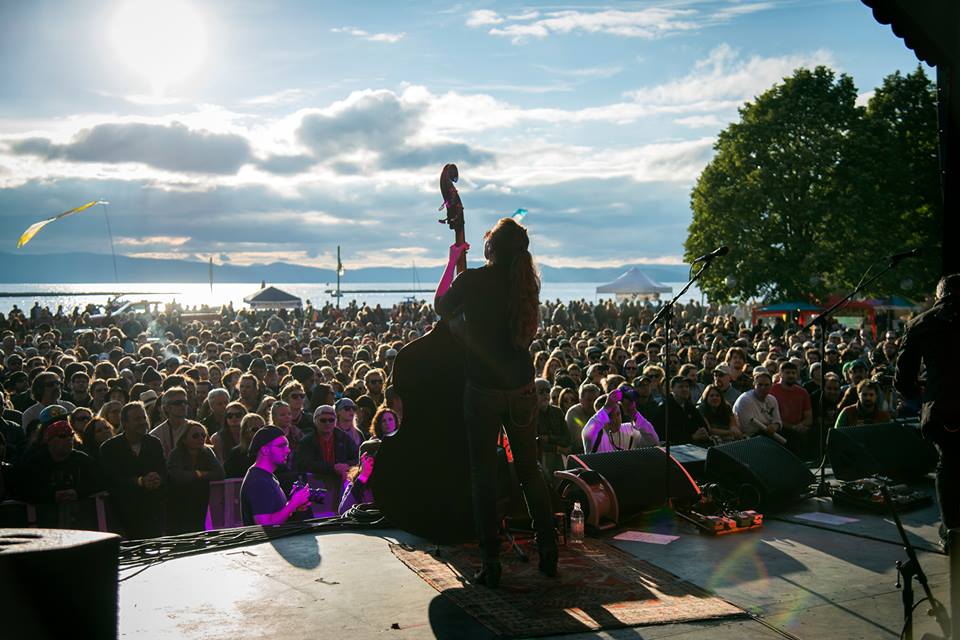
It’s the same model of audience engagement and participation that Potter brought to the table in 2011 when she launched her own festival, Grand Point North. Taking place at Burlington’s Waterfront Park in her home state of Vermont, Grand Point North was a long time coming. “I've always dreamt of starting my own music festival,” she says. “My sister and I used to sit around and draw pictures of what we thought it would look like when we were kids.”

No stranger to the festival circuit, Potter’s made the rounds for the better part of 10 years, lending a veteran perspective. “I think I have a platform and I have an individual voice. And I've seen so many music festivals: I've seen the good, the bad, and the ugly,” she says. “So I can potentially advise on this and create a really cool situation — even if it's just one weekend a year — that would be powerful for people.”

For Potter, the festival is a way to embrace social awareness. She describes how her childhood growing up in Waitsfield, Vermont, inspired her vision. “There were farmers' markets every weekend and we could go out. You'd see Phish concerts and, even as a young kid, I felt safe in those environments. I didn't feel like it was like a scene that I was wandering into the middle of,” she reminisces. “It's this feeling of 'I've arrived; I'm with my people. This is my tribe.'”

For this year’s event, Potter and her sister reached out to Vermont’s Governor’s Institute on the Arts in order to identify area youth that may be interested in getting involved. And it was through the Institute that she connected with another tribe. “We tapped into the Abenaki tribe which is actually the indigenous tribe to the Winooski River in Vermont,” Potter explains. “So we’ve been in touch with the tribe itself and we’re gonna record a woman telling the story of the land and describing the relationship between the land, the people, and the lake of Lake Champlain where the festival takes place.”

Fostering relationships and championing a region’s natural elements are key to developing the special quality that’s unique to smaller, grassroots festivals. Even FloydFest’s theme this year — “A Tribe Called FloydFest” — was accompanied by the mantra: “Find your tribe, y’all. And love them hard.”

“Our intention is definitely providing a heart space for people to enjoy each other in a diverse setting that is healthy and supportive,” FloydFest’s Kris Hodges says. “And as a rock 'n' roller, of course, you know, we wanna share that with as many people as possible.”


Photos courtesy of FloydFest and Grand Point North

Chris Thile Makes ‘Prairie Home’ Host Debut

In mid-2015, it was announced that Chris Thile would take over A Prairie Home Companion, filling the shoes of longtime host Garrison Keillor, who is retiring. This weekend, listeners got their first taste of what a Thile-helmed Prairie Home would sound like, and, well, it sounds pretty good.

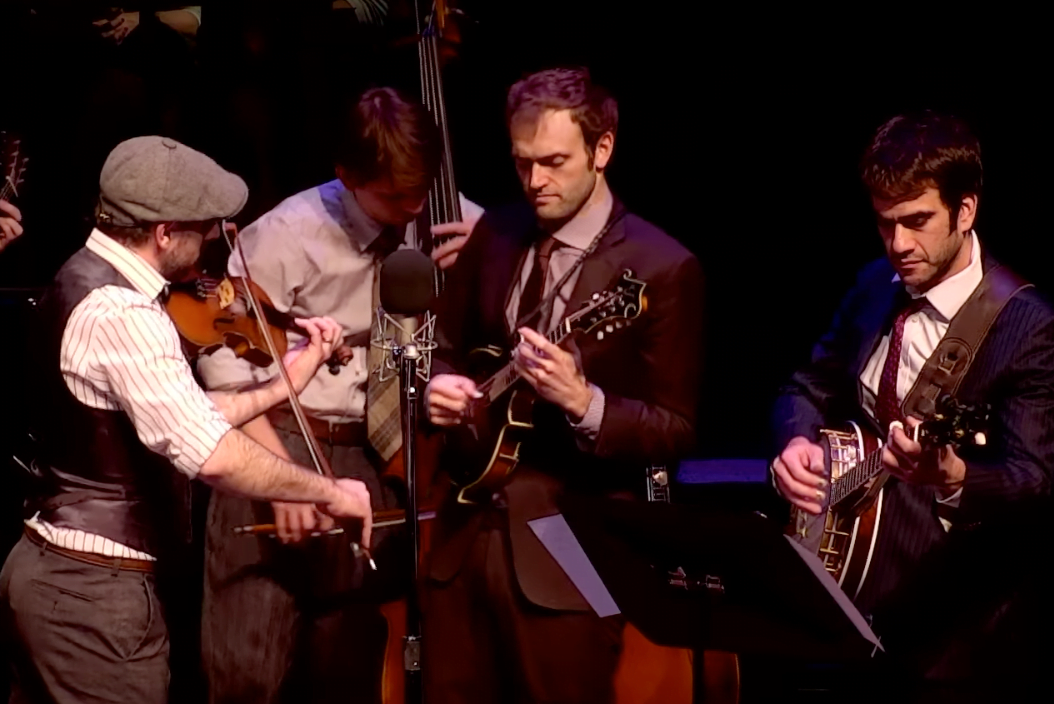
An all-star lineup of guests included Thile's Punch Brothers, Brandi Carlile, Sarah Jarosz, Ben Folds, and our own Ed Helms, who joined Thile for a conversation about crickets, among other things. A music-heavy evening, listeners and audience members were treated to tunes like "Magnet" from the Punch Brothers, "The Eye" from Carlile, and "Yes Man" from Folds, the last of which featured Thile and his bandmates. 

Thile also performed the never-before-heard tune "The Mississippi Is Frozen" with a little help from Jarosz. He plans to reveal a number of new songs over the course of his hosting gig.

While there have been questions about whether or not Thile can fill the giant shoes left by Keillor, this first broadcast should do much to ease those concerns. And, for you purists out there, Keillor will resume hosting A Prairie Home Companion on February 13 before completely retiring from the gig and passing the torch to Thile this Fall. Listen to this weekend's show and watch video clips here. Look for Paul Simon and Andrew Bird on next Saturday's broadcast.