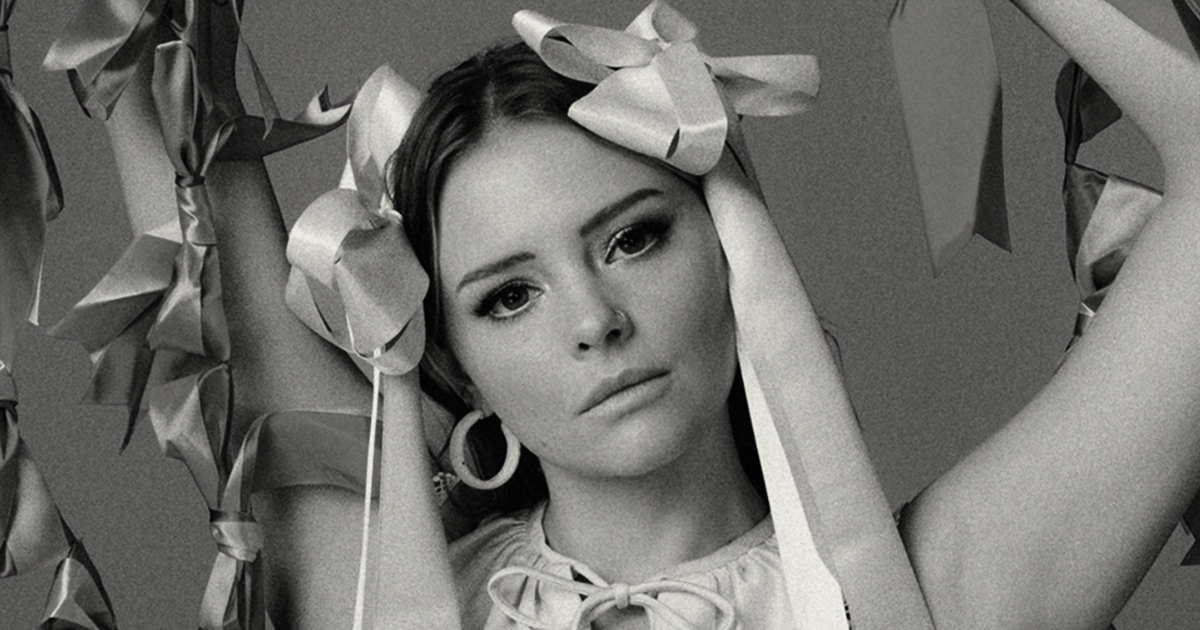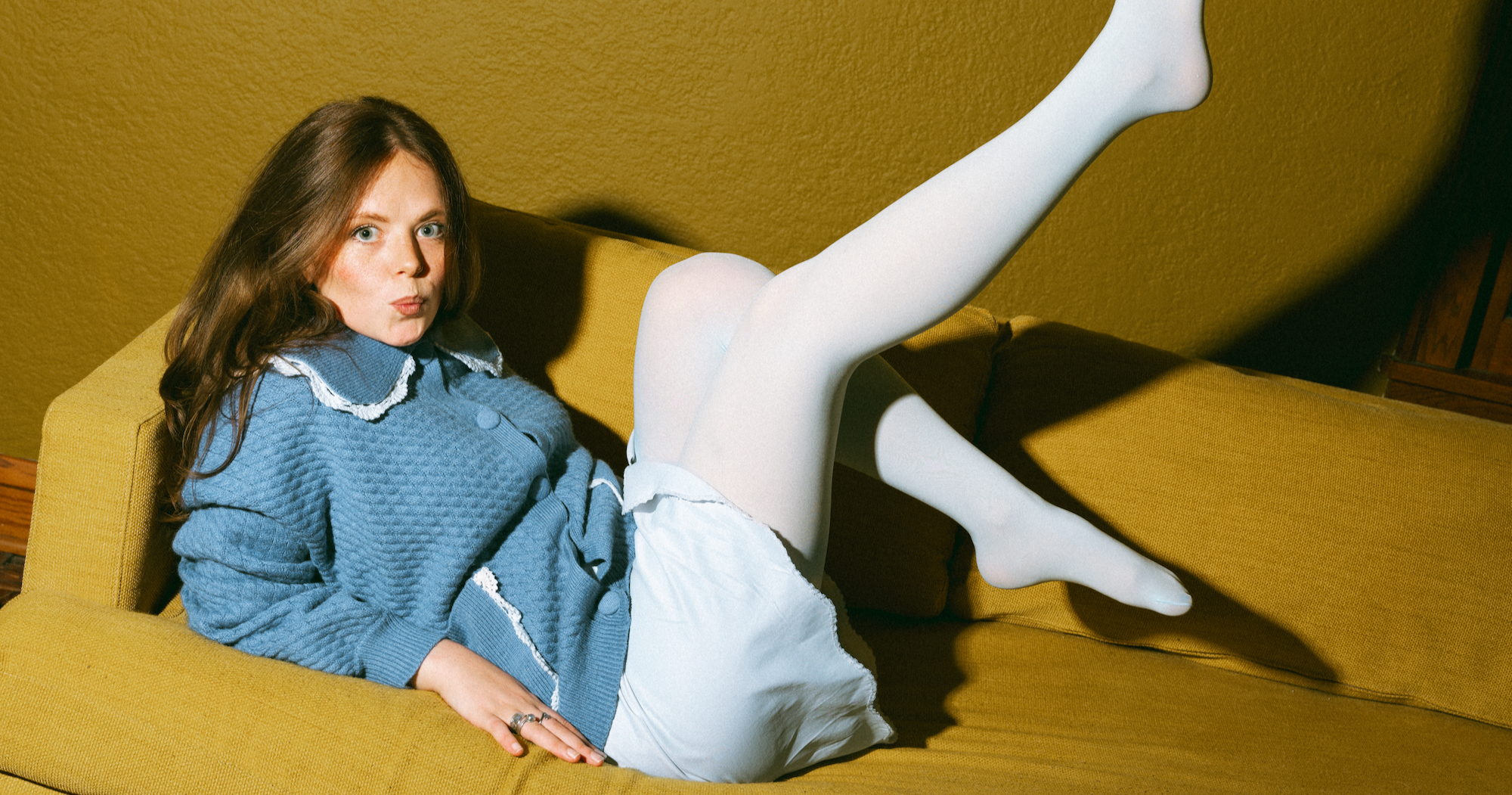
There’s an Edge to Abbie Callahan’s Sugary Country

There’s an effortless charm to singer-songwriter Abbie Callahan’s persona when you first encounter her via vertical video. Beautiful and whimsical makeup, adorable wardrobe, hyper-femininity, and a Gen Z polish to her social media presence are all complicated in the most fascinating ways by her music itself. Landing somewhere in between witty and incisive pop country like Kacey Musgraves and gritty, train-hopping Americana such as Sierra Ferrell, you’d be well served not to make assumptions – or to sell Callahan’s songs short based on appearances.

This is not a book you can accurately judge by its cover. Callahan’s songs will reel you in with her sharp, impactful vocals, her deft wordplay and solid hooks, and a wink and sly smile around every lyrical corner. Tracks like “Simon Says” will have your head bobbing before you even realize the devastation and trauma woven through the lyrics. A new, as-yet-unreleased number, “OptiMystic” – debuted, as Callahan tracks often are, on TikTok – lays out her worldview pretty tidily:

I’ve been known to be a little easy on a Saturday
Known to smoke a cigarette and throw up in the alleyway
Checked off greed and lust in a church pew
Had confession in the Red Door bathroom

Who can really say where you can talk to Jesus anyway?
Anyway…

If you were to engage with and enjoy Callahan’s music without any deeper inspection, you’d still come away with plenty. But the real appeal here is that the sweet, sugary veneer on these songs is only to bring you in. It’s the tinges of bitterness, the tannins, the “something much deeper going on below the surface” that will bring you back again and again. However you zoom out or zoom in on Callahan, her lyrics, her process, and the way she brings her songs directly to her listeners there’s subversion, a deliberate and inspired flouting of expectations.

@iamabbiecallahanWho can really say where you can talk to Jesus anyway… anyway🧚🏼‍♀️🔮♬ OptiMYSTIC – Abbie Callahan

Callahan is intentionally leveraging the way she’s perceived outwardly and visually to “Trojan horse” her way of making music into a country industry that’s often loath to platform artists like her, who build fandoms and idiosyncratic styles on hyper-femininity without apology. Like Dolly, Loretta, Kacey, and so many others who’ve come before her in that age-old country tradition, Abbie Callahan is onto something.

We caught up after a gentle spring rain in Napa Valley, as Good Country attended Live in the Vineyard Goes Country and caught Callahan performing as part of the event. Finding ourselves in such a stunning location, we began our interview chatting about country’s relationship to place and how well-suited this music is to the many settings it finds itself in.

I wanted to start by asking you about country’s relationship with place. Country music is always about place – rural places, urban places; farms and ranches; California, Tennessee, Iowa. We’re at Live in the Vineyard Goes Country here in Napa, so I’m thinking about country and place, and I wonder if you think about country’s relationship to place – and about how this music is so appropriate for so many different contexts, whether you’re in Napa or playing a honky-tonk or a festival. How do you think about country’s relationship to place and to land? It’s interesting to be here in a place like this with everybody sharing a few days in such a beautiful setting.

Abbie Callahan: That’s a great question. Usually I think about it in context of place in genre. It kind of is the same thing to me. My music with a band or just with guitar, I can make it fit into whatever genre I want – I feel like that in place, too.

But here [in Napa] it’s spring and the flowers are everywhere, it feels like they are one and the same. Especially my last project, Grossly Aware, with all the flowers – and we have the garden [right beside us] and all that. It feels like this is the perfect spot for me to be.

Two weeks ago we were back where I’m from in Iowa. It was gloomy and rainy and we were playing a bunch of the new stuff. It was, I don’t know, probably a little bit out of place, ’cause it was all fun disco [music]. But maybe it added to [the impact], because it was so gloomy and getting rained out. I don’t know how [my music] relates to place, but I feel like I can make it whatever I want, which is kind of nice. Kind of fits anywhere.

Well, being in California for this interview makes me wanna talk about “Strawberry, California.”

We went there yesterday! We drove through it. It was my first time actually there. We went over the Golden Gate Bridge and I was– I’m from Iowa, so I’m from like, not much. [Laughs] So it’s cool that music can bring you somewhere and you get to see all the things. I don’t think I would’ve been able to see the Golden Gate Bridge and come to California [without music]. Or be in Napa for country music. Napa’s outside of my tax bracket, so it’s nice to be here. [Laughs]

One of the things I noticed when I was listening to “Strawberry, California” to get in the mood for us talking in California is the banjo playing. I love that the banjo is playing the melody along with your voice. And I love that you evoke bluegrass in your music so often. Could you talk a little bit about that song and having banjo in it, and about the bluegrass touchpoints across your catalog?

I was in a rock band that played in downtown Nashville. That’s how I paid for college. I was playing ‘90s grunge, so I’d go home and I want to listen to the opposite. That’s how I found bluegrass – just how simple and deep everything is. It’s different than how I write and talk. It’s so concise and wrapped up so well that I just envy it, in a way. I love listening to it, ’cause I feel like I can learn a lot. But then my setup, my band when I play, is a bluegrass setup. It’s upright bass, me, guitar, fiddle, another guitar. We just added drums, which is a big step.

But that’s when I started listening to bluegrass, ’cause it was like a palate cleanser. I don’t listen to a lot of modern country, because that’s the space I’m in. When I listen to it too much, I feel fatigued from it all. So bluegrass is a nice outlet. It just feels refreshing to listen to. I wasn’t raised on it or anything, so I feel a little bit like an impostor, but I love it so much.

Charlie Worsham played banjo on “Strawberry, California.” He played throughout the whole record, Grossly Aware, on guitar and banjo. “Strawberry, California,” it was tricky to get it right with a band, because of the time changes and how intricate the guitar is. But I pulled it up for him in the studio, he listened to it once, and he was like, “Wow, this is tough.” Listened to it twice, and then had it perfectly. I was like, “What in the world?!” He’s a freak. So good.

I really enjoyed listening to it. And then I also have been listening to your new single, “Drag, Queen.” I love it in so many ways.

It’s a little controversial.

Of course, it’s a little controversial, but also it’s 2026. They can catch up or we don’t need them. [Laughs] I love that, again, you’re subverting expectations. And again, it’s traditional modern country with that big hook, the wordplay is great. The sort of wink and a smile about it. But also I love that it sounds so bluegrassy.

Yeah, it’s the grassiest song I’ll be putting out this year. It’s super grassy. It’s so fun to play live. I played it on tour with Carter Faith this spring. Her audience was so perfect for it, ’cause they love weed and they are awesome. [Laughs] I played it on tour with her and it was probably my favorite song in my set.

I wrote that song last year – last June – and I posted it right away and it’s just been my favorite. I think it’s silly, but it has a lot of layers to it. I had a song, “Marry Jane,” blow up on TikTok. It was my first thing that ever did anything on TikTok, so I got hate for the first time. Which is always an interesting experience. It was all like balding, middle-aged old men being like, “Is this a song about a lesbian or a song about weed??” And I was like, “It’s about both, duh.” [Laughs]

Have you ever heard of an entendre? Yeah, no, you haven’t.

Double it. [Laughs]

[Laughs]

Anyway, it was so funny. But that’s why I wrote it. I was like, “They’ll hate this.”

@iamabbiecallahan Wrote this one yestersay, Marry Jane💌🍃 #maryjane #singersongwriter #nashville ♬ original sound – Abbie Callahan

I also wanted to ask you – femininity and hyper-femininity in country are also traditions. The performance of femininity by folks like Dolly Parton and Loretta Lynn all the way to k.d. lang. I love the way that you inhabit femininity and it’s so clear that you do not feel like it’s a burden, or that it weighs you down, or that it’s something that you could be penalized for. But I wonder how you feel like it’s received – especially on social media, like you mention, TikTok. Do you ever feel like you’re penalized for your femininity?

You know, I think as we’re starting to talk to labels and all that, yeah. I think if I was a man with this amount of monthly listeners and success so far, I would have a deal already. In that way, it’s definitely hindering, but it’s not gonna stop me from anything. I will have more leverage in two years, and that’s fine. [Laughs] But whatever. But because it’s so raw and real and feminine, I feel like my audience is all girls. It’s been really nice. I feel like I can be myself, say whatever I want, and I don’t have to worry about it. [I can] dress however I want – and dress strange – and be something to look at and not just, like, pretty, you know?

And the girls get it. I love it. I don’t think it’s a bad thing at all. It’s what I prefer. …

Another song that really jumped out at me is “Simon Says.”

The production of it started with just me in my room on guitar on TikTok, and then people were like, “I need a full strings version of this. I need a banjo version of this. I need a pop version,” all these different things. When we recorded it for the first time the demo had a synth on it, which is the banjo part. That’s how it started. I knew that wasn’t how it was gonna end, but it was like in demo jail for a year and a half. And I was like, “It has to have that element,” and then it just worked out for the banjo.

I did have a question about TikTok, so it’s interesting to hear you talk about how you’re in the comment section, you’re seeing what people say. It’s interesting to me that you’re responding in your creative process as well. Like what you just said about “Simon Says.” You’re listening to the fans being like, “I need this, I need that.”

If they want an acoustic version I’m like, “If you’ll stream it, I’ll do it.” Without a label right now, that’s been amazing. Something will blow up and in a month and a half or two months later we can have it out. You can’t replace that. It’s been really nice.

How do you feel when you’ve done a bunch of reps of a song, or when you’ve taken it from TikTok, to demo, to recording, to bringing it to an audience – do you feel like the song changes meaning? Do you feel like “Simon Says,” for instance, will always have that tinge of sadness and trauma to you? Or do you feel like the audience takes it, it changes, and then you get up on stage and you don’t feel that anymore? Or does that feeling always stay with you? ‘Cause as a songwriter myself, I feel like I re-traumatize myself every single time I play one of my songs. Is that how it feels to you with a song like that?

I have to write about what I live. I can’t just write to write. I have to put myself through stuff. It’s whatever – “tortured artist,” you know. Every line in there is real, so it’s definitely re-traumatizing.

But I guess it was my first tour, my first time singing it on stage, I was thinking about the writing of it a lot. ‘Cause it’s something so magical, that three people are in a room – or two people or just me – and then now I’m in front of 1,000 people and some of them know the songs. I don’t know, something about that is so special. I wish my co-writers were there to see it. It’s such an intimate thing.

There’s a little bit of a healing moment there.

Totally. It kinda changed what I was thinking about, especially with “Simon” and a lot of the next project. All of it’s co-written, which is different for me. I was just thinking about the people that made it all come to life. When we were in the studio, little ideas that people had. It’s so cool.

So it’s like, less sad now. I guess it depends on the situation. If it’s me on TikTok, I’m getting into the sad headspace. But in person I’m like, “Oh my gosh, this is so fun. My favorite people helped get me here.” I’m like singing “Simon Says” with a pep in my step. Like, what is going on?! [Laughs]


Want more Good Country? Sign up to receive our monthly email newsletter – and much more music! – direct to your inbox.

Photo Credit: Catherine Powell

Ber Is No Longer Hiding Her Folk Elements

When you think of common musical touchpoints for young roots artists, the Shrek movies’ soundtracks likely don’t come to mind. But those compilations, beginning with the first film in 2001 and continuing through a handful of sequels in the aughts and ‘10s, feature an impressive if surprising roster of artists, including Rufus Wainwright, Tom Waits, Frou Frou, and David Bowie.

Quickly rising singer-songwriter Ber laughs as she reveals her penchant for those soundtracks, but her affection is sincere. On the Minnesota-born artist’s first full-length album – the newly released Good, Like It Should Be – she turns that winking sincerity inward, writing a dozen songs about opening up to love despite the real risk of heartbreak.

Ber wrote and recorded the bulk of the LP with close friends and collaborators Rob Milton, Austin Ward Sherman, and Bradley Hale, who joined her on a writing trip to Pepin, Wisconsin, and helped deepen both the record’s narrative vulnerability as well as its sonic range. The resulting songs are self-assured and lived-in, with an emphasis on melody and emotional tension that lets her agile, nuanced vocal shine.

Below, BGS catches up with Ber the day before Good, Like It Should Be releases, chatting about songwriting, a-ha moments and, yes, everyone’s favorite big green ogre.

Tomorrow – or in just a few hours, really – you’ll release your new album, Good, Like It Should Be. What are you feeling in this last stretch as you get ready for folks to listen to the project in its entirety?

Ber: It’s a little crazy. I think it’s actually out in Australia already. Maybe this slow burn of me realizing, all day, that it’s just gradually coming out will make it a little less overwhelming. But I would say overwhelming is the default nature of the last month. Coming up to this April 3 date has been challenging but also really exciting, and something I’ve tried to accept and just be really happy about, because it’s really crazy to be putting a whole album out. It feels really, really wild. I’ve never done that before. It’s new territory. We’ve been rolling out singles for six months, and I’ve been listening to the whole album for like a year, so really it’s not going to hit me that other people haven’t sat with it yet until tonight. I’ve been crying a lot, mostly happy tears. But it’s definitely a little bit of a release, emotionally, too. So, it’s a weird one to have to process.

To your point about living with this music for so long, do you feel like your relationship to the music has shifted in that time? Has any new meaning or insight been revealed to you?

It feels really solid. I don’t think it’s shifted so much outside of maybe me reaching for songs for the month of November, and then kind of getting sick of that one so then going for another one. I think I’ve sat with all of it in different ways. I haven’t been doing loads of writing in this period of releasing the album, so this is really the stuff that exists for me right now. And it is where I am still, which I think is really fun. We were pretty careful about choosing what the singles would be, so that there was still some magic in the unreleased tracks that people could hopefully discover when the whole album came out.

Let’s talk about the early days of the record. As you mentioned, this is your first full-length album. Did you originally set out to write a full LP?

Definitely. When I decided that it was going to be an album, there was a moment where I shocked myself that I even felt capable of that. But we definitely were like, “Okay, this is going to be a full-length record. We’re going to do 12 songs.” It was pretty concise in the planning that way, but I didn’t realize I was writing it at the time. The first songs from the album were just moments where I was pulling from things and writing for fun. I hadn’t really signed up to the task yet, so I think that’s really fun.

The first song that was written for the album is called “Smooth Ride.” I wrote that in my second EP cycle, in 2021 or 2022, with Rob Milton and Benjamin Francis Leftwich, who are just great. It was the first day we had all met and it was the first day I met Rob, who since then has been this really sturdy and really inspiring collaborator. We wrote that song and I didn’t like it then, so it got tabled. It’s something we revisited last summer, and I was like, “Oh, it lives on the album. It’s here. It’s time. I wasn’t ready for this yet, but now I am, and I love it now.” It’s one of my favorites…

The rest of it all came in a window of eight months of really intentional writing towards the album and trying things with different people, being in London or going back to Minnesota, going on this writing trip with my friends Brad and Austin [Ward Sherman] to this Airbnb in Pepin, Wisconsin. We wrote eight songs in three days and five of them shaped what the album ended up sounding like and feeling like and being about. It was the glue for all these other songs that I’d been working on in my own time with Brad. So, it was really like a puzzle to piece it all together and to choose the track list. There were probably 50 songs that we whittled down to 12.

To write eight songs in three days, you must have a special creative relationship with those friends. Do you know what it is about your working relationship that makes it so fruitful?

I just trust them implicitly. They both know so much about me and I think that trip really cemented our relationship as a collaborative team. We had been working together for a few years at this point, but Brad, who produced the record, is one of my dearest friends… It’s a really specific thing to be able to sit in the studio with someone and just make eye contact and go, “So that’s what this is.” Or, “Oh no, that’s not what you’re trying to say.” He could call my bluffs a lot and tell me to chase something, and I could follow that direction, because I trust him and I love him.

Then bringing Austin into that, too, was so fun, because he’s brilliant and he suggests things that I would never in a million years think of. He has a very band-y sensibility about his production and his vision for music and I really loved that… When you do a writing session with someone, you basically spill your guts for a few hours. You have to be really honest with yourself and with the people around you, otherwise the thing you make is gonna sound like trash. With the album, I really wanted to make something that felt true to where I was at the moment, and I was falling in love. I had to be really vulnerable with them about the things I was feeling and the way I would possibly describe it.

It is indeed a very personal record, so it makes sense to hear you are so close with your collaborators. When you write songs grounded in your own experience, do you end up understanding yourself or your place in those experiences better?

Absolutely. It’s a point of reflection for me, often. I used to journal a lot. I’ve been doing that a little bit less recently, which is something I want to pick back up. But when we were writing these songs, regardless of what we would walk into the room with, as you’re writing about it and sitting there with music around you, you’re thinking about how it actually feels. You’re putting down words onto paper and it is a very telling experience, because you find stuff and you write words in an order and it moves you, and you go, “Oh, my God. I didn’t even think that I felt this way about that.”

“Good, Like It Should Be,” I cried after writing that song. We all did. I’m tearing up thinking about that moment. That song was about getting out of your own way and letting something just be good, because it is good and you don’t have to question everything being good. At that point, I don’t think I even realized that I was suppressing so much.

There’s a line in there that’s like, “I know it’s a choice, I can be sturdy/ Let it be good, good, like it should be.” And I was like, “Oh, wow, that explained it to me. Actually, this new love, this letting something be good, this is actually a decision for me. Not only is it natural, but I have to also accept it and come to terms with this.” It was such a big moment that was like a light bulb for the entire album, and for what I had been writing about for a year at this point. Writing these songs revealed pieces of me that I didn’t really know were in there, and that’s such a treat. It’s exhausting emotionally, but in the good type of way where you feel like you walk out of it learning something new about yourself. It’s like tarot, getting you toward those subconscious things that need to come up.

The production is so lush and intricate, and really gives a fullness of emotion to the lyrics you wrote. Could you hear a fleshed-out version of a song in your head as you were writing it, or did they find that fullness in the studio?

Probably both in different situations. I’m so pleased with the production. It was really fun to sit with Brad and to sit with Rob, and not only watch them create magic but also be able to listen to it and partake and play these instruments. We played all of the guitars. I got to play tambourine on a lot of stuff. Brad took it upon himself to teach me how to engineer a little bit while he was recording all the drums in our basement, which was really fun. And it gave me the itch to get into more production.

But yeah, when we wrote them, there were some songs that just had to be the way they are. “Forget Me Not” was like, “Okay, we should essentially just do a demo. This is so touching and beautiful.” When we did that writing trip, we just brought this one Korg eight-track recorder and that was all we were allowed to use. So, we did a lot of in-the-room recordings of the six songs that ended up on the album from that trip. “Hey, Bluebird” and “Give It All Away” both have samples from those demo recordings in the final product. We wanted to hold on to the energy…

With other songs that are a little bit more produced, like “Cool, Boy,” I did that one with Rob and he had just gotten off of vacation. He was like, “I am only listening to Clairo and I absolutely love the beach, and I think we should do something beachy and flirty and fun.” And I was like, “Bet, that sounds cool. Let’s just see what’s up.”

In addition to Clairo, what were you listening to or feeling inspired by while you were making the record?

You might laugh, but I pretty much exclusively listened to the Shrek soundtrack. It’s brilliant. There’s just bangers on there. “I Need a Hero,” the Frou Frou version, is amazing. We were referencing Counting Crows. I also am a massive Kacey Musgraves fan. I grew up on Mumford & Sons, and the Decemberists, and Kings of Convenience, and some really rootsy stuff my parents turned me onto.

For a long time, at the start of me writing songs on my laptop and posting them and putting EPs out, I was really hiding from this folk element that I knew I had in me. But I wasn’t ready to touch it yet. I decided with the album we’d just really dive deep and let it be good. It’s some of the stuff I resonate with the most. But yeah, Clairo has been a huge indie inspiration. I love everything she does. And, again, it was Shrek that really did it.

You spent a lot of time figuring out the record’s sequence. How did you eventually settle on a final track list?

There were, like, 40 iterations of the track listing. It was the bane of my existence for a long time. And I actually really credit my manager for putting up with me for that window of time. Honestly, I love where it landed, but it was never my first choice. All I knew was that I wanted to sandwich the entire album between “Good, Real” and “Good, Like It Should Be,” that was my non-negotiable. So, it was like a deck of cards, sort of feeling it out.

I know a lot of people like to try and tell a story through the songs, but as I was listening to them, the story was just me. These are all things I felt and there wasn’t necessarily an order or a rhyme or a reason to it other than I made them. I would be remiss to say it was purely artistic.

My team was pretty heavy on the idea of most of the singles landing on side A of the record. And I hated that. I was so angry at the time, because what do you mean we’re gonna prioritize how an album feels on a streaming platform, of all things? It genuinely drove me over the edge for the longest time. But then I got to this point where I was like, “Maybe it’s not that deep.” … I wanted to have the journey of listening to the album feel like you land somewhere at the end, and it’s like a soft pillow. I think with where it’s landed, that’s the experience I at least have. You get to boogie a little bit in the first few and then I slowly go through the motions.

You’ve already been out playing shows around the record and you have more dates coming up later this month. What are you enjoying and looking forward to most about playing this new music?

These songs are where I feel I resonate the most at the minute anyway, so what a treat to be able to push these and to sit in them and sing them for people. I love my first three EPs and I have a lot of empathy for the girl who wrote them. I love those songs and how far they’ve reached people, and I definitely will never just let them go, but I think it’s going to be so special to be able to sit down and sing most of these songs at, like, First Avenue in Minneapolis. I’ll probably cry so much that day.

I’ve been testing the waters on these last two tours. I’ve been so lucky to fill the first quarter of my year with touring with SYML in the EU and then touring now with Callum Scott on the West Coast in America. It’s given me the opportunity to sing acoustic versions and the response I’ve gotten has been amazing… It’s really wild, I think artists are constantly releasing and performing behind themselves, in the sense that you grow so much in the time that it takes to put out an album. So often, that album and that album cycle exists in a year or two years before the person you are when you’re actually performing them and talking about it to people. But in this moment, it feels true to me and it feels really exciting to talk about still. It’s very cathartic.


Photo Credit: Tom Thornton

Country Ain’t a Man’s World

Editor’s Note: Each issue of Good Country, our co-founder Ed Helms will share a handful of good country artists, albums, and songs direct from his own earphones in Ed’s Picks.

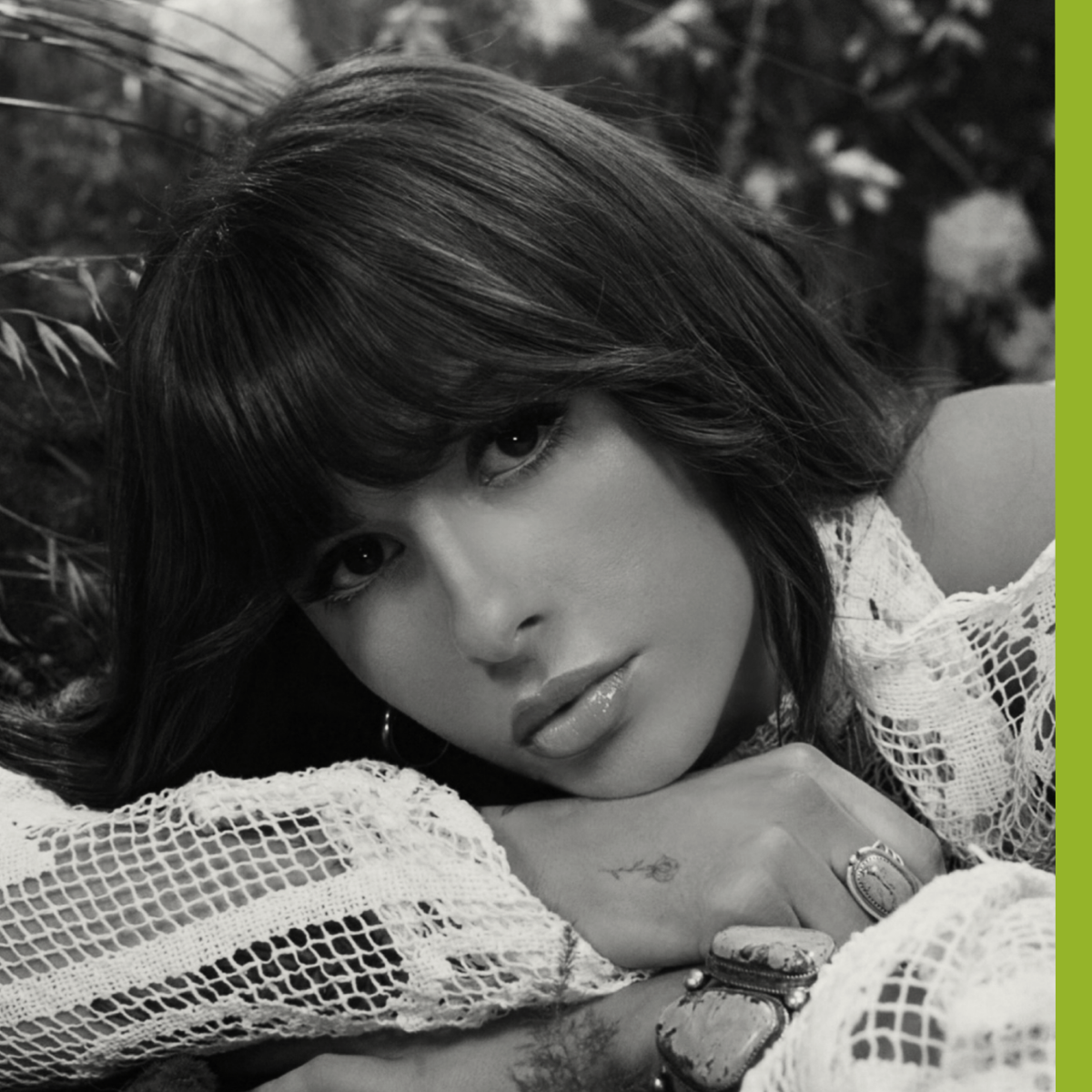
Cat Clyde
Cat Clyde

We loved Cat Clyde’s 2023 release, Down Rounder, and on her brand new album Mud Blood Bone the Canadian singer-songwriter turns the dial a few more clicks toward alt-country, indie, and rockabilly. There’s a raw, gritty quality to the collection that’s remarkably refined for how unhinged it lands – and very country, too.


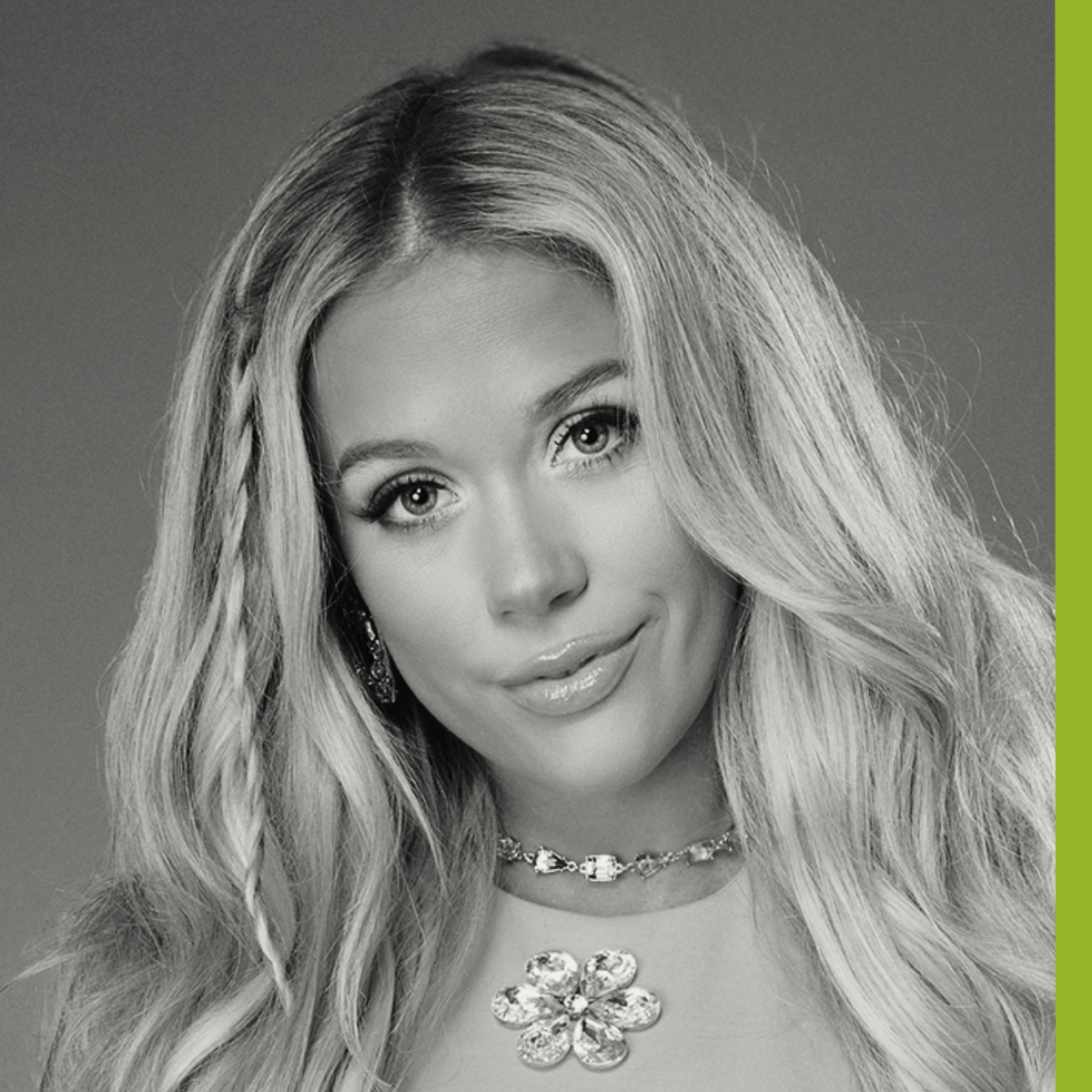
Ella Langley
Ella Langley

Ella Langley’s megalith hit, “Choosin’ Texas,” has brought her to the top of the charts, but we’re zooming in on a new single she just released a little over a month ago. “Be Her,” one of four tracks unveiled so far from her upcoming April release, Dandelion, might end up being the best mainstream country song of the year. Delightfully coy, jealous, and longing, it’s a bop that’s as deep and thoughtful as it is fun.


Megan Moroney
Megan Moroney

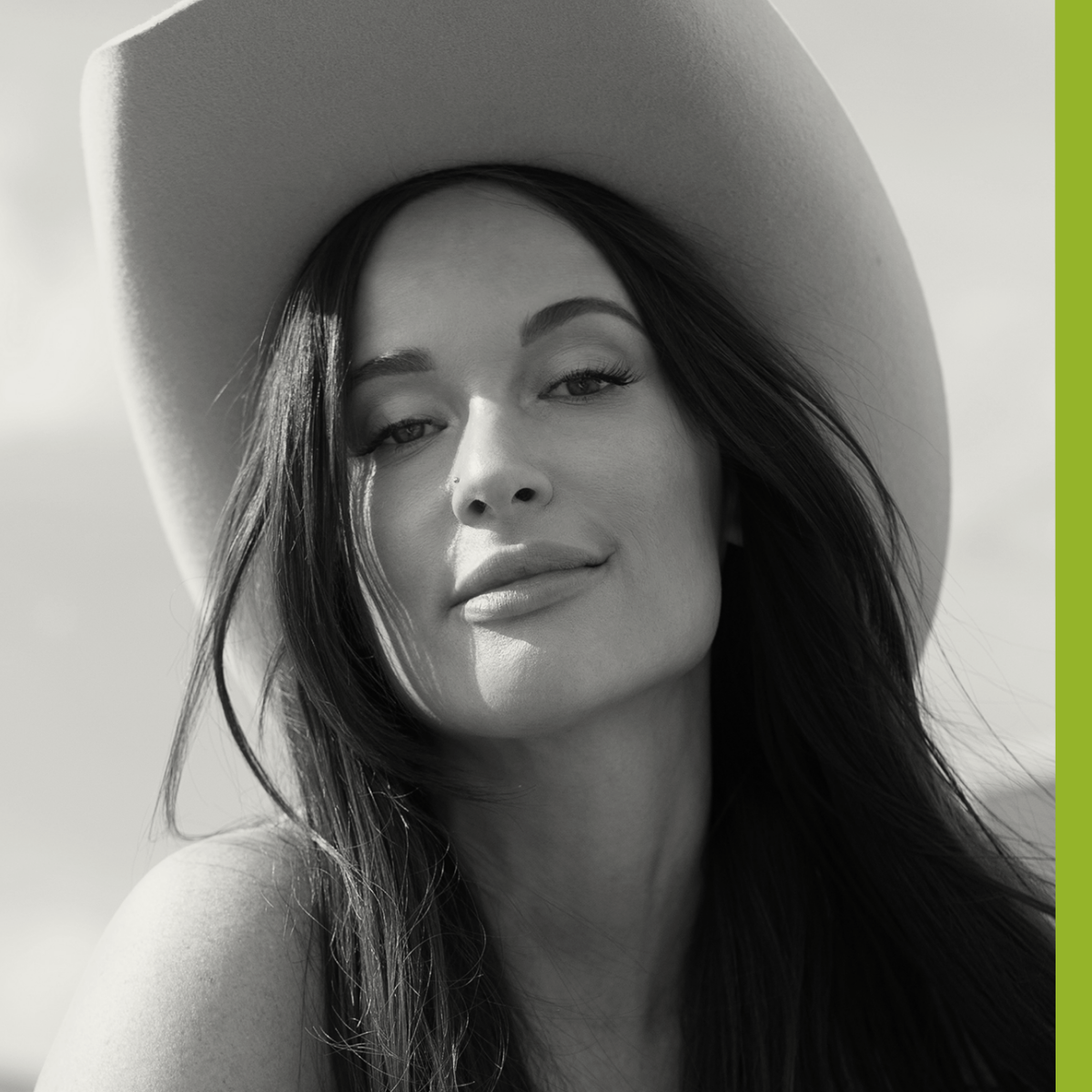
No one is making mainstream, crispy, hyper-stylized country like Megan Moroney. Her new album, Cloud 9, is certain to lift you up. With a lyric video showcasing beaches, palm trees, and Los Angeles sunshine, the title track perfectly illustrates how Moroney combines pop and twang, city and rural into a country style all her own. Right at home on Top 40 radio, but certainly Good Country, too.


Kacey Musgraves
Kacey Musgraves

Kacey Musgraves ended her post-Deeper Well dry spell with “Dry Spell,” a hilarious, catchy, and craveable song to bridge eras and albums. Her next LP, Middle of Nowhere (coming May 1), will expand the rat-race-opt-out universe Musgraves began building with Deeper Well. And we’re more than happy to see dashes of the wit and wordplay of Same Trailer, Different Park and Pageant Material infused in the lead single.


Tedeschi Trucks Band

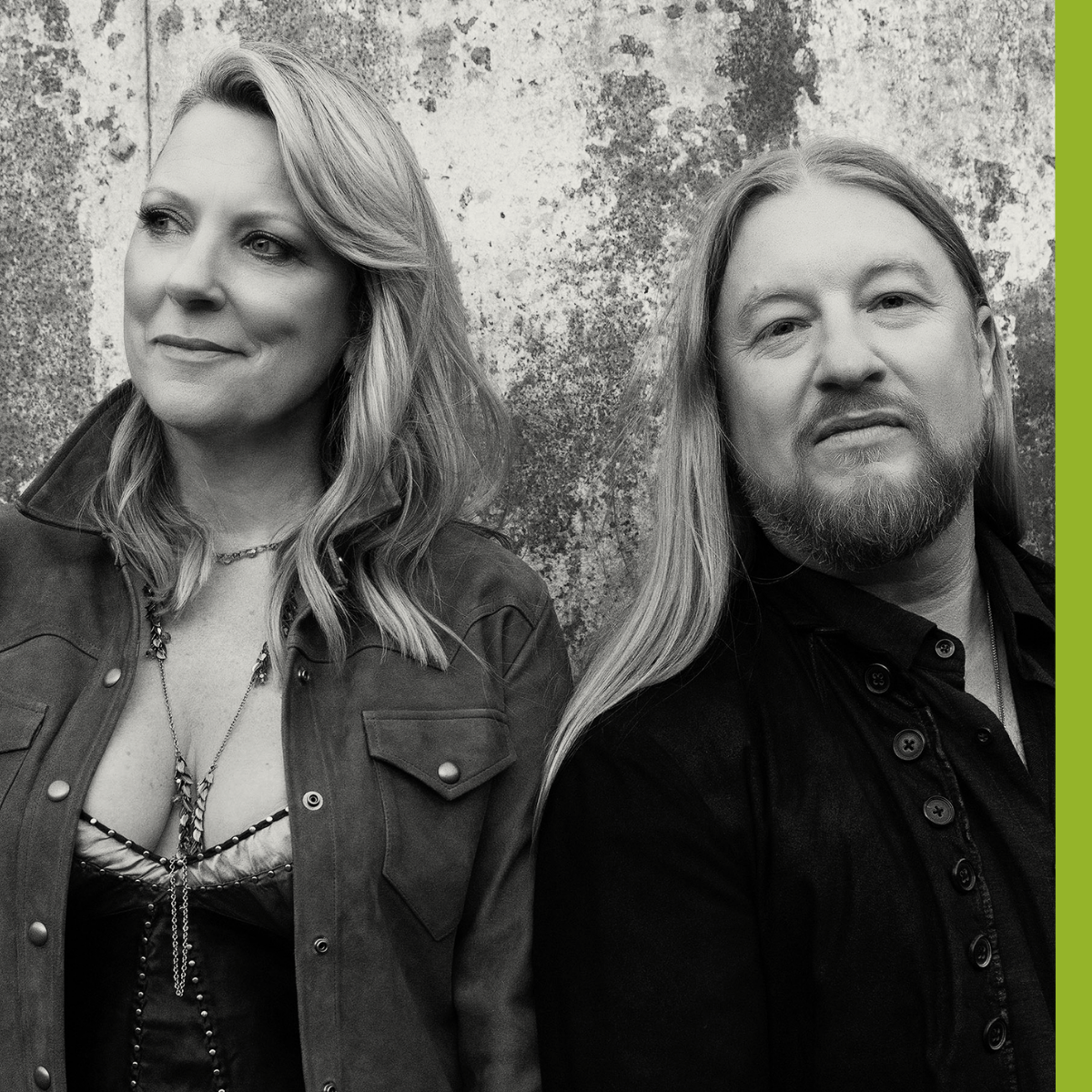
An Americana, Southern rock, and modern blues supergroup, Tedeschi Trucks Band’s 12-person ensemble returns with another no-misses album, Future Soul, released Friday. The project is strikingly diverse sonically and while it features some more genre exploration and subdued moments than you may expect from their stage shows, it’s still an absolute banger. The group kicked off their album release tour beginning a 10-show residency at the Beacon Theatre in New York City that runs through March 28 before they take the show on the road in the spring, summer, and beyond.


Want more Good Country? Sign up to receive our monthly email newsletter – and much more music! – direct to your inbox.

Photo Credits: Cat Clyde by Julio Assis; Ella Langley courtesy of the artist; Megan Moroney by Cece Dawson; Kacey Musgraves by Kelly Christine Sutton; Tedeschi Trucks Band by Chapman Baehler.

Welcome to Meels’ Critter Country

There are plenty of country subgenres out there, but quickly rising up-and-comer Meels has carved out a unique new niche. The California-born singer-songwriter calls her sound “critter country,” a fitting term for her playful but grounded brand of country-leaning roots music, which takes cues from folk of the ‘60s and ‘70s, traditional bluegrass, and classic country a la Loretta Lynn or Willie Nelson.

On her recently released new project, Across the Raccoon Strait, Meels takes listeners on a colorful, far-reaching tour of critter country and in the process announces herself as a fresh, genuinely exciting new voice in the broader roots music ecosystem.

Folks are taking notice – Meels is one of the first handful of artists signed to the newly rebirthed Lost Highway Records, with a legacy of artists like Lucinda Williams, Lyle Lovett, and Johnny Cash, as well as another left-of-center singer-songwriter, Kacey Musgraves, who was announced as the first official signee when the label relaunched last year. Meels has shared stages with artists like Molly Tuttle and Old Crow Medicine Show, and will appear with Margo Price, Carter Faith, and Nitty Gritty Dirt Band this spring.

Below, BGS catches up with Meels about songwriting, “critter country” and signing to Lost Highway.

In the lead-up to releasing Across the Raccoon Strait you shared that this batch of music feels truest, holistically, to who you are as an artist. Can you elaborate on that? What do you think enabled you to express yourself so fully?

Meels: As a writer and a producer and a songwriter and a singer, I really trust my gut and just follow the wave. With these songs, it was just me doing that. A few summers ago, before I made the project, I dove deep into the country classics – like Loretta Lynn and Marty Robbins and Dolly Parton. I got super inspired, the floodgates opened, and I just started writing like crazy. I grew up on a lot of ‘60s and ‘70s folk and my uncle is actually a bluegrass musician. He gigged around town where he lives in upstate New York. So I was already introduced to that world, but I took a deep dive and felt really inspired. The project just kind of poured out of me.

Would it be fair to say you found some unexpected connection points or overlap in those genres – the bluegrass and folk you grew up with, then the classic country you dove into?

Oh, totally. I also was trying out my own take on all of these genres and, again, trusting my gut with production and with the songwriting, to find a space within the genres that felt right for me as an artist.

You describe your music as “critter country,” which I just love. And that seems to encompass more than just your sound, as you’ve developed this really strong visual aesthetic in your videos and artwork, too. How did the concept “critter country” first come to you?

That came naturally, too. I grew up surrounded by a ton of critters in the woods in Northern California and found myself using animals as metaphors for my life. I went to NYU for music, and I took a branding class. I remember all of my peers were coming up with all these cool names for their genre. The teacher was like, “Oh, come up with a name specific to your genre and who you are as an artist.” I was still figuring out who I was as an artist in college and when I was looking through my lyrics and finding all of these “critter” similarities, I was like, “You know what? Critter country, that has such a nice ring to it.”

Take me back to the early days of making Across the Raccoon Strait. Was there a moment or idea that kicked off the creative process for you?

I think it was probably “Out West.” That track, in itself, encompasses the whole idea of the EP. I wrote it in New York when I was still living there and I’d just decided that I was moving back to California, back to my roots. I was just so excited about the idea of moving back out to the West Coast that the song came ripping out of me in my New York apartment. So that was a catalyst for me. I wrote most of these songs – that are about California and about home, actually – in New York when I was in a state of longing for home.

Did having that physical distance from your California home, and maybe the benefit of hindsight, help you write those songs?

I think so. My whole life, I have felt the most creative when I’m in California. New York is very overstimulating and there’s a lot going on all the time. I feel like, when I was living there, I was very much just absorbing everything that I could, but I wasn’t really writing so much until I was like, “Yeah, I’m gonna move back.” Then all of the sudden, I just started writing like crazy.

Something that stands out in your songwriting is how freely you use humor in your lyrics. You tackle some tough subjects, but never shy away from playfulness and to me it makes the stories feel more realistic, because in real life our experiences are often mixed bags. Are you consciously trying to inject some lightheartedness into your writing or does it just happen that way for you?

I don’t know. I do find myself making little jokes in my songs all the time. For example, in “The Wizard” I’m writing about a heavier topic: my struggles with OCD for my whole life. But I’m writing about it in a way that I’m not trying to hide anything. I’m just trying to put it in a way that’s maybe a little more digestible, and a little silly and a little funny, to help myself work through it a little more. And maybe to make it more digestible for my audience, too. Maybe I use humor as a way to cope.

“The Wizard” really does nail that balance of sharing something difficult and vulnerable while giving a little wink and nod to the listener.

I love a wink and a nod.

Speaking of that song, when you do get into vulnerable territory in your writing, do you ever feel fear or hesitation? And if you do, how do you engage with those voices?

To be honest, I feel like when I’m songwriting I’m at my most fearless. Since I was young, it’s been my way to put it all out on the table and not be afraid. I think me writing in these little critter metaphors, or using humor – maybe that’s my fear talking, I don’t know – but when I’m writing I just want to lay it all out on the table. It’s my one true release, so I try to do it without fear.

It sounds like you had a fantastic group of collaborators working with you in the studio. What was your time together like?

It was so wonderful. We recorded at a studio in Oakland called Tiny Telephone [owned by John Vanderslice]. They actually had old telephones that worked all over the studio. And they had everything you could want and more to play with and to get creative with. The space itself was incredible. We had an incredible engineer named Danielle, and she was also so important in the creative process, you know, running the vocal through this weird flanger and making moves that were so creative and so unique and so cool.

I also co-produced it with Peter [Groenwald] and Mark [Campbell], who made my first record with me, so that felt really comfortable and really safe. I knew nothing was off the table. I could bring up any idea, no matter how stupid I thought it was, and we would try it. Sometimes it worked, sometimes it didn’t. But we had such a good, natural flow in the studio. I brought a lot of friends, too, to play in the band, which was just really great.

You can hear the looseness and camaraderie in the music, in a way that I’d assume can’t be replicated without having close relationships with the players.

I’d always wanted to track a whole record live to tape. And we did that with Across the Raccoon Strait. We didn’t use any click [tracks]. It was just like, “Let’s get this next one tight, guys, let’s go.” We were all having a lot of fun with it.

When I’m in the studio, making music is such a collaborative thing. Even if it’s my song, every musician that I bring in is going to bring something unique. I really love to let them loose and let them rip. We can pull back where we want, but everybody in there plays an instrumental – no pun intended – role in making the music great.

This is also the first project you’ve done as one of the initial signees to the newly relaunched Lost Highway Records. How did you get hooked up with them and what does it mean to you to work with such an historic and impactful label?

This record has opened a lot of doors for me. I made it a little over a year ago and I was like, “I’m gonna quit my day job.” I was living with my grandma in Pasadena. She’s 86 and she’s so cool. “Marsha June” was actually written about her. So, I was basically like, “I’m just gonna give this thing a go.”

I sent this record around to literally anybody that would listen to it. I would send it to venues, because I’d just moved to LA. I was like, “Hey, I haven’t played a lot of LA gigs. Here’s my new record. You want to book me?” I was just kind of fearless about that, too. Some artists are so precious with the new stuff and don’t want to send it around. But I was sending these songs around before they were even mastered.

Eventually, I started working with a manager, I started working with an agent, and then I got a lawyer and did the whole thing. I talked to a lot of great labels, but when I met with Lost Highway I knew that it was the right direction. I’m so, so happy that I’m working with them. It really does feel like a family. It’s such a close-knit team and everybody really cares. … So many of my favorite artists have put music out through Lost Highway. Its legacy just runs so deep. I’m the hugest Johnny Cash fan in the world – and a Willie Nelson fan, and Lucinda Williams. It’s kind of absurd to me that my name could be looped in with all of those other names.


Photo Credit: Jim Hughes

Country Stars
Country Songwriters

While every country star knows how to tell a good story, it takes a particular strain of excellence to also be able to write one.

Songwriting is the gravitational center around which Good Country orbits. Lyrics that strike at the oceanic spread of human existence, chords that evoke its sprawling underbelly – the songwriter weaves both words and notes together, using each as a tool to explore the other.

Uniquely attuned to the value in lyrical narrative and authenticity, country music self-selects its fair share of multi-hyphenate talents who, beyond their performative prowess or instrumental skills, have a knack for setting pen to paper. From Willie Nelson to Kacey Musgraves, country carries an extensive lineage of talented songsmiths. The following collection merely scrapes the surface of the best country star songwriters. Unsurprisingly, this list is a tangled web with many superb songwriters covering, popularizing, and collaborating on one another’s songs in true communal country fashion.

Willie Nelson

With over 300 songwriting credits to his name, Willie Nelson is indubitably one of the most prolific songwriters of all time – not just in country. Having written his first poem at the age of six, Nelson has nearly nine decades of steadfast dedication to the craft under his belt. Patsy Cline’s 1961 recording of “Crazy” lifted his songwriting further into the limelight. His pen went on to produce such potency that it helped define an entire new subgenre in the ‘70s— “outlaw country.”

Prized for his rebellious and forthright lyrical attitude, Nelson values raw emotion over placative commercial appeal, ironically earning him one of the most successful careers in country history. Over the years, Nelson has delivered a seemingly endless stream of hits performed by both himself and countless other musical giants, including Loretta Lynn, Merle Haggard, and Dolly Parton, just to name a few.

Bobbie Gentry

Bobbie Gentry is the keeper of a robust legacy of composing and performing. Having written her first song at age 7, Gentry taught herself to play a slew of instruments throughout her youth. When she attended college at UCLA, she began performing her songs out at the occasional nightclub, signing to Capitol Records some years later as an aspiring songwriter. In 1967, Capitol Records released “Ode to Billie Joe,” a song that Gentry had written and recorded herself. Gentry told The Washington Post that despite wanting to write songs for other artists, she only sang “Ode to Billie Joe” herself because it was cheaper than hiring another singer.

Despite her previous obscurity and the song’s dark tenor, “Ode” crept up the charts, surpassing the likes of Aretha Franklin and The Doors until it eventually pushed “All You Need is Love” out of the No. 1 spot. This astronomical success marked only the beginning of an industrious career for Gentry; she would go on to write and perform several other smash hits in addition to becoming the first woman to host a variety show on the BBC. She would later produce, choreograph, and write the music for her own nightclub revue in Las Vegas prior to retiring from show business.

Roger Miller

The King of the Road had range! Roger Miller’s songwriting legacy entailed chart-topping hits he wrote and performed himself, such as (of course) “King of the Road,” “Dang Me,” and “England Swings,” in addition to many that he wrote for other artists, such as “Billy Bayou” for Jim Reeves and Ray Price’s “Invitation to the Blues.”

His imaginative impulse made him uniquely qualified for the projects he took on later in life, including writing the music and lyrics for several songs in the 1973  animated Disney film Robin Hood, in which he also voiced Alan-a-Dale, the film’s rooster narrator. His acting career was even furthered by another musical project – Miller wrote the entire score for Big River, a Broadway musical based on Mark Twain’s The Adventures of Huckleberry Finn. The musical premiered in 1985 and earned a total of seven Tony Awards, including Best Score. Miller even played the part of Pap (Huck Finn’s father) onstage for three months following the original cast member’s departure for Hollywood.

Kacey Musgraves

One of the most influential women in today’s country sphere, Kacey Musgraves has sculpted a name for herself for both her instrumental/vocal prowess and her impactful songwriting capabilities. Her solo catalog is chock-full of compelling songs that explore the “nuances of being a human, alive and experiencing consciousness,” as she told The Cut. The thoughtful universality of her songwriting has attracted a distinguished array of performers, with Musgraves contributing her skills to songs performed and recorded by Martina McBride, Miranda Lambert, and Deana Carter, among others.

Kris Kristofferson

This September marked a year since his passing, but Kris Kristofferson’s legacy continues to burn bright. His songs maintain a rugged, raw quality without sacrificing any of their vibrance. Though Kristofferson only landed one No. 1 hit on Billboard’s Hot Country Songs chart performing his own original material, his songs were platformed by many others featured on this list, including “Help Me Through the Night,” which Sammi Smith, Loretta Lynn and Willie Nelson recorded, and “For the Good Times,” a tune made famous by Ray Price that was later recorded by Dolly Parton, Merle Haggard, Willie Nelson, and more. Kristofferson also penned a fair number of tunes for The Highwaymen, the country supergroup composed of Waylon Jennings, Willie Nelson, Johnny Cash, and Kristofferson himself, including their titular hit, “Highwayman.”

Trisha Yearwood

Author, singer, chef, Food Network television show host – just when we thought Trisha Yearwood had done it all, her 16th studio album, The Mirror, arrived this past July to showcase yet another talent you may not know that she held all along: songwriting. In an interview with Billboard, Yearwood recounts that discouragement during her college years largely held her back from incorporating songwriting into her career over the past three-plus decades. “It made me think I wasn’t a songwriter and I just always downplayed it,” she says.

The Mirror boasts powerful co-writes with many songwriters who’ve contributed to Yearwood’s earlier albums, including Rebecca Lynn Howard (“I Don’t Paint Myself into Corners”) and Maia Sharp (“Standing Out in a Crowd”). Of homing in on her songwriting craft, Yearwood shares, “It was really something that clicked a couple of years ago. I started writing and it was really kind of therapeutic and really evolved naturally out of something I felt like I needed to do and I’m so happy with how it came out.”

Merle Haggard

Widely recognized as one of the most legendary singer-songwriters of the country canon, Merle Haggard was a staunch believer in writing from his own experiences – of which he had many worth writing about. After losing his father at age nine, Haggard wound up in all sorts of trouble, from several stints in juvenile detention to developing a strong hitchhiking and train hopping habit. His rambunctious tendencies followed him into adulthood and eventually landed him in prison after an attempted robbery and subsequent failed jailbreak.

In 1960, Haggard’s life changed forever upon attending a Johnny Cash concert while incarcerated at San Quentin State Prison, which deeply inspired him. Upon his release later that year, Haggard set out to forge his own country career, garnering unspeakable success. From “Workin’ Man’s Blues” (co-written with Roy Edward Burris) to “The Bottle Let Me Down,” many of Haggard’s songs have become perennial classics.

Jimmy Buffett

Of all the narrative-focused songwriters, Jimmy Buffet undoubtedly took the premise of “world-building” the most literally. “Margaritaville,” the hit song which Buffett claimed took him only six minutes to write, has a transcendent legacy. From hotels to casinos to Broadway musicals, Buffett’s profoundly popular songwriting grew an empire. Of course, “Margaritaville” was certainly neither the beginning nor the end of Buffett’s extensive songwriting career; having released 30 albums (8 of which are certified gold and 9 of which are certified platinum or multi-platinum by the RIAA), Buffett was credited on upwards of 350 songs over the course of his life.

Don Gibson

Responsible for the songwriting behind some of the most famous songs in country history, Shelby, North Carolina, native Don Gibson was such a force that he, in fact, penned two of his most influential songs in the same day. “Oh Lonesome Me” and “I Can’t Stop Loving You” – which would go on to be recorded over 700 times by other artists including Ray Charles, Kitty Wells, and Loretta Lynn – were both conceived in a trailer park north of Knoxville, Tennessee, in 1957.

Bonnie Raitt

In addition to being the utter powerhouse musician that she is, Bonnie Raitt also knows her way around some lyrics. Having written most of her own music and with artists like Stevie Nicks and The Chicks covering her songs, Raitt’s songwriting has left an indelible mark on the blues, country, and Americana scenes. She’s known for her thoughtful and emotionally dynamic posture; for instance, her song “Down the Road” was inspired by a New York Times article Raitt read about a prison hospice program. Another, “Just Like That,” earned her a GRAMMY for Song of the Year and was inspired by a news segment featuring two families experiencing either end of an organ donation. Written from heartful depths, Raitt’s lyrics are both inspired and inspiring.

Cam

Best-known for her Grammy-nominated 2015 hit, “Burning House,” Cam (AKA Camaron Ochs) is one of the most prominent songwriters in the contemporary country scene. Another star and composer, in addition to her own four studio albums, Cam has writing credits featured on work from some of the largest industry giants in any genres. She has composed material for artists from Sam Smith to Miley Cyrus and 2024 saw her songwriting, backing vocals, and production lending a hand in several songs off of Beyonce’s chart-topping, culture-shifting country release, Cowboy Carter.

John Hartford

John Hartford’s talents truly knew no bounds. In addition to his multi-instrumental expertise, he was a fleet-footed clogger who could tear up a rug while he played. And he sure did know how to write a song. His most successful songwriting credit, “Gentle on My Mind,” (popularized by Glen Campbell and henceforth covered over and over again) earned him three GRAMMY awards and a listing among BMI’s Top 100 Songs of the Century. With covers from folks like Loretta Lynn, Willie Nelson, Dolly Parton, Merle Haggard, and many more, it’s safe to say Hartford was one of the most respected – and most recorded and most covered – roots songwriters of his time. And of our time, too, as evidenced by this I’m With Her performance of “Long Hot Summer Days,” a Hartford original fiddler Sara Watkins once recorded on her own solo project.

Chris Stapleton

A fav of Good Country and our audience alike, Chris Stapleton has had a tremendously successful performing career in both bluegrass (via The SteelDrivers) and country (as a solo artist). His guitar prowess and smoky vocals aren’t his only claims to fame; even before his rise to stardom, Stapleton had written songs for some of the most commercially successful names in country and beyond. He’s been the pen-power behind songs for industry giants such as Luke Bryan, Kenny Chesney, Darius Rucker, George Strait, Lee Ann Womack, and more. Adele even recognized the potency of Stapleton’s powers back in 2011, having recorded a version of his smash hit SteelDrivers song “If It Hadn’t Been for Love” on a deluxe version of her album 21.

Dolly Parton

They don’t call Dolly Parton the queen of country for nothing! Illustrious and industrious, Parton estimates that she’s composed nearly 3,000 songs in her lifetime, with somewhere around 450 of them recorded. Her ability to world-build through dynamic characters and narratives has set the modern country standard for story-songs, with “Coat of Many Colors,” “9 to 5,” and, of course, “Jolene” being just some of her most chart-topping successes. She’s also written plenty for other artists – think Merle Haggard, Kenny Rodgers, Hank Williams Jr., Waylon Jennings, Emmylou Harris, and Tina Turner, just to name a few. And of course, we’d be remiss not to mention that Parton penned the biggest hit of Whitney Houston’s career!

Darrell Scott

In 2007 Darrell Scott was named the Americana Music Association’s Songwriter of the Year, and this year, 2025, he received a Lifetime Achievement Award from the organization, too. In short, Darrell Scott is a songwriting powerhouse – in addition to his status as one of Nashville’s premiere session musicians.

Similarly to many other artists on this list, albeit with his own stylistic flares, Scott champions the narrative song, writing tunes full of dynamic characters and story arcs that mesmerize. Outside of his own successful solo work, songwriting for others is the bedrock of Scott’s career. Among countless other contributions, Scott wrote the Chicks’ “Long Time Gone” (later to be sampled in Beyoncé’s “Daddy Lessons”), Travis Tritt’s hit song, “It’s a Great Day to Be Alive,” and the ever-relevant “You’ll Never Leave Harlan Alive,” which has been covered by Patty Loveless, Brad Paisley, Chris Stapleton, Kathy Mattea, Luke Combs, and many more.


Want more Good Country? Sign up to receive our monthly email newsletter – and much more music! – direct to your inbox.

Photo Credit: Kelly Christine Sutton

BGS 5+5: We Met In June

Artist: We Met In June
Hometown: Currently living in Sogndal, Norway
Latest Album: Going Home (released September 19, 2025)

What was the first moment that you knew you wanted to be a musician?

I remember my dad and I driving through Minnesota when I was about eight years old. He had bought Fleetwood Mac’s collection CD so we’d have something to listen to and we played it over and over again. I became completely obsessed and that’s when I found a deep interest in music. I knew I wanted to do what Stevie Nicks and Christine McVie were doing. – Sara

I think I was around seven when I saw the music video for “The Final Countdown” by Europe and I thought the guitar solo by John Norum was the coolest thing ever. I remember thinking, “I want to do that someday!” I’ve also always looked up to my dad, who’s a great guitar player. He was the one who introduced me to acoustic music and bluegrass, which has been the greatest gift. – Gjest

Genre is dead (long live genre!), but how would you describe the genres and styles your music inhabits?

We’d say it’s a blend of singer-songwriter, folk, Americana, and pop. Some journalists in Norway have called our music “Nordicana,” which is basically a Nordic take on Americana. We’re inspired by a lot of ’70s music like Fleetwood Mac, Jackson Browne, Crosby, Stills & Nash, and we also love Kacey Musgraves and the whole Nashville country-pop scene.

On top of that, we listen to a lot of acoustic music like Alison Krauss & Union Station, Gillian Welch, Nickel Creek, Molly Tuttle, etc. Our acoustic guitar playing is very influenced by those bands and the sound on our new record is a dreamy mixture of acoustic guitars, sometimes mandolin and banjo, plus drums, bass, keyboards, and synths. – Gjest

Which elements of nature do you spend the most time with and how do they impact your work?

Living on the west coast of Norway surrounded by mountains and fjords has given us a strong bond with nature – it’s part of our everyday life. I start every morning with a walk to clear my head and get some fresh air. It always seems to lift my mood a bit. – Sara

And then there’s the weather – we get a lot of cold, rainy days here, which makes it easier and more natural to stay inside and play music, write, and practice. We’ve been to Nashville, for example, and it’s hard to understand how people get anything done in that heat! – Gjest

If you didn’t work in music, what would you do instead?

I’d probably be a veterinarian. It used to be my dream before We Met In June. In Norway it’s really difficult to get into veterinary school and I’ve actually applied every year since high school just to see if I’d get in. This summer, for the first time, I was accepted – and I have to admit, it hurt a little bit to turn down the spot. [Laughs] – Sara

I honestly have no idea. As a kid, I thought excavators were the coolest thing, but I probably wouldn’t be good at anything else. I’m just glad I get to do music. – Gjest

What’s one question you wish interviewers would stop asking you?

We appreciate all questions, but there’s one that always comes up: “What’s it like being a couple and working so closely together?”

We get why people are curious, but for us it feels completely natural to spend so much time together. And, honestly, if you’re going to work that closely with someone, why not do it with your favorite person in the world? Of course it’s not without challenges, like any partnership, but most of the time it’s an advantage. That said, we could definitely be better at taking breaks – it’s music 24/7! – Sara


Photo Credit: David Zadig

You Gotta Hear This: The Foreign Landers, Rachel McIntyre Smith, and More

You Gotta Hear This! We’ve got bluegrass, Americana, folk, and so much more for you in our weekly roundup of new music and premieres.

Kicking us off, Western North Carolina bluegrass greats Balsam Range dust off an old track, “Virginia Girl,” from member Caleb Smith’s archive solo album for their own rendition – with a special “vintage” banjo solo added in. From just down the mountains in upstate South Carolina, bluegrass and roots duo the Foreign Landers share their lovely new song, “Smell the Rose,” which reflects on the good, simple gifts we all receive while walking through life (if we’re open to receiving them!).

Elsewhere in our collection, another folk-Americana duo, Oliver the Crow, return with new music for the first time in a few years, offering a new video for “Burn It Down,” a song about finding redemption in starting over, starting fresh. And Rachel McIntyre Smith – who has been sharing a mini-series of cover song performance video collaborations on BGS over the past few weeks – unveils an impeccable cover of Kacey Musgraves’ “Slow Burn” with fellow artist Sammi Accola joining in.

Don’t miss Natalie Del Carmen singing “El Cortez,” an energetic country-folk song about spending time with her father and the rarity of still enjoying first-time experiences as an adult, when such firsts are much more common as a child. You’ll also hear singer-songwriter Jared Dustin Griffin fingerpicking and growling through “Shovel,” a new track that meditates on sacrifices and all you can gain from the labor of putting yourself aside.

Bringing us vibey indie roots rock, Liam Kazar contemplates “The Word The War” on his new single from his upcoming album, Pilot Light. You can watch the video for this musical exploration of loneliness and the journey (rather than the destination) below. And finally, from all the way across the globe, the High Street Drifters of Melbourne, Australia, introduce their down-under bluegrass to BGS with “Words for Leaving,” a song about distance, longing, and goodbyes – sweet and bittersweet.

It’s a stout collection this week and we’re excited for you to get to it. You know what we say every time– You Gotta Hear This!

Balsam Range, “Virginia Girl”

Artist: Balsam Range
Hometown: Haywood County, North Carolina
Song: “Virginia Girl”
Release Date: September 5, 2025

In Their Words: “In 2013, I was putting together some tunes for a solo album. Patton Wages was my first call to help me with his killer banjo playing. I first met Patton at Everett’s Music Barn in Suwanee, Georgia, around 2005 and I immediately was a fan. We became friends and stayed in touch. He became Balsam Range’s first call if Marc Pruett ever needed to miss a gig and Patton always filled Marc’s great picking with greatness of his own.

“I wrote ‘Virginia Girl’ in March of 2013 and it was slated to be on my solo album along with “God Knows,” “The Touch,” a few more originals, and a few standards. Patton, Aaron Ramsey, Adam Steffey, and Nicky Sanders helped me create the album. I’ve sat on the tune and the album since 2013, frequently revisiting it when Balsam Range needed a tune to add to one of our albums, but ‘Virginia Girl’ has remained unused for 12 years… until now! Balsam Range recut the tune and I had an idea to see if we could fly Patton’s original banjo cut from 2013 to our new 2025 cut and it worked flawlessly, as if it were meant to be. Our engineer Clay Miller at Crossroads Studios in Asheville, North Carolina, worked his magic and did such an awesome job! Patton, I’m honored that you agreed to this and I’m honored to be your friend! We hope you enjoy ‘Virginia Girl.'” – Caleb Smith

Track Credits:
Caleb Smith – Acoustic guitar, lead vocal
Tim Surrett – Upright bass, harmony vocal
Patton Wages – Banjo
Marc Pruett – Banjo
Don Rigsby – Fiddle, harmony vocal
Alan Bibey – Mandolin


Natalie Del Carmen, “El Cortez”

Artist: Natalie Del Carmen
Hometown: Los Angeles, California
Song: “El Cortez”
Album: Pastures
Release Date: September 12, 2025 (song); January 30, 2026 (album)
Label: Torrez Music Group

In Their Words: ‘”El Cortez’ was written for my dad, so I knew early on that I had to get it right. Last holiday, I gambled with him in Vegas for the first time at the El Cortez Hotel. It was such a fun time together. When you’re young, your first experiences go over your head because everything is a first. But then you become an adult and the pool of opportunity to have first experienced memories gets smaller. I have more respect for my parents now than I ever could have understood as a kid. It’s about getting familiar with all the ways you feel rich in life that really don’t involve money.” – Natalie Del Carmen

Track Credits:
Natalie Del Carmen – Vocals, acoustic guitar, banjo
Nick Antonelli – Bass
Amelia Eisenhaeur – Fiddle
Jordan Ezquerro – Organ
Tanir Morrison – Drums, percussion
Amelia Eisenhauer – Percussion


The Foreign Landers, “Smell the Rose”

Artist: The Foreign Landers
Hometown: Travelers Rest, South Carolina
Song: “Smell the Rose”
Release Date: September 12, 2025

In Their Words: “‘Smell the Rose’ was written with our good friend Danielle Yother as a reflection on the good gifts we’re given in this life – things like music shared with friends, laughter around a campfire, sunsets, or driving down a beautiful highway with the windows down. Those moments are full of beauty, but they also slip away with time. In writing this song, we wanted to capture both the joy and the ache of that truth. For us, it points to something deeper: a reminder that while all good things here fade, they’re signposts that lead us to the one source of lasting love and beauty – God himself. Our hope is that this song encourages listeners to savor those fleeting gifts while also looking beyond them to the greater hope we have in him.” – The Foreign Landers

Track Credits:
Tabitha Agnew Benedict – Lead vocals, guitar, banjo
David Benedict – BGVs, mandolin
Danielle Yother – BGVs
Julian Pinelli – Fiddle
Nate Sabat – Bass


Jared Dustin Griffin, “Shovel”

Artist: Jared Dustin Griffin
Hometown: San Francisco, California
Song: “Shovel”
Album: The Perseverance of Sisyphus
Release Date: September 26, 2025
Label: First City Artists

In Their Words: “‘Shovel’ was born in the heat of July 2020, my hands fumbling through unfamiliar fingerpicking patterns until the song unearthed itself. The melody came slow, like digging through hard earth, and the lyrics followed in a single, fevered afternoon. It’s a meditation on sacrifice – how we bury parts of ourselves for something greater and the toll that takes. In the shadow of calvary this song wields its own blade, turning over the soil of belief and what it costs.” – Jared Dustin Griffin

Track Credits:
Jared Dustin Griffin – Guitar, harmonica
Heather Little – Harmonies
Fergal Scahill – Fiddle, mandolin
Nathan Alef – Piano
Matt Greco – Piano, organ
Dave Campbell – Banjo
Frank Swart – Bass
Derrick Phillips – Drums


The High Street Drifters, “Words For Leaving”

Artist: The High Street Drifters
Hometown: Melbourne, Australia
Song: “Words for Leaving”
Release Date: September 3, 2025

In Their Words: “‘Words for Leaving’ began its life at a lonely bus station in between where I was headed and who I was saying goodbye to. We wanted the track to carry that bittersweet feeling, balancing lyrical tenderness with the bluegrass pulse moving you down the road. Every instrument is a part of the dialogue, echoing the goodbyes we say to loved ones knowing that loving someone always carries the possibility of losing them. Being in Australia, so far from much of the rest of the world and with so much distance between places and people, gives this track a weight I think a lot of people will connect with. The push and pull between heartache and hope.” – Justin Vilchez, mandolin


Liam Kazar, “The Word The War”

Artist: Liam Kazar
Hometown: Chicago-raised, Brooklyn-based
Song: “The Word The War”
Album: Pilot Light
Release Date: November 7, 2025
Label: Congrats Records

In Their Words: “I can’t say I know exactly what the word is, what the war is. Utter loneliness at the mountain top, perhaps? Not that I’ve ever been there. Something close to knowing and loving the path, not the destination. Poor sleepless queen and her sleepless nights alone, but whatever, that’s her problem. Get me to the riff!” – Liam Kazar

Video Credits: Directed, produced, and edited by Austin Vesely.
Kevin Veselka – Director of photography
Featuring Emily Neale.


Rachel McIntyre Smith, “Slow Burn” featuring Sammi Accola (Honeysuckle Friend Sessions)

Artist: Rachel McIntyre Smith and Sammi Accola
Hometown: Oliver Springs, Tennessee
Song: “Slow Burn”
Latest Album: Honeysuckle Friend (Deluxe)
Release Date: September 10, 2025 (video); June 27, 2025 (deluxe EP)

In Their Words: “I have had the pleasure of sharing the stage with Sammi Accola at writers rounds over the years, but we had never hung out one-on-one until this recording. I truly felt like we became friends during this session. I think that’s evident in the video. We got lost in the groove of this Kacey Musgraves classic and had so much fun with it. This is the final video in the three-part series with BGS as part of You Gotta Hear This, but the Honeysuckle Friend Sessions continue on my YouTube channel!” – Rachel McIntyre Smith

“I love how naturally it came together – Rachel and I had a completely different song in mind, but the moment I saw the Kacey Musgraves vinyl on her living room wall and we started talking about the mutually loved album, the choice felt easy. ‘Slow Burn’ is just the best – gorgeous, full of harmonies, and somehow both light and grounding. In the middle of a hectic week, it was the perfect song to play. A reminder to slow down, appreciate the people in our life, and laugh at lines like, ‘Grandma cried when I pierced my nose,’ relishing our twenty-something years. I love collaborating with Rachel and celebrating the power and simplicity of a great lyric.” – Sammi Accola

Video Credits: Filmed and edited by Rachel McIntyre Smith.

Watch more Honeysuckle Friend Sessions on BGS here and here.


Oliver the Crow, “Burn It Down”

Artist: Oliver the Crow
Hometown: Nashville, Tennessee
Song: “Burn it Down”
Album: A Feather in a Hurricane
Release Date: September 5, 2025 (single); November 28, 2025 (album)

In Their Words: “‘Burn it Down’ is a song about starting over – a song about building something great and how that sometimes means taking down whatever’s in its place. To illustrate this point, this is my fourth rewrite of a song using this same chorus. Over many years of scratching out verses and starting over, my life itself became a bunch of fresh starts. Maybe this is what led to the final version you hear today – one of the more stripped-back and bare songs from an album of mostly larger, fuller production.” – Ben Plotnick

Track Credits:
Ben Plotnick – Fiddle, songwriter
Kaitlyn Raitz – Cello
Anthony da Costa – All other sounds, producer

Video Credit: Kaitlyn Raitz


Photo Credit: the Foreign Landers by Nicole Davis; Rachel McIntyre Smith and Sammi Accola courtesy of the artists.

Dallas Ugly’s New Album Is Downright Beautiful

Dallas Ugly is not a country band. Except that they are?

More than a decade ago now, college classmates Eli Broxham, Owen Burton, and Libby Weitnauer began playing together as a new acoustic band, bluegrass and old-time chops combined with jazz and jammy virtuosity. Eventually, via COVID pandemic cloistering together, they crafted a collective identity as Dallas Ugly, a vibey and tight alt-country group built around original songs that made a splash with their 2022 debut, Watch Me Learn.

On that album you can hear bluegrass grit, the tenderness of folk and indie songwriting, influences of Southern rock and pop, and dashes of Texas twang – perhaps supplied by confirmation bias thanks to their moniker. On their latest album, See Me Now (released in April), the trio are abandoning any and all claims to Americana and country. But this collection – one of the best roots albums of the year – still listens like so many classic artists and albums at the intersection of indie, country, and the vast musical horizon.

When you ask the Nashville-based band how they’ve landed in this new, borderless, agnostic genre territory, they seem as surprised by their own chosen style markers and aesthetic vocabulary as their audiences. “It’s an accident,” says Weitnauer – with delight. “We don’t know why we sound this way. We’ve been able to loosen up more, build on the experience we’ve gotten just as musicians. … With this iteration, I feel like it shows a full development of our sound.”

In truth, however See Me Now and Dallas Ugly strike your ears, it’s quite a straightforward task to trace their journey through genres. (Though it’s not the most straightforward to discuss!) The trio simply follows each song down their own individual creative rabbit holes, trusting the music and each other to find or carve out sounds that encapsulate the feelings, textures, and stories that they craft together. They don’t lead the songs, the songs lead them. As a result, Dallas Ugly alchemically transform barn burning old-time fiddle, endless country twang, deep honky-tonkin’ pocket, earnest, sentimental songwriting, and pop-informed sweet tooths into smooth, artful, endlessly interesting indie rock.

Dallas Ugly’s brand of roots music – if you can call it that – is downright beautiful. We spoke to the group via phone between tours in May about making the album, claiming genre (or not), and the sometimes passive, sometimes overwrought process of shepherding these songs into the world.

I wanted to start with getting the genre conversation out of the way, as it were. Y’all have been very forward with communicating that this isn’t really a country album; that you don’t really see yourselves as a country band. You call it indie, indie-pop-rock. I hear you as decidedly Americana and country, personally. Obviously you have those indie-pop touches – plus, we know you have string band bones as well – but can you talk a little bit about your relationship to genre and how you intentionally stepped into this much more free, borderless sonic space with this project?

Libby Weitnauer: It’s funny, because as I’ve had more conversations with people since the album’s come out I’m like, we definitely marketed it wrong. [Laughs] The other way we could’ve gone – everyone is like, “Do you ever listen to Sunbelt?” “Do you ever listen to Wilco?” “What about like The Breeders?”

Everyone says it’s ‘90s alt-country. It’s like, “Damnit… you’re right.” [Laughs]

But you asked what were the intentional steps that we made – and I would say there have been no intentional steps towards any genre. Which is why we are having trouble pinning it down, because I think we decided to market it the indie route. Honestly, the Americana world seemingly wants to have nothing to do with our music. [Laughs] So we were like, “Okay, then, I guess it’s not Americana, I guess it’s not country.” Every time we bring it to those people they turn it away.

I would say our relationship with genre is very passive. When we’re making decisions and writing songs, genre isn’t a consideration. It’s always been that way. When we started playing together as the very goofy band that we were before this band, that was a sort of attempt at new acoustic music. It was the same thing, we just make decisions [based on] things that we like, or think we’re supposed to do sometimes, or sound good. Then it comes through this Dallas Ugly Eli-Libby-Owen filter, no matter what.

We’ve honestly tried so hard to fit into a genre. Where we’re like, “Okay! We’ve done it this time. You guys, we made a song that sounds like something else that exists.” Which is a funny thing to aspire to. Just trying to create stuff that we like and then it’s, “Oh, nope, nevermind. There it is. Just as weird as ever.”

Do you feel like the songs are what’s guiding you in that passive way? That you’re just trying to give the songs the treatment they each want or are asking for or deserve? Do you feel like it’s taste? Or is it just how it ends up is how it ends up? What do you think is the process for how it ends up being borderless and amorphous and not quite any one thing?

Owen Burton: Yeah, I think those are all in there. I think it isn’t as if we’re striving when we’re writing, it’s not like we’re intentionally pointing to a specific genre. There’s just things that we don’t realize are so genre-coded that are kind of inescapable about our musical voices. When we are asking how to start a song it’s, “Let’s do a fiddle kick.” It’s not, “Let’s do a country thing.” It’s just, “I feel like a fiddle kick would make sense.” And then, on the other end of that is people being like, “This is a country record now!”

It’s fair enough. But I think with this record, too, [as] I’ve learned with our first album – which we were like, this is a country record – I feel like we learned, in how it was received, how actually regimented the Americana style is. And how we weren’t within certain signifiers that are pretty regimented. Indie rock is way more broad, in terms of what it tolerates stylistically.

So the next one, this one, certainly can fit in that big tent. Now, the way it’s been perceived that way too, [I’ve realized] indie rock’s pretty regimented in ways that I didn’t understand, too. Mostly about singing. I think just none of us sing like indie boys. [Laughs]

LW: Or country voice. That’s the thing, I think what it comes down to is if different people were singing our songs, maybe it would be clearer. But I think, especially Owen and I, we have acquired taste, stinky cheese voices. [Laughs] It’s definitely not for everybody. Eli, obviously he doesn’t sing quite as much, but weirdly I would say Eli has the most familiar voice.

I happen to love stinky cheese.

LW: Exactly! Me too.

How does Justin Francis play into the genre paradigm here as your producer, as somebody who effortlessly walks between those sonic worlds? Can you talk a little bit about working with him and having him in the control room?

OB: He understood what we were going for. When we started, we intentionally controlled less variables going into the studio for this one. It’s not as if we had a strategy meeting about what kind of album this was gonna be before we started, making creative decisions on it. The songs were vaguely written before we went into the studio, but not arranged and not figured out like across the band ahead of time.

I feel like even just that process– I guess that’s a bit of a question, is that more of an Americana process or more of an indie rock process? I see that as more of a rock process; I feel like rock bands often go into the studio with songs not even written and they just write it in the studio. With [Justin] on board, he had all kinds of ideas when we were writing in the studio, little bits of studio vocab that we don’t have ourselves. [He] pushed and pulled in different genre directions, for sure.

LW: Part of the reason that we worked with him is we did these two singles with him, “Big Signs” and “Born Crying” just to try working with another producer and see what happens. I don’t even know that we were really [thinking] we could make an album with him, because honestly, he’s the real deal! We were like, “He’s famous, so he probably won’t make an album with us, but let’s just see what these things will sound like.” It was so effortless and he let us do our thing on those two. I feel like those [songs] are just as unhinged as anything else that we’ve made and he was right there with us with the ideas.

I would say, generally, working with him was really effortless. That’s the word I would use. The whole time, even the pre-production meetings.

Let’s talk about some of the music. My favorite is “Bad Feeling.” I know the lyric may say, “It’s a bad feeling, I don’t like it at all…” but I do like it. I like “Bad Feeling” a lot. I heard you guys play this song live a bunch before the album, too, but can you talk about the origin of it, its writing, how it came together in the studio?

LW: That’s the one song I think on the whole album that we had been performing [before recording]. Maybe “You Can Leave,” but it changed a lot. “Bad Feeling” we had been performing pretty much as it is, for the most part. I’m glad that you like it, because that was the song I was like… not disappointed in, but I had so much trouble breaking out of the live arrangement that we had. We had played it so much that I felt like the track suffered a little bit from how attached we were to the live arrangement.

But the making and the writing of that song, I feel like I wrote it [because] I’d been listening to a lot of Judee Sill. I guess I was inspired by that and was trying to capture how some of her songs, the chords move with the lyrics a lot. I didn’t end up really sounding like her at all, but some of the original harmonies we had for that song, played [off of] some of the harmonies in her music.

I feel like that song is like the epitome of my writing style, which is pretty autobiographical. Every time I try to write like feathery stuff, it sounds really goofy. And so with lyrics, I just try to find the most straightforward way I can say something. Usually that ends up being the most poetic, from my voice.

How do you know when you have a hook or you have the bit of the song that’s gonna be what everybody shouts along with? To me, it doesn’t feel like any of you are writing songs because you think they’re gonna be a hit. But at the same time, when I hear a really hooky song or a really catchy song – like basically this whole album – whether it’s “Bad Feeling” or “Sugar Crash” or “Circumstances” or “See Me Now,” I can picture a “light bulb moment” when you find that hook or line that ends up being the sing along.

LW: When I’m writing, I don’t really consciously think about hooks like this. That being said, a lot of my songs start with either a phrase or a melody. I’ll be on a walk or doing something in the kitchen just singing little thing. Like “Circumstances” – “I put a letter in the mail…” – that just happened in my brain when I was doing something. Then usually I’ll grab onto that and write the song around whatever little melody piece comes to me. I guess what ends up being the hook, a lot of the time, is what comes to me. And then I find myself singing it and I let it take off and do what it’s gonna do.

Eli Broxham: I feel like something that comes up, a question we end up asking ourselves that I’ve heard Libby ask a bunch of times is, “Is this super cheesy?” [All laugh] Which, we definitely ride the line of cheesiness, but at some point, you have to just be like, “I don’t know. I like it. And that’s good enough.” If it’s borderline to me, maybe it’ll be over the line for somebody else, but clearly, within bounds for another listener.

At some point, trust your instincts and be like, “It might be cheesy, but that’s okay.” And yeah, I think melodically is where I have my surest footing [writing hooks]. I still feel as a songwriter, if I hit the mark, it’s maybe by chance or something.

I also want to talk about “See Me Now,” because it’s the title track, because it’s a great song, but also because I feel like it epitomizes the journey y’all have been on, from Watch Me Learn to this album. Not just musically and creatively, but also genre, and also politically and socially. This song is “of the moment” in a really interesting way, because you can listen to it down and it’s a love song and it’s a song about seeing and being seen, but it’s also about perception and, “Is my existence valid?”

All of that is really deeply resonant, but if you zoom out and view the song in the context of the band, it changes its meaning. If you zoom out yet again and you view it in the context of y’all really coming together during COVID to do this project as Dallas Ugly, being friends for more than a decade, it changes the meaning of the song again. It’s a tesseract of a track where you guys are writing in four dimensions – it’s not too intellectual or conceptual, but it has endless depth. How!?

OB: I actually wrote that very quickly, because Elise Leavy was having like a songwriting circle. I hadn’t written a song terribly recently, so I was just gonna write something real quick for this. That was the song I wrote and at the time – this is years ago – I was very into that Kacey Musgraves album, Golden Hour, and the lead track, [“Slow Burn”]. That acoustic intro thing, I was messing around with that, because the chords are really simple, but the voicings are so interesting.

Those two things – “hurry up and write a song” and the somewhat new vocab I had just learned – came together. That first draft of it was soft, crummy – plus those lyrics, it’s hard to say what they’re about, because I wrote them very quick. Sometimes this spiel I give on stage is:

It’s three people meeting each other after some kind of apocalypse. In the universe of the apocalypse, because nobody has anything anymore, it’s very hard to [determine] what status anyone was before the apocalypse. It’s three different kinds of people with different former social status, wishing that people they interacted with could tell what status they used to have.
People are very comfortable in their status, I feel like whether it’s high status or low status, people find comfort in both. Personal comfort in your own status and the comfort in feeling like you know how to treat people once you derive their status.

I feel like audiences never understand that spiel and it’s maybe too heady to be worth anything. [Laughs] Maybe that’s also why it feels like there’s so many different reads you could have of that song.

I think the most interesting thing about it – and maybe I’m projecting y’all – is the sentiment, “Can’t you see me now? I want you to see me.” Maybe that’s just the millennial condition. All of us having nostalgia for something that never existed, generationally, and being like, “I need you to see me. I need you to perceive me. But also I’d rather you perceive me from the golden era, from the before times. From when things were right.”

Also the “Can you hear me now?” reference of it all feels very millennial, very of the 2000s in a great way. Again, is this cheesy? No, of course not. Listen to it! But also, yes it is.

OB: Yeah, that’s where we live.

LW: That’s where we live! And I would say, before this, before the version that’s on the album, it had a very different flavor. I can’t even remember how it sounded exactly, but it was definitely more country – almost like country rock – and that was over the line. I’m glad we found [this style] and Justin helped us find that. Just pulling it back to the other side a little bit, because yeah, lyrically and melodically, it’s so solid and awesome. But we had to go to the drawing board a few times to get the setting right for it.


@dallasuglymusic Woops! We turned our indie pop song “Circumstances” into an acoustic one 🙊 #bigthief #adriennelenker #mjlenderman #mjlenderman #fiddle #acoustic #uprightbass #arcadianwild #indierock #fleetwoomac #acousticguitar #folkmusic #indierock ♬ original sound – Dallas Ugly

EB: That one is like the musical ideas are blocks that are put in place. I remember when we were doing this – after some of the drawing board stuff that Libby was talking about – but I was listening to that Mac Miller album, Circles – which I think is maybe the best Mac Miller album. I was listening to how the elements didn’t change, they just turned on and off to make the song, which I feel like is pretty common in pop and rap production. But often, especially in this band or in Americana and rock, things tend to sneak in and out and evolve.

But for that song in particular, the bass line just turns on, then turns off for a little part. It turns on and turns off. There’s different parts of different sections, but they are like binary, which I think is an interesting approach – and a first for us, in that sense. Somehow, that takes it out of the realm of cheesy country and accentuates the lyrics in a nice way. Even that final chorus, where it’s just a big pause and then the chorus turns on.

LW: That’s interesting that you say that, ’cause I feel like for my fiddling, that was the approach I took on this whole album. Honestly, until we got to the pre-production meetings I was like, “I don’t even think I’m gonna play fiddle on this album.”

I took more of [an approach like] I’m a sample of a thing, rather than being a fiddle in a band. Like even on “You Can Leave,” which is the more fiddle-y of the tracks, in the verses I’m not doing traditional fills. I’m doing this one rhythmic hook every time this comes around and that’s what I’m playing on this song.

It was the idea of turning things on and off rather than trying to be part of the whole song. And I let myself punctuate things and not feel like I need to play the whole time.


Photos courtesy of the artist.

Charley Crockett, Gillian Welch & David Rawlings, Waxahatchee Among Americana Nominees

The Americana Music Association has announced the nominees for its 24th annual Americana Honors & Awards. This year’s nominations were revealed by Brandi Carlile, Kashus Culpepper, S.G. Goodman, Jim Lauderdale, Kacey Musgraves and Molly Tuttle in a social media announcement.

The winners will be announced during the Americana Honors & Awards on Wednesday, Sept. 10, 2025, at the historic Ryman Auditorium in Nashville. The celebrated program is the hallmark event of AMERICANAFEST, which returns for its 25th year on Sept. 9-13, 2025.

A full list of categories and nominees for the Americana Music Association’s 24th annual Americana Honors & Awards is below the video player.

ALBUM OF THE YEAR:

Lonesome Drifter, Charley Crockett; Produced by Charley Crockett & Shooter Jennings

Foxes in the Snow, Jason Isbell; Produced by Jason Isbell & Gena Johnson

Manning Fireworks, MJ Lenderman; Produced by Alex Farrar & MJ Lenderman

South of Here, Nathaniel Rateliff & The Night Sweats; Produced by Brad Cook

Woodland, Gillian Welch & David Rawlings; Produced by David Rawlings

ARTIST OF THE YEAR:

Charley Crockett

Sierra Ferrell

Joy Oladokun

Billy Strings

Waxahatchee

DUO/GROUP OF THE YEAR:

Julien Baker & TORRES

Dawes

Larkin Poe

The Mavericks

Gillian Welch & David Rawlings

EMERGING ACT OF THE YEAR:

Noeline Hofmann

MJ Lenderman

Medium Build

Maggie Rose

Jesse Welles

INSTRUMENTALIST OF THE YEAR:

Fred Eltringham

Alex Hargreaves

Megan Jane

Kaitlyn Raitz

Seth Taylor

SONG OF THE YEAR:

“Johnny Moonshine,” Maggie Antone; Written by Maggie Antone, Natalie Hemby & Aaron Raitiere

“Ancient Light,” I’m With Her; Written by Sarah Jarosz, Aoife O’Donovan & Sara Watkins

“Wristwatch,” MJ Lenderman; Written by MJ Lenderman

“Sunshine Getaway,” JD McPherson; Written by Page Burkum, JD McPherson & Jack Torrey

“Heartless,” Nathaniel Rateliff & The Night Sweats; Written by Nathaniel Rateliff


Photo Credits: Charley Crockett courtesy of the artist; Gillian Welch & David Rawlings by Alysse Gafkjen; Waxahatchee by Molly Matalon

Ed’s Picks – Country to Love

Editor’s Note: Each issue of Good Country, our co-founder Ed Helms will share a handful of good country artists, albums, and songs direct from his own earphones in Ed’s Picks.

Sabrina Carpenter

Stop everything!! Sabrina Carpenter’s deluxe edition of Short n’ Sweet released today, featuring Dolly Parton herself on a new version of “Please Please Please” – and, thank you!


Olivia Ellen Lloyd

An honest, down to earth country singer-songwriter from West Virginia, the self-sufficient Olivia Ellen Lloyd will release her lovely new honky-tonkin’ album, Do It Myself, in March.


Kacey Musgraves

“The Architect” as Best Country Song? Another one the GRAMMYs got right this year. Even if you never stopped listening, it’s the perfect time to return to this Good Country track.

Find more Kacey Musgraves on Good Country here.


TopHouse

Indie folk with string band bones from Montana (via Nashville), we’re excited for TopHouse’s new EP, Practice – and that they’ll play our stage at Bourbon & Beyond later this year.


Cristina Vane

Hundreds of thousands of fans adore the blues, bluegrass, Americana, and country combinations of Cristina Vane and her slide guitar. Her latest, Hear My Call, is out next week.


Sunny War

Our BGS Artist of the Month, Sunny War brings together fingerpicking, blues, punk – and so much more. Her newest, Armageddon in a Summer Dress, is timely, fierce, and excellent.

Dive into our Artist of the Month coverage on BGS.


Want more Good Country? Sign up on Substack to receive our monthly email newsletter – and much more music! – direct to your inbox.

Photo Credits: Sabrina Carpenter, Short n’ Sweet; Olivia Ellen Lloyd by Aaron May; Kacey Musgraves by Kelly Christine Sutton; TopHouse courtesy of the artist; Cristina Vane courtesy of the artist; Sunny War by Joshua Black Wilkins.