
Using Music to Blast Away Holiday Stress

Somewhere between going to your sixth holiday party, second school Christmas performance, 12th crowded mall, and 38th traffic jam, you realize you’ve come down with it yet again this year. Even though you vow every year you’re going to somehow escape it, organize your way out of it, downsize your experience of it, or simply consume wine by the case, at some point between Black Friday and Christmas morning, you realize you once again have come down with a nasty case of the Holiday Blues — an exhausting kind of stress that causes you to loathe the season which is supposed to be rooted in joy, love, and generosity.

Holiday stress is impossible to escape. It doesn’t matter if you’re the town Scrooge or a devout atheist, holiday stress and strain grabs everyone by the throat and doesn’t let go till we’re popping the Tylenol on January 1. There are too many people trying to accomplish too much in the same crowded spaces in too little time. And it’s not like work and family duties just evaporate at this time of year. Rather, like everything else, they multiply and magnify until we fantasize about becoming a contestant on Naked and Afraid … because wouldn’t covering up with oak leaves and eating berries for dinner just be so much easier than tackling that insane to-do list?

To make matters worse, health experts offer lots of facile advice around this time of year about how best to combat it: Slow down. Take a hot bath. Remember what’s important. Meditate.

As though anyone has time for any of that!

Here’s another, easier solution: Listen to your favorite music.

There’s an impressive amount of scientific research on how effective music is for changing our brain state and reducing the experience of stress.

It used to be thought that classical music held a monopoly on this, but more recent research suggests any music you find pleasurable will create positive brain changes — improved memory, improved mood, and improved immunity, to name just a few benefits.
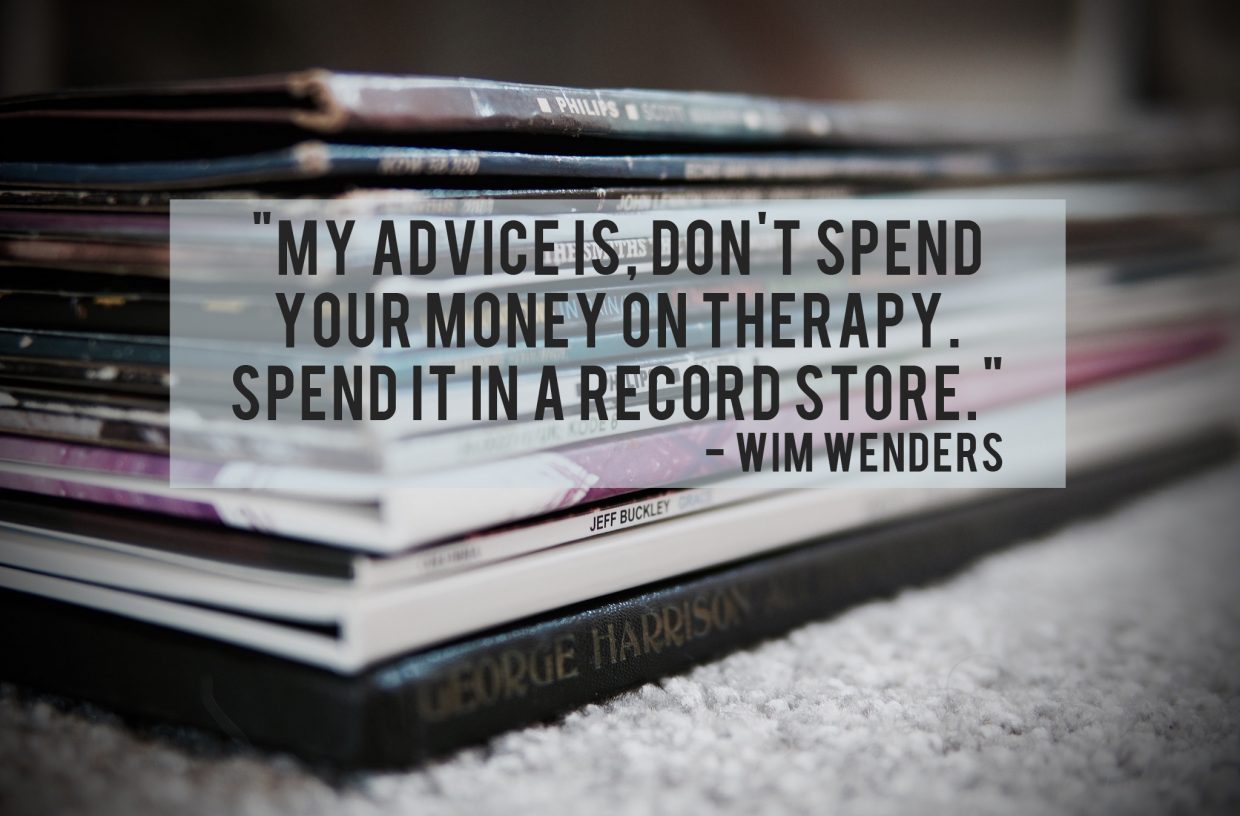
Here are five easy ways you can use music to de-stress during the holidays:

Keep Your Favorite Playlist Handy

While all music provides neurological benefits (except for music that’s jarring or harsh), researchers have found that music which gives you pleasure has an even greater impact. So, as a Christmas present to yourself, go ahead and create that playlist with your crazy-favorite tracks — the songs you truly love and feel inspired by. Whether it’s a song you were recently turned onto, or something you’ve been belting along to for years, pull together your “A-Team” playlist of songs that make you feel really good.

Listen to Music While You’re Out and About

Thanks to technology, we’re in a time where — short of implanting music directly into our brains (which we assume is coming soon) — music could not be more accessible, more customizable, and more portable. Every cell phone and pair of earbuds can become your own personal stress-busting therapist.

Take advantage of this. Without sacrificing safety or tuning out your surroundings, listen to music while driving, walking through crowded sidewalks, picking up snacks for the holiday party, or waiting on line at the post office. The same situation that might previously have left you furious or fed up can have the opposite result if you’ve been listening to music you find physically energizing or spiritually uplifting. And feeling good is contagious. If you’re tapping your toes while dealing with that frazzled store clerk, your smile and positive mood might just rub off on her, as well.

Sing Along

Singing with emotion has been shown to release oxytocin, also known as the “love hormone.” Oxytocin is a natural human hormone associated with empathy, trust, and relationship-building. So, when you sing along to a song that makes your heart swell, you might just end up wanting to give a hug, as well as a dollar, to that Santa shaking his cup outside the department store.

Topping up your oxytocin reserves means it’s also more likely you’ll be loving and patient with family members, even as the proverbial holiday kaka hits the fan. There’s nothing worse than raging at your spouse or kids just because you’re trying to bake gingerbread cookies with one hand and wrap gifts with the other. Sing along to Mavis Staples as you’re baking, and you might be much more charitable when you’ve discovered your three-year old has just poured molasses all over the sofa. (Though, in truth, the fact that “You Are Not Alone” is a big part of the problem!)

Use Music in Emotionally Challenging Situations

Some research suggests that music which impacts you emotionally has the ability to help process old emotions. These are emotions which — though stored deep in the subconscious — nonetheless influence our present-day mood and behavior. Do you have one of those dreaded family dinners coming up, which inevitably serve up extra helpings of drama and tension alongside the mashed potatoes? Listen to your favorite “sad song” on the way home. Those tears you shed while listening will likely be linked to your old emotional wounds. The sense of clearing and release you feel will be beneficial, even if you aren’t clearing or releasing the original emotional hurt.

Give the Gift of Music

Most of us get financially stressed during the holidays. We live in a consumer culture that worships expensive high-tech offerings while downplaying simplicity. One of the great things about roots music is that it crosses genres and is universally appealing. That playlist you created to help you stay sane during the holidays? Consider burning a CD of it, spiffing it up with a pretty bow and attaching a heartfelt note for a quick, easy gift for multiple people on your list. Like cookies made from a cherished family recipe or a lovingly hand-knit sweater, receiving a “mix tape” consisting of a loved one’s hand-picked songs is like receiving a part of that person’s heart and psyche. People are moved by it. Rather than appearing cheap, it looks unique and thoughtful.

If you want to make it a little extra special, fill a mason jar with epsom salts from the drugstore and offer it alongside the CD with a note expressing your wish for them: peace, relaxation, and (if they’re lucky) maybe even a good cry.

No one has to know it’s the same ol’ playlist you’ve been listening to all season long as your own personal Xanax!


Heather Juergensen is a health and wellness consultant based in Los Angeles. Her company, The Strong Woman, devises natural, non-pharmaceutical solutions for clients dealing with myriad physical and mental health issues, including depression. Find more of her favorite ways to de-stress on her blog.
Lede photo credit: _spy_ on Foter.com / CC BY-SA

LISTEN: My Politic, ‘The Tunnel’

Artist:My Politic
Hometown:​ Nashville, TN​
​Song:​ “The Tunnel​​”
Album:​ 12 Kinds of Lost​​
Release Date:​ August 25, 2017​​

In Their Words: “‘The Tunnel’ is one of the more hopeful tracks about my experience with depression and anxiety. I feel like I wake up in the middle of a low period wondering how long I’ve been going through it. This song is a kind of plea to the folks around me to stick it out and a thanks to them for doing so. It’s also a love letter to the writing process and how important it is to me when I’m struggling. We tracked the whole record live and ‘The Tunnel’ is a shining example of that process and that energy working really well.” — Kaston​ Guffey​ ​


Photo credit:​ Ross Jaynes​

Squared Roots: Lindi Ortega on the Resonating Darkness of Townes Van Zandt

Without question, the legacy of Townes Van Zandt looms large in singer/songwriter circles. Legend has it, Van Zandt all but told Bob Dylan to shove off, when Dylan came knocking on his door wanting to write together. Townes was an immense talent who struggled with depression and substance abuse, and still managed to craft some of the most timeless songs in history. Many of those tunes became immortal while he was still around to see them do so — songs like “Pancho & Lefty,” “If I Needed You,” “Tecumseh Valley,” and more have been covered by Willie Nelson, Emmylou Harris, Lyle Lovett, Steve Earle, Nanci Griffith, Jason Isbell, and numerous others.

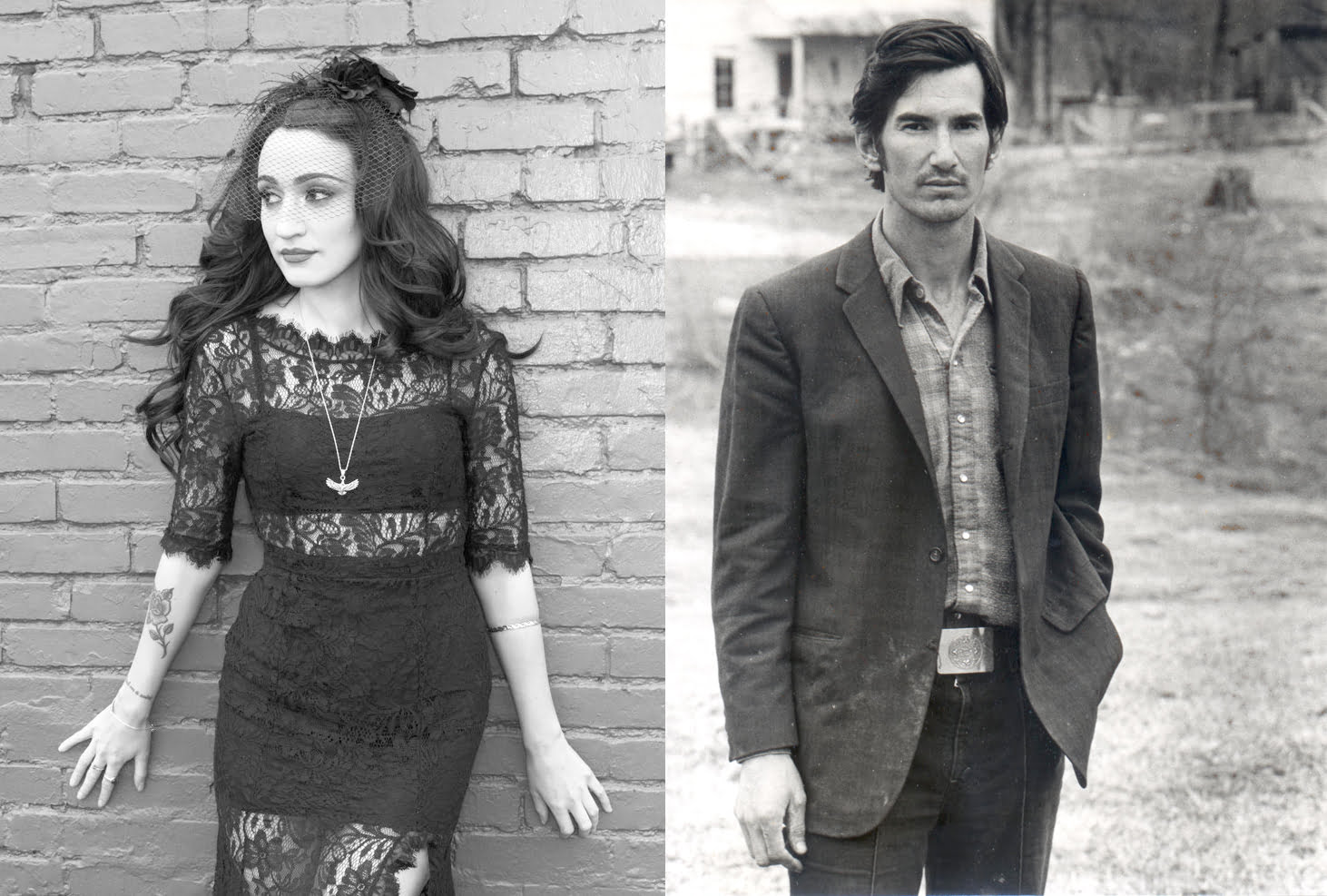
Another of his most-treasured and poignant compositions is “Waiting Round to Die,” which has found yet another new life in the hands of Lindi Ortega. On her latest EP, Til the Goin’ Gets Gone, Ortega folds the cover in with her originals like it was her own. She felt compelled to do so because discovering Van Zandt’s catalog broke her through a major writer’s block and reinvigorated her passion for music.   

You didn’t grow up with his music, right? So what was your entry point into his catalog?

I read a lot of biographies and I just kept hearing his name. A lot of my country music heroes had mentioned him. I always thought, “What a cool name, Townes Van Zandt.” And it just stuck in my head. I figured, since a lot of my country music heroes were fans of his, I really should check him out. So, one day when I came back from a tour, I decided to listen to his catalog and, you know how it is when you discover music that you hadn’t known about and there’s a whole well of it to listen to. It was a really incredible experience. I fell in love with his music and his songs and his guitar playing.

There’s so much in his too-short life to latch onto.

Yeah.

Were there aspects of his life that drew you in or was it all about the music for you?

It was really more about the music. That was my definitely my entry point, listening to the words of his songs. His lyrics, specifically, spoke to me. I did watch the documentary, Be Here to Love Me, which I found so sad. I’m sure a lot of that internal darkness resonates in his words and music. And I write a lot of songs that are rather dark and lonely and sad, too, so I guess I felt like I related, in some way. But I’m sure I’ll never understand the demons that he had to deal with in his mind. But, I guess the idea is that songs that come from dark places, all of us humans go through moments that are dark and test us. I think we can all relate to songs in that way. Maybe some of us choose not to go there, but I think we can all relate.

You got a gift from him, in a way, right? Because you were ready to walk away and then you thought, “Maybe I have some more in me.”

Yeah. Definitely. I was going through writer’s block and he became a huge inspiration, songwriting-wise, to challenge myself to be a better songwriter and write more story-like songs. That sort of re-invigorated my love for writing music, in some funny way.

You did “Waiting Round to Die” on your new EP. I hear that and “Til the Goin’ Gets Gone” as sibling songs, or cousins, maybe. Do you hear that?

Absolutely. That’s why I chose to do that particular song as a cover. I was grabbling between that one and “Rake,” because I really like that song, too. But I felt exactly like what you said, that it was a sister song to the song I’d written, so it made sense to put that song on the record. I knew it was going to take the little EP to a very dark space, but … [Laughs]

[Laughs] Yeah. You out-sadded Townes Van Zandt!

I mean, it’s a dark, sad song. The lyrics are very dark. There’s no denying that, so there’s no point in me trying to make it anything other than that. [Laughs] I did: I made a very dark and sad EP, but that’s what I needed to do, at the time. I feel like there are moments for that.

In this day and age, I feel a lot of music is kind of escapist. I feel like the general population in pop music and pop-country, people are trying to escape all the horrible things that are happening in the world and all the dark things that may be happening in their own lives. I get the sense that people want to get out and party, so it’s more like a party music thing that’s happening and not very many people are into this whole idea of embracing dark, sad songs.

But I feel like they are still necessary and people still need them in life because, for me, one of the first dark songs I heard was “I’m So Lonesome I Could Cry” by Hank Williams. When I heard that, it wasn’t like, “Oh, God. Here’s a depressing song!” It was, “Oh, wow. Somebody else feels that same loneliness I feel.” And I felt like I wasn’t alone in my loneliness. That’s why I continue to write songs like that. And I just went there with this EP. It was necessary. I was going through a moment when I was questioning whether I could go on, musically, and I didn’t think I would. I felt sad and disappointed and a little bit devastated, so that’s what came out.

As you just said, the artist’s life is hard enough on its own, then you tack on battles with bipolar disorder and substance abuse with Townes. Was there a lesson or something you found, going into his work, that made you feel you didn’t have it so bad?

For sure. And that’s with a number of musicians I look up to and love who battled with substance abuse problems and depression. I think I read an article once that said creative people often suffer from things like panic attacks and depression and anxiety disorders. For some reason, it seems to go hand-in-hand with people who make beautiful art. Then there’s this whole other side where a lot of people are suffering greatly, but the upside is that we get beautiful songs or beautiful paintings. They help us understand life and the human condition.

So, yeah, it’s really sad to learn about his life and of course there are lessons … I don’t want to have my life end faster than it should. It sort of, in some ways, helps me understand that I need to really appreciate what I do have. There are things I don’t have that might cause me some sadness, but there are a lot of things I do have that I need to appreciate and feel happy about. So it helps me to do that. Some people have a hard time getting to those places because their brains just won’t let them. I’m just so grateful that an artist like Townes Van Zandt, with all of his internal issues, was able to create all of the music that he did. And it’s legendary and classic and will be with us forever. If there’s a ray of light in a sad story, that’s definitely it.