Another week, another batch of excellent new roots music! You Gotta Hear This…
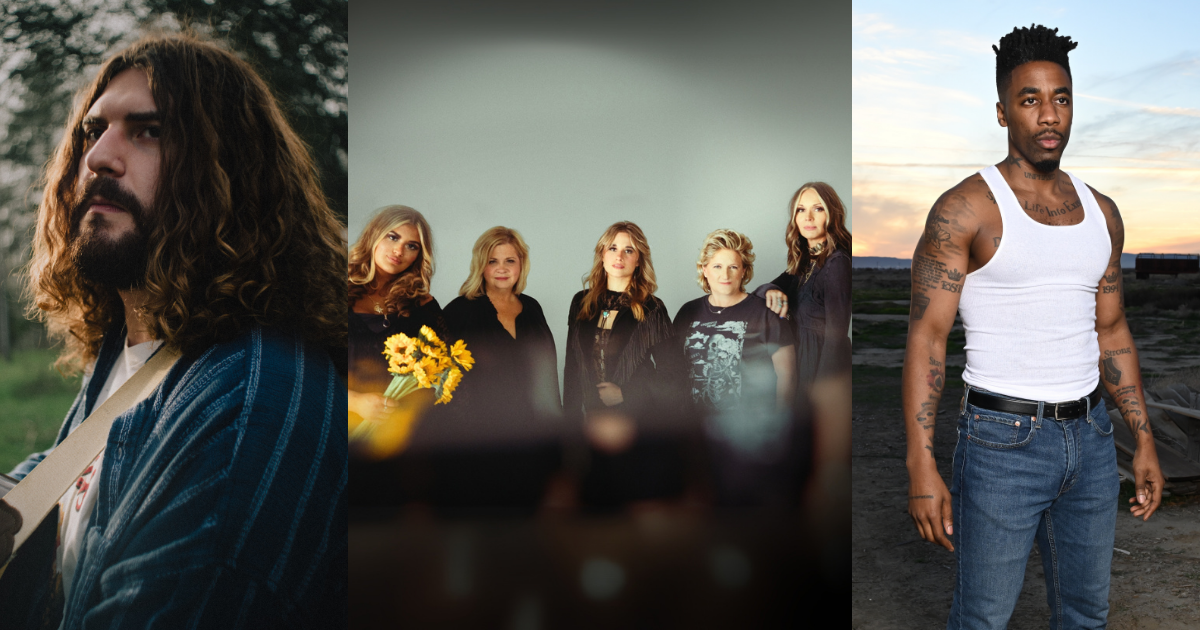
There’s plenty of Good Country to enjoy below, as we kick things off with Dallas Burrow’s brand new track, “Underdog.” In his heart of hearts, Burrow has always considered himself something of an outsider. He channels the angst and emotion of being an underdog through the rocking, passionate crescendo of the gritty country track. Then we immediately follow that up with more from similar sonic territory, as Whey Jennings and Karen Waldrup join forces on a song they co-wrote, “Damned If I Stay.” We’re sharing the new video for the number, a thoughtful Outlaw-steeped ballad that was begging for the duet treatment – which Jennings and Waldrup execute very well. It’s as relatable as it is personal.
In bluegrass (or from nearby!), banjoist Max Wareham launches his new album, If The Cosmos Were Whiskey…, today. To celebrate, we’re sharing the music video for “Closer To You,” as cosmic and enchanting as the record title. It’s experimental string band music that falls somewhere in the nebulous territory between neo-folk, indie, and trance. The psychedelia of jamgrass, but more deliberate and “slowed down.” When you read Wareham’s inspiration behind the track, these connections make even more sense.
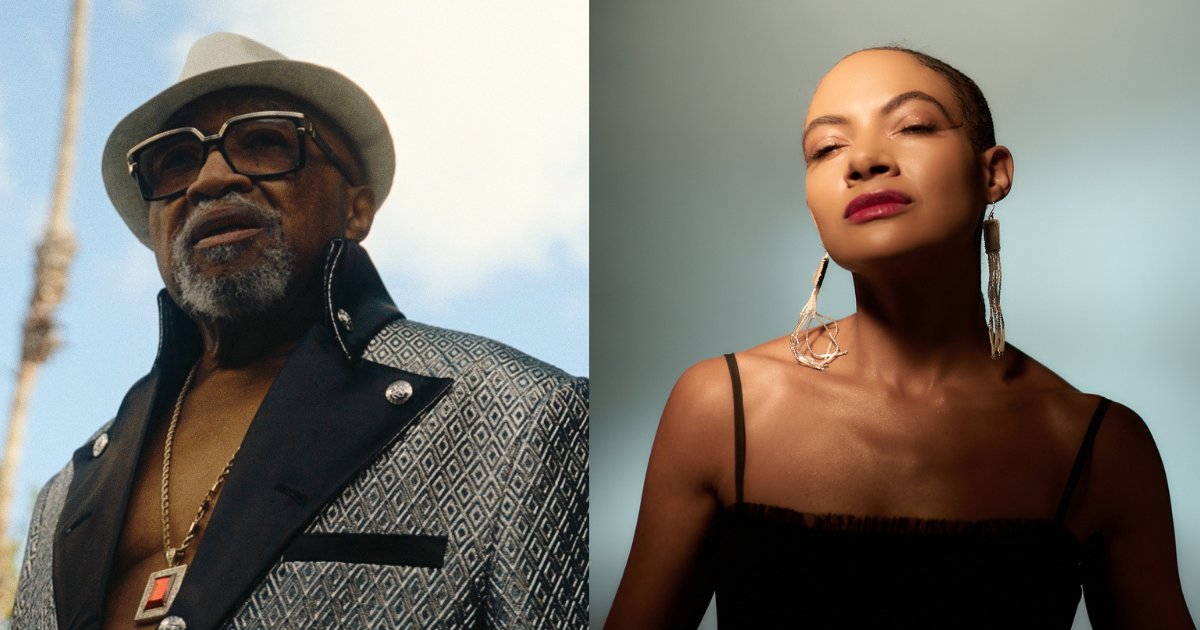
Also arriving directly from the magical musical cosmos is a new track from the ethereal Allison Russell. Timed for release on Juneteenth, “Black Lavender” features Brittney Spencer and is a song about extending grace, comfort, and care – and the importance of community to lift each other up. “We saved this song for Juneteenth for a reason,” she explains. “Black women have been showing up for each other in this way as long as we’ve been here, and we can’t stop, won’t stop now!” Listen to the timely track below.
You’ll also want to hear new music from an Americana legend Swamp Dogg. His new album, Swamp Dogg Contemplates The Afterlife, is out today. But the Dogg doesn’t want you to be too concerned that our roundup selection, “Final Approach” is about mortality. “‘Final Approach’ uses an airliner metaphor, but it’s more about a homecoming than dealing with the end of life,” he explains via email. “[But], I’m OK with this ‘final approach,'” he continues. “I’ve been blessed and that’s something to sing about.” The song is smooth, grooving, and dripping with Swamp Dogg’s personality.
It’s all right here on BGS and You Gotta Hear This!
Dallas Burrow, “Underdog”
Artist:Dallas Burrow Hometown: New Braunfels, Texas Song: “Underdog” Album: Modern Day Vagabond Release Date: June 17, 2026 (single); September 25, 2026 (album) Label: 40 Below Records
In Their Words: “Like the character Dally from The Outsiders – a rebel through and through – in my heart of hearts, I’ve always felt like a little bit of an outsider, an outlier, an underdog, but I always found that, on some level, to be a point of pride. It gives you a unique perspective when you’re on the outside looking in. That’s the basic spirit of this song, though it was also inspired somewhat by my own experiences within the music business, where so many people are telling you who they think you are and how things ought to be done. Usually in some attempt to conform you to their vision of who you ought to be, when each of us, ultimately, has our own path.
“I grew up listening to hard rock and metal as a kid, before I got into the more restrained approach of the singer-songwriters who I have come to love and admire. But there’s always something in me that, at some point, wants to dig in, let loose, and rock out, so it was very liberating for me to lay this track down. It gave me a chance to scream my heart out a little bit in the song’s crescendo; a guttural catharsis that is hard to achieve through any other means except rock ‘n’ roll.
“The band really brings this one to life: Mark Tokach’s searing electric guitar, Larry Chaney’s booming distorted baritone, Kullen Fox’s fiery B3 organ track, Katie Shore providing her tastefully avant-garde harmony part in the chorus, legendary producer Mike McClure on second acoustic guitar, and Adam Odor on bass, and finally Cameron Martin from my touring band on drums, who comes from a rock ‘n’ roll background – and who were all chomping at the bit to rock this one out.” – Dallas Burrow
Whey Jennings & Karen Waldrup, “Damned If I Stay”
Artist:Whey Jennings Hometown: West Texas Song: “Damned If I Stay” with Karen Waldrup Album:Baptized By Fire Release Date: June 18, 2026 (video/single) Label: Dirt Rock Empire
In Their Words: “‘Damned If I Stay’ is about being caught between staying and leaving when both choices hurt. It’s that tension a lot of people don’t talk about. This song called for a duet and Karen’s voice added the contrast that helped bring the full emotion of the story to life.” – Whey Jennings
“Writing this song with Whey Jennings was such a career highlight for me. He is such an emotional singer and that’s what this song needed. I have such a special friendship with Whey and it’s incredible to see that friendship spotlighted on such a personal song for both of us from our own life experiences.” – Karen Waldrup
Video Credits: Director/producer – Gio Gotay.
Allison Russell, “Black Lavender”
Artist:Allison Russell Hometown: Montreal, Quebec, Canada Song: “Black Lavender” with Brittney Spencer Album:In The Hour of Chaos Release Date: June 19, 2026 (single); July 10, 2026 (album) Label: Fantasy Records
In Their Words: “We are swimming in rivers – flash floods! – of adrenaline right now. ‘Black Lavender’ is a song about extending grace and soothing comfort to a chosen sister… the kind I have trouble extending to myself. But the beautiful thing is, she’s the same way – and she gives it all back and some. Brittney Spencer is a voice for all the ages who we need right now. We saved this song for Juneteenth for a reason. Black women have been showing up for each other in this way as long as we’ve been here, and we can’t stop, won’t stop now! Incomparable . That’s what we all are, you know? Precious… magical.” – Allison Russell
Video Credit: Directed by Athena Kulb.
Swamp Dogg, “Final Approach”
Artist:Swamp Dogg Hometown: Portsmouth, Virginia Song: “Final Approach” Album:Swamp Dogg Contemplates The Afterlife Release Date: June 19, 2026 Label: S-Curve Records
In Their Words: “‘Final Approach’ uses an airliner metaphor, but it’s more about a homecoming than dealing with the end of life. That’s something that’s inevitable, but the life I’ve lived has been truly fulfilling and I remain both hopeful and thankful. I cite some of the music pioneers – Sam Cooke, Otis Redding, and Chuck Willis – who went before their time. While I’ve come as far as I have for as long as I have, and that’s something spiritually uplifting. The great work of those guys lives on and so do I, which is why I’m OK with this ‘final approach.’ I’ve been blessed and that’s something to sing about.” – Swamp Dogg
Max Wareham, “Closer To You”
Artist:Max Wareham Hometown: Boston, Massachusetts Song: “Closer To You” Album:If The Cosmos Were Whiskey… Release Date: June 19, 2026
In Their Words: “I wrote this one thinking about 8th-century Chinese mountain poets and Milarepa, the Tibetan yogi who sang his way to enlightenment in a cave, which is either the most pretentious thing you’ll read this week or the most honest. There’s a figure wandering through it, searching for something that keeps shape-shifting: person, place, idea. The song refuses to say, and that refusal is the whole point. To me, it has the patience of something that’s been waiting a long time.
“Chris Sartori, formerly of Twisted Pine, plays an inspired bass part like he’s keen on the trail of this ghost. Give it a listen and see what you think you’re looking for.” – Max Wareham
Track Credits: MaxWareham – Banjo, vocals Jack Holland – Guitar Chris Sartori – Bass Karl Helander – Percussion Lily Sexton – Harmony vocals
Video Credits: Grant Bouvier
Photo Credit: Swamp Dogg by Cooper Davidson; Allison Russell by Mason Poole.
The release of a debut album is a momentous accomplishment for an artist. For singer-songwriter Satya, the June 5 arrival of her first full-length, Yellow House, also represents the culmination of a long and emotional journey.
A Bay Area native who recently moved to Los Angeles, Satya initially started writing the songs for this album in early 2020, with the soon-arriving pandemic serving to provide her time to work on her music along with delving into her own journals, where she explored her feelings involving growing up in a household that was both abusive and loving.
The songs on Yellow House certainly reflect this duality of emotions. Her lyrics touch upon moments of madness, darkness, and desertion, while also offering up the possibility of escape and survival. Her singing holds an alluring calmness even as she’s addressing some highly charged topics. The album’s laid-back music, which combines elements of neo-soul, dreamy folk, hushed blues, and smokey jazz, serves to support her subdued vocals, creating an inviting, enveloping sound. The blending of musical styles suits someone who has played in Nashville’s Ryman Auditorium, sung (and lived) in New Orleans, and performed at San Francisco JazzFest and Hardly Strictly Bluegrass back on her Bay Area home turf.
Satya, following some work with another producer, recorded Yellow House back around 2023 with noted blues guitarist/producer Colin Linden (Keb’ Mo’, T Bone Burnett, Bruce Cockburn) at his home studio in Nashville. When she spoke with BGS, she talked about Linden’s important contributions to the record – as well as the significance of covering Lucinda Williams’ “Fruits of My Labor” and the Grateful Dead’s “Box of Rain,” the influence of Mazzy Star, and how the release of Yellow House is both a proud moment and a bittersweet one.
How did this album, Yellow House, come together?
Satya: I started writing this project in 2020. The first song I started with was “Circles.” Then the pandemic hit. I was going through a lot at the time with family stuff. I really started writing a lot of the songs for myself.
It was something that I was working on. Then the years would go by and I would kind of put it down and work on a side project. This one always just felt so personal that I wanted it to feel right, and I wanted it to really capture sonically what I wanted.
Do you feel that your sound evolved from your prior EPs (2022’s Deep Blue and 2020’s Flourish Against Fracture) or is more like a continuation of your earlier work?
This album feels like a continuation of [my] first EP I released, in a way, sonically. … I have other stuff out that definitely feels more like soul- and R&B-forward. This one, I feel like, went back into the folky, more Americana style. I don’t even think it was kind of subconscious. It was just the songs that were happening sounded that way. And I think it definitely captures a sound that I just naturally gravitate towards.
One thing that I really loved about the album was the way your singing and the instrumentation floated harmoniously with each other – and I was wondering how you achieved this airy, lived-in feeling?
That’s a good question. I know what sounds I’m drawn to. I reference Mazzy Star a lot for this project. I’ve always kind of felt listening to her, [Mazzy Star lead singer Hope Sandoval] and listening to that band, there’s a whole world that you get sucked into sonically.
This album really is based off of my past and [is] kind of a world. So, I felt like I wanted to create that same spatial sonic feeling. I think, for me, what draws me into those spaces, I think I’ve just taken notes of other artists that I love. And I love slide guitar a lot. I love the organ. I love the Rhodes. I love things that feel like reverb or taking up space.
I grew up singing in choirs and church. So, being in a wide room and hearing sounds bounce off the wall, I really wanted to make sure that the tracks felt not too airbrushed. I wanted everything to feel very raw and, you know, some things are one take.
Colin also definitely had to remind me, too – because I like to contradict myself – as much as I love everything sounding raw, I’m a]perfectionist. So, if we’re going to do it in one take, I need to do a hundred takes. But he was very good, I think, at kind of sifting through and just like allowing things to be.
How did you get together with Colin Linden as your producer?
I met him like two years before we actually recorded the album. I connected with him through my manager, Phil Green, who used to work with an artist named Fantastic Negrito. And I believe Fantastic Negrito had been working with Colin Linden. So, he was recommended to me. At the time I was living in New Orleans, too. So, I was like, “Okay, Nashville is close.” And I made my way out there.
Actually, one of the songs on the project, “Heaven’s Cry,” we just wrote that day – the first time I met him. Then, a few years later, we brought the album to him.
How big of a contribution did he make on the album?
He is a huge part of how the sound came out, and just like how the album came out. First of all, his studio is like my dream studio. He has a home studio in the back of his house. It’s like separate, through his backyard. It’s beautiful. And he just collects so many vintage, old guitars, mics and equipment.
I really just loved his approach, too, because a lot of these songs I came with were fully written. A lot of [what he did] was just kind of restructuring [the songs] or him taking the lead with rearranging.
We spent a week. I flew out to Nashville. We recorded every day, and it just felt really organic. I think that’s also why I really gravitated towards working with him. I just really loved his approach to music and also just his passion for it.
I don’t like using a lot of auto-tune or things on my voice. I really love performing live and I also love performing with a band – just having the live instrumentation… Colin loves live tracking and bringing in instrumentalists and all of that. So, yeah, I just gravitated towards working with him and it just felt really comfortable.
There was a lot of live tracking during the week you were at his studio?
Yeah, definitely. I brought the vocal stems to him. I had kind of recorded all these songs with a different producer, and then we put it down. So, I brought all the stems with me. Some stuff I already had tracked, but some of the stuff we fully reopened. He’s all over it playing slide guitar. His wife actually was playing organ on a lot of the tracks. We brought in an amazing bassist who is playing upright on some of it and a live drummer. So, we definitely had a lot of live tracking.
How significant was it to have done some work with Colin before getting into the studio with him?
I think I was very used to – especially because of the pandemic – being in my own studio and being kind of isolated with writing, which I think there’s a lot of beauty in, too. But that was the first time in a long time where it was just a full week dedicated to just “the art.” And I think that was really special.
The song “Circles” was the first one that you recorded, and did that song show you a way into the album and led to the songs connecting with each other?
Yeah, definitely. I wrote “Circles” and it just kind of sparked all the other songs – and just the concept, too, I think. “Circles” just opened up the idea; it felt like that song was needed to be next to others. “Circles” definitely felt like, sonically, “Oh, okay, this sound feels really nice.” And I think it kind of creates the world for all the other songs to live in.
The album contains two covers – Lucinda Williams’ “Fruits of My Labor” and the Grateful Dead’s “Box of Rain.” How did they become part of this album?
When I perform covers, I try my best to embody the song or embody the lyrics and tie them to my own feelings.
Well, “Fruits of My Labor” – I loved that song forever and ever. I didn’t plan to have that on the album. It was the first day that I came to Colin’s house. I had been covering that song [since] when I was doing small tours with my band. We were doing an arrangement of it, I played it for Colin, and he was like, “Okay, so we’re tracking that right now!” I was listening to that song so much after the pandemic and her lyrics just really stuck with me.
And then “Box of Rain”… that was another song that I had covered. My grandfather, he loves that song a lot. I grew up listening to it and I just love the lyrics. I wanted to add it on the album too, just because the whole album is around my family. “Box of Rain” really reflects to me just so much beauty, as well, in my family. When I hear that song, it just reminds me of a lot of the joy and a lot of the sweetness. So, I wanted to add that too.
When did this week of recording take place?
I think it was 2023.
So, it has taken some time to get it all done?
Yeah, I took a while for sure. You know, if I lived in Nashville, after that week, I could have gone back and listened to everything. But a lot of it was kind of one and done, so it was a lot of him sending me tons of different forms of the mixes and me writing feedback and going back and forth – getting the project mixed and mastered, and then everything else around it. But, yeah, it was a long time coming.
It must be really an emotional experience to have these songs finally coming out?
Yeah, it definitely is. It feels like a mixture of emotions for sure, because I’ve sat on these songs for so long. I think it’s just like – with a lot of musicians, I’ve heard and I’ve always felt this way – by the time a song is ready to release, I’ve already heard it a thousand times and I wrote it years ago. A lot of these songs were heavier, so they were a way for me to process everything I was feeling. It definitely feels like a release to be able to just finally let it all go and give it away.
I feel like I had to really take a step back when this project was done and just look at my own personal life over the last six years – and how much I think I’ve grown and overcome and a lot of things I feel have healed. It feels like, I think, a lot of things at once. I think I feel very proud and also very bittersweet from that time.
I think that also just writing this project kind of showed me the power in music and art, and how much it can bring, and cultivate so much healing, and connection with other people even. Like the conversations just kind of sparked by sharing these stories have been really special. But at the same time, I’m going to be unwrapping a lot of this stuff forever and I think it will always spiral outward, you know.
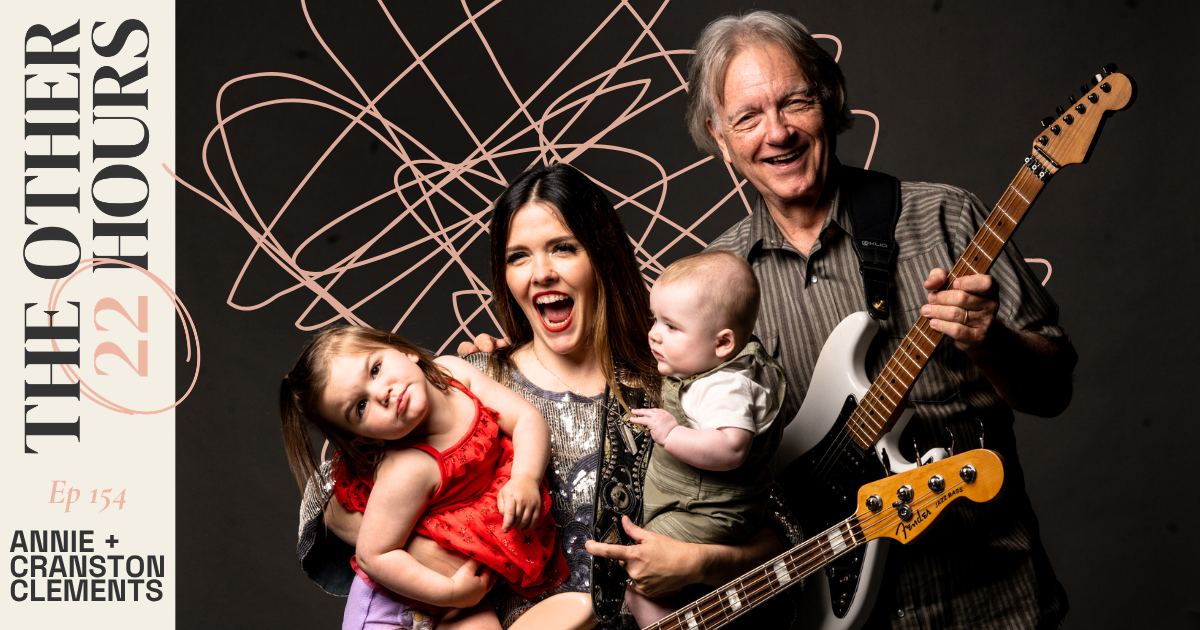
What does it mean to treat music not as a commodity, but as a multi-generational way of life? We sit down with father-daughter side musicians Cranston and Annie Clements. Cranston, a cornerstone of New Orleans music history, has played guitar with royalty like Dr. John, Allen Toussaint, and Irma Thomas. His daughter Annie is a bass player for massive acts including Sugarland, Maren Morris, and Hootie & the Blowfish.
The duo brings a unique perspective on lineage, structural hurdles, and the profound beauty of side musicians’ journeys. Annie shares her vital advocacy work supporting motherhood in the music industry, including working to correct the stark lack of childcare infrastructure in touring. Meanwhile, Cranston details his wild roots in the 1960s counterculture and how a single performance could dismantle a lifetime of prejudice. It is a study on what it truly means to be a “joy facilitator.”
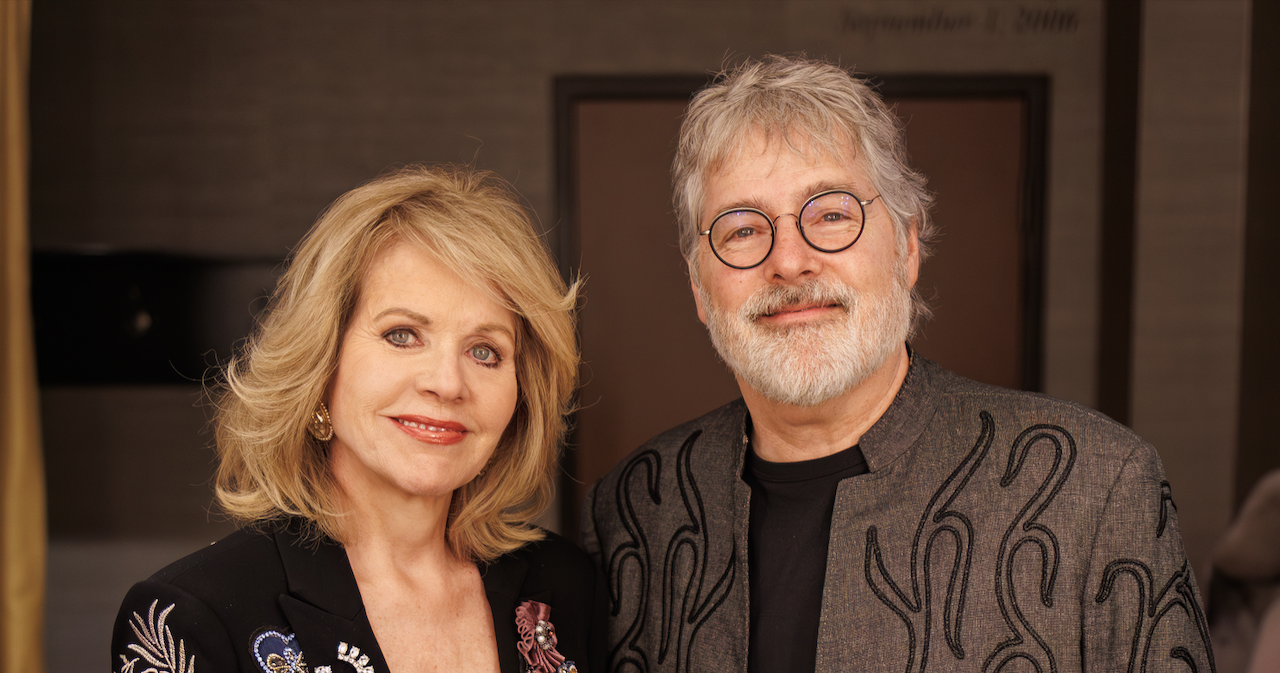
Renée Fleming, Béla Fleck, Appalachia, and an all-star bluegrass band. Though the knee-jerk reaction to this list might be to play “one of these things is not like the other,” there is much more to this premise than meets the eye – and ear.
Fleming is one of the most renowned opera singers of the modern day, but the internationally acclaimed soprano has a long history of musical curiosity and often enthusiastically indulges thereof. From this trait alone, she and Béla Fleck found a resonance within one another, embracing and making music beyond the bounds of their respective claims to fame. This resonance sparked an idea that endured for more than 20 years, culminating in The Fiddle and the Drum, an album of Appalachian songs sung by Fleming and produced by Fleck – one that, more than anything, reveals a journey of familiarity and discovery for both artists.
The pair joined BGS on a phone call to delve into the musical, historical, and personal connective dimensions of this record. The memories shared are rich and many. Some extend as far back as Fleming’s preteen years. Others revive Fleck’s contemplations of how each song might come to life through Fleming’s vocal prowess. Every one of their recollections is imbued with immense mutual respect and awe for each other as well as the album’s many collaborators; it’s clear they both appreciate the gifts each and every person brought to this record.
Our conversation isn’t without painful realities, as the album’s focus on love and loss and war prompts reflections on fights and fatalities happening today. But, ultimately, it’s a conversation colored by a range of emotions and experiences, not unlike the very music of The Fiddle and the Drum itself.
Renée, you’ve spoken extensively about your upbringing and how you formed your relationship with a lot of folk music and folk artists. In that vein, how would you describe the initial perspective you formed about the music of folk, bluegrass, and Appalachia during the younger formative years of your life?
Renée Fleming: I think it was in middle school that they offered a guitar class – which I think is a fantastic way to get kids interested in music, because it’s an instrument you can carry around and you can read tablature pretty easily and pretty quickly. So that got me interested in [music], but also some of the music that I really genuinely liked [and got me interested] came a little later, including my discovery of Joni Mitchell in junior high school and high school. Then I was exposed to it through my family as well, because my grandfather was a fiddler and a drummer, so we had very eclectic tastes in music. I just was constantly exploring. [I] wrote a lot of songs and wrote a lot of music, starting probably when I was 12 years old, and it just branched out from there.
Where did Béla Fleck initially come into the picture for you?
RF: I was already a fan of Béla because of Béla Fleck & the Flecktones. In college, I really started singing jazz with a big band and also with the trio every weekend, so I was a big fan of his [at that time].
Obviously everything worked out the way it was meant to, but you still carry those glimpses into other worlds – folk, jazz, and so on – and it helped somewhat shape where we are now. I think it’s really brought a lot of extra color, showing people that [music] doesn’t have to be so rigid and doesn’t have to be about genres and specific labels and I think that’s something that really shines through with The Fiddle and the Drum.
Béla Fleck: I think we all have a tendency to pigeonhole people and put them into a black-and-white kind of a concept. You know, “They do this, they don’t do that,” but people are nuanced and love all kinds of things, especially when growing up and you’re open, you’re trying things and figuring out where you’re going to land.
I was also a huge fan of Joni Mitchell, and I was a vocal major in school, even though I couldn’t sing worth a darn and was secretly working on the banjo in the closet. But being exposed to classical music in high school – and my stepfather is a cellist, so I was listening to string quartets and stuff when I was a kid. People might be surprised by that, or maybe not, considering the kind of music I like to do, which is very varied. But I think it makes all the sense in the world that all of these other interests make Renée an even better opera singer, if that’s the right thing to call her. But the bigger your world is, the more you can bring to the specific things that you do.
RF: I never heard that you were a voice major before. I love that.
BF: Don’t think I’m gonna sing, because I want to protect you from awful pain, agony, despair.
RF: I don’t believe it.
BF: Nobody ever gave me a voice lesson, but they started me on French horn. I got into my school playing guitar and then it became clear that I wasn’t going to be able to play the French horn. They said, “Listen, you could just go stand in the chorus and still be in the school.”
So they put me back in there, but they needed tenors. I wasn’t a tenor so I just kind of screamed, looked at the music, and tried to figure out what they were singing and sing along. Then, when I got to my final year, they said, “Oh, we found out we’re doing Rhapsody in Blue for the semi-annual concert, and we found a banjo part so you can get out of chorus. If you want to get out of chorus, you can play this banjo part on the final concert.” I was like, “I think I’ll stay in chorus.” I liked it at that point.
Then on the last day of school, the chorus teacher – a woman named Mrs. S, who was an amazing vocal teacher – she had never spent any time with me, but she got me in front of the piano and said, “Stand up straight, sing from your diaphragm!” And she gave me a few quick things she made me do and I was singing like a bird. I was like, “Holy cow, I wish you had given me a lesson when I started at the school. I would actually be able to sing!” She knew exactly what I needed to do. It was remarkable.
Speaking of singing technique, Renée, when you were preparing to record the songs for the album, where on the spectrum of vocal expression did you anticipate needing to steer your voice?
RF: I think it was Béla who kind of clocked that a lot of the songs we were choosing kind of fell in line with [themes of] love and loss – and war, as well.
One of the things that I do, especially when I’m singing outside the classical genre, is I try to avoid an obviously classical sound. That, typically for me, means the upper register. But we worked it in some songs and you just have to be mindful of vibrato. It’s really thinking about style and, for me, that’s the same as when I’m singing on a program of French art song versus an Italian aria. So I may sound the same, but the style is completely different.
What struck me as I listened to the album was just how subtle and yet impactful the differences in how you sing can be. It’s just shaping and forming your voice around the mood that needs to come through. And I visualized that, if your voice was some kind of an entity or something that could be shaped, that you just have this beautiful ability to mold it and manipulate it into exactly the shape and form and size it needs to be to express whatever the music calls for.
RF: I like to record. I like the idea of focusing only on what we hear and not adding so many other elements like you do in a live performance, where it’s also your acting and your movement and how you look and your facial expression. This is a very much more focused activity and we would do many versions of the same song. I left it to Béla to choose which versions he liked. I had almost no complaints about the choices he made.
BF: I loved to hear your voice on all the takes. And then sometimes there would just be a magic moment of, “Oh my god, the song is really happening here. We’ve got to make sure this is part of the final takes.”
I have a frustration when you have something killer that happens in one portion of the take and then the rest of the take isn’t as good. I like to find those magic moments and have them all end up on the record. But I also think for Renée, there’s an unconscious element to being a musician. [To Renée:] You’re inspired by a moment, and sometimes it’s hard to put into words all the things that you’re [doing]. You put the material in front of yourself, you decide [to] embody it, and the music is correct and things are happening in the right way – you just know what to do. And it’s hard to say how you know.
Renée and I worked really, really hard on our craft, but I think the craft is there to serve something that’s a little harder to quantify, which is just what the unconscious – what our bodies and our souls – wants to doubt when it’s time to make the music.
RF: And it has to do with the expression. I’m also thinking of specific pitches and words that relate to the song, but [to Béla:] I was really thrilled to hear how much you could vary what you were playing. Sometimes your harmonies would just come from another world and I’d say, “Wow, that’s so cool. Béla can kind of put in a jazz harmony once in a while.”
BF: You also pushed for that. I remember the first arrangements you said, “I think this could be more interesting.” And then in the moment, I had to come up with a better arrangement, a more interesting arrangement, for the first song on the record [“He’s Gone Away/Storms Are on the Ocean”]. I’m really proud of it. I think if you hadn’t pushed and I hadn’t reacted, we wouldn’t have ended up with that arrangement, which was quite unusual for that song, and then that kind of led the way to being a little bit more open.
It’s funny, when I’m playing with the Flecktones, or Chick Corea, or somebody like those folks, I feel very open harmonically. When I’m playing music that’s more traditional, I’m very careful not to get too harmonic. So, when I discovered this was a safe place to explore a little bit and look for just the right kind of harmonic additions to the basic chords, it was very freeing and inspiring. And of course, getting to work with a great vocalist like Renée… I’ve been a big fan of female vocalists since Joni Mitchell and Joan Baez and Linda Ronstadt and all of these people. I saw that there was a lot of art to working with a great vocalist like that. I was eager to have that opportunity and thankful to get a chance to try and figure out how to make it work from my end.
RF: It’s funny you say that, because I’m a huge fan now of Hazel Dickens, and you said that you had worked with her. Because there’s something so plaintive about the way she sings, it’s like Roscoe Holcomb, too. There’s something– I can’t describe it. It’s authentic and it’s immediate simplicity. I just absolutely love it.
BF: We used to talk about the “ancient tones” in the bluegrass world, and Bill Monroe had this quality. It might not always be perfectly in tune but it didn’t matter. It was just so pure and so powerful. And Hazel has that. It’s like it’s coming from another planet, almost. It’s so deep and powerful the ordinary rules don’t apply. It’s something else.
RF: I agree.
Connecting this topic of the intangible with the themes of the record, how are you both feeling about the album’s thematic focus, given the various experiences of war and loss that are happening in the U.S. and abroad?
BF: What happened was, we had a certain amount of songs we were committed to and we were excited about, and we were looking at quite a large list of additional songs that might finish out the record. That’s when I started looking at the original six songs we had recorded and thought, “You know, there really is a thematic arc.” Some of these songs were not working for me, and I couldn’t explain why until I put my finger on the fact that the six songs that we’d already recorded were telling me a story. When I explained what I was seeing to Renée, she said, “Oh, I see that. That makes all the sense in the world.”
It kind of starts with a romantic relationship that leads to commitment and then the man, in this case, goes off to war and doesn’t make it back. The woman is left on her own, maybe with a child, and then in the end, there’s a rumination about life and the way it goes like this often in the world. So that’s the story arc. Basically, to me, that is about when you make a man your boss, you give yourself up. You give up your beauty. You give up your individuality and all the promise that you could be if you weren’t in that kind of a relationship, you know what I mean? And in a way, the woman in this story is taken advantage of by bigger forces, a war.
Well, this stuff is happening every day, all over the world. And we’re in a big one right now, and there’s a lot of questions as to whether we should be there. Those questions usually come out a few years after the war is over, and everybody will say, “Oh, this was a terrible idea, and here’s why.” You don’t have to be a genius to know that we’re going to be saying the same thing about a lot of these conflicts before long. So to me, it just makes the record have that much more meaning. It’s happening right now, just like it always does – this is what people do. This is what mankind does. And it’s very disappointing that it keeps going back to this place.
RF: [My and Béla’s] generation has been fortunate that, in a way, we’re too young to have really understood what was happening in Vietnam. A lot of this repertoire really relates specifically to Vietnam. But there’s also the Civil War. And every once in a while, things really fall apart. We’re in a period now where the same thing is happening. And it’s really not useful. It’s not going to move the needle for Iranian citizens – it might even make it worse for them. So I just think it’s tragic when leaders feel like the only alternative is war.
BF: Renée also mentioned she wasn’t sure that “Scarlet Tide” would fit with the other songs, but we went ahead and did it because we both loved it. And then when we looked at what we had – again, those first six songs – it made all the sense in the world. The songs were leading us in a direction, one that, unfortunately, mirrored what mankind does.
RF: And my heart goes out also to people in the Ukraine. There are always conflicts happening around the world. There have been so many reasons for these things, it’s shocking that sometimes it’s just [plain] political. I find that really sad.
It certainly has just felt like a very heavy time, for quite a long time. So even though the themes on this album are rather heavy and emphasize a lot of the sadness that’s going on, I think it’s also very cathartic.
BF: It’s funny how in blues and bluegrass, sometimes you’ll sing the most terrible lyrics – little girl and the awful, dreadful snake or a guy killing a woman – and make this very happy, jolly song about it. It’s bizarre! And in blues, a lot of time you’re singing the saddest things, but it’s uplifting somehow to bring them out in the open and treat them maybe in a different way that allows you to experience them differently and work them through in different ways. Some bluegrass songs are really, really sad but they’re so jaunty you don’t quite realize it.
RF: Well, it’s also that we are practicing grief. That’s one of the things that scientists have come up with, that sad songs really help us process and learn how to process actual grief, because we’ll all experience it.
BF: I think also having kids – we’re both parents – but you realize that people process grief in really different ways. Some people don’t show it for a long time, but then it comes out. It’s handled in a lot of different ways.
When you were putting the music together, what kind of unexpected creative sparks came up amongst the two of you and also among the large group of immensely creative artists that are contributing to the album?
BF: I think with music, you can be over prepared because there’s a lot of things that happen very spontaneously when you have musicians of this caliber – people like Sam Bush, Jerry Douglas, Stuart Duncan. Just like Renée colors every take differently, they’re going to do the same. They’re going to be very responsive. Things are going to happen on the floor. Someone’s going to want to stay on the floor in the studio while we’re doing takes, someone’s going to say, “Yeah, I don’t know, that part’s not working for me.” And we’re going to solve it in a matter of seconds and something’s going to work.
It’s a very emotional place to get into when you’re recording, especially songs like this. As we’re all listening to Renée, we’re all inspired by how she’s singing them. They’re different than we’re used to hearing. So we’re playing differently than we’re used to. But we also come up with an arrangement, develop it, and do it a few times so we really think we have something and try not to rush through it. But there’s a tendency for things to really work out very quickly.
So with the producer role that I was in – and Renee didn’t have that experience with these folks, although she has with a lot of other musicians that are improvising musicians – where the parts are not written down and they’re very spontaneous, she was able to ride those waves very well. And whenever she spoke up, she gave me a lot of latitude, a lot of rope. But whenever she spoke up with any comment, it was always dead on the money. It was going to make it better. We listened and we tried to incorporate everything we could to make it her music.
RF: I think also that collaboration, for me– the example I would use is working with a conductor is, at best, very intuitive. You’re reading each other’s signals that you’re giving musically, in terms of dynamics, and it’s never the same way twice. I think that was true in this process as well. And having Béla, who had really created the structure for each of these arrangements, helped to anchor everything.
But to have those other musicians playing – they’re the crème de la crème of Nashville I think, and the singers as well. I mean, the way Dolly Parton was able to add her voice to the track I had already created [“In the Pines”] and just blend in amazingly, but then to also add so much to it. And the same was true for Jerry Douglas. Aoife O’Donovan, I already knew and had worked with her already on a project at the Kennedy Center. I didn’t know Sierra Hull and Sarah Jarosz, who are also just extraordinary musicians and terrific artists. For me, it was really a delight to be working with so many truly great musicians.
I’ve been fortunate to see Béla perform live in other genres with other musicians. [To Béla:] You never do anything easy, because I just wondered at your ability to manage these polyrhythms and changing meters, and then also to keep track of where you are. I mean, it just boggles my mind.
BF: Thanks. I feel like the banjo is like a percussion instrument. Like a tuned percussion instrument, similar to maybe a marimba. The rhythm of things is very fundamental to what makes me tick and what makes the banjo tick, because we don’t have sustain. So everything’s all about where you place the note.
So when they say, if you [lose or] don’t have a sense, your other senses become stronger – I think, as a banjo player, we have certain limitations that are almost like senses we don’t have. We can’t take a note and hold it for a long time. It’s just not possible. So we get better and better at timing and rhythm. If we’re on top of it, and we understand that, then we become rhythmicists.
It’s more challenging for me to do music with a lot of space, because I can’t do it. Banjo won’t do it. So notes will hang in the air for a little while. I can’t sustain like a piano with the whole pedal or things like that, but I find ways to work around it. In this case, I got to play the band. I couldn’t sustain, but I sure know who could. Jerry Douglas, Stuart Duncan, they know how to hold a note and have it mean something. It’s not just a length, it’s a feeling and a depth. So, I know I can step out of the way.
I mean, for a record that you’re kind enough to want my name on the record as an equal, I felt like I was really playing more of a producer role most of the time, and I really enjoyed that opportunity.
As the producer for the album, did you have a vision for the overall sonic profile of the music? Was there a particular way you envisioned blending the typical folk and bluegrass instrumentation with Rénee’s voice before you hit the record button?
BF: I did have the experience of hearing her sing live, doing opera in China. But I also listened to her recordings before taking the project on, because part of me was wondering, “Well, can she do this? Is this going to work?” I listened to some of her recordings and I heard some stuff that she did with Bill Frisell on one of her records, where she used a lower range. It was almost like a different person. I was amazed at how much I loved it. I love hearing her do her opera thing, because it’s the best it can be. It’s just so good. It’s like how I was not a basketball fan, but when Michael Jordan played, I wanted to watch.
I feel like Renée is like that with opera. Even if you don’t know about opera, or the form is strange to you and you’re not sure what you think about it, when you get a chance to hear her, do it. You want to see it. You want to do it, you want to hear it. I knew she was a world-class singer, but I didn’t realize that she had this other gear that was possible for her in her low range. I’m not trying to say that the opera stuff isn’t unbelievable. It’s just in a different language. It’s a different world of music. It’s a role. She plays these roles on every song.
I just didn’t know if she could translate her honest, personal humanity to these songs. And when I heard these Bill Frisell tracks, I went, “She can, she can! And it’s not a bluegrass/country singer doing their thing. It’s a whole different authenticity. I guess I didn’t know at that time that she had it in her family, and that it was music that she’d heard the whole time. So she wasn’t sitting there thinking or singing down to it, “Well, I can do this. This is easy. I do hard stuff.” She wasn’t like that. She was like, “I’m committing. I’m really going to do this thing.” So I was very impressed by her professionalism but also in the way she could summon up the emotion that felt true and authentic.
I think the album will just keep reinforcing to the listening population out there that people should embrace differences, embrace new, and embrace change – and maybe even embrace the unknown.
BF: I think it’s important to remember that it’s not just the idea that’s good or bad, it’s how it’s done. The same idea could be a disaster if it’s not done the right way.
We have something called a mashup, when you take two people that do completely different things and you throw them onto the same song and they alternate doing their thing. To me, that can be fun and enjoyable, but it’s not a true collaboration – where the artists actually have to change, grow, and listen to each other. You have to actually learn things. I look for those kinds of collaborations, where you’re doing something different from what you normally would do in order to play with this person.
But again, and you can talk about politics [in the same framing], too. Sometimes it’s not the thing that they’re doing, it’s the way that they’re doing it that is either good or bad. When you put musicians together from different musical worlds, often we can figure something out. We can work something out.
When I play with musicians from different parts of the world, people get really excited and happy. I do, the other musicians do, and we find a common ground. We find some way to play together. The people around that are there hearing it are uplifted by the idea that, “Hey, you guys worked it out.” And again, that’s what we need to do politically, too. We need to find ways to reach each other and connect with each other and listen to each other. It doesn’t need to be as hard as it feels like it is.
My most uplifting times have been playing with musicians from other cultures or from other musical worlds and finding common ground – finding a way to be yourself, together, and accommodate each other in that aural space.
The BGS team is excited to announce yet another addition to the BGS Podcast Network lineup for 2026, after both The Other 22 Hours and the Working Songwriter came on board earlier this year. On June 19, 2026 beloved folk music podcast Folk Files, hosted and created by Olivia Harding, will begin a new season as part of the BGS family. This makes the third new podcast to join BGS in 2026 and the 15th show to partner with or be produced or distributed by the BGS Podcast Network.
Founded in 2023, Harding began Folk Files as a podcast seeking to uncover “the mysteries of folk music through the ages.” Each episode dives deep into the tangled history of murder ballads, sea shanties, rebel songs, and other music that has withstood the test of time. Folk Files provides context, history, and insight into songs we all know and love – and fresh discoveries and deep cuts, too. Episodes will be released once a month on every third Friday beginning on June 19, 2026, with an episode examining a child ballad, “Two Brothers,” and stories of fratricide from around the world. The episode will also discuss the importance of nomadic communities when it comes to the folk process and song collecting. (Find where to listen and subscribe here.)
“When I first started Folk Files, the Bluegrass Situation was an amazing resource full of interviews, articles, and audio that proved invaluable while I was researching my earliest episodes,” Harding says about the announcement. “I never would have guessed that within a couple years, BGS would become my podcast’s new home. I am so excited and grateful to have joined a network of such passionate, supportive people.”
Cindy Howes, director of the BGS Podcast Network and host of Basic Folk, also gushed about the new partnership: “We have been quietly freaking out over Folk Files for some time now. The way Olivia presents and untangles the mysteries and backstories of folk music had us hooked from the jump. We are overjoyed to welcome this wonderful show to our network.”
With BGS’s longtime focus on roots music, culture, and traditions, Folk Files will certainly feel right at home on the BGS Podcast Network. Before the show resumes with BGS on June 19, Harding shared with us five recommended episodes from the Folk Files archives so readers and subscribers can catch up on the show in preparation. Subscribe now so you don’t miss a thing and dive into the full show archive (above) or Harding’s five recommended episodes (below) to celebrate the addition of Folk Files to the BGS Podcast Network.
The Music of Temple Bar (Episode #3.3)
In 2026’s St. Patrick’s Day episode, Folk Files asks the question: Is it actually Irish? Explore over thirty songs that are performed in Irish contexts and see if they actually come from Irish sources. Along the way, we’ll discuss the Rising of 1798, the history of Dublin, the Great Famine, and the Irish diaspora.
Stand and Deliver (Episode #2.8)
Robbers, bandits, highwaymen – there are a lot of English folk songs about outlaws. In this episode of Folk Files, we look at why there are so many songs about criminals and what patterns exist in these ballads. Then, we look at “Robbers’ Retreat” in an attempt to figure out why the song (also known as “Cadgwith Anthem”) doesn’t seem to follow any of those patterns.
Peaches in the Summertime (Episode #8)
“Shady Grove” is an Appalachian folk song that is often linked to the English ballad “Matty Groves.” But what is the actual relationship between them? This episode of Folk Files discusses the meaning and history of “Shady Grove” and untangles the origins of the two iconic songs.
Haul Away (Episode #4)
This episode of Folk Files traces the roots of popular sea shanties to Black work songs and African folk traditions.
May is Mental Health Awareness Month, but for those with lived experience, every day is about mental health awareness. During the most difficult times, many creators and listeners turn to music. It’s where we connect through lyrics and melodies that express the things we so often cannot, will not, dare not say.
The intersection of music and mental health is nothing new. Long before memes and catchphrases about “break the stigma,” Hank Williams did just that with “I’m So Lonesome I Could Cry.” Years later, Porter Wagoner exposed the ugly unspoken truth about “The Rubber Room.”
Thankfully, through incremental steps, times have changed – although not enough – in terms of media portrayal and public discourse. With great courage, more and more artists are coming forward about their struggles. Dozens of artists and musicians have spoken openly with BGS and Good Country about how mental health challenges move them to create songs and albums that make us all feel a little bit less alone. (Scroll to find our playlist of roots songs all about mental health below.)
Artists and bands like Becky Buller, Courtney Marie Andrews, Sister Sadie, and Tenille Townes give us glimpses at how mental health and self-care inform their creative processes and how they craft their songs, albums, and sets. Groups like Southern Avenue and the Band Loula – who make music built on the sonic and storytelling traditions of the South – subvert regional expectations about what’s “allowed” to be spoken about in the light of day with their approaches to infusing mental health awareness into their songs. Still more conversations with artists like Fruit Bats, Cole Chaney, Emily Scott Robinson, and Chely Wright reinforce that mental health in roots music isn’t a fad or passing trend, it’s an intentional through line. Songwriting and roots music are perfect vehicles for this sort of vulnerability and these once forbidden topics.
The proliferation of YouTube and democratization of music videos in the 2000s and 2010s opened up new dimensions for artists, giving them more formats in which to express themselves, depict their work, and consider mental health. Additionally, of course, it offers live performances that go beyond anything a studio recording can capture.
“I Think It’s Going to Rain Today” – Randy Newman
Randy Newman’s masterpiece has been covered many times, and the internet is full of those recordings – as well as his. This performance, however, at his induction into the Rock and Roll Hall of Fame, may very well surpass them all.
“God, Can You Hear Me?” – Dax
Dax is fearless in addressing the most difficult and “taboo” topics. “God, Can You Hear Me?” asks the unspoken question within the context of a subject that far too many people refuse to address: suicidal ideation. (Content warning: graphic.)
“Let the Circle Be Broken” – Sister Sadie
In genres predicated upon generational legacies and “handing down” tradition, Sister Sadie’s song of release, letting go, and stepping out from underneath the long shadow of generational traumas is more than powerful. By the same token, that it was written and is sung and performed by a band of all women makes it a truly transcendent message. Some circles are meant to remain unbroken, others must be demolished.
“Bench Seat” – Chase Rice
Chase Rice broke down walls and stereotypes and opened doors to discussions about suicide with this multiple-award-winning video. Country needed this. Country needs more of this. (Content warning: graphic.)
“Hurt” – Johnny Cash
Johnny Cash. Enough said.
“I’m Gonna Be the Wind” – Laurie Lewis
Bluegrass legend Laurie Lewis has penned many a fine song tackling issues of mental health, but this is the song for when you’re ready to stride out anew again. It’s a song of strength, resilience, of realizing that often one of the primary forces keeping us down is our own mindset. Tired of being a blade of grass, bent and bruised by the wind? Be the wind!
“Sunday Morning Coming Down” – The Highwaymen
Mickey Raphael described them as “like Mount Rushmore onstage” and called Kris Kristofferson “the Shakespeare of our time.” This is why.
“Will the Sun Ever Shine Again” – Bonnie Raitt
One of the best songs Bonnie Raitt has ever sung and released was recorded for the 2004 animated film Home on the Range. Devastating, endlessly relatable, but ultimately hopeful, the film cut of “Will the Sun Ever Shine Again” is hard to track down on streaming services and online, but it’s truly lovely. A gem of a soundtrack find from an often overlooked Disney children’s movie from the aughts.
“Alone Again (Naturally)” – Gilbert O’Sullivan
In 1971, Gilbert O’Sullivan bravely addressed loss, grief, heartbreak, loneliness, depression, suicidal thoughts, and questions of faith, wrapped them up in a lovely melody, set them to a catchy beat, and rode to the top of the charts with one of the most gutting, most accurate depictions of mental health challenges ever put to song. Decades and numerous cover versions later, stripped down to keyboard and guitar, his voice aged like fine wine, “Alone Again (Naturally)” remains poignantly accurate and relatable.
“Bad Mind” – Erin Rae
A song so perfect in its illustration of how we project and ascribe mental health, onto ourselves and others. We all may know, somewhere inside ourselves, that there is no such thing as a “Bad Mind,” but stigma and internalized expectations leave so many of us feeling broken and “incorrect.” Listening to Erin Rae sing this lovely, devastating song brings an immediate feeling of needing to reassure the singer that there really aren’t bad minds… and thereby the realization we should also apply that grace to ourselves.
Below, you’ll find our full playlist of nearly 8 hours of roots music created by the teams at BGS and Good Country that features some of the many excellent songs that address mental health. For Mental Health Awareness Month and beyond.
Photo Credit: (L to R) Cole Chaney by Anthony Simpkins; Sister Sadie courtesy of the artist; Dax by Annie Devine.
Additional curation and contributions by Shelby Williamson and Justin Hiltner.
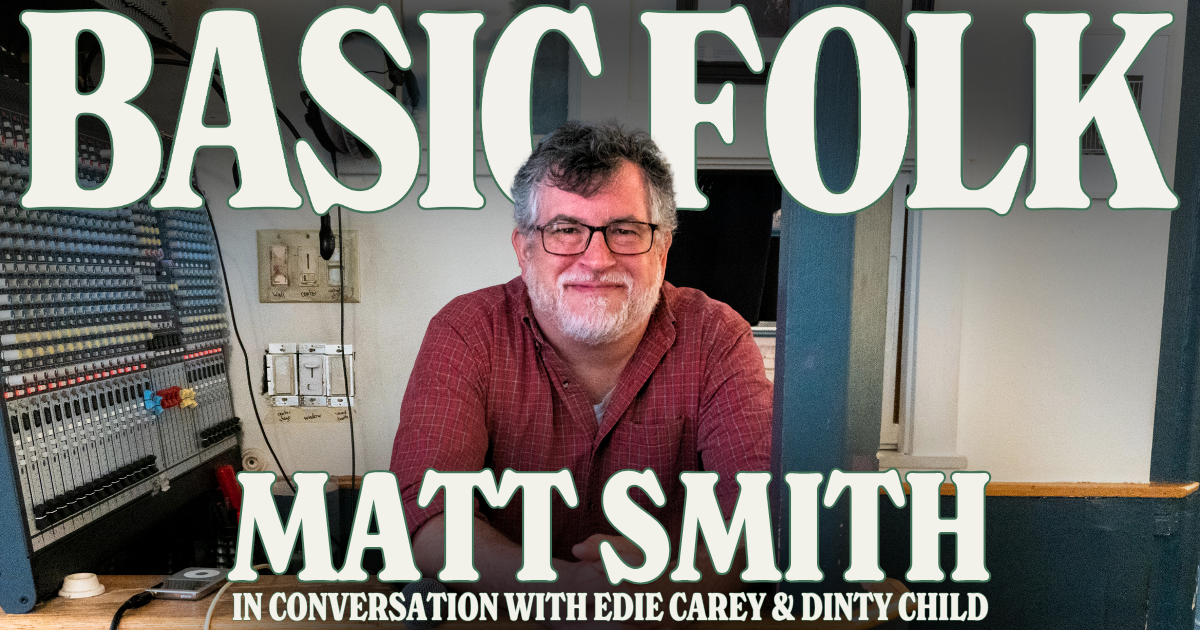
Matt Smith is a living legend with his unbelievable 30-year run at Club Passim, the historic folk venue nestled in a Harvard Square basement. Currently in the role of Managing Director at Passim, Matt is the most passionate music lover I know. He has used his platform at the club to help establish artists like Lori McKenna, Anaïs Mitchell, Lake Street Dive, and so many more. I met Matt while working as a student at WERS 88.9FM, where he brought fantastic shows to a listening room filled with people who were clamoring for honest music in an intimate space. He’s been a very good friend and mentor to myself and thousands of musicians since he began his tenure at the club in 1995.
In honor of Matt’s 30th anniversary at Passim, we brought two longtime friends on the pod to talk to him about his role in the Passim community – and beyond. Musicians Edie Carey and Dinty Child join us in conversation with Matt; he shares advice he would give his younger self, we chat about what a vacation without music would look like, and his incredible memory. That memory is tested in our lightning round where he answers Passim trivia (almost 100% correctly). There’s also a discussion about what Matt is most proud of in all his years at the club: the campfire. festival, which takes place every Memorial Day and Labor Day weekends featuring sets in-the-round of mostly unknown new acts. I would imagine if you’re listening to this episode of Basic Folk, you either know Matt or Club Passim. Hello to all our friends and I hope you enjoy this window into one of the best people we’ve ever known: Matt Smith!
Here’s your weekly dose of new roots music! You Gotta Hear This…
A perfect kick-off to the weekend comes from Dominique and the Diamonds, who are previewing their next single, “Cocaine,” ahead of its release next week. Perhaps frontwoman, singer-songwriter (and Honky Tonk Queen) Dominique Gomez, isn’t the “crazy party girl” she once was, but she channels fun rockin’ and rollin’ party energy in full force on the country-folk number.
Next up, Matt Jones and the Bobs share a video for “The Weight of the World,” out today. No matter the burdens we all carry, the song offers a message of hope and resilience. As Jones puts it in talking about the song with BGS, “The song looks at struggle not as defeat, but as a universal weight we all carry and the beauty of having someone there to help lighten the load.” It’s certainly a timely message.
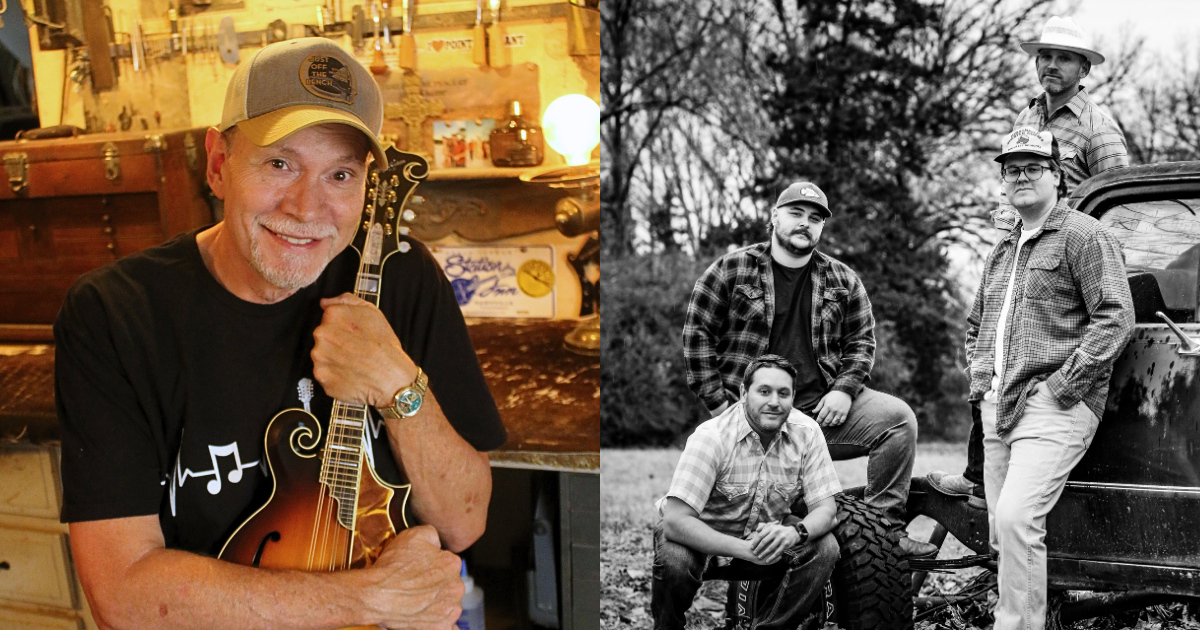
For a little rockabilly-steeped Americana, Arkansas-based country group Midnight South give us an exclusive preview of their upcoming single, “Curves in a Square Body,” set for release next week. Dripping with nostalgia and built around a solid country hook, it’s a twang-ful number perfect for putting the pedal to the metal – even if you don’t happen to be lucky enough to be driving around in a square body. Add this one to the list of actually good country songs about trucks.
Capping off our roundup today is bluegrass mandolinist Danny Roberts, whom you may recognize from The Grascals. Roberts’ brand-new album The Winding Road Leads Home is out today, so we’re celebrating by sharing a lovely and sweet instrumental number – with a funny title, “Tologna Bologna.” (That’s pronounced “Tony Baloney,” per Danny.) If you’re more familiar with the mandolin as a barn-burning instrument, Roberts often shows the depth and breadth of the instrument, as he does on this track.
We’ll let you go so you can get to listening! You Gotta Hear This.
Dominique and the Diamonds, “Cocaine”
Artist:Dominique and the Diamonds Hometown: Los Angeles, California Song: “Cocaine” Album:Honky Tonk Queen Release Date: May 29, 2026 (single); June 26, 2026 (album)
In Their Words: “‘Cocaine’ is loosely based on a true story. I was a broke and debaucherous 20-year-old in San Francisco with a dealer who incessantly kept asking me out. I started to imagine how my life would have turned out if I did end up going on those dates with him. The song basically wrote itself from there. I’m nowhere near the crazy party girl I once was! But I wanted this song to be the perfect blend of country and rock ‘n’ roll as an ode to that era of my life. ‘Party girl Dom’ was a mess, but I don’t regret a single thing about her.” – Dominique Gomez
Matt Jones and the Bobs, “The Weight of the World”
Artist:Matt Jones and the Bobs Hometown: Salem, Virginia Song: “The Weight Of The World” Release Date: May 22, 2026
In Their Words: “‘The Weight of the World’ reflects on life’s burdens and the quiet strength it takes to face them, while honoring the friends who help shoulder what we can’t. The song looks at struggle not as defeat, but as a universal weight we all carry and the beauty of having someone there to help lighten the load. It is a song about struggle, resilience, and the quiet beauty of friendship, sitting at the emotional center of everything the band has worked toward since their return. For the listeners who have been with them since college and those discovering them now, the message is the same: your story matters, even the hard parts. We have lived that truth, and we are finally ready to tell it in full.” – Matt Jones
Track Credits: Matt Jones – Vocals, acoustic guitar Pat Keefe – Electric guitar Jonthan Crandall – Piano Trevor Creany – Drums Andrew Carper – Bass guitar
Video Credits: Matt Jones, Jonathan Crandall, Kevin McNeill
Midnight South, “Curves in a Square Body”
Artist:Midnight South Hometown: Little Rock, Arkansas Song: “Curves in a Square Body” Release Date: May 29, 2026 Label: Rock Ridge Music
In Their Words: “We started with this simple idea of contrast – curves set against a square body – and it just sparked something that felt bigger than the visual. Like a lot of our songs, it naturally drifted into something nostalgic and before we knew it, we were writing about that first truck and all the memories tied up in it.
“From the beginning, the energy of the track pushed us to keep things lively and fun and that really carried through the entire process. Working with Ben Jackson took it to another level – he helped us shape the sound and brought a clarity and punch to the production and mix that really made the song come alive. It’s one of those tracks where everything just clicked in the studio and you can hear that excitement in the final version. We chose it as a single because it feels like a perfect snapshot of who we are right now – high energy, rooted in storytelling, and not afraid to lean into a little nostalgia. At its core, it’s about holding onto those early moments that define you and realizing how much they still ride with you today.” – Darin Davis
Track Credits: Ben Jackson – Percussion, producer, engineer Darin Davis – Drums JL Jones – Acoustic guitar, background vocals Billy Lowe III – Electric guitar, background vocals David Tidwell – Bass Steve Hinson – Pedal steel guitar Wil Houchens – Keyboards, Hammond B3 organ Matt Sammons – Lead vocals
Danny Roberts, “Tologna Bologna”
Artist:Danny Roberts Hometown: Nashville, Tennessee Song: “Tologna Bologna” Album:The Winding Road Leads Home Release Date: May 22, 2026 Label: Mountain Home Music Company
In Their Words: “When I wrote this tune, I had my great friend Tony Wray in mind. He’s played on all of my records and has helped me arrange much of my music, so I wanted to name it for him. If you listen closely to the melody, you might catch a little nod to the old Oscar Mayer bologna TV commercial – which is where the spelling ‘Tologna Bologna’ comes from. (I say it ‘Tony Baloney,’ though.) I hope you enjoy ‘Tologna Bologna,’ and make sure to check out my new album The Winding Road Leads Home that’s out today!” – Danny Roberts
Track Credits: Andrea Roberts – Bass Tony Wray – Acoustic guitar, banjo Danny Roberts – Mandolin Adam Haynes – Fiddle
Photo Credit: Danny Roberts courtesy of the artist; Midnight South by RK Barger Photography.
It’s another week where popcorn may be necessary to fully enjoy our weekly new music round-up, with all of the new music videos included below! You Gotta Hear This…
Our first screening is some cosmic California country from Mac Cornish, who’s sharing a music video for the title track of her upcoming album, Wayfaring Woman. The full LP will launch in September, so enjoy this early taste of the project, a song about finding, re-finding, and returning to oneself despite time, geography, and all that comes between.
We have a couple of fun and funny videos you’ll enjoy as well. Nashville-based husband-and-wife roots duo Zaggie (Zach & Maggie White) have a new single and video for “Parking Lot Vacation.” Sometimes a need to unplug, unwind, and relax can be satiated with a good ol’ fashioned sit in a parking lot. The video is witty and hilarious to match the flowing, island-getaway sonics of the song. Plus, Essence & Gold Country have a gut-busting video to tribute Mother’s Day and every “Good Mom” out there. As frontwoman Essence Goldman puts it, it’s all about “the beautiful chaos of motherhood and the truth that we don’t have to lose ourselves to be a good mom.” It’s bluegrassy country that will get your toe tapping while bringing a smile to your face.
Also just in time for Mother’s Day, our old friend Courtney Hartman shares an intimate and tender peformance video for “Honey, Honey,” a song she wrote dripping with love for her young daughter, describing the perfection of her child through her own eyes and building her up for a life built on love, confidence, and strength. It’s gut-wrenching and comforting at the same time, a deft balance that Hartman is well known for in her songwriting and guitar picking. It’s a lovely video for the occasion – and beyond – and announces her upcoming album, With You: From The Garden Shed, set for release June 12.
From bluegrass, Jaelee Roberts has a new single that was written by bluegrass radio personality and songwriter Terry Herd. “I’m Putting You Out of My Misery” pulls inspiration from traditional hard-driving bluegrass and contemporary sounds equally and boasts a stacked roster of pickers rounding out the band behind Jaelee’s gorgeous, crystalline vocals.
Country and Americana powerhouse Dee White has a new song as well, “Green River Rye,” which dropped earlier this week. Check it out below, it’s a pretty stripped-down recording made with just a simple acoustic trio – with Brian Murray and Jimmy Law – that lands somewhere between classic folk, country & western, and bluegrass, aesthetically. With whiskey as its centerpiece, it’s a lonesome and longing song that feels truly timeless – like you could sing along intuitively immediately, even on first listen. And don’t miss singer-songwriter Zach Seabaugh’s “Owes You Nothing,” a song about navigating Nashville, Music Row, and the music industry without losing your sense of self – or comparing yourself to everyone else you meet along the way. It’s a lovely track built on sensitive and brooding modern country sounds.
Celebrate your Mother’s Day weekend by calling your mama (who is definitely a good mom), sipping some Green River Rye, and taking a parking lot vacation – you’ve earned it. And, You Gotta Hear This!
Mac Cornish, “Wayfaring Woman”
Artist:Mac Cornish Hometown: Raised Bay Area, California, based in Nashville, Tennessee Song: “Wayfaring Woman” Album:Wayfaring Woman Release Date: May 8, 2026 (single); September 25, 2026 (album)
In Their Words: “‘Wayfaring Woman’ is a song about a girl who stays moving so her past won’t catch up to her – and so she won’t have to face herself. By the time I finished writing it I realized it was about myself. It was my way of telling myself, ‘It’s alright to cry, but it’s time to remember who you are and stop this cycle.’ So when I sing, ‘Even in yours lows, you can always go home,’ I mean the place and the state of mind.
“Making my way back to myself has always felt connected to the California home of my youth. Those canyon roads and golden hills remind me of who I am and who I always dreamed of being. I might not be able to access those places physically anymore, but the sense of self that I found there is within me and this song is a reminder to myself that I can always go back, I can always go home to myself. ‘Wayfaring Woman’ is the title track and first single off my second record, set to come out in September 25. It’s steeped in cosmic California twang, and I don’t think I’ve ever sounded more like myself.” – Mac Cornish
Track Credits: Mac Cornish – Vocals, acoustic guitar, songwriter Hillary Fretland – Harmony vocals Charlie Fuertsch – Electric guitar Cooper Dickerson – Steel guitar Jack Lawrence – Bass Dave Racine – Drums
Video Credit: Directed and filmed by Janaya Pardo.
Essence & Gold Country, “Good Mom”
Artist:Essence & Gold Country Hometown: San Francisco, California Song: “Good Mom” Album:Father’s Daughter Release Date: May 8, 2026 (video); September 26, 2025 (album) Label: Blue Elan
In Their Words: “This ‘Good Mom’ video is about the beautiful chaos of motherhood and the truth that we don’t have to lose ourselves to be a good mom. It holds that tension between giving everything to our children and still claiming space for our own soul, and taking care of ourselves so we have more to give.
“This song gets the best reaction when I perform it live. I just watch the mothers start laughing and shaking their heads in agreement. It is hard for me not to laugh when I sing it. Any mom out there can relate. We thought it was fun to release this music video as as a gift to all the moms on Mother’s Day. Though in my opinion, every day should be Mother’s Day!” – Essence Goldman
Artist:Courtney Hartman Hometown: Eau Claire, Wisconsin Song: “Honey, Honey” Album:With You: From The Garden Shed Release Date: May 8, 2026 (single); June 12, 2026 (album)
In Their Words: “‘Honey, Honey’ is a love song to my daughter – a collage of daily imagery and truths I want her to hold onto. She has taught me about delight and even as I am the one cradling her and giving her comfort, it is often my own heart being mended by her.
“In the final verse I list a few things I want her to remember when I am not there to hold her, ‘quiet waters, soothe and sway, sunlight and kindness, the cradle of a day. You’re brave as an iris, a bright display, a trumpeter swan lifting up and away.’ Tift Merritt co-wrote this song with me, helping me clear away the debris and uncover within my own days the scenes I most wanted to sing.” – Courtney Hartman
Video Credits: Filmed by Kyle Lehman. Edited by Erik Elstran.
Jaelee Roberts, “I’m Putting You Out of My Misery”
Artist:Jaelee Roberts Hometown: Nashville, Tennessee Song: “I’m Putting You Out of My Misery” Label: Mountain Home Music Company Release Date: May 8, 2026
In Their Words: “‘I’m Putting You Out of My Misery’ is one of those songs that stopped me in my tracks the first time I heard it. Terry Herd wrote an incredible song and I fell in love with it right away. To me, it strikes the perfect balance between that hard-driving traditional sound and a touch of contemporary bluegrass. I absolutely love how everything came together in the studio. I’ve always enjoyed a song with a little bit of attitude and this one definitely delivers.
“I was also fortunate to have some amazing musicians join me on the recording. Alan Bartram on bass, Ron Stewart on banjo, Tony Wray on guitar, Michael Cleveland on fiddle, Justin Moses on mandolin and Dobro, and Zack Arnold adding harmony vocals. Getting to collaborate with such talented players made this project especially meaningful to me. I’m truly proud of how the track turned out, and I’m so thankful to each of them for being part of it. I hope you all enjoy listening to it as much as I enjoyed recording it.” – Jaelee Roberts
Track Credits: Jaelee Roberts – Lead vocal Alan Bartram – Bass Ron Stewart – Banjo Tony Wray – Guitar Michael Cleveland – Fiddle Justin Moses – Mandolin, resonator guitar Zack Arnold – Harmony vocal
Zach Seabaugh, “Owes You Nothing”
Artist:Zach Seabaugh Hometown: Marietta, Georgia & Nashville, Tennessee Song: “Owes You Nothing” Release Date: May 8, 2026 (single) Label: Cloverdale Records
In Their Words: “This song came at a time when I needed to check myself – on where I was in life – and on the people in my life I didn’t want to take for granted. I wrote it with Park Chisolm and Reid Haughton on Music Row. I was talking to them about how hard it is sometimes to show up in Nashville, to be creative for a living. You can fall into the comparison trap when so much of the industry around you is trying to set out for the same thing. But I don’t like feeling sorry for myself. I’m super grateful for what I have and who I get to live life with and at the end of the day, I guess this world owes you nothing. So you gotta make the most with what you got—that’s when you realize you got all you need.” – Zach Seabaugh
Dee White, “Green River Rye”
Artist:Dee White Hometown: Slapout, Alabama Song: “Green River Rye” Release Date: May 6, 2026
In Their Words: “I first discovered Green River Rye Whiskey during a hunting trip to Kentucky. The bottle instantly caught my eye – it was the same one I remembered from an antique lithograph that hung in my childhood home. At the time, my girlfriend had just left me, and the chorus melody had already popped into my head. Later that night, I was hanging out with my buddies Jimmy and Brian and we finalized the music and lyrics. The very next evening, we went into the studio and recorded it as an acoustic trio in Nashville.” – Dee White
Zaggie, “Parking Lot Vacation”
Artist:Zaggie Hometown: Nashville, Tennessee Song: “Parking Lot Vacation” Album:Turpentine Mind Release Date: May 6, 2026 (single); August 26, 2026 (album) Label: Zaggie Records
In Their Words: “‘Parking Lot Vacation’ came from the exact mental-headspace-shift the song is about. I was supposed to be writing. Instead, I was staring at a blank page for long enough that it started staring back. Eventually I just… leaned back, let myself off the hook for a bit, and the song showed up. Turns out vacations are less about where you are and more about the moment you stop letting petty anxieties run the show. A good car seat, a warm breeze, a window cracked just right is sometimes all I need. We’ve seen a lot of beautiful places in the world and a parking lot on the right day is genuinely in the conversation.” – Zach White
Track Credits: Zach White – Vocals, guitar, songwriter Maggie White – Mandolin Dan Needham – Drums Byron House – Bass Chris Walters – Piano
Video Credits: Cast: Annabelle Fox-Tieman, Douglas Waterbury-Tieman, Ollie Fox-Tieman, Huck Fox-Tieman, Emily Rogers, Josée Klein. Directed and edited by Zach White. Location Videography by BAMM Productions.
Photo Credit: Courtney Hartman by Michelle Bennett; Dee White by John Peets.
By now, Josiah Leming is a master of reinvention. In the early 2000s, he signed a major label deal, then went indie for a while. Some of his albums leaned on his rock influences; others were more folk-oriented. He’s released a healthy number of covers projects, but can write songs as well as anybody who’s been in the business for 20 years. Leming also recorded under his own name before rebranding himself as Josiah and the Bonnevilles. And he’s about to be all over the map, literally, when he launches his Redline North American Tour in May with openers Max Alan and Brenna MacMillan.
Josiah and the Bonnevilles’ base should only grow with As Is, out May 8 on Rounder Records. Returning with a more electric approach, Leming co-produced the album with Konrad Snyder.
“It was important to me that the album sound different, but not so different that people don’t recognize it,” Leming tells BGS. “That was actually a pretty tough thing to do, because it’s easy to change things and really turn them on their head, but to have it still feel like it came from the music that came before it was something I thought a lot about.”
A proud native of Morristown, Tennessee, and now living in Nashville, Leming caught up with BGS to talk about how he picked up the banjo, the positive results of listening to Ralph Stanley, and how Jack Reacher helped him define his relationship with his fans.
I noticed the first line of the first song on the new album is, “I’ve been staying out and off the internet,” and after listening to the album a couple times, I realized that’s an important line for this whole record. Was there sort of a recentering, or a desire to disconnect, maybe, as you went into this album?
Josiah Leming: It was a huge part of it. And I still struggle with it a little bit, because the reason I got to where I am now is because I embraced the internet, I embraced social media, and I shared my life with people, day in and day out. I was 33 years old, fighting and scrapping to have a place, making music as a living. But I found as we got toward the end of 2024, the things that I was doing to sustain the level that I was at were coming directly at the cost of the essential thing that goes into the music.
Like, things had never been better. My shows were as big as they’d ever been. Everything was cooking on all cylinders, but I didn’t have any new songs that I was very excited to share. I needed to completely cut myself off from that world of the promotion cycle and the daily posting. … I have always written so autobiographically, and it would have been very easy for me to write an album about the struggles of the road or an album that would make a lot of sense to me. But I started thinking about 13-year-old Josiah in Morristown, Tennessee, and that guy doesn’t care what it’s like to be in Tulsa on a Thursday night, and maybe you’re a little lonely. Like, I gotta cut deeper to the core of this thing that’s not just about me.
That took me 30 or 40 songs to write out all of that stuff, to get to where I could look a little deeper for the meaning and the songs that somebody would understand if they weren’t a touring musician. That was the ultimate goal for me with the record, to make something where people don’t think about me when they listen to it. They can maybe just put it on in the garage. When I put on Ralph Stanley or AC/DC in the garage, I don’t think about Angus Young or Malcolm Young or Brian Johnson. I think, “Damn, this is an awesome day. This is a soundtrack to my life.” And I hope I have done that somewhere on this album.
How much of an influence did your Appalachian roots have on this album?
It’s really interesting. So the bio for the album was written by an author named Silas House. We had a chat and he actually asked me a similar question. He was like, “It feels Appalachian, even though it isn’t that obvious.” I think that’s because of the language I use that I grew up with. I think a lot about when I write, “Would my dad understand it?” My dad’s a simple, working-class man. So if things get too complicated, lyrically, then I want to change that to make it simpler.
That’s a lot of it, and I really went into the deep phase with Ralph and a lot of older stuff. That really changed my perspective on how I see myself in this industry. It’s very easy to start to get into this race to the top, and you’re looking at analytics, and you want more monthly listeners and all this stuff. Listening to bluegrass, and Ralph Stanley especially, all that kind of disappears, and it just becomes about the raw emotion of it. Which is what I fell in love with in the first place, when it felt like I had to do music.
How did Brenna MacMillan get involved with the project?
I was tracking a demo to a different song, a song I love but that’s very strange. And I was like, “I really want a banjo player.” Back in the day, I used to use Craigslist to find background singers because I love finding new people. So I put up an Instagram story and somebody sent me Brenna’s account. I watched one video and I thought, “This is just like lightning in your veins.” She’s so awesome. The energy in the banjo and the voice. And we had connected but it didn’t work out that particular moment.
So when it came time where I wanted banjo on the record, I hit Brenna up again because we’d exchanged numbers. She came in, and she’s just amazing. She doesn’t know how good she is. She’s been tour managing the band East Nash Grass, which I love. I’ve been listening to them a ton right now. I was like, “We need you in the band.” So now she’s in the band, she’s touring with us, and she’s going to open up the shows. I’m so excited for people to hear her.
When did you first pick up the banjo?
My grandpa gave me a banjo. He loved George Jones. He was a hard-drinkin’, George Jones-lovin’, bluegrass-lovin’ guy. He had a banjo and a Dobro he gave me, and I fiddled around with that. And then, all of us guitar players, when we find the six-string banjo, we’re so pumped because we don’t have to learn all these new chord shapes. So, it’s been a couple of years that I’ve been adding in the six-string banjo on things when I play, and I still play that on “Redline.” I am using the finger picks now, rather than my nails. So I feel like I’m starting to cross the bridge… if I can learn some shapes on the real banjo, maybe I can do some damage one day.
In “Redline,” it seems like you’re writing for the people you grew up with. People in your life who have hope, but it’s just hard. Who do you have in mind when you write a song like “Redline”?
It makes me emotional, honestly. I think about my dad all the time. It’s like I have all this… it’s not anger, but there’s very strong feelings. While I’m doing very well in my career, it’s better than it’s ever been, most people that I know are not winning in this modern world. Where everything is through the phone, and it’s the only way to access social circles. It’s the only way sometimes to order a damn McDonald’s sandwich. And there’s just this barrier, there’s this divide.
I see it with my dad, and my grandparents, just being left behind. And also working people. We shot the video for “Hell Without the Flames” down in Colombia, because that’s where all these jobs have gone, and now they pay these people even less than they paid before. So there’s just something that I can’t get out of my brain. I think about it all the time. That’s an important song to me. We love playing it. The band loves playing it. So I appreciate you asking that, it means a lot.
You’re welcome, and this may be a good segue to ask about “You’ll Never Leave Harlan Alive.” I found your version when I was going through your Country Covers EPs. It tells a similar story, about how grandma and grandpa had to keep working to live. Why did that song pull you in?
I probably heard that song first on Justified and I think that would have been the Darrell Scott version, the original. And I had always loved it. I mean, that’s just one of the best songs ever made. Talking with Silas about it, or anybody from the region, it’s so complicated because there’s so much pride. I like to think that there’s so much pride in working for so little, but these people are exploited over and over again. We don’t have aspirations of gold palaces or island complexes, so we’ve just been consistently taken advantage of, because we have this value system that’s a lot different. It makes you sad, sometimes it makes you angry, and sometimes it also makes you proud, and it’s really complicated feelings around all of it.
But it also seems like it’s important for you to share the music that you like. You’re writing songs that you want your audience to relate to. You’re covering songs to maybe introduce the music you like to your fans. You’re bringing musicians you like out on tour with you. Your fans can tell what you’re into through the company you keep. Is that part of your creative vision, to share with your audience who you’re listening to and what you like?
I think so, yeah. I was thinking recently, I always had service jobs growing up. I would serve tables or I would bartend. As I get older, I just see myself as having a responsibility. I think I had the responsibility to get off the internet for a year to write the best album that I could, rather than perpetuating my brand with songs that sounded similar. I feel like I have a responsibility to have the upbeat songs in the set list. If people are flying into town or driving 10 hours, it’s my responsibility to give them an experience.
There’s a great quote that I love from the Jack Reacher books. I love anything like James Bond, Reacher, or Tom Clancy. I love that stuff. But the author of Jack Reacher has a great quote about a handshake. And to make a handshake work, there’s got to be the hand on the other side that shakes back. I think about that in everything I do these days, since I read that. I wouldn’t get a lot of benefit out of just making music that I love and putting it out in the world if there’s not that hand on the other side. So I am at the point in my life where I think about those people that I’m looking at when I play live, and there’s a responsibility to me to weave what I’m excited about into what I hope will connect with them.
Want to see Josiah and the Bonnevilles live at the Fonda Theatre in Los Angeles on May 21, 2026? Enter to win tickets here!
Photo Credit: Sam Desantis
This website uses cookies to improve your experience. We'll assume you're ok with this, but you can opt-out if you wish.AcceptRejectRead More
Privacy & Cookies Policy
Privacy Overview
This website uses cookies to improve your experience while you navigate through the website. Out of these, the cookies that are categorized as necessary are stored on your browser as they are essential for the working of basic functionalities of the website. We also use third-party cookies that help us analyze and understand how you use this website. These cookies will be stored in your browser only with your consent. You also have the option to opt-out of these cookies. But opting out of some of these cookies may affect your browsing experience.
Necessary cookies are absolutely essential for the website to function properly. This category only includes cookies that ensures basic functionalities and security features of the website. These cookies do not store any personal information.
Any cookies that may not be particularly necessary for the website to function and is used specifically to collect user personal data via analytics, ads, other embedded contents are termed as non-necessary cookies. It is mandatory to procure user consent prior to running these cookies on your website.