May is Mental Health Awareness Month, but for those with lived experience, every day is about mental health awareness. During the most difficult times, many creators and listeners turn to music. It’s where we connect through lyrics and melodies that express the things we so often cannot, will not, dare not say.
The intersection of music and mental health is nothing new. Long before memes and catchphrases about “break the stigma,” Hank Williams did just that with “I’m So Lonesome I Could Cry.” Years later, Porter Wagoner exposed the ugly unspoken truth about “The Rubber Room.”
Thankfully, through incremental steps, times have changed – although not enough – in terms of media portrayal and public discourse. With great courage, more and more artists are coming forward about their struggles. Dozens of artists and musicians have spoken openly with BGS and Good Country about how mental health challenges move them to create songs and albums that make us all feel a little bit less alone. (Scroll to find our playlist of roots songs all about mental health below.)
Artists and bands like Becky Buller, Courtney Marie Andrews, Sister Sadie, and Tenille Townes give us glimpses at how mental health and self-care inform their creative processes and how they craft their songs, albums, and sets. Groups like Southern Avenue and the Band Loula – who make music built on the sonic and storytelling traditions of the South – subvert regional expectations about what’s “allowed” to be spoken about in the light of day with their approaches to infusing mental health awareness into their songs. Still more conversations with artists like Fruit Bats, Cole Chaney, Emily Scott Robinson, and Chely Wright reinforce that mental health in roots music isn’t a fad or passing trend, it’s an intentional through line. Songwriting and roots music are perfect vehicles for this sort of vulnerability and these once forbidden topics.
The proliferation of YouTube and democratization of music videos in the 2000s and 2010s opened up new dimensions for artists, giving them more formats in which to express themselves, depict their work, and consider mental health. Additionally, of course, it offers live performances that go beyond anything a studio recording can capture.
“I Think It’s Going to Rain Today” – Randy Newman
Randy Newman’s masterpiece has been covered many times, and the internet is full of those recordings – as well as his. This performance, however, at his induction into the Rock and Roll Hall of Fame, may very well surpass them all.
“God, Can You Hear Me?” – Dax
Dax is fearless in addressing the most difficult and “taboo” topics. “God, Can You Hear Me?” asks the unspoken question within the context of a subject that far too many people refuse to address: suicidal ideation. (Content warning: graphic.)
“Let the Circle Be Broken” – Sister Sadie
In genres predicated upon generational legacies and “handing down” tradition, Sister Sadie’s song of release, letting go, and stepping out from underneath the long shadow of generational traumas is more than powerful. By the same token, that it was written and is sung and performed by a band of all women makes it a truly transcendent message. Some circles are meant to remain unbroken, others must be demolished.
“Bench Seat” – Chase Rice
Chase Rice broke down walls and stereotypes and opened doors to discussions about suicide with this multiple-award-winning video. Country needed this. Country needs more of this. (Content warning: graphic.)
“Hurt” – Johnny Cash
Johnny Cash. Enough said.
“I’m Gonna Be the Wind” – Laurie Lewis
Bluegrass legend Laurie Lewis has penned many a fine song tackling issues of mental health, but this is the song for when you’re ready to stride out anew again. It’s a song of strength, resilience, of realizing that often one of the primary forces keeping us down is our own mindset. Tired of being a blade of grass, bent and bruised by the wind? Be the wind!
“Sunday Morning Coming Down” – The Highwaymen
Mickey Raphael described them as “like Mount Rushmore onstage” and called Kris Kristofferson “the Shakespeare of our time.” This is why.
“Will the Sun Ever Shine Again” – Bonnie Raitt
One of the best songs Bonnie Raitt has ever sung and released was recorded for the 2004 animated film Home on the Range. Devastating, endlessly relatable, but ultimately hopeful, the film cut of “Will the Sun Ever Shine Again” is hard to track down on streaming services and online, but it’s truly lovely. A gem of a soundtrack find from an often overlooked Disney children’s movie from the aughts.
“Alone Again (Naturally)” – Gilbert O’Sullivan
In 1971, Gilbert O’Sullivan bravely addressed loss, grief, heartbreak, loneliness, depression, suicidal thoughts, and questions of faith, wrapped them up in a lovely melody, set them to a catchy beat, and rode to the top of the charts with one of the most gutting, most accurate depictions of mental health challenges ever put to song. Decades and numerous cover versions later, stripped down to keyboard and guitar, his voice aged like fine wine, “Alone Again (Naturally)” remains poignantly accurate and relatable.
“Bad Mind” – Erin Rae
A song so perfect in its illustration of how we project and ascribe mental health, onto ourselves and others. We all may know, somewhere inside ourselves, that there is no such thing as a “Bad Mind,” but stigma and internalized expectations leave so many of us feeling broken and “incorrect.” Listening to Erin Rae sing this lovely, devastating song brings an immediate feeling of needing to reassure the singer that there really aren’t bad minds… and thereby the realization we should also apply that grace to ourselves.
Below, you’ll find our full playlist of nearly 8 hours of roots music created by the teams at BGS and Good Country that features some of the many excellent songs that address mental health. For Mental Health Awareness Month and beyond.
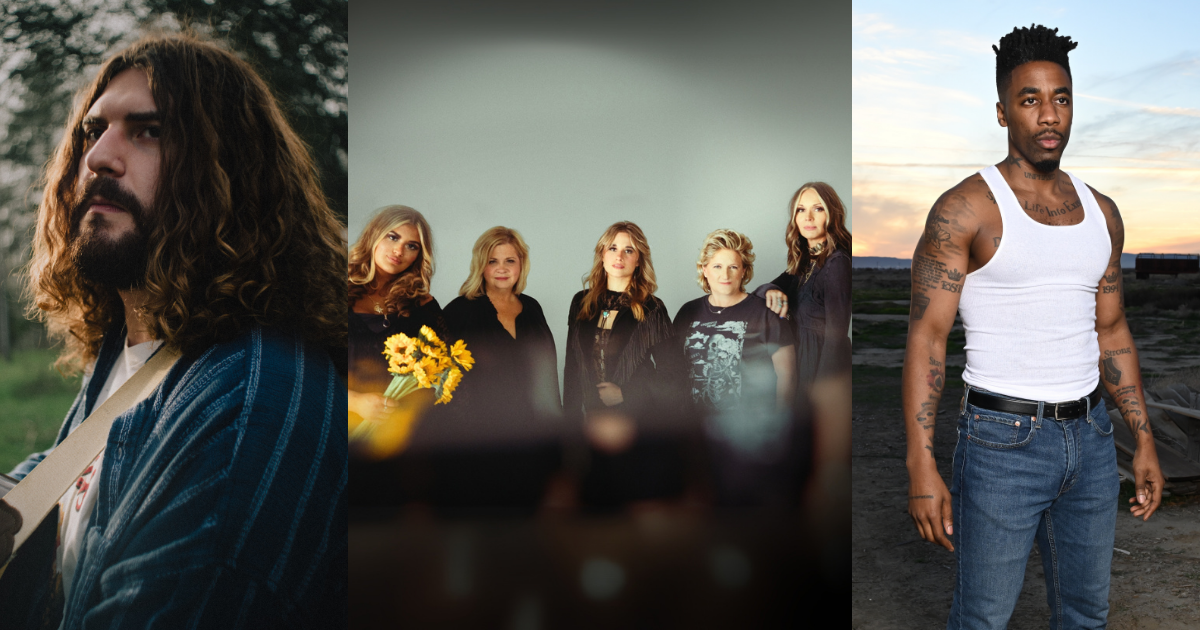
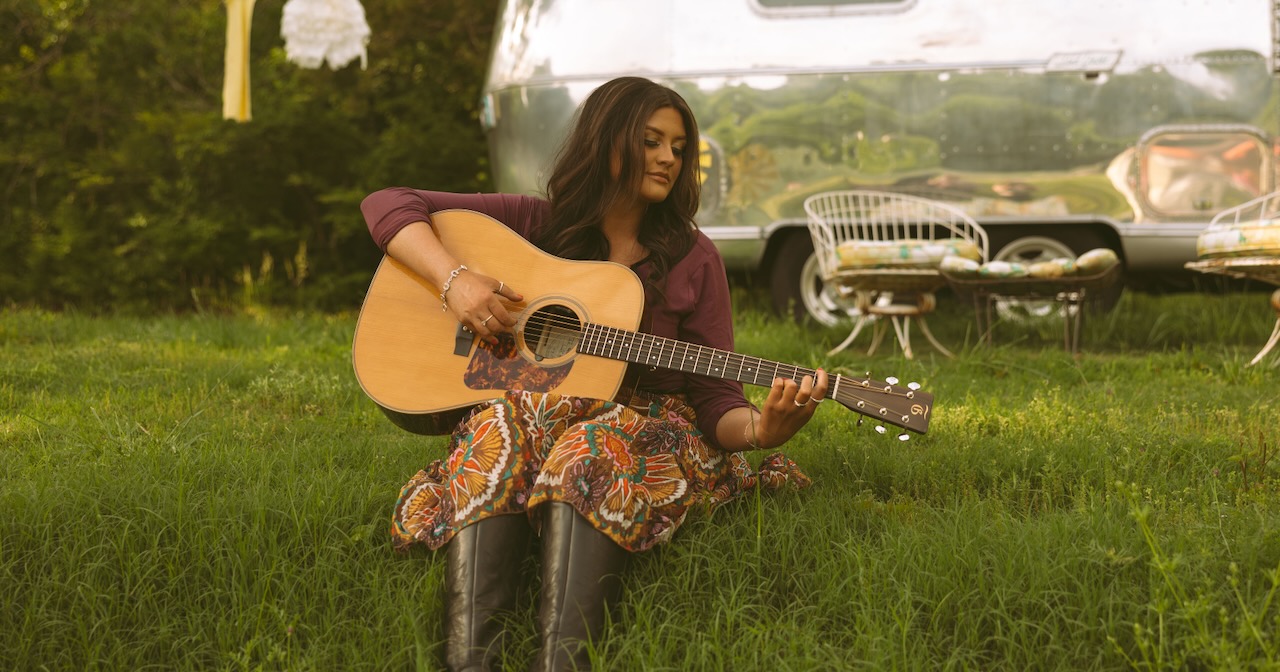
Photo Credit: (L to R) Cole Chaney by Anthony Simpkins; Sister Sadie courtesy of the artist; Dax by Annie Devine.
Additional curation and contributions by Shelby Williamson and Justin Hiltner.
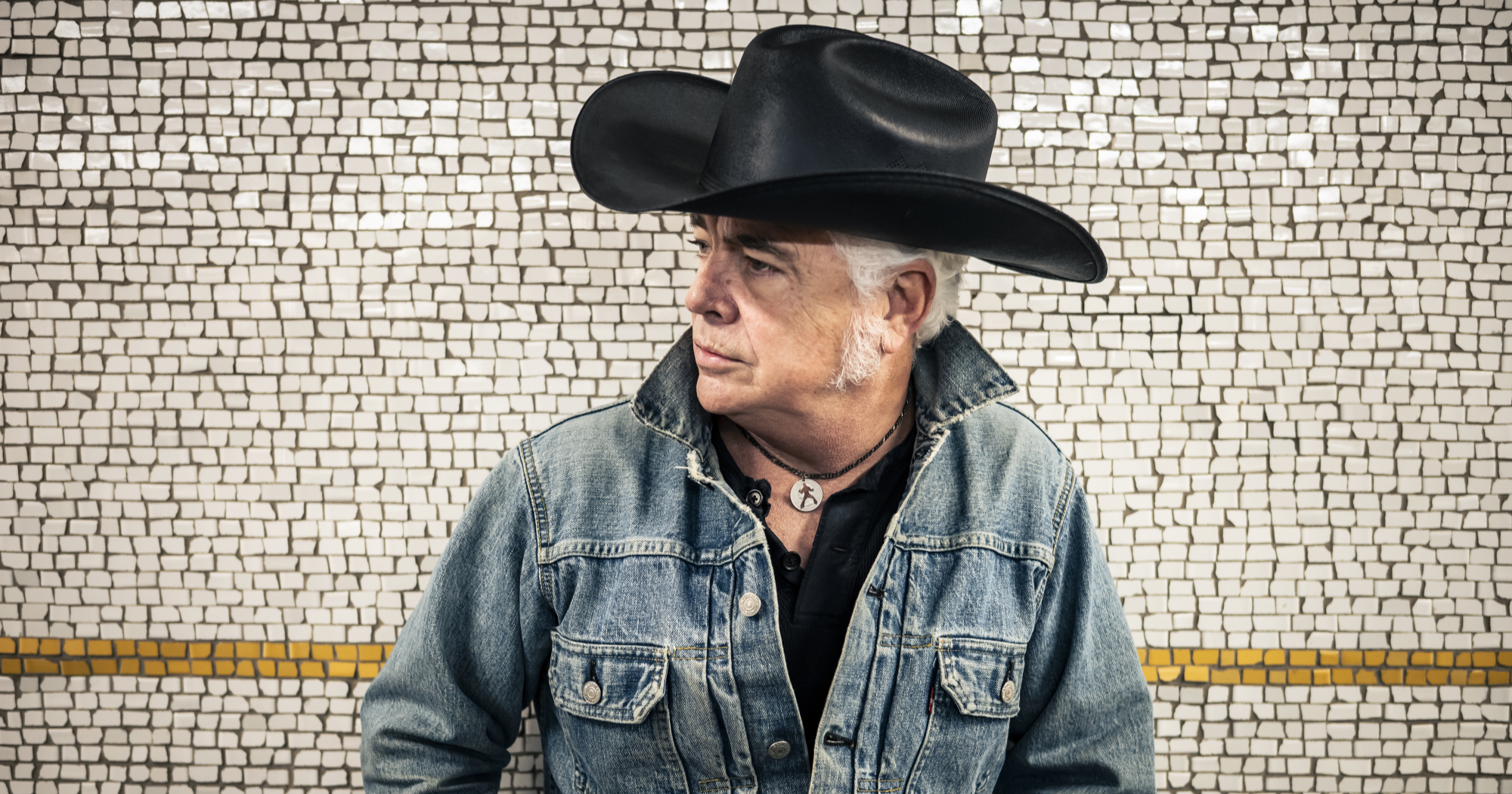
Ameripolitan music can be best defined as original music with prominent roots influence, and it has four categories: honky tonk, Western swing, rockabilly, and outlaw. My Mixtape features a song by an artist that represents the roots and then I’ll play a new artist that directly was influenced by them. You can hear the natural growth of country music when you listen to Lefty Frizzell and Merle Haggard or Kitty Wells and Loretta Lynn back to back. (Many of the roots artists had nicknames, I miss that.)
While some may hear an artist’s influence and say they are copying them, I’m of the opinion that John Lennon shared when asked about The Beatles’ influences. He said, and I paraphrase here, “One’s originality comes out in their inability to imitate their influences.” Very well said. – Dale Watson
“Who’s Gonna Take The Garbage Out” – Loretta Lynn, Ernest Tubb
Ernest Tubb had a distinctive voice as you hear on this song he sings with Loretta Lynn. Here’s the Texas Troubadour with the Coal Miner’s Daughter.
“My Wife Thinks You’re Dead” –Junior Brown
And no one is more evidently influenced by him than Junior Brown.
“Undo the Right” – Johnny Bush
Johnny Bush, otherwise known as the “Country Caruso,” was a drummer for Ray Price, the Cherokee Cowboy, before going out on his own. You would definitely hear that influence if you back-to-back Ray Price to Johnny Bush. Both are huge influences to every singer that grew up in Texas.
“Texas Honky Tonk” – Justin Trevino
This young man from Texas is carrying the Bush torch.
“D-I-V-O-R-C-E” – Tammy Wynette
The First Lady of Country Music, Tammy Wynette was married to the Possum, George Jones. She is easily at the top of women that influenced the newer singers.
“Houston Belongs To Me” – Sunny Sweeney
Singing her own divorce song, here’s Sunny Sweeney!
“Big Balls in Cowtown” – Bob Wills & His Texas Playboys
In the Western swing category this is the master, Bob Wills & His Texas Playboys.
“Riding High in Texas” – Asleep at the Wheel, Billy Strings
Though they’ve been around a while, they still burn up the road and proudly wear Bob Wills as their biggest influence. Ian Stewart sings as guest picker Billy Strings shines.
“Here in Frisco” – Merle Haggard
The Hag has influenced generations and even in death he still does. He once told me he forgot he wrote this song and was glad I brought it up so he can add it to his playlist again.
“This Highway” – Zephaniah OHora
Zephaniah OHora is now based in Nashville and he’s got a lot of great original songs. On this song you can hear the Hag in him.
“Bob Wills Is Still the King” – Waylon Jennings
In the outlaw world there is none more influential than Waylon, and in Texas we were all influenced by Bob Wills.
“Long White Line” – Sturgill Simpson
This particular song draws heavily on Waylon’s influence. And I like it.
“Ramblin’ Man” – Hank Williams
Hank Williams’ voice is one of the most recognizable in music. His songs are timeless and still inspire singers and songwriters alike.
“Thunderstorms and Neon Signs” – Wayne Hancock
You can definitely hear Hank in Wayne Hancock, but his own voice is definitely original, too – as well as his great songwriting.
“Guitars, Cadillacs” – Dwight Yoakam
Dwight Yoakam has influenced many a newcomer. Just as he was obviously influenced by Buck Owens. He came along when Nashville needed reminded of its roots.
“Lost in the City Lights” – Johnny Falstaff
Though not well known as of yet, Johnny Falstaff is picking up Dwight’s hat.
“Blue Kentucky Girl” – Loretta Lynn
The Coal Miner’s Daughter definitely left big shoes to fill, but her sassy songs inspired many women artists.
“Don’t You Ever Give Up On Love” – Brennen Leigh
That inspiration can be traced right to Brennen Leigh.
“Good Hearted Woman” – Waylon Jennings, Willie Nelson
Here’s the quintessential outlaw song by the most famously influential artists, the Red Headed Stranger, Willie Nelson, and Waymore, sometimes called Wautawsha, Waylon Jennings.
“Willie Waylon and Whiskey” – Dale Watson
The last song I’ll put in here’s is mine, because with pride I will state, yes, I am heavily influenced by Willie and Waylon. And sometimes whiskey.
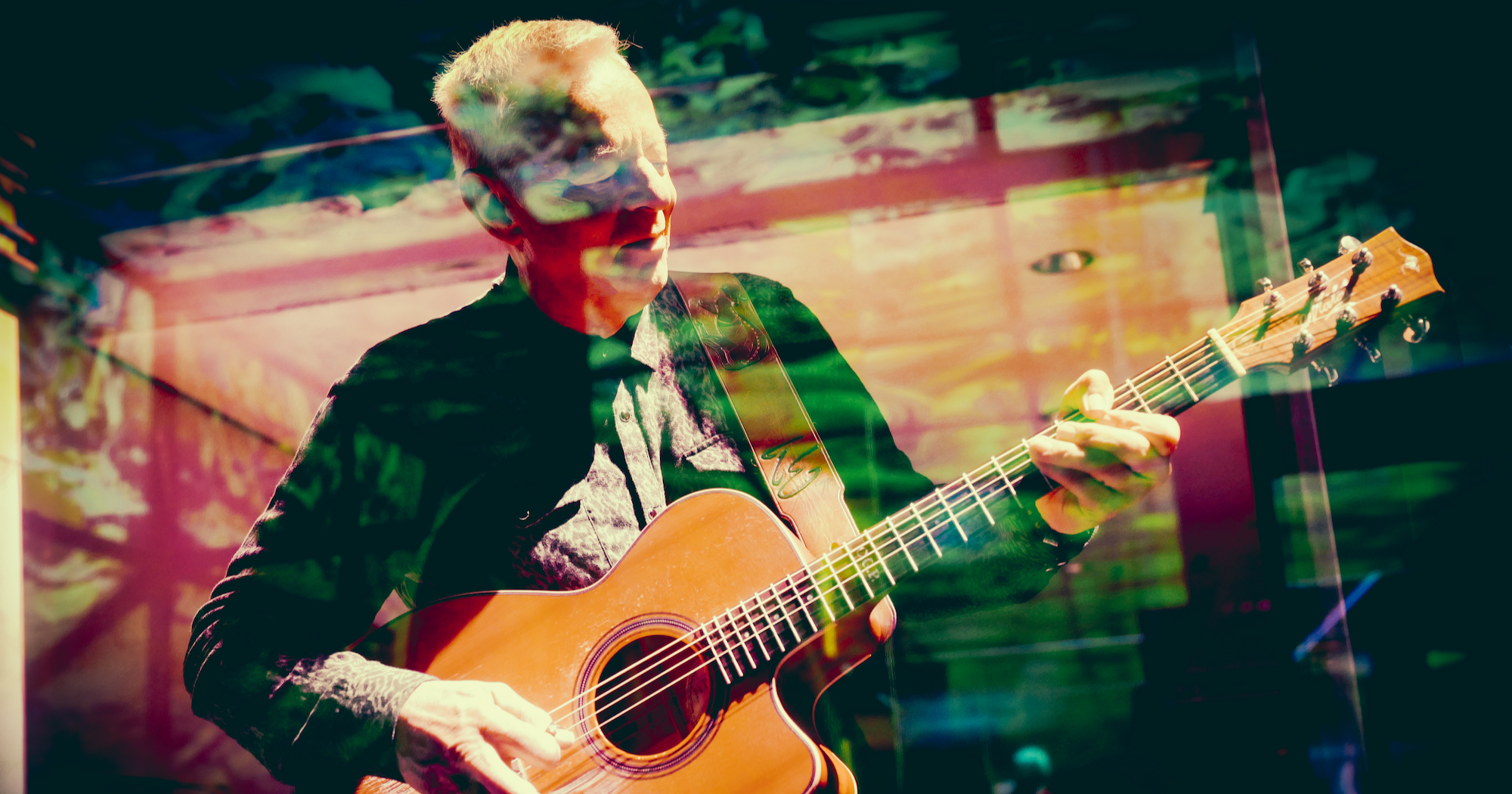
Last October, Tommy Emmanuel took a fall and busted a couple ribs at a concert in Toronto’s Massey Hall. While the injury led to some postponed concerts (although he performed the full show in Toronto), it also produced, in its own way, a very welcome result: Emmanuel’s first solo studio album in a decade.
From his home in Nashville the guitar master told BGS that he experienced a burst of creativity while recuperating at home. “I’m like, ‘Wow, I’ve got time to write and play and experiment.’ All of a sudden I’m a kid in a candy store again.” He also confided that he disregarded his doctor’s advice on how long to rest and was back on the road after “going into hibernation” for three weeks. “If I had taken my doctor’s advice, he’d have set me back 20 years. I’m a moving-forward guy,” he explains.
Emmanuel may not pass muster as a medical doctor, but he certainly qualifies as a doctor of guitar playing. In fact, an authority such as Chet “Mister Guitar” Atkins bestowed Emmanuel with his Certified Guitar Player honor, one of only four CGPs that he handed out during his lifetime. An Australian native who moved to Nashville in the early 2000s, over his long, exceptional career Emmanuel also has earned a GRAMMY, many various music awards in Australia, a Lifetime Achievement Award from the National Guitar Museum, and he is a Member of the Order of Australia.
Never one to rest on his laurels, Emmanuel delivers perhaps his most eclectic album with Living In The Light. While it is definitely stocked with exquisite acoustic picking, the album also contains some more experimental tracks. On “Intuition #25,” for example, he uses some delay pedal wizardry to reimagine an old instrumental. He also handles lead voices on a trio of tunes, including his take on an ‘80s Australian new wave pop hit “Maxine,” the even older, yet still timely “Waiting For The Times To Get Better” – previously recorded by folks like Crystal Gayle and Doc Watson – and a funky, inspiring number, “Ya Gotta Do What Ya Gotta Do,” written by his buddy Michael “Mad Dog” McRae.
Emmanuel may have turned 70 this year, but he exhibits a perennially youthful passion for music. As he explains it: “Music is my blood. I love it.”
Living In The Light is your first solo studio album in around a decade – how did it come about?
Tommy Emmanuel: Well, after I broke my ribs [last year], I knew I had to surrender from touring, and so I was forced to come home and hibernate – try to get my ribs fixed or healed. When I got home, even though I was kind of slightly medicated because of the pain and everything, I was in a great place. I didn’t have to walk out the house and fly somewhere and go play shows. All I had to do was be here and get healed. … Probably the best thing to happen to me was falling, breaking my ribs, and then being poured into a break, because then I got the whole record together.
The first thing I wrote was “Black and White to Color.” It’s like full of energy, full of spark, it’s got everything. It’s completely adventurous and it just came out of nowhere. I started playing some of the guitars that I don’t take on the road, and all of a sudden I got this idea in the way it went. And that’s kind of like how it all came together.
How did you hook up with Vance Powell as your producer?
My great desire was to work with Vance Powell, who I had heard and discovered through Chris Stapleton, Jack White, and people like that. I just loved his work. It was so real and so pure. And I thought, “I’ve got to work with this guy.” He is so busy that last year when I tried to book him, he could only give me four days this whole year, right? That’s how busy he is. So, I booked him. And we cut the whole album, finished, [and] mixed it in four days. That’s it.
I got to tell you that Vance is my kind of guy. There’s no bullshit. There’s no wasting time. We start at 10, we finish at 6. That’s it. We didn’t work all night and wear ourselves out and labor over take after take after take after take. People are always surprised when you say, “Well, I just did it in one take.” They’re like: “What? That’s impossible.” No, it’s not. I have to do it every night when I walk on stage.
You sing on a couple songs on this album, which is more than you usually do.
I’ve worked with some great singers and I’m not one of them, but there’s an honesty about what I do. If you sing something because you really love it and you love to sing it, that’s a good enough reason, you know? I don’t have to prove that I’m the world’s best singer, because I’m not.
Where did the album title, Living In The Light, come from?
I’m glad you asked that. This is how it all started. I was out with my buddy, “Mad Dog.” Him and I are early morning walkers. We go down to an area called Percy Priest Lake here in Nashville and there’s a three-mile walk. We usually do that at like 6 a.m. We’ll meet there and we’ll walk the three miles and talk and laugh and carry on.
And he was amazed how well I looked. He said, “Brother, I’ve never seen you looking so well. You must be living in the light.” And when he said that, I went: “That’s it!” I just thought: “Living in the light. Wow, this is what it’s about.” We’ve all had enough darkness. Let’s get some light.
Can you talk a little about the guitars you use here?
They’re mostly my touring guitar, my Maton Traditional, it is called. When I did “Ready for the Times to Get Better,” I borrowed a Martin D28 because it was just the right sound for that track. When I played “Little Georgia,” I used my Larrivée, which was a different, Canadian guitar and it just sounded just right for that track.
Did you know which guitar you wanted for “Little Georgia” or did you try your Maton guitar and then go, “I don’t think it’s the right match”?
I went straight to the Larrivée because the guitar has a sweetness and it has great sustain. When you play it in a kind of close-to-the-microphone, intimate way, it’s like everything you need is right there, and it’s beautiful.
I’m a song player, I’m a song person, and so I need the right voice to tell the story.
And on instrumentals, your guitar is like your voice?
That’s right. I tell stories without words. That’s my job.
Bluegrass has been influential in your music, but on Living in The Light it seems less prominent than other albums.
I tend to not think about putting a label on it or a genre. Bluegrass music is to me as soulful as R&B or as in-your-face as rock and roll. So I never worry about someone saying “Oh, is this really bluegrass?” or whatever… I’m hardly bluegrass, but yet I am bluegrass in many ways. But I’m also R&B and I’m rock and roll, and I love pop music. I just like good songs and good music.
What American music did you first connect with growing up in Australia?
My first love was Jimmie Rodgers and Hank Williams. And then I heard Jim Reeves and Marty Robbins. Then, when I was about seven, I heard Chet Atkins and that galvanized me. That sent me on another path and changed my life completely. Because when I heard Chet Atkins, something changed inside me. I heard a sound that I’d never heard before and I just knew that’s what I wanted to do. “I want to do that – whatever that is.” I didn’t know how to play like him at all. But I worked it out myself.
And because, you got to remember, this is the early ‘60s. There were no music shops. There were no guitar teachers. There was no video. There was no TV in Australia that we could see live music on. It was all either on the radio or the record player. That was it.
To have Chet Atkins take you under his wing must have been an unbelievable dream come true.
Exactly! You said it, right on. When my dad died, I was 10, I kind of retreated into Chet’s records. That’s what got me through that terrible loss and that period. And I ended up writing a letter to him and he wrote back and we stayed in touch. We were like pen pals and he stayed in touch with me.
Then somebody sent him a tape of me playing when I was about 18 and I get this letter out of the blue. It’s from Chet saying, “I heard your tape and when you come to Nashville, you call me and here’s the number.” He gave me his office number. I came to Nashville to meet him in 1980 and we were like family when we got together. He was my daddy, you know.
You’ve hosted a guitar camp for several years. Is that a way for you to mentor the next generation of musicians, similar to what Chet Atkins did for you?
It’s not just my camp. It’s nearly every night of my life, wherever I am. I meet young players and people and I try to be a positive force for them in their life. I try to show them that if you’re willing to put the work in, this is what’s possible, because I came from nothing and from nowhere, and this is what you can do. You’ve just got to stick at it. Do not quit. You know, stuff like that. But also, my camps give me a chance to talk to people from the perspective of: “I’m an example to you of someone who makes a living playing the guitar. I don’t do anything else.”
Most of the teachers that I employ are much better teachers than I am, but I have fun talking about what I do and demonstrating stuff that shows people behind the wizardry that they’re seeing with their eyes. I can open the window on it and say, “Look in here, this is what I’m actually doing.”
Congratulations on turning 70 earlier this year. I was wondering how your playing style has evolved. Have you had to make any adjustments to the way you play guitar?
Here’s the truth. I’m pushing harder than ever. I’m getting out there like a kid having the time of my life. I’m bulldozing the shit out of everything. I’m having a great time. And I feel energized, inspired, and I just feel like I don’t have that anxiety of, “Oh I’ve got to get out and prove myself.” I just get out and play because I love to play and take people with me. It’s as simple as that.
Of course, there are certain things, like some songs that I try to play that I struggle with now, because my skills in some areas are not what they used to be. I can hear myself playing a song 30 years ago and I go, “Holy shit, I can’t play anywhere at all like that now.”
But I can do other stuff that’s more meaningful to me now, you know. So, my focus has changed. I know that I don’t have the skills in some areas that I used to have but I’ve been there and done that, so now I’ve got this. And I’ll try to do my best with whatever I’ve got to give the people right now at this time in my life.
It certainly seems like you also now have the freedom to make the music that you want to make.
That’s exactly right. And I don’t labor over stuff and I’m not a perfectionist. It’s about telling the story and capturing the feeling of the whole thing, even if it has a few rough edges. If this is the one that has all the feeling, [then] that’s the one I’m going to live with. I’m not going to try and polish it up.
I’m just going to say, “This is it and here’s the story,” and that’s it. … It’s only the people who are willing to be true to their art [who] are the ones that the public actually really likes – all the other stuff is contrived.
Artist:Lauren Lovelle Hometown: Newton, Kansas Latest Album: My EP, Other Dreams, released September 9! Personal Nicknames (or rejected band names): Lolo or Lo. I really liked the band name “Lauren Lovelle and the Matter Babies,” too.
Which artist has influenced you the most – and how?
I’ve always been mesmerized by Linda Ronstadt’s voice, and the passion she channels when singing. She pours her entire heart out. Every song she ever sang felt like it was completely her own.
What’s your favorite memory from being on stage?
My favorite memories onstage are with my dad’s band as a child. There is something supernaturally special about making music with kin. I started playing with him when I was four. The memories of my father and grandpa teaching me to play and perform pass through my mind to the soundtrack of that ABBA song, “Thank You For the Music.”
“Thank you for the music, the songs I’m singing/ Thanks for all the joy they’re bringing… Thank you for the music, for giving it to me.”
What other art forms – literature, film, dance, painting, etc. – inform your music?
I absolutely love to dance. It’s so necessary and healing. Just like my therapist would tell me to do with emotions, I like to identify where exactly I feel the song in my body. It can be powerful to share the emotional embodiments of the songs with the band to help us communicate and feel it as a unit. Sometimes, I write something that I feel in my legs and feet and it makes me want to stomp and strut around the stage. Sometimes I write something in my shoulders and chest and it makes me feel like I’m floating. Sometimes the song springs from my gut or hips where it feels more natural to dig my feet in, staying planted and upright.
If you didn’t work in music, what would you do instead?
I’m a nursing school dropout. I was a CNA for awhile, so I could’ve likely continued down that path. I always told my mom I’d be a truck driver so I could listen to music and sing in the car as loud as I want all day. But when I was old enough to find out they can’t smoke weed, I decided that was no longer in the cards for me.
Since food and music go so well together, what is your dream pairing of a meal and a musician?
It’s simple, but listening to Hank Williams and eating beans or chili and cornbread feels right. I have done it before on purpose and by accident. Real cowboy meal. Makes me feel close to my grandpas.
I seriously love sad songs and it’s honestly so hard to keep this Mixtape short. Every time I think I’m done, I remember another song that deserves a spot. Some songs are perfect for those late-night lonely vibes, while others hit harder on a rainy day. I just think sad music has this special kind of beauty that happy songs can’t match. It’s dramatic, emotional, and somehow comforting at the same time.
Honestly, this Mixtape feels more like a mood diary than just a list of songs. Even now, I know I’ve left off some that should be here which means I’ll probably end up making a “Part 2.” At this point I might as well admit I’m the CEO of sad playlists. But hey – you can never really have too many sad songs, right? – Jaelee Roberts
“Desperado” – The Eagles
“Desperado” is a song that has grabbed me by my heart strings for my whole life. The melody alone just has that sad and lonesome feel that I love so much. A line in the lyrics that always jumps out at me is, “You better let somebody love you before it’s too late.” That grabs my heart in the best way.
“Marie” – Blue Moon Rising
The first time I heard this song it stopped me in my tracks. The way Keith Garrett sings it is absolutely the epitome of lonesome. The song is about a man struggling his entire life to make ends meet and finally he gets a glimpse of happiness through a woman he meets, Marie, and she and their unborn baby pass away. Townes Van Zandt’s lyrics paint a heartbreaking picture of poverty and loss.
“He Stopped Loving Her Today” – George Jones
George Jones is my all-time favorite and this is an obvious choice, but such an important one! This song has often been called “the saddest country song of all time” and I might just have to agree with that. A short explanation is that a man lost the love of his life and he was never able to get over her until he passed away – that’s when he finally stopped loving her. That is absolutely gut-wrenching, but I am obsessed with the song and love it so much.
“I’m So Lonesome I Could Cry” – Hank Williams
I am a huge Hank Williams fan and I have always listened to this song when feeling sad. The way his voice almost cries when he sings it just gets me in my heart and feelings every time I hear it. I am a bit of a country music history nerd and I study a lot about the lives of my heroes and learning about him and this song – the lyrics are so sad and hit even harder when you get into the story behind writing the song. He wrote it after he and his wife Audrey split up amongst his struggles with addiction… it’s heartbreaking.
“Are You Lonesome Tonight” – Elvis Presley
I have loved this song since I was a little girl. Elvis was my first love and I can remember this song being one of the first songs to ever make my heart feel sad. I was just a little kid and thinking, “Oh my goodness, is he okay?” The cry and emotion in his voice is so tragically beautiful and it’s a go-to sad song when I need to hear one. The lyrics are so sad. When you hear his voice say, “…And if you won’t come back to me, they can bring the curtain down…” it breaks my heart every time.
“Lonesome Town” – Ricky Nelson
The first time I heard this song I was hooked. The melody, the lyrics, his hauntingly sad voice made my heart hurt in the way you want it to hurt when listening to a sad song. I really love this song!
“Both Sides Now” – Joni Mitchell
This song is filled with the most beautiful imagery. It’s about viewing love one way and then having your heart broken and seeing love a different way – seeing it “from both sides now.” It’s such a perfectly crafted song and Joni’s voice is so sad and raw on this track.
“Let Me Be Lonely” – Jaelee Roberts
When I first heard this song I knew I had to record it. If you can’t tell, sad songs are my absolute favorite songs and this one hit me hard. I am so honored I got to sing this one. I love the way that it all came together with the way the fiddle sounds so sad and then accompanied by the crying steel guitar (my favorite sound in the world). I love the harmonies that the writers of this song, Kelsi Harrigill and Wyatt McCubbin added. It just completed the lonesome feeling. My favorite lyric in the song is the opening line: “Don’t come knockin’ on the door/ That smile’s not welcome here anymore.”
“Chasing Cars” – Snow Patrol
I actually first heard this song during a heartbreaking scene of one of my favorite TV shows and I remember feeling so sad. Every time I hear this song I feel like I’m in a sad music video. Lyrically, the song is just so great. I love the chorus when it comes in strong and says, “If I lay here, if I just lay here, would you lie with me and just forget the world?”
“Manhattan” – Sara Bareilles
I am a huge Sara Bareilles fan and this song has always had a hold on me. It’s one of the first songs that made me want to play piano. Her voice and the piano work together to make such a beautifully sad song. The song is about finding love, sharing their lives together in Manhattan, and letting that other person have that special place when the relationship ends. The way it’s written is just genius, really.
“Weekend In New England” – Barry Manilow
The melody of this song is what first caught my ear’s attention and then Barry starts singing and it’s just so beautiful. I have loved this song since I was just a young girl and have always listened to it when I feel sad. It’s just a classic sad song and you cannot go wrong with listening to it over and over.
“Heartbreaker” – Dolly Parton
I can still remember sitting in the backseat of our car in the driveway at home – small enough that I wasn’t allowed in the front seat yet. My mom would turn on WSM and we’d sit there together listening to the Grand Ole Opry until it was over. I’ll never forget one night when Little Jimmy Dickens had just finished his segment and the Opry signed off. The DJ came on playing music and that’s when it happened – Dolly Parton’s “Heartbreaker” came on. In that moment, my world stood still. I had never felt so heartbreakingly sad from a song, yet so completely happy at the same time. It was the first time music truly hit me that hard and it’s stayed with me ever since. “Heartbreaker, couldn’t you be just a little more kind to me?” So, so good.
“Misery and Gin” – Merle Haggard
This is another song that I have loved as long as I can remember. The music and melody starts off and then you hear Merle’s voice come in singing, “Memories and drinks don’t mix too well/ Jukebox records don’t play those wedding bells…” What a perfectly sad scenario! Merle Haggard is one of my favorites and could sing anything and make it sound sad, which I love so, so very much. This song is so lonely, but so beautiful and the lyrics are everything a sad lonesome song should be.
“Cry In The Rain” – Jaelee Roberts
This song is so beautifully written. Penned by two incredible songwriters – Billy Droze and Chris Myers – it tells a sad story about being heartbroken over someone, but refusing to let them see your tears. Instead, you hide your pain and only let yourself cry in the rain. I really love this image – it’s sad, strong, and poetic all at once. To me, that’s what makes the song so special. I feel truly honored to have had the chance to record it and tell the story in my own voice.
“Between an Old Memory and Me” – Keith Whitley
Keith Whitley had a way of singing that made you feel every single word, as if he lived inside the stories he told in his songs. In this song especially, when he sings the line, “I don’t want to talk about it, why can’t they just let me be?” you can literally hear the raw desperation and aching sadness in the cry of his voice. It’s lonesome, it’s haunting, and it’s heartbreak wrapped in melody. I love this song with my whole heart – it’s everything I admire about Keith Whitley’s music.
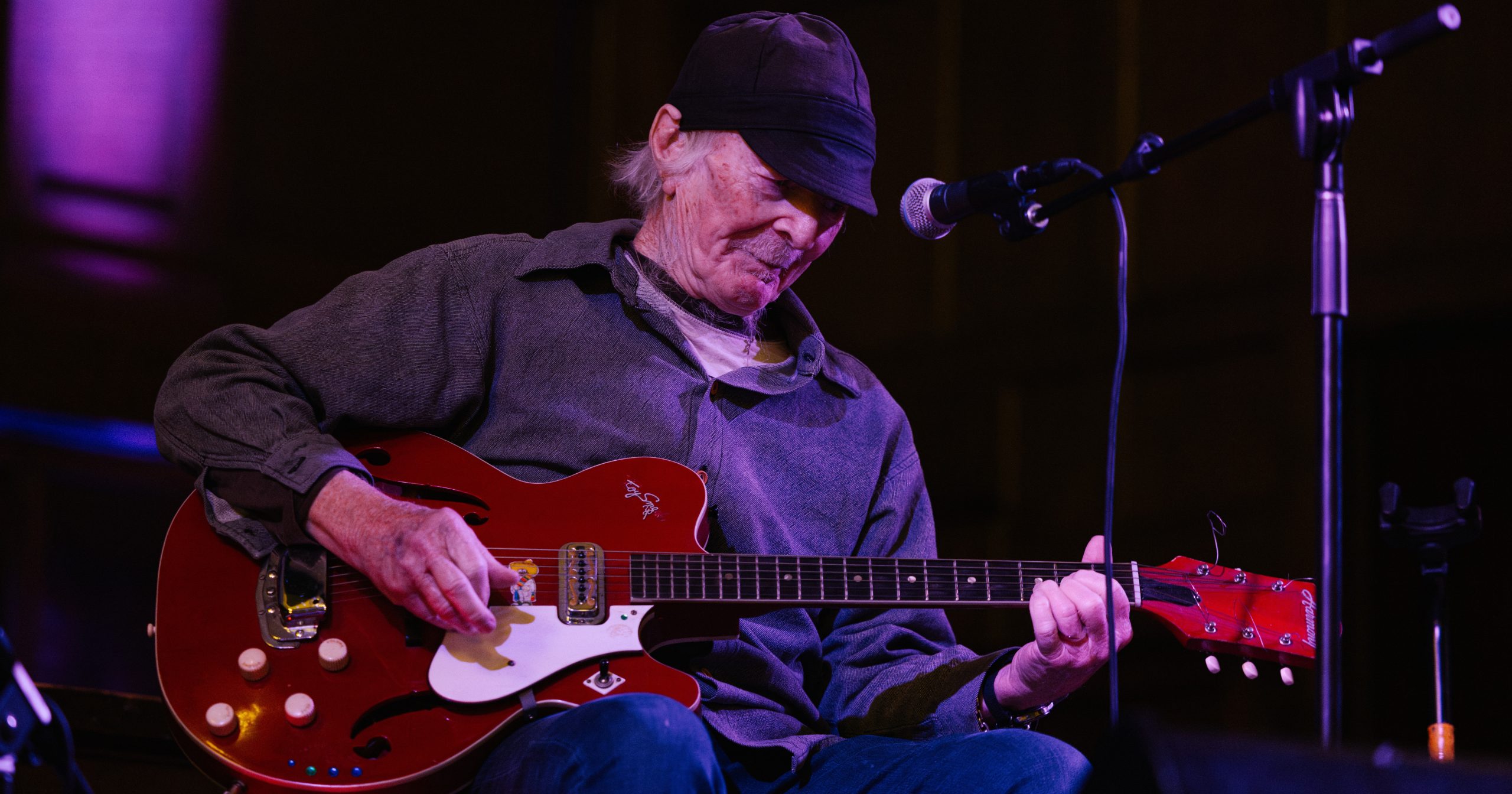
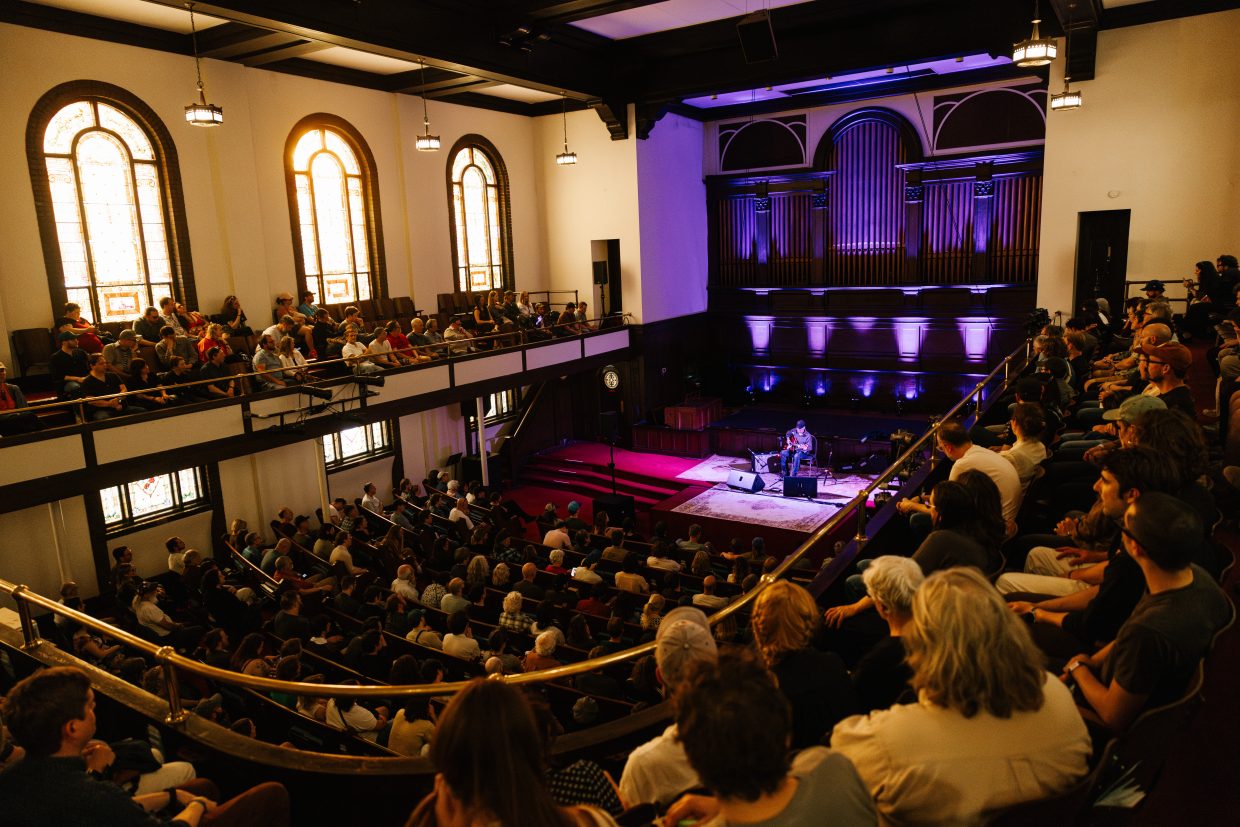
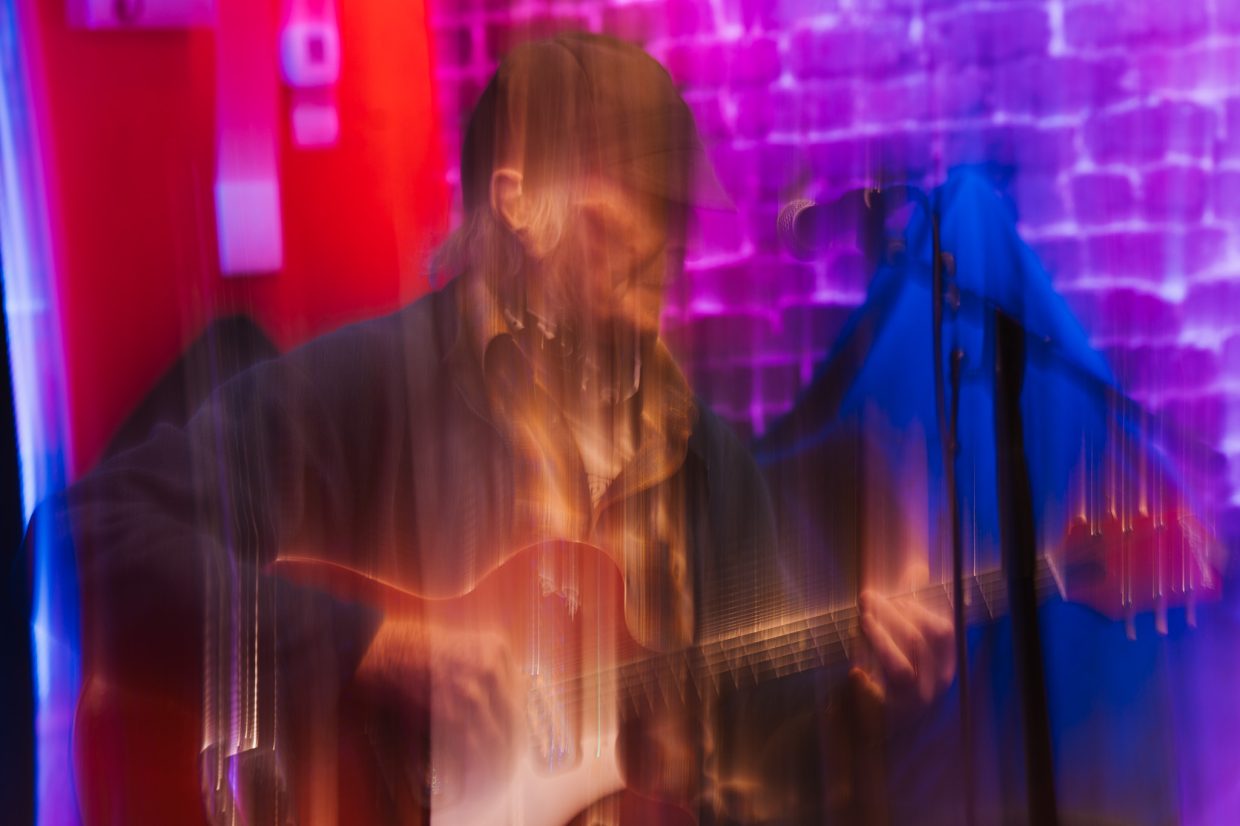
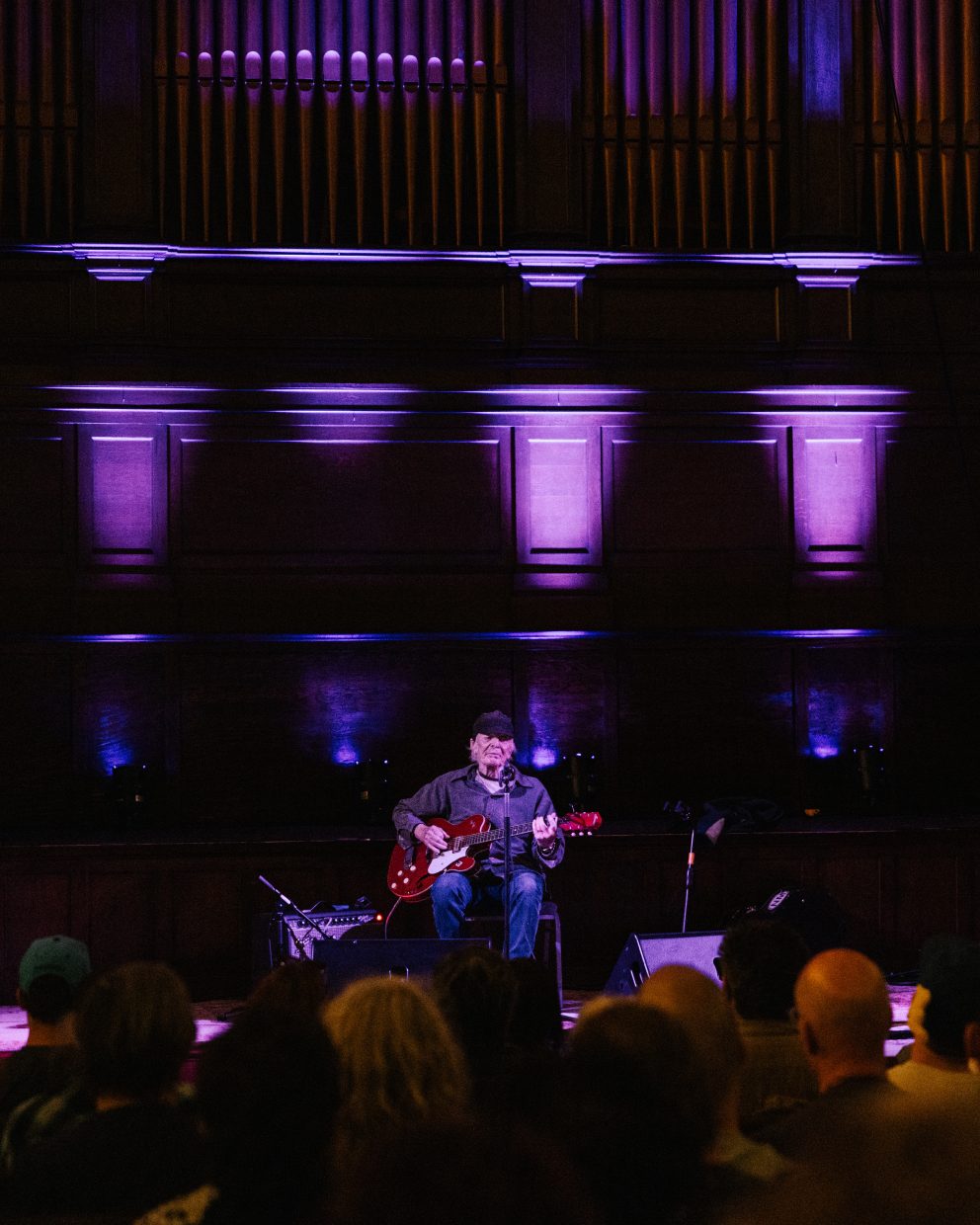
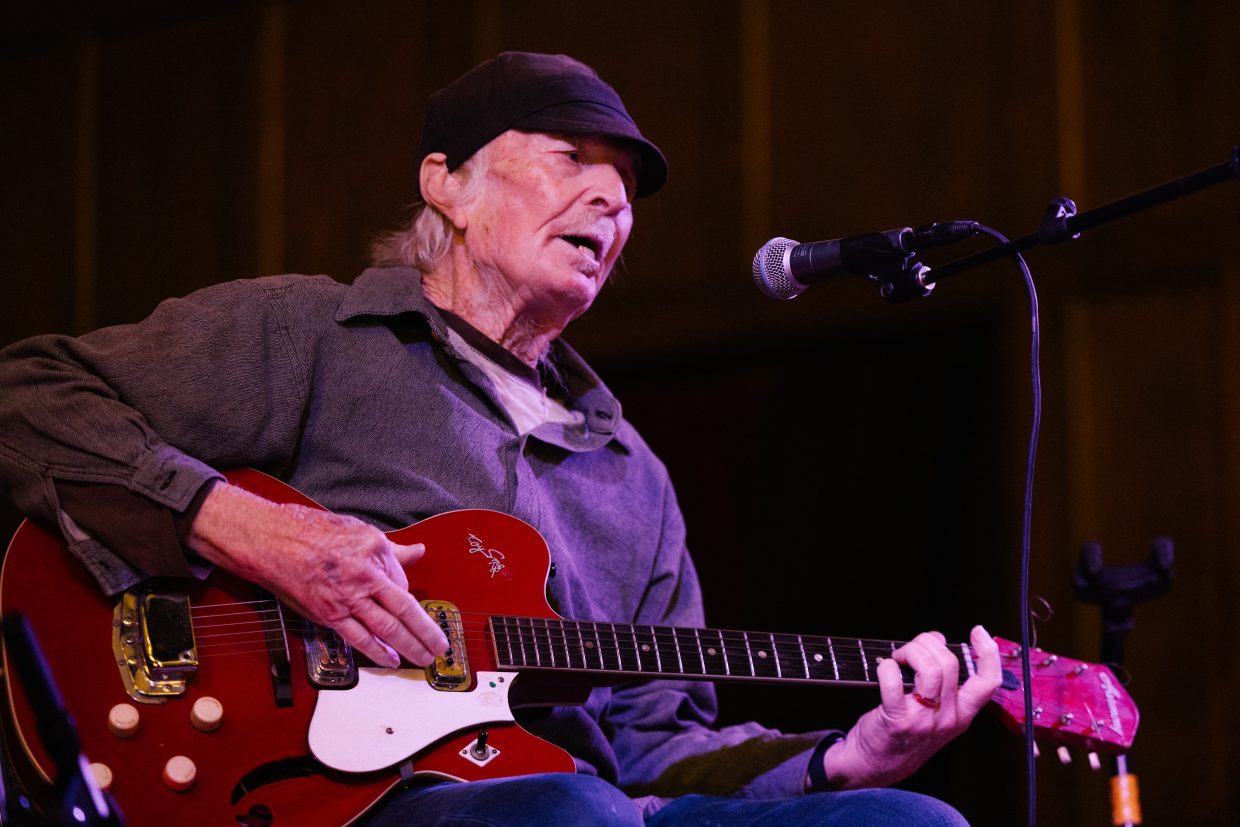
(Editor’s Note: Thanks to our friends at Big Ears Festival, held at the end of March in Knoxville, Tennessee, we’re able to share these photos of revered folk icon Michael Hurley taken during what the world would later realize were two of his final performances, captured shortly before he passed on April 1, 2025.
To honor Hurley’s incredible legacy and his indelible impact on roots music, we’ve paired the photographs from Big Ears with a heartfelt remembrance by longtime Hurley acolyte and BGS contributor Dana Yewbank.
Our hearts go out to Michael Hurley’s friends, family, loved ones, and collaborators as we all grieve this humble-yet-towering figure in our corner of the music world; our gratitude goes out to Big Ears for sharing these intimate and lovely time capsule photographs.)
I first encountered Michael Hurley– the influential singer-songwriter who recently passed at the age of 83 – in a room painted like a 1960s rendering of a time machine. Big black-and-white spirals looped around the floor of the stage, awash in a moody, pink glow.
The show was at the Woodland Theater in Seattle, Washington, in 2018. I was there with friends – a ragtag group of fellow musicians who’d all been inspired by Hurley’s music in one way or another. My friend Bobby wore a shirt from Oakland’s Burger Boogaloo festival, which rings like the name of a Michael Hurley song that never was.
Michael Hurley performs for his official Big Ears appearance to a packed house at the Point in Knoxville, TN. Photo by Andy Feliu.
We got there early. In a performance space the size of a small café, Hurley was sitting in the corner next to the stage, quietly playing a worn piano. My friends and I exchanged looks of mild wonder, realizing we had walked in on something unexpectedly intimate. Quietly finding seats among the folding chairs, we soaked in the scene as the room filled up. Throughout the night, we interacted with Hurley in passing as if we were all just milling about someone’s living room. He attentively watched all the opening sets. Bobby showed him where the bathroom was. Hurley never acted like a living Americana legend, even though he was one.
Raised in Bucks County, Pennsylvania, and an eventual cultural fixture of Astoria, Oregon, Michael Hurley wrote and recorded surreal, folk-esque blues and Americana songs across seven decades. He also made comics, self-published several art zines, and made an unspeakable impression on the broad world of American folk music. He continued to perform up until his death, which came suddenly the day after his final performance. Michael Hurley spent his last evening on earth playing his timeless, effervescent songs at the AyurPrana Listening Room in Asheville, North Carolina.
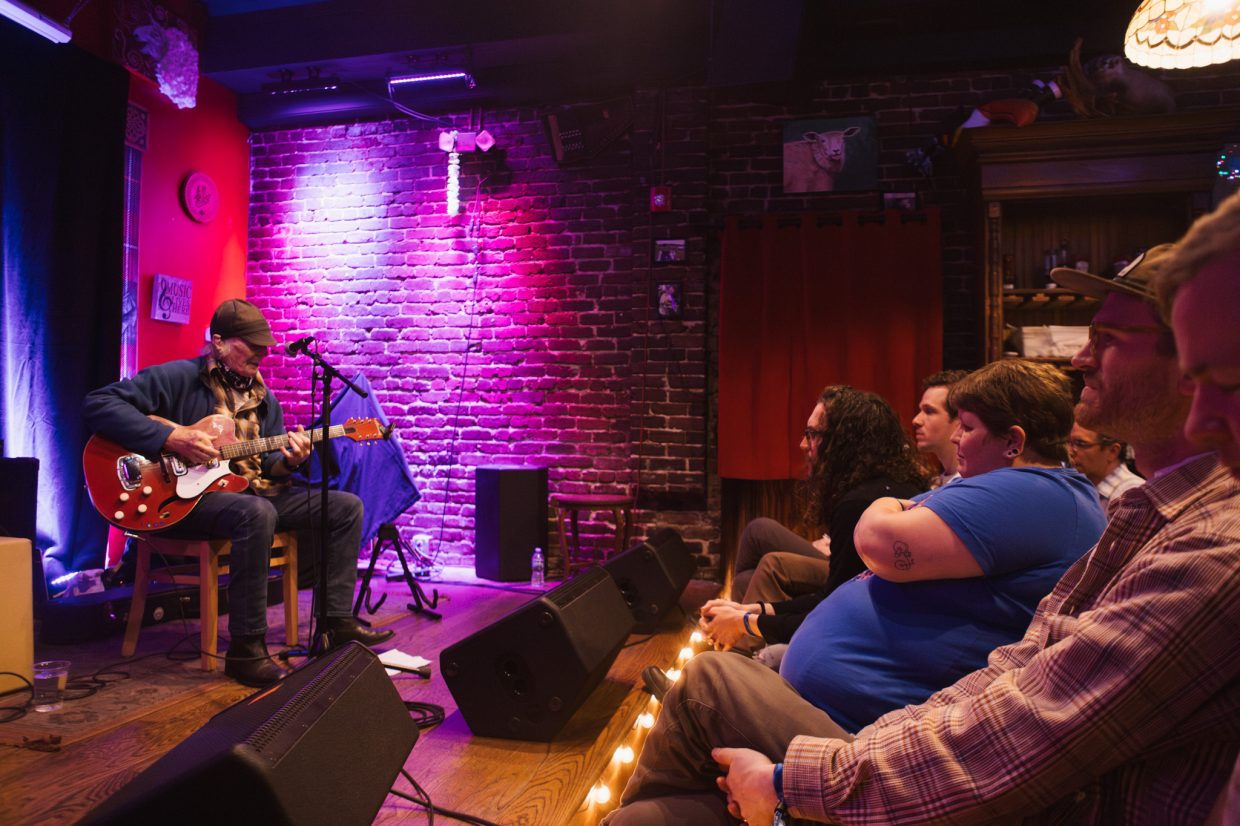
Michael Hurley also wowed a small audience at a surprise Big Ears performance at Boyd’s Jig & Reel, a small Celtic pub. Photo by Joeleen Hubbard.
My doorway into the world of Michael Hurley was First Songs, a lo-fi collection of recordings published by Folkways in 1963. The songs on that album have a subtle, somber quality that’s harder to find on Hurley’s later, more jovial records. Listening, it feels like taking a long, slow walk through a deep forest at dusk. Less sunshine and laughter than Have Moicy! or Long Journey, but as a sad, confused 20-something, the mist and mystery of First Songs drew me in. “Animal Song” will always be the sound of being 24, reluctantly living back in my small Northwestern hometown, not far from the place Hurley would eventually call home.
But melancholia is far from what Michael Hurley became known for. Instead, his music is beloved for its surrealism, lightheartedness, and humor. Hurley sang about aliens, ghosts, werewolves, and potatoes. His songs abound with clever turns of phrase and humble imperfection, offering a sort of unselfconscious freedom to listener and musician alike.
That night at the show in Seattle, a 76-year-old Hurley played for an impressive two-and-a-half hours, never seeming to lose steam. He must have played through at least 50 songs by the end of the night, which doesn’t even touch the several hundred he wrote and recorded throughout his life.
The magical Michael Hurley, mid-surprise appearance at Boyd’s Jig & Reel. Photo by Joeleen Hubbard.
Despite being called the “godfather of freak folk,” Michael Hurley never fancied himself a folk musician. Most of his influences fit squarely in the world of jazz and blues: Lead Belly, Lightning Hopkins, Fats Waller. He even cited country songwriters like Hank Williams, but rarely any notable folk artists. His eclectic influences make sense: Hurley’s songs have an unpredictable liveliness to them. They jump and wander, following a path seemingly guided by Hurley’s creative intuition alone.
But when it came to how he approached his life and career, Hurley lived fully into the folk tradition. He made his own album art, released some of his own records, and toured with zero frills. He also had a salt-of-the-earth political ethos and didn’t shy away from using music as activism. In 2014, Hurley assembled a compilation of “anti-Monsanto songs” and released them for free on Bandcamp.
Michael Hurley performs at the Point at Big Ears Festival. Photo by Andy Feliu.
Hurley (or Elwood Snock, as he liked being called) was a musician of the people, only ever taking himself just seriously enough, unafraid of welcoming play and spontaneity into his work. His legacy has a lot to teach us about just how essential these qualities are to the creative process — because if making art isn’t a form of play, then what is it?
That unbridled, unbothered element makes Hurley’s music deeply comforting and grounding. It roils and pops like a low fire you can warm yourself by. It’s trustworthy and safe, emerging from the endless present moment, bubbling up like a fountain from which we can all drink.
Michael Hurley by Andy Feliu.
Honey, honey, honey, have you ever blowed bubbles underwater when you’re feeling bad? You let your lips begin a-buzzin’ the bubbles rush up like mad. Right there you’ve got somethin’ to help you out when you ain’t got nothin’ to brag about.
Hurley frequently collaborated with other artists – from his Unholy Modal Rounders to Marisa Anderson and Kassi Valazza – and he continued to make new connections well into his final years. Adrianne Lenker, who counted Hurley as a friend, recently credited him as one of the reasons Big Thief became a band, in a post memorializing Hurley on Instagram.
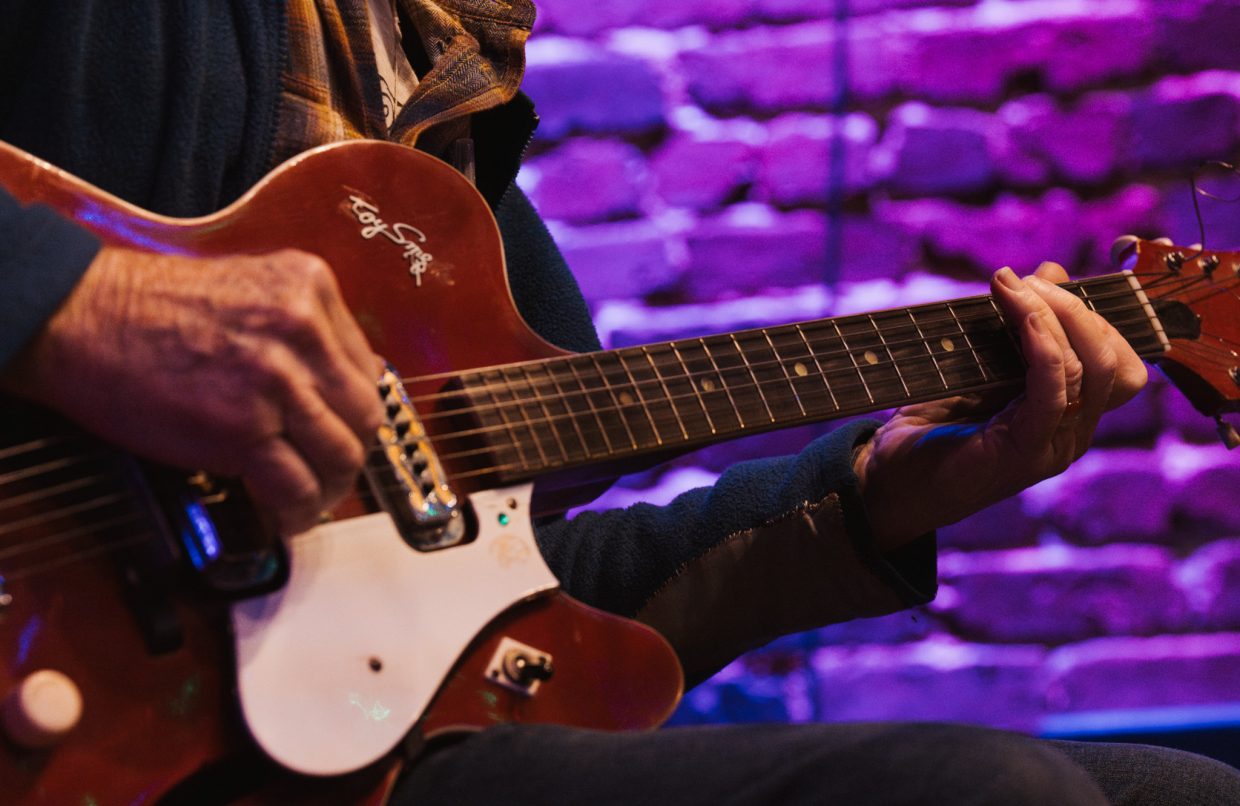
Michael Hurley’s red Harmony Roy Smeck guitar. Photo by Joeleen Hubbard.
Infinite rivulets flow out from Snock’s work, watering seeds of creativity wherever they go, rippling and rolling over the landscape much like Hurley did – from Jersey City to Vermont to Astoria.
Michael Hurley passed on April Fool’s Day, which is painfully fitting. He loved a good joke, taking things that might otherwise feel heavy and heartbreaking and peppering them with levity and brightness. Now, in his absence, we can let his songs buoy us through dark times, of which there are too many, and laugh alongside us in the light.
All photos courtesy of Big Ears, shot by Joeleen Hubbard and Andy Feliu as credited. Lead Image: Andy Feliu.
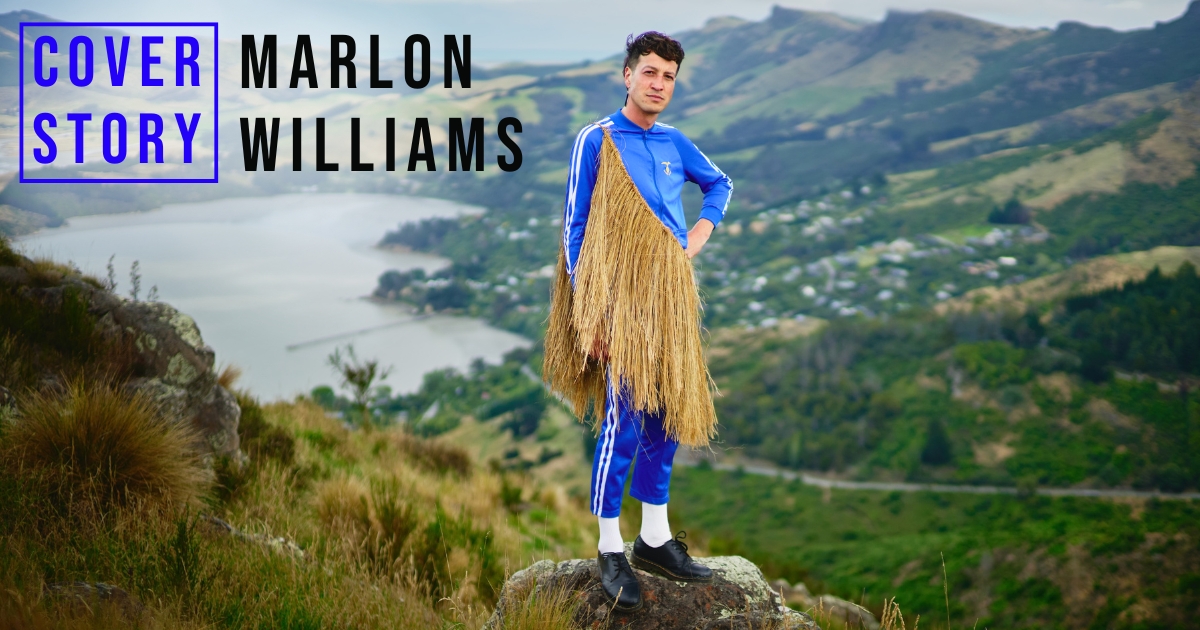
When he was in his early twenties, Marlon Williams watched a series of major earthquakes flatten Ōtautahi/Christchurch, the largest city in Te Waipounamu (the South Island of New Zealand). In the wake of that tragedy, the Māori New Zealand artist ascended onto the national and later international stage as a singer-songwriter, guitarist, and actor with a million-dollar smile and a golden, heaven-sent voice.
As a narrative device, it would be easy to enshrine his experiences during the earthquakes as a baptism by fire, a star emerging from the flames. However, as he puts it, “It’s tempting to say that experience fostered the folk scene here, but we’d been building something for a while before the earthquakes. When you look backwards through the haze of time, it’s easy to start telling yourself stories.” It’s a fitting reminder that things are never as simple as they look on the surface.
Now, fifteen years on, Williams is on the brink of showing us how deep things go with the release of his fourth solo album, Te Whare Tīwekaweka (The Messy House). In a similar tradition to the outdoorsy, range-roving sensibilities of his previous three records, the album represents an antipodean blend of country and western, folk, rock and roll, and mid-to-late 20th-century pop, connecting the musical dots between America, Australia, and Aotearoa (New Zealand).
This time around, however, Williams – a member of the Kāi Tahu and Ngāi Tai iwi (Māori tribes) – made the decision to step away from English and sing in his indigenous tongue, te reo Māori. Therein, his guiding light was a traditional Māori whakatauki (proverb), “Ko te reo Māori, he matapihi ki te ao Māori,” which translates into “The Māori language is a window to the Māori world.” As displayed by the album’s lilting lead singles, “Aua Atu Rā,” “Rere Mai Ngā Rau,” and “Kāhore He Manu E” (which features the New Zealand art-pop star Lorde), he’s onto something special.
During the reflective, soul-searching process of recording Te Whare Tīwekaweka, Williams found solidarity in his co-writer KOMMI (Kāi Tahu, Te-Āti-Awa), his longtime touring band The Yarra Benders, the He Waka Kōtuia singers, his co-producer Mark “Merk” Perkins, Lorde, and the community of Ōhinehou/Lyttelton, a small port town just northwest of Ōtautahi, where he recuperates between touring and recording projects.
From his early days performing flawless Hank Williams covers to crafting his own signature hits, such as “Dark Child,” “What’s Chasing You,” and “My Boy,” Williams’ talents have seen him tour with Bruce Springsteen and the Eagles, entertain audiences at Newport Folk Festival and Austin City Limits, and appear on Later with Jools Holland, Conan, NPR’s Tiny Desk, and more. Along the way, he’s landed acting roles in a range of Australian, New Zealand, and American film and television productions, including The Beautiful Lie, The Rehearsal, A Star Is Born, True History of The Gang, and Sweet Tooth.
From the bottom of the globe to the silver screen, it’s been a remarkable journey. The thing about journeys, though, is they often lead to coming home, and Te Whare Tīwekaweka is a homecoming like never before.
In early March, BGS spoke with Williams while he was on a promo run in Melbourne, Australia.
Congratulations on Te Whare Tīwekaweka. When I played it earlier, I thought about how comfortable and confident you sound. Tell me about the first time you listened to the album after finishing it.
Marlon Williams: It was that feeling of nervously stepping back from the details and seeing what the building looks like from the street. I felt really pleased with how structurally sound it was.
What do you think are the factors that allow you to inhabit the music to that level?
I’ve spent my entire life singing Māori music. No matter my shortcomings in speaking the language fluently and having full comprehension in that world, the pure physiology of singing in te reo Māori has been my way in. There’s a joy and a naturalness that has always been there. That gave me the confidence to take the plunge and really enjoy singing those vowel sounds and tuning on those consonants.
We’ve talked about this before. Part of what facilitated this was singing waiata (songs) written in te reo Māori by the late great Dr. Hirini Melbourne when you were in primary school (elementary school).
Those songs are so simple and inviting, especially for children. They really help you get into the language on the ground level. A lot of what he did for this country can feel quite invisible, but most of us have some knowledge of the sound and feeling of the language as a result. It feels like a really lived part of my upbringing. His songs gave me a push forward into something that could have otherwise felt daunting and deep.
For those unfamiliar, could you talk about who Dr Hirini Melbourne was?
Hirini Melbourne was a Tūhoe and Ngāti Kahungunu educator and songwriter from up in Te Urewera [the hill country in the upper North Island of New Zealand]. He was born with a real sense of curiosity about the world and a sense of braveness and self-belief about taking on Te ao Māori [the Māori world] and bringing it to people in a really straightforward way. Hirini decided the best way was writing songs children could sing in te reo Māori about the natural world around us.
If you listen to his album, Forest and Ocean: Bird Songs by Hirini Melbourne, you’ll also see a lot of Scottish influence in terms of balladeering, melodies, and instrumentation. Later, he started collaborating with Dr. Richard Nunns. They’d play Taonga pūoro [traditional Māori musical instruments] and go into some very deep and ancient Māori music. Hirini’s whole career was this beautiful journey that was tragically cut short [in his fifties].
When I think about your music, I think about historical New Zealand country musicians like Tex Morton and John Grenell, who emerged from Te Waipounamu before finding success in Australia and America in the mid-to-late 20th century.
I wasn’t super aware of that tradition until I learned about Hank Williams and completely fell in love with country music. After that, I realised there was a strong tradition back home. I guess it gives you a sort of reinforcement, a sense of history, and a throughline you can follow to the present moment.
I also think about New Zealand’s lineage of popular singers. People like Mr Lee Grant, Sir Howard Morrison, John Rowles, and Dean Waretini, who I see as antipodean equivalents to figures like Roy Orbison, Scott Walker, and Matt Monro. What does it say to you if I evoke these names around your album?
A lot of the celebration around this record is the celebrating the ability of Indigenous people – in this case, Māori specifically – to absorb what is going on in the world and make something from it. You can think about it in other terms, but I think about it in the sense of creativity. If you think about Māori religions like Ringatū [a combination of Christian beliefs and traditional Māori customs], there’s this willingness and this sort of epistemological elasticity to be able to go, “Oh, these things make sense together.” I can wield this tool. I’m going to come to it with my own stuff and create something unique and strong that is a blend of worlds. The main energy that was guiding me on this record was that tradition of synchronisation.
When do you consider to have been the starting point for Te Whare Tīwekaweka?
The literal start point was May 2019. That was the first time I sat down, had the melody and the structure of “Aua Atu Rā” and realised there was an implication in the music of what the song was about. This lilting lullaby was emerging. I’d say it was boat stuff. That was the first moment when I realised I was writing a waiata. I didn’t quite have it yet, but the phrasing was in [te reo] Māori, and I knew where it was telling me to go. At the time, I had a [Māori] proverb in my head, “He waka eke noa,” which means, “We’re all in this boat together.” I’ve always struggled with it. I believe it’s true, but we’re also completely alone in the universe.
From there, everything locked into place.
It strikes me that feeling connected could be considered an act of faith. You have to believe that it’s more than just you.
If I think about faith, I think about surrender, being humble, having humility, and going to a place I can acknowledge as new ground. I think faith is a useful word here.
Tell me about the conditions under which Te Whare Tīwekaweka came together.
It was pretty patchy in terms of the momentum of it. Once I had “Aua Atu Rā” loosely constructed, I took it to Kommi [Tamati-Elliffe], who helped me make sense of the grammar. After that, it sat there for a bit.
Kommi is a writer, rapper, poet, activist and lecturer in Māori and Indigenous Studies and te reo Māori. They perform te reo Kāi Tahu, the dialect of the largest iwi (tribe) within Te Waipounamu (the South Island of New Zealand). How would you describe them?
Kommi is a shapeshifter. I can’t work out how old they are. I found it hard to work out what they thought of me, but I knew there was this lovely softness there that belies a lot of deep thinking and some real sharpness. They’re very enigmatic as a person and a creative entity. One time, we got drunk at a party and talked about some work they were doing on phenomenology through a Te ao Māori lens. We were talking about that and making the most crass puns imaginable. There was this dichotomy of high-level and low-brow thinking that felt really playful.
What you’re telling me is you felt safe with them?
I guess. That’s all I can hope for in a collaborator.
Let’s get back to Te Whare Tīwekaweka.
After I’d been sitting on “Aua Atu Rā” for a while, my My Boy album came out. In retrospect, you can also hear a lot of the direction that eventually went into Te Whare Tīwekaweka was already starting in My Boy. That took off for a bit, but all the while, I was back-and-forthing on songs in [te reo] Māori with Kommi. They’d send me lyrics all the time and I’d play around with them without really committing anything to paper.
Once I was near the end of touring My Boy, I started to turn my attention back to Te Whare Tīwekaweka. Then I agreed to let the director Ursula Grace Williams make a documentary about me [Marlon Williams: Ngā Ao E Rua – Two Worlds]. I thought, “Right, they’re filming me, so I better do what I’m saying.” Part of the intentionality was that the documentary would frame it into a real thing and make it happen. There was nowhere to hide.
Across the album, you sing about living between worlds, love, the land and sea, the weather, solitude, and travel, often through metaphors that invoke the natural world. Why do you think you gravitate towards these themes?
On a very basic level, I’m a very sunnily disposed person in terms of the way I comport myself. I feel desperately in love with people in the world and feel terrified of losing people, situations or understandings. These are the things I think about. The fact that I write songs like this is my outlet for ngā kare-ā-roto [what’s going on internally] and my darker side. I like to be warm and friendly in how I deal with people, but a little bit more severe when it comes to matters of the heart.
What do you think it has meant to make an album like this right now in Aotearoa and Te Waipounamu (New Zealand)?
Personally, I have a sense of achievement from having built something in that world. It also does something for my sense of family, in terms of representing a side of them very publicly that hasn’t always been accessible to them. There’s a lot of Kāi Tahu dialect on the album, so in terms of iwi, it feels good to put something on the map that speaks directly to the region. At the same time, this all sits within a very heated and fractious national conversation. On one level for me, it’s by the by; on another level, it’s great to have Māori music accepted into the mainstream. Whatever the political conversation going on is, if you can compel people with music, you’re really winning the battle on some level.
Taking things further, what do you think it means to be presenting Te Whare Tīwekaweka to a global audience?
Most places I go overseas, there is a sense of goodwill and excitement about marginalised languages being platformed. There’s a broader appetite due to people having instant access to a range of music through the internet. The threads you can draw together now are so vast and ungeographically constrained that I think people’s Overton window of what they’ll sit with and take in, even without knowing they’re not fully comprehending it, has shifted. I think people are generally either really open to that or completely shut off, which is something I don’t personally understand.
We can’t get around talking about Lorde singing on “Kāhore He Manu E.” It felt like she really met you where you were standing.
This speaks to the album in general. It was about bringing things to where I was standing. I didn’t want to jump into anyone else’s world. I had it in the back of my mind that I wanted her to sing on it. In the past, she kindly offered, “If you ever want me to sing on something, I’ll do it.” I could hear her on it from the moment I started writing it. There have been a few songs like that which have been very easily labored. They don’t take much writing and are always my favorite songs. It was important to me to get her involved in a way that wouldn’t be a post-hoc addition. She had to be part of the stitching of the record itself.
How do you feel in this moment, as you prepare to see what happens next?
I’m just excited to get these songs out into the world and see what they morph into when I start getting on stages and seeing what they do in a room. That’s going to change the way they feel and the way they want to be played. The second creative part of it is getting to the end of the tour and realising that the songs have become completely different from on the record. That can be a fun thing. Sometimes, it leads to remorse that you didn’t record them in the way they’ve gone. Other times, you realise you’ve completely ruined the song and gone away from what was good about it. I’m excited for the deployment.
It’s Valentine’s Day again, which means we’re all wading through a saccharine sea of pink-and-red grocery store displays, sentimental commercials for overpriced jewelry, and unsolicited reminders of how dreamy love is supposed to feel. But country doesn’t shy away from the gritty, painful sides of love – and neither do we. So, if you need an escape from the nausea-inducing love parade this year, we’ve got you covered.
From classic pleas like Dolly Parton’s “Jolene” to rage-filled revenge ballads like Miranda Lambert’s “Gunpowder & Lead,” this Good Country playlist is packed full of songs about betrayal, heartbreak, regret, and unfaithful partners. Whether you’re recovering from a recent stab in the back or staving off memories of a long-lost love, these songs will ride with you through the pain and see you to the other side of another gruelling Valentine’s Day season.
Check out a few of our favorites and below you’ll find over four hours of cheatin’ songs on our Good Country playlist on Spotify.
“Does My Ring Hurt Your Finger” – Charley Pride
Jerry Crutchfield and Don Robertson mastered the art of the gentle-yet-cutting callout when they wrote this song for Charley Pride back in 1967. Released on Pride’s third album, The Country Way, “Does My Ring Hurt Your Finger” tells the story of a kind and understanding husband whose wife just can’t seem to keep her wedding ring on when she goes out on the town.
Unlike a lot of cheating songs that devolve (understandably) into anger and spite, this one holds a certain gentleness that we can really appreciate. Pride’s voice is booming and rich, but it’s also tender and emotive as he essentially says, “Hey, not to step on any toes here, but would you mind not pretending you’re single every time you go out? Thanks.”
“Whispering Waltz” – Sierra Ferrell
Sierra Ferrell’s “Whispering Waltz” is an earnest and sorrowful song of surrender. Showcasing the clear, subtle qualities of Ferrell’s voice, this short and sweet waltz holds no anger or contempt – just simple sadness and the acceptance of having been betrayed.
While much of Ferrell’s music highlights her skill as a belter and larger-than-life performer, this tune underlines her talent as a songwriter. But the recent four-time GRAMMY winner is no stranger to writing mic-drop-worthy cheating songs. One of her earliest hits, “Rosemary” (which originally garnered attention as a Gems on VHS field recording on YouTube) tells a time-tested and brutal tale of a woman who murders her disloyal partner’s mistress and buries her under a flower bush.
While of course we absolutely do not condone this kind of unhinged behavior, both “Rosemary” and “Whispering Waltz” are some of the best country songs about cheating and betrayal penned and performed in recent decades. And murder ballads, after all, have been a country tradition since time immemorial.
“Your Cheatin’ Heart” – Hank Williams
It may seem like too obvious a choice, but this list just wouldn’t feel complete without a nod to one of Hank Williams’ most famous songs – and one of the most well-known country cheatin’ songs ever recorded.
Written nearly 75 years ago, “Your Cheatin’ Heart” has been resonating with scorned lovers everywhere since its release in 1952. A great example of Williams’ knack for timeless storytelling and a brilliantly simple song structure, this country classic won’t make your heartbreak go away, but it might make it just a little easier to bear (at least for two minutes and 41 seconds).
“Gaslighter” – The Chicks
This fiery 2020 release from country superstars The Chicks is electrifying from its first belted notes to its last. An extremely personal song written by the band’s longtime frontperson, Natalie Maines, “Gaslighter” is direct, confronting, and does not mince words. We won’t name any names, but we wouldn’t have wanted to be in Maines’s ex-husband’s shoes when this banger first dropped.
For anyone out there who’s ever been cheated on, lied to, or misled by a long-term partner, “Gaslighter” offers an empowering boost of righteous redemption and brutal-yet-necessary honesty. In the words of one anonymous commenter on YouTube, “If you can’t afford therapy, listening to this song about 20 times on repeat works.”
“I’m Gonna Sleep with One Eye Open” – Dolly Parton
Written by Lester Flatt and first recorded by Flatt & Scruggs in 1955, “I’m Gonna Sleep With One Eye Open” is an irresistible bluegrass take on the classic cheatin’ song. Dolly Parton’s version, recorded for her 1999 album, The Grass Is Blue, might help cheer you up if you’re feeling down and out this Valentine’s Day. (Because really, who can be in a bad mood while listening to Dolly Parton?)
Of course, Dolly’s better known for a different song about jealousy and the risk of betrayal – her 1973 megahit, “Jolene,” which is quite possibly the most well-loved and well-known country song to ever hit the airwaves. In 2024, Rolling Stone named “Jolene” the greatest country song of all time, calling it “the ultimate country heartbreak song” – and we won’t dare disagree.
“Fist City” – Loretta Lynn
Before Dolly Parton’s “Jolene” there was Loretta Lynn’s “Fist City.” With both dukes up, Lynn wrote this iconic country diss track in 1968, allegedly inspired by her real-life husband’s habit of cavorting with other women. But while the song quickly reached number one on the Billboard Hot Country Singles chart after its release, it was soon banned by most major radio stations for its controversial theme. (That is, Lynn threatening to beat people up for hitting on her husband).
Lynn went on to have upwards of a dozen songs banned from various radio stations throughout her career, because they often addressed feminist themes (though Lynn herself didn’t identify as a feminist). In fact, some radio stations still won’t play Lynn’s song “The Pill,” a single released in 1975 about birth control and sexual freedom. This Valentine’s Day, we’ll be blasting “Fist City” in honor of Lynn, who passed in 2022, and in honor of everyone else who’s ever been wronged by someone who made promises they weren’t prepared to keep.
Want more Good Country? Sign up to receive our monthly email newsletter – and much more music! – direct to your inbox.
Lead Image: Audrey & Hank Williams by Henry Schofield (1951), courtesy of the Country Music Hall of Fame.
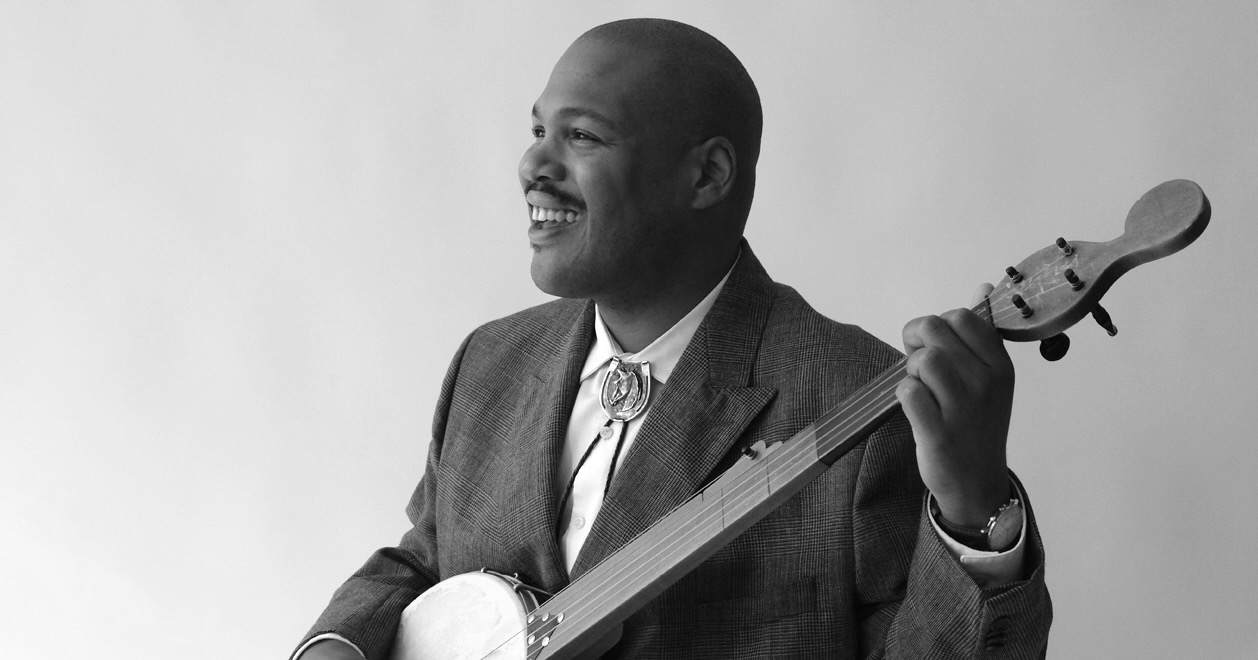
The music, sparse and spooky, sounds at the same time strangely universal and possibly from the last century, but as Jerron Paxton notes in his album title, Things Done Changed. The major difference on Paxton’s fifth album (including his 2021 duet set with Dennis Lichtman) is a big one. He wrote the songs.
“It wasn’t a very difficult decision,” Paxton said. “I had always had a list of tunes to record of my own compositions. I had to get enough cogent tunes to be an album, because you can’t have something that’s all over the place.
“You can’t have overtures with your hoedowns.”
The material on Things Done Changed is evidence that Paxton is no novice songwriter. These are words infused with hard living, what he calls “a good album full of blues tunes.”
In the standout track, “So Much Weed,” Paxton weaves amusement and a little resentment that there are Black people still serving time for minor drug offenses in an era when legal marijuana stores are in many states.
“Things done changed from the ’90s until now/ Lend me your ear and I’ll sure tell you how/ We got so much weed/ And the law don’t care/ My poor uncles used to have to run and hide/ Now they sit on their front porch with pride.”
A telephone call with Paxton is an adventure. He doesn’t back down and enjoys putting you on the spot if you’re susceptible to that.
A lot of your work is in vintage music styles. Why not a more contemporary sound?
Jerron Paxton: I play a diverse array of styles. I started off playing the banjo and the fiddle. As a matter of fact, I’m one of the few professional Black five-string banjo players in the world.
You have roots in Los Angeles and your family is from Louisiana. How did each of those places affect your music?
Well, I play the music of that culture, so it affected it in totality. It’s like being Irish and playing Irish music.
Could you give me a sense of how you evolved as a musician?
I started off with the fiddle and moved to the banjo and the guitar and piano and things like that. It was just a natural evolution, getting interested in one and that leading to another and to another, growing up in the house that was full of the blues. That’s mostly what my family listened to. [My aunt] almost listened to strictly the blues, while my grandma was kind of eclectic like me, and listened to everything. She liked Hank Williams and all sorts of country music and jazz and everything like that.
… I grew up in, first of all, a family full of Black people. So I got exposed to all sorts of Black folk music and Black popular music of every generation. You were just as liable to hear [Mississippi] John Hurt and Son House and Bukka White in my house as to hear Marvin Gaye, Michael Jackson, and Sam Cooke. If you heard bluegrass, that was mostly me. I was the one blasting Flatt & Scruggs and people like that.
You didn’t grow up in Louisiana, yet your music seems to be tied to music from the South.
My grandparents grew up there. My family migrated to Los Angeles with the death of Emmett Till and they brought their culture with them. But that doesn’t say much, because the majority of the culture in South Central [Los Angeles] is from Louisiana, so it’s not like we went someplace completely foreign. We went someplace where we were surrounded by people who were from where we were from.
I love the song “So Much Weed.” It’s a funny song about a serious thing, that there are many Black people in prison for marijuana convictions on charges that are now legal. Do people laugh when you play it?
I don’t play it live. Well, I don’t play it on stage. I usually play it in small gatherings for close friends.
Would you tell me more about your grandmother and how she influenced your music?
She was a fun, loving lady from northwestern Louisiana. My mother had to work, so I spent most of my time with [my grandmother] and grew up gardening and fishing, and getting the culture that you get when you’re raised in the house with your grandmother. Her mother was across the street. So I had four generations of family on one street.
So some of the songs on Things Done Changed were written some time ago. Why sit on them?
Some of the tunes were kind of personal and I just sort of kept them for myself and my friends. Other ones I had been singing on stage for a little while and said, “Maybe I should record this song first chance I get.” And other ones I had been singing since I was little, since my grandma helped find some words to them. So it’s all kinds of processes. Some of them take a lot of labor.
Do you mostly like to work alone live, or do you like to mix it up with other musicians sometimes?
It depends on the context. If I’m being hired as a soloist, that’s what you do, and that seems to be the most in demand. There’s not too many people who can go on the stage by themselves and hold the audience for 45 or 90 minutes or two hours with just the instrument. So people tend to hire me for that and there’s a lot of solo material unexplored because of that. But I play jazz music, so that’s a collective art. I play country music, which is also a collective art. I play blues music, which is a collective art. So you know, they’re all collective, but the solo is what people ask for. It travels easy.
So how would you like your career to develop? Do you have a plan?
I’d like to be filthy rich, just grotesquely rich and have a mansion with a lake. [Laughs] … But to be honest, I’m kind of enjoying building what I have, and I haven’t really seen any end to it. That might be a good thing. It just seems to be getting better. So I don’t see a need to worry about the end as much as how to make the best parts of what’s happening now last longer.
What kind of rooms are you working? Are you doing clubs for the most part?
I play festivals and basically any place that’ll have it, theaters and places like that. Any place that wants good music, I try to be there to supply.
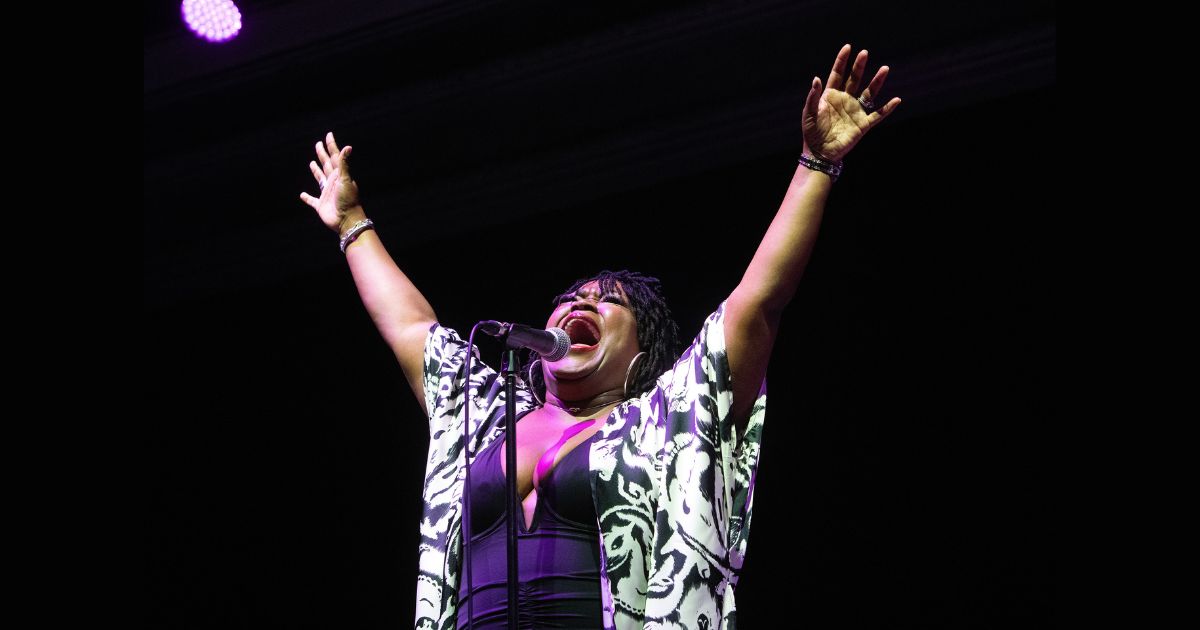
Though she downplays notions of fame and exposure, vocalist, songwriter, and bandleader Shemekia Copeland qualifies as a genuine star.
Among 21st century blues artists, she’s right there with Christone “Kingfish” Ingram, Gary Clark Jr., Robert Cray, and Eric Gales as performers whose audience outreach and cache extend far beyond the restrictive circle of specialty radio shows and festivals, where far too many fine performers in that genre are confined. From profiles in The Washington Post, Chicago Tribune, New York Times, Philadelphia Inquirer, CNN, and NPR to coverage in such journals as Rolling Stone and No Depression, Copeland’s ascendency as a performer, her maturation, and her poignant and important vocal and compositional force are consistent and impressive.
It’s accurate, if a bit cliched, to say Copeland was born to sing the blues. The daughter of the legendary Texas shuffle blues great Johnny Copeland, she grew up in Harlem and was accompanying her father as an eight-year-old on the stage of the famed Cotton Club in New York. A decade later she signed with Alligator Records and began a career that’s done nothing but soar since the release of her first album for the label, Turn Up The Heat, in 1978.
Her two most recent LPs, 2018’s America’s Child and 2020’s Uncivil War have cemented her stature. America’s Child featured a rousing version of Ray Wylie Hubbard’s “Barefoot In Heaven,” the personalized romantic tune “Fell In Love With A Honky,” and a tough cover of “Nobody But You,” a tune immortalized decades before by her father. Uncivil War reflected a major happening in Copeland’s life – the birth of a son – and also included memorable numbers once again addressing contemporary issues. America’s Child won both the Blues Music and Living Blues Awards as Album of the Year. Uncivil War won the same honor from not only Living Blues, but DownBeat and MOJO magazines, too. Copeland’s earned multiple Blues Music honors and GRAMMY nominations to date.
Yet many, Copeland included, feel the best is yet to come. Evidence of that can be heard throughout the 12 songs on her newest Alligator LP, Blame It On Eve, which was released August 30. This latest effort again superbly combines social insight, humorous reflection, and tremendous musical numbers. The results are a dynamic presentation of the ideal combination of modern studio technology, distinctive personal commentary, plus the lyrical flair and expressiveness that’s characterized great blues since its inception.
Blame It On Eve, also recorded in Nashville, is her fourth project produced by Will Kimbrough and Copeland gives him high praises for his continuing contributions to her music.
“With Will it’s always magic and the ideal collaboration,” Copeland told BGS during a recent interview. “He really understands my music and how to get the best out of what I’m doing in the studio. No matter what I bring him, he finds a way to improve it, to make it better, and make it work. He’s really been a huge key to the success that I’ve had, and I also really love working in Nashville.”
Kimbrough utilized a host of outstanding special guests for the session. They include Alejandro Escovedo, Luther Dickinson, Jerry Douglas, DeShawn Hickman, Charlie Hunter, and Pascal Danae (of Paris-based band, Delgres).
While Copeland has never shied away from addressing social issues on her albums, she doesn’t like or embrace the notion she’s being “political.” Instead, she prefers the term “topical,” while freely acknowledging that she sees it as important to discuss a variety of subjects, topics and ideas in her music. “I don’t want to be labeled or pigeonholed in any fashion,” she says. “But at the same time, I’ve always felt that my music should speak to contemporary things, to the things that I see and experience. If you want to say that I do cover topical or current issues, that’s accurate. But I don’t see it being political so much as I see it being real, being willing to talk about things that are important to me as a woman, a blues musician and a Black artist.”
From that standpoint, the title track’s forthright dive into the issue of women’s reproductive rights is a prime example of Copeland’s willingness to express herself on thorny and controversial topics. Douglas brings his superb skills on Dobro to a song about Tee Tot Payne, the 20th century Black musician who tutored Hank Williams on the blues. “I was really glad to do that one,” Copeland adds. “There are too many people who don’t know that story or haven’t heard about Tee Tot Payne. If I can inform them about who he was and why’s he important, then I’ve done a service.”
Hickman’s stirring sacred steel contributions enrich “Tell The Devil,” while Copeland took on a special challenge with the song “Belle Sorciere,” singing the chorus in French with the tune’s melody supplied by Danae. “Hardly,” Copeland laughs when asked if she’s fluent in French. “I really tried to make sure that I had the correct words and sang them the right way. I’ve always wanted to do songs in other languages, and I really enjoyed doing that one but it wasn’t easy.”
The release also has its share of fun tunes, notably “Wine O’Clock” and rollicking strains of “Tough Mother.” Copeland also has a pair of excellent cover numbers. One is a heartfelt version of “Down on Bended Knee,” previously done by her father, and an equally compelling rendition of Stevie Wonder’s “Heaven Help Us All,” which serves as a fitting and dynamic closer to a marvelous LP.
Interestingly, when asked how much she enjoys her stature at or near the top of the blues world, Copeland discounts that contention. “In my mind, I’ve still got a long way to go in terms of how far and where I want to see my music go,” Copeland concludes. “I don’t think I’m at the stage of some of the blues rockers like Jon Bonamassa. I’m still aiming for higher places and peaks artistically. You should never be satisfied or settle for things, but keep pushing and striving for excellence. I learned that lesson early and that’s how I’ve continued my career and plan to keep on striving and pushing.”
Nashville audiences will get the chance to hear Copeland in multiple settings this September. She will be featured during AmericanaFest on September 17 at 3rd and Lindsley. The next day, her showcase at Eastside Bowl will air live on Wednesday afternoon, September 18, on WMOT-FM (89.5) Roots Radio. It will also be video streamed on NPR, filmed for NPR Live Sessions, and recorded for NPR’s World Café’s “Best Of AmericanaFest” feature to air later.
Photo Credit: Janet Mami Takayama
This website uses cookies to improve your experience. We'll assume you're ok with this, but you can opt-out if you wish.AcceptRejectRead More
Privacy & Cookies Policy
Privacy Overview
This website uses cookies to improve your experience while you navigate through the website. Out of these, the cookies that are categorized as necessary are stored on your browser as they are essential for the working of basic functionalities of the website. We also use third-party cookies that help us analyze and understand how you use this website. These cookies will be stored in your browser only with your consent. You also have the option to opt-out of these cookies. But opting out of some of these cookies may affect your browsing experience.
Necessary cookies are absolutely essential for the website to function properly. This category only includes cookies that ensures basic functionalities and security features of the website. These cookies do not store any personal information.
Any cookies that may not be particularly necessary for the website to function and is used specifically to collect user personal data via analytics, ads, other embedded contents are termed as non-necessary cookies. It is mandatory to procure user consent prior to running these cookies on your website.